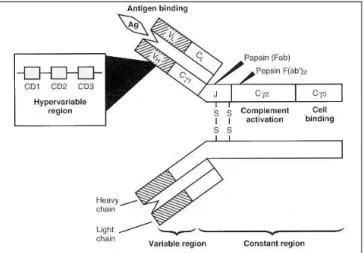
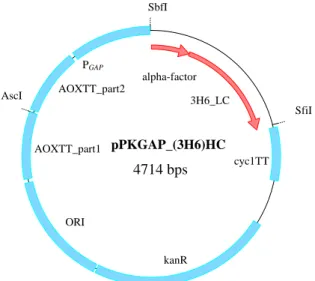
The aim of this study was to determine whether or not the chosen expression strategy results in an increase in Fab yield. Based on the heterodimeric structure of antibodies, the strategy was to express the light and heavy chain genes of the Fab from separate vectors under the expression control of different constitutive promoters.
Antibodies
For this application, the fact that they accumulate faster at the target tissue is also an important and beneficial property (Takahashi et al. 2000, Hust et al. 2007). The 3H6-Fab fragment appears to be a promising candidate for the production of vaccines against HIV-1 (Gach et al. 2007).
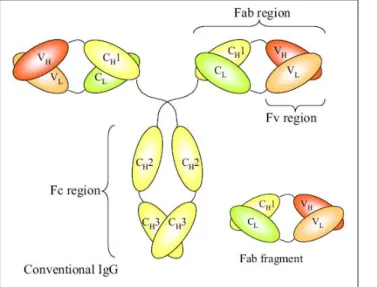
Fab-production
Advantages and disadvantages of some common expression systems
An argument for mammalian systems is their ability to properly recognize signals for the synthesis, processing, secretion or posttranslational modifications of eukaryotic proteins (reviewed by Verma et al. 1998). Nevertheless, it should be taken into account that work with mammalian cell cultures is time-consuming and cost-intensive (reviewed by Verma et al. 1998).
The methylotrophic yeast Pichia pastoris as an expression system
The choice of the suitable expression system depends on several factors such as the product to be expressed. In view of the easier purification of the product, expression hosts that secrete the recombinant protein into the culture medium are generally preferred (Frenken et al. 1998).
Strategies for Fab-production in microbial systems
For example, Schatz and coworkers (2003) expressed a chimeric Fab in CHO cells with the LC and HC gene under the control of the CMV (Cytomegalovirus) promoter from two separate vectors. To our knowledge of Fab production in yeast, the light and heavy chain genes have so far not been expressed from two separate vectors.
The strains
The vectors
Media
Strain Conservation by Cryo Culture
Cloning procedures
DNA migrates towards the positive anode due to the negative charge of the phosphate groups along the backbone. The migration distance of DNA mainly depends on the size and conformation of the nucleic acid, the concentration of agarose and the applied voltage.

Transformation of the prepared vectors into the bacteria
Preparation and purification of the plasmids
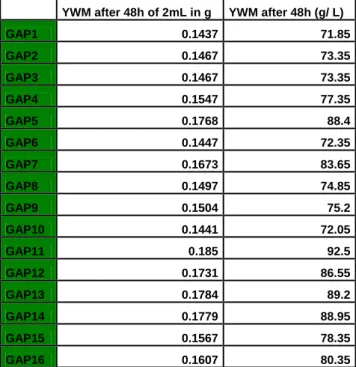
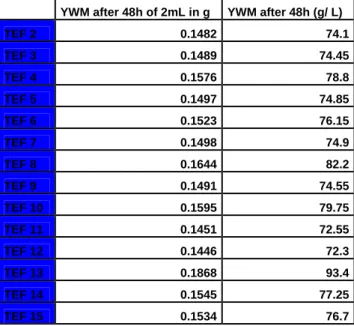
The yeast wet mass (YWM) was determined by weighing pellets (which have been separated from the supernatant by centrifugation) of the cultures. The yield of the GAP clones was in the range of the PK clones (both with LC and HC under the control of PGAP).
Transformation of the amplified vectors into the yeast P. pastoris
Screening of the selected yeast clones
The calculated volume of the preculture to an initial OD600 was inoculated into 2 ml of BMDY medium/well in 24 deep well microplates and incubation was carried out for 48 hours at room temperature and vigorous shaking. Cells were harvested by centrifugation (2 min at 13,000 rpm) and the culture supernatant (~1.5 ml) was transferred to fresh tubes.
Analysis of the culture supernatant containing the recombinant proteins
Gel electrophoresis was performed at 200 V for 45–50 min until the dye front was at the bottom of the gel. This procedure leads to a brown-black color in the places of the gel where the protein bands are located. After washing with distilled water for 10 min, the gel was incubated in the developing solution until the desired intensity of the respective bands was reached.
The plates were tapped on a piece of tissue to get rid of the remaining liquid.
Preparation of yeast RNA, cDNA and DNA
The culture supernatant was diluted in PBST + 1% BSA in several steps to the final concentration of approx. 40-100 µg/ml to be in the range of the Fab standard (dilution rates varied between 1:200 and 1:500). After determining the OD600, the volume required for an OD of 1 after 6 hours was calculated and was transferred to 50 ml of BMD media (in a 500 ml shake flask). 4 mL of the ethanol/phenol mixture was mixed with 8 mL of the culture in the pre-chilled 50 mL tubes and shaken well to obtain a good agitation.
The DNA isolation with DNeasy Blood & Tissue kit (cat # 69504, QIAGEN, Hilden Germany) is based on the use of a guanidinium detergent (guanidinium chloride) after enzymatic lysis (lyticase) of the yeast cells in a sorbitol - buffer .
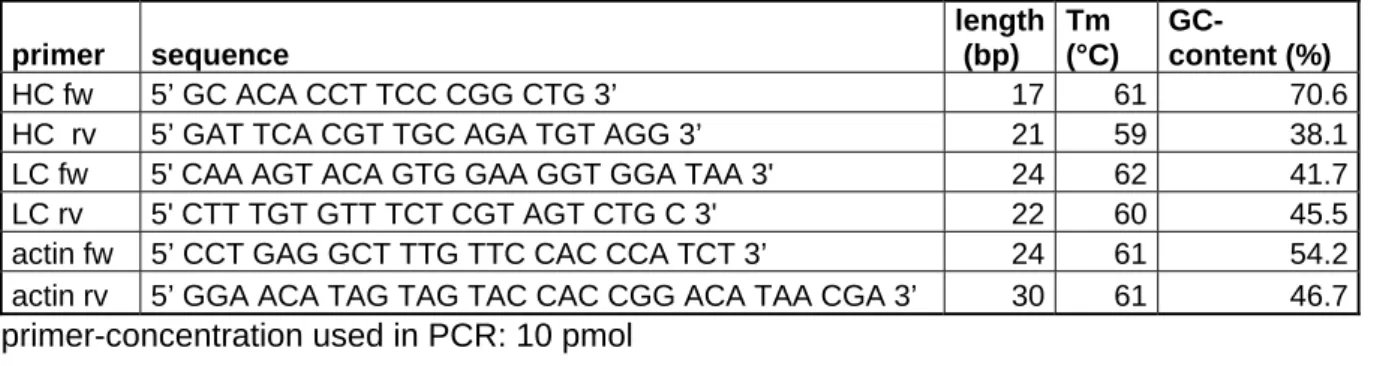
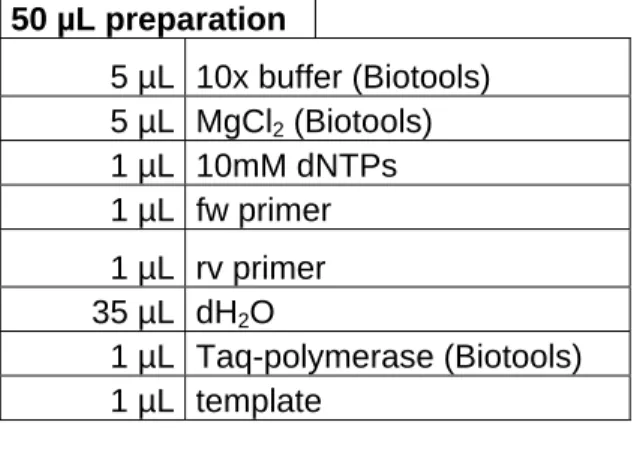
DNA amplification by polymerase chain reaction (PCR)
To balance variations, data were normalized by parallel determination of the reference gene actin. The PCR product of the sample sequence from the plasmid DNA was used as a calibration standard. Based on concentration and fragment length, copies/µL for standards were calculated.
Standard curves were used to obtain the concentration of the target and reference gene.
Quantitative Southern blot
The DNA content of the samples is determined according to a calf thymus DNA standard curve. After 5 hours of absorption at room temperature, the gel slots were marked on the membrane. The blot was incubated in 40 mL of prepared buffer while rotating for 1 hour at 42 °C in a hybridization oven.
The blot was incubated in high SDS buffer supplemented with 24 µL of DIG-labeled probe (amount of probe should be in the range of 5–25 ng/mL) at 42°C overnight in the hybridization oven under shaking conditions.
The cloning
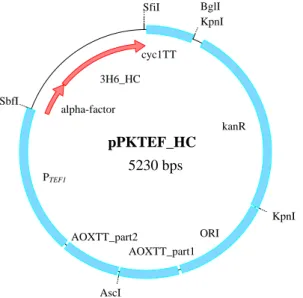
The vector pPKTEF_HC-vector (3H6-heavy chain inserted into pPKTEF-vector with restriction by Sbf1 and Sfi1) was used for TEF-clones. Here, the light and heavy chain expression cassettes were assembled on a single plasmid as concatemers, each under the control of the GAP promoter. Selection of transformed clones was done by plating on LB + kanamycin (final concentration: 50 µg/mL).
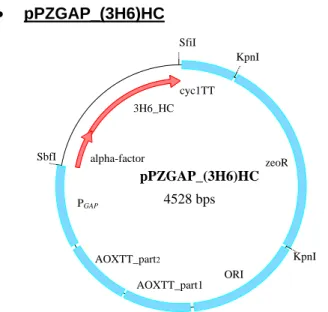
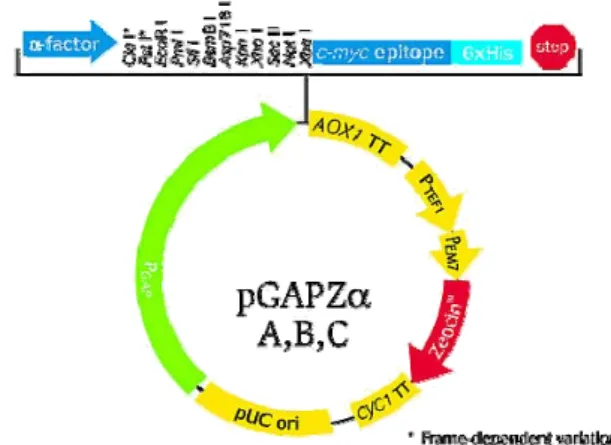
The pPKGAP_HC vector was linearized with AscI to enable integration into the AOXTT locus, the linearization of the light chain vector (pGAPZαA_LC) was done by BspHI to integrate it into the GAP-promoter locus.
The screening
Determination of the protein level and productivity
This means that the concentration of the built product related to the concentration of the biomass (YWM) after the incubation was calculated ([mg/L product per g/L YWM] after 48 hours of incubation). Most of the heavy chain clones under the TEF promoter showed a productivity (product/yeast wet biomass/48 hours) similar to that of the production clone. For the production clone, the intensity of the band representing the Fab was in the range of the intensities of the TEF clones.
The Fab bands for TEF 12 and GAP 7 were in the range of those of the production clone.
Determination of the transcript level
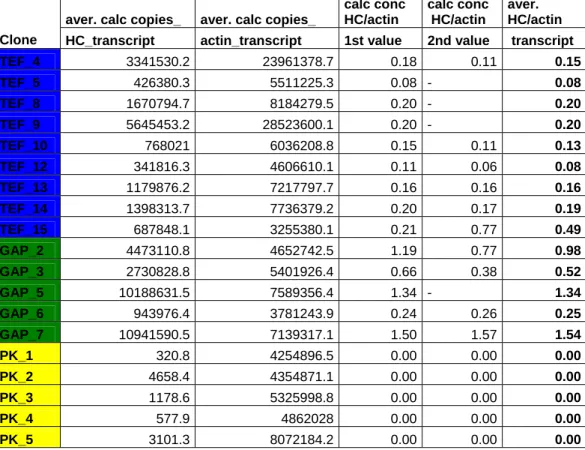
Regarding the LC transcript level, the GAP/TEF constructs showed the same pattern as in the ELISA. Remarkable amounts of LC transcript levels were observed for the same three clones: TEF 4, 10 and 14. The GAP clones gave fairly consistent values (except for 2, which gave a lower signal, which goes together with the ELISA result) and the production clone provided a constant transcript level.
Determination of the Gene copy number
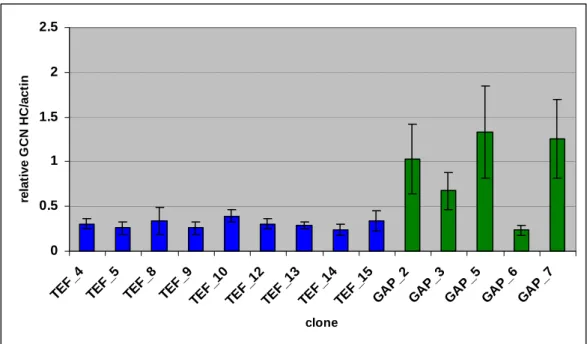
The TEF and the GAP clones do not differ significantly in their copies of the LC gene. The results are given in absolute amount of the gene copies, as calculated from the standard curve. The Southern blot showed only one band, which represents a specific binding of the probe on the immobilized sample.
Conspicuous was the significantly lower amount of heavy chain gene copies of high-producing TEF 4.
Antibody-fragment production in the P. pastoris expression system
Product amount and quality
In contrast to the ELISA, the PK production clone gave the same results as the TEF clones. The effect, described in previous studies (Gach et al. 2007), that in addition to heterodimers, only the unassembled light chain of 3H6 Fab is secreted into the culture supernatant by P. The unassembled light chain appears to be (partially) degraded into smaller fragments of about 14 kDa, probably by proteases in the culture supernatant.
The GAP-constructs as well as the production clone yielded higher amounts of intact assembled Fab than the TEF-clones produced.
Expression of the Fab HC gene under control of the TEF-promoter
Thus, in the assembly step, there appears to be some form of competition between LC and HC for the LC binding sites (Schlatter et al. 2005). Therefore, the idea in the present work to obtain a higher yield of Fab was to express the HC gene under the control of a promoter that is growth associated and would show higher expression rates in early stages of cell growth. The authors also reported that expression of a heterologous gene under the control of PTEF1 gave protein levels in the range of those obtained from PGAP or even higher.
However, the expected effect of a higher Fab yield due to higher concentrations of HC could not be observed in the present work.
Co-expression of the LC and HC gene from two separate vectors
In the present work the constitutive promoter TEF1 (translation elongation factor 1 α) was chosen because it shows a higher activity in the exponential phase than in the stationary phase as described by Ahn et al. As transcript analysis shows, there were no higher rates of HC gene expression for constructs with the TEF promoter compared to those with the GAP promoter, which is known to be less associated with growth. They reported that the amount of Fab obtained by co-expressing polypeptide chains from separate vectors was comparable to that from a single vector.
In the present work, the co-expression of the Fab chains from two separate vectors was compared to the expression of one single vector with each gene driven by a separate promoter.
Gene copy number (GCN) can be an important factor for protein
This is due to the fact that all TEF-clones originate from one initial clone containing only one copy of the HC-vector. For almost all TEF clones, the heavy chain gene copy number was lower than the light chain gene copies. 34, more than one copy of the light chain gene was integrated into the genome of these clones.
The transcript LC to GCN ratio for the TEF clones was roughly in the range of that of the GAP clones (median value).
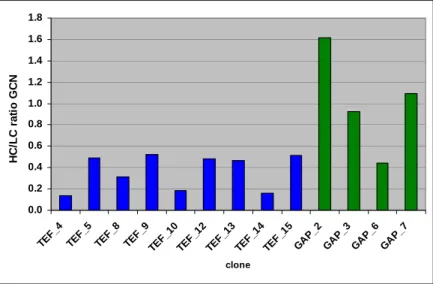
Influence of the HC:LC- ratio on the Fab expression
Conclusion and further perspectives
High-level expression of a promising anti-idiotype antibody fragment vaccine against HIV-1 in Pichia Pastoris. 2001) High-yield expression of the atrazine-specific recombinant Fab fragment K411B from the methylotrophic yeast Pichia pastoris. Genome-scale analysis of library sorting (GALibSo): Isolation of secretion enhancer factors for recombinant protein production in Pichia pastoris.
2001) Expression of hepatitis B surface antigen in the methylotrophic yeast Pichia pastoris using the GAP promoter.