Any contributions by collaborators are explicitly stated in the statement of authorship of the published contributions. This article was published in the journal Science of the Total Environment on May 13, 2021 (impact factor = 7.963).
Wetland ecosystem services
Drivers of wetland conversion to agriculture
Wetlands are characterized by nutrient-rich soils with a high moisture content, enabling households to produce crops all year round (Sakané et al. 2013). Households that depend on wetlands for their livelihoods are also more likely to be poor, and therefore the increased crop production in the wetlands is due to acreage expansion, not intensification (Kipkemboi et al.
Influence of land use/cover change in wetlands on provisioning ESS
In the pursuit of increasing crop production, cultivation in the wetlands has gradually increased over the years (Rebelo et al. 2010). The conversion to agriculture is also accompanied by changes in wetland hydrology and geomorphology (van Dam et al. 2014).

Influence of land use/cover change in wetlands on regulating ESS
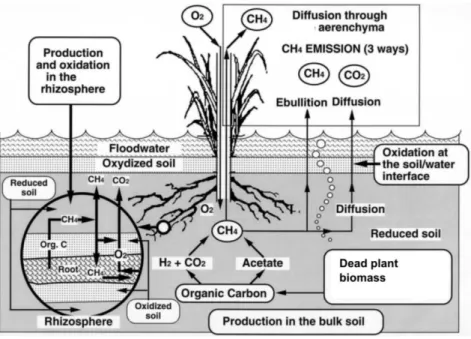
Greenhouse gas (GHG) emissions
In the aerobic zones, ammonium-nitrogen (NH4-N) is oxidized to nitrate-nitrogen (NO3-N) through nitrification (Verhoeven et al. 2006). Only the study by Were et al. 2021a) considered seasonal changes in emissions with land use/cover but did not include N2O emissions.
Water purification ecosystem service
A few studies have documented the effect of land use/cover change on regional wetland greenhouse gas emissions (CO2: Saunders et al. Season affects groundwater levels, which affects aerobic and anaerobic soil conditions (Reddy and DeLaune 2008; Jauhiainen et al. 2008).
Relationships between provisioning and water purification ESS
Numerous studies have documented the water purification ecosystem service of papyrus wetlands in the Lake Victoria Basin (e.g. Mwanuzi et al. The effect of agricultural wetland use change on ESS has also not been documented (van Dam et al. 2013).
Research aim and objectives
In the papyrus wetlands, analyzes of the relationship between supply and water treatment services are sparse. Considering the lack of knowledge, a constant decrease in the papyrus wetland and the necessity to promote positive synergies, it is crucial to analyze the influence of wetland conversion to agriculture on the provision and regulation of ESS.
Description of the study area
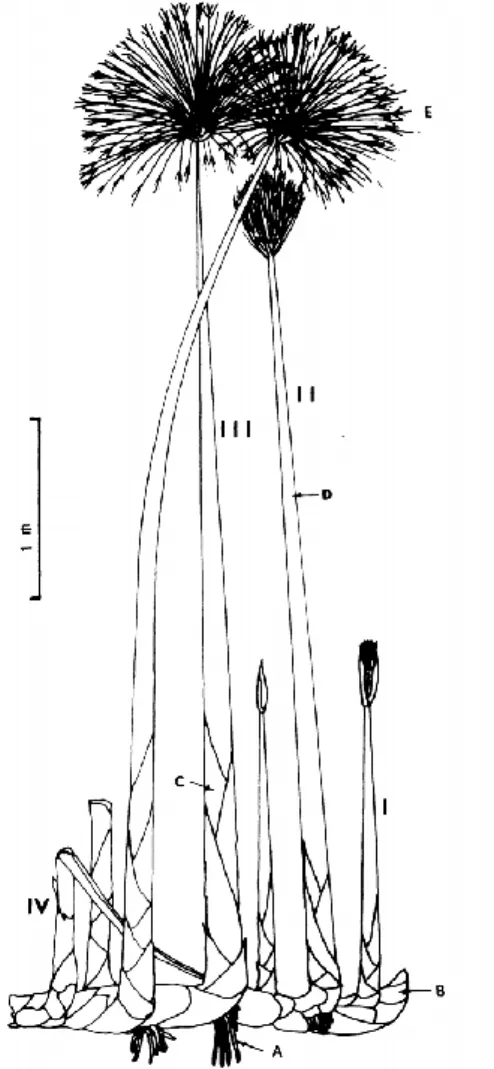
The wetland directly supports the livelihood of the neighboring households through various provision ESS such as artificial papyrus products, crops, water for irrigation, and dry season livestock grazing, among others. Crop production in the wetland consists of drainage of the wetland during the dry season, removal of papyrus above- and below-ground biomass, and cultivation (Plate 1).
Overview of the methods
Land use/cover change detection
Household survey
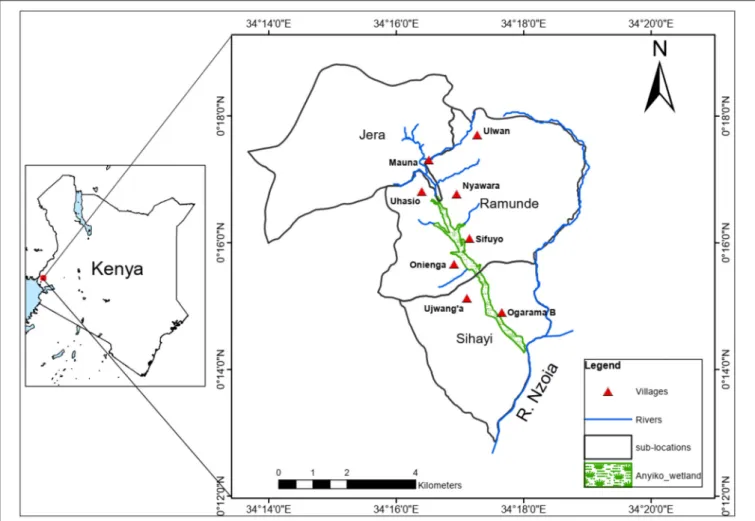
The questionnaire consisted of 23 questions structured in four parts: (1) socio-economic characteristics of the respondent and the household, (2) the use of wetlands by households for the supply of ESS and the year it started, (3 ) household perceptions of the wetland and their monetary benefits compared to conversion to agriculture, and (4) household sources of income and annual amount. The questionnaire was pre-tested and then administered face-to-face in 226 households out of a total of 489 households (Kothari 2004) in eight randomly selected villages adjacent to the wetland. .
Greenhouse gas and soil sampling and analyses
During the sampling period, soil samples were collected from the sampling sites and analyzed for total nitrogen, total phosphorus, organic carbon, ammonium nitrogen and nitrate nitrogen using the Kjeldahl method, the ascorbic acid method, the Walkley-Black method and the colorimetric method ( Okalebo et al. 2002 ). Soil moisture was measured by drying the weighed amount of samples in an oven for 48 hours at 105 °C and weighing again after cooling (Okalebo et al. 2002).
Water samples collection, field measurements, and nutrient analysis
The gas samples were transported to Mazingira Centre, International Livestock Research Institute (ILRI) for analysis. For data analysis, we used an exploratory-statistical approach, classification and regression tree (CRT) (Breiman et al. 1984) to explain the variation of emission rates and determine which parameters influence greenhouse gas emissions, both as main and interaction effects.
Modelling ESS relationships
The importance of ESS, however, differs between temperate and tropical regions (Rebelo et al., 2013). The root node (Node 0) shows that the majority, 64% (145 households) of the surveyed households were farming in former wetland areas. Therefore, in the lower wetland areas, the converted areas are fallow during the dry season.
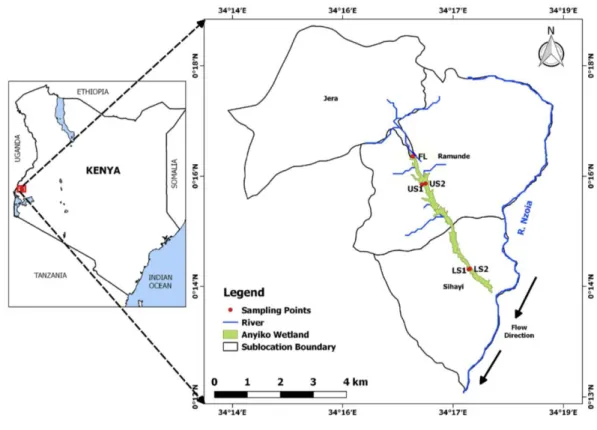
1.Location of the Anyiko Wetland, Kenya, and sampling sites in the converted and unconverted wetland areas. At the household level, the socio-economic status of the households drives the conversion of wetlands to agriculture (Ondiek et al. 2020). The farmers outnumbered the other groups because of the diversity of crops grown in the wetland.
2021b), shallower water depth in the areas of the wetland converted to agriculture facilitates the higher emissions by creating a more oxidized state (Mitsch et al. 2013).
Paper 1: Socio-Economic Determinants of Land Use/Cover Change in Wetlands in East
Paper 2: Influence of land-use change and season on soil greenhouse gas emissions
Paper 3: Trade-offs and synergies between provisioning and regulating ecosystem
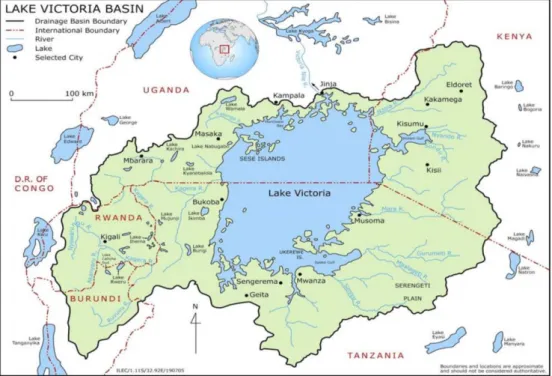
The ESS support the livelihoods and well-being of millions of people in the river basin (van Dam et al. 2014). According to Kansiime et al. 2007a), the input of nitrogen and phosphorus from the river basin is one of the main causes of the lake's declining water quality. Where empirical data and household survey data were not available, a semi-structured questionnaire was conducted face-to-face with stakeholders, i.e. the six fiber producers, six mat producers and ten farmers, in November 2020.
In the Lake Victoria basin, papyrus wetlands are essential for supply and water purification ESS (Kansiime et al. The conversion of wetlands to agriculture can only take place during the dry season because the wetlands are not flooded (van Dam et al. 2014). Wetland conversion to agriculture is likely to impair water purification ecosystem service due to alteration of wetland structure (Kansiime et al. 2007a; van Dam et al. 2013).
The release of TN from the wetland can be attributed to agricultural activities that disrupt the soil structure (Uwimana et al. 2018a). Households that use papyrus wetlands for craft purposes generate income from the sale of the products (Kipkemboi and van Dam 2016; Ondiek et al. 2020). Having a wetland-based source of income contributes in part to these households not cultivating in the wetland (Ondiek et al. 2020).
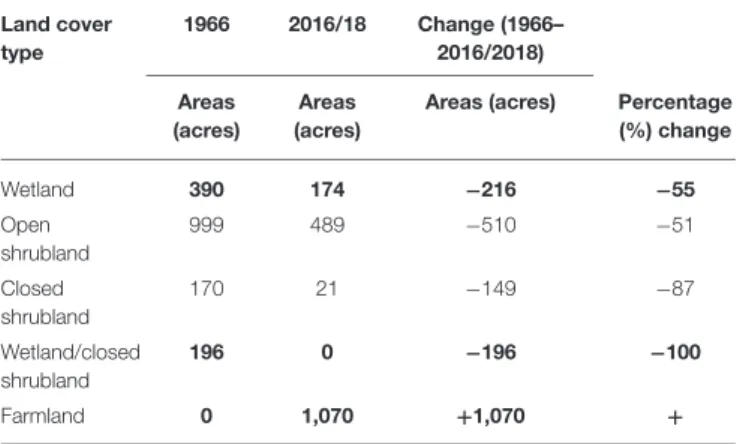
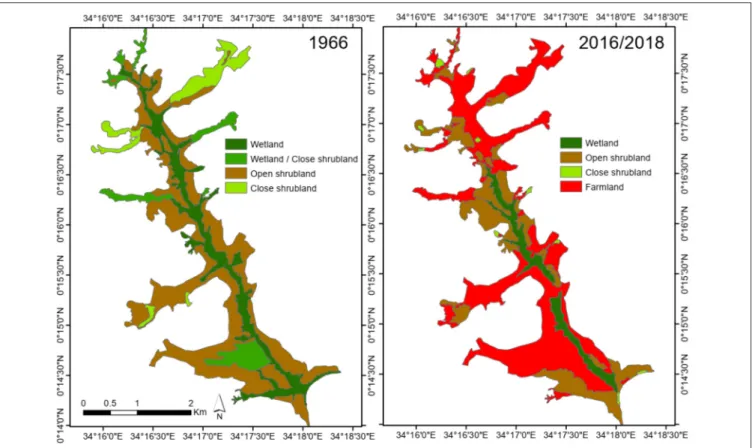
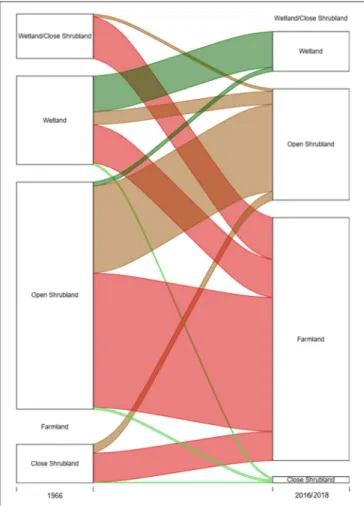
Spatio-temporal change of agriculture in wetlands
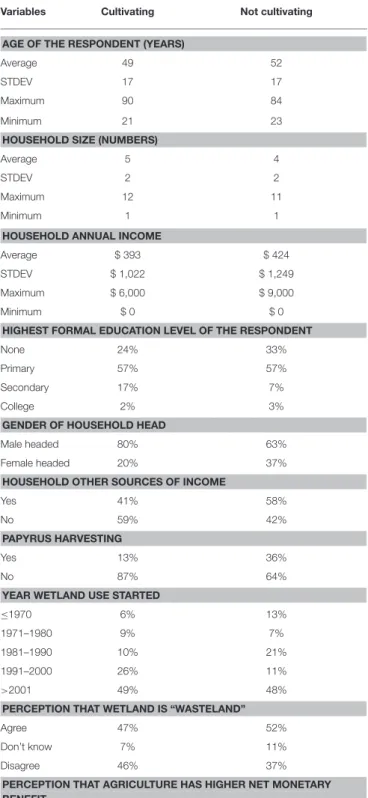
Socio-economic status of household as driver of wetland conversion to agriculture
Crops from modified wetland areas are also used to supplement crop production from mountain farms. In addition, non-papyrus-harvesting, male-headed households tend to farm in wetlands. However, households engaged in harvesting papyrus for the production of handicrafts are less likely to cultivate in a wetland because they have an alternative source of income from the sale of products.
The dependence on wetlands for income generation through conversion to agriculture is unlikely to stop soon if the provision of alternative income-generating activities or livelihood opportunities is not addressed (Rebelo et al. 2010). Therefore, this study contributes to understanding why wetland conversion to agriculture continues despite increased awareness of its value and the need to promote alternative non-wetland dependent livelihood opportunities.
Influence of land-use change and season on soil GHG emissions
CH 4 emissions
CO 2 emissions
N 2 O emissions
Relationships between provisioning and water purification ESS
Trade-offs and synergies analyses
Effects of shared indirect drivers of change on the trade-offs and synergies
The scenario increased the probability of low conversion of wetlands to agriculture, thereby increasing low crop production and nutrient retention. Increased trade-offs between crop production and nutrient retention imply a reduced dependence on cash income and food security from wetland cultivation under the high non-wetland household income and high fertility of upland farms. According to Rebelo et al. 2010), wetland cultivation can be minimized or prevented when alternative livelihoods are available.
In this study, prevention of wetland conversion to agriculture under drought conditions would be unlikely even with the high income of non-wetland-based households and the high fertility of upland farms. These findings suggest that other wetland management strategies or wetland cultivation policies should be introduced when addressing the provision of alternative livelihood options. A reduction in the positive synergies between artisanal papyrus products and nutrient retention means less dependence on artisanal papyrus products for income generation due to the high income of non-wetland-based households.
Therefore, this study informs decision makers about which scenarios would lead to sustainable use of wetlands and reduce dependence on the wetland for livelihood.
Effects of increasing wetland crop area on the trade-offs and synergies
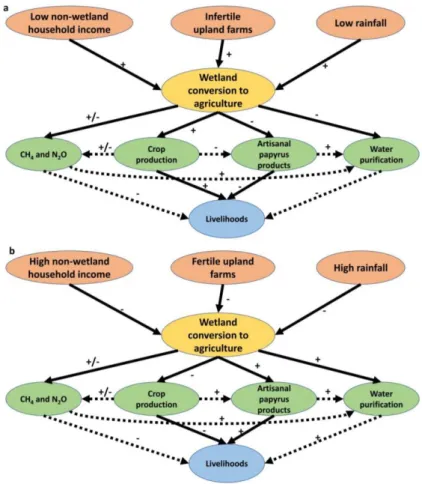
In summary, this thesis proposed a conceptual scheme to describe the impact of wetland conversion to agriculture on the provision and regulation of ESS in a papyrus wetland (Figure 8). Indirect drivers of change, low income of non-wetland households, infertile upland farms and low rainfall, increase conversion of wetlands to agriculture, which increases CH4 uptake, increases N2O emissions, increases crop production , reduces the production of papyrus handicrafts and reduces water purification, thus affecting livelihoods (Figure 8a). High non-wetland household incomes, fertile upland farms and high rainfall reduce conversion of wetlands to agriculture, which increases CH4 emissions, reduces N2O emissions, reduces crop production, increases production of papyrus products artisanal and increases water purification, thus livelihoods.
Water treatment and greenhouse gases indirectly impact livelihoods by providing clean water and climate regulation respectively. Since sustainable use of wetlands is critical to livelihoods, interactions that only drive increased crop production should be addressed with high priority.
Conclusion
Recommendations
Contribution of Working Group I to the Fifth Assessment Report of the Intergovernmental Panel on Climate Change. D3: If Yes in D2 above, what seasons of the year did you herd your livestock in the wetland. D6: If Yes in D4 above, what seasons of the year did you water your cattle in the wetland.
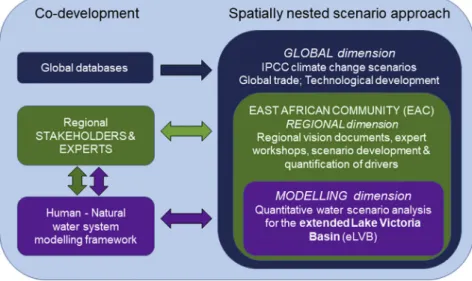
In this section the results of the hydro-economic modeling system and the effects on the eLVB are presented. This unification is driven by the countries of the EAC, all of which are in the Lake Victoria watershed. ECHO represents several essential biophysical and technological characteristics of water in the 61 eLVB sub-basins.
More than half of the EFRs in the eLVB are due to EFRs in the Victoria Nile major sub-basin (36%) and the White Nile (29%). The combined effect of the three combined treatments on greenhouse gas emissions summed up in mg CO2 equivalents (CO2 E) showed no statistical difference (Table 3). However, the fertilization regime had no effect on CH4 and CO2 emissions in the short time of the study.