GEF-6 One-Step MSP_Template-August2016
1
PART I: PROJECT IDENTIFICATION
Project Title: Addressing Marine Plastics – A Systemic Approach
Country(ies): Global GEF Project ID:1 9681
GEF Agency(ies): UNEP GEF Agency Project
ID:
01490 Other Executing
Partner(s):
Ellen MacArthur Foundation (EMF) Ocean Conservancy (OC), UN Environment through its Global Partnership on Marine Litter (GPML) and its Responsible Industry and Value Chain (RIVU) Unit within its Sustainable
Lifestyles, Cities and Industry (SLCI) Branch.
Resubmission Date: April 20, 2017
GEF Focal Area(s): International Waters Project Duration (Months)
24 Integrated Approach
Pilot
IAP‐Cities IAP‐Commodities IAP‐Food Security Name of Parent
Program:
[if applicable] Agency Fee ($) 190,000
A. FOCAL AREA STRATEGY FRAMEWORK AND PROGRAM2:
Focal Area
Objectives/programs Focal Area Outcomes
Trust Fund
(in $) GEF Project Financing
Co‐
financing IW 3 SP 6 Prevent the Loss and Degradation
of Coastal Habitat
GEFTF 2,000,000 10,932,645
(select) (select) (select) (select) (select) (select) (select) (select) (select) (select) (select) (select) (select) (select) (select) (select)
Total project costs 2,000,000 10,932,645
1 Project ID number will be assigned by GEFSEC and to be entered by Agency in subsequent document submissions.
2 When completing Table A, refer to the excerpts on GEF 6 Results Frameworks for GETF, LDCF and SCCF and CBIT programming directions.
GEF‐6 REQUEST FOR ONE‐STEP MEDIUM‐SIZED PROJECT APPROVAL TYPE OF TRUST FUND: GEF Trust Fund
For more information about GEF, visit TheGEF.org
GEF-6 One-Step MSP_Template-August2016
2
B. PROJECT FRAMEWORK
Project Objective: The project aims to capitalize on a growing baseline of knowledge on marine plastics sources, pathways and environmental impacts to inform the GEF and the application of a systemic approach to global plastic issues.
Project Components/
Programs
Financin g Type3
Project
Outcomes Project Outputs Trust Fund
(in $) GEF Project Financing
Confirmed Co‐
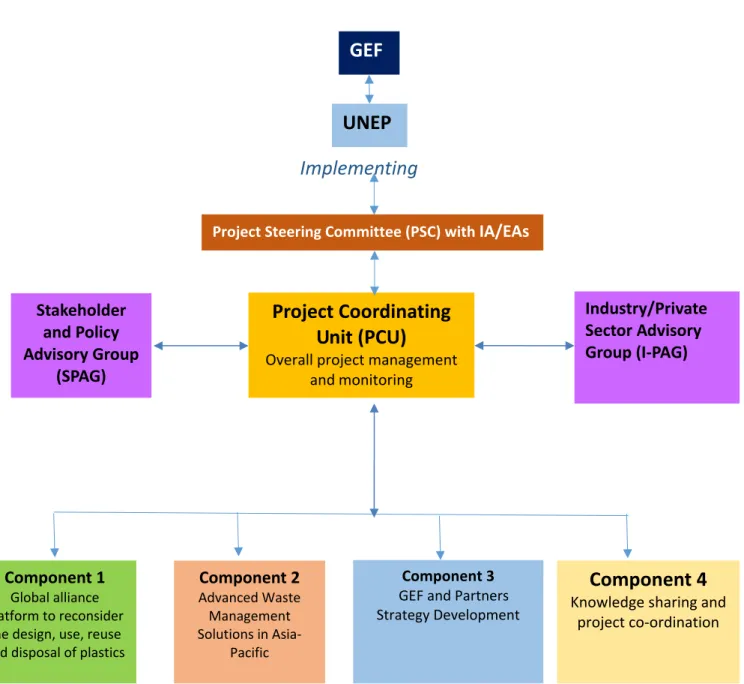
financing Component 1:
Global alliance platform to reconsider the design, use, reuse and disposal of plastics
TA Outcome 1.1
Towards a more informed and robust approach to a new plastics economy through a global alliance of producers, users and disposers of plastics;
including advancing innovative solutions; and strengthening public –private partnership with the national and regional policy makers
1) An operational alliance from across the entire value chain (including major plastic producing and plastic using corporations as well as
governments, cities, collection, sorting and reprocessing companies) and advancing development and uptake of recommendatio ns
2) Summaries presenting policy/public‐
private engagement efforts, lessons and
recommendatio ns for policy makers and other stake holders
3) Large scale innovations
GEFTF 702,500 3,624,515
3 Financing type can be either investment or technical assistance.
GEF-6 One-Step MSP_Template-August2016
3
mobilised through competitive actions to promote a generation of new approaches to address plastics issues catalytically building on existing approaches
4) First set of Global Plastics Protocol /Guidelines published on the redesign of materials, formats, use and after‐use
systems
5) An economic and scientific evidence base to inform the GEF
Component 2:
Advanced Waste Management Solutions in Asia‐
Pacific
TA Outcome 2.1
APEC region countries (Indonesia, Philippines, Vietnam) are better positioned to secure financing and make policy commitments to address marine plastic issues and waste
management
1) Landscape analyses to highlight waste management financing opportunities, barriers to implementation and relevant gender issues in key Asia Pacific economies, to inform GEF
2) Development of a documented baseline on marine plastics
GEFTF 519,161 4,041,868
GEF-6 One-Step MSP_Template-August2016
4
and waste management conditions at selected sites in the target region
3) A series of country and region‐specific recommendatio ns (Indonesia, COBSEA, etc.) developed to address marine plastic and waste management challenges, to inform GEF.
4) Documented recommendatio ns on how to engage plastics makers, consumer product
companies, and retailers on corporate support for waste
management to reduce marine plastics.
5) Locally appropriate marine plastic and waste management solutions engaging local civil society stakeholders promoting a bottom up approach.
GEF-6 One-Step MSP_Template-August2016
5
6) Peer reviewed publications identifying the most efficient volunteer monitoring protocols for measuring marine debris, development and deployment of a monitoring framework to CSOs in APEC region.
Component 3: GEF and Partners Strategy development
TA Outcome 3.1
Improved understanding of priority strategic intervention points (“hotspots”) related to marine plastics, through existing and new
knowledge and, the integration of all project outputs
Outcome 3.2 Integrated strategic guidance provided on the reduction and sound management of marine plastics into
1) Stocktaking analysis on existing actors, initiatives, policy frameworks associated with key sources and sectors
responsible for macro and micro marine plastic pollution including the identification of strategic intervention points
(“hotspots”) and specific
knowledge gaps as well as
1) Position paper/report to GEF on findings from outputs 3.1.1, and preliminary findings from C1 and C2.
2) Report of
GEFTF 200,000 1,000,000
GEF-6 One-Step MSP_Template-August2016
6 GEF‐7 strategy
relevant to focal areas, NGI and PA
technical consultation meeting
3) Strategic guidance to the GEF on the reduction and sound
management of marine plastics Component 4
Knowledge sharing and project
coordination
TA Outcome 4.1 Up scaled evidence base
‐ including lessons learned and best practices identified resulting in effective prioritization of solutions and
interventions for marine debris and waste management for GEF
Outcome 4.2 Successful delivery of the
1) Dialogue for leading researchers on emerging marine plastics science to address knowledge gaps in the areas of sources, distribution, fates and impacts of plastics in the ocean
2) A
communications strategy
integrating novel waste
management, finance and science findings that fosters awareness, encourages public adoption of key concepts, and secures high quality media coverage on solutions to ocean plastics
1) Integration of scientific knowledge and
GEFTF 378,339 2,066,262
GEF-6 One-Step MSP_Template-August2016
7 project
objective and outcomes in components 1‐
3
research
2) Integration of Industry
3) Effective co‐
ordination of project activities, monitoring and reporting to UN Environment and GEF
(select) (select) (select) (select) (select) (select) (select) (select)
Subtotal 1,800,000 10,732,645
Project Management Cost (PMC)4 (select) 200,000 200,000
Total GEF Project Financing 2,000,000 10,932,645
For multi‐trust fund projects, provide the total amount of PMC in Table B, and indicate the split of PMC among the different trust funds here: ( )
C. SOURCES OF CO‐FINANCING FOR THE PROJECT BY NAME AND BY TYPE
Please include confirmed co‐financing letters for the project with this form.
Sources of Co‐
financing Name of Co‐financier Type of Co‐
financing
Amount ($)
GEF Agency UN Environment Economy Division In‐kind 700,000
GEF Agency UN Environment Global Programme of Action (GPA)
In‐kind 630,000
GEF Agency UN Environment North America Office
In‐kind 151,500
Others Ocean Conservancy In‐kind 5,047,030
Others Ellen MacArthur Foundation Grants 3,624,515
Others National Oceanic Atmospheric
Administration (NOAA)
Grants 400,000
Others Recycling and Economic
Development Initiative of South Africa
Grants 150,000
GEF Agency World Wildlife Fund (WWF) In‐kind 109,600
4 For GEF Project Financing up to $2 million, PMC could be up to10% of the subtotal; above $2 million, PMC could be up to 5%
of the subtotal. PMC should be charged proportionately to focal areas based on focal area project financing amount in Table D below.
GEF-6 One-Step MSP_Template-August2016
8
Others Consumer Goods Forum (CFG) Grants 120,000
Total Co‐financing 10,932,645
D. TRUST FUND RESOURCES REQUESTED BY AGENCY(IES), COUNTRY(IES), FOCAL AREA AND PROGRAMMING OF
FUNDS
GEF Agency
Trust Fund
Country/
Regional/Global Focal Area Programming of Funds
(in $) GEF Project Financing (a)
Agency Fee a) (b)
Total (c)=a+b UNEP GEF TF Global International Waters (select as applicable) 2,000,000 190,000 2,190,000
(select) (select) (select) (select as applicable) 0
(select) (select) (select) (select as applicable) 0
(select) (select) (select) (select as applicable) 0
(select) (select) (select) (select as applicable) 0
(select) (select) (select) (select as applicable) 0
(select) (select) (select) (select as applicable) 0
(select) (select) (select) (select as applicable) 0
(select) (select) (select) (select as applicable) 0
(select) (select) (select) (select as applicable) 0
Total Grant Resources 2,000,000 190,000 2,190,000
a) Refer to the Fee Policy for GEF Partner Agencies.
E. PROJECT’S TARGET CONTRIBUTIONS TO GLOBAL ENVIRONMENTAL BENEFITS5 Provide the expected project targets as appropriate.
Corporate Results Replenishment Targets Project Targets
1. Maintain globally significant biodiversity and the ecosystem goods and services that it provides to society
Improved management of landscapes and seascapes covering 300 million hectares
n/a hectares
2. Sustainable land management in production systems (agriculture, rangelands, and forest landscapes)
120 million hectares under sustainable land management
n/a hectares
3. Promotion of collective management of transboundary
water systems and
implementation of the full range of policy, legal, and institutional
Water‐food‐ecosystems security and conjunctive management of surface and groundwater in at least 10 freshwater basins;
n/a Number of freshwater basins
20% of globally over‐exploited fisheries n/a Percent of
5 Provide those indicator values in this table to the extent applicable to your proposed project. Progress in programming against these targets for the projects per the Corporate Results Framework in the GEF-6 Programming Directions, will be aggregated and reported during mid-term and at the conclusion of the
replenishment period. There is no need to complete this table for climate adaptation projects financed solely through LDCF, SCCF and/or CBIT.
GEF-6 One-Step MSP_Template-August2016
9 reforms and investments
contributing to sustainable use and maintenance of ecosystem services
(by volume) moved to more sustainable levels
fisheries, by volume
4. Support to transformational shifts towards a low‐emission and resilient development path
750 million tons of CO2e mitigated (include both direct and indirect)
n/a metric tons
5. Increase in phase‐out, disposal and reduction of releases of POPs, ODS, mercury and other chemicals of global concern
Disposal of 80,000 tons of POPs (PCB, obsolete pesticides)
n/a metric tons Reduction of 1000 tons of Mercury n/a metric tons Phase‐out of 303.44 tons of ODP
(HCFC)
ODP tons 6. Enhance capacity of countries to
implement MEAs (multilateral environmental agreements) and mainstream into national and sub‐
national policy, planning financial and legal frameworks
Development and sectoral planning frameworks integrate measurable targets drawn from the MEAs in at least 10 countries
Number of
Countries:
Functional environmental information systems are established to support decision‐making in at least 10 countries
Number of
Countries:
F. DOES THE PROJECT INCLUDE A “NON‐GRANT” INSTRUMENT? (Select)
(If non‐grant instruments are used, provide an indicative calendar of expected reflows to your Agency and to the GEF/LDCF/SCCF/CBIT Trust Fund) in Annex B.
n/a
G. PROJECT PREPARATION GRANT (PPG)6
Is Project Preparation Grant requested? Yes No If no, skip item G.
PPG AMOUNT REQUESTED BY AGENCY(IES), TRUST FUND, COUNTRY(IES) AND THE PROGRAMMING OF FUNDS* GEF
Agency
Trust Fund
Country/
Regional/
Global
Focal Area
Program ming of Funds
(in $) PPG (a)
Agency Fee7 (b)
Total c = a + b UNEP GEF TF Global International Wate (select as a 50,000 4,750 54,750
Total PPG Amount 50,000 4,750 54,750
PART II: PROJECT JUSTIFICATION
1. Project Description. Briefly describe: a) the global environmental and/or adaptation problems, root causes and barriers that need to be addressed; b) the baseline scenario or any associated baseline
6 PPG of up to $50,000 is reimbursable to the country upon approval of the MSP.
7 PPG fee percentage follows the percentage of the Agency fee over the GEF Project Financing amount requested.
GEF-6 One-Step MSP_Template-August2016
10 projects, c) the proposed alternative scenario, GEF focal area8 strategies, with a brief description of expected outcomes and components of the project, d) incremental/ additional cost reasoning and expected contributions from the baseline, the GEFTF, LDCF/SCCF, CBIT and co‐financing; e) global environmental benefits (GEFTF), and adaptation benefits (LDCF/SCCF); and 6) innovation, sustainability and potential for scaling up.
a) the global environmental and/or adaptation problems, root causes and barriers that need to be addressed
Global Environmental Problems
1. Today's linear ‘take, make, dispose’ economic model relies on large quantities of cheap, easily accessible materials and energy, and this is a model reaching its physical limits. Falling prey to this model, the global plastics economy is an iconic linear system providing an important part of today’s economy. Plastics are the workhorse material of the modern economy because of their combination of properties and low cost. Starting in the 1950s, world production of plastics showed an average annual growth rate of 8.7%, increasing nearly nine‐fold since the 1970s, compared with a 4.5 times growth in aluminum and 2.5 times in steel. However, this leads to significant degradation of natural resources ‐ it relies on virgin petro‐based materials as feedstock, suffers from significant leakage and low rates of material recovery, and results in marine plastics debris.
2. Plastic debris of different sizes has been found throughout the world’s oceans, from the surface to the sea floor, and from urbanized coastlines to remote, unpopulated islands. It comes from land‐
and sea‐based sources, and can be carried by ocean currents and even the wind. Conservative estimates indicate that there are more than 150 million tonnes of plastics in the ocean. Within 25 years, the ocean plastic load could grow to one ton of plastic for every three tons of fish.
Researchers found that at least 25% of fish and shellfish sold for human consumption tested positive for the presence of plastics.
3. The impacts of marine plastic pollution range from ecological to social and economic, and cost the world an estimated US$8 billion dollars per year. The ubiquity of plastics throughout the marine and coastal environment – whether on beaches, on the ocean surface, in the water column, on the seafloor or in biota – is a symptom of our failure to reduce and properly manage the amounts of plastics that we have produced. Beyond this approach, it reflects our failure to put in place frameworks addressing the entire value chain of plastics in order to close the material loop. Indeed, marine plastics is a global, complex, social, economic and environmental problem that requires holistic solutions.
4. From a natural resources perspectives, over 90% of plastics are derived from virgin fossil feedstocks.
The production of plastics has a significant carbon impact, which will become even more significant with the projected surge in consumption. All plastics represent about 6% of global oil consumption, the equivalent to the oil consumption of the global aviation sector. Since 1964, plastics production has increased twenty‐fold (nine‐fold since the 1970’s), reaching 311 million tonnes in 2014. Plastics production is expected to double again in 20 years and almost quadruple by 2050.
The Plastic Economy’s Negative Environmental Impacts on Marine Environment
8 For biodiversity projects, in addition to explaining the project’s consistency with the biodiversity focal area strategy, objectives and programs, please also describe which Aichi Target(s) the project will directly contribute to achieving.
GEF-6 One-Step MSP_Template-August2016
11
5. Plastics enter the ocean in a variety of forms, including microbeads used in personal care and cosmetics products, pre‐production pellets (i.e. nurdles), synthetic clothing fibres, and a wide range of consumer products. While some plastic washes ashore or sinks, much of it fragments into small pieces (generally less than 5 mm), which are defined as microplastics. Plastics have been found in all the regions of the ocean, from consumer products floating in the ocean’s five major current‐driven gyres, to fibres buried in sediments in the deep sea to microplastics embedded in sea ice in the Arctic, to a wide variety of materials on beaches around the world. Unfortunately, plastics have also been found in numerous species.
6. Plastics often contain a complex blend of chemical substances, called “additives”, which give polymers different properties. Once in the aquatic environment, plastic components can adsorb and/or absorb substances, which can include pesticides, Persistent Organic Pollutants (POPs), metals, etc. Many of the additives may be released to biota ingesting the plastic particles, raising concerns about potential adverse effects on human health and the environment.
7. Plastics negatively impact ocean biota in a variety of other ways. Large items like synthetic fishing nets and packing straps can entangle and kill a wide variety of organisms, including marine mammals, sea turtles, and fishes. Both intact items (e.g. cigarette lighters, plastic bags, bottles, etc.) and plastic fragments ingested by seabirds, turtles, and fishes, result in harm. At last count, over 690 species of marine animals — including a range of fish species — are known to be negatively impacted by marine plastics. A recent article by Lönnsted et al. published in the journal Science provides strong evidence for fitness impacts on juvenile fish eating ecologically relevant concentrations of micro plastics, resulting into low life expectancy against predators, which poses a problem of fish stocks. Furthermore, plastic particles adsorb industrial and agricultural pollutants in concentrations that can be 100,000 to 1 million times greater than the pollutants found in the surrounding seawater. Evidence is growing that fish consuming these particles suffer liver toxicity and pathology. A recent report presented to the 2016 UNEA meeting highlighted the growing concerns about microplastics and the bio‐accumulation of potentially toxic pollutants in the food chain.
8. Floating marine debris has also been implicated in the transport of non‐native invasive species which can ‘’raft’’ considerable distances on such debris. Over 150 multi‐cellular species have been reported associated with plastic debris, the majority being hard‐shelled species including bivalve molluscs, barnacles, tube worms, bryozoans, hydroids and coralline algae. In addition, there is evidence that items of plastic washed ashore are often fouled by non‐native species. Some species
A note on terminology
Different terminology – e.g., marine debris, marine litter, marine plastics, ocean plastics – has been used to describe this problem, providing different emphasis depending on the context.
There are ongoing discussions among practitioners and policy makers around the world regarding the most appropriate terminology. UNEP has referred to “marine litter” since 1995, when the Global Programme of Action (GPA) for the Protection of the Marine Environment from Land‐
based Activities was created, which identified litter as one out of nine categories of marine pollution. More recently, the 2nd United Nations Environment Assembly (UNEA) adopted Resolution 1/6 on “Marine plastic litter and microplastics”. For the purpose of this project we have opted to use the term “marine plastics”, as short hand for the terminology most recently used in UNEA, and to continue the focus on this particular type of material, which comprises the vast majority of litter currently present in the oceans and coasts. This project looks at the full life cycle of plastics with the aim of identifying strategic intervention points to reduce plastic
pollution in the marine environment.
GEF-6 One-Step MSP_Template-August2016
12 of Vibrio bacteria have been shown to grow preferentially on plastic particles in the ocean. Rafting on plastic debris may facilitate transport of species across boundaries of water masses that might otherwise be relatively impassable. While it is clear that plastics are a vector for the transport of non‐native species, their relative contribution needs to be considered alongside other vectors, such as transport on wood and pumice, transport on the hulls of ships and in the release of ballast water.
Root Causes
9. The current trend for producing and using plastics is exponential. The amount of plastic produced and consumed, reaching marine environments is therefore expected to increase. According to Jambeck et al., 2015 at least 8 million tonnes of plastics leak into the ocean each year— which is equivalent to dumping the contents of one garbage truck into the ocean per minute. Estimates suggest that packaging represents the major share of this leakage. Current levels are predicted to double within the next decade. If no action is taken, this is expected to increase to two per minute by 2030 and four per minute by 2050.
10. The current conservative estimates indicate that there are over 150 million tonnes of plastics in the ocean today. In a business‐as‐usual scenario, the ocean could contain 1 tonne of plastic for every 3 tonnes of fish by 2025, and by 2050, more plastics than fish (by weight). However, there is still a comprehensive overview missing to map the sources of these plastics present in the oceans, and also what level of impact corresponded with what types of plastics.
Illustration: plastic packaging
Applications of plastics are large, and range from packaging to building and construction, transportation, medical, health and personal care, electrical and electrics, agriculture and sports and leisure. Not only is packaging the largest application of plastics with 26% of volume, its small size and low residual value also makes it especially prone to leakage. One indicative data point is that plastic packaging comprises more than 62% of all items (including non‐plastics) collected in international coastal clean‐up operations.
Plastic packaging provide functionalities such as low weight which reduces fuel consumption in
transportation, or some barrier properties which keep food fresh longer, and possibly reduces food waste.
As a result of these characteristics, plastics are increasingly replacing other packaging materials, and the percentage of plastic packaging as a share of global packaging volumes has increased from 17% to 25%
between 2000 and 2015. Plastic packaging volumes are expected to continue to grow, doubling within 15 years and more than quadrupling by 2050, reaching 318 million tonnes annually, more than the entire plastics industry today.
Today, 95% of plastic packaging material value, or > USD 80billion annually, is lost to the economy after a short first use. More than 40 years after the launch of the first universal recycling symbol, only 14% of plastic packaging is collected for recycling. When additional value losses in sorting and reprocessing are factored in, only 5% of material value is retained for a subsequent use. Plastic packaging is almost exclusively single‐use, especially in business‐to‐consumer applications.
Plastics that do get recycled are mostly recycled into lower‐value applications that are not again recyclable after use. PET used in beverage bottles has a higher recycling rate than any other type of plastic, but even this success story is only a modest one: globally, close to half of PET is not collected for recycling, and only 7% is recycled bottle‐to‐bottle.
In addition to the 14% of plastic packaging collected for recycling, another 14% is sent to an incineration and/or energy recovery process, mostly through incineration in mixed solid waste incinerators, but also through the combustion of refuse‐derived fuel in industrial processes such as cement kilns, and (on a limited scale) pyrolysis or gasification. Furthermore, an overwhelming 72% of plastic packaging is not recovered at all: 40% is landfilled, and 32% leaks out of the collection system — that is, either it is not collected at all, or it is collected but then illegally dumped or mismanaged.
GEF-6 One-Step MSP_Template-August2016
13
11. The United States, Europe and Asia jointly account for 85% of plastics production, roughly split equally between the United States and Europe on the one hand and Asia on the other. Asia is the region where some of the symptoms of the current dysfunctional surface and for this reason Asia has already been the focus for a variety of crucial leakage mitigation efforts aimed at improving basic collection infrastructure.
12. Our current waste management model does not yet follow a life‐cycle thinking approach, overseeing all stages of a product’s life and at the improvements that can be made to reduce the use of resources and negative environmental impacts. Ocean plastics have been accumulating on land and in the coastal and marine environment because of the lack of systemic approach, which addresses the source of the problem. The waste management hierarchy encompasses five‐steps, where prevention is the best option, followed by re‐use, recycling and other forms of recovery, and with disposal such as landfill as the last resort. A systemic approach considering all lifecycle stages will support prevention and minimisation of marine plastic waste. An improved waste collection and management system cannot, by itself, prevent all environmental impacts nor the generation of waste.
13. All countries, even land‐locked ones, are net‐contributors to the marine plastics problem. To address the problem of those plastics that are entering the oceans, especially in developing countries, a systemic approach is therefore required. This approach should consider the whole value chain of those plastics, including upstream interventions (i.e. design, production, use ...) as well as downstream waste management. It would support the application of sustainable consumption and production principles such as eco‐design, green manufacturing and packaging of products in the market, sustainable consumption patterns and lifestyles, and integrated waste management approaches.
14. By analysing the different stages of the lifecycle, root causes can be identified. Companies in Europe and the US together account for more than 90% of the top consumer goods brands and plastics manufacturers who determine design. As such, many of the opportunities around format and material redesign can be found in these countries. Therefore, efforts to mobilise actors based in Europe and the US will be effective on mobilising a New Plastics Economy on a global scale.
However, the plastic value chain is global, and any design related innovation will have strong impact on production and consumption habits in developing countries; and thus their involvement is critical. From a production perspective, a sound management of the supply chain is required, especially communicating key information between plastic producers, plastics converters and companies using plastics. From the consumption side, sustainable consumption habits would include provide information and means to consumer for a sustainable purchasing choice, as well as responsible disposal behaviour.
15. From the perspective of plastic recycling and disposal, specialized collection channels and recycling infrastructures need to be established, in order to collect and process the obsolete waste plastics generated by the final users. This will prevent the plastics entering the undesirable handling and treatment channels, that will end up in the ocean eventually. Such collection schemes and recycling facilities shall be designed according to the specific types of plastics and products, which cause the most impact on the marine ecosystem. Relevant legislation and effective funding scheme are also instrumental to maintain the treatment system, and awareness raising activities are also critical to reduce marine plastics directly from the users and disposers.
GEF-6 One-Step MSP_Template-August2016
14 16. Managing existing plastics in the ocean should also look at the management of plastic debris after
being discarded in the oceans, and at involving relevant responsible actors in the recovery of plastics.
17. A holistic and systemic approach also requires introducing the appropriate infrastructure and investment, and the behavioural change throughout the value chain. It also requires closing the information gap generated between countries and regions with extensive research and development at the production level (e.g. Europe and North America), and consumption and disposal in others.
18. Currently, root causes of marine litter find their origins in the current linear approach to plastics.
They are produced with no real effort to close the material loop. There root causes are, amongst others: products designed to be disposable or obsolete; current behavioral habits and absent collection and recycling infrastructure; and external costs to e.g. the environment, which are not internalized into the cost of plastics; and producers who have no incentives into treating plastics as a valuable resource to be recovered.
19. Shifting to a sustainable production and consumption of plastics that have an impact on marine areas also requires the identification of the main problematic product/polymer‐specific upstream interventions to reduce the influx into the marine environment. As a whole, the priority of this project is to generate a systematic approach to reduce and soundly management of plastics, by looking at the entire value chain to identify the available opportunities to address the problem of ocean plastics. By ‘value chain’, UN Environment refers to: “The entire sequence of activities or parties that provide or receive value in the form of products or services (e.g. suppliers, outsource workers, contractors, investors, R&D, customers, consumers, members).” The value chain runs in parallel with the product life cycle, in order to cover all stages, from raw material extraction, to end of life, including waste management.
20. “Marine debris – trash in our oceans – is a symptom of our throw‐away society and our approach to how we use our natural resources. It affects every country and every ocean, and shows us in highly visible terms the urgency of shifting towards a low carbon, resource efficient Green Economy.
However, one community or one country acting in isolation will not be the answer. We need to address marine debris collectively across national boundaries and with the private sector, which has a critical role to play both in reducing the kinds of wastes that can end up in the world’s oceans, and through research into new materials. It is by bringing all these players together that we can truly make a difference”
The Barriers
21. The ocean plastics problem cannot be resolved through independent initiatives, scattered and focusing on different directions. Tackling the issue will require rethinking and redesigning plastics materials, improving waste management infrastructure to holistically manage existing plastic across the value chain, and analysing the priority strategic intervention points (hotspots) using information regarding the most problematic marine plastic products and polymers at different levels, and the most problematic stages of the life cycle. The objective of this last element is to prioritize upstream interventions to reduce the occurrence of these problematic products, and ensure a systematic approach is adopted, relevant to all countries and actors.
Reconsidering the design, use, reuse and disposal of plastics
22. There are many innovation and improvement efforts that show potential, but to date these have proved to be too fragmented and uncoordinated to have impact at scale. Today’s plastics economy
GEF-6 One-Step MSP_Template-August2016
15 is also highly fragmented. The lack of standards and coordination across the value chain has allowed a proliferation of materials, formats, labelling, collection schemes, and sorting and reprocessing systems, which collectively hamper the development of effective markets. Innovation is also fragmented. The development and introduction of new packaging materials and formats across global supply and distribution chains is happening far faster than and is largely disconnected from the development and deployment of corresponding use and after‐use systems and infrastructure. At the same time, hundreds – if not thousands – of small‐scale local initiatives are launched each year, focusing on areas such as improving collection schemes and installing new sorting and reprocessing technologies. In addition, other issues, such as the fragmented development and adoption of labelling standards, hinder public understanding and create confusion.
Improving Waste Management Infrastructure
23. There are also significant barriers hindering the success of infrastructure development. A wide range of factors must be considered when planning to build waste management infrastructure — details ranging from the right sets of policies (i.e. support for waste‐to fuel conversion, high‐quality public guarantees on waste stream reliability and transparent procurement standards with waste management contractors), to the right match of technologies with local conditions (i.e. population size, waste volume and density), to the geographical (a city’s proximity to the ocean or major rivers), to political considerations (how money gets appropriated for such projects and who may support or oppose them) and to the social conditions. This project would aim to catalyze action to remove the barriers (in selected countries/cities) that are inhibiting investment, build political will and develop a true investment coalition involving private sector in line with the waste hierarchy.
24. Improved waste management is part of the waste hierarchy upon which a portfolio of other strategies (e.g. expanded recycling, material redesign, reduced waste generation, etc.) can be built.
These barriers are intrinsically linked and complementary, reinforcing the need to deliver concurrent and complementary solutions. Efforts such as innovation/re‐design/standards will only flourish where basic waste management infrastructure is in place. Similarly, delivering collection infrastructure without systemic solutions is working at the “end of pipe” and will only curb the ocean challenges in the short term. Infrastructure solutions will also be undone by strong market growth.
The way forward: a systemic approach
25. The current approaches addressing the issue of marine plastics are rather disconnected, and they either target upstream challenges of the value chain for specific types of plastics (e.g. from design and production), or end‐of‐pipe solutions such as ocean clean‐up. However, the upstream prevention strategies have not been fully integrated and linked with the downstream disposal and clean‐up actions.
26. There is also a strong need to have integration of solutions targeting global value chain of marine plastics, as the life cycle of plastics are cross‐boundary and cross‐cutting from the perspectives of policy, technology, management, economics, awareness‐raising and behaviour change. To developing a systemic approach, a critical input from science to analyse and map the sources, flows, pathways, and magnitude of the impacts is needed. Critical analysis is essential to assist in the identification of strategic intervention areas to be prioritized for action, through a fact‐finding and a consensus building process.
27. Solutions to ocean plastics must simultaneously (i) create the enabling conditions for systemic change in the medium‐to long‐term towards a circular system where plastics never become waste, through cross‐value chain collaboration, innovation, re‐design, definition of standards and the
GEF-6 One-Step MSP_Template-August2016
16 creation of markets; (ii) implement in the short‐term the most efficient, locally appropriate integrated waste management concepts in the places that need it most, to stop the deluge of plastic waste currently in the system and entering waterways and the ocean daily. Execution of these complementary components will yield immediate impact to our ocean and communities that depend on it, while at the same time shifting the global paradigm for how plastics are manufactured, used and disposed.
28. Based on the scientific analysis and consensus building on prioritizing actions, solutions touching the key hotspots of the whole life cycle of plastics and products will generate the most cost‐effective result. This requires an integration of upstream, midstream and downstream actions. The systemic approach will capturing the current generation of plastics waste entering the marines, touch on the areas of cleaning up the existing plastics present in marines and prevent the future plastic streams entering the marines. In overcoming the above‐mentioned challenges and better understanding the issue of managing ocean plastics, the United Nations Environment (UNEP) in collaboration with the Ellen MacArthur Foundation and the Ocean Conservancy, and with the catalytic help of the Global Environment Facility (GEF), will work together to provide a range of concerted solutions stemming from governments, the business sector, advocacy organization, scientists and many other stakeholders. These will be based on a systemic and integrated value‐chain approach, following a waste hierarchy and within the framework of the Global Partnership on Marine Litter.
b) the baseline scenario or any associated baseline projects
29. Given the widespread impacts of marine plastics, government and other stakeholders around the world are focusing increased attention to this problem and exploring options (e.g. legislative and voluntary bans, including through economic incentives) to reduce the use of plastic bottles, bags, etc. by consumers. Increasing global attention on the use of micro‐beads in consumer products, and the inevitable pollution that results is also capturing governments and the wider public’s attention.
30. At the intergovernmental level, the UN Environment Assembly 1st and 2nd meetings (in 2015 and 2016) have been highlighting the impacts of plastic products on the (in particular) marine environment and catalysing actions through the GPA/GPML to seek solutions.
31. The partnership of this project will bring together many stakeholders and varying points of view.
This project will also benefit from years of baseline information on ocean plastics issue analysed and collected by these three organizations, as well as methodology to identify areas of action.
UN Environment will provide the intergovernmental context to the ecosystem issues through the GPA and the GPML, Regional Seas Conventions and Action Plans and regional and global environmental reports under the guidance and authority of UNEA. UN Environment will take a full life cycle approach, and use sectoral hotspot analysis to identify the most effective areas of actions, along the value chain of plastics.
The Ellen McArthur Foundation will provide to this project work being undertaken in support of a recent (January 2016) report ‘The New Plastics Economy – Rethinking the future of plastics’ presented at the World Economic Forum in Davos.
Ocean Conservancy brings 30 years of practical experience, partnerships, and scientific expertise including coastal clean‐up actions, engagement with the private sector, governments, scientists and other stakeholders.
GEF-6 One-Step MSP_Template-August2016
17 32. The project also will build on specific initiatives to address marine plastics, and to engage with, other
institutions such as the European Union, etc., and ensure that actors that will be impacted are part of the activities of this project. Relevant baseline actions and events are summarised below from the project partners and other organisations.
United Nations Environment
33. The following baseline is reflective of the work done by UN Environment’s Ecosystem division, Economy division, and the North America Office
In 2011, UN Environment partnered with NOAA to convene the 5th International Marine Debris Conference, which was held in Hawaii. Over 400 participants from 38 countries around the world helped shape the resulting Honolulu Strategy, which provides a global framework for reducing the impacts of marine litter from both land‐based and sea‐based sources. This meeting catalysed renewed international attention to the issue of marine litter.
In 2012, the GPA, an inter‐governmental mechanism hosted by UN Environment, was mandated to focus its work on three key issues, one of which is marine litter (the other two are nutrients, and wastewater. In June 2012, the UN Conference on Sustainable Development (also known as Rio+20) was held in Rio de Janeiro, Brazil. An outcome document of Rio+20, titled “The Future We Want”, highlighted the problem of marine litter, in particular plastics, which provided an important signal to the world of the urgent need to address this issue. Also at Rio+20, UN Environment launched the Global Partnership on Marine Litter (GPML), an international coordinating forum that brings together governments, NGOs, academia and the private sector to collaborate in finding solutions to the problem of marine plastics.
In June 2014, the first session of the United Nations Environment Assembly (UNEA‐1) was held in Nairobi, Kenya, and the issue of marine plastics was brought at the forefront of the Assembly’s agenda. Resolution 1/6 was adopted, requesting the undertaking of a study gathering the most up‐to‐date information on marine plastic debris and microplastics’ key sources, best available techniques and practices to address the issue, as well as recommendations regarding the most urgent actions to be taken. It notably called for long‐
term solutions leaning towards the adoption of a circular economy approach, as well as immediate, short‐term actions concerning the improvement of waste management.
A follow‐up resolution, UN.EA.2/11 on Marine plastic litter and microplastics was adopted at UNEA‐2 (May 2016) encouraging Governments, industry and civil society to collaborate through the GPML in efforts to reduce the input, level, and impact of plastic debris and microplastics in the oceans (para op.6). It recognizes that this is an issue of global concern that needs urgent global response taking into account a product life‐cycle approach (para op.1). It calls for, among other things, prioritizing important sources and impacts, as well as cost‐effective measures. It encouraged the harmonization of terminology, standards and methods for monitoring, and requested an assessment of the effectiveness of measures undertaken to solve the problem of marine plastic debris. The resolution also called upon industries to progressively phase‐out from primary microplastic particles in personal care products, industrial abrasives and printing products and to consider the lifecycle environmental impacts of products containing microbeads and compostable polymers (para op16).
In September 2015, UN Member States adopted 17 Sustainable Development Goals (SDGs) aimed at guiding global development from 2016‐2030. The outcome of UNEA‐2 and the objectives of this MSP, are consistent with the implementation of Sustainable Development
GEF-6 One-Step MSP_Template-August2016
18 Goal 14, which aims to conserve and sustainably use the oceans, seas and marine resources.
In particular, Target 14.1 aims to prevent and reduce land‐based sources of pollution, including marine debris and nutrient pollution, by 2025. Tackling the marine plastic debris issue is also relevant to other SDGs and targets.
34. In addition to its core work on marine plastics through the GPA/GPML, UN Environments Economy Division has several programs and activities that substantially support the efforts to tackle the issue from an upstream perspective and that ensures all actors of the value chain, are engaged. These include:
The UNEP/SETAC Life Cycle Initiative: This initiative promotes the application of life cycle approaches globally, by connecting science and decision‐making in policy and business.
The program will support this project by looking at all the stages of the life cycle of plastics to identify opportunities to reduce the use of resources and negative environmental impacts, tackling the plastic debris problem from both upstream and downstream sides. The initiative makes specific tools available for the implementation of this project such as the hot spot analysis methodology, currently under development, and potential support for national pilot initiatives
Supporting private sector in shifting towards sustainability through RECPNet: The Resource Efficient and Clean Production network is formed by 75 institutions spread across 64 countries acting as implementing partners on projects such as on Eco‐
innovation (with a value‐chain approach), Responsible Production (chemical hazard management) and PRE‐SMEs. The implementation of Eco‐innovation by the RECPNet would contribute to this project in supporting companies in the entire plastics value‐
chain to embed sustainability at the core of their businesses; which can result in the redesign of products and processes that reduce or eradicate the use of plastics, producing in a safer and sustainable way and with the opportunity to work with SMEs.
The Eco‐innovation project has developed a methodological approach which would be relevant for intervention in plastic value chains, as well as policy guidance for the creation of an enabling policy environment. Both tools will represent the backbone of UN Environment methodological approach to operate along value chains.
Enhancing communication to drive behavioural change through the Consumer Information Programme of the 10 Year Framework of Programmes on Sustainable Consumption and Production (10YFP). The programme is preparing a set of guiding principles for the provision of reliable sustainability information to consumers. The principles and recommendations provided in this guidance document will provide the basis for the development of consumers targeted initiatives which will be suggested in the context of this MSP.
The International Environmental Technology Centre (IETC) of UN Environment is an institute with more than 20 years' experience on waste management. IETC's efforts in the field of waste management are projected towards 4 directions: 1) Demonstration / Pilot projects; 2) Technology support; 3) Capacity building; 4) Secretariat of the Global Partnership for Waste Management (GPWM). IETC has developed a programme on integrated solid waste management to support capacity building and technology transfer and under which a set of guidelines. On plastics, IETC has published a report "Converting waste plastics into a resource ‐ Assessment guidelines", which summarizes the methodology for waste plastics characterization and quantification (mainly for
GEF-6 One-Step MSP_Template-August2016
19 conversion into resource/fuel) and the assessment of current waste management system including the identification of gaps.
IETC, in collaboration with the International Solid Waste Association (ISWA), has taken the lead on the Global Waste Management Outlook Initiative (GWMO), which aims to develop the Global Waste Management Outlook as a tool to provide an authoritative overview, analysis and recommendations for action of policy instruments and financing models for waste management. The GWMO provides the first comprehensive global overview of the state of waste management around the world in the 21st century. It is an important and timely status report and call for action to the international community.
IETC also serves as the Secretariat of the Global Partnership on Waste Management, and it is an open‐ended partnership for international agencies, governments, local/municipal authorities, businesses, academia, and NGO to collaborate on waste management.
GPWM supports the development of work plans to facilitate the implementation of waste management at national and local level, and undertakes policy dialogue and other activities to exchange experience and practices. Its Information Platform is a framework which aims to promote, share and exchange information on solid waste related issue
A report on sustainable management of marine resources currently under development by the International Resource Panel, a science‐policy platform set up by UN Environment.
The International Resource Panel, a science‐policy platform set up by UN Environment, is distinguished by its broad coverage of topics building bridges between the scientific and policy‐making communities. The currently developed report on sustainable management of marine resources would greatly complement this MSP by providing scientific information that supports the systematic solution approach to the plastic debris problem.
A Sustainable Tourism Programme under the 10YFP, and major voluntary initiatives on tourism, including the Global Partnership for Sustainable Tourism and the Tour Operator Initiative, both established by UN Environment. Some of these initiatives have set standards that related to waste reduction in tourism value chains. With the approach set on waste reduction, the Sustainable Tourism Programme would contribute to this MSP by raising awareness of the plastic contamination of oceans through the establishment of active campaigns on plastic products that are used along the tourism value chains. The program would also support the project in reaching out to the vast tourism population across the world, providing them (consumers) with information on the importance of sustainable consumption and of the smart disposal of products containing plastics.
UN Environment’s engagement with the private sector through the Business Dialogue for Environmental Sustainability. The Business Dialogue which is organized within the context of the UNEA, identifies opportunities and generates synergies between business efforts and the UN Environment global programme of work. The past event convened hundreds of stakeholders, including representatives from manufacturing sector and waste industry as well as from cities that are key actors in the implementation of the initiatives reflected in this project.
35. Ellen McArthur Foundation (EMF)
In January 2016, the Ellen MacArthur Foundation launched the report “The New Plastics Economy – Rethinking the future of plastics” at the World Economic Forum in Davos, laying out the drawbacks of today’s plastics economy as well as the outline of a system with
GEF-6 One-Step MSP_Template-August2016
20 fundamentally better economic and environmental outcomes: The New Plastics Economy, one where plastics never become waste; rather, they re‐enter the economy as valuable technical or biological nutrients. The New Plastics Economy is underpinned by and aligns with principles of the circular economy.
The New Plastics Economy report built upon Project ‘Mainstream ‐ Global Plastic Packaging Roadmap’; a three‐year global collaboration between EMF, the World Economic Forum and McKinsey & Company.
This formative work has resulted in the New Plastics Economy Initiative, a coordinated effort to catalyse self‐sustaining and irreversible momentum towards the New Plastics Economy, providing a root cause systemic solution to the issue of ocean plastics, with a focus on the single biggest and most leakage‐prone application: plastic packaging. NPEC will catalyse global cross supply chain collaboration and bring together key actors from business, philanthropy, NGO and government to invoke systemic solutions.
36. Ocean Conservancy
In 1986, Ocean Conservancy launched the International Coastal Clean‐up (Cleanup), an annual day of action through which we mobilize volunteers globally to remove trash from beaches and inland waterways. In 2015, the 30th Anniversary Cleanup catalysed over 800,000 volunteers in nearly 100 countries, with the Philippines topping the charts with 250,000 volunteers turning out to clean their shorelines. During its three‐decade history, Ocean Conservancy has worked in close partnership with regional NGOs, UN Environment and its Regional Seas Programme, and other entities in more than 150 countries. Packaging constitutes eight of the top 10 items found during the ICC, and two‐thirds of those are made wholly or partly of plastic. Ocean Conservancy compiles and releases the data annually — last year’s report release garnered 525 million media impressions – and it is used to inform policy in the U.S. and abroad. Examples of where the Cleanup data has been influential including the US (Marine Debris Research, Prevention and Reduction Act, 2006) and globally (MARPOL on marine litter, and UN Environment’s ‘Marine Litter in the Wider Caribbean Region’, 2009).
The Trash Free Seas® Alliance (TFSA), founded in 2011, is a high‐level forum through which industry leaders, scientists and conservationists work collectively to identify and implement solutions to the growing problem of ocean trash. Ocean plastics quickly became a signature initiative of the Alliance. A steering committee was established in 2015 that included representatives from The Coca‐Cola Company, The Dow Chemical Company, American Chemistry Council (ACC), the Recycling and Economic Development Initiative of South Africa (REDISA) and the World Wildlife Fund (WWF).
Expanding the Knowledge‐Base through the publications including:
o A 2015 Science paper that identified a majority of plastic “leakage” currently comes from a few rapidly industrializing economies concentrated in Southeast Asia. The article made clear that plastic usage is exploding in this region, and infrastructure is failing to keep pace with consumption. The paper resulted in over 500 media impressions.9 Field research in China and the Philippines, and extensive interviews with waste management experts. This analysis resulted in the first‐ever report outlining specific solutions to address waste management and stop the leakage of
9 Jambeck, J.R., Andrady, A., Geyer, R., Narayan, R., Perryman, M. Siegler, T., Wilcox, C. and Lavender Law, K. Plastic waste inputs from land into the ocean. Science, 347: 68-771. (2015)