PART I: PROJECT INFORMATION
Project Title: Enhancing regional climate change adaptation in the Mediterranean Marine and Coastal Areas Country(ies): Albania, Algeria, Libya, Montenegro,
Morocco and Tunisia.
GEF Project ID:1 9670
GEF Agency(ies): UNEP GEF Agency Project ID: 01507
Other Executing Partner(s): UN Environment MAP, PAP RAC, Plan Blue, GWP Med. (regional) Secretariat of State to the Minister for Energy, Mines and Sustainable Development (Morocco), Ministry of Sustainable development and tourism (Montenegro)
Submission Date: November 14, 2017
GEF Focal Area (s): Climate Change Adaptation Project Duration (Months) 30 Integrated Approach Pilot IAP-Cities IAP-Commodities IAP-Food
Security
Corporate Program: SGP
Name of Parent Program [if applicable] Agency Fee ($) 95,000
A. FOCAL AREA STRATEGY FRAMEWORK AND OTHER PROGRAM STRATEGIES2
Focal Area
Objectives/Programs Focal Area Outcomes Trust
Fund
(in $) GEF Project Financing
Co- financing Objective 2 Strengthen institutional and technical capacities for
effective climate change adaptation
SCCF-A 680,000 4,275,799 Objective 3 Integrate climate change adaptation into relevant,
policies, plans and associated processes
SCCF-A 320,000 616,095 Total project costs 1,000,000 4,891,894 B. PROJECT DESCRIPTION SUMMARY
Project Objective: To assist countries to increase the resilience of the Mediterranean marine and coastal areas to the impacts of climate change with the view to influencing wider development processes in the region.
Project Components/
Programs
Financin
g Type3 Project Outcomes Project Outputs Trust Fund
(in $) GEF
Project Financin g
Confirme d Co- financing Component 1:
Stakeholder engagement, and enhanced capacity building and cooperation.
TA Outcome 1:
Stakeholder engagement on climate change adaptation is strengthened and partnerships are enhanced.
Output 1.1: In at least two priority coastal hotspots areas, a gender-sensitive climate risk assessment
implemented through a stakeholder led process to provide
SCCF- A
300,000 1,740,326
1Project ID number remains the same as the assigned PIF number.
2 When completing Table A, refer to the excerpts on GEF 6 Results Frameworks for GETF, LDCF and SCCF and CBIT programming directions.
3 Financing type can be either investment or technical assistance.
GEF-6 REQUEST FOR PROJECT ENDORSEMENT/APPROVAL PROJECT TYPE:Medium-Sized Project
TYPE OF TRUST FUND:Special Climate Change Fund For more information about GEF, visit TheGEF.org
sufficient basis for building coastal resilience to climate change and
sustainability.
Output 1.2: Key stakeholders, policy makers and relevant actors (at least 200, from local to national level) in 2 priority coastal areas (involved, through participatory method
“Climagine”), convened to find solutions for building coastal resilience and sustainability.
Output 1.3: Technical experts and decision makers (at least 50) from all project countries trained on potential ecosystem- based adaptation solutions based on the climate risk and vulnerability
assessment in coastal management.
Output 1.4: Sub- regional
workshops/trainings delivered to
International Finance Institutions, banking, insurance, private sectors in low-laying coastal areas to enhance the use of coastal climate risk and vulnerability assessments in investment decisions.
Component 2:
Development of best practices for
enhanced
sustainability and
TA Outcome 2:
Adaptation- mainstreamed into ICZM strategies and coastal plans.
Output 2.1: Costed and measurable national ICZM and adaptation strategies / coastal plans for 2
SCCF- A
310,000 2,404,379
climate resilience in the coastal zone.
priority coastal areas developed through participatory process and ready to be implemented.
Output 2.2: For at least two priority coastal areas, reports produced of the main legal, policy and institutional barriers and opportunities for implementing the adaptation solutions identified under Component 1.
Component 3:
Access to existing and emerging finance mechanisms relevant to climate change adaptation, including
international and domestic
instruments.
TA Outcome 3.1: Public spending relative to climate adaptation in the coastal zone prioritized and national resources mobilized.
Outcome 3.2:
Facilitated access to international climate change adaptation financing.
Output 3.1:
Methodological guidelines developed on preparing a financing plan for climate change adaptation in coastal areas comprising domestic, international and private sector investment.
Output 3.2: In at least two countries, proposals to access international
financing support for climate change adaptation in coastal zone developed.
SCCF- A
150,000 485,000
Component 4:
Knowledge,
management, project coordination and influencing.
TA Outcome 4:
Strengthened science-policy interface, accessibility of related knowledge and enhanced regional climate information.
Output 4.1: A regional meeting to share information and knowledge on the findings and outputs of the adaptation planning processes with a view to replication, and to agree on an
adaptation-relevant Monitoring and Evaluation framework to be applied in the MedProgramme.
SCCF- A
160,000 262,189
Output 4.2: 1 glossy and eye-catching brochure and 1 scientific assessment report on
environmental and climate risks in hotspot areas in the Mediterranean region, based on prepared reports and summaries for decision-maker.
Output 4.3: Project learning presented at one major forum in the Mediterranean region in end of year 2, in order to
strengthen the uptake of lessons learned in the MedProgramme, and other relevant initiatives such as the Union for
Mediterranean Climate Change Expert Group and others
Subtotal 920,000 4,891,894 Project Management Cost (PMC)4 (select) 80,000 0 Total project costs 1,000,000 4,891,894 C. CONFIRMED SOURCES OF CO-FINANCING FOR THE PROJECT BY NAME AND BY TYPE
Please include evidence for co-financing for the project with this form.
Sources of Co-
financing Name of Co-financier Type of Cofinancing Amount ($)
Recipient Governments Montenegro Grant 1,200,000
Recipient Governments Morocco Grant 900,000
Others Priority Actions
Programme Regional Activity Centre (PAP/RAC)
Grant 1,140,000
Others Plan Bleu Regional Activity Centre (Plan Bleu)
Grant 1,131,894
CSO Global Water Partnership –
Mediterranean (GWP Med)
In cash 170,000
CSO Global Water Partnership –
Mediterranean (GWP Med)
Grant 350,000
Total Co-financing 4,891,894
4 For GEF Project Financing up to $2 million, PMC could be up to10% of the subtotal; above $2 million, PMC could be up to 5% of the subtotal.
PMC should be charged proportionately to focal areas based on focal area project financing amount in Table D below.
D. TRUST FUND RESOURCES REQUESTED BY AGENCY(IES), COUNTRY(IES),FOCAL AREA AND THE
PROGRAMMING OF FUNDS
GEF Agency
Trust Fund
Country
Name/Global Focal Area Programming of Funds
(in $) GEF
Project Financing
(a)
Agency Feea) (b)2
Total (c)=a+b
UNEP SCCF-
A
Albania, Algeria, Libya,
Montenegro, Morocco and Tunisia.
Climate Change
(select as applicable) 1,000,000 95,000 1,095,000
Total Grant Resources 1,000,000 95,000 1,095,000
a ) Refer to the Fee Policy for GEF Partner Agencies
E. PROJECT’S TARGET CONTRIBUTIONS TO GLOBAL ENVIRONMENTAL BENEFITS5 Provide the expected project targets as appropriate.
Corporate Results Replenishment Targets Project Targets
1. Maintain globally significant
biodiversity and the ecosystem goods and services that it provides to society
Improved management of landscapes and seascapes covering 300 million hectares
hectares
2. Sustainable land management in production systems (agriculture, rangelands, and forest landscapes)
120 million hectares under sustainable land management
hectares
3. Promotion of collective management of transboundary water systems and implementation of the full range of policy, legal, and institutional reforms and investments contributing to sustainable use and maintenance of ecosystem services
Water-food-ecosystems security and conjunctive management of surface and groundwater in at least 10 freshwater basins;
Number of freshwater basins 20% of globally over-exploited fisheries (by
volume) moved to more sustainable levels
Percent of fisheries, by volume
4. 4. Support to transformational shifts towards a low-emission and resilient development path
750 million tons of CO2e mitigated (include both direct and indirect)
metric tons
5. Increase in phase-out, disposal and reduction of releases of POPs, ODS, mercury and other chemicals of global concern
Disposal of 80,000 tons of POPs (PCB, obsolete pesticides)
metric tons Reduction of 1000 tons of Mercury metric tons Phase-out of 303.44 tons of ODP (HCFC) ODP tons 6. Enhance capacity of countries to
implement MEAs (multilateral environmental agreements) and mainstream into national and sub- national policy, planning financial and legal frameworks
Development and sectoral planning frameworks integrate measurable targets drawn from the MEAs in at least 10 countries
Number of Countries:
Functional environmental information systems are established to support decision- making in at least 10 countries
Number of Countries:
5 Update the applicable indicators provided at PIF stage. Progress in programming against these targets for the projects per the Corporate Results Framework in the GEF-6 Programming Directions, will be aggregated and reported during mid-term and at the conclusion of the replenishment period.
B. F. DOES THE PROJECT INCLUDE A “NON-GRANT” INSTRUMENT? NO
(If non-grant instruments are used, provide an indicative calendar of expected reflows to your Agency and to the GEF/LDCF/SCCF/CBIT Trust Fund) in Annex D.
PART II: PROJECT JUSTIFICATION
A. DESCRIBE ANY CHANGES IN ALIGNMENT WITH THE PROJECT DESIGN WITH THE ORIGINAL PIF6
A.1. Project Description. Elaborate on: 1) the global environmental and/or adaptation problems, root causes and barriers that need to be addressed; 2) the baseline scenario or any associated baseline projects, 3) the proposed alternative scenario, GEF focal area7 strategies, with a brief description of expected outcomes and components of the project, 4) incremental/additional cost reasoning and expected contributions from the baseline, the GEFTF, LDCF, SCCF, CBIT and co-financing; 5) global environmental benefits (GEFTF) and/or adaptation benefits (LDCF/SCCF); and 6)
innovativeness, sustainability and potential for scaling up.
Changes to project components, outcomes and outputs:
Country consultations have not taken place yet, these are due in Q1 2018. Some changes to the output plan may be expected following these consultations.
A slight revision to the wording in Outcome 3.2 from “Effective access to international climate change adaptation financing.” which was the original language that appears in the PIF to “Facilitated access to international climate change adaptation financing”.
This change was made to better reflect the role that the project can realistically play in assisting countries to prepare high quality proposals. The final decision on financing these proposals is however beyond the project’s control.
In addition, the co-financing of the project has been updated since the PIF to better reflect the commitments of the countries and the organization involved in the project.
In addition, the sequence of output 2.1 and 2.2 were switched from the original PIF – output 2.1 is now 2.2 and visa versa, recognizing that developing a coastal plan was an important primary step towards then identifying legal and policy barriers and implementing adaptation solutions.
1) The global environmental and/or adaptation problems, root causes and barriers that need to be addressed The following paragraphs are providing an update to the adaptation problem, root causes and barriers analysis provide in the PIF.
Climate change problem
The Mediterranean Sea has been identified as one of the main climate change global hotspots (i.e. the areas most responsive to climate change). The recent Intergovernmental Panel on Climate Change (IPCC) Fifth Assessment Report (AR5) (2013-2014), considers the Region as “highly vulnerable to climate change”8, also mentioning that it “will suffer multiple stresses and systemic failures due to climate changes”. Physical changes in the Mediterranean climate have been widely observed and such trends are projected to continue in the future. Different sub-regions of the Mediterranean will witness different changes to their climate. On average however for the whole Region, estimates mentioned in the IPCC AR5 for the medium-low emissions scenario (RCP 4.5) and for the period 2081-2100 compared to 1986-2005
6 For questions A.1 –A.7 in Part II, if there are no changes since PIF , no need to respond, please enter “NA” after the respective question.
7 For biodiversity projects, in addition to explaining the project’s consistency with the biodiversity focal area strategy, objectives and programs, please also describe which Aichi Target(s) the project will directly contribute to achieving..
8C, Climate Change 2014: Impacts, Adaptation, and Vulnerability. Part B: Regional Aspects. Chapter 21.5.1.2. Hotspots
include an increase in surface mean air temperature of 2-4oC, 10-20% decreases in mean annual precipitation, increased risk of desertification, soil degradation, an increase in duration and intensity of droughts and floods, summer heat-waves and heavy precipitation events, changes in species composition, increase of alien species, habitat losses and agricultural and forests production losses. Trends of decreasing precipitation and discharge are consistent with increasing salinity in the Mediterranean Sea, indicating a trend toward increased freshwater deficits. Sea level rise in the Mediterranean Sea involves local as well as global contributions. Thus, multi-decadal regional projections involve larger uncertainties than those for the global ocean. A rise of 0.4-0.5m is projected for most of the Mediterranean under IPCC AR5’s medium- low emission scenario RCP 4.5. The effect of sea level rise due to global warming is more important in most of the Mediterranean Sea where, due to the small tidal range, coastal infrastructure and coastal communities are located closer to mean sea level. In addition vertical land movements caused by tectonic as well as other causes pose additional risks for such areas.
Climate change hazards are coupled with existing socio-economic processes associated with growing bio-geographical vulnerability and exposure in coastal areas of the Mediterranean region. One of the primary climate change impacts is on water resources and availability for the main economic sectors and dependent ecosystems. Situations of water scarcity in combination with expected climate change- related phenomena will lead to reduced runoff and groundwater recharge and consequently to diminished water quality and quantity in some countries. Lower precipitation and
increasing temperatures in the southern and eastern Mediterranean will exacerbate aridness, land degradation and desertification. Sea-level rise and storm-related floods will make low-lying zones and coastal activities increasingly vulnerable to submersion and beaches vulnerable to erosion. Mediterranean coasts are highly urbanized, and due to the high predominance of summer tourism, most of the tourist facilities tend to locate as close to the sea as possible. Rising sea level may endanger a high portion of the coastal facilities including adjacent infrastructure. Loss of coastal and marine habitats and ecosystems are also largely implied. Economic loss due to decreased tourism will significantly impact the region and especially women as their traditional and cultural gender roles heavily rely on steady water access. This will be exacerbated by the impact of climate change and will affect education, traditional gender roles, sanitation, etc.
Threats to natural and managed resources in the Mediterranean coastal areas, and effects of climate change.
Freshwater resources: The Mediterranean region is vulnerable to water scarcity and drought, in particular countries in the South and East, and even in in the North. A growing percentage of water production is non-sustainable, which leads to an over-exploitation of groundwater resources. A reduction in precipitation and structural water shortages, is
expected to affect 60 million people already from 20259. Water resources in the Mediterranean aredistributed unevenly within the region: with 71% located in the North, 9% in the South and 20% in the Near East, which means that different regions of the Mediterranean are affected to varying degrees.
The changes in climate patterns will result in various physical impacts on water resources, since water is involved in all components of the climate system, and affects different aspects of human well-being from agricultural productivity and irrigation supply to flood and drought control, municipal and industrial water supply, ecosystem’s protection and energy use.
Most countries on the Southern and Eastern shores of the Mediterranean are already considered as facing chronic scarcity of water resources.This situation is expected to worsen in the future due to increased demand for water coupled with the projected impacts of climate change, which include declines in average rainfall and in total runoff, and
depletion of groundwater resources. Coastal aquifers will also become threatened by salinization due to rising sea levels, and by overexploitation which decreases their resilience to saline intrusion.
Moreover, despite a predicted decrease in average precipitation, models foresee that Mediterranean summers will be characterized by an increase in frequency of extreme daily precipitation. This tendency can lead to longer dry periods, interrupted by extreme intense precipitation, enhancing the risk of floods. The Joint Research Center Projection of Economic impacts of climate change in Sectors of the European Union based on bottom-up Analysis (JRC PESETA II)
9Lionello P, Malanotte-Rizzoli P, Boscolo R (eds) (2006) Mediterranean climate variability. Elsevier, Amsterdam.
Project “Climate Impacts in Europe”10, estimates that even in the 2oC scenario direct economic damages from river flooding in Southern Europe will increase from 0,67 to 1,19 billion euros per year in the 2080s.
The rapidly growing agriculture and non-agricultural water needs of many countries in the region area can generally not be met by further exploitation of water resources except through either the development of major and, at times,
controversial water development infrastructure, expensive and energy-hungry desalination facilities or the reallocation of water resources from other uses, primarily agriculture as the main water user.. This could bring major social and political change and risk exacerbating existing inequalities and regional tensions. Thus, increasing water efficiency should be in the focus through application of Integrated Water Resources Management (IWRM) approaches, including with due consideration of environmental needs and sustainability of ecosystems services.
Terrestrial systems: Over the past 15 years, the Mediterranean region has seen a dramatic increased risk of fires in terrestrial coastal ecosystems in Mediterranean countries, especially in the North, due to climate change.
Changes in land use together with climate change result in an increased risk of forest fires.Higher temperatures, increasing heatwaves in combination with reduced rainfall and more severe droughts, are expected to lead to increased mean fire-weather indices and length of the fire season, including areas in which fires were not prevalent until now.
The Forest fires under climate, social and economic changes in Europe (FUME) project, the Mediterranean and other fire-affected areas of the world”) uses appropriate mathematical procedures to relate climate and fires, while controlling for the possible interference of other factors in this relationship, revealed a significant and positive relationship between climate and fires during the last three decades for the various Mediterranean regions in southern Europe.
The JRC PESETA II Project “Climate Impacts in Europe”, estimates that even in the 2oC scenario average annual burnt area from forest fires in Southern Europe will increase from 361 to 526 thousand hectares per year in the 2080s.
Coastal systems and low-lying areas: Coastal zones, arguably the most appealing assets of the Mediterranean, are already exposed to significant pressures from land-based and marine pollution, urban development, fishing, aquaculture, tourism, damming, extraction of materials, and marine biological invasions. Climate change, and especially the major driver of sea level rise, is expected to significantly increase these pressures. In particular, many coastal systems are already experiencing, and many more will experience increased inundations and storm flooding, accelerated coastal erosion, seawater contamination of fresh groundwater, displacement of coastal lowlands and wetlands, encroachment of tidal waters into estuaries and river systems, possible loss of nesting beaches. More frequent and severe weather and climatic events will further enhance these phenomena, while in the longer term, changes in wind and wave patterns could interfere with sediment transport leading to greater erosion or accretion.
Coastal erosion will lead over time to the inland migration of the beaches of the Mediterranean with soft sedimentary coasts being more vulnerable than harder, rocky coastlines. River deltas, due to their particular topography, are particularly vulnerable to the impacts of erosion and inundation. Damming of rivers upstream no longer allows the normal circulation of sediment, which cannot reach the delta to consolidate it.
At the local scale, possible impacts from sea level rise are also determined by other non-climatic factors such as the subsidence of coastal land, subsurface resource extraction, and tectonic movements.
The JRC PESETA II Project “Climate Impacts in Europe”, estimates that even in the 2oC scenario the average annual costs from sea floods damage in Southern Europe will increase from 163 to 903 million in the 2080s.
Ocean systems: The Mediterranean Sea is among the richest in biodiversity of global importance, rich with endemism and autochthonous species. At the same time, it has unique marine features that make this region particularly vulnerable to climate change. The overall extent of water exchange is restricted due to the narrow connections with the Atlantic Ocean, the Red Sea and the Black Sea. In addition, due to the relatively small size of the basin, seawater in the Mediterranean can more easily heat up and evaporate, combined with hot, dry summers and low inflow from rivers.
10JRC, 2014. Climate Impacts in Europe. The JRC PESETA II Project. JRC Scientific and Policy Reports, EUR 26586EN.
Increases in sea temperatures will alter distribution of species and foster the spread of warm water species into the Mediterranean, thus promoting the displacement of ecotypes and shifts in ecosystem functioning and ultimately lead to loss of species. The IPCC AR5 identified the Mediterranean Sea as one of the semi-enclosed seas with projected high rates of local extinction because land boundaries will make it difficult for species to move laterally to escape waters that may be too warm. Additionally, periods of extreme increased seawater temperatures during heatwaves will contribute to mortality events that affect many invertebrate species as well as Posidonia meadows.
Another threat to Mediterranean marine ecosystems is ocean acidification; the phenomenon of shifting the chemical balance of seawater to a more acidic state (lower pH) due to increased CO2 concentrations in the sea because of increased CO2 concentrations in the atmosphere. Acidification is currently occurring at a geologically unprecedented rate, subjecting marine organisms to additional environmental stresses. According to the project Mediterranean Sea Acidification in a changing climate (MedSEA), the acidity of Northwestern Mediterranean seawater has increased by 10% since 1995 and if current CO2 emission rates continue, it will increase another 30% by 2050 and 150% by 2100.
Several planktonic organisms are affected by acidification with possible negative impacts on fish populations.
Moreover, acidification also threatens iconic and invaluable Mediterranean ecosystem-building species (such as sea grass meadows, Coralligene reefs and Vermetid snail reefs) which create rich key habitats and homes to thousands of species, and also protect shores from erosion as well as offer a source of food and natural products to society.
Food security and food production systems: Agriculture absorbs over 80% and 60% of total water demand in the African and European countries surrounding the Mediterranean Sea, respectively. The general decrease in soil moisture and water availability in general, and the increase in the frequency and intensity of droughts as a result of climate variability and change in the Mediterranean will increase the existing water-related stresses and have strong negative effects on crops and agriculture in general. The increased need for irrigation will be constrained by reduced runoff, reduced recharge of aquifers, and competition from other sectors, in particular human settlements and energy.
Beyond the availability of water resources, agricultural production in the Mediterranean will be affected by temperature increases. A large negative sensitivity of crop yields to extreme daytime temperatures around 30°C has been
documented by numerous studies, characteristically for wheat in the Mediterranean. A warmer and drier climate is projected to shift vegetation and agricultural zones northward e.g., by 75 km for 2090–2099 relative to 2000–2009 in a 4°C world in Middle East and North Africa11.
Additional pressures, considering the region’s very long coastline, will occur due to soil loss, coastal erosion and seawater intrusion in costal aquifers which are a result of sea level rise. Additionally, the negative impacts of agricultural fertilizers will be greater under climate change: higher concentrations of nitrates in warmer receiving watercourses will lead to adverse impacts on water quality.
Moreover, studies have shown food quality is being affected by climate change and that growing wheat, rice, barley or potato in high CO2 concentrations reduces the protein content by 10–14%12, while some crops may also show reduced mineral and micronutrient concentrations. Furthermore, some pest outbreaks are attributed to climate change. Rising temperatures and changes in precipitation patterns, undermine the natural regulation of pests and diseases, while increasing the ranges of various pests.
Regarding the quantification of possible impacts of climate change to the agricultural sector, the IPCC AR5 Working Group 2 (WG2) Report, under future scenarios, projects yield impacts for wheat, maize and soybean of -22% to 0% in the North of the Mediterranean and -27% to +5% in the South. The World Bank’s “Turn down the heat” report estimates that crop yields in Middle East and North Africa will eventually decline by 30% in the 1.5–2°C warming scenario and up to 60% in the 3–4°C one. Legumes and maize crops are expected to be worst affected in both areas as they are grown during the summer period. The JRC PESETA II Project “Climate Impacts in Europe”, estimates that
11World Bank. 2014. Turn Down the Heat: Confronting the New Climate Normal. Washington, DC: World Bank.
12Implications of climate change for agricultural productivity in the early twenty-first century, Philos Trans R Soc Lond B Biol Sci. 2010 Sep 27;
365(1554): 2973–2989. doi: 10.1098/rstb.2010.0158
even in the 2oC scenario, in Southern Europe the average agriculture yields will decrease by 18% and the cropland that will be affected by drought will increase by 1400%
Livestock production in the Mediterranean region will also be affected by climate change through various pathways, including changes in the quantity and quality of available feeds, changes in the length of the grazing season, additional heat stress, reduced drinking water availability and changes in livestock diseases and disease vectors.
Fish diversity and fishing catches in the Mediterranean are already vulnerable as fisheries are already overfished or fully exploited. Because of climate change, they will be further affected due to increases in salinity and seawater
temperatures that will induce migration towards higher latitudes or deeper waters, and due to the spread of invasive species which may outcompeted or replace native ones. As a result, species that are commercially important in some areas may no longer be available in the near future and markets may have to explore other target species rather than those currently sold. Climate change can also influence where aquaculture is possible, which species are raised, and the efficiency of the production.
Human Settlements, Industry, and Infrastructure:
Urban areas: More than a third of the population of Mediterranean countries live in coastal zones. This is more evident in Northern African and Middle Eastern countries where coastal cities have traditionally been particularly important due to the aridity of inland regions. As coastal populations and assets in coastal areas continue to grow, exposure to climate change-related hazards –and especially those associated with sea-level rise- is also increasing. Rapid growth of cities leads to highly vulnerable urban communities living in informal settlements, many of which often lack essential infrastructure and services and hence are less able to adapt to the additional stress from extreme weather events e.g flooding. The key expected impacts of climate change in coastal urban areas include:
• Inland flooding, especially threatening settlements with inadequate infrastructure on flood plains or along river banks.
• Coastal flooding and storm surges in low-lying and unprotected coastal zones.
• Heatwaves, exacerbated by the urban heat island effect, with vulnerability higher among urban populations of infants, older age groups, expectant mothers, people with chronic diseases.
• Wind storms with higher intensity and other extreme events threatening substandard buildings and infrastructure.
• Water shortages and drought especially in settlements lacking piped water.
• Enhanced air pollution due to changes in urban meteorological regimes.
• Other geo-hydrological hazards, such as salt water intrusion and landslides.
Several coastal cities in North African and Middle Eastern countries are highly exposed to such hazards and especially sea-level rise, due to their low-lying topographies.
A study13 has found that in terms of the percentage of urban area lost to one meter of sea-level rise, highly vulnerable countries are Egypt (5.5%), Libya (5.4%), and Tunisia (4.5%). They also estimated that Egypt and Tunisia have 9.3%
and 4.9% of their population respectively exposed to a 1-meter sea-level rise. One other study14 suggested that, in the absence of adaptation, 1.97 million people in Egypt could be affected by a sea-level rise of 0.54m and 1.82 million people in Morocco could be affected by a sea-level rise of 0.44 m with 2.6°C global warming compared to 1990 levels.
Another study15 identified Egypt, Tunisia, Morocco, and Libya as among the most vulnerable African countries in terms of total population affected by sea-level rise under scenarios of 0.42–1.26 meters in sea-level rise by 2100, assuming no adaptation.
13Dasgupta, S., Laplante, B., Meisner, C., Wheeler, D., and Yan, J. (2009). “The Impact of Sea-level Rise on Developing Countries: A Comparative Analysis.” Climatic Change, 93(3-4), 379–88.
14Brown S, Nicholls RJ, Vafeidis A, Hinkel J, and Watkiss P (2011). The Impacts and Economic Costs of Sea-Level Rise in Europe and the Costs and Benefits of Adaptation. Summary of Results from the EC RTD ClimateCost Project. In Watkiss, P (Editor), 2011. The ClimateCost Project.
Final Report. Volume 1: Europe. Published by the Stockholm Environment Institute, Sweden, 2011.
15Hinkel, J., Brown, S., Exner, L., Nicholls, R.J., Vafeidis, A.T., and Kebede, A.S. (2012). “Sea-level Rise Impacts on Africa and the Effects of Mitigation and Adaptation: An Application of DIVA.” Regional Environmental Change, 12(1), 207–24.
Tourism: The Mediterranean is the world’s most popular touristic destination with about half of the region’s tourists visiting its coastal zones. Climate change is expected to have a wide range of negative consequences for tourism in the region, including heat waves, spread of diseases, drought, the associated risk of fires, increased growth/ population of organisms such as algae and jellyfish. Sea level rise and coastal erosion will lead to loss of beaches and other natural attractions, as well as of infrastructure relevant to tourism activities. In general, climatic conditions for outdoor tourist activities are expected to deteriorate in summer.
As a result, an increased variation of the distribution of tourists, rather than the volume of tourism should be expected. It is likely that climate change will cause a shift in the choice of tourist destinations towards greater latitudes and altitudes.
In addition, the occurrence of a shift in the tourism season is likely, with an increase in the influx of tourists to the coast in the months when the air and water temperature will not be too hot, thus shifting from the hot summer months to the spring and autumn months.
However, there is considerable uncertainty about how tourists will respond to the effects of climate change and therefore overall vulnerability of coastal tourism is hard to assess.
Transportation: Port infrastructure, but also coastal roads, railways, and airports, are expected to be at risk mainly due to temporary and permanent flooding arising from sea-level rise, high winds and storm surges. Negative impacts are also expected from large waves generated by storm surges and floods/landslides especially in the Northern Adriatic16. These phenomena are likely to cause damage to infrastructure, interruptions and bottlenecks in the flow of products through ports. In general, port infrastructure will experience disruption of “just in time” delivery of goods; welfare losses; increased cost for reparation and maintenance. Increasing wind speeds present numerous challenges to the berthing of ships, and the operation of harbor equipment. Changes in water temperature and water quality can lead to invasive species causing damage to wooden structures, and the fouling of ships and harbor facilities.
Road and rail transport networks located on the coast can be negatively affected by sea level rise (and sea storms) causing increased risks of inundation and erosion, leading to disruptions in the transport of goods and in the mobility of local communities. Moreover, increased inspections and repairs may become necessary due to erosion of transport structures caused by inundation and saline intrusion.
Energy: Climate change impacts are projected to also affect energy systems, especially thermal and hydro electricity production, distribution infrastructure, as well as electricity demand.
Thermal power plants can face risks due to increased air temperatures that reduce thermal conversion efficiency and to decreased water availability (and increased temperatures) necessary for the cooling of the plants. Extreme weather events may affect not only power plants but also the transmission and distribution systems and their overall reliability potentially leading to power outages. The projected overall decrease in precipitation and river runoff and/or increased seasonality due to climate change, will also affect hydropower generation.
Energy demand for heating and cooling will be strongly by affected by climate change as a result of increasing
temperatures, with decreasing demand for heating and increasing for cooling respectively. The JRC PESETA II Project
“Climate Impacts in Europe”, estimates that in the Reference (business-as-usual) scenario, while energy demand in the EU as a whole will decrease by 13% by 2080, in Southern Europe it will increase by 8%. In that context, Water-Energy- Food-Ecosystem Nexus approaches may provide integrated tools for addressing also climate change challenges.
Human Health, Well-Being, and Security:
Human health: The main driver of climate-related direct effects on human health is heat-related mortality and morbidity (due to cardiovascular and respiratory causes) and additional heat stress during heatwaves, as well as deaths and injuries due to extreme weather events. Observations in various Mediterranean countries1718mentioned in showed that the
16Lionello P. (Ed.), 2012. The Climate of the Mediterranean Region. From the Past to the Future, Amsterdam: Elsevier.
17Navarra, A., Tubiana, L. (eds.), 2013 a. Regional Assessment of Climate Change in the Mediterranean. Volume 1: Air, Sea and Precipitation and Water. Springer Verlag. ed.
percentage increase of mortality associated with 1 degree increase of apparent temperature ranged from 0.1% to 8.0%.
Concerning heatwaves, the increase in mortality is high: total deaths from natural causes increased by 14%, deaths from cardiovascular problems by 22% and respiratory problems by 32% during heatwaves events. According to recent studies19, for 2040–2069 and under the IPCC Special Report on Emissions Scenarios (SRES A1B) warming scenario, the number of days characterized by high thermal discomfort in North Africa is projected to increase by approximately 35 days, from approximately 100 days in the base period of 1961–1990. The JRC PESETA II Project “Climate Impacts in Europe”, estimates that even in the 2oC scenario, the impact of heat-related events will lead to 65% additional deaths (14,000) per year in Southern Europe by 2080.
Additionally, climate change is expected to affect public health via changes in biological and ecological processes that influence the transmission of several infectious diseases. Countries in North Africa and Middle East are experiencing a resurgence of several vector-borne and viral diseases that had previously been in decline. Scientific evidence indicates that changes in climatic factors can affect the incidence of vector-borne diseases in the Middle East and North Africa (MENA) region such as malaria, leishmaniasis and schistosomiasis.
Human security: Climate change could act as a threat multiplier in the Mediterranean region, predominantly in countries outside of the European Union (EU), by placing additional pressure on already scarce resources (especially water and land), reinforcing preexisting threats as political instability, poverty, and unemployment particularly affecting youth and women, and overstretching societies’ adaptive capacities. However, currently there exists no scientific consensus on the primary causes, mechanisms, links, and interventions between climate change and conflicts and insecurity20.
Climate change poses significant challenges to Mediterranean countries and is expected to worsen already critical situations in the region. Essential resources like fresh water, agricultural production and fish provisions may become endangered while coastal communities, ecosystems and infrastructure will be challenged by increased physical risks.
More importantly, human lives may become endangered and health risks increased in a warmer climate. The
development of an adaptation strategy for the Mediterranean region should provide answers to these risks, reduce the exposure of the society and the ecosystems and increase the overall resilience of the Mediterranean marine and coastal areas. The Mediterranean countries need to turn the challenges they face under a changing climate into opportunities to increase their resilience by addressing the reasons that have so far led many environmental parameters into almost critical status.
The problem addressed and the solution proposed by the SCCF project
The problem that this Special Climate Change Fund (SCCF) project seeks to address is that ecosystems and
communities in marine and coastal areas in the Mediterranean are increasingly affected by climate change and climate variability impacts. This problem is compounded by the fact that government authorities currently have limited
technical capacity, knowledge and financial resources for adaptation. In addition, the access, coordination and efficient management of related financial resources within the region is limited.
There is therefore a need to implement a project that: i) strengthens engagement and partnerships between stakeholders;
ii) builds capacity of policy makers and relevant actors; iii) mainstreams climate change adaptation into Integrated Coastal Zone Management ICZM) strategies and plans; iv) assists mobilizing public and private finance for adaptation in the region; and v) enhances regional knowledge on adaptation and climate information.
The proposed solution is to build capacity of countries in the Mediterranean region to better plan, coordinate and mainstream climate change adaptation into ICZM strategies and coastal plans, with a view of influencing wider development processes in the region.
18Navarra, A., Tubiana, L. (eds.), 2013 b. Regional Assessment of Climate Change in the Mediterranean. Volume 2: Agriculture, Forests and Ecosystem Services and People. Springer Verlag. ed.
19Giannakopoulos, C., Kostopoulou, E., Hadjinicolaou, P., Hatzaki, M., Karali, A., Lelieveld, J., and Lange, M.A. (2013). “Impacts of Climate Change Over the Eastern Mediterranean and Middle East Region Using the Hadley Centre PRECIS RCM.” Advances in Meteorology, Climatology and Atmospheric Physics, Springer-Verlag Berlin Heidelberg.
20 Gemenne, F., Barnett, J., Adger, W.N., and Dabelko, G.D. (2014). “Climate and Security: Evidence, Emerging Risks, and a New Agenda.”
Climatic Change, 123(1).
However, there are several barriers to achieving this preferred solution. These barriers include: i) weak institutional and technical capacity of government stakeholders; ii) no clear coordination mechanism between countries to manage coastal areas and resources; iii) limited access to financial resources to implement adaptation and iv) lack of scientific assessments and information on climate risks in the region.
The SCCF project will overcome these barriers by: i) training regional decision makers, non – government stakeholders and national and local government to identify adaptation solutions based on climate risk and vulnerability assessments;
ii) developing coastal adaptation plans for 2 priority hotspot areas; iii) developing guidelines and proposals to faciliate access to financing for adaptation in coastal areas; and iv) convening regional meetings to share information and knowledge on the findings and lessons learned from the project.
2) The baseline scenario or any associated baseline projects
The following section provides an update of baseline scenario provided in the PIF together with a rational for the selection of the two costal priority areas and associated baseline projects
The Mediterranean Countries that will participate in the proposed SCCF project are contracting parties to the Barcelona Convention and have made certain efforts to translate the major requirements of the United Nations Framework
Convention on Climate Change (UNFCCC) into their respective national legal and policy frameworks. However, none of the countries have made consistent progress towards integrating adaptation in coastal zone management plans and policies yet. A short summary of these are presented below. These descriptions have been updated since the submission of the PIF to reflect the latest developments in the countries, except as noted where no new information was identified.
Albania: announced in 2017 its commitment to prepare the legal framework for a climate protection programme by 2018 to fill the policy gap on climate change. At present, climate change is addressed in key policy documents including: the National Strategy for Development and Integration 2014 – 2020; the Albanian Strategy for Health Adaptation into the Climate Change Context; and the Action Plan for Reducing Vulnerability to Climate Change in Albanian Agricultural Systems.
Algeria: the legal framework for addressing climate change in Algeria is based on Law No. 04-09 relative to Renewable Energy Promotion in the Framework of Sustainable Development (2004) and the updated National Plan of Actions for the Environment and Sustainable Development which establish the country’s environmental programs over the period 2016 – 2020. Algeria intends to finalize in 2017 its National Adaptation Plan which will replace the National Plan of Action and Adaptation to Climate Change (2003 – 2013).
Libya: to date, Libya does not have any climate change related laws, adaptation policies or strategies. Since the preparation of the PIF, there have been no major updates on the baseline situation in Libya regarding climate change and adaptation.
Montenegro: In 2015, Montenegro adopted a National Climate Change Strategy by 2030 (including a comprehensive action plan) and the following year laid the foundations for addressing climate change in its legal framework by establishing a National Strategy with Action Plan for transposition, implementation and enforcement of the EU acquis on Environment and Climate Change 2016-2020. At the same time, climate change considerations are fully integrated in its National Strategy on Sustainable Development to 2030. Furthermore, a Technology Needs Assessment (TNA) for Climate Change Mitigation and Adaptation for Montenegro National Strategy and Action Plan was published in 2012, describing a set of activities that prioritize technologies for climate change mitigation and adaptation.
Morocco: In 2009, Morocco released its National Plan against Global Warming, designed to reduce greenhouse gas emissions through the development and diversification of clean energy sources and the implementation of adaptation measures that rely mainly on its Strategy for Water and the Green Morocco Plan for Agriculture. A wide range of adaptation tools have been incorporated in Morocco’s sectoral adaptation strategies, such as in the water sector, agriculture, forestry, protection of biodiversity and the fight against desertification, housing, fisheries and coastal management, health and tourism. On a broader scale, Morocco´s adoption in 2012 of the National Charter for
Environment and Sustainable Development allowed the country to redouble its efforts to protect the environment and promote sustainable development. A Framework Law was enacted in 2014 that gives a legal basis to the Charter and explicitly mentions the fight against climate change and calls for strengthening capacities to promote adaptation to climate change. Morocco also adopted in 2016 a National Plan for Climate Change Adaptation and has initiated its implementation in three regions: Souss Massa, Béni Mellal-Khénifra and Drâa Tafilalet. In the same year that Morocco organized and hosted the Climate Change COP (COP22), they submitted their nationally determined contribution, NDC, where they pledges a 42% reduction in emissions by 2030. Most recently in 2017, Morocco adopted its National Strategy on Sustainable Development to move the country towards a green and inclusive economy, recognizing climate change and adaptation as priority considerations of the Strategy.
Tunisia: An initial National Adaptation Strategy was developed from 2005 to 2007 in the framework of Tunisian–
German bilateral cooperation between the Deutsche Gesellschaft für Internationale Zusammenarbeit (GIZ) and the Tunisian Ministry for Agriculture and Water Resources. Again, with the support of GIZ, the National Strategy on Climate Change was initiated in 2011 and published in 2012, with the goal of integrating climate change in the
country’s development strategies. The strategy lists a series of adaptation and mitigation measures to be implemented in various sectors of the economy. It should also be noted that the Tunisian Constitution (2014) refers to climate change and the environment, guaranteeing the rights of its citizens to live in a safe environment and participate to the fight against climate change.
Regional baseline scenario
The Mediterranean countries, members to the Barcelona Convention, endorsed in 2016 the Regional Climate Change Adaptation Framework for the Mediterranean Marine and Coastal Areas (RCCAF), developed by UN Environment/
Mediterranean Action Plan (MAP) in the context of the GEF-funded Integration of Climate Variability and Change into National Strategies to Implement the ICZM Protocol in the Mediterranean (ClimVar & ICZM – 2010-2015) project (GEF ID 3990). The main objective of the Framework is to define a regional strategic approach to increase the
resilience of the Mediterranean marine and coastal natural and socioeconomic systems to the impacts of climate change, assisting policy makers and stakeholders at all levels across the Mediterranean in the development and implementation of coherent and effective policies and measures. The Framework is meant to be a structured outline that is offered to facilitate the identification of strategic objectives, strategic directions and priorities for adapting to climate change by policy makers and stakeholders in the Mediterranean region.
Another key political framework in the Region is provided by the Union for the Mediterranean (UfM). The UfM Secretariat has prepared a study on climate finance in the Mediterranean (funded by the European Commission) to provide a clear overview of the funding flows for climate action in the region, which will be presented at the UNFCCC COP23, to be held in Bonn in November 2017. Furthermore, a UfM Climate Change Expert Group brings together governments, donors and regional stakeholders to enhance regional dialogue and catalyze the identification, support and development of specific projects and initiatives, both in mitigation and adaptation. Of relevance is also the UfM’s Water Agenda, mandated at the UfM Ministerial Meeting on Water (April 2017, Malta), which will develop through a long- term Work Programme equipped with a Financial Strategy to support its implementation. Climate Change Adaptation is among the key thematic areas of the UfM Water Agenda. The UfM also promotes and has labelled regional projects of some relevance to climate finance, including the GWP-Med/OECD “Governance & Financing for the Mediterranean Water Sector” regional project, supported by Sida. The aim of the project is to diagnose key governance bottlenecks to mobilize financing for the Mediterranean water sector, including by the private sector, and to support the development of consensual action plans based on international good practices.
The GEF-funded Strategic Partnership for the Mediterranean Sea Large Marine Ecosystem (MedPartnership - 2009 – 2015) (GEF ID 2600)and Integration of Climatic Variability and Change into National Strategies to Implement the ICZM Protocol in the Mediterranean (ClimVar & ICZM) projects (2010 – 2015), were a collective effort of the
Barcelona Convention and other leading organizations (regional, international, non-governmental, etc…) and countries sharing the Mediterranean Sea, towards the protection of the marine and coastal environment of the Mediterranean. The two projects have been instrumental to support the ratification of the ICZM protocol in the region as well as to the development of the National Strategy for Integrated Coastal Zone Management in specific countries, such as
Montenegro, Algeria and Croatia. The projects directly supported the national ICZM plans by setting the objectives for
the protection and sustainable use of the coast and its resources. In the assessment of the status of these resources, climate change was evaluated among a full set of environmental and socio-economic factors used to establish a set of priority actions. This included those aimed at the preservation of natural and cultural resources, infrastructure for pollution prevention and remediation, enhancement of spatial planning systems, green economic development and increased human and institutional capacities for ICZM.
The SCCF project builds on the results achieved by the MedPartnership and ClimVar & ICZM projects by
mainstreaming consideration of climate resilience and adaptation into implementing the ICZM strategy of Montenegro and Morocco by: 1) building the enabling capacity and awareness environment for increasing resilience and adaptive capacity of marine and coastal natural and socioeconomic systems to the impacts of climate change; 2) integrating climate change adaptation measures into national policies, strategies and planning; 3) promoting access to existing and emerging finance mechanisms relevant to climate change adaptation; and 4) influencing the wider Mediterranean policy processes through its knowledge management strategy.
Selection of the national priority coastal areas
Given limited funds, the country level outputs will be delivered in in two countries: Montenegro and Morocco.
These countries – representing the Adriatic and Southern Mediterranean sub regions – have ratified the ICZM Protocol, have established a solid institutional, policy and legal framework for ICZM, and hence have the capacities to effectively implement climate change adaptation strategies in coastal planning and management activities.
The selection of the 2 priority areas/countries for implementation of on-the-ground activities in this project was based on the following considerations:
1. Focus on project countries that have ratified the ICZM Protocol;
2. Identify one area in both the Adriatic and the Southern Mediterranean sub-regions.
Only three countries among those that participate to the SCCF project have ratified the ICZM Protocol: Albania, Montenegro and Morocco. Given the advanced stage of ICZM planning in Montenegro, the decision was taken to prepare the coastal plan in Montenegro for the Adriatic sub-region and in Morocco for the southern sub-region.
Montenegro
Montenegro is one of the most advanced Mediterranean country in ICZM Protocol implementation. The country ratified the ICZM Protocol in 2011, with the adoption of the Law on ratification of the ICZM Protocol. Montenegro – with the assistance of the GEF through the MedPartnership, PAP/RAC and MAP – developed and adopted a National ICZM Strategy in 201521. During the preparation of the Strategy, the responsibilities of the existing National Council for Sustainable Development and Climate Change were expanded to include ICZM. Today the country has the national Council for Sustainable Development, Climate Change and ICZM. These activities, together with the MAP Coastal Area Management Programme (CAMP)22 for Montenegro secured strong support of the national government during preparation of the spatial plan for the coast. Due to these circumstances, PAP/RAC and Montenegro today have rather extensive and updated data and information about the coast, which is a basis for smooth continuation of the planning activities.
The National ICZM Strategy recognized the need to enhance knowledge and awareness related to adaptation to climate change. Among priority actions, the Strategy identified the need to:
• implement pilot projects for adaptation to climate change impacts;
• strengthen capacities for adaptation to climate change impacts.
21PAP/RAC, 2015. National strategy for integrated coastal zone management for Montenegro
22 PAP/RAC, CAMP, 2013. Vulnerability Assessment of the Narrow Coastal Zone Summary.
Within these priority actions, the following activities were identified in the National ICZM strategy:
• pilot adaptation project in a selected location or in one of the coastal municipalities so that:
1. Operational programme is developed for implementing climate change adaptation measures proposed within the assessment of the possible impacts of flooding caused by sea level rise (SLR); cost-benefit analysis and cost assessment in case of non-implementation of adaptation measures is conducted;
2. Climate change adaptation measures for the observed location are incorporated into spatial planning documentation and strategic documents;
3. Workshops for experts and interested public on climate change impacts and related coastal risks, as well as on suitable climate change adaptation measures are organized.
• assess possible impacts of flooding caused by SLR and small torrent flows;
• organize workshops to exchange knowledge on suitable examples of climate change adaptation;
• raise awareness of all the stakeholders in tourism on the need to protect the coastal zone from damages caused by floods, droughts, forest fires, strong rains, storms, coastal erosion and high waves activities as a consequence of climate change.
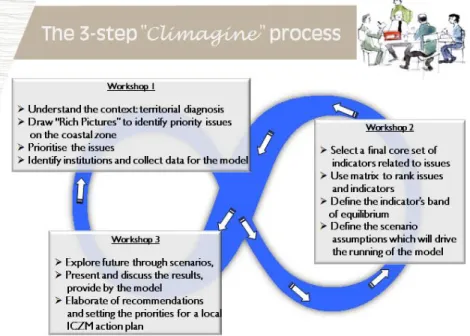
Some of these priorities identified within the Strategy are to be met by the project in the development of the costal plans. In addition to the coastal llan, Climagine is to be implemented in the selected area. Climagine is a participatory approach, providing tools and a methodology, developed by Plan Bleu during the previous GEF ClimVar & IZCM project (2010-2015) and applied in a joint manner with PAP/RAC in Sibenik-Knin County (Croatia) and Kerkennah archipelago (Tunisia). Climagine is to be used to raise the awareness of a wide group of relevant stakeholders, to disseminate knowledge and to build adaptation planning capacities. Finally, implementing Climagine along with the development of the Coastal Plan will capture local knowledge and build ownership, which represents key foundations for the implementation of the Plan, its recommendations, actions and measures.
During the finalization of the ClimVar & ICZM project, the GEF, MAP, PAP/RAC and Plan Bleu National Focal Points were requested to identify priority areas for the adaptation planning activities in Montenegro. Regional and country stakeholders agreed that the coastal hotspot in which to base the national activities should follow the findings of the ClimVar & ICZM project vulnerability assessments to sea-level rise and storm surges23.
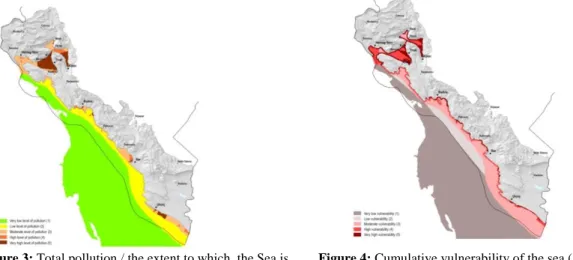
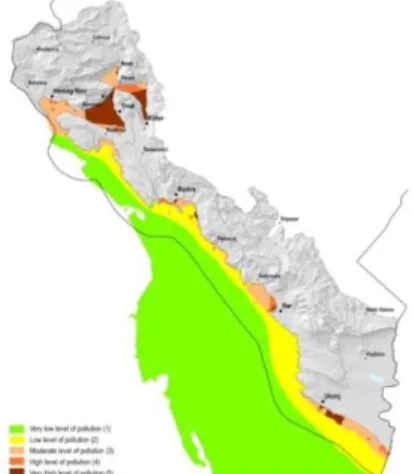
The above prioritization process resulted in the SCCF project prioritizing the development of a coastal plan for the Kotor Bay area in Montenegro. Besides being highly vulnerable to coastal flooding, Kotor bay area has the highest population density, as presented in Figure 1. According to the climate change vulnerability model, droughts, forest fires and stormy winds have the biggest impact in the areas of Herceg Novi and Budva municipalities and southern part of the Montenegrin coast. Heavy rains have the biggest impact in the parts of Kotor municipality and in Budva’s hinterland. Additionally, several areas within the Kotor Bay have been recognized as highly vulnerable to sea level rise(Figures 1 and 2). Finally, Kotor bay is also the area with the highest levels of sea pollution (Figure 3 and 4).
23Plan Bleu (Satta, A. et all.): Application of a Multi-Scale Coastal Risk Index at Regional and Local Scale in the Mediterranean, 2015
Figure 1: Population distribution by settlements Figure 2: Groundwater vulnerability
Figure 3: Total pollution / the extent to which the Sea is endangered (max. value)
Figure 4: Cumulative vulnerability of the sea (average value)
As a follow up to initial consultations had with Montenegro, and during country consultations in Q1 2018, the selection of the coastal hotspot that will be the basis of an adaptation planning exercise will be validated with all country
stakeholders.
Morocco – province of Tetouan
Morocco ratified the ICZM Protocol in 2012 and adopted the Coastal Law in 2015. In 2010 Morocco published the Guidelines for the Environment, Sustainable Development and Climate Change which served as a basis for numerous activities related to sustainable coastal development in recent years. Finally, in November 2016, Morocco hosted in Marrakesh the UNFCCC Conference of the Parties (COP) 22 and secured high visibility of the national endeavours towards mitigation and adaptation to climate change. These actions demonstrated a remarkable political will, and placed the country in a favorable position to benefit from the support of international partners to progress towards adapatation.
In addition, Morocco has already carried out several ICZM projects, including a Coastal Area Management Plan for the Central Rif with the support of PAP/RAC (2008 – 2010) 24and the ICZM project with the support of GEF/WB (2015 – still in progress), and a large database is now available that can be used for future studies.
As a response to the needs assessment performed during finalization of the ClimVar & ICZM project, Moroccan representatives requested support in several activities including the development of the Coastal plans for Tanger, Tétouan and Oriental Rif areas.
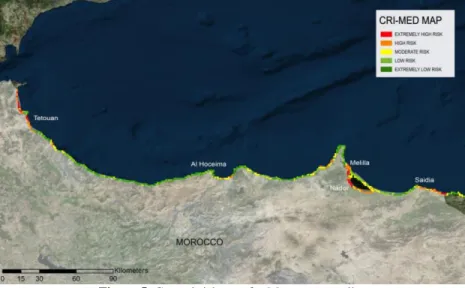
During the GEF ClimVar&ICZM project (2013-2015), a Multi-Scale Coastal Risk Index (CRI-Med) was applied at Regional and national levels (Figure 5) and a Local Scale Coastal Risk Index (CRI-LS) was applied in Tétouan coastal zone (Figure 5).
24 Secrétariat d’Etat auprès du Ministère de l’Energie, des Mines, de l’Eau et de l’Environnement/Direction de la Surveillance et de la Prévention des Risques, PAP/RAC, 2010, Gestion intégrée de la Zone Côtière du Rif Central, rapport de synthèse final.
Figure 5: Coastal risk map for Morocco coastline
According to Figure 5, there are two areas which are the most at risk (considering coastal hazards, vulnerability and forcing) due to climate change: the province of Tetouan (Figure 6) and the areas of Nador and of Berkane in Oriental Rif. It should be mentioned that the World Bank launched a € 5 million project in 2012 for the implementation of pilot ICZM actions for the Rif Oriental Region, which includes the Nador and Saïdia areas. Considering this information, the choice of Tetouan province for the elaboration of a coastal plan appears to be more relevant.
According to the last administrative division, the province of Tetouan consists of 2 municipalities and two rural circles grouping 8 caïdats and 20 rural communes. According to the results of the 2014 general population and housing census, the population of the province of Tetouan is of 550,374 inhabitants, representing 15.5% of the population of the
Tangier-Tetouan -Al Hoceïma region and 1.6% of the national population25.
The province of Tetouan is characterized by numerous rivers, the main ones being the Oued Martil, Oued Laou and Oued Amsa. However, the rapid increase in demand for water, related to the demographic and economic development needs, led to a growing usage of both underground and superficial waters. Having in mind that water is essential for many purposes (drinking water, agriculture, industry, etc.), its preservation is essential. Human activities and natural life dependent on it26.
The Tetouan coast stretches over 45 km along the northwestern Mediterranean coast of Morocco, between Fnideq village in the north and Ras Mazari headland in the south. In ecological terms, the coast of Tetouan is very rich in diverse natural ecosystems (beaches, dunes, wetlands, forests, floodplains, etc.). In addition, it is a very dynamic area from a socio-economic point of view, one of the most urbanized areas, and one of the most interesting areas for the development of tourism in Morocco. This coast, where new marinas and ports are located, is experiencing strong economic activity (tourism, agriculture, fishing and trade), and significant population growth26. In 1982 the urban population accounted for 63.79% of the total population, it rose to 71.21% in 1994 and to 72.13% in 2004. This trend is thus on the one hand in the mass migration of the rural population towards the urban centers and on the other in the extension of urban perimeters.
The shoreline is composed of two beaches separated by the Cabo Negro promontory (Figure 7). Tetouan coast is one of the Mediterranean coastal areas that has been the most rapidly and densely urbanized in Morocco. Unfortunately, development has been expanded without any integrated vision or long-term planning. Highly developed sections of the coast coupled with the high-energy, swell-dominated nature of the near shore makes it increasingly vulnerable to coastal
25 Direction générale de la région de Tanger-Tetouan, 2015, Monographie provinciale de Tétouan.
26 Niaizi S., 2007, Evaluation des impacts des changements climatiques et de l’élévation du niveau de la mer sur le littoral de Tétouan (Méditerranée occidentale du Maroc): Vulnérabilité et Adaptation. UNIVERSITÉ MOHAMMED V – AGDAL FACULTÉ DES SCIENCES Rabat.
erosion, storm surges and extreme weather events27. Being a dynamic and resilient system, the coastline responded with adjustments where and when possible, but more often with a retreat when the sand failure was not able to adjust. As a consequence, the coastline is now so heavily ”artificialized” that it is no longer possible for the beaches and the adjacent wetlands to migrate upwards or adapt to any new conditions imposed by the future sea-level rise.
The Tetouan coastline has already been the subject of many studies, especially regarding its past and recent evolution in response to natural and anthropogenic forcing26. All studies revealed a more or less significant erosion trend of the shoreline in the last decades. The drivers of change are multiple, including damming, sand mining, linear urbanization and construction of ports and marinas. Over 95% of the coastal dunes have been destroyed by housing and tourism infrastructure. The short-term sedimentary evolution of the shoreline was analyzed by El Mrini in 201127, using digital elevation models obtained from three successive surveys conducted during the stormy period of February and March 2008. Results showed that seasonal beach changes were not very significant; the most important variations were recorded after storms. The type and mobility of beaches were a function of their curvature and distance from headlands, exposure to waves, grain size and sediment supply. Morphological changes were shown to be faster and more excessive in reflective beaches located north of the Cabo Negro promontory; moreover, these beaches have a greater tendency for erosion. Historical shoreline positions for Tetouan coast, captured from multidate aerial photographs for the period 1958 to 20032628 and 1958-2007 27 showed an erosive trend of the shoreline. Eroded beaches represent 70% of the coastline, while the accretion areas account for only 14%. The overall coastline retreat is on average 80 meters in the north and 45 meters in the south coast. Average erosion rates are -1.8 m / year in the northern coast (between M'diq and Fnideq) and - 1.0 m/yr in the southern sector (Cabo Ngro to Azla)2628.
Figure 6: Coastal risk map for Tetouan Figure 7: Geomorphologic features of Teto
The Tetouan province is an important economic hub and at the same time a highly vulnerable area for climate change and a highly urbanized zone. Therefore taking into account the information provided in the above mentioned sources,
27 Evaluation des impacts des changements climatiques et de l’élévation du niveau de la mer sur le littoral de Tétouan ( Méditerranée occidentale du Maroc ) : Vulnérabilité et adaptation, 2011 - Faculté des Sciences Agdal, Rabat - Doctorat d'Etat.
28UNEP/MAP (Snoussi, M.): Regional experience on assessing impacts of climate variability and change in the Mediterranean area (GEF eligible countries), 2011
the Tetouan province appears to be the most relevant zone to prepare a coastal plan in the framework of this SCCF project.
Similarly to Montenegro, as a follow up to initial consultations held with Morocco thus far, the selection of the coastal hotspot that will be the basis of an adaptation planning exercise will be validated during planned consultations in Q1 2018 with the country stakeholders
Baseline projects
The SCCF-financed project will build on several projects and programmes that are currently being implemented at national level in Morocco and Montenegro. The project will be informed by and can positively influence these ongoing initiatives in the two countries.
The SCCF project ca