Strengthening Myanmar's institutional and technical capacities to comply with the Enhanced Transparency Framework of the Paris Agreement
Part I: Project Information GEF ID
10380 Project Type MSP
Type of Trust Fund GET
CBIT/NGI CBIT Yes NGI No Project Title
Strengthening Myanmar's institutional and technical capacities to comply with the Enhanced Transparency Framework of the Paris Agreement
Countries Myanmar Agency(ies) UNEP
Other Executing Partner(s)
Environment Conservation Department, Ministry of Natural Resources and Environmental Conservation Executing Partner Type
Government GEF Focal Area Climate Change Taxonomy
Focal Areas, Capacity, Knowledge and Research, Influencing models, Stakeholders, Gender Equality
Rio Markers
Climate Change Mitigation Climate Change Mitigation 2 Climate Change Adaptation Climate Change Adaptation 0
Submission Date 5/31/2021
Expected Implementation Start 1/1/2022
Expected Completion Date 12/31/2024
Duration 36In Months Agency Fee($) 134,753.00
A. FOCAL/NON-FOCAL AREA ELEMENTS Objectives/Programs Focal Area
Outcomes Trust
Fund GEF
Amount($) Co-Fin Amount($)
CCM-1-1 GET 1,418,450.00
Total Project Cost($) 1,418,450.00 0.00
B. Project description summary
Project Objective
To strengthen Myanmar's institutional and technical capacity to meet the Enhanced Transparency Framework (ETF) of the Paris Agreement
Project Compon ent
Finan cing Type
Expected Outcomes Expected
Outputs Tr
ust Fu nd
GEF Project Financin
g($)
Confirm ed Co- Financin g($)
Project Compon ent
Finan cing Type
Expected Outcomes Expected Outputs
Tr ust Fu nd
GEF Project Financin
g($)
Confirm ed Co- Financin g($)
Componen t 1.
Technical support provided to
strengthen institution al and human capacities for preparing GHG inventorie s on a regular basis in accordanc e with Paris Agreemen t
requireme nts
Technic al Assista nce
1. Myanmar prepares and delivers high-quality reports according to Paris
Agreement requirements and ETF standards
1.1. Formal institutional arrangemen ts,
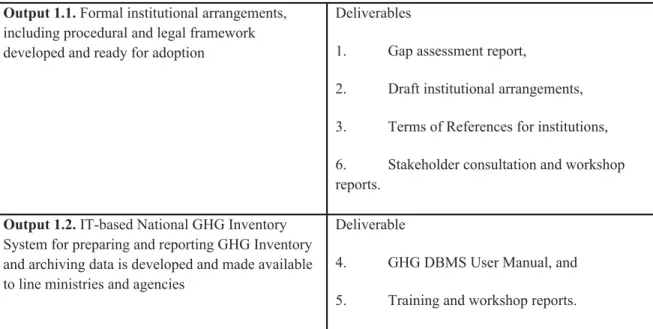
including procedural and legal framework developed and ready for adoption 1.2 IT based National GHG Inventory System for preparing and reporting GHG Inventory and archiving data developed and made available to line ministries and agencies 1.3. Tools and protocols for GHG data collection and GHG Inventory preparation developed and adopted, and key staff trained on their utilization 1.4.
Country- applicable emission factors database developed for the energy, agriculture and livestock sectors
GE T
766,200.
00
Project Compon ent
Finan cing Type
Expected Outcomes Expected Outputs
Tr ust Fu nd
GEF Project Financin
g($)
Confirm ed Co- Financin g($)
Componen t 2.
Technical support provided to strengthen ing institution al and human capacities to track and report transparen tly on implement ation of its mitigation actions in National Determine d
Contributi ons and support received
Technic al Assista nce
2. Myanmar tracks its progress towards the achievement of its NDCs[1] and the related support received, and reports according to Paris Agreement ETF requirements;
[1] Nationally Determined Contribution
2.1.
Monitoring indicators and tools to track progress towards the energy goals defined in the NDC designed and made available to relevant ministries and agencies
2.2.
Domestic system for tracking NDC Mitigation actions is designed and operationali zed
2.3.
Framework for tracking support received for implementi ng NDC designed and recommend ations for implementa tion developed
GE T
345,900.
00
Project Compon ent
Finan cing Type
Expected Outcomes Expected Outputs
Tr ust Fu nd
GEF Project Financin
g($)
Confirm ed Co- Financin g($)
Componen t 3.
Strengthen ing regional cooperatio n for knowledge and informatio n sharing including cooperativ e research projects for developin g emission factors
Technic al Assista nce
3. Myanmar
cooperates, and shares knowledge related to ETF with other countries in the region
3.1. Regional cooperation and peer-peer exchange workshops organized
GE T
140,400.
00
Monitorin g and Evaluation
Technic al Assista nce
M&E GE
T
37,000.0 0
Sub Total ($) 1,289,50 0.00
0.00
Project Management Cost (PMC)
GET 128,950.00
Sub Total($) 128,950.00 0.00
Total Project Cost($) 1,418,450.00 0.00
C. Sources of Co-financing for the Project by name and by type Sources of Co-
financing Name of Co-
financier Type of Co-
financing Investment
Mobilized Amount($)
Total Co-Financing($) Describe how any "Investment Mobilized" was identified
The EA has not provided any written confirmation of the co-finance for the project. It will oversee the execution of project and host the project management unit (PMU). The EA will provide in-kind
contribution through office space for the PMU, time of the national project director (full time staff of EA) who will supervise the PMU, and meeting space/room for project meetings. This will be captured in the project information reports (PIRs). The project will also re view other source of co-finance during the project implementation and capture them through the PIRs.
D. Trust Fund Resources Requested by Agency(ies), Country(ies), Focal Area and the Programming of Funds Agenc
y Trust
Fund Country Focal
Area Programmin
g of Funds Amount($) Fee($)
UNEP GET Myanmar Climat
e Change
CBIT Set-Aside 1,418,450 134,753
Total Grant Resources($) 1,418,450.00 134,753.00
E. Non Grant Instrument
NON-GRANT INSTRUMENT at CEO Endorsement
Includes Non grant instruments? No Includes reflow to GEF? No
F. Project Preparation Grant (PPG) PPG Required true
PPG Amount ($) 40,000
PPG Agency Fee ($) 3,800
Agenc
y Trust
Fund Country Focal
Area Programmin
g of Funds Amount($) Fee($)
UNEP GET Myanmar Climat
e Change
CBIT Set-Aside 40,000 3,800
Total Project Costs($) 40,000.00 3,800.00
Core Indicators
Indicator 1 Terrestrial protected areas created or under improved management for conservation and sustainable use
Ha (Expected at PIF)
Ha (Expected at CEO
Endorsement) Ha (Achieved at
MTR) Ha (Achieved at
TE)
0.00 0.00 0.00 0.00
Indicator 1.1 Terrestrial Protected Areas Newly created
Ha (Expected at PIF)
Ha (Expected at CEO
Endorsement)
Total Ha (Achieved at MTR)
Total Ha
(Achieved at TE)
0.00 0.00 0.00 0.00
Name of the Protecte
d Area WDP
A ID
IUCN Categor y
Total Ha (Expecte d at PIF)
Total Ha (Expected at CEO
Endorsement )
Total Ha (Achieve d at MTR)
Total Ha (Achieve d at TE) Akula
National Park
125689 SelectOth
ers
Indicator 1.2 Terrestrial Protected Areas Under improved Management effectiveness
Ha (Expected at PIF)
Ha (Expected at CEO
Endorsement)
Total Ha (Achieved at
MTR) Total Ha
(Achieved at TE)
0.00 0.00 0.00 0.00
Name of the Prote cted Area
W DP A ID
IUCN Cate gory
Ha (Expe cted at PIF)
Ha (Expecte d at CEO Endorse ment)
Total Ha (Achi eved at MTR)
Total Ha (Achi eved at TE)
METT score (Baselin e at CEO Endorse ment)
METT score (Achi eved at MTR)
METT score (Achi eved at TE)
Indicator 11 Number of direct beneficiaries disaggregated by gender as co-benefit of GEF investment Number
(Expected at
PIF) Number (Expected at CEO Endorsement)
Number (Achieved at MTR)
Number (Achieved at TE)
Female 75 75
Male 75 75
Total 150 150 0 0
Part II. Project Justification
1a. Project Description
1a. Changes in project design
Minor changes and adjustments were undertaken in complete project design regarding the project results framework, budget and co-finance
amount based on UNEP Project Review
Committee feedback as shown in table below.
Component, outcome, output
PIF CEO ED
Output 1.1
Formal institutional arrangements established including procedural and legal frameworkFormal institutional arrangements, including procedural and legal framework developed and ready for adoption
Output 1.3
Tools and protocols developed and adopted for GHG data collection and GHG Inventory preparation, and training provided to stakeholders;Tools and protocols for GHG data collection and GHG Inventory preparation developed and adopted, and key staff trained on their utilization
Output 1.4
Country-specific emission factors developed for energy sector and agriculture and livestock sectorCountry-applicable emission factors database developed for the energy, agriculture and livestock sectors
Output 2.1 (2.2 in PIF)
Monitoring indicators and tools to track progress towards the energy goals designed and made available;
Monitoring indicators and tools to track progress towards the energy goals defined in the NDC designed and made available to relevant ministries and agencies
While the project outcomes remain unaltered, their wording has been modified. The scope of Output 1.4 has been narrowed to developing a database of emission factors (EF) drawing on research on emission factors from across the region and from countries with similar conditions in lieu of developing country specific emission factor. The most important factor in improving GHG inventory is the uncertainty in the activity data. Thus, the resources are focused on improving the quality and accuracy of data and GHG data base management system. The IPCC defaults, though in some categories are based on regional characteristics, may not be applicable to the country. A number of countries in the neighboring region, which have capacities, are undertaking work on country specific emission factors. Also, a body of research publication on the emissions factors in the countries within the region is available. Using this more region specific emission factor data is a cost-effective step in reducing the uncertainties in GHG inventory due to IPCC default factors. Thus the GEF resources will be more effectively used in improving the data collection systems to reduce the large uncertainty compared to spending the same level of resources in developing country specific emission factor.
Further, the capacities within the research institutes and universities is not at a level to undertake research on country specific emission factors. Output 1.4 will enable developing linkages with research institutes working on emission factor development and these linkages over time will help country develop necessary capacity to develop its own emission factors.
Budget allocation of components has slightly changed on two counts: in the PIF the cost of terminal evaluation was reflected in each of the component, which is now consolidated under M&E budget line;
and, the cost of component 1 is slightly increased, and component 2 slightly decreased as the costs related to NDC registry is reflected in the cost of GHG database system to be developed, as both will be on the same platform.
1b. Project Description
a) Global environmental and/or adaptation problems, root causes and barriers that need to be addressed
Global environmental problem and localized impacts: Anthropogenic climate change is widely accepted as the most significant environmental challenge faced by the world in the 21st century. The Fifth Assessment Report[1]1 (AR5) (2014) and the Global Warming of 1.5 ?C (2018) special report[2]2 by the Intergovernmental Panel on Climate Change (IPCC) confirms that climate change will
significantly impact the Republic of the Union of Myanmar (hereafter Myanmar), which is a least developed country (LDC) whose economy is highly dependent on natural resources. Several studies have been conducted highlighting Myanmar?s vulnerability to climate change. According to the Global Climate Risk Index 2021, between 2000-2019, Myanmar was one of the three most vulnerable
countries affected by extreme weather events and exceptionally devastating events such as hurricanes (like Cyclone Nargis); as measured by having one of the highest fatality rates per 100,000 inhabitants.
The World Bank[3]3 has identified an increasing frequency of severe droughts throughout the country;
cyclones have made landfall along Myanmar?s coastline every year; and, an increase in extreme high temperatures and its effects on human health, among others. A 2017 report, Assessing Climate Risk in Myanmar,[4]4 applied climate risk information to various sectors such as biodiversity, coastal zones, health, water resources and other sectors. In addition to these vulnerabilities, the country, like other LDCs, faces developmental deficits across all sectors. For this reason, Myanmar will need to prioritize development objectives, and this will likely contribute directly or indirectly, to increase in its net greenhouse gas (GHG) emissions. As per its most updated GHG inventory, submitted to the United Nations Framework Convention on Climate Change (UNFCCC) in 2005, Myanmar contributed to less than 0.75% of global emissions. Despite its miniscule contribution, the country will be making all efforts within its human, financial and technical capacity to limit the growth of GHG emissions.
Paris Agreement and Myanmar: The 21st Conference of the Parties (COP21) was a key milestone for the international climate negotiations in adopting the Paris Agreement (PA), which came into force in 2016. Myanmar signed and ratified the Agreement on 19 September 2017. One of the unique aspects of the PA is the contribution of both Annex 1 Parties and non-Annex 1 Parties in climate change
mitigation efforts in the form of nationally determined contributions (NDCs). Article 13 of the PA outlines the transparency framework relating to the transparency of action and support. The main purpose of the ETF is to improve mutual accountability amongst the Parties in terms of their efforts for emissions reduction, adaptation efforts and support needed and received for addressing climate change.
Myanmar?s climate ambitions: Despite being a country with very limited emissions, the Myanmar is committed to support the temperature goal of the PA. Myanmar submitted a fair and ambitious Intended Nationally Determined Contribution (INDC) in September 2015 with mitigation and adaptation actions in a number of sectors. In its draft 2021 NDC currently being finalized, Myanmar aims to reduce its total emissions by an estimated 244 MtCO2e by 2030. The country has expanded the scope and scale of unconditional sectoral targets for GHG mitigation significantly beyond the initial focus on electricity generation and forestry. Subject to the availability of financial resources, technology transfer and capacity building, the country has also identified conditional targets that will allow it to reduce GHG emissions further by approximately 413 MtCO2e. This updated NDC is under review by the Government and is expected to be submitted in the coming months.
Requirements emanating from the Paris Agreement reporting framework: Parties to the UNFCCC agreed on the Katowice Climate Package during the 24th Conference of the Parties (COP 24) held in December 2018. The Katowice Climate Package included eight guiding principles for the modalities, procedures and guidelines (MPGs) of the Enhanced Transparency Framework (ETF) under the PA.
These include:
1) Building on, and enhancing the transparency arrangements under the Convention, recognizing the special circumstances of the LDCs and Small Island Developing States (SIDS), and implementing the transparency framework in a facilitative, non-intrusive, non-punitive manner, respecting national sovereignty, and avoiding placing undue burden on Parties;
2) The importance of facilitating improved reporting and transparency over time;
3) Providing flexibility to those developing country Parties that need it in the light of their capacities;
4) Promoting transparency, accuracy, completeness, consistency and comparability;
5) Avoiding duplication of work and undue burden on Parties and the secretariat;
6) Ensuring that Parties maintain at least the frequency and quality of reporting in accordance with their respective obligations under the Convention;
7) Ensuring that double counting is avoided; and 8) Ensuring environmental integrity.
Challenges posted to Myanmar in meeting the requirements of ETF: The ETF requires all Parties to compile national GHG inventories (GHGI), and to report on the implementation of mitigation actions (tracking of NDC implementation) on a regular basis. Myanmar faces several challenges (technical and human capacity, and financial) in meeting its current reporting obligations as mentioned in the root causes and barriers analysis presented below. The enhanced reporting systems under the Paris
Agreement only further add to these existing gaps. Nonetheless, the country has committed to make all efforts to meet its obligations under the ETF, using the flexibilities provided to LDCs till the in-country ETF mechanism is strengthened to enable Myanmar to address all the requirements.
Reports submitted by Myanmar to the UNFCCC and the Paris Agreement
Reports to the UNFCCC: As part of its obligations under the UNFCCC, Myanmar has to date submitted its initial national communication (INC) and is in the final stages of finalizing its second national communication (SNC) as well starting preparation on its first biennial update report (BUR1).
However, as an LDC with limited internal resources (technical, financial and human) and access to external climate finance, the country has faced challenges in gathering the required data and
information. The country has reported one GHGI of its emissions and removals for the year 2000 in the INC it submitted in 2012. The INC also reported on a time-series of GHG emissions from the energy, industrial processes and product use (IPPU), agriculture and livestock sectors for the years 2000-2005.
Myanmar could estimate methane emission projections for the waste sector for the years 2000-2020.
The country continues to face challenges in continually monitoring its emissions and removals to create a complete time-series of GHGI.
Reports to the Paris Agreement: Myanmar launched itself on an ambitious journey to contribute to the global aim of reducing GHG emissions, to restrict the increase in global average temperature to less than 2?C and indeed pursue efforts to limit it to 1.5?C, by submitting its intended nationally determined contributions (INDC) in 2015, which has now been adopted as its nationally determined contributions (NDC) following its ratification and coming into effect of the Paris Agreement. The country has subsequently progressed on its updated NDC submission as well, which is in its final stages of approval. Thereby Myanmar will become one of the few LDCs to meet their reporting obligations under the Paris Agreement. This not only demonstrates the country?s commitment, but also its leadership in pursuing ambitious targets that are synchronized with its national development priorities.
Challenges in regular reporting: The country has been unable to meet its reporting obligations under the UNFCCC because of the key challenges and barriers, as identified in below paragraphs.
Key challenges in regularly reporting to the Convention
1) Human capacities to address climate change: There is limited availability of trained human resources and technical institutes in the country to assess the impacts of climate change, identify vulnerable communities / regions / sectors, and create appropriate mitigation and adaptation strategies and actions plans. Similarly, the country has limited human resources and institutes to develop GHG emissions projections over the medium to long term, to identify opportunities to reduce the emissions, to integrate these actions into development planning and processes, and to develop strategies and action plans. This impacts the identification and development of actions to collect data relevant for assessing GHG emissions, impacts of development actions on increase/decrease of GHG emissions, adaptation related data etc.
2) Technical Capacity to prepare National Communications (NCs)/Biennial Update Reports (BURs):
ECD is responsible for preparing and reporting to the UNFCCC. However, it lacks sufficient capacity in its staff to understand the requirements of reporting, data requirements, assessment, and analysis of data, etc., especially with the updated reporting requirements under the ETF. The INC and NDC and the newly revised draft NDC (2020) were prepared with the support from consultants or development partners. This lack of understanding of inventory preparation and assessing climate actions, including data requirements, extends to other government entities and other key stakeholders as well.
3) Tools and templates for GHGI preparation: To prepare the GHGI under the INC and SNC, ECD sent specific requests for data collection, creating the templates for each iteration. The entities
responsible for providing the activity data and/or emission factors did not have this information readily available with them. ECD also had challenges in undertaking the quality checks and assurance of the data.
4) Project based approach to preparing the UNFCCC reports: The preparation of a report, such as the NC and BUR, is implemented as a discrete project rather than as a regular part of the mandate of the focal ministries and the related line ministries and agencies. This also relates to the fact that the NC and BUR reports are treated as reports to meet the (external) Convention/Protocol/Agreement
requirements rather being used as a tool for monitoring by the country of its climate change related actions and challenges for its medium to long term development. This results in ad hoc approaches and
processes to deliver the required reports, with insufficient retention of capacities nor establishment of systems enabling future reporting.
5) Mainstreaming of Climate actions: Climate action is officially regarded as the responsibility of the ECD within Ministry of Natural Resources and Environmental Conservation (MONREC), which is the UNFCCC focal point for negotiations and reporting. The development of the NDC, NC as well as the Myanmar Climate Change Strategy, Policy and Action Plan (MCCSP & AP) were led by ECD and its development partners, and although these were prepared in a highly consultative manner with other government stakeholders, these efforts largely ended with completion of the relevant report/policy documents due to reliance on external funding. Consequently, climate change actions are not yet mainstreamed into the plans and responsibilities of all government departments and ministries. This has implications in terms of capacity within each government entity to understand the data requirements required for preparing reports. Moreover, while ECD is responsible for coordinating the work, the necessary data and information necessary for the work is collected and owned by other line ministries, which ECD can only request, rather than being a legal obligation of other line ministries to provide.
6) Challenges in monitoring mitigation actions: Myanmar lacks experience in tracking and reporting of mitigation actions. Myanmar will be producing its first report on progress and impacts of mitigation actions implemented till date in the BUR1. There is currently no capacity to undertake this process in a systemic manner that assists in linking these seamlessly into NDC implementation and update. The updated NDC, expected to be submitted to the UNFCCC soon, will have additional mitigation actions and the country needs to quickly update its capacity to measure progress on these activities.
Barriers preventing Myanmar from addressing these challenges
1) Lack of permanent institutional arrangements for preparing reports to the Convention: ECD has been mandated to lead the preparation of reports to the Convention. Most line ministries and other institutions that manage or report on activities that result in emissions (or removals) have no defined mandate to address climate change issues. Consequently, they have no obligation to collect data relevant to preparing a GHG inventory or measuring / estimating / calculating GHG emissions (or removals). Furthermore they have no obligation to share this information with the coordinating entity (ECD). ECD does establish project coordination committees and technical working groups (see baseline section) to engage relevant government entities in preparing reports to the UNFCCC or the Paris Agreement. The (primarily) government staff nominees who participate in these project institutional arrangements may have limited knowledge of, or no formally assigned responsibility for their agency in reporting on climate change, rather are nominated from the unit/department whose activities seems most relevant to the concerned ministry. Therefore, these responsibilities are assigned on an ad hoc basis, and are seen as additional responsibilities that are not part of their primary mandate.
Moreover, there are no centrally defined processes for NC, BUR and GHGI preparation, no clear-cut roles and responsibility charts for line ministries or other departments (or private sector actors), for directives defining the protocols for regularly collecting, compiling, reviewing, reporting or maintain data. As previously mentioned, there are also no government directives (or official legal instrument) defining such a mandate. A Global Green Growth Institute (GGGI) assessment of the Energy Sector reporting systems observed that although ECD has the authority to request data from each ministry, given the lack of mandate for ministry on climate change there are no systems or personnel available in counterpart agencies to comply with these requests and to provide timely data. Consequently, the sourcing data can take a long time, delaying the preparation of reports.
2) Absence of data sharing policy or mandate: There is no clear policy or requirement on the part of Government entities that collect data to share it with ECD. In the absence of any formal process, all data that is collected by ECD through official requests and the speed of its availability is dictated by relationships and understanding of the assigned staff in the line ministry. For the SNC, the GHGI team relied on iterative use of three different means of communication (via email, through official
consultation meetings, and through official request letters) to collect data from 2005 to 2015. This is compounded by the fact that there is no centralized system for storing, archiving, and retrieving data and information for current collection of data either within or across departments and ministries.
Generally, the data that is available is published in various locations in different formats and needs to be collected and collated on a needed basis. There is also no established data retention policy that will enable either the relevant ministry or department or the ECD to retrieve it on demand, and elaborate procedures frequently have to be redeployed to gather the same data.
3) Lack of proper methods in data acquisition, analysis, and management: As mentioned, the data for preparing NCs and BUR have been collected on an ad hoc basis to prepare the report. The SNC project has prepared data templates for GHG inventory based on the data requirements under the IPCC 2006 Guidelines and the UNFCCC Non-Annex I Inventory Software (NAIIS)[5]5. There is no
guideline or tool to define how to collect the required data, the methodologies for estimating and analysing the data to prepare GHG inventories or to assess impacts of climate actions. Further, there are no guidelines or systems for quality control of data collected, of the reported data, or the analyses performed to ensure the accuracy of the estimates. Further, there is no system for storing and managing the collected data and analysis within ECD.
4) Reluctance by the private sector in provision of their data: Since much of activity data directly relates to industries? production line data and rates, many private sector entities and stakeholders are hesitant to share this data with Government entities and consider them confidential. The private sector actors that are the most significant emitters of GHGs currently have no obligation nor demonstrate any voluntary interest in systematically collecting data of relevance for preparing a GHGI. Private sector capacity for such data collection and GHGI preparation and its other associated processes need to be assessed and enhanced.
5) Lack of systems for building capacity among various stakeholders: Even though Myanmar completed its first GHGI (for the year 2000), most of the GHG inventory stakeholders who participated in this exercise have already retired, and the next generation of government staff and university personnel involved did not receive the necessary capacity building for GHGI preparation for the SNC.
In part this is due to the standard practice of civil servant assignment rotations between HQ
departments and regional/state office postings, and promotions that create a high rate of staff turnover.
Consequently, new staff members involved in GHGI preparation have insufficient technical knowledge or exposure to GHGI, requiring the SNC to conduct extensive preparatory activities to first develop this capacity internally before preparing the GHGI, thereby causing bottlenecks. The current SNC team has been established on an ad-hoc basis, and relies extensively on consultants, so the government staff members involved cannot expect to be tasked with preparing the next inventory. Without permanent assignments, any technical capacity transfer can be expected to be minimal without express
interventions. Over the course of 2018-2020, ECD, working with GGGI and the Australian Volunteers Program, has established a Training-for-Trainers program providing overall introduction to concepts related to monitoring, reporting and verification (MRV) of Myanmar?s NDC. Significant further investments are needed to scale up and ensure annual delivery of this training for, and deepen the technical scope of the training to encompass the range of technical specifications needed in a GHGI for different departments and ministries
In summary, there is a need, therefore, for the Myanmar to:
? Establish a permanent institutional arrangement mandating GHG inventory compilation and tracking of NDC commitments;
? Develop a centralized climate data management system for GHG data, tracking of mitigation actions, adaptation actions, and support received and needed; and
? Develop tools and train experts to meet the enhanced transparency framework under the Paris Agreement.
b) Baseline scenario and any associated baseline projects
Myanmar ratified the UNFCCC on 11 June 1992, the Kyoto Protocol on 13 August 2003, and signed the Paris Agreement on 22 April 2016, ratifying it on 17 September 2017. This section provides the National Environmental Policy framework, including the climate change policies governing country?s climate change response and the elements related to: Institutional arrangements for coordination climate change policy implementation including GHG inventory preparation, GHG Inventory compilation system, Climate action tracking, and climate finance tracking.
National Planning and Environmental Policy Framework
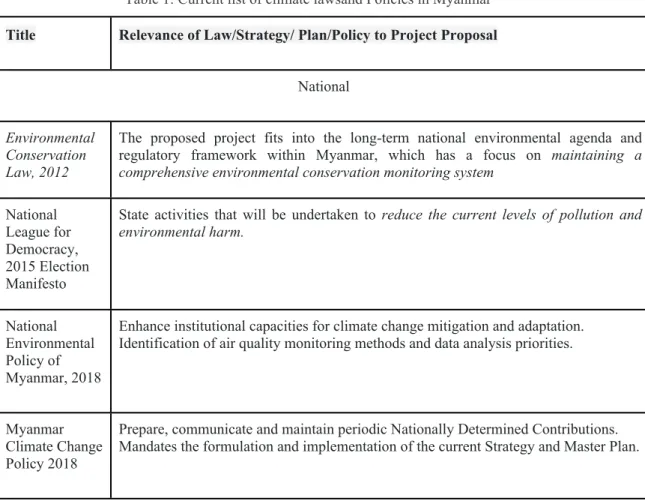
Myanmar has developed a variety of sectoral policies and planning documents in pursuit of its national development goals. A summary of the strategies, plans, and policies that are relevant to this project proposal is provided in the table below.
Table 1: Current list of climate lawsand Policies in Myanmar Title Relevance of Law/Strategy/ Plan/Policy to Project Proposal
National
Environmental Conservation Law, 2012
The proposed project fits into the long-term national environmental agenda and regulatory framework within Myanmar, which has a focus on maintaining a comprehensive environmental conservation monitoring system
National League for Democracy, 2015 Election Manifesto
State activities that will be undertaken to reduce the current levels of pollution and environmental harm.
National Environmental Policy of Myanmar, 2018
Enhance institutional capacities for climate change mitigation and adaptation.
Identification of air quality monitoring methods and data analysis priorities.
Myanmar Climate Change Policy 2018
Prepare, communicate and maintain periodic Nationally Determined Contributions.
Mandates the formulation and implementation of the current Strategy and Master Plan.
Myanmar Climate Change Strategy - and Myanmar Climate Change Master Plan, 2018 - 2030
Establish operational institutional arrangements and a coordination mechanism to monitor progress towards achieving objectives (e.g., Reducing Emissions from Deforestation and Degradation (REDD+) and NCs). Delivers the Myanmar National Climate Change Policy.
Intended Nationally Determined Contribution, 2015
States the mitigation and adaptation actions that will be implemented to attain the intended nationally determined contribution to GHG emission reductions.
National Comprehensive Development Plan, 2011 - 2030
Climate change is considered a main focus under the ?environmental pillar?.
Green Economy Policy Framework
Identification of capacity building priorities, including training relevant government departments on audits and data collection
Myanmar Action Plan on Disaster Risk Reduction 2009
? 2015
Unified action plan for disaster risk reduction with prioritized interventions across Myanmar until 2020. The action plan identifies 32 priority actions under four pillars:
risk information and awareness; risk governance; risk mitigation; and preparedness and response, rehabilitation and reconstruction. For each priority action, objectives, activities, outputs, duration, lead agencies, and supporting partners have been identified. The priority actions aim to strengthen the policy frameworks and systems for long-term risk reduction. Robust implementation, funding, as well as monitoring and evaluation mechanisms have been identified.
National Energy Efficiency and Conservation Policy 2016
This policy focuses on four main sectors: industrial, commercial, residential and public, and sets a number of energy reduction targets.
Myanmar?s National Adaptation Program of Action (NAPA) to Climate Change 2012
Myanmar?s NAPA specifies 32 priority activities (referred to as Priority Adaptation Projects) for effective climate change adaptation for eight main sectors/themes;
agriculture, early warning systems, forest, public health, water resources, coastal zone, energy and industry, and biodiversity.
International
Reporting to
the UNFCCC Myanmar?s INC and NAPA have been submitted to the UNFCCC in 2012. INDC in 2015 and FREL in 2018 are also in place. Updated INDC or NDC has been drafted with revised and additional targets of energy and LULUCF (particularly forestry) sectors. The country is preparing its SNC with UN Environment which is likely to be submitted to the UNFCCC as much as possible. The country is in the process of initiating preparation of its first BUR and NAP.
Myanmar Reducing emissions from deforestation and forest degradation (REDD+) Readiness Roadmap 2013
The Roadmap sets out how Myanmar will implement its REDD+ Readiness activities with emphasis on six components: REDD+ management, multi-stakeholder
involvement, National REDD+ Strategy, national FREL, Safeguard Information System and Forest Monitoring System.
Myanmar National Climate Change Policy
The Myanmar Climate Change Policy[6]6 and the related Myanmar Climate Change Strategy and Master Plan (2018-2030) were adopted by the country in 2019. Basing it on the currently available scientific literature and evidence, the Policy set out a vision to the country a climate-resilient, low carbon society that is sustainable, prosperous and inclusive, for the wellbeing of present and future generations. This policy builds on the following: ?guiding principles of Sustainable Development, using a precautionary approach, with a view to taking anticipatory action to prevent or minimize environmental damage, ensuring the environmental integrity expressed through the promoting, protecting and conserving the natural environment and recognizing its complete and intrinsic value, emphasizing shared responsibility and cooperation; ensuring inclusiveness, good governance to achieve climate justice and equity through several measures that, among other things, can contribute to gender equality and women?s empowerment.?
The Policy defined a number of sector-specific priorities and actions to be implemented, focused on:
? Food and water security,
? Healthy ecosystems,
? Low-carbon and resilient growth,
? Resilient urban and rural settlements,
? Human wellbeing, and
? Knowledge, awareness, and research.
Myanmar envisions that it will take the following overarching and cross-cutting measures to enable implementation of this Policy, namely by:
1) Amending existing or adopting new laws, regulations, strategies, action plans and policies;
2) Establishing or strengthening existing institutions;
3) All sectors assess the finance, budgets and investment required;
4) Continuing to build capacities;
5) Promoting research and technology, especially the collection, analysis and dissemination of real- time data and information on short-, medium- and long-term climate change impacts, trends and projections relating to all geographic regions;
6) Strengthening current partnerships and building new ones;
7) Ensuring transparency and accountability of all stakeholders; and 8) Continually monitoring, evaluating, reporting and learning.
Institutional setup for coordinating and oversight on climate action implementation
The National Environmental Conservation and Climate Change Central Committee (NECCCC) is the main inter-ministerial body responsible for coordinating the implementation the Myanmar Climate Change Policy and Myanmar?s NDC. This decision making and coordinating body comprises a total of twenty-three? members, with twenty representatives from across eighteen ministries, and one
representative each from a CSO, NGO, and the private sector. Under this overarching body, the NECCCC assigned roles to focal agencies (Ministries) to advance activities under the respective sectoral outcomes, monitor progress, and report back to the NECCCCC on implementation of climate change policy on a yearly basis. MONREC acts as the secretariat for the NECCCC and operationalizes its functions through six permanent Working Committees. These are:
1) Policy, Law, Rules, and Quality Standard,
2) Industrial plans, urban and rural environment and waste management, 3) Natural resources, biodiversity and cultural heritage conservation, 4) Climate change adaptation and mitigation,
5) Environmental conservation, human development, education and awareness, and 6) Green economy and development.
The NECCCCC formally assigns the roles of coordination and monitoring to state- and regional-level environmental conservation and climate change committees in each of Myanmar?s seven states and seven regions as well as in the Nay Pyi Taw Union Territory. These committees in turn are required to assess progress in cooperation with district, township and city authorities and other partners, each of which will also have their own environmental conservation and climate change committees (E-5Cs).
The state and region E-5Cs are to ensure that all programs, projects and activities implemented in the
state, region, district, city or township contribute to the progress of the NDC and are responsible for reporting to the NECCCCC.
Though the institutional arrangement is defined in the MCCA, it has not been operationalized. The supporting institutional structure to enable NECCCCC and E-C5s to perform their functions too have not been elaborated.
GHG Inventory Compilation process
As mentioned earlier, Myanmar has submitted only one NC and is in the process of finalizing its second NC and initiating work on first BUR. There is no formal defined process for initiating the GHG inventory process and it is tied to funding received from GEF under the convention. The Project Implementation Plan (PIP) lays out the work plan for preparing the GHG inventory and the report as well as defines the key partners to be engaged and the institutional arrangement created to coordinate preparation of report.
INC used The Intergovernmental Panel for Climate Change (IPCC) 2006 guidelines in preparing the GHG inventory, which are also used for preparation of the SNC and BUR GHG inventories. There are no country specific emission factors/default values available in Myanmar and therefore the emission factors and default values as described in IPCC 2006 Guidelines are used for preparing the GHG Inventory.
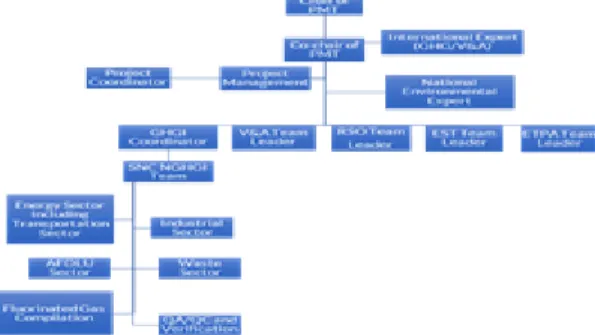
The SNC process has established a National Greenhouse Inventory and Mitigation Action Thematic Working Group to support preparing the inventory, and through Notification (90\2018) of MONREC (See figure 2 below). The Data has been requested to 13 members from respective departments and enterprises from MoEE for Energy Sector and Ministry of Transport and Communications (MoTC) for Transportation Sector. The activity data will be collated from various government publications as well as from international publications that include data relevant to Myanmar (International Energy Agencies (IEA), Food and Agriculture Organization (FAO), UN Statistics, etc.).
The SNC is working through several activities aimed at increasing the reliability of data available. The GHGI itself is being compiled as per the UNFCCC Inventory Software (v-132), while the data entry and estimate has been through the IPCC Inventory software (v 2.54). In addition to these, the
Agriculture and land-use national GHGI software[7]7 is also being used. The SNC development team is relying on hard and soft copies of data, as well as a cloud-based data storage service.
Figure 2: Institutional setup for preparing snc
Transparency framework for tracking Mitigation Actions
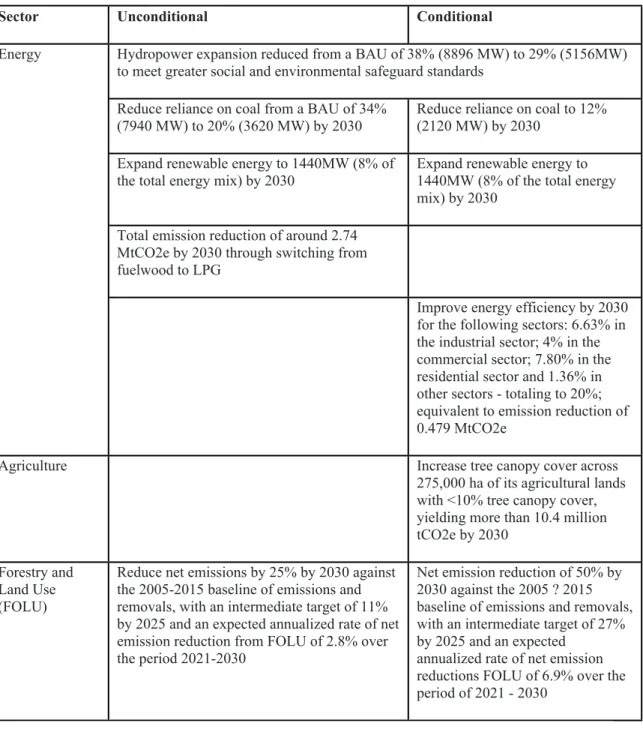
Myanmar?s NDC has largely been informed by sectoral polices and plans developed through sectoral planning processes for both climate change adaptation and mitigation. It refers to and is based on national sectoral polities, including those indicated above in Table 1, whose constituent Ministries have
committed to meeting the NDC targets outlined in Table 2 below. Myanmar?s unconditional total emissions reduction contributions as set out in its draft NDC are 244 million tCO2e, whereas the country is aiming to achieve a total of 413 million tCO2e in emissions reductions as a conditional target by 2030, subject to the availability and provision of international finance and technical support.
Table 2: Current list of targets in the NDC (2020)
Sector Unconditional Conditional
Hydropower expansion reduced from a BAU of 38% (8896 MW) to 29% (5156MW) to meet greater social and environmental safeguard standards
Reduce reliance on coal from a BAU of 34%
(7940 MW) to 20% (3620 MW) by 2030 Reduce reliance on coal to 12%
(2120 MW) by 2030 Expand renewable energy to 1440MW (8% of
the total energy mix) by 2030
Expand renewable energy to 1440MW (8% of the total energy mix) by 2030
Total emission reduction of around 2.74 MtCO2e by 2030 through switching from fuelwood to LPG
Energy
Improve energy efficiency by 2030 for the following sectors: 6.63% in the industrial sector; 4% in the commercial sector; 7.80% in the residential sector and 1.36% in other sectors - totaling to 20%;
equivalent to emission reduction of 0.479 MtCO2e
Agriculture Increase tree canopy cover across
275,000 ha of its agricultural lands with <10% tree canopy cover, yielding more than 10.4 million tCO2e by 2030
Forestry and Land Use (FOLU)
Reduce net emissions by 25% by 2030 against the 2005-2015 baseline of emissions and removals, with an intermediate target of 11%
by 2025 and an expected annualized rate of net emission reduction from FOLU of 2.8% over the period 2021-2030
Net emission reduction of 50% by 2030 against the 2005 ? 2015 baseline of emissions and removals, with an intermediate target of 27%
by 2025 and an expected annualized rate of net emission reductions FOLU of 6.9% over the period of 2021 - 2030
Myanmar is in the final stages of submitting its updated NDC, and the table above reflects the current draft version. However, the work of the project will be based on updated NDC, as it is expected to be officially submitted to the UNFCCC by then.
The country has no previous experience in tracking and reporting climate change mitigation actions. A first assessment will be carried out as part of the initial BUR. An MRV system for reporting mitigation
actions stipulated by the NDC is till date non?existent in the country. The SNC is only a one-time calculation and report of mitigation actions, and most planned mitigation actions under the NDC will occur after the SNC has been submitted. According to GGGI?s assessment of Energy, IPPU and Agriculture sectors? reporting systems, regular MRV activities in key these key NDC sectors are lacking currently. The only subsector that has an MRV system is that for Forestry (described below).
Recognizing the greater requirements under the enhanced transparency framework of the Paris Agreement and that current MRV practices are ad-hoc, there are several gaps that need to be addressed for development of a full national MRV system. The analysis further observed that there are no existing laws, regulations and frameworks mandating reporting on the country?s NDC implementation.
Although the Government is currently using available legal instruments such as Environmental Conservation Law, Environmental Conservation Rules, and Climate Change Policy, Strategy and Action Plan, to encourage Ministries and Departments to implement respective activities in the NDC, these are not specific to NDC or the climate change priorities of the country.
REDD+ updates
As a partner country of UN REDD Program, Myanmar is developing a National Forest Monitoring System (NFMS) that will assess and report on mitigation performance of REDD+ activities to the UNFCCC. This will partly meet the MRV requirements under the Paris Agreement.
Framework for tracking climate change support received
The Government has established a new Unit within the Ministry of Planning, Finance and Industry (MOPFI) called the ?Development Assistance Coordination Unit?, which considers and approves all development support exceeding USD 1 million. The Unit also hosts a web-based ?Aid Information Management System? to take stock of projects supported by international development aid. The system is designed to facilitate centralized approval of aid management rather than tracking the aid by
sector/sub-sector and type of support. ECD plans to develop an internal registry to track all the international support and climate financing received to fund the different sectoral adaptation and mitigation projects through both government and non-government agencies. This will assist in the reporting requirements under the Transparency Mechanism. This will also help Myanmar review whether its aspirations for receiving climate financing across the multiple sectors for adaptation and mitigation are met or not. The information will be collected through existing ad-hoc coordination mechanisms within the government systems (i.e., one-to-one information exchange between line ministries and departments on a needs basis) and sending letters to development partners and stakeholders implementing climate change related projects in Myanmar.
Data Collection Systems
The Central Statistical Organization (CSO), housed within the MOPFI, collects socio-economic data nationally for planning purposes in coordination with relevant ministries and departments. The CSO, however, does not have required technical and human capacity to extend its data collection function to climate change mitigation and adaptation. Furthermore, the CSO is not mandated to share this data with other ministries, as the data ownership and usage remains under purview of the primary ministry. There is currently no centralized database management system serving the collection and retention of GHG and climate adaptation related data in Myanmar. Each line ministry in Myanmar has a dedicated statistics division, however capacities for data entry, quality control and analysis in these units vary greatly. The Ministries have no formal data retention policies. As a result, the line ministries and departments frequently refer to old hard copies of data recorded or re-initiate data collection whenever a request for specific climate change related data is made.
The Ministry of Electricity and Energy (MoEE) is the primary source of data for the energy sector including the transportation sector to estimate the emission for GHG inventory. Department of Agriculture (DoA), Ministry of Agriculture, Livestock and Irrigation (MoALI) is the principal agency providing data for emissions from enteric fermentation and manure management. For the IPPU sector,
several sources are providing the data, though Ministry of Industry (MoI), MoEE, and the Mining Enterprise provide lot of data.
There is a policy mandate to collect data and information on energy consumption from industry sector, commercial sector, residential sector and public sector, guided by the National Energy Policy (2015).
MoTC, Mining Department, Custom and Ministry of Commerce, City Development Committee and Forest Department are providing other necessary data under their coverage. The ECD has data requesting authority from each ministry, but the response is usually delayed because of capacity constraints in requesting ministries along with unsystematic data collection, recording and management in those ministries.
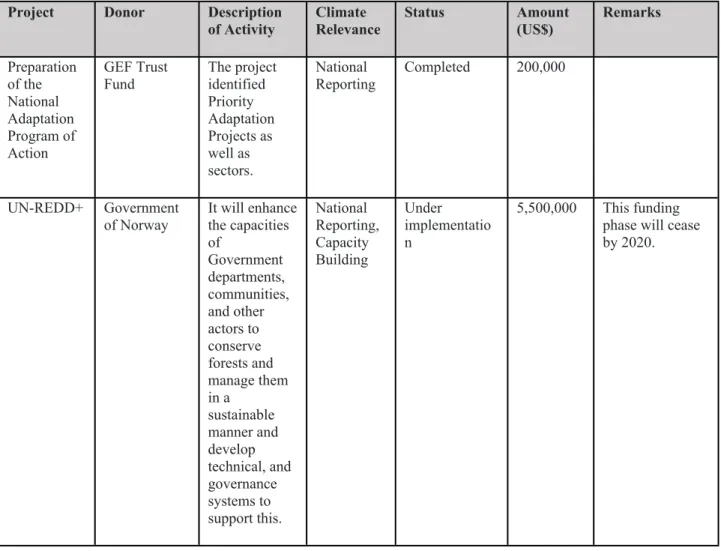
Table 3: Summary of information on project status, and capacity building and technology support received by Myanmar.
Project Donor Description of Activity
Climate Relevance
Status Amount
(US$)
Remarks
Preparation of the National Adaptation Program of Action
GEF Trust
Fund The project
identified Priority Adaptation Projects as well as sectors.
National
Reporting Completed 200,000
UN-REDD+ Government
of Norway It will enhance the capacities of
Government departments, communities, and other actors to conserve forests and manage them in a
sustainable manner and develop technical, and governance systems to support this.
National Reporting, Capacity Building
Under implementatio n
5,500,000 This funding phase will cease by 2020.
Project Donor Description
of Activity Climate
Relevance Status Amount
(US$) Remarks
Myanmar Climate Change Alliance
European
Commission To strengthen the climate change related institutional and policy environment through sharing of technical knowledge and best practice, training and institutional support.
To promote evidence- based planning and policy making through pilot integration of climate change into sub-national and local level developmen t planning initiatives.
Capacity
Building Completed Euro
3,900,000 Component 2 of CBIT project will take into account the recommendation s of the Myanmar Climate Change Strategy, Policy and Action Plan (MCCS, P &AP)
Plan International Myanmar
BRACED project (consortium of partners, UK Department of
International Development )
Improving access to climate risk information to inform community disaster preparedness and adaptation approaches.
2015-2018.
Capacity Building
Under implementatio n
GBP 5,000,000
Project Donor Description
of Activity Climate
Relevance Status Amount
(US$) Remarks
Addressing Climate Change Risks on Water Resources and Food Security in the Dry Zone of Myanmar[8]
8
Adaptation
Fund 4-year project
which
commenced in 2014 and ended in 2019.
Adaptation, Capacity Building
Completed $7,909,026
Adaptation planning support for Myanmar through UNEP
Green
Climate Fund To strengthen the
institutional capacity in Myanmar to prepare the NAP
Adaptation Under implementatio n
$2,959,429
In summary:
? Myanmar currently is undertaking several actions to meet its reporting obligations under the UNFCCC;
? The SNC is still ongoing and has faced challenges in gathering the required activity data and move towards country-specific emission factors, though it has made substantial progress in establishing institutional arrangements for the SNC;
? The BUR1 project has begun and will rely on institutional arrangements formulated under the SNC, expanding and revising it based on the additional data requirements
? Myanmar has faced challenges in gathering data and information necessary to prepare the SNC and GHGI as the systems are not yet in place for continuous monitoring, collecting, and sharing of information;
c) Proposed alternative scenario with a description of project components, outcomes, outputs and activity/deliverables
As explained in the baseline section, the country faces a number of challenges and barriers in regularly preparing GHG inventories, national reports and to track and report climate change actions. There is limited experience with the national reporting with only an INC being submitted and the SNC and
BUR1 still under preparation. CBIT support is thus critical to address the identified challenges and implement the activities to create the necessary infrastructure and capacities to enable Myanmar to regularly compile GHG inventories, and track mitigation, adaptation actions and support.
The requested support is in alignment with the Climate Change Focal Area Objective 3: Foster enabling conditions for mainstreaming mitigation concerns into sustainable development strategies of GEF7 Replenishment Programming Directions and Paragraph 18 of the CBIT programming directions.
This proposal is in line with UN Environment?s Climate Change sub-program Output 6: countries are expected to increasingly adopt and/or implement low greenhouse gas emission development strategies and invest in clean technologies; and hence achieve emissions reduction consistent with the 1.5/2 degrees? Celsius stabilization pathway.
This CBIT project aims to establish and enhance the Myanmar?s transparency system, in line with the ETF of the PA. To achieve this objective, the following efforts are needed:
? Strengthening the national institutions to lead, plan, coordinate, implement, monitor and evaluate policies, strategies and programs to enhance transparency of data and information required under the ETF of the Paris Agreement;
? Providing relevant tools, training and assistance to the national institutions, including
government, non?government and private entities, to meet the provisions of the Article 13 of the Paris Agreement, and its modalities, procedures and guidelines; and
? Providing opportunities for knowledge-exchange across the region for developing and sharing best practices on establishing and enhancing transparency, building capacity, and on existing best practices.
The project includes three components:
? Component 1: Technical support provided to strengthen institutional and human capacities for preparing GHG inventories on a regular basis in accordance with the Paris Agreement requirements;
? Component 2: Technical support provided to strengthening institutional and human capacities to track and report transparently on implementation of its mitigation actions in National Determined Contributions and support received; and
? Component 3: Strengthening regional cooperation for knowledge and information sharing including cooperative research projects for developing emission factors.
Further, the Outputs of Component 1 will be road-tested in the preparation of the GHG inventory in the third national communication (TNC), which is expected to begin in 2023. Similarly, the outputs of Component 2 will be road-tested in supporting preparation of reporting on mitigation actions for BUR which is under implementation this year (2021).
Table 4 below describes the Modalities, Procedures and Guidelines (MPG) requirements and how the current proposed project will address the specific requirements under it.
Table 4. Gaps in capacity of the Myanmar to address requirements under the MPGs BTR Elements CBIT Project
Elements Specific MPG requirements/recommendations
Output: 1.1 &
1.2 Each Party should implement and maintain national inventory arrangements, including institutional, legal and procedural arrangements for the continued estimation, compilation and timely reporting of national inventory reports in accordance with these MPGs.
(II, section B, para 18, p. 22)
Output 1.3 Each Party shall use methods from the IPCC guidelines referred to in paragraph 20 above. Each Party should make every effort to use a recommended method (tier level) for key categories in accordance with those IPCC guidelines.
(II, section C, para 21, p. 23)
Each Party is encouraged to use country-specific and regional emission factors and activity data, where available, or to propose plans to develop them, in accordance with the good practice elaborated in the IPCC guidelines referred to in paragraph 20 above.
(II, section C, para 24, p. 23)
Output 1.4 Each Party is encouraged to use country-specific and regional emission factors and activity data, where available, or to propose plans to develop them, in accordance with the good practice elaborated in the IPCC guidelines referred to in paragraph 20 above.
(II, section C, para 24, p. 23) I. National
inventory report of anthropogenic emissions by sources and
removals by sinks of GHGs
Mandatory
O U T C O M E
1
Output 1.2 Each Party shall elaborate an inventory QA/QC plan in accordance with the IPCC guidelines referred to in paragraph 20 above [?].
(II, section C, para 34, p. 24)
Output 2.1 Each Party shall provide information on the institutional arrangements in place to track progress made in implementing and achieving its NDC under Article 4, including those used for tracking
internationally transferred mitigation outcomes, if applicable, along with any changes in institutional arrangements since its most recent biennial transparency report.
(III, section A, para 61, p. 27)
Each Party shall provide information on legal, institutional, administrative and procedural arrangements for domestic implementation, monitoring, reporting, archiving of information and stakeholder engagement related to the implementation and achievement of its NDC under Article 4.4
(III, section A, para 62, p. 28)
Output 2.2 Each Party shall identify the indicator(s) that it has selected to track progress towards the implementation and achievement of its NDC under Article 4.
Indicators shall be relevant to a Party?s NDC under Article 4 and may be either qualitative or quantitative.
(III, section C, para 65, p. 28) II. Information
necessary to track progress in implementing and achieving NDCs Mandatory
O U T C O M E
2
Output 2.2 Each Party shall provide a description of each methodology and/or accounting approach used, as applicable for: (a) Key parameters, assumptions, definitions, data sources and models used; (b) IPCC guidelines used; (c) Metrics used; (d) Where applicable to its NDC, any sector-, category- or activity-specific assumptions, methodologies and approaches consistent with IPCC guidance, taking into account any relevant decision under the Convention, including as applicable:
(III, section C, para 74, p. 29) III. Information related to climate change
impacts and adaptation Voluntary
This is being addressed through NAP Readiness project funded by GCF
Output 2.3 (support received only)
Developing country Parties should provide information on national circumstances and institutional arrangements relevant to reporting on support needed and received, including:
(a) A description of the systems and processes used to identify, track and report support needed and
received, including a description of the challenges and limitations; (VI., section A, para 130, p. 41) IV. Information on
financial, technology development and transfer and capacity-building support needed and received
Voluntary
O U T C O M E
3
Output 2.3 (support received only)
Developing country Parties should provide, in a common tabular format, information on financial support received, including, to the extent possible, and as available and as applicable:
(a) Title (of activity, program or project); (b) Program/project description; (c) Channel; (d) Recipient entity; (e) Implementing entity;
(f) Amount received (in domestic currency and in United States dollars);
(g) Time frame; (h) Financial instrument (grant, concessional loan, non-concessional loan, equity, guarantee or other); (i) Status (committed or received); (j) Sector and subsector; (k) Type of support (mitigation, adaptation or cross-cutting); (l) Whether the activity has contributed to technology development and transfer and/or capacity-building;
(m) Status of activity (planned, ongoing or completed); (n) Use, impact and estimated results.
CBIT project will result in the establishment of permanent institutional arrangements, with the requisite legal mandates and other appropriate data sharing arrangements such as memoranda of understanding (MoU) to collect the data and information necessary to prepare a GHG inventory as well as to assess the progress in implementing NDC, and to enable regular preparation of national communications and BTRs. The permanence comes from clearly defined responsibilities and mainstreaming them in the mandate of the key stakeholders. The institutional arrangement will be designed to allow for the flexibility to adapt to evolving needs and requirements. The permanent institutional arrangements will enhance the coordination between all the relevant stakeholders facilitating timeliness and quality of the reporting.
The project will result in enhancing the quality of the country?s GHG inventory as well as NDC tracking and reporting by strengthening the knowledge base among key stakeholders in the reporting process. This will enhance capacity in the stakeholders and availability of tools and guidance on methodologies for preparation of GHG inventories and tracking mitigation actions. The availability of data collection protocols, methodologies for estimating impacts, guidelines for estimating indicators, etc. will both improve the frequency and quality of data collected, as well as the capacity to prepare various elements of reporting. This will be complemented by the establishment of a database management system which will significantly improve the timeliness and quality of reporting. The project will aim at improving the GHG inventory collection systems for three sectors: Energy, agriculture and livestock.