Managing Peatlands in Mongolia and Enhancing the Resilience of Pastoral Ecosystems and Livelihoods of Nomadic Herders
Part I: Project Information GEF ID
10545 Project Type FSP
Type of Trust Fund GET
CBIT/NGI CBIT No NGI No Project Title
Managing Peatlands in Mongolia and Enhancing the Resilience of Pastoral Ecosystems and Livelihoods of Nomadic Herders
Countries Global, Mongolia Agency(ies) UNEP
Other Executing Partner(s)
Ministry of Environment and Tourism (MET) of Mongolia and International Centre for Reindeer Husbandry (ICR)
Executing Partner Type Others
GEF Focal Area Land Degradation Taxonomy
Focal Areas, Land Degradation, Land Degradation Neutrality, Land Cover and Land cover change, Sustainable Land Management, Community-Based Natural Resource Management, Ecosystem Approach, Sustainable Pasture Management, Improved Soil and Water Management Techniques, Influencing models, Demonstrate innovative approache, Convene multi-stakeholder alliances, Stakeholders, Indigenous Peoples,
Communications, Awareness Raising, Public Campaigns, Behavior change, Education, Civil Society,
Community Based Organization, Non-Governmental Organization, Local Communities, Type of Engagement, Consultation, Participation, Partnership, Information Dissemination, Gender Equality, Gender results areas, Access and control over natural resources, Capacity Development, Gender Mainstreaming, Beneficiaries, Sex- disaggregated indicators, Capacity, Knowledge and Research, Learning, Indicators to measure change, Adaptive management, Knowledge Exchange, Knowledge Generation
Sector
Mixed & Others Rio Markers
Climate Change Mitigation Climate Change Mitigation 2 Climate Change Adaptation Climate Change Adaptation 0
Submission Date 11/26/2021
Expected Implementation Start 3/15/2022
Expected Completion Date 3/14/2026
Duration 48In Months Agency Fee($) 357,009.00
A. FOCAL/NON-FOCAL AREA ELEMENTS
Objectives/Programs Focal Area Outcomes Trust Fund
GEF Amount($)
Co-Fin Amount($)
LD-1-4 Reduce pressures on natural
resources from competing land uses and increase resilience in the wider landscape
GET 3,757,991.00 20,500,000.00
Total Project Cost($) 3,757,991.00 20,500,000.00
B. Project description summary
Project Objective
To develop the capacity for enhancing ecosystem services of peatlands (specifically reduction of GHG emissions from degraded peatlands) in Mongolia and the capacity of indigenous reindeer herders to reduce land degradation and improve the provision of ecosystem services and increase community resilience.
Project Componen t
Financin g Type
Expected Outcomes
Expected Outputs
Trus t Fund
GEF Project Financing($
)
Confirmed Co- Financing($)
Project Componen t
Financin g Type
Expected Outcomes
Expected Outputs
Trus t Fund
GEF Project Financing($
)
Confirmed Co- Financing($) Component 1
Policy framework and institutional capacity for climate- friendly and resilient peatland management practices
Technical Assistance
1.1 The peatland based GHG emission reduction plan for four main sectors of the economy (conservation, agriculture, mining, construction) and a
framework for reporting on peatland management are approved by the Government and under implementation
1.2
Knowledge and data on
peatlands used by national authorities in national reporting
1.1.1 Peatland mitigation and adaptation targets integrated into the LULUCF segment of the NDC of Mongolia
1.1.2 The templates for reporting on LDN and climate- smart solutions and GHG reductions related to peatlands by four sectors (conservation, agriculture, mining, construction) developed for national authorities 1.1.3 Gap analysis of legislation and sectoral regulations in connection to the activities (on peatlands) suggested in the LDN and NDC made available for national authorities 1.1.4 Proposals for the legal framework to support the climate-smart nature-based solutions and reporting on GHG reductions developed
1.2.1 The results of the peatland inventories, including delineation and ecosystem services mapping, carried out in four pilot river basins are available for the authorities in agriculture, water management, mining and construction sectors 1.2.2 The capacity for carrying out peatland inventories and data integration into planning and reporting by sectors is in place
1.2.3 The capacity for
monitoring/reportin g of LDN and GHG emissions reduction due to peatland management is in place in six pilot sites
1.2.4 The capacity for evaluation and monitoring of carbon stored in peatlands is in place 1.2.5 A pilot adaptation plan for two catchments based on an improved water balance model considering peatlands and permafrost is in place
1.2.6 A peatland and permafrost interactions model is developed and verified by publication as background for decisions on adaptation measures
GET 662,100.00 3,400,000.00
Project Componen t
Financin g Type
Expected Outcomes
Expected Outputs
Trus t Fund
GEF Project Financing($
)
Confirmed Co- Financing($) Component 2
Integrate climate- smart peatland management solutions into practice
Technical Assistance
2.1 Sustainable Peatlands management integrated into sectoral policies and practices
2.1.1 Roadmap developed towards SEEA-based ecosystems accounting for peatland ecosystems 2.1.2 Sectoral management plans updated considering peatlands
2.1.3 Solutions for sustainable peatland management piloted in targeted sites 2.1.4 The management capacity of key stakeholders increased
2.1.5 Sector specific knowledge and outreach products available
GET 1,007,955.00 4,300,000.00
Project Componen t
Financin g Type
Expected Outcomes
Expected Outputs
Trus t Fund
GEF Project Financing($
)
Confirmed Co- Financing($) Component 3
Global knowledge- base and capacity for herders?
contribution to
sustainable landscape management
Technical Assistance
3.1 Sustainable landscape management approaches institutionalize d for global reindeer husbandry 3.2 Global nomadic pastoralist communities participate in rangeland management structures and processes with enhanced capacity 3.3 Global stakeholder groups support and use project?s good practices, lessons learned on herders?
contribution to sustainable landscape management in future
operations
3.1.1 Gender sensitive traditional knowledge on existing and past global land-uses, land degradation and indigenous reindeer herders?
food governance is globally collected and assessed and made available for global stakeholder groups;
3.1.2. GIS-based maps of current land-uses and future scenarios are developed globally and compatible for traditional and scientific knowledge to support rangelands mobility made;
3.1.3 Participatory mapping and environmental monitoring systems are developed for the global
stakeholder groups for an integrated rangeland management systems;
3.1.4 Global indicators for assessing sustainable management of rangelands and pastoralism are developed and tested
3.2.1 Global training and educational courses for indigenous reindeer herding youth, and field training and community-based workshops for herding
communities 3.2.1 Cross-learning events between herding
communities and other actor groups.
3.3.1 Knowledge management and communication strategy developed and available for global stakeholder groups;
3.3.2 Operational project portal to disseminate project findings and facilitate replication available for global stakeholder groups.
3.3.3 Good practices, lessons learned and
knowledge products are documented, published and made available for global stakeholder groups for implementation and replication in similar ecosystems.
GET 1,768,987.00 10,244,855.0 0
Project Componen t
Financin g Type
Expected Outcomes
Expected Outputs
Trus t Fund
GEF Project Financing($
)
Confirmed Co- Financing($) Component 4
Monitoring
& Evaluation
Technical Assistance
4.1 Integrated and effective monitoring and evaluation system in place
4.1.1 Project progress reported timely
4.1.2 Mid-Term Review conducted 4.1.3 Terminal Evaluation conducted
GET 140,000.00 456,000.00
Sub Total ($) 3,579,042.00 18,400,855.0 0 Project Management Cost (PMC)
GET 178,949.00 2,099,145.00
Sub Total($) 178,949.00 2,099,145.00
Total Project Cost($) 3,757,991.00 20,500,000.00
Please provide justification
C. Sources of Co-financing for the Project by name and by type Sources of
Co-financing
Name of Co-financier Type of Co- financing
Investment Mobilized
Amount($)
GEF Agency UNEP (regional Project on Peatlands)
In-kind Recurrent expenditures
500,000.00
Recipient Country Government
Ministry of Environment and Tourism of Mongolia
In-kind Recurrent expenditures
6,000,000.00
Civil Society Organization
Wildlife Science and Conservation Center of Mongolia (WSCC)
In-kind Recurrent expenditures
500,000.00
Civil Society Organization
International Centre for Reindeer Husbandry (ICR)
In-kind Recurrent expenditures
3,237,000.00
Civil Society Organization
Association of World Reindeer Herders
In-kind Recurrent expenditures
6,763,000.00
Recipient Country Government
Arhangai Aimag In-kind Recurrent
expenditures
1,000,000.00
Recipient Country Government
Khuvsgul Aimag In-kind Recurrent
expenditures
1,500,000.00
Recipient Country Government
Khentii Aimag In-kind Recurrent
expenditures
1,000,000.00
Total Co-Financing($) 20,500,000.00 Describe how any "Investment Mobilized" was identified
The joint initiative of UNEP and IUCN with the title ?Conserving and restoring vital water towers, biodiversity and carbon storage capabilities of threatened peatlands in key mountain and highland areas of Central and Northeast Asia? is expected to start in 2021. Project?s demonstrations on restoration of peatlands and household livelihood approaches in Mongolia will be the investment mobilized contribution for this project. The Ministry of Environment and Tourism of Mongolia, through two of its main
departments: ?Department of Environment and Natural Resources and the ?Department of Land Planning and Water Integrated Policy? will be executing a total of four projects that will contribute co-financing to the current effort. The Government has an annual budget of US$ 8 million for biodiversity conservation. It
is estimated that a total of USD 9.5 million will be in-kind co-financed by the Government. Furthermore, it is estimated that a minimum of US$ 1,000,000 will be spent by international partners and the Wildlife Science and Conservation Center of Mongolia for Ramsar sites and peatlands in four years which will be the investment mobilized for the Project. Finally, The Project will receive US$ 10 million recurrent expenditure investment from International Centre for Reindeer Husbandry and Association of World Reindeer Herders as staff time on the project, investments made to secure the project, and other in-kind activities.
D. Trust Fund Resources Requested by Agency(ies), Country(ies), Focal Area and the Programming of Funds Agenc
y
Trus t Fun d
Countr y
Focal Area
Programmin g of Funds
Amount($) Fee($) Total($)
UNEP GET Mongoli
a
Land Degradatio n
LD STAR Allocation
1,757,991 167,009 1,925,000.0 0
UNEP GET Global Land
Degradatio n
LD
Global/Regiona l Set-Aside
2,000,000 190,000 2,190,000.0 0
Total Grant Resources($) 3,757,991.0 0
357,009.0 0
4,115,000.0 0
E. Non Grant Instrument
NON-GRANT INSTRUMENT at CEO Endorsement
Includes Non grant instruments? No Includes reflow to GEF? No
F. Project Preparation Grant (PPG) PPG Required true
PPG Amount ($) 136,988
PPG Agency Fee ($) 13,012
Agenc y
Trust Fund
Country Focal Area
Programming of Funds
Amount($) Fee($) Total($)
UNEP GET Mongolia Land
Degradatio n
LD STAR Allocation
68,494 6,506 75,000.00
UNEP GET Global Land
Degradatio n
LD
Global/Regional Set-Aside
68,494 6,506 75,000.00
Total Project Costs($) 136,988.00 13,012.00 150,000.00
Core Indicators
Indicator 3 Area of land restored Ha (Expected at
PIF)
Ha (Expected at CEO Endorsement)
Ha (Achieved at MTR)
Ha (Achieved at TE)
0.00 12000.00 0.00 0.00
Indicator 3.1 Area of degraded agricultural land restored Ha (Expected at
PIF)
Ha (Expected at CEO Endorsement)
Ha (Achieved at MTR)
Ha (Achieved at TE)
Indicator 3.2 Area of Forest and Forest Land restored Ha (Expected at
PIF)
Ha (Expected at CEO Endorsement)
Ha (Achieved at MTR)
Ha (Achieved at TE)
Indicator 3.3 Area of natural grass and shrublands restored Ha (Expected at
PIF)
Ha (Expected at CEO Endorsement)
Ha (Achieved at MTR)
Ha (Achieved at TE)
Indicator 3.4 Area of wetlands (incl. estuaries, mangroves) restored Ha (Expected at
PIF)
Ha (Expected at CEO Endorsement)
Ha (Achieved at MTR)
Ha (Achieved at TE)
12,000.00
Indicator 4 Area of landscapes under improved practices (hectares; excluding protected areas) Ha (Expected at
PIF)
Ha (Expected at CEO Endorsement)
Ha (Achieved at MTR)
Ha (Achieved at TE)
20000.00 8000.00 0.00 0.00
Indicator 4.1 Area of landscapes under improved management to benefit biodiversity (hectares, qualitative assessment, non-certified)
Ha (Expected at PIF)
Ha (Expected at CEO Endorsement)
Ha (Achieved at MTR)
Ha (Achieved at TE)
20,000.00 8,000.00
Indicator 4.2 Area of landscapes that meets national or international third party certification that incorporates biodiversity considerations (hectares)
Ha (Expected at PIF)
Ha (Expected at CEO Endorsement)
Ha (Achieved at MTR)
Ha (Achieved at TE)
Type/Name of Third Party Certification
Indicator 4.3 Area of landscapes under sustainable land management in production systems Ha (Expected at
PIF)
Ha (Expected at CEO Endorsement)
Ha (Achieved at MTR)
Ha (Achieved at TE)
Indicator 4.4 Area of High Conservation Value Forest (HCVF) loss avoided Ha (Expected at
PIF)
Ha (Expected at CEO Endorsement)
Ha (Achieved at MTR)
Ha (Achieved at TE)
Documents (Please upload document(s) that justifies the HCVF)
Title Submitted
Indicator 6 Greenhouse Gas Emissions Mitigated
Total Target Benefit
(At PIF)
(At CEO Endorsement)
(Achieved at MTR)
(Achieved at TE) Expected metric tons of
CO?e (direct)
60000 0
594448 0 0
Expected metric tons of CO?e (indirect)
0 0 0 0
Indicator 6.1 Carbon Sequestered or Emissions Avoided in the AFOLU (Agriculture, Forestry and Other Land Use) sector
Total Target Benefit (At PIF)
(At CEO Endorsement)
(Achieved at MTR)
(Achieved at TE) Expected metric tons of
CO?e (direct)
600,000 594,448 Expected metric tons of
CO?e (indirect)
Anticipated start year of accounting
2022 2022 Duration of accounting 20 20
Indicator 6.2 Emissions Avoided Outside AFOLU (Agriculture, Forestry and Other Land Use) Sector
Total Target Benefit
(At PIF)
(At CEO Endorsement)
(Achieved at MTR)
(Achieved at TE) Expected metric tons of
CO?e (direct)
Expected metric tons of CO?e (indirect)
Anticipated start year of accounting
Duration of accounting
Indicator 6.3 Energy Saved (Use this sub-indicator in addition to the sub-indicator 6.2 if applicable)
Total Target Benefit
Energy (MJ) (At PIF)
Energy (MJ) (At CEO Endorsement)
Energy (MJ) (Achieved at MTR)
Energy (MJ) (Achieved at TE)
Target
Energy Saved (MJ)
Indicator 6.4 Increase in Installed Renewable Energy Capacity per Technology (Use this sub-indicator in addition to the sub-indicator 6.2 if applicable)
Technolog y
Capacity (MW)
(Expected at PIF)
Capacity (MW) (Expected at CEO Endorsement)
Capacity (MW) (Achieved at MTR)
Capacity (MW)
(Achieved at TE)
Indicator 11 Number of direct beneficiaries disaggregated by gender as co-benefit of GEF investment Number
(Expected at PIF)
Number (Expected at CEO Endorsement)
Number (Achieved at MTR)
Number (Achieved at TE)
Female 7,000 7,000
Male 7,000 7,000
Total 14000 14000 0 0
Provide additional explanation on targets, other methodologies used, and other focal area specifics (i.e., Aichi targets in BD) including justification where core indicator targets are not provided
Part II. Project Justification
1a. Project Description
describe any changes in alignment with the project design with the original pif
Topic At PIF Stage At CEO Endorsement Stage
Topic At PIF Stage At CEO Endorsement Stage Target
Contributions to GEF7 Core Indcators
Table F, Project?s Target Contributions to GEF7 Core Indicators, included Core Indicators 4, Area of landscape under improved practices (20,000ha), and
Core Indicator 6, Greenhouse Gas Emissions Mitigated (600,000t CO2eq)
The GEF Focal Area Outcomes have been defined and the measurement against the applicable GEF corporate indicators are shown in Table E in Part I of this document.
For Table E on the project?s target contributions to GEF7 Core Indicators, the following changed:
Core Indicator 3.4 Area of wetlands restored (Million Hectares): 0,012MHa (12,000ha) was added, capturing specifically the area of wetlands, including estuaries and mangroves, that is undergoing ecological restoration through GEF-funded interventions.
Core Indicator 4 Area of landscape under improved practices (excluding protected areas) (Million Hectares):
0,008MHa (8,000ha)
4.1 Area of landscape under improved management to benefit biodiversity (hectares, qualitative assessment, non-certified):
8,000ha.
Based on site verification of the four target areas in Mongolia, which revealed that a larger proportion of the peatlands in the 4 target areas is located in locally protected areas, it was discussed to add Core Indicator 3.4, specifically aimed at wetland ecological restoration of peatland located in protected areas, in line with the project objectives to conserve and rehabiliate the broader ecosystem services peatlands provide.
The area of Core Indicator 4 was therefore reduced from the initial 20,000ha to 8,000ha
Core Indicator 6 Greenhouse Gas Emissions Mitigated Expected metric tons of CO2eq. (direct): 600,000, was calculated in the PIF based on an average conservative emission factor of 15t CO2 eq./ha/yr (Tier 1), which would yield, based on an area of 2,000ha, 30,000 CO2 eq./yr, with duration of accounting totaling to 600,000t CO2 eq.
Calculation of the expected Greenhouse Gas Emissions Mitigated under Core Indicator 6 are presented in Annex 15 of the ProDoc, detailing the methodology used for this calculation (EX-ACT). Based on this analysis of land use changes, the carbon benefits from the project estimated in terms of lifetime direct as well as consequential GHG emissions avoided over a time horizon of 20 years are 594,448 tCO2eq. These have to reassessed during MTR and TE for realism.
Topic At PIF Stage At CEO Endorsement Stage Project
Oucomes and Outputs
The PIF included a set of six results- oriented project Outcomes, grouped
under three
Components.
The following Output had the following
formulation at PIF stage:
1.1.4 Proposals for the legal framework to safeguard the climate-smart nature-based solutions and reporting on GHG reductions developed 1.2.1 The results of the peatland inventories,
including delineation and ecosystem services mapping, carried out in five pilot river basins are available for the authorities in agriculture, water management, mining and construction sectors
Output 1.2.3 The capacity for
monitoring/reporting of LDN and GHG emissions reduction due to peatland management is in place in six pilot sites
At CEO Endorsement stage, Project Outcomes and Outputs remained largely unchanged, with a few exceptions:
Output 1.1.4 was rephased to: Proposals for the legal framework to support the climate-smart nature-based solutions and reporting on GHG reductions developed, as
?supporting? was found to be more accurate to reflect the intention of the output than the original ?safeguarding?.
Output 1.2.1 was rephrased to: The results of the peatland inventories, including delineation and ecosystem services mapping, carried out in four pilot river basins are available for the authorities in agriculture, water management, mining and construction sectors. In consultations with key
stakeholders during the inception workshop, only four target sites were included in the project and accordingly included in the field verification. These four sites are thought to be representative of the landscape diversity and peatland types.
Output 1.2.3 was rephrased tp The capacity for
monitoring/reporting of LDN and GHG emissions reduction due to peatland management is in place in four pilot sites, to reflect the four target sites identified.
Overall, for all outputs more comprehensive narratives were developed with inclusion of the various activities needed to achieve the results aimed at in these outputs, as the PIF only presented the titles of the outputs, without any details on the activities.
Refer to Part I, Table B of this document for a reference to current formulations of Outcomes and Outputs.
Topic At PIF Stage At CEO Endorsement Stage Project
Strategy The PIF reflected the objective of the project and the strategy to obtain the desired results.
The project?s strategy is now fully developed and consolidated in the ProDoc, including:
? A Theory of Change and related conceptual model, linking root causes, problems, barriers and assumptions with intended outcomes and ultimately impact.
? A detailed description of Outcomes, outputs and related activities has been developed with indication leading institutions and collaborating partners/entities.
? These activities have been costed and reflected in a temporal work plan overview.
? Core Indicators have been slightly adjusted from the PIF stage, with an additional Core Indicator 3.4 for those peatland areas located in protected areas of the four target sites, and another methodology, EX-ACT to assess the avoided GHG emissions through project interventions.
? The four target sites have been defined, after consultation with key stakeholders during the inception workshop and explored in a field missions and reflected with more detailed maps and area descriptions to reflect baseline conditions.
? A stakeholder analysis was carried out with identification of and consultation with key stakeholders and partners, with description of their roles and engagement and a stakeholder engagement plan.
? A more detailed description of how the project intends to promote gender equality and women?s empowerment, including a gender action plan.
? The baseline conditions were further detailed and an incremental cost reasoning was added.
? The risk assessment was updated and risk related to climate change and COVID-19 were added.
? The Strategic Results Framework was developed with indication of indicators, targets, means of verification and assumptions.
? The M&E plan was developed and costed.
? The project budget has been detailed per component and outcome, with some slight adjustments, with addition of the M&E costs as separate budget line. As M&E has been added as a separate budget component, while it was still integrated in the components in the PIF, all three Components have slightly reduced budgets.
? Social and environmental safeguards were updated and detailed in the new SRIF, to reflect potential risk and how the project intends to mitigate these risks.
1a. Project Description. Elaborate on: 1) the global environmental and/or adaptation problems, root causes and barriers that need to be addressed (systems description); 2) the baseline scenario and any associated baseline projects; 3) the proposed alternative scenario with a brief description of expected outcomes and components of the project; 4) alignment with GEF focal area and/or Impact Program strategies; 5) incremental/additional cost reasoning and expected contributions from the baseline, the GEFTF, LDCF, SCCF, and co-financing; 6) global environmental benefits (GEFTF) and/or adaptation benefits (LDCF/SCCF); and 7) innovativeness, sustainability and potential for scaling up. ?
1) the global environmental and/or adaptation problems, root causes and barriers that need to be addressed
Reference to the UNEP PRODOC for the above topic:
Sections in the ProDoc and reference to their content Page reference Section 2.1 is the complete description of the Project?s Background and
Context.
This includes the ?core problem that the project is addressing?
(reproduced further down), including a discussion on the national context of Mongolia and its peatlands, a section on the global context of nomadic reindeer herders, and a description of the project landscapes in Mongolia, the Darhad depression, Hur-Huiten watershed, Ugii lake and Tsagaan nuur.
ProDoc, pp. 9 ? 29
Section 2.2 contains a description of the institutional, sectoral and policy context with a section on alignment with national policy or environmental and developmental targets, alignment with multilateral environmental agreements or global targets.
ProDoc, pp. 30 ? 35
Section 2.3 presents the Global Significance of peatland and of reindeer
herding. ProDoc, pp. 35 - 37
Sections in the ProDoc and reference to their content Page reference Section 2.4 refers to Threats, root causes and barrier analysis.
ProDoc 4a includes the Theory of Change, which was not yet included at PIF stage, presenting the linkage between root causes, the environmental and socio-economic problems, the barriers and the chosen outcomes, key assumptions and ultimately the impacts the project is aiming to make in order to achieve its objective.
ProDoc, pp. 37 ? 48
ProDoc Annex 4a
Section 3.4 includes a discussion of the Intervention logic and key assumptions behind the project. The project?s conceptual model is presented, linked to the Theory of Change, as presented in Annex 4A, outlining the chosen strategic interventions.
ProDoc, pp. 76 ? 78
A summary analysis is here presented based on the ProDoc
Mongolia is mainly associated with steppes and deserts but also has a surprisingly large expanse of peatlands (Joosten et al. 2012). In the dry continental climate, Mongolian peatlands fulfil many important ecological functions, ranging from prevention of soil erosion and the thawing of permafrost to the provision of critical hydrological functions, maintaining groundwater levels crucial for entire ecosystems and food production. At the same time, peatlands are safeguarding biodiversity and providing highly productive habitats and related livelihoods.[1]1 Based on an analysis of maps and other information from the 1960s and 1970s, research findings[2]2 indicated that almost 27,000km2 of Mongolia used to be covered by peat (or almost 2% of the total territory of the country). The Strategic Planning for Peatlands Conservation and Wise Use in Mongolia (ADB-MET, 2017) indicates that the estimated area of peatland has now fallen to 1% of the land area of the country, representing an approximate decline by 60 to 80%, depending on the region. A dramatic reduction of the total peatlands and requiring that sustainable use and conservation of the remaining peatlands should be addressed urgently.
The State of the Environment of Mongolia Report (2016) states that the leading causes of degradation are increasing grazing pressure from a growing national herd combined with climate change. The warming process occurring in Mongolia, the drastic increase in livestock, unsustainable mining industry development and other direct and indirect phenomena are the critical factors resulting in desertification and the exacerbation of land degradation.
Degradation and loss of peatland area
The ADB-MET (2017) Assessment Report also states that a natural shortage of water and other factors, combined with global climate change and drought, have caused a loss of peatland areas. The consequences of peatland degradation in Mongolia are not only loss of biodiversity and carbon stores, but also the loss of important and sometimes the last source of water in middle range mountains and the last productive lands. The AR continues stating that main factors that have over time hindered sustainable management of peatland in Mongolia (and thus contributed to the present degradation) include: the expansion of pastures in peatland areas, which has been a consequence of long-term drought; the development of extractive industries (gold, wolfram, molybdenum etc.); development of infrastructure and water discharge and management. Recent climate change, forest degradation and increase of forest and steppe fires and overgrazing have led to increased pressure on pastures, combined with shrinkage of permafrost areas and consequently, loss of peatland areas. The AR sums up a number of key processes that negatively affect the status of Mongolian peatlands:
? Pastures in peatland areas are used beyond their carrying capacity, often without maintaining fallow periods and without protection against overgrazing;
? Drainage and encroachment of peatlands for agricultural use, combined with unsustainable hay harvest, lead to area loss and degradation of the peatlands affected;
? Mining operations lead to a reduction of peatland areas and have a negative impact on the hydrological system and the health of linked peatland areas;
? Construction of infrastructure (road/dams etc.) without appropriate drainage negatively impacts the hydrology of peatland areas.
These factors explain the need to put land degradation and desertification issues at the higher policy- making level and require multiple actions involving the political, social and science and technology sectors. The proper planning of response measures depends on high-quality assessments at the national, regional and local levels.
Loss of ecosystem services provided by peatlands
Loss and degradation of peatland lead to the loss of valuable ecosystem services, ranging from water regulation, biodiversity conservation, carbon sequestration and storage and to provision of productive pasture land for grazing. Peatland performs a critical buffer function, regulating and safeguarding water quantity and quality. Water is a critical resource in the arid and semi-arid landscapes of Mongolia. To prevent the loss and degradation of water resources an integrated water management of the key river basins is needed. At the moment, peatlands and permafrost areas are not considered as parts of water objects, which hampers effective sustainable management and the development of targeted interventions. Another critical ecosystem service peatlands provide is the unique habitat it represents in a semi-arid environment, important as landscape element to preserve and enhance biodiversity. At the same time, peatlands serve as an important carbon store and further loss and degradation (and drainage) of the systems will lead to considerable GHG emissions. Finally, peatland serves as a key pasture
source area for reindeer herds and therewith crucial source of livelihood for nomadic herding communities and offers an important attraction for (eco-)tourism, with its wealth of biodiversity, landscape diversity and scenic beauty.
Loss of insulation cover over permafrost (permafrost thaw)
Mongolia is the fifth country by permafrost area after Russia, Canada, China and the USA (Zhang et al.
2006, cited in ADB-MET, 2017). The latest estimations demonstrate significant changes in permafrost.
The ADB-MET report presents an old permafrost map of 1971 with continuous to sporadic distribution in 63% of the territory. An updated permafrost map of 2016 depicts permafrost as occupying one third of Mongolian territory, a very dramatic reduction in permafrost area within decades. To a large extent, the status of peatlands in Mongolia depends on the presence of permafrost Permafrost also plays a key role in the water supply and discharge regulation of Mongolian rivers. Peatlands serve as an insulation layer protecting permafrost bodies against rising temperatures, whereas the permafrost bodies are in many places a prerequisite for peatlands to develop. They are therefore in a symbiotic interdependency, where the degradation of one will affect negatively the status of the other. The functional connection between peat and permafrost is insufficiently described and should be addressed by special studies.
Reindeer husbandry under pressure
Reindeer pastoralism is a traditional livelihood that represents a model of sustainable exploitation and management of northern terrestrial ecosystems based on experience accumulated over generations, conserved, developed and adapted to the climatic, ecological, political, and economic systems of the north. It represents a human-coupled ecosystem that has developed a historical high resilience to climate variability and change (Turi, 2008). This is because reindeer herding is a system based, as a rule, on continuous change due to the practice of seasonal migrations and day-to-day changes. Thus, the core survival strategy of reindeer communities is based on knowledge about how to live in a changing environment. Today, however, the herders? ability to adapt to change is hindered by land degradation and fragmentation. Reindeer herding is a unique family-based husbandry, where men are responsible for herding the livestock, while women are in charge of the economy of family. Both men and women have the same opportunities and access to decision making process. However, because of the nature of reindeer husbandry they do not always use the opportunity similarly.
Reindeer herding is practised in Norway, Finland, Sweden, Mongolia, China, Russia, Alaska, Canada, Greenland and Scotland, involving 29 reindeer herding peoples most of whom (24) are indigenous peoples. Totally, there are approximately 100,000 herders and 2.6 million semi-domesticated reindeer, covering about 4 million square kilometres of pastures globally. Reindeer herding is conducted by individuals through some form of cooperation, such as families, districts, S?mi[3]3 villages, sovkhozy (collective farms), etc. Every country where reindeer herding is conducted has regulations that state
how it is to be organized, with their being wide variations in such legislation. Norway, Sweden and Finland, for example, have specific reindeer herding legislation that not only handles herding districts, S?mi villages, and individuals? rights and duties but also how external interests should be considered when reindeer herding is impacted.
Land degradation and fragmentation are pressures that reduce herders? ability to respond to the increasingly unstable and unpredictable weather conditions, for example by moving their herds to less disturbed grazing areas. All over the Arctic and sub-Arctic, reindeer grazing lands are under increasing pressure from resource extraction (minerals, petroleum, forest, peat, etc.), infrastructure development (roads, wind turbines, pipelines, dams, etc.), urbanization and rising temperatures. Increased competition for land between herders and other land-use interests, combined with decreased mobility of the herd, lead to new grazing patterns and ? for some areas ? more intense use of less disturbed land.
Land fragmentation leads to more reindeer-predator conflicts.
A report to the UNPFII in 2012 states that ?the progressive and effectively irreversible loss of the uncultivated lands that reindeer use as pasture is probably the single greatest threat to reindeer husbandry in the circumpolar North today. The preservation of rangeland is, likewise, perhaps the single greatest priority for sustaining the resilience of reindeer herding confronted by changes owing to climate change, and the socio-economic environment? [4]4. Changing snow and ice conditions, and especially rain during the winter and other extreme weather events, further affect the herds? mobility, as well as their access to forage[5]5. In addition to the environmental changes, there are political changes that promote sedentarism and undermine the traditional and sustainable herding practices and knowledge system[6]6.
Threats, root causes and barriers behind the degradation of peatlands and loss and degradation of global reindeer pastures
Threats to Mongolian peatlands can be divided into threats that are anthropogenic and caused by human activity or interventions and the external overarching impact of climate change as trigger of loss and degradation of peatland and the ecosystems services they provide. A key threat already described in more detail is overgrazing of the peatlands linked to high livestock numbers and wildlife populations, beyond longer-term carrying capacity of the peatlands and leading to loss and degradation through vegetation disturbance, compaction, depletion of plant species richness and loss of the carbon storage capacity of the peatland with continuous vegetation removal.
As described in more detail before, the present climate trend and projections for Mongolia indicate a further increase of temperature and increased frequency of climatic extremes. The World Bank Climate Risk Country Risk Profile (2021) states that of 2015 approximately 29% of Mongolia?s land area is estimated to be permafrost. This area is projected to reduce substantially as the climate warms.
Mongolia?s Third National Communication to the UNFCCC projects coverage will decline to 22%
over 2016?2035, 11% by 2046?2065, and 1% by the 2090s. This is a dramatic shift in land cover and will have severe implications for peatland cover, sustainability and management, together with related implications for the hydrological regime of the country.
Land degradation and threats to reindeer husbandry
The herders and their reindeer have adapted to and thrive in some of the harshest climates and remotest places on Earth for more than thousand years. Reindeer herders are unique custodians of the
environment surrounding them. The linkages between reindeer society and environment are very strong: for reindeer to be healthy, the environment must be healthy. Through their daily work they have helped to conserve the biodiversity and environments for thousands of years and are active monitors of the environment. Furthermore, reindeer herding is based on sequential and flexible usufruct of a wide number of different ecological niches under differing climatic conditions. This flexibility allows herders to adapt to climatic variation and produces resilience: the ability to cope with and adapt to change.
However, the flora, fauna, and traditional reindeer herding societies of the taiga and tundra areas are currently facing unprecedented threats and challenges, which are a result of strong socio- economic and environmental drivers. Such threats are leading to a land degradation, habitat fragmentation and reduced resilience and sustainability of reindeer herding societies in these areas.
Pastoral livelihoods are threatened by loss of grazing land due to changes in land use (oil and gas, mining, wind farms, tourism, infrastructure development), and a changing climate. Major drivers behind this development are the world?s need for energy and natural resources, also potentially linked to and facilitated by climate change.
In the ProDoc a further detailed description is given of the main root causes behind peatland degradation and loss and the degradation and loss of reindeer pastures:
? Direct and indirect impacts of climate change: increasing temperatures, droughts, fires, permafrost thaw
? Overgrazing, encroachment, drainage, conversion to agricultural land and other drivers of peatland degradation and area loss (Land use change)
? Lack of integration of peatlands into spatial planning and sectoral plans
? Insufficient knowledge of peatlands: their distribution and importance
? Loss of traditional reindeer pastures limiting the resilience of herding communities
? Reindeer communities, with their traditional knowledge, do not have access to decision making bodies and lack capacity to influence the decision-process. Both men and women have the same opportunities and access to decision making process. However, because of the nature of reindeer husbandry they do not always use the opportunity similarly.
See ProDoc section 2.4 (pp 37-48) on threats, root causes and barrier analysis for a detailed analysis.
Long-term solution and barriers
The long-term solution sought by the project is to develop the capacity for enhancing ecosystem services of peatlands (specifically reduction of GHG emissions from degraded peatlands) in Mongolia and the capacity of indigenous reindeer herders to reduce land degradation and improve the provision of ecosystem services and increase community resilience. However, the following barriers are preventing this solution:
Barrier 1: No policy framework, knowledge and institutional capacity for peatlands restoration and management in relation to climate change mitigation:
Barrier 2: Limited experience and absence of identified best practices for integration of climate smart peatland management into economic activities
Barrier 3: Traditional knowledge of reindeer herders does not inform decisions because reindeer herders lack the capacity to participate effectively in land use decision-making:
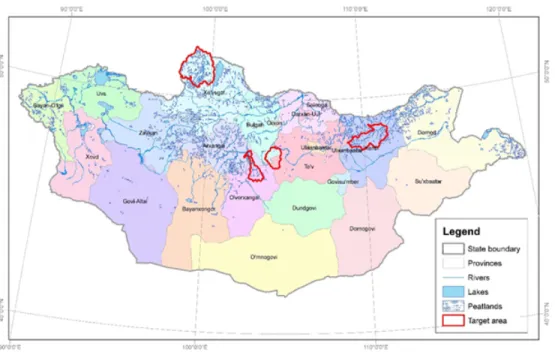
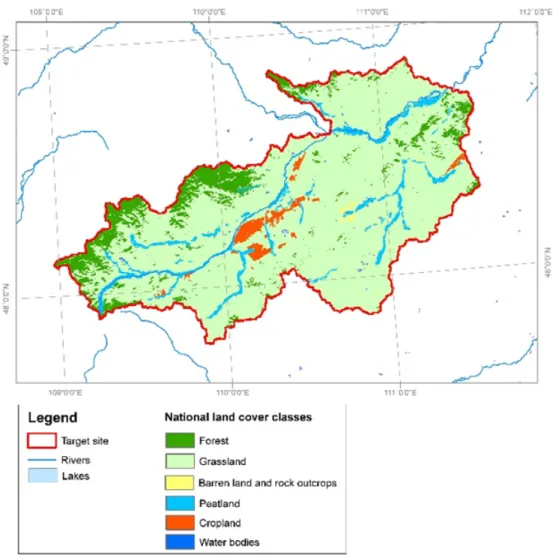
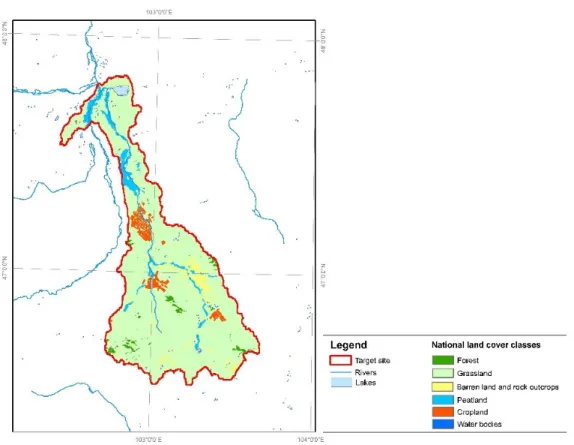
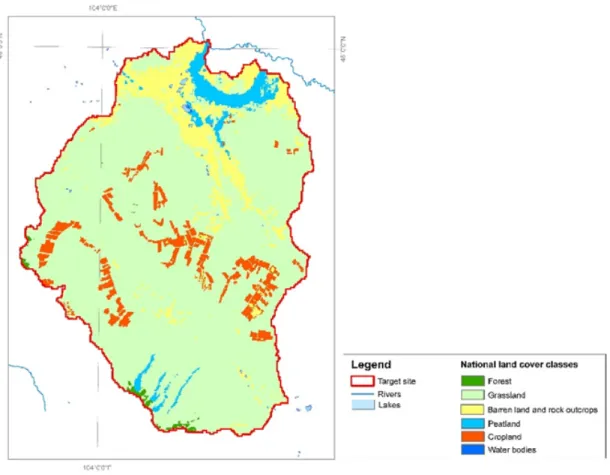
The Assessment report for Strategic Planning for Peatland in Mongolia (ADB-MET, 2017) selected 10 priority areas as important to conserve at the strategic level selected four target areas. These areas are contributing to the ecosystem integrity of permafrost containing landscapes, contain important biodiversity elements and support the mitigation of GHG emissions. Based on consultations with key stakeholders in the formulation process the project has selected four target areas in Mongolia:
Darhadiin depression, Ugii Nuur Lake, Hurh-Huiten and Tsagaannuur watershed. See the more detailed description and selection criteria in the ProDoc pp. 21-30. Activities of Component 3 of the project, focusing on nomadic reindeer communities, have a global scope in arctic and sub-arctic regions with reindeer herding communities. Cross-site exchanges with Tsagaan Nuur in Mongolia will facilitate the learning and knowledge exchange between geographically dispersed communities.
2) the baseline scenario and any associated baseline projects;
3) the proposed alternative scenario with a brief description of expected outcomes and components of the project;
4) alignment with GEF focal area and/or Impact Program strategies;
5) incremental/additional cost reasoning and expected contributions from the baseline, the GEFTF, LDCF, SCCF, and co-financing;
6) global environmental benefits (GEFTF) and/or adaptation benefits (LDCF/SCCF);
Reference to the ProDoc for the above topics
Sections in the ProDoc and reference to their content Page
reference Section 2.6 contains the Baseline analysis and gaps, which has been expanded since the
PIF stage, along with other sections. Section 2.6 includes now also an overview of the key identiefied gaps in the baseline as presented in Table 3.
ProdDoc Table 5 (reproduced further down), contains the key elements in the baseline analysis, representing the business-as-usual scenario.
The Global Environmental Benefits are also outlined in ProdDoc Table 5.
ProDoc, pp. 54 ? 56
ProDoc Appendices 2 and 12 provide more details on the co-financing by source and project components, and for the actual co-financing commitment letters from project partners.
ProDoc, p. 111, Appendix 2
ProDoc, pp. 111, Appendix 12 Section 2.7 provides an overview of linkages of the project with other GEF and non-GEF interventions, further building the baseline scenario and the alignment with existing projects and initiatives
ProDoc, pp. 56 - 59 Section 3.3 contains a detailed description of expected outcomes and components of the project, along with the set of Activities that have developed during the PPG in connection with them. A summary of these elements are reproduced further down.
ProDoc, pp. 44 - 53
Baseline
The proposed project will build upon the previous steps already taken by Mongolia towards mitigating climate change and sustainable management of terrestrial ecosystems. Mongolia recognizes the importance of national commitment to mitigation and has identified national emission reduction actions. The LULUCF sector has until now included removals based on afforestation activities only.
The national actions do not include organic carbon mitigation potential of peatlands. While projects exist that are addressing the threats and barriers described above, under the business-as-usual scenario, these projects are insufficient to facilitate change that allows for enhanced ecosystem services of peatlands (specifically reduction of GHG emissions from degraded peatlands) in Mongolia and improved provision of ecosystem services and increased community resilience of reindeer herders.
The national Integrated River Basin Management (IRBM) provides a framework for the systematic land use planning and management of the information, as well as involvement of the civil society via Basin Councils. The Nationally Determined Contribution (NDC) approach provides clear incentives for the improvement of the land use practices aimed to the reduction of emissions from the LULUCF sector. However, these two policy tools don?t recognize the benefits of the regulating services of peatlands. Similarly, Mongolia has additional frameworks which don?t consider the role of peatlands.
These are:
? Nature Protected Areas Network and UNESCO objects network;
? SDG reporting;
? reporting on land degradation neutrality (UNCCD);
? reporting on Global Action Plan on Peatlands of the Ramsar Convention (Res.VIII.17) and other peatland related resolutions of the Ramsar convention;
? Reporting on the CBD implementation and contribution to IPBES evaluations.
Scientific research work in the frame of the regular plans of the Academy of Sciences, as well as activities on natural resource management, especially water management and protected areas maintenance, are funded from the state budget.
The work on biodiversity conservation at the national level is organized and funded in line with the National Biodiversity Program, which is an umbrella program covering environmental protection, biodiversity conservation and sustainable management of natural resources. The total budget of the state funds for the National Biodiversity Program for the period 2020-2023 is estimated around US$4 million. The respondents mentioned the lack of awareness on peatlands for their integration into the National Biodiversity Program.
A small grant for wetland ecosystem restoration was recently provided by the International Investment Bank to the Academy of Sciences of Mongolia[7]7.
The National Adaptation Plan (NAP) process, which intends to strengthen climate-resilient development is under implementation with support from the Green Climate Fund (GCF) and the UN Environment Programme (UNEP).
Switzerland provided funds for the ?Green Gold? project on pasture restoration[8]8. The Project will be implemented until 2021 and the planned budget for the period 2020-2021 is around US$1,200,000.
The German Ministry of Economic Cooperation and Development (BMZ) has funded several climate related projects, which will complement the objectives of this project:
Biodiversity and Adaptation to Climate Change via KfW 2015-2027 with a budget of US$ 43.7 million (39.0 million euro);
Supporting Protected Areas for the Conservation of Ecosystem Services ? SPACES, via GIZ, 2019 ? 2022, with a total budget of US$ 5,1 million (4.58 million euro).
Furthermore, there has been a number of projects related to reindeer husbandry and land degradation, however these either old or framed and funded as case-based approaches which focus on specific regions and/or themes. Consequently, holistic knowledge about reindeer herding and its relationship with the natural environment is generally weak. Only to a limited degree is the herders? traditional knowledge and practical experiences included in the management of the tundra and taiga rangelands.
And this gap in knowledge and data for the sustainable management of rangeland has significant impact on herders. For example, inaccurate data on rangeland degradation (causes and effects) could cause governments or MEAs to blame and dismantle traditionally sustainable herding systems or introduce policies to ?fix? something that is not broken[9]9. The knowledge gap could also have implications for investments to strengthen the economy and culture of reindeer husbandry. Reindeer herders lack the capacity to communicate their own knowledge and environmental observations to actors outside their community. Their challenge of mobilizing traditional knowledge of reindeer herders into decisions lack affect their ability to be understood by the rest of society and to participate effectively in decision-making processes. The knowledge gap is same for the men and women in the herder communities.
In the baseline scenario, decision-making on land-use and rangelands conservation will continue to be based on processes that exclude reindeer herders? knowledge and participation. The lack of
acknowledgement of traditional knowledge and management practices will undermine these knowledge systems and challenge the maintenance and development of pastoral knowledge, practices and culture, as well as their transfer to the next generation of herders. Unique contextual knowledge about local landscapes, ecosystems management and biodiversity will not be collected and archived, and will not inform measures to reach the SDGs and LDN targets.
The GEF project will provide a framework that can create synergies between these projects, facilitate knowledge exchange between regions and themes, raise the lessons learned from local and regional projects to international fora for sustainable land management, facilitate a dialogue between local- regional-global levels, and provide input for more effective and equitable decision-making. This will be an important contribution to safeguarding the natural environment of the taiga and tundra, as well as the transhumance cultures and livelihoods of these regions. The project will also identify relevant indicators that can be used to monitor the implementation of the SDGs for Arctic and sub-Arctic pastoralism, the tundra and taiga.
ProDoc Table 3. Key Identified gaps in baseline
Type Gap (in baseline ?status quo? scenario) Policy
framework
Although Mongolia recognizes the importance of peatlands, exemplified through the
?Strategic Plan for peatland in Mongolia?, a broader inclusion and specifically sectoral integration into policies, plans and guidelines of peatland and its sustainable management is still lacking. Mongolia has committed itself to mitigating climate change and has developed the policy framework and monitoring framework, but has not yet been able to include the ecosystem services of peatland and specifically reduction of GHG emissions from degraded peatland and broader valuation of these services for community resilience and livelihoods. Presently, decision-making and policy development on land-use and rangeland conservation continues to be based on processes that exclude reindeer herder?s knowledge and participation.
Legislative context
Mongolia has a well-developed national environmental legal framework with a considerable number of laws specifically regulating natural resource management and environmental protection in the country. However, at the moment there are no specific laws on the protection of peatland in Mongolia.
General institutional issues
Peatlands have only recently gained more attention from the Mongolian government.
Specific knowledge and expertise on peatlands, spatial inventories, ecosystem services mapping and valuation, GHG emission monitoring, LDN monitoring is therefore limited and requires capacity building of the staff of the key institutions involved.
Limited exposure to and experience with best practices of sustainable peatland management approaches also hampers broader replication and scaling-up of successful interventions. Traditional knowledge systems and governance systems for landscape management, biodiversity conservation and food production among Arctic and sub- Arctic pastoralists are not available for decision makers, also due to poor representation in governance institutions. Capacity of nomadic herders is limited to participate and contribute to the sustainable management of rangelands and to achieve effective knowledge exchange between the diverse nomadic communities.
Specific Technical issues
Technical support is needed to build specific technical expertise in spatial inventories of peatlands and ecosystem services, MRV related to GHG emission reduction related to sustainable peatland management and associated reporting.
Data Although a start is made with a national spatial inventory of peatland, gaps remain in spatial information on distribution and characteristics of peatlands. Baseline information of priority areas identified need to be gathered. Spatial and temporal information on permafrost and ecosystem services is limited and needs further mapping and reporting.
This spatial information will facilitate the generation of required data for reporting on GHG emissions and LDN targets linked to sustainable peatland management and this information is needed to attribute value to peatland through ecosystem accounting approaches.
Research and development
There is limited experience with research into the temporal and spatial distribution of permafrost and its relationship with associated peatland areas. Also, the modeling of permafrost and water balance in specific catchments is requiring additional attention to better understand these temporal and spatial dynamics and relations and its expression in peatland system and ecosystem services.
Management
practices There is overall very limited experience with best practices in sustainable peatland management in Mongolia through implementation of specific case studies to learn lessons, share knowledge and experiences (and constraints) and document these emerging good management practices with a wider audience. Globally, the lack of acknowledgement of traditional knowledge and management practices prevents an effective collection, documentation and archiving of this unique contextual knowledge and requires a broader knowledge sharing platform and inclusion of reindeer herders in these decision-making bodies that guide management practices for more sustainable landscapes.
Project Components and Expected Results
Project Rationale
The main premise of the Project is that in order to sustain ecosystem services of peatlands and reduce land degradation, sustainable peatland management should be mainstreamed into policy frameworks and sectoral policies, and nomadic herders capacitated to contribute to sustainable land management.
This premise can only be achieved if knowledge and data on peatlands are used by national authorities in identification of peatland-based mitigation and adaptation options so that these options can be part of national plans so that sustainable peatland management based activities can be implemented, reported and monitored. Sustainable peatland management can be achieved if other sectoral plans and strategies incorporate peatland management solutions into sectoral policy formulations. Finally, nomadic herder communities? capacities will be enhanced so that nomadic pastoralist communities participate in rangeland management processes so that indigenous knowledge will be part of sustainable landscape management approaches. Cross-community exchanges at global scale will further facilitate dissemination of project?s good practices, lessons learned on herders? contribution to sustainable landscape management globally so that Project?s best practices will be replicated at global scale. The project?s methodology is to develop activities spanning the spectrum from knowledge through policy to practice.
The project will achieve its objective to develop the capacity for enhancing ecosystem services of peatlands (specifically reduction of GHG emissions from degraded peatlands) in Mongolia and the capacity of indigenous reindeer herders to reduce land degradation and improve the provision of ecosystem services and increase community resilience through the following three technical components:
Component 1 Policy framework and institutional capacity for climate-friendly and resilient peatland management practices
In the proposed alternative scenario, with the GEF support, the project will mobilize and support Mongolia to achieve global environmental obligations, especially GHG emission reduction, through integrating peatland conservation in land use planning and monitoring with focus on major economic sectors (e.g., tourism, agriculture, mining, road and transportation). This plan will be monitored with a set of sectoral reporting frameworks. The closest possibility to integrate peatlands related activities in the LULUCF segment of the NDC of Mongolia will be done by supporting the Government for the inclusion of peatland related GHG emission accounting and reduction activities in the National Communication. The project will work on the formulation of peatland-based mitigation targets in cooperation with MET, CCRCC, NDC support programme, and the CBIT projects. In order to clearly define actions to reduce GHG emissions from the peatlands it is important to have good inventory data, e.g., geographic distribution, origin, connectivity, peat layer depth and ecological services they provide.
Although some baselines are established in major peat containing geographic regions, the detailed inventory and classification is still missing. A detailed inventory is an essential pre-condition to identify actions towards sustainable land use. The project will finalize the peatlands inventory at the country level and this will be detailed for the pilot areas. The second set of information is related to the ecosystem services of peatlands, with special emphasis on climate change mitigation and avoiding land degradation. The project will especially identify the carbon storage potentials of peatlands, possible carbon losses from peatlands caused by different land uses, and the potential reductions of emissions as result of peatland restoration or application of climate-smart land management solutions. The inventory of peatlands (as water objects), and their ecosystem services will be shared with other national platforms in order to engage different stakeholders in monitoring and reporting processes. The reporting on mitigation measures will be embedded by the project into the political and legal frameworks and in business schemes through social corporate responsibilities reporting (reputation risk avoidance). For this purpose, the project will conduct gap analysis of legislation and sectoral regulations. The project will work towards capacity building in different sectors through demonstration pilots and guidelines on best practices for planning, implementation and reporting. Component 1 is composed of 2 Outcomes. Outcome 1.1: The peatland based GHG emission reduction plan for four main sectors of the economy (conservation, agriculture, mining, construction) and a framework for reporting on peatland management are approved by the Government and under implementation.
Outcome 1.1 is composed of 4 separate outputs. Outcome 1.2: Knowledge and data on peatlands used by national authorities in national reporting. Outcome 1.2 is composed of 6 outputs.
Component 2 Integrate climate-smart peatland management solutions into practice
This component helps to integrate the climate-smart ecosystem-based solutions into activities of target economic sectors to streamline their land-use practice. The Project will establish an inter-agency natural capital accounting National Working Group to consultatively develop a coherent and consistent national framework for peatland ecosystem accounts in compliance with the SEEA framework. The peatland related land-use issues and solutions are intersectoral. However, practical implementation is within the sectors. The project will demonstrate how political frameworks developed by the project and project knowledge accumulated on peatlands function. The component will address five economic sectors: nature conservation including tourism; water resource management; agriculture production (herding and crop production); mining; construction. All sectors are addressed in line with the following logical scheme: stakeholder analysis and engagement; mobilizing of knowledge, development of guidelines and practical recommendations; implementing the pilot; report on the outputs of pilot; dissemination and sustaining results.
Peatland conservation will secured within the natural protected areas system by updating the management plans for at least two NPAs considering peatlands. Pilots on awareness raising on peatlands and sustainable tourism, and restoration of sites after destruction by unsustainable tourism will be demonstrated. The project will provide GIS layers of delineated peatlands and basic information on their status to water resource managers. Further the project will work with local EPAs and River Basin authorities to develop the recommendations on peatlands management to enhance their adaptation capacity especially regarding water access and resilience to natural disasters. The project will provide information on peatlands and suggest possible climate-smart land-use solutions and practices to decision-makers to be considered in future agriculture strategies. The specific knowledge base will include ecosystem services assessment with the emphasis on climate change mitigation and adaptation in targeted agriculture mainstream pilots.
The project will conduct a gap analysis and recommendations for improvement of the legal framework for the integration of the best peatland management practices over the course of mining operations and planning. The project will assist integration of restoration techniques and peatland monitoring into operational planning of the mining sites and Environmental Impact Assessments. Component 2 has one Outcome, Outcome 2.1: Sustainable Peatlands management integrated into sectoral policies and practices. Outcome 2 is composed of 5 outputs.
Component 3. Global knowledge-base and capacity for herders? contribution to sustainable landscape management
Under this component, the project will document and assess the gender sensitive traditional knowledge of reindeer herders? community-based practices and models to enhanced ecosystems services and land degradation including human well-being. The component will present similarities and differences within and between the two main types of herding practices: tundra and taiga reindeer husbandry. The approach focuses particularly on the co-production of knowledge between scientists, relevant