Effective Conservation of Protected Areas of Galapagos, through Strengthening of Control and Surveillance of the Galapagos Marine Reserve and the Eradication of Invasive
Predators from Floreana Island
Part I: Project Information GEF ID
10807 Project Type MSP
Type of Trust Fund GET
CBIT/NGI CBIT No NGI No Project Title
Effective Conservation of Protected Areas of Galapagos, through Strengthening of Control and Surveillance of the Galapagos Marine Reserve and the Eradication of Invasive Predators from Floreana Island
Countries Ecuador Agency(ies) CAF
Other Executing Partner(s) Island Conservation
Executing Partner Type CSO
GEF Focal Area Biodiversity
Taxonomy
Gender Mainstreaming, Focal Areas, Gender Equality, Capacity, Knowledge and Research, Innovation, Training, Knowledge Generation, Biodiversity, Protected Areas and Landscapes, Coastal and Marine Protected Areas, Terrestrial Protected Areas, Species, Threatened Species, Financial and Accounting, Conservation Finance, Influencing models, Deploy innovative financial instruments, Strengthen institutional capacity and decision-making, Demonstrate innovative approache, Stakeholders, Beneficiaries, Type of Engagement, Partnership, Participation, Consultation, Information Dissemination, Civil Society, Community Based Organization, Non-Governmental Organization, Private Sector, Financial intermediaries and market facilitators, Communications, Awareness Raising, Local Communities, Gender results areas, Capacity Development, Participation and leadership, Gender-sensitive indicators, Knowledge Exchange, Field Visit, Learning, Indicators to measure change
Rio Markers
Climate Change Mitigation Climate Change Mitigation 0 Climate Change Adaptation Climate Change Adaptation 0
Submission Date 3/26/2021
Expected Implementation Start 10/15/2021
Expected Completion Date 10/14/2026
Duration 60In Months Agency Fee($) 160,183.00
A. FOCAL/NON-FOCAL AREA ELEMENTS Objectives/Programs Focal Area
Outcomes Trust
Fund GEF
Amount($) Co-Fin Amount($)
BD-2-6 Address direct drivers to
protect habitats and species through the Prevention, Control and Management of Invasive Alien Species
GET 1,126,809.00 5,561,100.00
BD-2-7 Address direct drivers to
protect habitats and species and Improve financial sustainability, effective management, and ecosystem coverage of the global protected area estate
GET 653,008.00 8,018,900.00
Total Project Cost($) 1,779,817.00 13,580,000.00
B. Project description summary
Project Objective
To safeguard the biodiversity of Galapagos Protected Areas by managing threats to terrestrial and marine biodiversity
Project
Component Financin
g Type Expected
Outcomes Expected
Outputs Trus t Fun d
GEF Project Financing($
)
Confirmed Co- Financing($)
1. Targeted eradication of invasive vertebrate species
Investment 1.1 Invasive rodents (Rattus rattus and Mus musculus) and feral cats (Felis catus) are
eradicated from Floreana Island, enabling the recovery and protection of 61 IUCN Red List threatened species, as well as vulnerable ecosystems, on a 17,253 ha island
Output 1.1.1 All
infrastructure in place and preparations completed, ensuring readiness for a safe and effective eradication process Output 1.1.2 Operational plan for invasive rodent and feral cat eradication is fully
implemented Output 1.1.3 Monitoring and information systems are developed and used to confirm target species eradications
GET 1,012,800.00 4,961,100.00
Project Component
Financin g Type
Expected Outcomes
Expected Outputs
Trus t Fun d
GEF Project Financing($
)
Confirmed Co- Financing($)
2. Marine patrolling and enforcement
Investment 2.1 The Marine Protection System (MPS) is implemented , protecting critical ecosystems within the Galapagos Marine Reserve from the threat of illegal fishing
2.1.1 Improved equipment to implement control and surveillance 2.1.2 Skills of park rangers and DPNG legal department strengthened in control and
surveillance techniques of the RMG
GET 539,000.00 7,418,900.00
Project Component
Financin g Type
Expected Outcomes
Expected Outputs
Trus t Fun d
GEF Project Financing($
)
Confirmed Co- Financing($)
3.
Sustainability , knowledge, monitoring and evaluation
Technical
Assistance 3.1
Sustainabilit y and knowledge are enhanced through development of a financial risk
reduction mechanism, capture of lessons learned and monitoring and evaluation
3.1.1 Roadmaps for an insurance scheme designed to reduce financial risks associated with
reinvasion by alien
invasive species and for issuance of Galapagos biodiversity green bonds 3.1.2 Effective management of
knowledge, based on learning and disseminatio n of project lessons and innovations 3.1.3 Project monitored and evaluated
GET 69,892.00 100,000.00
Sub Total ($) 1,621,692.00 12,480,000.0 0
Project Management Cost (PMC)
GET 158,125.00 1,100,000.00
Sub Total($) 158,125.00 1,100,000.00
Project Management Cost (PMC)
Total Project Cost($) 1,779,817.00 13,580,000.00
C. Sources of Co-financing for the Project by name and by type Sources of Co-
financing Name of Co-
financier Type of Co-
financing Investment
Mobilized Amount($)
Recipient Country Government
Galapagos National Park
In-kind Recurrent
expenditures
5,911,209.00
Donor Agency KFW Grant Investment
mobilized 3,600,000.00
Civil Society
Organization Island
Conservation In-kind Recurrent
expenditures
500,000.00
Donor Agency Blue Action
Fund (BAF) Grant Investment
mobilized 3,468,791.00
GEF Agency CAF Grant Investment
mobilized 100,000.00
Total Co-Financing($) 13,580,000.00 Describe how any "Investment Mobilized" was identified
Grant funding from KFW in this amount is being allocated to the Floreana eradication work out of an overall 15 million Euro bilateral grant from the Government of Germany. Support is being channeled through KFW. The Blue Action Fund has approved a project to strengthen conservation in Galapagos through improved control and surveillance of the MPA, developing specific management plans and supporting local communities.
D. Trust Fund Resources Requested by Agency(ies), Country(ies), Focal Area and the Programming of Funds Agenc
y Trust
Fund Country Focal
Area Programmin
g of Funds Amount($) Fee($)
CAF GET Ecuador Biodiversity BD STAR
Allocation
1,779,817 160,183
Total Grant Resources($) 1,779,817.00 160,183.00
E. Non Grant Instrument
NON-GRANT INSTRUMENT at CEO Endorsement
Includes Non grant instruments? No Includes reflow to GEF? No
F. Project Preparation Grant (PPG) PPG Required false
PPG Amount ($)
PPG Agency Fee ($)
Agenc
y Trust
Fund Country Focal
Area Programming
of Funds Amount($) Fee($
) Total Project Costs($) 0.00 0.00
Core Indicators
Indicator 1 Terrestrial protected areas created or under improved management for conservation and sustainable use
Ha (Expected at PIF)
Ha (Expected at CEO
Endorsement) Ha (Achieved at
MTR) Ha (Achieved at
TE)
0.00 789,088.00 0.00 0.00
Indicator 1.1 Terrestrial Protected Areas Newly created
Ha (Expected at PIF)
Ha (Expected at CEO
Endorsement)
Total Ha (Achieved at MTR)
Total Ha
(Achieved at TE)
0.00 0.00 0.00 0.00
Name of the Protecte d Area
WDP A ID
IUCN Category
Total Ha (Expected at PIF)
Total Ha (Expected at CEO
Endorsement)
Total Ha (Achieved at MTR)
Total Ha (Achieved at TE) Indicator 1.2 Terrestrial Protected Areas Under improved Management effectiveness
Ha (Expected at PIF)
Ha (Expected at CEO
Endorsement)
Total Ha (Achieved at MTR)
Total Ha
(Achieved at TE)
0.00 789,088.00 0.00 0.00
Nam e of the Prot ecte d Area
W DP A ID
IUC N Cate gory
Ha (Exp ected at PIF)
Ha (Expect ed at CEO Endors ement)
Total Ha (Achi eved at MTR)
Total Ha (Achi eved at TE)
METT score (Baselin e at CEO Endors ement)
MET T scor e (Achi eved at MTR)
MET T scor e (Achi eved at TE)
Nam e of the Prot ecte d Area
W DP A ID
IUC N Cate gory
Ha (Exp ected at PIF)
Ha (Expect ed at CEO Endors ement)
Total Ha (Achi eved at MTR)
Total Ha (Achi eved at TE)
METT score (Baselin e at CEO Endors ement)
MET T scor e (Achi eved at MTR)
MET T scor e (Achi eved at TE) Akula
Natio nal Park Galap agos Natio nal Park
125 689 187
Selec tNatio nal Park
789,088.
00 76.00
Indicator 2 Marine protected areas created or under improved management for conservation and sustainable use
Ha (Expected at PIF)
Ha (Expected at CEO
Endorsement) Ha (Achieved at
MTR) Ha (Achieved at
TE)
0.00 13,300,000.00 0.00 0.00
Indicator 2.1 Marine Protected Areas Newly created
Total Ha
(Expected at PIF)
Total Ha
(Expected at CEO Endorsement)
Total Ha (Achieved at MTR)
Total Ha
(Achieved at TE)
0.00 0.00 0.00 0.00
Name of the Protecte d Area
WDP A ID
IUCN Category
Total Ha (Expected at PIF)
Total Ha (Expected at CEO
Endorsement)
Total Ha (Achieved at MTR)
Total Ha (Achieved at TE) Indicator 2.2 Marine Protected Areas Under improved management effectiveness
Total Ha
(Expected at PIF)
Total Ha
(Expected at CEO Endorsement)
Total Ha (Achieved at
MTR) Total Ha
(Achieved at TE)
0.00 13,300,000.00 0.00 0.00
Nam e of the Prot ecte d Area
W DP A ID
IUCN Cate gory
Total Ha (Exp ected at PIF)
Total Ha (Expect ed at CEO Endors ement)
Total Ha (Achi eved at MTR)
Total Ha (Achi eved at TE)
METT score (Baselin e at CEO Endors ement)
MET T scor e (Achi eved at MTR)
MET T scor e (Achi eved at TE) Akula
Natio nal Park Galap agos Marin e Reser ve
125 689 117 53
Selec tProte cted area with sustai nable use of natura l resour ces
13,300,0
00.00 73.00
Indicator 11 Number of direct beneficiaries disaggregated by gender as co-benefit of GEF investment Number
(Expected at
PIF) Number (Expected at CEO Endorsement)
Number (Achieved at MTR)
Number (Achieved at TE)
Female 299
Male 992
Total 0 1291 0 0
Part II. Project Justification
1a. Project Description
1a. Project Description.
1) the global environmental and/or adaptation problems, root causes and barriers that need to be addressed (systems description)
The Galapagos Islands (see section 1b) are a volcanic archipelago formed 3-5 million years ago.
Located at the confluence of three eastern Pacific currents, the Galapagos are a ?melting pot? for a large diversity of marine life. They include 13 large islands and 100 smaller islands and islets that together comprise 7,880 km2 of land. Situated just below the equator, the islands are 1,000 km off the coast of Ecuador. The islands? equatorial climate, highly varied and rugged terrain, and extreme geographic isolation have contributed to the evolution of a rich array of terrestrial plants and animals that are found nowhere else.
Despite being relatively young in geological terms, the Galapagos Islands host a diverse biota;
scientists have documented more than 1,300 species unique to the archipelago. Exploration of deep-sea communities in the archipelago continues to reveal species new to science.
Unlike other oceanic archipelagos, the ecological and evolutionary processes characteristic of the Galapagos Islands have until recently been minimally affected by human activities; more than 95% of species are still extant. The persistence of the rich, unique biodiversity made famous by Charles Darwin has positioned the Galapagos Islands as one of the most renowned natural sites in the world.
They are one of the ?jewels? of Ecuador and a top conservation priority. All of the marine and coastal environs (13,300,000 ha) and nearly 97% of the land area (761,844 ha) in the Galapagos archipelago are under at least one form of protection.[1]1
Terrestrial taxa emblematic of the Galapagos Islands include eleven species of giant tortoise (e.g., the Galapagos tortoise, Chelonoidis nigra from Floreana Island), three species of land iguanas (e.g., the Galapagos land iguana, Conolophus subcristatus), the most northerly species of penguin in the world (Galapagos penguin, Spheniscus mendiculus), flightless cormorants (Phalacrocorax harrisi), Darwin?s finches (family Geospizinae) and Galapagos mockingbirds (Mimus spp.) made famous in Darwin?s publications, along with seemingly-fanciful plants (e.g., giant daisy trees, Scalesia spp.).
Galapagos has a unique combination of geographical isolation, bathymetry and confluence of oceanic currents that together create five bioregions. It boasts at least 3,502 marine species, with 614 (18%) considered endemic[2]2. High-profile marine species include: sharks (e.g., whale sharks, (Rhincodon typus)), rays (e.g., manta rays, (Manta birostris)), and cetaceans (e.g., killer whales, (Orcinus orca)).
The most species-numerous groups are molluscs (780 spp.), fish (533 spp.), algae (333 spp.),
echinoderms (200 spp.) and polychaetes (192 spp.). Endemicity rates are particularly high in coral fans (71%), cup corals (40%) and invertebrates (50%). Species new to science and new records of species are regularly being identified, especially as explorations in deeper waters occur. Groups that are considered likely to have high species richness yet remain poorly studied include algae, Caridea (shrimp), Stenopodidea (decapod crustaceans), Bryozoans, Ascidians, Porifera and Meiofauna.
In addition to the high diversity of species, globally important aggregations occur of critically endangered hammerhead sharks and vulnerable silky sharks, as well as Galapagos shark, Galapagos bullhead shark, white-tip reef shark and black-tip shark. Wolf and Darwin Islands, located in the northwest portion of the archipelago, are believed to be the ecological unit with the largest shark biomass on the planet, with an average of 17.5 tons per hectare[3]3. Endangered whale sharks aggregate at certain times of the year in these northern islands. In the wider surrounding ocean, schools of large pelagic fish are found, such as the vulnerable blue marlin, as well as yellowfin tuna, sailfish, broadbill swordfish, shortbill spearfish, giant manta ray and pelagic stingray. Elasmobranchs (sharks, rays and chimaeras) are one of the most threatened groups of species on the planet.[4]4
Interactions between the Archipelago?s terrestrial and marine biotas are unusually extensive. Many island species, e.g., marine iguanas (Amblyrhynchus cristatus) and Galapagos sea lions (Zalophus wollebaeki), are directly dependent on marine resources, while terrestrial ecosystems receive vital nutrients from marine inputs (e.g., guano from seabirds). In the Galapagos archipelago, terrestrial and marine life are inseparably linked.
These productive waters, and the islands themselves, also support critically endangered and endemic seabirds like the Galapagos petrel and waved albatross. Five bioregions support a suite of habitats from mangroves and coral reefs to open ocean. Several species of endemic seabirds are present and rely on healthy marine ecosystems for feeding and healthy terrestrial ecosystems for nesting. Seabirds like the Galapagos petrel and the waved albatross travel significant distances but nest only in specific sites of the Galapagos. Seabird abundance on invasive-predator-free islands and islets concentrate significant amounts of nutrients that shape terrestrial ecosystems and leach slowly back into the marine
environment. These nutrients continue to support plankton production at times when marine upwelling ceases, resulting in abundant and significant concentrations of marine life.
The Galapagos Marine Reserve (RMG) (map presented in section 1b) was created in recognition of the high rates of globally significant biodiversity and densities of marine life present in the under-
waterscapes and within the surrounding waters. In recognition of its outstanding natural values, the area has been named a National Park, World Heritage Site and most recently a Blue Park.
The Government of Ecuador (GoE) created the Galapagos National Park Service (DPNG) in 1959 and designated the RMG in 1996. In acknowledgment of their global conservation value, the Galapagos Islands became the first World Heritage Site in 1978 and were designated as a United Nations
Educational, Scientific and Cultural Organization (UNESCO) Man and the Biosphere Reserve in 1984.
However, largely due to threats posed by invasive alien species, UNESCO listed the Galapagos Islands as a World Heritage Site in Danger in 2007[5]5. The World Wildlife Fund includes the Galapagos archipelago among the ?Global 200 Ecoregions,? thereby highlighting it as a priority for
conservation[6]6.
Within the Galapagos Islands, specific sites have additional protected area status. Birdlife International has designated ten distinct Important Bird Areas (IBAs) in the Galapagos archipelago: San Cristobal Island, Espa?ola Island, two satellite islands of Floreana Island (Champion and Gardner), Floreana Island, the uplands of Santa Cruz Island, Puerto Ayora, the southern wetlands of Isabela Island, the uplands of Isabela Island, coastal areas of Fernandina Island and western Isabela Island, and the uplands of Santiago Island[7]7. The IBA status is intended to help prioritize funds and implement urgent actions within regional priority setting schemes.
The Alliance for Zero Extinction (AZE) identifies and prioritizes places around the world where multiple species evaluated as Endangered or Critically Endangered under IUCN criteria[8]8 are restricted to a single site. National Alliances for Zero Extinction, representing partnerships of government agencies and non-government organizations, have been initiated to accelerate the
protection of AZE sites in compliance with national commitments under the Convention on Biological Diversity (CBD). Within the Galapagos archipelago, AZE sites include: the coastal areas of Fernandina Island and western Isabela Island; Floreana Island; Floreana?s satellite islands, Champion and Gardner;
Espa?ola Island; and San Cristobal Island[9]9. These AZE sites form the basis for the 10 Key Biodiversity Areas (KBAs) recognized for the Galapagos[10]10.
Despite the various forms of protection status awarded to the Galapagos Islands, the archipelago remains extremely vulnerable to environmental change. Eighty of the archipelago?s native species are categorized as Critically Endangered on the IUCN Red List, and an additional 164 are considered threatened with extinction[11]11. The loss of individual species has profound, cascading impacts at the ecosystem level, particularly in cases where ecosystem processes, e.g., pollination and nutrient cycling, are compromised. The gradual decline in biodiversity has an adverse effect on human livelihoods
through the loss of: a) food and medicine supply, e.g., protein from fish, as well as plant medicines; b) ecosystem function and resilience, e.g., water purification, soil fertility, and storm protection, c) cultural norms, e.g., spiritual and aesthetic values, and d) income opportunities, e.g., ecotourism and artisanal fishing.
Environmental problems and threats to terrestrial and marine biodiversity
This section provides an overview of some of the key challenges facing terrestrial and marine biodiversity in the Galapagos Islands.
Terrestrial biodiversity and the threat from invasive alien species
The GoE?s 5th National Report to the CBD[12]12identifies the main threats to Ecuador?s terrestrial biodiversity as: loss and degradation of habitats, invasive alien species, wildlife trafficking,
unsustainable hunting, pollution, climate change (including extreme weather events) and population growth. The country?s marine environments are threatened by overfishing, habitat-destructive fishing practices, physical alteration of coastal and continental shelf habitats for development and land-based sources of pollution. All of the islands and associated marine ecosystems are adversely impacted by four inter-related threats: invasive alien species, climate change, population growth and expanding tourism[13]13.
The greatest threat to biodiversity in the Galapagos Islands is biological invasion[14]14. Invasive alien species are one of the most significant drivers of environmental degradation and species extinction worldwide and are generally considered the primary cause of biodiversity loss in island
ecosystems[15]15. Globalization of trade, travel, and transport is greatly increasing the number and type of invasive alien species being moved around the world, as well as the rate at which they are moving.
At the same time, changes in climate and land use are rendering some habitats, even the best protected and most remote natural areas, increasingly susceptible to biological invasion[16]16. In its 5th National Report to the CBD[17]17, the Government of Ecuador (GoE) identified strategic and timely actions to mitigate the adverse impacts of invasive alien species as priority conservation imperatives.
Hundreds of invasive alien species are already well established within the Galapagos archipelago.
Some of these organisms arrived with seafarers more than 100 years ago, while others have been introduced, either deliberately or inadvertently, more recently. Despite the development of improved regulatory frameworks, the rate of non-native species introductions into the Galapagos archipelago has remained steady in recent decades:[18]18 On average, 27 species have been introduced per year for the past 40 years[19]19. So far, 1,579 alien terrestrial and marine species have been introduced to
Galapagos by humans. Of these, 1,476 have become established. Almost half were intentional introductions, most of which were plants. Most unintentional introductions stem from: a) arrival on plants and plant associated material, b) transport vehicles, and c) commodities (in particular fruit and
vegetables). The number of alien species known to be present in Galapagos is positively and closely correlated with both the total number of residents and the number of tourist visitations[20]20. The Galapagos Biosecurity Agency (ABG) is responsible for preventing the entry and spread of invasive species. The ABG?s effectiveness has been limited by staff size and capacity, too many entry points for vessels and air traffic to enter the Galapagos archipelago without adequate inspection, a lack of advanced technologies at all ports to make screening of cargo more effective and timely, and failure of the public/tourists to understand the importance of biosecurity and thus comply with rules and regulations. However, with support from a GEF-6 project for the Galapagos,[21]21 a number of improvements are taking shape, including:
Acquisition and installation of pest detection devices at maritime ports of entry / departure;
Training marine port inspectors in the effective use of these devices;
Creation of a pest interception database to allow for data entry at the point of pest interception;
Supplying maritime port inspectors with hand-held data entry devices; and
Training inspectors to effectively input, analyze and report on pest-intercept data.
Examples of invasive alien species that have already had substantial impacts in the Galapagos Islands include: black rats (Rattus rattus), house mice (Mus musculus), feral cats (Felis catus), feral goats (Capra hircus), feral donkeys (Equus asinus), fire ants (Solenopsis geminata and Wasmannia auropunctata), yellow fever mosquito (Aedes aegypti), Mediterranean fruit fly (Ceratitis capitata), Philornis (Philornis downsi), blackberry (Rubus niveus), and grape algae (Caulerpa racemosa).
Surveys of invasive alien species in the Galapagos Islands indicate that at least:
Nineteen (19) species of non-native vertebrates are established (9 species of mammals, 4 species of birds, 3 species of reptiles, 1 species of fish, and 1 species of amphibian);[22]22
Five hundred and forty-three (543) terrestrial invertebrate species have been introduced, of which 55 are considered harmful or potentially harmful to native biodiversity;[23]23
Six hundred and forty (640) plant species have been introduced, most with unknown potential impacts;[24]24 and
Fifty-three (53) marine invasive alien species are now reported present (more are being identified as part of baseline studies).[25]25
Invasive rodents and feral cats have had particularly pervasive impacts on endemic birds, small mammals, small reptiles, and giant tortoises. These impacts can have ecosystem-wide ramifications.
For example, when invasive rodents feed on giant tortoise eggs and hatchlings, they reduce the number of tortoises available to spread seeds (through their excrement) and ?plant? the next generation of native trees and shrubs. As canopy cover declines, so do the populations of understory plants that require shading from the harsh tropical sun. The loss of understory vegetation makes landscapes more vulnerable to soil erosion and contributes to declines in soil fertility through mineral leaching. This impairs soil fertility and undermines the capacity of landscapes to be resilient to further perturbations (e.g., extreme weather events, climate change).
The persistence of invasive species like rodents and feral cats can also block opportunities to rehabilitate ecosystems. This is the case in Floreana, where ambitions to establish a self-sustaining population of tortoises and other extirpated species cannot move forward until these predators are
eradicated. In this case, eradication represents a necessary enabling condition for ecological rehabilitation via species reintroduction.
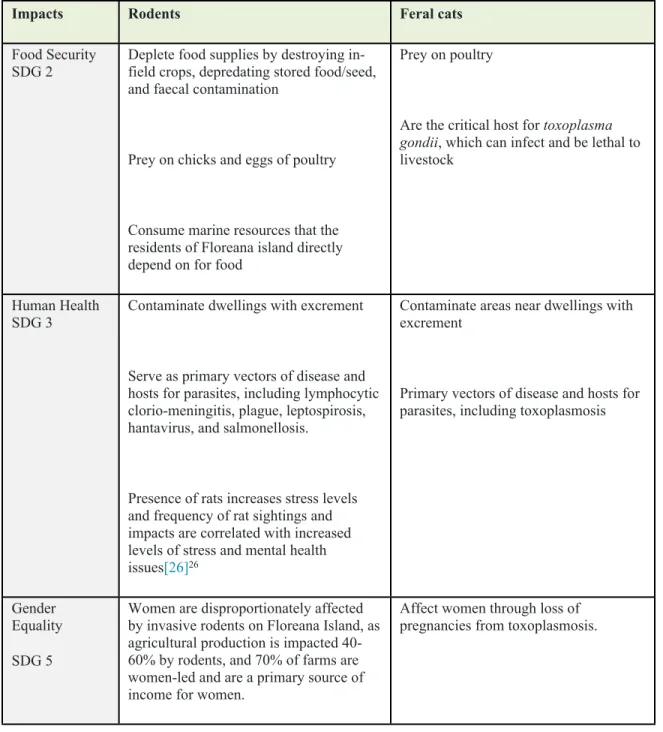
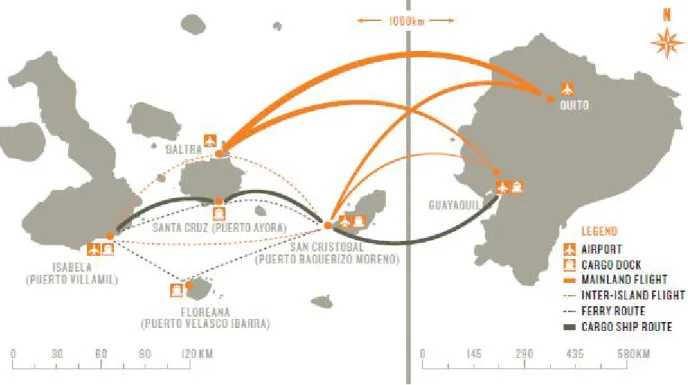
Table 1 below summarizes the impacts of invasive rodents and feral cats on island ecosystems in the Galapagos and their impacts on achieving UN Sustainable Development Goals (SDGs) and Figure 1 presents a map of air and sea pathways between the Galapagos, the mainland and the islands.
Table 1. Impacts of invasive rodents and feral cats on UN Sustainable Development Goals
Impacts Rodents Feral cats
Food Security SDG 2
Deplete food supplies by destroying in- field crops, depredating stored food/seed, and faecal contamination
Prey on chicks and eggs of poultry
Consume marine resources that the residents of Floreana island directly depend on for food
Prey on poultry
Are the critical host for toxoplasma gondii, which can infect and be lethal to livestock
Human Health
SDG 3 Contaminate dwellings with excrement
Serve as primary vectors of disease and hosts for parasites, including lymphocytic clorio-meningitis, plague, leptospirosis, hantavirus, and salmonellosis.
Presence of rats increases stress levels and frequency of rat sightings and impacts are correlated with increased levels of stress and mental health issues[26]26
Contaminate areas near dwellings with excrement
Primary vectors of disease and hosts for parasites, including toxoplasmosis
Gender Equality SDG 5
Women are disproportionately affected by invasive rodents on Floreana Island, as agricultural production is impacted 40- 60% by rodents, and 70% of farms are women-led and are a primary source of income for women.
Affect women through loss of pregnancies from toxoplasmosis.
Impacts Rodents Feral cats Clean water
SDG 6
Contaminate water with faeces, urine, corpses. Water is a pathway for zoonotic disease transmission from rodents to humans and their livestock.
Contaminate water with faeces. Water is a pathway for zoonotic disease
transmission (e.g. Toxoplasma gondii) from cats to humans and their livestock.
Biodiversity SDG 14 and 15
Feed on the eggs of endemic birds and reptiles, as well as the fruit/seeds of endemic plants
Prey on native insects, as well as small birds and reptiles through predation and disease, have contributed to the global extinction of at least 4 Galapagos
endemic wildlife taxa, the local extinction of at least 17 endemic wildlife species and contributes to the threatened status of at least 65 IUCN red list threatened animal species.
Contribute to fisheries decline by consuming inter-tidal species (e.g., Chiton) and endemic shellfish
Disrupt biogeochemical cycles (e.g., guano deposition in highland forests) Support higher densities of introduced predators (e.g., feral cats), further exacerbating negative impacts on native wildlife
Prey on large numbers of native insects, birds, mammals, and reptiles
Through predation, has contributed to the global extinction of at least four Galapagos endemic wildlife taxa, the local extinction of at least 17 endemic wildlife species and contributes to the threatened status of at least 14 IUCN red list threatened animal species
Disrupt biogeochemical cycles (e.g., guano deposition in highland forests)
Are the critical host for toxoplasma gondii[27]27, which can be lethal to wildlife.
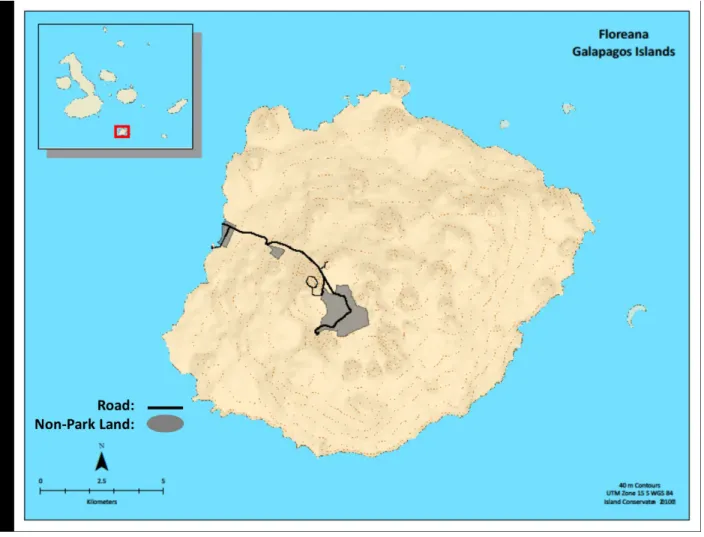
With respect to invasive alien species, Floreana Island, a 17,253 ha island in the south-central reaches of the archipelago, is of particular global interest. Partly because it is one of the oldest islands in the archipelago, Floreana has a higher rate of endemism (endemic species per km2) than the younger islands to the west. Due to its long history of human occupation (pirates and buccaneers began routinely visiting Floreana Island in the 1600s[28]28), Floreana?s endemic species are among the most threatened in the world. The IUCN Red List currently includes 61 plant and animal species on Floreana Island that are considered Threatened (i.e. Vulnerable, Endangered or Critically Endangered)?more than any other Galapagos Island. This includes a higher concentration of IUCN Critically Endangered species (one per 17.2 km2) than for any other major Galapagos island. It also has the highest
concentration of IUCN threatened animals (one per 7.8 km2) of any Galapagos island where invasive vertebrates are present (unpublished analyses). Thirteen species have already gone locally extinct, primarily due to the impacts of invasive mammals. Experts have identified Floreana as one of the top five islands globally for preventing extinctions by removing invasive mammals[29]29.
The human population on Floreana is highly dependent on local resources and nature-based tourism.
Therefore, adverse impacts on biodiversity pose substantial threats to the local people. On the highlands of Floreana, invasive alien species (in combination with agriculture) have already led to the degradation of 38% of the humid vegetation zone, 2% of the transitional vegetation zone, and 0.5% of the arid lands[30]30.
Figure 1: Map of air and sea pathways between the Galapagos, the mainland and the islands
Source: Wildaid 2013 (Quarantine chain).
Currently on Floreana, invasive rats cause agricultural crop losses of 40-60% of crops and up to 100%
when no pest control measures are in place, causing food insecurity for subsistence farmers and other island inhabitants. Invasive species have caused the local extinction of at least 11 native species.
Invasive predators are a primary threat to a further 55 species on Floreana considered threatened with extinction by IUCN, including seabirds such as the critically endangered Galapagos petrels, endangered Galapagos penguins, and green sea turtles[31]31. Zoonotic diseases from invasive predators affect inhabitants, their livestock and wildlife like Galapagos penguins and sealions. Feral cats prey on marine iguana hatchlings and juveniles, while invasive rats prey on their eggs and hatchlings. Invasive
predators on Floreana Island impact food security, sustainability of employment in agricultural and tourism industries and wildlife that are the basis for sustainable community tourism and the livelihood conditions of inhabitants and visitors alike.
Floreana represents a ?transformational opportunity? for invasive alien vertebrate eradication on human-inhabited islands. Because the island and its human population are smaller than the other inhabited islands in the Galapagos archipelago, and the biodiversity is already well-studied, Floreana offers the best opportunity for the DPNG and its partners to establish effective protocols for the eradication of invasive rodents and feral cats from inhabited islands. Once the eradication procedures are proven, they can be upscaled to the three remaining human-inhabited islands in the Galapagos archipelago and potentially hundreds of human-inhabited islands worldwide. The capacity to permanently eliminate invasive rodents and feral cats from islands with human populations will establish a new benchmark in island biodiversity conservation: species and ecosystems that could not previously be protected from the adverse impacts of invasive vertebrates can be protected and their viability secured over the long-term.
Feral goats, donkeys and pigs have already been removed from Floreana. Eradicating the remaining invasive rodents and feral cats would make Floreana free of invasive mammals. The eradication would also greatly benefit Floreana residents, whose agricultural livelihoods and tourism-based incomes are threatened. It would allow for the reintroduction of at least six threatened vertebrate species on Floreana Island, and as many as seven other Galapagos endemic species. Reintroductions would potentially include the Floreana giant tortoise (Chelonoidis elephantopus), Floreana mockingbird (Mimus trifasciatus), Galapagos rail (Laterallus spilonotus), Lava gull (Larus fuliginosus), and Galapagos hawk (Buteo galapagoensis).[32]32
Marine biodiversity and the threat of illegal, unreported and unregulated fishing
Decades of serial exploitation have led to the depletion of fish stocks globally and have had significant impacts on the population status of emblematic and threatened species. Increases in fisheries
regulation, risk mitigation and the creation of marine protected areas (MPAs) have provided multiple means to reverse trends in over-exploitation and recover populations of threatened species. However, non-compliant fishing activities, including illegal, unreported and unregulated (IUU) fishing[33]33, continue to undermine national and regional efforts to manage fisheries resources and conserve marine biodiversity.
Overfishing has reduced biomass of most sharks and other large predatory fishes worldwide by over 90%[34]34 and even remote locations have been severely impacted[35]35. One in four species of cartilaginous fishes is now threatened with extinction due primarily to overexploitation and habitat loss[36]36. The systematic removal of sharks from marine ecosystems has negative effects that propagate throughout the entire food web[37]37. According to Schiller et al.[38]38, the Ecuadorian fishing fleet has captured approximately 105,500 t of shark in the EEZ of the Galapagos Islands since 1950. However, there is evidence that foreign-flagged vessels belonging to Costa Rica, Colombia, and
Japan have also participated illegally in this fishery[39]39. For this reason, Schiller et al. point out that the reconstructed catch represents only a fraction of the total undeclared catch of sharks obtained in the Galapagos. Annex H presents a list of 110 threatened marine species recorded in the Galapagos Marine Reserve.
Non-compliant fishing in the form of IUU fishing activity in the immediate vicinity of the RMG, as well as illegal entry, are impacting fisheries resources and threatened migratory species. Additionally, organised illicit fishing from artisanal vessels also occurs. IUU fishing activities present a major challenge for the management of fishery resources and biodiversity values inside and outside of the RMG, and distinct strategies are required to confront the threats posed by different IUU activities[40]40. In the Galapagos, surveillance data from 2017 to 2019 shows that an average of 153 industrial vessels annually were detected within 40 km outside of the RMG border. Of these, 13%[41]41 were non- compliant (i.e. entered RMG without authorization), and a total of two non-compliant vessels were intercepted. Out of these incursions into the RMG, 80% were from vessels using longlines, a method that has a high level of incidental catch of protected species (e.g. sharks, seabirds). In addition, in each of the past four years and particularly during the third trimester of 2020, Ecuadorian Navy surveillance detected a fleet of approximately 300-400 large international fishing boats stationed just outside of the Exclusive Economic Zone (EEZ) established around the RMG[42]42. Although technically outside of the RMG, the presence of such a large fleet generates constant pressure on marine resources, and migratory species are especially vulnerable.
Control and surveillance efforts conducted by the DPNG in conjunction with Navy, Coastguard and Police aim to ensure compliance with permitted activities. Conservation partners have been supporting the DPNG since 2000 to strengthen its marine control and surveillance capacity. In 2009, a vessel monitoring center was constructed and equipped, allowing the detection and monitoring of vessels that enter, and/or navigate within, the RMG. This is accomplished with the support of two main
technologies: (i) a satellite-based Vessel Monitoring System (VMS), and (ii) a radio-based system known as the Automatic Identification System (AIS). The VMS was upgraded in 2015, incorporating the Themis Web platform and allowing for the integration of the two detection systems, i.e. AIS and VMS.
Today, the control center maintains real-time information on the identity, behavior, location and route of vessels that have AIS / VMS devices and that navigate within and around the marine reserve.
However, technological approaches like AIS, VMS, and coastal radar systems remain vulnerable to tampering and impose substantial implementation and maintenance costs. Vessels trying to avoid detection can disable their AIS or VMS devices, report incorrect locations, or use false identification when registering. One of the challenges in detecting vessels that carry out illegal actions is when they tamper with identification transmitter devices.
Within the RMG, the DPNG monitors and regulates approximately 162 tourism vessels?including live- aboard cruises, diving tours, experiential fishing, and others?and 320 artisanal fishing vessels[43]43. Most of this fleet has installed AIS/VMS technology to facilitate surveillance. However, an average of 40% of the registered artisanal fishing vessels were non-compliant, e.g. failed to turn on AIS, in the last 3 years[44]44. The main difficulty is non-cooperative behaviour, including the use of non-permitted fishing techniques, disrespect of no take zones and fishing calendars (closed seasons). Partly as a result
of inshore IUU fishing by artisanal vessels, e.g. illicit fishing for sea cucumbers, marine biodiversity in these areas is also threatened.
In the last three years, the DPNG has made significant investments to strengthen patrol and interception capacity, and its fleet (oceanic, coastal and light aircraft) has been kept operational. In 2016, the DPNG, with the support of WildAid, analyzed the fleet and its effectiveness and developed a renewal plan. The analysis revealed that:
1) current vessels (oceanic and coastal) are nearing the end of their useful life;
2) the DPNG patrol fleet needs faster interceptor vessels and a technological system (e.g. radar) to enable detection and apprehension of non-collaborative vessels;
3) the investigation and intelligence-collecting capacity of the DPNG?s control personnel is limited and provides only limited information on illegal activities, creating challenges in law enforcement and application of protocols related to prosecution and sanctions;
4) limited surveillance of the Galapagos artisanal fishing fleet occurs, as AIS devices are not used approximately 40% of the time, endangering the safety of life at sea and the application of fishing regulations; and
5) there is limited awareness among stakeholders of the location of zones within the RMG, complicating their compliance with relevant regulations.
Terrestrial: marine linkages and invasive species
Terrestrial invasive species negatively affect the sustainability of livelihoods, food security and biodiversity both on land and in the sea. Marine ecosystems are impacted in a variety of ways,
including directly driving biodiversity loss, and through increasing erosion and sedimentation rates into the marine environment[45]45. These impacts result in: a) reduced marine productivity (e.g. reduced fish biomass); b) decreased coral reef health and ability to absorb shocks and recover from bleaching events; c) reduced effectiveness of mangrove systems in filtering sediment, creating nurseries for biodiversity and protecting systems from climate shocks; and d) near-shore systems contaminated with disease propagules such as toxoplasmosis. Ultimately, these stressors result in reductions of marine biodiversity, fish stocks and the presence of megafauna. Terrestrial invasive species negatively impact food security, and the resources that sustain livelihoods, including fishers, farmers and sustainable tourism operators working in the Galapagos. The significance of these links has been unveiled in the last decades, but is not widely understood and as such is explained in more detail below.
There are strong links between healthy terrestrial island ecosystems and marine productivity.
Ecosystems that are rich in seabird guano nutrients promote concentrations of plankton, which are especially important during seasons in which upwelling is not occurring. Climate change scenarios indicate that upwelling duration and intensity will decrease at low latitudes[46]46 (e.g. Galapagos), increasing the relative contribution of seabird guano concentrations to the system. Introduced predators, such as rats, cause population reductions and extirpations of seabird populations (and other intertidal flora and fauna), reducing guano-derived nutrients in nearshore waters and decreasing their
productivity[47]47. Lower plankton concentrations result in reduced fish stocks (required to sustain fisheries) and reduced concentrations of marine life, including megafauna such as manta rays, sharks and whales, which are critical to sustain the tourism industry.
Terrestrial invasive species also have significant impacts on coral reef health, reducing the reef?s ability to absorb climate shocks and recover from bleaching events[48]48,[49]49. Invasive rodents consume seeds and seedlings, modify forest composition, reduce vegetation coverage and increase erosion. Increased runoff leads to sedimentation and turbidity in marine systems. During major rainfall events, large sediment plumes are prevalent. Sediment plumes are carried on currents and deposited on the sea floor, altering the seafloor substrate. Sediment has complex effects on the ability of planktonic life-stages of corals[50]50, lobster and fish to successfully locate suitable habitat, as well as impacting on their post-settlement performance and, ultimately, recruitment success[51]51. Under climate change scenarios, it is expected that rainfall will occur with increased intensity and frequency, increasing the scale of runoff events and magnifying the consequences.
In addition to sediments, runoff also carries with it faecal matter from invasive rats and feral cats. Feral cats are the definitive host for Toxoplasma gondii, which can infect and kill marine and terrestrial mammals (e.g. whales, sea lions, fur seals, people), and marine and land birds (e.g. Galapagos penguins)[52]52. Rats transmit Leptospira and other diseases that impact people and wildlife by contaminating freshwater.
Ultimately, invasive species impact tourism, fishing, health, and livelihoods of coastal communities in a suite of different ways. Figure 2 below illustrates these.
Conversely, when invasive vertebrate species are removed, the negative impacts cease, threatened species and ecosystems recover[53]53, fish stocks rebound[54]54, agricultural production increases, resilience to climate change is increased and livelihoods are enhanced. Eradicating invasive mammals has been an essential strategy to secure these types of benefits in the Galapagos, with 43 eradications successfully implemented[55]55. Not surprisingly in light of the above, protected area management plans in Galapagos prioritize the eradication of invasive vertebrates and list them as the major threats to biodiversity for the protected areas. Invasive mammal eradications also contribute significantly to advancing Sustainable Development Goals[56]56.
Barriers to Addressing the Environmental Problems and Root Causes
Many of the barriers that are typical of efforts to control and eradicate invasive alien species (e.g., lack of political support; insufficient collaboration and public participation; ineffective policy, legislation, or other frameworks) have already been overcome in the Galapagos archipelago. Positive steps taken include:
Global recognition of the Galapagos Islands as an area of substantial biological importance and a highly valued tourist destination;
Leadership of high-level political officials across environment, agriculture, and human health sectors who are already well aware of the adverse impacts that invasive alien species have on biodiversity and human livelihoods at international, national, and subnational scales;
Long and successful history of scientific and technical cooperation with other governments, non- governmental institutions (NGOs), inter-governmental organizations (IGOs) and academic institutions;
Substantial financial investment in conservation in the Galapagos archipelago by the GoE, various international donors and collaborating NGOs;
A Galapagos special law (LOREG), management authorities (DPNG, ABG), a plan (Plan for the Management of Invasive Species 2019-2029), and a fund (Fund for the Control of Invasive
Species in Galapagos (FEIG)) explicitly committed to preventing the introduction and mitigating the impacts of invasive alien species; and
The substantial experience that the GoE and its partners have in the design and implementation of large-scale, multi-faceted conservation projects in the Galapagos Islands.
The remaining barriers to the eradication and control of invasive alien species and to the control of IUU fishing are largely technical and financial in nature. Many of these barriers are particularly challenging to overcome in the Galapagos archipelago due to Ecuador?s socio-economic status as a developing country, wide dispersion of the islands across the archipelago and their often steep and rugged terrain which hinder accessibility, the logistical difficulties inherent in securing island borders, the rapid increase in trade and tourism upon which the islands? economy depends (discussed above), and the urgency and large-scale of action required to secure species that are on the brink of extinction, such as the critically endangered Medium tree finch, which is endemic to Floreana Island.
Figure 2: Diagram shows the link between invasive vertebrate species in the Galapagos and how they impact the sustainability of livelihoods and biodiversity.
One of the key long-term barriers to invasive species eradication in the Galapagos is the relatively high cost of such actions. Despite significant progress made in addressing this key area of financial
sustainability, including through GEF support (see baseline discussion below), available financial resources continue to be insufficient to cover the broad range of critical needs facing Galapagos biodiversity due to the threats from IAS.
With respect to financial barriers, the eradication on Floreana and its eventual replication will require a greater investment than can be sourced from the FEIG endowment fund, highlighting the continuing need for a larger scale, sustainable financing source or sink fund for IAS eradications.[57]57 Similar considerations apply in the case of the substantial budgetary outlays required to control, and conduct surveillance of, IUU fishing. Additional financing solutions are thus urgently needed.
2) The baseline scenario and any associated baseline projects
Baseline discussions of invasive species eradication and IUU fishing surveillance and control are presented below.
Invasive terrestrial species eradication
The GEF has provided significant past support for invasive species eradication in the Galapagos, including the following:
? Under GEF-3, Project ECU/00/G31 was implemented for goat eradication, establishment of a biosecurity system and creation of a Galapagos IAS fund. The latter, known as the ?Fund for the Control of Invasive Species in Galapagos (FEIG) ?was established in 2011 and is currently capitalized at approximately $20 million. Since its creation, the fund has disbursed less than $ 1 million per year on average. Funds are applied to a suite of needs related to invasive species prevention and control, including emergency response actions, biosecurity needs, education and awareness, and preparations for new eradications. While the FEIG has had an important impact and has contributed greatly to increasing available financing, it has unfortunately not been sufficient to eliminate financing as a barrier to invasive species eradication.
Under GEF-6, Project 9282 was approved and is currently operational. The project provides, inter alia, for the finalization of an eradication plan for invasive cats and rats on Floreana Island (see below). More generally, it establishes both the technical parameters and the social license necessary for the eradication to take place. By the time of its completion in the second half of 2021, the project will have generated important momentum for the eradication within the Floreana Island community.
Among other achievements, Project 9282 has leveraged the majority of investment funding needed to allow the eradication to take place. In multiple respects, therefore, the proposed project would represent a seamless transition from its predecessor and would enable the full benefits of its pre-investment work to be realized.
Since 1960, the DPNG and parters have attempted 52 invasive vertebrate population eradications in the Galapagos Islands. Of these 52 attempts, 43 (83%) were successful, and 9 (17%) failed due to
insufficient funding to implement the work at the scale necessary to achieve complete eradication.
As technical information, eradication tools (e.g., rodent baits), and funds have increased over the years, so has the frequency and success rate of invasive vertebrate eradications. With the exeption of three successful eradications on satellite islands that were followed by reinvasions (black rats on Bartolome and Sombrero Chino Islands, 2011; black and Norway rats on Seymour Norte in 2017), results from all of the invasive vertebrate eradication projects over the last decade have been sustained. Since the completion of rodent eradications on Pinzon and Plaza Sur Islands in 2012, and Seymour Norte in 2019, invasive mammals had been eradicated from all feasible uninhabited Galapagos islands. All 11 eradications of invasive mammals attempted on islands in the Galapagos larger than 150 ha in the last 12 years have been successful, and no subsequent reinvasions have occurred. The feral goat and pig eradications on Santiago Island were the largest attempted worldwide.
Despite these successes, additional invasive vertebrate eradication work is needed within the Galapagos archipelago. In 2012, the DPNG undertook an archipelago-wide analysis of the presence and impact of invasive alien species and subsequently released a report entitled, ?Control and Eradication of Priority Invasive Species to Reduce the Vulnerability of Endemic and Native Species of the Galapagos Islands.? Invasive rodents and feral cats were considered among the top priorities for invasive vertebrate eradication due to: 1) their prevalence on multiple islands in the archipelago, 2) devastating impacts to biodiversity and human livelihoods, 3) proven capacity for island-wide eradication, and 4) their being the only invasive mammals remaining on the island with the smallest human population, i.e.
Floreana Island.
Most species of large invasive mammals have already been removed from Floreana Island. Feral pigs (Sus scrofa) were eradicated in the 1980s and feral cattle (Bos taurus) in 2007. Feral goats (Capra hircus) and donkeys (Equus asinus) were eradicated from the island in 2008. Remaining invasive vertebrates include: black rats (Rattus rattus), house mice (Mus musculus), feral cats (Felis catus), smooth-billed ani (Crotophaga ani), and an introduced gecko (Phyllodactylus reissii). At this time, livestock, poultry, and dogs are being well-maintained by the local residents.
The invasive alien vertebrates currently inhabiting Floreana Island are distributed across the whole of the island. Invasive rodents and feral cats tend to have higher concentrations in areas of human activity.
However, island-wide densities of the invasive vertebrates vary by species, season, and year.
Responding to the GoE?s urgent need to protect the biodiversity and people of Floreana Island, Island Conservation (IC) undertook a study in 2012 in order to assess the feasibility of eradicating invasive rodents and feral cats from Floreana Island. The results of this feasibility study, published by Island Conservation (IC) in 2013[58]58, indicated that the eradication of invasive rodents and feral cats is feasible from a technical perspective. Based on the report, the overall priorities identified by the DPNG were as follows:
? Eradicate black rats, house mice and feral cats island-wide;
? Once eradication is complete, repatriate at least five endemic species to Floreana Island from satellite islands and secure their populations;
? Facilitate habitat recovery to the benefit of all threatened species, as necessary;
? Establish a community-based early detection/rapid response (EDRR) program on Floreana Island to facilitate detection and eradication of new introductions; and
? Apply lessons learned from the Floreana Island eradication work to other human-inhabited islands in the archipelago.
With the support of a GEF-6 Project (ID - 9282), a significant amount of groundwork has been laid for eradicating rats and feral cats from Floreana Island. Key steps taken include:
? Biosecurity system strengthened for mainland ports that service Galapagos, points of arrival to the Galapagos and inter-island pathways
? Floreana Island biosecurity plan developed and being implemented
? Feasibility study for eradication of invasive rodents and feral cats
? Non-target species risk analysis
? Risk analysis for humans
? Bait consumption trials (Brodifacoum, PAPP) and lethality
? Bait availability tests in the environment and palatability
? Development and socialization of management plans with the community
? Project implementation plan
? Cargo and machinery logistics plan
? Study of social, economic and productive baseline
? Study for improving the waste management system
? Installation of 34 shipping containers for rodent-proof food storage on farms and at local businesses
? Construction of 15 chicken coops to handle poultry
? Construction of a model corral for livestock handling
? The construction of a model piggery for handling pigs (in progress)
? Construction of two banks of aviaries for temporary captive holding of finch species, especially the Floreana Island endemic Medium tree finch, during eradication processes.
? Project approved by the Galapagos Government Council (CGREG) for the remodelling of the cargo and passenger dock, which will facilitate unloading of the cargo and machinery for this project.
Failure to eradicate invasive rodents and feral cats from Floreana Island would:
? Enable the persisting invasive vertebrate species to continue to predate upon, compete with, and/or spread pathogens and parasites to the native species of Floreana Island, including 61 species identified on the IUCN Red List as threatened with extinction;
? Likely result in the continued decline in threatened species: 6/14 vertebrate species and 14/14 invertebrate species;
? Allow for further degradation of Floreana Island?s 17,253 hectares of sensitive terrestrial habitat;
? Decrease the nutrient transfer from the marine environment to the terrestrial environment by seabirds, with adverse impacts on vegetation structure and composition;
? Prevent both terrestrial and marine ecosystems from being able to support the long-term viability of native species, and possibly human livelihoods;
? Substantially undermine investments already made in environmental conservation, ecotourism, and sustainable agriculture on Floreana Island;
? Reduce Floreana Island?s ecological and socio-economic resistance to the adverse impacts of climate change and other major environmental disturbances;
? Cause the GoE to lose the opportunity for Floreana Island to serve as a catalyst for similar eradication work on other islands of the Galapagos archipelago, and;
? Mean that other governments would not benefit from data and well-tested protocols that could enable them to move forward with invasive vertebrate eradications on numerous other human-inhabited islands.
Illegal, unreported and unregulated (IUU) fishing[59]59
The Organic Law of the Special Regime of Galapagos (LOREG), which was the legal basis for establishment of the Galapagos Marine Reserve, included a series of measures designed to regulate exploitation of Galapagos fishery resources[60]60 [61]61. Among the most important measures were the establishment of a co-management system, the prohibition of industrial fishing within the limits of the RMG, the establishment of a moratorium on the granting of new fishing licenses and the allocation of exclusive fishing rights to the artisanal fishermen of Galapagos through the creation of a limited entry program, locally designated as the fishing registry. Today, the Galapagos artisanal fishing fleet is made up of approximately 410 active fishermen and 151 active fishing vessels[62]62.
The RMG has a marine zoning system, created between 2000 and 2006 through a participatory process[63]63, and consisting of three zones:
? Multiple use: areas where fishing, tourism, science, conservation, navigation and manoeuvring activities (patrolling, search and rescue) are allowed. This zone consists mainly of deep waters greater than 300 m.
? Limited use: areas where regulations are established in addition to human activities allowed in the multiple use zone, whose objective is to protect environments, resources or activities that are important and sensitive to disturbance. This zone includes the coastal waters surrounding each island, islet or promontory that protrudes from the water surface, and other shallow waters (<300 m) including seamounts.
? Port: area where human activities allowed in the multiple-use zone are modified, according to the needs of the local population, considering social and environmental aspects. This area corresponds to the waters near the populated ports of Galapagos.
In 2014, the DPNG officially began a participatory marine and terrestrial spatial planning process, with the support of NGOs, to improve the effectiveness of the management of protected areas in Galapagos.
After six years, this participatory process is close to a reconfiguration of marine zoning, including the creation, expansion or redistribution of no-take zones to protect new key conservation areas and ensure the conservation of at least 30% of all environmental units (e.g. corals, mangroves, etc.) of the
Galapagos.
Control and surveillance program
The general objective of the Control and Surveillance program developed by DPNG[64]64 is to contribute to the conservation and rational use of the services generated by the ecosystems of the protected areas of Galapagos, promoting compliance with current regulations.
The greatest threats facing the DPNG's control and surveillance program in the marine environment include the illegal fishing of industrial vessels in the vicinity of the RMG, the use of fishing gear not allowed within the reserve, and the capture of species whose seasons are closed and/or are in no-fishing zones[65]65.
To counter these threats, the DPNG has a fleet for control and surveillance operations, which is made up of 12 vessels, a floating base, a land base, five land vehicles, a light aircraft and three monitoring centers. Most of the personnel, equipment and infrastructure for the control and surveillance of the RMG is located on Santa Cruz Island, which is the island with the largest population and influx of tourists, as well as in San Crist?bal, where more than 50% of the Galapagos artisanal fishing fleet is located.
Control and surveillance activities are planned on a monthly basis, through a Patrol Plan, and include control of the ports through the use of inflatable boats, control of sites near the port by coastal vessels, control of remote sites by larger ships and control along the limits of the reserve by means of a Sea Wolf type aircraft. In addition, night controls are carried out at docks, main access roads and other key
locations, using control points, road blockades and land vehicles. For each patrol activity, field reports are generated using forms stored in an Excel database.
DPNG control and surveillance activities are carried out in collaboration with the Ecuadorian Navy and the Environmental Police. To strengthen inter-institutional coordination, the DPNG has established agreements with the Regional Directorate of Aquatic Spaces and Island Coast Guard and the Environmental Protection Unit of the National Police.
DPNG control and surveillance operations are carried out by a Control and Surveillance Center. This unit in charge of managing data provided by the VMS and AIS devices, from which the activity of vessels navigating within the limits of the Galapagos Marine Reserve is monitored.
The functions of the Control and Surveillance Center are as follows:[66]66
? Coordinate on a daily basis the marine, air, and land control and patrol activities to be carried out in the protected areas of Galapagos;
? Maintain updated status of the land, marine and air operational units, as well as of the remote units;
? Permanently monitor (through the monitoring center), the movement of vessels identified by the VMS and AIS tracking devices;
? Establish and update the operating and management procedures manuals for the control and surveillance support components;
? Manage coordinated control and surveillance actions with the Ecuadorian Navy in the marine area and with the National Police in the land area, through the use of an Operations Plan,
complemented by inter-institutional cooperation agreements;
? Permanently report the operational status of the monitoring systems;
? Maintain permanent operation of the radio communication system, satellite telephones and others;
? Prepare a plan for the optimization and constant improvement of technological, equipment and human capacities, in order to make control and surveillance actions more effective and efficient, and;
? Maintain an updated record of the activities and information generated by the monitoring systems.
Thanks to the Control and Surveillance Center, national and international vessel traffic in the areas surrounding the RMG is monitored. In addition, activities of the artisanal and tourist fishing fleet that legally operate within the reserve are monitored, including cargo vessels that arrive every week at the Galapagos? three ports to supply food, fuel and other supplies to the local population. These data are used to help detect any unauthorized entry of vessels into the reserve, as well as to optimize control activities carried out by the DPNG?s fleet of vessels and aircraft. In addition, the control center contributes to port control through surveillance cameras.