Strengthening Institutional and Technical Capacity for Barbados to meet the transparency requirements of the Paris Agreement
Part I: Project Information GEF ID
11013 Project Type MSP
Type of Trust Fund GET
CBIT/NGI CBIT Yes NGI No Project Title
Strengthening Institutional and Technical Capacity for Barbados to meet the transparency requirements of the Paris Agreement
Countries Barbados Agency(ies) IADB
Other Executing Partner(s)
Ministry of Environment and National Beautification (MENB) Executing Partner Type
Government GEF Focal Area Climate Change Taxonomy
Focal Areas, Climate Change, Climate Change Mitigation, United Nations Framework Convention on Climate Change, Capacity Building Initiative for Transparency, Enabling Activities, Climate Change Adaptation, Climate information, Sustainable Development Goals, Convene multi-stakeholder alliances, Influencing models, Strengthen institutional capacity and decision-making, Transform policy and regulatory environments, Demonstrate innovative approache, Information Dissemination, Type of Engagement, Stakeholders, Gender Mainstreaming, Gender Equality, Sex-disaggregated indicators, Capacity Development, Gender results areas, Knowledge Generation and Exchange, Participation and leadership, Learning, Capacity, Knowledge and Research, Indicators to measure change, Knowledge Generation, Workshop, Training
Sector
Mixed & Others Rio Markers
Climate Change Mitigation Climate Change Mitigation 2 Climate Change Adaptation Climate Change Adaptation 1
Submission Date 5/24/2022
Expected Implementation Start 9/1/2022
Expected Completion Date 9/1/2025
Duration 36In Months Agency Fee($) 118,750.00
A. FOCAL/NON-FOCAL AREA ELEMENTS
Objectives/Programs Focal Area Outcomes Trust
Fund GEF
Amount($) Co-Fin Amount($)
CCM-3-8 Foster enabling conditions
for mainstreaming mitigation concerns into sustainable development strategies through Capacity Building Initiative for Transparency
GET 1,250,000.00 198,000.00
Total Project Cost($) 1,250,000.00 198,000.00
B. Project description summary
Project Objective
The main objective of this project is to strengthen the country?s transparency framework through the design and implementation of a fully functional and harmonized domestic Monitoring, Reporting and Verification (MRV) system for the effective implementation of the country?s NDC and other transparency- related activities
Project Compone nt
Financin g Type
Expected Outcomes
Expected Outputs
Tru st Fun d
GEF Project Financing(
$)
Confirmed Co- Financing(
$)
Project Compone nt
Financin g Type
Expected Outcomes
Expected Outputs
Tru st Fun d
GEF Project Financing(
$)
Confirmed Co- Financing(
$)
Improveme nt of Barbados?
GHG Inventory
Technical Assistanc e
Outcome 1.1 Improvement of
Barbados?GH G Inventory:
Data Collection and Enhanced Capacity for Preparation of GHG Inventory
Output 1.1
Completed training products
developed. Barbado s?s GHG Emissions Inventory requires training material to be updated and developed to ensure that Data collection and monitoring, review, and verification (MRV) is done adequately.
Output 1.2- Training of individuals delivered. After a preliminary stakeholder
mapping, There will be training and capacity building for individuals and institutions on the 2006 IPCC GHG guidelines and the 2019 Refinement to the 2006 IPCC Guidelines.
Output 1.3 - Training of individuals from diverse institutions delivered. The Government of Barbados will train public servants from key sectoral
Ministries and engage relevant stakeholders from academia, private sector and non- governmental organizations.
Output 1.4 New data bases created.
Based on the training material and training sessions for key stakeholders in different ministries the GHG Inventory of Barbados will have solid and revised quantitative data for all emitting sectors.
GET 511,364.00 73,638.00
Project Compone nt
Financin g Type
Expected Outcomes
Expected Outputs
Tru st Fun d
GEF Project Financing(
$)
Confirmed Co- Financing(
$)
Improveme nt of the MRV system and Strengtheni ng Barbados Transparenc y
Framework for
Compliance with the Paris Agreement
Technical Assistanc e
Outcome 2.1 Improvem ent of the MRV system and
Strengthening Barbados Transparency Framework for
Compliance with the Paris Agreement.
Output 2.1- Methodologies designed/strengthen ed. Design and development of a transparency process guidelines and protocols (that meet the enhanced transparency framework for action and support established in Article 13 of the Paris Agreement)
Output 2.2Virtual platforms
designed Developm ent of an electronic tool that will calculate and track the progress towards achieving the NDC goals (including mitigation and adaptation goals), as well as track data on domestic budget allocated and international financial support received, This exercise will also include a full stakeholder mapping assessment
Output
2.3 Participatory mechanisms for public investment decisions and/or service production or delivery
developed. National Transparency Working Group established
GET 363,636.00 52,362.00
Project Compone nt
Financin g Type
Expected Outcomes
Expected Outputs
Tru st Fun d
GEF Project Financing(
$)
Confirmed Co- Financing(
$)
Knowledge Managemen t and Capacity Building on transparenc y of climate change action as established in the Paris Agreemen
Technical Assistanc e
Outcome 3.1 Knowled ge
Management and
Capacity Building on transparency of climate change action as established in the Paris Agreement
Output
3.1 Operational manuals
developed Producti on of transparency guidebooks, manuals, protocols, for reference material and training, to use the Transparency Digital Platform based on inputs from Output2.2.
Output 3.2 -Virtual platforms
improved. Transpar ency Digital Platform established and operational to provide and share information to stakeholders.
Output 3.3 Training workshops
delivered Capacity building and training of persons from government, agencies, private sector and civil society on transparency of climate change action as established in the Paris
Agreement
GET 261,364.00 54,000.00
Sub Total ($) 1,136,364.
00
180,000.00
Project Management Cost (PMC)
GET 113,636.00 18,000.00
Sub Total($) 113,636.00 18,000.00
Total Project Cost($) 1,250,000.00 198,000.00
Please provide justification N/A
C. Sources of Co-financing for the Project by name and by type Sources of Co-
financing Name of Co-
financier Type of Co-
financing Investment
Mobilized Amount($)
Recipient Country Government
MENB In-kind Recurrent
expenditures
198,000.00
Total Co-Financing($) 198,000.00 Describe how any "Investment Mobilized" was identified
N/A
D. Trust Fund Resources Requested by Agency(ies), Country(ies), Focal Area and the Programming of Funds Agenc
y Tru
st Fun d
Countr
y Focal
Area Programmi
ng of Funds Amount($) Fee($) Total($)
IADB GET Barbad
os Climat
e Chang e
CBIT Set-
Aside 1,250,000 118,750 1,368,750.
00
Total Grant Resources($) 1,250,000.
00 118,750.0
0 1,368,750.
00
E. Non Grant Instrument
NON-GRANT INSTRUMENT at CEO Endorsement
Includes Non grant instruments? No Includes reflow to GEF? No
F. Project Preparation Grant (PPG) PPG Required false
PPG Amount ($)
PPG Agency Fee ($)
Agenc
y Trust
Fund Country Foca l Area
Programmin
g of Funds Amount($) Fee($
) Total($
)
Total Project Costs($) 0.00 0.00 0.00
Core Indicators
Indicator 11 Number of direct beneficiaries disaggregated by gender as co-benefit of GEF investment Number
(Expected at
PIF) Number (Expected at CEO Endorsement)
Number (Achieved at MTR)
Number (Achieved at TE)
Female 50
Male 50
Total 0 100 0 0
Provide additional explanation on targets, other methodologies used, and other focal area specifics (i.e., Aichi targets in BD) including justification where core indicator targets are not provided
Given the capacity building objective of the CBIT project, we would target indicator 11 and enhance its monitoring by ensuring that we have access to the profiles of the participants to also assess their level of capacity and hierarchy level. A 1:1 ratio has been proposed so as to depict that we will pursue gender parity, nonetheless as limited data exists on the level of inclusion and participation of women in these activities, we may have to review are targets but as of now the objective is to ensure equal gender access to the different trainings that will be developed.
Part II. Project Justification
1a. Project Description
1a. Project Description. Elaborate on: 1) the global environmental and/or adaptation problems, root causes and barriers that need to be addressed (systems description); 2) the baseline scenario and any associated baseline projects, 3) the proposed alternative scenario with a description of outcomes and components of the project; 4) alignment with GEF focal area and/or impact program strategies; 5) incremental/additional cost reasoning and expected contributions from the baseline, the GEFTF, LDCF, SCCF, and co-financing; 6) global environmental benefits (GEFTF) and/or adaptation benefits
(LDCF/SCCF); and 7) innovativeness, sustainability and potential for scaling up.
?
1.1 Barbados Root Causes and Barriers to be Addressed
Barbados is a small island state located on the southern edge of the North Atlantic Hurricane Belt and is one of the southerly located islands in the Lesser Antilles Caribbean Island chain. Barbados possesses many of the economic, social, and environmental vulnerabilities that are associated with Small Island Developing States (SIDS), which include remoteness, limited resources, low-lying topography, and high vulnerability to climate change. Alike many other SIDS, Barbados is susceptible to natural disasters and extreme events such as tropical storms and hurricanes. Barbados has a population of 287,025 (2019), being one of the islands most populated in the region, with 661
inhabitants per km2. Barbados' total land area is 432 km2; while its Exclusive Economic Zone is around 430 times larger, with 185,000 km2. Most of the population and infrastructure is located on or near the coast.
The IPCC Firth Assessment Report (AR5) states that the predicted changes in climate for the Caribbean region by the end of the century include: a 1?4?C increase in atmospheric temperature with a tendency towards drier conditions in the traditional wet season (from June to November), a 12%
decrease in total annual precipitation and 0.5-0.6 m of mean sea level rise. Barbados is already experiencing the impacts of climate change. Observations confirm that air and sea surface temperatures are rising, the frequency of extreme weather events is increasing, sea levels are rising, and coral bleaching events are more frequent. The impact of climate change will have a devastating impact on the development progress which Barbados has made over the past 50 years. As a SIDS, Barbados needs to access considerable international finance and technical support to be able to cope and address the impacts of climate change.
Barbados signed on to the United Nations Framework Convention on Climate Change (UNFCCC) on 12 June 1992 and ratified it on 23 March 1994. Barbados is a Non-Annex 1 Party to the Convention.
Barbados became a signatory to the Paris Agreement on 22 April 2016 and submitted its intended Nationally Determined Contribution on 30th September 2015 (available through:
https://www4.unfccc.int/sites/ndcstaging/PublishedDocuments/Barbados%20First/Barbados%20INDC
%20FINAL%20September%20%2028,%202015.pdf), and its Updated NDC on 30 July 2021 (available through:
https://www4.unfccc.int/sites/ndcstaging/PublishedDocuments/Barbados%20First/2021%20Barbados%
20NDC%20update%20-%2021%20July%202021.pdf)
Barbados submitted its First National Communication to the UNFCCC on 30 October 2001. This document presented Barbados? first attempt at calculating anthropogenic GHG emissions and removals by sink for the years 1990, 1994 and 1997 based on the Intergovernmental Panel on Climate Change (IPCC) Revised 1996 Guidelines for National Greenhouse Gas Inventories. This process highlighted the gaps in institutional arrangements and methodologies for data collection required for the preparation of national greenhouse gas inventories.
Barbados? Second National Communication was submitted to the UNFCCC on 18 October 2018. It contained the 2010 National Greenhouse Gas Inventory. The 2010 Inventory was prepared using the 2006 IPCC Guidelines for National Greenhouse Gas Inventories and the 2004 Good Practice Guidance.
This inventory portrays emission estimates made at yearly intervals for the period 2000 to 2010, for the following sectors: Energy; Industrial Processes; Waste; Agriculture; and Land Use, Land Use Change
and Forestry (LULUCF). The outputs of this component of the project to prepare Barbados? SNC included (i) a summary of the results of the inventory compilation and recommendations for improving future inventories; (ii) a detailed technical guide on the calculations and worksheets to aid in the preparation of future inventories; and (iii) a proposed management framework for GHG estimate
compilation in
Barbados. https://www4.unfccc.int/sites/SubmissionsStaging/NationalReports/Documents/4693851_Ba rbados-NC2-1-Barbados%20SNC%20FINAL%20April%202018.pdf
During the preparation of the 2021 NDC Update (prepared with support from the Inter-American Development Bank), the GHG Inventory was updated based on the 2006 IPCC Guidelines, covering the period 2008-2020. This update includes improvements of historical activity data and methodologies, especially in the energy and waste sectors (energy balances 2008-2020; residues deposited in landfills; updated GDP and population; waste stream data 2010-2020). Nevertheless, a full GHG inventory remains to be completed. During the process we observed that that data sharing arrangements between ministries were not well established or efficient. Some of the required data was not readily available to GoB staff since it was held by private sector entities or it was not properly shared between institutions/programs. Whereas some countries maintain a ?running? GHG inventory that is updated annually or biannually, Barbados does not have such a system. As stated in the 2021 NDC Update, ?The government understands the updated GHG Inventory to be a prerequisite for operating a monitoring, reporting and verification (MRV) system that is suitable to enable Barbados?
participation in Article 6 mechanisms, allowing tracking of mitigation contributions of individual NDC-aligned projects and for attracting investment in these projects.?
Currently Barbados is working with the UNDP to prepare a project proposal for submission to GEF for the development of its Third National Communication, First Biennial Update Report and First biennial transparency report (BTR1). Barbados? Third National Communication is expected to comprise a vulnerability assessment of key social and economic sectors, an analysis of the impact of past and ongoing mitigation action and a full up to date GHG inventory. Barbados is committed to improving the completeness and accuracy of the GHG inventory for the next update of the NDC in adherence with the Enhanced Transparent Framework under the Paris Agreement, however, it is recognized that a significant effort must be made to establish a suitable MRV system in Barbados to achieve this. In this context, IDB and UNDP are committed to coordinate efforts, share information and avoid any overlap to ensure the best results for the country.
As a Non-Annex I Party to the UNFCCC, Barbados actively participates in its discussions, and is highly committed to the international negotiations process. Like many other SIDS, Barbados is not a major emitter of greenhouse gas emissions. In 2010, Barbados? emissions contributed an estimated 1,930 gigagrams (Gg) of CO2 equivalent (CO2e), which represent significantly less than 0.01% of global emissions of greenhouse gases. In addition to this, international shipping and international
aviation emissions were estimated to be 103 and 410 Gg CO2e respectively. In the 2021 NDC Updated, it is noted that total absolute emissions in the base year (2008) have been restated at 2,123Gg CO2e, in comparison to 2015 NDC inventory emissions at 1,816Gg CO2e.
In its 2015 NDC Barbados? stated the intention to achieve an economy-wide reduction in GHG emissions of 44% compared to its business as usual (BAU) scenario by 2030. In absolute terms, this translates to a reduction of 23% compared with the baseline year, 2008. As an interim target, the intention will be to achieve an economy-wide reduction of 37% compared to its business as usual (BAU) scenario by 2025, equivalent to an absolute reduction of 21% compared to 2008. In Barbados?
updated NDC, Barbados set the aspirational goal to achieve a fossil fuel-free economy and to reduce GHG emissions across all sectors to as close to zero as possible by 2030. This is supported by the recently approved Barbados National Energy Policy (2019-2030).
The updated mitigation contribution for 2025 and 2030 are: 20% reduction relative to business-as-usual emissions in 2025, and 35% reduction relative to business-as-usual emissions in 2030 without international support (unconditional), and 35% reduction relative to the business-as-usual emissions in 2025, and 70% reduction relative to business-as-usual emissions in 2030 conditional upon international support. The absolute emissions reductions resulting from this 2021 NDC update conditional contribution below the 2008 base year are 705Gg CO2e (2025) and 1,459Gg CO2e (2030) respectively.
Total economy-wide BAU emissions projections are 1,881Gg CO2e (2025) and 1,958Gg CO2e (2030) respectively.
The Paris Agreement was a paradigm shift in the global climate change negotiations and policy.
Article 13 of the Paris Agreement provides for an enhanced transparency framework. Article 13.1 of the Paris agreement states, ?In order to build mutual trust and confidence and to promote effective implementation, an enhanced transparency framework for action and support, with built-in flexibility which takes into account Parties? different capacities??. Currently, Barbados does not have the arrangements in place to meet the requirements of the enhanced transparency framework under Article 13 of the Paris Agreement. Fundamentally, Barbados lacks the capacity and resources to comply with the Paris Agreement. There is no established MRV system that allows Barbados to effectively and comprehensively report mitigation and adaptation actions, policies, and to monitor the financial resources that have been received and allocated to address climate change. Significant additional work is needed to ensure an adequate mitigation information that, together with a NDC Registry or similar facility, could facilitate access to carbon markets as envisaged by GoB. In this sense, based on the NDC update process the conclusions were that the country will require to fully update its GHG inventory along with the creation of a GHGI MRV system able to deliver updated results every 2 years in line with the ETF of the Paris Agreement, update of the BaU scenario projections based on the new GHGI and the improvement of the forecast drivers in collaboration with the national stakeholders, and design a structured process to create sound mitigation actions and develop a wide range national process with
the stakeholders to create complete and useful mitigation actions. This part could take the form of a Mitigation MRV system, including both the BaU projections and mitigation actions processes.
In the 2021 NDC Update, Barbados recognizes the need to strengthen its GHG Inventory and commits to improve the completeness and accuracy of the GHG inventory for the next update of the NDC, and to create a MRV tracking system that will enable Barbados? participation in international carbon markets. This commitment will only be possible with support from international partners. There are several barriers and capacity constraints which are currently affecting Barbados? ability to be able to report effectively. These include, but are not limited to the following:
i. Lack of Data- There is a lack of comprehensive data to allow for regular and comprehensive GHG inventory preparation and reporting. Limited data availability has meant that a Tier 1 assessment methodology has been used. This is the minimum, or default level required by the IPCC Guidelines. It provides the most basic level of emission estimates and relies upon default emission factors. Often there are not reliable estimates of specific activities or numbers in the energy, waste, industrial, and land use and agriculture sectors. Lack of local emissions factor data is a constraint to improving the accuracy of the GHG inventory. There is a lack of time series data, and opportunities to improve greenhouse gas emission estimates include increasing the availability of longer, more accurate and more regularly collected time-series local level data.
ii. Lack of Capacity-There are limited staff and experts dedicated to addressing issues related to climate change and the Paris Agreement. There is a lack of understanding of the reporting obligations and the data required to calculate and/or enhance GHG emissions estimates. There is a lack of exposure to and understanding of the 2006 IPCC GHG Inventory guidelines, the UNFCCC GHG Reporting guidance, and the 2019 Refinement to the 2006 IPCC Guidelines; and a lack of personnel trained in their application.
iii. Lack of Tools and Methodologies- There is a need for tools and methodologies to track climate finance and progress towards achieving the goals highlighted in the NDC. There is no effective system in place for continuous inventory management, tracking targets, reporting, or providing information on adaptation. Government Agencies, institutions and the private sector do not have the capacity of technical expertise or the tools that enable tracking the progress towards the NDC (mitigation and adaptation goals), reporting adaptation actions and information related to climate change impacts and adaptation, and support received. There are no protocols, guidelines, standards or procedures in place for the provision data, or to ensure QA/QC.
iv. Ineffective Institutional Arrangements- Barbados has the installed infrastructure and knowledge to enable these improvements but relies on developing a consensus on the methods for data collection,
analysis and reporting to ensure that data is accurate, standardized and accessible. The Ministry of Environment and National Beautification (MENB) has designed a Greenhouse Gas Inventory Framework, as part of this SNC study that provides a mechanism through which Barbados can prepare future inventories. This allows Barbados to contribute to international reporting whilst prioritizing actions and policies, informing industry and the public to support climate adaptation, and tracking measures aimed at reducing greenhouse gas contributions. The Framework was established as a structure for greenhouse gas inventory governance, including data management requirements, and agreed work plan for delivery of objectives. Nevertheless, there are no effective institutional arrangements in place to obtain data and the governance has never been operational. Most institutions are not aware of the details of the Paris Agreement and the requirements to meet the enhanced transparency framework. There is a lack of data supply agreements to ensure the provision of quality datasets and the continuous data sharing among government agencies.
v. Lack of financial resources- There is limited financial support for transparency activities in national budget. Currently, actions are completed on a project-by-project basis which is not sustainable, and thus there is a reliance on external consultants, financed from external funding. This leaves a lack of local expertise and a fragile institutional structure, which is not sustainable.
1.2 The baseline scenario and any associated baseline projects
The Barbados National Climate Change Policy Framework (NCCPF) was approved in 2012 and provided the framework for the country?s overarching approach to adaptation and mitigation in line with the Barbados Sustainable Development Policy (2004). The NCCPF is monitored by the National Climate Change Committee (NCCC). The primary goal of the policy is to set up a national process for adapting to the effects of climate change and to minimize GHG emissions over the short, medium, and long-term, in accordance with Barbados? broader aspirations of sustainable development. The policy is designed to establish a mechanism to respond to climate change and to engage in climate negotiations on the regional and global stage. Nationally, the plan aims to continue institutional, administrative, and legislative improvements to mitigate GHG emissions and to adapt to climate change effects, as Barbados seeks green economy status.
Barbados needs substantial financing to be able to implement the actions necessary to achieve its goals to become a low-carbon climate resilient economy. However, Barbados is classified as a high middle- income country and therefore faces tremendous difficulties in accessing funding and technical assistance pledged to support sustainable development and climate adaptation and mitigation programmes in developing countries. In response to these challenges the Government of Barbados launched the Roof to Reef Programme (R2RP). The R2RP is the Government?s sustainable
development model for the next decade and presents an integrated approach to addressing the negative impacts of climate change. The primary focus is on improving the social and environmental circumstances of the people in Barbados and will enhance the country?s ability to recover from climatic events. The R2RP is hinged on six thematic areas: Shelter, Water, Energy, Waste, Land use, and Ecosystems Management. The thematic areas under the R2RP are aligned to Barbados? NDC priority areas.
The Barbados National Energy Policy (for the period 2019-2030) is designed to achieve the 100%
renewable energy and carbon neutral island- state transformational goals by 2030. The policy notes that Barbados intends to steadily increase its share of renewable energy in the local market, widening the diversification of energy resources, promoting energy security and eliminating the reliance on imported fossil fuels, which is now based on about 90% imported resources. According to the 2021 NDC, Barbados? updated conditional mitigation contribution for 2030 consists of: a) 95% share of renewable energy in the electricity mix; b) 100% electric or alternatively fuelled vehicles in the passenger fleet; c) 20% increase in energy efficiency across all sectors as compared to BAU; d) 29% decrease in industrial, commercial and residential fuel consumption as compared to BAU; e) 20% decrease in waste emission.
The Medium-term Growth and Development Strategy (MGDS) 2013-2020 recognizes, as a point of departure, the need and urgency to jumpstart and sustain private sector and investment led, productivity and export driven growth based on an environmentally green and socially sustainable and equitable economy while radically adjusting and reforming the Barbadian economy. Goal 4 of this strategy highlights the need to reduce dependence on fossil fuels, ensure environmental sustainability, combat climate change, and build resilience to natural and man-made hazards. The Barbados Sustainable Development Policy and the National Strategic Plan of Barbados 2006-2025 have integrated climate change as a key issue.
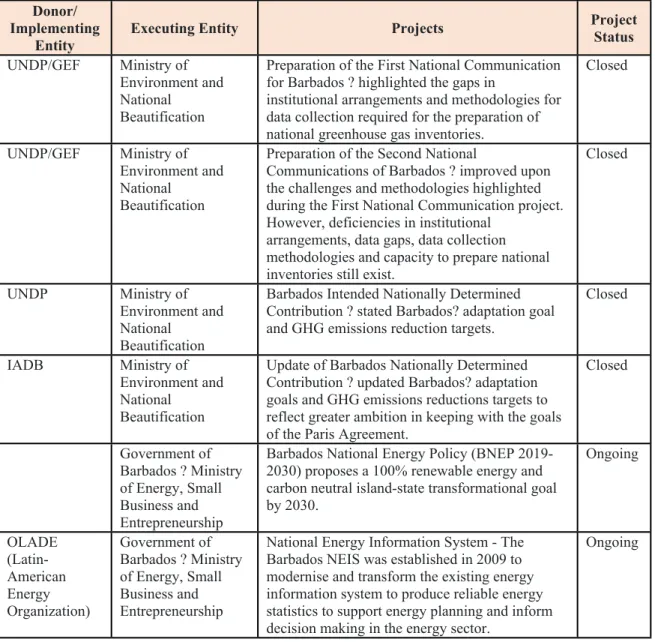
Climate change is thus a key issue for the Government of Barbados, as it is integrated and a key element of many of the policies and the plans of Barbados. Table 1 below identifies projects and initiatives which are related to developing a climate change transparency framework in Barbados.
Previous work financed through UNDP, attempted to establish an MRV system to support the implementation of the NDC. This system however did not function effectively due to technical and capacity issues. Through the IADB-funded project to update Barbados? first NDC, and analysis of the
?state-of -play? of the GHG inventory process in Barbados was carried out which highlighted details on specific sectoral issues and recommendations on how they might be addressed.
Based on the lessons learned from previous initiatives to prepare national communications and NDCs, the proposed MRV system and transparency framework for Barbados will be designed to address the barriers and capacity deficiencies to allow Barbados to effectively fulfil obligations outlined in the enhanced transparency framework in the Paris Agreement.
Table 1 Initiatives in Barbados Related to Climate Change and Transparency
Donor/
Implementing Entity
Executing Entity Projects Project
Status UNDP/GEF Ministry of
Environment and National
Beautification
Preparation of the First National Communication for Barbados ? highlighted the gaps in
institutional arrangements and methodologies for data collection required for the preparation of national greenhouse gas inventories.
Closed
UNDP/GEF Ministry of Environment and National
Beautification
Preparation of the Second National
Communications of Barbados ? improved upon the challenges and methodologies highlighted during the First National Communication project.
However, deficiencies in institutional arrangements, data gaps, data collection methodologies and capacity to prepare national inventories still exist.
Closed
UNDP Ministry of
Environment and National
Beautification
Barbados Intended Nationally Determined Contribution ? stated Barbados? adaptation goal and GHG emissions reduction targets.
Closed
IADB Ministry of
Environment and National
Beautification
Update of Barbados Nationally Determined Contribution ? updated Barbados? adaptation goals and GHG emissions reductions targets to reflect greater ambition in keeping with the goals of the Paris Agreement.
Closed
Government of Barbados ? Ministry of Energy, Small Business and Entrepreneurship
Barbados National Energy Policy (BNEP 2019- 2030) proposes a 100% renewable energy and carbon neutral island-state transformational goal by 2030.
Ongoing
OLADE (Latin- American Energy Organization)
Government of Barbados ? Ministry of Energy, Small Business and Entrepreneurship
National Energy Information System - The Barbados NEIS was established in 2009 to modernise and transform the existing energy information system to produce reliable energy statistics to support energy planning and inform decision making in the energy sector.
Ongoing
Donor/
Implementing
Entity Executing Entity Projects Project
Status UNIDO/GEF Ministry of
International Business and Industry
Strategic Platform to Promote Sustainable Energy Technology Innovation, Industrial Development and Entrepreneurship in Barbados - The project aims to increase the participation of Barbadian businesses in the expanding global value chains of sustainable energy manufacturing and servicing.
Ongoing
GCF Barbados Water
Authority FP060: Water Sector Resilience Nexus for
Sustainability in Barbados (WSRN S-Barbados) Ongoing UNDP/GEF Ministry of
Environment and National
Beautification
The MENB is currently in discussion with the UNDP to undertake Barbados' TNC and first BTR under GEF 8. Discussions are still at the initial stage but it was thought that given the upcoming deadline for the submission of the first BTR (Dec. 2024), it would be better to not undertake a BUR.
Draft
1.3 The proposed alternative scenario
The main objective of this project under the Capacity Building Initiative for Transparency (CBIT) is to strengthen Barbados technical and institutional capacity to meet the requirements of Article 13 of the Paris Agreement on Climate Change.
Barbados has built an initial foundation on the issue of transparency through the national communications process; however, there is a need to build further capacity to meet the enhanced international requirements of transparency. Barbados needs additional resources and enhanced capacity building to be able to meet these requirements.
The project will help Barbados improve the transparency arrangements under the UNFCCC (including national communications, biennial reports and biennial update reports), while recognizing the special circumstances of Barbados. It will allow Barbados to address data issues, build capacity for the development and update of greenhouse gas inventories.
The project will also allow Barbados to track the progress made in implementing and achieving its NDC, by establishing a robust MRV system, it will enhance collaboration between Ministries, agencies, and the private sector, as well as to improve knowledge in transparency and the Paris Agreement.
This will not only help Barbados comply with the enhanced transparency framework of the PA but will also enable Barbados to participate in international carbon markets (having a robust inventory and an MRV system).
This project has three components.
Component 1- Improvement of Barbados? GHG Inventory
This component will focus on working with data providers and key stakeholders to enhance activity data in different sectors and thus the completeness and the quality of the GHG inventory in Barbados.
The first exercise will entail a preliminary stakeholder mapping to have a list of all public, private, civil society actors to include in the project. The exercise will also allow to better understand the gender participation and required empowerment actions to undertake.
It will be designed to address the barriers for improved reporting of emissions and removals, in the following sectors: i) Land Use, Land-Use Change and Forestry (LULUCF), ii) Energy, including stationary combustion sources, transport, and fugitive sources, iii) Industrial Process and Product Use, iv) Agriculture, and v) Waste, to improve the accuracy of the data collected, use of emission factors, verification of the results and uploading the information for all GHG emissions data to be centralized.
Source of information and quality of data are a major challenger which will be the main focus of this component.
Given the existence of CBIT-AFOLU and and the CBIT Forest , among other global initiatives, the project will seek to identify lessons learned and best practices from them all, specially in sectors relevant for the country.
This component will support the capacity building of institutions and public servants, and other stakeholders in Barbados, to adequately prepare the data, of GHG Inventories, and the generation and collection of data.
In this component all sector census and surveys will be designed and conducted to improve existing data. Data collection activities and surveys in the energy and industrial processes sectors will also be conducted. Through this component local emission factors will be developed to improve the overall accuracy of the emission calculations within the inventory. There will also be training of individuals from various institutions on the IPCC GHG guidelines. All outputs will consider the conclusions from the NDC update process which are a follows:
Energy For the 2015 NDC projections 2020-2030 of stationary combustion, the GHGI team estimated the energy demand of the country. Based on the 2010 fuel distribution, the fuels? share needed to meet such demand was calculated, using the generation efficiency ratio of each fuel. The energy demand for 2020-2030 was projected using an estimated annual growth of 1%. The 2021 NDC update, the energy demand was estimated based on the information provided in the IRRP report (reference scenario). The current estimations are considered adequate. Therefore reviewing in more detail the information on the IRRP report and the correspondence with the energy balance data to further ensure consistency. For the 2021 NDC update, other fuel uses (including transport, industrial, commercial/residential and other) projections are made based in GDP (IRRP report) or population forecast (UN data). During the update, there were significant issues related to the collection of this GDP and population forecast information.
These are the main macroeconomic drivers of projections and official public forecasts are needed to ensure transparency in the results. Working along the main institutional stakeholders will be key to clearly define the official national GDP and population projections, so they can be used in the BaU
scenario estimations. In addition, we recommend to study in detail each of the categories in order to identify more close related drivers for the projections (e.g., industrial fuel use forecast).
IPPU In the 2021 NDC update, the cement production has been projected based on GDP growth forecast whilst the F-gases were projected based on population. Even though, historical activity data was collected from Arawak, no information of future production was obtained. Updating the GHGI will ensure completeness in this sector, improving the GDP and population forecast in line with Energy sector recommendation and working with the Arawak Cement company to obtain more accurate production projections.
Agriculture Agriculture emissions have not been projected neither in the 2015 NDC nor in the 2021 NDC update. Instead, 2009 data is used for the 2010-2030 period. Following the recommendations for this sector in the GHGI section and working closely with the main sectorial stakeholders to develop country specific data and forecast for the main categories (e.g., animal population and fertilizer use).
LULUCF Land Use, Land Use Change and Forestry (LULUCF) emissions have not been projected in the 2015 NDC. Instead, 2010 data was used for the 2011-2030 period. Same approach was used in the 2021 NDC update, given the issues described in the GHGI section. It will be key to update the GHGI as suggested before. Then developing land use matrixes forecast for the projections period and apply a methodology consistent with the updated GHGI estimations.
Waste The 2021 NDC update projections were made based on the population forecast for landfills and domestic wastewater and fixing the last year of the timeseries for industrial wastewaters. Updating the GDP will be required (and obtain sectorial if possible) and working closely with the main sectorial stakeholders to develop country specific data and forecast for the main categories.
These activities will help Barbados comply with the commitment of completing the update of the Inventory carried out for the preparation of the 2021 NDC. A full, updated GHG inventory will be communicated alongside the efforts to be undertaken under the Third National Communication.
Barbados recognizes the improvement opportunities of the GHG Inventory and is committed to improving the completeness and accuracy of the GHG inventory for the next update of the NDC.
Outcome 1.1 Improvement of Barbados? GHG Inventory: Data Collection and Enhanced Capacity for Preparation of GHG Inventory
Output 1.1 Completed training products developed. Barbados?s GHG Emissions Inventory requires training material to be updated and developed to ensure that Data collection and monitoring, review, and verification (MRV) is done adequately. Given that a number of default IPCC emissions factors were used during the inventory preparation for the existing GHG Emissions Inventory, in this component, an analysis will be carried out to determine in which sectors it is feasible and convenient to develop national emission factors, and in which ones it is convenient to continue using the emissions factors suggested by the IPCC. Once determined, the project will focus on developing local emission factors to improve the overall accuracy of the GHG Inventory and applying them. This will result in training material updated for future data collection, protocols for data sharing, governance and coordination, and analysis to be carried out adequately.
Output 1.2- Training of individuals delivered. After a preliminary stakeholder mapping exercise, this activity will focus on training and capacity building activities for individuals and institutions on the 2006 IPCC GHG guidelines and the 2019 Refinement to the 2006 IPCC Guidelines. This will contribute to the reactivation and operationalization of the Greenhouse Gas Inventory Framework established by the Ministry of Environment and National Beautification for the periodic preparation of inventories. The Government of Barbados will set up a training course on the IPCC guidelines, to ensure that a continual cadre of professionals are available. There will be training on the specific data needs for each tier, the use of emission factors, QA/QC procedures and uncertainty analysis. These trainings will be designed considering digital training materials (i.e. MOOC), the creation of a digital repository of training materials, to guarantee the sustainability of the training. A competitive process will allow to chose the most adequate partner to perform these activities, collaboration with a domestic university/institution to anchor the training and curricula within the country will be considered as a considerable value added. Gender indicators and specific measures will be identified and implemented.
Output 1.3 - Training of individuals from diverse institutions delivered. The Government of Barbados will train public servants from key sectoral Ministries and engage relevant stakeholders from academia, private sector and non-governmental organizations. Given the need to ensure a wide training of stakeholders the trainings will ensure that all profiles are included in the trainings based on the sectors where data is required for adequate collection and mainstream the quality standards required.
Output 1.4 New data bases created. Based on the training material and training sessions for key stakeholders in different ministries. The Government of Barbados will have an enhanced data collection regarding its key GHG emission sectors and required completed surveys - Under this output there will be improved data collection and completed surveys, for the agricultural, land use, waste, and industrial processes sectors. This output will also allow to identify the main requirements needed to establish a data collection system to ensure the continual collection of data for the preparation of GHG, including governance coordination requirements as well as digital platform needs.
Component 2- Improvement of the MRV system and Strengthening Barbados Transparency Framework for Compliance with the Paris Agreement.
This component will focus on improving existing data sets, and help to establish a fully functional MRV system, building on previous MRV activities. The MRV system will provide information and monitor climate change mitigation, adaptation activities, and technology transfer elements as indices of resilience building, as well as track climate financing in Barbados. The project will work to design effective reporting guidelines and accounting procedures that meet the enhanced transparency framework for action and support established in Article 13 of the Paris Agreement. This component will put in place the institutional arrangements and capacities to allow Barbados to collect, document, store and communicate climate transparency data in a central information management system.
Guidelines and protocols will be developed for inputting data, along with a national transparency process which ensures that there is effective tracking on the progress made on the Barbados NDC. An electronic platform/ tool will also be developed that allows tracking emissions and NDC targets (including mitigation and adaptation goals), and support received. Training will occur for relevant Ministries, organizations, and NGOs responsible for providing data on the climate change information
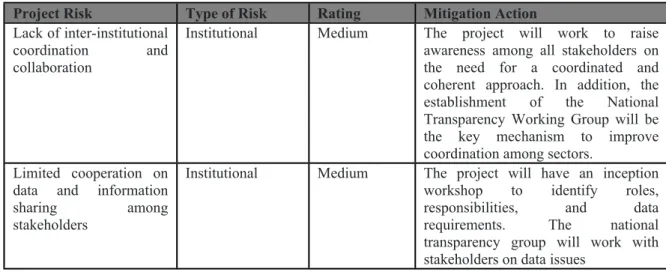
systems and various new tools to be developed. This component also includes the establishment of a national transparency working group (a sub-committee of the climate change working group) to lead the work of transparency and to improve government agency coordination.
Outcome 2.1 Improvement of the MRV system and Strengthening Barbados Transparency Framework for Compliance with the Paris Agreement.
Output 2.1 Methodologies designed/strengthened. Design and development of a transparency process guidelines and protocols for the collection of data and the implementation of an effective MRV system, including the establishment of a central climate change information management system, and relevant databases. The transparency protocols developed will concern adaptation and mitigation dimensions, including the GHG emissions inventory (component 1 will feed into the mitigation dimension), and all relevant sectors under IPCC guidelines and BTR requirements. Additionally, a proposed budget tagging methodology will be drafted to ensure the tracking of the financial resources allocated for the climate change actions and investments, both from national and international resources, grants and reimbursable. A preliminary exercise was developed with the IDB in 2019 and will serve as the basis for this exercise.
Output 2.2 Virtual platforms designed.
After a full and detailed mapping of all stakeholders to include in the exercise, the activity will focus on the development of an electronic platform /tool that will allow to upload GHG emissions data, calculate with local factors and track emissions in Barbados?s NDC, and track the progress towards the NDC (mitigation and adaptation goals). The Platform will also include a module to track data on domestic budget allocation (national climate budget tagging) and international financial support received. This output will allow for the design of the digital platform, nonetheless its establishment and operationalization will be carried out under output 3.2.
Output 2.3 Participatory mechanisms for public investment decisions and/or service production or delivery developed. National Transparency Working Group established, with the participation of all stakeholders with a role in the MRV System, this WG will serve as the main entity for the coordination, centralization and monitoring of the activities to be performed and ensure the governance for the transparency mechanisms set in place. Final list of participants and level of hierarchy in the administration will depend on an assessment to be performed and will provide the recommendations that the Government of Barbados will analyze for final consideration. As part of the project a stakeholder?s mapping has been included to understand the governance key members as well as the stakeholders that will be required to participate at different levels for an efficient transparency mechanism.
A specific focus to gender will be given to assess gender differences, gaps, opportunities specifically linked to the project and update the gender gap that was developed for this project.
Component 3- Knowledge Management and Capacity Building for effective implementation of the Paris Agreement
Capacity building is a core element of this project, to strengthen Barbados?s compliance with the transparency arrangements under the UNFCCC, while recognizing the circumstances, context, and necessities of Barbados. A series of trainings and capacity building events focused on relevant stakeholders will be carried out to ensure the long-term success of the project. This component will thus design knowledge products and training materials on transparency for climate action (guidebooks, manuals, reference materials) focused on the different stakeholders, i.e. government agencies, private sector, and civil society. The Government of Barbados has worked to meet other transparency arrangements, such as GHG Inventories, submission of national communications, along with the promotion of climate action through national policies and a number of other climate related projects. A Climate Change Knowledge Platform will be created to promote the accessibility of the information regarding transparency of climate action, including transparency arrangements under the UNFCCC, guidelines and protocols developed through component 2, as well as and training materials and divulgation materials. The Barbados Climate Change Knowledge Platform will support all agencies in accessing climate change information. This will enable stakeholders to continue, beyond the project lifetime, using data to feed their sectorial and national decision-making processes. There will be workshops to improve the understanding of transparency, the Paris agreement and the domestic actions which will be required.
Outcome 3.1 Knowledge Management and Capacity Building on transparency of climate change action as established in the Paris Agreement
Output 3.1 Operational manuals developed. Production of transparency guidebooks, manuals, protocols, and other training materials regarding The Paris Agreement establishes an Enhanced
Transparency Framework (ETF). This will allow for a local understanding of the Guiding Principles for MPGs and BRT requirements. Allowing for the operationalization of the Enhanced Transparency Framework in Barbados, including adaptation and finance scopes.
Output 3.2 Virtual platforms improved. Barbados Climate Change Knowledge Platform establishment and operationalization to provide and share information to stakeholders. The Platform will be designed and developed considering an open data approach, and if possible linked with open data initiatives in Barbados.
Output 3.3 Training workshops delivered. Capacity building and training of government officials, agencies, private sector and civil on the Paris Agreement, the NDC, tracking the progress on the implementation of the NDC; and transparency of climate action. A collaboration with a domestic institute to develop training and ToT programs for long-term sustainability of training and capacity building will be considered under a competitive process. Trainings will focus on the adequate use of the platform by all stakeholders with special support to data to be provided under the vulnerability assessment and finance tracking (mitigation dimension being covered under component 1), as recommended by the UNFCCC Climate Action and Support Transparency Training. Gender dimensions/perspective is taken into account with respect to the support to be provided under the vulnerability assessment and finance tracking mentioned above.
1.4 Alignment with GEF focal area and/or Impact Program strategies
The project is consistent and aligned to GEF CCM Objective 3. Foster enabling conditions for mainstreaming mitigation concerns into sustainable development strategies. The investments which are made through the CBIT in Barbados, will strengthen institutional and technical capacities of Barbados to meet the enhanced transparency requirements of the Paris Agreement, in line with national priorities and considering Barbados? national circumstances; by supporting the development of relevant tools, training of key stakeholders and assistance for meeting the provisions in Article 13 of the Agreement;
and the improvement of transparency over time.
1.5 Incremental/additional cost reasoning, and co-financing
This Barbados? CBIT proposal will build on the experience that Barbados has already with the preparation of GHG inventories and national communications to the UNFCCC; as well as with the development and updating of its NDC, which involved a partial updating of the GHG Inventory. The project will be focused on capacity improvement.
Even though Barbados has developed some capacity to develop a 2008 GHG Inventory and prepare two national communications, it is necessary to strengthen these capacities, building up from the lessons learned from previous experiences meeting transparency arrangements under the UNFCCC, while considering Barbados? national circumstances. Without the GEF support, Barbados will not be able to meet the international obligation of the Paris Agreement in terms of its enhanced transparency framework and its specific modalities, procedures and guidelines (MPGs).
The project will help Barbados to track and report the progress towards achieving the NDC, prepare GHG Inventories, biennial update reports, national communications, improving the countries response to climate change. The project will also allow the establishment of new tools and methodologies and provide data which can be used to update its NDC every five years, design other climate change projects and provide inputs to develop and strengthen national climate policies. The Government of Barbados will provide an in-kind contribution to assist with implementation and execution of this project.
1.6 Global environmental benefits (GEFTF) and/or adaptation benefits (LDCF/SCCF);
This project will enable Barbados to meet the enhanced transparency requirements and arrangements, as defined in Article 13 of the Paris Agreement and will provide support in a coordinated manner to enhance capacities to establish a comprehensive transparency framework for Monitoring, Reporting and Verification. It will allow Barbados to develop the relevant documents in line with its obligation and reduce greenhouse gas emissions. Among other benefits expected from the project, are the following:
? Efficient tracking mechanism that allows government institutions to report the advances on the NDC implementation, disclose the information to the public, while allowing Barbados to report its obligations to the UNFCCC.
? Support Barbados to inform the support received and the further support / finance needed.
? Strengthen the generation of climate change information that provide useful inputs for designing climate change policies, and projects, as well as for updating the NDC every five years.
? Improved institutional transparency capacities will also enable to raise ambition on mitigation and adaptation contributions, resulting in improved global climate outcomes.
? Robust, efficient, and reliable MRV and M&E through an electronic platform.
? Effective involvement of all sectors and subnational stakeholders and strengthening coordination among institutions through the use of an electronic system and the creation of a Barbados Climate Change Knowledge Platform
? Consistent, comparable, traceability, no double counting and integrity elements for reporting.
? Improve accessibility of climate change information and accountability of climate change action, with an open data approach.
1.7 Innovation, sustainability and potential for scaling up.
The development of new tools, methodologies, and software technology to track climate information such as GHG emissions, as well as the progress in the implementation of the NDC will be extremely innovative for the Government of Barbados, as it will apply new processes and technologies. The digitalization of processes will allow its implementation in a simpler and more agile way, reducing the workload for its execution (for instance, reducing the time in the processes for collecting, reporting, and processing information by means of official communications or emails).
The MRV system will be innovative as it will consolidate all the climate information in one central information system and allow institutions to access and utilize the information for their own policy making.
The establishment of a knowledge platform is also another innovative aspect of the project. Results from the project will also be used for the development of sustainable policies and assist Barbados on the path of its goal to achieve the 100% renewable energy and carbon neutral island- state transformational goals by 2030.
The development of the knowledge platform will also lead to the long-term sustainability of the project and allow for scaling up, as it will strengthen the project outcomes and allow the outcomes and results from the project to be disseminated widely at the nationally, regionally throughout the Caribbean and globally level through existing information sharing networks and forums, such as the CBIT Global Coordination Platform and members.
Finally, having a robust, complete and accurate GHG Inventory, and an effective MRV tracking system will allow Barbados? participation in international carbon markets.
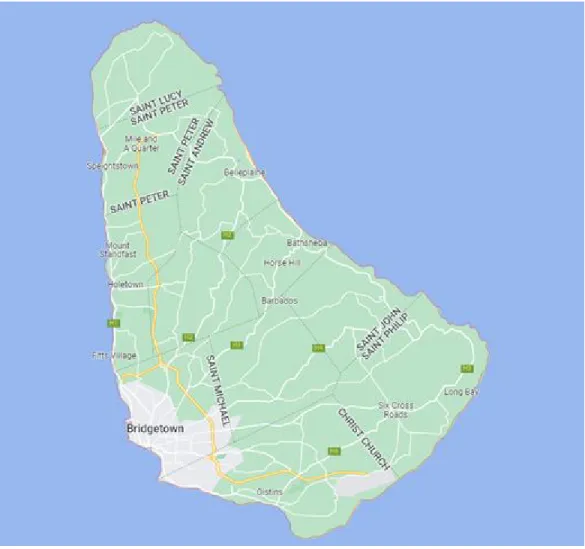
1b. Project Map and Coordinates
Please provide geo-referenced information and map where the project interventions will take place.
Barbados is located at 13? 11' 37.9932'' N and 59? 32' 35.5128'' W.
1c. Child Project?
If this is a child project under a program, describe how the components contribute to the overall program impact.
2. Stakeholders
Please provide the Stakeholder Engagement Plan or equivalent assessment.
To achieve the project goals and implement the proposed activities, there will be participation of several actors from public, private sector and civil society. The variety of stakeholders responds to the complexity of climate change related activities. The project will bring together a diverse group of stakeholders that are engaged in climate change related activities and will seek to build on their existing collaborations. The key stakeholders and brief description of their engagement in the project design and preparation are provided in the table 2 below.
The identification of stakeholders is based on previous activities held as part of similar exercises.
Nonetheless, a stakeholder?s mapping exercise has been included in the project to update and revise any new stakeholders that will have to be included.
Table 2 Key Stakeholders
Stakeholder Role in CBIT project Ministry of
Environment and National Beautification (MENB)
As focal point to the UNFCCC, the MENB is responsible for the monitoring and oversight of national climate change actions and reporting to the UNFCCC.
The MENB, as the executing agency, is responsible for overall management, coordination and execution of this project and will be involved in all components.
Including teams in former Ministry of Maritime Affairs and the Blue Economy:
- Fisheries Division
- Coastal Zone Management Unit (CZMU) The Fisheries Division and the CZMU can provide information on vulnerability and adaptation actions in the coastal and marine environment and will be involved in components 2 and 3 of the project, specifically outputs 2.2, 2.3, 3.2 and 3.3.
Executing Agency Environmental
Protection Department (EPD)
The EPD is a key stakeholder in the IPPU sector and will be involved in components 1, 2 and 3 of the project, specifically outputs 1.1, 1.2, 2.2, 2.3, 3.2 and 3.3
Natural Heritage Department (NHD)
The NHD is a key stakeholder in the AFOLU sector and will be involved in components 1, 2 and 3 of the project, specifically outputs 1.1, 1.2, 1.3, 2.2, 2.3, 3.2 and 3.3.
Ministry of Energy, Small Business and Entrepreneurship: - Energy Division
The MESBE is a key stakeholder in the Energy sector and will be involved in components 1, 2 and 3 of the project, specifically outputs 1.1, 1.2, 1.3, 2.2, 2.3, 3.2 and 3.3.
Barbados Water
Authority (BWA) The BWA is a key stakeholder in the Water and Waste (wastewater) sectors and will be involved in components 1, 2 and 3 of the project, specifically outputs 1.1, 1.2, 1.3, 2.2, 2.3, 3.2 and 3.3.
Barbados Meteorological Services
The BMS is a key stakeholder in validating climate models and projections to contribute towards vulnerability assessments and analysis. They will be involved in components 2 and 3 of the project, specifically outputs 2.2, 2.3, 3.2 and 3.3.
Ministry of Transport, Works and Water Resources (MTWW):
Drainage Division Planning Unit
The Planning Division of the MTWW is a key stakeholder in the transport sector and will be involved in components 1, 2 and 3 of the project, specifically outputs 1.1, 1.2, 1.3, 2.2, 2.3, 3.2 and 3.3.
The Drainage Division of the MTWW is a key stakeholder in the Waste (wastewater) sectors and will be involved in components 1, 2 and 3 of the project, specifically outputs 1.1, 1.2, 1.3, 2.2, 2.3, 3.2 and 3.3.
Ministry of Health and Wellness:
Environmental Health Department (EHD)
The EHD can provide data on vulnerability and adaptation actions related to the health sector and will be involved in components 2 and 3 of the project, specifically outputs 2.2, 2.3, 3.2 and 3.3.
Ministry of Home Affairs:
Department of Emergency
Management (DEM)
The DEM is a key stakeholder in validating vulnerability assessments and analysis. They will be involved in components 2 and 3 of the project, specifically outputs 2.2, 2.3, 3.2 and 3.3.
Ministry of Maritime Affairs and the Blue Economy:
Fisheries Division
Coastal Zone Management Unit (CZMU)
The Fisheries Division and the CZMU can provide information on vulnerability and adaptation actions in the coastal and marine environment and will be involved in components 2 and 3 of the project, specifically outputs 2.2, 2.3, 3.2 and 3.3.
Ministry of Finance, Economic Affairs and Investment:
Public Investment Unit (PIU);
Economic Affairs Division (EAD) Finance Division (FD
The FD, PIU and EAD of the MFEI are key stakeholders for the provision of data on support received and resources allocated and used for climate change activities and will be involved in components 2 and 3 of the project, specifically outputs 2.1, 2.2, 2.3, 3.1, 3.2 and 3.3.
Ministry of Housing Lands and
Maintenance (MHLM)
The MHLM can provide information on vulnerability of housing stocks and human settlement areas and will be involved in components 2 and 3 of the project, specifically outputs 2.2, 2.3, 3.2 and 3.3.
Ministry of People Empowerment and Elder Affairs (MPEA):
Social Care Division;
Bureau of Gender Affairs
The Bureau of Gender Affairs and the Social Care Division of the (MPEA) will ensure that issues related to gender and vulnerable groups are adequately considered in the project. They will be engaged in all aspects of the project.
Ministry of Tourism and International Transport
The MTIT provide information on vulnerability and adaptation within the tourism sector and are stakeholders in the energy sector. They will be involved in components 1, 2 and 3 of the project, specifically outputs 1.1, 1.2, 1.3, 2.2, 2.3, 3.2 and 3.3.
Ministry of
Agriculture and Food Security (MAFS)
The MAFS is a key stakeholder in the AFOLU sector and will be involved in components 1, 2 and 3 of the project, specifically outputs 1.1, 1.2, 1.3, 2.2, 2.3, 3.2 and 3.3.
Global Environment Facility Small Grants Programme -
Barbados
The Barbados GEF Small Grants Programme will offer the experience and perspective of civil society actors. They will be engaged in all aspects of the project.
Private Sector:
General Insurance Association of Barbados (GAIB)
Barbados Light and Power (BL&P) Arawak Cement Plant
The Barbados Light and Power Co. Ltd and the Arawak Cement Plant are key stakeholders in the Energy and IPPU sectors respectively, they will be involved in components 1, 2 and 3 of the project, specifically outputs 1.1, 1.2, 2.2, 2.3, 3.2 and 3.3
Caribbean Youth Environment Network (CYEN)
The Barbados Chapter of the CYEN will offer a perspective based on youth civil society engagement. They will be involved in all aspects of the project.
University West Indies, Cave Hill:
Centre for Resource Management and Environmental Studies (CERMES)
Provision of training can support the development of tools and methodologies
Inter-American
Development Bank Implementing Agency
In addition, provide a summary on how stakeholders will be consulted in project
execution, the means and timing of engagement, how information will be disseminated, and an explanation of any resource requirements throughout the project/program cycle to ensure proper and meaningful stakeholder engagement.
The identification of stakeholders is based on previous activities held as part of similar exercises.
Nonetheless, a stakeholder?s mapping exercise has been included as part of Component 1, to ensure that a stakeholder assessment to update and revise the strategic stakeholder that would have to be included to ensure that all the data is collected. This exercise will also allow to include an update of the Gender Analysis as well as an update of the private sector (assessment of the gaps to be addressed, including the business associations). These stakeholders are crucial in the project's implementation.
Regarding dissemination of information, the Communications Strategy (see Knowledge Management section) will also take into account the results of this mapping exercise to ensure all adequate
stakeholders are included and empowered.
Select what role civil society will play in the project:
Consulted only; Yes
Member of Advisory Body; Contractor;
Co-financier;
Member of project steering committee or equivalent decision-making body;
Executor or co-executor;
Other (Please explain)
3. Gender Equality and Women's Empowerment
Provide the gender analysis or equivalent socio-economic assesment.
Barbados has made significant advances addressing gender. In 2000, the Bureau of Women's Affairs was redesigned to the Bureau of Gender Affairs and the National Advisory Council on Gender was established. Barbados currently has a new draft National Gender Policy and Gender Action Plan, which has the following objectives: