74 In-situ study of formation and phase transition by X-ray absorption and diffraction in (Y.RT)cro3+γ compounds. 150 New method in the growth of thin films of Ag2Se and structural investigation through synchrotron radiation X-ray grazing incidence diffraction with in situ heating.
PRESENTATION
ORGANIZATION
PROGRAM
22nd November 2017
23rd November 2017
24th November 2017
With the rapid development of the availability of synchrotron radiation throughout Europe and in interaction with the very active user community in this field, new imaging techniques are rapidly gaining traction in virtually all areas of materials science and biomedicine. With the completion of the first phase of the upgrade of the European Synchrotron Radiation Facility (ESRF), several spectron nanoprobes and diffraction imaging beamlines have successfully returned to user operation.
IR and THz nanoimaging and nanospectroscopy – Emerging analytical tools for science and technology
XAFS Study of Inorganically Coated Colloidal Quantum Dots
Copper-Dopped Zinc Oxide Nanoparticles Synthesis by a Fast Polymer Precursor Based Method
Water Adsorption in Layered Material
Particle size effects on structural and optical properties of BaF 2 nanoparticles
Cluster models Cu 20 obtained by FSA and DFT strategies and XANES simulated spectrum by FDMNES
Phosphate fertilization effects on phosphorus speciation in an Oxisol under no till evaluated by P-XANES
Acknowledgments: The authors thank the Coordination for the Improvement of Personnel in Higher Education (CAPES) and the São Paulo Research Foundation for financial support (Process No. and the Brazilian Agricultural Research Corporation - National Soybean Study Center with Experimental Area Concession, LNI-CENA (Laboratory of Nuclear instrumentation - Center for Nuclear Energy in Agriculture) for assistance with this study and the University of São Paulo and Oklahoma State University for research assistance.
Chemical speciation of Sulphur in petroleum asphaltenes using XANES spectroscopies
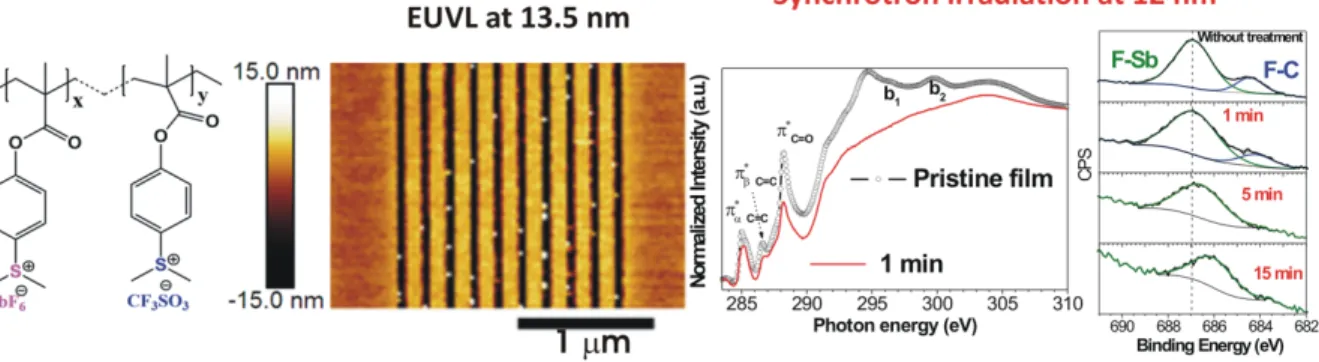
An alternative paradigm for EUVL resists: hybrid n-CARs-design principles and photodynamics
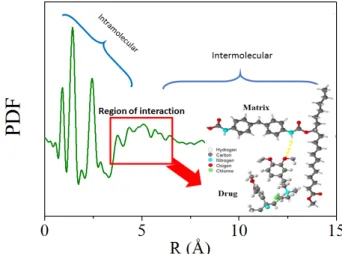
PDF Phama research team: high-energy X-ray characterization of amorphous solid drugs using synchrotron radiation
Modelling the structure of Nafion membranes by using small angle x-ray scattering
Sodium Caseinate/Sunflower Oil Nanoemulsion-Based Gels Analyzed by SAXS
Insights into Aminotransferases From The Biosynthesis Pathway of Aminoglycosides Antibiotics
Analysis of sugarcane bagasse particles by X-ray microtomography
Polymeric precursor based fast-synthesis of lanthanum-dopped bismuth ferrite nanoparticles
Structural Characterization of Sodium Caseinate Aerogels
Microwave induced mineralogical transformation in copper ore
A versatile setup in reflection mode for in situ diffraction patterns acquisition from flat polycrystalline specimens bathed in a liquid
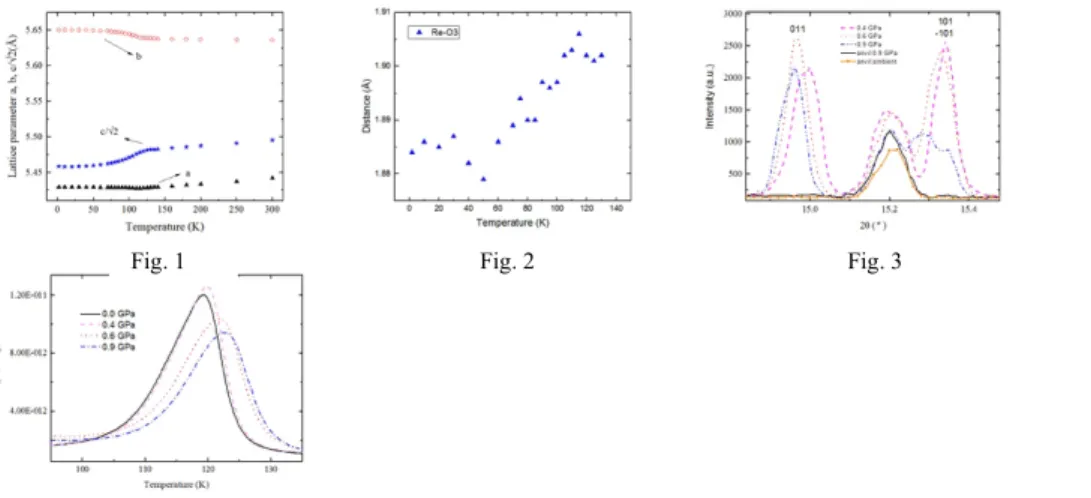
Magnetic and structural behavior of Ca 2 MnReO 6 under pressure
Production and initial crystallographic studies of 2,5-furandicarboxylic acid decarboxylase 1 enzyme from Paraburkholderia xenovorans
Internal structures of Thoropa miliaris tadpole using phase-contrast synchrotron microtomography
The authors would also like to thank the Electron Microscopy Laboratory from the Center for Technology of Hybrid Materials for the electron microscopy analysis (CTMH-USP).
Magnetic Field Induces Nanoparticles Structuring. A SAXS Application: Instrumental Development at LNLS and Data Analysis
Agradecimientos: Este trabajo fue apoyado por el Laboratorio Nacional de Luz Synchrotron (SAXS D02A y D01B Beamlines), Campinas-Brasil, Universidad Nacional de La Plata-Argentina y CONICET-Argentina.
STRUCTURING OF MAGNETIC NANOPARTICLES IN LIVING CELLS
In vivo XANES for determining the chemical environment of Zn in the stem of kidney beans treated with ZnO nanoparticles. So, it was used 3 different sizes of ZnO nanoparticles obtained as dispersions in water with surfactants. In this analysis, no spectral changes were detected for subsequent spectra recorded in the same sample, so there were no induced chemical changes on them.
The present analysis observed that for all the different sizes of ZnO NPs used, no evidence of uptake, transport or accumulation of all ZnO NPs was found. However, it is also reported that research found ZnO NPs in the shoot system4, and it may be a consequence of its reconstitution within the vacuole. It is not yet well understood how ZnO NPs are transformed and it is possible that each species has a different response to its absorption.
Structure and Properties of Siloxane-Polyether Hybrid Organic- Inorganic Materials for Drug Delivery of Salicylic Acid
Catalytic Nanoparticles sitting on top of Graphene: The heterojunction interaction with H 2 gas followed by in-situ GISAXS Experiments
MATERIAL
Complex structural arrangements of ceramide lipids is produced by asymmetric molecular shape
In the present study, we investigated the chemical environment of Cu in seeds of Phaseolus vulgaris L. common bean) treated with CuO nanoparticles (nCuO) in three different sizes: 25, 40 and <80 nm. Before the beam, a bench-top micro-X-ray fluorescence spectroscopy (µ-XRF) system was used to map the distribution of Cu along the seed after nanoparticle exposure. However, the Cu located in the seed embryo filled with 40 nm nCuO showed a redox behavior (Figure 1 (c)).
Common beans have a hilum associated with the seed coat, just below the hilum there is the micropyle, a small pore that allows water absorption into the seed. In addition to the above analysis, common bean seeds were also treated with Fe3O4 nanoparticles to verify the 3D distribution of Fe in the hilum region using X-ray tomography at the LNLS X-Ray Imaging beamline (IMX). -K edge XAS spectra recorded in different regions of P. vulgaris seeds treated with 1,000 mg Cu L-1 dispersions of CuO nanoparticles. a) Picture of a bean seed showing the three regions measured;.

Synthesis and structural characterization of new ion-conducting PVA/Clay/ionic liquid nanocomposite membranes
In-situ x-ray absorption and diffraction studies of formation and phase transition of (Y,RT)CrO3,4 compounds. The precursor material obtained in the synthesis was subjected to thermogravimetry (TG), differential scanning calorimetry (DSC), In-situ x-ray absorption and diffraction measurements for study of the formation process and transition phase. In-situ X-ray diffraction measurements in the precursor material showed the single-phase formation of the YCrO4, DyCrO4, GdCrO4 and NdCrO4 compounds (tetragonal structure and I41/amd space group) following a transition to YCrO3, DyCrO3, GdCrO3 and NdCrO3. orthorhombic structure and Pbnm space group), respectively.
In these results it was possible to observe a significant change in the XANES profile as well as edge displacements due to the change of oxidation state from Cr5+ to Cr3+. These results also showed that the compound formation temperature and phase transition change with ions; these results were also observed by TG and DSC analysis. Magnetization measurements as a function of magnetic field and temperature performed indicate ferromagnetic behavior for (Y,Dy,Gd)CrO4 samples with TC estimated at 8.5, 22, and 19 K, respectively.
Study of structural properties of Heavy Fermion compound YbFe 2 Zn 20 doped with Cd
Least-squares fits to the curves were made using linear combinations of the XANES spectra of the calcined materials and the standard sulfide patterns (Ni3S2, MoS2 or WS2), with the aim of estimating the degree of sulfidation of the active elements in all catalysts. The results showed that in the case of the Mo-containing sulfides, all materials have spectra corresponding to molybdenum disulfide at the Mo-K absorption edge. The first derived spectra reinforce the similarity between the spectra of the Mo-bearing sulfides and the spectra of molybdenum disulfide, indicating a high degree of sulfidation for all materials.
In contrast, the degree of sulfidation was not affected by prior calcination of LDH containing only tungsten. From the XANES results it was concluded that the catalysts with the greatest hydrogenation activity and selectivity were those with the highest degree of sulfidation of the active elements. Acknowledgments: The authors would like to thank the Laboratório Nacional de Luz Sincrotron (LNLS) for the XAS measurements by means of the project XAFS1-17762.
1]Benzothieno[3,2-b]benzothiophenes derivatives : influence in the molecular orientations and charge delocalization process
Structural characterization of Sb-based type II superlattices
Physicochemical properties of nanostructured Pd/lanthanide-doped ceria spheres with high catalytic activity for CH 4 combustion
Os autores agradecem a Fernando Muñoz, Anna Paula da Silva Sotero Levinsky, Cristiane Rodella, Fábio Zambello e Simone Baú Betim pela valiosa assistência experimental no LNLS.
Cobalt-dopped Zinc Oxide Nanoparticles Synthesis by a Fast Polymer Precursor Based Method
Advanced Modeling and Data Analysis of In-Situ SAXS investigations of silver nanoparticles nucleation
Unravelling the nature of NIR plasmonic nanoprisms
In vivo evaluation of zinc foliar absorption applied by sources with different solubility in soybean. It aims to reduce adsorption and leaching problems that occur when fertilizers are applied to the soil [1]. It is important to improve the absorption efficiency of fertilizers, avoid excessive accumulation in the environment and depletion of the global mineral sources.
The Zn chemical environment was characterized using XANES at the XRF beamline at the Brazilian Synchrotron National Laboratory. Sulphate uptake increased and reached a maximum after 32 h, when it starts to decrease, probably due to phytotoxicity caused by the high concentration of salt deposited on the leaf blade. At the maximum rate of absorption, zinc was completely bound to citrate and moved back to malate when absorption normalized.
Mapping Out the Dynamics of Cation Exchange by Means of Synchrotron XRD
Solid oxide fuel cells (SOFCs) are considered an excellent alternative among various clean energy sources, especially in the case of static and long-term applications due to their proven efficiency, stability and fuel flexibility [1]. Currently, interest in these devices is mainly focused on so-called intermediate temperature solid oxide fuel cells (IT-SOFCs) operating between 600-800 °C, which creates a need for new materials with higher electrochemical activity in this temperature range. However, new materials must be considered if rapid progress is to be made, as modifying traditional materials has proven to be a slow way forward.
With this in mind, we are looking for other perovskite phases that exhibit electrical conductivity and oxygen vacancies that can act as MIECs and also provide good catalytic activity for the ORR. In collaboration with other groups, we have already studied La4BaCu5O13-δ and doped versions with mixed results [3]. We found that the larger RE (rare earth) cation lowers the O/T phase transition temperature and precipitates in the RT-900 °C range for Nd, making it a more promising IT-SOFC cathode material in the characterization process.
Spectrochemical analysis of metals in gingival fluid of patients with dental implants and different prosthetic materials
Impact of the crystallization conditions on the polymorphism and crystalline size domain of Efavirenz
Application of these popular softwares in the characterization of nanopores embedded in ZnO films
Structure of Sodium Caseinate-Stabilized Nanoemulsions Studied by Laser Scanning Confocal Microscopy and Small Angle X-Ray
Scattering
In situ synchrotron radiation evaluation of hydrogen embrittlement in stainless steels and of severe plastic deformation at cryogenic
Isolation and characterization of nitrososulphide species (SNO – /SNOH) stabilized by coordination to iridium (III)
Mn-Zn ferrite nanoparticles probed by synchrotron pair distribution function analysis and anomalous X-ray scattering
Chemical speciation of size-segregated aerosol samples collected at an urban location in Central Argentina
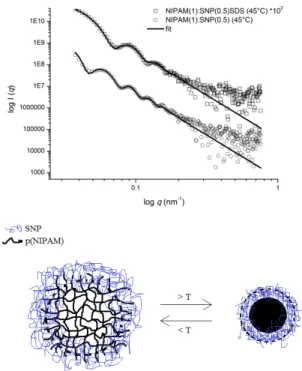
Core-shell starch nanoparticles-co-p(NIPAM) hybrid microgels
The Surface Atomic Structure of Black Phosphorus Studied by Photoelectron Diffraction
Crystallographic and Kinetic Analysis of NahK Mutants: A Decarboxylase from the Naphthalene
Degradation Pathway
Genomic and functional analysis of the IncP-9 naphthalene catabolic plasmid NAH7 and its transposon Tn4655 suggests that a catabolic gene is spread by a tyrosine recombinase. An important factor in the development and optimization of these catalysts is the influence of the preparation and activation parameters on the structural properties [3-5]. Thus, this study focuses on the in situ XRD analysis of the reduction process of the Cu/ZnO and Cu/Zn/ZrO2 catalysts to evaluate the ZrO2 effect in the catalyst structure.
In situ X-ray diffraction (Figure 1) revealed that ZnO enabled the CuO reduction at lower temperatures (190 and 230 °C) compared to pure CuO. This shows that the catalysts can be recycled to be used again in the catalytic reaction. Acknowledgments: The authors would like to thank UFRN for the infrastructure, and LNLS/CNPEM for the XPD measurements performed within proposal number 20160653, entitled “In situ studies of activation Copper-based methanol synths catalysts”.

Synthesis and characterization of ligand-free Ni nanoclusters
Structure-property relations of polurea elastomers prepared by sol-gel process
Changes in the Structural Characteristics of Titania Photocatalysts Probed by Multivariate Analysis Applied to SAXS Profiles and FT-IR
Spectra
Calculation of Two-Dimensional Scattering Patterns for Oriented Systems
Grazing incidence X-ray off specular scattering on biomembrane Langmuir monolayers
Study of the profile of layer formed in plasma nitride austenitic stainless steel
Studying the 4f electrons in the Kondo lattice antiferromagnet Ce 2 RhIn 8
CoAl-terephthalate hydrotalcite materials with high aluminum contents
Our results show that it is possible to prepare CoAl terephthalate LDH with Al fractions in the layers up to 0.5, significantly higher than the generally accepted upper limit of 0.3.

Cooling induces phase separation in isolated Central Nervous System myelin membranes
The structure of Co species in novel active and selective Co/MCM41 catalyst in the COProx reaction prepared by supercritical CO 2 reactive
Mesoporous silica: in situ SAXS investigation of synthesis processes
Specific procedures for experiments of multiple diffraction at XRD2 beamline (LNLS) applicated to micro organic crystals
Stability and reactivity of copper clusters with five atoms
Effects of B4C Addition on Microstructure and Mechanical Properties of a Beta Titanium Alloy
Compact XRF spectrometer for CARNAUBA beamline at SIRIUS
Molecular Orientation and Ultrafast Charge Transfer Dynamics Studies on the P3HT:PCBM Blend
Lectins from Parkia biglobosa and Parkia platycephala: A comparative study of structure and biological effects
Mapping of elemental distribution of Cu, Fe and Zn in human prostatic carcinoma cell spheroid culture using synchrotron radiation
Advances in the Red/NIR-persistent luminescence materials design with VUV luminescence spectroscopy
Influence of oxidized lipid in the structural parameters of biological model membranes seen by Small Angle X-Ray Scattering (SAXS).
Impact of oxidized lipid in the structural parameters of biological model membranes as seen by Small Angle X-Ray Scattering (SAXS)
Study of hydration of sulphoaluminate cement by in situ synchrotron diffraction
Pressure-induced Phase Transition and Phonon Anomalies in Sr2IrO4
Copper Chemical Environment in Daphnia magna exposed to copper nanoparticles
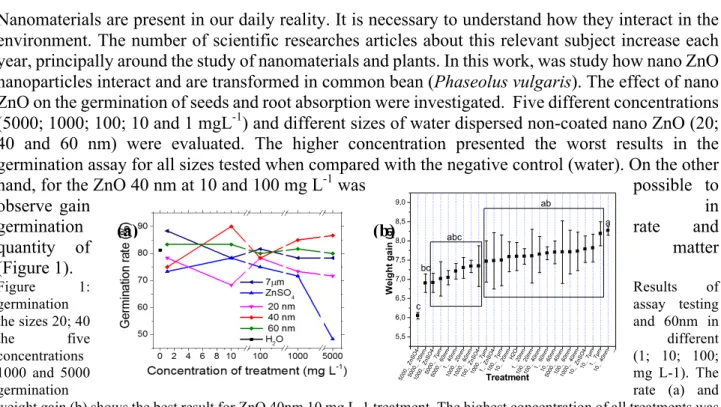
This work investigated how nano-ZnO nanoparticles interact and are transformed into common beans (Phaseolus vulgaris). The effect of nano-ZnO on seed germination and root uptake was investigated. The higher concentration produced the worst results in the germination test for all sizes tested, compared to the negative control (water).
A gradient of Zn from the outer to the inner part can be seen when analyzing the seeds from these treatments in a bench-top micro X-ray fluorescence spectrometry (Micro-XRF). Using an XRF microbeam, XRF beamlines were conducted in LNLS, with a microbeam to detect the chemical environment of zinc at different points of the seed. These results indicate that zinc provided by ZnO nanoparticles is involved in seed germination and is modified in this process.
Structure of CoO thin films under mechanical stress
Study of the zeolitic precursor (P)MCM-22: nucleation and growth
Magnetite nanoparticles for hyperthermia cancer treatment
Qualıtatıve structure and straın determınatıon of ceo 2 nanopartıcles usıng atomıc paır dıstrıbutıon functıon analysıs
Micelles and hybrid silicas formation with tripropylammonium surfactants and different hydrophobic tails
Long-term drug release using SiO 2 -Poly(oxypropylene)hybrid matrix
Radiation damage caused by soft X-rays in sulfur tripeptides in solution: Why should we care?
Thermo-mechanical stability of austenite in post weld heat treated supermartensitic stainless steel weld metal
Magnetic Structures and Transitions of RNiSi3 (R = Gd-Ho)
In-situ electrochemical cell for lithium ion batteries and X-ray absorption studies
2 Laboratório de Filmes Finos e Superfícies, Department of Physics, Universidade Federal de Santa Catarina, Florianópolis, Brazil. However, the lack of consensus on the electrical properties of this oxide has brought serious obstacles to the application of Cu2O [1]. In general, the p-type conduction of Cu2O occurs due to the existence of native point defects, such as copper vacancies, that induce energy levels within the band gap and about 0.2 eV above the valence band maximum.
For electrodeposited Cu2O, these levels occur around 0.6 eV above the valence band, and the native point defect generating the conduction remains unknown. Here, using X-ray absorption spectroscopy (XAS) on electrodeposited samples of Cu2O with different thicknesses, we propose a method for evaluating point defect concentration based on the local coordination of the defects. A transition in the most concentrated point defect was found by changing the thickness of the films and attributed to the variation of the lattice parameter.
Properties of hybrid silicas synthesized using different cationic surfactants with cyclic head
Tambo Colorado pigments: a archaeometric study by synchrotron X-ray diffraction


![Figure 1: Spectra in the XANES region on the L 3 edge of the Ce at the end of reduction process and conversions and molar fraction of H 2 in bi-reforming of biogas for the catalyst LaNiO 3 /Ce 0.75 Zr 0.25 O 2 [1] A](https://thumb-eu.123doks.com/thumbv2/123dok_br/19831824.0/68.892.246.648.760.930/figure-spectra-reduction-process-conversions-fraction-reforming-catalyst.webp)