
Este artigo foi invocado contra os nove Estados que possuem armas nucleares porque o desarmamento não está ocorrendo. O objetivo dos pedidos não era a compensação financeira pelos danos causados, mas o reconhecimento de que as obrigações do VI. do Tratado de Não Proliferação de Armas Nucleares (NPT) não foram cumpridas.
PREFÁCIO
A preocupação da comunidade internacional com os aspectos humanitários e ambientais decorrentes da existência e potencial uso de armas de destruição em massa é antiga. Na última década, aumentou o interesse da comunidade internacional pelos aspectos humanitários relacionados ao uso de armas nucleares.
ESTUDO DE CASO – NOTA INTRODUTÓRIA
O CASO DAS OBRIGAÇÕES DE DESARMAMENTO NUCLEAR (MARSHALL ISLANDS VERSUS REINO
O caso das Armas Nucleares diante da CIJ
Na minha percepção – continuei em minha Opinião Dissidente – a obrigação do desarmamento nuclear surgiu e se cristalizou tanto no direito internacional convencional quanto consuetudinário, e as Nações Unidas deram sua valiosa contribuição a esse respeito. Em minha opinião divergente, também examino a contribuição das Conferências de Revisão do TNP à opinio juris communis necessitatis em manter a obrigação convencional e consuetudinária do desarmamento nuclear.
Ocorrências no mundo na atualidade
O presidente americano não se desculpou, mas expressou simpatia ou solidariedade pelas vítimas e sobreviventes das bombas atômicas (em Hiroshima e Nagasaki) e alertou para as “consequências desastrosas das armas nucleares”7. Outros fatos relevantes ocorridos no mundo, no mesmo período da tramitação dos três casos de Armas Nucleares perante a CIJ, foram os perturbadores testes nucleares conduzidos pela Coreia do Norte.
Repercussões nas Nações Unidas
Ao final dos longos debates, a Primeira Comissão da Assembléia Geral adotou o projeto de resolução (doc. A/C convocando uma conferência das Nações Unidas para negociar um tratado de proibição de armas. O referido projeto de resolução foi aprovado pela Primeira Comissão da Assembleia Geral Assembleia pela ONU em 27 de outubro de 2016 com 123 votos a favor, 38 contra e 16 abstenções.
ANEXO DOCUMENTAL – CORTE INTERNACIONAL DE JUSTIÇA, CASO
NEGOCIAÇÕES RELATIVAS À CESSAÇÃO DA CORRIDA DAS ARMAS NUCLEARES E
ANTÔNIO AUGUSTO CANÇADO TRINDADE
Prolegomena
I will begin by examining the issue of the existence of a dispute before the Hague Court (its objective determination by the Court and the threshold for determining the existence of a dispute). After also examining UN Security Council resolutions and opinio juris, I will dwell on the saga of the United Nations in condemning nuclear weapons.
The Existence of a Dispute before the Hague Court 1. Objective Determination by the Court
- Existence of a Dispute in the Cas d’Espèce (case Marshall Islands versus United Kingdom)
- The Threshold for the Determination of the Existence of a Dispute
- Contentions in the Case of Marshall Islands versus United Kingdom
- General Assessment
The ICJ, too, in its own jurisprudence, has avoided taking a highly formalistic approach to establishing the existence of a dispute15. The resolutions of the General Assembly reaffirm “the commitment of the international community to the realization of the goal of a nuclear-weapon-free world through the total abolition of nuclear weapons” (third paragraph in the preamble). Those resolutions (since 2003) express deep concern about the lack of progress in implementing the.
They also follow the "Five-Point Proposal on Nuclear Disarmament" prepared by the UN.
The Saga of the United Nations in the Condemnation of Nuclear Weapons
The use of nuclear and thermonuclear weapons is contrary to the spirit, letter and intent of the United Nations and, as such, a direct violation of the Charter of the United Nations. Any state that uses nuclear and thermonuclear weapons should be considered a violation of the United Nations Charter, an act contrary to the laws of humanity, and a crime against humanity and civilization. Geil, The Final Test — A History of the Comprehensive Nuclear-Test-Ban Negotiations, Vienna, Ed.
That Final Document of the first General Assembly Special Session on Disarmament (1978) addresses nuclear disarmament in its separate aspects.
U.N. Resolutions and the Emergence of Opinio Juris
In relation to negotiations regarding the cessation of the nuclear arms race and nuclear disarmament, the Marshall Islands' opposition to India, Pakistan and the United Kingdom. In its preliminary objections (the United Kingdom, after recalling the Marshall Islands' position on the previous UN, Pakistan concludes that General Assembly resolutions do not support the proposition that there is an obligation under customary international law "rooted" in Article VI of the NPT.
General Assembly itself (and not just from the vast majority of UN member states that voted.
Questions from the Bench and Responses from the Parties
61 ICJ, Response of the United Kingdom to Questions Addressed to Both Parties by Judge Cançado Trindade, Doc. In the perception of the Marshall Islands, the attitude of states towards the resolutions of the General Assembly adopted in the period 1982-1995 indicates the emerging opinio juris about the obligation to conduct negotiations in good faith leading to general and complete nuclear disarmament. 62 The Marshall Islands also cite the Draft Conclusions of the International Law Commission on the Definition of Customary International Law (2015), which recognizes the importance of states' attitudes towards General Assembly resolutions in establishing state practice and opinio juris.
ICJ, Reply of the Marshall Islands to the questions addressed by Judge Cançado Trindade to both parties, doc.
Human Wickedness: From the XXIst Century Back to the Book of Genesis
That distance became visible in the subsequent episode of the Tower of Babel (Genesis, ch. 11:9). And the increase in weaponry and in the capacity of destruction, – he added, – has become a symptom of the fall of civilizations84. In his criticism of the "realists", he emphasized the imperatives of ethics and justice, and the importance of general principles of law, in line with jusnaturalist thinking89.
The tragic message of Genesis, in my view, seems perennial, as contemporary as ever, in the current nuclear age.
The Attention of the United Nations Charter to Peoples
He goes on to state that the statute of the ICJ, the "principal judicial organ of the United Nations", forms an "integral part" of the UN Charter and upholds the law of the United Nations, in my view it extends to the judicial settlement of international disputes. The World Conferences revealed a growing awareness of the international community as a whole and entered into an ongoing universal dialogue between the UN.
We reaffirm our commitment to the purposes and principles of the United Nations Charter, which have proven timeless and universal.
Impertinence of the So‑Called Monetary Gold
I pointed this out in my extensive Dissenting Opinion in the case concerning the application of the Convention against Genocide (Croatia v. Serbia, Judgment in which I considered, among other things, that such prima principia gives the international legal order "its inescapable axiological dimension". I had done the same, in another expanded Dissenting Opinion (para. 213), in the Case Concerning the Application of the International Convention on the Elimination of All Forms of Racial Discrimination – CERD (Georgia v. Russian Federation, Judgment of. May In Current Dissent , this time in the case of obligations concerning negotiations on the cessation of the nuclear arms race and nuclear disarmament, I again express my displeasure for the same reason.
It is imperative to remember the world population, in pursuit of a humanistic vision, in the light of the principle of humanity.
The Fundamental Principle of the Juridical Equality of States
A general principle such as that of the legal equality of States, enshrined a quarter of a century later in the Charter of the United Nations (Article 2, paragraph 1), is inevitably mixed with the search for justice. The principle of the legal equality of states expressed this concern, incorporating the idea of justice that emanated from the universal legal conscience (sections 44-45). Despite successive attempts to undermine it, the principle of the legal equality of states from the Hague Peace Conference in 1907 has remained one of the pillars of international law to date.
Towards the end of the century, General Assembly resolution 55/2 adopted the Millennium Declaration of the United Nations, which among other things supported the "sovereign equality of all States", in accordance with the "principles of justice and international law" ( paragraph.
Unfoundedness of the Strategy of “Deterrence”
The strategy of "deterrence" has come under strong criticism over the years, for the serious risks it poses, and for its indifference to the goal - supported by the United Nations - of achieving a world free of nuclear weapons. Very recently, for example, participants in the series of conferences on the humanitarian impact of nuclear weapons strongly criticized the strategy of nuclear "deterrence". Secretary-General warned against the dangers of nuclear "deterrence", undermining world stability (cf. part XIX, infra).
Here, in fact, the opinio juris communis regarding the illegality and prohibition of nuclear weapons is clearly formulated.
The Illegality of Nuclear Weapons and the Obligation of Nuclear Disarmament
- The Condemnation of All Weapons of Mass Destruction
- The Prohibition of Nuclear Weapons: The Need of a People‑Centred Approach
- The Prohibition of Nuclear Weapons: The Fundamental Right to Life
- The Absolute Prohibitions of Jus Cogens and the Humanization of International Law
- Pitfalls of Legal Positivism: A Rebuttal of the So‑Called Lotus “Principle”
The use or threat of use of nuclear weapons is a clear violation of international law, of International Humanitarian Law and of the International Law of Human Rights, and of the UN Doswald-Beck, "International Humanitarian Law and the Advisory Opinion of the International Court of Justice on the Legality of the Threat or Use of Nuclear Weapons”, 316 International Review of the Red Cross (1997) pp. Fujita, “The Advisory Opinion of the International Court of Justice on the Legality of Nuclear Weapons”, in ibid. , pp.
David, "Opinion of the International Court of Justice on the Legality of the Use of Nuclear Weapons", 316 International Review of the Red Cross (1997) p.
Recourse to the “Martens Clause” as an Expression of the Raison d’Humanité
It was further stated, in light of the Martens clause, that "the threat and use of nuclear weapons violate both customary international law and the dictates of public conscience"225. The Martens Clause protects the integrity of the law (against the undue indulgence of a non-licette) by invoking the principles of the law of nations, the "laws of humanity" and "the dictates of public conscience". This development has, in my view, contributed significantly to the formation of an opinio juris communis in recent decades which condemns nuclear weapons.
The United Nations, NNWS, has for years supported a series of General Assembly resolutions condemning the use of nuclear weapons as illegal under general international law.
Nuclear Disarmament: Jusnaturalism, the Humanist Conception and the Universality of International
The production of nuclear weapons is an illustration of the disconnect between ethical considerations and scientific and technological progress. And there are people and segments of the population who have been actual victims of the extensive and damaging effects of nuclear testing. The existence of actual and potential victims is recognized by international jurisprudence in the field of international human rights law235.
Joyner, "The Legal Meaning and Implications of Article VI of the Treaty on the Non-Proliferation of Weapons", in: Nuclear Weapons and International Law (ed.
The Principle of Humanity and the Universalist Approach: Jus Necessarium Transcending the
States and coextensive with humanity, thus conforming to the necessary law of societas gentium. 16, on the right to information on consular assistance within the framework of the regular legal process (of and Advisory Opinion n. The contribution of the "founding fathers" of jus gentium found inspiration mainly in the scholastic philosophy of natural law (especially in the Stoic concept and Thomist of the right relationship and justice), who recognized the human being as endowed with internal dignity).
The conventional and customary commitment to nuclear disarmament foregrounds another aspect: the question of.
NPT Review Conferences
For the first time in this series of review conferences, the final document of the 2010 review conference recognized "the. There are in fact references to nuclear-weapon-free zones in the arguments, in the written phase of the present case, of the. Each of the five aforementioned treaties (Tlatelolco, Rarotonga, Bangkok, Pelindaba and Semipalatinsk), which create nuclear-weapon-free zones, have distinctive features in terms of the nature and extent of commitments.
The establishment of the nuclear-weapon-free zones has fulfilled the needs and aspirations of people living under the fear of nuclear weapons298.
Conferences on the Humanitarian Impact of Nuclear Weapons (2013‑2014)
- First Conference on the Humanitarian Impact of Nuclear Weapons
- Second Conference on the Humanitarian Impact of Nuclear Weapons
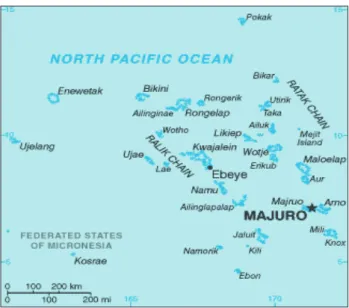
Second, the historical experience of the use and testing of nuclear weapons has shown their devastating immediate and long-term effects. The Second Conference on the Humanitarian Impact of Nuclear Weapons took place in Nayarit, Mexico, on 13-14 February 2014, after counting on the participation of delegations representing 146 states. During its time as a UN trust territory, the Marshall Islands experienced 67 large-scale tests of nuclear weapons.
The Marshall Islands are not the only Pacific nation affected by the devastation of nuclear weapons testing.