Ethanol and bioelectricity : sugarcane in the future of the energy matrix / [coordination and supervision Eduardo L. At the end of this period, about 18% of the energy consumed in the country came from sugarcane derivatives, thus passing the hydroelectric plant to be ranked second in the energy matrix.
Introduction
Description,
Creation of
Establish
Administration
- Objectives
- Methodology
- Results
- Final remarks
The 568.9 million tons of crushed sugar cane in the 2008/2009 harvest generated $11.5 billion in revenue for the sugar energy sector. Of the 19.5 million tons shipped, 83% were produced in Brazil's center-south and 17% in the north-northeast region.
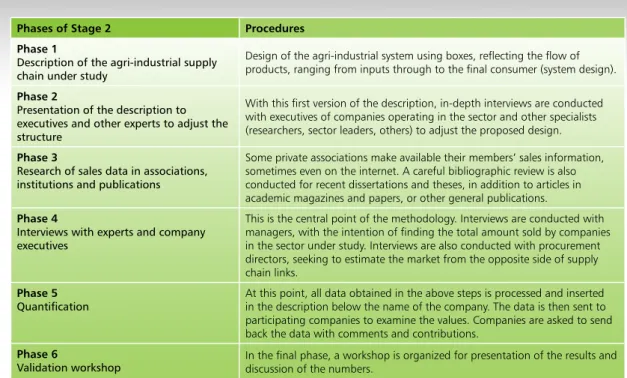
Details of methodology and quantification calculations
Details of methodology and quantification calculations Stage of the
Bibliography
Anuário da Indústria Automotiva Brasileira 2009 - Disponível em:
Methodology
- Information about the databases
- Earnings equation
- Formula for the location quotient (QL)
- Impact on the Brazilian economy: analysis of the input-output matrix
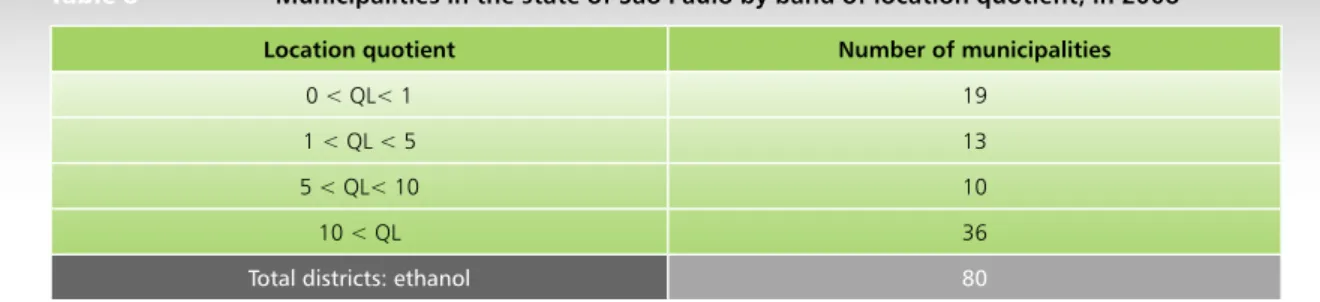
To analyze the relative importance of the sugar and ethanol sectors and the petrochemical sectors in different production regions, we propose to use the location quotient (QL). This defines the existence of specialization/agglomeration in the production activity of a country or region.
Results
- Evolution of formal and informal employment: PNAD data
- Characteristics of the formal market: RAIS data
- The spread of job creation and the location quotient .1 Sugarcane
- Ethanol
- Petroleum production
- Petroleum derivatives
- Impact of substituting Type C gasoline with hydrous ethanol in Brazil
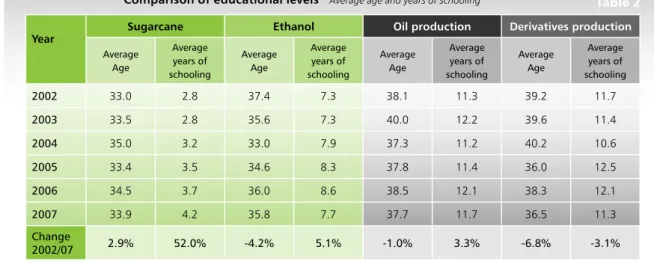
In general, the average age of workers in sugarcane agriculture is lower than in the industrial sectors. This activity created 6,544 formal jobs in the state in 2008, but was present in only 28 municipalities.
Final considerations
Increase in total monthly wages in 2004 due to a 15% increase in hydrous ethanol demand, with an equivalent reduction in Type C gasoline consumption, taking into account direct, indirect and income effects. Number of jobs created in 2004 by a 15% increase in demand for hydrous ethanol, with an equivalent reduction in Type C gasoline consumption, taking into account direct, indirect and income effects. So we can see impacts of a similar magnitude between the 0.8% increase in Type C gasoline consumption and the 10% increase in aqueous ethanol consumption.
This comparison highlights the importance for job creation in Brazil of hydrous ethanol production compared to Type C gasoline.
Bibliography
This division is also important because of the heterogeneity present in the economies of those regions, especially in relation to the analyzed products. It is also necessary that a specific advantage – the fact that Brazil has one of the cleanest energy matrices in the world – be taken into account in international trade. The relationship between climate change and increasing concentrations of greenhouse gases in the atmosphere was irrefutably demonstrated in 2007 by the Intergovernmental Panel on Climate Change (IPCC).
Knowing this contribution (and its value in the context of other abatement technologies and policies) is a necessary element in the set of facts to consider in developing Brazil's policy for these negotiations.
Greenhouse gas emission mitigation via the production and use of sugarcane ethanol
- Emissions avoided through the use of sugarcane ethanol
- Emissions avoided through ethanol use in the Brazilian context
Technological scenario for the period (assuming only the introduction of commercial technologies for electrical energy and continuous advances in utility technologies). The detailed analysis of the emissions – parameters, coefficients, default values used, the database and its variation and methods – for the current and Technology E cases can be found in the referenced work (Macedo and Seabra 2008, Macedo 2007). An analysis of the average current situation for land use change to sugarcane without burning is summarized in Table 6 (Macedo and Seabra, 2008) and indicates an increase in soil carbon levels.
Brazil's total annual emissions (related to energy production and consumption in all sectors) were 350 million tons CO2e in 2006 and are expected to reach 720 million tons CO2e in 2020 (EPE 2007), excluding emissions related to agriculture and land-use changes land and forests.

The global context
In these systems, the cost of stabilizing emissions depends on the target (ie, the concentration of CO2), the baseline, and the set of available technologies (Fischedick 2008). The relationship between emissions and the increase in concentrations is dictated by the average lifetime of each gas in the atmosphere. Increase in average global surface temperature due to the use of ethanol and gasoline in Brazil: 1990 to 2030 In ºC.
Impact on the concentration of CO2 in the atmosphere due to the use of ethanol and gasoline in Brazil 1990 to 2030 Concentration of CO2 in ppm.

Bibliography
The increased content of aldehydes (acetaldehyde and formaldehyde) in the atmosphere is undoubtedly one of the consequences of using ethanol for fuel. N Mean Median Minimum Maximum DP. in μg/m3) of formaldehyde and acetaldehyde in the atmosphere of Brazilian cities. Therefore, the numbers presented in Figure 6 refer to the percentage of total VOCs measured inside the tunnels.
Estimation of the additional number of events attributable to the direct effects (cancer cases) and indirect effects (premature deaths from ozone formation) in the São Paulo metropolitan region, based on estimates.
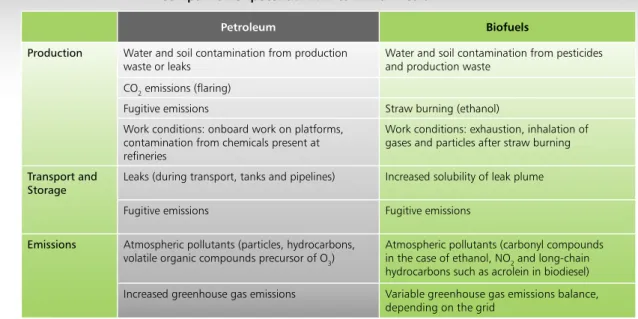
Concept of adverse or harmful effect on human health
Long-term studies that monitor population groups for long periods of time have recognized that pollution effects could only be detected after years of exposure. Similar to the effects of cigarettes, which only manifest after years of tobacco use, pollution has, to a lesser extent, some of the same chronic effects. Diagrammatic representation of the relationship between the severity of pollution effects and the number of people affected by pollution in a given community.
Some of the secondary outcomes most consistently reported in the literature relate to chronic exposure to air pollutants.

Aldehydes as ozone precursors
The rate of ozone formation is determined by the reaction of HO2 and RO2 with NO. In polluted regions, the rate of ozone formation is generally little affected by changes in VOCs. In more remote areas, the rate of ozone formation also increases with increasing VOC concentration.
The rate of ozone formation is determined by the rate of reaction of VOCs and CO with OH.
Aldehydes as Ozone Precursors
Transformation of the Brazilian generation matrix
The predominance of hydropower in the Brazilian energy matrix ensures the supply of electricity at competitive pricesii and with reduced levels of carbon emissionsiii. The potential energy of water in the reservoirs (called Stored Energy or SE) allows for the constant generation of energy throughout the year, or even for several years. Installed hydroelectric capacity will grow in the coming years with small increases in the energy storage capacity of the system.
Physical limitations lie mainly in the fact that the majority of potential hydropower sites in the Brazilian altiplano are now developed, and remaining sites lie mainly in the flatter Northern region.
Characteristics and benefits of sugarcane bioelectricity
- Potential and costs of bioelectricity
- Bioelectricity complementing the Brazilian electricity system, and externalities The mere fact of incorporating bioelectricity into the system on a scale compatible with its potential would
- Economic viability
- Environmental sustainability: GHG emissions
- Source of distributed generation and additional benefits of bioelectricity Bioelectricity counts as a source of distributed generation by virtue of being located in the Center-South re-
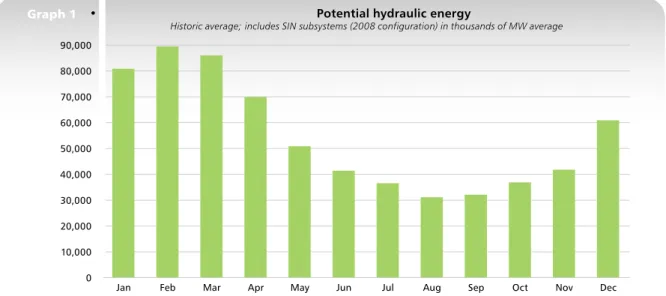
It is therefore important to see how bioelectricity can contribute to the Brazilian energy supply in the coming decades. Prospects now point to further increases in sugar and ethanol supplies in the coming years. Sugarcane harvesting takes place between April and November, which coincides with the dry season in the Central-South region.
According to the ONS, every 1,000 MW av of bioelectricity injected into the interconnected system during the dry season is equivalent to a 4% reservoir saving in the Center-South subsystem.

Conclusions
Hydropower and the extensive use of ethanol are among the factors responsible for reducing the carbon intensity in the Brazilian matrix. Development in the 1980s focused on controlling pollutant emissions, and ethanol's energy benefit declined in the 1990s as the industry invested more in gasoline vehicle technology, in response to the decline in oil prices. These build on the solutions developed for ethanol motorcycles in the 1980s.
In the same context, the search for alternatives to replace the large-scale use of diesel in agricultural machinery, freight transport and public passenger transport began around 1980.
Flex-fuel vehicles
- Historical context, origins and principles of operation
- Development of the technology in Brazil
- Reports of production emission values (RvEP)
- Brazilian vehicle Labeling Program
- Specialized magazines
- Future possibilities
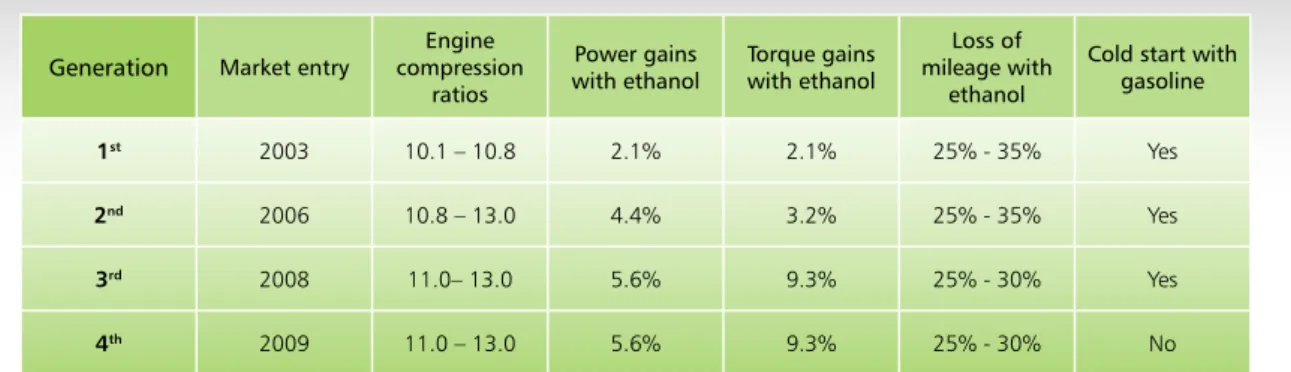
Considering the set of results of the dedicated ethanol and gasoline versions, the average energy bonus for the ethanol models was 2.2±0.5%. This advantage disappears in the comparative performance of the first flexible fuel vehicles, which kept almost unchanged the compression ratio used in the gasoline version and where ethanol consumption increases by 3.6±1.0% and gasoline increases by 1, 4±0.4%. These data differ significantly (from 5% to 10%) from the average results in the Production Emission Values Reports.
The introduction of heated intake manifolds controlled by the percentage of ethanol in the fuel, along with engine water temperature control, is likely to become more common in future generations of flex-fuel vehicles as a way to use better ethanol evaporation characteristics.
Flex-fuel motorcycles 1 Technology and concepts
- Evolution of the application
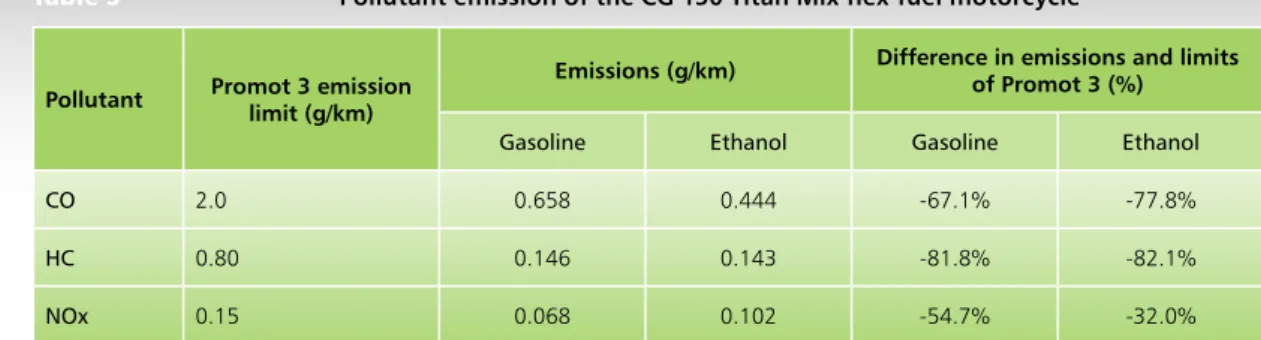
Another aspect that requires attention in the quest to reduce fuel consumption in flex-fuel engines is the use of leaner mixtures in the combustion chamber through the use of exhaust gas recirculation (EGR) valves. The CG 150 Titan flex-fuel motorcycle is equipped with a catalytic converter to reduce pollutant gas emissions. Adopting the no-change 9.5:1 compression ratio strategy used in the gasoline engine, the flex-fuel version offers slight increases in power and torque when using ethanol.
In the case of flex-fuel motorcycles, it's too early to say where the technology might go.
Diesel substitution 1 Initial considerations
- Buses, minibuses and vans for urban passenger transport
- Small trucks and urban delivery vans
- Agricultural machinery and vehicles for transporting cargo in the sugar and ethanol industry
- Alternative technologies and potential development
- Transformation of heavy diesel engines into Otto Cycle engines
- Ethanol with an additive in diesel engines
- vaporized ethanol in diesel engines
- Blends of ethanol, diesel and co-solvents
This shows that there is great economic potential for replacing diesel with ethanol in the sugar and ethanol sector, and this potential could possibly be even higher than that for replacing Type C petrol with ethanol in flex-fuel vehicles. Agricultural machinery and vehicles for the transport of cargo in the sugar and ethanol industry in the sugar and ethanol industry. The percentage of diesel that can be effectively replaced depends on the individual cylinder capacity of the engine and the intensity of turbocharging used in the application.
However, the increase in fuel vapor pressure caused by ethanol mixing can lead to cavitation in Ethanol injection as fuel.
Public policies to accelerate the development of fuel ethanol applications in vehicles and engines
- Challenges to the development of engine technology in Brazil
- Common policies for the development of the various alternatives
- Training of researchers
- Support for the development of motor engineering
- Specific aspects
- Flex-fuel vehicles
- Flex-fuel motorcycles
- Diesel substitution
A significant part of the developments applied to flex-fuel engines is the work of parts and system suppliers to the OEMs. This can exceed 100% if one considers the use of by-products from the sugar-ethanol industry, for example the production of bioelectricity. Finally, the prices under the third mechanism, adopted in most countries that are members of the Organization for Economic Co-operation and Development (OECD)iii, are a consequence of the interaction of market forces.
In these countries, fuel taxation has many objectives, such as building and maintaining roads, generating income, promoting efficiency in the transport sector and internalizing the environmental costs of the production and use of fuels and vehicles.