First of all, we would like to thank all the experts and professors at Embry Riddle who made it possible and encouraged the team to go through all the modules and supported us along the way. They have always been on our side to ensure the best experience during the course and to deal with all the challenges that have arisen with the COVID-19 pandemic. We would like to thank all the professors who have been with us on this journey, especially dr.
In addition, we are grateful for their support even in this extreme scenario for our industry in Brazil, which allowed the team members to focus on this course during lectures. The goal of this project was not to provide in-depth data on the topic, but rather to expose readers to the major players in the industry and understand the variables affecting the topic. Although there are different views on terminal integration, it was therefore possible to identify some possible avenues for future research.
It also recommended an investment so that checked baggage screening is implemented on all flights. In addition, to research the available literature, professionals from some of these bodies, airlines, airports and regulatory agencies were interviewed, which allowed a broad perspective of all actors on how to proceed with this topic.
Introduction
It is one of the main ways to ensure a higher level of safety for industry and passengers (ICAO, 2013). Regarding checked baggage rules, 100% baggage screening is mandatory for international flights. The US is recognized as one of the more secure countries in AVSEC, especially after the 9/11 attacks when new procedures were adopted.
The main idea of this chapter is to present the results of the literature review and the data collected through research and interviews. In the US, all safety regulations are governed by the Electronic Code of Federal Regulation (ECFR) at Title 49 regarding transportation. The screening process starts at the counters and is mandatory for airlines to “ensure that checked baggage carried on the aircraft is received by the authorized representative of the aircraft operator” (ECFR, 2021).
When dangerous goods, which are not allowed to be transported on board the aircraft, are discovered on the person or in the luggage of a passenger, the situation is reported to the relevant authority. Airlines must guarantee a second check of cabin baggage if passengers are transferring, such as on a connection. In both cases, international or domestic flights, the airline must have a process in place to ensure the provenance of hold baggage and courier baggage.
The ninth edition of Annex 17 integrates the International Civil Aviation Organization (ICAO) document. In order to highlight the security recommendations described in Chapter 4 of ICAO Annex 17, we sequentially summarized the list of security measures approved for passengers for hand luggage and carried to contribute to this study as a theoretical basis. This is mainly because the Brazilian air market has approximately 90% of total passengers flying domestic flights.
Also, the separation of international and domestic traffic, although effective due to the different processes involved, hampers the speed of domestic. Graham (2014) believes that improving airport security processes has become one of the most difficult tasks in passenger experience. Customs and border control is also an important step in the customer journey that brings the biggest difference between processes for domestic and international flights and is one of the most important steps to consider in order to standardize the restricted area.
In addition to customer travel, gate assignment is also a common problem for airport operators. Being flexible to use all the terminals of an airport can increase efficiency, given that it would be possible to allocate any aircraft to any position, regardless of the nature of the flight (international or domestic). During the next chapters, the research will collect the perspective of key stakeholders of the aviation industry to understand how all the topics explored in this chapter can be adopted in real life.
Methodology
Although security issues were not the main topic of this discussion, after the literature review and the interview with some of the experts, the group was able to understand that this is one of the most important issues to be investigated. It would be necessary for the Brazilian authorities to revise the current regulation to create the same standards for all flights, mainly those related to passenger and baggage screening. In the case of increasing security, it will be necessary not only to revise the regulation, but also a high investment in infrastructure at many airports, which may increase costs for airlines, airport operators and passengers.
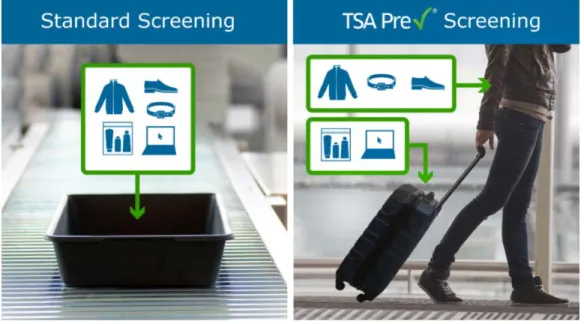
In terms of screening, in order to screen all baggage, it would be necessary to implement infrastructure at most airports that currently do not screen domestic baggage. This investment would directly affect the airport operators who would be responsible for providing the structure, as well as the airlines who would be responsible for screening and contracting providers to perform the screening. The research team also used the literature review from chapter two to reinforce what would be the best checkpoint design and procedures to enable the airports to have efficient flow.
Another solution would be to have a flexible structure to open and close the customs hall for international flights only. Also, it would be necessary to develop a strategy in case there are delays that could affect domestic flights if this area is expected to be used for this flight. One possible solution would be an integrated system where airlines would sooner send passenger details to the Federal Police, who would sooner be able to check and authorize each passenger, avoiding an additional checkpoint for them.
After the interviews, one of the main benefits of having standards was avoiding additional costs of building new terminals, as most international terminals have unused capacity to receive domestic flights as well. The view of some interviewees was that there would be a great advantage to adopting this type of strategy. Some of the main Brazilian international airports have dedicated international terminals that can also be used for domestic flights, avoiding the airport.
Assuming this view, it would probably be cheaper to adapt security procedures and checkpoint design than to build a new terminal. The main pain in this topic is related to the investment that would be required for other airports as well and the criteria that would be used to adapt the airport to these procedures. Another positive point, according to the research, was that such an improvement would bring benefits to MCT, as it would be possible to deploy aircraft closer to the terminals and reduce the required connection time.
Conclusions
Some improvements would be needed at the airport to create a safe and efficient design to promote the standards. For departures, it would be necessary to invest in technology to share passenger data (API/PNR) between airlines and the federal police, avoiding an additional checkpoint for passengers. A more detailed study would be necessary to evaluate a possible business plan for each scenario and to validate this assumption.
It would be necessary to have detailed information on the cost of building a new terminal and all the necessary improvements in infrastructure and technology, with payback for each investment. It is also important to define which airport should be taken into account and create rules that take into account that the cost-benefit for the smaller airport would be negative. Talking about aviation safety, airlines and representatives on the one hand feel that it would be better for Brazilian Aviation to have a more limited aviation safety regulation to make the industry safer.
Other benefits will also be to have a seamless process that will bring some efficiency to airlines in relation to passengers. Speaking of departures, it would be necessary to have some improvements in technology mainly regarding passenger information. It will be necessary for airlines and the federal police to access passenger information online using API, PNR and even Biometrics.
This will be necessary to prevent passengers from passing through this checkpoint, as this verification is currently done when the passenger has access to the international restricted area. It will be necessary to have another level at the main airports to separate these passengers to the required area. Otherwise, considering the complexity of this theme, it would be necessary for a more detailed evaluation to understand the cost-benefit of adopting this standardization.
It is also important to take into account which airport should be taken into account and to create rules where the cost-benefit for the smaller airport would be negative. In addition, it would be important to start working on some improvements to avoid risks and slowly start a transition to a safer process without major consequences for passengers. This improvement would also be necessary to move forward to have a unique process for international and domestic passengers at the airport.
The group could also understand that it would be possible to have a disruptive change in the industry to have a more seamless process at the airports. Besides that, it is important to keep in mind that Brazil is a continental country with different realities and needs what needs to be taken into account when defining the rules.