Immunosuppressive drugs for LT recipients should be prescribed and supervised only by those with knowledge and experience in this field. Bisphosphonate therapy should be considered in LT recipients with osteoporosis or recent fractures (grade 1, grade A).
AASLD
CONTENTS RECOMMENDATIONS RECOMMENDATIONS FULL TEXT REFERENCES WEB SITE
BACK TO RECOMMENDATIONS LIST
Conversion of immunosuppression from tacrolimus to ciclosporin may be considered in LT recipients with poor glycemic control (grade 2, grade B). ACE inhibitors, angiotensin receptor blockers, and direct renin inhibitors should be used as first-line antihypertensive therapy in LT recipients with diabetes mellitus. Angiotensin-converting enzyme inhibitors, angiotensin receptor blockers, and direct renin inhibitors should be used as first-line antihypertensive therapy in LT recipients with diabetes mellitus, CKD, and/or significant proteinuria.
Prophylaxis against cytomegalovirus (CMV) should be resumed each time LT recipients receive anti-lymphocyte therapy for. HIV-infected LT recipients receiving highly active antiretroviral therapy (HAART) require frequent monitoring of calcineurin inhibitor (CNI) levels because of the significant interaction between antiretroviral agents and CNIs (Grade 1, Level A). HIV-infected LT recipients receiving highly active antiretroviral therapy (HAART) should be followed with scheduled HIV viral loads and.
Standard cytomegalovirus (CMV) prophylaxis is recommended for HIV-infected LT recipients receiving highly active antiretroviral agents. LT recipients should avoid live virus vaccines because of concerns about spreading infections. LT recipients with an incisional hernia should be instructed to recognize incarcerated hernias and advised to seek immediate medical attention.
CONTENTS RECOMMENDATIONS FULL TEXT FULL TEXT REFERENCES WEB SITE
AIH: autoimmune hepatitis ALD: alcoholic liver disease BMD: bone mineral density CKD: chronic kidney disease CMV: cytomegalovirus.
PREAMBLE
LT AS A TREATMENT FOR END-STAGE LIVER DISEASE
MORTALITY AFTER LT
MORBIDITY AFTER LT
An assessment of quality of life after LT has shown that although quality measures improve in LT patients in most domains compared to their pre-transplant status, LT recipients continue to have many deficits compared to age-matched control populations; these manifest as worsening physical symptoms, fatigue and a greater sense of being unwell. 7. Through reduction of cardiovascular risks, suppression or eradication of specific infections, improved surveillance for cancer, and prevention or treatment of recurrent liver disease, both the quantity and quality of post-LT life can be improved. INCIDENCE OF CARDIOVASCULAR RISK FACTORS AND CKD IN LT RECIPIENTS BEYOND THE FIRST POST-TRANSPLANT YEAR.

COMPLICATIONS OF PORTAL HYPERTENSION AFTER LT
LIVER TESTS
The frequency of monitoring with liver tests should be individualized by the transplant center according to the time from LT, the complications from LT, the stability of serial test results, and the underlying
Depending on the pattern of liver tests, magnetic resonance imaging, computed tomography, endoscopic retrograde cholangiopancreatography, and sonography may be appropriate
Liver histology should be obtained when parenchymal injury is suspected as the cause of abnormal liver tests (grade 1, level A)
VASCULAR THROMBOSIS
Bilomas and biliary cast syndrome should be managed in a center with expertise in LT medicine, radiology, and biliary endoscopy (grade 1, level A)
Hepatic artery thrombosis or stenosis is most readily assessed initially by Doppler ultrasound, but angiography is usually required to confirm the diagnosis and plan therapy (grade 1, level B)
IMMUNOSUPPRESSION
LATE REJECTION
- Immunosuppressive drugs for LT recipients should be prescribed and monitored only by those with knowledge and expertise in that area. The choice of agents will depend on many factors, and no one
- Every patient’s immunosuppressive regimen should be reviewed at least every 6 months and modified as required with the goal of minimizing long-term toxicities (grade 1, level B)
- Rejection can be reliably diagnosed only on the basis of liver histology; a biopsy sample should be taken before treatment initiation and classified according to the Banff criteria (grade 1, level A)
- Although the long-term withdrawal of all immunosuppression can be achieved in a small number of patients, this should be undertaken only with select recipients and under close supervision
Ductopenic rejection is most commonly seen in the first year, but can occur at any time. The treatment of ductopenic rejection is increased immunosuppression, and an increase in or switch to tacrolimus may be effective in some early cases. Each patient's immunosuppressive regimen should be reviewed at least every 6 months and adjusted as required with the goal of reducing long-term toxicities (grade 1, level B).
Rejection can only be reliably diagnosed on the basis of liver histology; a biopsy sample should be taken before starting treatment and classified according to the Banff criteria (grade 1, level A). Although long-term withdrawal of all immunosuppression can be achieved in a small number of patients, this should be undertaken only with select recipients and under close supervision.
PROMOTING HEALTH AFTER LT
Frequent handwashing reduces the risk of infection with pathogens acquired by direct contact, including Clostridium difficile, community-acquired viral infections, and pathogens found in soil (grade 1, level A)
Shoes, socks, long-sleeve shirts, and long pants should be worn for activities that will involve soil exposure and tick exposure and also to avoid unnecessary sun exposure (grade 1, level A)
During periods of maximal immunosuppression, LT recipients should avoid crowds to minimize exposures to respiratory illnesses (grade 1, level A)
LT recipients should avoid the consumption of water from lakes and rivers (grade 1, level A)
LT recipients should avoid unpasteurized milk products and raw and undercooked eggs and meats (particularly uncooked pork, poultry, fish, and seafood; grade 1, level A)
Travel by LT recipients, especially to developing countries, should be reviewed with the transplant team a minimum of 2 months before departure to determine optimal strategies for the reduction of travel-
LT recipients should undertake a thorough review of hobbies to assess potential infectious disease risks, particularly those associated with outdoor hobbies (grade 2, level A)
All LT recipients should be educated about the importance of sun avoidance and sun protection through the use of a sun block with a sun protection factor of at least 15 and protective clothing. They should be
Because of the strong association of lung, head, and neck cancers with smoking, the sustained cessation of smoking is the most important preventative intervention (grade 1, level A)
For female LT recipients of a child-bearing age, preconception counseling about contraception and the risks and outcomes of pregnancy should start in the pretransplant period and should be reinforced after
BONE HEALTH
- In the first 5 years after transplantation, screening by BMD should be done yearly for osteopenic patients and every 2 to 3 years for patients with normal BMD; thereafter, screening depends on the
- If osteopenic bone disease is confirmed or if atraumatic fractures are present, then patients should be assessed for risk factors for bone loss; in particular, this should include an assessment of calcium
- The osteopenic LT recipient should perform regular weight-bearing exercise and receive calcium and vitamin D supplements (grade 1, level A)
- Bisphosphonate therapy should be considered in LT recipients with osteoporosis or recent fractures (grade 1, level A)
Oral alendronate 70 mg weekly is a suitable starting point, although other oral agents may be equally effective. The optimal duration of treatment is unknown, although oral alendronate has been given with good results for 10 years for postmenopausal osteoporosis. In the first 5 years after transplantation, an MKG examination should be performed once a year in patients with osteopenia and every 2 to 3 years in patients with a normal MKG; thereafter, screening is patient-specific and every 2 to 3 years for patients with normal BMD; thereafter, screening depends on BMD progression and risk factors (Level 2, Level B).
If osteopenic bone disease is confirmed or if atraumatic fractures are present, patients should be assessed for risk factors for bone loss; in particular, this should include calcium assessment to assess risk factors for bone loss; in particular, this should include assessment of calcium intake and 25-hydroxyvitamin D levels, assessment of gonadal and thyroid function, complete medication history, and thoracolumbar radiography (Level 1, Level A).
SYSTEMIC DISEASE
- Monitoring of renal function in LT recipients for the detection and management of CKD should use an estimating equation to evaluate the glomerular filtration rate (grade 1, level B)
- Urinary protein quantification using the concentration ratio of protein to creatinine in a spot urine specimen should be evaluated at least once yearly (grade 1, level B)
- The reduction or withdrawal of CNI-associated immunosuppression is an appropriate response to the development of CKD in LT recipients (grade 1, level A)
- Kidney transplantation from deceased or living donors is beneficial in improving survival and should be considered the optimal therapy for LT recipients who develop ESRD (grade 1, level A)
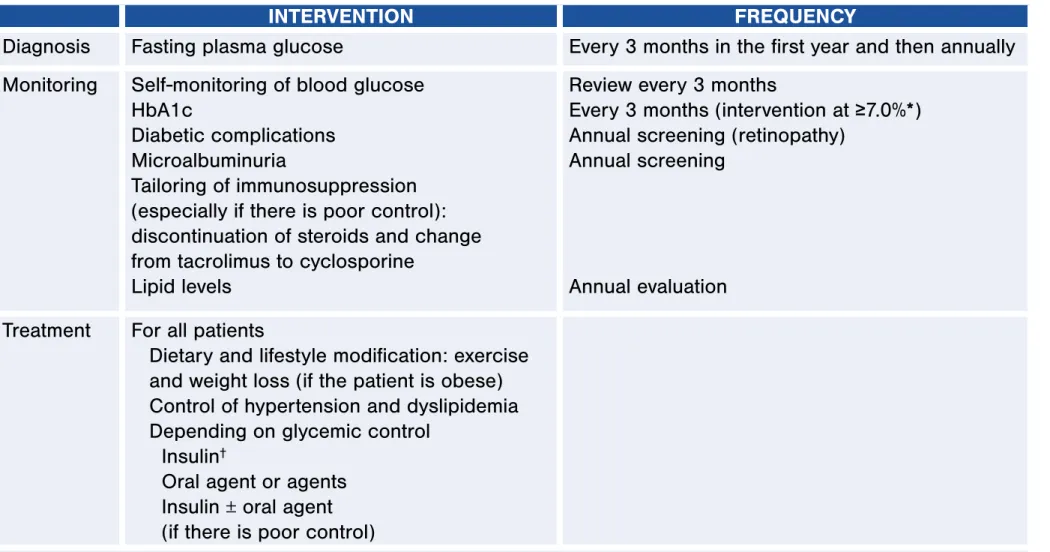
- The treatment of DM after LT should aim for an HbA1c target goal of <7.0% with a combination of lifestyle modifications and pharmacological agents as appropriate (grade 1, level B)
- When high-dose corticosteroids are administered, insulin therapy is the most effective and safest agent with which to control hyperglycemia; however, as the interval from LT extends, patients with NODM
- Metformin or sulfonylureas may be used in LT recipients with normal renal function, whereas
- Consideration can be given to the conversion of immunosuppression from tacrolimus to cyclosporine in LT recipients
- The treatment of hypertension should aim for a target goal of 130/80 mm Hg with a combination of lifestyle modifications and pharmacological agents as appropriate (grade 1, level A)
- The measurement of blood lipids after a 14-hour fast is recommended annually for healthy LT recipients
Monitoring of renal function in LT recipients for the detection and management of CKD should use an estimation equation to evaluate the glomerular filtration rate (grade 1, level B). Reducing or withdrawing CNI-associated immunosuppression is an appropriate response to the development of CKD in LT recipients (grade 1, level A). In LT recipients followed for more than 1 year, estimates of the incidence of NODM range from 5% to 26%.
Consideration may be given to converting immunosuppression from tacrolimus to cyclosporine in LT recipients, LT recipients. Beta-blockers are as effective as calcium channel blockers in the treatment of hypertension in LT recipients.36 Angiotensin-converting enzyme inhibitors,.

NUTRITION AND OBESITY (BODY MASS INDEX >30 kg/m 2 )
All LT patients require ongoing dietary counseling to avoid obesity (grade 1, level C)
An elevated low-density lipoprotein cholesterol level >100 mg/dL, with or without hypertriglyceridemia, requires therapy. If this is not sufficient for control, gemfibrozil or fenofibrate may be added, although patients should be monitored not sufficient for control, gemfibrozil or fenofibrate may be added, although patients should be carefully monitored for side effects, especially with the use of concomitant use of statins. and CNI (grade 2, level C).
Among LT recipients who become severely or morbidly obese and fail behavioral weight-loss programs, bariatric surgery may be considered, although the optimal procedure and its timing with respect to
ONCOLOGY
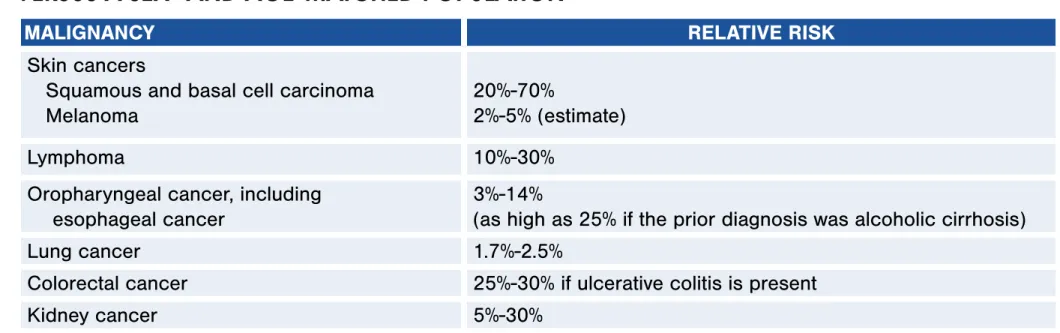
- All LT recipients should see a dermatologist after transplantation to assess cutaneous lesions, with at least an annual evaluation by a dermatologist 5 years or more after transplantation (grade 1, level A)
- Patients with PSC and inflammatory bowel disease or other established risk factors for colorectal cancer should undergo an annual screening colonoscopy with biopsies. Colectomy, including
- For patients without prior HCC who develop recurrent cirrhosis of the allograft, surveillance for de novo HCC should be undertaken with abdominal imaging every 6 to 12 months (grade 1, level A)
- An immunosuppressant regimen that includes sirolimus (started several weeks after transplantation) should be considered for patients undergoing transplantation for HCC (grade 2, level B)
- Resection or ablation is usually the treatment of choice for a solitary extrahepatic metastasis or an intrahepatic recurrence of HCC (grade 1, level B)
All LT recipients should see a dermatologist after transplantation to assess cutaneous lesions, with at least an annual evaluation by a dermatologist 5 years or more after transplantation (grade 1, level A). Patients with PSC and inflammatory bowel disease or other established risk factors for colorectal cancer should undergo an annual screening colonoscopy with biopsies. For patients without previous HCC who develop recurrent cirrhosis of the allograft, surveillance for de novo HCC should be undertaken with abdominal imaging every 6 to 12 months (grade 1, level A).
Resection or ablation is usually the treatment of choice for solitary extrahepatic metastasis or intrahepatic recurrence of HCC (grade 1, stage B).
REPRODUCTIVE HEALTH
- Pregnancy in an LT recipient should be managed by a high-risk obstetrician in coordination with the transplant hepatologist (grade 1, level C)
- Pregnancy should be delayed for 1 year after LT and occur at a time with good, stable allograft function, with maintenance immunosuppression, and with good control of any medical complications such as
- The ideal immunosuppression for pregnancy is tacrolimus monotherapy, which should be maintained at therapeutic levels throughout pregnancy; cyclosporine, azathioprine, and prednisone may also be used
- Allograft function and CNI serum levels are monitored every 4 weeks until 32 weeks, then every 2 weeks, and then weekly until delivery (grade 1, level B)
- Contraception should begin before the resumption of sexual activity, although no particular form of contraception can be recommended over another (grade 2, level B)
Allograft function and drug levels should be checked weekly for at least 1 month after birth or until the patient is stable, especially if adjustments were made during pregnancy or allograft dysfunction occurred late in pregnancy. Pregnancy in an LT recipient should be managed by a high-risk obstetrician in collaboration with a transplant hepatologist (Level 1, Level C). Pregnancy should be delayed for 1 year after LT and occur at a time with good, stable allogeneic graft function, with maintenance immunosuppression and good control of all medical complications such as maintenance immunosuppression and with good control of all medical complications such as hypertension and diabetes (Level 1, Level B).
The ideal immunosuppression for pregnancy is monotherapy with tacrolimus, which should be maintained at a therapeutic level throughout pregnancy; cyclosporine, azathioprine, and prednisone may also be used at therapeutic levels during pregnancy; cyclosporine, azathioprine, and prednisone may also be used if needed (Grade 1, Grade B). Controlled studies in women fail to demonstrate a risk to the fetus in the first trimester (and there is no evidence of risk in later trimesters), and the potential for harm to the fetus appears to be small.
INFECTIOUS DISEASE
- An assessment for infections following LT should take into account the intensity of immunosuppression, the timing of the presentation, the environmental and donor exposures, the recipient’s history of both
- Attention should be paid to potential drug interactions when new antimicrobial therapies are initiated (grade 1, level A)
- High-risk recipients (CMV-seronegative recipients of CMV-seropositive donor organs) should receive prophylaxis with ganciclovir or valganciclovir for a minimum of 3 months after transplantation
- The treatment of LT recipients with CMV should be maintained until viremia and all symptoms have resolved (grade 2, level B)
- Prophylaxis against CMV should be resumed whenever LT recipients receive anti-lymphocyte therapy for the treatment of rejection and should be continued for 1 to 3 months after the treatment of rejection
- The treatment of a CMV infection should consist of the following: a. Consideration of
- Resistant virus should be suspected in patients with a history of prolonged ganciclovir or valganciclovir exposure who have a persistent or progressive infection despite treatment with high-dose intravenous
- PTLD should be considered in LT recipients (especially high-risk individuals) who present with unexplained fever, lymphadenopathy, or cytopenias (grade 1, level A)
- Although EBV may be associated with the development of PTLD, the detection of EBV viremia is not diagnostic for PTLD; a histopathological diagnosis is required (grade 1, level A)
- A cautious reduction of immunosuppression should be initiated to prevent immune reconstitution syndrome, especially for cryptococcal infections (grade 1, level B)
- All LT recipients should receive prophylaxis against P. jirovecii with trimethoprim-sulphamethoxazole (single strength daily or double strength 3 times per week) for a minimum of 6 to 12 months after
- Trimethoprim-sulphamethoxazole is the drug of choice for the treatment of P. jirovecii pneumonia
- Patients with clinical signs and symptoms or radiological features suggestive of P. jirovecii pneumonia should undergo sputum sampling or bronchoalveolar lavage with a cytological examination using a
- The treatment of active TB should include the initiation of a 4-drug regimen using isoniazid, rifampin, pyrazinamide, and ethambutol (under the assumption of susceptible TB) with adjustments in accordance
- Close monitoring for rejection and hepatotoxicity is imperative while LT recipients receive anti-TB therapy (grade 1, level A)
- HIV-infected LT recipients receiving HAART require frequent monitoring of CNI levels because of the significant interaction between antiretrovirals and CNIs (grade 1, level A)
- HIV-infected LT recipients receiving HAART should be followed with scheduled HIV viral loads and T lymphocyte subset counts (grade 1, level A)
- Standard prophylaxis for CMV is recommended for HIV-infected LT recipients receiving HAART, and lifelong Pneumocystis pneumonia prophylaxis is the norm (grade 1, level A)
- Standard HIV-specific prophylaxis for low CD4 counts should be used (grade 1, level A)
CMV treatment should be initiated whenever recipients are symptomatic, have tissue damage, or have Patients with low-level viremia (this is difficult to determine due to laboratory variability) should be. Treatment of LT recipients with CMV should be withheld until viremia and all symptoms have resolved (grade 2, level B).
PTLD should be considered in LT recipients (especially high-risk individuals) who present with unexplained fever, lymphadenopathy, or cytopenias (Grade 1, Level A). HIV-infected LT recipients receiving HAART should be followed with scheduled HIV viral loads and T-lymphocyte subset counts (Grade 1, Level A).

IMMUNIZATIONS
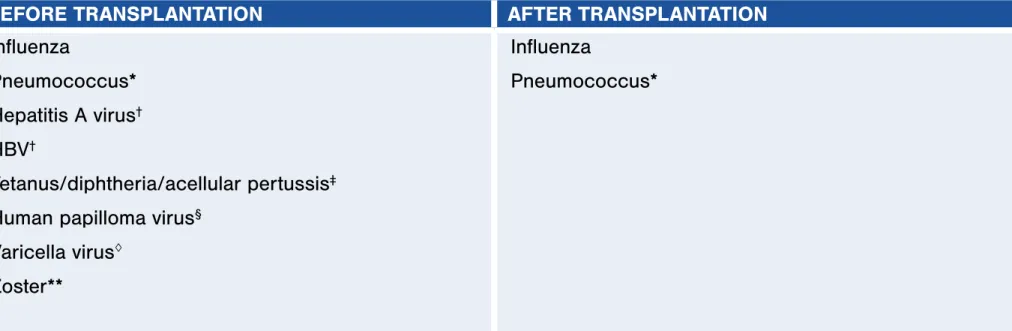
All LT recipients should receive an annual influenza vaccination (grade 1, level B)
All LT recipients should avoid live virus vaccines (grade 1, level A)
VIRAL HEPATITIS
In patients with low or undetectable HBV DNA levels before transplantation and an absence of high-risk factors for recurrence, HBIG can be discontinued, and long-term treatment with antivirals (single or in
Lifelong antiviral therapy should be used to treat patients with recurrent HBV infections. Combination antiviral therapy is superior to monotherapy when drugs with a low genetic barrier to resistance
Retransplantation for recurrent HBV is appropriate when treatment strategies to prevent or treat recurrent HBV disease are available (grade 1, level C)
CONTENTS RECOMMENDATIONS FULL TEXT REFERENCES WEB SITECONTENTS
- Liver biopsy is useful in monitoring disease severity and progression and in distinguishing recurrent HCV disease from other causes of liver enzyme elevations (grade 1, level C)
- Prophylactic antiviral therapy has no current role in the management of HCV disease (grade 1, level A)
- Moderate acute rejection should be treated with increased maintenance immunosuppression and corticosteroid boluses, whereas lymphocyte-depleting drugs should be avoided (grade 1, level B)
- Retransplantation for recurrent HCV disease should be considered selectively (grade 2, level B)
- PBC LT recipients should be routinely monitored for associated autoimmune diseases (eg, thyroid disease) and bone density (grade 2, level B)
- For those with histological evidence of recurrent disease, treatment with ursodeoxycholic acid at 10 to 15 mg/kg/day (grade 2, level B) may be considered, and although its use is associated with the
- Although there are few data on prevention, it is recommended that those patients grafted for PSC in the presence of CUC have an annual colonoscopy with mucosal biopsy (grade 2, level B)
- Although there is no evidence for recommending a particular immunosuppressive regimen in
There is no evidence that routine protocol biopsy in PBC LT recipients will improve outcomes. There is no indication to offer prophylaxis with ursodeoxycholic acid to patients with normal liver histology (grade 2, level B). Recurrent PSC is seen in up to 50% of patients after 5 years, with graft loss due to recurrent PSC occurring in as many as 25% of patients with recurrent PSC.108 The diagnosis of recurrent PSC is based on a combination of biochemical, radiological , and especially histological findings, multiple nonanastomotic biliary strictures or characteristic liver histology and exclusion of other causes such as infections or ischemia secondary to.
Risk factors for recurrent PSC include male sex, intact colon before or during transplantation, history of steroid-resistant or recurrent rejection, active CUC after transplantation, use of antilymphocyte therapy to treat cellular rejection, donor-recipient gender mismatch, infection with CMV and the presence of specific HLA haplotypes (eg HLA-DRB1*08). In PSC recipients with CUC, prophylactic colectomy does not reduce the risk of PSC recurrence.
ALCOHOLIC LIVER DISEASE (ALD)
- All patients with a prior diagnosis of ALD should be encouraged to remain abstinent from alcohol (grade 1, level B)
- Patients should be encouraged to enter therapy or counseling if they relapse into alcohol use (grade 1, level C)
- All patients with a prior diagnosis of ALD who are users of tobacco should be encouraged to undertake smoking cessation (grade 1, level B)
- Careful attention should be given to the risk of cardiovascular disease and/or new-onset cancers of the aerodigestive tract, especially in cigarette smokers (grade 1, level A)
Although data on prevention are limited, annual colonoscopy with mucosal biopsy (Grade 2, Level B) is recommended in patients transplanted for PSC in the presence of CUC. Patients should be closely monitored for signs of recurrence by liver testing every 6 months.109 Protocol liver biopsy should be considered at 5-year intervals. Although the majority of patients with suspected recurrent AIH will respond clinically, serologically and histologically to elevated immunosuppression, some will progress to end-stage graft failure and may require retransplantation.
NONALCOHOLIC STEATOHEPATITIS (NASH)/
NONALCOHOLIC FATTY LIVER DISEASE (NAFLD)
The confirmation of recurrent or de novo NAFLD, the recognition of fibrosis, and the exclusion of alternate causes of elevated liver chemistry tests require liver biopsy (grade 1, level B)
No specific recommendations regarding the prevention or treatment of NAFLD or NASH in LT recipients can be made other than general recommendations to avoid excessive gains in body weight and control
LATE SURGICAL COMPLICATIONS
LT recipients with an incisional hernia should be instructed to recognize incarcerated hernias and advised to seek immediate medical assistance (grade 1, level B)
ACKNOWLEDGMENT
CONTENTS RECOMMENDATIONS FULL TEXT REFERENCES REFERENCES WEB SITE
Delayed introduction of reduced-dose tacrolimus and renal function in liver transplantation: the "ReSpECT" study. New-onset diabetes mellitus after liver transplantation and hepatitis C virus infection: meta-analysis of clinical studies. Nifedipine versus carvedilol in the treatment of de novo arterial hypertension after liver transplantation: results of a controlled clinical trial.
Lamivudine or lamivudine combined with hepatitis B immunoglobulin for prophylaxis of hepatitis B recurrence after liver transplantation: a meta-analysis. Early trajectories of depressive symptoms after liver transplantation for alcoholic liver disease predict long-term survival.
BACK