Heuristic-based algorithms and hardware designs for fast in-frame prediction in AV1 video encoding. All software and hardware solutions described in this thesis focus on the AOMedia Video 1 (AV1) format, which is state-of-the-art in open-source and royalty-free video coding.
Research Hypothesis
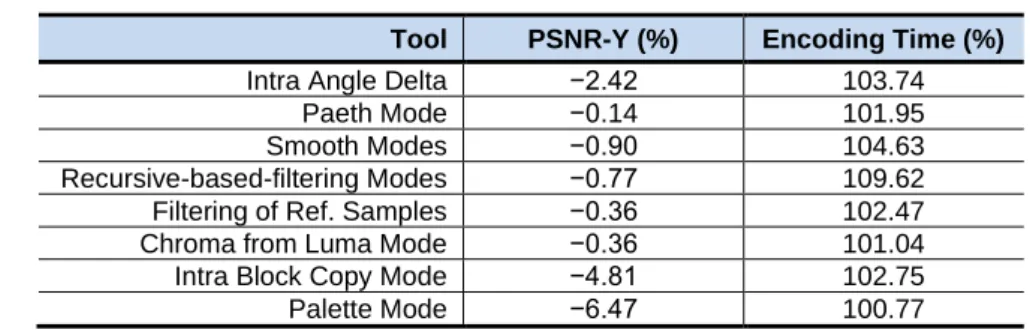
Furthermore, considering the high relevance of the AV1 intra prediction and the research opportunities related to it, as will be explained in Chapter 4, this stage of the encoder was chosen to be the target of this research project. It is possible to reduce the computational effort of the AV1 intra-picture prediction by developing hardware-friendly heuristic-based algorithms and then generating efficient hardware designs that can process ultra-high-definition videos in real-time.
Main Contributions
34;An efficiently designed hardware architecture for the original AV1 algorithms and the proposed heuristics-based algorithms is a promising solution to allow real-time processing of ultra-high-definition video from AV1 intra-prediction.
Thesis Organization
Appendix A presents the test sequences and coding parameters used for all experiments during this PhD.
Representation of Digital Videos
It can be clearly seen that each channel of the RGB color model represents the intensity of each of the primary colors and that some luminance information is shared by all three channels. Furthermore, it can also be observed that the luminance channel Y of the YCbCr color model has all luminance information, viewed as a grayscale image, while both chrominance channels have only color information, making it impossible to perceive edges and depth information in detail. due to the lack of light information.
Redundancies in Digital Videos
This redundancy can be explored in the spatial domain with the intra-image prediction stage of the video encoder. On the other hand, if certain symbols are more likely to occur, this redundancy can be explored by assigning variable-length codes to those symbols (ie, codes with fewer bits assigned to more frequent symbols).
Compression of Digital Videos
Distortion Metrics
In this model, PSNR is the chosen metric for distortion, due to its simplicity and also because it matches the subjective opinion results reasonably well. Within this thesis, the metric used to evaluate the proposed algorithms is the Bjøntegaard Delta Bit Rate (BD-BR), which reports the average bit rate difference in percentage for two videos (eg: original vs. compressed) considering the same PSNR.
Hybrid Block-based Video Encoder
- Frame Partitioning
- Prediction Stage
- Transform Coding
- Quantization
- Entropy Coding
- In-loop Filtering
- Mode Decision
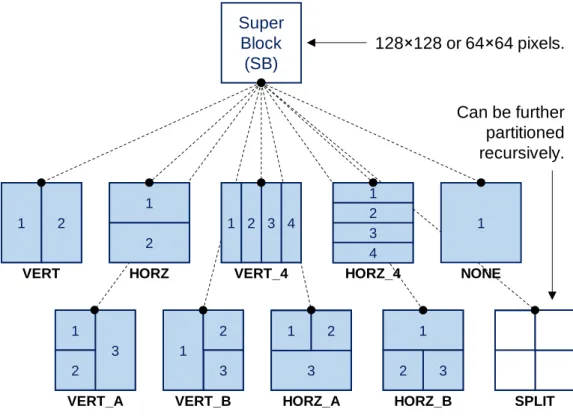
In the figure, partitions filled in blue are final, but all four subpartitions of the unfilled partition (SPLIT) can be recursively split based on the same 10-way tree structure, up to 4×4 pixels, which is the smallest supported block size (RIVAZ; HAUGHTON, 2019). Therefore, one of the biggest challenges in video compression is the control of an encoder.
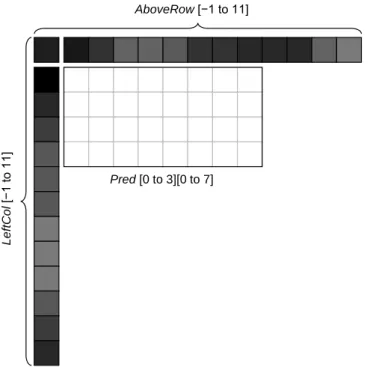
AV1's intra-prediction process is called for intra-blocks to predict a portion of the block that corresponds to a transform block. After both sets of reference samples are assembled, the prediction can be applied according to one of the modes described in the next section.

Intra Prediction Modes
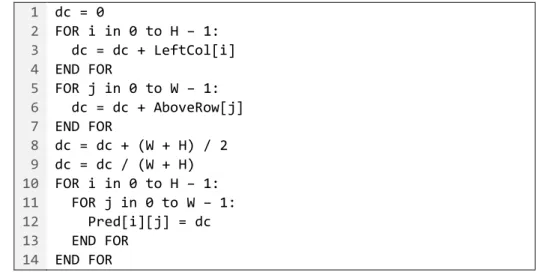
- DC Mode
- Paeth Mode
- Smooth, Smooth Vertical and Smooth Horizontal Modes
- Recursive-based-filtering (RBF) Modes
- Chroma-from-Luma Mode
- Directional Prediction Modes
- Screen Content Prediction Modes
The reconstructed luminance block is downsampled to match the size of the chrominance block (if necessary); In this mode, the encoder can explore 17 possibilities for each of the two scale variables.

Compound Inter-intra Prediction
Therefore, an encoder that evaluates each option in the RDO loop can achieve satisfactory compression performance, at the cost of significant complexity added to the prediction of a single block. First, this chapter presents an overview of related works that propose system-level solutions to reduce the computational effort in the AV1 encoder and works that propose dedicated hardware designs for the AV1 encoder and decoder modules.
AV1-related Algorithmic Optimization
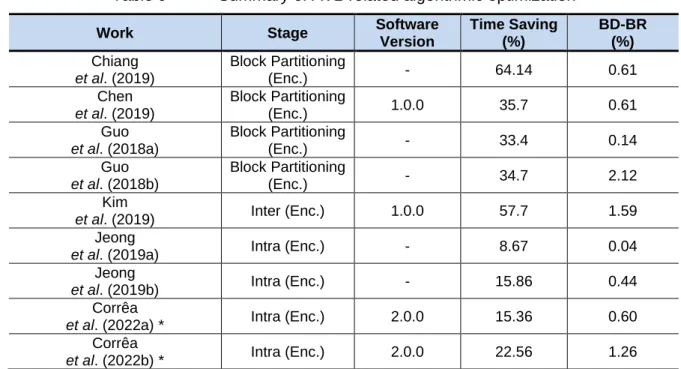
2018a) also propose a Bayesian approach to early termination of the AV1 block partitioning tree exploration, but in the context of multi-rate video coding, where the coding of a video sequence is performed by a reference instance of the encoder, while N other instances encode the same input simultaneously, each consulting the reference instance to accelerate their own RD. This work is part of this Ph.D. project and is further described in Chapter 5. 2022b) proposes a fast decision algorithm for the AV1 intra-prediction, inspired by the direction detection algorithm used on the CDEF of the same codec.
AV1-related Hardware Designs
- Designs for Intra Prediction
- Designs for Inter Prediction
- Designs for In-loop Filtering
- Designs for Entropy Coding
The authors reported a throughput of 60 fps for the presented UHD 4K architectures for the subpixel interpolation filter present in the decoder's correlated prediction module. 2019), the sample-level parallelism of the architecture allows any block size to be processed as 4x4 subblocks (16 samples per cycle), but since it is a decoder design, only one of the many supported filters is used for the predicted block . (the one signaled in the bitstream). Gomes and Ramos (2021) presented an architecture for the AV1 entropy decoder arithmetic decoder.

Research Opportunities
Direction Detection Step
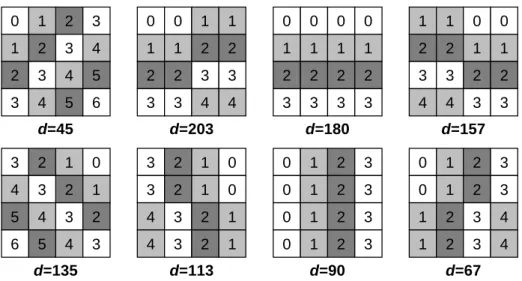
The direction detection stage proposed in this work is based on a solution first described in the Daala codec (VALIN et al., 2016), and later added as part of the AV1 CDEF in-loop filtering stage ( THE MIDDLE FOREST; VALIN, 2018). According to this example, the dominant direction of the input block texture follows a 45-degree angle because S45 is the highest among all Sd values, which means that PDB45 is most similar to the subsampled input block.
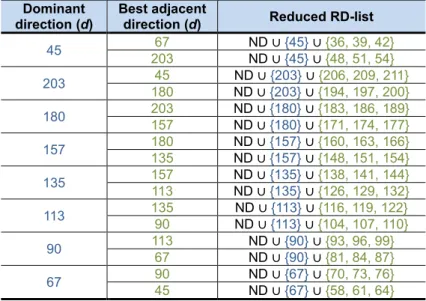
RD-list Creation Step
Also appended to the final RD list are the three closest versions of the angle that follow the best adjacent direction. On the right, a list of RD NDs generated from the same dominant direction but opposite adjacent directions is presented.
Algorithm 2: Mode-adaptive Subsampling in Block Matching (MaSBM)
Observation of SSE Error in Intra Prediction
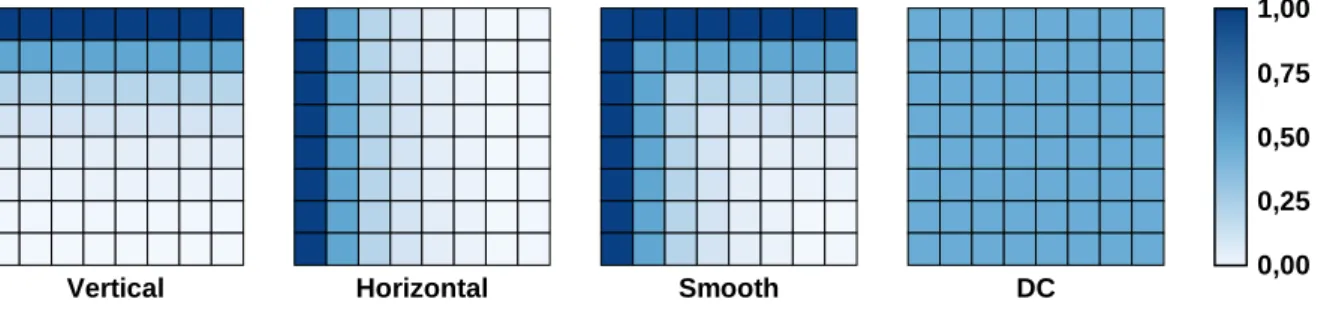
It can be noted that prediction modes such as Smooth, Paeth and DC, which use all reference samples from both the AboveRow and LeftCol arrays, show a clear pattern of lower error in the upper-left region of the blocks and higher error on the right under. On the other hand, the Smooth Vertical mode, which uses all samples from AboveRow and only the last sample from LeftCol, shows a pattern of lower error in the entire upper region and a small portion of the lower left corner.

Mode-adaptive SSE Subsampling Masks
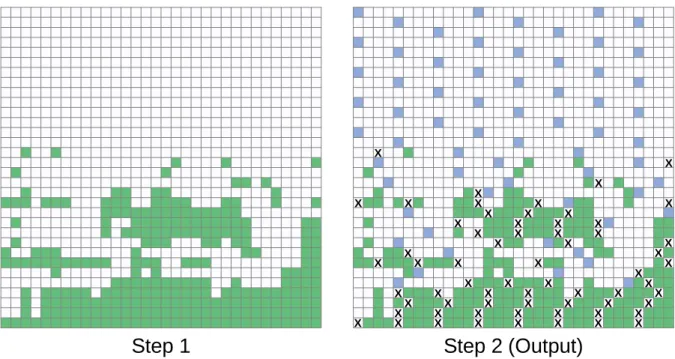
In the first step (left side of Figure 30), a loop in the mask (green positions) checks the 256 positions with the highest error from the heat map used as input, i.e. 25% of the 1024 positions in a block of size 32×32, according to the HEA parameter. 25% of the previously controlled positions are uncontrolled uniformly and redistributed uniformly in the empty area.
Results and Discussion
Results for Algorithm 1: Texture-based Fast Mode Decision (TbFMD)
Therefore, for the AV1 intra-prediction, the ideal Thr for the TbFMD algorithm was defined as 15, yielding a good trade-off between coding time reduction and coding efficiency loss of 22.6%.
Results for Algorithm 2: Mode-adaptive Subsampling in Block Matching
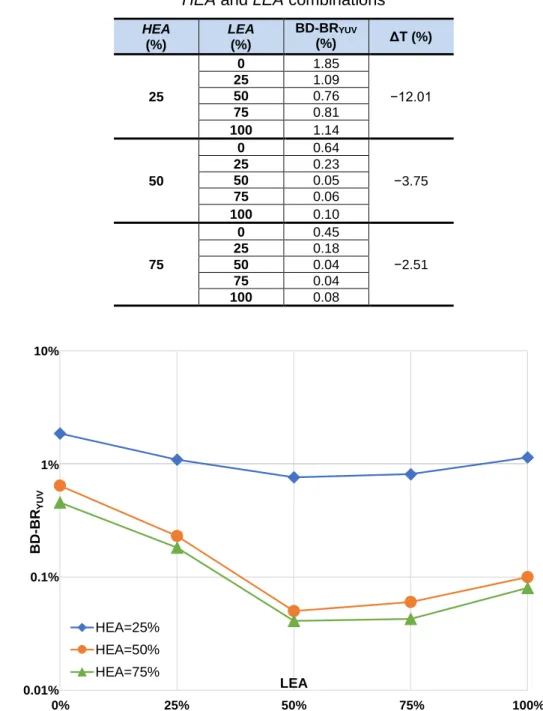
A setting of HEA=25% reduced the encoding time by 12%, while the less aggressive settings of HEA=50%. Therefore, the HEA=50% and LEA=50% setup proved to be the ideal solution when encoding efficiency is a priority over encoding time savings, yielding a negligible BD-BRYUV impact of 0.05% and a time savings of 3.75%.
Results for Algorithms 1 and 2 Combined
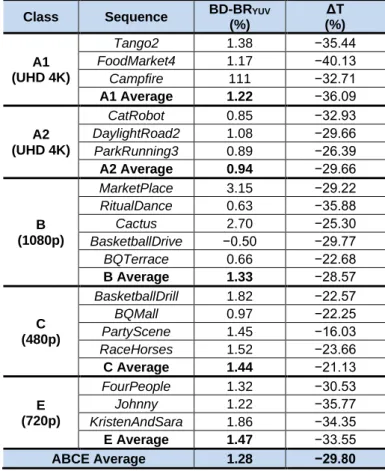
Under the LEA=25%, LEA=50% and LEA=75% settings, it can be observed that the uniform redistribution of 50% of the checked positions in the first stage of mask generation yields the best encoding quality results. This table shows that the ABCE average is less than the sum of the impact caused by each algorithm when used separately.
AV1 Directional Intra Prediction Design
The filter selector is used to send the filtered angle pattern only to MPUs with 90
Directional Mode Prediction Units
Their design is analogous to the DMPUs for pAngle <90, but instead of a column, each DMPU is capable of generating a row of 64 samples per cycle using references from LeftCol. That is, these DMPUs have the combined logic of the DMPUs for pAngle<90 and pAngle>180.
Non-directional Intra Prediction Module
- Smooth Vertical, Smooth Horizontal and Smooth Units
- Paeth Unit
- DC Unit
- Recursive-based-filtering Multifilter Unit
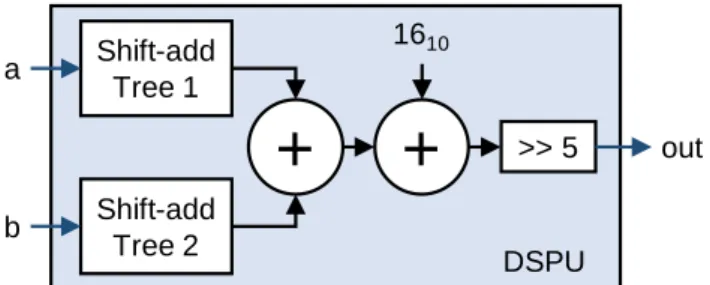
As shown in Figure 36, there are three Smooth Units, one for each of the Smooth modes. In this way, the UMPU has seven Parallel Multiplierless Multiplication Units (PMMU), one for each set of coefficients associated with each of the seven references.

Shared Control Unit
SSE-based Decision Design
The comparator used in the base design must select the lowest four SSEs derived from the SSE trees. This is done with a tree arrangement of 2:1 comparators forming a 66:1 comparator that selects the lowest SSE among its inputs in one cycle.

Design Optimization with TdFDM and MaSBM Algorithms
TdFDM Optimization
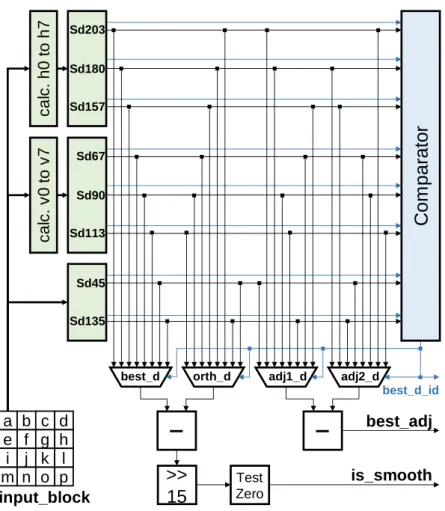
In the HEVC intra prediction module proposed by Corrêa et al. 2017), SAD trees were responsible for 37% of the gate count of the overall design. In this way, the multiplexers select Sd of the dominant direction (best_d), the orthogonal direction (orth_d) and the two adjacent directions (adj1_d and adj2_d) based on the same selection signal.
MaSBM Optimization
The RTL diagram of the entire design optimized with TbFMD and MaSBM is shown in Figure 52. Compared to the basic design shown in Figure 33, it can be seen that each of the 14 SSE trees is individually controlled by the MaSBM controller, which also controls the comparator loop.

Synthesis Results and Discussion
Results for the Base Intra Prediction Design
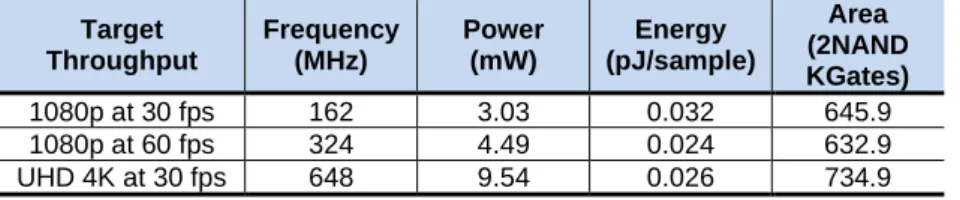
Since this work only focuses on the intra prediction module, the delay of other encoder modules cannot be evaluated. Furthermore, the RBF multi-filter unit represents the critical path of the proposed design due to its very high data dependence.

Results for the Optimized Intra Prediction Modules
In the unoptimized design, a leakage power of 3.52 mW was observed, representing 1.71% of the total power. A memory-aware and multiplierless VLSI architecture for the full intra-prediction of the HEVC emerging standard.