Also to my friends for the support and understanding of my absence in the last months. This thesis presents a framework for the multidisciplinary design analysis and optimization of glider wings.
Nomenclature
Glossary
Optimization Process that starts from an initial state and, according to the specifications/constraints imposed, creates a final state, which optimizes a defined set of parameters that affect the current state. Von Mises Stress Named after the equivalent stress in the Von Mises criterion for ductile fracture, which, if higher than the yield stress of the material, indicates a state of fracture.
Introduction
Motivation
As an aeronautical engineer graduate of the Portuguese Air Force Academy, the interest in acquiring knowledge that allows the development of skills that can be useful to the Air Force in its future projects is very motivating. Recently, the Air Force created a new department called Engineering and Programs Direction (DEP), which aims to provide the technical skills necessary for the management of weapon systems at all stages of their life cycle, focusing on the skills that fall into the realization of weapon systems. modernization projects, as well as projects related to quality management, environmental certification and airworthiness of military aircraft owned by the Portuguese Air Force (PAF, 2009).
Project Objective and Synopsis
This gliding and flying experience made it possible to realize that gliders, although aircraft of simple design, present an interesting topic for research in the multidisciplinary field. From the first task to the last, the recording of all important information was done in a written document that was the basis for this document.
State-of-The-Art
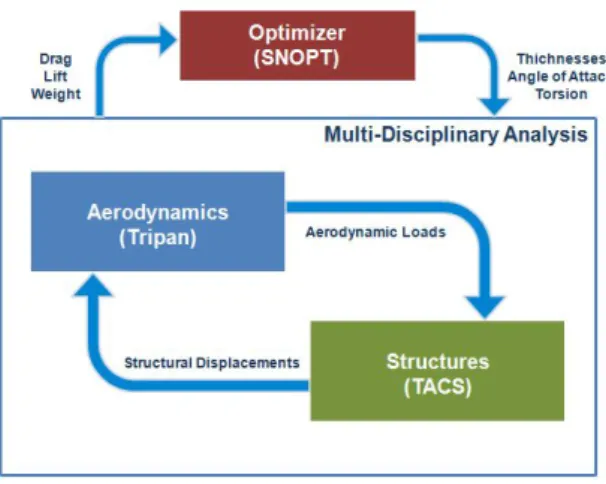
Recently, Heil et al. 2008) solved a time-dependent FSI problem by applying Newton's method to a second-order backward difference discretization of the coupled system and using a monolithic approach with both direct and iterative solvers for the resulting equations. Formulations of both the adjoint and direct methods for calculating the sensitivity of the coupled aero-structural system were presented, and to solve the coupled nonlinear equations they used a nonlinear block Gauss-Seidel method with relaxation.
Gliding and Soaring
- Introduction
- Brief History of Gliding and Soaring Flight
- Principles of Gliding and Soaring Flight
- Sailplane Aircraft
- Summary
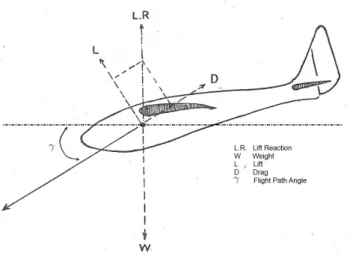
This ratio depends on the wing area, the type of airfoil, the relative wind and the "wing aspect ratio". Therefore, the glide angle when hovering is independent of the weight of the glider, and the lowest glide angle corresponds to maximumL/Dratio.
Multi-Disciplinary Analysis and Optimization
Introduction
Multi-Disciplinary Design History in Aeronautic Industry
- Multi-Disciplinary Optimization Objective
In this way, the process of designing an aircraft became largely a compromise between the various aspects and opposing constraints of individual disciplines. The first is the increased computational cost and complexity of optimization problems when running high-fidelity analyses.
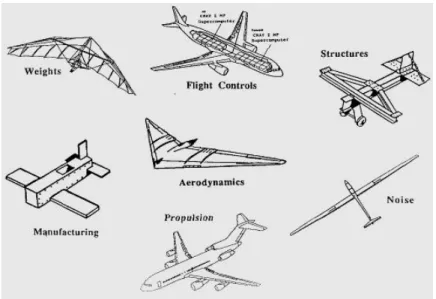
Multi-Disciplinary Optimization Problem Definition
- Multi-Disciplinary Optimization Architectures
The calculation of the MDA at each design point also negates the need to include discipline coupling variables as optimization variables. Individual Discipline Feasible (IDF) The IDF approach can be seen as a decoupled version of the MDF approach.

MDO Framework
MDO Tool Structure
Geometry Module
- Case Study
- CAD-Free Method for Geometry Generation and Parametrization
- Code for the Geometry Module
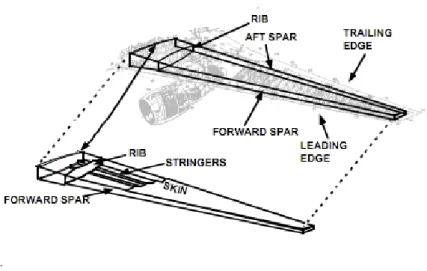
In the traditional layout, ribs are placed so that they have the orientation of the flow direction. This was therefore the method that was followed in the geometry module and used for the geometric parametrization of the proposed MDO. The full transcript of the script, along with the programming commentary, can be found in Appendix A.
Finally, there are some options regarding the order and number of the finite elements to be used for the structural mesh.
Aerodynamics Module
- Computational Methods and Computational Aerodynamics
- Aerodynamic Analysis
- Code for the Aerodynamic Analysis
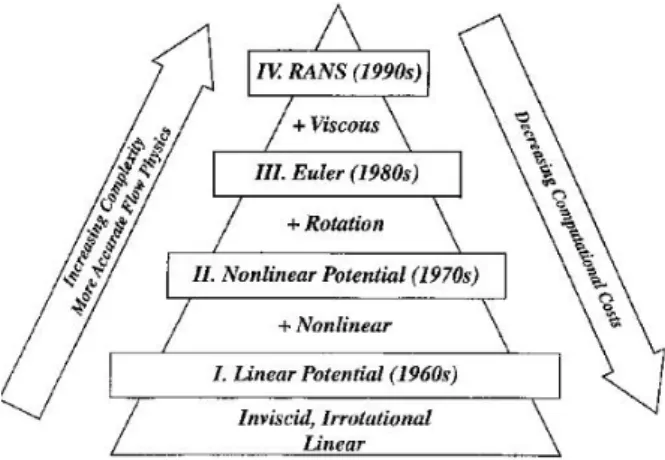
In part 1.2. import the MDO Lab tools, namely thepyGeo,pySplineandpyLayout, reviewed in subsection 3.6.2. As the complexity of the modeled flow increases, more complex computational methods are required. The two modules could be used for the aerodynamic analysis, but as the progress of the work showed, the Tripan flow solver was better suited to be coupled with the structural solver.
The third subpart sets up the Tripanload case and deals with the solution of the aerodynamic analysis using the implicit GMRES method.
Structures Module
- Computational Methods for Structural Mechanics
- Structural Analysis
- Code for the Structural Analysis
The second is the derivative of the consistent force vector with respect to structural displacements. The input structural mesh of the wing was created with the script presented in sub-section 3.6.3. The first part covers importing Python and MDO plugins and specifying the output directory for the results.
The second subsection deals with the setup of the KS functional domains, the definition of structural material properties, and the type of finite elements used in the structural mesh.

Aero-Structural Coupling
- Displacement Transfer Between Modules
- Load Transfer Between Modules
In other words, the mapping from the aerodynamic mesh to the finite element model is done explicitly on a point-by-point basis for a finite number of points. The continuity of the displacement field in the aerodynamic mesh is then enforced directly without requiring continuity from the underlying structural model. The pressures calculated by the aerodynamic flow solver are transferred to the structural nodes through the aerodynamic grid points.
Aerodynamic pressures are then calculated using bilinear interpolation on the aerodynamic mesh surface.
Aero-Structural Solution
- Approximate Newton-Krylov Method
This method can converge quadratically if the starting point is close enough to the solution and the Jacobian remains non-singular. However, to achieve convergence when the starting points are far from the solution, Newton's method may need to be globalized with some strategy to ensure progress towards the solution until a suitable starting point is found. This is the methodology used, so a tolerance ofnk= 10−3 was set in the Newton update (Kennedy and Martins, 2010).
Optimizer
- Optimization Methods
- Aero-Structural Sensitivity Analysis
- Optimization Algorithm
These methods use the value of the objective function and the value of its gradient with respect to the design variables. They use the interpretation of first and sometimes second order sensitivity information to make the steps in the design space towards the optimal point. The general characteristic of these methods is that they use the sensitivity information to identify a search direction in the design space.
For a problem with a low number of design variables and multiple local minima or discontinuities, the zero-order methods are more suitable.
Summary
Effective gradient-based optimization requires accurate and efficient computation of the target and constraint gradients. In a typical aero-structural optimization problem, there are fewer objective and constraint functions than there are design variables. Once the adjoint vector ψ has been determined, the total sensitivities must be calculated using Eq.
The optimization algorithm used to implement gradient optimization in an established MDO tool is called SNOPT (Gill, 2008).
Results
Introduction
Case Studies
- Geometry of Sailplane Wings
- Modeled Geometries
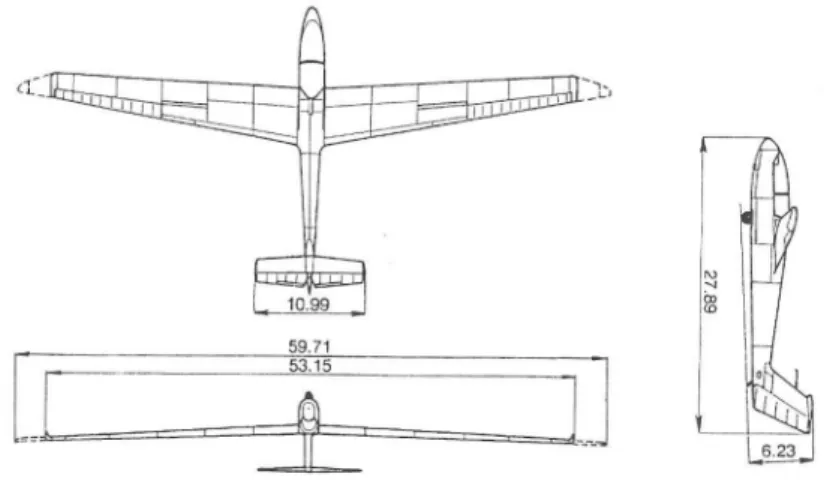
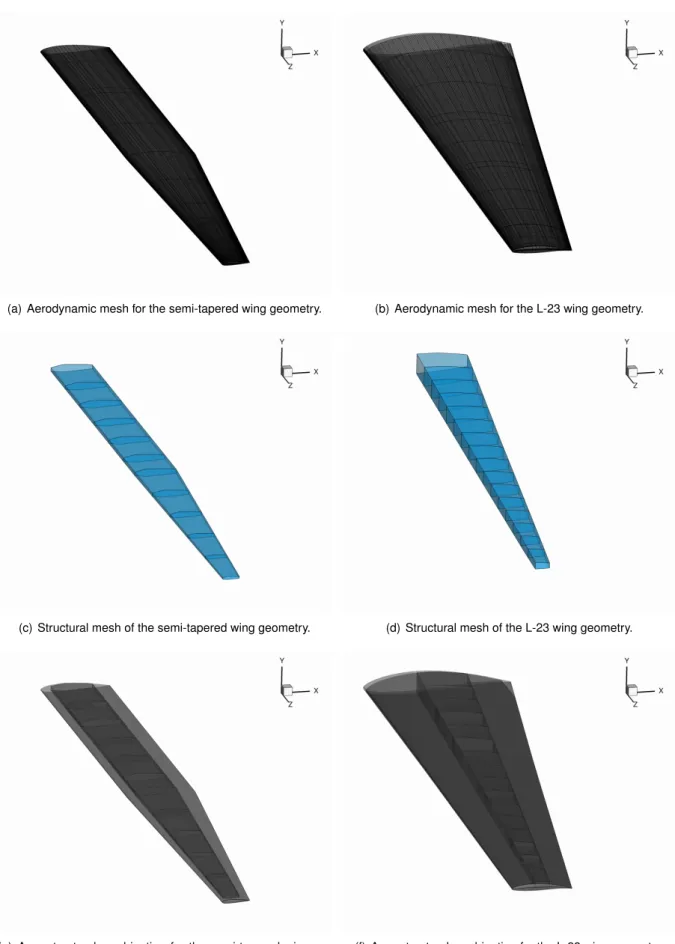
The thickness values were set at 5 mm on the skin, 10 mm on the sidewall and 8 mm on the ribs, and the maximum take-off weight was set at 430 kg. Although not an exact modeling of the actual layout, this was the best approximation that could be recreated using the geometry module. This subsection presents the geometry objects created using the geometry module of the MDO tool.
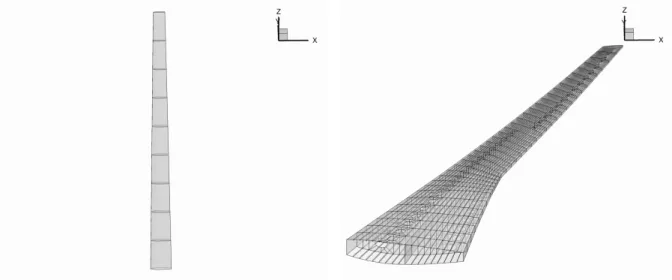
As can be observed, the aerodynamic mesh agrees almost perfectly with the OML of the desired wing geometries.
Aerodynamics
- Verification and Validation of the Aerodynamic Analysis
- Aerodynamic Analysis
- Aerodynamic Optimization
The case study geometry chosen was the simpler of the two cases, the semi-tapered wing. The initial flight condition for the optimization is the same as for the aerodynamic analysis, shown in Table 4.5. A summary of the initial and final parameters for the aerodynamic optimization for the present case study is shown in Table 4.6.
The overall results show that using the L-23 wing as a starting point for the optimization gave more room for the optimizer to improve the aerodynamic performance of the wing geometry.
Structures
- Convergence Study
- Structural Analysis
Also, the span of the L-23 airfoil is greater than the span of the semi-tapered airfoil. The other results shown show the Von Mises stresses in the structural components. a) Results for deformation of the structural layout of the wing (outlined is the undisplaced structure). In the semi-tapered wing, the higher stresses are concentrated near the center zone of the wing root skin panels.
On the other hand, in the L-23 wing box, the Von Mises stress values are much lower.

Multi-Disciplinary Analysis and Optimization
- Aero-Structural Analysis
- Aero-Structural Optimization
The scale of the sections along the span was also reduced, introducing a larger wing taper ratio. The scale of the sections along the span was reduced, introducing a higher wing taper ratio. For a better visualization of the results, the corresponding aerodynamic and structural results are shown in Figure 4.25. a) Results for wing lift distribution.
The deformation of the wing box was greater than that verified in MDA.

Summary
Von Mises stresses also confirmed that the structural components exerted more effort, with the root skin plates showing higher stresses on the top and bottom surfaces. The distributions of Cp by the presented sections and the distribution of lift by the wing confirmed a higher total angle of attack due to the increase in twist angles. Indeed, the sections near the wingtip show some higher gradients in the evolution of Cp over the airfoils, which is also consistent with higher local angles of attack.
Using the MDO technique, a final optimized design respecting all the constraints was achieved with an 11% decrease in CD and a 0.009% decrease in total weight.
Conclusions and Future Work
Achievements and Acquired Knowledge
Thus, if used with a proper workstation with more computing power, multidisciplinary problems with higher complexity can be solved using MDO, at a faster pace, saving time compared to a discipline iterative approach. Finally, from the results obtained with the aerodynamic and aero-structural optimization only, it was possible to capture the multi-disciplinary trade-offs between what was best in terms of aerodynamics and what was feasible in terms of aero-structural requirements . Having this multi-disciplinary perspective right from the start of the aircraft design process can reduce the feasible design space, saving resources from later redesigns.
This verification achieved the aim of this thesis as an aero-structural optimization was carried out and proved that MDO can really make a difference in the early design phases, expanding the engineer's vision of the multidisciplinary design problems and improving previous make problems possible. find multidisciplinary optimal points.
Directives for Future Work
However, once the problems were formulated, aerostructural optimization with the established MDO tool proceeded quickly and smoothly. This fact is very important when you consider that the work for this thesis was all done with a normal notebook. Thus, the use of MDO in preliminary design phase exercises has shown that considering more than one discipline can lead to better optimized designs.
Thus, I personally think that the basic skills acquired during the realization of this thesis, in the field of MDO, will be a real asset in future projects.
Appendix A
Script for the Geometry Module
Appendix B
Script for the Aerodynamics Module
Appendix C
Script for the Structures Module
Appendix D
Script for the MDO Framework
Bibliography
Optimization of the aerostructural design of composite aircraft with stress and local buckling constraints using an implicit structural parameterization. MDO Technical Committee, editor (1991). Current State of Multidisciplinary Design Optimization, White Paper Volume. A historical and applied aerodynamic study of the Wright brothers' wind tunnel test program and application to successful manned flight.
Multidisciplinary design optimization based on independent subspaces. http://www.grc.nasa.gov/WWW/wind/valid/m6wing/.