According to Seidlhofer (2001), pronunciation is "the production and perception of a particular language's significant sounds to achieve meaning in contexts of language use" (p.56). Negative feedback (NF) has typically been defined as information that leaners receive about errors they have made in L2 production (Loewen, 2013). More can be found in Williams (2005), where this definition of error is referred to as "the native speaker norm".
Keys (2001) built on the concept of interlanguage proposed by Selinker (1972) to explain the construct of interlanguage phonology, which he defines as “the development of phonological skills in a second language” (p. 155). One of these is the context in which the speaker uses the target language: the topic, the relationships with the interlocutor and the degree of formality have a fundamental effect on the speaker's performance. He conducted a systematic review of the existing literature and concluded that “the literature on second language error correction is quite speculative and relatively sparse” (p. 396).
Learning and its Key Terms
In the first case, however, the participants do what the researcher guides; in the latter case, participants have equal responsibility for decisions and share ownership of the project. Patton (2005) explained that purposive sampling is a way of selecting based on characteristics of a population and the objective of the study. Agree to participate in any activity of the research project. f) To have access to an internet connection.
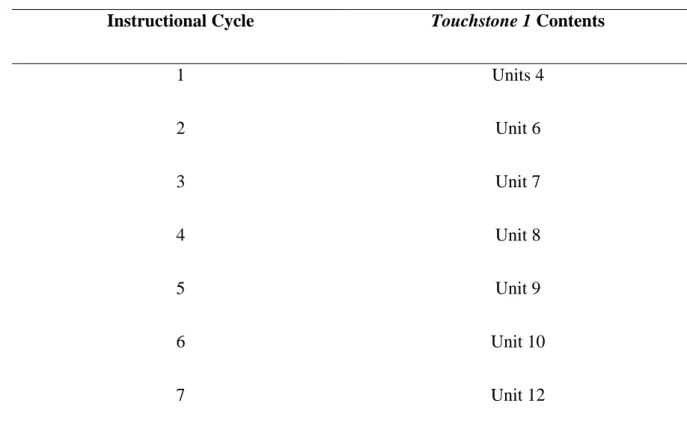
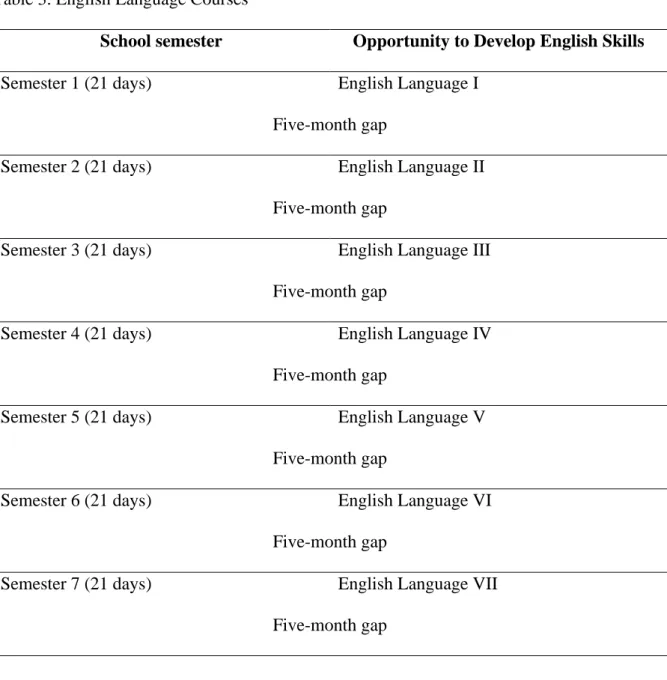
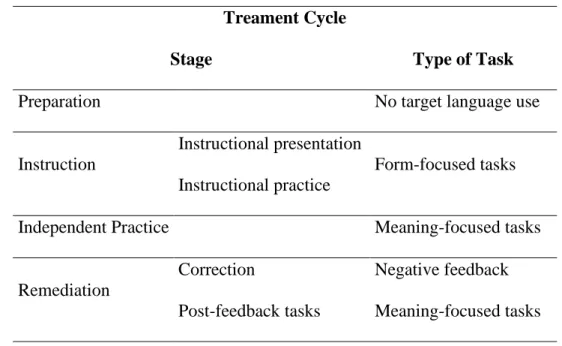
The first two English courses cover Touchstone Level 1 content (McCarthy, McCarten, & Sandiford, 2013), exhibited in Appendix D. Sandlund, Sundqvist, and Nyroos (2016) defined L2 oral proficiency as “the ability to converse with a or some interlocutors" (p. 16). It is important to note that the seven learning cycles were form-focused because their content was based on the pre-test results.
To this end, each participant sends a voice message with six sentences such as "The umbrella is twenty reais". In the first, assessment was summative as feedback was not provided until participants had completed the tasks and demonstrated their ability to use the target forms communicatively. Information gathered from the learning diary and group interviews were used by the researcher to decide on changes for future implementation of the learning cycle.
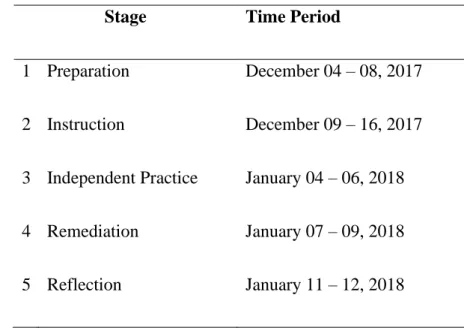
The table below provides a summary of the activities performed during the course of the study, along with when each activity was performed. The context of the study and the reasons that motivated the current project were highlighted. In this sense, the data were critical when they could illuminate my understanding of the research problem of this study.
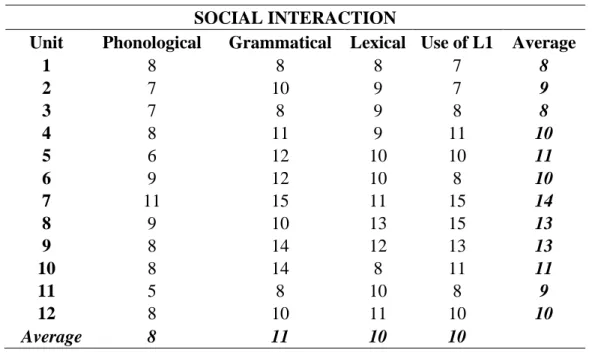
The tables below therefore show the average number of global errors made at each section of the pre-test.
Use of L1
According to the graph, in treatment cycle 1, communication was hindered by using L1 an average of seven times during the independent practice phase. In summary, for the first three treatment cycles I used predominantly reframing to correct L1 use without success. To explain such a result, I revisited the theory and found a possible explanation in Havranek and Cesnik's (2001) article “Factors Affecting the Success of Corrective Feedback”: participants may not have been developmentally ready to notice rework in this type of error.
The lack of notice reported in the group interview and the insights from the article led me to try a clearer type of response that promotes the outcome with this type of global error. Looking at the graph, cycles 4 to 7 show a consistent decrease in the occurrence of global errors for L1 use after negative feedback, because learners responded better to explicit production promotion strategies. To explain better, the fact that mobile communication is asynchronous and the interaction is deprived of body language did not seem to interfere with the benefits of product promotion strategies.
In the excerpts above, P1 believed that she goes to sleep at midnight, while P5 believed that his brothers play football at night. I should note that these excerpts also contain grammatical errors in the use of preposition - "at noon" instead of "at noon" and "at night" instead of "at night". A better understanding of the presence of global lexical errors during processing cycles is shown in the graph below.
It shows the average number of times the group experienced this type of error before and after corrective feedback was provided. However, further investigation is needed to understand why lexical global errors began to decrease in treatment cycle 2 and continued to decrease in subsequent cycles.
Lexical Errors
According to the graph, there was a reduction in the incidence of lexical errors after correction at each cycle, except for cycle 1 where the average number remained the same. This finding, although preliminary, suggests that negative feedback initially had no impact on L2 speech development. The graph below shows the reduction in incidence in global lexical errors through the seven treatment cycles.
This result can be explained by the fact that after treatment cycle 1 I began to accommodate negative feedback strategies to learners' developmental stage in lexical knowledge. Revisiting data immediately after treatment cycle 1, I noticed that most of the lexical errors displayed during communicative tasks did not appear during instructional practice. However, participants unexpectedly confused terms and misused the same vocabulary while performing freer oral communication – especially in improvised audio or video recording.
During the teaching practice, I asked the participants to send a picture of something they do every morning, along with an audio caption.
Reduction of Occurrences of Lexical Errors
Later in the independent practice phase, I asked participants to list the things they do on a typical Sunday. Then I realized that P5 hadn't noticed correction, so I gave further feedback, however more explicitly the second time. This is demonstrated by the percentage reduction in the amount of lexical global errors observed after correction at each treatment cycle.
Therefore, the next section will be about the relationship between negative feedback and grammatical errors. Learners' complete failure to respond to this more implicit output-providing treatment in the first cycle was evidenced in both lexical and grammatical errors. As explained in the previous section, I brought this concern to the group interview that followed treatment cycle 1 and.
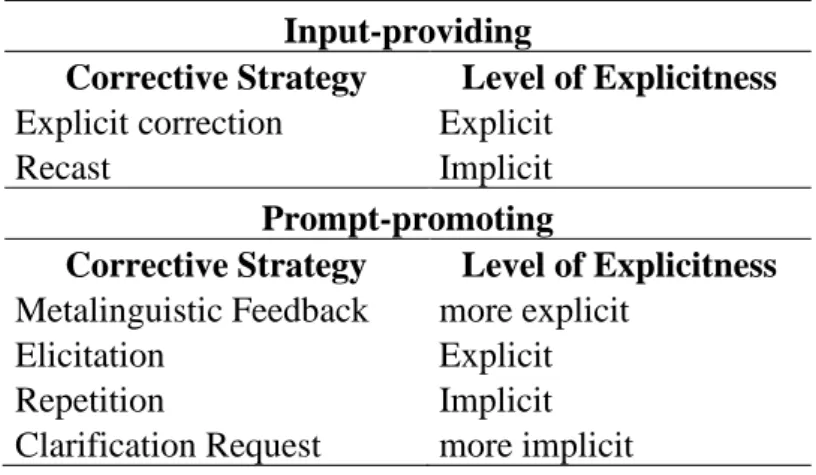
The main reason for this improvement was the change in the negative feedback strategy used during treatment, as illustrated in the excerpts below. In the excerpts above, I used explicit correction either as an indication of error or as metalinguistic feedback. Figures 6 and 9 showed that both grammatical and lexical errors decreased after students received verbal negative feedback.
Regarding the type of feedback, both error types received more implicit output-enhancing feedback in the first cycle and then gradually more explicit input. For example, Long's seminal work on focus on form does not specify the ideal amount of feedback (M. Long, while in the meta-analysis published by Li (2010) longer treatments were found to be even less effective than treatments that lasted longer. minutes or less.
Grammatical and Lexical Global Errors
To examine this finding in light of the current literature, I searched for studies that examined Brazilian learners' beliefs about second language learning. The conclusions about the three hypotheses that emerged in this subsection raise another question: how do these hypotheses relate to the role of negative feedback in the treatment of grammatical global errors in this study. The second and third hypotheses indirectly contribute to the success of verbal negative feedback in the treatment of grammatical errors.
In the second hypothesis, students' belief about grammar was related to their attitude towards learning the target grammatical forms. In the third hypothesis, form-focused tasks were directly responsible for the advancement of grammatical knowledge in L2 speech, as they privileged grammar over other types of form. In the treatment cycles of this study, phonological errors in free speech were identified (during independent practice), negative feedback was given to students, and the tasks assigned in the rehabilitation phase were also based on the freest use of language in a situation communicative.
Findings showed that participants reported feelings of confidence and satisfaction when using digital resources to speak in the target language. What follows is a more detailed discussion of how to observe, acquire, and learn in the mobile learning environment used in this study. On days 1 and 2, participants would receive feedback and were expected to indicate that they had noticed all the global errors discovered in the independent practice phase.
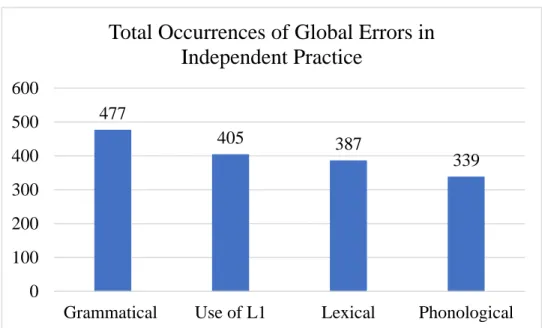
To begin with, Figure 8, shown in the grammatical errors section, indicated the total amount of global errors detected per error type during all seven processing cycles: 477. According to the graph, the distance between feedback movements and detected marking was much larger in the first cycles, then it became smaller in cycle 4 and towards cycle 7.
Feedback Moves and Demonstrated Noticing
A third implication of this finding is that oral negative feedback via mobile asynchronous communication does not interrupt the learner's oral production. Learners must respond to oral negative feedback by demonstrating corrected use of the target form; and this is what follows in the next subsection. However, these results may also serve to expand the current understanding of "timing" in verbal negative feedback.
This subsection has analyzed the relationship between oral negative feedback and uptake in this study. In the previous chapter, the results described support the idea that verbal corrective feedback can. The first specific aim was to investigate the perceptibility of oral negative feedback through WhatsApp features.
Therefore, another specific objective here was to find the relationship between verbal negative feedback and modified output (survey) in the mobile learning environment. Another specific goal in this study was to determine which type of verbal negative feedback appears to be more successful in MALL. Furthermore, this study aimed to determine which types of mistakes responded better to verbal negative feedback through WhatsApp.
Here I have focused exclusively on the impact of verbal negative feedback via WhatsApp by checking performance before and after remediation. This study argued that oral negative feedback via WhatsApp can have a positive effect on L2 speech development.