AVALIAÇÃO DAS INTERAÇÕES FÍSICO-QUÍMICAS ENVOLVIDAS NA ADESÃO DE PATÓGENOS ALIMENTARES EM SUPERFÍCIES METÁLICAS POR. Química de Alimentos - Universidade Federal de Pelotas - UFPEL Mestrado em Microbiologia Agrícola e Ambiental - UFRGS. Tese apresentada para o programa de Mestrado em Microbiologia Agrícola e Ambiental (Área de Concentração: Microbiologia de Alimentos) como requisito para obtenção do Doutorado em Microbiologia Agrícola e Ambiental.
¹Dissertação de Doutorado em Microbiologia Agrícola e Ambiental - Microbiologia de Alimentos, Instituto de Ciências Básicas da Saúde, Universidade Federal do Rio Grande do Sul, Porto Alegre, RS, Brasil. AVALIAÇÃO DAS INTERAÇÕES FÍSICO-QUÍMICAS ENVOLVIDAS NA ADESÃO DE PATÓGENOS ALIMENTARES ÀS SUPERFÍCIES METÁLICAS DE EQUIPAMENTOS UTILIZADOS NA PRODUÇÃO DE ALIMENTOS1. A qualidade e a segurança dos produtos produzidos pela indústria alimentar ficam comprometidas quando as bactérias aderem e se multiplicam nas superfícies dos equipamentos utilizados na produção de alimentos.
INTRODUÇÃO
REVISÃO BIBLIOGRÁFICA
Patógenos alimentares
A Salmonella é um patógeno Gram-negativo e mesófilo de origem alimentar que foi identificado como a principal causa de DTA em vários países (FORSYTHE, 2010; Autoridade Europeia para a Segurança dos Alimentos (EFSA), 2010; CHIA et al, 2009). Mais de 90% das cepas causadoras de salmonelose de origem alimentar no RS, no período de 1999 a 2008, foram sorotipadas como Salmonella (S.) Enteritidis com o mesmo perfil genotípico (OLIVEIRA et al, 2009). Este microrganismo tornou-se importante na última década devido à ocorrência de numerosos surtos em todo o mundo (JENSEN et al, 2010; GOULET et al, 2008) e foi isolado em muitos locais dentro de plantas de produção de alimentos (CARPENTIER & CERF, 2011; ORTIZ et al, al. al, 2010; BONG JAE, TRAVIS & NEHAL, 2009; SHARMA & ANAND, 2002).
Adesão microbiana e formação de biofilme
- Fases da adesão bacteriana
- Aspectos físico-químicos na adesão microbiana
Quando a célula está próxima da superfície (50 nm), a adesão inicial entre a célula e a superfície ocorre como resultado de forças de curto e longo prazo e inicia-se um processo reversível ou irreversível. Neste momento, forças de longo alcance, van der Waals e eletrostática, também atuam, fixando a célula à superfície. Neste modelo (equação 1), não são levadas em consideração interações eletrostáticas e interações específicas mediadas por exopolímeros ou apêndices extracelulares (AZEREDO et al, 2012; VAN OSS, onde γsb é a tensão superficial entre a superfície e a bactéria, γsl a.
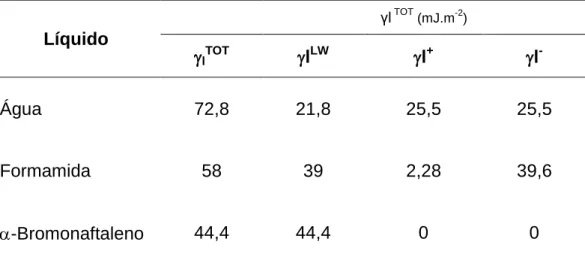
Em 1995, Van Oss e Giese desenvolveram uma metodologia computacional que permite quantificar a hidrofobicidade superficial por meio de componentes de tensão superficial. Através da equação de Young-Good-Girifalco-Fowkes é possível relacionar o ângulo de contato formado pelo líquido sobre uma superfície sólida com os componentes da tensão superficial do líquido e da superfície (Equação 4). Os componentes da tensão superficial são usados para calcular a mudança total de energia livre de interação.

Adesão de microrganismos às superfícies de materiais
Most surfaces in the food processing industry are made of welded stainless steel. Most surfaces in the food processing industry, such as machinery, piping and work surfaces, are made of stainless steel. Stainless steel AISI (American Iron and Steel Institute) 304 and AISI 316 are the most commonly used types of stainless steel in the manufacture of various equipment for the food industry (EHEDG, 2007; Hood & Zootola, 1997).
These results are in agreement with the findings of Bae et al. 2009), who had shown the same adhesion of Salmonella Typhimurium and Listeria monocytogenes to stainless steel AISI 304. Stainless steel AISI (American Iron and Steel Institute) 304 and AISI 316 mechanical brushed polished, also known as number 4 finish, were kindly provided by Metalúrgica Ralf Winter™ (Ralf Winter, Alvorada, Brazil). Restriction of Listeria monocytogenes adhesion and growth on stainless steel surfaces by Staphylococcus sciuri biofilms.
Controle da adesão e formação de biofilmes
- Alteração de Superfícies Utilizando Nitretação a Plasma
RESULTADOS
Results showed that both bacteria adhered to the surface of welds and stainless steel at similar levels. Despite bacteria and surfaces showing different levels of hydrophobicity/hydrophilicity, results indicated that there was no correlation between adhesion to welds and stainless steel and the hydrophobicity. Our results showed that both bacteria adhered to the surface of welds and stainless steel at similar levels and showed similar patterns during four hours of contact.
Resistance of pathogenic bacteria on the surface of stainless steel, depending on the bonding form and the efficacy of chemical disinfectants. A similar adhesion pattern was observed for both stainless steels with respect to the number of attached cells, but the AISI 316 stainless steel had a more negative total adhesion energy for both bacteria. After culturing, both microorganisms were diluted to 105 CFU/ml using 0.1% peptone water (OXOID, Basingstoke, England) for artificial contamination of stainless steel coupons.
Stainless steel AISI 304 and AISI 316 mechanical brushed polished, also known as number 4 finish, were kindly supplied by Metalúrgica Ralf Winter™ (Ralf Winter, Alvorada, Brazil). Six coupons of each grade of stainless steel were immersed in the culture of each microorganism for the following times and 8 hours (adopted from Kusumaningrum et al., 2003). The scanning probe image processor (NT-MDT™, Moscow, Russia) Software was used to observe the topography of the stainless steel with the attached bacteria.
The total free energy of adhesion between the bacteria and the surfaces when immersed in water was more negative for the stainless steel AISI 316 (P0.05), which also showed a higher contact angle and free energy more negative than AISI 304 (P evaluates the adhesion of Pseudomonas. However, Sinde & Carbalo (2000) showed that Listeria monocytogenes adhered to stainless steel 304 in higher numbers than Salmonella spp., although they did not observe a difference between the total adhesion energies of the two bacteria No. Similar patterns were observed for both stainless steels regarding the number of attached cells, but the stainless steel AISI 316 had more negative total adhesion energy for both bacteria.
The properties of the stainless steel substrate, influencing the adhesion of heat-resistant streptococci. 2007) Listeria: a foodborne pathogen that knows how to survive. However, AR values were higher for both bacteria in plasma treated with AISI 316 stainless steel, which was shown to be more hydrophilic. Furthermore, adhesion to plasma treated AISI 316 stainless steel is less favorable (G1TOTw2 less negative) than to plasma treated AISI 304 stainless steel.
Effect of DC plasma nitriding temperature on microstructure and dry-sliding wear properties of 316L stainless steel. Evaluation of growth and transfer of Staphylococcus aureus from poultry meat to stainless steel and polyethylene surfaces and their disinfection.
DISCUSSÃO GERAL
Esses resultados são consistentes com os achados de Bae et al (2012) e Chia et al (2009), que observaram o mesmo número para a adesão de Salmonella Typhimurium e Listeria monocytogenes ao aço inoxidável. Os resultados apresentados neste trabalho também mostraram que não houve diferenças significativas nos níveis de adesão entre as duas bactérias nos dois tipos de aço inoxidável (p > 0,05). Entretanto, Flint et al (2000) observaram maior número de Streptococcus thermophilus e Streptococcus waiu aderindo ao aço inoxidável AISI 316 do que ao AISI 304.
A energia livre total de adesão entre as bactérias e as superfícies quando imersas em água foi mais negativa para o aço inoxidável AISI 316 (p 0,05), que também apresentou maior ângulo de contato com a água e mais energia livre negativa que o aço AISI 304. Teixeira et al (2005) avaliando a adesão de Pseudomonas aeruginosa, Lactobacillus lactis, Staphylococcus sciuri e Enterococcus faecalis em superfícies de aço inoxidável 316, aço inoxidável 304, vidro e polimetilmetacrilato também observaram energias negativas em 1TO.6 em aço isento de sta ( T.6) do presente estudo mostrou que as bactérias foram capazes de aderir a superfícies de aço inoxidável AISI 304 e 316 e soldas MIG, por ex.
No entanto, os valores da taxa de redução foram maiores para ambas as bactérias no aço inoxidável AISI 316 tratado, que era mais hidrofílico (ΔGiwi. mais positivo) do que o aço AISI 304 tratado. Além disso, a adesão ao aço inoxidável AISI 316 tratado foi menos favorável (G1TOTw2 menos negativo) que o do aço inoxidável tratado AISI 304. Esses resultados confirmam o AR observado, que foi maior, o que significa que a adesão foi menor no aço inoxidável tratado AISI 316.
Enteritidis em aços inoxidáveis (tratados e não tratados) foi termodinamicamente mais favorável que a adesão de L. Formação de biofilme em aço inoxidável por Aeromonas hydrophila e Staphylococcus aureus utilizando leite e diferentes condições de cultivo. Identificação de características superficiais relevantes para o estado higiénico do aço inoxidável para a indústria alimentar.
Implantação de íons de prata em aço inoxidável e infecção por fagos para controle de adesão e formação de biofilmes bacterianos na indústria alimentícia. Desenvolvimento de biofilme e inativação desinfetante de Listeria monocytogenes e Salmonella typhimurium em aço inoxidável e borracha de buna. Formação de biofilme por Escherichia coli O157:H7 em aço inoxidável: efeito da produção de exopolissacarídeos e coliformes na sua resistência ao cloro.
CONCLUSÕES
PERSPECTIVAS
Bacteriocidal activity of fumigants against Enterococcus faecium adhered to stainless steel, as determined by plate count and impedance methods. A correlation between the virulence and the adhesion of Listeria monocytogenes to silicon nitride: an atomic force microscopy study. Listeria monocytogenes LO28: surface physicochemical properties and ability to form biofilms at different temperatures and growth phases.
Theory of the stability of strongly charged lyophobic sols and of the adhesion of strongly charged particles in electrolyte solutions. Towards long-lasting antibacterial stainless steel surfaces by combining double gloss plasma silvering with active screen plasma nitriding. Adhesion of Listeria monocytogenes to stainless steel, glass, polypropylene and rubber surfaces after short contact times.
Influence of modified atmosphere packaging on the competitive growth of Listeria monocytogenes and pseudomonas fluorescens on precooked chicken. A three-year study of the genetic diversity and persistence of Listeria monocytogenes in an Iberian pig slaughterhouse and processing plant. Comparison of sodium hypochlorite and peracetic acid as disinfectants for stainless steel food processing surfaces using epifluorescence microscopy.
And Listeria monocytogenes to stainless steel, rubber and polytetrafluoroethylene: the influence of free energy and the effect of commercial disinfectants. The influence of surface condition on the adhesion of Pseudomonas fluorescens (ATCC 17552) to copper and aluminum brass. Microbial evaluation of the biotransfer potential from surfaces with Bacillus biofilms following rinsing and cleaning procedures in closed food processing systems.