MÜHLBÄCK, Alzbeta Clinical applicability of cognitive testing in Huntington's disease [Využití kognitivích testů en Huntingtonovy nemoci in kliníční praxi]. Keywords: Huntington disease, Unified Huntington's Disease Rating Scale, neuropsychological test battery, cognitive performance, normative data, normative calculator.
Assessing Cognition in HD: the Relationship between Cognitive
Establishing Multilingual Normative Data for the Evaluation of Cognitive Performance in Huntington disease with a Normative Calculator (Study II) 97
Establishing multilingual normative data for the evaluation of cognitive performance in Huntington's disease with a Normative Calculator (Study II) 97.
Introduction
Historical Perspective of Huntington Disease
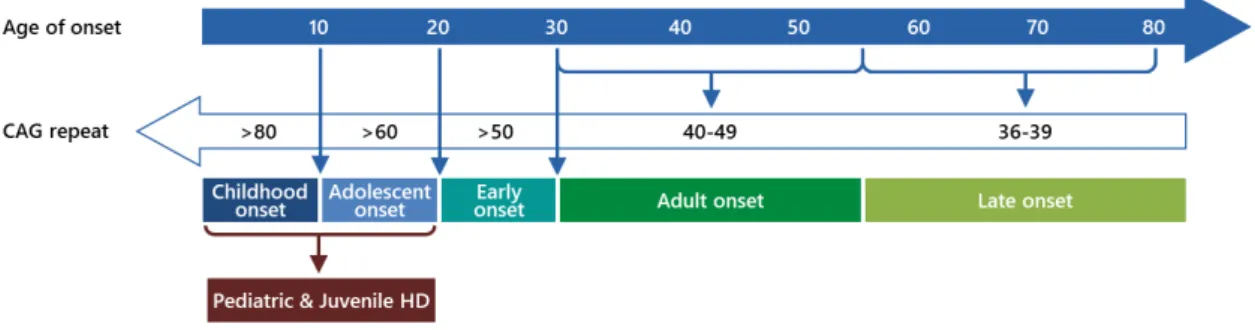
Hoffmann also described the late onset of the disease in the sixth and seventh decades of life (Hoffmann, 1888). The description by Hoffmann introduces the terminology of Juvenile Huntington Disease (JHD) and Late-Onset HD (Hoffmann, 1888).
Epidemiology of Huntington Disease
Led by Nancy Wexler in 1983, the genetic marker for Huntington's disease was successfully identified (Gusella et al., 1983). 10 different haplotypes between East Asians and Europeans may be associated with different mutation rates (Warby et al., 2011).
Genetics of Huntington Disease
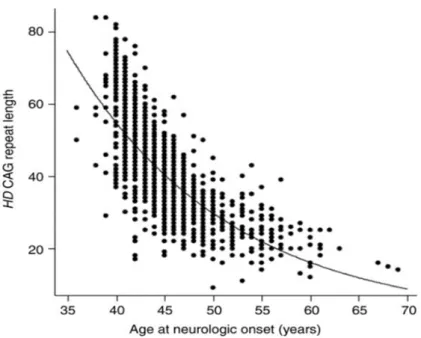
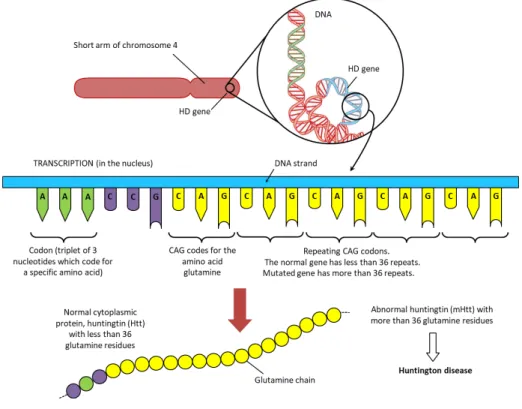
The number of CAG repeats within the normal allele does not influence the age of onset in Huntington disease (Klempíř et al., 2011). The finding confirmed the FAN1 (Fanconi anemia FANC1/FANCD2-associated endonuclease) gene on chromosome 15 (Jones and Huang, 2012) and MTMR10 (myotubularin-related protein 10) gene as HD genetic modifiers (Cannavo et al., 2007).
Neurobiology of Huntington Disease
- Structure and Interactions
- Functions
The N-terminal region has been extensively studied as it contains polyQ stretches (Wanker et al., 2019). It is involved in many cellular pathways: cellular dynamics (cytoskeleton, endocytosis, trafficking and adhesion), metabolism, protein turnover, gene expression (transcription and RNA processing) and signal transduction (Cattaneo et al., 2005).
Neuropathology of Huntington Disease
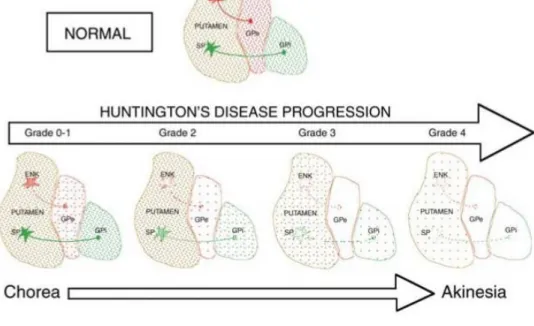
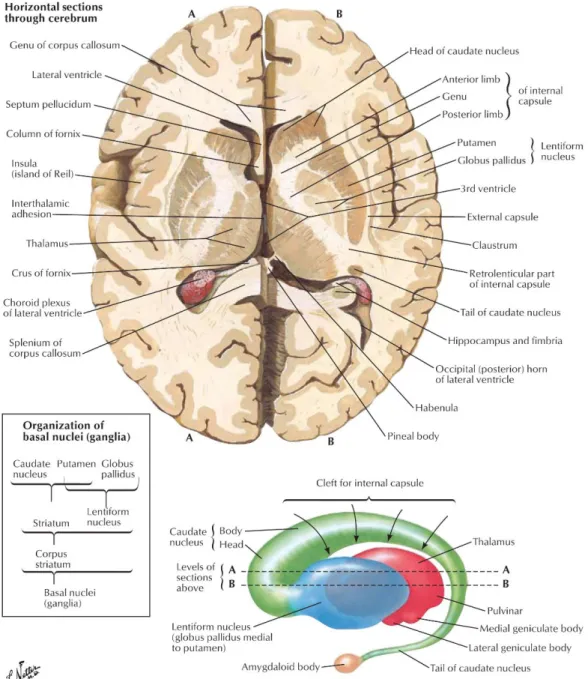
The basal ganglia are most affected by the pathological process in HD, especially the striatum (Vonsattel et al., 1985). The cortical atrophy is present even in stages 3 and 4 in the different variabilities (Vonsattel et al., 1985).
Pathophysiology of Basal Ganglia in Relationship to Huntington Disease
- Motor Circuit
- Oculomotor Circuit
- First Associative Circuit
- Second Associative Circuit
- Limbic Circuit
- Basal Ganglia and Motor Manifestations
- Basal Ganglia and Cognitive and Behavioural Manifestations
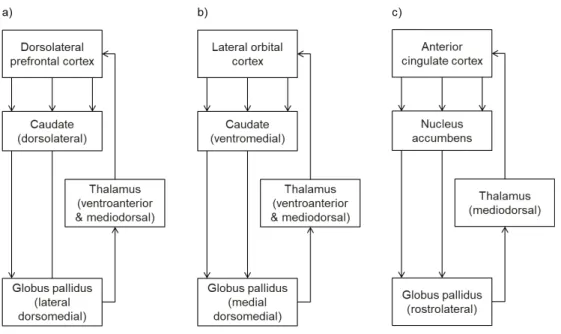
Corticopyramidal neurons (CPNs) of the intratelencephalic projection (IT) project to the striatonigral D1-enriched Medium Spiny Neurons (MSNs) of the direct pathway. Pyramidal tract (PT)-type CPNs of the pyramidal tract (PT) project to the striatopallidal D2-enriched MSNs of the indirect pathway.
Clinical Manifestation of Huntington Disease
- Chorea
- Dystonia
- Rigidity
- Bradykinesia and Akinesia
- Eye Movements
- Depression and Suicide Behaviour
- Apathy
- Anxiety
- Irritability, Agitation and Aggression
- Psychosis
- Perseverative Behaviour
- Obsessive-Compulsive Behaviour
- Sleep Disorder
- Psychomotor Speed
- Executive Functions and Complex Attention
- Loss of Insight
- Emotion Recognition
- Language and Speech
- Global Functioning and Memory
- Concept of Mild Cognitive Impairment
- Mild Cognitive Impairment in Huntington Disease
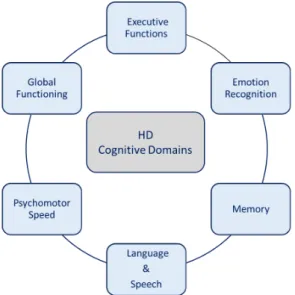
Therefore, it involves the conceptualization of the task, such as planning, action and evaluation (Lezak et al., 2012). However, recognizing already acquired information in HD is better than free recall (Fine et al., 2008).
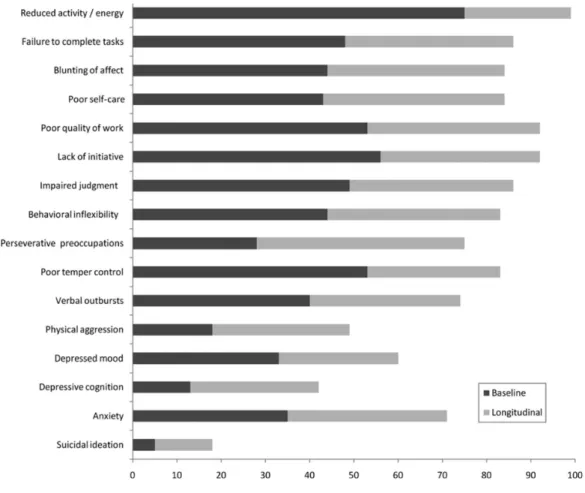
Management of Huntington Disease
- Clinical Findings
- Imaging Methods
- Pharmacological Approaches
- Future and Gene Modifying Therapies in HD
- Non-Pharmacological approaches
- End-Stage Disease
Green lines represent MRI markers (Ross et al., 2014): loss of cortical gray matter (top, dark green), cortical white matter (middle, green), and striatal volume (bottom, light green). These patients may have several underlying genetic mutations collectively known as HD phenocopies (Wild et al., 2008). Alternatively, tetrabenazine and other atypical antipsychotics can be used to treat chorea (Schultz et al., 2019).

Assessing Cognition in HD: the Relationship between Cognitive Performance, Functional
Study Aims and Hypothesis
This study also aimed to investigate whether the cognitive Enroll-HD battery is sufficiently specific and sensitive to distinguish normal cognitive function in healthy controls from cognitive deficits in HD patients and to differentiate HD patients with more and less pronounced cognitive defects. In addition, the study aimed to explore the effects of disease burden on the cognitive performance of HD patients and examine the relationship between cognitive, motor and functional status. The evaluation of the diagnostic accuracy is crucial as it allows clinicians to interpret the results obtained by HD patients in neuropsychological tests.
Methods
- Study Participants
- Recruitment and Informed Consent
- Sociodemographic Information
- Medical History
- Disease Burden Score
- Functional Assessments
- Motor Assessments
- Cognitive Battery
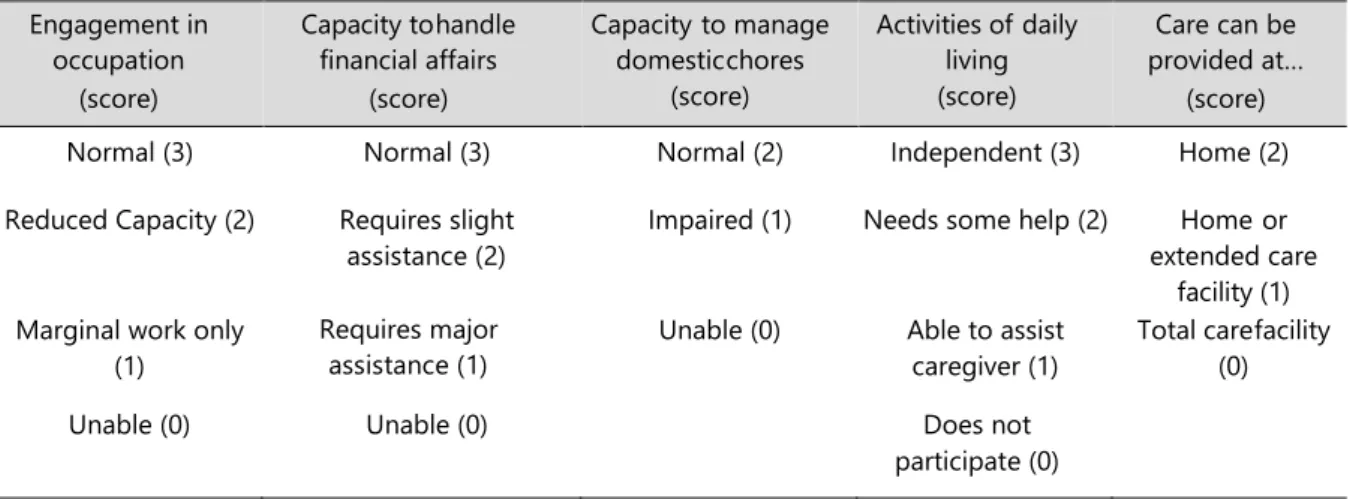
As part of the Enroll-HD study, phenotypic data are collected longitudinally annually (Sathe et al., 2021). Participants' functional status was assessed using two scales included in the UHDRS (Huntington Study Group, 1996), the Functional Independence Scale (UHDRS-FIS), and the Total Functional Capacity Scale (UHDRS-TFC) (Young et al., 1986, Shoulson, 1989). The participants see words that indicate colors (red, blue, green), each written in red, blue, or green ink, incongruous with the color indicated by the letters (for example, the word "red" written in blue ink).
Results
- Demographics and Clinical Characteristics
- Analyses of Disease Stages in Patient Cohort
- Diagnostic Accuracy in Detecting Cognitive Impairment
- Effect of Individual Factors on Cognitive Performance and Relationship of Cognitive, Motor and Functional Status
Receiver Operating Characteristic (ROC) curves with area under the curve (AUC) and 95% confidence intervals (CIs) were calculated and used to compare the diagnostic accuracy of the neuropsychological tests in the cognitive battery to assess cognitive impairment in HD. Sensitivity and specificity of the cognitive battery to assess cognitive impairment in the cognitive battery between HD and NC. Sensitivity and specificity of the cognitive battery to assess cognitive impairment in HD patients compared to normal cognitive functioning in healthy controls (NC, N = 100).

Discussion
- Cognitive Performance and Motor Impairments
- Cognitive Performance and Functional Abilities
- Cognitive Performance and Disease Burden
In contrast, CFT applies more to the automated process and uses existing semantic connections between words obtained during evaluation (Shao et al., 2014). The MMSE plays an important role in clinical practice as a control tool for the assessment of cognitive decline (Ringkøbing et al., 2020). This is consistent with numerous studies showing the impact of cognitive deficits on functional abilities and daily life functioning (Duff et al., 2010a).
Conclusions
Establishing Multilingual Normative Data for the Evaluation of Cognitive Performance in
Calculator (Study II)
Study Population
The study population was constructed from the data set extracted from the Periodic Data Set 4 (PDS4) of the Enroll-HD study, including 15,301 participants from 139 study sites worldwide (Landwehrmeyer et al., 2017). The Enroll-HD database includes two groups of participants: participants who carry the HD gene expansion carriers (HDGECs), either at a clinical manifest or at a premanifest stage, and participants known not to carry the htt expansion mutation, ie. HD family members who chose predictive genetic testing and learned they are genotype negative and who were within the physiologic range and family controls were shown to carry a CAG gene expansion. genotyping, known as non-HDGEC expansion mutation.
Normative Data Set
The flow chart showing the selection process defines a 'Normative Data Set' and a 'Complete Cognitive Battery Data Set'. Results from the complete cognitive battery data set (N=1,173) and the full data set (N=3,562) were used to check the robustness of the results. For each participant who agrees to participate in the Enroll-HD study by signing an informed consent form on the respective website, the following assessments as indicated in Table 18.
Informed Consent
For each participant who agrees to take part in the study, the following socio-demographic information, including age, gender, ethnicity, marital status, living and care situation, employment status, years of education, was collected. Given the HD diagnosis, the date of genetic testing and the estimated date of disease onset were recorded. In the genetic test, both alleles with a number of CAG were collected for the patient population.
Cognitive Battery
In the LFT, participants were requested to pronounce as many words as possible starting with a specific letter within one minute (response is speech motor output). In the Categorical Fluency Test (CFT), which is used to measure verbal learning and recall processes, participants are asked to name as many different words as possible from the category "animals" in one minute (Benton and Hamsher, 1976). The rules for connecting circles marked with numbers or letters differ between the two tasks: In the TMT-A, participants have to connect given numbers in ascending order (i.e. from 1 to 25).
Descriptive Analyses
105 task if a primary outcome is measured, the number of failures or self-corrections is also reported. The time to complete the task is recorded as a primary outcome, the number of failures or self-corrections is also reported. The MMSE is administered according to the standard operating procedure of the original publication (Folstein et al., 1975).
Development of Normative Values
Bayesian Model
Predictions of young subjects' neuropsychological test scores and cognitive performance were performed from normative probability maps (NPM) and global z scores (Wang et al., 2020). In summary, MKPT combines three sources of information: 1) error (the difference between true and predicted responses); 2) the predictive variance of the test score; and 3) normative data variance (Ziegler et al., 2014). 108 (e.g., because it may require recruiting many low-functioning patients), yet the NPM approach ensures that uncertainty is addressed coherently, regardless of context (Ziegler et al., 2014). In this study, a normative probability mapping method to construct normative z-scores for each of the cognitive measures included (Ziegler et al., 2014, Marquand et al., 2016, Wang et al., 2020).
Analysis of Cognitive Differences Based on Gender and Language
By integrating observed expectation error and predictive uncertainty, local maps and global results take advantage of Bayesian inference for clinical decisions and provide a valuable extension of diagnostic information about pathological aging and other co-founding parameters (Ziegler et al., 2014). The actual score of the individual is 𝑦𝑦𝑖𝑖𝑖𝑖 and further 𝑦𝑦�𝑖𝑖𝑖𝑖 is the predicted average score of the individual, 𝜎𝜎𝑖 𝜎𝑛𝑛𝑖𝑖2 is the residual model variance for cognitive measure j. Since the TMT-A and TMT-B are reverse coded, with lower scores indicating better performance, the z scores for these two measures were multiplied by minus one to keep the interpretation consistent with the rest of the measures.
Comparison between Full Model to Leave-One-Out Information Criterion Model
Markov Chain Monte Carlo Methods
Evaluation of the Bayesian Model
The blue lines refer to expected cognitive performance on different neuropsychological tests for different age groups under the constraint of assuming 14 years of formal education while refraining from specifying gender and language used during the examination. The analysis revealed language-dependent differences in cognitive performance for all cognitive tests under an adjustment for education, gender, and language. In addition, all language-dependent differences in cognitive performance for all cognitive tests are listed in detail in Table 25.
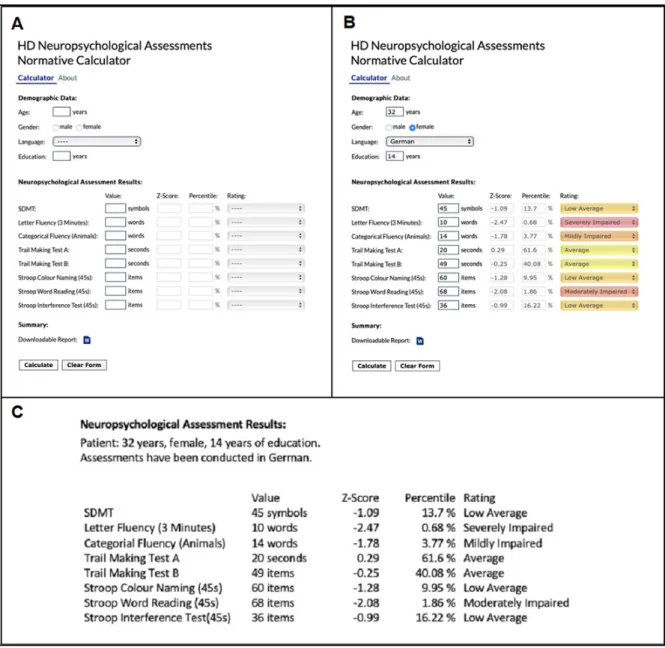
Illustrative Case Study
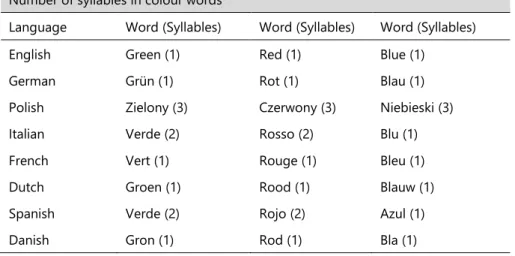
126 These differences in data interpretation can be partly explained by common language differences in the patient-directed test documents. In the SWRT, the words indicating "red", "green" and "blue" differ in the number of syllables in different languages (e.g. one syllable in English and German and three syllables in Polish, as shown in Table 26. The table shows the number of syllables in the color words in the Stroop Word Reading Test in different languages.
Comparison of the Regression-based z -scores and Raw Values in the Longitudinal Performance
Therefore, the raw values obtained from the neuropsychological test should be converted to the z-scores to reduce the impact of the confounders, as mentioned above. This normative calculator is freely available to any clinician or researcher to improve clinical care and evaluation of the neuropsychological tests. There are only a few original publications of the respective tests with scattered published normative data, which are however limited to a few languages (Scarpina and Tagini.
Impact of Education Level
Not only is the cognitive battery used part of the UHRDS for evaluation of HD (Huntington Study Group, 1996), but the same or similar cognitive assessments are used in other primary neurodegenerative disorders, e.g. This study examined the most essential confounding factors affecting performance in the cognitive battery consisting of SDMT, SWRT, SCNT, SIT, TMT-A and TMT-B, LCF, VFT. Following this, the individual cofounding factor is discussed in more detail in the paragraphs below.
Impact of Age
Impact of Gender
In another perspective, education seems to be one of the best established preventive measures for cognitive decline and dementia, so it is essential to consider the level of education in normative values (Lövdén et al., 2020). In summary, findings on the impact of SDMT are overwhelming, with more evidence towards the female gender (Fellows and Schmitter-Edgecombe, 2020). Consistent with previous normative studies, the study identified that performance on Stroop tests (Bezdicek et al., 2015) and verbal fluency measures were less influenced by gender (Tombaugh et al., 1999).
Impact of Language
133 attitudes have been associated with differences in performance on timed neuropsychological tests, including the SDMT (Agranovich et al., 2011). Moreover, speakers of right-branching languages such as Italian (the head of the sentence usually comes first, followed by informational modifiers) can process information incrementally (Amici et al., 2019). The language has been found to influence verbal working memory, thus possibly explaining an impact on neuropsychological test performance (Amici et al., 2019).
Summary
English Summary
Czech Summary – Souhrn
Publications
Publications in the Context of this Dissertation
Study protocol for the development of a European eHealth platform to improve the quality of life of people with Huntington's disease and their partners (HD-eHelp Study): A user-centred design approach.
Appendix
List of Tables