DOPING IN OLYMPIC SPORT: SIGNS OF THE CRISIS AND WAYS TO OVERCOME IT Platonov V.N.
National University of Physical Education and Sport of Ukraine
Abstract. The paper contains analysis of modern history of the spread of doping in Olympic sport, the IOC’s fight against this negative phenomenon and activities of the World Anti-Doping Agency (WADA) established in 1999 and designed to eradicate doping. It is shown that, despite ever-increasing financial and human resources along with expanded legal capabilities, intensive propaganda efforts, increased volume of testing, severe sanctions, support from reputable international organizations (UN, UNESCO, Council of Europe), the Agency's multi-year activities is not only brought the Olympic sport closer to solving the problem, but also dramatically aggravated and made it dangerous for the credibility and the well-being of the Olympic movement. It is not only and not so much about the competition in elite sport, which has dramatically increased recent years, and socio-political and commercial attractiveness of success at the Olympics, but about fundamentally misguided methodology underlying WADA’s activities, based on neglect of biological, medical and sports sciences’ achievements, and realities of modern elite sports, and drawn up on the ideas of lawyers, economists and “universal managers". The paper outlines in detail outcomes of WADA activities and anti-doping laboratories accredited by the Agency, which manifested themselves in many crisis phenomena moved far beyond the limits of the Olympic sport. Furthermore, the prospects of coming out of the grave crisis developed in this area are delineated.
Keywords: doping in Olympic sport, anti-doping activities, WADA, World Anti-Doping Code, WADA prohibited list, crisis phenomena, rights of athletes and physicians.
Introduction1
Doping is a phenomenon that occupies a particular place in high performance sport. The use of doping contradicts to the basic principles of sport, ideals, and values of the philosophy of Olympism. It is quite natural that the International Olympic Committee for more than half a century has fought against this phenomenon, and, in 1999, initiated the establishment of the World Anti-Doping Agency (WADA), a special international organization designed to fight doping, particularly on the World Olympic stage. However, the Agency’s years-long effort, along with the constantly increasing legal, financial, and human capabilities, continuous improvement and revision of main documents, active information and propaganda activities, expansion and tightening of sanctions not only have not solved the issue of the fight against doping, but have made it more severe. The number of doping scandals and acute conflicts in various Olympic sports only increase, charges and penalties may be imposed not only on the athletes, but also on the coaches, physicians, attendants, and officials. The UN, UNESCO, Council of Europe, leaders and high-ranking representatives of legislative and governmental bodies of many countries are involved in the issue. In the media, doping scandals overshadow the sporting events itself that adversely affects the credibility and popularity of the Olympics and compromises the Olympic movement in public consciousness by associating it with widespread fraud and corruption.
But how do things stand in most popular professional sports: football, Formula One motor racing, golf, boxing, and North American team games such as American football, baseball, basketball, and hockey? Here, the fight against doping and other negative phenomena is carried out efficiently enough, but without dramatization; isolated violations and scandalous incidents and punishments have occurred, but their level and number are incomparable with the immensity of the sporting activity itself and do not have a significant impact on the popularity and credibility of the sport. But all these kinds of sports are popular among spectators, mass media, and sponsors; and, in this regard, some of them not only compete, but also surpass in popularity the Olympics.
Thus, experts, sports fans, and the general public ask a natural question: why the issue of doping in the Olympic sport is immeasurably more acute than in professional sports? They have found the answer in the approach to the fight against doping. In the Olympic sports, it was developed by the World Anti-Doping Agency with the support of the IOC. However, the governing bodies of the above-mentioned professional sports strongly disagree with this approach, they implement own approaches to counteract doping, and decline to cooperate with WADA.
Therefore it makes sense to look a bit more closely at the issue of doping in Olympic sport: whether it is so severe that it poses a threat for it or the methodology of the fight against doping and the anti-doping system created by the WADA turn it into one like this.
The purpose of the work: to carry out critical analysis of problematic situation with doping taking in the Olympic sport.
Results and discussion
FIGHT OF THE INTERNATIONAL OLYMPIC COMMITTEE AGAINST DOPING AND ESTABLISHMENT OF THE WORLD ANTI-DOPING AGENCY
Before Juan Antonio Samaranch took over the leadership of IOC in 1980, the fight against doping in Olympic sports was carried out, but it was not of central importance and it was unsystematic. Samaranch singled out the anti-doping fight as one of the priorities of the IOC. However, despite all the measures and efforts that were taken, the problem has not been solved. IOC Medical Commission, headed by Prince Alexander de Merode, was not sufficiently active and consistent, and in the late 1980s and early 1990s, this result in a series of scandals involving massive doping fraud in Canada, United States, East Germany, and Bulgaria.
Gravely concerned at the situation with doping and the lack of real progress in combating its spread in sports, in the early 1990s, the IOC changed the policy to increase the funding for the anti-doping activities and to further tighten sanctions, but with no real results. Development and introduction of new effective drugs and methods of concealing doping obviously had outstripped the development of anti-doping control system.
Achievements of the anti-doping system proved to be much more modest than those of people who had been introducing various doping substances and methods in Olympic sports. Reported cases of doping were rare, nevertheless, indirect data, numerous media materials, statements by experts, athletes by themselves, their coaches, and doctors indicated that the fight against doping has not brought any tangible positive results: the phenomenon has spread and acquired a massive scale in particular sports [10].
International and national sports federations have started to demonstrate lack of interest in identifying the cases of doping, especially that involving outstanding athletes. For example, it is known about the enormous damage to the credibility of popular sports such as track and field athletics and weightlifting that has been done by a series of disqualifications of great athletes for using prohibited drugs. In practice, neither sports federations nor multiple sponsoring firms were interested in such scandals.
Since the late 1990s, experts in sports, representatives of business community and media have fairly criticized the very concept of the IOC's anti-doping fight as insufficiently grounded and suffering from serious errors (not to mention the practice of anti-doping laboratories, which, being intended to maintain the purity and respect for moral and ethical values in sport, showed by their activities many contrary examples). There have been cases, where sanctions against doping not only have been a source for questions from the public, but also have been challenged before the civil courts.
In particular, all major arguments that were used as the basis for the concept of anti-doping fight have been quite rightly criticized:
1) doping is unacceptable for moral and ethical reasons, due to the fact that it is banned; 2) doping gives an athlete an unfair advantage to those, who did not dope;
3) ban on doping is motivated by the concern about the health of an athlete.
Each of these arguments seems quite reasonable and unambiguous, however only provided the rational, evidence-based basis for it.
Without going into an in-depth analysis, here is a list of the most obvious contradictions between the original assumptions and actual practices that have led to a justified criticism.
order to preserve his health and streamline the preparation process. Unfortunately, there were not only doubts, but also serious scientific evidence to argue that, in many cases, the practice of anti-doping activities impinged on the legitimate rights of athletes, was in contradiction to the principles of sports training, and deprived an athlete of a full-fledged health care [10, 43].
The argument to ban the substances and methods because they give an athlete an unfair advantage over non-doped athletes was also very disputable. These items reflect scientific and technical achievements, and, in all cases, where there are unequivocal evidence of their positive effects on sports performance and no medical contraindications, their use seems justified.
Today, high performance sport is the scene for the implementation of the latest advancements of science. Organizational and managerial framework, financing, sports uniform, equipment, fitness equipment, diagnostic systems, dietary technologies, recovery aids, pharmacological agents, and much more, all this, if properly used, can bring an unfair advantage over other athletes. Every major sporting event gives a number of examples of advantages over the competitors that an athlete has if he uses the scientific innovations. This is a natural process characteristic of any activity, and that is why the argument that an athlete, who apply drugs in a proper way, gets an unfair advantage, is unsubstantiated. Athletes have the same advantage when they use new effective constructions of skis, bikes, sleds, boats, swimming suits, skates, the effective diet and drinking regime, programs of psychic regulation, etc., etc. Moreover, it is known that the basis for many outstanding achievements of recent years was the use of substances, which were allowed initially, but later were banned.
Equally vulnerable was the argument constantly declared by representatives of the anti-doping services, according to which the anti-doping fight is motivated solely by the concern to preserve the health of an athlete. The extend of the list of prohibited substances and methods has long gone beyond the bounds required to maintain the health of athletes, deprived them of the ability to use many of the advancements of medicine for preventive and curative purposes, not to mention the stimulation of the efficiency of the training process. In this regard, the athletes have become the only employees of dangerous occupations that are deprived of the right to protect their health with effective drugs, and to prevent and control not only occupational diseases, but also ordinary common diseases [3, 11, 13, 40 and 41].
The greatest danger to the health of athletes is the practice of ergogenic pharmacological substances illicit buying on the black market from random people that was established in high performance sport. This is understandable, given the lack of proper education and tight control by the anti-doping services over the actions of the athletes, coaches, and doctors related to the acquisition, transportation, storage and use of doping drugs, as well as sanctions for such violations. Substandard medicines, which flooded the black market, have become an additional serious factor of risk for the health of athletes.
The system of organization and carrying out testing, as well as the objectivity of the test findings were constantly criticized. The cases where insufficiently reliable methods were used and the lack of system in the organization of control: regular testing of some athletes and liberal attitude to others, were of particular concern. The system of sanctions appeared to be completely one-sided since the entire responsibility and heavy penalties were imposed only on the athlete, but there were cases where athletes involved in doping did not even know that they were treated with prohibited drugs or could not assume that prohibited substances were present in beverages or food.
It became apparent that a lot of victories and records at the Summer Olympics, the Winter Olympics and World Championships in sports such as athletics, weightlifting, swimming, cycling, rowing, speed skating, cross-country skiing, biathlon, and several others, were won or broken through the use of prohibited substances and methods or substances and methods that were allowed at the time of the competition, but then banned. A huge number of objective and subjective grounds were accumulated for this stating including the reports of anti-doping laboratories, expert opinions, confessions of athletes, doctors, and coaches, the results of litigation, etc.
training system, are faced with the choice of own attitudes and the formation of an appropriate approaches to the issue. The situation has also worsened as a result of the imperfection of the anti-doping system that has led to its use as a tool to discredit the sport of individual countries and to eliminate competitors in the international sporting arena.
The head of the IOC’s medical commission Alexandre de Mérode, who was in charge of the anti-doping fight for many years, was perfectly aware of all these difficulties and tried to impede the proliferation of doping and not to harm sport and athletes. He was willing to compromise, he turned a blind eye to the positive findings to the test in some cases and he was not inclined to repressive measures, he searched and did not find a solution to the issue, knowing full well that conflicts and scandals related to doping will always occur and power solutions will be ineffective. So he took the desire of younger and radical fighters against doping to establish the World anti-doping agency that should be independent from the IOC and ISF with a quiet skepticism.
The situation with the problem of doping in Olympic sports gave the foundation for one of the influential members of the Executive Committee of the IOC and the candidate for the post of IOC President Richard Pound to make a proposal at the regular election in 1998 for the establishment of an independent anti-doping agency that will be beyond the control of the IOC and other organizations within the International Olympic system.
At that time, the IOC has experienced hard times due to the corruption scandal involving allegations of bribery used to win the rights to host the 2002 Winter Olympics in Salt Lake City, and Juan Antonio Samaranch, who was concerned about more important, in his view, problems facing the Olympic movement, has agreed to establishment of such an agency.
This question was raised at the World conference on doping in sport, held in February 1999 in Lausanne. Working group for the preparations of the Conference was headed by Richard Pound. Under his leadership, the membership of the Conference was determined, which included, along with representatives of all branches of the International Olympic movement, representatives of the governments of different countries and anti-doping services. After difficult discussions, the decision to create the World Anti-Doping Agency (WADA) was endorsed. In November 1999, WADA was established as an independent private law foundation structured on the basis of equal representation of the Olympic movement and public authorities. Richard Pound became the first president of WADA. The Agency was composed of representatives of the IOC, NOCs, ISFs, and Olympic athletes.
Unfortunately, WADA was created in haste without serious analysis of the problem and prepared documents, on the basis of the same approach and by the same people who not only were not getting closer to the solution of the issue of doping in the 1980s-1990s, but also have exacerbated it.
WADA defined the following objectives of its activity in the Statute:
1. To promote and coordinate at international level the fight against doping in sport in all its forms including through in and out-of-competition; to this end, the Foundation will cooperate with intergovernmental organizations, governments, public authorities and their public and private bodies fighting against doping in sport.
2. To reinforce at international level ethical principles for the practice of doping-free sport and to help protect the health of the athletes.
3. To establish, adapt, modify and update for all the public and private bodies concerned, including the IOC, ISFs and NOCs, the list of substances and methods prohibited in the practice of sport.
4. To encourage, support, coordinate and, when necessary, undertake, in full cooperation with the public and private bodies concerned, in particular the IOC, ISFs and NOCs, the organization of unannounced out-of-competition testing.
5. To develop, harmonize and unify scientific, sampling and technical standards and procedures with regard to analyses and equipment, including the homologation of laboratories, and to create a reference laboratory.
6. To promote harmonized rules, disciplinary procedures, sanctions and other means of combating doping in sport.
7. To devise and develop anti-doping education and prevention programs at international level, in view of promoting the practice of doping-free sport in accordance with ethical principles.
8. To promote and coordinate research in the fight against doping in sport.
From the earliest days of existence, WADA has been particularly active in the following fields:
• broadening the practice of testing athletes and tightening sanctions, expanding the list of prohibited substances and methods, relying on the capabilities of the IOC-accredited anti-doping laboratories;
• formation of own independent anti-doping policy and receiving its support from the IOC, NOCs, ISFs, national governments, and international organizations (UN, Council of Europe, UNESCO, etc.).
Following the announcement of main objects of WADA, it became clear that at least a few things will cause serious issues in the anti-doping fight. Firstly, among the variety of WADA’s activities there was not allocated the essential one: large-scale cooperation with professionals directly involved in the training of athletes (coaches, doctors, scientists, dietitians, etc.) to create and develop for different sports the model programs of pharmacological support of the training and competitive process aimed at preventing occupational diseases, rehabilitation after injuries and overtraining, improved utilization of functional capacities of the athlete’s body in training and competitive activities, accelerating recovery responses, etc. The absence of such activity could not but lead to a hidden, constantly evolving confrontation between anti-doping laboratories and WADA, on the one side, and coaches, doctors, scientists, and other experts working directly with athletes, on the other. Secondly, the content of the last section seemed to be concerning, moreover, in practice, it become a major in WADA’s activities and, at the same time, the source of most of its problems, because the agency took as a basis for its work the creation of “own independent anti-doping policy” instead of development and implementation of common policy together with the IOC, ISFs, and the largest academic centers. Thirdly, WADA was not ready to develop on the basis of the achievements of sports science, medicine, pharmacology, and nutrition an entirely new preventive and not punitive approach for the fight against doping, and went on the way of bankrupt approaches implemented by the IOC in previous years [13]. These principal methodological errors has to lead and, ultimately, led not only to a heavy crisis in the system of the anti-doping fight in Olympic sport, but also turned the issue of doping and fight against it into a serious risk factor for the entire Olympic movement.
For a short period of activity (1999-2003) much has been achieved by WADA:
• serious attention of the world and media has been attracted to the issue of doping in sport and begun the cooperation in this field with the structures of the UN, Council of Europe, UNESCO, etc.;
• it has significantly strengthened the role of the agency itself and, with the support of IOC’s leadership, turned it into a body superior, in terms of anti-doping activities, not only to the NOCs and the majority of ISFs, but also, to a certain extent, to the IOC and to individual provisions of the national legislations of different countries;
• it has actively promoted its own independent anti-doping policy and ensured, mostly, its support from the IOC, NOCs, ISFs, national governments, and international organizations;
• it has dramatically intensified the practical activities that were confined mainly to expanding the List of prohibited substances and methods, increasing test coverage, particularly during the training process, and tightening penalties for doping;
• it has developed, discussed and adopted in 2003 at the World Conference on doping in sport the Anti-Doping Code, which predetermined the activities of the overall anti-doping system.
HISTORY OF THE WORLD ANTI-DOPING CODE ADOPTION AND ITS SPECIFICS
The most important field of WADA’s activity since its inception in 1999 was the preparation for the adoption of the World Anti-Doping Code, which would replace the outdated Olympic movement Anti-Doping Code that suffered from serious deficiencies.
Before analyzing the basic provisions of the World Anti-Doping Code, it should be noted a highly active and uncompromising position taken by WADA in promoting developed by it draft Code in the International Olympic system, national governments, and authoritative international organizations.
Skillful political maneuvering allowed WADA to ignore most of the serious criticisms and adopt the Code at the World Conference on doping in sport held in Copenhagen, in March 2003. The Conference was preceded by a series of international events held under the auspices of the IOC and UNESCO, with the participation of the heads of the NOCs and the ISFs, Sports Ministers of different countries, as well as by several meetings of the International intergovernmental consultative group on anti-doping in sport.
helped to improve the document and to make it more flexible and understandable. Nevertheless, the overall approach and the principal methodological framework of the Code practically were not affected and ultimately the original wording proposed by WADA was adopted that provided a legal basis for its practice during the preceding few years. It is important to note a principal thing associated with the discussion of the anti-doping policy and the draft Code at all events organized by the IOC and WADA. Representatives of anti-doping service, headed by WADA, the heads of governmental and public organizations (sports ministers, presidents and secretaries general of the NOC and ISFs) mainly were involved in discussion of the issue. As regards the professionals really involved in preparing athletes (coaches, sports doctors, scientists working in the field of athletic training, special nutrition, the use of recovery and stimulating aids, etc.), they were virtually excluded from the discussion of the problem.
This had a significant impact on the nature and content of the Code, suggestions and comments to it, and refinements based on them. They affected mainly the organizational and legal bases of the anti-doping activities. As regards the analysis of the content of the Code and its refinement from the standpoint of the realities of the modern sport and achievements of sports medicine, sports physiology, psychology, biochemistry, pharmacology, theory and methodology of training athletes, this aspect of the case practically fell out of consideration.
It was clear already in December 2002 in Moscow and in January 2003 in Paris during meetings organized by WADA to discuss the problem of doping in sport that the Anti-Doping Code would be adopted at the World Conference on doping in sport in Copenhagen in March 2003. The Code was actively imposed despite the sharp criticism and clear unacceptability of a number of sections. For example, the leader of the meeting in Moscow quickly curtailed the discussion of the draft Code accompanied with the strong criticism, vowing to take into account criticisms and rework the document. However, a month later virtually the same version of the Code was presented at the UNESCO headquarters in Paris, but with comments that it was revised on the basis of the discussion in Moscow. The same operation was conducted by WADA’s heads after the discussion of the Code in Paris, where it was criticized equally sharply. As a result, the controversial and low-quality document was submitted to the participants of the Conference, where the adoption of the World Anti-Doping Code was decided.
As recognized by Richard Pound, the Code was prepared in a very short time frame and reworked with great difficulty making the way through the huge number of complaints and criticisms. Even at the Conference, which culminated in the adoption of the Code, not only the heads of ISFs, especially of football and cycling federations, have drawn attention to the apparent deficiencies in the document, but also representatives of national governments didn't take outright “pushing” of imperfect Code. Pound himself also referred to that, when noted achievements in adopting the Code of the former Director General of the IOC and the Chair of the Conference resolution drafting committee, F. Carrard, who “had shown a remarkable ability to manipulate, ‘sweet talk’ the issues, persuade, and accuse" to handle difficult situations when promoting the Code [47].
“fundamental error made by the IOC in the field of doping was that the leadership remained in the hands of scientists, and not universal executives”.
The results of the activities of the “universal” executives and isolation of scientists and practitioners, especially coaches and sports doctors, from the issue of doping in sport become apparent from the objective analysis of the status in this field prior to the creation of WADA and in current time. Doping use has not been decreased, while the used substances and methods have become much more diverse, sophisticated, difficult to identify and dangerous to health; the number of abuses and scandals have increased; unacceptable atmosphere of suspicion, accusation, denunciations, psychological tension was created around elite athletes that adversely affected the quality of their preparation and competitive performance.
Around the Olympic sports, unlike many professional sports, an atmosphere was created and constantly maintained, that undermines its credibility, calls into question the achievements of athletes, is accompanied by disbelief and scandals, affects the interests of sponsors and partners, poses a threat of declining popularity to the Olympic Games and undermines the financial independence of the international Olympic system.
Constant refinement and updating of the Code, the adoption of its successive versions do not resolve the problem, since they concern mainly various technical details, and not misguided approach adopted many years ago during the preparation of the 2003 Code.
In order to try to explain the reasons for such situation and chart a way out of the apparent deadlock, it is advisable to go to the essentials of the content of the Code and its implementation in the practice of training and competitive activity of an athlete.
FUNDAMENTAL RATIONALE FOR THE WORLD ANTI-DOPING CODE CONTENT
In all versions of the Code, starting from the one adopted in 2003 and to the latest of 2015, the desire “... to preserve what is intrinsically valuable about sport, that is often referred to as ‘the spirit of sport’” was declared as a fundamental justification for this document and the implementation of appropriate practical activities. “The spirit of sport is the celebration of the human spirit, body and mind, and is characterized by the following values: ethics, fair play and honesty; health; excellence in performance; character and education; fun and joy; teamwork; dedication and commitment; respect for rules and laws; respect for self and other participants; courage; community and solidarity” [61-64]. However, colorful epithets alone are clearly not enough for fundamental justification for the anti-doping policy. Doping is a phenomenon, which poses a serious issue for Olympic sports, and an approach to the solution of this issue will determine the credibility, popularity, stability, and development of most Olympic sports, as well as the fate of many athletes who have dedicated their lives to high performance sport. Therefore the approach used as a foundation for the Code should be based on the objective scientific laws and principles, concise criteria, and not quite an abstract concept of the “spirit of sport”, especially since it is employed too ambiguously and has lots of different meanings, including the diametrically opposed.
basis, associated with categories such as feeling, intuition, consciousness, imagination, etc., it is the subject of perennial philosophical discussions and has no objective evaluation criteria.
However, the concept of “spirit of sport” that is characteristic enough for the modern sport and quite an understandable desire to idealize it would not be a problem if the fundamental articles of the World Anti-Doping Code were associated not so much with the "spirit of sport", but rather with scientific achievements and the realities of life. As shown by the analysis of the document, unfortunately, this is far from being the case, as demonstrated by the so-called WADA Strategic Plan 2004- 2009 released under the eloquent slogan “Play true”. According to the Plan, all five objectives set for itself by the Agency are associated exclusively with the introduction of the imperfect World anti-doping code and display the lack of any attempts to cooperate with ISFs and scientific and educational institutions in addressing shortcomings and contradictions of the anti-doping system and eliminating the headstrong forceful introduction of anti-doping rules.
As the main criteria of the effectiveness of its activities, WADA cites empty phrases without specific meaning and inconsistent with the real activities of anti-doping services like: “We are impartial, objective, and balanced”; “We avoid improper influences or conflicts of interests that would undermine our independent and unbiased judgment”; “We observe the highest ethical standards”; “We develop policies, procedures and practices that reflect justice, equity and integrity”; etc. Thus, concise and evidence based approach to combat doping was substituted by WADA with the appeals and slogans devoid of specific content and based solely on the concept of “spirit”.
The results of this approach and respective practical activities are evident from the many scandals related to the activities of WADA and laboratories accredited by WADA since the establishment of the Agency and, ultimately, put it in a dire crisis unfolded around the problem of doping before the games of the XXXI Olympiad 2016 in Rio de Janeiro.
THE DEFINITION OF THE DOPING CONCEPT AND ANTI-DOPING RULES
It is a copybook maxim that combatting any negative phenomenon requires a clear definition and elicitation of its objective typical features rather than abstract ideas about it. And it is the scientifically substantiated concept of each particular phenomenon and its attributes that makes up a necessary basis for the further development, enrichment and practical application of the concept. Hegel noted that the concept is “in the first place a synonym for understanding the essence of a matter… The concept reveals the true nature of a thing, and not its similarity with other things”.
Therefore, to assess the current situation with fight against doping in the Olympic sports as well as its effectiveness, it is first of all necessary to analyze the concept of “doping” and the definition assigned to it by WADA, i.e. the organization currently leading the countermeasure activities.
The origin of the word “doping” is not fully investigated. Most linguists derive it from the word “dop”, which in the dialect of the Bantu (one of the African nations) stands for a narcotic drink used in religious ceremonies. In English, this word used in a somewhat modified form (“dope”) originally meant a drug mixture to stimulate racehorses. In the first edition of the Great Soviet Encyclopedia (1931) the following definition was found: «Dopping (with double “p” in the original – the author’s remark) is the general term for any stimulants administered to racehorses before contests in order to artificially increase their pace.
Gradually the word “doping” entered the sports terminology and at the same time the terminology of some allied sciences such as medicine, veterinary medicine, law and others. The concept of doping was unified and defined [62, 64].
Considering the concept as a logically justified and formulated idea of the subject, expressing its essential characteristics, it should be noted that there are no problems or contradictions with the notion of doping. Summarizing the definitions suggested by numerous domestic and foreign encyclopedias and specialized publications, doping is regarded as pharmacological and other agents for temporary enhancement of physical and mental bodily activities, mainly used to improve athletic performance. Most definitions emphasize immediate and short-term effect of pharmacological and other agents that stimulate physical and nervous activities.
This definition is the most appropriate one both in terms of full coverage of the phenomena related to the defined concept as well as its clarity and conciseness. It contains a logical and clearly articulated general notion of the subject, highlights its essential characteristics and defines methods of their establishment. It is therefore quite natural that this definition was supported by the IOC, which started to view doping as “the intake or the use of substances alien to a body in any form, or of physiological substances in abnormal amounts administered through abnormal methods to healthy people with the sole purpose of ensuring an artificial and unfair enhancement of competition achievements” [23]. The use of this definition of doping limits the number of prohibited substances to the ones truly alien to a human body, since it is well known that the development of most pharmaceuticals is based on mobilization, stimulation and normalization of processes natural to a body, and not on the use of substances alien to it, which may be recommended only in cases of emergency (e.g., psychostimulants, drugs). Therefore it is very difficult to prove that pharmacological and other agents used in sports do not fit into natural processes occurring in a body. And it is equally difficult to detect their excessive application [3].
The authors of the World Anti-Doping Code understood the above facts very well, so they adjusted the definition of doping, the anti-doping rules and other provisions of the Code not to the objective scientific knowledge but to their own modest capabilities. Without getting deep into the history difficult for WADA in this regard, we shall focus only on the definition existing in the current version of the World Anti-Doping Code: “Doping is defined as the occurrence of one or more of the anti-doping rule violations set forth in Article 2.1 through Article 2.10 of the Code.” [64].
Such a definition causes nothing but perplexity as it contradicts all the definitions of this concept given in encyclopedic and specialized resources, not to mention the violation of elementary requirements of the formal logic. It becomes absolutely obvious if we study the list of these “anti-doping rules”. The list of violations includes not only the “presence of a prohibited substance or its metabolites or markers in an athlete’s sample” (2.1), but also “failing to submit the information on whereabouts” (2.4), “attempted use by an athlete of a prohibited substance or a prohibited method” (2.2), “possession by an athlete of any prohibited substance or any prohibited method”, “possession by an athlete support person of any prohibited substance or any prohibited method” (2.6), “prohibited association” (2.10), which is defined as communication with any experts (coaches, doctors and others), who are serving a period of ineligibility for the violation of anti-doping rules or have been found guilty in the course of investigations on doping and so on [64].
Thus, in the Code the definition of doping as well as of the anti-doping rules have been tailored to the existing imperfect and contradictory practices of the fight against doping and are designed to create a formal basis for policies and practical activities of WADA. A deliberate methodological error is obvious and it resulted in substitution of concepts, converting “doping” from a substance, stimulating physical and mental activities of people to violation of the anti-doping rules, the rules, which are vague and allowing their liberal interpretation, is obvious. Unfortunately, in these cases the Code authors focused on the concept of a “spirit” rather than on the accurate and scientifically based definition of the doping concept. Here again, we should refer to the words of Hegel, who noted that “the concept reveals the true nature of a thing, and not its similarity with other things”.
CRITERIA FOR INCLUDING SUBSTANCES AND METHODS IN THE PROHIBITED LIST
The absence of logics and the vague definition of the starting provisions, which serve as a fundamental justification for the fight against doping, the definition of doping, the anti-doping rules, led to contradictions and controversies in the subsequent sections of the Code, in particular, in such an important section as the “Criteria for Including Substances and Methods on the Prohibited List”. In particular, “A substance or method shall be considered for inclusion on the Prohibited List if WADA, in its sole discretion, determines that the substance or method meets any two of the following three criteria:
Medical or other scientific evidence, pharmacological effect or experience that the substance or method, alone or in combination with other substances or methods, has the potential to enhance or enhances sport performance; Medical or other scientific evidence, pharmacological effect or experience that the use of the substance or method represents an actual or potential health risk to the athlete;
The Prohibited List may also include materials and methods if WADA determines there is medical or other scientific evidence, pharmacological effect or experience that the substance or method has the potential to mask the use of other prohibited substances or prohibited methods [64].
There is no need to prove that such vague criteria allow WADA including any substance or method on the Prohibited List. Any natural and harmless agents, affecting certain functional systems and mechanisms have the potential to improve performance directly or indirectly. Any, even the most harmless substances of vegetable origin, most vitamins and microelements, depending on the conditions of their application and dosage, can bear a potential health risk. Plain water consumed in a certain way is a powerful agent for influencing the performance and sports results in all sports associated with a continuous activity. Various types of dietary manipulations may seriously affect sports performance. The same effects may be produced by breathing in gas mixtures with increased oxygen content, undergoing various light procedures, electroprocedures, aromatic impacts and other.
Introduction of such criteria completely blurs the line between prohibited and permitted substances and methods. And WADA has gained an opportunity to manipulate with the Prohibited List, which appears particularly dangerous if you consider the fact that according to the Code WADA’s “determination on the classification of substances into categories on the Prohibited List, and the classification of a substance as prohibited at all times or In-Competition only, is final and shall not be subject to challenge”. The situation gets complicated even further if you consider that, under the Code, none of the substances that belong to the prohibited class cannot be used, even if it is not mentioned in the list in view of the identity of its pharmacologic effects with the prohibited substances. No complaints about the facts that athletes have administered substances, not included into the list, shall be accepted by the anti-doping authorities. Such provisions of the Code get particularly dangerous if you take into account the fact that the adopted classification of substances is incorrect and often hardly explicable by modern medicine and its illogical principle of organization remains unchanged [3].
Therefore, experts point out quite reasonably that the distinction between prohibited and permitted substances is determined exclusively by the administrative decision of WADA, relying on the non-scientific definition of doping, subjective criteria and vague ideas about the “spirit of sports” rather than on scientific and medical foundations [13, 49]. Even greater confusion is caused by WADA’s constant manipulations with the content of the Prohibited List, allowing the use of certain substances and prohibiting the use of others, transferring permitted substances to the Prohibited List and vice versa transferring prohibited substances to the Permitted List [40], as well as introducing absolutely unreasonable norms of banned substances in samples of athletes.
Studying publications and presentations of anti-doping experts, one may be shocked by the information about the catastrophic impact of prohibited substances on human health and deaths caused by their application. However, an unbiased approach shows that this information is mostly of an emotional and hypothetical nature. In most cases, we do not find a correct substantiation that it is the use of prohibited substances and not any other factors (intensive physical activities, hyperthermia, etc.) that has led to negative consequences or individual tragic incidents. The fact of their use itself is considered sufficient for such conclusions.
If we analyze the statements of another group of experts, in particular, the formulators of those substances, it is easy to find an opposite opinion that most substances prohibited in sports produce a beneficial effect on the course of adaptive, recovery and rehabilitative reactions, improve immune responses, reduce risks of injury and illnesses and have no significant harmful effects if administered in substantiated dosages and with rational medication regimen.
Thus, the inadequate definition of doping and the criteria for including substances and methods into the Prohibited List stipulated by the Code have naturally led to formation of a similar, in fact, incorrect and illogical official List of Prohibited Substances and Methods, which bothers with its size and is constantly growing. What surprises even more is the provision accepted in the Code, according to which WADA determines a substance or a method to be included into the Prohibited List in its sole discretion, and the decision to include a substance into the Prohibited List, classification of substances etc. is declared final and cannot be a subject of discussion. WADA decides if the use of a certain substance or method violates the spirit of sports. No complaints about the fact that athletes have administered substances, not included into the List by the anti-doping authorities, will be accepted etc.
becomes particularly obvious if we analyze the team and qualifications of experts of this organization. We will not find any leading experts from the field of athletic instruction, sports pharmacology and sports medicine.
IMPROVING THE WORLD ANTI-DOPING CODE
A blatant inadequacy of the World Anti-Doping Code adopted in 2003, its inconsistency; weak scientific and legal validation along with corresponding practical activities of anti-doping laboratories resulted in an extremely negative evaluation of the anti-doping system by athletes and experts from different spheres. This forced WADA to initiate activities on resolving contradictions and coping with deficiencies immediately after the document adoption. From that moment on a process of the Code revision has been in progress until now.
It was natural to expect that the subsequent version of the Code would meet the criticisms, reflecting an obvious inadequacy of the document and its extremely weak scientific rationale. But it has not happened, although the new version reflects many changes and adjustments.
But the latter only addressed the interests of the anti-doping system. The Code provisions subject to constant criticism were almost not affected. And yet obscure were the fundamental grounds for the Code, illogical was the definition of the doping concept, contrived were the anti-doping rules. The absolutely erroneous criteria for the placement of substances and methods on the Prohibited List were not changed and so on.
At the same time, the new version of the Code differed from the previous one in its severity and legal precision. However, these changes did not show any signs of concern for health and interests of athletes, the quality of their training. All additions and adjustments were designed to enhance the rights of WADA and to ensure optimal conditions for its activities.
Excessive strictness of the anti-doping policy inherent to the previous Code was preserved in its subsequent version. Moreover, significant changes were implemented to tighten control and punishment measures. Particularly strong was the indignation aroused by those provisions aimed to control the location of an athlete, as well as by methods of receiving information and collecting evidence of violations of the anti-doping rules. In accordance with the updated Code, an athlete had to provide WADA with the schedule of his whereabouts for three months ahead, determining one hour a day when he would be available for the submission to his doping tests.
In case of positive results of doping tests, the new version of the Anti-Doping Code authorized anti-doping officials to apply punishment deliberately and on a wide scale on the basis of some vague and unclear criteria such as “no intention to improve sports performance”, “venial fault”, “non-intentional nature”, “extenuating or aggravating circumstances”, “cooperation with the Anti-Doping Organization”, “youth and lack of experience” and so on.
It is obvious that these changes were WADA’s forced response to constant accusations of inadequacy and prejudice that were being hurled at the Agency throughout all years of its operation. But even more obvious was the inferiority of innovations that could not but lead, and actually led, to subjectivity, double standards and, of course, created a fertile ground for corruption and interference of outside forces.
Such approach to the improvement of the anti-doping system initiated a new round of debate, controversy and criticism, demands for the further improvement of the Code. And many years of work on the document that followed resulted in its next version that came into force on January 1, 2015. But again, during the preparation of the document the same approach as in the preparation of the previous versions was applied: formalism, dogmatism and conservative thinking. Achievements of various sports sciences, opinions of many opponents, analysis of the modern process of athletes’ training, considering immense training and competitive loads, remained in no demand, a number of fundamental rights of athletes were ignored, which is absolutely unacceptable in all spheres of human activity and other.
to benefit from modern achievements of medicine in terms of prevention and treatment of diseases. The risk of that is very high in view of the modern sports loads that impose extreme pressure on a human body, decrease its immune resistance and increase the chances for various diseases, not to mention the multiplied risk of injuries if compared to people leading ordinary life. All of the above will be confirmed later on in detail.
The World Anti-Doping Code has become extremely voluminous, complex and difficult to understanding document. The code is comprised of 25 articles, each of them consisting of from 2-3 to 10-13 parts (a total of about 120), lots of comments, additions, amendments, various kinds of explanations, examples, and exceptions (often unexpected). And all this applies only to the core document. Besides this, there exists a constantly renewing and rather controversial Prohibited List. Various instructions of national Anti-Doping Organizations, different sports federations are being corrected and so on. No qualified lawyer, nor a qualified pharmacologist, nor a qualified sports doctor can see over this whole volume of documentation. Only a team of these experts are able to labor the content of the Code with all its bureaucratic details. The task gets even tougher for a trainer, physiotherapist, psychologist or other expert involved in the process of athletic training. Therefore, experts reasonably argue that it is impossible to comply with the requirements of the Code without special instructions for a wide range of professionals involved in training and competitive activities of athletes [40]. Unfortunately, WADA does not think about this.
The most ridiculous statement of the Code is that the blame for the violations of the whole clutter of articles, sections, exemptions, clarifications, etc., amounting to hundreds, is laid on an athlete, who has neither knowledge nor experience in this area. Acquiring such knowledge and complying with all requirements takes considerable time, which is absolutely incompatible with a busy way of life and education of a modern athlete.
The former president of the European Court of Human Rights Jean-Paul Costa ensured the legal propriety of the new edition of the Code, the document was deliberately supplemented with phrases on principles of proportionality and human rights, i.e. WADA monitors closely any responses to its actions and tries to immediately alleviate any indignation with regard to any abuse of rights of an athlete, although in a purely formal way. In addition to that, the Code states dogmatically: “Methods of analysis and permissible limit values are presumed to be scientifically valid”. And this goes without any sufficient grounds for that, without taking into account any specific genetically determined peculiarities of each human body [6], in contradiction with scientifically based and generally accepted knowledge, despite openly derisive comments of experts.
The “scientific validity” of methods of including substances into the Prohibited List, their analysis and permissible limit values may be demonstrated by one of the recent WADA’s cases: their emotional, with no serious justification, inclusion of meldonium, a synthetic analogue of gamma-butyrobetaine, into the list of Prohibited Substances. The substance resides in the cells of a human body and contributes to the prevention of fatigue-stress, boosts immunity, produces a cardioprotective effect. Hasty accusations of a huge number of athletes a few months before the Games of the XXXI Olympiad in Rio de Janeiro triggered a strong reaction on their part from a number of experts, media and the general public. A developer of the drug, a well-known Latvian scientist Professor Ivars Kalvins said that WADA’s activities associated with this substance were frankly illiterate from a scientific point of view and violating basic legal standards. At the same time, he noted that numerous lawsuits to WADA by the athletes, demanding compensation for their moral and material losses would become a fair solution. This would simply destroy the organization.
Unfortunately, WADA protruded its opinion on the infallibility of testing to sports federations and other international and national sports organizations, though practice and results of scientific studies show that it’s not true [19, 20, 39, 40]. And when athletes try to contest the results of testing, they fall under the burden of multiple standards, allowing violent interpretation, manipulation, high legal expenses, hopelessly seeking for objective solutions [13, 20].
It should be noted that almost all the innovations introduced into the Code were called for solely by WADA’s desire to facilitate its own work by limiting the rights of athletes. This was manifested in tightening of sanctions, and in the content of the Athlete Biological Passport, and in the athlete availability rules, and in the expansion of the Prohibited List.
THE ROLE OF WADA’S MANAGEMENT IN SHAPING THE ANTI-DOPING POLICY
biased and radical ideas of Richard Pound, a distinguished man, who has done a lot for the IOC's financial capacity, but a lawyer by training and an economist according to his previous activities at the IOC. So, we should not be surprised that the core of anti-doping activities was based on economic interests and methods typical of investigative authorities, and not on scientifically based systems of training and sports medicine. After Pound’s term in the office had expired, WADA was headed by a prominent expert in the field of economics, a former Prime Minister of the Australian state of New South Wales, a former Federal Minister for Finance in Australia, John Fahey. He was replaced by Craig Reedie, an expert in the field of law, with an experience of organizational work in the field of sports, but not in the field of medicine and athletic training.
If WADA had been headed by a professional knowledgeable in sports medicine, physiology and pharmacology who was familiar with the problems of sports training and understood that modern elite sport as a profession immeasurably surpassed any extreme profession in its requirements to a human body and health risks, the fight against doping would have certainly taken a different path. And then prominent experts from sports and medicine and not biased lawyers and all sorts of personalities known for their immoral and wrongful doings would have been involved to study conflict and disputable anti-doping prevention issues such as those that came up before the 2016 Games in Rio de Janeiro.
Unfortunately, the current managers of WADA, just like their predecessors, are focused on continuing their work in three directions:
a constant search for new methods of doping detection and all kinds of indirect methods and manipulations that allow blaming an athlete;
tougher sanctions and the use of different methods to intimidate an athlete, to increase his liability for the violation of anti-doping rules;
longing to isolate leading experts in the field of physiology, sports pharmacology and athletic training as well as representatives of sports and other organizations who disagree with WADA from the anti-doping policy and activities.
THE POLICY OF DOUBLE STANDARDS
Surprisingly, the policy of double standards in the fight against doping may be clearly evidenced by the memoirs of the WADA initiator, the main developer of its operational strategy and the first president of this organization Canadian Richard Pound. Sensational facts are exposed in the Chapter Presenting Fraud: Doping of Pound’s book Inside the Olympics [47]. It turned out that when at the 1988 Games of the XXIV Olympiad in Seoul a sample of Canadian athlete, sprinter Ben Johnson, who won the 100-meter race, tested positive for doping, Richard Pound, being Vice-President of the IOC at that time, not only adopted the role of a lawyer for the athlete-offender during the analysis of the latter’s case at the IOC Medical Commission, which, in our opinion, is unethical and unacceptable, but also asked Canadian experts to provide him with knowingly false versions of the athlete’s innocence, for example, that Johnson had had a drink with a prohibited substance deliberately given to him by someone at some reception or between races.
The IOC President Juan Antonio Samaranch, a wise and experienced politician, warned Richard Pound against the participation in this failing case with a totally foreseeable result, but Pound dropped his contrived arguments at the meeting of the IOC Medical Commission only when the Head of the Anti-Doping Agency M. Donike proved demonstratively that Ben Johnson had not only taken stanozolol, but had been doing it regularly and for a long time. Pound explained his participation in this case with the statement that Ben Johnson was entitled to the best protection available in that situation [47].
It is very difficult to explain in this context what motivated Pound to such oversharing, but it is even more difficult to understand an extremely tough and uncompromising position taken by the Head of WADA Richard Pound towards all other athletes, as well as his words cited at the end of the same chapter: “As long as I am connected to WADA and the Olympic movement, my approach to fraudsters will be such that they might be able to hide for a while, but they will not succeed in getting away” [47].
One of these athletes is, for example, Yuri Bilonog, a Ukrainian athlete, the champion of the 2004 Games of the XXVIII Olympiad in the shot put, a man who is educated and mature, said: “The problem of doping is a painful topic. I have mentioned it for many times that the World Anti-Doping Agency “has a soft spot” for Ukrainians. See it yourself: once I had to pass a doping test three times within two days (!). This was a direct violation of the international rules, which stipulated that an athlete could be tested no more than two times in two days. I guess they executed someone's order to remove a competitor. In general, as it seems to me, the problem is not in doping as such, but, as I would say, in a “selective” search. WADA can be called a punitive body of athletics, somewhat similar to KGB in the former Soviet Union. According to some information circulating among athletes, Americans simply do not allow anyone with the doping control into their country. At competitions – “You are welcome”, and during training periods – “Go check the others”. Prior to C. Hunter’s disqualification, he was “busted” five times but only received warnings – “Be careful”. But later the cards were laid on the table. When he got caught for the sixth time, he was disqualified for two years. No one would be that gentle with us for so long. The first positive doping test leads to punishment... I believe that the fight against doping at this stage is not fair. And if... WADA wants to disqualify someone, it will.” [1]. It was not the only case when Yuri Bilonog sharply spoke of WADA activities. Eight years later, in 2012, WADA found a prohibited substance in the athlete’s sample. The athlete was stripped of his gold medal. The circumstances of that case, as noted by the media, appeared to be very biased.
Unfortunately, the anti-doping agency has turned into an organization with an ability to manipulate fates of athletes, medals of the Olympic Games and world championships. There are many cases to support this statement. Recalling the above mentioned dramatic final of the 100-meter race at the 1988 Olympic Games in Seoul, the winner of which Canadian athlete Ben Johnson was disqualified subsequent to the result of a doping test and the gold medal was handed over to Carlton Lewis from the US who finished the second. Ben Johnson had to leave Seoul in disgrace, and his name went down into the history of the Olympic sports as an appellative. Quite different was the fate of Carlton Lewis: he was a hero of four Olympic Games, the winner of 10 Olympic medals, 9 of which were Golden. However, there are many allegations that Carlton Lewis regularly administered anabolic steroids. For example, before the Games of the XXIV Olympiad Lewis was disqualified for doping at the US National Championships in Athletics. However, the USOC managed to rehabilitate the athlete motivating that decision with a statement that the doping substance entered the athlete’s body “as a result of negligence” [47].
Just as the World Anti-Doping Code had been adopted, a doping scandal related to strongest US athletes broke out on an unprecedented scale. The former director of the USOC Anti-Doping Service Wade Exum presented evidence of more than one hundred positive doping samples of the US athletes for the period from 1988 to 2002. According to Exum, the USOC encouraged the use of prohibited substances, covering up those American athletes who took doping. As a result, as he believes, 19 Olympic medals were won by the athletes who violated the anti-doping rules. Among the suspects were such athletes as Carlton Lewis, Joe DeLoach, Andre Phillips, tennis player Mary Joe Fernandez and others [35].
WADA's reaction to this information was sharp. Richard Pound said that the documents submitted by Exum “proved their longstanding suspicions that the United States were engaged in the doping use concealment” and revealed the content of the letters of the USOC executive director on some American athletes, who were still admitted to the Olympic Games in spite of the positive samples taken during inter-American competitions, and the results of these samples, as it was noted, would be interpreted as the use “by negligence”.
Before the 2008 Games of the XXIX Olympiad in Beijing WADA experts implemented a practice of testing athletes in their places of residence and training, which was made possible thanks to National Olympic Committees and national sports federations constantly delivering information on whereabouts of their athletes to the World Anti-Doping Agency. As a result, a number of athletes, caught administering doping during the preparation process, got disqualified and did not take part in the 2008 Olympics. However, after these Games it turned out that many countries represented by their teams in Beijing did not provide WADA with the information on whereabouts of their athletes and avoided out-of-competition testing.
Scandals related to doping in various countries have become commonplace in the Olympic sport that is not surprising if objectively treat controversial and inefficient activities of WADA. Surprising is the fact that in some cases they just go unreported and sink in bureaucratic marshlands, while in the other cases they are artificially inflated and accompanied by widespread investigations and unfair propaganda. In a row of those scandals an especially peculiar was the scandal with the involvement of Grigory Rodchenkov, the former Head of the Russian Anti-Doping Center: he fled Russia after his scandalous dismissal and was found in the United States, where he broke out with sensational but highly controversial and unproven disclosures. But new in these revelations was the fact that Rodchenkov himself, a prominent person in the system of international anti-doping activities, was the formulator of doping mixtures, the organizer of their administration and sample falsification. Equally surprising were Rodchenkov’s statements on the incompetence, helplessness and bias of anti-doping experts in the organization of doping control at the XXII Olympic Winter Games in 2014, which were manifested in the large-scale substitution of samples, failure to objectively identify the administration of prohibited substances. Thus, Rodchenkov’s hardly understandable self-chastise exerted such a disastrous impact on the image of WADA. After all, WADA is the one responsible for the doping control at the Olympic Games, who appoints a lead organization and a team of numerous experts, representatives from different countries.
RIGHTS OF ATHLETES
Any unbiased person will understand that the World Anti-Doping Code in its current version makes an athlete practically defenseless in front of anti-doping agencies, even if there is no guilt of his or it is questionable. A practice of all anti-doping activities testifies to that, as it is a well-known fact that anti-doping authorities “never admitted that their representatives had committed mistakes in testing samples” [7].
Except for employees of WADA and anti-doping labs, no one doubts that WADA protects a flawed system of anti-doping activities at the expense of health and rights of athletes, effectiveness of their professional activities as if protecting sports purity and integrity [13, 40, 59].
According to the Code, athletes are punished for violations regardless of any accidental causes, minor errors, objective necessity and so on. There is no other way to interpret numerous provisions of the Code such as: “…A violation occurs regardless of the fact whether an athlete has used a prohibited substance with intent or not, by fault, negligence or knowing use…”. At the same time a violation takes place not only when tests reveal the presence of prohibited substances in the body of an athlete, but also when “prescription or attempted administration of a prohibited substance or method” has occurred or such substance “was found in possession by an athlete support person associated with an athlete’s competition or training location”. Such logic suggests that if, for example, some firearms or drugs have been found in possession of staff cleaning up premises of anti-doping laboratories, and this fact affords grounds for the prosecution of the lab management for illegal possession of weapons or drugs [13].
Picture a situation, in which an athlete finds himself, when he needs to cooperate with experts of anti-doping authorities, proving them a legal use of a medical substance or method, bias of the current organization of doping control, inaccuracy or inconsistency of its results, without having adequate knowledge, education and legal protection.
Sacrilegious is the identification of athletes (as it was stipulated in the second version of the Code ready for adoption in 2003), whose tests revealed traces of prohibited substances (even if they had been prescribed by a physician for medical purposes or contained in food supplements unmentioned) with criminal lawyers accepting bribes from clients, psychiatrists having sexual contacts with patients etc. That version of the Code particularly stated: “An athlete who administers doping commits an equivalent violation of the rules applicable to his profession”. One can only feel astonished at the legal provisions of the World Anti-Doping Code, which clearly attempts binding international and national legislations with illegal norms, identifying actions legal for any sphere of life as felony crimes in the field of sports [45]. We must note the adopted final version of the Code dropped this absurd comparison under the influence of criticism, but we considered it appropriate to quote it in the form, in which it was provided in the second version, as it thoroughly reflects the views of WADA.
WADA’s policy for out-of-competition testing, under which an athlete must provide and keep track of his whereabouts information for three month ahead and must be available for representatives of the anti-doping authorities, seems unacceptable. Failure to provide such information or inaccurate data are classified as violations of anti-doping rules and entail sanctions. Such information must be detailed and accessible to plan out-of-competition testing and is usually submitted every three months. The information includes: an athlete's own address; a schedule of his training; a competition schedule; regular personal activities (work or education); a daily 60-minute gap (between 6:00 and 23:00) when an athlete may be available for testing.
Any sane person realizes that no athlete will be able to provide daily detailed information of such nature for three months ahead and to strictly adhere to such harsh schedule, constantly informing WADA on all changes, so there will always be the events that will violate the described schedule. However, there is also an ethical issue, such severe regulation of sampling procedures at any time restricts personal rights and freedoms of an athlete, curtails the freedom of movement and, in fact, “ties” his entire private life to settings to the anti-doping control rules, and provokes additional emotional stress and may serve as an impairment factor for mental and physical performance. Such approach exercised only in the interests of anti-doping authorities, is not possible for any other sphere of professional activity and crudely violates the rights of citizens. And the procedure of biological sampling itself, with its doping officers, as well as the method of bio-sample transportation and storage raise many questions.
The basis for anti-doping activities should rely on a testing system, which guarantees objectivity and at the same time does not interfere with an athlete’s training, competitive activities, his life style, his right to control-free movements and other. If WADA and anti-doping laboratories cannot ensure the above for any objective or subjective reasons, then they should only do the part of work within their competence that meets this principle. As for their desire to obtain more versatile information, then they should improve their methods, carry out appropriate scientific research and only after that move on to practical activities, again, without violating the rights of athletes.
The Code provision that makes an athlete liable for any medical treatment received, which comes in conflict with the anti-doping policies and rules adopted by the Code, violates the fundamental rights of athletes and contradicts laws of most countries. In other words, an athlete is practically recommended self-treatment as any health services in any country suggest that a doctor should choose an optimal strategy for treating a disease in the most effective method, including pharmacological means, and not choose a program compliant with the ambiguous and confusing WADA’s anti-doping policy. In this way, the anti-doping activities come into an apparent contradiction with the system of medical education and health care practices. So, many experts [19, 31, 40, 51, 59, and others] state that WADA organizes its activities sacrificing health and well-being of athletes.
One should consider some recent cases of sudden deaths of top class athletes in the course of intense training activities and competitions. Indirect evidence suggests that these tragic incidents are often associated with doctors being reluctant to prescribe necessary preventive medicines for athletes, and athletes themselves fearing to use them because of the risk associated with the doping use disqualification. So, it would be reasonable if WADA experts evaluated their role in those tragic cases, and investigative authorities considered these factors in the investigations.
The norm generally accepted in the civilized world stands for the human right to non-interference into bodily conditions. A person may not be subjected to compulsory testing, and here we are talking not only about the urine and blood composition, but also of WADA’s innovation related to a forceful creation of biological passports, containing physiological and biochemical profiles of athletes’ bodies. As to top-performing athletes, it is even more illegal as many of biological parameters reflect their professional achievements, including the effectiveness of training processes, functional reserves and the like. All of the above constitutes a competitive advantage of athletes that they wish to keep secret.
Thus, the World Anti-Doping Code and its practical implementation limit the rights of athletes to autonomy, private life, self-determination, adequate healthcare as compared to other citizens [25, 59], contradict a number of articles of the Universal Declaration of Human Rights adopted by the UNO. And it is beyond any sense why athletes should allow the violation of their rights because of WADA's incompetency to exercise its functions within acceptable standards and regulations [13].
Activities of WADA and anti-doping laboratories in relation to athletes are a subject to constant and harsh criticism by representatives of different spheres from eminent sports, medicine and law personalities to highly qualified media representatives. Doctors express their particular concern, claiming that restricting athletes from access to modern pharmaceuticals taken for medical purposes entails serious consequences for the latter’s health and even lives [27].
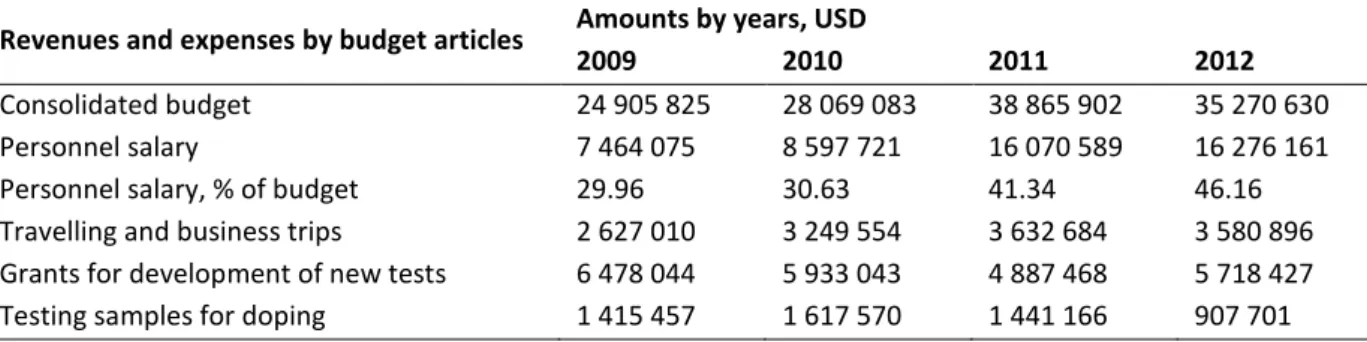
However, anti-doping officials have remained absolutely impervious to criticism, recommendations and appeals for many years. A natural question that has to be answered: “Why is this happening?” The answer is mostly such that a vast majority of functionaries at leading positions with WADA and anti-doping laboratories are lawyers, managers, economists, analytical physicists and chemists have a very little understanding of the system of athletic training, loads and risks of modern sports, problems of sports physiology and sports medicine. They are unfamiliar with respect for enormous efforts that athletes are investing into the process of training and competitive activities for many years of their life, at the same time opinions of experts in the field of sports and sports medicine are mere words to them. The basis of their activity, as it was proved by many years of practice, are commercial interests, their desire to preserve and strengthen their monopoly position and right to manipulations in the field of anti-doping activities.
Athletic activities in the modern sports are notable for their extraordinary diversity, complexity and intensity, characterized by a huge time consumption, extreme physical activity, sharp competition, injuries (often severe) and work-related diseases, long-lasting and complex processes of rehabilitation and sport returns. Many years dedicated to sports create difficulties in education, career and social adaptation after the retirement, family relations etc.