Submitted 5 June 2015 Accepted 10 August 2015 Published15 September 2015
Corresponding author Philip Hugenholtz, [email protected]
Academic editor Irene Newton
Additional Information and Declarations can be found on page 19
DOI10.7717/peerj.1223
Copyright 2015 Ormerod et al.
Distributed under
Creative Commons CC-BY 4.0
OPEN ACCESS
Comparative genomics of
non-pseudomonal bacterial species
colonising paediatric cystic fibrosis
patients
Kate L. Ormerod1, Narelle M. George2, James A. Fraser1, Claire Wainwright3,4,5and Philip Hugenholtz1,6
1Australian Infectious Diseases Research Centre, School of Chemistry and Molecular Biosciences,
University of Queensland, Brisbane, Queensland, Australia
2Health Support Queensland, Department of Health, Queensland Government, Herston,
Queensland, Australia
3School of Medicine, University of Queensland, Brisbane, Queensland, Australia 4Department of Respiratory and Sleep Medicine, Lady Cilento Children’s Hospital, South
Brisbane, Queensland, Australia
5Queensland Children’s Medical Research Insitute, Herston, Queensland, Australia
6Australian Centre for Ecogenomics, School of Chemistry and Molecular Biosciences, University
of Queensland, Brisbane, Queensland, Australia
ABSTRACT
The genetic disorder cystic fibrosis is a life-limiting condition affecting∼70,000 people worldwide. Targeted, early, treatment of the dominant infecting species, Pseudomonas aeruginosa, has improved patient outcomes; however, there is concern that other species are now stepping in to take its place. In addition, the necessarily long-term antibiotic therapy received by these patients may be providing a suitable environment for the emergence of antibiotic resistance. To investigate these issues, we employed whole-genome sequencing of 28 non-Pseudomonas bacterial strains isolated from three paediatric patients. We did not find any trend of increasing antibiotic resistance (either by mutation or lateral gene transfer) in these isolates in comparison with other examples of the same species. In addition, each isolate contained a virulence gene repertoire that was similar to other examples of the relevant species. These results support the impaired clearance of the CF lung not demanding extensive virulence for survival in this habitat. By analysing serial isolates of the same species we uncovered several examples of strain persistence. The same strain ofStaphylococcus aureuspersisted for nearly a year, despite administration of antibiotics to which it was shown to be sensitive. This is consistent with previous studies showing antibiotic therapy to be inadequate in cystic fibrosis patients, which may also explain the lack of increasing antibiotic resistance over time. Serial isolates of two naturally multi-drug resistant organisms,Achromobacter xylosoxidansand Stenotrophomonas maltophilia, revealed that while allS. maltophiliastrains were unique,A. xylosoxidanspersisted for nearly five years, making this a species of particular concern. The data generated by this study will assist in developing an understanding of the non-Pseudomonas species associated with cystic fibrosis.
Subjects Genomics, Microbiology, Infectious Diseases, Pediatrics
INTRODUCTION
The impaired clearance of the respiratory tract of patients with cystic fibrosis (CF) permits chronic infection by microorganisms (reviewed inBoucher, 2007).Pseudomonas aeruginosa andStaphylococcus aureusare the two most commonly isolated species (Emerson et al., 2010), with prevalence rates over 50% (Razvi et al., 2009).Haemophilus influenzaeis isolated in∼20% of cases (Razvi et al., 2009;Cardines et al., 2012). The species present in CF patients has been observed to fluctuate with age;S. aureusandH. influenzae are more often associated with younger patients, whileStenotrophomonas maltophiliaand P. aeruginosaincrease in prevalence in older patients (Razvi et al., 2009;Cox et al., 2010).S. aureusis the most commonly isolated organism in children under 10 years, colonising over 60% of patients (Razvi et al., 2009).P. aeruginosabecomes the dominant species isolated from adult patients, isolated from∼80% of patients (Razvi et al., 2009).P. aeruginosa has previously been identified as the primary disease causing agent (Høiby, 1982) and improved patient outcomes have been achieved through aggressive antibiotic therapy targeting this species during the early stages of disease prior to the establishment of chronic infection (Høiby, Frederiksen & Pressler, 2005). Life expectancy of CF patients has improved in recent years, however still remains low at∼40 years (Quon & Aitken, 2012).
Of current concern is the possibility that antibiotic treatment specific toP. aeruginosa may be increasing the prevalence and diversity of non-Pseudomonasbacteria, associated with the CF lung with unknown consequences (Hansen, 2012). The prevalence ofS. aureus, S. maltophiliaandAchromobacter xylosoxidanshave all been reported to have increased in recent years (Emerson et al., 2010). A study of German CF centres found a 20% prevalence of multiple emerging species, includingS. maltophilia,Achromobacterspp.,Klebsiella spp.,Burkholderia cepaciacomplex or multiresistantS. aureus, in adults compared with 10% in children and adolescents (Steinkamp et al., 2005). Of the patients testing positive for these bacteria, 92% had been administered antibiotics during the six month study period compared with 53% of total participants (Steinkamp et al., 2005). In addition, the development of culture-independent detection methods has established the polymicrobial nature of CF including the identification of species previously not associated with CF includingPrevotella denticola, and members of the familiesRickettsiaceaeandCoxiellaceae (Rogers et al., 2004;Harris et al., 2007;Cox et al., 2010;Van der Gast et al., 2011). These methods have also exposed a greater degree of microbial community heterogeneity between CF patients and also a greater degree of fluctuation over time than was previously appreciated from culture-based methods (Lim et al., 2014).
Rabin & Surette, 2006). Further to this, a decrease in lung function has been associated with decreasing microbial diversity (Van der Gast et al., 2011) indicating diversity may be a sign of a healthier lung environment. Some of the anaerobes detected in CF patients are also detected in healthy volunteers, although in significantly lower numbers (Tunney et al., 2008). While the lung was previously considered a sterile environment, the advance of culture independent techniques has shown this is not the case (Dickson, Erb-Downward & Huffnagle, 2013), further complicating the investigation of the pathogenesis of CF. Thus, there is a need to further investigate the characteristics of the specific strains present in the CF lung to determine if they are in some way unique in comparison to other examples of the same species, as this will help determine their relevance in the clinical context.
As a chronic condition requiring long-term antibiotic use, CF is further complicated by microvariation seen in persisting species that both adapts them to the host environment and can lead to the emergence of antibiotic resistance. This variation has been charac-terised inP. aeruginosawhere, over an eight year infection, virulence factors were selected against, likely due to their immunogenic properties (Smith et al., 2006). InS. aureus also, key strategic characteristics such as the production of a polysaccharide capsule and the formation of biofilms commonly differ between early and late stage isolates from continuously colonised patients (Hirschhausen et al., 2013). Antibiotic resistance has been described in multipleP. aeruginosaisolates of the same lineage infecting different patients, attributed to unique genetic changes in each strain (Yang et al., 2011). This indicates that multiple avenues are available to an infecting species to respond to similar environmental pressures, however, our knowledge of which avenues are used by non-Pseudomonasspecies is limited.
We undertook comparative genome analysis of non-Pseudomonasisolates from three paediatric CF patients looking for characteristics that may have facilitated their colonisation or indicate their clinical significance. We also sought evidence that they may be being selected for by antibiotic treatment. We included both typical species and those that are increasing in prevalence in CF patients with a particular focus on cases where persistent colonisation was observed across multiple time points. By linking genome data with patient treatment data we have been able to investigate the impact of antibiotic treatment and found evidence that susceptible organisms, either due to lack of penetration of the antibiotic or protection by other species, were surviving throughout treatment periods. Both the antibiotic resistance and virulence gene arsenal of the investigated isolates did not differ substantially from previously analysed examples of the same species, which is in agreement with the nature of the CF lung promoting chronic bacterial colonisation. We also observed strain evolution occurring during persistent colonisation, both via SNPs and through the movement of mobile elements, the latter being an isolated but significant case of acquisition of antibiotic resistance genes.
METHODS
Sample collection and quantification
RCH HREC PROTOCOL NO.: 1998/001. Informed consent was obtained from the children’s parents for sample collection, storage and subsequent testing. All BAL samples were collected under general anaesthesia using standard procedures. Five ten-fold serial dilutions from 500µL of BAL fluid (BALF) were used for quantitative colony counts.
100µL of undiluted BALF and each dilution were plated onto six different selective media:
horse blood (bioM´erieux, Marcy-l’ ´Etoile, France), mannitol salt (BD Biosciences, San Jose, California, USA), MacConkey (bioM´erieux, Marcy-l’ ´Etoile, France), chocolate bacitracin (CBA, Oxoid, UK), cetrimide (Oxoid, UK) andBurkholderia cepacia(Mast Group Ltd, Bootle, Merseyside, UK) agar. For sputum samples, 10µL of the undiluted sample was
plated directly onto selective media plates. Plates were then incubated at 37◦C (5% CO2
for CBA) and read at 24 and 48 h. The colony count was determined from plates bearing between 30 and 100 individual colonies. The final count is expressed as colony forming units per ml of BALF for each bacterial colony type of interest. Colony type identification tests were carried out as required: API 20 NE (bioM´erieux, France, non-fastidious, non-enteric Gram-negative rods), VITEK GN-ID (bioM´erieux, France, Gram-negative bacilli), coagulase production and latex agglutination (S. aureus), optochin susceptibility (Streptococcus pneumoniae) and X/V growth factor requirement (Haemophilus).
Purification and antibiotic susceptibility testing
Between 1 and 4 colonies from selective media plates of each sampled species were diluted to 0.5 McFarland standard and then replated, cultured and stored at−80◦C. This same dilution was used as the inoculum for antibiotic susceptibility testing: Clinical and Laboratory Standards Institute (CLSI) disk diffusion testing forPseudomonas, StreptococcusandHaemophilusand VITEK (bioM´erieux, France) instrument analysis and comparison with CLSI minimum inhibitory concentration breakpoints for other species.
DNA extraction and sequencing
DNA was extracted from pure cultures of each selected isolate using the PowerSoil DNA isolation kit (MO BIO Laboratories Inc, Carlsbad, California, USA). Indexed whole-genome sequencing libraries were prepared with the Nextera DNA sample preparation kit (Illumina, San Diego, California, USA). Libraries were pooled such that each isolate was approximately equal in concentration. This pool of libraries was submitted to the Queensland Centre for Medical Genomics (University of Queensland, Australia), and half a lane of 2×100-bp paired-end data was generated on an Illumina HiSeq2000 sequencer.
Draft genome assembly
(Darling, Mau & Perna, 2010). Contamination and completeness of each draft assembly were estimated using CheckM v0.9.7 (Parks et al., 2015). ANI was calculated using ANI calculator (http://enve-omics.ce.gatech.edu/ani/index, last accessed 2 June 2015).
For isolates of the same species, each strain was also mapped to a reference genome selected based on the lowest percentage of unmapped reads. Mapping to reference genomes was performed using BWA 0.6.2-r126 (Li & Durbin, 2009) using default settings. Duplicate reads were marked using Picard 1.41 (http://www.picard.sourceforge.net) and base quality score recalibration and realignment around indels was performed using GATK 2.4-9-g532efad (McKenna et al., 2010). SNPs and indels were identified using GATK 2.4-9-g532efad following best practice guidelines (DePristo et al., 2011). Larger variation was detected using Breakdancer 1.1.2 (Chen et al., 2009) and CREST (Wang et al., 2011). Mappings were visualised and SNP associated amino acid changes were determined using CLC Genomics Workbench (Qiagen, Velno, Netherlands). Unmapped reads were collected using SAMtools (Li et al., 2009) and regions of zero coverage were identified using BEDTools (Quinlan & Hall, 2010).
Comparative genome analysis
Antibiotic resistance and virulence related genes were identified using BLAST with the Comprehensive Antibiotic Research Database (McArthur et al., 2013) and the Virulence Factor Database (Chen et al., 2012) in addition to examining RAST output and manual comparison with various annotated reference genomes. For comparison with the CARD, a cut offof≥40% identity over≥60% of the query sequence was required. For comparison with the VFDB, a cut offof over 60% coverage of the target and over 80% identity was required. BLAST was used to identify candidate instances of horizontal gene transfer using a cut offof≥95% over 500 bp. Genomic islands and prophage regions were detected using Island Viewer (Dhillon et al., 2013) and PHAST (Zhou et al., 2011). Maximum likelihood “genome” trees were inferred using MEGA (Tamura et al., 2013) with 500 bootstrap replicates based on concatenated alignments of 83 single copy marker genes from isolates and reference strains using CheckM (Parks et al., 2015).
RESULTS AND DISCUSSION
We collected data from three children with cystic fibrosis (patients A, B and C; each under 3 years of age at start of study period) receiving treatment at The Royal Children’s Hospital, Brisbane, between 2003 and 2013. The culturable fraction of each patients’ lung microbiome was determined using bronchoalveolar lavage (BAL) plate counts and colony identifications revealing patient specific profiles (Figs. 1and2,Table S1). These isolate profiles also differed substantially between sampling dates in both patient A and patient B. The third patient, patient C, displayed a stable profile with increasing density. This kind of inter- and intrapatient variability of microbial communities amongst CF patients has been previously reported in both adults and children (Zhao et al., 2012;Hampton
et al., 2014). We selected 28 isolates from both BAL and sputum samples for genome
2012 2011 2010 2009 2008 2007 2006 2005 2004
A1 (S. aureus)
A2 (S. maltophilia)
A3 (S. aureus)+
A4 (S. aureus) A5 (S. aureus)
A7 (A. xylosoxidans)
A8 (A. xylosoxidans)+
A9 (A. xylosoxidans)+
A10 (A. xylosoxidans)+
A11 (A. xylosoxidans)+
A12 (A. xylosoxidans)+
A13 (A. xylosoxidans)+
Rox
AugD1;Cip1
Cot2;Itr2
Tic2;TOBI1
Tob5
Itr1;Rox1
Tic1;Tob2Cef1;Cip2
Cot1;Flu2
Itr3;TOBI2
Tob2
AugD2;Cef3
Cip1;Flu2
Itr3;Rox1
Tic1;TOBI1
Tob6
Akn7;Azn3;Cef2
Cip1;Col5;Cot4
Cxn1;Itr8;Tic7
Tob11;Vor5 Prior to 2004:
AugD9;Cef1
Cip1;Dic1
Nya1;TOBI1
Tob2
Col3;Cot2
Mer1;Tic1
Tob2;Vor2
Cef1;Col1
Cot1;Itr1
Tob1
Cef1;Col1
Cot1;Itr1
2006 2005
2004
AugD8;Cec1
Tic1 Prior to 2004:
Aug7;AugD12
Cec1
B1 (S. maltophilia)
AugD2;Cef1
Cip1;Cot2
TOBI1;Tob3
AugD1;Cot4
Itr1;Tob1
AugD1;Cef1
Cot2;Itr3
Tob2
Cef2;Cot2
Tob1 B2 (E. cloacae)
B3 (E. cloacae) B4 (S. maltophilia)
B5 (S. maltophilia)
B6 (S. aureus)
2013 2008 2007 2006 2005 2004 2003
C2 (P. stutzeri)+
C1 (Haemophilus sp.)
Prior to 2003:
AugD8;Cip1
Itr1;Tic2
TOBI1;Tob4
C7 (E. asburiae) C8 (E. coli)
C3 (E. gergoviae)+
C9 (S. aureus)
C10 (H. influenzae)
C11 (S. maltophilia)
C14 (B. cenocepacia)+ C15 (Acinetobacter sp.)+
AugD1
Cip2;Mer1
Tic1;TOBI1
Tob2
AugD1;Tic1
AugD3;Tob1
AugD8;Ben1
Cef2;Rox2
Tic3;Tob5
A
B
C
Patient A
Patient B Patient C
A8 (A. xylosoxidans)+
A9 (A. xylosoxidans)+
A10 (A. xylosoxidans)+
A11 (A. xylosoxidans)+
A12 (A. xylosoxidans)+
A13 (A. xylosoxidans)+
A7 (A. xylosoxidans)
B2 (E. cloacae) B3 (E. cloacae)
Figure 1 Timing of isolation of each sequenced strain for Patient A (A), Patient B (B) and Patient C (C).Antibiotic treatment administered between each strain isolation point is given below each timeline, with the number of courses denoted by superscript numbers. Shaded areas indicate strain persistence. +Samples obtained from sputum. Aug, amoxicillin/clavulanic acid (Augmentin); AugD, amoxicillin/clavulanic acid (Augmentin Duo); Akn, amikacin; Azn, azithromycin; Ben, benzylpenicillin sodium (BenPen); Cec, cefaclor monohydrate (Ceclor); Cef, ceftazidime; Cip, ciprofloxacin (Ciproxin); Col, colistin; Cxn, cefoxitin; Dic, dicloxacillin; Flu, flucloxacillin (Fluclox); Itr, itraconazole; Mer, meropenem; Nya, nystatin (Mycostatin); Rox, roxithromycin (Rulide); Sxt, trimethoprim/sulfamethoxazole (Bactrim); Tic, ticarcillin/clavulanic acid (Timentin); TOBI, nebulised tobramycin; Tob, Tobramycin; Vor, voriconazole.
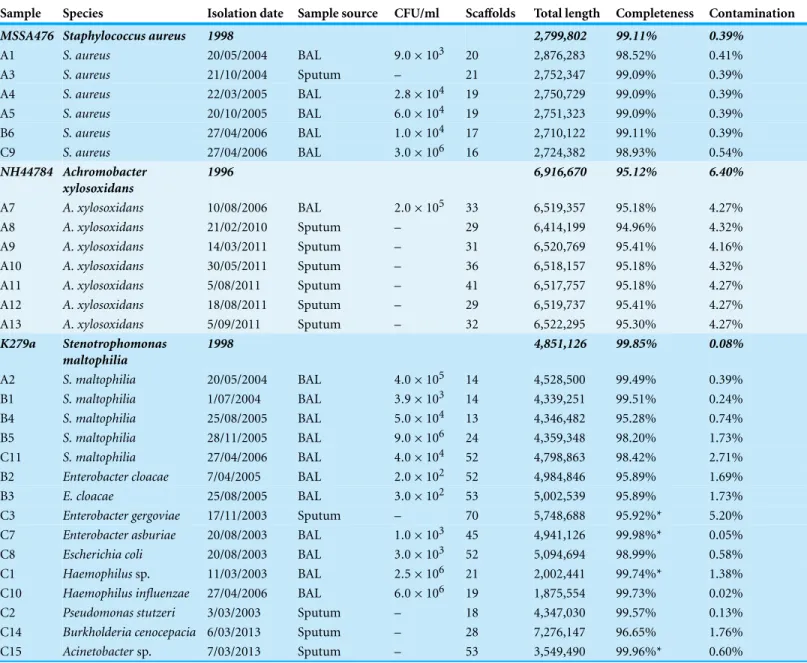
purposes of investigating lateral gene transfer. Draft genomes of 28 isolates were assembled covering several key non-pseudomonal genera, includingStaphylococcus, Achromobacter andStenotrophomonas(Table 1). Estimations of the completeness and contamination of these genomes indicate that they are near complete (≥90%) with low contamination (≤5%;Parks et al., 2015).
Figure 2 Patient specific profiles were determined from the culturable fraction of each patients’ lung microbiome.CFU/ml of culturable species contained in each BAL sample was calculated from plate counts at each time point. Details contained inTable S1.
be expected based on the success ofP. aeruginosain the CF lung, however may also be a product of database bias against less well characterised species. With no obvious trend emerging from this broad analysis we undertook analysis of the serially infecting species to look for more subtle changes occurring during infection.
Staphylococcus aureus
Table 1 Details of CF isolates sequenced in this study.Bold strains are reference genomes used in analysis. Completeness and contamination measured at the species level where possible, otherwise at genus level where indicated (*).
Sample Species Isolation date Sample source CFU/ml Scaffolds Total length Completeness Contamination
MSSA476 Staphylococcus aureus 1998 2,799,802 99.11% 0.39%
A1 S. aureus 20/05/2004 BAL 9.0×10³ 20 2,876,283 98.52% 0.41%
A3 S. aureus 21/10/2004 Sputum – 21 2,752,347 99.09% 0.39%
A4 S. aureus 22/03/2005 BAL 2.8×10⁴ 19 2,750,729 99.09% 0.39%
A5 S. aureus 20/10/2005 BAL 6.0×10⁴ 19 2,751,323 99.09% 0.39%
B6 S. aureus 27/04/2006 BAL 1.0×10⁴ 17 2,710,122 99.11% 0.39%
C9 S. aureus 27/04/2006 BAL 3.0×10⁶ 16 2,724,382 98.93% 0.54%
NH44784 Achromobacter xylosoxidans
1996 6,916,670 95.12% 6.40%
A7 A. xylosoxidans 10/08/2006 BAL 2.0×10⁵ 33 6,519,357 95.18% 4.27%
A8 A. xylosoxidans 21/02/2010 Sputum – 29 6,414,199 94.96% 4.32%
A9 A. xylosoxidans 14/03/2011 Sputum – 31 6,520,769 95.41% 4.16%
A10 A. xylosoxidans 30/05/2011 Sputum – 36 6,518,157 95.18% 4.32%
A11 A. xylosoxidans 5/08/2011 Sputum – 41 6,517,757 95.18% 4.27%
A12 A. xylosoxidans 18/08/2011 Sputum – 29 6,519,737 95.41% 4.27%
A13 A. xylosoxidans 5/09/2011 Sputum – 32 6,522,295 95.30% 4.27%
K279a Stenotrophomonas
maltophilia
1998 4,851,126 99.85% 0.08%
A2 S. maltophilia 20/05/2004 BAL 4.0×10⁵ 14 4,528,500 99.49% 0.39%
B1 S. maltophilia 1/07/2004 BAL 3.9×10³ 14 4,339,251 99.51% 0.24%
B4 S. maltophilia 25/08/2005 BAL 5.0×10⁴ 13 4,346,482 95.28% 0.74%
B5 S. maltophilia 28/11/2005 BAL 9.0×10⁶ 24 4,359,348 98.20% 1.73%
C11 S. maltophilia 27/04/2006 BAL 4.0×10⁴ 52 4,798,863 98.42% 2.71%
B2 Enterobacter cloacae 7/04/2005 BAL 2.0×10² 52 4,984,846 95.89% 1.69%
B3 E. cloacae 25/08/2005 BAL 3.0×10² 53 5,002,539 95.89% 1.73%
C3 Enterobacter gergoviae 17/11/2003 Sputum – 70 5,748,688 95.92%* 5.20%
C7 Enterobacter asburiae 20/08/2003 BAL 1.0×10³ 45 4,941,126 99.98%* 0.05%
C8 Escherichia coli 20/08/2003 BAL 3.0×10³ 52 5,094,694 98.99% 0.58%
C1 Haemophilussp. 11/03/2003 BAL 2.5×10⁶ 21 2,002,441 99.74%* 1.38%
C10 Haemophilus influenzae 27/04/2006 BAL 6.0×10⁶ 19 1,875,554 99.73% 0.02%
C2 Pseudomonas stutzeri 3/03/2003 Sputum – 18 4,347,030 99.57% 0.13%
C14 Burkholderia cenocepacia 6/03/2013 Sputum – 28 7,276,147 96.65% 1.76%
C15 Acinetobactersp. 7/03/2013 Sputum – 53 3,549,490 99.96%* 0.60%
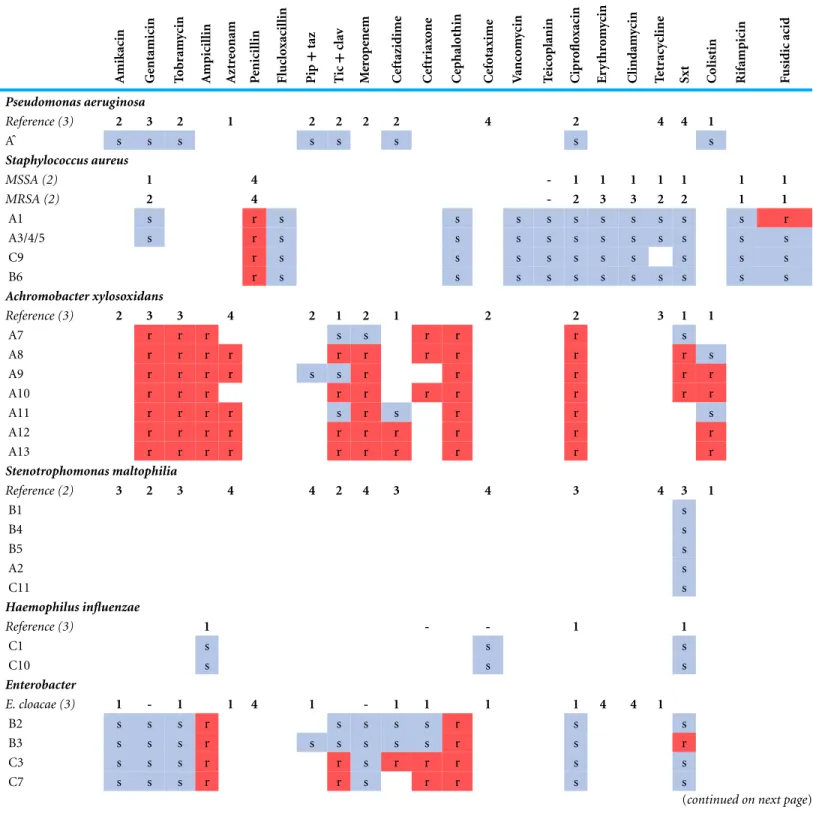
Table 2 Antibiotic susceptibility testing of analysed isolates.Coloured squares indicatein vitrosusceptibility testing results. Reference provides an indication of typical resistance of the species based on (x) papers: 0% resistance (−),<25% resistance (1), 25–50% resistance (2), 50–75% resistance (3),>75% resistance (4).P. aeruginosaisolate Aˆwas not sequenced. BCC,Burkholderia cepaciacomplex; Pip+taz, piperacillin plus tazobactam; Tic+clav: ticarcillin plus clavulanic acid; Sxt: trimethoprim plus sulfamethoxazole. References used for averages contained inTable S3.
A mikacin Ge ntamicin T o b ram ycin A mpicil lin A zt re o nam P enicil lin Fl uc lo xacil lin Pip + taz T ic + cla v M er o p ene m C eftazidime C eft riax o ne C ep halothin C ef otaxime V anc o m ycin T eic o planin C ipr o flo xacin Er y thr o m ycin C lindam ycin T et racy cline
Sxt Colist
in R ifampicin F usidic acid Pseudomonas aeruginosa
Reference (3) 2 3 2 1 2 2 2 2 4 2 4 4 1
Aˆ s s s s s s s s
Staphylococcus aureus
MSSA (2) 1 4 - 1 1 1 1 1 1 1
MRSA (2) 2 4 - 2 3 3 2 2 1 1
A1 s r s s s s s s s s s s r
A3/4/5 s r s s s s s s s s s s s
C9 r s s s s s s s s s s
B6 r s s s s s s s s s s s
Achromobacter xylosoxidans
Reference (3) 2 3 3 4 2 1 2 1 2 2 3 1 1
A7 r r r s s r r r s
A8 r r r r r r r r r r s
A9 r r r r s s r r r r r
A10 r r r r r r r r r r
A11 r r r r s r s r r s
A12 r r r r r r r r r r
A13 r r r r r r r r r r
Stenotrophomonas maltophilia
Reference (2) 3 2 3 4 4 2 4 3 4 3 4 3 1
B1 s B4 s B5 s A2 s C11 s Haemophilus influenzae
Reference (3) 1 - - 1 1
C1 s s s
C10 s s s
Enterobacter
E. cloacae (3) 1 - 1 1 4 1 - 1 1 1 1 4 4 1
B2 s s s r s s s s r s s
B3 s s s r s s s s s r s r
C3 s s s r r s r r r s s
C7 s s s r r s r r s s
Table 2 (continued) A mikacin Ge ntamicin T o b ram ycin A mpicil lin A zt re o nam P enicil lin Fl uc lo xacil lin Pip + taz T ic + cla v M er o p ene m C eftazidime C eft riax o ne C ep halothin C ef otaxime V anc o m ycin T eic o planin C ipr o flo xacin Er y thr o m ycin C lindam ycin T et racy cline
Sxt Colist
in R ifampicin F usidic acid Burkholderia cenocepacia
BCC (2) 4 4 4 3 2 4 2 2 4 4
C14 r r r r r s s s s r
Acinetobacter baumannii
Reference (2) 1 3 2 2 1 2 3 2
C15 s r r s s s s s s s
Escherichia coli
Reference (2) 1 2 1 1 1 1 2 1
C8 s s s r r s r s s s
Pseudomonas stutzeri
C2 s s s s s s s
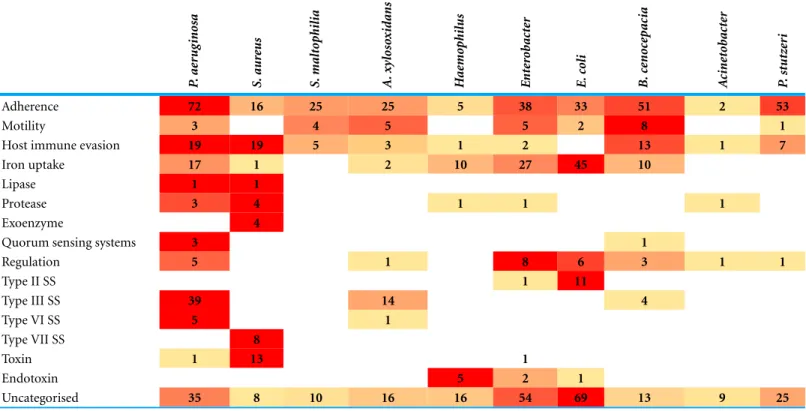
Table 3 Virulence factor gene distribution between sequenced species in comparison withP. aeruginosa.Table constructed from number of hits in VFDB with over 60% coverage of target and over 80% identity.HaemophilusandEnterobacterare an average of the isolates obtained for each genus. P .ae rug inosa S. aur eus S. malt o philia A. xy los ox idans H ae mo philus E nt er o b ac te r E. co li B. ce noc ep ac ia A cine to b ac te r P .st utz er i
Adherence 72 16 25 25 5 38 33 51 2 53
Motility 3 4 5 5 2 8 1
Host immune evasion 19 19 5 3 1 2 13 1 7
Iron uptake 17 1 2 10 27 45 10
Lipase 1 1
Protease 3 4 1 1 1
Exoenzyme 4
Quorum sensing systems 3 1
Regulation 5 1 8 6 3 1 1
Type II SS 1 11
Type III SS 39 14 4
Type VI SS 5 1
Type VII SS 8
Toxin 1 13 1
Endotoxin 5 2 1
The analysed S. aureus strains do not contain consistent virulence factor profiles
S. aureuscan utilise a range of virulence factors to promote infection including secreted toxins, immune evasion and various host interactions (Gordon, 1998;Cheung et al., 2004). We examined each strain for virulence factor encoding genes in comparison with four previously characterised reference strains including MSSA476 (Table S2). We found A1 to contain more enterotoxin genes than the other strains, with the same profile as the reference strains MSSA476 and MW2. The similarity of MSSA476 and MW2 has been noted previously (Holden et al., 2004). In other virulence factor categories patterns were less obvious. Within patient A, A1 contains staphylokinase and collagen binding protein not found in A3, 4 and 5. Evidence supports staphylokinase as having a role both in invasiveness but also in symbiosis (Bokarewa, Jin & Tarkowski, 2006) while collagen binding protein is found more commonly in invasive isolates (Peacock et al., 2002). Both C9 and B6 contain staphylokinase while only C9 contains collagen binding protein. A3, 4 and 5 contain chemotaxis inhibitory protein capable of inhibiting C5a-induced recruitment of neutrophils (De Haas et al., 2004). They are the only strains to contain this gene. A1 contains a deletion within its capsule locus that truncates one of the genes necessary for capsule production,capH.While acapsular strains are more adherent to host cells (P¨ohlmann-Dietze et al., 2000) they are also more prone to phagocytosis (Karakawa et al., 1988), thus the capsule may be a benefit or a hindrance at different stages of infection. Where capsule change is observed over an infection time course, later stage isolates are more likely to have increased capsule size than decreased (Hirschhausen et al., 2013). Being potentially unable to produce capsule when required may have limited A1’s ability to infect long-term, as suggested by its isolation at a single time point. However, as only a single isolate was sequenced at each time point, it is possible A1 persisted undetected.
Antibiotic resistance is limited in all analysed S. aureus isolates
parC/E, andfmtC, however while there were some differences in sequence, none contained mutations at sites previously characterised and known to confer resistance. Thus overall we found no evidence to contradict the reported susceptibility of the analysedS. aureusstrains that would make them difficult to treat.
S. aureus population persistence does not correlate with antibiotic administration
Given the sensitivity of theS. aureusstrains to most of the tested antibiotics, we were surprised to see the persistence of the species in patient A and specifically the increasing population of A3, 4 and 5 seen for nearly a year (Table S1). Ciprofloxacin was administered both prior to the isolation of A1 from BAL fluid and subsequently prior to the isolation of A3 from sputum (Table S4). Susceptibility testing indicated both strains should have been sensitive to this drug. In addition, the combination drugs ticarcillin disodium plus clavulanate potassium (Timentin, IV administration) and amoxicillin plus clavulanic acid (Augmentin Duo, oral administration) were given and would be expected to have activity against these strains. Between the isolation of A3 and A5 the population steadily increased (Table S1) despite continued administration of Timentin as well as ciprofloxacin, sulfamethoxazole plus trimethoprim and flucloxacillin which were effectivein vitro (Table 2). After the isolation of A5, amoxicillin plus clavulanic acid was administered to the patient which was the only drug that had not been given to the patient since before the isolation of A3. NoS. aureuswas reported at the following time point, however this may have been associated with the general decrease in bacterial load observed at this time (Fig. 2A) rather than a product of specific antibiotic treatment.
Achromobacter xylosoxidans
A. xylosoxidansis an opportunistic, multi-drug resistant organism found in a variety of aqueous environments including water distribution systems (Amoureux et al., 2013a). While its role in CF is still under investigation,A. xylosoxidanshas been shown to induce inflammation in these patients (Hansen et al., 2010). Chronic infection is also associated with declining lung function in some cases (Rønne Hansen et al., 2006). We sequenced sevenA. xylosoxidansisolates, all from patient A. The initial strain originated from a BAL sample while all subsequent isolates were obtained from sputum samples. Assembly revealed a similar genome size for all strains except A8 which was∼100 kb smaller than the other strains (Table 1). Contigs were ordered against NH44784-1996 (NCBI acc. no.
HE798385), an isolate obtained from a CF patient in 1996 (Jakobsen et al., 2013). AllA. xylosoxidansstrains had a high degree of synteny (Fig. 3B) suggesting that they represent a single population that persisted from 2006 to 2011 (Fig. 1). This was confirmed via SNP analysis that revealed only a small number of unique mutations in all isolates except A7 (Table S5). A8–A13 also share five SNPs and A9–A13 share 17 SNPs and 3 indels. A11 contains considerably more mutations than the other strains which points to the possibility of an increased mutation rate in this isolate. Non-synonymous SNPs were found in three DNA repair associated proteins: RadC (A>G-Asp146Gly), MutL (C>T-Pro457Ser) and MutS (A>C-Thr810Pro). The transition:transversion ratio (∼10:1) supports a defect in MutS contributing to this mutation signature (Table S5) (Young & Ornston, 2001).
Antibiotic resistance fluctuates within A. xylosoxidans isolates despite their close relationship
A. xylosoxidansexhibits natural resistance to a wide range of antibiotics including amino-glycosides, cephalosporins (except ceftazidime) and theβ-lactam aztreonam (Glupczynski et al., 1988;Turton et al., 2011;Amoureux et al., 2013b) (Table 2). Two RND-type multidrug efflux pump systems have been shown to contribute to this resistant phenotype (Bador et al., 2011;Bador et al., 2013). The first, AxyABM, is active against cephalosporins (except ce-fepime), aztreonam, nalidixic acid, fluoroquinolones, and chloramphenicol to varying de-grees (Bador et al., 2011). The second, AxyXY-OprZ provides significant resistance to mul-tiple aminoglycosides and is also capable of removing cefepime, carbapenems, some fluo-roquinolones, tetracycline, and erythromycin (Bador et al., 2013). In addition to the char-acterised AxyXY-OprZ and AxyABM pumps,A. xylosoxidanscontains a variety of putative resistance genes, potentially up to 50 genes in total (Hu et al., 2015). All patient A strains contained the genes for the AxyABM and AxyXY-OprZ pumps and displayed resistance ac-cordingly to aminoglycosides, cephalosporins, ciprofloxacin and aztreonam (Table 2). Se-quence identity across both pump systems was 100% except for a single non-synonymous SNP (Ile625Ser) found in AxyB of A8 that does not appear to affect itsin vitroresistance.
not been administered to the patient for over a year prior to the isolation of the sensitive A7, but was given two weeks following and between the isolation of A8 and A9 and A9 and A10. Thus, antibiotic therapy may have contributed to the maintenance of resistance to this drug. Meropenem was administered only once during the study period, one year after resistance was documented in A8, thus in this case resistance could not have been a direct consequence of therapy. Genome analysis revealed several possible contributors to the emergence of resistance to these two drugs. Firstly, A8 to A13 share common mutations within two transcriptional regulators; the first of the AraC family (Ile77Asn, NH44784 locus NH44784 036441) and the second of the TetR family (Ala154Val, NH44784 locus NH44784 061441). The sequence of A7 at these positions matches the reference strain NH44784-1996, also sensitive to meropenem and sulfamethoxazole/trimethoprim. Another possible explanation for the observed change in resistance is a small deletion (330 nt) in an additional AraC regulator (NH44784 locus NH44787 013001) in A8 to A13 that is absent in both A7 and NH44784-1996.
The greatest fluctuation in sensitivity was observed to ticarcillin plus clavulanic acid, with sensitivity re-emerging in A9 and the putative mutator strain A11 after resistance developed in A8 (Table 2). While this drug was administered following the isolation of A7, the last recorded course for the patient was given 6 months prior to the isolation of A8, therefore this cycling of resistance does not reflect cycling of antibiotic therapy. Resistance appearing in A8 and then being lost due to mutation in A9 and A11 would be the simplest explanation for this fluctuation and there were no mutations in A8, 10, 12 and 13 that were likely to have led to resistance appearing in these strains independently. By contrast, A9 and A11 both contain SNPs within an ABC transporter (NH44784 locus NH44784 038441) creating the same non-synonymous mutation at two different locations: Leu388Pro in A9 and Leu446Pro in A11. Resistance to colistin also fluctuated during the period (Table 2) and also does not appear obviously connected to antibiotic therapy as the drug was administered two months prior to the isolation of both the sensitive A8 and the resistant A9. Therefore inA. xylosoxidans, as inS. aureus, there is disagreement between antibiotic sensitivity testing and population persistence.
Stenotrophomonas maltophilia
S. maltophiliais an opportunistic, multi-drug resistant organism that is found in soil and aqueous environments also including water distribution systems (reviewed in
Brooke, 2012). The incidence ofS. maltophiliain CF patients varies (Goss et al., 2004;
Dalbøge et al., 2011) but has been shown to be increasing in some locations (Emerson
S. maltophiliastrains were relatively divergent from each other compared to theS. aureus andA. xylosoxidansstrains, even those from patient B (Fig. 3C) which is typical ofS. maltophiliainfection, particularly in young patients (Valdezate et al., 2001;Pompilio et al., 2011). Notably, average nucleotide identity (ANI) analysis revealed all strains lacked sufficient identity to the reference strain to be classified as the same species (<95%;Fig. 3C;Goris et al., 2007) despite forming a robustly monophyletic clade (Fig. S2). Comparison between available reference genomes also produced low identity e.g., 91.5% ANI between K279a and JV3 (NCBI acc. no.NC 015947). Based on this type of analysis, it has been suggested that strains currently designated asS. maltophiliaactually represent a complex (Svensson-Stadler, Mihaylova & Moore, 2012) placing a caveat on interstrain comparisons.
S. maltophiliais intrinsically multi-drug resistant with resistance reported against multiple classes of antibiotics (reviewed inBrooke, 2012). A substantial degree of resistance is conferred by the presence of a number of efflux pump systems. The reference strain K279a has nine efflux pumps of which SmeZ confers resistance to aminoglycosides and SmeJ/K contributes minor aminoglycoside, fluoroquinolone and tetracycline resistance (Crossman et al., 2008). All nine are present within each of the analysedS. maltophilia isolates (Table S6). Other pumps are typically associated with resistance following mutations leading to over-expression; consequently their presence alone does not indicate resistance (reviewed inBrooke, 2012). We also examined the presence of other putative and known resistance genes annotated in the K279a genome (Crossman et al., 2008) (Table S6). All except two were found in at least one of the analysed isolates but with varying identity. This variation is known to contribute to differing degrees of antibiotic resistance (Avison et al., 2001) and further complicates resistance predictions based on genome data.
AllS. maltophiliaisolates were susceptible to sulfamethoxazole plus trimethoprim, the preferred treatment option for this species but against which resistance is becoming an increasing problem (Brooke, 2012) (Table 2). Patient B received sulfamethoxazole plus trimethoprim throughout the study period. Given the dissimilarity of the patient B strains it is possible the patient is being sequentially colonised by this species rather than there being a persistent population, suggesting in this regard antibiotic treatment was effective. However, it is also possible that there exists a diverse infecting population in this patient with a different lineage sampled at each time point. Patient A also received sulfamethoxazole plus trimethoprim after the isolation of A2 and noS. maltophiliawas noted after this time. Like patient A, a singleS. maltophiliaisolate was obtained from patient C, however no sulfamethoxazole plus trimethoprim was administered in this case. Ticarcillin plus clavulanic acid was given following the isolation of C11 and may have cleared the infection in this patient.
Other CF isolates
both contain unique sections associated with mobile elements (Fig. S3A). One of these regions in B3 is similar to antibiotic resistance elements from multiple species including E. coli(Tn2610, NCBI acc.AB207867; Tn21, NCBI acc.AF071413) andA. baumannii, (AbaR21, NCBI acc.KM921776) but with a different arrangement and contains an antiseptic resistance gene QacE delta 1, a sulfonamide insensitive dihydropteroate synthase Sul1 and a trimethoprim insensitive dihydrofolate reductase DfrA5. B3 was resistant to sulfamethoxazole plus trimethoprim supporting the activity of this element in the isolate (Table 2). Sulfamethoxazole plus trimethoprim had not been given to the patient for eight months prior to the isolation of B2 but was administered four times over the four month period separating B2 and B3, potentially providing the selective pressure for insertion of this element (Table S4). In addition, the similarity of the twoE. cloacaeisolates supports a lateral acquisition by the later isolate during infection. There was no similarity between the element and the other sequenced isolates from patient B and no BLAST hits were returned fromStaphylococcusorStreptococcusspecies, which were also present in BAL samples during this period, indicating an unsampled source for this element. High sequence identity of the laterally transferred gene cassette with other members of the family Enterobacteriaceae (>95% identity), albeit with variable gene order (Fig. S4), suggest that this lineage likely harbours the donor species.
We also obtained twoHaemophilusisolates, both from patient C. Neither strain contained the capsule biosynthesis locus and thus represent nontypeableH. influenzae (NTHi) which make up the majority of respiratory mucosal associated infections (Erwin et al., 2008). NTHi are a diverse population (Erwin et al., 2008), reflecting their ability to be both commensal and pathogenic, and this diversity is illustrated in the two analysed strains which were obviously dissimilar (Fig. S3B). Despite this dissimilarity, both strains displayed susceptibility to all three antibiotics tested: ampicillin, cefotaxime and sulfamethoxazole plus trimethoprim. Differences were observed, however, between the virulence factor genes present in the two strains. C10 contains the high-molecular weight adhesins HMW1 and HMW2 which are the major adhesins in∼80% of NTHi strains (St. Geme et al., 1998) and are associated with acute otitis media (Krasan et al., 1999;Ecevit
et al., 2004). Strains lacking HMW1 and HMW2 typically contain an alternative adhesin,
hia(St. Geme et al., 1998), however C1 does not contain this gene either. C1 does however contain a haemagglutinating pili gene cluster consisting of five genes, absent from C10. These clusters are predicted to be important for nasopharyngeal colonisation (Krasan et al., 1999;Ecevit et al., 2004). C1 also contains a unique Type I CRISPR-Cas system
(Makarova et al., 2011) resembling that ofH. haemolyticusstrain M21621 (NCBI acc.NZ
Absence of lateral acquisition of antibiotic resistance genes and virulence factors between investigated species
The CF lung represents a diverse microbial community with sputum and BAL samples typically yielding multiple species per sample (Harris et al., 2007;Bittar et al., 2008). This cohabitation provides scope for lateral gene transfer both within and between species and the selective pressure applied by continual antibiotic therapy, coupled with the potential for antimicrobials to induce phage movement, means the CF microbial community needs to be considered as a whole (reviewed inRolain et al., 2011). We were unable to identify any potential examples of lateral transfer occurring between isolates within the analysed dataset that could not be explained by shared evolutionary history. This may be due to the temporal isolation of most of the isolates, with few being obtained at the same time point. It is also likely a product of our relatively small sample size and the study of a single isolate at each time point. TheE. cloacaeexample discussed above supports the possibility of identifying transfer events from outside the dataset, therefore we also examined predicted mobile elements in each of the strains for evidence of general acquisition. While we identified some elements with unique arrangements, we found no further evidence of recently acquired elements containing antibiotic resistance genes.
CONCLUSIONS
Here we have used whole-genome sequencing to analyse a series of non-pseudomonal CF isolates looking for indicators of the emergence of antibiotic resistance or unique virulence traits in this group. We found nothing to suggest that this collection of isolates would exhibit altered virulence in comparison with other isolates of the same species. This is in agreement with a number of studies that have demonstrated virulence factors required for acute infection are less important in chronic infection (Smith et al., 2006;Rau et al., 2010;
analysis this remains speculative. While limited by the analysis of a single isolate at each time point, this study adds to the available information regarding the characteristics of non-pseudomonal species in CF patients and highlightsA. xylosoxidansin particular as a species of concern due to its ability to persist for long periods, which may or may not be associated with its antibiotic resistance.
ACKNOWLEDGEMENTS
We thank Serene Low for assistance with library preparation and sequencing, Joyce Cheney for help with management of specimens, and Nicholas Gailer for provision of clinical data.
ADDITIONAL INFORMATION AND DECLARATIONS
Funding
This work was supported by the Australian Infectious Diseases Research Centre (AIDRC). K.L.O is supported by an Australian Postgraduate Award (APA). The Australasian Cystic Fibrosis Bronchoalveolar Lavage (ACFBAL) study was supported by NHMRC grants 9937868 and 351541 and the RCH Foundation, Australia. The funders had no role in study design, data collection and analysis, decision to publish, or preparation of the manuscript.
Grant Disclosures
The following grant information was disclosed by the authors: Australian Infectious Diseases Research Centre.
Australian Postgraduate Award. NHMRC: 9937868, 351541. RCH Foundation, Australia.
Competing Interests
The authors declare there are no competing interests.
Author Contributions
• Kate L. Ormerod conceived and designed the experiments, performed the experiments, analyzed the data, wrote the paper, prepared figures and/or tables, reviewed drafts of the paper.
• Narelle M. George performed the experiments.
• James A. Fraser contributed reagents/materials/analysis tools, reviewed drafts of the paper.
• Claire Wainwright conceived and designed the experiments, contributed reagents/materials/analysis tools, reviewed drafts of the paper.
• Philip Hugenholtz conceived and designed the experiments, contributed reagents/materials/analysis tools, wrote the paper, reviewed drafts of the paper.
Human Ethics
BAL samples were collected as part of the Australasian Cystic Fibrosis BAL Study that was approved by the Royal Children’s Hospital Ethics Committee RCH HREC PROTOCOL NO.: 1998/001.
DNA Deposition
The following information was supplied regarding the deposition of DNA sequences: The draft assemblies from this project have been deposited at GenBank under the accessionsLDVC00000000–LDWD00000000.
Supplemental Information
Supplemental information for this article can be found online athttp://dx.doi.org/ 10.7717/peerj.1223#supplemental-information.
REFERENCES
Amoureux L, Bador J, Fardeheb S, Mabille C, Couchot C, Massip C, Salignon A-L, Berlie G,
Varin V, Neuwirth C. 2013a.Detection ofAchromobacter xylosoxidansin hospital, domestic,
and outdoor environmental samples and comparison with human clinical isolates.Applied and Environmental Microbiology79(23):7142–7149DOI 10.1128/AEM.02293-13.
Amoureux L, Bador J, Siebor E, Taillefumier N, Fanton A, Neuwirth C. 2013b.Epidemiology and
resistance ofAchromobacter xylosoxidansfrom cystic fibrosis patients in Dijon, Burgundy: first French data.Journal of Cystic Fibrosis12(2):170–176DOI 10.1016/j.jcf.2012.08.005.
Avison MB, Higgins CS, Von Heldreich CJ, Bennett PM, Walsh TR. 2001.Plasmid location and
molecular heterogeneity of the L1 and L2β-lactamase genes ofStenotrophomonas maltophilia.
Antimicrobial Agents and Chemotherapy45(2):413–419DOI 10.1128/AAC.45.2.413-419.2001.
Aziz RK, Bartels D, Best AA, DeJongh M, Disz T, Edwards RA, Formsma K, Gerdes S, Glass EM, Kubal M, Meyer F, Olsen GJ, Olson R, Osterman AL, Overbeek RA, McNeil LK, Paarmann D, Paczian T, Parrello B, Pusch GD, Reich C, Stevens R, Vassieva O, Vonstein V, Wilke A,
Zagnitko O. 2008.The RAST Server: rapid annotations using subsystems technology.BMC
Genomics9:75DOI 10.1186/1471-2164-9-75.
Bador J, Amoureux L, Blanc E, Neuwirth C. 2013.Innate aminoglycoside resistance of
Achromobacter xylosoxidansis due to AxyXY-OprZ, an RND-type multidrug efflux pump.
Antimicrobial Agents and Chemotherapy57(1):603–605DOI 10.1128/AAC.01243-12.
Bador J, Amoureux L, Duez J-M, Drabowicz A, Siebor E, Llanes C, Neuwirth C. 2011.First
description of an RND-type multidrug efflux pump inAchromobacter xylosoxidans, AxyABM.
Antimicrobial Agents and Chemotherapy55(10):4912–4914DOI 10.1128/AAC.00341-11.
Bittar F, Richet H, Dubus J-C, Reynaud-Gaubert M, Stremler N, Sarles J, Raoult D, Rolain J-M.
2008.Molecular detection of multiple emerging pathogens in sputa from cystic fibrosis patients.
PLoS ONE3(8):e2908DOI 10.1371/journal.pone.0002908.
Bokarewa MI, Jin T, Tarkowski A. 2006.Staphylococcus aureus: Staphylokinase.The International
Journal of Biochemistry & Cell Biology38(4):504–509DOI 10.1016/j.biocel.2005.07.005.
Bolger AM, Lohse M, Usadel B. 2014.Trimmomatic: a flexible trimmer for Illumina sequence
data.Bioinformatics30(15):2114–2120DOI 10.1093/bioinformatics/btu170.
Boucher RC. 2007.Airway surface dehydration in cystic fibrosis: pathogenesis and therapy.Annual
Branger C, Gardye C, Lambert-Zechovsky N. 1996.Persistence ofStaphylococcus aureusstrains among cystic fibrosis patients over extended periods of time.Journal of Medical Microbiology
45(4):294–301DOI 10.1099/00222615-45-4-294.
Brogden KA, Guthmiller JM, Taylor CE. 2005.Human polymicrobial infections.The Lancet
365(9455):253–255DOI 10.1016/S0140-6736(05)70155-0.
Brooke JS. 2012.Stenotrophomonas maltophilia: an emerging global opportunistic pathogen.
Clinical Microbiology Reviews25(1):2–41DOI 10.1128/CMR.00019-11.
Cardines R, Giufr`e M, Pompilio A, Fiscarelli E, Ricciotti G, Bonaventura GD, Cerquetti M.
2012.Haemophilus influenzaein children with cystic fibrosis: antimicrobial susceptibility,
molecular epidemiology, distribution of adhesins and biofilm formation.International Journal of Medical Microbiology302(1):45–52DOI 10.1016/j.ijmm.2011.08.003.
Chen K, Wallis JW, McLellan MD, Larson DE, Kalicki JM, Pohl CS, McGrath SD, Wendl MC, Zhang Q, Locke DP, Shi X, Fulton RS, Ley TJ, Wilson RK, Ding L, Mardis ER. 2009.
BreakDancer: an algorithm for high-resolution mapping of genomic structural variation.Nature Methods6(9):677–681DOI 10.1038/nmeth.1363.
Chen L, Xiong Z, Sun L, Yang J, Jin Q. 2012.VFDB 2012 update: toward the genetic diversity and
molecular evolution of bacterial virulence factors.Nucleic Acids Research40(D1):D641–D645
DOI 10.1093/nar/gkr989.
Cheung AL, Bayer AS, Zhang G, Gresham H, Xiong YQ. 2004. Regulation of virulence
determinantsin vitroandin vivoinStaphylococcus aureus.FEMS Immunology and Medical Microbiology40(1):1–9DOI 10.1016/S0928-8244(03)00309-2.
Ciofu O, Beveridge TJ, Kadurugamuwa J, Walther-Rasmussen J, Høiby N. 2000.Chromosomal
β-lactamase is packaged into membrane vesicles and secreted fromPseudomonas aeruginosa.
Journal of Antimicrobial Chemotherapy45(1):9–13DOI 10.1093/jac/45.1.9.
Conway SP, Brownlee KG, Denton M, Peckham DG. 2003. Antibiotic treatment of
multidrug-resistant organisms in cystic fibrosis.American Journal of Respiratory Medicine : Drugs, Devices, and Other Interventions2(4):321–332DOI 10.1007/BF03256660.
Cox MJ, Allgaier M, Taylor B, Baek MS, Huang YJ, Daly RA, Karaoz U, Andersen GL, Brown R,
Fujimura KE, Wu B, Tran D, KoffJ, Kleinhenz ME, Nielson D, Brodie EL, Lynch SV. 2010.
Airway microbiota and pathogen abundance in age-stratified cystic fibrosis patients.PLoS ONE
5(6):e11044DOI 10.1371/journal.pone.0011044.
Crossman L, Gould V, Dow JM, Vernikos G, Okazaki A, Sebaihia M, Saunders D,
Arrowsmith C, Carver T, Peters N, Adlem E, Kerhornou A, Lord A, Murphy L, Seeger K, Squares R, Rutter S, Quail M, Rajandream M-A, Harris D, Churcher C, Bentley S, Parkhill J,
Thomson N, Avison M. 2008.The complete genome, comparative and functional analysis
ofStenotrophomonas maltophiliareveals an organism heavily shielded by drug resistance determinants.Genome Biology9(4):Article R74DOI 10.1186/gb-2008-9-4-r74.
Dalbøge CS, Hansen CR, Pressler T, Høiby N, Johansen HK. 2011.Chronic pulmonary infection
withStenotrophomonas maltophiliaand lung function in patients with cystic fibrosis.Journal of Cystic Fibrosis10(5):318–325DOI 10.1016/j.jcf.2011.03.006.
Darling AE, Mau B, Perna NT. 2010.progressiveMauve: multiple genome alignment with gene
gain, loss and rearrangement.PLoS ONE5(6):e11147DOI 10.1371/journal.pone.0011147.
De Haas CJC, Veldkamp KE, Peschel A, Weerkamp F, Van Wamel WJB, Heezius E, Poppelier M,
Van Kessel KPM, Van Strijp JAG. 2004.Chemotaxis inhibitory protein ofStaphylococcus
aureus, a bacterial antiinflammatory agent.Journal of Experimental Medicine199(5):687–695
DePristo M, Banks E, Poplin R, Garimella K, Maguire J, Hartl C, Philippakis A, Del Angel G, Rivas MA, Hanna M, McKenna A, Fennell T, Kernytsky A, Sivachenko A, Cibulskis K,
Gabriel S, Altshuler D, Daly M. 2011. A framework for variation discovery and
genotyping using next-generation DNA sequencing data.Nature Genetics43(5):491–498
DOI 10.1038/ng.806.
Dhillon BK, Chiu TA, Laird MR, Langille MGI, Brinkman FSL. 2013. IslandViewer
update: improved genomic island discovery and visualization. Nucleic Acids Research
41(W1):W129–W132DOI 10.1093/nar/gkt394.
Dickson RP, Erb-Downward JR, Huffnagle GB. 2013.The role of the bacterial microbiome in
lung disease.Expert Review of Respiratory Medicine7(3):245–257DOI 10.1586/ers.13.24.
Doering G, Flume P, Heijerman H, Elborn JS, Angyalosi G, Assael B, Bell S, Bilton D, De Boeck K, Bush A, Campbell III PW, Cattaneo A, Dembowsky K, Drevinek P, Dubois C, Eichler I, Elborn JS, Flume PA, Foweraker JE, Gallagher C, Gartner S, Geller DE, Goldman M, Goss CH, Gupta R, Heijerman HG, Henig N, Higgins M, Hjelte L, Hoiby N, Jongejan R, Knoch M, Konstan MW, Muhlebach MS, Nieuwenhuizen PW, Parkins MD,
Pressler T, Quittner AL, Ratjen F, Ramsey BW, Smyth A, Thieroff-Ekerdt R, Tullis E, Van
der Ent CK, Vazquez C, Wainwright CE, Consensus Study Group. 2012.Treatment of lung
infection in patients with cystic fibrosis: current and future strategies.Journal of Cystic Fibrosis
11(6):461–479DOI 10.1016/j.jcf.2012.10.004.
Doern GV, Brecher SM. 2011. The clinical predictive value (or lack thereof) of the
results ofin vitroantimicrobial susceptibility tests.Journal of Clinical Microbiology49(9
Supplement):S11–S14DOI 10.1128/JCM.00580-11.
Ecevit IZ, McCrea KW, Pettigrew MM, Sen A, Marrs CF, Gilsdorf JR. 2004.Prevalence of the
hifBC,hmw1A,hmw2A,hmwC, andhiagenes inHaemophilus influenzaeisolates.Journal of Clinical Microbiology42(7):3065–3072DOI 10.1128/JCM.42.7.3065-3072.2004.
Emerson J, McNamara S, Buccat AM, Worrell K, Burns JL. 2010.Changes in cystic fibrosis
sputum microbiology in the United States between 1995 and 2008.Pediatric Pulmonology
45(4):363–370DOI 10.1002/ppul.21198.
Enright MC, Day NPJ, Davies CE, Peacock SJ, Spratt BG. 2000.Multilocus sequence typing for
characterization of methicillin-resistant and methicillin-susceptible clones ofStaphylococcus aureus.Journal of Clinical Microbiology38(3):1008–1015.
Erwin AL, Sandstedt SA, Bonthuis PJ, Geelhood JL, Nelson KL, Unrath WCT, Diggle MA, Theodore MJ, Pleatman CR, Mothershed EA, Sacchi CT, Mayer LW, Gilsdorf JR, Smith AL.
2008.Analysis of genetic relatedness ofHaemophilus influenzaeisolates by multilocus sequence
typing.Journal of Bacteriology190(4):1473–1483DOI 10.1128/JB.01207-07.
Fux CA, Costerton JW, Stewart PS, Stoodley P. 2005.Survival strategies of infectious biofilms.
Trends in Microbiology13(1):34–40DOI 10.1016/j.tim.2004.11.010.
Galardini M, Biondi EG, Bazzicalupo M, Mengoni A. 2011.CONTIGuator: a bacterial genomes
finishing tool for structural insights on draft genomes.Source Code for Biology and Medicine
6:11–11DOI 10.1186/1751-0473-6-11.
Glupczynski Y, Hansen W, Freney J, Yourassowsky E. 1988.In vitrosusceptibility ofAlcaligenes
denitrificanssubsp. xylosoxidansto 24 antimicrobial agents.Antimicrobial Agents and Chemotherapy32(2):276–278DOI 10.1128/AAC.32.2.276.
Gordon LA. 1998.Staphylococcus aureus: a well-armed pathogen.Clinical Infectious Diseases
Goris J, Konstantinidis KT, Klappenbach JA, Coenye T, Vandamme P, Tiedje JM. 2007.
DNA-DNA hybridization values and their relationship to whole-genome sequence similarities.International Journal of Systematic and Evolutionary Microbiology 57:81–91
DOI 10.1099/ijs.0.64483-0.
Goss CH, Mayer-Hamblett N, Aitken ML, Rubenfeld GD, Ramsey BW. 2004.Association
between Stenotrophomonas maltophilia and lung function in cystic fibrosis.Thorax
59(11):955–959DOI 10.1136/thx.2003.017707.
Hampton TH, Green DM, Cutting GR, Morrison HG, Sogin ML, Gifford AH, Stanton BA,
O’Toole GA. 2014.The microbiome in pediatric cystic fibrosis patients: the role of
shared environment suggests a window of intervention. Microbiome2:Article 14
DOI 10.1186/2049-2618-2-14.
Hansen CR. 2012.Stenotrophomonas maltophilia: to be or not to be a cystic fibrosis pathogen.
Current Opinion in Pulmonary Medicine18(6):628–631DOI 10.1097/MCP.0b013e328358d4f8.
Hansen CR, Pressler T, Nielsen KG, Jensen PØ, Bjarnsholt T, Høiby N. 2010.Inflammation in
Achromobacter xylosoxidansinfected cystic fibrosis patients.Journal of Cystic Fibrosis9(1):51–58
DOI 10.1016/j.jcf.2009.10.005.
Hanssen AM, Sollid JUE. 2006.SCCmecin staphylococci: genes on the move.FEMS Immunology
and Medical Microbiology46(1):8–20DOI 10.1111/j.1574-695X.2005.00009.x.
Harris JK, De Groote MA, Sagel SD, Zemanick ET, Kapsner R, Penvari C, Kaess H,
Deterding RR, Accurso FJ, Pace NR. 2007. Molecular identification of bacteria in
bronchoalveolar lavage fluid from children with cystic fibrosis. Proceedings of the National Academy of Sciences of the United States of America 104(51):20529–20533
DOI 10.1073/pnas.0709804104.
Hirschhausen N, Block D, Bianconi I, Bragonzi A, Birtel J, Lee JC, D¨ubbers A, K¨uster P,
Kahl J, Peters G, Kahl BC. 2013.Extended Staphylococcus aureuspersistence in cystic
fibrosis is associated with bacterial adaptation.International Journal of Medical Microbiology
303(8):685–692DOI 10.1016/j.ijmm.2013.09.012.
Høiby N. 1982.Microbiology of lung infections in cystic fibrosis patients.Acta Pædiatrica71:33–54
DOI 10.1111/j.1651-2227.1982.tb09640.x.
Høiby N, Frederiksen B, Pressler T. 2005.Eradication of earlyPseudomonas aeruginosainfection.
Journal of Cystic Fibrosis4(Supplement 2):49–54DOI 10.1016/j.jcf.2005.05.018.
Holden MTG, Feil EJ, Lindsay JA, Peacock SJ, Day NPJ, Enright MC, Foster TJ, Moore CE, Hurst L, Atkin R, Barron A, Bason N, Bentley SD, Chillingworth C, Chillingworth T, Churcher C, Clark L, Corton C, Cronin A, Doggett J, Dowd L, Feltwell T, Hance Z, Harris B, Hauser H, Holroyd S, Jagels K, James KD, Lennard N, Line A, Mayes R, Moule S, Mungall K, Ormond D, Quail MA, Rabbinowitsch E, Rutherford K, Sanders M, Sharp S, Simmonds M,
Stevens K, Whitehead S, Barrell BG, Spratt BG, Parkhill J. 2004.Complete genomes of two
clinicalStaphylococcus aureus strains: evidence for the rapid evolution of virulence and drug resistance.Proceedings of the National Academy of Sciences of the United States of America
101(26):9786–9791DOI 10.1073/pnas.0402521101.
Hu Y, Zhu Y, Ma Y, Liu F, Lu N, Yang X, Luan C, Yi Y, Zhu B. 2015.Genomic insights into
intrinsic and acquired drug resistance mechanisms inAchromobacter xylosoxidans.Antimicrobial Agents and Chemotherapy59(2):1152–1161DOI 10.1128/AAC.04260-14.
Complete genome sequence of the cystic fibrosis pathogenAchromobacter xylosoxidans
NH44784-1996 complies with important pathogenic phenotypes.PLoS ONE8(7):e68484
DOI 10.1371/journal.pone.0068484.
Karakawa WW, Sutton A, Schneerson R, Karpas A, Vann WF. 1988.Capsular antibodies induce
type-specific phagocytosis of capsulatedStaphylococcus aureusby human polymorphonuclear leukocytes.Infection and Immunity56(5):1090–1095.
Kaur R, Chang A, Xu Q, Casey JR, Pichichero ME. 2011. Phylogenetic relatedness and
diversity of non-typableHaemophilus influenzaein the nasopharynx and middle ear fluid of children with acute otitis media.Journal of Medical Microbiology60(12):1841–1848
DOI 10.1099/jmm.0.034041-0.
Koulenti D, Lisboa T, Brun-Buisson C, Krueger W, Macor A, Sole-Violan J, Diaz E, Topeli A,
DeWaele J, Carneiro A, Martin-Loeches I, Armaganidis A, Rello J. 2009.Spectrum of
practice in the diagnosis of nosocomial pneumonia in patients requiring mechanical ventilation in European intensive care units.Critical Care Medicine 37(8):2360–2368
DOI 10.1097/CCM.0b013e3181a037ac.
Krasan GP, Cutter D, Block SL, St. Geme JW. 1999. Adhesin expression in matched
nasopharyngeal and middle ear isolates of nontypeableHaemophilus influenzaefrom children with acute otitis media.Infection and Immunity67(1):449–454.
Li H, Durbin R. 2009.Fast and accurate short read alignment with Burrows-Wheeler transform.
Bioinformatics25(14):1754–1760DOI 10.1093/bioinformatics/btp324.
Li H, Handsaker B, Wysoker A, Fennell T, Ruan J, Homer N, Marth G, Abecasis G, Durbin R,
1000 Genome Project Data Processing Subgroup. 2009.The sequence alignment/map format
and SAMtools.Bioinformatics25(16):2078–2079DOI 10.1093/bioinformatics/btp352.
Lim YW, Evangelista 3rd JS, Schmieder R, Bailey B, Haynes M, Furlan M, Maughan H,
Edwards R, Rohwer F, Conrad D. 2014.Clinical insights from metagenomic analysis of sputum
samples from patients with cystic fibrosis.Journal of Clinical Microbiology52(2):425–437
DOI 10.1128/JCM.02204-13.
Lopes SP, Ceri H, Azevedo NF, Pereira MO. 2012.Antibiotic resistance of mixed biofilms in cystic
fibrosis: impact of emerging microorganisms on treatment of infection.International Journal of Antimicrobial Agents40(3):260–263DOI 10.1016/j.ijantimicag.2012.04.020.
Luo R, Liu B, Xie Y, Li Z, Huang W, Yuan J, He G, Chen Y, Pan Q, Liu Y, Tang J, Wu G, Zhang H, Shi Y, Liu Y, Yu C, Wang B, Lu Y, Han C, Cheung DW, Yiu S-M, Peng S,
Xiaoqian Z, Liu G, Liao X, Li Y, Yang H, Wang J, Lam T-W, Wang J. 2012.SOAPdenovo2:
an empirically improved memory-efficient short-read de novo assembler.GigaScience
1:18DOI 10.1186/2047-217X-1-18.
Makarova KS, Haft DH, Barrangou R, Brouns SJJ, Charpentier E, Horvath P, Moineau S,
Mojica FJM, Wolf YI, Yakunin AF, Van der Oost J, Koonin EV. 2011.Evolution and
classification of the CRISPR–Cas systems.Nature Reviews Microbiology9(6):467–477
DOI 10.1038/nrmicro2577.
McArthur AG, Waglechner N, Nizam F, Yan A, Azad MA, Baylay AJ, Bhullar K, Canova MJ, De Pascale G, Ejim L, Kalan L, King AM, Koteva K, Morar M, Mulvey MR, O’Brien JS, Pawlowski AC, Piddock LJV, Spanogiannopoulos P, Sutherland AD, Tang I, Taylor PL,
Thaker M, Wang W, Yan M, Yu T, Wright GD. 2013.The comprehensive antibiotic resistance
database.Antimicrobial Agents and Chemotherapy57(7):3348–3357
McKenna A, Hanna M, Banks E, Sivachenko A, Cibulskis K, Kernytsky A, Garimella K,
Altshuler D, Gabriel S, Daly M, DePristo MA. 2010.The genome analysis toolkit: a
MapReduce framework for analyzing next-generation DNA sequencing data.Genome Research
20(9):1297–1303DOI 10.1101/gr.107524.110.
Nakamura S, Shchepetov M, Dalia AB, Clark SE, Murphy TF, Sethi S, Gilsdorf JR, Smith AL,
Weiser JN. 2011.Molecular basis of increased serum resistance among pulmonary
isolates of non-typeable Haemophilus influenzae.PLoS Pathogens 7(1):e1001247
DOI 10.1371/journal.ppat.1001247.
Nimmo GR, Pearson JC, Collignon PJ, Christiansen KJ, Coombs GW, Bell JM, McLaws M-L,
Resistance AGOA. 2011.Antimicrobial susceptibility ofStaphylococcus aureusisolated from
hospital inpatients, 2009: report from the Australian group on antimicrobial resistance.
Communicable Diseases Intelligence35(3):237–243.
Parks DH, Imelfort M, Skennerton CT, Hugenholtz P, Tyson GW. 2015.CheckM: assessing the
quality of microbial genomes recovered from isolates, single cells, and metagenomes.Genome Research25:1043–1055DOI 10.1101/gr.186072.114.
Peacock SJ, Moore CE, Justice A, Kantzanou M, Story L, Mackie K, O’Neill G, Day NPJ. 2002.
Virulent combinations of adhesin and toxin genes in natural populations ofStaphylococcus aureus.Infection and Immunity70(9):4987–4996DOI 10.1128/IAI.70.9.4987-4996.2002.
P¨ohlmann-Dietze P, Ulrich M, Kiser KB, D¨oring G, Lee JC, Fournier J-M, Botzenhart K,
Wolz C. 2000.Adherence ofStaphylococcus aureusto endothelial cells: influence of capsular
polysaccharide, global regulatoragr, and bacterial growth phase.Infection and Immunity
68(9):4865–4871DOI 10.1128/IAI.68.9.4865-4871.2000.
Pompilio A, Pomponio S, Crocetta V, Gherardi G, Verginelli F, Fiscarelli E, Dicuonzo G,
Savini V, D’Antonio D, Di Bonaventura G. 2011.Phenotypic and genotypic characterization
ofStenotrophomonas maltophiliaisolates from patients with cystic fibrosis: genome diversity, biofilm formation, and virulence.BMC Microbiology11:159DOI 10.1186/1471-2180-11-159.
Quinlan AR, Hall IM. 2010.BEDTools: a flexible suite of utilities for comparing genomic features.
Bioinformatics26(6):841–842DOI 10.1093/bioinformatics/btq033.
Quon BS, Aitken ML. 2012.Cystic fibrosis: what to expect now in the early adult years.Paediatric
Respiratory Reviews13(4):206–214DOI 10.1016/j.prrv.2012.03.005.
Rau MH, Hansen SK, Johansen HK, Thomsen LE, Workman CT, Nielsen KF, Jelsbak L,
Høiby N, Yang L, Molin S. 2010.Early adaptive developments ofPseudomonas aeruginosa
after the transition from life in the environment to persistent colonization in the airways of human cystic fibrosis hosts. Environmental Microbiology12(6):1643–1658
DOI 10.1111/j.1462-2920.2010.02211.x.
Razvi S, Quittell L, Sewall A, Quinton H, Marshall B, Saiman L. 2009.Respiratory microbiology
of patients with cystic fibrosis in the united states, 1995 to 2005.Chest136(6):1554–1560
DOI 10.1378/chest.09-0132.
Rogers GB, Carroll MP, Serisier DJ, Hockey PM, Jones G, Bruce KD. 2004.Characterization of
bacterial community diversity in cystic fibrosis lung infections by use of 16s ribosomal DNA terminal restriction fragment length polymorphism profiling.Journal of Clinical Microbiology
42(11):5176–5183DOI 10.1128/JCM.42.11.5176-5183.2004.
Rolain JM, Fancello L, Desnues C, Raoult D. 2011.Bacteriophages as vehicles of the
resistome in cystic fibrosis.Journal of Antimicrobial Chemotherapy 66(11):2444–2447