Submitted11 August 2016 Accepted 18 October 2016 Published10 November 2016 Corresponding author Zhou Jianzhong, [email protected]
Academic editor Jara Pérez-Jiménez
Additional Information and Declarations can be found on page 15
DOI10.7717/peerj.2701 Copyright
2016 Xiudong et al.
Distributed under
Creative Commons CC-BY 4.0 OPEN ACCESS
Soymilk residue (okara) as a natural
immobilization carrier for
Lactobacillus
plantarum
cells enhances soymilk
fermentation, glucosidic isoflavone
bioconversion, and cell survival
under simulated gastric and intestinal
conditions
Xia Xiudong, Wang Ying, Liu Xiaoli, Li Ying and Zhou Jianzhong
Institute of Agro-Product Processing, Jiangsu Academy of Agricultural Sciences, Nanjing, Jiangsu, PR China
ABSTRACT
SubjectsBiotechnology, Food Science and Technology, Microbiology
Keywords Soymilk residue (Okara), Natural immobilization carrier,Lactobacillus plantarum,
Fermented soymilk, Isoflavones, Survival, Simulated gastric and intestinal stresses
INTRODUCTION
Developing novel foods containing probiotics has attracted increasing interest in recent years. The Food and Agriculture Organization and World Health Organization defined probiotics as ‘‘live microorganisms which when administered in adequate amounts confer a health benefit to the host.’’LactobacillusandBifidobacterium, originally isolated from the human intestine, are the most widely used probiotics. Probiotics provide many health benefits, such as prevention of pathogenic infections, maintenance of intestinal microbial homeostasis, alleviation of lactose intolerance, enhancement of immune response, stabilization of gastrointestinal (GI) barrier function, and production of anti-mutagenic and anti-carcinogenic compounds (Choi et al., 2006;Boirivant & Strober, 2007; Panthapulakkal & Sain, 2007;Saulnier et al., 2009).
Probiotics must contain a sufficient amount of live bacteria (at least 106–107CFU/g) to deliver health benefits (Boylston et al., 2004). Probiotics do not always survive under the acidic conditions of the upper GI tract to proliferate in the intestine. Several methods have been proposed to improve the viability of probiotics, and cell immobilization appears to be the most promising among these methods (Cai et al., 2014;Sathyabama et al., 2014). Cell immobilization, which refers to the entrapment of biomass within various supports, has been widely used to increase the growth, stability, and viability of microorganisms (Teh et al., 2010). This technology has been largely applied in the pharmaceutical (e.g., drug and vaccine delivery) and agricultural sectors (e.g., fertilizers). In addition, cell immobilization has been poised to provide immense benefits to the food industry (Champagne, Lee & Saucier, 2010).
Compared with fermentation with free cells, fermentation with immobilized cells show higher fermentation rates, better substrate utilization, lower cost, less product inhibition, more favorable microenvironment to the cell, and other benefits (Indira et al., 2015). The performance of immobilized cell system depends on the right selection of the immobilization supports (Genisheva et al., 2011). Gel entrapment techniques have been widely used in cell immobilization on laboratory and industrial scales, while one disadvantage of gel matrices is that they hinder substrate diffusion to and metabolite release from immobilized cells (Guénette, & Duvnjak, 1996).
Soymilk residues, also known as okara, are the by-products of soymilk and tofu processing. Okara is rich in dietary fibres (mainly insoluble dietary fibre), proteins, sugars, lipids, isoflavones, minerals and vitamins (O’Toole, 1999;Villanueva-Suárez et al., 2013). Different processing methods can have an influence in okara composition and profound effects on the microbiological quality. In the Chinese processing method, soybeans are soaked, rinsed, and ground, and the okara is filtered off with no heat treatment; In contrast, the Japanese processing method uses heat treatment to the soaked and ground mixture, and the okara contained less amounts of soluble fibre components and more protein, because of a possible coagulation induced by heating, but have no influence in the insoluble dietary fibres (Espinosamartos & Rupérez, 2009). Because of the nutritive valve, blank taste and the absence of color, okara is suitable for the production of functional foods (Villanueva-Suárez et al., 2013). It has been confirmed that okara as a diet supplement shows the function of preventing obesity, increasing antioxidant status, reducing plasma cholesterol, maintaining a balanced intestinal flora, anti-hypertension and increasing calcium absorption and retention, etc (O’Toole, 1999;Jiménez-Escrig et al., 2008;Pérezlópez et al., 2016).Villanueva et al. (2011)found that dietary fibre and protein of okara could be related with the total lipids and cholesterol decrease in the plasma and liver, as well as with the faecal output increase in high-fat fed hamsters. The colon is a complex system that includes not only human tissue but also a complex microbiota population.Lactobacillus acidophilusandBifidobacterium bifidumare both identified as probiotics of the human intestinal microbiota. The research ofPréstamo et al. (2007)showed that in okara-fed rats,in vivocolonic fermentation of okara resulted in a lower pH, but a higher cecal weight and higher total short chain fatty acids production, and short chain fatty acids are responsible for the low pH in the cecum.Pérezlópez et al. (2016), whose research indicated that okara exhibited potential prebiotic effect, which inoculated with human faecal slurries could increase the growth of bifidobacteria and lactobacilli, and inhibit the growth of potentially harmful bacterial. Moreover, attributed to the great complexity of okara’s cell wall, which would need longer times to be fermented than other easily digested molecules, thus allowing an extended potential prebiotic effect.
According to Grizotto & Aguirre (2011), approximately 2–3 tons of okara are produced per ton of processed soybean. As a result, more than 2,800,000 tons of soymilk residues are generated annually in China (Zhu et al., 2012). Only a small amount is used to produce feed and fertilizer while the rest are discarded, leading to serious environmental issues. Therefore, technologies that utilize okara are urgently needed. At present, no study has attempted to utilize okara as an immobilization support for lactic acid bacteria (LAB). The survival and viability of LAB immobilized on okara under simulated gastrointestinal condition also remain unknown. The present study aimed to evaluate okara’s potential
as aL. plantarumimmobilizer and to examine the growth and metabolic characteristics
MATERIALS AND METHODS
Bacterial cultureL. plantarum70810 was obtained from the Laboratory of Food Microbiology, College of
Food Science and Technology, Nanjing Agricultural University. The stock culture was stored at−20◦C in 40% (v/v) sterile glycerol. This strain was propagated three times in sterile de Mann, Rogosa, Sharpe (MRS) broth (Aobox, Beijing, China) and incubated at 37◦C for 20 h prior to use.
Preparation of soymilk and okara
Dried soybeans purchased from Suguo market (Nanjing, Jiangsu, China) were rinsed and soaked in distilled water for approximately 12 h at room temperature. The macerated beans were drained and ground with distilled water (water:dry bean ratio of 9:1) in a grinder (JYL-C022E, Joyoung, China). The blended mixture was filtered with a muslin cloth to collect soymilk and okara. Soymilk was pasteurized at 95◦C for 15 min for producing fermented soymilk. The oakra was washed three times and dried in an oven (TY-HX-SY-04; Suzhou City Taiyu Oven Equipment CO., LTD, China) at 70◦to a constant weight. The okara was further milled with a mill (JP-300A-8; Yong kang Jiu pin Industry and Trade Co., Ltd., China) and sieved through a 120 test sieve. The resultant powder was vacuum-packed and stored at−20◦C until further use.
Preparation of free (FL) and okara-immobilized (IL) cells
L. plantarum70810 was cultivated statically in 100 mL of MRS broth (Aobox, Beijing,
China) at 37◦C for 24 h. Cells were centrifuged at 12,000×g for 15 min at 4◦C. Pellets were washed three times with sterile saline solution (0.85% NaCl, w/v). Immobiliza-tion was performed as follows: 4% (w/v) okara powder was added to triangular flasks containing 100 mL of MRS broth and autoclaved at 121◦C for 15 min. Afterward, 3% (v/v) activated cultures were transferred aseptically into the MRS broth containing okara powder and fermented at 37◦C for 24 h. When immobilization was completed, the fermented medium was filtered through cheese cloth to harvest the immobilization supports retained on the cloth. IL were washed three times and used as a starter for soymilk fermentation or forin vitroGI stress tolerance tests.
Scanning electron microscopy (SEM)
MRS broth containing IL was centrifuged at 2,300×g for 5 min. The obtained pellets were washed five times with sterile saline solution (0.85% NaCl, w/v). The pellets were resuspended in 3.5% glutaraldehyde for 6 h; dried by treatment with 50%, 70%, 90%, 95%, and 100% ethanol; and then stored overnight in a desiccator to remove moisture. The samples were coated with gold and examined under a scanning electron microscope (EVO-LS10; Carl Zeiss, Oberkochen, Germany). Sterilized okara withoutL. plantarum 70810 was used for comparison.
Inoculation of FL and IL into soymilk
Fermentation processes were performed at 37◦C for 8 h. The fermented soymilk was used for chemical analysis andin vitroGI stress tolerance tests.
Ultrasonic treatment and viable cell count
Viability test ofL. plantarum70810 strains was conducted as previously reported with slight modifications (Teh et al., 2010). Cell shedding from okara was performed with an ultrasonic cleaner (YQ-520C; Shanghai Yijing Ultrasonic Instrument Co., Ltd., China) under an ultrasound power of 160 W for 10 min at initial temperature of 20◦C. The samples were diluted (10−1–10−6) with sterile saline solution (0.85% NaCl, w/v), and a
100µL sample was dropped onto MRS agar plates. Individual colonies were counted after
48 h of incubation at 37◦C. Viable cell counts were calculated as log colony-forming units per gram (log CFU/g).
Analysis of microbial growth kinetics of L. plantarum70810 in soymilk
The microbial growth kinetics of FL or IL in soymilk was calculated using a modified Gompertz equation (Zwietering et al., 1990):
logN(t)=logN0+log
Nmax
N0 ×exp
−exp
µmax×2.718 log(Nmax/N0)
×(Lag−t)+1
,
wheretis the time of sampling;N(t) is the cell number ofL. plantarum70810 att; N0andNmaxare the initial and maximum cell numbers ofL. plantarum70810 during soymilk fermentation, respectively;Lag is the lag phase of growth ofL. plantarum70810; andµmaxis the specific growth rate ofL. plantarum70810. The growth kinetics ofL.
plan-tarum70810 was analyzed with Origin software (version9.1; OriginLab, Northampton,
MA, USA).
Determination of pH, titrable acidity (TA), and viscosity of fermented soymilk
To determine pH and TA, 10 g of samples were homogenized with 90 mL of distilled water. pH values were measured by a pH meter (PHS-3C; Shanghai INESA Scientific Instrument Co., Ltd, China.). TA was determined in accordance with AOAC methods (Chen et al., 2014). The viscosity values of the fermented and unfermented soymilk were measured directly by a viscometer (NDJ-8S; Shanghai precision electronic instrument Co., Ltd., Shanghai, China).
Determination of lactic and acetic acids
The concentration of lactic and acetic acids in fermented soymilk were determined as previously described with some modifications (Teh et al., 2010). Soymilk was sampled at time 0, 4 and 8 h, after centrifuged at 12,000×g for 15 min, the supernatant was filtered through a filter paper (Whatman 1; Whatman, Maidstone, UK). To precipitate residual proteins, 1 mL of supernatant was added with 0.1 mL of nitric acid (15.8 N) and 0.1 mL of sulphuric acid (0.1 N). The aliquots were filtered through a 0.20µm filter (Sartorius, Goettingen, Germany). Acetic and lactic acid contents were
(Phenomenex, Torrance, CA, USA), a HPLC Pump (Waters, Milford, Ireland) and a 2487 Dual k Absorbance Detector (Waters, Milford, Ireland). Operational conditions were as follows: mobile phase, Sulphuric acid (0.001 N) (Sigma); flow rate, 1.0 mL/min; column temperature, 40◦C; pressure, 500 psi; detector wavelength, 254 nm. Reference acetic and lactic acids (Sigma) were chromatographed to determine their retention times, integrator response factor and recovery value.
Isoflavone extraction and HPLC analysis
Isoflavone extraction from fermented and unfermented soymilk was performed as previously described with some modifications (Wei et al., 2007). Soymilk (10 mL) was dried with a vacuum freeze dryer (SJIA-10N; Ningbo YinZhou Sjia Lab Equipment Co., Ltd., China). Dried samples were mixed with 80 mL of 80% methanol, stirred at 60◦C for 1 h, and then filtered with a Whatman No. 1 filter. The filtrate was dried in a rotary evaporator, redissolved in 50% methanol, and then extracted with 20 mL of n-hexane. All samples were condensed to approximately 1 mL, redissolved in 80% methanol to a final volume of 10 mL, and then passed through a 0.45µm filter for HPLC analysis. The stock solutions of each of the standard compounds of daidzin, genistin, daidzein and genistein (sigma) were prepared by dissolving 1 mg of each in 10 ml of 80% aqueous methanol and were stored in the refrigerator.
The HPLC system is composed of a detector (UV-2070; Jascoint, Tokyo, Japan), a pump (PU-2089; Jascoint, Tokyo, Japan), and a C18 packed column (Vydac 218TP54, 4.6 mm×250 mm, 5µm Spherical; Grace Vydac, Hesperia, CA, USA). Solvent A was
acetonitrile, and solvent B was water containing 1% trifluoroacetic acid (v/v). The flow rate was set to 0.8 mL /min, column temperature was set to 20◦C, and an UV–Vis detector was set at 260 nm. A gradient solvent system was applied after injecting 20µL
of the sample into the HPLC system. At 0–6 min, solvent A increased from 10% to 20% while solvent B decreased from 90% to 80%. At 6–30 min, solvent A increased from 20% to 40% while solvent B decreased from 80% to 60%. At 30–35 min, solvent A decreased from 40% to 10% while solvent B increased from 60% to 90%.
In vitrosimulated gastric and intestinal stresses tolerance tests
Acidic conditions were simulated by acidic MRS broth with pH adjusted to 3.5, 2.5, and 1.5 by adding 1 M HCl (Minelli et al., 2004). Simulated gastric juices were prepared fresh daily by suspending pepsin (Sigma-Aldrich, Poole, UK) (3 g/L) in sterile saline and adjusting pH to 1.5 with 1 M HCl at 37◦C (Charteris et al., 1998). Simulated pancreatic juices were prepared fresh daily by suspending pancreatin USP (Sigma-Aldrich) (1 g/L) in sterile saline (0.5% NaCl w/v) with pH adjusted to 8.0 by adding 0.1 M NaOH at 37◦C (Charteris et al., 1998). Simulated bile salt solution was prepared by adding 0.1%, 0.2%, or 0.3% (w/v) bile salt (Sigma-Aldrich) to MRS broth.
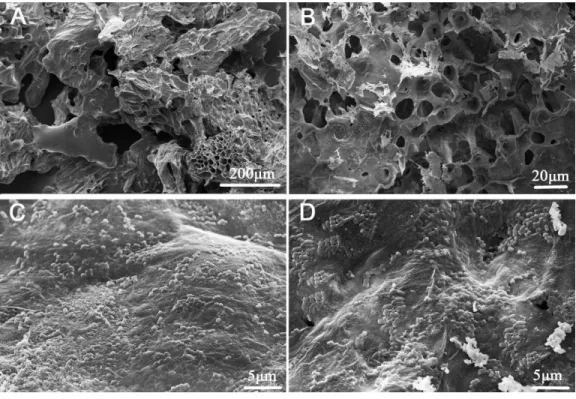
Figure 1 Scanning electron micrographs of okara and okara-immobilizedL. plantarum70810 cells. (A, B), portrait slice of okara; (C, D), okara-immobilizedL. plantarum70810.
Statistical analysis
All treatments were performed in triplicate, and data were expressed as means±SD. Data were analyzed with general linear model procedures and Duncan’s new multiple range tests for comparison of means by SPSS Inc. software (version 15.0) (Chicago, IL, USA) for Windows. A probability of less than 5% (p≤0.05) was considered statistically significant.
RESULTS AND DISCUSSION
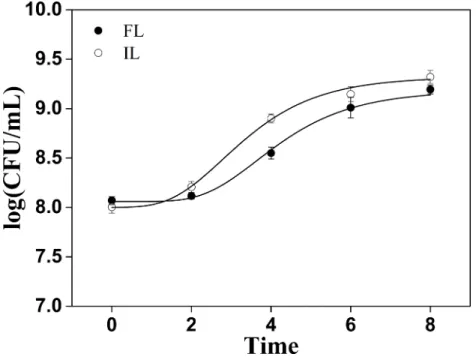
Scanning electron microscopy (SEM)Figure 2 Cells count changes in soymilk containing free and okara-immobilizedL. plantarum70810. FL, freeL. plantarum70810; IL, okara-immobilizedL. plantarum70810; CFU: colony forming units.
phenomenon (Yu et al., 2010;Genisheva et al., 2011).Espinosamartos & Rupérez (2009) reported that undigestible carbohydrates (mainly insoluble dietary fibre) and protein, the main components of okara, could be fermented by beneficial species, and this report promoted us to postulated thatL. plantarum70810 may preferentially bind to specific carbohydrate/protein sites.
Growth conditions of L. plantarum70810 in soymilk
Table 1 The changes in lactic and acetic acids of soymilk inoculated with free and immobilizedL. plantarum70810.
Time(h) Lactic acid contents (mg/ml) Acetic acid contents (mg/ml)
FL IF FL IL
0 0.93±0.04 0.95±0.04 0.98±0.07 1.02±0.07
4 1.77±0.07** 2.05±0.07*,** 1.24±0.06** 1.44±0.77*,** 8 4.69±0.18** 5.32±0.10*,** 1.90±0.10** 2.22±0.10*,**
Notes.
FL, freeL. plantarum70810; IL, okara-immobilizedL. plantarum70810. *p<0.05 vs. freeL. plantarum70810;
**p<0.05 vs. time 0.
shorter lag phase because of the availability of fibers, proteins, lipids, sugars, minerals, and essential vitamins in okara.
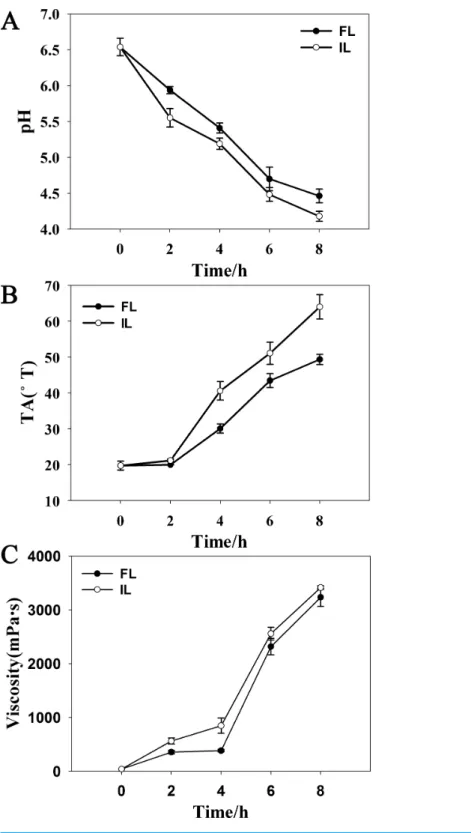
The decrease in pH and increase in TA and viscosity were accompanied byL.
plan-tarum70810 growth.Table 1andFig. 3show the differences in the concentrations of
lactic and acetic acids, pH, TA, and viscosity between soymilk inoculated with FL and that inoculated with IL. During fermentation, a lower pH and higher concentrations of lactic and acetic acids, TA and viscosity were observed in soymilk inoculated with IL compared with that inoculated with FL because of the higher growth rate and shorter lag phase of growth of IL than FL. The concentration of lactic acid was found higher than acetic acid in both cultures fermented by IL and FL over 8 h, and the concentrations of lactic and acetic acids were higher in soymilk fermented by IL than FL (Table 1). IL culture acidified soymilk to pH 4.5 (end-point of fermentation) in approximately 6 h, whereas FL culture acidified soymilk to pH 4.5 in approximately 8 h (Fig. 3A). Consistently, soymilk inoculated with IL attained a TA of 50◦T in 6 h, whereas soymilk inoculated with FL attained a TA of 50◦T in 8 h (Fig. 3B). These results agreed with those reported by Kourk-outas et al. (2005)andKourkoutas et al. (2006), who found that immobilized probiotic bacteria on fruit segments (apple and pear) showed a faster rate of pH decrease and a lower final pH upon reactivation in whey. Our results also agreed with those reported by Teh et al. (2010), who found that immobilized lactobacilli show significantly better growth (P<0.05) compared with free lactobacilli and that growth is accompanied by a higher production of lactic and acetic acids in soymilk, resulting in a lower final pH.
Figure 3 Fermentation parameters during soymilk fermentation using free and okara-immobilizedL. plantarum70810.FL, freeL. plantarum70810; IL, okara-immobilizedL. plantarum70810; TA, Titrable Acidity;◦
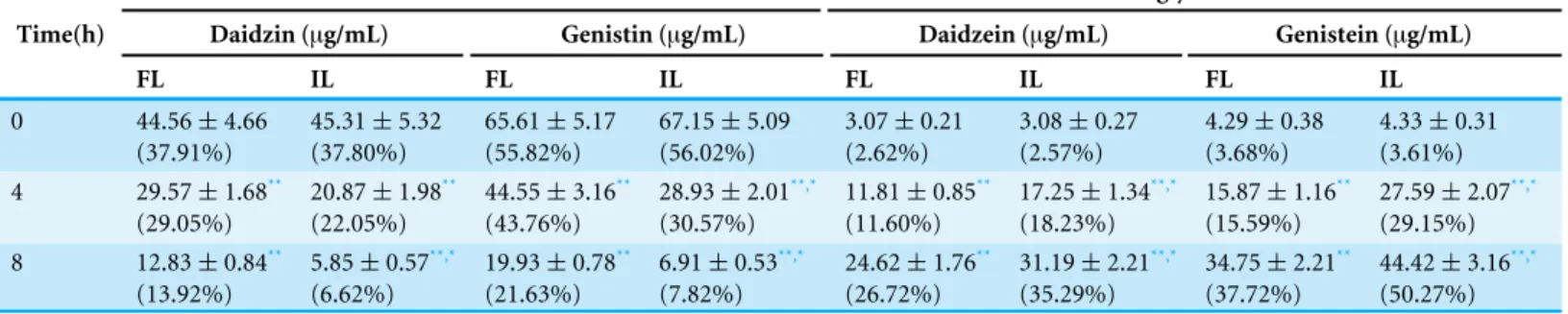
Table 2 The change in soybean isoflavone content of soymilk inoculated with free and immobilizedL. plantarum 70810.
Glucosides Aglycones
Time(h) Daidzin (µg/mL) Genistin (µg/mL) Daidzein (µg/mL) Genistein (µg/mL)
FL IL FL IL FL IL FL IL
0 44.56±4.66 (37.91%)
45.31±5.32 (37.80%)
65.61±5.17 (55.82%)
67.15±5.09 (56.02%)
3.07±0.21 (2.62%)
3.08±0.27 (2.57%)
4.29±0.38 (3.68%)
4.33±0.31 (3.61%) 4 29.57±1.68**
(29.05%)
20.87±1.98** (22.05%)
44.55±3.16** (43.76%)
28.93±2.01**,* (30.57%)
11.81±0.85** (11.60%)
17.25±1.34**,* (18.23%)
15.87±1.16** (15.59%)
27.59±2.07**,* (29.15%) 8 12.83±0.84**
(13.92%)
5.85±0.57**,* (6.62%)
19.93±0.78** (21.63%)
6.91±0.53**,* (7.82%)
24.62±1.76** (26.72%)
31.19±2.21**,* (35.29%)
34.75±2.21** (37.72%)
44.42±3.16**,* (50.27%)
Notes.
FL, freeL. plantarum70810; IL, okara-immobilizedL. plantarum70810. *p<0.05 vs. freeL. plantarum70810.
**p<0.05 vs. time 0.
Isoflavone compositions in fermented soymilk
Soybean is rich in isoflavones, which exhibit weak estrogen activity, act as antioxidants, prevent osteoporosis and cancer, reduce total cholesterol, delay menopause, and provide other health benefits (Chang & Nair, 1995). Aglycones and the glucosidic conjugates are the basic categories of isoflavones. In unfermented soybean products, daidzin and genistin are the main glucosidic isoflavones, which comprise 80%–95% of total isoflavones, and daidzein and genistein are the main aglycones (Coward et al., 1998). Many studies have indicated that the biological effects of isoflavones are conferred by aglycones and not glycosides (Kawakami et al., 2005); thus, isoflavone glucosides must be hydrolyzed to have a biological effect.β-glucosidase can hydrolyze glucoside isoflavones with the formation of aglycones (Esaki et al., 2004). Probiotics withβ-glucosidase can increase aglycone content during soymilk fermentation (Martinezvillaluenga et al., 2012).
To compare the effect of FL and IL on the bioconversion of daidzin and genistin, they were inoculated in soymilk and the four isoflavones, daidzin, genistin, daidzein, and genistein were analyzed. As shown inTable 2, in unfermented soymilk, the contents of daidzin and genistin were up to 37.91% and 55.82%, while those of daidzein and genistein were only 2.62% and 3.68%. Soymilk fermented with FL and IL exhibited a drastic
Table 3 Effect of acidic conditions on the survival of free and immobilizedL. plantarum70810 (log (CFU/g)).
Time (h) pH 3.5 pH 2.5 pH 1.5
FL IL FL IL FL IL
0 9.06±0.18 9.14±0.18 9.06±0.18 9.14±0.18 9.06±0.18 9.14±0.18 1 8.26±0.16** 8.43±0.17** 8.01±0.15** 8.25±0.14** 6.73±0.13** 7.37±0.15**,* 3 8.19±0.21** 8.42±0.16** 7.62±0.16** 8.19±0.21**,* 4.88±0.10** 6.21±0.10**,*
Notes.
FL, freeL. plantarum70810; IL, okara-immobilizedL. plantarum70810. *p<0.05 vs. freeL. plantarum70810.
**p<0.05 vs. time 0.
Table 4 Effect of simulated gastric transit and pancreatic juice on the survival of free and immobilized L. plantarum70810 (log (CFU/g)).
Time (h) Simulated gastric juice Simulated pancreatic juice
FL IL FL IL
0 9.05±0.19 9.16±0.21 9.05±0.19 9.16±0.21
1 6.61±0.15** 7.17±0.13**,* 7.31±0.09** 8.29±0.11**,* 3 4.75±0.13** 6.01±0.15**,* 7.19±0.13** 8.19±0.15**,*
Notes.
FL, freeL. plantarum70810; IL, okara-immobilizedL. plantarum70810. *p<0.05 vs. freeL. plantarum70810.
**p<0.05 vs. time 0.
Table 5 Effect of bile salts on the survival of free and immobilizedL. plantarum 70810 (log (CFU/g)).
Time (h) 0.1% 0.2% 0.3%
FL IL FL IL FL IL
0 9.05±0.19 9.16±0.21 9.05±0.19 9.16±0.21 9.05±0.19 9.16±0.21 1 9.00±0.18 9.10±0.16 5.31±0.11** 7.99±0.14**,* 4.18±0.09** 7.38±0.11**,* 3 8.87±0.14 9.06±0.17 4.71±0.10** 7.19±0.15**,* 3.94±0.07** 6.29±0.13**,*
Notes.
FL, freeL. plantarum70810; IL, okara-immobilizedL. plantarum70810. *p<0.05 vs. freeL. plantarum70810.
**p<0.05 vs. time 0.
Simulated gastric and intestinal stresses tolerance tests
To estimate cell tolerance to the simulated gastric and intestinal conditions, fermented soymilk containing either FL or IL was exposed toin vitroconditions simulating acidic environment, gastric and pancreatic juices, and bile salts; the results are summarized in
Simulated gastric acid tolerance
Acid tolerance for probiotics is essential not only for resistance to gastric stress, but it is also a prerequisite in the production of acidic probiotic food products. The buffering capacity of the food, which is a major factor affecting pH, and the rate of gastric emptying may significantly influence cell survival in the GI tract (Kourkoutas et al., 2005;Kourkoutas et al., 2006). Gastric juice pH is one of the main factors determining the survival of
probiotic bacteria when passing through the stomach to the intestine. As shown in
Table 3, the number of viable cells significantly reduced after 1 and 3 h at pH 3.5 and after 1 h at pH 2.5, but no significant difference in viable cell count was observed between soymilk containing FL and IL. When the incubation time was prolonged to 3 h at pH 2.5, cells in soymilk containing IL showed a significantly higher survival level compared with the cells in soymilk containing FL. The number of viable cells drastically reduced in soymilk containing FL or IL when the pH of the MRS broth decreased to 1.5 to simulate the extreme pH conditions of the stomach. However, IL in soymilk exhibited a significantly higher viability compared with FL in soymilk. The number of viable cells in soymilk containing FL decreased by 2.43 and 4.26 log cycles after 1 and 3 h, respectively, whereas the number of viable cells in soymilk containing IL decreased by 1.77 and 2.93 log cycles after 1 and 3 h, respectively. IL in soymilk also had a significantly higher final viable count than FL in soymilk. Tolerance to upper GI transit was also predicted with simulated gastric juice (pH 1.5,Table 4).Table 3shows that the viable cell number of FL in soymilk was reduced by 2.44 and 4.30 log cycles after incubation for 1 h and 3 h in simulated gastric juice, whereas the number of viable cells in soymilk containing IL at the both time points was reduced by only 1.99 and 3.15 log cycles. IL in soymilk also showed significantly higher cell survival rates. These results coincided with those obtained from MRS broth with pH 1.5, indicating that pH is the main factor affecting probiotics survival in the stomach. Our results also agreed with other studies.Sidira et al. (2010)reported that acidic conditions significantly reduce the number of both free and immobilizedL.
caseiATCC 393 cells. However, the count number of immobilized cells is significantly
higher than free cells after 120 min at pH 2.0 and after 30, 60, 90, and 120 min at pH 1.5.Mokarram et al. (2009)showed that cell viability is reduced by three log cycles when calcium alginate capsules containingL. acidophilusare incubated in simulated gastric juice (pH 1.5), whereas coating the capsules with one or two layers of sodium alginate improves cell survival by one and two log cycles, respectively.Laelorspoen et al. (2014) incubated cells encapsulated in alginate and citric acid-modified zein coating in gastric fluid (pH 1.2) at 37◦C for 2 h and obtained cell counts of 7.14 log CFU/mL compared with 4.52 log CFU/mL for free-cell suspensions.Fijałkowski & Peitler (2015)found that the viability ofLactobacilluscells adsorbed on or entrapped in bacterial cellulose incubated in simulated gastric juices for 4 h is significantly higher than that of free cells, particularly
forLactobacilluscells entrapped in bacterial cellulose showed a viability more than 70%
Simulated pancreatic juice tolerance
We also studied the survival of FL and IL in soymilk in simulated pancreatic juice (Table 4). Our results showed that simulated pancreatic juice significantly reduced the survival of both FL and IL. The number of viable cells in soymilk containing IL was significantly higher at both time points compared with that in soymilk containing FL. This result differed from those reported bySidira et al. (2010), who found that simulated pancreatic juice exerts no effect on the survival of immobilizedL. caseATCC399 but significantly affects the viability of freeL. caseATCC399. This result might be attributed to the use of different strains or support materials.
Simulated bile salt tolerance
Our work also assessed simulated bile salt tolerance. As shown in Table.5, 0.1% bile salt exerted no significant effect on the survival of FL or IL in soymilk. When the con-centration of bile salt increased to 0.2% and 0.3%, the survival of FL or IL in soymilk significantly decreased. However, IL showed a significantly higher number of viable cells compared with FL. These results were in line with the observations ofSidira et al. (2010). In their study, the viable cell count ofL. caseATCC399 immobilized in apple pieces decreased from 9.30 log CFU/mL to 6.23 log CFU/mL after 4 h of incubation in 1% bile salt solution, whereas the viable cell count of freeL. caseATCC399 decreased from 9.16 log CFU/mL to 3.66 log CFU/mL.Michida et al. (2006)fond thatL. plantarumNCIMB 8826 immobilized within malt and barley cereal fiber could improve its viability in bile salt solution. According to these results, we postulated that IL showed improved tolerance to bile salt stress compared with FL might be due to the physical entrapment of bile salts into the dietary fibre of okara.
CONCLUSIONS
(1) Soybean residue (okara) is a food-grade-quality, cheap, and abundant cell support. Okara is as a perfect support material for cell immobilization. Cells are firmly and easily immobilized onto okara because of its vacuous and porous structure. (2) IL cells showed a faster growth rate and a shorter lag phase of growth in soymilk. (3) Soymilk inoculated with IL showed higher productions of lactic and acetic acids, a
faster decrease in pH and increase in acidity and viscosity compared with soymilk inoculated with FL.
(4) IL accelerated the bioconversion of glucosidic isoflavones to aglycone isoflavones compared with FL during soymilk fermentation.
(5) IL exhibited a significantly enhanced resistance to the simulated gastric and intestinal stresses compared with FL.
ADDITIONAL INFORMATION AND DECLARATIONS
Funding
This study was financially supported by the National Natural Science Foundation of China (Grant No. 31501460). The funders had no role in study design, data collection and analysis, decision to publish, or preparation of the manuscript.
Grant Disclosures
The following grant information was disclosed by the authors: National Natural Science Foundation of China: 31501460.
Competing Interests
The authors declare there are no competing interests.
Author Contributions
• Xia Xiudong conceived and designed the experiments, performed the experiments,
analyzed the data, wrote the paper, prepared figures and/or tables. • Wang Ying contributed reagents/materials/analysis tools.
• Liu Xiaoli and Li Ying reviewed drafts of the paper.
• Zhou Jianzhong conceived and designed the experiments.
Data Availability
The following information was supplied regarding data availability: The raw data has been supplied asSupplemental File.
Supplemental Information
Supplemental information for this article can be found online athttp://dx.doi.org/10. 7717/peerj.2701#supplemental-information.
REFERENCES
Boirivant M, Strober W. 2007.The mechanism of action of probiotics.Current Opinion
in Gastroenterology 23(6):679–692DOI 10.1097/MOG.0b013e3282f0cffc.
Bosnea LA, Kourkoutas Y, Albantaki N, Tzia C, Koutinas AA, Kanellaki M. 2009.
Functionality of freeze-driedL. caseicells immobilized on wheat grains.LWT - Food Science & Technology 42(10):1696–1702DOI 10.1016/j.lwt.2009.05.011.
Boylston TD, Vinderola CG, Ghoddusi HB, Reinheimer JA. 2004.Incorporation of bifidobacteria into cheeses: challenges and rewards.International Dairy Journal
5(5):375–387.
Cai S, Zhao M, Fang Y, Nishinari K, Phillips GO, Jiang F. 2014.Microencapsulation
ofLactobacillus acidophilusCGMCC1.2686 via emulsification/internal gelation
of alginate using Ca-EDTA and CaCO3 as calcium sources.Food Hydrocolloids
Champagne CP, Lee BH, Saucier L. 2010. Immobilization of cells and enzymes for fermented dairy or meat products. In:Encapsulation Technologies for Active Food
Ingredients and Food Processing, 345–365.
Chang YC, Nair MG. 1995.Metabolism of daidzein and genistein by intestinal bacteria.
Journal of Natural Products58(12):1892–1896DOI 10.1021/np50126a014.
Charalampopoulos D, Pandiella SS, Webb C. 2003.Evaluation of the effect of malt, wheat and barley extracts on the viability of potentially probiotic lactic acid bacteria under acidic conditions.International Journal of Food Microbiology82(2):133–141
DOI 10.1016/S0168-1605(02)00248-9.
Charteris, Kelly, Morelli, Collins. 1998.Development and application of anin vitro methodology to determine the transit tolerance of potentially probioticLactobacillus
andBifidobacteriumspecies in the upper human gastrointestinal tract.Journal of
Applied Microbiology 84(5):759–768DOI 10.1046/j.1365-2672.1998.00407.x.
Chen C, Rui X, Lu Z, Li W, Dong M. 2014.Enhanced shelf-life of tofu by using bac-teriocinogenic Weissella hellenica D1501 as bioprotective cultures.Food Control
46:203–209DOI 10.1016/j.foodcont.2014.05.004.
Choi SS, Kim Y, Han KS, You S, S Oh, SH Kim. 2006.Effects of Lactobacillus strains on cancer cell proliferation and oxidative stressin vitro.Letters in Applied Microbiology
42(5):452–458DOI 10.1111/j.1472-765X.2006.01913.x.
Coward L, Smith M, Kirk M, Barnes S. 1998.Chemical modification of isoflavones in soyfoods during cooking and processing.American Journal of Clinical Nutrition68(6 Suppl):1486S–1491S.
Dimitrellou D, Kourkoutas Y, Koutinas AA, Kanellaki M. 2009.Thermally-dried immobilized kefir on casein as starter culture in dried whey cheese production.Food
Microbiology26(8):809–820 DOI 10.1016/j.fm.2009.05.006.
Esaki H, Watanabe R, Hishikawa N, Osawa T, Kawakishi S. 2004.Utility of isoflavone preparations from soy sauce cake as antioxidant materials.Nippon Shokuhin Kagaku
Kogaku Kaishi51(1):47–53DOI 10.3136/nskkk.51.47.
Espinosamartos I, Rupérez P. 2009.Indigestible fraction of okara from soybean:
composition, physicochemical properties andin vitrofermentability by pure cultures ofLactobacillus acidophilusandBifidobacterium bifidum.European Food Research &
Technology228(5):685–693DOI 10.1007/s00217-008-0979-7.
Fijałkowski K, Peitler D, Rakoczy R, Żywicka A. 2015.Survival of probiotic lactic acid bacteria immobilized in different forms of bacterial cellulose in simulated gastric juices and bile salt solution.LWT - Food Science and Technology68:322–328
DOI 10.1016/j.lwt.2015.12.038.
Genisheva Z, Mussatto SI, Oliveira JM, JA Teixeira. 2011.Evaluating the potential of wine-making residues and corn cobs as support materials for cell immobi-lization for ethanol production.Industrial Crops & Products34(1):979–985
DOI 10.1016/j.indcrop.2011.03.006.
Grizotto RK, Aguirre JMD. 2011.Study of the flash drying of the residue from soymilk processing ‘‘okara’’.Ciência e Tecnologia de Alimentos31.3:645–653
Grygorczyk A, Corredig M. 2013.Acid induced gelation of soymilk, comparison between gels prepared with lactic acid bacteria and glucono-δ-lactone.Food Chemistry
141(3):1716–1721DOI 10.1016/j.foodchem.2013.03.096.
Guénette M, Duvnjak Z. 1996.Wood blocks as a carrier for Saccharomyces Cerevisiae used in the production of ethanol and fructose.Chemical Engineering Journal & The
Biochemical Engineering Journal61(61):233–240 DOI 10.1016/0923-0467(95)03042-5.
Indira D, Jijnasa B, Arati N, Moumita S, Ajay D, Eldin J, Sachin K, Rasu J. 2015.
Comparative studies of ethanol production and cell viability: free cells versus immobilized cells.Research Journal of Pharmaceutical Biological and Chemical Sciences6(2):1708–1714.
Jiménez-Escrig A, Tenorio MD, Espinosa-Martos I, Rupéŕez P. 2008.Health-promoting effects of a dietary fiber concentrate from the soybean byproduct okara in rats. Journal of Agricultural & Food Chemistry56(16):7495–7501DOI 10.1021/jf800792y.
Kawakami Y, Tsurugasaki W, Nakamura S, Nakamura K. 2005.Comparison of regulative functions between dietary soy isoflavones aglycone and glucoside on lipid metabolism in rats fed cholesterol.Journal of Nutritional Biochemistry
16(4):205–212DOI 10.1016/j.jnutbio.2004.11.005.
Kourkoutas Y, Bosnea L, Taboukos S, Baras C, Lambrou D, Kanellaki M. 2006. Pro-biotic cheese production usingLactobacillus caseicells immobilized on fruit pieces.
Journal of Dairy Science89(5):1439–1451DOI 10.3168/jds.S0022-0302(06)72212-3.
Kourkoutas Y, Xolias V, Kallis M, Bezirtzoglou E, Kanellaki M. 2005.Lactobacillus casei immobilization on fruit pieces for probiotic additive, fermented milk and lactic acid production.Process Biochemistry 40(1):411–416DOI 10.1016/j.procbio.2004.01.029.
Laelorspoen N, Wongsasulak S, Yoovidhya T, Devahastin S. 2014.Microencapsulation ofLactobacillus acidophilusin zein–alginate core–shell microcapsules via electro-spraying.Journal of Functional Foods7(1):342–349 DOI 10.1016/j.jff.2014.01.026.
Liu C-F, Hu C-L, Chiang S-S, Tseng K-C, Yu R-C, Pan T-M. 2009.Beneficial preventive effects of gastric mucosal lesion for soy-skim milk fermented by lactic acid bacteria. Journal of Agricultural & Food Chemistry57(57):4433–4338DOI 10.1021/jf900465c.
Martinezvillaluenga C, Torino MI, Martín V, Arroyo R, Garcia-Mora P, Estrella Pedrola I, Vidal-Valverde C, Rodriguez JM, Frias J. 2012.Multifunctional properties of soy milk fermented by Enterococcus faecium strains isolated from raw soy milk.Journal of Agricultural & Food Chemistry60(41):10235–10244
DOI 10.1021/jf302751m.
Mattila-Sandholm T, Myllärinen P, Crittenden R, Mogensen G, Fondén R, Saarela M. 2002.Technological challenges for future probiotic foods.International Dairy Journal
12(2–3):173–182DOI 10.1016/S0958-6946(01)00099-1.
Michida H, Tamalampudi S, Pandiella SS, Webb C, Fukuda H, Kondo A. 2006.Effect of cereal extracts and cereal fiber on viability ofLactobacillus plantarumunder gastrointestinal tract conditions.Biochemical Engineering Journal28(1):73–78
DOI 10.1016/j.bej.2005.09.004.
the production of functional dairy foods.International Dairy Journal14.8:723–736
DOI 10.1016/j.idairyj.2004.01.007.
Mokarram RR, Mortazavi SA, Najafi MBH, Shahidi F. 2009.The influence of multi stage alginate coating on survivability of potential probiotic bacteria in simu-lated gastric and intestinal juice.Food Research International42(8):1040–1045
DOI 10.1016/j.foodres.2009.04.023.
O’Toole DK. 1999.Characteristics and use of okara, the soybean residue from soy milk production a review.Journal of Agricultural & Food Chemistry47(2):363–371
DOI 10.1021/jf980754l.
Panthapulakkal S, Sain M. 2007.Agro-residue reinforced high-density polyethy-lene composites: fiber characterization and analysis of composite proper-ties.Composites Part A: Applied Science & Manufacturing 38(6):1445–1454
DOI 10.1016/j.compositesa.2007.01.015.
Pérezlópez E, Cela D, Costabile A, Mateos-Aparicio I, Rupérez P. 2016.In vitro fer-mentability and prebiotic potential of soyabean Okara by human faecal microbiota.
British Journal of Nutrition1(6):1–9DOI 10.1017/S0007114516002816.
Préstamo G, Rupérez P, Espinosa-Martos I, Villanueva MJ, Lasunción MA. 2007.The effects of okara on rat growth, cecal fermentation, and serum lipids.European Food
Research & Technology225(5):925–928DOI 10.1007/s00217-006-0497-4.
Pyo Y-H, Lee T-C, Lee Y-C. 2005.Enrichment of bioactive isoflavones in soymilk fermented withβ-glucosidase-producing lactic acid bacteria.Food Research
Inter-national38(5):551–559DOI 10.1016/j.foodres.2004.11.008.
Raghavendra SN, Ramachandra Swamy SR, Rastogi NK, Raghavarao KSM.S., Kumar S, Tharanathan RN. 2006.Grinding characteristics and hydration properties of coconut residue: a source of dietary fiber.Journal of Food Engineering 72(3):281–286
DOI 10.1016/j.jfoodeng.2004.12.008.
Redondo-Cuenca A, Villanueva-Suárez MJ, Mateos-Aparicio I. 2008.Soybean seeds and its by-product okara as sources of dietary fibre Measurement by AOAC and Englyst methods.Food Chemistry108(3):1099–1105DOI 10.1016/j.foodchem.2007.11.061.
Sathyabama S, Ranjith Kumar M, Bruntha devi P, Vijayabharathi R, Brindha priyad-harisini V. 2014.Co-encapsulation of probiotics with prebiotics on alginate matrix and its effect on viability in simulated gastric environment.LWT - Food Science and
Technology57(1):419–425DOI 10.1016/j.lwt.2013.12.024.
Saulnier DM, Spinler JK, Gibson GR, Versalovic J. 2009.Mechanisms of probiosis and prebiosis: considerations for enhanced functional foods.Current Opinion in
Biotechnology20(2):135–141DOI 10.1016/j.copbio.2009.01.002.
Schoina V, Terpou A, Angelika-Ioanna G, Koutinas A, Kanellaki M, Bosnea L. 2015.
Use of Pistacia terebinthu s resin as immobilization support forLactobacillus caseicells and application in selected dairy products.Journal of Food Science and
Technology52(9):5700–5708DOI 10.1007/s13197-014-1627-9.
Sendra E, Fayos P, Lario Y, Fernández-López J, Sayas-Barberá E, Pérez-Alvarez JA. 2008.Incorporation of citrus fibers in fermented milk containing probiotic bacteria.
Sidira M, Galanis A, Ypsilantis P, Karapetsas A, Progaki Z, Simopoulos C, Kourkoutas Y. 2010.Effect of probiotic-fermented milk administration on gastrointestinal survival ofLactobacillus caseiATCC 393 and modulation of intestinal micro-bial flora.Journal of Molecular Microbiology & Biotechnology19(4):224–230
DOI 10.1159/000321115.
Teh SS, Ahmad R, Wan-Abdullah W-N, Liong M-T. 2010.Enhanced growth of lac-tobacilli in soymilk upon immobilization on agrowastes.Journal of Food Science
75(3):155–164DOI 10.1111/j.1750-3841.2010.01538.x.
Villanueva MJ, Yokoyama WH, Hong YJ, Barttley GE, Rupérez P. 2011.Effect of high-fat diets supplemented with okara soybean by-product on lipid profiles of plasma, liver and faeces in Syrian hamsters.Food Chemistry 124(1):72–79
DOI 10.1016/j.foodchem.2010.05.106.
Villanueva-Suárez MJ, Pérez-Cózar ML, Redondo-Cuenca A. 2013.Sequential extrac-tion of polysaccharides from enzymatically hydrolyzed okara byproduct: physico-chemical properties andin vitrofermentability.Food Chemistry141(2):1114–1119
DOI 10.1016/j.foodchem.2013.03.066.
Wei Q-K, Chen T-R, Chen J-T. 2007.Using of lactobacillus and bifidobacterium to product the isoflavone aglycones in fermented soymilk.International Journal of Food
Microbiology117(1):120–114 DOI 10.1016/j.ijfoodmicro.2007.02.024.
Yu J, Xu Z, Tan T. 2007.An novel immobilization method of Saccharomyces cerevisiae to sorghum bagasse for ethanol production.Journal of Biotechnology129(3):415–420
DOI 10.1016/j.jbiotec.2007.01.039.
Yu J, Yue G, Zhong J, Zhang X, Tan T. 2010.Immobilization of Saccharomyces cerevisiae to modified bagasse for ethanol production.Renewable Energy35(6):1130–1134
DOI 10.1016/j.renene.2009.11.045.
Zhu G, Zhu X, Xiao Z, Zhou R, Yi F. 2012.Pyrolysis characteristics of bean dregs andin situvisualization of pyrolysis transformation.Waste Management32(12):2287–2293
DOI 10.1016/j.wasman.2012.07.004.