International Journal of Advanced Biotechnology and Research (IJBR) ISSN 0976-2612, Online ISSN 2278–599X, Vol-7, Special Issue3-April, 2016, pp184-191 http://www.bipublication.com
Research Article
Restless leg syndrome in amphetamine dependents undergone
treatment in a longitudinal study
1
Gonabadi Nejad L, 2AhmadkhanihHR,
3
Moosavi Saadatabadi H and 4Fattah Moghaddam L
1,3Department of Psychiatry, Iran University of medical sciences, Tehran, Iran 2Iran university of Medical Sciences. Faculty of medicine. Mental health Research Center
4Nursing Education, Lecturer, Department of Psychiatric Nursing,
Islamic Azad University, Tehran Medical Sciences Branch, Tehran, Iran
ABSTRACT
Objective: This descriptive-analytical study aimed to examine correlation between Restless leg syndromes (RLS) with amphetamine relapse. Methods: Case group included 170 amphetamine dependent abusers undergone treatment, which during treatment 100 of them (58/8%) experienced amphetamine abuse relapse and 70 of them (41/2%) did not. Control group included 190 persons without substance abuse .Results showed that severity of RLS during second month of treatment had the most important role in relapse of abuse which increases the risk of returning patient to substance abuse to 35/19 times more.(OR=35/19,CI=6/93-178/51,P-value=0/000).Severity of RLS in case group was mild at the beginning of the study then increased in first month of treatment and became sever in second month of treatment and again decreased in the third month, and finally the main reasons for amphetamine abuse relapse reported respectively: restless legs with 37 frequency (21/8%).In incidence frequency investigation of RLS in amphetamine abusers undergone treatment, 34 persons (43/9%) did not experience RLS which among them 23 persons (32/9%) did not have relapse of abuse and 11 persons (11%) experienced relapse. conclusion: amphetamine abuse withdrawal has affected severity of RLS, which was significant in the first month and recognized as an important factor in severity of syndrome.
Keywords: “Restless leg syndrome (RLS) ”, “methamphetamine”
INTRODUCTION
Substance abuse in almost all countries counts as a general health problem which is multi factorial and often has chronic and relapsing progression [1]. Recently due to more communications around the world, substance abuse pattern is changing and brand new substances like amphetamine are more accessible [2]. An important issue which should be considered in withdrawal of substance abuse and also relapse of abuse is the reason of withdrawal and relapse. Studies showed that about 80% of people came for withdrawal treatment experienced relapse in first six months and the cause of relapse classified in family, economic, social and personal factors [3]. In other words recognition and evaluation of causes and severity of effective factors of
substance abuse treatment and also relapse of abuse can be helpful in policy establishment and educational programs for substance abuse treatment [4].
economical force for patients [8, 10-11]. Although it’s etiology is idiopathic[5], but many studies showed that deficiency in dopaminergic system is related to RLS[19-22] and also dopamine is one of the effective neurotransmitters in substance abuse pathophysiology(19). It can be hypothesized that there may be a correlation between amphetamine abuse and restless leg syndrome. So this study aimed to investigate RLS in amphetamine dependent patients comparing to those dependents with period of relapse.
METHODS AND MATERIALS
This descriptive-analytical study designed as a cohort study which performed longitudinal. Accessible sampling method was used and people with the terms of inclusion criteria entered to study respectively. Studying population contained amphetamine abusers who came for withdrawal treatment to an addiction clinic (Tehran Psychiatric Institute) and did not have relapse of abuse (first group) and patients who had relapse during treatment (second group).
Exclusion criteria included: 1) age under 18 years,2) comorbid dependency to another substance,3) false answers to questions by patiemt,4) any peripheral nervous system disease such as diabetes, 5) consumption of psychiatric medication which can produce movemental disorders like akategia, 6) consumption of any sedative or gaba stimulators which can cure RLS.
Each participant was informed about the goals and method of study and informed contest obtained from them. All participants filled demographic questionnaire included(age, gender, marital status, age of first substance abuse, other abused substances, withdrawal history, personal and familial psychiatric history) and RLS questionnaire at the beginning of study and 2 weeks after withdrawal treatment. Also a psychiatric interview performed to rule out BID, schizophrenia and any substance induced psychosis and GMC.
self-report, urine test for amphetamine abuse and quit of treatment were investigated.
Regarding these results patients divided in two groups: the ones who experienced amphetamine abuse relapse and those who did not. Frequency and outbreak ratio compared in two groups. Diagnosis criteria for RLS contained 1) tendency to move limbs with agitation and discomfort, 2) tendency to walk constantly or rubbing legs to each other to remove feeling of discomfort,3) enhancement of symptoms at the time of rest and recover by activity permanently, 40 enhancement of symptoms in early day or night[23].
Expectation items included: 1) if patient had RLS before and cured spontaneously or is under treatment with specific drug and experience symptoms alternatively, 2) patients who earlier recovered by activity, but recently do not and have severe symptoms, 3) patients who earlier only had symptoms at day or night but recently became equal in day and night.Regarding clinical history, patients with RLS distinguished from those who were not. Then by using 10 items questionnaire severity of RLS determined. Scores counted from 0 to 40 as Score 0: no sign of RLS, 1 to 10: mild, 11 to 20: moderate, 21 to 30: sever and 31 to 40: very sever. Statistical tests used in this study included t-test to compare quantitative variables, Mann-Whitney U test to compare ranking variables and qui-square used to compare proportions. Statistical significance limitation in this study was 0.05 and SPSS-20 was applied.
Findings
not entered to study because relapse of abuse and RLS during first, second and third month did not recorded.
However, in evaluating of control group at the beginning of study 160 persons (84/2%) did not have RLS and the most frequency of RLS belonged to 19 persons (10%) with mild RLS. In case group the most frequent mild RLS was 65 persons (38/2%) and 45 persons (26/5/5) with moderate RLS. Severity of RLS almost was mild in two groups at the time beginning the study but increased during first and second month of treatment and again decreased in third month.
Finally the main reason for relapse of abuse was restless legs with 37 frequencies (21%) and irritability with 25 frequencies (14/7%). In incidence frequency of RLS investigation of amphetamine abusers undergone treatment at the beginning of study,34 ones(43/9%) did not have RLS which among them 23 ones(32/9%) did not experience relapse and 11 ones(11%) had the period of relapse; also in patients with relapse, severity of RLS as moderate, sever and very sever(intense) reported more than ones who had not relapse, in the other hand in control group with no history of substance abuse 160 ones(84/2%) did not have RLS and the remained ones had mild RLS. So using qui-square test it can be said that there was a significant difference among incidence frequency distribution of RLS in 3
groups.(p-value<0/05). Control group had no evaluation of syndrome severity during 3 months due to no history of substance abuse and only the rate of incidence recorded for them(1/23+_0/60). So incidence frequency of distribution of RLS in undergone treatment patients was determined and compared:
Table 1 shows incidence frequency distribution of RLS during first, second and third month of treatment in patients with period of relapse or without, separately. According to this table patients without relapse had decreasing rate of RLS severity during time, but patients with relapse showed increasing rate comparing to the entrance time to study which enhanced at first month and more in second month and finally decreased in third month and they started recovery process and rate of outbreak and severity among them decreased that these differences were statistically significant using qui-square test (p-value<0/.05).
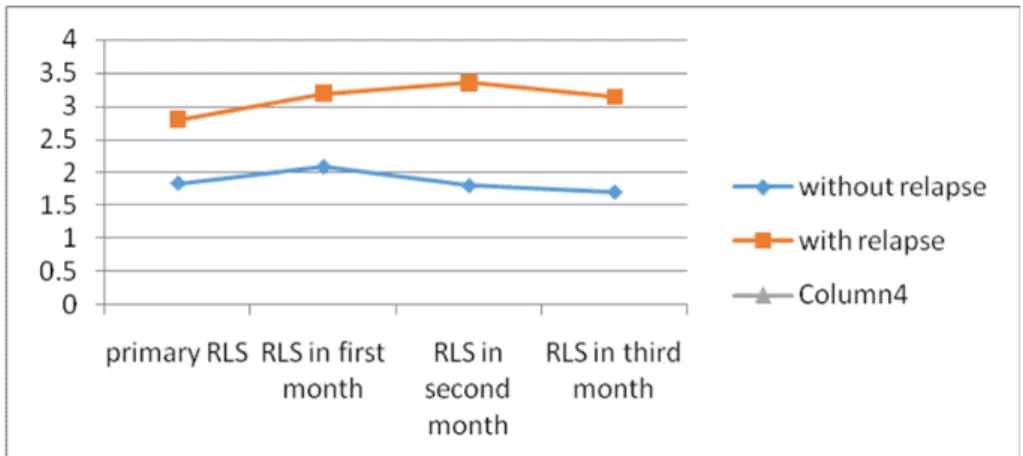
Evaluation of severity rate of RLS among two groups of amphetamine abuse relapse and without relapse compare by using independent t-test and still there was significant difference between two groups. Chart 1 shows trend of average of severity of RLS during time, as it is showed in the charts patients with relapse periods reported more average of severity of syndrome and also enhancement of severity during time which finally decreased at the third month of treatment.
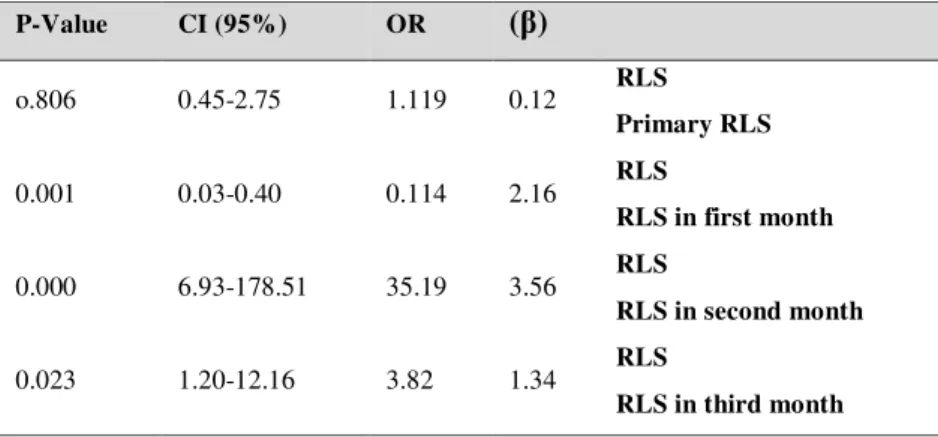
Table1: logistic regression results for RLS standardized coefficients (β) on relapse of methamphetamine
dependents
)
β
(
OR CI (95%)
P-Value
RLS
Primary RLS
0.12 1.119
0.45-2.75 o.806
RLS
RLS in first month
2.16 0.114
0.03-0.40 0.001
RLS
RLS in second month
3.56 35.19
6.93-178.51 0.000
RLS
RLS in third month
1.34 3.82
Chart 1: linear chart for average severity of primary and 3 months RLS during treatment
Table 2 shows the results of logistic regression for the effect of RLS severity on amphetamine dependents undergone treatment, according to this table, primary RLS cannot be an important factor for relapse, but RLS during months of treatment can be an effective factor in relapse as it is increased risk of relapse in first month to 0/114 and the most effect of syndrome
severity which increased risk of relapse 35/190 times more reported in second month. After discussion about frequency distribution of RLS among amphetamine dependents and control group, it is necessary to investigate relationship of factors effective on RLS incidence in patient who undergone treatment:
Table 2: comparison of RLS incidence frequency during first, second and third month of treatment
RLS incidence in first month: P-Value
Case group Without syndrome
mild moderate
sever intense
Without relapse 14(20%)
(54.3%)38 (22.9%)16
(2.9 %) 2 (0%)0
P<0/001
With relapse 4(%4)
27(%27) 28(%28)
(28%)28 13(13%)
RLS incidence in second month: P-Value
Without relapse 21(30%)
42(60) 7(10%)
(0%)0 (0%)0
P<0/001
With relapse 1(1%)
18(18%) 38(38%)
31(31%) 12(12%)
RLS incidence in third month P-Value
Without relapse 23(32.9% )
45(46.3%) 2(2.9%)
(0%)0 (0%)0
P<0/001
With relapse 6(6%)
15(15%) 43(43%)
31(31%) 5(5%)
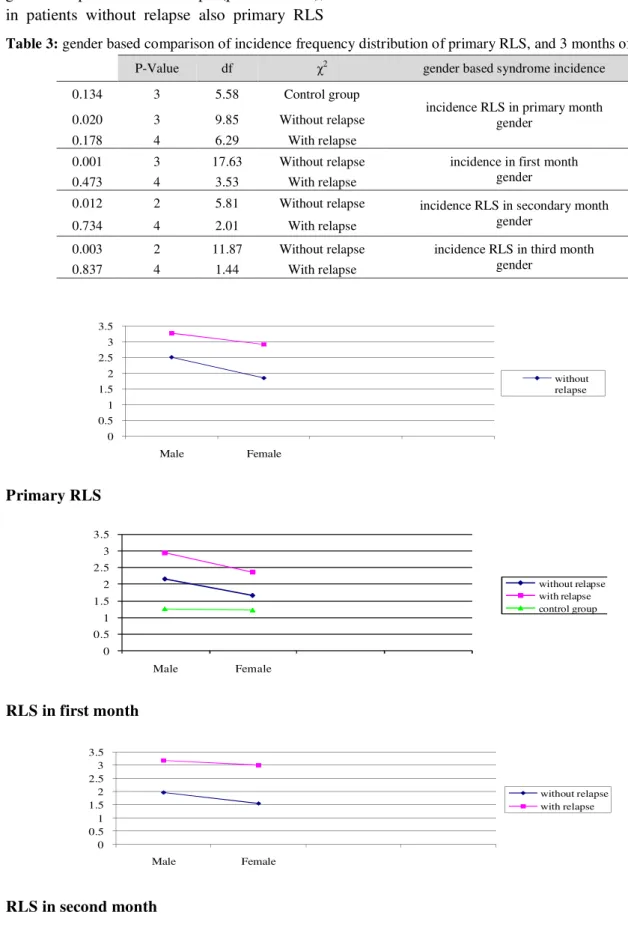
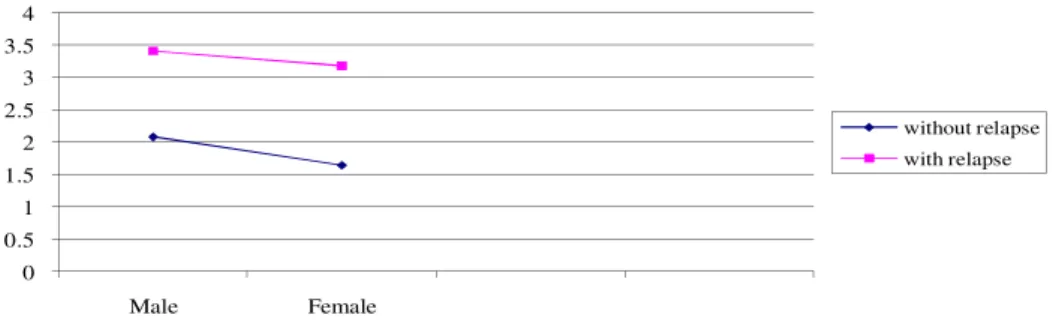
Table 3 showed results of RLS incidence and frequency in amphetamine dependents with or without relapse during time by gender; as it is obvious in the table men with relapse had more frequency distribution of RLS than women with relapse , in other words men with relapse showed most primary RLS frequency with moderate severity,(31 ones,39/7%) and women with relapse had frequency of 8 persons(36/4%) with mild severity, which can be said that
groups with relapse and without relapse by gender, but using qui-square showed no meaningful difference in RLS incidence by gender in patients with relapse(p-value>0/05), in patients without relapse also primary RLS
incidence and severity was more than female gender which was statistically significant(p-value<0/05).
Table 3: gender based comparison of incidence frequency distribution of primary RLS, and 3 months of treatment
0 0.5 1 1.5 2 2.5 3 3.5
Male Female
without relapse
Primary RLS
0 0.5 1 1.5 2 2.5 3 3.5
Male Female
without relapse with relapse control group
RLS in first month
0 0.5 1 1.5 2 2.5 3 3.5
Male Female
without relapse with relapse
RLS in second month
gender based syndrome incidence
2
χ
df P-Value
incidence RLS in primary month gender
Control group 5.58
3 0.134
Without relapse 9.85
3 0.020
With relapse 6.29
4 0.178
incidence in first month gender Without relapse
17.63 3
0.001
With relapse 3.53
4 0.473
incidence RLS in secondary month gender
Without relapse 5.81
2 0.012
With relapse 2.01
4 0.734
incidence RLS in third month gender
Without relapse 11.87
2 0.003
With relapse 1.44
0 0.5 1 1.5 2 2.5 3 3.5 4
Male Female
without relapse with relapse
RLS in third month
Chart 2: linear chart of gender based average severity of primary syndrome and 3months treatment in case and
control group
From now on, effective factors on RLS severity without considering relapse evaluated in all patients undergone treatment. Results from linear regression in order to investigate effective factors on RLS declared in table 4. Factors evaluated in this study included gender, reason of relapse, marital status, education level, substance abuse relapse, age of first substance abuse, withdrawal history, family history of substance abuse, smoking cigarettes and times of substance abuse, but in table 4 only the factors effective on RLS incidence and severity was shown. As it is shown gender, age and reason of relapse affected primary RLS before treatment; in the first month of treatment
gender, age, reason of relapse and relapse of abuse affected severity of RLS and as it is obvious in table substance abuse withdrawal affected RLS severity especially in the first month which was considered statistically effective on syndrome severity. Severity of syndrome in second and third month of treatment only related to gender and reason of relapse, it can be said that the first month of treatment was the most effective period on severity of syndrome and patients had more tendency to substance abuse again during this month.
Table 4: factors effective on incidence and severity of RLS
factor )
β
(
P-Value
Primary RLS gender
0.446
0/001
age 0.039
P<0/001
reason of relapse 0.250
P<0/001
RLS in first month Gender
0.497
P<0/001
age 0.016
P<0/001
substance abuse relapse 0.712
P<0/001
reason of relapse 0.405
P<0/001
RLS in second month gender
0.325 0/004
reason of relapse 0.344
P<0/001
RLS in third month gender
DISCUSSION AND CONCLUSION
The purpose of research was to investigate effect of restless leg syndrome in rate of relapse in amphetamine abusers in a longitudinal study. At the time of entrance to study in case group (amphetamine dependents undergone treatment) RLS incidence reported mild with 65 persons frequency (38/2%) and moderate with 45 persons frequency (26/5%) and in control group the most frequent RLS was mild with frequency of 19 persons (10%). Also severity of RLS in case group at the time of entrance to was almost mild which was increased during first and second of treatment and decreased during the third month and finally the main reason for relapse of abuse reported rest legs with the frequency of 37 ones (21/8%), anger and irritability with the frequency of 25 ones (14/7%).
Results of present study about frequency of RLS syndrome incidence in amphetamine abusers at the beginning of the study showed that 34 persons (43/9%) did not have the syndrome and 11 ones (11%) among them reported relapse. Rate of RLS severity as moderate, sever and intense was higher in patients with period of relapse comparing to those who had not relapse, also control group of this study which had no history of substance abuse, just reported primary RLS(with severity of 1/23±0/60), so severity of syndrome during 3 months was not evaluated. Accordingly it can be suggested that RLS had an important role in relapse of substance abuse, as in control group with no history of substance abuse, 160 ones(84/2%) did not have primary RLS and the remained ones only experienced mild RLS. Methamphetamine abuse can cause permanent cognitive disorders and central nervous system deficiency which can lead to more rate of substance abuse and relapse. This deficiency in nervous cells may lead to prefrontal cortex (PFC) and Systems. Studies suggested that neuron changes induced by amphetamine abuse can be considered as a factor to relapse of abuse [24] Dopamine enhancement can lead to impulse control disorders and dopaminergic system dysfunction exists in people with these
disorders such as gambling and substance abuse [25-26].
Results of present study showed that severity of RLS in the group with relapse was higher than the group without relapse. Linear regression results in order to evaluate effective factors on RLS severity showed that gender, age and the reason of relapse affected primary RLS severity; in the first month after treatment, factors as gender, age, reason of relapse and the relapse itself affected RLS severity, so it can be concluded that substance abuse withdrawal affected severity of RLS which was significant in the first month and considered as an effective factor statistically.
Severity of syndrome in second and third months of treatment depended on factors like gender and reason of relapse, in other words it can be said that first month of during treatment is the most important one on RLS severity and due to probable disorders during this month can cause more tendency in patients to return to substance abuse.
REFERENCES
1. Grella CE, Lovinger K., 2011, 30-Year trajectories of heroin and other drug use among men and women sampled from methadone treatment in California. Drug Alcohol Depend 118(2-3), 251-8.
2. Mehrjerdi ZA., 2013 Dec, A brief overview of methamphetamine use treatment in Iran: Intervention and practice. J Res Med Sci 18(12), 1018-20.
3. Colin S, Jean-François B, Lucie B, Élise R.,
2013 Dec, Cessation of injecting drug use among street-based youth.J of Urban Health, Springer New York 82(4), 622-37.
4. Tavakoli Ghouchani H, Armat MR, Mortazavi H., 2002, Factors related to embarking on addiction cessation in clients referring to Bojnoord rehabilitation clinic for addiction cessation 2000-1. J of Zanjan University of Medical Sciences 38, 32-38. 5. Wetter TC, Winkelmann J, Eisensehr I.,
2003 Oct, Current treatment options for restless legs syndrome. Expert Opin Pharmacother 4(10), 1727-38
6. The 2001 Sleep in America Poll. Washington (DC): National Sleep Foundation; 2001
Restless Legs Syndrome. Am Fam Physician78 (2), 235-240.
8. Reinhold T,Müller-Riemenschneider F. Willich SN. Brüggenjürgen B., 2009, Economic and human costs of restless legs syndrome. Pharmacoeconomics 27,267–279. [Pub Med]
9. Happe S, Reese JP, Stiasny-Kolster K, Peglau I, Mayer G, Klotsche J and et al., 2009 Mar, Assessing health-related quality of life in patients with restless legs syndrome. Sleep Med 10(3), 295-305 [PubMed]
10.Earley CJ,Silber MH., 2010, Restless legs syndrome: Understanding its consequences and the need for better treatment. Sleep Med 11,807–815. [Pub Med]
11. Reese JP. Stiasny-Kolster K. Oertel WH. Dodel RC., 2007, Health-related quality of life and economic burden in patients with restless legs syndr. Expert Rev Pharmacoecon Outcomes Res 7,503–521. [Pub Med]
12.Winkelmann J, Prager M, Lieb R, Pfister H, Spiegel B, Wittchen HU and et al., 2005 Jan, “Anxietas tibiarum” depression and anxiety disorders in patients with restless legs syndrome. J Neurol 252(1),
67-71.[Cross Ref][Medline][Web of Science]Google Scholar
13.Hening W, Walters AS, Allen RP,
Montplaisir J, Myers A, Ferini-Strambi L., 2004, Impact, diagnosis and treatment of restless legs syndrome (RLS) in a primary
care population: the REST (RLS
epidemiology, symptoms, and treatment) primary care study. Sleep Med 5,237– 46.CrossRefMedline
14.Sevim S, Dogu O, Kaleagasi H, Aral M, Metin O, Camdeviren H., 2004, Correlation
of anxiety and depression symptoms in patients with restless legs syndrome: a population based survey. J Neurol
Neurosurg Psychiatry 75,226–
30.Abstract/FREE Full Text
15.Earley CJ, Silber MH., 2010, Restless legs syndrome: understanding its consequences and the need for better treatment. Sleep Med 11,807–815. [Pub Med]
16.Allen RP, Walters AS, Montplaisir J, Hening W, Myers A, Bell TJ and et al., 2005,Restless legs syndrome prevalence and impact: REST general population study.
Arch Intern Med 165(11), 1286-92.[Cross
Ref][Medline][Web of Science]Google Scholar.
17.Picchietti D,Winkelmann JD., 2005,Restless legs syndrome, periodic limb movements in sleep, and depression. Sleep 28,891– 8.[Medline][Web of Science]Google Scholar 18.Abetz L, Allen R, Follet A, Washburn
T, Earley C, Kirsch J and et al., 2004 Jun ,Evaluating the quality of life of patients with restless legs syndrome. Clin Ther
26(6), 925-35.[CrossRef][Medline][Web of
Science]Google Scholar
19. Yang JS, Cho YJ, Kang SH, Choi HJ., 2014 Feb, Demographic and clinical characteristics of patients with restless legs syndrome in spine clinic.J Korean Neurosurg Soc 55(2), 83-8.
20.Sandyk R., 1983, the restless legs syndrome (Ekbom's syndrome) S Afr Med J 63,701– 702. [PubMed]
21.O'Keeffe ST., 1996, Restless legs syndrome: A review. Arch Intern Med 156,243–248. [PubMed]
22.Allen R., 2004, Dopamine and iron in the pathophysiology of restless legs syndrome (RLS) Sleep Med 5,385–391. [PubMed] 23.A review of plans for a decrease in demands
for drug.,2004.J of Payame Mobtala 7, 3-7. 24.Gamaldo CE, Earley CJ., Nov 2006,
Restless legs syndrome: a clinical update.
Chest 130(5), 1596-604.
25.Parsegian A, See RE., 2014 Mar, Dysregulation of dopamine and glutamate release in the prefrontal cortex and nucleus accumbens following
methamphetamine self-administration and during reinstatement in rats. Neuropsychopharmacology 39(4), 811-22. 26.Tippmann-Peikert M, Park JG, Boeve BF,