Preparation of mullite whiskers reinforced SiC
/
Al
2O
3composites by
microwave sintering
Bingbing Fan
1,3, Wei Li
1, Binzhou Dai
1, Keke Guan
1, Rui Zhang
1,2,∗, Hongxia Li
3 1School of Materials Science and Engineering, Zhengzhou University, Henan 450001, PR China 2Provincial Key Laboratory of Aviation Materials and Application Technology, Zhengzhou Institute ofAeronautics, Henan 450015, PR China
3Sinosteel Luoyang Institute of Refractories Research Co., Ltd. Henan 471039, PR China
Received 18 August 2016; Received in revised form 31 October 2016; Accepted 19 November 2016
Abstract
Mullite whiskers reinforced SiC/Al2O3composites were prepared by microwave sintering in a microwave cham-ber with TE666resonant mode. Original SiC particles were coated with SiO2using sol-gel processing and mixed with Al2O3particles. Mullite was formed in the reaction between SiO2 and Al2O3. The isostatically pressed cylindrical pellets were sintered from 1350 °C to 1600 °C for 30 min. Physical and chemical responses were investigated by detecting changes in reflected power during the microwave sintering process. XRD was car-ried out to characterize the samples and showed that mullite could be formed at 1200 °C. Bridging of mullite whiskers between Al2O3and SiC particles was observed by SEM and is due to a so-called local hot spot effect, which was the unique feature for microwave sintering. The optimized microwave sintering temperature was 1500 °C corresponding to the maximum amount of mullite whiskers within SiC/Al2O3 composites. The high electro-magnetic field enhanced the decomposition of mullite at higher temperatures above 1550 °C. The me-chanical properties of mullite whiskers reinforced SiC/Al2O3composites are much better than the SiC/Al2O3 composites without mullite whiskers.
Keywords: microwave sintering, SiC/Al2O3composites, mullite whiskers, bridging, local hot spot effect
I. Introduction
Al2O3-based composites have been widely used in mechanical, chemical engineering, metallurgy, military and electronic fields because of their excellent refrac-toriness, low electrical conductivity, oxidation resis-tance, good chemical stability [1–4]. Most researches have focused on particle-dispersed Al2O3 composites to improve mechanical properties [3,5]. SiC, ZrO2, TiN, TiO2, Y2O3, and some metal particles (Cr) are good candidates as reinforcement for Al2O3composites [6–13]. SiC/Al2O3 composites have recently received
considerable attention due to their superior properties such as high modulus, high hardness, and good high-temperature strength [2]. Nevertheless, the oxidation of SiC into SiO2at high temperatures limits the application of SiC/Al2O3 composites. Such problem could be
suc-∗Corresponding author: tel:+86-0371-60632007,
fax:+86-371-60632600, e-mail:[email protected]
cessfully solved by coating SiO2on SiC particles which facilitates the reaction between SiO2and Al2O3to form mullite at high temperature. Mullite shows compara-ble thermal expansion coefficient and excellent
chem-ical compatibility with SiC [14,15]. Mullite reinforced SiC/Al2O3 composites are promising materials in the
field of engineering ceramics due to their excellent high temperature mechanical properties and well resistance toward chemical attack [16–20]. Pressureless sintering or hot pressing are traditionally carried out to prepare mullite reinforced SiC/Al2O3 composites [16,19]. The
In this study, microwave sintering is carried out to prepare mullite whiskers reinforced SiC/Al2O3
compos-ites. Physical and chemical responses during the mi-crowave sintering process are investigated. Mechanisms on the formation of mullite are analysed.
II. Experimental
α-SiC particles with average diameter of ∼10µm were commercially available from Henan Haixu Abra-sives Co. Ltd.α-Al2O3particles (∼1µm, with the purity of 99.7%) were prepared by conventional pyrolysis of aluminium hydroxide precursor at 1300 °C for 30 min. A sol-gel method was carried out to coat SiO2 on SiC particles through the hydrolysis of tetraethyl orthosil-icate, the SiO2/SiC volume ratio was 1:5. During the
coating process, SiC particles were suspended in dis-tilled water and ultrasonicated for 30 min to break down agglomerates. The pH value of the suspension was ad-justed at about 2 by HCl. Tetraethyl orthosilicate in al-cohol solution was then added to the suspension with stirring for 3 h. Then NH3·H2O was mixed into the sus-pension and the pH value was controlled at 10–11. The
Figure 1. Heating profile for composites preparation and corresponding changes in input and reflected power
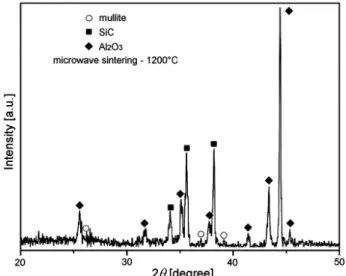
Figure 2. XRD patterns of samples prepared by microwave sintering at 1200 °C for 20 min
gel of SiO2/SiC composite precursor was formed in a
few minutes. Then the coated composite particles were mixed with α-Al2O3 particles in the volume ratio 1:1.
Mullite was expected to form by the reaction between SiO2and Al2O3during microwave sintering.
The mixed powders were uniaxially pressed into a cylindrical pellets (φ=30 mm andH=4 mm) at 10 MPa
for 1 min. After isostatically pressing at 100 MPa for 1 min, the prepared green cylindrical pellets were sin-tered in a microwave chamber with resonant mode of TE666 (WXD20S-07, China Nanjing Sanle Microwave equipment). The frequency of microwave was 2.45 GHz with a maximum input power of 10 kW. The tempera-ture was monitored by an infrared radiation thermome-ter (OI-T6I2-B-1-type, GOID SUN, USA) with initial display temperature of 610 °C. An insulation structure based on a hybrid heating mode was well designed with wall of porous mullite plate, fillings of mullite fibres and aided heaters of SiC rods. Heating rate was arbitrar-ily controlled by tailoring the input power. Changes in reflected power versus temperature were detected. The selected sintering temperature was 1350 °C, 1400 °C, 1450 °C, 1500 °C, 1550 °C and 1600 °C for 30 min with a heating rate of 15 °C/min, respectively.
Phases of the samples were detected by X-ray diff
rac-tion (XRD; XD-3, Beijing Purkinje General Instrument Co. Ltd.). Microstructure of samples was observed by field emission scanning electron microscopy (FESEM; JEOL JSM-6700F, Japan) equipped with energy disper-sive spectroscopy analysis (EDS). The samples for SEM analysis were coated with a Pt layer by a vacuum sput-tering.
III. Results and discussion
Figure 1 illustrates time dependent changes in in-put power and reflected power together with instanta-neous temperature for SiC/Al2O3composites sintered at
1600 °C. Six consecutive heating stages can be distin-guished, from which physical and chemical responses during the microwave sintering process could be re-vealed. At the initial heating stage, microwave is pri-marily absorbed by SiC aided heaters and SiC particles within SiC/Al2O3 samples since the dielectric loss of
Al2O3 particles is very low at low temperature [27,28]. The heat generated by SiC particles within SiC/Al2O3
samples is isolated and gives rise to a so-called local hot spot effect during the microwave sintering [29–32].
Figure 3. XRD patterns of SiC/Al2O3composites sintered at different temperature for 30 min
increasing until ∼30 min, indicating that the oxidation finishes after 30 min. The subsequent decrease in the re-flected power appears due to the improved conductivity of SiC aided heaters and SiC particles within SiC/Al2O3
greens, as well as the increased dielectric loss of Al2O3 at higher temperature. The reflected power rises after 62 min (∼1200 °C), implying the reaction between SiO2 and Al2O3to form mullite. Mullite has very low dielec-tric loss and does not absorb microwave energy. Such a result can be well proved from the XRD detection shown in Fig. 2. It is obvious that mullite phase ap-pears in the samples sintered at 1200 °C for 20 min. The
reflected power decreases at about 78 min (∼1330 °C). This might be attributed to local fusion of SiO2. The successive decrease in reflected power after 123 min (∼1550 °C) indicates the decomposition of mullite into Al2O3 and SiO2[33].
Figure 3 shows XRD patterns of the SiC/Al2O3
sam-ples prepared at different temperatures. It is obvious that
SiC, SiO2, Al2O3 and mullite co-exist below 1450 °C. As the sintering temperature rises, local hot spot effect
is enhanced. More mullite is formed around SiC parti-cles. The peak height referring to mullite increases ver-sus sintering temperature. Maximum amount of mullite appears at 1500 °C. At higher temperature, mullite tends to decompose readily due to the high electro-magnetic field. As a result, the height of peaks referring to mullite decreases at 1550 °C. Further heating of the SiC/Al2O3
composites at 1600 °C, most of mullite peaks disap-pear and the peaks of Al2O3phase increase significantly. Such a result is well in accordance with Fig. 1.
Figure 4 shows the SEM images of the fracture surface of the SiC/Al2O3 composites prepared by
mi-crowave sintering at different temperature. Needle-like
mullite is observed on the surface of SiC particles at 1350 °C, as shown in Fig. 4a, which proves the above-mentioned local hot spot effect. The local hot spot
ef-fect refers to that only SiC particles absorb microwave at initial heating stage and become hot. Surface tem-perature of SiC particles with SiO2 coating is much higher than that of Al2O3particles. Therefore, reaction between SiO2 and Al2O3 only occurs locally near the surface of SiC particles. That is why needle-like mullite is formed. As the temperature increases, the local hot spot effect is enhanced. More mullite phase is generated
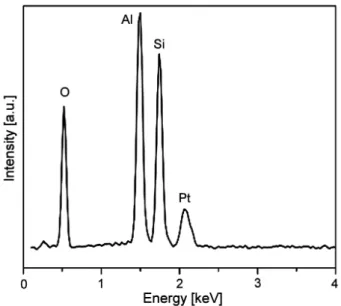
Figure 5. EDS spectrum of SiC/Al2O3composites sintered by microwave at 1450 °C (presented in Fig. 4c)
and growth of mullite is developed, as shown in Fig. 4b–d. Thus, higher amount of mullite appears within the samples prepared at 1400 °C. A mullite whisker bridge is observed between Al2O3 and SiC particles at 1450 °C. The corresponding EDS spectrum, as shown in Fig. 5, indicates that the whiskers are composed of Al, Si and O elements. The distinctive bridging phe-nomenon of mullite whisker is the unique feature for microwave sintering related to the local hot spot effect.
Massive well-grown mullite whiskers exist within the samples prepared at 1500 °C. Less mullite is observed within the samples prepared at 1550 °C due to its de-composition, as shown in Fig. 4e. Decomposition is en-hanced at even higher temperature. As a result, most of mullite whiskers disappear within the samples prepared at 1600 °C.
Figure 6 shows the density and fracture toughness of SiC/Al2O3 composites sintered by microwave at diff
er-ent temperatures. It can be seen that, the density and
fracture toughness increased with the increase of sinter-ing temperature from 1350 °C to 1500 °C, the maximum density is 2.13 g/cm3, and the highest fracture toughness
value of the SiC/Al2O3 composites is 2.36 MPa·m1/2.
Combined with the XRD and SEM analysis, we can find that the mechanical properties of mullite whiskers rein-forced SiC/Al2O3 composites are much better than the
SiC/Al2O3composites without mullite whiskers.
IV. Conclusions
Mullite whiskers reinforced SiC/Al2O3 composites
were prepared by hybrid microwave sintering. The heat-ing rate was well controlled by adjustheat-ing the input power. Mullite whiskers could be formed during mi-crowave sintering. The local hot spot effect is the unique
heating feature for microwave sintering which facili-tates the directional growth of mullite whiskers bridg-ing between SiC and Al2O3 particles. The optimized microwave sintering temperature was 1500 °C corre-sponding to the maximum amount of mullite within SiC/Al2O3composites. Mullite decomposes to SiO2and
Al2O3 due to the high electro-magnetic field at higher temperatures, above 1550 °C. The mechanical proper-ties of the mullite whiskers reinforced SiC/Al2O3
com-posites are much better than the SiC/Al2O3composites
without mullite whiskers.
Acknowledgement: The authors appreciate the
co-sponsors from the National Natural Science Founda-tion of China (Grant No. 51172213 and 51602287), Key Scientific Research Projects in Universities of Henan Province (Grant No. 17A430006).
References
1. Y. Teng, Z. Sun, K. Zhang, W. Lu, “Microstructure and mechanical properties of high-pressure sintered Al2O3/SiC nanocomposites”,J. Alloys Compd.,578 (2013) 67–71.
2. M. Parchovianský, D. Galusek, M. Michálek, P.
Švanˇcárek, M. Kašiarová, J. Dusza, M. Hnatko, “Ef-fect of the volume fraction of SiC on the microstruc-ture and creep behavior of hot pressed Al2O3/SiC
composites”,Ceram. Int.,40[1] (2014) 1807–1814. 3. X.L. Shi, F.M. Xu, Z.J. Zhang, Y.L. Dong, Y. Tan, L. Wang, J.M. Yang, “Mechanical properties of hot-pressed Al2O3/SiC composites”,Mater. Sci. Eng. A,
527[18-19] (2010) 4646–4649.
4. M.M.S. Wahsh, R.M. Khattab, M. Awaad, “Thermo-mechanical properties of mullite/zirconia reinforced
alumina ceramic composites”, Mater. Design, 41 (2012) 31–36.
5. J. Zhao, L.C. Stearns, M.P. Harmer, H.M. Chan, G.A. Miller, R.F. Cook, “Mechanical behavior of alumina-silicon cabide nanocomposites”,J. Am. Ce-ram. Soc.,76[2] ( 1993) 503–510.
6. Y.K. Jeong, K. Niihara, “Microstructure and mechanical properties of pressureless sintered Al2O3/SiC nanocomposites”,Nanostruct. Mater., 9 [1-8] (1997) 193–196.
7. Z.Y. Deng, J.L. Shi, Y.F. Zhang, D.Y. Jiang, J.K. Guo, “Pinning effect of SiC particles on
mechani-cal properties of Al2O3-SiC ceramic matrix compos-ites”,J. Eur. Ceram. Soc.,18[5] (1998) 501–508. 8. W.H. Tuan, R.Z. Chen, T.C. Wang, C.H. Cheng, P.S.
Kuo, “Mechanical properties of Al2O3/ZrO2
com-posites”,J. Eur. Ceram. Soc.,22[16] (2002) 2827– 2833.
9. P.G. Rao, M. Iwasa, T. Tanaka, I. Kondoh, T. Inoue: “Preparation and mechanical properties of Al2O3 -15wt.%ZrO2 composites”, Scripta Mater., 48 [4] (2003) 437–441.
10. J.G. Li, L. Gao, J.K. Guo, “Mechanical properties and electrical conductivity of TiN-Al2O3 nanocom-posites”,J. Eur. Ceram. Soc.,23[6] (2003) 69–74. 11. M. Sathiyakumar, F.D. Gnanam, “Influence of MnO
and TiO2 additives on density, microstructure and mechanical properties of Al2O3”,Ceram. Int.,28[2] ( 2002) 195–200.
12. P.M. Souto, R.R. Menezes, R.H.G.A. Kiminami, “Effect of Y2O3 additive on conventional and
mi-crowave sintering of mullite”, Ceram. Int., 37 [1] (2011) 241–248.
13. Y. Ji, J. A. Yeomans, “Processing and mechanical properties of Al2O3-5vol.%Cr nanocomposites”,J. Eur. Ceram. Soc.,22[12] (2002) 1927–1936. 14. S. Wu, N. Claussen, “Reaction bonding and
me-chanical properties of mullite/silicon carbide
com-posites”,J. Eur. Ceram. Soc.,77[11] (1994) 2898– 2904.
15. W. Wang, C. Zhou, G. Liu, G. Qiao, “Molten salt synthesis of mullite whiskers on the surface of SiC ceramics”,J. Alloys Compd.,582(2014) 96–100. 16. H. Zhang, Y. Zhang, B. Wang, J. Yang, “Preparation
and characterization of continuous alumina based fiber reinforced with orientated mullite whisker”, Chem. Eng. J.,268(2015) 109–115.
17. A.K. Samanta, K.K. Dhargupta, S. Ghatak, “Near
net shape SiC-mullite composites from a pow-der precursor prepared through an intermediate Al-hydroxyhydrogel”,Ceram. Int.,27[2] (2001) 195– 199.
18. M.F. Zawrah, M.H. Aly, “In situ formation of Al2O3 -SiC-mullite from Al-matrix composites”, Ceram. Int.,32[1] (2006) 21–28.
19. B. Meng, J. Peng, “Effects of in situ synthesized
mul-lite whiskers on flexural strength and fracture tough-ness of corundum-mullite refractory materials”, Ce-ram. Int.,39[2] (2013) 1525–1531.
20. B.H. Kim, Y.H. Na, “Fabrication of fiber-reinforced porous ceramics of Al2O3-mullite and SiC-mullite systems”,Ceram. Int.,21[6] (1995) 381–384. 21. X. Pian, B. Fan, H. Chen, B. Zhao, X. Zhang,
R. Zhang: “Preparation of m-ZrO2 compacts by microwave sintering”, Ceram. Int., 40 [7] (2014) 10483–10488.
22. D. ˙Zymełka, S. Saunier, D. Goeuriot, J. Molimard, “Densification and thermal gradient evolution of alu-mina during microwave sintering at 2.45 GHz”, Ce-ram. Int.,39[3] (2013) 3269–3277.
23. R.R. Menezes, R.H.G.A. Kiminami, “Microwave sintering of alumina–zirconia nanocomposites”, J. Mater. Synth. Process.,203[1-3] (2008) 513–517. 24. K.I. Rybakov, E.A. Olevsky, E.V. Krikun, D.J.
Green: “Microwave sintering: fundamentals and modelling”,J. Am. Ceram. Soc.,96[4] (2013) 1003– 1020.
25. M. Oghbaei, O. Mirzaee, “Microwave versus con-ventional sintering: A review of fundamentals, ad-vantages and applications”, J. Alloys Compd., 494 [1-2] (2010) 175–189.
26. R. Raj, M. Cologna, J.S.C. Francis, D.J. Green: “In-fluence of externally imposed and internally gen-erated electrical fields on grain growth, diffusional
creep, sintering and related phenomena in ceramics”, J. Am. Ceram. Soc.,94[7] (2011) 1941–1965. 27. K.X. Song, S.Y. Wu, X.M. Chen, “Effects of Y2O3
addition on microwave dielectric characteristics of Al2O3 ceramics”,Mater. Lett.,61[16] (2007) 3357– 3360.
28. J.M. Chen, H.P. Wang, S.Q. Feng, H.P. Ma, D.G. Deng, S.Q. Xu, “Effects of CaSiO3 addition on
sin-tering behavior and microwave dielectric properties of Al2O3ceramics”,Ceram. Int.,37[3] (2011) 989– 993.
29. S. Horikoshi, A. Osawa, M. Abe, N. Serpone, “On the generation of hot-spots by microwave electric and magnetic fields and their impact on a microwave-assisted heterogeneous reaction in the presence of metallic Pd nanoparticles on an activated carbon sup-port”, J. Phys. Chem. C, 115 [46] (2011) 23030– 23035.
30. T. Basak, A.S. Priya, “Role of ceramic supports on microwave heating of materials”,J. Appl. Phys.,97 [8] (2005) 083537.
for inorganic nanomaterials synthesis”,Nanoscale,2 [8] (2010) 1358.
32. X. Pian, G. Shao, B. Fan, H. Chen, C. Wang, R. Zhang, “Rapid densification of SiC ceramic rollers by microwave sintering”, Adv. Compos., 114 [1]
(2015) 28–32.