Maejo International
Journal of Science and Technology
ISSN 1905-7873
Available online at www.mijst.mju.ac.th
Effect of indigenous arbuscular mycorrhizal fungi on some
growth parameters and phytochemical constituents of
Pogostemon patchouli
Pellet
Thangavel Selvaraj 1,Mathan C. Nisha 2 and Sevanan Rajeshkumar 3,*
1 Department of Plant Sciences, Faculty of Agricultural Sciences, Ambo University College, Post Box
No. 19, Ambo, Western Shoa, Ethiopia, East Africa
2 Department of Botany, Kongunadu Arts and Science College (Autonomous), Coimbatore. Tamilnadu,
India
3 Botanical Sciences Unit, Department of Applied Biology, Faculty of Natural and Computer Sciences,
Ambo University College, Post Box No. 19, Ambo, Western Shoa, Ethiopia, East Africa
* Corresponding author, e-mail: [email protected]
Received: 19 July 2008 / Accepted : 12 April 2009 / Published : 21 April 2009
__________________________________________________________________________________
Abstract: Patchouli (Pogostemon patchouli Pellet) is an important aromatic crop cultivated for its essential oil used in cosmetics. arbuscular mycorrhizal (AM) fungi is known to modify several aspects of plant physiology and phytochemical constituents. Hence, a study was conducted on the efficacy of certain AM fungi in the improvement of some growth parameters and content of some phytochemical constituents in the leaves of P. patchouli. Patchouli seedlings were raised in soil inoculated with isolates of seven indigenous AM fungi, viz. Acaulospora scrobiculata, Gigaspora margarita, Glomus aggregatum, G. geosporum, G. mosseae, Sclerocystis pakistanika and Scutellospora heterogama. Seedlings raised in the presence of AM fungi generally showed an increase in growth, nutritional ingredients (sugars, N, P, K, Zn, Ca and Mn), total chlorophyll, and secondary metabolites in the leaves of patchouli compared to those from seedlings grown in the absence of AM fungi, the extent of increase, however, being varied with the AM fungi species. Furthermore, it was found that the phosphorus concentration was positively correlated with all growth parameters and content of phytochemical constituents (except essential oil), and that G. aggregatum seemed to be the best AM symbiont for the patchouli plant used in this experiment.
Keywords: AM fungi, Pogostemon patchouli, patchouli, growth parameters, phytochemical constituents
Introduction
Patchouli (Pogostemon patchouli Pellet. Family: Lamiaceae) is an important aromatic crop native to Phillippines. It is cultivated for its essential oil used in cosmetics. Production of patchouli oil in India is negligible (about 100-150 kg/year), as against the global production of around 700-800 tonnes/year. Presently, India is importing over 200 tonnes of the oil from Indonesia, Malaysia and Singapore [1]. Hence, there is a good scope for growing patchouli as a main crop or intercrop with other plantation crops. The use of microbial inoculants is playing an important role in sustainable agriculture. Utilisation of mycorrhizal biofertilisers in the cultivation of medicinal and aromatic plants is of recent interest. Arbuscular mycorrhizal (AM) fungi have been used to enhance the plant growth and yield of medicinal crops and to help maintain good soil health and fertility that contributes to a greater extent to a sustainable yield and good quality of the products [2]. AM fungi can also alter plant- water relation and response to drought [3]. Due to their ability to increase nutrient uptake and water transport, AM fungi are being frequently used in sustainable agriculture [4]. Though these fungi are not host specific, recent studies [5,6] have clearly brought out host preference in AM fungi, thus emphasising the need for selecting efficient AM fungi for inoculating a particular host [7-9]. The productivity of many plants is dependent on the formation of AM fungi. However, there have been only few attempts to study the impact of AM inoculation on patchouli plant [1,10].
As a result of this symbiotic association between AM fungi and host plants, phosphorus content also has an effect on phytochemical constituents and growth parameters in plants [11-13]. Phosphorus plays an important role as an energy carrier during photosynthesis [14]. Therefore, AM fungi may function as a metabolic sink causing basipetal mobilisation of photosynthesis to roots, thus providing a stimulus for greater photosynthetic activity [13]. AM fungi, as obligate symbionts, also depend for their growth and activity on the supply of carbon compounds from the photosynthetic partner [15,16]. AM symbiosis can cause an important carbohydrate gain in the host plant and up to 20% of total photoassimilate substances can be transferred to the fungal partner [17]. Photosynthetic activity and carbohydrates, which are the photoassimilate substances, are very important in terms of parameters that explain the physiological activity of the plants mentioned above. For this reason, this study aims to screen for efficient AM fungi for patchouli plant and also to study the effect of the association of different indigenous AM fungi on some growth parameters, viz.reducing and total sugars, chlorophyll level, and content of secondary metabolites, viz. total phenols, ortho-dihydroxyphenols, alkaloids, flavonoids, tannins, saponins and essential oil in the leaves of P. patchouli. The relationship between the phosphate content and these parameters in the mycorrhizal patchouli plant is also investigated.
Materials and Methods
Cultivation of plants
University, India. The identity of the plant was ascertained [18] and seedlings through stem cuttings (uniform 5-cm length) were raised on sterile sand-soil (1:1) mix. Three-week-old seedlings were transplanted to pots (24-cm dia.) containing 5 kg of sand-soil (1:3) mix which was classified as fine entisol, isohyperthermic kanhaplustalfs. The soil pH was 7.4 (1:10 soil-to-water ratio) and it contained 3.2 g available phosphorus (extractable with NH4F + HCl) and an indigenous AM fungal population
at 60 spores/50g of soil. The AM fungal species (Acaulospora scrobiculata, Gigaspora margarita, Glomus aggregatum, G. geosporum, G. mosseae, Sclerocystis pakistanica and Scutellospora heterogama) used in this study were isolated from rhizosphere soil of patchouli plants. These AM fungal species were isolated by wet-sieving and decanting technique [19]. The species-level identification of different AM fungal species was done following the keys provided by Schenck and Perez [20]. These fungi were multiplied using sterilised sand and soil mix(1:1v/v) as substrate and guinea grass (Panicum maximum Jacq.) as host. After 90 days of growth, shoots of guinea grass were severed and the substrate containing hyphae, spores and root bits was air-dried and used as inoculum. The inoculum potential (IP) of each culture was estimated by adopting the most probable number (MPN) method as outlined by Porter [21]. The soil in each pot was mixed with this inoculum so as to maintain an initial IP of 12,500 per pot. One set of plants without inoculation was used as control. Each treatment with 5 replications was performed in the glasshouse and watered regularly so as to maintain the field capacity of the soil. Ruakura plant nutrient solution without phosphate was prepared [22] and then added to the pots at 50 ml per pot once every 20 days.
Harvesting and analysis of plants
Seventy-five days after transplanting, the plants were harvested for determination of the mycorrhizal status, growth response, nutritional status, and some physiological and phytochemical constituents. Plant height was measured from soil surface to the growing tip of the plant. Dry biomass was determined after drying the plant sample at 60oC to constant weight in a hot-air oven. The root
system was removed and assessed for AM fungal infection by grid-line intersect method [23] after clearing the roots with 10% KOH and staining with trypan blue (0.02%) as described by Phillips and Hayman [24]. Soil sample (100 g) was collected from each pot and subjected to wet-sieving and decantation method as outlined by Gerdemann and Nicolson [19] to estimate the population of spores. The essential oil content in the leaves of mycorrhizal and non-mycorrhizal plants were determined by hydro-distillation method by using Clevenger-type apparatus. Phosphorus, nitrogen, potassium and calcium content of the plant tissue were determined by employing the vanadomolybdophosphoric acid [25], micro-Kjeldahl [26], flame photometric and versenate titration method [25] respectively. Atomic absorption spectrophotometry was employed to estimate zinc and manganese content in the plant samples using respective hollow cathode lamps.
done using Folin-Ciocalteu reagent as outlined by Farkas and Kiraly [29] and Arnow's reagent with catechol as standard [30] respectively. Aluminium chloride colorimetric method was used for determination of flavonoids with quercetin as standard [31]. Alkaloid content was estimated by extraction and precipitation by ammonium hydroxide [32]. Tannin was determined by absorbance measurement of its complex with ferric chloride and potassium ferrocyanide using tannic acid as standard [33]. Saponin was estimated by extraction with 20% ethanol with subsequent solvent fractionations as outlined by Zakaria [33].
Statistical analysis
The generated data were subjected to statistical analysis by completely randomised block design and the means were separated by Duncan’s Multiple Range Test (DMRT). The data were also analysed by linear regression and analysis of variance using SAS, and the means were compared between treatments by the t-test.
Results and Discussion
Growth response, nutritional status and physiological parameters
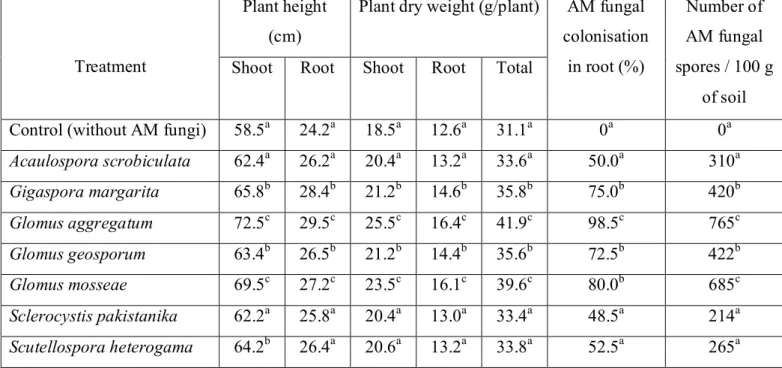
The responses of patchouli plants to inoculation with different AM fungi were found to vary. Mycorrhizal inoculation resulted in a significant increase in height, biomass, and nutrient content of the plants (Tables 1-2). Those inoculated with Glomus aggregatum showed highest increase in all growth parameters and nutritional components, followed by Glomus mosseae. However, S. pakistanika and A. scrobiculata did not show any significant differences from control (Tables 1-2). All mycorrhiza-treated plants were heavily colonised at the rate of between 48.5%-98.5% (Table 1). However, there was no positive correlation between plant growth parameters and mycorrhizal colonisation.
Table 1. Different native AM fungi and their influence on growth and oil content in leaf of Pogostemon patchouli
Plant height (cm)
Plant dry weight (g/plant)
Treatment Shoot Root Shoot Root Total
AM fungal colonisation
in root (%)
Number of AM fungal spores / 100 g
of soil Control (without AM fungi) 58.5a 24.2a 18.5a 12.6a 31.1a 0a 0a
Acaulospora scrobiculata 62.4a 26.2a 20.4a 13.2a 33.6a 50.0a 310a
Gigaspora margarita 65.8b 28.4b 21.2b 14.6b 35.8b 75.0b 420b
Glomus aggregatum 72.5c 29.5c 25.5c 16.4c 41.9c 98.5c 765c
Glomus geosporum 63.4b 26.5b 21.2b 14.4b 35.6b 72.5b 422b
Glomus mosseae 69.5c 27.2c 23.5c 16.1c 39.6c 80.0b 685c
Sclerocystis pakistanika 62.2a 25.8a 20.4a 13.0a 33.4a 48.5a 214a
Scutellospora heterogama 64.2b 26.4a 20.6a 13.2a 33.8a 52.5a 265a
Note: Means (n=5) in each column followed by the same letter are not significantly different (P < 0.05) from each other according to DMR test.
The major concern in mycorrhizal technology for crop production is the existence of a great difference in the functional compatibility of AM fungi with medicinal crops [13,38,39]. In this study, inoculation with G. aggregatum and G. mosseae was found to be most effective in increasing the biomass (Table 1). AM fungi are known to improve plant growth and physiological parameters, mainly through uptake of phosphorus and other nutrients [13,40]. Bagyaraj et al.[41] and Lakshmipathy et al.[42] reported that different strains of AM fungi differ in the extent they increase nutrient uptake, physiological parameters and plant growth. Hence, some workers suggested the need for selecting efficient AM fungi that can be used for inoculating different plants [38]. In the present study, mycorrhizal inoculation enhanced the P, Zn, Ca and Mn content in the root and leaf of patchouli plant, which contributed to the enhanced growth of the plant (Table 2). Mycorrhizal treatment resulted in an increase in the number of spores in the rhizosphere soil and this was maximum in G. aggregatum (Table 1), followed by that in Glomus mosseae. It is well known that enhanced nutritional status of a plant is manifested in its improved growth [40].
Table 2. Influence of native AM fungi on N, P, K, Zn, Mn and Ca content in shoot and root of Pogostemon patchouli
Nitrogen (g/plant)
Phosphorus (g/plant)
Potassium (g/plant)
Zinc (µg/plant)
Manganese (µg/plant)
Calcium (µg/plant) Treatment
Leaf Root Leaf Root Leaf Root Leaf Root Leaf Root Leaf Root Control (without AM fungi) 0.285a 0.052a 0.204a 0.065a 0.282a 0.048a 0.216a 0.192a 0.016a 0.008a 29.0a 18.5a
Acaulospora scrobiculata 0.310a 0.058a 0.216a 0.072a 0.284a 0.052a 0.312a 0.210a 0.026a 0.009a 30.0a 19.2b
Gigaspora margarita 0.312b 0.062b 0.244b 0.085b 0.302b 0.054b 0.610b 0.312b 0.036b 0.010b 36.0c 19.8c
Glomus aggregatum 0.340c 0.064c 0.262c 0.098c 0.312b 0.054b 0.710c 0.352c 0.039c 0.012c 38.5c 20.0c
Glomus geosporum 0.308b 0.060b 0.248b 0.082b 0.286a 0.052a 0.610b 0.285b 0.028b 0.011b 29.5a 20.2c
Glomus mosseae 0.316b 0.062b 0.258c 0.092c 0.292a 0.049a 0.642c 0.314b 0.029b 0.011b 30.2b 19.2b
Sclerocystis pakistanika 0.305a 0.052a 0.218a 0.072a 0.284a 0.048a 0.314a 0.210a 0.024a 0.009a 29.5a 19.0a
Scutellospora heterogama 0.306a 0.052a 0.2241 0.074a 0.282a 0.049a 0.316a 0.214a 0.025a 0.009a 29.5a 18.8a
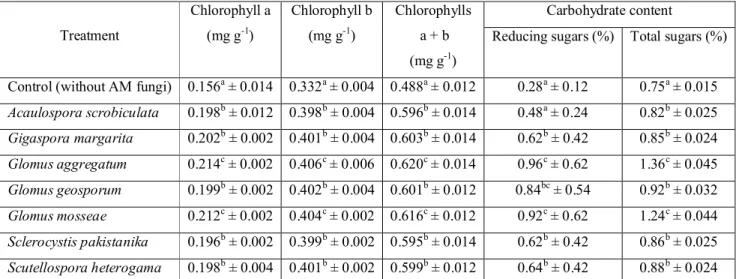
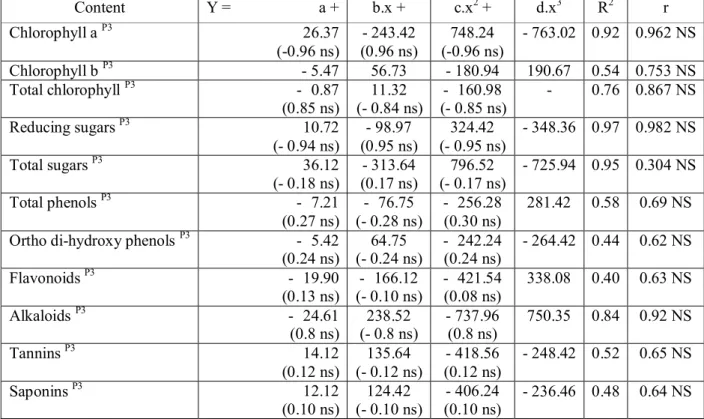
concentration of phosphorus was positively correlated with that of the chlorophylls in mycorrhizal plants, although it was not significant (Table5). The correlation coefficients were determined as r = 0.962, 0.753, and 0.867 for chlorophylls a, b and a + b respectively (Table 5). The partial correlations for all chlorophyll concentrations were also found to be non-significant (P > 0.05).
One of the most important indicators of physiological activity is the rate of photosynthesis, which is related to the chlorophyll content of plants. In this study, phosphorus and the chlorophyll content in all mycorrhizal plants were found to be higher than those in the uninoculated control, which indicated that the photosynthetic rate was improved by the AM fungi. Amelioration of the rate of photosynthesis and higher phosphorus level in leaves as a result of AM inoculation were also reported in other studies [13,43]. Since the photosynthetic process is known to be positively influenced by phosphorus, a positive correlation found in this study for phosphorus concentration in all mycorrhizal plants compared with that of uninoculated control of similar size also indicated its effect on photosynthesis. Furthermore, the effect of AM fungi on leaf morphology leading to an increase in the leaf area and leaf hydration is also probably partly caused by enhanced phosphorus level [44].
Table 3. Influence of native AM fungi on chlorophyll content and amount of sugars in the leaves of P. patchouli
Carbohydrate content Treatment
Chlorophyll a (mg g-1)
Chlorophyll b (mg g-1)
Chlorophylls a + b (mg g-1)
Reducing sugars (%) Total sugars (%)
Control (without AM fungi) 0.156a ± 0.014 0.332a ± 0.004 0.488a ± 0.012 0.28a ± 0.12 0.75a ± 0.015
Acaulospora scrobiculata 0.198b ± 0.012 0.398b ± 0.004 0.596b ± 0.014 0.48a ± 0.24 0.82b ± 0.025
Gigaspora margarita 0.202b ± 0.002 0.401b ± 0.004 0.603b ± 0.014 0.62b ± 0.42 0.85b ± 0.024
Glomus aggregatum 0.214c ± 0.002 0.406c ± 0.006 0.620c ± 0.014 0.96c ± 0.62 1.36c ± 0.045
Glomus geosporum 0.199b ± 0.002 0.402b ± 0.004 0.601b ± 0.012 0.84bc ± 0.54 0.92b ± 0.032
Glomus mosseae 0.212c ± 0.002 0.404c ± 0.002 0.616c ± 0.012 0.92c ± 0.62 1.24c ± 0.044
Sclerocystis pakistanika 0.196b ± 0.002 0.399b ± 0.002 0.595b ± 0.014 0.62b ± 0.42 0.86b ± 0.025
Scutellospora heterogama 0.198b ± 0.004 0.401b ± 0.002 0.599b ± 0.012 0.64b ± 0.42 0.88b ± 0.024
Note: Means (n=5) in each column followed by the same letter are not significantly different (P < 0.05) from each other according to DMR test.
that AM fungal colonisation stimulates the rate of photosynthesis sufficiently to compensate for the carbon requirement of the fungus and for growth reduction of the autotroph [46]. In this study, the content of carbohydrate compounds (reducing and total sugars) of mycorrhizal plants was also generally higher than that in the uninoculated control, and a positive correlation was determined between phosphorus concentration and all sugar content. Phosphorus plays the most important role during the breakdown of carbohydrates and synthesis of polysaccharides. In particular, phosphorus is very effective in the synthesis of starch from glucose [13]. As AM fungi increase the uptake of phosphorus, they may also increase the synthesis of carbon compounds [17]. Thus, it is seen that photosynthesis activity, increasing as a result of this symbiotic association, has a close relationship with the increase in the function of AM fungi.
Phytochemical constituents
The content of secondary metabolites (total phenols, ortho-dihydroxy phenols, alkaloids, flavonoids, tannins and saponins) in the leaves of patchouli plants were found to be significantly higher in those raised in soil inoculated with AM fungi (Table 4), with plants raised in the presence of G. aggregatum showing the most increase. (However, for all fungi tested there was no significant increase in essential oil content.) Such a variation in the phytochemical constituents in relation to fungal species for other medicinal plant species is also well documented [6,47]. The concentration of total phosphorus was also positively correlated with that of all secondary metabolites in the inoculated plants (Table 5). The correlation coefficients (r) of total phenols, ortho-dihydroxyphenols, flavonoids, alkaloids, tannins and saponins were 0.69, 0.62, 0.63, 0.92, 0.65 and 0.64 respectively (Table 5).
Table 4. Influence of different native AM fungi on phytochemical constituents in the leaves of P. patchouli Treatment Total phenols (µg/g fresh wt.) Ortho-di-hydroxy phenols (µg/g fresh wt.) Alkaloids (µg/g dry weight) Flavonoids (µg/g dry weight) Tannins (µg/g dry weight) Saponins (%) Essential oil content in the leaves (%)
Control (uninoculated) 95.0a 64.2a 4.31a 3.12a 0.280a 0.160a 0.56a`
Acaulospora scrobiculata 120.5b 72.3b 4.32a 3.22a 0.291b 0.172b 0.59b
Gigaspora margarita 124.2b 70.2b 4.38b 3.24a 0.294b 0.172b 0.62c
Glomus aggregatum 130.5c 85.4c 5.12c 3.76c 0.335c 0.192c 0.65c
Glomus geosporum 124.2b 74.2b 4.76b 3.62b 0.320bc 0.190c 0.59b
Glomus mosseae 128.5c 83.4c 4.92c 3.64b 0.332c 0.191c 0.62c
Sclerocystis pakistanika 121.4b 70.5b 4.38b 3.26a 0.295b 0.178b 0.58a
Scutellospora heterogama 122.5b 71.2b 4.32a 3.27a 0.294b 0.172b 0.57a
Note: Means (n = 5) in each column followed by the same letter are not significantly different (P < 0.05) from each other according to DMR test.
Table 5. Relationships between total phosphorus content and other organic constituents in Glomus aggregatum treated plants
Content Y = a + b.x + c.x2 + d.x3 R2 r
Chlorophyll a P3 26.37
(-0.96 ns) (0.96 ns) - 243.42 (-0.96 ns) 748.24 - 763.02 0.92 0.962 NS Chlorophyll b P3 - 5.47 56.73 - 180.94 190.67 0.54 0.753 NS
Total chlorophyll P3 - 0.87
(0.85 ns) (- 0.84 ns) 11.32 (- 0.85 ns) - 160.98 - 0.76 0.867 NS Reducing sugars P3 10.72
(- 0.94 ns) (0.95 ns) - 98.97 (- 0.95 ns) 324.42 - 348.36 0.97 0.982 NS Total sugars P3 36.12
(- 0.18 ns) (0.17 ns) - 313.64 (- 0.17 ns) 796.52 - 725.94 0.95 0.304 NS Total phenols P3 - 7.21
(0.27 ns) (- 0.28 ns) - 76.75 -(0.30 ns) 256.28 281.42 0.58 0.69 NS Ortho di-hydroxy phenols P3 - 5.42
(0.24 ns) (- 0.24 ns) 64.75 -(0.24 ns) 242.24 - 264.42 0.44 0.62 NS Flavonoids P3 - 19.90
(0.13 ns) (- 0.10 ns) - 166.12 -(0.08 ns) 421.54 338.08 0.40 0.63 NS Alkaloids P3 - 24.61
(0.8 ns) (- 0.8 ns) 238.52 - 737.96 (0.8 ns) 750.35 0.84 0.92 NS
Tannins P3 14.12
(0.12 ns) (- 0.12 ns) 135.64 (0.12 ns) - 418.56 - 248.42 0.52 0.65 NS
Saponins P3 12.12
(0.10 ns) (- 0.10 ns) 124.42 (0.10 ns) - 406.24 - 236.46 0.48 0.64 NS Note: P3 = Polynomial fit (degree 3)
Conclusions
P. patchouli has been shown to exhibit varied responses to different AM fungi. Consideration of such factors as the growth parameters, nutritional status, and content of phytochemical constituents suggests that a specific relationship exists between a particular species of fungus and the plant. Giving weight toplant physiological growth parameters and phytochemical constituents but not neglecting the other parameters, Glomus aggregatum and Glomus mosseae seem to be the best and the next best fungus respectively for inoculating P. patchouli in the nursery in order to obtain healthy, vigorously growing seedlings that should perform better when planted in sandy loam soils, hence demonstrating and confirming that proper selection of efficient AM fungi for the right medicinal plant and environment is the key for their successful use in agriculture.
References
1. R. Manjunatha, A. A. Farooqi, M. Vasandhara, and K. N. Sirinivasappa, "Effect of biofertilizers on growth, yield and essential oil content in patchouli", Indian Perfumer, 2002, 46, 97-104.
2. J. N. Klironomos, "Variation in plant response to native and exotic arbuscular mycorrhizal fungi", Ecology, 2003, 84, 2292-2301.
3. R. M. Auge, "Arbuscular mycorrhizae and soil/plant water relation", Can. J. Soil Sci., 2004, 60, 373-381.
4. R. T. Koide and B. Mosse, "A history of research on arbuscular mycorrhiza", Mycorrhiza, 2004,14, 145-151.
5. S. K. Rajan, D. J. Bagyaraj, and J. Arpana, "Selection of efficient arbuscular mycorrhizal fungi for inoculating Acacia holosericea", J. Soil Biol. Ecol., 2004, 24, 119-126.
6. T. Chiramel, D. J. Bagyaraj, and C. S. P. Patil, "Response of Andrographis paniculatato different arbuscular mycorrhizal fungi", J. Agric. Technol., 2006, 2, 221-228.
7. R. S. Champawat, "Current trends in mycorrhizal research", Proceedings of National Conference on Mycorrhiza, HAU, Hisar, February, 1990, pp. 14-16.
8. B. Chen, P. Christie, and X. Li, "A modified glass bead compartment cultivation system for studies on nutrient and trace metal uptake by arbuscular mycorrhiza", Chemosphere, 2001, 42, 185-192. 9. N. Mathur, J. Singh, S. Bohra, and A.Vyas, "Relative efficiency of different AM fungi on nutrient
uptake and productivity of moth bean", J. Arid Legumes, 2004, 1, 135-137.
10. M. Sumathi, S. Parthiban, and D. S. Stephen, "Effect of graded doses of nitrogen and VAM on herbage, oil yield and nematode population on patchouli (Pogostemon patchouli Pellet)", Indian J. Nematol., 2006, 36, 209-213.
11. C. R. Johnson, "Phosphorus nutrition on mycorrhizal colonization photosynthesis, growth and nutrient composition of Citrus aurantium", Plant and Soil, 1984, 80, 35-42.
12. G. K. Podila and D. D. Douds, "Current Advances in Mycorrhizae Research", APS Press, St. Paul,
13. S. Demir, "Influence of Arbuscular mycorrhiza on some physiological growth parameters of pepper", Turkish J. Biol., 2004, 28, 85-90.
14. I. Paradi, Z. Bratek and F. Lang, "Influence of arbuscular mycorrhiza and phosphorus supply on polymine content, growth and photosynthesis of Plantago lanceolata", Biologia Plantarum, 2003, 46, 563-569.
15. I. Jocobsen and I Rosendahl, "Carbon flow into soil and external hyphae from roots of mycorrhizal cucumber plants". New Phytol., 1990, 115, 77-83.
16. D. H. Jennings, "The Physiology of Fungal Nutrition", Cambridge University Press, Cambridge,
1995, pp. 25-45.
17. J. H. Graham, "Assessing cost of arbuscular mycorrhizal symbiosis in agroecosystems”, in “Current Advances in Mycorrhizae Research” (Ed. G. K. Podila and D. D. Douds), APS Press, St Paul, 2000, pp.127-140.
18. J. S. Gamble, "Flora of the Presidency of Madras", Botanical Survey of India, Calcutta, 1935, p. 320.
19. J. W. Gerdemann and T. H. Nicolson, "Spores of mycorrhizal endogone species extracted by wet-sieving and decanting", Trans. Brit. Mycol. Soc., 1963, 46, 235-244.
20. N. C. Schenck and Y. Perez, "Manual for the Identification of VA Mycorrhizal Fungi", University of Florida, Gainesville, 1990, p.280.
21. W. M. Porter, "The most probable number method for enumerating infective propagules of vesicular-arbuscular mycorrhizal fungi in soil", Aust. J. Soil Res., 1979, 17, 515-519.
22. G. S. Smith, C. M. Johnson, and I. S. Cornforth, "Companion of nutrient solutions for growth of plants in sand culture", New Phytol., 1983, 94, 537-548.
23. M. Giovannetti and B. Mosse, "An evaluation of techniques to measure vesicular-arbuscular infection in roots", New Phytol., 1980, 84, 489-500.
24. J. M. Phillips and D. S. Hayman, "Improved procedures for clearing roots and staining parasite and vesicular-arbuscular mycorrhizal fungi for rapid assessment of infection", Trans. Brit. Mycol. Soc.,
1970, 55, 158-160.
25. M. L. Jackson, "Soil Chemical Analysis", Prentice Hall of India, New Delhi, 1973, p. 239.
26. J. M. Bremner, "Determination of nitrogen in soil by Kjeldahl method", J. Agric. Sci., 1960, 55, 11-14.
27. D. I. Arnon, "Copper enzyme in isolated chloroplasts phenol oxidase in Beta vulgaris", Plant Physiol., 1949, 24, 1-15.
28. D. C. Warton and R. E. McCarty, "Experiments and Methods in Biochemistry", MacMillan, New York, 1972, p.196.
29. G. L. Farkas and Z. Kiraly, "Role of phenolic compounds in the physiology of plant disease and disease resistance", Phytopathol., 1962, 2, 105-150.
31. C. Chang, M. Yang, H. Wen, and J. Chern, "Estimation of total flavonoid content in propolis by two complementary colorimetric methods", J. Food Drug Anal., 2002, 10, 178-182.
32. J. B. Harborne, "Phytochemical Methods", Chapman and Hall, London, 1973.
33. M. Zakaria, "Isolation and characterization of active compounds from medicinal plants", Asia Pacif. J. Pharmacol., 1991, 6, 15-20.
34. N. Earanna, A. A. Farooqi, D. J. Bagyaraj, and C. K. Suresh, "Influence of Glomus fasciculatum and plant growth promoting rhizo-microorganism on growth and biomass of periwinkle", J. Soil Biol. Ecol., 2002, 22, 22-26.
35. J. Reena and D. J. Bagyaraj, "Responses of Acacia nilotica and Calliandra calothrysus to different VA mycorrhizal fungi", Arid Soil Res. Rehabil., 1990, 4, 261-268.
36. S. Rajeshkumar, M. C. Nisha, and T. Selvaraj, “Variability in growth, nutrition and phytochemical constituents of Plectranthus amboinicus (Lour) Spreng. as influenced by indigenous arbuscular mycorrhizal fungi”, Maejo Int. J. Sci. Technol., 2008, 2, 431-439.
37. D. J. Bagyaraj and A. Varma, “Interactions between arbuscular mycorrhizal fungi and plants: their importance in sustainable agriculture in arid and semiarid tropics”, Adv. Microb. Ecol., 1995, 14, 119-142.
38. K. Chandrika, R. Lakshmipathy, B. Gowda, A. N. Balakrishna, M. D. Rajanna, and D. J. Bagyaraj, "Response of Centella asiatica (L.) Urban. to VA mycorrhizal inoculation", J. Soil Biol. Ecol.,
2002, 22, 35-39.
39. M. Hemalatha and T. Selvaraj, "Association of AM fungi with Indian borage (Plectranthus amboinicus) and its influence on growth and biomass production", Mycorrhiza News, 2003, 15, 18-21.
40. P. Jeffries, "Use of mycorrhiza in agriculture", Crit. Rev. Biotechnol., 1987, 5, 319-357.
41. D. J. Bagyaraj, M. S. Byra Reddy, and P. A. Nalini, "Selection of an efficient inoculant of VAM fungus for Leucaena". Forest Ecol. Manage., 1989, 27, 791-801.
42. R. Lakshmipathy, K. Chandrika, B. Gowda, A. N. Balakrishna, and D. J. Bagyaraj, "Response of Saraca asoca (Roxb.) de Wilde to inoculation with Glomus mosseae, Bacillus coagulans and Trichoderma harzianum". J. Soil Biol. Ecol., 2001, 21, 76-80.
43. J. K. Oslen, J. K. Schaefer, and M. N. Hunter, "Response of capsicum (Capsicum annuum L.), sweet corn (Zea maize L.) and tomato (Lycopersicon esculantum Mill.) to inoculation with vesicular arbuscular mycorrhizae", Aust. J. Agric. Res., 1996, 47, 651-671.
44. I. Jacobsen, "Carbon metabolism in mycorrhiza", in "Methods in Microbiology", (Ed. H. Burrock and J. Mosser), Academic Press, London, 1991, pp. 149-180.
45. S. E. Smith and D. J. Read, "Vesicular-arbuscular mycorrhizas", in “Mycorrhizae” (Ed. S. E. Smith and D. J. Read), Academic Press, London, 1997, pp. 9-61.
47. D. S. Rao, D. Indira, A. J. Raj, and R. Jayaraj, "Influence of vermicompost on the growth and the content of secondary metabolites in Adhathoda vasica Nees", J. Soil Biol. Ecol., 2004, 24, 163-166. 48. A. Mahadevan, "Post Infectional Defence Mechanisms", Today and Tomorrow Publishers, New
Delhi, 1991, p. 871.
49. K. R. Krishna and D. J. Bagyaraj, "Growth and nutrient uptake of peanut inoculated with the mycorrhizal fungus Glomus fasciculatum compared with non-inoculated plants", Plant and Soil,
1984, 77, 405-408.
50. M. Hemalatha, "Synergistic effect of VA-mycorrhizae and azospirillum on the growth and productivity of some medicinal plants", PhD. Thesis, 2002, Bharathidasan University, Tamil Nadu, India, p.108.
51. A. Codignola, L. Verotta, P. Spanu, M. Maffei, S. Scannerini and P. Bonfate-Fasolo, "Cell wall bound-phenols in roots of vesicular-arbuscular mycorrhizal plants", New Phytol., 1989, 112, 221-228.
52. S. S. Dhillion, "Evidence for host-mycorrhizal preference in native grassland species", Mycol. Res.,
1992, 94, 359-362.