13
Scientific Bulletin of the „Petru Maior” University of Tîrgu Mureş Vol. 11 (XXVIII) no. 1, 2014
ISSN-L 1841-9267 (Print), ISSN 2285-438X (Online), ISSN 2286-3184 (CD-ROM)
THE ACHIEVEMENT OF MARKET STUDY ON A
REPRESENTATIVE SAMPLE OF COMPANIES IN
ROMANIA ABOUT SD AND CSR COMMUNICATION
Mihaela Bucur
“Petru Maior” University from Tîrgu Mureş, Romania
Abstract
The purpose of this paper is to provide some results on how firms in Romania made communication on Corporate Social Responsibility (CSR) and sustainable development (SD). The paper identifies the real pulse of Romanian business on the premise of communication responsible. Our approach shows how communication is performed inside and outside the company, the issues of CSR in the world customers, suppliers, business partners and customers. The findings demonstrate where are communication problems which components are satisfied through communication and where there should be improvements.
.
Key words: Corporate social responsibility, sustainable development, communication, market study
1. Introduction
At international level these days often take intense public debates on responsible behavior of companies that conduct should respect with bases sustainable development (SD). Often, sustainable development is assimilated or changed corporate social responsibility (CSR) activities of a certain company. In fact, sustainable development policy includes, or should include a company's CSR activities. At least, CSR actions should follow and comply with sustainable development policy. The social responsibilities of the enterprises are not a trendy effect, but it rests on solid bases, both historically and conceptually. At the moment, in the world [3],[4],[15],[16],[31],[34],[25] seemingly no firm can escape from social responsibility, even in Romania [13],[19],[22], [33].
The concept of CSR is vague and ambiguous [5], [10] and produce a great variety for organizational communication. Indeed, more channels have been used to communicate CSR annual report [6], non-financial reports [21], [9] or on their website [11], [18]. SD and CSR communication depends on several factors such as location [7], size [14], [34], [17] and the departmental origin of the communicative behavior, as Hockerts (2007) and Chamorro (2006). Therefore is required a reflection on to the hypothesis of communication that provides evidence about the choices made by organizations [1],[20] for CSR. CSR communication are limited to large organizations [17], [7] and basic activities that are communicated, are the charity actions and the code of ethics.
Communication is essential for participation and
accountability, key element for an initiative for sustainable development [36],[37]. Because „communicating CSR is an elusive phenomenon that is not well understood by researchers and practitioners.” (Ziec 2009, p. 142), we consider that it have to found a framework of CSR communication, to understood CSR behaviors (Birth et al., 2008).
“Corporate communication is anchored in the overall strategy and vision of the organization” (Nielsen, 2009, p.84), so, the practice of corporate communication starts with a strategic level by analyzing and answering same organizational questions. Thus, communication can mainly be used for: information exchange, identifying a consensus around some specific issues; supporting the accomplishment of the projects objectives, helping to identify and define the objectives. Conscious and active participation, in any moment of the project’s cycle, of each interested part can be facilitated by a simple fair promotion of the development efforts.
“Corporate social responsibility and the related communication are inseparable. The two fields are strongly interconnected.” (Ligeti, 2009) This is why we cannot afford to ignore CSR activities of Romanian enterprises in this study.
2. The setting of community selection
14
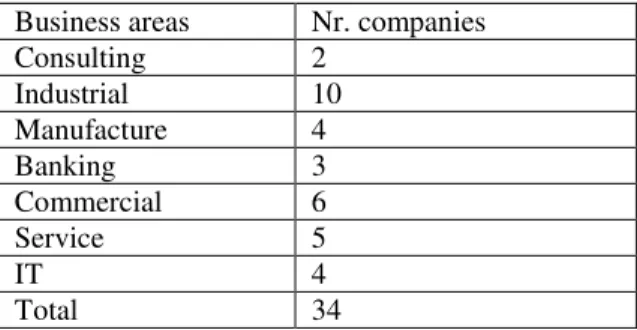
the generalization of results was done, consists of 34 companies operating in Romania, companies listed in the category “Top 100 Best Companies to Work For”, supplement of ‘Capital Magazine’, no. 4, December 2007, companies on which I realized also the testing within the doctoral research and from which I received the permission to respond to the present questionnaire.3. The setting of the objectives
The objective of the questionnaire is to determine the communication system of implementing Corporate Social Responsibility, the knowledge and understanding of these methods by experienced and nationally recognized firms. Even if the societies were chosen on the decisive human resource management criterion, the main hypothesis of this research was the fact that these firms are responsible not only to their own employees. For this reason we wanted to examine them in terms of how they communicate with the main stakeholders the durable development projects and CSR. The CSR actions must be understood, communicated, the stakeholders must know the way of action, and their needs must be anticipated so that to have sustainability.
The objectives of the survey at national level were:
the analysis of the involvement degree of management in communicating CSR implementation;
identifying the existence of a communication policy and CSR strategies;
determining the way of communication to and from employees in CSR activities;
Communicating the existence of ethical responsibility towards customers and suppliers.
finding the level considering the society’s perception vis-à-vis the company;
Identifying the extent in which the actions to protect the environment are communicated.
4. Establishing the number of interviewed The questionnaire was intended to be applied on a representative number of over 50 companies. The cover letter was sent with the questionnaire. I got the answer from a number of 34 companies. Many of these companies did not mention their names, but they all identified the activity areas. [2]
Table 1: Business areas of measured companies
Business areas Nr. companies
Consulting 2
Industrial 10
Manufacture 4
Banking 3
Commercial 6
Service 5
IT 4
Total 34
5. The establishment of sampling method The method used to select interviewees was sampling AD-HOC, as the number of companies is relatively small, and the group members appear in the Capital Magazine supplement from December 2008, “Top 100 Best Companies to Work For”. Sampling wanted to include all companies included in the top.
Electronic letters were sent to the contacts, especially to public relation departments, accompanied by the link to the questionnaire. The completion time of a questionnaire is about 10-20 minutes and they were completed electronically.
6. The analysis of the results of the market study on a representative sample of companies in Romania about CSR and SD communication
This paragraph shows graphic results in terms of quantity research. Thus, Figure 1 emphasizes how managers communicate in a responsible way their vision. The results are positive, the study concluded that the vision is communicated quite well.
Fig. 1: Managers communicate the organization's vision in a responsible approach?
Fig. 2: Managers communicate about new social challenges they face?
The figure above shows a discouraging fact about the communication about the new social challenges, which demonstrates their relatively minor preoccupation about social issues. At the same time, Figure 3 demonstrates that communication is efficient in terms of the relationship with employees. Studies show a positive distribution (50%) related to the future decisions, regarding them concern to the employees directly involved.
0 2 4 6 8 10 12
15
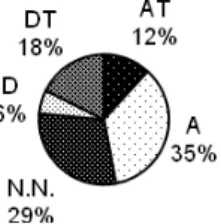
Figure 4 shows positive percents (47%) regarding implementation of a communication strategy for CSR projects and 29% demonstrates that many of the companies have not thought about developing such a strategy.At the same time, in the Figure 5 we show the distribution related to how companies communicate with stakeholders about their CSR report. It is not sufficient to create such a report, if it isn’t distributed and disseminate to stakeholders. Equalization of favorable and unfavorable responses demonstrates the instability at this point that is needed to improve the methods and ways of communication to stakeholders.
Fig. 3: Managers communicate properly the decisions for the future to their subordinates?
Fig. 4: The organization has implemented a communication strategy for the CSR projects?
Fig. 5: Organization informed stakeholder about the CSR report?
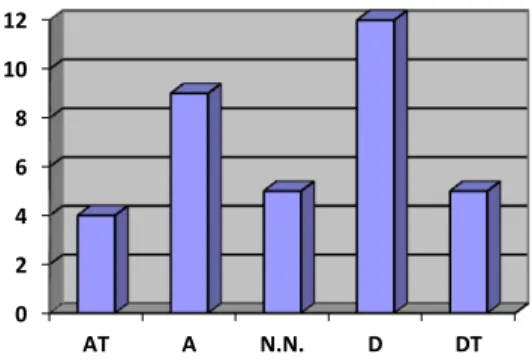
Fig. 6: Employees are encouraged to communicate their responsible ideas?
The next block of questions (Figures 6 -11) is related to how the company communicates about CSR and SD with their employees. It is expected to get positive results, because firms in the sample are targeting to the relationship with employees (the group members in the Capital Magazine Appear supplement from December 2008 "Top 100 Best Companies to Work For). Thus, the employees are encouraged to communicate their ideas about CSR in a big enough proportion (Figure 6), but there are cases where improvements should be made.
Responses very favorable to communication between employees and employers can be found in Figure 7, where a rate of over 60% of companies recognizes that they communicate efficient within the company. As expected, feedback communication systems related to health and safe working practices are efficient, there is a fairly large percentage, as showing in Figure 9, and similarly we have positive results in terms of respect for the communication about the employees’ needs and expectations (figure 11). Instead, flexible work is a delicate issue, the distribution of answers being almost equal and difficult to evaluate (Figure 10).
Fig. 7: Is there an efficient communication system for employees?
0 2 4 6 8 10 12
16
Fig. 8: Employees are consulted on important issues?Fig. 9: There are appropriate systems to ensure feedback on health and safe working practices?
Fig. 10: It is possible a discussion about flexible working?
Fig. 11: The organization's activities are based on respect for the communication about the employees needs and
expectations?
Fig. 12: Organization has discussions about environmental and societal needs with potential partners
Environmental and societal needs issue, however, is very delicate. Discussions with potential partners avoid this topic are not enough, as showing in Figure 12. The positive trend is inversely proportional to the necessity and importance of the subject.
Consumers actually are encouraged to consume increasingly [2],[12],[28],[32], but they aren’t uninformed and they are not checked in concerns about the impact that the product have on them.(Fig. 14). Information appearing on the product is clear and accurate, it exist right labeling of products (Figure 15), and also the promotion is honest (Figure 16). Systems for monitoring, understanding, anticipating customers' wishes regarding their social, economic and ecological products exist at a adequate number of firms (Figure 14), but they are not properly assessed and do not account for them only an extent very small. Product non-conformities raised by consumers, and their complaints and observations are considered a fairly large percentage, as shown in Figure 17.
Fig. 13: Customer perception is taken into account about the social, economic and ecologic impact on them?
Fig. 14: There are systems for monitoring, understanding, anticipating customers' wishes regarding their social,
economic and ecological products? 0
2 4 6 8 10 12 14 16
AT A N.N. D DT
0 1 2 3 4 5 6 7 8
AT A N.N. D DT
0 2 4 6 8 10
AT A N.N. D DT
0 2 4 6 8 10 12 14
AT A N.N. D DT
0 5 10 15
17
Fig. 15: It provides clear and accurate information, rightlabeling of products?
Fig. 16: Honesty and ethics are respected in promotion?
Fig. 17: Customer complaints are monitored and recorded?
The recycling, how they reduce the environmental impacts or using durable the products (Figure 20, Figure 19, Figure 18) are not the most important topics in the communication strategy on CSR and SD issues in enterprises sample. This demonstrates that they aren’t makes analysis to those elements, so there is no communication to share. The negative distribution of responses to these questions can even emphasizes how companies try to intentionally shorten the product life, encouraging consumerism, not informing correct about the effective use of products, just for a faster replacement of the product, and recycling and environmental impact are hot topics in communication, perhaps perhaps as little as they make it.
Fig. 18: Have you tried to inform on how reduce your environmental impacts?
Fig. 19: It informs about using durable the products?
Fig. 20: Did you communicate sufficient about recycling?
7. Conclusion
Several studies attempted to investigate the perception of managers towards CSR [35], [24]. This study reports how CSR and SD actions are implemented and communicated by the Romanian companies. Better than that, this paper examines perceptions of the business environment to CSR actions and their attitudes regarding communication on CSR. CSR communication is still a topic that needs further research, as this article demonstrates that even the act of communication of CSR is low.
All departments of a company should have responsibilities and roles in the creation of know-how on sustainable development. However, the departments that deal with communication, marketing, public relation, advertising , must choose 0
2 4 6 8 10 12 14 16
AT A N.N. D DT
0 2 4 6 8 10 12
AT A N.N. D DT
0 2 4 6 8 10 12 14
AT A N.N. D DT
0 2 4 6 8 10 12
AT A N.N. D DT
0 2 4 6 8 10 12
AT A N.N. D DT
0 2 4 6 8 10 12 14
18
a closer approach to CSR, and must ensure that each project is communicated in accordance with the values and ethics of the company. [37],[29],[26]. Thus, any department that deals with the SD and CSR projects’ communication must:Inspire a communication on sustainable and responsible actions embedded itself in project selection and monitoring feedback.
Demonstrate through communication that all three basic pillars are respected: the economy, the social surrounding and the environment;
Establish a platform for dialogue, consultation and exchange of good practice in SD and CSR domains [30],[27].
References
[1] Aakhus, M.,(2007), Communication as design, Communication Monographs, vol.74, pp.112– 117.
[2] Auger, P. Burke, P. Devinney, T.M. and Louviere, J.J., (2003), What will consumers pay for social product features?, Journal of Business Ethic, vol. 42(3), pp.281-304.
[3] Baughn, C.C., Bodie, N.L., McIntosh, J.C. (2007), Corporate social and environmental responsibility in Asian countries and other geographical regions, Corporate Social Responsibility and Environmental Management, vol. 14, pp.189–205.
[4] Birth, G., Illia L., Lurati, F., Zamparini, A. (2008) Communicating CSR: The practice in the top 300 companies in Switzerland, Corporate Communication: An International Journal, vol 13, Issue 2.
[5] Bucur, M., Moica, S., Fărcaş R., (2011), The Communications of Corporate Social Responsibility, Scientific Bulletin of the "Petru Maior" University of Tîrgu Mureș, vol. 8, pp. 56-59.
[6] Cerin, P. (2002), Communication in corporate environmental reports, Corporate Social Responsibility and Environmental Management vol. 9, pp.46–66.
[7] Chapple, W., Moon, J. (2005), Corporate social responsibility (CSR) in Asia: A seven-country study of CSR web site reporting, Business & Society, vol.44, pp. 415–441.
[8] Chamorro, A., Bañegil, T.A., (2006), Green marketing philosophy: A study of Spanish firms with ecolabels, Corporate Social Responsibility and Environmental Management, vol.13, pp. 11–24.
[9] Chatterji, A., Levine, D., (2006), Breaking down te wall of codes: evaluating non-financial performance measurement, California Management Review, vol.48, pp. 29–51. [10] Coelho, P.R., McClure, J.E., Spry, J. (2003),
The social responsibility of corporate management: a classic critique. Mid-American, Journal of Business, vol. 18, pp. 15–24.
[11] Coupland, C. (2005), Corporate social responsibility as argument on the web, Journal of Business Ethics, vol.65, pp. 355–366.
[12] Creyer, E.H., Ross, W.T. Jr. (1997), The influence of firm behavior on purchase intention: Do consumers really care about business ethics?, Journal of Consumer Marketing, vol. 14(6), pp.421-432.
[13] Dobrea, R. C., Dinu, F. A., (2012), Interdependencies between CSR Strategies and economic performance in top romanian companies, Procedia - Social and Behavioral Sciences, vol. 62, pp. 1208-1214
[14] Esrock, S.L., Leichty, G.B., (1998), Social responsibility and corporate web pages: self-presentation or agenda-setting?, Public Relations Review, vol. 24, pp.305–319.
[15] Golusin, M., Munitlak, I. O., (2009), Definition, characteristics and state of indicators of sustainable development in countries of Southeastern Europe, Agriculture Ecosystems and Environment, vol.130(1–2), pp. 67–74. [16] Golusin, M., Olja Munitlak Ivanovic,
Teodorovic N., (2011), The review of the achieved degree of sustainable development in South Eastern Europe—The use of linear regression method Review Article, Renewable and Sustainable Energy Reviews, vol. 15, Issue 1, pp. 766-772.
[17] Graafl and J, van de Ven, B, Nelleke, S. (2003), Strategies and instruments for organising CSR by small and large businesses in the Netherlands, Journal of Business Ethics, vol. 47, pp. 45–60.
[18] Guimarães-Costa, N., Pina e Cunha, M. (2008), The Atrium Effect of Website Openness on the Communication of Corporate Social Responsibility, Corporate Social Responsibility and Environmental Management, vol.15, pp. 43–51.
[19] Herman. E., Georgescu, M. A., Georgescu. A., (2012), Ethics Between Theory and Practice – Social Responsibility in the Romanian Business Environment, Original Research Article Procedia - Social and Behavioral Sciences, vol. 58, pp. 703-713.
[20] Hockerts, K., Moir, L., (2004), Communicating corporate responsibility to investors. The changing role of the investor relations function. Journal of Business Ethics, vol.52, pp. 85–98. [21] Hooghiemstra R. (2000), Corporate
communication and impression management – new perspectives why Companies engage in corporate social reporting, Journal of Business Ethics, vol.27, pp.55–68.
19
Article Procedia Economics and Finance, vol. 3, pp. 1122-1127.[23] Lee Eun Mi, Seong-Yeon Park, Hyun Jung Lee, (2013), Employee perception of CSR activities: Its antecedents and consequences, Journal of Business Research, vol. 66 (10), pp. 1716-1724. [24] Lindgreen, A., Swaen, V., Johnston, W., (2009),
Corporate Social Responsibility: An Empirical Investigation of U.S. Organizations, Journal of Business Ethics, vol. 85, pp. 303-323.
[25] Ligeti, G., Oravecz A., (2009), CSR Communication of Corporate Enterprises in Hungary, Journal of Business Ethics, vol. 84, pp. 137-149.
[26] Lurati, F., Eppler, M., (2007), Communication and Management: Researching Corporate Communication and Knowledge Communication in Organizational Settings, Studies in Communication Sciences, vol. 6(2).
[27] Maignan, I., (2001), Consumers' perceptions of corporate social responsibilities: A cross-cultural comparison, Journal of Business Ethics, vol. 30(1), pp. 57-72.
[28] Murphy, P.E., (2005), Developing, communicating and promoting corporate ethics statements: a longitudinal analysis. Journal of Business Ethics, vol. 62, pp. 183–189.
[29] Perks, K. J., Francisca Farache, Paurav Shukla, Aidan Berry, (2013), Communicating responsibility-practicing irresponsibility in CSR advertisements, Journal of Business Research, Vol. 66 (10), pp. 1881-1888.
[30] Radu, A. L., Dimitriu, M., (2012) Scoring Method Applied to Financing Programmes in the Context of Sustainable Development, Procedia Economics and Finance, vol. 3, pp. 527-535.
[31] Rinne Janne, Jari Lyytimäki, Petrus Kautt, (3013), From sustainability to well-being: Lessons learned from the use of sustainable development indicators at national and EU level, Ecological Indicators, vol. 35, pp. 35-42. [32] Sen, S., Bhattacharya, C.B., (2001), Does doing
good always lead to doing better? Consumer reactions to corporate social responsibility, Journal of Marketing Research, vol. 38(2), pp. 225-243
[33] Soaita D., (2012), The contradictions between energy efficiency and sustainability, Conference Proceedings of the 5th edition: INTER-ENG 2011, pp. 195-198.
[34] Spence, L.J., Schmidepeter, R., Habisch, H., (2003), Assessing social capital: small and medium sized enterprises in Germany and the UK, Journal of Business Ethics, vol. 47, pp.17– 29.
[35] Quazi, A., (2003), Identifying the Determinants of Corporate Managers’ Perceived Social Obligations, Management Decision, vol. 41(9), pp. 822-831.
[36] Ziek, P., (2009), Making Sense of CSR Communication, Corporate Social Responsibility and Environmental Management. Wiley InterScience, vol. 16, pp. 137–145. [37] Selected papers from the 9 theUN roundtable on
communication for development, (2007), Electronic Publishing Policy and Support Branch Communication Division FAO Viale delle Terme di Caracalla, 00153 Rome, Italy, Available: