Hereditas 123: 215-220
zyxwvutsrqponmlkjihgfedcbaZYXWVUTSRQPONMLKJIHGFEDCBA
(1995)zyxwvutsrqponmlkjihgfedcbaZYXWVUTSRQPONMLKJIHGFEDCBA
Synaptonemal complex formation in spermatocytes of the
autotriploid rainbow trout,
Oncorhynchus mykiss
(Pisces, Salmonidae)
zyxwvutsrqponmlkjihgfedcbaZYXWVUTSRQPONMLKJIHGFEDCBA
C. OLIVEIRA', F. FORESTI', M. G. RIGOLINO* and Y. A. TABATA'
zyxwvutsrqponmlkjihgfedcbaZYXWVUTSRQPONMLKJIHGFEDCBA
'
Departamento de Morfologia, Instituto de Biociincias, Universidade Estadual Paulista, Botucatu, Siio Paulo, Brazil'EstaGiio Experimental de Salmonicultura, Instituto de Pesca, Campos do JordZo,
zyxwvutsrqponmlkjihgfedcbaZYXWVUTSRQPONMLKJIHGFEDCBA
Siio Paulo, BrazilOLIVEIRA, C., FORESTI, F., RIGOLINO, M. G. and TABATA, Y. A.
zyxwvutsrqponmlkjihgfedcbaZYXWVUTSRQPONMLKJIHGFEDCBA
1995. Synaptonemal complex formationin spermatocytes of the autotriploid rainbow trout, Oncorhynchus mykiss (Pisces, Salmonidae). -~ Heredifas
123: 215-220. Lund, Sweden. ISSN
zyxwvutsrqponmlkjihgfedcbaZYXWVUTSRQPONMLKJIHGFEDCBA
0018-0661. Received April 10, 1995. Accepted November 7 , 1995Meiotic cells of triploid male rainbow trouts were analyzed by a surface-spreading SC technique in order to show the process of chromosome synapsis. At zygotene the formation of SCs involved, almost exclusively, two sets of lateral elements (LEs), and the remaining set of LEs presented different synaptic configurations involving one, two, three, or four LEs. The absence of SCs involving more than two LEs
from mid- to late pachytene indicates that the multivalents produced by synapsis involving more than two
LEs, are eliminated before the end of pachytene; thus, the mechanism of chromosome pairing in triploid male rainbow trouts produces, almost exclusively, bivalents with a probable extensive nonhomologous synapsis involving the extra set of chromosomes.
C. Oliveira, Departamento de Morfologia, Inslituto de Biociincias, Universidade Estadual Paulista, 1861 8-000
Botucatu, S6o Paulo, Brazil
Salmonidae is currently the most important group of fish used in cold-water aquaculture projects, and among the species of this family the rainbow trout is the most widespread one, with populations in- habiting waters on all continents except Antarctica
( HERSHBERGER 1992). Triploid rainbow trouts have been extensively produced and used in aqua- culture programs ( CHOURROUT 1986). The analy- sis of triploid fish demonstrated that triploid females never mature, whereas triploid males de- velop typical secondary sexual characteristics and undergo the same hormonal changes as maturing diploids (LINCOLN and SCOTT 1984). Triploids occasionally produce spermatozoa, but the off- spring produced from haploid eggs fertilized with such sperm do not survive past hatching, probably due to the occurrence of aneuploidy in male germi- nal cells (LINCOLN and SCOTT 1984; BENFEY et al.
1986).
Studies of the synaptonemal complex (SC) in fish are limited (PETERSON et al. 1994; OLIVEIRA et al. 1995, and references therein), and many aspects, such as SC behavior in polyploids, have not been investigated. Thus, the aim of the present investigation was to study the meiotic cells of triploid male rainbow trouts by a surface-spread-
ing SC technique in order to show the process of chromosome synapsis in these fishes.
Material and methods
Five triploid males of the rainbow trout
Oncorhynchus mykiss were used in the present study. They were obtained from a domesticated stock maintained at EstaqBo Experimental de Salmonicultura of the Instituto de Pesca de Sgo
Paulo, Campos do JordBo, State of Sgo Paulo, Brazil. Triploidy was induced by heat shock as described by CHOURROUT (1986). Fishes were screened by taking a blood sample to test the diameter of erythrocyte nuclei. Mitotic chromo- some preparations from kidney tissue were ob- tained according to FORESTI et al. (1993).
A surface spreading method modified for the study of fish cells (OLIVEIRA et al. 1995) was used
216 c. OLIVEIRA ET AL.
zyxwvutsrqponmlkjihgfedcbaZYXWVUTSRQPONMLKJIHGFEDCBA
Hereditas 123zyxwvutsrqponmlkjihgfedcbaZYXWVUTSRQPONMLKJIHGFEDCBA
( 1 9 s )Fig.
zyxwvutsrqponmlkjihgfedcbaZYXWVUTSRQPONMLKJIHGFEDCBA
1. Somatic metaphase of a rainbow trout specimen with 3nzyxwvutsrqponmlkjihgfedcbaZYXWVUTSRQPONMLKJIHGFEDCBA
= 90 chromosomesstained with Giemsa. Bar = 5
zyxwvutsrqponmlkjihgfedcbaZYXWVUTSRQPONMLKJIHGFEDCBA
pm.drops of 1 YO
zyxwvutsrqponmlkjihgfedcbaZYXWVUTSRQPONMLKJIHGFEDCBA
Lipsol (alkaline laboratory cleaningdetergent) were mixed on a slide coated with plastic (Falcon). After 1 to 7 min (or by moni- toring the cells under a microscope), 4 more drops of fixative were added to the mixture. The slides were then laid flat under a protective paper box and allowed to dry overnight, gently rinsed four times in a 0.4 YO (v/v) Photo-Flo 200 (Ko- dak) solution, 30s each time, and left to dry in a vertical position. The slides were silver- stained (HOWELL and BLACK 1980) for 6- 12 min at 60°C. Excessive precipitation of silver nitrate was removed from the slides by cleaning
them for 5-30
zyxwvutsrqponmlkjihgfedcbaZYXWVUTSRQPONMLKJIHGFEDCBA
s in a solution of 0.1 YO (w/v) pe-riodic acid (DENTON 1989). For the electron mi- croscope studies the plastic film was floated in
Results
Mitotic chromosomes
Mitotic chromosome analysis of triploid rainbow trout (Fig. 1) showed that the chromosome number ranged from 3n = 89 to 3n = 94 (the modal number was 3n =90) among cells of the individual and among cells of different individuals; however, the number of chromosome arms was constant ( N F = 156). Cells with a low chromosome number presented a high number of biarmed chromosomes and cells with high chromosome number presented a high number of uniarmed chromosomes; thus, the occurrence of different chromosome numbers is due to Robertsonian rearrangements present among the cells of this species.
tap water and picked up from below with 100 mesh copper grids. The grids were examined at
80 kV with a Phillips EM301 electron micro- Electron micrographs of 83 spermatocyte nuclei
Herediras 123
zyxwvutsrqponmlkjihgfedcbaZYXWVUTSRQPONMLKJIHGFEDCBA
(199.5) scs IN TRIPLOIDzyxwvutsrqponmlkjihgfedcbaZYXWVUTSRQPONMLKJIHGFEDCBA
MALE RAINBOW TROUT 217Fig. 2. Electron micrograph of a late zygotene nucleus with several univalents, presumed nonhomologous LEs at the
beginning of the process
zyxwvutsrqponmlkjihgfedcbaZYXWVUTSRQPONMLKJIHGFEDCBA
of synapsis (large arrows) or in a more advanced stage of synapsis (small arrows), and threepresumed nonhomologous LEs shaping a trivalent (open arrow). Note the ends of many LEs clustered in a specific
region of the nucleus. Bar
zyxwvutsrqponmlkjihgfedcbaZYXWVUTSRQPONMLKJIHGFEDCBA
= 3 pm.formation in triploid male rainbow trouts begins during leptotene near the telomeric region of each chromosome arm, which is signaled by the pres- ence of attachment plaques. The number of LE
pieces in this stage was about 156, which is in accordance with the presence of 156 chromosome arms. From early to middle zygotene the ends of
the LEs were arranged in a closely restricted region of the nuclei giving origin to a partial bouquet configuration. In middle and late zygotene nuclei (Fig. 2) and in pachytene nuclei, it was observed that the extra set of LEs formed by univalents, bivalents, and multivalents remained in a closely restricted region of the nuclei.
The formation of LEs and the synapsis of the
centromeric region of the biarmed chromosomes only occur during pachytene. Thus, from lep- totene to zygotene each SC observed was defined as an “SC piece” since it could represent the synapsis of the two homologous chromosome arms belonging to one biarmed chromosome pair.
Or it could represent the synapsis of two ho-
mologous chromosome arms belonging to one uniarmed chromosome.
The formation of SC stretches during zygo- tene involved, almost exclusively, two sets of LEs
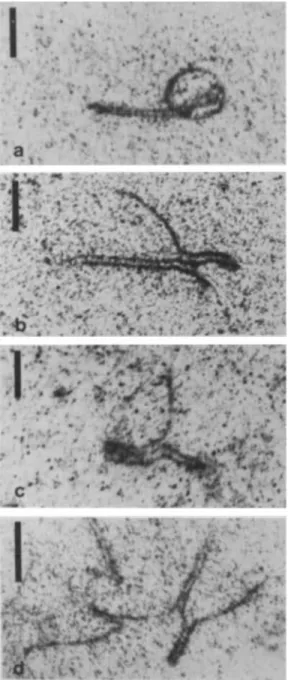
(Fig. 2). In the remaining set of LEs, we identified:
21 8 c. OLIVEIRA ET AL.
zyxwvutsrqponmlkjihgfedcbaZYXWVUTSRQPONMLKJIHGFEDCBA
Hereditas 123zyxwvutsrqponmlkjihgfedcbaZYXWVUTSRQPONMLKJIHGFEDCBA
(1995)(b)
zyxwvutsrqponmlkjihgfedcbaZYXWVUTSRQPONMLKJIHGFEDCBA
LEs showing a partial (Fig. 3a) or a full U-shaped configuration; (c) SCs formed by twopresumed nonhomologous chromosomes at the be- ginning (Fig. 2) and during the course of the synaptic process; (d) three LEs synapsing as cou- ples in different segments (Fig. 2 and 3b); (e) three LEs synapsing as couples in different segments,
presenting a region with a double SC (Fig. 3b);
zyxwvutsrqponmlkjihgfedcbaZYXWVUTSRQPONMLKJIHGFEDCBA
(f)trivalents composed of three LEs synapsed as an almost full double SC configuration (Fig. 3c); and
(g) four LEs synapsing as couples in three different regions (Fig. 3d).
In a quantitative analysis of 15 late zygotene
nuclei from triploids, the mean values
zyxwvutsrqponmlkjihgfedcbaZYXWVUTSRQPONMLKJIHGFEDCBA
(X) obtainedas a result of counting each arrangement of LEs and/or SC pieces were: almost fully synapsed SC
pieces, X =
zyxwvutsrqponmlkjihgfedcbaZYXWVUTSRQPONMLKJIHGFEDCBA
54 (ranging from 52 to 60) (the cen-tromeric region was not considered since it was visible only in pachytene); unsynapsed LEs, X=36.3 (ranging from 25 to 46); LEs showing a partial or a full U-shaped configuration, R = 1.0 (ranging from 0 to 4); SCs formed by two pre- sumed nonhomologous chromosomes, X = 4.9 (ranging from 1 to 10); three LEs synapsing as couples in four different segments, X = 0.2 (ranging from 0 to 1); four LEs synapsing as couples in different segments, 2 = 0.1 (ranging from 0 to 1).
Other configurations than described above were not found in the 15 nuclei analyzed. Although all these unusual configurations were found more frequently in late zygotene, some similar figures were also observed in mid zygotene and early pachytene.
During early pachytene the central regions of the biarmed chromosomes were progressively synap- sed, giving origin to SCs with two attachment
plaques in which, in some cases, the centromeric regions were particularly evident. The number of
SCs with two attachment plaques increased from early to late pachytene, and the frequency of unsy- napsed LEs and of SCs involving three or more
LEs was progressively reduced.
Fig. 3a-d. Electron micrographs of triploid male rain- bow trouts SCs showing details of the synapsis involving
the third set of chromosomes. a Univalent LE showing a
Discussion
U-shaped configuration but with the centromeric region The processes of LE during leptotene, unsynapsed. b Three presumed nonhomologous LEs
the process of synapsis of the chromosome arms
synapsing as couples in different segments and with a
region with a double synaptonemal complex. c A triva- during qgotene, and the synapsis Of the
lent shaped by three presumed nonhomologous L E ~ tromeric regions Of biarmed chromosomes during
synapsed as an almost full double SC. d Four presumed pachytene in triploid male rainbow trouts are very
nonhomologous LEs synapsing as couples in three differ- similar to those observed in diploid males
Hereditas 123
zyxwvutsrqponmlkjihgfedcbaZYXWVUTSRQPONMLKJIHGFEDCBA
(1995) scs I N TRIPLOID MALE RAINBOWzyxwvutsrqponmlkjihgfedcbaZYXWVUTSRQPONMLKJIHGFEDCBA
zyxwvutsrqponmlkjihgfedcbaZYXWVUTSRQPONMLKJIHGFEDCBA
TROUT 219zyxwvutsrqponmlkjihgfedcbaZYXWVUTSRQPONMLKJIHGFEDCBA
Nuclei of diploid male rainbow trouts at late zygotene presented 51 SC pieces and two unsy- napsed LEs, which probably correspond to the X and Y chromosomes (OLIVEIRA et al. 1995). Triploid male rainbow trouts presented at least 52 SC pieces, suggesting that synapses between the X chromosomes occur more frequently than X-Y
synapses. The analysis of the behavior of sex chro- mosomes has been difficult due to the presence of many unsynapsed LEs, but the above hypothesis is in accordance with the observations of SOLARI et al. (1991) that in triploid female chickens the synapsis between the two Z chromosomes is much more frequent than synapsis between the Z and W chromosomes. Moreover, the hypothesis of the existence of a preferential synapsis between the two X chromosomes in triploid male rainbow trouts is in accordance with the data from gene segregation in tetraploid rainbow trouts showing a preferential
pairing of homologous chromosomes
zyxwvutsrqponmlkjihgfedcbaZYXWVUTSRQPONMLKJIHGFEDCBA
( DITER et al.1988).
In late zygotene nuclei of diploid male rainbow trouts, which present 104 chromosome arms (2n = 56 to 2n = 68), the maximum number of SC pieces observed was 51 (OLIVEIRA et al. 1995). The presence of 52-60 complete SC pieces in late zygotene nuclei and the low number of univalents found in pachytene of triploids suggest that the elements of the additional set of chromosomes synapsed amongst themselves. The analysis of nu- clei from late zygotene to early pachytene showed a particular pattern of chromosome synapsis in- volving different combinations among the elements of the third set of LEs, suggesting an extensive synaptic process among different nonhomologous chromosomes in triploid male rainbow trouts.
RASMUSSEN (1977) and LOIDL et al. (1991)
pointed out that homology is not an indispensable precondition for SC formation, but rather that chromosomes probably are engaged in nonho- mologous synapsis if no homologous partner is available. Thus, according to the cited authors, the synapsis has a tendency to be maximized irrespec- tive of homology, supporting the concept that SC is a structure that may connect chromosomes non- specifically. The finding of the presumed nonho- mologous synapsis involving the third set of chromosomes of triploid male rainbow trouts is in accordance with this hypothesis.
There is no uniform pattern of chromosome pairing in triploids of different species, and the main variations occur in the extent and in the persistence of pairing among the three axes of each
homologous set (SOLARI et al. 1991). The present data show that the mechanism of synapsis in triploid male rainbow trouts is similar to the one described for Bombyx mori ( RASMUSSEN 1977)
since only bivalents are found in late pachytene nuclei of triploids of both species. The main differ- ences observed for LE behavior in the chromo- somes of triploid male rainbow trout as compared with other examples in the literature are the appar- ent absence of alignment of the three homologous LEs as observed in the triploids ( RASMUSSEN
1977; LOIDL and JONES 1986; VINCENT and JONES
1993; THOMAS and THOMAS 1994) and the ab-
sence of complete trivalent formation as described in Coprinus cinereus (RASMUSSEN et al. 1981) and
Gallus domesticus (SOLARI et al. 1991).
Rainbow trout represents a species originating from an autotetraploid event in an ancestor of the group (ALLENDORF and THORGAARD 1984), and
there are synapses involving three or four LEs in diploid rainbow trouts (OLIVEIRA et al. 1995). Thus, it is possible to hypothesize that the unusual synapsis behavior among LEs in triploid male rain- bow trouts is due to the presence of homologous chromosome segments in the third set of chromo- somes. Such homologous segements could be re- sponsible for the occurrence of initial synapsis among the third haploid set of chromosomes. These initial synapses do not permit the formation of trivalents and also transport the other nonho- mologous segments to a nonhomologous synapsis. Alternatively, the occurrence of nonhomologous pairing among the elements of the third set of LEs may be due to spatial distribution, since almost all of these elements remain in a closely restricted area of the nuclei from middle zygotene to pachytene.
The presence of trivalent segments found in zygotene and in early pachytene nuclei and their absence in late pachytene suggest their elimination before the end of the pachytene stage, such as observed in B. mori ( RASMUSSEN 1977). The pres-
ence of mechanisms of trivalent elimination is not widespread among the organisms; species with very long chromosomes such as Allium sphaerocephalon
(LOIDL and JONES 1986), Crepis capillaris (VIN-
CENT and JONES 1993), and Lolium multiyorum
(THOMAS and THOMAS 1994) and some species with small chromosomes such as Coprinus cinereus
Hereditas 123
zyxwvutsrqponmlkjihgfedcbaZYXWVUTSRQPONMLKJIHGFEDCBA
(1995)zyxwvutsrqponmlkjihgfedcbaZYXWVUTSRQPONMLKJIHGFEDCBA
220 C . OLIVEIRA ET AL.
zyxwvutsrqponmlkjihgfedcbaZYXWVUTSRQPONMLKJIHGFEDCBA
ate between haploid and diploid values
zyxwvutsrqponmlkjihgfedcbaZYXWVUTSRQPONMLKJIHGFEDCBA
( BENFEY etal. 1986). This could be explained by normally segregating bivalents and a random segregation of a third set of univalents or, alternatively, by the simple random segregation of three chromosome sets. The presence in late pachytene nuclei of al- most exclusively bivalent SCs suggests that the first
hypothesis is the correct one. However, in addition to the random segregation of some elements of the third set of univalents there is probably the forma- tion and segregation of chromosome fragments which may result from crossing-over involving nonhomologous chromosomes.
Further studies of artificial tetraploids and hy- brids would be very interesting to test the hypothe- sis of nonhomologous synapsis and the existence of homologous chromosome segments among the members of the haploid chromosome set of rain- bow trout. Additionally, studies on different triploid fish species will possibly provide useful information about chromosome segregation in this animal group.
Acknowledgements. -The authors are grateful to R. DevidC and M. Nagata for technical assistance, and to Dr. E. A. Gregorio for making available the Electron Microscope Unit. Funds support- ing this study were provided by CNP,, FUNDUNESP, and FAPESP.
References
ALLENDORF, F. W. and THORGAARD, G. H.
zyxwvutsrqponmlkjihgfedcbaZYXWVUTSRQPONMLKJIHGFEDCBA
1984. Tetraploidyand the evolution of Salmonid fishes. - In: Evolutionary Ge-
netics
zyxwvutsrqponmlkjihgfedcbaZYXWVUTSRQPONMLKJIHGFEDCBA
of Fishes (ed. B. J. TURNER), Plenum Press, New York,p. 1-53
BENFEY, T. J., SOLAR, I. I., DEJONG, G. and DONALDSON, E. M.
1986. Flow-cytometric confirmation of aneuploidy in sperm from triploid rainbow trout.- Trans. Am. Fish. SOC. 115:
838 - 840
CHOURROUT, D. 1986. Techniques of chromosome manipulation in rainbow trout: a new evaluation with karyology. - Theor. Appl. Genet. 72: 627-632
DENTON, T. E. 1989. A rapid method for removing silver from stained chromosomes. -Stain Technol. 64: 49-50
DITER, A,, GUYOMARD, R. and CHOURROUT, D. 1988. Gene segregation in induced tetraploid rainbow trout: genetic evi-
dence of preferential pairing of homologous chromosomes. -
Genome 30: 547-553
FORESTI, F., OLIVEIRA, C. and ALMEIDA-TOLEDO, L. F. 1993. A method for chromosome preparations from large specimens of fishes using in vitro short treatment with colchicine. - Experi- entia 49: 810-813
HERSHBERGER, W. K. 1992. Genetic variability in rainbow trout populations. - Aquaculture 100: 51-71
HOWELL, W. M. and BLACK, D. A. 1980. Controlled silver-stain- ing of nucleolus organizer regions with a protective colloidal developer: a I-step method. - Experientia 3 6 1014- 1015
KLIGERMAN, A. D. and BLOOM, S. E. 1977. Rapid chromosome preparations from solid tissues of fishes. - J . Fish. Res. Ed. Canada 34: 266-269
LINCOLN, R. F. and SCOTT, A. P. 1984. Sexual maturation in triploid rainbow trout, Salmo gairheri Richardson. - J . Fish Biol. 25: 385-392
LOIDL, J. and JONES, G. H. 1986. Synaptonemal complex spread-
ing in Alliwn. 1. Triploid A . sphaerocephalon. - Chromosoma
zyxwvutsrqponmlkjihgfedcbaZYXWVUTSRQPONMLKJIHGFEDCBA
93: 420-428
LOIDL, J., NAIRZ, K. and KLEIN, F. 1991. Meiotic chromo- some synapsis in a haploid yeast. - Chromosoma 100:
221-228
OHNO, S., STENIUS, C., FAISST, E. and ZENZES, M. T. 1965.
Post-zygotic chromosomal rearrangements in rainbow trout (Salmo irideus Gibbons). - Cytogenetics 4 : 17-29
OLIVEIRA, C., FORESTI, F., RIGOLINO, M. G. and TABATA, Y. A.
1995. Synaptonemal complex analysis in spermatocytes and oocytes of rainbow trout, Oncorhynchus mykiss (Pisces, Salmonidae). The process of autosome and sex chromosome synapsis. - Chromosome Res. 3: 182-190
PETERSON, D. G., STACK, S. M., HEALY, J. L., DONOHOE, B. S. and ANDERSON, L. K. 1994. The relationship between synap- tonemal complex length and genome size in four vertebrate classes (Osteichthyes, Reptilia, Aves, Mammalia). - Chromo- some Res. 2 153-162
RASMUSSEN, S. W. 1977. Chromosome pairing in-triploid females
of Bombyx mori analyzed by three-dimensional reconstruction of synaptonemal complexes. - Carlsberg Res. Commun. 42:
163-197
RASMUSSEN, S. W., HOLM, P. B., Lu,
zyxwvutsrqponmlkjihgfedcbaZYXWVUTSRQPONMLKJIHGFEDCBA
B. C., ZICKLER, D. andSAGE, J. 1981. Synaptonemal complex formation and distribu- tion of recombination nodules in pachytene trivalents of triploid Coprinus cinereus. - Carlsberg Res. Commun. 46: 347- 360
SOLARI, A. J., THORNE, M. H., SHELDON, B. L. and GILLIES, C. B. 1991. Synaptonemal complexes of triploid (ZZW) chickens: Z-2 pairing predominates over Z-W pairing. -Genome 34:
718-726
THOMAS, H. M. and THOMAS, B. J. 1994. Meiosis in triploid Loliwn. 1. Synaptonemal complex formation and chromosome configurations at metaphase I in aneuploid autotriploid L. multiponun. - Genome 3 7 18 1 - 189