Submitted12 February 2016 Accepted 17 May 2016 Published21 June 2016
Corresponding author Alexis Kuerbis,
Academic editor Bob Patton
Additional Information and Declarations can be found on page 14
DOI10.7717/peerj.2114
Copyright 2016 Kuerbis et al.
Distributed under
Creative Commons CC-BY 4.0
OPEN ACCESS
An exploratory pilot study of mechanisms
of action within normative feedback for
adult drinkers
Alexis Kuerbis1, Frederick J. Muench2, Rufina Lee1, Juan Pena1and Lisa Hail3 1Silberman School of Social Work, City University of New York, Hunter College, New York, NY, United States 2Department of Psychiatry, Northwell Health, Great Neck, NY, United States
3School of Psychology, Fairleigh Dickinson University, Metropolitan Campus, Teaneck, NJ, United States
ABSTRACT
Background.Normative feedback (NF), or receiving information about one’s drinking compared to peer drinking norms, is one of the most widely used brief interventions for prevention and intervention for hazardous alcohol use. NF has demonstrated predominantly small but significant effect sizes for intention to change and other drinking related outcomes. Identifying mechanisms of action may improve the effectiveness of NF; however, few studies have examined NF’s mechanisms of action, particularly among adults.
Objective.This study is an exploratory analysis of two theorized mechanisms of NF: discrepancy (specifically personal dissonance—the affective response to feedback) and belief in the accuracy of feedback.
Method.Using Amazon’s Mechanical Turk, 87 men (n=56) and women (n=31)
completed an online survey during which they were asked about their perceptions about their drinking and actual drinking behaviors. Then participants were provided tailored NF and evaluated for their reactions. Severity of discrepancy was measured by the difference between one’s estimated percentile ranking of drinking compared to peers and actual percentile ranking. Surprise and worry reported due to the discrepancy were proxies for personal dissonance. Participants were also asked if they believed the feedback and if they had any plans to change their drinking. Mediation analyses were implemented, exploring whether surprise, worry, or belief in the accuracy of feedback mediated severity of discrepancy’s impact on plan for change.
Results.Among this sample of adult drinkers, severity of discrepancy did not predict plan for change, and personal dissonance did not mediate severity of discrepancy. Severity of discrepancy was mediated by belief in the accuracy of feedback. In addition, viewing one’s drinking as a problem prior to feedback and post-NF worry both predicted plan for change independently.
Conclusions.Results revealed that NF may not work to create personal dissonance through discrepancy, but belief in the accuracy of feedback may be important. It appears the more one believes the feedback, the more one makes a plan for change, suggesting practitioners should be mindful of how information within feedback is presented. Findings also indicate NF may work by validating a preexisting perception that drinking is a problem instead of creating concern related to discrepancy where none existed. Limitations regarding generalizability are discussed.
SubjectsEvidence Based Medicine, Psychiatry and Psychology, Public Health
INTRODUCTION
Hazardous and/or harmful use of alcohol, such as drinking to excess or in the context of comorbid medical or mental health conditions, is a public health problem that causes economic and social burden across the globe (World Health Organization., 2014). In the United States in 2013, just under a quarter (24.7%) of adults aged 18 and older reported binge drinking (consuming five or more drinks on one occasion), and 6.8% reported heavy drinking (drinking beyond the recommended guidelines for safe alcohol use given by the National Institute for Alcohol Abuse and Alcoholism (National Institute
on Alcohol Abuse and Alcoholism,2013)) in the past month (Substance Abuse and Mental
Health Services Administration,2014). Many hazardous drinkers will be at risk for serious
health consequences but do not perceive their drinking as requiring formal treatment (Cunningham et al.,2001;Hester & Delaney,1997;Rosenberg,1993). Due to the prevalence rates of hazardous drinking, the avoidance of formal treatment, and the recent call for expanded prevention services within health care reform (Arvantes,2010), there is an increasing need for effective brief interventions that address harmful alcohol use at both the individual and population levels (McCambridge & Cunningham,2014;Dotson, Dunn & Bowers,2015) outside of specialty health care settings.
Several brief interventions have been developed (McCambridge & Cunningham,2014) to prevent alcohol use disorder (AUD) and to reduce alcohol related consequences. Brief interventions tend to be less than an hour long, or sometimes as short as a few minutes, and are usually implemented by a non-specialist, such as a primary care physician, or, in some cases, on a computer. One such brief intervention is normative feedback (NF), a widely used intervention for prevention of and early intervention for hazardous alcohol use
(Cunningham, Murphy & Hendershot,2015). During NF, individuals are assessed and then
provided with information about how their drinking patterns compare to drinking norms of their peers of the same gender and age. The purpose of NF is to provide a drinker with a tool for understanding their own, potentially excessive, drinking and ultimately motivate them to reduce their drinking to safe levels.
There are a variety of forms of NF, and it is implemented in a myriad of ways. For example, NF can be implemented as a standalone intervention; as part of more detailed feedback that includes information on health consequences, referred to as personalized feedback (Walters & Neighbors, 2005); or alongside or within another therapeutic intervention, such as Motivational Enhancement Therapy (MET) (Walters
& Neighbors, 2005; Murphy et al., 2004). NF is often provided in community-based
settings, such as primary care (Maisto et al.,2001;Collins, Carey & Sliwinski,2002), via multiple modalities (e.g., web-based, mailed, in-person) (Walters & Neighbors,2005;
White,2006;Walters & Woodhall,2003;Cunningham et al.,2012;Cunningham et al.,2009). Given its relative simplicity, it is somewhat surprising that NF demonstrates consistent effectiveness in helping individuals reduce drinking at statistically significant levels across all modalities, contexts (e.g., within therapy or alone), and structures (e.g., a single item or detailed feedback about multiple health indicators) (Cunningham et al.,2001;
Cunningham et al.,2012;Miller, Benefield & Tonigan,1993;White et al.,2007;Doumas & Hannah,2008;Walters et al.,2009;Kuerbis et al.,2014;Riper et al.,2009;Cadigan et al.,
2015;Zimmerman & Fischhoff,2014;Cunningham et al.,2010).
It is important to note that the preponderance of the above described research on NF has primarily focused on college students and/or their non-college same-age counterparts (Walters & Neighbors,2005;Reid & Carey,2015;Miller et al.,2013). This is in part because of the well documented prevalence of high risk drinking on college campuses and among individuals at this stage of late adolescence (Substance Abuse and Mental Health
Services Administration,2014). Only a few studies have examined the impact of NF among
adult drinkers beyond the college age years (e.g.,Cunningham et al.,2001;Cunningham, Murphy & Hendershot,2015;Maisto et al.,2001;Cunningham et al.,2012;Cunningham et al.,2009;Kuerbis et al.,2014;Cunningham et al.,2010). Within those few studies, NF again demonstrates preliminary effectiveness among adults at a spectrum of ages; however, this effectiveness is less well established, especially long term (Cunningham et al.,2010), than for college-aged individuals.
While NF is considered an effective intervention, particularly for individuals in late adolescence, it can potentially be improved to better facilitate both individual and population health (McCambridge & Cunningham,2014). While some studies demonstrate impressive effect sizes of NF, most studies demonstrate small effect sizes (Dotson, Dunn & Bowers,2015;Cunningham et al.,2012;Cadigan et al.,2015). There is also evidence that NF does not impact drinking outcomes as much as has been previously suggested (Foxcroft et al.,2015;Gaume et al.,2014), particularly outside the context of primary care or for more than six months (Cunningham et al.,2010).
One way to improve an intervention is to understand its mechanisms of action. If one identifies and understands how an intervention works, one can hone the intervention— improving its efficacy and cost-effectiveness. Although some studies have examined the mechanisms of action of personalized feedback (McCambridge & Cunningham,2014) and NF (Neighbors et al.,2016), mechanisms remain relatively unexplored (Gaume et al.,2014).
Proposed mechanisms of action of NF
Two potential mechanisms of action of NF explored in the literature are (1) discrepancy, including both external discrepancy (Neal & Carey,2004), the difference between one’s perceived norm and the actual norm, and internal discrepancy (Neal & Carey,2004), the dissonance between an individual’s drinking and an internal standard of comparison, such as one’s ‘‘ideal’’ drinking behavior; and (2) perceived accuracy of feedback.
students, it does not necessarily lead to actual reduced drinking (Neal & Carey,2004;
Larimer et al.,2007;Murphy et al.,2010). Notably, young adults may react to discrepancy differently from older adults due to their particular life stage (Erikson,1968). For example, a heightened need for peer approval during late adolescence may cause a more potent effect of NF (Kuerbis et al.,2014). As such, mechanisms of action of NF may differ across age groups.
Within the context of MET (Miller et al.,1999), NF is thought to develop internal, self-ideal discrepancy (Murphy et al.,2010;Miller & Rollnick,2002). In MET, a heightened awareness of discrepancy between one’s image of oneself and one’s actual behavior is thought to create conflict for the individual, resulting in discomfort with the status quo (McNally, Palfai & Kahler,2005) and thus enhancing motivation to change. This conflict is described many ways—including affectively (McNally, Palfai & Kahler,2005)—such as fear, worry, or a neutral uneasiness with the difference between perception and behavior. This conflict is conceptualized here as an affective response to discrepancy and is termed personal dissonance. Only two studies thus far directly examined the affective response related to NF and drinking with any population (Kuerbis et al.,2014;McNally, Palfai &
Kahler,2005). Results of one study demonstrated that among adult problem drinking
men-who-have-sex-with-men (MSM), NF within MET elicited concern and worry, but these responses were not related to reduction in post-NF drinking (Kuerbis et al.,2014). The second study (McNally, Palfai & Kahler,2005) also found no relationship between developed affective dissonance and drinking outcomes among heavy drinking college students. Given that only one study has examined this process among an adult population beyond college age and only in the context of MET, further research is needed to explore affective responses to NF and their role in behavior change among adults, at a range of ages.
Perceived accuracy of NF (e.g., belief that norms used for drinking comparisons and the results of the evaluation are true or valid) may also mediate NF’s efficacy. Decision dilemma theory (DDT) is a behavioral economic theory that posits that poor decision making (e.g., continued hazardous drinking) results from receiving ‘‘equivocal’’ feedback (Hantula & DeNicolis Bragger,1999;Bowen,1987) or ‘‘feedback for which multiple (positive or negative) interpretations can be constructed’’ (Bowen,1987). An individual who perceives NF as highly equivocal might view the information as inaccurate or not applicable to their personal situation. As a result, the individual would dismiss the information, nullifying the effects of NF. In their study of adult drug users who received NF, Amrhein and colleagues
(Amrhein et al.,2003) noted a subgroup of participants who disagreed with the feedback
made about this perception were not explicitly solicited by therapists and thus were made inconsistently across participants. Participants were also not directly asked whether they believed the feedback outside of session.
The current study aimed to expand the limited knowledge about the potential mechanisms of action within NF, specifically affective responses to NF and belief in the accuracy of the feedback, by implementing a feasibility and exploratory pilot study of NF on adult drinkers. Given that many individuals with varied drinking patterns are receiving feedback via online mechanisms, such asalcoholscreening.org, we explored whether it was possible to gather data about personal reactions to feedback and test the mechanisms of action of web-based NF with a heterogeneous sample of drinkers. In this feasibility study, personal dissonance, as defined by level ofsurpriseandworry, andbelief in the accuracy of feedback were tested as mediators ofseverity of discrepancy (the magnitude of the difference between one’s drinking and peer norms) on a drinker’s plan to reduce drinking. It was hypothesized that both personal dissonance and belief in feedback would emerge as mediators of severity of discrepancy predicting planning for behavior change.
METHOD
Recruitment
Participants were recruited through Amazon Mechanical Turk (MTurk), an online labor market. MTurk is a online platform through which ‘‘workers’’ are contracted to complete tasks, called ‘‘human intelligence tasks’’ (HITs), such as beta testing software or providing consumer opinions. For completing a HIT, workers are compensated by the publisher of the task, called ‘‘requesters.’’ Compensation is generally low—often times below $1—and commensurate with the task intensity. Increasingly, MTurk is being used for social sciences research with comparable results to more traditional sampling methods, when validity checks are included in the design (Mason & Suri,2012;Muench et al.,2014).
Eligibility
Participants were workers registered on MTurk. To participate in this HIT, they had to have received a HIT approval rating of 95% out of at least 500 completed HITs by other requesters. This limited the sample to workers deemed acceptable by other requesters and with adequate literacy in computer and internet use—thus providing increased assurance that participants could optimally understand this computer based intervention. Eligibility was limited to those residing in the United States.
Procedures
Eligible workers viewed the advertisement for the HIT Answer questions about a health behavior and receive feedback. Within the HIT, participants were directed to a link to an external web-based survey, hosted by SurveyMonkey.com. The initial page of the web-based survey provided information about the study, and only those who consented to participate clicked through to the actual survey. Within the survey, participants answered the question: ‘‘Do you drink alcohol?’’ Participants who answered no (N=38) were
responded yes were directed to a survey about alcohol, which included NF about their own use (described further below). At the end of the survey, participants were provided with the reference information for the data used in the feedback. The survey took about 6 min to complete. Once completed, participants were provided with a code for their MTurk account, signaling the requester to review the responses and approve compensation. Participants were compensated 50 cents for survey participation, an average rate of compensation for comparable tasks. Workers were barred from retaking the survey.
Measures
Demographics
Participants were asked their age and gender.
Perceptions of participants’ drinking
Participants were asked a number of questions about their perception of their drinking prior to NF. On a scale of 1 (Not at all) to 8 (Extremely), participants were asked if the amount that they drank was excessive (excessive) and whether their currentdrinking is a problemfor them or others (problem for others) in their lives. Finally, drinkers were asked ‘‘When you have not planned to drink, how much effort does it take for you not to drink alcohol when it is presented to you?’’ (effort). The effort question attempted to capture level of control over drinking.
Self-reported quantity and frequency of drinking
Participants were asked to report on their actual drinking through a series of questions based on the Form 90 QFV-30 (Miller & Del Boca,1994). Responses were used to provide NF, described below.
Personal dissonance
Immediately after feedback was provided, participants were asked to rate, again on a scale of 1 (Not at all) to 8 (Extremely), (1) how surprised are you by the feedback? (surprise) and (2) how much does the feedback worry you? (worry). These were used as proxies for personal dissonance resulting from NF.
Expectation
Participants were asked ‘‘Is this feedback, ..?’’ and then provided with three options: better than expected, as expected and worse than expected.
Newness of information
Participants were asked if the information provided in the NF was new. They could respond yes or no.
Plan to change
Belief in the accuracy of NF
To avoid biasing item responses earlier in the survey, the last question was ‘‘how accurate does the information you received about your drinking seem to you?’’ A 5-point Likert response scale included anchors –2 Not at all accurate to 2 Definitely accurate. Zero was ‘‘Not sure.’’
Severity of discrepancy
Participants were asked to rank themselves as to how much they drink compared to their same gendered peers in the form of a percentile rank. Severity of discrepancy was calculated as the difference between the participant’s initial reported percentile rank and actual percentile rank (calculated based on reported standard drinks per week)—a measure similar to those used in other studies (Walters et al.,2009;Walters, Vader & Harris,2007). Higher numbers indicated greater discrepancy. Positiveseverity of discrepancy indicated that participants drank more compared to their peers than they estimated.
Normative feedback
Normative comparisons were based on the 2009 National Survey on Drug Use and Health
(Substance Abuse and Mental Health Services Administration,2010). Based on participants’
reported average number of standard drinks per week, they were directed to one of 18 different possible statements of feedback, each with a unique percentile rank based on gender and quantity of standard drinks per week. Feedback contained two sentences; for example: ‘‘You reported drinking 1 standard drink per week. You drink more than 27% of men.’’ While we asked about binge drinking, binge drinking was not a factor in determining feedback, nor were participants educated about binge drinking.
Analytic plan
Descriptive analyses were performed to evaluate overall participant perceptions of health behaviors, their reactions to NF, and their plans for change. Correlations between the perceptions of drinking pre-NF and post-NF reactions were calculated. Mediation analyses were performed using the PROCESS procedure (Hayes,2013) in SPSS 22.0 (IBM Corp.,
2013). Mediation was formally tested using the product of coefficients and bias-corrected bootstrap confidence intervals (Hayes,2013), with 10,000 samples specified. Mediators were first tested independently, and effect sizes of the indirect effects were calculated using Preacher and Kelley’s kappa-squared (Preacher & Kelley,2011), where appropriate. In this context, Kappa-squared provides information about the size of the indirect effect relative to its maximum possible value, given the natural constraints imposed by variances and correlations between variables (Hayes,2013). If more than one independent mediator was significant, then multiple mediation was tested. Procedures were reviewed and granted approval by the Institutional Review Board at the New York State Psychiatric Institute.
RESULTS
Sample description
Participants (N=87) ranged in age from 18 to 64 (M=33,SD=11). Sixty-four percent
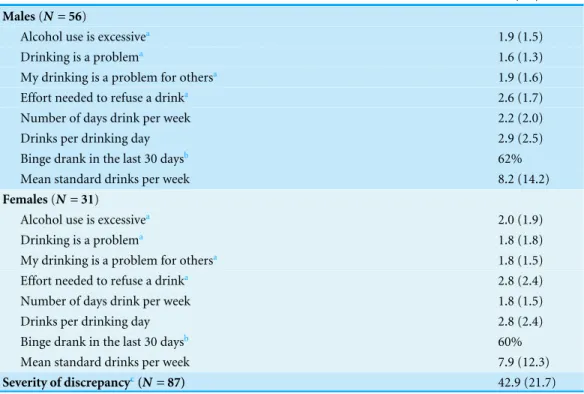
Table 1 Pre-feedback descriptives of participants.
M(SD) or %
Males(N= 56)
Alcohol use is excessivea 1.9 (1.5)
Drinking is a problema 1.6 (1.3)
My drinking is a problem for othersa 1.9 (1.6)
Effort needed to refuse a drinka 2.6 (1.7)
Number of days drink per week 2.2 (2.0)
Drinks per drinking day 2.9 (2.5)
Binge drank in the last 30 daysb 62%
Mean standard drinks per week 8.2 (14.2) Females(N= 31)
Alcohol use is excessivea 2.0 (1.9)
Drinking is a problema 1.8 (1.8)
My drinking is a problem for othersa 1.8 (1.5)
Effort needed to refuse a drinka 2.8 (2.4)
Number of days drink per week 1.8 (1.5)
Drinks per drinking day 2.8 (2.4)
Binge drank in the last 30 daysb 60%
Mean standard drinks per week 7.9 (12.3) Severity of discrepancyc(N= 87) 42.9 (21.7) Notes.
aRange is 1 Not at all to 8 Extremely.
bDefined as drinking more than 5 standard drinks for men and 4 standard drinks for women. cThe actual percentile minus the estimated percentile.
Descriptives
Table 1shows the reported drinking levels for the sample. Mean number of standard drinks per week for the entire sample was 8.1 (SD=13.1), with a range from 1 standard drink to
as high as 105 for men and 60 to women. While the majority of participants were light to moderate drinkers, many participants reported drinking all of their drinks on only one or two days.
Basedonly on number of standard drinks per week, 14.9% reported drinking beyond safety guidelines set by the National Institute of Alcohol Abuse and Alcoholism for drinks per week among both men (>14 standard drinks per week) and women (>7 standard drinks per week).
Perceptions of drinking pre-NF
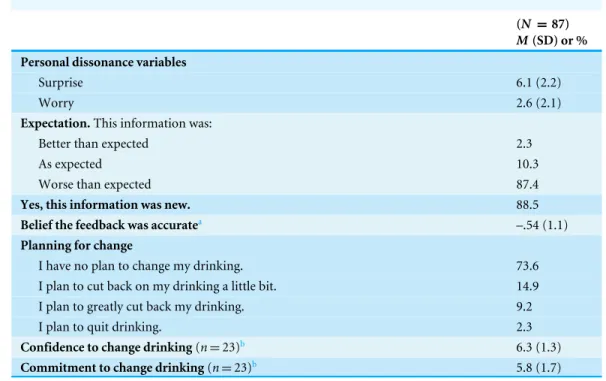
Table 2 Post-feedback descriptives: mediators and outcome.
(N =87) M(SD) or %
Personal dissonance variables
Surprise 6.1 (2.2)
Worry 2.6 (2.1)
Expectation.This information was:
Better than expected 2.3
As expected 10.3
Worse than expected 87.4
Yes, this information was new. 88.5 Belief the feedback was accuratea –.54 (1.1)
Planning for change
I have no plan to change my drinking. 73.6 I plan to cut back on my drinking a little bit. 14.9 I plan to greatly cut back my drinking. 9.2
I plan to quit drinking. 2.3
Confidence to change drinking(n=23)b 6.3 (1.3)
Commitment to change drinking(n=23)b 5.8 (1.7)
Notes.
aRange was from –2 (not at all accurate) to 0 (not sure) to 2 (definitely accurate). bRange was from 1 Not at all to 8 Extremely.
Reactions to NF
Reactions to NF are shown in Table 2. While participants were generally surprised by feedback, they were not particularly worried by it. Only 12.6% of participants viewed feedback as better than expected or as expected. A preponderance of drinkers (87.4%) reported feedback was worse than expected. A majority of drinkers (88%) reported this information was new. On average, drinkers reported that the feedback was somewhat inaccurate.
Plan, confidence, and commitment to change
Table 2also shows the outcome of NF. Among this sample of drinkers, 26.4% planned to quit or reduce their drinking. Confidence and commitment to change drinking were high.
Correlations between perception of drinking pre-NF and post-NF reactions
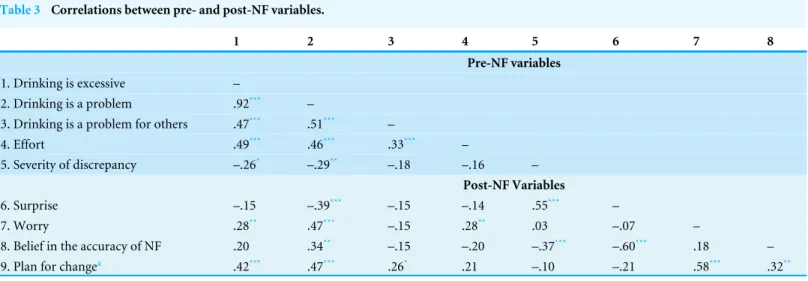
Table 3 Correlations between pre- and post-NF variables.
1 2 3 4 5 6 7 8
Pre-NF variables 1. Drinking is excessive –
2. Drinking is a problem .92*** –
3. Drinking is a problem for others .47*** .51*** –
4. Effort .49*** .46*** .33*** –
5. Severity of discrepancy –.26* –.29** –.18 –.16 –
Post-NF Variables
6. Surprise –.15 –.39*** –.15 –.14 .55*** –
7. Worry .28** .47*** –.15 .28** .03 –.07 –
8. Belief in the accuracy of NF .20 .34** –.15 –.20 –.37*** –.60*** .18 –
9. Plan for changea .42*** .47*** .26* .21 –.10 –.21 .58*** .32**
Notes. *p< .05.
**p< .01. ***p< .001.
aRanged from 0 to 3, with 0 indicating no plan for change and 3 indicating quitting drinking. NF, normative feedback.
Drinking is a problemprior to NF was significantly and strongly correlated withplan for change (Table 3), such that the greater the participant rankeddrinking is a problem, the more ambitious the plan for reduced drinking.
Total effect of severity of discrepancy on plan for change
There was no total effect ofseverity of discrepancy onplan for change(b=.003,SE=.01,
p=.79).
Mediation models for personal dissonance (worry and surprise)
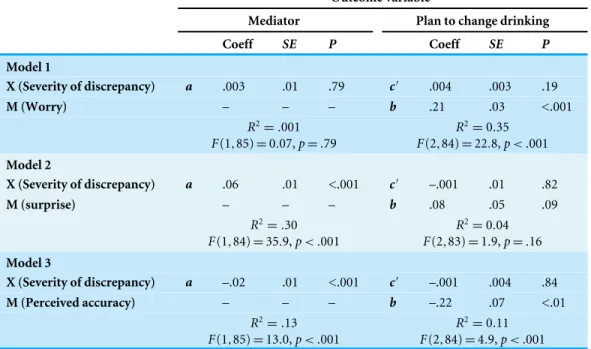
Table 4displays the relationships of the mediation models. There were no significant indirect effects for either worryor surprise onplan for change. For this sample, personal dissonance did not mediate the effect of severity of discrepancy on making a plan for change.
Mediation models for belief in the accuracy of NF
Table 4also shows the results from the mediation model forbelief in the accuracy of feedback. Severity of discrepancy was significantly negatively associated withbelief in the accuracy of feedback. There was a significant indirect effect forbelief in the accuracy of feedback(.004, 95% CI [.001–.01]). The kappa-squared statistic revealed that the indirect effect is 11.6% of its maximum possible value (K2=.116,SE=.06, 95% CI [.03–.25]).
Post hoc analyses
Table 4 Mediation models for worry, surprise, and perceived accuracy of feedback predicting plan to change drinking.
Outcome variable
Mediator Plan to change drinking
Coeff SE P Coeff SE P
Model 1
X (Severity of discrepancy) a .003 .01 .79 c′ .004 .003 .19
M (Worry) – – – b .21 .03 <.001
R2 =.001
F(1,85)=0.07,p=.79
R2 =0.35
F(2,84)=22.8,p< .001
Model 2
X (Severity of discrepancy) a .06 .01 <.001 c′ –.001 .01 .82
M (surprise) – – – b .08 .05 .09
R2 =.30
F(1,84)=35.9,p< .001
R2 =0.04
F(2,83)=1.9,p=.16
Model 3
X (Severity of discrepancy) a –.02 .01 <.001 c′ –.001 .004 .84
M (Perceived accuracy) – – – b –.22 .07 <.01
R2 =.13
F(1,85)=13.0,p< .001
R2 =0.11
F(2,84)=4.9,p< .001
post-NF plan for change, post hoc analyses were implemented to further explore this relationship. Drinking is a problemwas independently tested as a predictor ofplan for changeusing stepwise linear regression.
Pre-NFdrinking is a problem significantly predictedplan to change(b=.24,SE =.05,
p< .001). When post-NFworrywas entered as a second step in the model, both remained
significant (drinking is a problem:b=.24,SE =.05,p< .001; worry:b=.24,SE =.05,
p< .001; adjustedR2=.38;F(2,84)=26.8,p< .001), suggesting that both baseline
perception thatdrinking is a problemand post-NFworrypredictplan for change. Tolerance statistics demonstrated no multicollinear effect.
DISCUSSION
This is the first study to test both personal dissonance and perceived accuracy of feedback as mechanisms of action within NF among adult drinkers outside the context of MET. Hypotheses that severity of discrepancy would be mediated by personal dissonance and belief in the accuracy of feedback were only partially supported. While the participants in this study were primarily light to moderate drinkers, a number of them greatly under-estimated their level of drinking compared to their same gendered peers, demonstrating a wide range of discrepancy. Still, severity of discrepancy was not associated withplan to change, which is inconsistent with previous studies on college students (Walters et al.,
2009;Walters, Vader & Harris,2007). Interestingly, findings were consistent with previous research on a sample of hazardous drinkers from the general population (Cunningham,
in the context of more detailed personalized feedback, did not appear to be the active mechanism for change among a sample of adult hazardous drinkers (Cunningham, Murphy & Hendershot,2015). It is possible that peer comparisons work especially well for individuals in their late adolescence and emerging adulthood because it leverages their particular need for conforming with peers’ behaviors. Given the lack of association between severity of discrepancy andplan for change, it also suggests that among a sample of mostly light to moderate drinkers, factual normative discrepancy does not act alone to instigate thoughts about change.
While there were few heavy drinkers in this sample, lack of findings regarding personal dissonance was consistent with previous studies on affective responses (Kuerbis et al.,
2014;McNally, Palfai & Kahler,2005) of heavy drinkers. According to evidence thus far, it appears that affective responses are not associated with outcomes of feedback among both college-age and an age-inclusive sample of adults with a spectrum of drinking patterns.
Perceived accuracy of feedback was demonstrated to be a potential mediator ofseverity of discrepancy, providing initial support for decision dilemma theory. Results suggest that the more an individual is aware of how much he or she drinks compared to others, the more likely he or she will perceive the feedback to be accurate and thus more likely to set a plan for change. Among this sample, this was true regardless of intensity of drinking. It is important to note that the mediation effect ofbelief in the accuracy of NF was quite small—only 11.6% of its possible maximum value. More research is needed to further understand this potential mediator of change.
Post hoc analyses support the possibility that feedback for drinkers may not operate to create concern about or awareness of excessive drinking where none existed. Instead, it seems to potentially capitalize on a pre-existing perception that drinking is a problem, particularly among those who may drink more heavily. Some studies demonstrate NF works best for those with the most severe drinking patterns (Murphy et al.,2001;Doumas & Andersen,2009). It is therefore possible that feedback works within a framework of consonance rather than dissonance. This may explain why a ‘‘boomerang effect,’’ an effect in which light drinkers who receive feedback about their drinking increase instead of decrease their drinking (Prince et al.,2014), has yet to be found within the empirical literature. Furthermore, given the correlational relationships, perceiving alcohol is a problem may also indicate an awareness of one’s drinking and already how it compares to existing norms.
feedback interventions may be best improved by increasing the credibility of the feedback for the individual. By being selective in how one provides feedback, providers may enhance its effectiveness.
Limitations
There are several limitations to this study, and findings should be interpreted in the context of an exploratory pilot study. While this study demonstrated the feasibility of measuring affective responses andbelief in the accuracy of feedbackpost-NF, generalizability is extremely limited. These participants were recruited from an online labor market, not the general population. The measurement ofbelief in the accuracy of feedbackwas simple in that it was a single item, self-report measure; however, it had face validity in that it captured the participant’s perception rather than behavior, which was the specific construct of interest. A major limitation of this study is that there were few individuals who were heavy or hazardous drinkers, in terms of quantity of standard drinks per week, and thus results cannot be generalized to hazardous drinkers. More research on understanding this relationship with hazardous drinkers is needed; however, the greater variability in the sample allowed us to understand feedback in a heterogeneous drinking sample, such as those found in primary care or other opportunistic settings, in which NF is often used preventively.
Drinking was entirely self-report and could not be corroborated by other sources. Outcomes were based on intention to change health behaviors, not actual behavior change. While other studies have used a similar outcome, it is not equivalent to behavior. Finally, it is not known whether personal dissonance is experienced only in a proximal fashion. For example, a person who receives feedback may not initially experience worry but may find his or her concern grows over a period of time. This potential sleeper effect of NF could in turn potentially affect the timing of making a plan for change. Longitudinal research is needed to better understand the timing of potential mediators and subsequent behavioral outcomes.
Future research
Future research could include experimental manipulation with better operationalization of normative feedback, self-ideal feedback and emotional responses in order to unpack the active ingredients of NF. Expanding the population upon which NF is tested to heavy drinkers and other undesirable health behaviors will be crucial to confirming these preliminary findings. Additionally, both actual behavioral outcomes and longer term, prospective perceptions of feedback must be explored to understand the mechanisms of maintenance of behavior change.
Conclusions
much they are already perceive their drinking to be a problem may help to potentiate the effects of the simplest form of NF. These are relatively minor and feasible changes to NF that may in fact help to increase its efficacy rate, potentially helping to reduce the prevalence rate of hazardous alcohol use or prevent the development of AUD across a wide group of drinkers.
ADDITIONAL INFORMATION AND DECLARATIONS
Funding
This work was funded by the National Institute on Alcohol Abuse and Alcoholism, in the United States, Grant R34 AA 021502A (PI: Muench). The funders had no role in study design, data collection and analysis, decision to publish, or preparation of the manuscript.
Grant Disclosures
The following grant information was disclosed by the authors:
National Institute on Alcohol Abuse and Alcoholism: R34 AA 021502A.
Competing Interests
Frederick J. Muench is an Academic Editor for PeerJ.
Author Contributions
• Alexis Kuerbis conceived and designed the experiments, performed the experiments,
analyzed the data, contributed reagents/materials/analysis tools, wrote the paper, prepared figures and/or tables, reviewed drafts of the paper.
• Frederick J. Muench conceived and designed the experiments, performed the
experiments, analyzed the data, contributed reagents/materials/analysis tools, wrote the paper, reviewed drafts of the paper.
• Rufina Lee and Juan Pena analyzed the data, wrote the paper, reviewed drafts of the
paper.
• Lisa Hail performed the experiments, wrote the paper, reviewed drafts of the paper.
Human Ethics
The following information was supplied relating to ethical approvals (i.e., approving body and any reference numbers):
Hunter College IRB reviewed this project. It was deemed exempt for human subjects research because no identifying information was collected about our subjects.
Data Availability
The following information was supplied regarding data availability: The raw data has been supplied as aSupplemental Dataset.
Supplemental Information
REFERENCES
Amrhein PC, Miller WR, Yahne CE, Palmer M, Fulcher L. 2003.Client commitment language during motivational interviewing predicts drug use outcomes.Journal of Consulting and Clinical Psychology 71(5):862–878DOI 10.1037/0022-006X.71.5.862.
Arvantes J. 2010.Health care reform law will increase demand for preventive services, say expertsAAFP News.Available athttp:// www.aafp.org/ news/ government-medicine/ 20100728hcreformprevent.html(accessed 13 April 2016).
Borsari B, Carey KB. 2000.Effects of a brief motivational intervention with college student drinkers.Journal of Consulting and Clinical Psychology 68(4):728–733
DOI 10.1037/0022-006X.68.4.728.
Bowen MG. 1987.The escalation phenomenon reconsidered: decision dilemmas or decision errors?Academy of Management Review12:52–66
DOI 10.5465/AMR.1987.4306470.
Cadigan JM, Haeny AM, Martens MP, Weaver CC, Takamatsu SK, Arterberry BJ. 2015.
Personalized drinking feedback: a meta-analysis of in-person versus computer-delivered interventions.Journal of Consulting and Clinical Psychology83(2):430–437
DOI 10.1037/a0038394.
Collins SE, Carey KB, Sliwinski MJ. 2002.Mailed personalized normative feedback as a brief intervention for at-risk college drinkers.Journal of Studies on Alcohol 63:559–567DOI 10.15288/jsa.2002.63.559.
Cunningham J, Murphy M, Hendershot CS. 2015.Treatment dismantling pilot study to identify the active ingredients in personalized feedback interventions for hazardous alcohol use: randomized controlled trial.Addiction Science & Clinical Practice10:1–5
DOI 10.1186/s13722-014-0022-1.
Cunningham JA, Neighbors C, Wild C, Humphreys K. 2012.Ultra-brief intervention for problem drinkers: results from a randomized controlled trial.PLoS ONE 7(10):e48003DOI 10.1371/journal.pone.0048003.
Cunningham J, Wild TC, Bondy SJ, Lin E. 2001.Impact of normative feedback on problem drinkers: a small-area population study.Journal of Studies in Alcohol 62:228–233DOI 10.15288/jsa.2001.62.228.
Cunningham JA, Wild TC, Cordingley J, Van Mierlo T, Humphreys K. 2009.A randomized controlled trial of an internet-based intervention for alcohol abusers. Addiction104(12):2023–2032DOI 10.1111/j.1360-0443.2009.02726.x.
Cunningham J, Wild TC, Cordingley J, Van Mierlo T, Humphreys K. 2010. Twelve-month follow up results from a randomized controlled trial of a brief personalized feedback intervention for problem drinkers.Alcohol and Alcoholism45:258–262
DOI 10.1093/alcalc/agq009.
Doumas DM, Andersen LL. 2009.Reducing alcohol use in first-year university students: evaluation of a web-based personalized feedback program.Journal of College
Counseling 12(1):18–32DOI 10.1002/j.2161-1882.2009.tb00037.x.
Doumas DM, Hannah E. 2008.Preventing high-risk drinking in youth in the workplace: a web-based normative feedback program.Journal of Substance Abuse Treatment 34:263–271DOI 10.1016/j.jsat.2007.04.006.
Erikson EH. 1968.Identity: youth and crisis. New York: Norton.
Foxcroft DR, Moreira MT, Almeida Santimano NM, Smith LA. 2015.Social norms information for alcohol misuse in university and college students.The Cochrane Database of Systematic Reviews1:CD006748.
Gaume J, McCambridge J, Bertholet N, Daeppen JB. 2014.Mechanisms of action of brief alcohol interventions remain largely unknown—a narrative review.Frontiers in Psychiatry5:1–9DOI 10.3389/fpsyt.2014.00108.
Hantula DA, DeNicolis Bragger JL. 1999.The effects of feedback equivocality on escala-tion of commitment: an empirical investigaescala-tion of decision dilemma theory.Journal of Applied Social Psychology29(2):424–444DOI 10.1111/j.1559-1816.1999.tb01395.x.
Hayes AF. 2013.Introduction to mediation, moderation, and conditional process analysis: a regression based approach. New York: The Guilford Press.
Hester R, Delaney HD. 1997.Behavioral self control program for windows: results of a controlled clinical trial.Journal of Consulting and Clinical Psychology65(4):686–693
DOI 10.1037/0022-006X.65.4.686.
IBM Corp. 2013.IBM SPSS statistics for windows. Version 22.0. Armonk: IBM Corp.
Kuerbis A, Schaumberg K, Davis CM, Hail L, Morgenstern J. 2014.Unpacking per-sonalized feedback: an exploratory study of the impact of its components and the reactions it elicits among problem drinking men who have sex with men.Substance Use and Misuse49(4):383–394DOI 10.3109/10826084.2013.841247.
Larimer ME, Lee CM, Kilmer JR, Fabiano PM, Stark CB, Geisner IM, Mallett KA, Lostutter TW, Cronce JM, Feeney M, Neighbors C. 2007.Personalized mailed feedback for college drinking prevention: a randomized clinical trial.Journal of Consulting and Clinical Psychology 75(2):285–293DOI 10.1037/0022-006X.75.2.285.
Maisto SA, Conigliaro J, McNeil M, Kraemer K, Conigliaro RL, Kelley ME. 2001.
Effects of two types of brief intervention and readiness to change on alco-hol use in hazardous drinkers.Journal of Studies on Alcohol62(5):605–614
DOI 10.15288/jsa.2001.62.605.
Mason W, Suri S. 2012.Conducting behavioral research on Amazon’s mechanical turk. Behavior Research Methods44(1):1–23DOI 10.3758/s13428-011-0124-6.
McCambridge J, Cunningham JA. 2014.The early history of ideas on brief interventions for alcohol.Addiction109(4):538–546DOI 10.1111/add.12458.
Miller WR, Benefield R, Tonigan JS. 1993.Enhancing motivation for change in problem drinking: a controlled comparison of two therapist styles.Journal of Consulting and Clinical Psychology 61(3):455–461DOI 10.1037/0022-006X.61.3.455.
Miller WR, Del Boca FK. 1994.Measurement of drinking behavior using the Form 90 family of instruments.Journal of Studies on AlcoholSuppl. 12:112–118.
Miller MB, Leffingwell T, Claborn K, Meier E, Walters S, Neighbors C. 2013.
Personalized feedback interventions for college alcohol misuse: an update of Walters & Neighbors (2005).Psychology of Addictive Behaviors27(4):909–920
DOI 10.1037/a0031174.
Miller WR, Rollnick S. 2002.Motivational interviewing: preparing people for change. 2nd edition. New York: The Guilford Press.
Miller WR, Zweben A, DiClemente CC, Rychtarik RG. 1999.Motivational enhancement therapy manual: a clinical research guide for therapists treating individuals with alcohol abuse and dependence. Rockville: National Institute for Alcohol Abuse and Alcoholism.
Muench F, Van Stolk-Cooke K, Morgenstern J, Kuerbis A, Markle K. 2014. Understand-ing messagUnderstand-ing preferences to inform development of mobile goal-directed behavioral interventions.Journal of Medical Internet Research16(1):e14DOI 10.2196/jmir.2945.
Murphy JG, Benson TA, Vuchinich RE, Deskins MM, Eakin D, Flood AM, McDevitt-Murphy ME, Torrealday O. 2004.A comparison of personalized feedback for college student drinkers delivered with and without a motivational interview.Journal of Studies in Alcohol65:200–203 DOI 10.15288/jsa.2004.65.200.
Murphy JG, Dennhardt AA, Skidmore JR, Martens MP, McDevitt-Murphy ME. 2010.Computerized versus motivational interviewing alcohol interventions: impact on discrepancy, motivation, and drinking.Psychology of Addictive Behaviors 24(4):628–639DOI 10.1037/a0021347.
Murphy JG, Duchnick JJ, Vuchinich RE, Davison JW, Karg RS, Olson AM, Smith AF, Coffey TT. 2001.Relative efficacy of a brief motivational intervention for college student drinkers.Psychology of Addictive Behaviors15(4):373–379
DOI 10.1037/0893-164X.15.4.373.
National Institute on Alcohol Abuse and Alcoholism. 2013.Rethinking drinking. Bethesda: Author.
Neal DJ, Carey KB. 2004.Developing discrepancy within self-regulation theory: use of personalized normative feedback and personal strivings with heavy-drinking college students.Addictive Behaviors29:281–297DOI 10.1016/j.addbeh.2003.08.004.
Neighbors CJ, Larimer ME, Lewis MA. 2004.Targeting misperceptions of descriptive drinking norms: efficacy of a computer-delivered personalized normative feed-back intervention.Journal of Consulting and Clinical Psychology72(3):434–447
DOI 10.1037/0022-006X.72.3.434.
social comparison plus correction of normative misperceptions.Journal of Consulting and Clinical Psychology84(3):238–247 DOI 10.1037/ccp0000067.
Perkins HW. 2003. The emergence and evolution of the social norms approach to substance abuse prevention. In: Perkins HW, ed.The social norms approach to preventing school and college age substance abuse: a handbook for educators, counselors and clinicians. San Francisco: Jossey-Bass.
Preacher KJ, Kelley K. 2011.Effect size measures for mediation models: quantitative strategies for communicating indirect effects.Psychological Methods16(2):93–115
DOI 10.1037/a0022658.
Prince MA, Reid A, Carey KB, Neighbors C. 2014.Effects of normative feedback for drinkers who consume less than the norm: dodging the boomerang.Psychology of Addictive Behaviors28(2):538–544DOI 10.1037/a0036402.
Reid AE, Carey KB. 2015.Interventions to reduce college student drinking: state of the evidence for mechanisms of behavior change.Clinical Psychology Review40:213–224
DOI 10.1016/j.cpr.2015.06.006.
Riper H, Van Straten A, Keuken M, Smit F, Schippers G, Cuijpers P. 2009.Curbing problem drinking with personalized-feedback interventions: a meta-analysis. Ameri-can Journal of Preventive Medicine36(3):247–255DOI 10.1016/j.amepre.2008.10.016.
Rosenberg H. 1993.Prediction of controlled drinking by alcoholics and problem drinkers.Psychological Bulletin113(1):129–139DOI 10.1037/0033-2909.113.1.129.
Substance Abuse and Mental Health Services Administration. 2010.Results from the 2009 national survey on drug use and health: summary of national findings, NSDUH series H-38A, HHS publication no. (SMA) 10-4856. Rockville: Substance Abuse and Mental Health Services Administration.
Substance Abuse and Mental Health Services Administration. 2014.Results from the 2013 national survey on drug use and health: summary of national findings, NSDUH series H-48, HHS publication no. (SMA) 14-4863. Rockville: Substance Abuse and Mental Health Services Administration.
Walters ST, Neighbors C. 2005.Feedback interventions for college alcohol misuse: what, why, and for whom?Addictive Behaviors30:1168–1182
DOI 10.1016/j.addbeh.2004.12.005.
Walters ST, Vader AM, Harris TR. 2007.A controlled trial of web-based feedback for heavy drinking college students.Prevention Science8(1):83–88
DOI 10.1007/s11121-006-0059-9.
Walters ST, Vader AM, Harris TR, Field C, Jouriles EN. 2009.Dismantling motivational interviewing and feedback for college drinkers: a randomized clinical trial.Journal of Consulting and Clinical Psychology 77(1):64–77DOI 10.1037/a0014472.
Walters ST, Woodhall WG. 2003.Mailed feedback reduces consumption among moderate drinkers who are employed.Prevention Science4(4):287–294
DOI 10.1023/A:1026024400450.
White HR, Mun EY, Pugh L, Morgan T. 2007.Long-term effects of brief substance use interventions for mandated college students: sleeper effects of an in-person personal feedback intervention.Alcoholism: Clinical and Experimental Research 31(8):1380–1391DOI 10.1111/j.1530-0277.2007.00435.x.
World Health Organization. 2014.Global status report on alcohol and health 2014. Geneva: World Health Organization.