Health Psychology Open July-December 2016: 1 –13 © The Author(s) 2016 Reprints and permissions:
sagepub.co.uk/journalsPermissions.nav DOI: 10.1177/2055102916679349 hpo.sagepub.com
Creative Commons Non Commercial CC-BY-NC: This article is distributed under the terms of the Creative Commons
Attribution-NonCommercial 3.0 License (http://www.creativecommons.org/licenses/by-nc/3.0/) which permits non-commercial use, reproduction and distribution of the work without further permission provided the original work is attributed as specified on the SAGE and Open Access pages (https://us.sagepub.com/en-us/nam/open-access-at-sage).
It is estimated that 81,000 adolescents and young people aged 15–24 years are HIV-positive in the Caribbean and Latin America (Idele et al., 2014). In the Bahamas, Barbados, Jamaica, and in other English-speaking Caribbean (ESC) coun-tries, females are more likely to be HIV-positive than males (Barrow, 2009). AIDS is the leading cause of death for 15- to 24- year-old ESC youth (UNAIDS, 2007; UNAIDS, 2013).
The subsequent discussion is on the utility of intersec-tional theory in addressing the dynamic relationships between and among macro-level and micro-level variables that can serve as potential contributors to the vulnerability of heterosexual Caribbean youth to the HIV virus and sexu-ally transmitted infections (STIs). This article also addresses prevention and intervention strategies for reducing the prevalence of sexually transmitted diseases in these youth.
The ESC Caribbean countries include 15 relatively small countries and the 2 large continental countries of
Belize and Guyana. This article describes Caribbean heter-osexual youth’s vulnerability to HIV/AIDS and to other STIs in selected countries, including the two largest, Jamaica and Trinidad and Tobago. Attention is also given to the research findings on youth living in Barbados, Guyana, and in other small ESC countries (Abel et al., 2012b).
Intersectionality theory and research
The intersectional framework was promoted in the 1990s work of African American feminists and critical race
An intersectional approach for
understanding the vulnerabilities of
English-speaking heterosexual
Caribbean youth to HIV/AIDS and
sexually transmitted infections:
Prevention and intervention strategies
Marcia Elizabeth Sutherland
Abstract
Caribbean youth comprise about 30 percent of the English-speaking Caribbean population, and about 81,000 Caribbean and Latin American youth are HIV infected. AIDS is the leading cause of death for 15- to 24-year-old English-speaking Caribbean youth. This article relies on intersectionality theory in the assessment of the macro-level, or structural variables, and micro-level, or individual level, variables that influence the risk-taking sexual behaviors of heterosexual English-speaking Caribbean youth and increase their vulnerability to HIV/sexually transmitted infections. This article offers macro- and micro-level prevention/intervention strategies for reducing the prevalence of sexually transmitted infections in English-speaking Caribbean youth, including the promotion of condom use, voluntary male circumcision, and HIV testing and counseling. Suggestions are offered for future research investigations to explore the contributing factors to youth’s vulnerability to sexually transmitted infections and to empirically verify the relationship between and among variables that account for desired outcomes, including decreases in risky sexual behaviors.
Keywords
HIV infection, sexual behavior, substance abuse, unsafe sex, youth
University at Albany, State University of New York, USA
Corresponding author:
Marcia Elizabeth Sutherland, University at Albany, State University of New York, BA 115, 1400 Washington Avenue, Albany, NY 12222, USA. Email: [email protected]
theorists. These scholar-activists contend that multiple intersecting categories of social group membership (i.e. race, gender, culture, class, sexuality, and socioeconomic status) jointly shape group members’ perceptions, behavior, and outcomes within socio-environmental contexts defined by power and privilege (Cole, 2009). Hence, this analytic framework attempts to understand the systems of societal interlocking oppression experienced by stigmatized and subordinated groups (Syed, 2010). The theory postulates that social identities such as gender and class are viewed as structural categories and social processes rather than pri-marily as characteristics of individuals (Cole, 2009).
As it relates to the relationship between intersectionality and public health, Bowleg (2012) wrote that “acknowledg-ing the existence of multiple intersect“acknowledg-ing identities is an initial step in understanding the complexities of health dis-parities for populations from multiple historically oppressed groups” (p. 1267). Pertaining to this article’s focus, Dworkin (2005) observed that the risk of HIV infection is related to pressures of social and economic relations of inequality. These macro social-structural dynamics inter-sect at the micro-level of individual experience to contour sexual attitudes and behaviors that place youths at risk for STIs and HIV/AIDS infections. This reasoning is in line with Bowleg’s (2012) conclusion that “multiple interlock-ing identities at the micro-level reflects multiple and inter-locking structural-level inequality at the macro-levels of society” (p. 1267).
Intersectionality theorizing allows for the examination, for instance, of the interactions between the social identities and psychosocial attributes of adolescents (i.e. gender, socio-economic status, age, perceptions, attitudes, and behaviors) and their health-related outcomes. There is also a focus on biopsychological factors and on the broader societal, cul-tural, and institutional influences that shape youths’ sexual-ized attitudes and behaviors (Smith et al., 2013). Intersectionality also emphasizes the interrogation of neglected and marginalized social groups (Cole, 2009). Economically challenged ESC youths, who are exposed to multiple systems of oppression (i.e. lack of education, the pressures of single-parent households, inadequate health care) have been largely overlooked in public health research. Hence, there is a discussion on the relationships between the broader macro-level and individual-level determinants and economically challenged and marginalized youths’ risks for STI and HIV/AIDS infections. It should be underscored that a disproportionate number of the early research studies on the intersectional approach used qualitative methods. Recently, quantitative methods are being increasingly used in intersectional research (Else-Quest and Hyde, 2016).
A number of theoretical models of behavior have been applied to derive the antecedents of sexual intercourse onset in adolescents and to describe protective factors. These behavioral theories focus on individual-level variables, including self-efficacy beliefs and attitudes, risk-taking
behaviors, and self-regulatory behaviors (Fishbein and Ajzen, 1975). However, theoretical perspectives that focus on changing behavior at the individual level are limited in addressing the structural prevention and intervention approaches needed to reduce the number of HIV and STIs in adolescents (Prado et al., 2013).
Several published studies on Caribbean youth’s vulnera-bility to HIV and STI transmissions and on treatment and prevention strategies tend to rely on individual-level approaches (Abel et al., 2012a; Jones et al., 2013). However, the ecological system theory and social determinant of health models have informed investigations in the Caribbean region on the nature, range, and quality of social contexts and com-plex social relationships that shape adolescents’ sexual atti-tudes and behaviors with a focus on prevention and intervention strategies (McLeroy et al., 1988). While these frameworks allow for bidirectional exchanges between indi-viduals and their social contexts, there is insufficient atten-tion to individual difference factors and other psychological correlates that are likely to be associated with ESC adoles-cents’ sexual attitudes and behaviors. Equally significant, the multiple systems of influence and the complexity of their combined effects on youth behavior have not been ade-quately addressed (Kotchick et al., 2001). As these authors also postulated, congruent with intersectional theory, a multi-systemic conceptual framework is needed to better under-stand and prevent sexually risky adolescent behaviors.
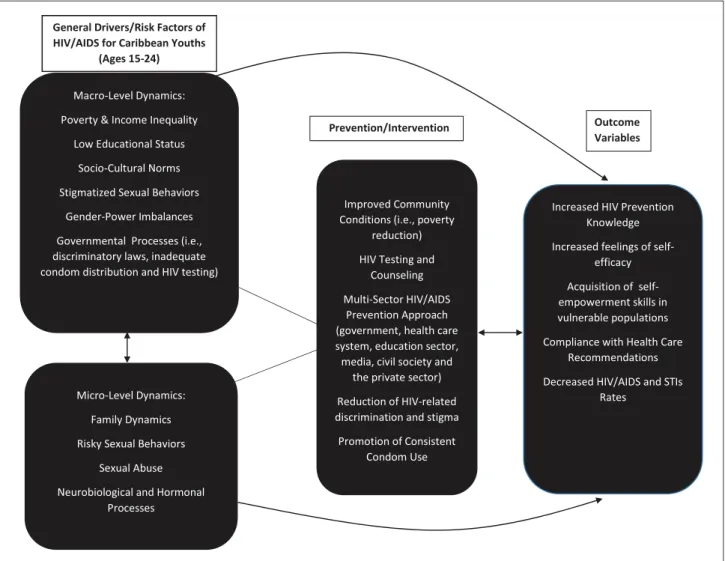
This article relies on the intersectional framework in an attempt to highlight the macro-level drivers of HIV/AIDS and STIs in the ESC region (see Figure 1). As shown, there is an examination of the general drivers/risk factors of HIV/ AIDS and STIs for 15- to 24-year-old youth, including pov-erty and income inequality, gender power imbalances, socio-cultural norms, low educational status, stigmatized sexual behaviors, and governmental policies, as well as the micro-level drivers, including family dynamics, sex abuse, risky sexual behaviors, and neurobiological and hormonal processes. This framework also simultaneously examines both the interplay between and among the relevant macro-level and micro-macro-level factors and assess the combined effects of these variables (Else-Quest and Hyde, 2016). Also shown are the prevention/intervention variables which serve as buffers against the effects of structural and micro-level risk factors thereby contributing to improved health outcomes for at-risk Caribbean youth.
risky sexual attitudes and behaviors (i.e. neurobiology and hormonal processes, risky sexual behaviors, internalized stigma, and peer influence).
Social identities intersect with macro-level
drivers of HIV and STIs’ transmission
ESC youth are at the highest risk of HIV infection, sexually transmitted diseases, and unintended pregnancies due to mac-rosystems such as gender power imbalances, poverty, low educational status, sexual violence, and inter-generational sex (Lowe et al., 2008). Marin et al. (2000) reported that older boyfriends or girlfriends increase the risk of sexual initiation in young adolescents. For ESC girls, the first sexual partner is about 4 years older, while for boys their first sexual partner is about 2 years older. Many ESC youth, particularly girls, expe-rience forced or coercive sex in their first and subsequent sexual activities (Allen et al., 2013; Whiteman, 2004), and such sexual victimization is a risk factor for HIV and STIs (Lowe et al., 2008).
Some girls’ sexual partners are men who are more than 10 years older and who have most likely had multiple sex-ual partners (Wood, 2010). One-third of men aged 15– 39 years indicated that they had multiple sexual partnerships (Caribbean Technical Expert Group, 2004). Allen et al. (2013) indicated that inter-generational sex ranged from 4 percent in St. Kitts and Nevis to 29 percent in Barbados.
Age mixing increases HIV/STI risks since a young girl is physiologically more vulnerable to infection because of her immature cervix and immature immune and reproduc-tive system (Sales and DiClemente, 2010). Young females’ cell proliferation in the cervical epithelium is the primary site of STIs such as trachomoniasis, gonorrhea, genital human papillomavirus (HPV), and chlamydia (Winer et al., 2006). Holder-Nevins et al. (2011) reported increas-ing rates of STIs in Jamaican female adolescents from 2004 (8.2%) to 2008 (14.4%). Persons with STIs have a risk of contracting HIV infection that is 3 to 50 times that of uninfected persons, depending on the STI involved (St. Louis et al., 1997).
In the Caribbean, the construction of gender and gender roles, particularly for working class and low-income het-erosexual female adolescents are shaped by chronic socio-economic and family challenges. Therefore, age mixing may result from prevailing cultural patterns; incest, rape, and coercion; social pressures to acquiesce to elders or to men in authority; or from a combination of factors such as may be the case when school girls are offered money for school fees or gifts in exchange for sex (Allen et al., 2000; Gibbison, 2007), which is sometimes referred to as the “sugar daddy syndrome” (Drakes et al., 2013). It has also been reported that Jamaican youth aged 15–24 years, including students in tertiary institutions, are increasingly engaged in transactional and high-risk sexual practices with multiple partners for economic gain (Dunkley-Willis, 2014). Other findings from Jamaica suggest that youth, 15–24 years old, unmarried, or cohabiting, were most likely to be engaged in multiple sexual partnerships (Hope Enterprises, Ltd., 2008).
In their study of 261 Barbadian females aged 15– 19 years, Drakes et al. (2013) found that one-third of their sample who were sexually active also self-reported from two to five or more sexual partners. Reliable data based on representative samples are lacking on whether these multi-ple sexual partners are concurrent, sequential, transactional, or affection-based relationships (Baumgartner et al., 2009). Research evidence is also missing on the frequency of acquiring new sexual partners by these youth (Robinson and Rogstad, 2002). It is currently unknown which specific psychological and socioemotional needs of adolescent females and males are being satisfied by inter-generational and other premarital sexual relationships.
Macro-level socio-cultural norms
ESC youth are exposed to role models who participate in informal polygamy or serial relationships (Barrow, 2009). Cohabiting households consisting of a non-biological par-ent have been found to enhance the likelihood of teenagers initiating sexual activity. One assumption is that the cohab-iting partner lacks the authority of the biological parent and, therefore, does not easily serve as a protective factor against teenagers’ sexual behavior (Upchurch et al., 2001). Similarly, ESC youth growing up in single-parent and eco-nomically disadvantaged households are at risk of early sexual activity (Maharaj et al., 2009).
ESC youth’s engagement in unprotected sex is perhaps influenced by the pressures of living in areas of concen-trated poverty, the family strains of primarily living in female-headed households, and other adverse childhood experiences. The research evidence indicates that youth who experience toxic stressors are more at risk of early sex-ual behavior, and particularly for females, they are likely to display ineffective sexual negotiation competencies (Townsend, 2008). Hence, as a function of the interplay
between these structural and micro-level dynamics, there are high teenage birth rates in several Caribbean countries, including Jamaica (72 births per 1000 adolescent girls), Guyana (97 births), St. Vincent and the Grenadines (70 births), Barbados (50 births), and Trinidad and Tobago (33 births; UNFPA, 2013). In 2008, Jamaican adolescents aged 10–19 years accounted for 21 percent of the maternal births at the island’s public health facilities (Holder-Nevins et al., 2011).
ESC teenage mothers are likely to drop out of school and to report negative emotional states such as depression, shame, and anxiety as well as negative feelings about maternal abandonment and paternal absence (Allen and Thomas-Purcell, 2014). Young ESC fathers are typically unsupportive of teenage mothers, while older fathers might have more resources to be supportive; however, if the child was produced by an under-aged female, these fathers may also abandon the mothers for fear of legal prosecution (Allen and Thomas-Purcell, 2014).
Concerning young ESC males’ sexual behavior, there are micro-level factors including family and peers and macro-structural ones such as cultural and institutional pressures on them to internalize a heterosexual gender identity characterized by physical strength, toughness, and sexual dominance (Plummer and Geofroy, 2010). ESC males receive messages from various sources, including educators, family, community members, the church, and other sources that there are dire consequences for trans-gressing conventional gender performance rules by show-ing softness, femininity, and homosexual tendencies. These consequences include loss of status, threats, ostracism, and, in extreme cases, physical violence. Hence, there are those young males who engage in sexually risky behaviors with multiple female partners (Plummer and Geofroy, 2010), including sexual engagement with older female sex part-ners in exchange for money, gifts, and other commodities. According to Plummer (2009), research studies conducted in the Caribbean indicate that the peer group is a primary source of gender norms and a central enforcer of the mas-culine codes of heterosexual conduct.
The median age of first sexual intercourse for ESC males is 15 years, while for females it is 16 years (Allen et al., 2013). Other studies report the median age of first sexual encounters ranged from 9 to 15 years for males and from 14 to 17 years for females (PAHO, 2013). There are data indicating an increased likelihood for older youth to engage in a greater number of sexual activities with multi-ple partners, as well as in other types of high-risk sexual behaviors. These sexually risky behaviors might be related to a higher number of HIV infections in male adolescents that have not yet been diagnosed (PAHO, 2013).
Macro-level: public policies and youths’ sexual
behavior
Throughout the ESC countries, the health and family life educational program in schools, as well as the HIV/AIDS and STIs education policy, are said to fall short in address-ing the needs of sexually active teenagers by not provid-ing adequate information on sexual and reproductive issues (Figueroa, 2012). Intersectionality theory suggests that comprehensive sex education should include struc-tural interventions such as broad-based condom distribu-tion in educadistribu-tional and community settings to have a more profound effect on HIV/AIDS prevention (Prado et al., 2013).
There are periodic media campaigns and public service announcements promoting condom use, abstinence, and tackling discrimination and stigma directed at youth and adults living in Caribbean countries, including Barbados, St. Vincent, St. Kitts, Trinidad and Tobago, and Jamaica (Holder-Nevins et al., 2011; Hope Caribbean Co. Ltd., 2012). These youth’s knowledge of both HIV risk factors and prevention strategies have not necessarily translated into safer sexual practices (Figueroa, 2008), which is simi-lar to findings in the United States (Kotchick et al., 2001).
It appears from the research evidence that health educa-tion practices do not sufficiently influence ESC youths to reject or refute the socio-psychological and cultural pres-sures against the adoption of safer sexual practices (Compton et al., 2016). There has been a longstanding interest by researchers to examine resistance to persuasive messages and attitude change (Banas and Rains, 2010). There is also renewed research interest in attitudinal inocu-lation theory as a preventative strategy to promote safer sex (McGuire, 1964; Parker et al., 2012).
Inoculation theory relies on a biological metaphor by proposing that attitudes can be inoculated against persua-sive attacks similar to how a person’s immune system can be inoculated against viral attacks by injecting a weakened form of a virus into a person thereby allowing the person to build up resistance to future attacks from that virus (Banas and Rains, 2010; Compton et al., 2016). Similarly, attitudi-nal resistance can be developed by forewarning of impend-ing challenges to the person’s attitudes and presentimpend-ing a
weakened argument against that attitude. This weakened argument is supposed to motivate individuals to develop counterarguments that are consistent with their initial argu-ments thereby strengthening their attitudes against future threats (Banas and Rains, 2010). Inoculation messages pro-mote active thinking for and against a position as a form of resistance to future persuasion.
McGuire (1964) contended that perceptions of threat motivate individuals to strengthen their attitudinal resist-ance against subsequent detrimental change. These threats include negative peer and media pressures as well as cul-tural truisms which are beliefs that are typically accepted without challenge. Hence, threats and refutation techniques are the main aspects of inoculation efficacy (McGuire, 1964). Research investigations indicate that inoculation messages promote refutation preemptions and counterargu-ments against counter-attitudinal attacks (Parker et al., 2012). Psychological inoculation is purported to be effec-tive based on the credibility of the inoculation message source and message language that frame future attacks as threats (Compton et al., 2016).
In a meta-analysis of 41 studies on inoculation theory, Banas and Rains (2010) found support for the effectiveness of inoculation treatments when compared with no-treat-ment controls or supportive treatno-treat-ments in engendering resistance to attitude change. Supportive treatments were found to produce more resistance than no-treatment con-trols. These authors also found that exposure to inoculation treatments enabled individuals to resist novel attacks that were not addressed in treatment. Parker et al. (2012) found confirmation for inoculation’s efficacy with young adults who were involved with unprotected sex and binge drink-ing. These authors found that even young adults with posi-tive attitudes can be protected or inoculated against future challenges to their attitudes about risky behaviors. Similar to Banas and Rains (2010) findings, Parker et al. (2012) found that inoculation treatment extended to protection against untreated or novel issues. It is also the case that from the developing country of Nigerian, there is confirma-tion of the greater efficacy of psychological inoculaconfirma-tion treatment to reduce cognitive barriers to condom use com-pared to heath education in a pilot quasi-experimental study conducted with a small sample of HIV-positive Nigerian women (Olley et al., 2011). These authors also found that women who received the health education control treat-ment tended to slightly improve on the outcome variables. Hence, there is emerging research evidence which suggests that as a preventative measure, the combination of health education with psychological inoculation is likely to decrease risky behaviors among individuals at risk for HIV (Olley et al., 2011).
changes to decrease risky sexual behaviors among youths. Furthermore, more empirical studies are needed on psycho-logical inoculation efficacy based on class status, age, gen-der, mode of presentation of inoculation messages (print and video-taped), and varying interpersonal contexts (Compton et al., 2016). Notwithstanding these limitations, the weight of current research evidence suggest that inocu-lation messages together with health education can be effectively used among ESC youths to promote adaptive sexual attitudes and behaviors.
In addition, in view of the persistent gaps in ESC youth’s knowledge on reproductive health and negotiation compe-tencies (UNDAF, 2011), it is essential that schools, com-munities, health care providers, and other major stakeholders, including non-governmental organizations, business entities, faith-based institutions, and the family throughout the ESC countries, consider the implementation of developmentally appropriate and culturally sensitive sex-education behavioral programs, including psychologi-cal inoculation treatment, targeted at the youth primarily before they initiate sex. Similar to trends in the United States and in other Western countries, a disproportionate number of ESC boys and girls initiate sexual involvement before 16 years of age (PAHO, 2013).
Caribbean adolescents living in rural areas have been found to lack accurate information on HIV/AIDS when compared to their more urbanized counterparts (Inciardi et al., 2005). Youth outside of the formal education sector are insufficiently exposed to comprehensive sex education, including information on HIV prevention, testing, coun-seling, and on sexual and reproductive health and treatment services. Andrews (2011) found that the likelihood of HIV testing in Guyana declined in association with being young males, the possession of limited HIV knowledge, and living in rural areas.
The following section highlights the proximal micro-level determinants of youth’s vulnerability to risky sexual behaviors and HIV/STIs with a review of biopsychological factors, family processes, and sexual abuse. This section concludes with a discussion on prevention/intervention fac-tors such as scaling-up HIV testing, condom use, and male circumcision. The final section of this article offers recom-mendations for future research investigations to promote the mental/physical health of ESC youths.
Micro-level dynamics and youth’s
vulnerability to HIV/AIDS and STIs
Neurobiology and hormonal processes
A neglected area of research in Caribbean countries deals with the neurobiological and hormonal constructs under-pinning adolescents’ vulnerability to engage in risky sexual behaviors. For instance, ESC pubertal youth with a strong sense of self-confidence and good decision-making
competencies might, nevertheless, engage in risky sexual behavior due to neuronal activity and sex hormones that make them sensitive to salient rewards, social contexts, and emotional arousal (Smith et al., 2013). Pubertal adolescents are also likely to become hypersensitive to sexually reward-ing situations within the context of a socio-emotional envi-ronment that supports such risky behaviors. Hence, particularly in early puberty, the affective pathway is thought to be more dominant than the cognitive and delib-erative pathway (Smith et al., 2013).
High levels of the pubertal sex hormones, estrogen and testosterone, have been more highly implicated in reward-seeking, sensation-reward-seeking, and risk-taking during adoles-cence than in young adulthood. Smith et al. (2013) identified the following brain regions involved in cognitive control, including the lateral pre-frontal cortex and the limbic and para-limbic regions which undergo significant changes during puberty and adolescence. These regions are related to reward processing that can interfere with decision-mak-ing and enhance risk-takdecision-mak-ing behavior durdecision-mak-ing pubertal development. According to Smith, Chein, and Steinberg, the ability to engage in critical thinking and cognitive con-trol, including selective attention, problem-solving, deci-sion-making, inhibiting impulses, and effective working memory, the skills of executive function, is related to increased frontal-striatal connectivity or the frontal matura-tion in the brain that develops during the adolescent period, eventually plateauing in early adulthood. One assumption is that the adolescent’s brain might be more sensitive to experiential stimuli during this period of synaptic reorgani-zation. Executive functions are therefore said to be less efficient while risky behaviors are strengthened during the pubertal developmental period (Blakemore and Choudhury, 2006). Also, brain plasticity and the ability to change behavior decrease over time.
In general, executive functions allow for the inhibitory control of attention, behaviors, thoughts, and/or emotions and for the capacity to engage in appropriate behaviors and not act impulsively. The sub-thalamic nucleus is purport-edly involved in the prevention of impulsive actions by the exercise of self-control over risky behaviors.
recognize that contributions to the early and positive devel-opment of children typically leads to better outcomes and is generally more cost effective for families and society than later attempts to change youth’s problematic sexual attitudes and behaviors (Blair and Raver, 2012; Shonkoff and Bales, 2011). The weight of neuroscience research also indicates the utility of a multidisciplinary and intersectional approach that recognizes the interactions between hormonal pro-cesses, brain structure, neuro-psychological propro-cesses, and the environment for a better understanding of risky behav-iors among youths (Blakemore and Choudhury, 2006).
Micro-level family dynamics and
youth’s sexual attitudes
Parental discussions of sexual topics during the pre-adoles-cent years have been found to be correlated with delays in the initiation of sexual behavior, with an increase and con-sistency in condom use, and with reports of fewer sexual partners during adolescence and in early adulthood (Clawson and Reese-Weber, 2003). Research findings indicate that the postponement of sexual intercourse, as well as an increase and consistency in condom use among young people, is related to parental disapproval of teen sex; high levels of parental supervision and involvement; parents’ monitoring of their teenagers’ activities; favorable and consistent par-ent–child communication on general and sexual matters; and parent–child closeness (Whitaker and Miller, 2000).
There is a dearth of research evidence on the quality and content of sexual discussions between ESC parents and their children. It appears from the limited research litera-ture that parents are reluctant to discuss sex and sexuality with their children, and when such discussions occur, they are fraught with moral and prescriptive arguments (Kempadoo and Taitt, 2006). Consequently, children may be uncomfortable discussing these issues with their parents and guardians, particularly during the very challenging and unstable adolescent period.
ESC youth are receiving sexual and reproductive health messages from dancehall music, television shows, the Internet, and other media sources. Research evidence indi-cates that adolescents’ heavy exposure to music, television, and other mass media with sexual content is related to the tendency to over-estimate sexual behaviors; display increased sexual activity; have more permissive attitudes about pre-marital sex; and express intentions to engage in sexual activ-ity (Escobar-Chaves et al., 2005). ESC female adolescents appeared to be particularly vulnerable to the dancehall genre. Crawford (2010) found that Jamaican female adolescents were more emotionally and sexually stimulated by the dancehall genre than were their male counterparts.
However, the limited data from the Caribbean indicate that youth who grow up in structured households with con-sistent rules and regulations and with supportive and nur-turing parents are less likely to engage in risky sexual
behaviors (Ishida, 2011). In contrast, unhealthy family dynamics, such as parent–child conflicts, parents’ sub-stance abuse, parents’ first sexual experience being at an early age, low parental supervision and monitoring of ado-lescents, and an authoritarian parenting style that relies on physical punishment of children are related to risky sexual behaviors (Ishida, 2011).
Few evidence-based parent and child intervention stud-ies for behavioral changes in parents and their children have been conducted in ESC countries. Very limited research evidence demonstrated that parents exposed to skills training in the Bahamas and Trinidad and Tobago reported a number of improvements: in their HIV knowl-edge and attitudes toward HIV/AIDS; in conversations with their children about sexuality, sexual risks, and protec-tive factors; and in their monitoring of their children com-pared to parents in the control conditions. Parenting interventions, with high “doses” of intervention and booster sessions, seem to impact children’s self-reports of their enhanced HIV knowledge, their intentions to use a con-dom, higher condom use, and increased feelings of self-efficacy (PAHO, 2013; Stanton and Li, 2014). However, these few studies did not have sustained interventions with parents and their children across several developmental periods from pre-adolescence, through adolescence into young adulthood, which are deemed necessary to produce credible evidence of sustained behavioral changes in both groups.
Micro-level sexual abuse dynamics
The early onset of sexual activity by some ESC children is related to being sexually abused inside and outside of their households. Research findings indicate that more girls are sexually abused than boys before the age of 16 years (Allen and Thomas-Purcell, 2014). Children are likely to be sexu-ally abused and infected with sexusexu-ally transmitted diseases by their older relatives, parents, step-parents, and mothers’ boyfriends. Children are exposed to non-family abuse by caretakers, older men, and in some cases, older women (Kempadoo and Taitt, 2006).
Female Jamaican adolescents who are infected with HIV due to sexual abuse tend to show intense feelings of sadness, depression, and suicidal ideations, especially if they are dealing with chronic poverty, family challenges, ostracism, and a lack of psychosocial support. These ado-lescents also have to cope with the stressful experience of having a life-threatening and stigmatized disease (Lowe et al., 2008). Most socially disenfranchised and impover-ished Caribbean victims of sexual abuse do not have access to adequate health care services and mental health care (PANCAP, 2009).
including multiple sexual partners and the non-use of con-doms (Baumgartner et al., 2009; PAHO, 2013). Chronic abuse is related to young victims finding it difficult to per-ceive personal control over sexual decisions (Wingood and DiClemente, 2000). ESC children are sexually abused with impunity due to the nonexistent and/or ineffective criminal enforcement mechanisms to arrest, prosecute, and sentence offenders and to protect children and their families (Francis, 2016).
The age of consent in several Caribbean countries ranges from 14 to 16 years, although in Guyana, it is as low as 12 years of age. There are young people below the age of consent who seem to be unaware that their rights are vio-lated through premature sexual activities (Kempadoo, 2004). Sexually abused youth may be afraid of being per-ceived as being sexually active, which can hinder their health-seeking behavior. In addition, if young people vio-late the law by having under-age sex or engaging in trans-actional sex, they may be denied health care services and products or be treated as criminals (Kempadoo, 2004). In the majority of ESC countries, the legal age is 18 years. Below this age, laws require parental consent for medical treatment as well as to access condoms (PAHO, 2013).
According to the research evidence, sexually abused girls might cope by seeking social support and focusing on rela-tionships more than do their male counterparts (McElheran et al., 2012). It appears from anecdotal reports that the ten-dency of ESC males is non-disclosure of sexual abuse and rape, which may be associated with the cultural definitions of masculinity. The ESC region has no routine and systematic assessment of the trauma of child abuse, and there are limited intervention strategies for restoring sexually abused victims to optimal psychological functioning (Grindley, 2015).
Few mental health interventions are available to sexually abused adolescents and youth dealing with unintended preg-nancy, substance abuse, and HIV/STIs (Barreto et al., 2012). At the macro-level of analysis, the normalization of mental health services for adolescents should be a priority through-out ESC countries, such that major institutions, including community health centers, the media, and religious institu-tions, and schools, can inform the youth on how to access services. The government has to ensure that essential health care providers are adequately trained to inform the youth, their family, and teachers on how to identify symptoms of psychological distress, including anxiety, depression, suicidal ideation, and other internalizing and externalizing behaviors. It is also important that there is an outreach to male adoles-cents who are less likely than females to hold favorable atti-tudes on accessing mental health services (Williams, 2013).
Prevention/intervention approaches
Condom-use promotion
A HIV-risk-related behavior is the disinclination of adoles-cents to consistently use condoms. Kurtz et al. (2005) found
that 22 percent of sexually active Anguillan youth, 12 years or younger, reported using a condom compared to over 70 percent of those 13 years and older. In studies conducted in the Caribbean region, about 47 percent of teenage boys and girls indicated that they did not use a condom in their last coitus (Wood, 2010). In other studies of 15- to 24-year-old Jamaicans, resistance to condom use or inconsistent condom use were related to perceptions that condoms reduce sexual pleasure, belief that the partner could be trusted, and belief in the unlikelihood of being HIV infected (Hope Enterprises, Ltd., 2008). Tobagonian girls who felt that they were in love were more likely to have unprotected sex (Allen et al., 2000).
There are structural barriers to youth gaining access to condoms throughout the ESC countries. There are reports of health care workers’ reluctance to distribute condoms to young people due to their own religious beliefs or personal biases against youth engagement in sexual activities. Young people also expressed concerns about the violation of con-fidentiality and the intrusive questioning about their sexual behaviors by health care workers (Allen and Thomas-Purcell, 2014).
Some ESC girls believe that they had less access to con-doms and less control over condom use than boys did. However, studies indicate that males who self-reported consistent condom use with steady partners were less likely to report STIs compared to inconsistent condom users (Maharaj et al., 2009). Longitudinal studies conducted in Jamaica indicate increases in condom use among males, but not in females (Allen et al., 2013). One assumption is that males are generally in charge of applying and monitor-ing condoms (Albarracin et al., 2005).
Another problematic concern is that in the Caribbean, about 37 percent of boys and 11 percent of girls consume drugs and alcohol, which are precursors for unprotected sex (UNDAF, 2011). In their study of 10- to 20-year-old stu-dents living in Anguilla, Kurtz et al. (2005) found that 43 percent of these students admitted to alcohol consump-tion and were also likely to be sexually active. The research literature indicates that adolescents’ use of alcohol and drugs is related to inconsistent condom use and multiple concurrent or sequential sexual partners (Santelli et al., 2001). The consumption of drugs and alcohol has implica-tions for preventive intervenimplica-tions. For instance, an associa-tion between alcohol use and non-adherence to antiretroviral therapy was found in a study conducted in three ESC coun-tries on economically challenged HIV-positive individuals (Allen et al., 2011).
Male circumcision
HIV-positive men, particularly, if there is substantial cir-cumcision community coverage and if men discontinue their high risk-taking attitudes and behaviors, including multiple sexual contacts (Sahasrabuddhe and Vermund, 2007).
It appears that ESC males are more likely to be circum-cised at birth than later in life. The prevalence rate of male circumcisions throughout the Caribbean is currently unknown. Some young males seem to be unaware of the benefits of male circumcision. Other males express trepida-tions such as the “penis looking weird without the fore-skin,” that the removal would decrease sexual pleasures, and embarrassment at exposing the penis to medical practi-tioners (Allen and Thomas-Purcell, 2014).
Duncan (2010) wrote on the limited medical literature on circumcision in the Caribbean. He indicated that the region has not yet reached a consensus as to the appropriate time for males to undergo circumcision and the associated financial costs for this procedure. Figueroa and Cooper (2010) conducted a qualitative study on the attitudes of males and females on male circumcision at a STI clinic in Jamaica. This study relied on a small sample of lower income and less educated clinic attendees, with 60 percent of participants aged 20–39 years and 9 percent being 15– 19 years. The findings indicated a general lack of under-standing of the benefits and risks of circumcision. The majority of male attendees were uncircumcised and the majority of women indicated that neither their sons nor husbands were circumcised. These authors noted that Jamaica’s policymakers and medical personnel should con-sider circumcising male infants because it is less costly and easier to do than the adult male. There is compelling scien-tific evidence on medically safe male circumcisions from the neonatal period to adulthood performed with the appro-priate follow-up to ensure the treatment of infections and wound healing (Bailey et al., 2001).
Scaling up voluntary HIV testing
Andrews (2011) asserted that HIV testing among ESC youth is low and that few youth actively seek HIV testing. Andrews found low voluntary testing among Guyanese youth who initiated sex at an earlier age, while youth whose sexual debut occurred when they were over the age of 20 years were more likely to undergo testing. Another concern is that throughout the Caribbean, children represent at least 10 per-cent of the unmet treatment targets for STIs at the end of 2005 (UNAIDS, 2014). For HIV-positive youth, White et al. (2008) indicated that factors contributing to non-adherence to treatment protocols included socioeconomic status, non-compliance with clinic appointments, and caregiver-related concerns. In general, adolescents tend to have poor adher-ence and retention outcomes when enrolled in HIV care and treatment programs (Idele et al., 2014). Within the Caribbean context, sustained interventions such as the provision of
transportation, addressing caregivers’ concerns, and explor-ing youths’ resistance to persistexplor-ing with treatment protocols should enhance voluntary HIV testing and compliance with medical recommendations.
The findings indicate that young Jamaican males with less education were unlikely to voluntarily test for the HIV virus (Norman, 2006). To compound this problem, boys’ participation in the Caribbean education system has declined progressively through the secondary and tertiary levels (Mendoza and Stuart, 2011). These out-of-school males are typically unemployed with excess leisure time and are vulnerable to sexually transmitted diseases and other risky sexual outcomes (Turner et al., 2011).
There is substantial evidence that early adolescence, when youth are sexually inexperienced, is perhaps the most appropriate developmental period to introduce prevention/ intervention behavioral programs to ESC youth to mini-mize the associated risks of early sexual intercourse and to encourage HIV testing (Albarracin et al., 2005). However, a primary issue confronting these youth is the paucity of youth-friendly and age-appropriate programs where they can access condoms and other contraceptives, and informa-tion and services for HIV testing and counseling, antiretro-viral therapy, treatment for STIs, as well as for other sexual and reproductive issues (Pilgrim et al., 2008).
There is a definite need to identify the biomarkers of sexually transmitted diseases among the youth to determine the prevalence of coinfections for effective treatment (Boerma and Weir, 2005). There should be widespread availability of antiretroviral therapy and the management of opportunistic infections and comorbidities for HIV-positive youth. HIV-infected youth should be put on antiretroviral drugs once diagnosed with the virus irrespective of the CD4-T-cell count. Early therapy has been found to be related to improved health outcomes and to reduced infec-tion rates (NIH, 2015).
Caribbean countries have an inadequate representation of trained public health personnel and inadequate support systems to implement high-quality, comprehensive, and sustainable prevention programs targeted at the sexual and reproductive concerns of adolescents. A primary step is the expansion of youth-friendly community health clinics throughout ESC countries with trained health community workers and local community volunteers who are trained to perform the tasks of educating the youth about healthy life-styles; the testing of healthy young people for HIV and STIs; the provision of antiretroviral therapy to HIV-positive youth, among other sexual and reproductive services, and with appropriate regulatory oversight.
Suggestions for future research
and competing priorities for funding throughout the ESC region, a fundamental gap in the literature is the paucity of data-derived evidence on the empirical relationships between psychosocial and environmental factors and these youth’s vulnerability to HIV/AIDS, STIs, and unintended pregnancies. Notwithstanding the constraints, there should be the prioritizing of longitudinal research investigations incorporating baseline indicators to determine youth’s per-ceptions of the potential risks of unprotected sexual inter-course; their attitudes toward romantic/sexual relationships and condom use; and their levels of efficacy, self-management, and academic performance. These factors comprise possible mediating variables in the relationship; for instance, between interventions to increase knowledge acquisition on HIV/AIDS and subsequent behavioral changes (Blum et al., 2003). Several studies have demon-strated the intersection between youth’s feelings of aliena-tion from family and school contexts, their socioemoaliena-tional distress, and their vulnerability to substance abuse and risky behaviors (Benner and Wang, 2015). It is also impor-tant for researchers to weave intersectionality theorizing in the treatment of relevant variables such as defining a research participant as “a young, low-income, rural male” rather than just as “a male” for a more useful understanding of how social identities intersect with structural factors to influence youth’s risky sexual behaviors (Rogers et al., 2015). Intersectionality theorizing lends itself to the within-group design, for instance, studying only ESC male adoles-cents while also using a between-group design such as 2 (gender) × 2 (lower and middle-class statuses) × 2 (place of residences—urban or rural). This quantitative design allows for the examination of the “effects at specific intersectional locations” (Else-Quest and Hyde, 2016: 324).
As previously discussed, studies conducted on ESC youths have demonstrated a relationship between drinking and unprotected sexual activity. Future research studies are needed on the usefulness of inoculation treatments to strengthen the attitudes of ESC youths against both risky behaviors. There are several other risk factors such as child abuse and inter-generation sex which should also be addressed through inoculation techniques and subsequently empirically evaluated.
Another potential area of research are national surveys conducted among sexually active youth and their families for knowledge acquisition on the underlying individual/ psychological and family mechanisms that intersect to determine heterosexual youth’s sexual attitudes and behav-iors. A mixed research design of quantitative and qualita-tive procedures is appropriate for also assessing the community-level drivers and peer influences on youth’s sexual attitudes and behaviors. Researchers will need to guard against a social desirability bias in responses, as in the case of ESC male adolescents who might over-report while young females might under-report their sexual activi-ties (Allen et al., 2013).
Conclusion
Theory-derived and evidence-based data should inform governments and public policymakers regarding the rela-tionship between the current age of consent of 16 years and under and its potential impact on deleterious developmental consequences for sexually active ESC youth. Legislation is required to remove the 18-year-old barrier that disadvan-tages youths in need of health services.
ESC youths comprise 30 percent of the region’s popu-lation (Pilgrim and Blum, 2012). Congruent with intersec-tional theory, a larger regional Caribbean commitment is needed for the provision of resources to effectively address the structural and material inequities impacting the life opportunities of youth who are infected or at risk of HIV/STIs. It is essential for policymakers to recognize that poverty, low education, coercive sexual assaults, and substance abuse are related with negative affect and with elevated cortisol levels, health-deteriorating neurobio-logical outcomes, and performance decrements, among other disadvantageous consequences (Haushofer and Fehr, 2014). A multi-sector and well-coordinated approach is required between neuroscientists, developmental psy-chologists, government, health and education sectors, media and communication experts, civil society, the pri-vate sector, families, youth, and community groups to address risk and protective dynamics across multiple domains to reduce the HIV/STIs rates and other health disparities that impact ESC youth. Consistent with inter-sectional theory, these collaborations could facilitate effective implementation of high-quality and sustainable responses to significantly reduce risky sexual behavior and promote healthy sexual and reproductive attitudes and behaviors among ESC youth.
Declaration of conflicting interests
The author declared no potential conflicts of interest with respect to the research, authorship, and/or publication of this article.
Funding
The author received no financial support for the research, author-ship, and/or publication of this article.
References
Abel WD, Bailey-Davidson Y, Gibson RC, et al. (2012a) Depressive symptoms in adolescents in Jamaica. West Indian
Medical Journal 61(5): 494–498.
Abel WD, Kestel D, Eldemire-Shearer D, et al. (2012b) Mental health policy and service system development in the English-speaking Caribbean. West Indian Medical Journal 61(5): 475–482.
Albarracin D, Gillette JC, Earl AN, et al. (2005) A test of major assumptions about behavior change: A comprehensive look at the effects of passive and active HIV-prevention interven-tions since the beginning of the epidemic. Psychological
Allen CF and Thomas-Purcell K (2014) Strengthening the Evidence Base on Youth Sexual and Reproductive Health
and Rights in the Eastern Caribbean. Hastings, Barbados:
United Nations Population Fund (UNFPA). Available at: http://caribbean.unfpa.org
Allen CF, Edwards J and Simeon DT (2011) Adherence to antiret-roviral therapy by people assessing services from non-governmental HIV support organizations in three Caribbean countries. West Indian Medical Journal 60(3): 269–275. Allen CF, Edwards P, Gennari F, et al. (2013) Evidence on delay
in sexual initiation, multiple partnerships and condom use among young people: Review of Caribbean HIV behavioral studies. West Indian Medical Journal 62(4): 292–298. Allen CF, McLetchie K, Martinez DD, et al. (2000) The Sexual
Health Needs of Youth in Tobago. Port of Spain: Family
Planning Association of Trinidad and Tobago; Tobago AIDS Society; CAREC German Technical Cooperation; Royal Netherlands Embassy of Trinidad and Tobago.
Andrews BE (2011) Prevalence and correlates of HIV testing among Caribbean youth. International Journal of STD & AIDS 22: 722–726.
Bailey RC, Plummer FA and Moses S (2001) Male circumcision and HIV prevention among ethnic minority youth: State of the science, opportunities, and challenges. The Lancet
Infectious Diseases 1: 223–231.
Banas JA and Rains SA (2010) A meta-analysis of research on inoc-ulation theory. Communication Monographs 77(3): 281–311. Barreto SM, Miranda JJ, Figueroa JP, et al. (2012) Epidemiology in
Latin America and the Caribbean: Current situation and chal-lenges. International Journal of Epidemiology 41: 557–571. Barrow C (2009) Contradictory sexualities: From vulnerability to
empowerment for adolescent girls in Barbados. In: Barrow C, de Bruin M and Carr R (eds) Sexuality, Social Exclusion
and Human Rights. Kingston: Ian Randle Publishers, pp.
215–238.
Baumgartner JN, Greary CW, Tucker H, et al. (2009) The influ-ence of early sexual debut and sexual violinflu-ence on adoles-cent pregnancy: A matched case-control study in Jamaica.
International Perspectives on Sexual and Reproductive
Health 26(1): 21–28.
Belsky J, Ruttle PL, Boyce WT, et al. (2015) Early adversity, ele-vated stress physiology, accelerated sexual maturation, and poor health in females. Developmental Psychology 51(6): 816–822. Benner AD and Wang Y (2015) Adolescent substance use: The
role of demographic marginalization and socioemotional dis-tress. Developmental Psychology 51(8): 1086–1097. Blair C and Raver CC (2012) Child development in the context of
adversity: Experimental canalization of brain and behavior.
American Psychologist 67(4): 309–318.
Blakemore S-J and Choudhury S (2006) Development of the ado-lescent brain: Implications for executive function and social cognition. Journal of Child Psychology and Psychiatry
47(3): 296–312.
Blum RR, Halcon L, Beuhring T, et al. (2003) Adolescent health in the Caribbean: Risk and protective factors. American
Journal of Public Health 93(3): 456–460.
Boerma TJ and Weir SS (2005) Integrating demographic and epidemiological approaches to research on HIV/AIDS: The proximate-determinants framework. The Journal of
Infectious Diseases 191(Suppl. 1): S61–S67.
Bowleg L (2012) The problem with the phrase women and minor-ities: Intersectionality-an important theoretical framework for public health. American Journal of Public Health 102(7): 1267–1273.
Caribbean Technical Expert Group (2004) Strengthening the Caribbean regional response to the HIV epidemic: Report of the Caribbean Technical Expert Group Meeting on HIV
Prevention and Gender. Draft working document, October.
Jamaica. Available at: www.caricom.com
Clawson CL and Reese-Weber M (2003) The amount and timing of parent-adolescent sexual communication as predictors of late adolescent sexual risk-taking behaviors. Journal of Sex
Research 40(3): 256–265.
Cole ER (2009) Intersectionality and research in psychology.
American Psychologist 64: 170–180.
Compton J, Jackson B and Dimmock JA (2016) Persuading others to avoid persuasion: Inoculation theory and resistant health attitudes. Frontiers in Psychology 7: l–9.
Crawford AD (2010) The effects of dancehall genre on adolescent sexual and violent behavior in Jamaica: A public health concern.
North American Journal of Medical Science 2(3): 143–145.
Diamond A (2013) Executive functions. Annual Review of
Psychology 64: 135–168.
Drakes N, Perks C, Kumar A, et al. (2013) Prevalence and risk factors for inter-generational sex: A cross-sectional cluster survey of Barbadian females aged 15–19. BMC Women’s
Health 13(53): 1–10.
Duncan ND (2010) Male circumcision and the Caribbean HIV epidemic. West Indian Medical Journal 59: 348–349. Dunkley-Willis A (2014) Tertiary students have multiple sex
partners-surveys. Jamaica Observer Newspaper, 9 February. Available at: http://www.jamaicaobserver.com
Dworkin SL (2005) Who is epidemiologically fathomable in the HIV/AIDS epidemic? Gender, sexuality and intersectional-ity in public health. Culture, Health & Sexuality 7: 615–623. Else-Quest NM and Hyde JS (2016) Intersectionality in quanti-tative psychological research: II. Methods and techniques.
Psychology of Women Quarterly 40(3): 319–336.
Escobar-Chaves SL, Tortolero SR, Markham CM, et al. (2005) Impact of the media on adolescent sexual attitudes and behaviors. Pediatrics 116(1): 303–326.
Figueroa JP (2008) The HIV epidemic in the Caribbean: Meeting the challenges by achieving universal access to prevention, treatment and care. West Indian Medical Journal 59(4): 351–355.
Figueroa JP (2012) The critical role of locally conducted research in guiding the response to the HIV epidemic in Jamaica.
West Indian Medical Journal 61(4): 387–395.
Figueroa JP and Cooper CJ (2010) Attitudes towards male cir-cumcision among attendees at a sexually transmitted infec-tion clinic in Kingston, Jamaica. West Indian Medical
Journal 59(4): 351–355.
Fishbein M and Ajzen I (1975) Belief, Attitude, Intention, and
Behavior: An Introduction to Theory and Research. Reading,
MA: Addison-Wesley.
Francis K (2016) Child abuse, rape – A big problem, Portland
Police Claim. Available at: www.jamaicaobserver.com.
Gibbison GA (2007) Attitude towards intimate partner violence against women and risky sexual choices of Jamaican men.
Grindley N (2015) Reporting fathers and stepfathers who are sexually abusing their children. Available at: www.jamaica-gleaner.com
Haushofer J and Fehr E (2014) On the psychology of poverty.
Science 344(6186): 862–867.
Holder-Nevins D, James K, Bailey A, et al. (2011) Are parents in tune with music their adolescent children enjoy? Are there missed opportunities for sexual and reproductive health dia-logue? West Indian Medical Journal 60(2): 158–164. Hope Caribbean Co Ltd (2012) HIV/AIDS knowledge and
atti-tudes and behavior survey, Jamaica. Available at: http://jis. gov.jm/media/2012_KABP_Final_Report1.pdf
Hope Enterprises Ltd (2008) HIV/AIDS Knowledge attitudes and behavior survey, Jamaica. Available at: http://jis.gov.jm/ media/2012_KABP_Final_Report1.pdf
Idele P, Gillespie A, Porth T, et al. (2014) Epidemiology of HIV and AIDS among adolescents: Current status, inequities, and data gaps. Journal of Acquired Deficiency Syndrome
64(Suppl. 2): S144–S151.
Inciardi JA, Syvertsen JL and Surratt HL (2005) HIV/AIDS in the Caribbean Basin. AIDS Care 17 (1): S9–S25.
Ishida I (2011) Prevalence and correlates of sexual risk behaviors among Jamaican adolescents. International Perspectives on
Sexual and Reproductive Health 37(1): 6–15.
Jones V, Modeste N, Marshak HH, et al. (2013) The effect of HIV/AIDS education on adolescents in Trinidad and Tobago.
ISNR Infectious Diseases 2013: 691054.
Kempadoo K (2004) Sexing in the Caribbean: Gender, Race and
Sexual Labor. New York: Routledge.
Kempadoo K and Taitt and (2006) Gender, Sexuality and Implications for HIV/AIDS in the Caribbean: A Review of
Literature and Programs. United Nations Development
Fund for Women. Available at: http://www.unifermcar.org Kotchick BA, Shaffer A, Forehand R, et al. (2001) Adolescent
sexual risk behavior: A multi-system perspective. Clinical
Psychology Review 21(4): 493–519.
Kurtz SP, Douglas KG and Lugo Y (2005) Sexual risks and con-cerns about AIDS among adolescents in Anguilla. AIDS Care 17(1): 36–44.
Lowe GA, Gibson RC and Christie CDC (2008) HIV infec-tion, sexual abuse and social support in Jamaican adoles-cents referred to a psychiatric service. West Indian Medical
Journal 57(3): 307–311.
McElheran M, Briscoe-Smith A, Khaylis A, et al. (2012) A con-ceptual model of post-traumatic growth among children and adolescents in the aftermath of sexual abuse. Counseling
Psychology Quarterly 25(1): 73–82.
McGuire W (1964) Inducing resistance to persuasion: Some contemporary approaches. In: Berkowitz L (ed.) Advances
in Experimental Social Psychology, vol. 1. New York:
Academic Press, pp. 191–229.
McLeroy KR, Bibeau D, Steckler A, et al. (1988) An ecological perspective on health promotion programs. Health Education
Quarterly 15(4): 351–377.
Maharaj RG, Nunes P and Renwick S (2009) Health risk behav-iors among adolescents in the English-speaking Caribbean: A review. Child and Adolescent Psychiatry and Mental
Health 3(10): 3–10.
Marin VB, Coyle KK, Gómez CA, et al. (2000) Older boyfriends and girlfriends increase risk of sexual initiation in young adolescents. Journal of Adolescent Health 27: 409–418.
Mendoza P and Stuart S (2011) Caribbean millennium develop-ment goals report 2010. Available at: http://www.eclac.cl/ publicaciones/xm1/2/45442/LCARL.371.pdf
NIH (2015) Starting antiretroviral treatment early improves outcomes of HIV-infected individuals. Available at: http://www.nih.gov Norman LR (2006) HIV testing practices in Jamaica. HIV
Medicine 7: 231–242.
Olley B, Abbas M and Gidron Y (2011) The effects of psycho-logical inoculation on cognitive barriers against condom use in women with HIV: A controlled pilot study. SAHARA-J:
Journal of Social Aspects of HIV/AIDS 8(1): 26–32.
PAHO (2003) Understanding and responding to HIV/AIDS-related stigma and discrimination in the health sector. Available at: http://www.paho.org
PAHO (2013) Situation analysis of adolescent sexual and repro-ductive health and HIV in the Caribbean. Available at: http:// www.paho.org
PANCAP (2009) Poverty and HIV/AIDS in the Caribbean, Final report. Guyana: Pan Caribbean Partnership Against HIV/ AIDS. Available at: http://www.paho.org
Parker KA, Ivanov B and Compton J (2012) Inoculation’s effi-cacy with young adults’ risky behaviors: Can inoculation confer cross-protection over related but untreated issues?
Health Communications 27: 223–233.
Pilgrim NA and Blum WM (2012) Protective and risk factors associated with adolescent sexual and reproductive health in the English-speaking Caribbean: A literature review. Journal
of Adolescent Health 50: 5–23.
Pilgrim N, Kershaw T, Pierre RB, et al. (2008) Predictors of HIV/AIDS confirmation and differences by guardian status in HIV adoles-cents in Jamaica. West Indian Medical Journal 57(3): 287–292. Plummer D (2009) How risk and vulnerability become socially
embedded. In: Barrow C, de Bruin M and Carr R (eds)
Sexuality, Social Exclusion and Human Rights. Kingston:
Ian Randle Publishers, pp. 239–255.
Plummer D and Geofroy S (2010) When bad is cool: Violence and crime as rites of passage to manhood. Caribbean Review of
Gender Studies 4: 1–17.
Prado G, Lightfoot M and Brown CH (2013) Macro-level approaches to HIV prevention among ethnic minority youth: State of the science, opportunities, and challenges. American
Psychologist 68(4): 286–299.
Robinson AJ and Rogstad K (2002) Adolescence: A time for risk-taking. Sexually Transmitted Infections 78: 314–315. Rogers LO, Scott MA and Way N (2015) Racial and gender
iden-tity among Black adolescent males: An intersectionality per-spective. Child Development 86(2): 407–424.
Ryan RM (2015) Nonresident fatherhood and adolescent sexual behavior: A comparison of siblings approach. Developmental
Psychology 51(2): 211–223.
Sahasrabuddhe VV and Vermund SH (2007) The future of HIV prevention: STI control and circumcision interventions.
Infectious Disease Clinical North America 21: 2645–2654.
Sales JM and DiClemente RJ (2010) Adolescent STI/HIV
preven-tion programs: What works for teens? ACT for Youth Center
of Excellence, Research Facts and Findings. Available at: http://www.actforyouth.net
Santelli JS, Robin L, Brener ND, et al. (2001) Timing of alcohol and other drug use and sexual risk behaviors among unmar-ried adolescents and young adults. Perspectives on Sexual
Shonkoff JP and Bales SN (2011) Science does not speak for itself: Translating child development research for the public and its policymakers. Child Development 82(1): 17–32. Smith AR, Chein J and Steinberg L (2013). Impact of
socio-emotional context, brain development, and pubertal matura-tion on adolescent risk-taking. Hormonal Behavior 64(2): 323–332.
Stanton B and Li X (2014) A quarter-century of HIV prevention intervention efforts among children and adolescents across the globe. Health Psychology and Behavioral Medicine 2(1): 231–251.
St. Louis ME, Wasserheit JN and Gayle HD (1997) Editorial: Janus considers the HIV pandemic: Harnessing recent advances to enhance AIDS prevention. American Journal of
Public Health 87(1): 10–12.
Syed M (2010) Disciplinarity and methodology in intersectional-ity theory and research. American Psychologist 65(1): 61–62. Thomas PA, Krampe EA and Newton RR (2008) Father pres-ence, family structure, and feelings of closeness to the father among adult African American children. Journal of Black
Studies 38(4): 529–546.
Townsend TG (2008) Protecting our daughters: Intersection of race, class and gender in African American mothers’ socialization of their daughters’ heterosexuality. Sex Roles 59: 429–442. Turner AK, Latkin C, Sonenstein F, et al. (2011) Psychiatric
dis-order symptoms, substance use, and sexual risk behavior among African American out of school youth. Drug and
Alcohol Dependence 115: 67–73.
UNAIDS (2007) Caribbean AIDS epidemic update. Available at: http://www.unaids.org
UNAIDS (2014) The gap report. Available at: http://www.unaids.org UNDAF (2011) United Nations Development Assistance
Framework Jamaica 2012–2016. Kingston, Jamaica: United
Nations Jamaica. Available at: http://www.jm.undp.org/con-tent/dam/jamaica/docs/misc/Jamaica-UNDAF2012-2016.pdf
UNFPA (2013) State of the world population: Motherhood in childhood: Facing the challenge of adolescent pregnancy. Available at: http://www.unfpa.org
Upchurch DM, Aneshensel CS and Mudgal J (2001) Sociocultural contexts of time to first sex among Hispanic adolescents.
Journal of Marriage and Family 63: 1158–1169.
Whitaker DJ and Miller KS (2000) Parent-adolescent discus-sions about sex and condoms: Impact of peer influences on sexual risk behavior. Journal of Adolescent Research
15 251–273.
White YRG, Pierre RB, Steel-Duncan J, et al. (2008) Adherence to antiretroviral therapy in children with HIV/AIDS in Jamaica.
West Indian Medical Journal 57(3): 231–237.
Whiteman CV (2004) Uniting three initiatives on behalf of Caribbean youth and education: Health and family life edu-cation and the health promoting school in the context of PANCAP’s strategic framework for HIV/AIDS. Caribbean
Quarterly 50(1): 54–82.
Wilder E and Watt TT (2002) Risky parental behavior and ado-lescent sexual activity at first coitus. The Milbank Quarterly
80(3): 481–524.
Williams DJ (2013) Help-seeking among Jamaican adolescents: An examination of individual determinants of psychological help-seeking attitudes. Journal of Black Psychology 40(4): 359–383.
Winer RL, Hughes JP and Feng Q (2006) Condom use and the risk of genital human papillomavirus infection in young women.
The New England Journal of Medicine 354: 2645–2654.
Wingood GM and DiClemente RJ (2000) Application of the the-ory of gender and power to examine HIV-related exposures, risk factors, and effective interventions. Health Education &
Behavior 27: 538–565.
Wood EB (2010) HIV-related sexual risk behaviors among late-adolescent Jamaican girls with older male partners. West