568
INFLUENCE MATURATION OF VEAL ON THE MICROBIOLOGICAL AND PHYSICAL INDICATORS
Simona Kunová*
1,
Juraj Čuboň
2Peter Haščík
3, Miroslava Kačániová
3, Ľubomír Lopašovský
1, Maciej Kluz
4Address(es):
1Slovak University of Agriculture in Nitra, Faculty of Biotechnology and Food Sciences, Department of Food Hygiene and Safety, Tr. A. Hlinku 2, 949 76 Nitra,
Slovak Republic.
2Slovak University of Agriculture, Faculty of Biotechnology and Food Sciences, Department of Animal Products Evaluation and Processing, Tr. A. Hlinku 2, 949 76
Nitra, Slovak Republic.
3
Slovak University of Agriculture in Nitra, Faculty of Biotechnology and Food Sciences, Department of Microbiology, Tr. A. Hlinku 2, 949 76 Nitra, Slovak Republic.
4Department of Biotechnology and Microbiology, Faculty of Biology and Agriculture, University of Rzeszow, Zelwerowicza 4, 35-601, Rzeszow, Poland.
*Corresponding author: [email protected]
ABSTRACT
Keywords: veal meat, maturation, total viable count, coliform bacteria, pH value
INTRODUCTION
Beef quality is affected by several factors related to livestock production and industrial processing, which may determine either greater or lesser acceptance of meat by consumers. The pre-slaughter stress, pH decline, the method and rate of chilling, meat aging and electrical stimulation, among other factors, affect the final quality of the meat (Hwang et al., 2003; Bekhit et al., 2007 and Mach et al., 2008).
Meat is recognized as one of the most perishable foods. This is due to its chemical composition that favours microbial growth to unacceptable levels contributing significantly to meat deterioration or spoilage. When large numbers of microorganisms are present in raw meat, there will be changes such that it becomes unappealing and unsuitable for human consumption (Fung, 2010). Storage temperature is considered the most important factor affecting meat spoilage by affecting the lag phase duration, the maximum specific growth rate and the final cell numbers (Mataragas et al., 2006). Although most countries have established regulation with maximum temperature limits for refrigeration
storage, it has been shown that temperature conditions higher than 10 °C are not
unusual (Koutsoumanis et al., 2006).
Meat freshness is a rather complex concept, which includes different microbiological, physicochemical and biochemical attributes and that is related with two different processes. One, desired, is known as aging that is determined by the period of storage that meat (especially beef meat) needs in order to reach the optimum state of consumption; whereas the other, also related with storage, deals with meat spoilage due to bacterial growth and autolysis (Yano et al., 1996).
Meat spoilage is a complex event, in which a combination of biological and chemical activities may interact and render the product unacceptable for human
consumption (Gram et al., 2002). Besides lipid oxidation and autolytic
enzymatic reactions, spoilage of meat can be considered the result of microbial
activity of a wide variety of microorganisms because meat nutrient composition,
pH (5.5–6.5) and high moisture content allow the growth and survival of a large
range of microorganisms (Nychas et al., 2008; Doulgeraki et al., 2012). The aim of the present study was detection of total viable counts and coliform bacteria and pH changes during chilling of veal meat.
MATERIAL AND METHODS
The aim of this article was to determine the total viable counts (TVC), number of
coliform bacteria (CB) and the pH values of veal during chilling of meat at 3 °C .
The microbiological and physical parameters were performed after 24 hours, 7 days, and then finally after 14 days of ripening of meat.
Preparing and taking of samples
There were used 8 samples of veal (300 g) of Holstein-Friesian breed to experiment. After slaughter of animals, carcasses were chilled in ripening cellars
at temperature 3 °C and relative humidity 73 %. Swabs from meat surface were
preformed for microbiological examination. Swabs were collected from the surface of the meat that was stored at 3 °C. Swabs were taken after 1-st day, 1-st week of storage and after 2-nd week of storage of meat.
Determination of cfu counts
Dilution plating method was used to determine the microorganisms. Inoculation was performed with a sterile pipette, 1 ml of triple repeats (parallel to the three Petri dishes) for each dilution used. Dilutions 10-4 and 10-5 were used to determine
of TVC. Plate Count Agar was used for determine of Total Viable Counts in samples. Petri dishes were cultivated upside-down in a thermostat at 30 °C for 48-72 hours under aerobic conditions. Dilutions of 10-1 and 10-2 were used to The aim of the present study was to evaluate microbial and pH changes in veal meat during maturation. Total viable counts, coliform bacteria and pH changes in chilling meat were evaluated after 24 hours, 7 days and 14 days of meat maturation. There were analysed 8 samples of veal meeat. Results of microbiological analysis were compared with Commission regulation (EC) No 2073/2005 on
microbiological criteria for foodstuffs. Total viable counts (TVC) in samples after 24 hours of chilling ranged from 2.02 log CFU.cm-to
4.21 log CFU.cm-2 (1.64 . 104 CFU.cm-2). The average number of TVC after 24 hours of meat maturation was 3.27 log CFU.cm-2,
coliform bacteria (CB) after 24 hours were lower than than 1 log cfu.cm-2 in five samples, and the highest number of coliform bacteria
was 1.65 log cfu.cm-2, average number of CB was 1.13 log cfu.cm-2. pH values in samples after 24 hours of maturation were in range
from 6.6 to 7.0, average pH value was 6.8. TVC in samples after 7 days of chilling ranged from 3.09 log CFU.cm-2 to 4.01 log CFU.cm
-2, the average number of TVC after 7 days of storage was 3.39 log CFU.cm-2. CB after 7 days of meat maturation were lower than 1 log
CFU cm-2 in three samples, the highest value of CB was 2.07 log CFU cm-2, the average value of CB in samples after 7 days of meat
chilling was 1.03 log CFU cm-2. pH values of meat after 7 days of maturation ranged from 5.5 to 6.1. The average pH value of samples
after 7 days of storage was 5.73 pH values of meat after 14 days of maturation ranged from 6.0 to 6.4. The average pH value of samples after 14 days of storage was 6.16.
ARTICLE INFO
Received 8. 4. 2015 Revised 12. 5. 2015 Accepted 22. 5. 2015 Published 1. 6. 2015
Regular article
J Microbiol Biotech Food Sci / Kunová et al. 2015 : 4 (6) 568-571
569 determine the number of coliform bacteria. Violet red bile agar was used for determine of Coliform Bacteria in samples. Petri dishes were cultivated upside-down in a thermostat at 37 °C for 24 -48 hours.
The number of microorganisms were calculated using the following formula:
N = ΣC / [(n1 + 0,1n2) .d ]
ΣC – sum of characteristic colonies on selected plates, n1– number of dishes from 1. dilutions used to calculate,
n2– number of dishes from 2. dilutions used to calculate,
d – dilution factor identical with 1. used dilution.
Evaluation of CFU counts
CFU counts were recalculated at 1 cm2 of sample. Number of microorganisms
were compared with the requirements of Commission regulation (EC) No 2073/2005 on microbiological criteria for foodstuffs.
Reagulation No 2073/2005 provides:
- maximal limit of TVC for carcases of cattle – 3.5 log CFU.cm-2,
-maximal limit of CB for carcases of cattle – 1.5 log CFU.cm-2.
Measurement the pH of meat
pH value of meat was measured using a digital portable battery powered pH-meter Gryf 259.
Statistical Analysis
Mathematical and statistical analysis (arithmetic mean, standard deviation, standard error, coefficient of variation) were performed using the program system Statgraffic.
RESULTS AND DISCUSSION
Determination of microorganisms in meat during maturing
Raw meat is one of the most perishable foods: its rich physic-chemical composition favours the microbial growth to unacceptable levels (Gram et al., 2002). In an intact piece, microorganisms are usually on the surface, while the interior is sterile. The initial bacterial load of meat depends on the physiological status of the animal and the spread of contamination into slaughterhouses and during processing (Bae et al., 2010). The survival and growth rates of specific spoilage microorganisms can be affected by different factors, including meat constituents and enzymes, temperature, pH, oxygen, light, moisture and other competing microbes (Nychas et al., 2008).
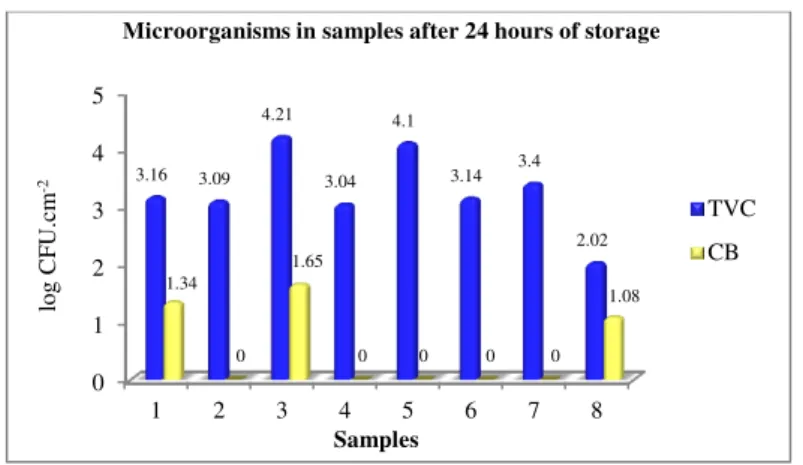
Figure 1 Determination of TVC and CB after 24 hours of meat maturation
Values of TVC in samples after 24 hours of meat maturation were in range from 2.02 log CFU.cm-2 (1.05×10² CFU.cm-2) in sample no. 8 to 4.21 log CFU.cm-2
(1.64×10⁴ CFU.cm-2) in sample no. 3 (fig. 1). The average number of TVC after
24 hours of meat maturation was 3.27 log CFU.cm-2 (tab. 1). Values of TVC in
samples no. 3 and no. 5 were higher than 3,5 log CFU.cm-2, so they were not in
accordance with Commision Regulation no. 2073/2005.
According to the literature, genera occurring on freshly cut meat frequently are
Acinetobacter, Pseudomonas, Brochothrix, Flavobacterium, Psychrobacter,
Moraxella, Staphylococcus, Micrococcus, lactic acid bacteria (LAB) and
different genera of the family of Enterobacteriaceae (Dainty and Mackey,
1992). The environment then enforces a selection pressure on the bacterial community, and those groups of bacteria best adapted to the environment will outgrow the others, become dominant, and reach high numbers. Thus, the survival, growth and succession of specific spoilage bacteria can be affected by a diversity of ecophysiological factors in the physical and chemical environment.
These factors, including meat constituents, temperature, pH, oxygen or carbon dioxide (packaging atmosphere) and competing microbiota are important in maintaining meat quality over time (Koutsoumanis et al., 2006).
Values of CB in samples after 24 hours of storage were lower than 1 log CFU.cm-2 (<10CFU.cm-2) in samples no. 2, 4, 5, 6 and 7. Number of CB was
1.34 log CFU.cm-2 (2.27×101 CFU.cm-2) in sample no. 1, 1.65 log CFU.cm-2
(4.5×101 CFU.cm-2) in sample no. 3 and 1.08 log CFU.cm-2 (1.2×101 CFU.cm-2)
in sample no. 8 (fig. 1). The average number of CB in samples after 24 hours os meat maturation was 1.13 log CFU.cm-2 (tab. 2). Value of CB in sample no. 3 were not in accordance with Commision Regulation no. 2073/2005.
Several authors have detected many members of the Enterobacteriaceae on raw
beef, lamb, pork, and poultry products, as well as on offal meats (Garcia-Lopez
et al., 1998). However, the genera Serratia, Enterobacter, Pantoea, Klebsiella,
Proteus and Hafnia, often contribute to meat spoilage (Nychas et al., 1998). With regard to their meat spoilage potential, the most important
Enterobacteriaceae are the species S. liquefaciens, Hafnia alvei and Enterobacter
(Pantoea) agglomerans (Samelis, 2006). Among the Enterobacteriaceae,
Serratia spp. is the most commonly found genus in meat.
Table 1 Basic statistical characteristics of TVC and after 24 hours, 7 days and 14 days of meat maturation
Parameter TVC after 24
hours
TVC after 7 days
TVC after 14 days
n 8 8 8
x 3.27 3.39 3.79
s 0.64 0.32 0.58
v% 19.57 9.43 15.30
n – number of samples, x – average, s - standard deviation, v% - coefficient of variation
It has been noted that the storage temperature can affect the spoilage potential of different bacteria (Stanbridge and Davies, 1998) and species belonging to the same bacterial group do not necessarily grow at the same temperature (Doulgeraki et al., 2010). Thus, differences on bacterial species/strains were observed for beef (Doulgeraki et al., 2011 and Fontana et al., 2006) during storage at different temperatures.
Figure 2 Determination of TVC and CB after 7 days of meat maturation
Microbial quality of raw meat results from the physiological status of the animal at slaughter, processing, transportation, preservation and storage conditions (Nychas et al., 2008).
Gill (2003) determined total viable counts in meat during storage. The microbial growth experienced a significant increase from 3.7×10³ CFU.g-1 at the beginning of the experiment to values larger than 109 CFU.g-1 on day 9. A healthy and
freshly slaughtered animal has its muscle sterile. After a period of time, the duration of which depends mainly on temperature, meat pH and slaughtering management, microorganisms experiment an exponential growth.
The lowest value of TVC after 7 days of chilling of meat was 3.09 log CFU.cm-2
(1.25×10³ CFU.cm-2) in sample no. 4 and the highest value of TVC was 4.01 log
CFU.cm-2 (1.04×10⁴ CFU.cm-2) in sample no. 3 (fig. 2). The average number of
TVC after 7 days of storage was 3.39 log CFU.cm-2 (tab. 1). The values of TVC
in sample no. 3 (4.01 log CFU.cm-2) and in sample 5 (3.81 log CFU.cm-2) were
not in accordance with Commision Regulation no. 2073/2005.
The values of CB after 7 days of meat maturation were lower than 1 log CFU cm
-2 (10 CFU cm-2) in samples no. 2, 4 and 6. The highest value of CB was 2.07 log
CFU cm-2 (1,20×10² CFU cm-2) in sample no. 3 (fig. 2). The average value of CB
in samples after 7 days of meat chilling was 1.03 log CFU cm-2 (tab. 2). The
values of CB in samples no. 3, 7 and 8 were higher than 1.5 log CFU cm-2, these
values were not in accordance with legislation.
The spoilage potential of a microorganism is determined by its ability to produce the metabolites that are associated with the spoilage. However, it is also important to consider the interaction between microbial growth and enzyme
activities (Nychas et al., 2008). The microbial ecology associated to the spoilage
0 1 2 3 4 5
1 2 3 4 5 6 7 8
3.16 3.09 4.21
3.04 4.1
3.14 3.4
2.02
1.34
0 1.65
0 0 0 0
1.08
lo
g
C
F
U.
cm
-2
Samples
Microorganisms in samples after 24 hours of storage
TVC
CB
0 1 2 3 4 5
1 2 3 4 5 6 7 8
3.13 3.17 4.01
3.09 3.81
3.3 3.45 3.17
1.39
0 1.57
0 1.41
0 2.07
1.8
lo
g
C
F
U
.c
m
-2
Samples
Microorganisms in samples after 7 days of storage
TVC
J Microbiol Biotech Food Sci / Kunová et al. 2015 : 4 (6) 568-571
570 of meat in different storage conditions has been recently reviewed. The microbial populations associated with the meat environment are known as belonging to the
groups of Enterobacteriaceae, lactic acid bacteria (LAB), Brochothrix
thermosphacta, pseudomonads and some clostridia (Doulgeraki et al., 2012).
McEvoy et al. (2004) found that The Enterobacteriaceae count ranged from 0.52 to 6.98 log CFU.g−1 with a mean range of 2.20–4.64 log CFU.g−1. Studies
conducted in Irish beef abattoirs have reported numbers of Enterobacteriaceae on
beef carcasses at mean counts ranging from − 0.02 to 1.63 log CFU.cm−2.
Cagney et al. (2004) investigated the prevalence and numbers of E. coli
O157:H7 in minced beef products and reported sporadic high counts of E. coli
O157:H7 with a range count of 0.52 – 4.03 log CFU.g−1 and an average log count
of 0.91 log CFU.g−1.
Table 2 Basic statistical characteristics of CB and after 24 hours, 7 days and 14 days of meat maturation
Parameter CB after 24
hours CB after 7 days
CB after 14 days
n 8 8 8
x 1.13 1.03 1.99
s 0.22 0.82 0.77
v% 19.47 79.61 38.69
n – number of samples, x – average, s - standard deviation, v% - coefficient of variation
Bolton et al. (2002) estimated bacterial numbers (total viable counts) and the incidence of Salmonella at three surface locations (ham, belly and neck) on 60 animals/carcasses processed through a small commercial abattoir (80 pigs). A significant increase (P < 0.05) in bacterial numbers was observed after pre-evisceration washing. Final washing increased the bacterial counts to between 3.6
and 3.8 log CFU cm-2 while chilling effected a small but statistically significant
(P < 0.05) increase to between 4.5 and 4.7 log CFU cm-2. The incidence of
Salmonella on pigs at the farm was 27 %, decreasing to 10 % after preslaughter
washing. However, stunning and bleeding effected a considerable increase in
Salmonella contamination and the incidence after these operations was 50 %, which was reduced to 0 % during the scalding-dehairing process.
Figure 3 Determination of TVC and CB after 14 days of meat maturation
The values of TVC after 14 days of meat maturation were in range from 2.93 log CFU cm-2 (8.63×10² CFU cm-2) in sample no. 4 to 4.78 log CFU.cm-2 (6.13×10⁴
CFU cm-2) in sample no. 5 (tab. 3). The average value of TVC after 14 days of
storage was 3.79 log CFU cm-2 (tab. 1). Only samples no. 4 and 8 meet
requirements of Commision Regulation no. 2073/2005.
The values of CB ranged from lower than 1 log CFU.cm-2 (10 CFU.cm-2) in
sample no. 4 to 2.50 log CFU.cm-2 (3.22×10² CFU.cm-2) in sample no. 8 (fig. 3).
The average value of CB in sample after 14 days of storage was 1.99 log CFU.cm-2 (tab. 2). Only sample no. 4 was in accordance with requirements of
Commision Regulation no. 2073/2007.
Determination of pH value
pH values of meat after 24 hours of maturation were in range from 6.6 (samples no. 8) to 7.0 (samples no. 3 and 5) (tab. 3). The average pH value of meat after 24 hours of storage was 6.8 (tab. 4).
Gill et al. (2003) found, that pH values decreased of the concentration of protons as a function of time from 5.6 (first day) to 6.27 (day 10th).
Table 3 pH value of meat
Sample pH value after 24
hours
pH value after 7 days
pH value after 14 days
1 6.8 5.7 6.4
2 6.8 5.6 6.2
3 7.0 6.1 6.4
4 6.7 5.6 6.0
5 7.0 5.8 6.3
6 6.7 5.5 6.0
7 6.8 5.8 6.0
8 6.6 5.7 6.0
pH values of meat after 7 days of maturation ranged from 5.5 (sample no. 6) to 6.1 (sample no. 3) (tab. 3). The average pH value of samples after 7 days of storage was 5.73 (tab. 4).
Ruiz de Huidobro et al. (2003) found a significant decrease in pH in beef meat
during the very first hours of storage. Values vary from 6.5 at 45 min post mortem to 5.5 at 24 h. This value remains stable during the next five days ageing.
Table 4 Basic statistical characteristics of pH values after 24 hours, 7 days and 14 days of meat maturation
Parameter pH value after
24 hours
pH value after 7 days
pH value after 14 days
n 8 8 8
x 6.8 5.73 6.16
s 0.13 0.17 0.17
v% 1.91 2.97 2.76
n – number of samples, x – average, s - standard deviation, v% - coefficient of variation
pH values of meat after 14 days of maturation ranged from 6.0 (samples no. 4, 6,7 and 8) to 6.4 (samples no. 1 and 3) (tab. 3). The average pH value of samples after 14 days of storage was 6.16 (tab. 4).
After slaughter, temperature and pH decrease. Final values have been attained 24 h post mortem, and no differences were found between heifers and bulls. pH values were similar to those reported by other authors and they were in the normal range (Silva et al., 1999). Zamora et al. (1996) reported that pH value at 15 min was 6.76; and at 24 h was 5.6. Other authors reported that pH in bovine
meat at 24 h in m. longissimus thoracis et lumborumwas 5.5±0.06.
CONCLUSION
Total viable count, number of coliform bacteria and pH of the veal meat were determined during two weeks of chilling. The microorganisms that can colonize the fresh meat depend highly on the characteristics of meat and way it is processed and stored. Despite all efforts targeted on the maintenance of good hygiene practices during meat production, contamination of carcasses with microorganisms cannot be completely prevented.
From a sanitary point of view, meat has to be chilled as soon as possible after slaughter. The rate of chilling is very critical; too slow or too fast chilling of beef can result in an inferior meat quality Increase of temperature and decrease of relative humidity during chilling of the meat are important parameters to achieve of optimal conditions in terms of microbiological quality and of the maturation of meat.
Acknowledgments: The paper was supported by the project: The research leading to these results has received funding from the European Community
under project no 26220220180: Building Research Centre „AgroBioTech“
REFERENCES
BAE, Y.Y., KIM, N.H., KIM, K.H., KIM, B.C., RHEE, M.S. 2010. Supercritical carbon dioxide as a potential intervention for ground pork decontamination.
Journal of Food Safety, 31 (1), 48–53.
http://dx.doi.org/10.1111/j.1745-4565.2010.00265.x
BEKHIT, A.E.D., FAROUK, M.M., CASSIDY, L., GILBERT, K.V. 2007.
Effects of rigor temperature and electrical stimulation on venison quality. Meat
Science, 75 (4), 564–574. http://dx.doi.org/10.1016/j.meatsci.2006.09.005
BOLTON, D. J. - PEARSE, R.A. - SHERIDAN, J.J. - BLAIR, I.S. - MCDOWELL, D.A. - HARRINGTON, D. 2002. Washing and chilling as critical control points in pork slaughter hazard analysis and critical control point (HACCP) systems. Journal of Applied Microbiology, vol. 92 (5), 893–902.
http://dx.doi.org/10.1046/j.1365-2672.2002.01599.x
CAGNEY, C., CROWLEY, H., DUFFY, G., SHERIDAN, J.J., O’BRIEN, S.,
CARNEY, E., ANDERSON, W., MCDOWELL, D.A., BLAIR, I.S., BISHOP, R.H. 2004. Prevalence and numbers of Escherichia coli O157: H7 in minced beef and beef burgers from butcher shops and supermarkets in the Republic of Ireland. Food Microbiology, 21 (2), 203–212. http://dx.doi.org/10.1016/s0740-0020(03)00052-2
0 1 2 3 4 5
1 2 3 4 5 6 7 8
4.11
3.86 4.11
2.95 4.78
3.69 3.84
2.93
2.29 2,21 2.43
0 1.88
2.13 2.46 2.5
lo
g
C
F
U
.c
m
-2
Samples
Microorganisms in samples after 14 days of storage
TVC
J Microbiol Biotech Food Sci / Kunová et al. 2015 : 4 (6) 568-571
571 COMMISSION REGULATION (EC) No 2073/2005 of 15 November 2005 on microbiological criteria for foodstuffs.
DAINTY, R.H., MACKEY, B.M. 1992. The relationship between the phenotypic properties of bacteria from chill-stored meat and spoilage processes. Journal of
Applied Bacteriology, 73, 103–114.
http://dx.doi.org/10.1111/j.1365-2672.1992.tb03630.x
DOULGERAKI, A.I., PARAMITHIOTIS, S., KAGKLI, D.-M., NYCHAS, G.-J.E. 2010. Lactic acid bacteria population dynamics during minced beef storage
under aerobic or modified atmosphere packaging conditions. Food
Microbiology, 27 (8), 1028–1034. http://dx.doi.org/10.1016/j.fm.2010.07.004
DOULGERAKI, A.I., PARAMITHIOTIS, S., NYCHAS, G.-J.E. 2011.
Characterization of the Enterobacteriaceae community that developed during
storage of minced beef under aerobic or modified atmosphere packaging
conditions. International Journal of Food Microbiology, 145 (1), 77–83.
http://dx.doi.org/10.1016/j.ijfoodmicro.2010.11.030
DOULGERAKI, A.I., ERCOLINI, D., VILLANI, F., NYCHAS, G.J.E. 2012. Spoilage microbiota associated to the storage of raw meat in different conditions.
International Journal of Food Microbiology, 157 (2), 130–141.
http://dx.doi.org/10.1016/j.ijfoodmicro.2012.05.020
FONTANA, C., COCCONCELLI, P.S., VIGNOLO, G. 2006. Direct molecular approach to monitoring bacterial colonization on vacuum-packaged beef.
Applied and Environmental Microbiology, 72 (8), 5618–5622.
http://dx.doi.org/10.1128/aem.00029-06
FUNG, D.Y. 2010. Microbial hazards in food: food-borne infections and
intoxications. Handbook of Meat Processing, 481–500.
http://dx.doi.org/10.1002/9780813820897.ch28
GARCIA-LOPEZ, M.L., PRIETO, M., OTERO, A. 1998. The physiological attributes of Gram-negative bacteria associated with spoilage of meat and meat
products. The Microbiology of Meat and Poultry, Blackie Academic and
Professional, London, 1–34.
GILL, C.O. 2003. Active packaging in practice: meat. Novel Food Packaging
Techniques, Woodhead Publishing Limited and CRC Press LLC, Boca Raton,
378–396. http://dx.doi.org/10.1533/9781855737020.3.365
GRAM, L., RAVN, L., RASCH, M., BRUHN, J.B., CHRISTENSEN, A.B., GIVSKOV, M. 2002. Food spoilage interactions between food spoilage bacteria.
International Journal of Food Microbiology, 78 (1-2), 79–97.
http://dx.doi.org/10.1016/s0168-1605(02)00233-7 HWANG, I.H., DEVINE, C.E., HOPKINS, D.L. 2003. The biochemical and physical effects of electrical stimulation on beef and sheep meat tenderness. Meat Science, 65 (2), 677–691.
http://dx.doi.org/10.1016/s0309-1740(02)00271-1
KOUTSOUMANIS, K., STAMATIOU, A., SKANDAMIS, P., NYCHAS, G.-J.E. 2006. Development of a microbial model for the combined effect of temperature and pH on spoilage of ground meat, and validation of the model
under dynamic temperature conditions. Applied and Environmental
Microbiology, 72 (1), 124–134. http://dx.doi.org/10.1128/aem.72.1.124-134.2006
MACH, N., BACH, A., VELARDE, A., DEVANT, M. 2008. Association between animal, transportation, slaughterhouse practices, and meat pH in beef.
Meat Science, 78 (3), 232–238. http://dx.doi.org/10.1016/j.meatsci.2007.06.021
MATARAGAS, M., DROSINOS, E.H., VAIDANIS, A., METAXOPOULOS, I. 2006. Development of a predictive model for spoilage of cooked cured meat products and its validation under constant and dynamic temperature storage
conditions. Journal of Food Science, 71 (6), 157–167.
http://dx.doi.org/10.1111/j.1750-3841.2006.00058.x
MCEVOY, J.M., SHERIDAN, J.J., BLAIR, I.S., MCDOWELL, D.A., 2004. Microbiol contamination of beef carcasses in relation to hygiene assessment
based on criteria used in EU Decision 2001/47/EC. International Journal of Food
Microbiology, 92 (2), 217-225.
http://dx.doi.org/10.1016/j.ijfoodmicro.2003.09.010
NYCHAS, G.J.E., DROSINOS, E., BOARD, R.G. 1998. Chemical changes in
stored meat. The Microbiology of Meat and Poultry, Blackie Academic and
Professional, London, 288–326
NYCHAS, G.J.E., SKANDAMIS, P.N., TASSOU, C.C., KOUTSOUMANIS, K.P. 2008. Meat spoilage during distribution. Meat Science, 78 (1-2), 77–89.
http://dx.doi.org/10.1016/j.meatsci.2007.06.020
RUIZ de HUIDOBRO, F. – MIGUEL, E. – ONEGA, E. – BLZQUES, B. 2003.
Changes in meat quality characteristics of bovine meat during the first 6 days
post mortem. Meat Science, 65 (5), 1439 – 1446.
http://dx.doi.org/10.1016/s0309-1740(03)00068-8
SAMELIS, J. 2006. Managing microbial spoilage in meat industry. Food
Spoilage Microorganisms, Woodhead Publishing Limited, Cambridge, 213–286.
http://dx.doi.org/10.1533/9781845691417.2.213
SILVA, J.A., PATARATA, L., MARTINS, C. 1999. Influence of ultimate pH on
bovine meat tenderness during ageing. Meat Science, 52 (4), 453–459.
http://dx.doi.org/10.1016/s0309-1740(99)00029-7
STANBRIDGE, L.H., DAVIES, A.R. 1998. The microbiology of chill stored
meat. The Microbiology of Meat and Poultry, Blackie Academic and
Professional, London,174–219.
YANO, Y., YOKOYAMA, K., TAMIYA, E., KARUBE, I. 1996. Direct evaluation of meat spoilage and the progress of aging using biosensors.
Analytica Chimica Acta, 320 (2-3), 269–276.
http://dx.doi.org/10.1016/0003-2670(95)00543-9
ZAMORA, F., DEBITON, E., LEPETIT, J., LEBERT, A., DRANSFIELD, E., OUALI, A. 1996. Predicting variability of ageing and toughness in beef m.
longissimus lumborum et thoracis. Meat Science, 43 (3-4), 321–333.