i
Documentários sobre arte
---> Marcius Freire, Manuela Penafria ... - 1 -
DOSSIER TEMÁTICO
Dossier temático | Thematic dossier | Dossier Thématique
Lixo Extraordinário: intervenções socio-estéticas
---> Denize Correa Araujo ... - 5 -
Gleaning I ages Fro Others A d Myself ith a D Ca era: Ag ès Varda’s The Gleaners And I
---> Miguel A Lomillos ... - 22 -
Tênues limites entre o cinema documentário e ficcional o exemplo de O mistério de Picasso
---> Soleni Biscouto Fressato ... - 60 -
Ironia, cinismo e pragmatismo nos circuitos de arte: os documentários de Orson Welles, Banksy e Vik Muniz
---> Pablo Gonçalo ... - 72 -
ARTIGOS
Artículos | Articles | Articles
Una poética de la didáctica (Sobre Fernando Birri)
---> Tarik Souki ... - 105 -
LEITURAS
Lecturas | Readings | Comptes Rendus
ii
I started a joke: conspiração, sátira, sabotagem e embuste em Exit Through The Gift Shop
---> Luís Nogueira ... - 160 -
Pintura movente: As Pinturas do Meu Irmão Júlio
---> Ana Miranda ... - 177 -
DISSERTAÇÕES E TESES Tesis | Theses | Thèses
Ficção e antificção na telenovela brasileira: a hibridação do formato e a aproximação com o gênero docudrama
---> Alexandre Tadeu dos Santos ... - 188 -
O ciberdocumentário prefigurativo dos anos 2000
---> Bráulio de Britto Neves ... - 190 -
Cinensaios de Varda. O documentário como escrita para além de si
---> Sarah Yakhni ... - 192 -
O cinema documentário na integração Latino-americana: o ABC do início
---> Diego Ivan Caroca Riquelme ... - 193 -
Pontos de vista em documentários de periferia: estética, cotidiano e política
---> Gustavo Souza da Silva ... - 194 -
Dois ou um: um ensaio cinematografico sobre as conexões reciprocas do entorno da lagoa do Macacú em Garopaba, Santa Catarina
---> Andréa Alves Teixeira ... - 196 -
Cinejornal Brasileiro: a documentação do esporte no Estado Novo em comparação com a estética nazista
---> Clara Alves Teixeira ... - 197 -
O documentário animado e a leitura não-ficcional da animação
---> Jennifer Jane Serra ... - 198 -
Identidade cultural e auto-representação cinematográfica indígena xavante
iii
As condições da edição no documentário português contemporâneo de observação
---> Maria Helena Peixoto Neves Pinto ... - 203 -
Falso documentário: montar entre ficção e facto
---> Nuno Teixeira de Castilho ... - 205 -
EDITORIAL
- 1 -
Registar o processo de criação de uma obra artística ou a vida de um artista tem sido tema recorrente do documentário. Bazin, no seu livro O que é o cinema?, dedica-lhe alguma atenção e identifica dois momentos importantes na sua evolução (mais concretamente, o documentário sobre pintura). O primeiro momento é a abolição do enquadramento dos quadros, ou seja, filmar um quadro penetrando no mesmo e a segunda é uma revolução operada por um documentário concreto, Le Mystère Picasso/O Mistério de Picasso (1956), de Henri-Georges Clouzot. ―O cinema não é aqui simples fotografia móvel de uma realidade prévia e exterior‖ (in ―Um
filme bergsoniano: ‗Le mystère picasso‘‖) – e esta seria a definição, pelo menos em sentido mais restrito de documentário para Bazin – ―o que
Clouzot afinal nos revela é a ‗pintura‘, isto é, um quadro que existe no
tempo, com a sua duração, a sua vida‖ (idem: 208). Ou seja, Clouzot tem como mérito não se dedicar a, em sentido restrito, documentar a criação de uma obra, mas documentar―a pintura‖.
- 2 -
Extraordinário: intervenções socio-estéticas‖, de Denize Correa Araújo;
―Gleaning Images From Others And Myself with a Dv Camera: Agnès
Varda‘s The Gleaners And I‖, de Miguel A. Lomillos;―Tênues limites entre o cinema documentário e ficcional. O exemplo de O Mistério de Picasso‖, de Soleni Biscouto Fressato; ―Ironia, cinismo e pragmatismo nos circuitos de arte: os documentários de Orson Welles, Banksy e Vik Muniz‖, de Pablo Gonçalo.
Na secção Artigos, Tarik Souki apresenta o perfil do consagrado cineasta argentino, Fernando Birri. Em Análise e crítica de filmes, os filmes
Exit Through the Gift Shop, de Banksy e As Pinturas do Meu Irmão Júlio, de Manoel de Oliveira são vistos em detalhe por Luís Nogueira e Ana Miranda, respectivamente. Em Leituras, o último livro de Maria do Carmo Piçarra intitulado Salazar vai ao Cinema II – A ‗Política do Espírito‘ no
Jornal Português é apresentado por Paulo Cunha.
- 3 -
DOSSIER TEMÁTICO
Doc On-line, n. 10, agosto de 2011, www.doc.ubi.pt, pp.5-21.
Resumo: Este trabalho visa analisar o documentário Lixo Extraordinário (Waste Land, 2010), sobre a obra do artista Vik Muniz, em três aspectos: o de ―documentário-registro‖, o de ―olhar estrangeiro‖ e o de ―intervenções sócio-estéticas‖. Os referenciais teóricos básicos para este artigo incluem a classificação feita por Bill Nichols sobre documentários, alguns pontos de vista sobre intertextualidade e estética, e o conceito de ―estética da hipervenção‖.
Palavras-chave: ―documentário-registro‖, ―olhar estrangeiro‖, ―estética da hipervenção‖.
Resumen: Este trabajo propone analizar el documental Waste Land (2010), sobre la obra del artista Vik Muniz, en tres aspectos: el de ―documental registro‖, el de ―mirada extranjera‖ y el de ―intervenciones socioestéticas‖. Las referencias teóricas para este ensayo incluyen la clasificación realizada por Bill Nichols sobre los documentales, algunos puntos de vista sobre intertextualidad y estética, y el concepto de ―estética de la hipervención‖. Palabras clave: ―documental registro‖, ―mirada extranjera‖, ―estética da la hipervención‖.
Abstract: This paper intends to analyze the documentary Waste Land (Lixo Extraordinário, 2010), about the work of the artist Vik Muniz, in three aspects: as a ―register-documentary‖, as a ―view from abroad‖ and as ―socio-aesthetic interventions‖. The basic theoretical references for this article include the classification about documentaries by Bill Nichols, some views of intertextuality and aesthetics, and the concept of the ―aesthetics of hypervention‖.
Keywords: ―register-documentary‖, ―view from abroad‖, ―aesthetics of hypervention‖.
Resumé: Ce travail se propose d‘analyser le documentaire Lixo Extraordinário (Waste Land, 2010) qui traite de l‘oeuvre de l‘artiste Vik Muniz, à partir de trois aspects : le ―registre documentaire‖, le ―regard étranger‖ et les ―interventions socio-esthétiques‖. Le fondement théorique de ce travail repose sur la classification établie par Bill Nichols sur les
documentaires, les points de vue sur l‘intertextualité ainsi que l‘esthétique et le concept
d‘―esthétique de l‘hypervention‖.
Mots-clés: ―documentaire-registre‖, ―regard étranger‖ et ―l‘estétique de l‘hypervention‖
Este trabalho visa analisar o documentário Lixo Extraordinário (Waste Land, 2010), sobre a obra do artista Vik Muniz, em três aspectos: o de
―documentário-registro‖, o de ―olhar estrangeiro‖ e o de ―intervenções
Coordenadora da Pós em Cinema da Universidade Tuiuti do Paraná e Diretora do
- 6 -
sócio-estéticas‖. O documentário sobre arte, feito de 2007 a 2009, descreve
a proposta do artista Vik Muniz, brasileiro radicado nos Estados Unidos desde 1983. Muniz desenvolveu sua proposta com os catadores do Jardim Gramacho, aterro sanitário localizado na periferia do Rio de Janeiro. Seu propósito foi utilizar o lixo reciclável como material para seus retratos, cuja venda foi revertida em prol da Associação dos catadores de material reciclável.
Como ―documentário-registro‖, o filme provoca uma reflexão sobre o
aspecto social da arte, ao mesmo tempo em que possibilita uma trajetória no mundo dos catadores, um tipo de projeto em ação, ou pesquisa de campo, mostrando desde a chegada dos caminhões de lixo, até a escolha de materiais para as telas. Classifico o filme como documentário-registro sobre arte porque, antes de tudo, a narrativa enfoca principalmente a ação proposta por Muniz, procurando evidenciar sua validade e credibilidade, quase que dando um certificado de comprovação, registrado em filme, editado e exibido ao mundo, como prova da existência da criação de Muniz junto aos catadores. Com isso, não quero dizer que o filme não tem elementos estéticos. Ao contrário, a ênfase está justamente nas ações sócio-estéticas do artista.
O aspecto do ―olhar estrangeiro‖ se justifica, considerando três razões
- 7 -
como negar que os elementos estéticos são o vértice de tudo, vértice que se concentra na criatividade e na intertextualidade de suas criações, que fazem do documentário uma forma de reconhecimento ao valor da estética proposta.
Segundo Bill Nichols (2008), o documentário pode ser classificado como poético, expositivo, participativo, observativo, reflexivo e performático. Lixo Extraordinário não corresponde exatamente a uma categoria fixa, mas pode ser definido como participativo e reflexivo, com algumas incursões no modo observativo. O modo participativo, como o próprio nome sugere, é marcado por mostrar a participação do documentarista e sua equipe que, dessa forma, torna-se um sujeito ativo no processo de gravação/filmagem, pois aparece em conversa com a equipe e provoca o entrevistado para que este fale.
―Como espectadores, temos a sensação de que testemunhamos uma forma de diálogo entre cineasta e participante que enfatiza o engajamento localizado, a interação negociada e o encontro carregado de emoção. Essas características fazem o modo participativo do cinema documentário ter um apelo muito amplo, já que percorre uma grande variedade de assuntos, dos mais pessoais aos mais históricos.‖ (Nichols, 2008: 162).
A obra de Vik Muniz, ao ser retratada através da visão de Lucy Walker, registra a proposta do artista plástico, que expõe seus pontos de vista sobre uma possibilidade de desenvolvimento social para os catadores
através da participação em seu projeto artístico. Segundo Nichols, ―o
documentário re-apresenta o mundo histórico, mostrando seu registro de uma perspectiva ou de um ponto de vista distinto A evidência da
re-apresentação sustenta o argumento ou perspectiva da representação‖
(Nichols, 2008: 67).
- 8 -
ensaiados, suas falas e reações, corroborando com o intuito de Muniz em demonstrar a vitalidade de seu projeto social. Na passagem em que Muniz dialoga com sua esposa sobre sua proposta e esta questiona a validade de sua obra em relação ao futuro melhor de seus catadores selecionados, o argumento se aproxima da peça Pigmaleão, do papel do professor que corrige a fala de Elisa e a molda aos seus parâmetros, para depois deixá-la fora de seu habitat, perdida em um mundo que não é seu. O argumento é válido em ambos os questionamentos: de um lado, a proposta de melhorar a qualidade de vida dos catadores pode ser vista como atraente, no presente; por outro lado, o futuro parece incerto, considerando que não basta aumentar o poder aquisitivo de certas pessoas sem o aparato necessário para um futuro realmente consolidado em funções e habilidades que não podem ser compradas. As vozes são dialógicas, assim como os argumentos, mas o filme se volta mais ao aspecto prático de registro da proposta do que de comentários mais filosóficos e especulativos sobre uma possibilidade de desenvolvimento e ascensão social.
Os catadores de lixo do Jardim Gramacho parecem estar felizes com as possibilidades que se apresentam a eles. Ao invés de atores, como em
filmes ficcionais, são tratados como ―atores sociais: continuam a levar a
vida mais ou menos como fariam sem a presença da câmera.‖ (Nichols,
2008: 31). Porém é nesse ponto que há uma ruptura na naturalidade das cenas: alguns catadores parecem estar contentes com a situação no aterro, como se a precariedade de suas vidas não importasse, quase como
participantes da ―periferia legal‖, expressão da pesquisadora Ivana Bentes,
que comenta que certos filmes simulam uma felicidade inexistente, e uma supressão do cotidiano sórdido, valorizando uma cosmética fabricada, uma pseudo-realização artística. Em certas passagens, o filme lembra a antiga
questão dos ―retratados‖ de Sebastião Salgado, tão bem comentada por
- 9 -
Nichols finaliza seu comentário: ―(os retratados) continuam a ser atores culturais e não artistas teatrais. Seu valor para o cineasta consiste não no que promete uma relação contratual, mas no que a própria vida dessas pessoas incorpora. Seu valor reside não nas formas pelas quais disfarçam ou transformam comportamento e personalidade habituais, mas nas formas pelas quais comportamento e personalidade habituais servem às necessidades do cineasta.‖ (Nichols, 2008: 31).
Por vezes, pode-se dizer que há um modo observativo da câmera que invade as casas e as vidas dos retratados, como um voyeur interessado no modo de vida dos mesmos, para depois mostrar como as mudanças podem ser favoráveis, mais ou menos como um reality show que promete um futuro
brilhante caso haja um ―consentimento informado e tácito‖ por parte dos
retratados. Não há mudança de atitude em todo o processo, e sim um consentimento por parte de todos os envolvidos: diretora, artista e retratados. Por outro lado, há realmente uma sensação de euforia, seja esta pela possibilidade aventada, seja pela simples participação em um filme. Normalmente, ser convidado para atuar é sempre algo positivo, mas ter suas vidas expostas na tela é um compromisso selado entre participantes, que consentem e sabem o caminho que será percorrido.
―O direito do diretor a uma performance é um ―direito‖ que, ao ser
exercido, ameaça a atmosfera de autenticidade que cerca o ator social. O grau de mudança de comportamento e personalidade nas pessoas, durante as filmagens, pode introduzir um elemento de ficção no processo do documentário (a raiz do significado de ficção é fazer ou fabricar). Inibição e modificações de comportamento podem se tornar uma forma de deturpação ou distorção, em um sentido, mas também documentam como o ato de filmar altera a realidade que pretende representar.‖ (Nichols, 2008: 31).
conquistar-- 10 conquistar--
lhes um lugar melhor na escala social. Ao contrário de uma montagem de
continuidade, o filme parece adotar uma ―montagem de evidência‖, com
função comprobatória e poder de persuasão, como se endossasse completamente e sem restrições a proposta de Muniz que, ao final, se concretiza na venda das obras. Apesar da questão do My Fair Lady não ser problematizada nem relativizada, o argumento do artista é comprovado.
O modo participativo descrito por Nichols, ―enfatiza a interação de
cineasta e tema. A filmagem acontece em entrevistas ou outras formas de envolvimento ainda mais direto moldada ou determinada por aquilo que ela
registra‖ (Nichols, 2008: 63). Há uma interação evidente que perpassa o texto como um fio condutor. O argumento é conduzido de maneira clara, enfatizando a viabilidade da proposta. Por entendermos que um documentário pode ser concebido criativamente, não sendo simplesmente uma transcriação fiel da realidade e sim registrando a mesma em suas funções subjetivas e artísticas, Lixo Extraordinário pode ser analisado em primeiro plano como documentário-registro se configurado como um documentário que não segue exatamente nenhum dos modos descritos por Nichols, mas demonstra algumas características de três modos: observativo, em certas passagens quando a câmera se detém na casa dos retratados, em close-ups, revelando a pobreza dos ambientes; participativo, quando a câmera acompanha os diálogos dos retratados, assegurando credibilidade e asserção na interação entre artista e catadores; reflexivo, quando expõe os procedimentos da filmagem, quase que como uma meta-ação que procura levar espectadores a evidenciar a relação entre o grupo filmado, o artista e a diretora. ―Nos filmes em que esse modo de representação prevalece nota-se
como é a reação do grupo pesquisado diante da câmera e do seu realizador‖
(Nichols, 2008: 32).
- 11 -
explicando e mostrando como se realiza uma proposta de ação, na qual os retratos são expostos para a câmera em tela grande e os materiais recicláveis são compostos pelos próprios retratados e pela comunidade do aterro.
Por outro prisma, se o modo observativo busca captar a realidade tal qual ela é, sem falseamento, como registro, Lixo Extraordinário pode ser também analisado parcialmente como tal, considerando que as cenas devem falar por si mesmas e que a câmera não precisa de muita movimentação e pode voyeuristicamente se inserir nos espaços que quer registrar.
Contudo, é no modo participativo que o filme se insere mais adequadamente. O entrevistado é provocado a dizer o que o diretor e o artista querem registrar, corroborando com a argumentação que permeia o filme e que provoca reflexões no espectador em relação à validade das ações encenadas.
Mesmo com tantas vozes e pontos de vista, o filme foi criticado pelo
seu ―olhar estrangeiro‖, como se o aterro fosse algo exótico, objeto de
estranhamento. Como Edward Said (1985) argumenta, em seu livro
Orientalismo - O oriente como invenção do ocidente, os países subdesenvolvidos exercem certo fascínio nos desenvolvidos. A diretora inglesa Lucy Walker certamente imprime no documentário seu olhar de fora, de espectadora, mais do que de participante. O olhar do artista, que vive nos Estados Unidos desde 1983, foi também alvo de críticas pelo uso de inglês em muitas passagens e pela sua visão americanizada, impregnada de valores altruístas, característicos do enfoque imperialista.
Ademir Luiz, Doutor em História, em seu artigo ―Nem lixo, nem extraordinário‖, publicado no Jornal Opção, online, comenta que “tudo parece pasteurizado: as emoções, as personagens, a paisagem, a denúncia do desperdício burguês, a mensagem pró-reciclagem. Perfeito para o consumo de nossa elite letrada, repleta de responsabilidade social‖
- 12 -
Para o autor, a co-produção britânica/brasileira Lixo Extraordinário, dirigida por Lucy Walker, com a co-direção de Karen Harley e João Jardim, premiado em Berlim e indicado para o Oscar de Melhor Documentário, teria probabilidades de vencer, considerando que a Academia gosta desse tipo de filme, belo, comovente, socialmente responsável, um mosaico de lições de vida. Em sua opinião, porém, o filme é também proselitista e condescendente, pertencente ao universo do filme-denúncia, que retrata a pobreza, a violência, as mazelas sociais, com o intuito de mudar a situação social.
Luiz comenta que os cineastas, apesar de serem bem-intencionados, disseminam estereótipos do que querem denunciar, e cita o crítico Jean-Claude Bernardet, professor de cinema da USP, em seu livro ―Cineastas e Imagens do Povo‖, que comenta que ―os documentários que retratam as
classes sociais menos favorecidas tendem a salientar um autoritarismo velado de quem filma sobre aquele que é filmado... procuram revelar a
verdade do ―outro‖, sem, contudo, mostrar a própria. A complexidade da situação é escamoteada pelo discurso politicamente correto‖.
―A despeito das louváveis intenções da equipe de produção em geral e de Vik Muniz em particular, salta aos olhos a artificialidade de suas relações com os catadores de lixo. A edição do filme parece milimetricamente planejada para comover: desde as imagens do lixão, as sub-reptícias mensagens de encorajamento, as crises de consciência, a trilha sonora de Moby e até mesmo as lembranças da infância pobre do artista. A cena na qual a equipe discute paralelamente em inglês e português, sobre o mal que podem estar provocando àquelas pessoas, interferindo em suas vidas, mostrando-lhes um mundo diferente para depois abandoná-las à própria sorte, é sintomática.‖ (http://www.jornalopcao.com.br/posts/opcao-cultural/nem-lixo-nem-extraordinario)
Luiz questiona também a validade das fotos de Muniz pertencentes à
- 13 -
em estúdio. Além disso, o autor do artigo ―Nem lixo nem extraordinário‖
argumenta que Muniz não retratou a realidade dos catadores e sim sua
re-criação segundo seu enfoque de artista cosmopolita. A versão do ―Narciso‖ e do ―Marat‖, segundo Luiz, revelam mais sobre a obra e estética do artista do que sobre Tião ou Zumbi, seus modelos. (http://www. jornalopcao.com.br/posts/opcao-cultural/nem-lixo-nem-extraordinario).
Para finalizar, Luiz comenta que, em Lixo Extraordinário, ―os personagens parecem desconcertados, intimidados pela câmera, não há o realismo cru presente em O Prisioneiro da Grade de Ferro (2003), de Paulo Sacramento. A abordagem dos catadores de lixo é piegas, longe da objetiva jornalística de Eduardo Coutinho em Boca do Lixo (2007). Essa tentativa desesperada de excluir qualquer tipo de juízo de valor retirou o impacto da denúncia, diferentemente de Meninas (2005), de Sandra Werneck, ou
Falcão — Meninos do Tráfico (2006), de MV Bill e Celso Athayde. Nem mesmo sua utilização da tradicional estratégia de estetizar a miséria é particularmente interessante, ficando longe da criatividade arrebatadora de
Estamira (2005), de Marcos Prado.‖ (http://www. jornalopcao.com. br/posts/opcao-cultural/nem-lixo-nem-extraordinario).
Em contraposição ao artigo de Luiz, pode-se contestar o fato da comparação com outros filmes, o que nem sempre é um argumento, pois cada filme tem sua própria proposta. É possível ver no documentário de Walker a tentativa de demonstrar a técnica artística de Vik Muniz, ao executar sua obra intertextual, hibridizando suas criações, ao inserir no texto de Marat, por exemplo, o rosto de Tião, ao misturar o sagrado e o profano, o refinado e o lixo, em interação, evidenciando a ruptura saudável dos opostos e das normas clássicas da pintura e da fotografia. A intertextualidade,
segundo Fredric Jameson, é ―um elemento deliberadamente encaixado no
efeito estético, como agente de uma nova conotação do passado e da profundidade pseudo-histórica, na qual a história dos estilos estéticos
- 14 -
Roland Barthes, em seu ensaio ―A Morte do Autor‖, combina idéias
de Bakhtin e Kristeva: ―sabemos agora que um texto não é uma linha de
palavras liberando um único significado ―teológico‖ (a ―mensagem‖ do Deus-Autor), mas um espaço multidimensional no qual uma variedade de escritos, nenhum original, se mistura e se choca. O texto é um tecido de citações retiradas de inúmeros centros de cultura.‖ (Barthes, 1977: 146).
Se considerarmos o filme Lixo Extraordinário como um texto híbrido, poderemos identificar as diversas vozes que o compõem: a da diretora inglesa, a dos co-diretores, a do artista Muniz, a dos catadores, a dos quadros-originais que são redesenhados, a da esposa de Muniz, e assim por diante. Se há uma voz mais forte, um aspecto monológico no filme, como Luiz argumenta, é a voz de Muniz que se sobressai, por ser ele o criador da proposta e o executor da mesma, com o auxílio dos catadores. Essa pode ser uma interpretação do filme.
Outra leitura pode constatar que a proposta do artista foi viabilizada, e que as vozes criam uma polifonia, uma composição de co-autores, eliminando a voz monológica do artista e permitindo a interação das vozes, por vezes dissonantes, por vezes harmônicas, como as define Bakhtin: ―A essência da polifonia consiste justamente no fato de que as vozes, aqui, permanecem independentes e, como tais, combinam-se numa individual, então é precisamente na polifonia que ocorre a combinação de várias vontades individuais, realiza-se a saída de princípio para além dos limites de uma vontade. Poder-se-ia dizer assim: a vontade artística da polifonia é a vontade de combinação de muitas vontades, a vontade do acontecimento.‖ (Bakhtin, 2005: 21).
Se Julia Kristeva afirma que ―todo texto se constrói como mosaico de citações, todo texto é absorção e transformação de um outro texto‖
- 15 -
em sua comunidade. A tentativa pode ser considerada válida no sentido de oferecer uma motivação aos catadores e de fazer com que adquiram dignidade em seu trabalho cotidiano. O futuro é sempre imprevisível, e seria utópico querer predize-lo.
Para Nichols, o modo poético o modo poético evidencia a subjetividade e se preocupa com a estética. Há uma valorização dos planos e das impressões do documentarista a respeito do universo abordado. Em relação à construção do texto, podem-se usar obras artísticas e literárias. Se considerarmos a construção das fotos dentro do filme, podemos dizer que uma parte do filme se preocupa com as questões estéticas não só da montagem, mas da própria elaboração das obras. Esse tipo de trabalho coletivo, participativo, pode também ser poético, especialmente em seus intertextos. O filme, como um todo, parece querer demonstrar que a arte pode mudar a vida das personagens, pode oferecer um algo mais que transcenda o cotidiano dos catadores. Tião, que já havia encontrado e lido
―O Príncipe‖, de Maquiavel, sem dúvida acreditou na possibilidade de
melhoria, o que realmente aconteceu.
Questões éticas são sempre problemáticas dentro do universo de representação documental. A afirmação de Christian Metz de que todo documentário é uma ficção, e o contraponto de Nichols, de que todo filme é um documentário, seja como satisfação de desejos ou representação social (Nichols, 2008: 26), por si só apresentam um debate sobre o documentário, sobre palavras-chave como realismo, verossimilhança, autenticidade documental, experiência vivida, impressão de realidade e assim por diante.
Nichols argumenta que é importante definir ―quem nos fala‖, ―de quem nos fala‖, ‗para quem fala‖. Gayatri Spivak (1988) sugere uma distinção entre
―falar sobre‖ e ―fazer falar‖. ―Fazer falar‖ é sem dúvida uma forma mais
- 16 -
como símbolo do subdesenvolvimento? Para quem o filme fala? Para a platéia brasileira? Para os festivais internacionais? Para o público estrangeiro? O filme nos fala sobre o tema, ou faz falar sobre o tema? Qual é esse tema?
Todas essas questões são importantes, mas dependem da subjetividade das leituras feitas sobre o filme. Apesar de contarmos com filmes brasileiros bem mais explícitos em suas propostas, como O Prisioneiro da grade de ferro, onde os detentos podem se retratar como querem ser vistos, não há como comparar as propostas. Mesmo no filme acima citado, porém, devemos levar em consideração que o diretor fez a edição final, o que pode resultar em ambivalências interpretativas e subjetivas.
Considerando todas essas estratégias de montagem e de escolha e exposição dos temas, podemos conduzir dois tipos de leitura do
documentário sobre Muniz: ―eu falo deles para você‖ (Nichols, 2008: 40):
os diretores (especialmente a diretora) nos falam da obra de Muniz e da
atuação dos catadores; ou ―eu falo - ou nós falamos - de nós para você‖. (Nichols, 2008: 42). No primeiro caso, surge o olhar estrangeiro já mencionado neste artigo, que pode implicar conotações monológicas, com narrador-Deus, de técnicas de montagem afastadas do documentário-registro, ou alheias às convenções do que a platéia brasileira chama de documentário com certa dose de verdade ou verossimilhança. Este tipo de interpretação tem produzido críticas desfavoráveis ao filme. O segundo
caso, ―nós falamos de nós para vocês‖, oferece oportunidades de leituras
- 17 -
uma co-editora brasileiros, além de um artista nascido no Brasil mas residente permanente nos Estados Unidos, desde 1983. Um complicador é a seleção que foi feita: caso o filme ganhasse o Oscar de melhor filme estrangeiro, a diretora Lucy Walker receberia o prêmio.
Segundo Nichols, ―a lógica que organiza um documentário sustenta um argumento, uma afirmação ou uma alegação fundamental sobre o mundo histórico, o que dá ao gênero sua particularidade... a montagem não só aprofunda nosso envolvimento com a história que se desenrola no filme como sustenta os tipos de alegação ou afirmação que o filme faz sobre o mundo. Costumamos avaliar a organização de um documentário pelo poder de persuasão ou convencimento de suas representações e não pela plausibilidade ou pelo fascínio de suas fabricações.‖ (Nichols,2008: 57-58).
Lixo Extraordinário conta com a cumplicidade do espectador, que fica comovido e envolvido emocionalmente com um aspecto problemático de seu país, colocado de maneira correta, com possíveis soluções sociais. A função comprobatória de sua montagem revela a trajetória completa dos materiais descartados, desde sua chegada no aterro, até o envolvimento dos catadores, a venda das obras, e sua reversão em prol da Associação dos Catadores, coordenada por Tião, um dos retratados. A polifonia bakhtiniana não está presente só no filme, mas também em sua recepção e nas leituras diversificadas que têm sido feitas a partir dele.
Este estudo, além de apresentar diversas leituras, enfatiza a constatação da proposta estética registrada no documentário, que considero
um documentário ―sobre arte‖. Proponho o conceito de ―estética da hipervenção‖ que, acredito, permeia toda a obra de Muniz (Araujo, 2007: 10). Este conceito parte da idéia de que a intertextualidade pós-modernista cria uma nova noção de estética e uma nova configuração tempo-espaço,
que denominei de ―estética da hipervenção‖. O termo ―estética‖ aqui não
significa uma procura por um ideal de beleza como tradicionalmente o
- 18 -
William Dunning define quando discute a ―ética além da estética‖
(Dunning, 1995: 132). Argumento que, no caso de Lixo Extraordinário,
mais do que a ―ética além da estética‖, parece ser a ―estética além da ética‖,
ou a ética recoberta pela estética, considerando que a proposta de Muniz é o resgate da situação não privilegiada dos catadores através da valorização
artística. Como o vocábulo ―ética‖ já faz parte de ―est-ética‖, a relação entre
ambas pode ser de coordenação e não de subordinação. Poder-se-ia então dizer que a preocupação ética de Muniz é endereçada esteticamente.
O termo ―hipervenção‖ é uma combinação de ―hiper‖, no sentido de
hiper-real, virtual, e ―venção‖, como em ―invenção‖ e ―intervenção‖. Se o termo ―intertextualidade‖ vem do latim ―intertexo‖, que significa ―mesclar enquanto tece‖, a obra de Muniz pode ser considerada como uma
intervenção inventiva com preocupações sócio-estéticas, e o filme Lixo Extraordinário pode ser classificado como documentário-registro.
Apesar de já ser reconhecido internacionalmente por suas obras intertextuais, com materiais como macarrão, chocolate, e similares, o filme deu maior visibilidade ao seu trabalho social. Seria difícil separar, no entanto, a esfera social e a artística, considerando que as duas se complementam e partem dos mesmos princípios, objetivando os mesmos resultados. Há, no documentário, o questionamento ético e o estético, com ênfase no último, que é a obra feita por intervenções, sejam estas em quadros da história da arte, sejam em ambientes sociais, como o trabalho e a vida dos participantes. As intervenções garantem a aprovação dos participantes e também a dos espectadores, especialmente dos que possuem um repertorio capaz de assimilar a extensão da proposta sócio-estética. A questão temporal é mais complexa. Enquanto a intervenção estética é mais visível e mais fácil de ser analisada, a intervenção social se efetua a longo prazo e, na comunidade, talvez só na geração futura.
A ―estética da hipervenção‖ pressupõe um ambiente virtual em suas
- 19 -
de figuras de importância social, no passado. Não são mais o Tião ou o
Zumbi e sim a recriação do ‗Narciso‖, de Caravaggio, e do Marat, criando
um ambiente outro, que não é nem o das obras originais nem o da cotidianidade dos catadores, mas um terceiro, fruto das intervenções artísticas e espaço-temporais. Neste novo contexto, a configuração espacial é não-euclidiana, permitindo ambientes fluidos e questionando os conceitos de representação e de subjetividade. Os intertextos são agentes dinâmicos de intercâmbio e mobilidade, constantemente na condição de ―work in progress‖. Se o cenário pós-modernista se caracteriza pelo pastiche e pelas formas livres, isentas de uma profundidade filosófica e existencial, o pós-colonialismo, por outro lado, é mais político e requer uma ética mais severa. A obra de Muniz se encontra exatamente nessa bifurcação: se por um lado sua proposta é estética e artística, mais pós-modernista, por outro lado sua questão social, de resgatar uma identidade perdida dos catadores e valorizar seu trabalho, enfatiza elementos pós-colonialistas, especialmente da representalçao das classe menos favorecidas. Acrescentando a esse cenário
o fato do ―olhar de fora‖, temos um tema controvertido, com possibilidades
- 20 -
Referências bibliográficas:
ARAUJO, Denize C. (2007), Imagens revisitadas: a estética da hipervenção. Porto Alegre: Ed. Sulina.
BAKHTIN, Mikhail (2005), Problemas da poética de Dostoievski. 3ª. ed. Rio de Janeiro: Forense Universitária.
BARTHES, Roland (1977), ―The Death of the Author‖. In Image, Music, Text. Ed. Stephen Heath. New York: Hill & Wang.
BENTES, Ivana (2002), ―Quando o árido fica romântido: cosmética da
- 21 -
http://jbonline.terra.com.br/destaques/glauber/glaub_arquivo41.htm 16/12/02.
____ Entrevista com Ivana Bentes. ―A periferia como convém‖. In: Brasil de Fato Online, http://www. brasildefato.com.br /v01/ agencia /entrevistas /a-periferia-como-convem
JAMESON, Fredric R. (1991) Postmodernism or the Cultural Logic of Late Capitalism. Durham: Duke UP.
KRISTEVA, Julia (1974), Introdução à Semanálise. São Paulo: Ed. Perspectiva.
LUIZ, Ademir (2011), ―Nem lixo nem extraordinário‖. In Jornal Opção Online. 01/03/2011. (http://www.jornalopcao.com.br/posts/opcao-cultural/ nem-lixo-nem-extraordinario).
NICHOLS, Bill (2008), Introdução ao documentário. 3ª. ed. Campinas, SP: Ed. Papirus.
SAID, Edward (1995), Orientalism - O oriente como invenção do ocidente.
Hardmondsworth: Penguin, 1985.
SPIVAK, Gayatri C. (1988), Other Worlds: essays in cultural politics. New York: Routledge.
Filmografia:
À margem da imagem, (2002), Direção, MOCARZEL, Evaldo.
Imagining Indians (1992), Direção, MASAYESVA, Victor.
Doc On-line, n. 10, agosto de 2011, www.doc.ubi.pt, pp. 22-59.
G
LEANINGI
MAGESF
ROMO
THERSA
NDM
YSELF WITH AD
VC
AMERA:
A
GNÈSV
ARDA’
ST
HEG
LEANERSA
NDI
Miguel A Lomillos
Resumo: O documentário Os Respigadores e a Respigadora de Agnès Varda é um dos mais excitantes e reveladores trabalhos do cinema europeu de autor. A metáfora abrangente de respigar constitui uma reconsideração crítica de algumas atitudes da nossa sociedade de consumo. Este filme ensaio de dados factuais e pessoais e, também um trabalho em progresso através do qual a cineasta questiona a sua vida e mostra a sua fascinação pela arte, em especial pela pintura.
Palavras-chave: cinema digital, documentário, pintura, auto-retrato, road movie, respigar tradicional e moderno.
Resumen: El documental Los espigadores y la espigadora, de Agnès Varda es uno de los trabajos más interesantes y reveladoras del cine europeo de autor. La metáfora de espigar es una reconsideración crítica de algunas actitudes en nuestra sociedad de consumo. Esta película ensaio de datos factuales y personales es también un trabajo en progreso por el cual el cineasta questiona su vida y muestra su fascinación por el arte, la pintura especial.
Palabras clave: cine digital, documental, pintura, retrato de uno mismo, road movie, recoger tradicional y moderno.
Abstract: Agnès Varda‘s critically acclaimed documentary The Gleaners and I is one of the most exciting and revealing digital works within European auteurist cinema. The all-embracing metaphor of gleaning constitutes a creatively critical reconsideration of some depreciated attitudes in our consumer society. This film essay made of factual and personal materials is also a kind of work in progress through which the filmmaker herself calls her
life into question and shows her fascination for art and mainly painting.
Keywords: Digital cinema, documentary, painting, self-portrait, road movie, traditional and
modern gleaning.
Résumé: Le documentaire Les Glaneurs et la glaneuse, d'Agnès Varda est l'un
des travaux les plus excitants et révélateurs du cinéma d‘auteur européen. La métaphore du
glanage est une reconsidération critique de certaines attitudes dans notre société de consommation. Cet essai cinématographique, à base de données factuelles et
personnelles, est également un travail en cours par lequel la cinéaste s‘interroge sur sa vie
et sa fascination pour l'art, surtout la peinture.
Mots-clés: cinéma digitale, documentaire, peinture, portrait de soi, road movie, glaner traditionneles et modernes.
.
PhD in Audiovisual Communication from the University of the Basque Country, Spain.
- 23 -
When you reap the harvest of your land, Do not reap to the very edges of your field Or gather the gleanings of your harvest. Do not go over your vineyard a second time
Or pick up the grapes that have fallen. Leave them for the poor and the stranger. Leviticus 19:9-10
The Gleaners and I: a first person documentary
Agnès Varda‘s 2000 celebrated documentary Les Glaneurs et la Glaneuse (literally, The male gleaners and the female gleaner) was rendered
The gleaners and I for the English spoken audience –Varda herself mentions this detail in her sequel Two Years After (Deux ans après, 2002). The lack of grammatical gender in English has obviously brought about the change, but the result could not be more accurate in order to deconstruct the levelling metaphor of two contrasted practitioners of gleaning1 by restoring the identity of the individual to its most subjective expression: ‗I‘.
Moreover, by putting together two complete different elements, the ‗and‘ of
the title does not function only as a mere opposition and/or addition but as the strong link from which the film is meant to be seen: they and I. From the very title, the female filmmaker or glaneuse proclaims herself to be part of the story: the subject becomes also object which is none other than a social
one: the new modern forms of ‗gleaning‘.
Yet I should make clear one significant point about this correlation
between the filmmaker‘s self (la glaneuse) and the object (the gleaners), i.e. the imbrications of self-portrait and documentary: all that is said about the
1 The French title is in fact a play on words based on gender in order to stress the feminine
voice. The first part of the title (les glaneurs) is the plural form that may refer to male,
female or both, but the second part (laglaneuse) can only be female. The same construction
would not work if the filmmaker were male. The second clause of the title stresses her
singularity (feminine) opposite a plural subject. Whether it is ‗la glaneuse‘ in the original
- 24 -
former is considered a ―digression‖ with regard to the latter – this term is used by the filmmaker herself as if Varda, humble and respectful but also conceding herself a space by having a self-justifying stance, did (not) want to deviate from the central topic. The all-encompassing metaphor of gleaning allows this identification since all the individuals in the film are considered gleaners in both a literal and a figurative sense: they collect things from the ground whether in the country, on the seashore or in the town; the female filmmaker collects some thrown-out objects and, more importantly, she collects images and sounds.
Fig.1 Fig. 2
Fig. 3
The Gleaners and I could be seen, obliquely, as an illustration of the theory of one of the most distinguished characters in the film: the
psychoanalyst and viticulturist Jean Laplanche. He presents himself as ―a
- 25 -
He prioritises the other over the self in the formation of the human
subjectivity, an ―anti-ego philosophy‖ (―une antiphilosophie du sujet‖)2 that
―shows how man first originates in the other‖.3 My aim here is to compare the others and the self not in psychoanalytical terms but as two
interconnected strands of the narrative. As a ‗glaneuse‘ Varda is but a
narrative-symbolic construction derived from her contact – factual but above all textual– with all the ‗gleaners‘ disseminated in her documentary.
Gleaning is constructed by the filmmaker as a real and imaginary world that seduces her and is fully invested with her subjectivity. At the beginning of the film, she prioritises the others (real gleaners and those represented in paintings) over herself. Then, by means of a metaphorical process, she
allows herself to be constituted as a glaneuse with aesthetic vocation
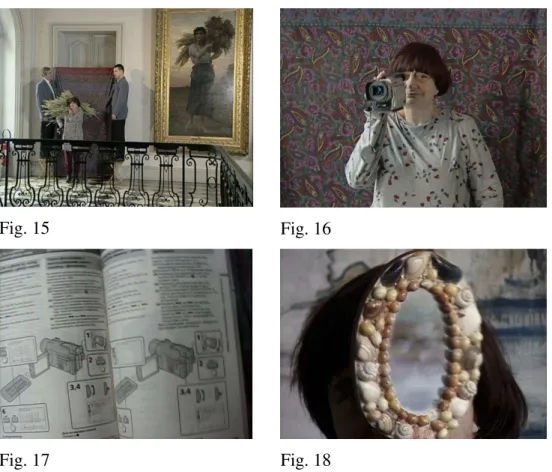
(performing in front of Jules Breton‘s canvas ―La glaneuse‖ the playful
substitution of an ear of wheat by her small camcorder). It is only when she confers herself this strong symbolic identity that she feels the competence to
occasionally ―digress‖ from that subject (others) and talks about herself (her
ageing body).
I shall discuss at the end of this essay the ethical implications, if any, of interposing the self with social and political issues in a documentary film. For now, it is sufficient to stress that Varda talks about herself not in the straightforward way that others do but only by means of a deeply stylised metaphoric and aesthetical process (as a filmmaker-glaneuse she only
‗speaks‘ about her ageing body and things that catch her artistic eye, above
all her fascination for art and mainly painting). Even in terms of her mediations through image and sound Varda assumes certain ‗restrictions‘.
2 Film quotations in English subtitles are respected according to the DVD released in 2002
by American Zeitgeist Video, but I put forward the French version when it is noticeably different from the translation.
3 Laplanche takes the decentring of the human subject beyond the familiar parameters of
post-structuralist French theory and reformulates Freud abandoned ‗seduction theory‘ as a
general theory of primal seduction. For an overview of his work on otherness in English see
- 26 -
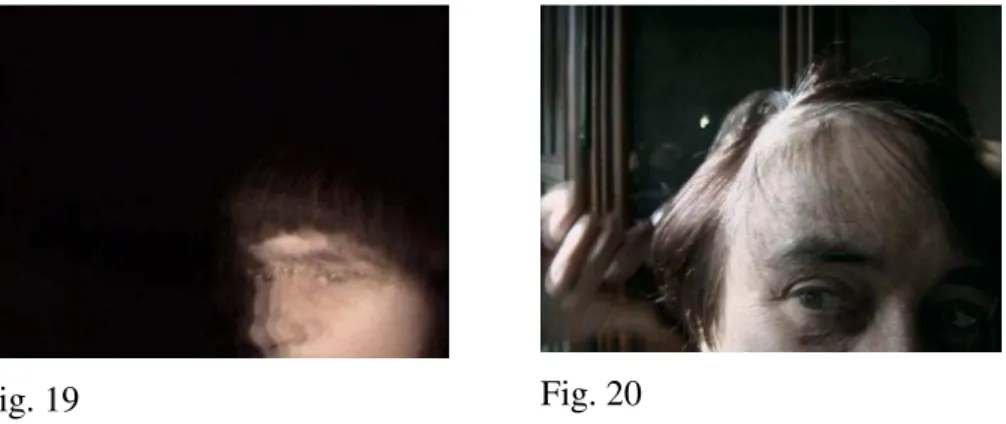
In The Gleaners and I Varda always interacts openly with the interviewees but prefers to stay off-screen as a voiced presence in order not to overshadow the gleaners. She allows herself to be on-screen mainly in the
‗digressions‘, which generally occur in private places such as her home or
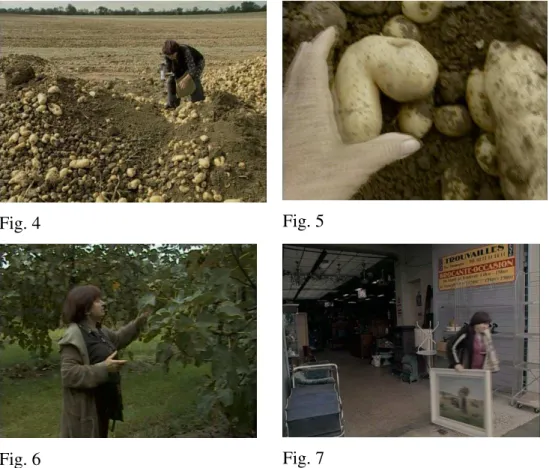
her car (in both cases she appears mostly in a fragmented manner: in brief glances on driving mirrors, close-ups of part of her face showing one eye, arms, and above all showing her hands). However, she takes centre stage in three moments of direct intervention on screen: 1) when she reveals her attraction towards the potatoes with the shape of a heart and intervenes following the interviewee talking about the discarded potatoes as they do not fit the commercial shape; 2) when she appears alone eating a fig; this is the only significant moment in which Varda talks on screen as she appeals to the audience in this occasion: alone and surrounded by fig trees whose fruits are about to go off, she permits herself to criticise those who do not offer their fruits to the gleaners; 3) when she catches a sight of a antique
shop called ―Finds‖ (―Trouvailles‖) while travelling by car, decides to enter
- 27 -
Fig. 4 Fig. 5
Fig. 6 Fig. 7
Varda‘s visual and aural approach (‗disembodied‘ voice presence in
the encounters with the gleaners and fragmented body in the self-referential digressions)4 is at the same time a deference to the social subject and also a
poetical, ethical ‗restriction‘ about her intimate ruminations. Despite this
style of representation being connected to the Nouvelle Vague cinematic tradition, such subjective digressions would have been considered as an intrusion at that time. The way in which The Gleaners and I presents the
4 It should be taken into account that the ‗disembodied‘ off-screen voice implies Varda‘s
body behind or next to the camera, which is also acknowledged by the characters‘ gaze. Her voice also signals the distance (near/ far) from the speaker because the hidden microphone
is closer to the interviewee. The dialectics between Varda‘s spontaneously inflected voice
off-screen and her thoughtful, calm voice-over commentary enriches the aural/visual
strategy of the first person narrator/character: a strong sound presence that has the
- 28 -
correlation between ‗they and I‘ disavows conventional notions of genre:
the film is neither an orthodox documentary nor an integral self-portrait but an amalgamation of both. The Gleaners and I is a poetic and personal essay that enlarges subjectivity and authorship in documentary film made in the digital era.
Although the majority of the characters leave a deep mark on the audience, the aim of the documentary is not to explore, to a large extent, personal motivations or interests (except for the last character to appear in the film, the Master in Botany Alain who is really a special and fascinating character). With the exception of two who reappear briefly, characters simply arrive, take up their place and go out –they are the transitory
chapters of a ―wandering road documentary‖ (Varda‘s description of her
film). The filmmaker is the only character to have the right to reappear; she is the distinctive protagonist, the only individual who shows, up to a point, her intimate self. The internal and symbolic logic of the film is imbued by the subjectivity of the filmmaker, her articulating voice and her wrinkled
body: ―they and I‖, ―the country, the town... and my home‖, ―the road and my hands‖.
Countryside, art and city gleaners
The film starts with a reference to the illustrated dictionary Larousse:
―To glean is to gather after the harvest‖. A reproduction of Jean-François
Millet‘s famous painting The Gleaners (Les glaneuses, 1857) appears in that page of the dictionary and it is evident that this famous canvas acts as an essential reference for Varda, a true art lover, when making a documentary
about today‘s gleaners.5 Thus, before the filmmaker travels throughout
5 There is also a reproduction of Jules Breton‘s La glaneuse in the dictionary and Varda
- 29 -
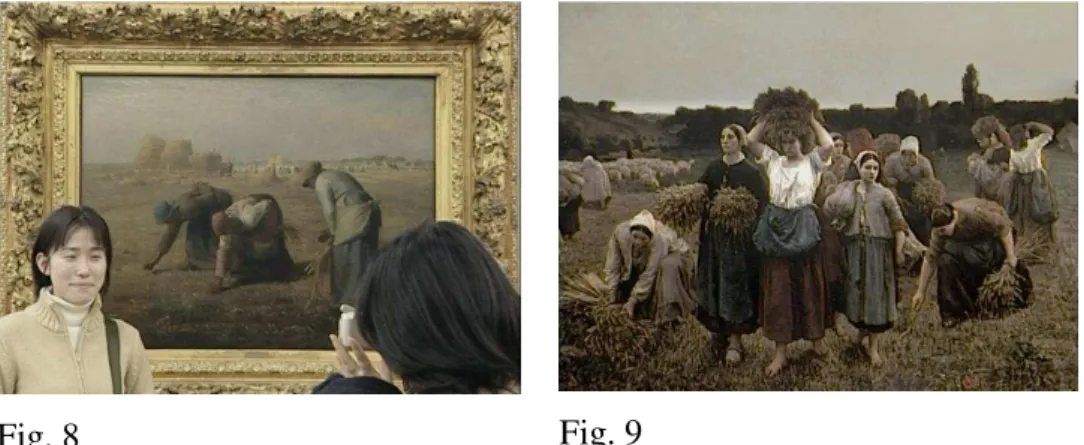
France to gather images of the surviving and new forms of gleaning, she heads for the Musée d‘Orsay to show in situMillet‘s painting next to some
tourists, especially some Japanese females taking pictures with their digital cameras. In the next sequence, an old female peasant says that gleaning, as
it used to be, is an activity that died out completely ―because machines are so efficient nowadays‖ (but other gleaners ―are quite pleased when the machine malfunctions‖ as some will tell Varda later on). Using as mementos some brief beautiful footage and paintings, Varda makes clear
that gleaning in the past was a female practice. As Millet‘s painting
conveys, gleaning is linked to poor women in rural societies. The female peasant tells us that the long day of gleaning, from the very early morning, was very hard work but women shared their time, food and labour in such a way that is now well remembered. Whilst drawing on different sources and materials in order to ground the origins of gleaning, Varda states from the very beginning that paintings are not of lesser interest than real people.
Fig. 8 Fig. 9
What is the legacy left by those old female gleaners? Is this activity
still relevant in our ―satiated society‖ (―societé de la sacieté‖)? What has
gleaning become these days? Varda‘s film is the witty answer to these
questions. Putting gleaning as a vast metaphor of our time and also as the
- 30 -
progress, a huge panel of characters and places, a bunch of images gathered to account for this essential gesture: those who bend down to collect something, whatever it may be: fruits, grapes or vegetables in the countryside; food and leftovers in the rubbish containers and city markets; all sort of domestic utensils, electrical appliances and other paraphernalia on the streets.
Varda feels secretly attracted by this ―modest gesture of stooping to glean in the towns today as in the fields yesterday‖ which she comes to
record in what she regards as the most humble of all film forms, the documentary. This physical gesture is part of a menial work that combines religious and socio-economical values: an ancestral ritual of gratitude and respect toward the earth, an old practice for poor women and a way of not wasting anything.
The most remarkable feature of the new practitioners of this
ancestral gesture of ‗walking with a stoop‘, whether in rural or urban areas,
is their solitude. The loss of the ceremonial, collective sense –feminine in the past and now mix-gendered but indicating nevertheless a broader masculine presence– comes to stress the struggle for survival as the only common factor between the modern gleaning and the traditional one. However, a number of lively scenes, such as the Nenón family singing together and using the pruning shears as rhythmic musical instruments in the vineyard, confirms that not everything is degradation or disappearance. Yet this is much more in tune with the overall sense and mood of the film because what it does is to celebrate the repetition or replacement of any form of gleaning, even when it is identified in the town with the people who live rummaging around rubbish and leftovers on the streets. Even with a suggestive sense of criticism and denunciation, The Gleaners and I
- 31 -
vitality. It is like a return to the Garden of Eden, to the state of nature where the only thing you need is to bend over or stretch your hand to collect
the earth‘s fruits. There is no sin, therefore no money, no economic exchange. With no value in exchange, the labour of gleaning is not actually a job. In any case it is gratifying work as everything you collect is yours. It is far beyond the dream of communism (in gleaning, private property is
temporally ‗cancelled‘ after the harvest, but the collection is essentially an
individual or familiar task) as the scrupulous commandments of the bourgeoisie.7 Paradoxically, the scene that gets closer, in visual or pictorial terms, to the representation of (an individual) paradise is the one that shows the filmmaker, as a critical and lonesome Eve, picking up and savouring a
fig that she calls ―fruit from heaven‖.
Varda‘s view on modern gleaning, which is close to either the
abandoned garden or the dumping ground, revises the social myth of original sin and enlarges our views on dialectical pairings such as happiness and conflict, innocence and labour, abundance and scarcity, dirtiness and purity. To pull together in the same all-inclusive metaphor those who collect spare potatoes in the country, oysters in the seaside, and detritus in the street or parsley in the market bins should involve advantageous prerogatives. Firstly, to demystify the social meanings of rubbish as the realm of the execrable and those who approach that world as despicable (it may even involve a choice not ruled exclusively by necessity but also by ethical and
6 The film actually produces a joyful impression in the audience. This is corroborated by
the vast number of generous people who wrote letters and gave gifts (both related to artworks made out of gleaned materials) to Varda, as it is said and shown in the follow-up film. This extraordinary response and the international commercial success of the film were, in fact, the main reasons for making the sequel.
7 Many critics and reviewers have pointed out the utopian, undisciplined sense implicit in
the metaphor of gleaning. See for example Jake Wilson, ―Trash and Treasure: The Gleaner
- 32 -
political responsibility)8. Secondly, it is worthwhile to set up an openly poetic point of view about a marginalised social behaviour whose senses and meanings cannot be reduced exclusively to ideological or political terms. By taking rejected food out of the capitalist process and redeeming it from the incipient process of decaying, gleaners remind us not only of the traditional values of saving and preservation but of the basic truth that food is in the end a sacred value.
The intensely subjective treatment of the topic is first and foremost the organising element of the film since the voice-over commentary guides purposefully the events shown. Varda is on tour and her guiding voice-over combine freely and amusingly her encounters with the gleaners, her self-reflexive stays at home, her visits to museums and her good-humoured anecdotes on the road. She organises the narrative in three consecutive segments or axes: 1) countryside, 2) art, craftwork and recycling, 3) town. This segmentation is more indicative than homogeneous. Each segment follows the same pattern of randomness and dissemination from her trips. For instance, those who collect oysters and grapes are included in segment 2
or those who pick apples in segment 3. The ‗gleaners‘ interviewed are
equally diverse and dispersed: country people, farmers, unemployed and poor people, artists, lawyers, retrievers, activists, etc. Those who glean or pick up things are driven by necessity, fun, habit, political or artistic reasons. The sense of drift in the film is paramount, but Varda always finds a way to make connections: in her commentary, she constantly uses figures of speech involving repetition such as pun, anaphora and anadiplosis (the repetition of the last words or phrase of one sentence at the beginning of the next); visually, she uses all sort of associations and rhymes. These techniques in both text and image, which can occur simultaneously,
8 This question about choosing freely to be a scavenger or a ―picker of recyclable material
in the landfill‖ is raised by Eduardo Coutinho in The scavengers (Boca do lixo, Brazil,
- 33 -
reinforce the concatenation and make the flow of the film more lively and meaningful.9
Fig. 10
At the beginning of the film the rap song sequence, arranged as a video clip, lightens the tone of the documentary and presents us with an explicit moral and social lesson which is at odds within a film comprising a
plurality of perspectives. Although the sequence starts with Varda‘s short social reflection on modern gleaning (―there is no shame, just worries‖) that
soon gives way to the two masculine rappers voices,10 the bulk of this clip consists of a succession of isolated shots on urban gleaners, especially old women rummaging through the leftovers around the stalls in a street market.
9 Some examples may help to illustrate these recurrent procedures of repetition and
concatenation: a) One textual example: ―As we are talking about grapes and wine (end of the episode with the chef) we might as well go to a wine area‖ (next episode in Burgundy); b) Three visual examples: the line of Parisian underground and furrow on the field; horizontal shapes in the abstract work of Louis Pons and horizontal lines on the road; Varda‘s hand in the second self-portrait and hands in a painting by Utrillo; c) An example
of both text and image establishing four links: Salomon retrieving fridges from the street,
a ‗fridge-demonstration‘ (the figures are playmobil toys) in a recycling art exhibition for
kids, a leftist demonstration in Varda‘s neighbourhood passing by the sculpture of a lion
―made on bronze‖, the lionin Arles ―made of stone‖.
10 In fact Two Years After shows that the rappers are a boy and a girl, but the girl voice
- 34 -
Some correspondences between Varda‘s words and the lyrics of the rap
actually suggest she intervened in its composition:
―To bend down is not begging
but when I see them sway my heart hurts! Eating that scrap-crap,
they‘ve got to live on shit-bits,
they‘ve got to frisk for tidbits.
Left on the street, leftovers, rough stuff with no owners. Picking up trash like the street sweepers.
Zero for us, for them much better.
They got to roam around to kill the hunger.
It‘s always been the same pain, will always be the same game‖.
Varda shoots these anonymous people with a profound sense of respect – the camera carefully avoids showing their faces – and also stresses the individuality and loneliness of mostly elderly bending women of a
similar age to Varda‘s. There is no doubt that the symbolic substratum for the poetic metaphor of gleaning lies in our mothers and grandmothers.11 It is worth recalling here the Book of Ruth, which can be seen as the poignant old story that relates old women (widows), gleaning and poverty. In the documentary, gleaning is mostly deemed a generational activity not only by the female peasant, but also for those who glean for fun or habit (the
―inventive and thrifty chef‖ Edouard Loubet) or artists working with
retrieved materials (Hervé).
A charismatic lawyer –‗his bible‘ or penal code in his hands and
dressed with a gown while talking next to a field of cabbages– explains
11 At the end of the documentary Varda, careful about showing a women‘s point of view,
recalls that she began filming when television showed an eclipse (a total solar eclipse
occurred on August 11, 1999) and ―ended the film the first of May‖ while a bouquet of
- 35 -
effortlessly to us the current and the old rights of gleaning in France:
―Gleaning is allowed with absolute impunity from sunrise to sundown after
the harvest‖. And the old edict from 1554 ―just says the same as the law
today. It allows the poor, the wretched, and the deprived to enter the fields
once the harvest is over‖. However, Varda‘s film leads us to deduce that
gleaning will be only done with the permission of the owner. Not just because gleaners usually do not know the law but primarily because of the imposing weight of social representation of private property. If the farmer does not allow it and prefers to let the fruits rot, as happens in the protectionist vineyards of Burgundy and with the fig trees, no gleaner will almost certainly dare to use his/her actual legitimacy. When Varda intervenes in the fig trees field, she assumes in fact this state of affairs; she does not give rise to the question politically but in terms of personal choice
on the part of the farmers: ―I half-feel like interfering but it is none of my
business, it‘s their fruit... Anyway, half the people are stingy. They won‘t allow gleaning because they don‘t feel like being nice‖. This statement
presupposes that farmers allowing gleaning is the result of philanthropic
values such as generosity or ―being nice‖ while the film also points out that
some farmers are driven by pure profitability as gleaners carry out effective cleaning work after the harvest. On the other hand, when Varda raises the question of gleaning and private property to the lawyer, which provokes an understandable surprise in her, the reasoning carries no further consequences:
Lawyer: If gleaners remain within the law farmers cannot say anything, cannot sue them for anything.
Varda: Even on their property?
- 36 -
We can easily expect the sensible lawyer to speak or read literally the law without observing the contradictions or loopholes but it is difficult to understand how Varda, astonished, does not follow the logical questioning: what should a law-abiding gleaner do to collect vegetables or fruits in a property whose owner does not permit gleaning? What would happen
legally to these gleaners who despite ―remaining within the law‖ could have
a serious conflict with reluctant owners averse to gleaning? Varda places this talk with the lawyer as a rhetorical response to a gleaner (the response is actually to the audience) who does not know his rights as a gleaner. However, the film does not explore what would happen to gleaners if they knew (better) their rights; if and how that could change their approach to gleaning. Although politics does not have to be at odds with poetics in a
postmodern social ‗subjective documentary‘ as it happens in Chris Marker‘s
films, the omission of further relevant questioning confirms certain lack of political and social energy.
If we compare the urban gleaner –specifically those who search for food in the bins and the markets– to the archetypal country gleaner, the former is clearly more subjected to clash and conflict. Varda prefers not to stress this point because of the broad thematic approach and the light-hearted tone and style of the film. Yet Varda presents some young squatters in conflict with a supermarket where they frequently rummage through its bins. Varda makes a connection with her film Sans toit ni loi (Vagabond,
1985) when she says: ―I wanted to know how these homeless coped with the
law‖ (―Je voulais savoir plus sur ces jeunes sans toit face a la loi‖). Varda
- 37 -
the middle of this vignette, Varda‘s unnecessary position on this well -presented event does not go beyond a simple remark on beauty with a hint
of social commentary: ―Their beauty is poignant when you realise that, for
whatever reason, they got most of their food from trash cans‖.
Fig.11
On the other hand, there is also the rivalry among the urban gleaners themselves. The film provides only one example of this underlying conflict which vindicates significantly how documentary is often driven by chance. The camera accompanies black Salomon, a kind and supportive man, seeking leftovers in a market and suddenly we heard an old woman shouting rudely at him when noticing the proximity of the man. This instant captures an extraordinary moment of the struggle for survival, showing the strategy of the physically inferior individual trying to defend his or her territory.
However, it can also suggest how the white woman feels ‗psychologically‘
stronger, exerting her arresting ‗social‘ power over the black man.
- 38 -
of the marginalised because of their ethical and political activism: François, the young man with the big boots and Alain, a highly educated man with a
master‘s degree in Botany. The last two live mostly from the trash. Varda
makes contact with them in the streets in two different ways: François is a well-known person in the neighbourhood and makes an appointment in a cafe; the vegetarian Alain is frequently seen by Varda in the market and she needs all her nerve to approach him. Proud and courageous François rages against the ecological disaster on the French coast caused by the oil tanker Erika and also against consumerist people and their wastefulness. Varda for once supports his complaint by inserting news footage of the rescue
operations after the Erika‘s spill. Alain‘s thinking and way of life expand
beyond the issues explored by the film: he lives in the suburbs of Paris, gets up at 4am, sells a social magazine outside an underground station and in the evening gives literacy lessons to foreign immigrants as a volunteer in the hostel where he lives. Without resorting to his ideological or ecological concerns, he justifies living on leftovers as a means of saving money. His lifestyle is a kind of Franciscan disagreement. Varda shoots him collecting and eating leftovers in the market from a respectful distance. She shows here more instability and discontinuity than usual in framing and editing –
the interviewee is barely seen talking onscreen but through syncopated cutting and a-synchronous sound. This style of representation confers the episode of Alain in the market a peculiar quality. Months later, Varda goes
to Alain‘s residence in the evening and shoots him giving lessons in the
hostel. If bending over is a humble gesture and documentary a humble genre, this character, not by chance the last one, would suggest, in a broad sense, a lucid portrayal of Laplanche‘s ―anti-ego philosophy‖ (in fact, Varda