Music and Human Mobility
Redefining Community
in Intercultural Context
Selection of peer reviewed papers presented within the 5
thInternational Conference
Music and Human Mobility - ICMHM’16,
Redefining Community in Intercultural Context, Lisbon, 7-9 June, 2016
icmhm’16
Edited by Maria de São José Côrte-Real & Pedro Moreira
With the support of INET-md (FCSH/NOVA)
Brasov
vol.5, no.1/2016
© June, 2016
‘Henri Coandă’ Air Force Academy Publishing House 160, Mihai Viteazu st., Braşov, 500183
Phone: +40 268 423421, fax: +40 268 422004 e-mail:[email protected]
Editor-in-chief
Adrian LESENCIUC - ‘Henri Coandă’ Air Force Academy, Brasov, Romania Guest Editors
Maria de São José CÔRTE-REAL - New University of Lisbon, Portugal Pedro MOREIRA - New University of Lisbon, Portugal Editors
Daniela NAGY - ‘Henri Coandă’ Air Force Academy, Brasov, Romania Cosmina ROMAN - ‘Henri Coandă’ Air Force Academy, Brasov, Romania Editorial Assistant
Bart VANSPAUWEN - New University of Lisbon, Portugal Designer
Mariana GHINDĂOANU - ‘Henri Coandă’ Air Force Academy, Brasov, Romania Printing
Daniela OBREJA - ‘Henri Coandă’ Air Force Academy, Brasov, Romania Scientific Board
Maurizio AGAMENNONE - University of Florence, Italy
Elena BUJA - ‘Transilvania’ University of Braşov, Braşov, Romania João Soeiro de CARVALHO - New University of Lisbon, Portugal
Salwa CASTELO-BRANCO - New University of Lisbon, Portugal
Ella CIUPERCĂ - ‘Mihai Viteazul’ National Intelligence Academy, Bucharest, Romania Maria de São José CÔRTE-REAL - New University of Lisbon, Portugal
Alberto FORNASARI - ‘Aldo Moro’ University, Bari, Italy
Jelena JOVANOVIĆ - Institute of Musicology, Serbian Academy of Sciences and Arts, Serbia Ursula HEMETEK - University of Music and Performing Arts, Vienna, Austria
Diana ILIȘOI - ‘Henri Coandă’ Air Force Academy, Brasov, Romania Adrian LESENCIUC - ‘Henri Coandă’ Air Force Academy, Brasov, Romania
Elizabeth LUCAS - Federal University of Rio Grande do Sul, Porto Alegre, Brazil Dan LUNDBERG - University of Stockholm, Sweden
Ignazio MACCHIARELLA - University of Cagliari, Italy
Sílvia MARTÍNEZ - Higher School of Music od Catalunya, Barcelona, Spain Pedro MOREIRA - New University of Lisbon, Portugal
Elisabete MONTEIRO - University of Lisbon, Portugal
Graça MOTA - Polytechnic Institute of Porto, Portugal Rui Vieira NERY - New University of Lisbon, Portugal
Elsa PERALTA - University of Lisbon, Portugal Paulo Maria RODRIGUES - University of Aveiro, Portugal Luísa ROUBAUD - University of Lisbon, Portugal
Katerina STRANI - Heriot-Watt University, Edinburgh, United Kingdom Mariselda TESSAROLO - University of Padua, Italy
ISSN 2285-2689
ISSN-L 2285-2689
Front cover: Namban-jin byōbu (wind wall) attributed to Kanō Naizen (c.1570-1616). The folding screen depicts the arrival of a Portuguese vessel in Kyushu (Nagasaki, Japan). Locals, Jesuits, sailors and merchants meet at the shore, testifying global human mobility between houses, with a musical instrument inside, and the enormous nau (ship) in the harbour. Today in the National Museum of Ancient Art in Lisbon, Portugal.
Editor-in-chief
Adrian Lesenciuc is an Associate Professor of Theory of Communication and Military Sciences and currently he is the president of the ‘Henri Coandă’ Air Force Academy Senate in Brașov. He has a PhD in Military Sciences from ‘Carol I’ National Defense University (2008-2011) and in Communication Sciences from National University of Political Sciences and Administration (2010-2014), both in Bucharest. His major interest in research concerns intercultural communication, but he has also been interested in studying fundamentals of communication in military sciences, communicative competence, and linguistics. He designed the international conference Redefining Community in Intercultural Context (starting with 2011), quoted in important scientific databases, such as Thomson Reuters / Web of Knowledge or Index Copernicus. Recent publications include: Informational Warfare. Brasov: Henri Coanda Air Force Academy (2016); Intercultural communication within the Romanian village. Bucharest: The Romanian Academy Publishing House (2015), Communicative Foundation of Military Sciences (in partnership with Daniela Nagy and Cosmina-Oana Drăghici). Saarbrücken: Lambert Academic Publishing and Theory of communication. Brasov: Henri Coanda Air Force Academy (2010). Adrian Lesenciuc is also a Romanian writer, president of the Brașov branch of the Romanian Writers Union, author of many books of poetry, novels and essays.
Guest Editors
Maria de São José Côrte-Real is an Associate Professor of Ethnomusicology and founding researcher of the Institute of Ethnomusicology – Center for Studies in Music and Dance at the NOVA School of Social Sciences and Humanities of the New University of Lisbon. With a PhD from Columbia University (NY/USA), where she studied, researched and taught (1989-2001), she is faculty member of the Portuguese Foundation for Science and Technology awarded PhD Programs Music as Culture and Cognition (since 2014) and Art Studies and Mediations (since 2013) in this University. Having done field research in Portugal, USA and Mozambique, her interests developed on the topics of migration and representations of identity, cultural politics and nationalisms, and cultural interfaces and education. She teaches BA and MA courses of Ethnomusicology, organizes International Conferences, the Doctoral Forum of the Institute of Ethnomusicology and coordinates the programs of International Mobility in the Department of Musical Sciences. Recent publications include the book Protest Song and Social Change (in process, 2016); “Music & Ethno-national Conflict-solving Education”. Bonn: Bundeszentral für Politische Bildung (submitted); “Music and intercultural dialogue rehearsing life performance at school” in Nektaria Palaiologou (ed.) Intercultural Education: conceptual and empirical challenges. London, New York: Routledge (2014) and the book like special issue Music and Migration, of the journal Migrações 7. Observatory of Immigration. High Commissariat for Immigration and Intercultural Dialogue (2010).
Pedro Russo Moreira is a post-doctoral researcher at the Institute of Ethnomusicology – Center for Studies in Music and Dance at the NOVA School of Social Sciences and Humanities of the New University of Lisbon (INET-md, FCSH/NOVA), with a scholarship by the Portuguese Foundation for Science and Technology (FCT), where he develops a project on music, radio and Portuguese migration in Paris. His main research topic is the relation between music and radio, specially the production and mediation of sounds. In 2013, he concluded a PhD regarding the study of music production in the Portugal National Radio during the dictatorship (1934-1950). His main publications include one book on the history of Portuguese National Radio (with Manuel Deniz Silva and Nuno Domingos), several articles and encyclopedia entries, as well as a book about Orquestra Sinfónica Juvenil - Youth Symphonic Orchestra - in Portugal. He taught History of Music, Acoustics and Ethnomusicology in several music schools and colleges, like in Instituto Piaget (ISEIT) and ANSO (Metropolitana) where he was Co-coordinator of the graduate and master degree program in music.
CONTENTS
Redefining Community in Intercultural Context ... 9 (Adrian Lesenciuc, ‘Henri Coandă’ Air Force Academy, Brasov)
Music and Human Mobility... 13 (Maria de São José Côrte-Real, Pedro Moreira, New University of Lisbon)
Culture, Identity and Globalization ... 15
The religious persecution of musicians in Afghanistan, 1978-2014 ... .. 17 (John Baily, University of London)
Iberovision, cultural and ideological exchanges: music festivals in the 1960s ... 23 (João Ricardo Pinto, New University of Lisbon)
Saotomean orality and music: brief notes... 27 (Rufino E. Santo, Celso Soares, Fernando Teodósio, CulturFACE Association, Lisbon)
Culture and identity in the age of globalization... 34 (Cristina Gelan, Ovidius University, Constanta)
Preschool learning through play from the perspective of the theory of concept-holes ... 39 (Adrian Lesenciuc, Simona Lesenciuc, ‘Henri Coandă’ Air Force Academy, Brasov)
Teaching design and musical-rhythmic intelligence... 46 (Anca-Olga Andronic, ‘Spiru Haret’ University, Brasov)
Socio-cultural aspects of nonverbal communication in Romanian troops in Afghanistan ... 48 (Cosmin Ivanciu, Viana Popica, ‘Henri Coandă’ Air Force Academy, Brasov)
The importance of civil-military dialogue in Côte d’Ivoire U.N. peacekeeping mission ... 55 (Cosmina-Oana Roman, ‘Henri Coandă’ Air Force Academy, Brasov)
Musicians and the secret front of intelligence ... 62 (Ella Magdalena Ciupercă, Mihai Viteazul National Intelligence Academy, Bucharest)
Listening to God’s language: stancetaking in online comments on Ennio Morricone’s music ... 67 (Raluca-Mihaela Levonian, University of Bucharest)
Musicality and geometry perfection of rhythm in the Romanian poetry of Ion Barbu ... 73 (Daniela Nagy, ‘Henri Coandă’ Air Force Academy, Brasov)
(En)Chanted words in an Australian aboriginal and two Chinese traditional religious songs ...
(António Baptista, New University of Lisbon) 79
Sounds make the difference ... 85 (Elena-Raluca Constantin, Military Technical Academy, Bucharest)
Extemporaneous dance... 91 (Raquel Oliveira, University of Lisbon)
Music, Performance and Mobility ... 97
Music, mobility and citizenship: navigation tips ... 99 (Maria de São José Côrte-Real, New University of Lisbon)
Stereotypes and Migration ... 105 (Răzvan-Lucian Andronic, Spiru Haret University)
Human mobility and cultures’ meeting ... 108 (Maria Stoicovici, Military Technical Academy, Bucharest)
Where do they belong? The difference in between so called “second generation” of migrants ... (Denise Schubert, University of Music and Performing Arts, Wien) 115 Interculturality: an attempt of reconstruction in a world of deconstruction ... 122 (Diana Ilişoi, ‘Henri Coandă’ Air Force Academy, Brasov)
Voicing Balkan imaginaries: identity metaphors of Kumpala Algazarra in Lisbon ... 127 (Maria Espírito Santo, New University of Lisbon)
Rural musical culture of migrants from Dinaric regions settled in central Serbia ... 131 (Jelena Jovanović, Serbian Academy of Sciences and Arts, Belgrade)
Somewhere between displacement and belonging: jazz, mobility, and identity in Europe ... 139 (José Dias, Manchester Metropolitan University)
Learning itineraries & transnational relations initiating the Hot Clube de Portugal’s jazz school ...
(Pedro Mendes, New University of Lisbon) 145
Following the path of the ancients ... 150 (Davide Pancetti, University of Pavia)
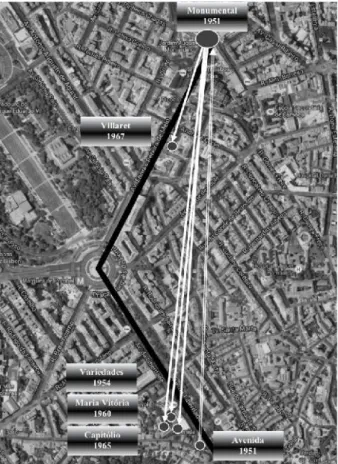
From Parque Mayer to Teatro Monumental: Vasco Morgado’s Empire in Lisbon ... 155 (Gonçalo Antunes de Oliveira, New University of Lisbon)
Sounds and memories among migrants from Angolan decolonization ... 161 (Gianira Ferrara, New University of Lisbon)
Memory and learning: experiment on Sonata KV 331, in A Major by W.A. Mozart ... 168 (Stela Drăgulin, Claudia-Ligia Şuteu, Transilvania University, Brasov)
Musa Gulam Jat and Jodia Pawa: from Sindh to Banni ... 172 (Iulia Nicoleta Râşcanu, The University of Economic Studies, Bucharest)
Music and Intercultural Contact ... 177
Borders, what’s up with that?: Musical Encounters and Transnational Mobility in K-Pop ... 179 (Michael Fuhr, University of Hildesheim)
The spread of K-pop culture in Romania ... 185 (Elena Buja, Transilvania University, Brasov)
“Third sex” stereotype in South Korea: reasons & implications for the new generations’ women ... (Irina Roibu, Paula-Alexandra Roibu, Hankuk University of Foreign Studies, Seoul) . 192 The Philarmonique Portugaise de Paris: towards representations of national identity ... 198 (Maria Helena Milheiro, New University of Lisbon)
Folklore, Fado and Radio: mediating Portuguese identities in Paris ... 203 (Pedro Moreira, New University of Lisbon)
Music decolonializes lusofonia? Entrepreneurial efforts towards interculturalism ... 209 (Bart Paul Vanspauwen, New University of Lisbon)
Mobility, nationalism & cosmopolitism: light music in Portugal and European broadcasting ... 214 (Andrea Musio, New University of Lisbon)
Music I like (...) people I hang out with! Identities, values and preferences among Romanians ... (Andreea Mitan, National University of Political Studies and Public Administration, Bucharest). 218 Musical practices, cultural politics and human mobility in the Macau Chinese Orchestra ... 225 (Maria Leonor Veloso Dias Azêdo, New University of Lisbon)
Cultural mixing as a major feature of rock music ... 231 (Mariselda Tessarolo, University of Padua)
Urban soundscapes: multi-ethnnic orchestras in Italian cities ... 240 (Layla Dari, University of Florence)
Good and evil in a song of Leonard Cohen ... 245 (Jiří Měsíc, Palacký University, Olomouc)
Expatriate as a brand: intercultural success stories of Estonian musicians ... 252 (Kristel Kaljund, Anne-Liis Peterson, Tallinn University of Technology)
Communicating through music: aspects of Integrative and Intercultural Education ... 260 (Vittoria Bosna, University of Bari ‘Aldo Moro’)
MUSIC AND HUMAN MOBILITY
REDEFINING COMMUNITY IN INTERCULTURAL CONTEXT 2016
Guest edited by Maria de São José Côrte-Real & Pedro Moreira “Henri Coandă” Air Force Academy Publishing House
REDEFINING COMMUNITY IN INTERCULTURAL CONTEXT
Adrian LESENCIUC*
*Department of Fundamental Sciences and Management, ‘Henri Coandă’ Air Force Academy, Brasov, Romania
The cultural change, as a result of synergistic action of socioeconomic tensions (inertially opposed to cultural tradition), was the main topic of numerous anthropologists’ studies and of scientific events. Equally, the cultural change excited the great artistic spirits: poets, writers, philosophers etc. Some extra clarifications and terminological distinctions are required. As long as the social change engages socioeconomic and cultural tensions, a profound analysis of the dichotomous pair socioeconomic background – cultural background, and a similar analysis of the organic interdependence of these foundations of human societies are natural requirements. But, speaking of socioeconomic and cultural background, the first distinction to be made is between civilization and culture, a fundamental distinction present in the specialized literature since the dawn of anthropology, a distinction that has fuelled, regarding the associate meanings, by many theoretical disputes between the representatives of various schools, currents, directions, or cultural areas.
During centuries, the schematic, reductionist, atomized perception, born simultaneously with the philosophy of Enlightenment, extended until the thinking of the early last century, was abandoned in favour of understanding the relational complexity within social groups. The abandonment of the schematic rigidity would be foreshadow by the German sociologist Ferdinand Tönnies, who focused his studies on the concept of community as a dynamic whole, without the recognition of his contemporaries. The German sociologist put the will – natural or rational – on the basis of the social relationships. The rational will (Kürwille) involves clearly differentiated meanings and ends, while the natural will (Wessenswille) derives from the temperament, the character, the intellectual attitude of each individual. Society (Gesellschaft) and community (Gemeinschaft) are distinct because there is a distinction between the rational and the natural will. Community is born as a living organism, based on the common heritage and on the values built within the natural framework of the life, organized in the spirit of the patriarchal coordination. The relationships characterizing the Gemeinschaft extend through common cultural heritage: language, beliefs, customs, rituals, and the community takes new shapes, more extensive. Therefore, community takes the form of a living organism, where the individuals remain united despite the centrifugal forces inside, unlike society, where individuals remain separate despite the centripetal tendencies. Although nowadays the term community has generated countless debates without any unanimous agreement on its conceptual delimitations, the dichotomous pair proposed by Tönnies,
Gemeinschaft-Gesellschaft, still remains relevant. The foundations of this pair setting, the natural and
rational will, are the bases of distinction between culture and civilization. A clear distinction can be made beginning with the products of culture and civilization. If, in the first case, the organic community’s products represent the symbolic goods, in the other case, society produces material goods.
Our main question is natural: what happens with the community nowadays, when society took over, through multiple media networks, almost the entire world? Can we design a research whose ultimate goal is to identify the role of the community in a world where intercultural contacts are an everyday reality? If we are able design such a study, which would be the optimal level of the research: an individual research, or a research project? Each of these levels would be insufficient. Each of these possibilities of analysis would be limited, given the complexity of the topic. In these circumstances, we considered that the best way of focusing the analysis of such a broad area of research would be a multiannual conference, where worldwide professors, researchers and practitioners can provide expertise in each of their area of competence, in order to lead to a complex perspective on community nowadays, impossible to be covered by a single researcher or by a project team within a limited time of study. These were the scientific premises of designing the international conference Redefining community in
REDEFINING COMMUNITY IN INTERCULTURAL CONTEXT
1 Λóγoς. Τóπoς. Κoινóτητα. The first edition of the conference, organized by the Department
of Military Sciences and Management from ‘Henri Coandă’ Air Force Academy (Brasov, Romania), in partnership with the Center for Research in Communication from the National University of Political Sciences and Administration (Bucharest, Romania), and with the European Network for Intercultural Education Activities (ENIEDA, Malmö, Sweden) between 16thand 18thof June, 2011, focused on the role
of community in the contemporary society. Therefore, the first edition was named Λóγoς. Τóπoς.
Κoινóτητα (Word. Place. Community) and included the following topics: Intercultural Education;
European Community / Globalization and Military Community / General Approaches. The scientific board was composed by important professors from 12 universities around the world (from France, Italy, Mexico, Portugal United States, and Romania) and the first two keynote speakers were Eduard Khakimov, Udmurt State University, Izhevsk, Russia, specialist in intercultural education and migration, who presented the paper entitled Constructive Redefining Community in Context of Intercultural
Education and Paul L. Landry, School of Law, University of Alabama, Tuscaloosa, USA, specialist in
instructional leadership, who presented the paper Globalization and Indigenous Language Loss: A
Critical Analysis of Ecuador Language. The papers proposed by the participants from Brazil, Cyprus,
Czech Republic, Germany, Greece, Italy, Nigeria, Portugal, Russia, Uganda, United Kingdom, United States, and Romania, were assessed by the scientific committee and, finally, the best three papers were awarded: Sofia Chatzigeorgiadou, Eva Pavlidou & Virginia Arvanitidou (Greece) - Differences in
Loneliness and Social Behavior of Immigrant and Repatriated Preschoolers; Grigore Georgiu &
Alexandru Cârlan (Romania) - Towards a Conjunctive Paradigm: A Critical Review of the Theories and
Interpretations Regarding the Crisis of Cultural Identities in The Context of Globalization and Jorge Luiz
Antonio (Brazil) - Techno-Art Poetry: A Redefined Community in Interdigital Context. A selection of papers was published within the homonymous book, Redefining Community in Intercultural Context, ‘Henri Coandă’ Air Force Academy Publishing House, 2011, and further included in Web of Knowledge database.
2 Critical dialogue revisited: Challenges and Opportunities. The success of the first edition
allowed the further extension of the conference. The second one, organized under the same subtitle as the previous one, in partnership with the same Center for Research in Communication, and with the European Society for Transcultural and Interdisciplinary Dialogue (ESTIDIA, Malmö, Sweden) in Brasov, between 14thand 16thof June 2012, focused on the European dialogue. The conference sections were: Security and
Intercultural Education, Culture & Communities and Intercultural Education. Therefore, the conference was featured by the first ESTIDIA workshop entitled Critical dialogue revisited: Challenges and
Opportunities. The conference extended and clarified its main goal:
The main goal is an exchange of experience between teachers, researchers and practitioners in the field of community dynamics. Moreover, we look forward to putting into practice the new ideas that will result from the cross-fertilization of teaching activities and scientific research. Our end-goal is to improve the quality of education and, consequently, personal and intellectual development. Last but not least, we are eager to disseminate the results of our multicultural dialogue within the academic community and beyond. (estidia.eu, 2012)
while the workshop intended to explore the dialogue connecting teaching and research creativities. The scientific board included professors and researchers form 18 universities and international associations from Albania, Belgium, France, Germany, Hungary, Israel, Italy, Netherlands, Spain, Portugal, United States, and Romania. The keynote speakers were: Cornelia Ilie, Faculty of Culture and Society, Malmö University, Sweden/ European Society for Transcultural and Interdisciplinary Dialogue (ESTIDIA), expert in pragmatics, institutional discourse analysis, intercultural rhetoric and argumentation theory, Maria Filomena Capucho, Centro de Estudos de Comunicação e Cultura, Universidade Católica Portuguesa, Viseu, Portugal, expert in intercomprehension, and Alina Bârgăoanau, Faculty of Communication and Public Relations, National School of Political Studies and Public Administration, Bucharest, Romania, specialist in EU Communication, EU Public Sphere and EU Identity. In addition to the previous edition of the conference, there were participants from Albania, Canada, Israel, Moldova, Spain, Sweden and Turkey, plus a representative of the Council of Europe, Jean-Loup Berko. The best papers of the conference were: Aura Codreanu (Romania) - Organizational
Health Check. A Comparative Investigation into Organizational Communication Patterns, A. Kyridis, B.
Mucaj, Chr. Zagkos, E. Michailidis, P. Pandis, I. Vamvakidou, K. Tsioumis (Greece) - Who is Afraid of the
Adrian LESENCIUC
and the Way in which they treat them and Angel Raluy (Spain) - Can Intercultural Sensitivity at Tertiary Education be Enhanced Using Virtual Environments? A Practical Experience between a Polish and a Spanish University. Starting with this edition of the conference, the selection of papers was included
within a homonymous publication, included in IndexCopernicus database and in Web of Knowledge. Starting with this edition, the RCIC organizers started the cooperation with the organizers of Structure,
Use and Meaning (SUM) conference, held in Brasov, at ‘Transilvania’ University, of every two years.
3 Ethni(city). The third edition of the conference was organized in cooperation with the same two
partners, between 13thand 15thof June, 2013. The novelties of this edition were the topic: the relationship
between ethnicity and community and the concept of ‘green conference’. This concept arose from the need to give up any technological ‘prostheses’ and from the need the RCIC community in dialogue:
Scientific events themselves tend to turn into missed opportunities, in terms of human relations: an image that is worth a thousand words tends to replace texts, a metaphor tends to be replaced by a graph or an animation, a dialogue by a monologue. In this context of hunting success at scientific level, rigorously measured, RCIC community intends to engage in such an event that prioritizes human relationships. To do this, starting from this edition, the international conference Redefining Community in Intercultural Context will become a green conference, with no technological ‘prostheses’ or PowerPoint presentations. Only people in dialogue, in a city where ethnos is still alive, where the technologically unmediated human relationships flourish and where community reshapes itself beyond cultural barriers (afahc.ro, 2013).
The scientific board included, in addition to those of the previous edition, other professors from important universities in Portugal, United Kingdom, United States and Russia, and the keynote speakers were: Mariselda Tessarolo, Department of Philosophy, Sociology, Pedagogy and Applied Psychology (FISPPA), University of Padua, Italy, focused in her research on the field of human, interpersonal and cultural communication, who presented the paper entitled The Conflictual Bases of Ethnicity and Pluralism; Maria de São José Corte-Real, Faculdade de Ciências Sociais e Humanas, Universidade Nova de Lisboa, Portugal, a well-known researcher in the field of ethnomusicology, who presented the paper Music, Social
Cohesion and Citizenship: Omnis Civitas Contra Se Divisa Non Stabit, and Nicoleta Corbu, College of
Communication and Public Relations, National University of Political Studies and Public Administration, interested in European identity, European public sphere, and framing analysis. The best papers were declared: Maja Muhić and Aleksandar Takovski (Republic of Macedonia) - From Agora to Pandora: The
Unprecedented Case of the Simple Skopje Square, Hussain Al Sharoufi (Kuwait) - Academic Writing Wizard: A New Web-Based Application for Teaching Academic Writing Using Lexical Cohesive Trio, and
Asher Shafrir (Israel) - The Names of Israeli Military Ranks and their Linguistic Analysis. Similar to the previous edition, the best papers were published within Redefining Community in Intercultural Context journal, included in the also mentioned databases. In the same year, ESTIDIA organized its conference entitled Dialogue-driven Change in the Public Sphere between 3rd to 5th of October, in Bari, Italy. A
selection of papers defended within this conference, edited by Professor Alberto Fornasari from ‘Aldo Moro’ University of Bari was included in 2014 within the special issue of Redefining Community in
Intercultural Context.
4 Wor(l)ds. The fourth edition of RCIC international conference was organized only in
partnership with a local association: ‘Henri Coandă’ Association for Research and Education (ASCEDU) between 21st and 23rdof May 2015, and focused on linguistic issues. The name of this edition was very
eloquent: Wor(l)ds, and a particular proposed topic, in the area of linguistics, was New Wor(l)ds. The scientific committee was dramatically changed: the representatives of 19 important universities from Brazil, Israel, Italy, Malta, Poland, Portugal, Spain, United States, and Romania formed the scientific board. The keynote speakers were: Lucija Čok, Science and research centre / University of Primorska, Slovenia; Member of the Council la Slovenian Quality Assurance Agency for Higher Education (SQAA); Member of the Institutional Evaluation programme (EUA EIP), European University Association, ex minister of education in Slovenia, focused on the formation of models of bilingual education in areas of linguistic and cultural contact and of didactics of intercultural communication, who presented the paper entitled Culture in Languages – Multiplicity of Interpretations; Eva-Maria Remberger, Institut für Romanistik, Philologisch-Kulturwissenschaftliche Fakultät, Universität Wien, Austria, expert in Romance linguistics, who presented the paper entitled ‘I didn’t say it. Somebody else did.’ The Romanian Hearsay
Marker Cică; and Elena Buja, Faculty of Letters at Transilvania University of Braşov, Romania,
specialist in first language acquisition and intercultural communication, with the paper Iohannis and
Ponta: The Winner and the Loser. A Non-verbal Communication Approach to the 2014 Presidential Election Campaign in Romania. The papers, peer-reviewed, were defended within the conference panels
REDEFINING COMMUNITY IN INTERCULTURAL CONTEXT
and the best papers were declared: Cristina Ariton-Gelan (Romania), Gradualness of Iconicity in Semiotic
Discourse, Maria Pilchin (Moldova), Xenology – One of the Solutions of the Recent Culture and Alberto
Fornasari (Italy), ICT and Innovative Teaching. How to Build Skills for Generating Web 2.0 with Flipped
Learning. A Case Study ITIS Majorana of Brindisi. A selection of papers was included in Redefining Community in Intercultural Context publication.
5 Music and Human Migration. The fifth edition of the Redefining Community in Intercultural
Context international conference was organized in cooperation with Institute of Ethnomusicology –
Center for Studies in Music and Dance, of the Faculty of Social Sciences and Humanities, of the New University of Lisbon (FCSH/NOVA), Portugal. The scientific event, named Music and Human Mobility, was held in Lisbon, from 7thto 9thof June, 2016. The end-goal of the conference and the main topics were
defined on the conference webpage, as follows:
The ICMHM’16 proposes theoretical and applied reflections, expression of good practices, critical perspectives and proposals in arts education, intercultural experience and understanding of citizenship; discussions and experiments about music composition, production and reception; and diversified interpretations of relationships between music and educational and cultural management around three theoretical topics, not limiting to them, departing from the relation between music and human mobility […] The ICMHM’16 proposes also three areas of performance in workshops of vocal and instrumental music and dance / body expression (icmhm.org, 2016).
The scientific committee included important professors from Austria, Brazil, Italy, Portugal, Romania, Serbia, Spain, Sweden, and United Kingdom. The event consisted in: public presentations of the keynote speakers Michael Fuhr, Hanover University of Music, Drama and Media, Germany, whose main interest areas are of identity, migration, and globalization, (Korean) popular music, aesthetics, cultural theory, and the history of ethnomusicology, and who presented the paper entitled Borders, what’s up with
that? Musical Encounters and Transnational Mobility in K-Pop and John Baily, Goldsmiths, University of
London, United Kingdom, acknowledged as a world authority on the music of Afghanistan, and music in the Afghan diaspora, that defended the paper entitled Music in Afghanistan and the Afghan diaspora, 1978–
2016; three parallel panel presentations, eight workshops coordinated by key-animators such as Mostafa
Anwar (New University of Lisbon, Portugal) on accompanied classic and semi-classical Sufi singing; Veronica Doubleday, independent researcher and artist (London, UK) on Muslim women's domestic songs; and Kátia Leonardo, independent Artist (Portugal) and José Dias (New University of Lisbon, Portugal) on jazz and body expression; and roundtables. The participants involved in this event were professors, researchers, practitioners and PhD students from important universities or scientific/cultural institutions from Angola, Austria, Bangladesh, Brazil, Canada, Costa Rica, Czech Republic, Estonia, France, Hong Kong, India, Italy, Germany, Kuwait, Malaysia, Mexico, Portugal, Romania, Serbia, South Korea, Spain, Turkey, UK, and US.
The next edition of the conference will be held in June 2017 in Bari, at ‘Aldo Moro’ University. The most important conclusion regarding the international conference Redefining Community in
Intercultural Context concerns the emergence of a scientific community, namely RCIC community, as
was defined since its third edition. With a core group of academics and researchers from ‘Henri Coandă’ Air Force Academy, Brasov, ‘Transilvania’ University of Brasov, National School of Political Studies and Administration, Bucharest, ‘Mihai Viteazul’ National Intelligence Academy, Bucharest, New University, Lisbon, ‘Aldo Moro’ University, Bari, Padua University, ‘Ismail Qemali’ University of Vlorë, ESTIDIA, Malmö etc., the conference has grown from year to year and has become a name in the scientific area. Moreover, the RCIC community is one of the scientific basins for other scientific events of thematic proximity. With over 100 articles totalling more than 1,000 pages published, many of them quoted in prestigious journals and scientific books published in important universities publishing houses in Europe, North America, and Asia, Redefining Community in Intercultural Context has become a brand, continuously targeting the purposes for which it was initially established.
MUSIC AND HUMAN MOBILITY
REDEFINING COMMUNITY IN INTERCULTURAL CONTEXT 2016
Guest edited by Maria de São José Côrte-Real & Pedro Moreira “Henri Coandă” Air Force Academy Publishing House
MUSIC AND HUMAN MOBILITY
Maria de São José CÔRTE-REAL*, Pedro MOREIRA*
*Institute of Ethnomusicology, NOVA School of Social Sciences and Humanities, New University of Lisbon, Lisbon, Portugal
The topic of the International Conference Music and Human Mobility (ICMHM’16) at the Nova School for Social Sciences and Humanities of the New University of Lisbon, Portugal, from 7 to 9 of June of 2016, (see http://www.icmhm16.org/home) originated the texts in this volume. It represents a relation of human attributes that, interesting many for long, is now entering the academia. Old sources from Medieval Iberia, the cultural region in Southwestern Europe from where the Portuguese country emerged, show how the Islamic kingdom of al-Andalus, known for its complex mix of Arab, North African, Christian, and Jewish influences, valued the link between the two related kinds of processes since the 8th century. The Andalusian heritage, very rich in music as well as related poetry, fashion,
philosophy among other sciences’ references, Shannon reminds, let us perceive movements of musicians, songs, histories, and memories circulating around the Mediterranean (2015). Surrounded by seas and high mountains, the population of the Iberia moved through water to the most distant places, to the West as well as to the East, mostly through the Southern seas, propelled by Northern winds and currents, to border the American and the African continents first and then the others. Meaningful texts testifying cultural meeting, interfacing and developing, in this peninsular region of the world, or through populations from it elsewhere, have since early documented musical flows carrying influences of many through whom they pass and/or from whom they emerge. Travellers, sailors, poets, writers, scientists, aristocrats, diplomats, religious agents, politicians of many sorts, among others, left their imprints, opening ways and nurturing sources for studies to come. Among the works known, mentioning but written sources as travelogues, reports, chronicles and epic narratives document lived or dreamed experiences inspiring many. Music and migratory experiences were, however, only systematically considered for the study of ethnic groups and the specificities of the urban area by the late 1970s, by the pioneer Reyes-Schramm in New York (1979). The field of Music and Migration studies had yet to wait, appearing only in meetings and publications after the turn of the millennium in initiatives led by Baily & Collyer (2006), Côrte-Real (2010) and Toynbee & Dueck (2011), meanwhile in development by a growing number of researchers.
The ICMHM’16 initiated a forum of discussion on the topic, integrated in the series of International Conferences Redefining Community in Intercultural Context. It joint c.130 participants from 26 countries; researchers from different fields, players, dancers and singers from different styles and regions of the world, with special representation of Romanians from the fields of Military Action, Intelligence, Linguistics and Education. For three days, participants engaged, in and outdoors, in papers, panels, roundtables, workshops, concerts, meals, walks, a quick feet in sand experience in the beach, a religious ceremony, in temples, auditoria, classrooms, laboratories, different monuments, the cafeteria and other campus’ sites. ICMHM’16 proposed theoretical and applied reflections, expression of good practices, critical perspectives and proposals in arts education, intercultural experience and citizenship, developing discussions and experiments on music composition, production and reception, diversified interpretations of relationships between music, education and cultural management around three domains, not limiting to them, departing from relationships between music and human mobility: Culture, identity and globalization; Musical performance and migration; and International business and contact of cultures through music. The keynote speaker Michael Fuhr from the Hanover University of Music, Drama and Media, discussed music and transnational production from South Korea; John Baily, from the Goldsmiths, University of London, musical performance in the Afghan Islamic diaspora and Heung-Wah Wong, from the University of Hong Kong, the role of music in the international business in China and Japan. The key animator Mostafa Anwar, from Bangladesh, gave an accompanied Sufi singing workshop;
Maria de São José CÔRTE-REAL, Pedro MOREIRA
Veronica Doubleday, from London, on Muslim women's domestic singing; Kátia Leonardo and José Dias, from Lisbon, on jazz and body expression. The program was rich with diversified production and reception of music performance, between Lisbon and Sesimbra. In Lisbon, the Hindu Temple Radha Krishna hosted the first night with a religious ceremony, a dinner and a concert by John Baily and Veronica Doubleday, dance by Lajja Sambhavnath, and music poetry composed for the purpose by Mostafa Anwar. The second afternoon, in the coastal city of Sesimbra, hosted the keynote speech by John Baily in the municipal theatre; the visit to the old Chapel of the Holy Ghost of the Seamen and its hospital, and the light dinner at the Santiago’s Fortress. The last evening in campus hosted the final dinner and the workshops’ concert.
The special issue Music and Human Mobility, of the journal Redefining Community in
Intercultural Context, presents 42 selected texts of c.100 written participations in the Conference,
reviewed in a blind process by two elements from the Scientific Committee to which the special guest Anthony Seeger was added, in three parts: Culture, Identity and Globalization; Music, Performance and Mobility; and Music and Intercultural Contact. It opens with an ethnomusicological analysis of the movements of persecuted musicians in Afghanistan for religious purposes, by John Baily, follows to focus multiple cultural contexts from those of television music festivals, by Pinto, to pedagogical causes linking language and thought from childhood education, by A. & S. Lesenciuc. It concentrates then on psycho warfare methods using relevant musicians’ products for intelligence for military and other strategies, by Ciuperca and by A. Andronic; on non-verbal communication and different kinds of dialogue by Ivanciu & Popica and by Roman; and on other detailed music and sound related attributes to unveil uses, from individual to global layers of action and interest, involving human mobility, by Santo et al, and by Gelan, and from named and un-named musicians, poets and others by Levonian, Nagy, Baptista and Constantin; to focus on the uniqueness of the body in the globalized era, through a technique involving yoga and other principles to promote trust in students, by Oliveira. Part two initiates with a theoretical remark by Côrte-Real pointing navigation principles to value dynamic references in mobility to highlight how music phenomena may help to understand them, to follow with details of music experiences of, among others, refugees crossing the Balkan routes by R. Andronic. Social change and reconstruction, ancient and imaginary worlds were considered from different views by Stoicovici, Ilișoi, Pancetti, and Espírito Santo. Capeverdean migrant descendants performing in Lisbon, by Schubert; discourse and practice disparities of jazz in Europe, by Dias; and intriguing Dinaric traditions of Serbian rural migrants, by Jovanović; the music theatre empire of Vasco Morgado, an old entrepreneur in Lisbon, by Antunes de Oliveira, followed. Memory related analysis regarding jazz, decolonizing experiences and music learning were focused by Mendes, Ferrara, and Drăgulin & Şuteu. Colonial related thoughts on the performance experience of the nomad Indian flute player Musa Gulam Jat settled in Gujarat, by Rascanu. Part three departs from a reflection about K-Pop and transnational mobility by Michael Fuhr, to follow with the spread of K-Pop in Romania, by Buja; the “third sex” and stereotypes in South Korea by Roibu-Roibu. Portuguese migrant context in France is analysed by Moreira, focusing the role of radio in mediating identities, and Milheiro, the Philarmonique Portugaise de Paris to represent national identity. In the context of Lusofonia, Vanspauwen analyses entrepreneurship and interculturalism, Musio discusses cosmopolitism and light music in European broadcasting, and Azedo reflects on human mobility and cultural policy in the Macau Chinese Orchestra. Musical preferences in Romania are considered by Mitan, and cultural mixing in rock music, by Tessarolo. Multi-ethnic orchestras in Italy are revealed by Dari, and Leonard Cohen lyrics by Měsíc, to finish, Kaljund and Peterson focus the topic of expatriate musicians, and Bosna reflects on intercultural education and music.
References cited:
Baily, J. & M. Collyer (eds.) (2006). Music and Migration. Ethnic and Migration Studies 32 (2).
Côrte-Real, M.S.J. (ed.) (2010). Music and Migration. Migrações 7. Lisbon: Observatory of Immigration. Onilne. Available: http://www.om.acm.gov.pt/-/musica-e-migracao
Reyes-Schramm, A. (1979). “Ethnic Music, the Urban Area and Ethnomusicology”. Sociologus 29: 1-21. Shannon, J.H. (2015). Performing al-Andalus: music and nostalgia across the Mediterranean.
Bloomington: Indiana University Press.
Culture, Identity &
Globalization
MUSIC AND HUMAN MOBILITY
REDEFINING COMMUNITY IN INTERCULTURAL CONTEXT 2016
Guest edited by Maria de São José Côrte-Real & Pedro Moreira “Henri Coandă” Air Force Academy Publishing House
THE RELIGIOUS PERSECUTION OF MUSICIANS
IN AFGHANISTAN (1978-2014)
John BAILY*
*Emeritus Professor of Ethnomusicology, Head of the Afghanistan Music Unit, Goldsmiths, University of London, London, United Kingdom
Abstract: This lecture outlines the movements of musicians in Afghanistan during the period of turbulent conflict
that started with the Communist coup of 1978, followed by the Coalition government of the mujahideen in 1992, the rise to power of the Taliban in 1996, and the post-9/11 era of Karzai. The data show that music is a sensitive indicator of broader socio-political processes; music making in Afghanistan varied widely in frequency and intensity according to the dominant ideology of the time, fluctuations that often involved the movement of musicians from one place to another. Underlying these movements was a deeper conflict between ideologies of traditionalism and modernization in Afghanistan that started at the beginning of the twentieth century.
Keywords: Religious persecution, music making, traditionalism, modernization, Afghanistan
1. INTRODUCTION
In this lecture, I am concentrating not on the migrations of musicians as such but on a major factor leading to those migrations – religious persecution by Islamic fundamentalists. I deal with the hostility and ill-treatment they received, which reached its extreme form under the Taliban between 1996 and 2001. But it did not start with the coming to power of the Taliban, nor end with their defeat in 2001. A detailed account of this period of Afghan history can be found in Baily (2016).
2. MUSIC AND IDEOLOGIES IN AFGHANISTAN (1978-1992)
The people of Afghanistan are great music lovers. Music had received patronage from a succession of music-loving rulers from the 1860s. There were many families of hereditary professional musicians, particularly in Kabul, where they occupied a large musicians’ quarter, the Kucheh Kharabat. The hereditary professionals were mainly responsible for music education through a master-pupil apprenticeship system. Distinct from the hereditary professionals were numerous amateurs, and some amateurs turned professional. State-owned Radio Kabul, run by the Ministry of Information and Culture, had played a central role in supporting music from its inception
in the 1940s and employed many fine musicians, performing Afghan classical, popular, and regional traditional music. From the 1950s to the 1970s, during the heyday of radio broadcasting, music was relatively unconstrained and flourished. State-run Radio Afghanistan, which succeeded Radio Kabul, broadcast a restricted range of texts: love songs, especially songs of unrequited love, and classical poetry, mostly in Dari (Afghan Persian), some in Pashto, often of a Sufi mystical nature. Song texts were monitored for poetic quality and content. Women were free to sing over the radio and in the theatres. Musicians acknowledged that their profession was subject to religious constraint in the past, but “who thinks about such things now” as one musician put it. One should avoid playing music during the azan, the call to prayer, and no music should be played for 40 days after a death in the family or amongst close neighbours. On the other hand, Ramadan may have been a month of fasting austerity, but it was also a time for nightly public concerts in cities like Kabul and Herat.
In 1978, there was a Marxist coup by the People’s Democratic Party of Afghanistan, the PDPA, followed by the Soviet invasion a year later to support the already failing communist government. The succession of four communist governments supported music, which was regarded as integral to the type of secular society they
John BAILY
aspired to establish. The new agenda envisaged a tolerant society with respect to women’s rights, especially with regard to education and freedom of movement, freedom of interaction of young people, lots of music, and, controversially, the legalization of alcohol. This was a state of affairs very like those that prevailed in the Muslim societies of the USSR.
The communists came to power shortly after the opening of the television station in Kabul, when Radio Afghanistan became transformed into Radio Television Afghanistan (RTA). In due course local RTA stations were established in some provincial cities, such as Herat. Broadcasting remained under the control of the Ministry for Information and Culture, as had been the case with radio from its inception in the 1940s. Naturally, the Ministry now exercised tighter control over what was broadcast. Television was a state-of-the-art medium that introduced Afghans to a new kind of modernity and had an important role in broadcasting musical performances and promoting new artists.
Radio and television artists who complied with the new regime were treated well; they had good salaries, received medical care, and in some cases were allocated modern apartments and even motor cars. Many were ready to sing in praise of the new regime; others were not and felt it expedient to leave the country. They joined the exodus away from war and insecurity as Afghans crossed the borders into neighbouring countries, mainly Pakistan and Iran. The jihad, the holy war, got under way.
If music was encouraged by the PDPA in Afghanistan, across the border with Pakistan things were very different. Visiting Peshawar in 1985 for the purpose of making a film about musicians in exile I soon discovered that political ideology and music were strongly interconnected, and that there were unforeseen problems with my film project. The refugee camps were run by the seven Islamist
mujahideen parties and they imposed a rigidly
orthodox regime. Men had to grow their beards and were not permitted to wear western clothes. Music was forbidden in the camps by the mullahs and by party officials. The camps were maintained in a perpetual state of mourning, justified by the constant influx of new arrivals who had lost relatives in the fighting. Refugees were allowed to own radios so that they could listen to news programmes but they were not permitted to listen to music (though no doubt some did, quietly). Refugee musicians who were forced by circumstance to live in the camps hid their identities. On the other hand, there were active Afghan musicians living in the city of Peshawar,
where the mujahideen parties were not in control. Most of these musicians were Pashto speakers from Jalalabad, in southeast Afghanistan.
I had assumed there would be lots of songs about the war, but although Peshawar had a thriving cassette industry, cassettes in the bazaar were mostly of love songs; cassettes about the war were not easy to find. One of the few I could find had imitations of gunfire played on the tabla drums. Singers like Shah Wali Khan made their living performing for Pashto speaking Pakistani patrons, at wedding parties, ‘Eid celebrations, and more intimate private parties. Songs about the war were not suitable for these occasions; the patrons wanted to hear modern love songs and spiritual songs from the great poets of the past.
The Soviet Union withdrew its forces in 1989. The mujahedeen gradually extended their control and captured Kabul in 1992. Anticipating the worst, given the known anti-music policies of the
mujahideen, some of the musicians who had
remained in the capital during the communist era began to leave for Pakistan, sensing the difficulties they would face under a mujahideen coalition.
With the arrival of the mujahideen the musicians in Kabul, especially those connected with RTA, soon felt the brunt of the anti-music policies of the new government. Singers who had sung in support of the regime were particularly vulnerable to punishment. It was reported that musicians at RTA were abused and mistreated. Some had their heads shaved to shame them, some that were dressed in western suits and ties were stripped to their underwear in public, for the era of the mandatory beard and the compulsory wearing of traditional long shirt and baggy trousers had started. Apartments and motorcars that had been given to top musicians by the communist governments were confiscated.
All that was bad enough. Although there was some clandestine music making at private gatherings, work was becoming hard to find. Before long there were outbreaks of fighting between the various mujahideen parties. This was when much of Kabul was destroyed. The musicians’ quarter was repeatedly hit by SCUD missiles in these battles. Many of Kabul’s musicians now left with their families, some for Mazar-e Sharif in the north, some for Peshawar, some for Quetta, some to other destinations.
The situation of music in Herat in the time of the Coalition was rather different to that in Kabul. The city, which I visited in 1994, was at peace but in a condition of deep austerity under the rule of
mujahideen commander Ismail Khan. The
economy was recovering with the return of wealthy businessmen who had been in exile in
THE RELIGIOUS PERSECUTION OF MUSICIANS IN AFGHANISTAN (1978-2014)
19
Iran. An Office for the Propagation of Virtue and the Prevention of Vice had been established to monitor and control public behaviour. The cinema and the theatre were closed, although the actors from the theatre were still employed by the Ministry of Information and Culture, and gave occasional performances on Herat TV. There was heavy control over music, but a certain amount of musical activity was allowed. Professional musicians had to apply for a licence, which stated that they could perform only songs in praise of the
mujahideen and songs with texts drawn from the
mystical Sufi poetry of the region. This cut out a large amount of other music, such as love songs and music for dancing. The licences also stipulated that musicians must play without amplification.
Male musicians could play at private parties indoors, but Herat's women professional musicians were forbidden to perform, and several were briefly imprisoned for having transgressed this ordinance. Technically, male musicians were permitted to perform at wedding parties, but experience had shown that often in such cases the religious police arrived to break up the party. They would confiscate the instruments, which were usually returned to the musicians some days later when a fine or bribe had been paid.
There was very little music on local radio or television. If a song was broadcast on television one did not see the performers on screen, but a vase of flowers was shown instead, a practice adopted from Iran. Names of performers were not announced on radio or television. The audiocassette business continued, with a number of shops in the bazaars selling music cassettes and videos, some recorded by Herati musicians. Professional musicians could hardly make a living from music. They depended on the generosity of their long-standing patrons, often from the wealthy business class, who would engage them to play at private house parties, or simply give them financial aid.
3. MUSIC UNDER THE TALIBAN
I'll now analyse the five years during which the Taliban were in control of Kabul and most of Afghanistan (1996–2001). The Taliban imposed an extreme form of music censorship, including banning the making, owning and playing of all types of musical instrument other than, perhaps, the frame drum. In Afghan culture the concept of ‘music’ is closely connected with musical instruments and the sounds they make. Unaccompanied singing does not, according to this definition, constitute music, a convenient way of classifying sound that allowed the Taliban
themselves to enjoy their own rather musical renditions of Taliban songs.
It was at this point that most of the professional musicians remaining in Afghanistan left, partly because it was now impossible to make any sort of a living from music, and partly because it was dangerous to remain. Anthropologist Andrew Skuse, working on his PhD during this period states:
The imposition of many restrictions stemmed from the Taliban’s interpretation of urban and secular society as essentially corrupt, Godless and immoral. … Thus, in many newly ‘liberated’ urban areas, Kabul included, the perceived anti-Islamic influences brought by indigenous modernizers and foreign occupants, such as western styles of clothing and hair styles, television, music and the emancipation of women, represented focal points for the activities of the Taliban’s religious police force… (Skuse 2002: 273-4).
Under the Taliban’s interpretation of Muslim
Shari’at law, music was perceived as a distraction
from the remembrance and worship of God, the logic behind this injunction being that it arouses the passions, lust and causes deviation from piety, modesty and honour (Skuse, 2002:273). The Taliban liked to invoke the following hadith: ‘Those who listen to music and songs in this world, will on the Day of Judgment have molten lead poured in their ears.’ This controversial hadith is regarded as false by many Islamic scholars.
The Taliban published pronouncements regarding the punishments for those who listen to music, such as (the English is theirs):
2. To prevent music... In shops, hotels, vehicles and rickshaws cassettes and music are prohibited... If any music cassette found in a shop, the shopkeeper should be imprisoned and the shop locked. If five people guarantee [,] the shop should be opened [,] the criminal released later. If cassette found in the vehicle, the vehicle and the driver will be imprisoned. If five people guarantee [,] the vehicle will be released and the criminal released later. (…) 12. To prevent music and dances in wedding parties. In the case of violation the head of the family will be arrested and punished (Rashid 2000:218–190).
The Taliban had their own ‘songs without music’, i.e. songs without instrumental accompaniment. It is clear that the Taliban had their own musical aesthetic, they admired the good singing voice, which is why they wanted the few well-known singers who had remained in Afghanistan to sing on radio. They liked to use recording studio effects, like delay, reverb and even pitch correction. My analysis suggests that many of these so-called taranas are closely related to Pashtun folk songs in terms of musical mode and
John BAILY
melody. This suggests that it was not so much a matter of banning music, but a competition between different kinds of music, one that uses musical instruments and one that does not.
4. MUSIC, HUMAN RIGHTS AND CENSORSHIP
In the year 2000, the Danish Human Rights Organisation FREEMUSE invited me to write a report about the censorship of music in Afghanistan. The report was published in 2001 (Baily 2001), a few months before the al-Qaida attacks on New York and Washington. The book is accompanied by a CD with some recordings of Afghan music, including two Taliban taranas. It is free to download from the Freemuse website.
Heavy censorship of music continued after the defeat of the Taliban government by the Northern Alliance and ISAF forces in 2001. For a while there was a complete ban on women singing on state-run radio and television, or on the stage or concert platform. Women could announce, read the news, recite poetry and act in plays, but they could not sing and they certainly could not dance. This ban was the subject of intense argument within the radio and television organization, under the control of the Ministry of Information and Culture. The explanation offered for the ban was that to do otherwise would give the government’s fundamentalist enemies an easy excuse to stir up trouble. In the case of television, further reasons given were that there were no competent women singers left in Kabul, and that the tapes in the video archive (dating from the communist period) showed women wearing clothes that would now be considered too revealing. This last excuse obviously did not apply to women singing on radio. Another reason – that it would place the women in danger of attack – could not be accepted either, since most of the music broadcast was from the RTA archive. The danger of attack was also offered to explain why women were not allowed to sing at a live-broadcast concert in Kabul on 15 December 2002 to celebrate the 70th anniversary of the BBC World Service.
If there was some censorship of music in Kabul, protected and patrolled by the International Security Assistance Force (ISAF), outside the capital much tighter restrictions were imposed by local fundamentalist commanders. The lengthy Human Rights Watch report, chillingly entitled “Killing You is a Very Easy Thing For Us”: Human Rights Abuses in Southeast Afghanistan’, published in July 2003, catalogued a string of abuses, including attacks on musicians in areas close to Kabul. Paghman, located in the foothills of
the Hindu Kush and once a royal resort, had a particularly poor record under the governorship of Zabit Musa, a prominent member of the powerful
Ittehâd-e Islâmi party led by Abdur Rasul Sayyaf.
A resident of Paghman described a visit by Zabit Musa and his gunmen to the local bazaar:
I was there – I saw the whole thing. It was morning … He had three or four soldiers with him. When he got to the bazaar, he went towards some shopkeepers who were listening to tape recorders, to music, and he grabbed them and pulled them out of their shops. He yelled at them: “Why do you listen to this music and with the volume so high?” A shopkeeper said, “Well, it is not the time of the Taliban. It is our right to listen to music!” But the governor got angry and he said, “Well, the Taliban is not here, but Islam is here. Shariat [Islamic law] is here. We have fought for Islam – this fight was for Islam. We are mujahid. We are Islam. We did jihad to uphold the flags of Islam.” And then he took them out of their shops and started beating them with his own hands. He beat up two people himself, along with his troops, slapping them, kicking them. And the others were beaten just by the soldiers. Then they closed the shops, locked them. Many people were there. It was not the first time these sorts of things had happened (Human Rights Watch 2003: 67–8).
Another example recounted by Human Rights Watch came from a wedding in Lachikhel, a village in Paghman district, when soldiers arrived at midnight to break up a wedding party: “They beat up the musicians, who had come from Kabul. They made them lie down, and put their noses on the ground, and swear that they would not come back to Paghman to play music. Then they destroyed their instruments.” (Human Rights Watch, 2003:68). Not surprisingly, musicians from Kabul became very careful about where they would go to play and for whom; they had to feel adequately protected. Such precise information as that provided by Human Rights Watch for southeast Afghanistan was not available for other parts of the country, but it is clear that the situation varied greatly from place to place.
5. TIMES OF CHANGE
By 2004 things were changing. On 12 January 2004, a few days after the ratification of the new constitution for Afghanistan by a Loya Jirga (National Assembly), RTA broadcast old video footage of female singers Parasto and Salma (Reuters, 13 January 2004). Explaining the reasons for this dramatic break with the recent past, the Minister for Information and Culture, Sayed Makdoom Raheen, told Reuters, ‘We are endeavouring to perform our artistic works regardless of the issue of sex.’ However, the action
THE RELIGIOUS PERSECUTION OF MUSICIANS IN AFGHANISTAN (1978-2014)
21
provoked an immediate backlash from the Supreme Court. On the same day Deputy Chief Justice Fazl Ahmad Manawi told Reuters that the Supreme Court was ‘opposed to women singing and dancing as a whole’ and added ‘This is totally against the decisions of the Supreme Court and it has to be stopped’ (Saudi Gazette, 16 January 2004). On 23 January, the press agency AFP reported that Ismail Khan, the Governor of Herat, supported the Supreme Court’s judgement and had banned the sale of audio and videotapes featuring women singers in Herat. Despite these statements, however, the radio and television persisted with the new policy.
Some of the stars of Afghan music who had settled in the West returned to give concerts. In 2004 Farhad Darya worked with local musicians in several parts of the country, leading to the very popular CD and DVD Salaam Afghanistan. His concert in Kabul was held in the football stadium to an unprecedented crowd estimated at 45,000. Farhad Darya later described the event:
It was like a national [independence] day in Kabul. In the stadium I felt like a cloud flying over the sky of the crowd. What was amazing was the presence of women. Men and women were sitting next to each other for a concert right where they had seen their beloved ones executed. Many of them were dancing and crying. It looked like they had forgotten the misery and pain of the past decades. Even the 700 armed security guys started to dance to the music and enjoy the new wave of hope. I wanted a fresh start in Afghanistan with music and we did it! (Broughton 2008: 47).
In the post-Taliban era, a number of independent radio and television stations were established, usually financed by outside agencies, such as Voice of America. The most significant of these was Tolo TV (meaning “Sunrise TV”), a commercial television station operated by the MOBY group, an Afghan-Australian owned company operating from Dubai, launched in 2004. By 2007 it had extended its coverage from Kabul to many cities in Afghanistan via satellite. From the outset it had a strong emphasis on programmes for young people and quickly established itself as a controversial institution, challenging the values of
mujahideen ideology in Afghanistan.
Probably Tolo TV’s most successful show was
Setâra-ye Afghan (Afghan Star), a singing
competition based on the Pop Idol format. The first time the competition took place was in 2005, with auditions, then a series of eliminatory rounds with live accompaniment, with the audience voting by text messages from their mobile telephones. The
third season (2007) was the subject of the award-winning documentary film Afghan Star and proved to be particularly controversial. In one of the earlier eliminatory rounds the woman singer Setara from Herat performed rather too freely for Afghan public opinion. At the start of her final song she very obviously danced on stage. Furthermore, while her head was covered with a large headscarf at the beginning of this song, it slowly fell back as she sang, coming to rest on her shoulders, leaving her face and hair completely exposed to view.
Men interviewed in the bazaars of Herat described Setara as a ‘loose woman’ who had brought shame on the Herati people and deserved to be killed. She returned to Herat, to the consternation of her family, who feared for her life. It is claimed that eleven million Afghans, a third of the population, watched the final round of Afghan Star.
Nevertheless, despite incidents of this kind, music has gradually returned to Afghan civil society. This arises in part from the many independent radio and television stations that have been established after 2001. One should also mention the very important music schools that have been set up, such as the Music Department of Kabul University, the music schools in Kabul and Herat set up by the Aga Khan Trust for Culture, and the remarkable co-educational vocational music school, The Afghanistan National Institute for Music (ANIM) established by Dr Ahmad Sarmast. Pupils from ANIM have given a number of concerts outside Afghanistan, most recently at the Davos Economic Forum, followed by concert tours in Switzerland and Germany.
6. CONCLUSIONS
So what can we learn from the migrations of musicians during these decades of political struggle? Every migrating musician has had an individual experience and it is hard to generalise but it is clear that there is a close link between music and politics. Music is a sensitive indicator of broader socio-political processes; music making in Afghanistan varied widely in frequency and intensity according to the dominant ideology of the time, fluctuations that often involved the movements of musicians from one place to another.
Underlying these movements of musicians is a deeper conflict between ideologies of traditionalism and modernization in Afghanistan that started at the beginning of the twentieth century. That conflict came to a head in 1929, when the progressive and modernizing King Amanullah was deposed by a rebellion that had strong traditionalist Islamist elements that rejected Amanullah’s
John BAILY
reforms, especially regarding the education of girls and the unveiling of women. The rebellion was suppressed and the monarchy restored; modernization proceeded at a more cautious pace, culminating in an unsuccessful attempt at parliamentary democracy under Zahir Shah in the 1960s. The Marxist coup of 1978 and the Soviet invasion of 1979 precipitated the traditionalist backlash, the rise of the mujahideen, 14 years of holy war, followed by the mujahideen Coalition, and then the Taliban, and finally the uneasy parliamentary democracy of today. At every stage in these processes musicians voted with their feet in ways that reflected the politics of the day.
1. REFERENCES
1. Baily, John. (2001). ‘Can you stop the birds
singing?’ The censorship of music in
Afghanistan, with accompanying CD.
Copenhagen: Freemuse.
2. Baily, John. (2016). War, Exile and the Music
of Afghanistan. The Ethnographer’s Tale, with
accompanying DVD. London: Routledge. 3. Broughton, Simon. (2008). ‘Farhad Darya
returns to Kabul’. Songlines, 50. 47.
4. Human Rights Watch. (2003). ‘Killing You is a Very Easy Thing For Us’: Human Rights Abuses in Southeast Afghanistan. Human
Rights Watch 15/5. 1–102.
5. Rashid, Ahmed. (2000). Taliban, Islam, Oil
and the New Great Game in Central Asia.
London: I.B. Tauris.
6. Skuse, Andrew. (2002). ‘Radio, politics and trust in Afghanistan. A Social History of Broadcasting’. Gazette: The International Journal