FACULDADE DE FARMÁCIA / INSTITUTO SUPERIOR TÉCNICO
Teresa Rita Pitorra Marta
Raman spectroscopy, a non-invasive measurement technique
for the detection of counterfeit medicines
Dissertação para obtenção do grau de Mestre em
Engenharia Farmacêutica
Orientador: Professor Doutor José Cardoso Menezes Instituto Superior Técnico, Universidade de Lisboa Coorientador: Professor Doutor Franciscus van den Berg Faculdade de Ciência, Universidade de Copenhaga
FACULDADE DE FARMÁCIA / INSTITUTO SUPERIOR TÉCNICO
Teresa Rita Pitorra Marta
Raman spectroscopy, a non-invasive measurement technique
for the detection of counterfeit medicines
Dissertação para obtenção do grau de Mestre em
Engenharia Farmacêutica
Orientador: Professor Doutor José Cardoso Menezes Instituto Superior Técnico, Universidade de Lisboa Coorientador: Professor Doutor Franciscus van den Berg Faculdade de Ciência, Universidade de Copenhaga
i
This investigation was carried out in the research group SPECC, at the Department of Food Science, Chemometrics and Analytical Technology, University of Copenhagen. I am very grateful to the all group for having received me so kindly.
I am particularly grateful to Professor Fransciscus W.J. van den Berg, who supervised me during this investigation and supported me every time I needed, since the day I arrived in Copenhagen and even in Portugal with the writing part of this dissertation. So thank you Frans for this opportunity of learning so much during only 5 months.
I also would like to thank Carina Svendsen for having helped me to find a place for me in SPECC group and for having encouraged me in my integration in the group. Thank you for being so kind to me.
I am also grateful to my family and friends for the sympathy and support.
Finally, thank you Miguel for your love, care and incredible support. Thank you for inspiring me and providing me the happiest moments of my life.
iii
security, than fake, falsified, fraudulent or poor quality unregulated medicines - also commonly known as “counterfeit medicines” - now endemic in the global drug supply chain (Tim K Mackey & Liang, 2013).
Counterfeit medicines pose a serious risk to public health around the world. It is low- and middle-income countries and those in areas of conflict, or civil unrest, with very weak or non-existent health systems that bear the greatest burden of SSFFC (Substandard, Spurious, Falsely labelled, Falsified and Counterfeit) medical products because the cost of legitimate drugs is beyond the reach of much of the population and legal controls are often weak (World Health Organization, 2010). For this purpose, further scientific research and development is called for to design user-friendly, low-cost and robust portable (hand-held) devices and techniques for detecting and identifying counterfeit medicines in real settings (Karunamoorthi, 2014). This dissertation promotes a technique called Raman spectroscopy that has the potential to optimize quality testing for a broad range of medicines.
The aim of this dissertation was to study de detection of medicines through its package, for which it was relevant to investigate if there were differences within the package material and how these differences could affect the spectrums of the tablets under analysis. The results revealed that in fact there are variations in package materials that influence the spectrums acquired. These variations can be due to thickness or density variations. Nevertheless, these variations can be easily overcome using preprocessing methods. For this study, calibration tablets of paracetamol, were also made on purpose for experiencing the detection of different concentrations of an API through blister packages. Furthermore, in this investigation, three different probes were used for the measurements: PhAT probe, MKII probe attached to Raman Workstation microscope, and a green laser, to compare results. Results show that it is possible to detect different concentrations of an active ingredient of tablets through a white blister package using Raman spectroscopy, namely the PhAT probe. This equipment can be put in place analysis enabling faster detection of counterfeit medicines, in a non-invasive and non-destructive way that requires no sample preparation and does not need highly specialized personnel for its use. It provides reliable and useful data and it is portable. This is a promising technique for detecting counterfeit medicines and it is relatively low cost.
Key words: Counterfeit medicines; paracetamol tablets; blister packaging; PhAT probe; MKII probe; Green laser.
v
medicamentos não regulamentados, de fraca qualidade, falsificados ou fraudulentos – também conhecidos como "medicamentos falsificados" - agora endémicos na cadeia global de abastecimento e distribuição de medicamentos (Tim K Mackey & Liang, 2013). A qualidade dos medicamentos disponíveis varia muito entre diferentes países devido à falta de regulamentos bem definidos e existência de práticas de controlo de qualidade deficientes. Os medicamentos falsificados incluem produtos com as substâncias adequadas ou com ingredientes errados, sem substância ativa, com quantidade insuficientes ou excessiva de substância ativa, ou com rotulagem errada e falsa. Por vezes, os medicamentos podem ser contaminados com outras substâncias ou podem até sofrer degradação química devido a fracas condições de armazenamento por exemplo em ambientes húmidos. Os medicamentos falsificados são amplamente distribuídos e podem ser bastante sofisticados, incluindo embalagens e estratégias de marketing muito convincentes.
Os medicamentos falsificados representam um sério risco para a saúde pública em todo o mundo, sendo que a maioria das denúncias estão relacionadas com antibióticos, anti protozoários, hormonas e esteroides. São os países em desenvolvimento e aqueles em áreas de conflito, ou agitação civil, com sistemas de saúde muito fracos ou inexistentes que mais sofrem com produtos médicos “SSFFC” (Substandard, Spurious, Falsely labelled, Falsified and Counterfeit - denominação atribuída pela Organização Mundial de Saúde, para a definição de medicamentos falsificados), uma vez que o custo dos medicamentos legítimos está fora do alcance de grande parte da população e o controlo legal dos medicamentos é muitas vezes fraco (World Health Organization, 2010). Os medicamentos falsificados nestes países aumentaram devido à existência de muitas doenças infecciosas como a malária e a tuberculose.
Neste estudo, é dado o exemplo do sistema de vigilância e monitorização da Organização Mundial de Saúde, que utiliza um sistema de inspeção constituído por três níveis: um primeiro nível realizado no local, que inclui uma inspeção visual da embalagem do medicamento em análise e a sua comparação com embalagens de medicamentos originais; um segundo nível, também este realizado no local, que se segue quando existem dúvidas relativamente aos testes realizados no primeiro nível e que inclui uma validação laboratorial utilizando métodos relativamente simples; se ainda assim os resultados forem inconclusivos segue-se o terceiro nível onde o medicamento é enviado para um laboratório forense, fora deste local, onde são realizados testes mais específicos de confirmação. Trata-se de um processe demorado pelo que mais investigação e desenvolvimento científico são requeridos para projetar técnicas de deteção e equipamentos fáceis de utilizar, de baixo custo e que sejam robustos e portáteis permitindo a identificação de medicamentos falsificados rapidamente e no local (Karunamoorthi, 2014). Esta dissertação promove uma técnica chamada espectroscopia Raman, que tem o potencial para otimizar testes de qualidade para uma ampla gama de medicamentos.
vi
elasticamente, sendo que os fotões espalhados têm a mesma energia, frequência e comprimento de onda que os fotões incidentes. Contudo, uma pequena quantidade de luz é espalhada inelasticamente ou seja, a frequências diferentes, e normalmente mais baixas, do que os fotões incidentes. Este é chamado efeito Raman e foi descoberto por Krishna e Raman. Um espectro Raman contém bandas que são características e proporcionais a concentrações específicas de moléculas numa amostra, pelo que a espectroscopia Raman fornece uma boa análise qualitativa e quantitativa. A intensidade do espalhamento Raman é proporcional ao número de moléculas que produzem este espalhamento Raman. Como resultado, a intensidade do espalhamento Raman pode ser utilizada para medir quanto de um material está presente na amostra em análise (análise quantitativa). A forma de um espectro Raman pode ser utilizada para determinar que tipos de vibrações moleculares existem na amostra em análise. Esta informação vibracional pode ser utilizada para identificar materiais numa amostra (análise qualitativa). Diferenças em termos de stress, temperatura, estrutura cristalina, micro-heterogeneidade etc, podem, portanto, frequentemente ser medidas usando a espectroscopia Raman. A espectroscopia Raman é benéfica para diversos tipos de análise quantitativa e qualitativa num vasto número de campos, incluindo investigação química fundamental, ciências da vida (por exemplo, estudos biomédicos in vivo), controlo de processos, ciências forenses e na área farmacêutica. A espectroscopia Raman pode, deste modo, ser utilizada como uma tecnologia não destrutiva, não invasiva e ainda, como uma tecnologia de monitorização à distância. De um modo breve, as vantagens conhecidas da espectroscopia Raman incluem: elevada especificidade química, a capacidade de quantificar múltiplos constituintes numa forma farmacêutica sólida, a capacidade de analisar diferentes polimorfos e formas cristalinas; a elevada velocidade de análise; a ausência de necessidade de preparação da amostra; a ausência de necessidade de utilização de solventes e/ou consumíveis e a natureza de análise não destrutiva em comparação com outras técnicas de análise tradicionais. Portanto, a espectroscopia Raman é uma tecnologia estabelecida para assegurar a qualidade de produtos farmacêuticos permitindo identificar substâncias ativas e dar informação adicional sobre os excipientes, assim como a concentração relativa das substâncias ativas para os excipientes. Estes rácios podem ser a chave para detetar medicamentos falsificados uma vez que os indivíduos que produzem este tipo de produtos frequentemente têm em conta a quantidade da substância ativa mas não são tão precisos com as quantidades exatas de excipientes. Os instrumentos baseados na tecnologia do efeito Raman têm vindo a evoluir ao longo dos anos, passando de espectrómetros tradicionais de laboratório para ferramentas de menores dimensões, mais acessíveis em termos de custo, mais rápidas e eficientes, pelo que a análise de amostras em situações reais (em campo) ou até dentro de embalagens ou contentores, passou de um conceito ideal para uma tecnologia bem estabelecida para diferentes produtos farmacêuticos.
O objetivo desta dissertação é explorar a deteção de medicamentos falsificados utilizando técnicas de espectroscopia Raman para uma análise não destrutiva e não invasiva, tendo em
vii
equipamentos assim como pessoal especializado. Esta investigação procura estudar a deteção de medicamentos falsificados através da sua embalagem, para a qual foi relevante investigar possíveis diferenças no próprio material de embalagem e o quanto essas diferenças poderiam interferir com os espectros obtidos dos comprimidos em análise.
Os resultados revelaram que, de facto, existem variações em materiais de embalagem que influenciam os espectros adquiridos. Estas variações podem dever-se a diferenças de espessura ou densidade no material. Ainda assim, concluiu-se que estas variações podem ser facilmente ultrapassadas através da utilização de métodos de pré-processamento dos espectros. Para este estudo, foram também produzidos comprimidos de paracetamol, no sentido de experimentar a deteção de diferentes concentrações de um princípio ativo, através da sua embalagem. Além disto, nesta dissertação, foram ainda utilizadas três sondas para as mesmas medições: a sonda PhAT, a sonda MKII conectada ao microscópio Raman Workstation, e um laser verde, para comparar os resultados. Os resultados mostram que é possível detetar concentrações diferentes de um princípio ativo em comprimidos, através de um blister branco, utilizando espectroscopia de Raman, mais precisamente, a sonda PhAT. Este equipamento pode ser colocado em qualquer local de análise, permitindo uma deteção rápida dos medicamentos falsificados, de modo não-invasivo e não-destrutivo sem necessitar de preparação prévia da amostra nem de pessoal altamente especializado para a sua utilização. Este equipamento fornece dados confiáveis e é portátil. Esta é uma técnica promissora para a deteção de medicamentos falsificados e apresenta um custo relativamente baixo.
Palavras-chave: Medicamentos falsificados; Comprimidos de paracetamol; Blister; sonda PhAT; sonda MKII; Laser verde.
ix
API Active Pharmaceutical Ingredient
CCD Charge-Coupled Devices
CD3 Cluster of Differentiation 3
DART Direct Analysis in Real Time
DESI Desorption Electrospray Ionazation
ERP Enterprise Resourse Planning
FTIR Fourier Transformed Infrared
FT-Raman Fourier Transform-Raman
GMP Good Manufacturing Practices
GPHF German Pharma Health Fund
HCA Hierarchical Cluster Analysis
HIV Human Immunodeficiency Virus
HPLC High-performance Liquid Chromatography
HPTLC High-performance Thin Layer Chromatography
IMPACT International Medical Products Anti-Counterfeiting Task Force
IR Infrared
IT Information Technology
MCR-ALS Multivariate Curve Resolution – Alternating Least Squares
MS Mass Spectrometry
Nd:YAG Neodymium-Yttrium Aluminium Garnet
Nd:YVO4 Neodymium-Yttrium Ortho-Varradate
NIR Near Infrared
x
OOS Out Of Specification
PAT Process Analytical Technology
PC Principal Component
PCA Principal Component Analysis
pH Potential of Hydrogen
PhAT Pharmaceutical Area Testing
PLS Partial Least Squares
RFID Radio Frequency Identification
RRS Resonance Raman Spectroscopy
SERS Surface Enhanced Raman Spectroscopy
SERRS Surface Enhanced Resonance Raman Spectroscopy
SG Savitzky-Golay
SNR Signal to Noise Ratio
SNV Standard Normal Variate
SORS Spatially Offset Raman Spectroscopy
SSFFC Substandard, Spurious, Falsely labelled, Falsified and Counterfeit
TLC Thin-Layer Chromatography
TRS Transmission Raman Spectroscopy
UV Ultraviolet
WAI Wide Area Illumination
WHO World Health Organization
xi
2.1 What counterfeit/substandard medicines are ... 9
2.2 What encourages counterfeiting of medicines ... 11
2.3 Impact of the production and distribution of counterfeit medicines in society ... 14
2.4 Combating the business of counterfeit medicines... 19
2.5 Methods used to detect counterfeit medicines ... 21
Chapter 3 – Raman Spectroscopy, a non-invasive measurement technique for the detection of counterfeit medicines ... 31
3.1 Raman spectroscopy ... 33
3.1.1 Theorical basis ... 33
3.1.2 Utility and Limitations of Raman Spectroscopy ... 37
3.1.3 Raman Spectroscopy compared to other spectroscopic techniques ... 39
3.1.4 Raman Instrumentation and configurations ... 42
3.1.5 Raman Data Analysis ... 49
3.2 Raman spectroscopy for detecting counterfeits – Studies ... 56
Chapter 4 – Materials and Methods ... 61
4.1 Blister Packages ... 63
4.2 Production of tablets ... 65
4.3 PhAT Probe ... 67
4.4 MKII Probe... 69
4.5 Green laser ... 70
Chapter 5 – Results and Discussion ... 71
5.1 Blister package ... 73 5.2 PhAT probe ... 77 5.3 MKII probe ... 83 5.4 Green laser ... 85 Chapter 6 – Conclusion ... 89 References ... 95
xii
Appendix II ... 104
xiii
At best, falsified prescription medicines have no effect, acting like placebos, but at their worst, they are highly toxic. Either way they bring in vast sums of money for those behind the illicit traffic (“Fox News World,” 2013). ... 11 Figure 2.2 On the left a counterfeit version of Pfizer’s Viagra manufactured in China was distributed over the Internet by a network that included hundreds of brokers in the US and EU. On the right an illegal factory in Colombia washes empty vials before reuse in the production of counterfeit Tazocin, also a Pfizer antibiotic (Shore & Pfizer, 2015) (Barry, 2014) ... 15 Figure 2.3 Three stage process used in many countries for detecting counterfeits in field ... 21
Chapter 3
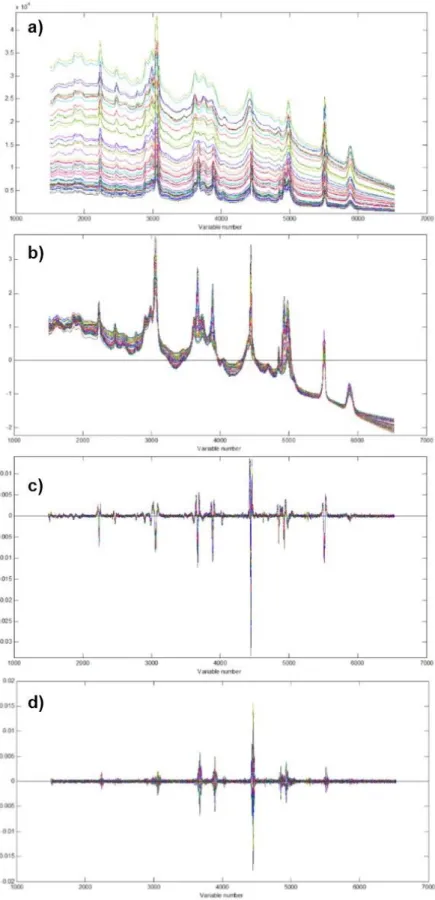
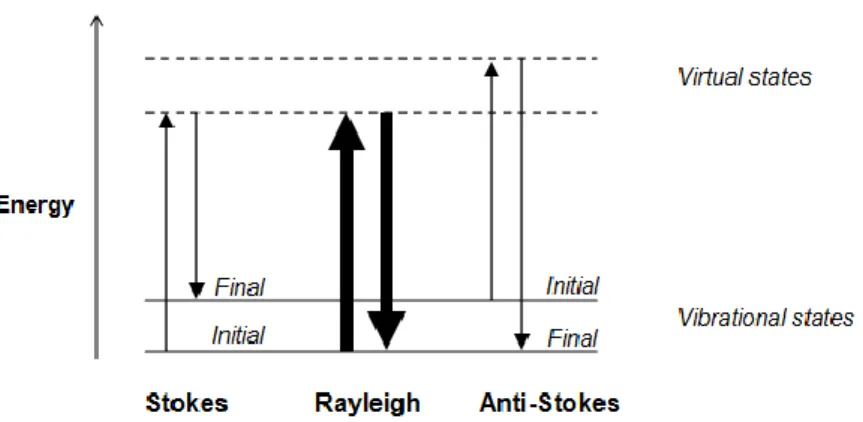
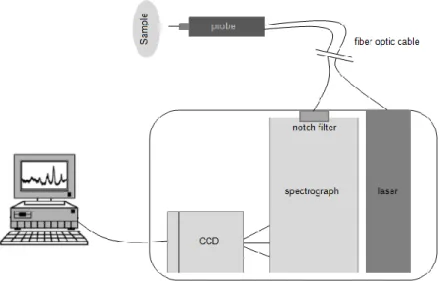
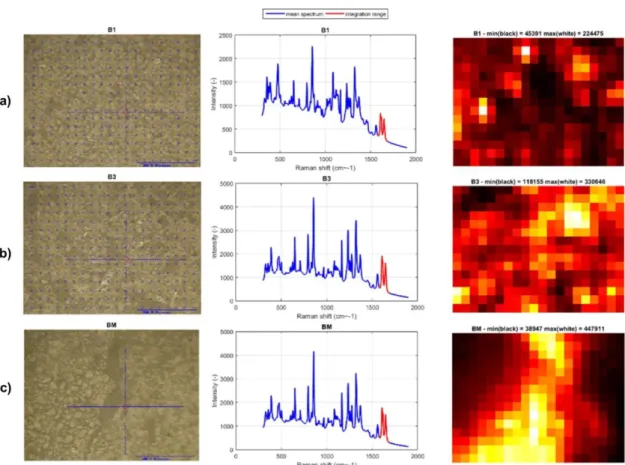
Figure 3.1 Light interaction with matter giving rise to elastically scattered photons with the same energy (frequency) and to a small fraction of inelastically scattered photons with different energy (frequency) - Stokes and Anti-Stokes scattering. Adapted from (Lotte Boge Lyndgaard, 2013) 34 Figure 3.2 Energy level diagram for Rayleigh and Raman scattering processes. Modified from (Kaiser Optical Systems, 2004) ... 35 Figure 3.3 An overview of the elements of a dispersive CCD Raman instrument. Modified from (Lotte Boge Lyndgaard, 2013) ... 44 Figure 3.4 Three major schemes to improve sample representation through wide coverage of sample: a) averaging of Raman spectra collected at many different spots on a sample, b) rotation of a sample during spectral collection and c) simultaneous wide area illumination for spectral collection. Adapted from (Online, 2013) ... 46 Figure 3.5 The PhAT probe from Kaiser represents the in situ approach to Raman solids sampling. Solids sampling by Raman is prone to under-sampling. This problem is solved using the WAI approach, which provides reproducible, representative, focus-free, quantitative Raman measurements (“Kaiser, optical systems, inc.,” n.d.) ... 46 Figure 3.6 Different Raman spectroscopic configurations: a) Wide Area Illumination (WAI), b) Spatially Offset Raman Spectroscopy (SORS) and c) Transmission Raman Spectroscopy (TRS). Adapted from (Paudel et al., 2015) ... 47 Figure 3.7 Microscopic imaging measurements obtained from Raman microprobe combined with MK II probe from Kaiser Optical Systems. a) Imaging of a tablet from Blend 1 (50mg of Paracetamol), b) imaging of a tablet from Blend 3 (150mg of Paracetamol) and c) imaging of a tablet with a Bad Mixing process. ... 48 Figure 3.8 The effect of preprocessing of Raman spectra of tablets (with different concentrations of paracetamol) measured through white blister packaging using PhAT probe from Kaiser Optical Systems.[LatentixTM] ... 53
xiv
and blend Test (BT) have the same concentration of paracetamol and blend 3 has the highest concentration. ... 55
Chapter 4
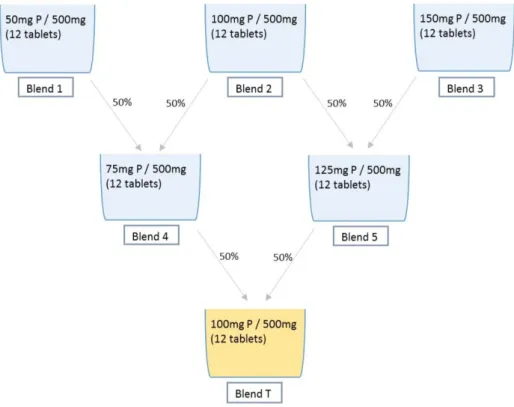
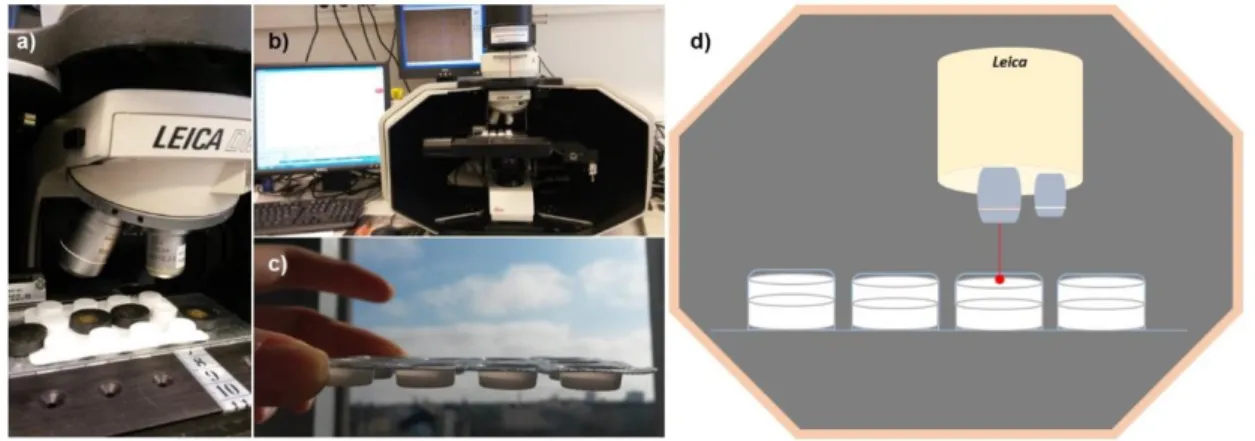
Figure 4.1 Investigation of differences within package material. a) Plastic bottles with a solution of water, sugar and ethanol; b) PhAT system; c) Quarts Bottles with water, sugar and ethanol 64 Figure 4.2 Tablets of Pamol measured through transparent material and aluminum material .. 64 Figure 4.3 Plan for producing blends with different concentrations of paracetamol used to produce tablets for further analysis. ... 65 Figure 4.4 Mixing and compression steps from production of paracetamol tablets. a) Sterile vials with glass marbles for better homogeneity; b) Perkin-Elmer compressor; c) Vacuum system; d) Process of direct compression; e) Pressure display and f) Final paracetamol tablets. ... 67 Figure 4.5 Phat system (a)) including the PhAT probe and RamanRxN System and measuring scheme (b)) ... 68 Figure 4.6 Raman Workstation and measuring scheme. a) Objective lens of microscope and blister package with tablets being analyzed; b) Raman Workstation; c) position scheme to be simulated; d) measuring scheme. ... 69 Figure 4.7 Green laser system. a) Green laser equipment setup for the measurements of tablets through white blister package; b) position scheme to be simulated; c) measuring scheme. ... 70
Chapter 5
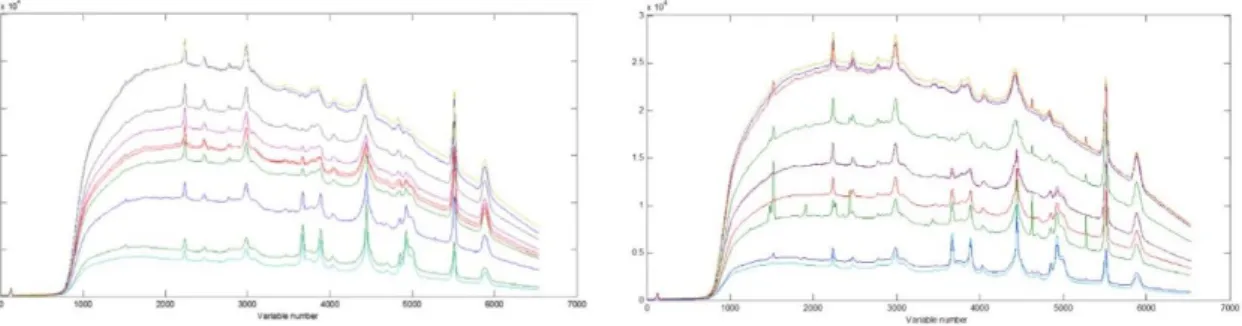
Figure 5.1 Spectrums of two empty plastic bottles in ten random sites. Each plot corresponds to one bottle. [PhAT probe] [LatentixTM] ... 73 Figure 5.2 Differences in density of plastic observable through a polarization filter in front of polarized light ... 73 Figure 5.3 Differences between spectrums of three different spots in the same plastic bottle with a solution of ethanol, sugar and water. [PhAT probe][LatentixTM] ... 74 Figure 5.4 Differences between spectrums of three different spots in sixteen plastic bottles with a solution of ethanol, sugar and water. a) Raw data; b) Data preprocessed with SNV; c) Data preprocessed with SNV and SG; d) Data preprocessed with SNV, SG and Mean center [PhAT probe][LatentixTM] ... 75 Figure 5.5 Measurements in package material made to quartz bottle. a) Ethanol through quartz bottle; b) sugar through quartz bottle; c) water through quartz bottle. [PhAT probe] [LatentixTM]76 Figure 5.6 Spectrums of Pamol tablets measured directly (a)) and Pamol tablets measured thorugh transparent material (b)) [PhAT probe] [LatentixTM] ... 77 Figure 5.7 a) Pamol tablets measured thorugh aluminium material; b) Pamol tablets measured directly and Pamol tablets measured thorugh aluminium material toghether in the same plot [PhAT probe] [LatentixTM] ... 77
xv
Figure 5.9 Twelve tablets from Blend 1 measured directly (without blister package). The three picks contoured can be easily detected even through the blister package. [LatentixTM]... 78 Figure 5.10 Spectrum of Tablets from Blend 1 to Blend T, measured directly. This spectrum is treated with preprocessing methods. [LatentixTM] ... 79 Figure 5.11 Paracetamol Tablets Analysis – Projection of scores for 1 and 2 PC, according to the concentration of paracetamol. [PhAT probe] [LatentixTM] ... 79 Figure 5.12 Detection of different blends through white blister package – Projection of scores for 1 and 2 PC, according to the concentration of paracetamol. [PhAT probe] [LatentixTM] ... 80 Figure 5.13 PLS model statistics for the validation method "take 1 blend out". [PhAT probe] [LatentixTM] ... 81 Figure 5.14 PLS model statistics for the validation method "take 1 tablet out". [PhAT probe] [LatentixTM] ... 81 Figure 5.15 Spectrums of Paracetamol (green), Lactose (blue), Starch (red), Talk (light blue) and the SUM of all spectrums (black). Selected range selected for further analysis is detached with a colored square. ... 82 Figure 5.16 PLS model statistics for the validation method "take 1 blend out". [PhAT probe – small range] [LatentixTM] ... 82 Figure 5.17 PLS model statistics for the validation method "take 1 tablet out". [PhAT probe – small range] [LatentixTM] ... 83 Figure 5.18 PLS model statistics for the validation method "take 1 blend out". [MKII probe][LatentixTM] ... 83 Figure 5.19 PLS model statistics for the validation method "take 1 tablet out". [MKII probe] [LatentixTM] ... 84 Figure 5.20 PLS model statistics for the validation method "take 1 blend out". [MKII probe – small range] [LatentixTM] ... 84 Figure 5.21 PLS model statistics for the validation method "take 1 tablet out". [MKII probe – small range] [LatentixTM] ... 85 Figure 5.22 PLS model statistics for the validation method "take 1 blend out". [green laser] [LatentixTM] ... 85 Figure 5.23 PLS model statistics for the validation method "take 1 tablet out". [green laser] [LatentixTM] ... 86 Figure 5.24 PLS model statistics for the validation method "take 1 blend out". [green laser – small range] [LatentixTM] ... 86 Figure 5.25 PLS model statistics for the validation method "take 1 tablet out". [green laser – small range] [LatentixTM] ... 87
xvi
of paracetamol) measured through white blister packaging using PhAT probe from Kaiser Optical Systems [LatentixTM] ... 103 Figure II.1 The effect of preprocessing of Raman spectra of tablets (with different concentrations of paracetamol) measured through white blister packaging using MKII probe from Kaiser Optical Systems [LatentixTM] ... 104 Figure III.1 The effect of preprocessing of Raman spectra of tablets (with different concentrations of paracetamol) measured through white blister packaging using the green laser [LatentixTM] 105
xvii
& Falagas, 2015) ... 14 Table 2.2 Suggestions on How to Reduce Medicines Counterfeiting (adapted from (Rudolf & Bernstein, 2004) and (WHO, 2009))... 19 Table 2.3 Methods used to detect counterfeit/substandard medicines adapted from (Kelesidis & Falagas, 2015)... 23
Chapter 3
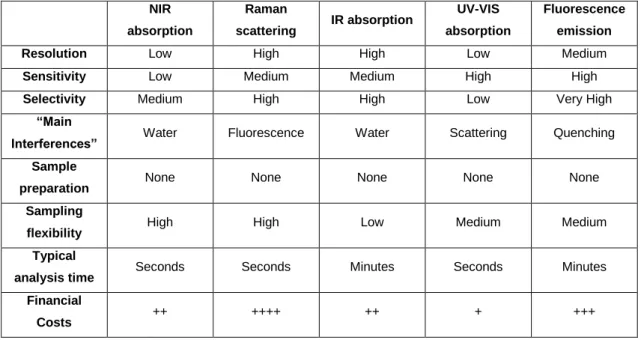
Table 3.1 Comparison of properties of five spectroscopic methods frequently used for multivariate analysis. Adapted from (Lotte Boge Lyndgaard, 2013) ... 41 Table 3.2 Studies regarding the detection of counterfeit medicines using Raman spectroscopy ... 56
Chapter 4
Table 4.1 Amounts of each excipient for a tablet with 500 mg of total weight ... 66 Table 4.2 The necessary amounts of each excipient ... 67
Chapter 6
Table 6.1 Comparison of r2 values and corresponding number of PC for predicting models of both validation methods using measurements from PhAT probe, MKII probe and green laser ... 93 Table 6.2 Comparison between three different probes considering robustness, cost and sampling. ... 93
1
3
Perhaps no greater challenge exists for public health, patient safety, and shared global health security, than fake, falsified, fraudulent or poor quality unregulated medicines - also commonly known as “counterfeit medicines” - now endemic in the global drug supply chain (Tim K Mackey & Liang, 2013). The World Health Organization (WHO) defines counterfeit products as medicines that are deliberately and fraudulently mislabeled with respect to identity and/or source. Counterfeit medicines include products with correct ingredients or with wrong ingredients, without active ingredients, with insufficient or excessive amount of the active ingredient, or with false or misleading labeling.
There are also “substandard medicines” (also called out of specification (OOS) products) which are genuine medicines produced by manufacturers authorized by the National Medicines Regulatory Authorities (NMRA) which do not meet quality specifications set for them by national standards (WHO, 2009). They arise mostly due to the application of poor manufacturing practices by the producer or when a good quality medicine is stored and distributed under improper conditions leading to deterioration of the quality of the product (WHO, 2009).
Both substandard and counterfeit medicines are serious problems, and remain as one of the most neglected public health issues, where counterfeiting is mounting to more than 60% in third world countries (Karunamoorthi, 2014). Counterfeit medicines pose a serious risk to public health around the world. The issue of counterfeits has no single or simple solution and cannot be eliminated by any one individual, organization or government. It is a global problem that needs а global, collaborative approach (Shore & Pfizer, 2015). Currently a number of different approaches are being undertaken to identify counterfeit medicines. Since technology may improve the detection of low-quality drugs, it would be important that these methods will also be available in developing countries, where counterfeit products are the most common (Kelesidis & Falagas, 2015). For this purpose, further scientific research and development is called for to design user-friendly, low-cost and robust portable (hand-held) devices and techniques for detecting and identifying counterfeit medicines in real settings (Karunamoorthi, 2014).
This dissertation promotes a technique called Raman spectroscopy that has the potential to optimize quality testing for a broad range of medicines.
When light interacts with matter, it can be transmitted, absorbed or scattered. When light is scattered from a molecule, most photons are elastically scattered. The scattered photons therefore have the same energy, frequency and wavelength as the incident photons. However, a small fraction of light is inelastically scattered i.e. at frequencies different from, and usually lower than, the frequency of the incident photons. This is called Raman effect and it was discovered by Krishna and Raman. Raman scattering can occur due to a change in vibrational, rotational or electronic energy of a molecule (Kaiser Optical Systems, 2004). The spectrum of this wavelength-shifted light is called the Raman spectrum. The Raman spectrum contains bands that are characteristic and proportional to concentrations of specific molecules in the sample, thus Raman provides a good basis for qualitative and quantitative analysis.
4
The instruments used for Raman spectroscopy used to be large and complicated, and the experiments could be quite complex. However, in the past decades new developments in the Raman instrumentation (e.g. improved lasers, introduction of charge-coupled devices (CCD) detectors and fiber optics) have expanded the possibilities for the use of Raman spectroscopy. With these advances, fundamental problems of a weak Raman signal and fluorescence interference can be overcome (Lotte Boge Lyndgaard, 2013). Raman spectrometers have become smaller, sometimes even portable, and easy-to-use, with an analysis time reduced to seconds. Furthermore, non-destructive analysis can be provided without the necessity of sample preparation. The complex and vast amount of data generated using Raman spectroscopy often demands multivariate data analysis approaches (Paudel, Raijada, & Rantanen, 2015). With multivariate methods, it is possible to investigate the relations between all variables in a single context. These relationships can be displayed in plots as easy to understand as time traces and pair-wise scatter plots (Guide, 2013).
The aim of this dissertation is to explore the detection of counterfeit medicines using Raman spectroscopy techniques for non-invasive and non-destructive analysis, in view of its applicability in the field (hence, in locations such as borders or places where inspection and distribution of medicines is carried out) and not in laboratories with good resources as well as specialized personnel. This investigation seeks to study de detection of medicines through package, for which it is relevant to investigate if there are differences within the package material and how these differences affect the spectrums of the tablets under analysis. Aluminum blisters were also investigated to find some signal through this material. Calibration tablets of paracetamol, were made for experiencing the detection of different concentrations of an API through blister packages. The blisters used were white blisters of "Ben-u-ron tablets" from Bene Farmacêutica. Furthermore, in this investigation three different probes on two different instruments were used for the measurements: the PhAT probe and MKII probe attached to Raman Workstation microscope, and a green laser (cheaper but less accurate) to compare results.
This dissertation starts with an introduction to the illegal business of counterfeit medicines - Chapter 2. This chapter aims to briefly elucidate the readers of this dissertation regarding counterfeit medicines and their impact on society, as well as to describe some of the other techniques used for pharmaceutical analysis, in addition to spectroscopic methods.
Chapter 3 includes an introduction to the Raman effect, instrumentation, spectral interpretation and data analysis. It also includes a summary of studies regarding Raman spectroscopy for detecting counterfeit medicines. Chapter 4 begins with a description of an investigation into differences within packaging material. After this, the production process of the paracetamol tablets was also described, followed by the description of the method of analysis of the tablets through the white blister pack with each probe. After the measurements, spectra were analyzed using LatentixTM software. LatentixTM was developed with the intention to make low cost
5
could be available to everybody in all technological and scientific disciplines, where complex data tables need exploration or efficient data analysis. This idea connects with the idea inherent to this dissertation which is the investigation of a method of analyzing medicines that is easy to use for people without a very high level of training. Finally, the conclusions of this investigation are presented in Chapter 6.
7
9
Since the theme of this dissertation is using Raman spectroscopy methods for detecting counterfeit medicines, it is relevant to describe this widespread illegal business which affects millions of people worldwide, especially in developing countries. This chapter aims to briefly elucidate the readers of this dissertation regarding counterfeit medicines and their impact on society, as well as to describe some of the other techniques used for pharmaceutical analysis, in addition to spectroscopic methods.
2.1 What counterfeit/substandard medicines are
Perhaps no greater challenge exists for public health, patient safety, and shared global health security, than fake, falsified, fraudulent or poor quality unregulated medicines - also commonly known as “counterfeit medicines” - now endemic in the global drug supply chain. Counterfeit medicines are prevalent everywhere, from traditional healthcare settings to unregulated sectors, largely driven by the Internet. These dangerous medicines are expanding in both therapeutic and geographic scope, threatening patient lives, leading to antimicrobial resistance, and profiting criminal actors (Tim K Mackey & Liang, 2013).
The quality of commercially available drugs varies greatly among countries, due to the lack of strict regulations and to deficient quality control practices. In some countries, even the amount of active ingredient may be incorrect. In addition, poor formulation techniques can greatly affect the quality of medicine by slow-release of active ingredients (Karunamoorthi, 2014). Sometimes drugs may be contaminated with other substances, and via poor storage conditions, where humid, tropical environments may contribute to chemical degradation of several pharmaceuticals (Hall et al., 2006).
Counterfeit medicines are widely distributed and self-prescribed (incorrectly and correctly). They can be highly sophisticated, including convincing packaging, holograms and marketing, and represent a major technical and law enforcement challenge.
The WHO defines counterfeit products as medicines that are deliberately and fraudulently mislabeled with respect to identity and/or source. Counterfeit medicines include products with correct ingredients or with wrong ingredients, without active ingredients, with insufficient or excessive amount of the active ingredient, or with false or misleading labeling.
Unfortunately, efforts to improve the quality of medicines in developing countries are being hampered by confusion over the terms used to describe different types of poor quality medicines (Newton et al., 2011). The importance of a universal definition of a counterfeit medicine is of great importance since it is a problem that affects many countries and varies from country to country. A universal definition facilitates the comprehension of the true extent of the problem at a global level allowing the development of global strategies to combat the problem.
10
The WHO defines counterfeit medicines as: Substandard, Spurious, Falsely labelled, Falsified and Counterfeit (SSFFC) medical products (Organization, n.d.). Counterfeit medicines can be classified in four different subclasses:
• “perfect”: these products contain the correct active ingredient and excipients in the right amount, but with the wrong name of manufacturer and/or country of manufacture indicated on the label. They are often manufactured in foreign countries and illicitly imported (parallel marketing), thus resulting in an economic damage.
• “imperfect”: these products contain the right components, with an incorrect concentration and/or formulation resulting in defective quality specifications. In the vast majority of cases, they are devoid of any therapeutic efficacy.
• “apparent”: they are similar to the original product, but contain non-active ingredients or foreign substances. Usually, apparent counterfeits are copies of medicinal products that are not the only ones used for the cure of a particular illness.
• “criminal”: they are apparently similar to the original medicinal product, but do not contain any active ingredient and can even include harmful or toxic substances. They are usually sold at high prices and for treatment of serious pathologies. Consequences for users of criminal counterfeits can be fatal. (Baratta, Germano, & Brusa, 2012) (WHO, 2009)
WHO estimates about 60% of purchased counterfeited products did not have any active pharmaceutical ingredient (API), 17% contain too much or too little API, whilst another 16% contain the wrong ingredients altogether (Karunamoorthi, 2014).
Substandard medicines are genuine medicines produced by manufacturers authorized by the NMRA which do not meet quality specifications set for them by national standards (WHO, 2009). They arise mostly due to the application of poor manufacturing practices by the producer or when a good quality medicine is stored and distributed under improper conditions leading to deterioration of the quality of the product. A substandard medicine can be considered as counterfeit if a legitimate manufacturer gets involved in a criminal activity and produces a substandard product intentionally or deliberately (WHO, 2009). After all, what makes a product counterfeit is the criminal act involved. Both substandard and counterfeit medicines are serious problems, and remain as one of the most neglected public health issues, where counterfeiting is mounting to more than 60% in third world countries (Karunamoorthi, 2014).
11
Figure 2.1 An official unloads counterfeit medicines for destruction in Lagos, on October 13, 2001. At best, falsified prescription medicines have no effect, acting like placebos, but at their worst, they are highly toxic. Either way they bring in vast sums of money for those behind the illicit traffic (“Fox News World,” 2013).
2.2 What encourages counterfeiting of medicines
WHO has determined factors that may lead to the spread of substandard drugs, such as counterfeiting, chemical instability, and poor quality control (Kelesidis & Falagas, 2015). Table 2.1 presents a summary of factors that contribute to the spread of low-quality medicines Corruption, crime, and poorly regulated pharmaceutical companies are major contributors to counterfeiting. According to the International Drug Industry Federation the counterfeit drug market is more profitable for counterfeiters than that of illicit drugs (Hall et al., 2006).
Medicines are attractive for counterfeiting, because they are high-value products in relation to their bulk and the demand for medicines is endless. It is possible to produce counterfeit drugs without the existence of special facilities. They can be produced in small industries, at home, in backyards or under the shade of a tree. For a counterfeiter, the cost of excipients may become financially accessible if replaced by low cost excipients, or if they are omitted altogether, as often happens. Counterfeiting of medicines is even more successful if the counterfeit medicine is copied to make it look like the original product. Patients and/or buyers are not able to detect whether the product they are buying is of good quality let alone to detect if the product is counterfeit (WHO, 2009).
The development, manufacture, importation and subsequent handling of medicines within the distribution channels should conform to prescribed standards, and the quality of medicines should be rigorously controlled. However, this would require strong NMRAs. This in turn needs strong government, will and commitment to provide adequate human, financial, and other resources, appropriate infrastructure and legal power to enforce medicine regulation. In many WHO Member States the political will and commitment to establish strong NMRAs or to strengthen existing ones is weak or lacking. Consequently, medicine regulation and control activities are ineffective and inefficient resulting in noncompliance of local manufacturing with requirements of good manufacturing practices, circulation of unregistered/unapproved medicines in the national market, smuggling of medicines through port of entries and boarders, etc (WHO, 2009).
12
Legislation and regulations are the basis for medicine regulation. In countries where laws and regulations do not exist or are inadequate for proper control of medicines, criminals are encouraged to produce counterfeit medicines. Currently, only some of WHO's Member States adopted special national legislation on counterfeit medicines. Moreover, the sanctions imposed on counterfeiters are weak and do not constitute an impediment to this illegal business. The absence of legislation prohibiting the manufacture and trade of counterfeit drugs or the absence of deterrent penalties encourages counterfeiters since there is no fear of being arrested and prosecuted. Currently, among the 193 WHO Member States about 20% are known to have well developed regulating drugs. Of the remaining Member States, about 50% implement drug regulation at different levels of development and operational capacity. The remaining 30% do not have any kind of drug regulation strategies or have poorly structured regulations that hardly work (WHO, 2009).
Regulatory and law enforcement systems remain weak. Enacting deterrent legislation alone will not solve the problem of counterfeit medicines. Legislation needs to be enforced. Where existing legislation is not enforced crime is perpetuated as criminals are not afraid of being arrested and prosecuted. Counterfeiters are opportunistic criminals motivated by profits yet with limited legal penalties. In most countries cooperation between NMRA, police and customs is either weak or non-existent, which makes it difficult to detect, arrest and bring criminals to trail (WHO, 2009).
Furthermore the detection of counterfeit medicines is difficult because medical personnel attribute the problem of drugs that produce poor clinical outcomes to patient variation (Delepierre, Gayot, & Carpentier, 2012). In most cases, patients are unlikely to suspect that they are using counterfeit drugs. Often, drug packaging is thrown away, which makes it difficult to test for bad drugs, particularly because the drugs may be undetectable in the bloodstream after a few days. Also, patients may not want to reveal that they have bought drugs without a prescription over the Internet. Therefore, the probability of a counterfeiter getting caught can be very low (Rudolf & Bernstein, 2004).
Efforts by a variety of public and private sector entities, national governments, and international organizations have made inroads in combating this illicit trade, but are stymied by ineffectual governance and divergent interests (Tim K Mackey & Liang, 2013).
The efficiency of personnel working in medicine regulation and those involved in law enforcement activities such as police, customs and the judiciary, is adversely affected by conflict of interest and corruption resulting in laws not being enforced and criminals not being arrested, prosecuted and convicted for their crimes. In order to address the problem corruption, governments need to develop policies on conflict of interest and establish mechanisms for managing conflict of interest. Personnel working in medicine regulation as well those participating in national medicines anti- counterfeiting programs should be required to sign conflict of interest form.
13
Empowering consumers and public interest groups to participate in medicine regulation, making NMRAs transparent and accountable and motivating NMRA staff and enforcement officers by providing them incentives can help in combating conflict of interest and corruption (WHO, 2009).
When the supply of medicines in a country is short or erratic, patients and consumers tend to look for alternative sources. Such situations encourage criminals to smuggle in medicines or manufacture counterfeit medicines and distribute them as a substitute for genuine medicines (WHO, 2009). Many of the drugs in short supply are lifesaving anticancer drugs, and this promotes the development of counterfeits that can result in considerable suffering or death for the patient.
Drug shortages lead to increased prices for a legitimate drug and increase the opportunity and ability for unscrupulous people to make financial gains by introducing counterfeit drugs into the market (Cherici, Mcginnis, & Russell, 2011). Counterfeiters are able to take advantage of the drug shortage and charge exorbitant prices (Rudolf & Bernstein, 2004).
Consumers who use medicines inappropriately generate demand for such medicines, the sources of which may be counterfeit. For example, the misuse of creams containing steroids for skin bleaching, and body building medicines has generated a market for counterfeit steroid-containing medicines. Often, these medicines are distributed through unauthorized channels or illicit markets (WHO, 2009).
Authentic medicines are often expensive, and people buy inexpensive medicines from unauthorized retailers, which are often considered of good quality by the public (Basco, 2004). When price differences exist between identical products, patients and consumers go for the cheaper ones. This creates a greater incentive for counterfeiters to supply cheap counterfeit medicines (WHO, 2009). Less-developed countries are often a target for counterfeiters, since the cost of legitimate drugs may be unaffordable for a large proportion of a sizable population, and consequently patients prefer to use cheaper versions than expensive, genuine ones (Karunamoorthi, 2014).
Inter-sectoral cooperation between NMRAs, police, and customs services and the judiciary is essential for effective control of the national medicine market and enforcement of medicine legislation. When such cooperation between stakeholders is ineffective, counterfeiters can escape detection, arrest and penal sanctions (WHO, 2009).
Detecting counterfeits is often difficult, because many of these goods pass through a long and complicated distribution network, thereby creating opportunities for counterfeits to enter the legitimate supply chain (Rudolf & Bernstein, 2004).
Despite clear global public health threats, surveillance for counterfeit medicines remains extremely limited, with available data pointing to an increasing global criminal trade that has yet to be addressed appropriately (Tim K Mackey & Liang, 2013). When countries do not control
14
export medicines to the same standard as those produced for domestic use, criminals find it easy to manufacture and export counterfeit medicines. Medicines are also traded in free-trade zones or free ports where control is lax or absent. In such places medicine products are sometimes re-labelled in order to hide their true source and identity (WHO, 2009).
Table 2.1 Summary of Factors That Contribute to the Spread of Low-Quality Medicines (Kelesidis & Falagas, 2015)
Substandard medicines Counterfeit medicines
Reduced stability of medicines in developing countries due to environmental conditions and
poor storage
Financial interests: crime, corruption of politicians and industry
No good manufacturing process in developing countries
Inadequate resources dedicated to control manufacture, import, and export activities, complex transactions, inefficient cooperation
among stakeholders
Poor quality control during manufacture High demand for antimicrobials and vaccines exceeds supply
Poor surveillance about expiration dates and
storage conditions in poor settings High prices of original drugs
Use of non-standardized pharmacopoeias by
many developing countries Development of Internet
- High rate of illiteracy and very low income of population in less-developed countries
-
Lack of sensitization of people in less-developed countries to the impact and dangers of counterfeit drugs purchased from non-authorized dealers
2.3 Impact of the production and distribution of counterfeit medicines in society
One of the most complex and challenging problems faced as a result of the globalization of health-care delivery is securing the integrity and safety of the global medicines supply chain. Dangerous forms of pharmaceuticals are illicitly sold by criminal elements and illegal transnational organizations creating dangers for patient safety and public health that undermine public and private investments in health care (T. K. Mackey, Liang, York, & Kubic, 2015). Poverty, weak economies, poor regulatory systems, short supply, and the rising cost of therapeutic agents have created a corresponding increase in production of fake drugs because of the huge profit margin (Karunamoorthi, 2014). The scope of this illegal international trade is broad and complex, includes products spanning a host of therapeutic classes and lifesaving treatments, leading to consequences in all populations from the poorest to wealthiest (T. K. Mackey et al., 2015).
Medicines, including vaccines, save lives and prevent diseases and epidemics only if they are safe, efficacious, of good quality and are used rationally. According to reports received from
15
national authorities in countries and information published in newspapers and journals, both well established (generic) medicines and innovative medicine products are affected including very expensive products for cancer to very inexpensive products for treatment of pain. Generally, high volume (high consumption) and expensive medicines are the main targets of counterfeiters (WHO, 2009). The WHO estimated that nearly half of the global pharmaceutical market is occupied by counterfeit drugs (Karunamoorthi, 2014).
Counterfeit medicines involve both lifesaving and lifestyle drugs. In general, the industrialized economies suffer with life-style related diseases (for example erectile dysfunction or baldness), whereas in the emerging economies infectious diseases are a matter of grave concern (Karunamoorthi, 2014). The largest number of reports relate to antibiotics, antiprotozoals, hormones and steroids. In developing countries, antibiotics and aniprotozoals such as anti-malarial medicines are commonly counterfeited. In developed countries hormones and steroids account for the majority of the cases reported (WHO, 2009). SSFFC medical products are often produced in very poor and unhygienic conditions by unqualified personnel, and contain unknown impurities and are sometimes contaminated with bacteria. (Figure 2.2)
Figure 2.2 On the left a counterfeit version of Pfizer’s Viagra manufactured in China was distributed over the Internet by a network that included hundreds of brokers in the US and EU. On the right an illegal factory in Colombia washes empty vials before reuse in the production of counterfeit Tazocin, also a Pfizer antibiotic (Shore & Pfizer, 2015)(Barry, 2014)
Counterfeit medicines have flourished due to the emergence and resurgence of many infectious diseases, particularly the three major killer diseases: HIV/AIDS, malaria and tuberculosis (Karunamoorthi, 2014). Substandard/counterfeit antimicrobial drugs (including antibiotics, antituberculosis drugs, antivirals, vaccines and antimalarials) represent an expanding problem throughout developing countries with considerable consequences for global public health (Kelesidis & Falagas, 2015). It has been estimated that fake drugs for malaria and tuberculosis potentially kill over 700,000 people every year (Karunamoorthi, 2014).
The most common type of substandard/counterfeit antimicrobial drugs have a reduced amount of the active ingredient, and the majority of them are manufactured in Southeast Asia and Africa. These counterfeit medicines may cause increased mortality and morbidity and pose a danger to
16
patients. Antimalarials, followed by antibiotics, are the most common targets for counterfeiting (Kelesidis & Falagas, 2015). Counterfeit and substandard antibiotics can cause treatment failure that leads to increased mortality in humans. An excessive dose of the active ingredient in low-quality antimicrobials may be toxic to humans, especially in children or with antimicrobials with a narrow therapeutic range (Kelesidis & Falagas, 2015). Counterfeit antimicrobials such as antimalarials may have dangerous components or infectious contaminants, which can cause side effects. For example, injectable counterfeit antibiotics may contain methanol, a potentially lethal product for humans which may be responsible for pancreatitis, blindness, coma, cardio-circulatory failure, and death (Delepierre et al., 2012). The counterfeiting of antimalarials represents a form of attack on global public health in which fake and substandard products effectively serve as weapons of mass destruction, particularly in resource-constrained endemic settings, where malaria causes nearly 660,000 preventable deaths and threatens millions of lives annually. This crime against humanity is often underestimated or ignored (Karunamoorthi, 2014).
With the exponential increase in internet connectivity those engaged in the manufacture, distribution and supply of SSFFC medical products have gained access to a global market place (WHO, 2009). The Internet has become an important and convenient means for consumers to shop and save money. However, websites that traffic counterfeit goods have flourished on the Internet, creating confusion between which sites sell authentic goods and which do not (Rudolf & Bernstein, 2004). A culture of self-diagnosis and self-prescribing has led to the emergence of thousands of unregulated websites providing unsupervised access to SSFFC medical products. Purchase of medicines via the Internet has a high chance of exposing patients/consumers to counterfeit and substandard medicines. The patient/consumer has no way of knowing if the product is manufactured by an authorized manufacturer; if manufacturer complies with Good Manufacturing Practices (GMP) requirements or the products are approved by the NMRA of the country claimed to be country of manufacture (WHO, 2009). In more than 50% of cases, medicines purchased over the Internet from illegal sites that conceal their physical address have been found to be counterfeit, according to WHO (World Health Organization, 2010). Moreover, some of these Internet sites are linked to terrorist groups, such as Hezbollah and Al Qaeda, and others are linked to organized crime - posing a threat to national and international security (Liang, 2006). In an attempt by these sites to make even more profit, consumers may face other consequences of an online drug purchase, including credit card fraud, identity theft, and computer viruses (“U.S Food & Drug Administration,” 2013).
The true extent of the problem of counterfeit medicines is not really known, due to the fact that not every case is reported by competent authorities or manufacturers. They can be found in illegal street markets, via unregulated websites through to pharmacies, clinics and hospitals (Organization, n.d.). The international trade presents easy opportunities for counterfeiters to insert their products into the supply chain of legitimate pharmaceuticals and to disguise the source. Even in hospitals, there have been seen deliveries where counterfeit medicines have been added
17
to genuine batches of medicines. The counterfeiters simply falsify the delivery papers by adding an extra zero to the quantity supplied, then they make up the difference by adding their own boxes to the order (World Health Organization, 2010).
One case that illustrates this problem is that of a patient who was treated with injections for anemia, after a liver transplant. After 8 weeks of injections, the patient was still not responding to treatment. The treating physicians discovered that the medicine the patient used was counterfeit. In such cases, the consequences of counterfeits can be serious (Rudolf & Bernstein, 2004). The implications for patients are clear: counterfeits can kill.
Counterfeit medicines are widespread in all countries around the globe and represent a major public health concern, often resulting in treatment failure, serious deterioration of the state of health, or even death (Baratta et al., 2012). What was once considered a problem suffered by developing and low income countries has now become an issue for all. Globalization of the market in APIs and finished medical products brings with it the urgent need for effective International collaboration, cooperation and coordination to ensure global access to safe, quality, efficacious and affordable medical products. Several international and national strategies are required to efficiently detect counterfeits and combat this very important public health issue.
Counterfeit medicines are spread all over the world however, it is low- and middle-income countries and those in areas of conflict, or civil unrest, with very weak or non-existent health systems that bear the greatest burden of SSFFC medical products (Baratta et al., 2012). Developing countries are an obvious target for counterfeiters, because the cost of legitimate drugs may be beyond the reach of much of the population and legal controls are often weak, analysts say (World Health Organization, 2010). Even though higher-income countries have stringent regulations and better law enforcement, they also offer great rewards. According to the Medicines and Health care products Regulatory Agency in the United Kingdom, counterfeiters now also target the most lucrative markets, copying high-value, high-turnover, high-demand drugs (World Health Organization, 2010).
The use of substandard products may lead to under-dosing of antibiotics, which can increase antimicrobial resistance. In the case of the counterfeit drug that has no active ingredient, the drug fails to help the patient get better, which can ultimately harm the patient. In the case of antibiotics, for example, this can promote antibiotic resistance and the use of stronger antibiotics because physicians would believe that the first-line drug was not working, not knowing that the patient had been taking a counterfeit drug (Liang, 2006). As a result, in some developing countries multidrug-resistant bacteria may emerge, and the development of travel may further promote the spread of drug-resistant bacteria worldwide. Furthermore, therapeutic failure prolongs the period of contagiousness and increases the prevalence of infections from multidrug-resistant pathogens in the community. Antimicrobial resistance may also lead to increased morbidity that may further adversely affect the economies of governments. The financial burden on consumers who have to
18
pay for more expensive drugs, and on companies producing the original products, can be significant (Kelesidis & Falagas, 2015).
Low-quality antimicrobials may significantly decrease confidence in the efficacy of certain antibiotics. Poor-quality antimicrobials may lead physicians to lose confidence in specific antibiotics and thus to use broad-spectrum antibiotics as the drugs of choice for infections. According to the WHO, this may lead to loss of efficacy of relatively inexpensive drugs and will promote the use of more expensive antibiotics that patients in developing countries are not able to afford (Kelesidis & Falagas, 2015).
Intellectual property represents original, creative works and innovations who belonging to inventors, artists, musicians, and authors who, and businesses that, create something or acquire rights to a creation. The exclusive rights and legal protections of intellectual property come in the form of copyrights, trademarks, and patents. Innovation is important to economic growth and competitiveness in the global marketplace. Intellectual property protections provide the ability for society to prosper from innovation. These protections encourage innovation and creativity, but the rewards for innovation and creativity can be undermined by widespread theft associated with counterfeiting and trafficking of pirated goods (Rudolf & Bernstein, 2004). Although pharmaceutical companies spend considerable amounts of money on the research and development (R&D) of new drugs that benefit society and are approved as safe and effective, suppliers of counterfeit drugs bypass this process and supply these drugs at little cost to them; profit margins are often as high as 3000% (Kerry Capell, Suzanne Timmons in Bogotá, Jonathan Wheatley, 2001).
The threat of counterfeit pharmaceuticals is not new; many national authorities waged a long time their own fight against this illegal business. WHO has been working actively on this complex and politically sensitive issue since it was first discussed in May 1998 at the World Health Assembly. The efforts were intensified in 2006 when it launched the International Medical Products Anti-Counterfeiting Task Force (IMPACT), drawing members from international organizations, enforcement agencies, industry and non-governmental organizations (World Health Organization, 2010). WHO works with Interpol to dislodge the criminal networks raking in billions of dollars from this cynical trade (World Health Organization, 2010). Results from a string of law enforcement operations around the world by WHO and International Criminal Police Organization (Interpol) are slowly building a profile of the trade that shocks even regulators familiar with the issue. Health experts believe such operations have only scratched the surface of a flourishing industry in counterfeit medicines that poses a growing threat to public health around the world (World Health Organization, 2010). There have been found counterfeit versions of antibiotics, birth-control medicines, organ transplant medicines, medicines for the treatment of heart diseases, schizophrenia, diabetes and cancer.
19
2.4 Combating the business of counterfeit medicines
Counterfeit medicines pose a serious risk to public health around the world. The issue of counterfeits has no single or simple solution and cannot be eliminated by any one individual, organization or government. It is a global problem that needs а global, collaborative approach (Shore & Pfizer, 2015). Counterfeit medicines should be defined in terms of harm to health, with punishments appropriate for the injury or killing of patients. It is imperative that public health institutions, ministries, and lawyers, take the strategic lead in countering poor quality medicines (Newton et al., 2011). Governments must regulate the manufacture, export, import, storage, distribution, supply and sale of medicines to ensure the safety, efficacy and quality of medicines (WHO, 2009).
In order to combat the problem in an international level there should timely exchange of information on counterfeit medicines between, medicine regulatory authorities, pharmaceutical manufacturers, national law enforcement officers, international organizations such as WHO, Interpol and World Custom Organization; there should be more cooperation between all interested parties to develop harmonized measures to prevent the spread of counterfeit medicines globally. Cooperation would improve if all countries adopt a common definition of counterfeit medicines (WHO, 2009).
There are several safety precautions that should be taken in all countries to prevent the spread of counterfeit medicines. Table 2.2 shows examples of important and relatively simple actions that can be implemented, which hinder the illegal business of counterfeit medicines.
Table 2.2 Suggestions on How to Reduce Medicines Counterfeiting (adapted from (Rudolf & Bernstein, 2004) and (WHO, 2009))
• Increase public awareness, especially concerning Internet pharmacies
• Construct Internet search algorithms so that legitimate online pharmacies appear first
• Encourage more voluntary cooperation from companies along the Internet chain, such as credit card companies, Internet service providers, and couriers
• Improve the availability and affordability of medicines • Improve management of supply chain
• Apply stiffer fines and jail sentences for convicted sellers of counterfeit medicines
• Increase due diligence by physicians when purchasing drugs and stiffer penalties for those who knowingly provide counterfeit medicines to their patients
• Inspect the informal market to prevent any illegal trade in medicines
• Improve cooperation with foreign governments regarding counterfeiting medicines • Improve use of technology to track and trace counterfeiting medicines
![Figure 3.8 The effect of preprocessing of Raman spectra of tablets (with different concentrations of paracetamol) measured through white blister packaging using PhAT probe from Kaiser Optical Systems.[Latentix TM ]](https://thumb-eu.123doks.com/thumbv2/123dok_br/15469828.1033866/76.892.175.741.107.1026/preprocessing-different-concentrations-paracetamol-measured-packaging-optical-latentix.webp)