Sustainable food consumption: Examining
barriers and facilitators for a transition towards
more plant-based diets
Dissertation presented to Universidade Católica Portuguesa
to obtain the Master’s Degree in Psychology in Business and
Economics
Ana Margarida Moreira Martins
Faculdade de Ciências Humanas
Sustainable Consumption: Examining barriers
and facilitators in the transition process towards
a plant-based diet
Dissertation presented to Universidade Católica Portuguesa to
obtain the Master’s Degree in Psychology in Business and Economics
Ana Margarida Moreira Martins
Faculdade de Ciências Humanas
Supervision by Professor João Graça and Professor Joana Carneiro
Pinto
II Abstract
Nowadays we face health and sustainability issues related to our current diets, which have a substantial impact in the economy and society. The challenge is to provide a growing global population with healthy diets from sustainable food systems. This study examines the role of a set of barriers and facilitators for a change towards more plant-based diets among young consumers. More specifically, it aims to understand how three variables - (1) Capability, (2) Opportunity and (3) Motivation to eat plant-based meals – relate with current eating habits and three different consumer groups (i.e., Non-intenders: no intention to increase the consumption of plant-based meals; Intenders: intention to increase the consumption of plant-based meals; Actors: presently following plant-based diets). The sample consists of a total of 605 participants, of which 437 (72.2%) were female and 158 (26.1%) were male, with ages ranging between 18-35 years old (M=23.68 and SD=3.81). The results showed that increased Capability, Opportunity and Motivation for eating plant-based meals were associated with lower consumption of both Red and White Meat per week, and higher consumption of Fruit and Vegetables, Pulses, Meat Substitutes and plant-based meals per week. There were also differences in terms of Capability and Motivation across the different consumer groups (Non-intenders, Intenders and Actors).
Keywords: Plant-based diets; Human consumption; Behavioral change; Sustainability; Health.
III Resumo
Atualmente, estamos perante um conjunto de problemas de saúde e sustentabilidade adjacentes às nossas dietas alimentares com grandes impactos económicos e sociais. O desafio é proporcionar à população global dietas saudáveis a partir de sistemas alimentares sustentáveis. Este estudo examina o papel de um conjunto de barreiras e facilitadores na transição para dietas baseadas em vegetais entre jovens adultos consumidores. Mais especificamente, o objetivo é entender como três variáveis - (1) Capacidade, (2) Oportunidade e (3) Motivação para consumir refeições de base vegetal – se relacionam com os hábitos alimentares atuais e três grupos de diferentes consumidores (Non-intenders: não pretendem aumentar o consumo de refeições de base vegetal;
Intenders: pretendem aumentar o consumo de refeições de base vegetal; Actors: seguem uma alimentação de base vegetal). A amostra é composta por um total de 605 participantes, dos quais 437 (72,2%) do sexo feminino e 158 (26,1%) do sexo masculino, com idades entre os 18 e 35 anos (M = 23,68 e DP = 3,81). Os resultados mostram que maiores níveis de capacidade, oportunidade e motivação para consumir refeições de base vegetal foram associados a menor consumo de carne vermelha e branca por semana, e maior consumo de frutas e legumes, leguminosas, substitutos de carne e refeições de base vegetal por semana. Também foram encontradas diferenças em termos de Capacidade e Motivação entre os diferentes grupos de consumidores (Non-intenders, Intenders e
Actors).
Palavras-chave: Dietas de base vegetal; Consumo humano; Mudança comportamental; Sustentabilidade; Saúde.
IV Index
Index of Tables ... V Index of Figures ... VI Index of Attachments ... VII
PART I - THEORETICAL FRAMEWORK ... 13
1.1.Non-sustainable eating habits ... 13
1.2.Changing the current eating habits ... 16
1.3.Applying a behavioral change model to the change of eating habits ... 18
1.4.The present study: overview of aims and objectives ... 21
PART II – EMPIRICAL STUDY ... 23
2.Methods ... 23
2.1 Participants ... 23
2.2.Instruments ... 24
2.3.Data collection and analysis... 26
3.Results ... 27
3.1.Capability, Opportunity and Motivation to eat plant-based meals and current eating habits of a set of animal-sourced and plant-sourced products: A Correlational Analysis ... 27
3.2.... Capability, Opportunity and Motivation to eat plant-based meals and the current consumption of plant-based meals per week: A Linear Regression Analysis ... 28
3.3.Different stage of change groups (non-intenders, intenders and actors) and Capability, Opportunity and Motivation: Differences between groups . 30 4.Discussion ... 31
V Index of Tables
Table 1. Characterization of participants (n=605) ... 23 Table 2. Current Eating Habits per week ... 24 Table 3. Current Eating Habits and Capability, Opportunity and Motivation: Spearman’s Correlations ... 28 Table 6. Predicting Current Eating Habits: A Regression Analysis ... 29 Table 7. Differences between Meal Intention groups (Stage of change) in the Capability, Opportunity and Motivation ... 30
VI Index of Figures
Figure 1. Healthy Diets - scientific targets for a planetary health diet, with possible ranges, for an intake of 2500 kcal/day (Willet et al., 2019). ... 9 Figure 2. Sustainable Food Production - scientific targets for six key Earth system processes and the control variables used to quantify the boundaries. (Willet et al., 2019) ... 10 Figure 3. The COM-B system for understanding behaviour change (Michie et al., 2011). ... 18
VII Index of Attachments
8 1. General overview
A recent report by the United Nations (2019) shows the challenges that the climate changes we are facing bring to sustainable development. Climate change is aggravating the risk of extreme weather events and “natural” disasters. The economic impacts between 1998 and 2017 around the world translate in seventy-seven per cent of the nearly three trillion dollars in direct economic losses from climate-related disasters. Our behaviours continue to destroy the health of ecosystems putting at risk of extinction one million plant and animal species. Between 2000 and 2015 around twenty per cent of the Earth’s land area was degraded. The oceans have been affected as well - the carbon emissions of the last decades had an impact on the heat in the oceans and chemical composition. Ocean acidification, climate change (including sea-level rise), extreme weather events and coastal erosion aggravate the threats to marine and coastal resources from overfishing, pollution and habitat degradation. A solution to tackle these problems would be a shift to clean energy, reversing the trend in forest loss, and changing our production and consumption patterns. Sustainable agriculture could reduce both hunger and poverty (United Nations, 2019).
Willet et at. (2019) argue that if we do not take action, the world risks failing to meet the UN Sustainable Development Goals (SDGs - no poverty; zero hunger; good health and well-being; quality education; gender equality; clean water and sanitation; affordable and clean energy; decent work and economic growth; industry, innovation, and infrastructure; reducing inequality; sustainable cities and communities; responsible consumption and production; climate action; life below water; life on land; peace, justice, and strong institutions and partnerships for the goals) and the Paris Agreement (that aims to limits the temperature increase even further to 1.5 degrees Celsius). According to Willet et at. (2019), creating scientific targets can define the safe operating space for food systems and operating outside of this (e.g., high rates of biodiversity loss or insufficient vegetable intake) could harm both stability of the Earth system as well human health. There are several dietary patterns that may or may not meet scientific targets for human health and environmental sustainability. They can be defined as “healthy and unsustainable” (win-lose), “unhealthy and sustainable” (lose-win), “unhealthy and unsustainable” (lose-lose) and “healthy and sustainable” (win-win). According to this report, a healthy diet should optimize health (complete physical, mental and social well-being). This requires not only an optimal caloric intake but also a diversity of plant-based
9 foods, low amounts of animal-sourced foods, unsaturated rather than saturated fats, and limited amounts of refined grains, highly processed foods and added sugars (Fig.1).
Figure 1. Healthy Diets - scientific targets for a planetary health diet, with possible
ranges, for an intake of 2500 kcal/day (Willet et al., 2019).
To achieve environmental sustainability, the authors focus on six systems and processes affected by food (climate change; land-system change; freshwater use; nitrogen cycling; phosphorus cycling and biodiversity loss) and propose boundaries for food production in order to lower the risk of irreversible and potentially catastrophic shifts in the Earth system (Fig. 2).
10 Figure 2. Sustainable Food Production - scientific targets for six key Earth system
processes and the control variables used to quantify the boundaries. (Willet et al., 2019)
According to Allen et al. (2019), large scale solutions require changes in the food system. This means changes in the way we produce food, but also in our consumption habits. Food loss and waste can be changed, and nutritionally balanced, and diverse diets would enhance food security. Additionally, according to Aiking and de Boer (2018), the way we are producing our food is using unsustainable amounts of natural resources that negatively impacts on ecology, economy and society. This leads to pollution (e.g., emissions of reactive nitrogen compounds, greenhouse gases, pesticides, antibiotics and biological agents) that has an impact on biodiversity and on human health.
We are currently facing a paradox because of the unbalanced access to food. We have both hunger/malnutrition and excessive food wastage, over-consumption and obesity (Aiking & de Boer, 2018). Hence, it is important to look at climate change as a complex phenomenon that shapes the way land supports supply of food and water for humans. The way we modify the land use through land cover and urbanisation affects the global, regional and local climate (Allen et al., 2019).
Evidence suggests that we are facing particular health and sustainability issues related to our current diets (i.e. Rockström, 2009; Springmann et al., 2018; Tilman & Clark, 2014; Willett et al., 2019), which have an overall big impact on economy and
11 society (Aiking & de Boer, 2018). We have the challenge to provide global population with healthy diets from sustainable food systems, since our food systems carry the potential to nourish human health and support environmental sustainability (Willett et al., 2019). The goal must be to reinstate a healthy and sustainable balance in protein consumption that can partly be achieved through changes in consumer food choice processes at the levels of diets, dishes and dish ingredients (de Boer & Aiking, 2018). Specifically, a change towards an increased consumption of plant-based sources of protein is important to promote healthier and more sustainable eating habits (Aiking & de Boer, 2018; Tilman & Clark, 2014).
However, evidence suggests that a behavioral change of eating habits can be challenging. For some consumers, meat is perceived as enjoyable and nutritionally necessary (Pohjolainen, Vinnari & Jokinen, 2015), there is insufficient information about plant-based diets (Ensaff, Coan, Sahota, Braybrook, Akter & McLeod, 2015), and only a small portion of the people are aware that plant-based diets are environmentally friendlier than animal-centred diets (Cordts et al., 2014). Additionally, social conformity is considered one important inhibitor for people that already made conscious efforts to reduce their consumption of meat (Lacroix & Gifford, 2019).
This study examines a set of barriers and facilitators for a transition towards a more plant-based diet. More specifically, it aims to understand how (1) Capability, (2) Opportunity and (3) Motivation to eat plant-based meals relate with current eating habits, and willingness to change to a more plant-based diet. The target population are young adults (18-35 years old), firstly because they tend to show generally higher levels of concerns towards climate change (Corner, Roberts, Chiari, Völler, Mayrhuber, Mandl & Monson, 2015), and secondly, because they usually show higher openness to change (Baker & Ozaki, 2008).
The present work is structured in two main parts: the first part consists of the theoretical framework, in which the literature review is presented; the second part concerns the empirical study, including the purpose of the study, sample, instruments, procedures; results and a discussion of the results according to the literature review.
The review of the literature will approach different themes: non-sustainable eating habits; changing the current eating habits; applying a behavioral change model to the change of eating habits; and lastly, the present study overview of aims and objectives.
The methodology part will present the purpose of the study, the participants and the questionnaire: COM-B measures (i.e., proxies for Motivation, Opportunity and
12 Capability); Current Eating Habits; Meal Intentions and sociodemographic questions. The procedures that were followed for the study will also be presented.
The results chapter will be divided considering the hypotheses that were tested. It includes a correlational analysis between Capability, Opportunity and Motivation variables and current eating habits; correlations and differences in the current eating habits according to demographic variables (i.e., age and gender); a linear regression analysis on the Capability, Opportunity and Motivation variables and the Current Eating Habits; and differences in Capability, Opportunity and Motivation according to different meal intention groups.
Finally, the present work includes a discussion of the findings on the hypothesis that Capability, Opportunity and Motivation variables are positively correlated with Current Eating Habits (Red Meat; White Meat; Fish; Fruit and Vegetables; Pulses; Meat Substitutes). Second, we will discuss the findings referring to the hypothesis that Capability, Opportunity and Motivation variables predict the Current Eating Habits of plant-based Meals per week. Finally, we will also discuss how the variables of Capability, Opportunity and Motivation relate with the different stages of change (Non-intenders; Intenders; and Actors).
13 PART I - THEORETICAL FRAMEWORK
1.1. Non-sustainable eating habits
Social and behavioural sciences have a role to play in addressing the impact that humans have on the natural environment. Many environmental problems are caused by human behavior, but human behaviour can arguably also help reverse or minimize these problems (Oskamp, 2000; Ritchie, Reay & Higgins, 2018). Previous studies found that there are certain planetary boundaries within which it is expected that humanity can operate safely to achieve a global sustainability. However, we have already transgressed three of these boundaries: climate change, rate of biodiversity loss and changes to the global nitrogen cycle (Rockström, 2009).
A recent work by Willett et al. (2019) has shown that food production is one of the leading causes of global environmental change because it contributes to climate change, biodiversity loss, freshwater use, interference with the global nitrogen and phosphorus cycles, and land-system change. Optimizing the use of fertilisers (recycling of phosphorus and making sure there is no over appliance) could decrease the nitrogen use by 26% and phosphorus to 40%. Reducing food loss and waste could also help to minimize the use of each nutrient (nitrogen and phosphorus) by up to 15%. Willet et al. (2019) claim that it is possible to achieve sustainable diets to everyone by 2050 if we adopt certain changes. They recommend an investment in public health information, sustainability education, and improved coordination between departments of health and environment. Additionally, it would be necessary to focus on a diverse range of nutritious foods from biodiversity-enhancing food production systems, which requires an agricultural revolution based on sustainable intensification and driven by sustainability and system innovation. Nevertheless, there is a need for a strong and coordinated governance of land and oceans and an alignment with global SDGs, integrating food systems into international, national, and business policy frameworks focused on the improvement of human health and environmental sustainability.
The economic development has brought changes to the dietary patterns in low- and middle-income countries, increasing the demand of foods of animal origin (Popkin, Adair, & Ng, 2012). It is estimated that, in 2010, the food system emitted the equivalent of 5.2 billion tonnes of carbon dioxide in greenhouse gas emissions (GHG) of methane and nitrous oxide and occupied 12.6 million km2 of cropland (Springmann et al., 2018).
14 Changes in food production practices could decrease agricultural GHG emissions in 2050 by roughly 10% and increased consumption of plant-based diets could reduce emissions by up to 80% (Springmann et al., 2018). More specifically, evidence suggests that plant protein production has a lower impact on the environment than the production of animal protein, because it requires fewer resources than the production of animal protein (Aiking, 2014). For example, diets rich in plant products displayed lower environmental impacts (GHG; cumulative energy demand - CED; and land occupation) (Lacour et al., 2018; Tilman & Clark, 2014) and almost one-third of the total water footprint of agriculture in the world (the indirect water footprint of the feed and the direct water footprint related to the drinking water and service water consumed) is connected to the production of animal products (Mekonnen & Hoekstra, 2012).
Plant-based diets tend to be less demanding on the cropland, grazing intensity and overall biomass harvest when compared with meat-based human diets. Reducing the animal products in our diets would allow the use of cropland for other uses, instead of feed production (Erb, Kastner, Mayer, Theurl & Haberl, 2016).
What we chose to eat and the way it is produced also determines our health. Changes are needed so that we can address the reduction in life expectancy and damaging the environment (Willett et al., 2019). Shifting to a more plant-based diet would arguably benefit human health especially in western industrialized societies (Godfray et al., 2018; Smil, 2000). The world is still faced with a lot of people suffering from malnutrition, but current food systems channel large quantities of edible plant protein to animals. The available edible plant protein would be enough to supply the dietary protein to feed the global population (Henchion, Hayes, Mullen, Fenelon, & Tiwari, 2017). Unhealthy diets are increasing the burden of obesity and diet-related noncommunicable diseases, such as type II diabetes, coronary heart disease and other chronic non-communicable diseases (Tilman & Clark, 2014). Adding to the previous results, Garnett (2016) argues that healthier and more sustainable diets have high dietary diversity – high vegetables, fruits and whole grains, low animals’ products and low to moderate fish and related products and are associated with low food losses/waste and efficient cooking fuels.
A prospective cohort analysis with 131000 participants throughout 32 years analysed protein intake, and food sources were assessed in relation to total and cause specific mortality. The results showed that the replacement of animal protein for plant-based protein was associated with substantially reduced overall mortality (Song, 2016). In opposition, an excessive consumption of red and process meat is related with excessive
15 saturated fat intake and increased mortality, cancer, cardiovascular disease mortality, in both men and women (Sinha, Cross, Graubard, Leitzmann & Schatzkin, 2009). For instance, reducing the current Swedish meat consumption would benefit public health (mainly because of the reduced intake of saturated fat), GHG emissions and land use pressure (Hallström, Röös & Börjesson, 2014). A recent systematic review confirms the previous findings, in which a plant-based diet showed beneficial effects on metabolic measures in health and disease (Medawar, Huhn, Villringer & Witte, 2019).
On the other hand, not all plant-based diets can be considered heathy. Low-quality plant foods (fruit juices, refined grains, potatoes, sugar sweetened beverages, and sweets/desserts) are associated with higher chronic disease risk in opposition to whole grains, fruits, vegetables, nuts, legumes, vegetable oils, tea, and coffee (Hemler & Hu, 2019; Satija, Malik, Rimm, Sacks, Willett, & Hu, 2019).
Boer and Aiking (2011) have shown that there is a need to consider the macro level of food production (protein-related issues - how they generate a big proportion of global environmental pressure) combined with the micro level of individual consumers (the level of consumers - the extent in which they appreciate more environmentally friendly proteins). On a macro level, there is a link between sustainability issues regarding proteins, animal production overstepped planetary boundaries - in the western countries animals are the main source of protein. This means that a decrease in the consumption of animal-based protein is needed and can be replaced by plant-based protein. Looking at a micro level, it seems that current meat system shapes the eating habits of consumers. Additionally, a small proportion of the participants based their choices thinking on animal welfare but not on sustainability aspects.
In conclusion, according to Willett et al. (2019), it is possible (but challenging) to provide the global population with healthy diets from sustainable food systems. The problems of unsustainability and unhealthy food can be transformed into an improved system with continuous research and monitoring to maintain the scale and rhythm of change. This requires improvements throughout the whole chain of value, but also changes in overall consumption patterns – including large-scale shifts from animal-centred to increasingly plant-based diets –, especially in industrialized Western societies (Clark & Tilman, 2017; Springmann et al., 2018; Willet et al., 2019).
16 1.2. Changing the current eating habits
According to Aiking and de Boer (2018), the potential improvements of current Western consumption patterns include reducing over-consumption of protein, reducing over-consumption of calories, reducing food waste in the household, and replacing animal protein with plant protein (analogues and/or whole foods). However, not everyone involved (government, industry, consumers) intends to actively promote reduced consumption, and each actor often waits for the other actors to take the initiative (Roberts et al., 2013). Hence, to increase knowledge on this subject and provide a theoretical framework or rationale on this topic, we need to increase the development of more in-depth studies on the factors that increase people’s willingness to reduce/substitute meat consumption (Hartman & Siegrist, 2017).
It is important to understand which facilitators and barriers are related to transition towards a more plant-based diet, and how they can be related to different consumption orientations, such as current consumption practices and willingness to change.
Both health and ethical reasons are facilitators to follow plant-based diets (Graça, Truninger, Junqueira & Schmidt, 2019), as well, environment, financial benefits, social considerations (Lacroix & Gifford, 2019). Furthermore, aspects related to the suffering of animals used for meat production are relevant motivations to reduce meat consumption, in addition to health concerns (Cordts, Nitzko, & Spiller, 2014). Furthermore, sustainability was found to be more associated with environmental issues than with societal issues. The concepts of “a healthy diet”, “a sustainable diet” and “a plant-based diet” were perceived as highly compatible and had a favourable image (Van Loo, Hoefkens & Verbeke, 2017). Consumers with higher self-reliance, with ethical concerns, that prefer foods that are healthier and seen as more natural, and have an orientation towards prosumerism (i.e., consumers as producers of their own goods and services, favouring self-sufficiency and a culture of do-it-yourself or DYI) were linked with a transition towards a plant-based diet (Graça, Truninger, Junqueira, & Schmidt, 2019). However, for those that were not thinking about eating a plant-based diet in the future and had not decided to eat such a diet, well-being, weight, health, convenience and finances were not recognised as benefits (Lea, Crawford & Worsley, 2006b). In addition, the ones willing to reduce meat consumption were more likely (than consumers not willing and undecided to make any changes) to believe that livestock farming contributes to climate change and to report recent changes such as: only purchasing meat that is
17 Organic, Certified Humane, Free-range/Pasture-raised, No added hormones, Antibiotic-free, Australian produced and/or locally produced (Malek, Umberger & Goddard, 2019). The perception of meat eating as enjoyable, established eating routines, considering meat as a nutritionally necessary food (Pohjolainen, Vinnari & Jokinen, 2015) and social conformity (Lacroix & Gifford, 2019) are important barriers for a transition towards a more plant-based diet. Graça, Truninger, Junqueira & Schmidt (2019) also found that the hedonic component of meat consumption, a sense of entitlement to eating meat and a need to have as much choice as possible are important barriers. Besides that, consumers that are not willing to make any changes to their meat/protein consumption and are undecided about future change segments were less likely to believe that livestock farming impacts the climate change (Malek, Umberger & Goddard, 2019). Previous studies (e.g., Graça, Calheiros & Oliveira, 2015), found that an overall pattern of meat attachment (that includes hedonism, affinity, entitlement, and dependence) is consistently associated with a lack of willingness and motivation to follow more plant-based diets.
Lacroix and Gifford (2019) were able to identify three groups significantly different in terms of their willingness to abstain from eating meat on specific days of the week and their willingness to incorporate new foods. For the first group social conformity was the main barrier. Besides the same social barrier as the first group, the second group also perceived a lack of social support, meat attachment (e.g., entitlement, dependence, and taste) and believed that they lack knowledge to prepare meat-free meals. The third group, perceived the same barriers as the previous ones, as well as a lack of interaction with others who are interested in preparing vegetarian meals, concerns that is more time consuming to prepare meat-free that meat replacement products are not available and are more expensive, and also disliked trying new foods. With these results, it becomes clear that different cognitions may be important at different stages in a behavioural transition towards the increased consumption of plant-based diets, and that different interventions may be appropriate for individuals at different stages.
19 Graça, Godinho and Truninger (2019), through a systematic literature review, identified variables connected to Capability, Opportunity and Motivation for a transition towards more plant-based diets. For the Capability domain, some barriers were the difficulty to get practical reliable information, get new skills and competencies, and high sensitivity to bitter tastes. In the Opportunity domain, social representations of meat as centre of the plate protein, social prejudice towards consumers following plant-based diets, unwillingness and reactance from close others (e.g., family, friends) and lack of social support for a transition were found to be potential barriers. However, the facilitators seemed to be the willingness and supportiveness from close others (e.g., family, friends), meat recalls and increased prices of meat products, perceived dynamic norms (i.e., emphasizing collective meat reduction as increasing over time), and changes in service provision in collective meal contexts (e.g., canteens, cafeterias). The authors were able to identify general trends related to the Motivation domain. For example, eating meat frequently and having positive attitudes/beliefs related to meat consumption are barriers to the transition. Changing habits might activate a loss frame and trigger defensive reactions (e.g., reactance; motivated reasoning) in some consumers that are more attached to meat consumption. Health, sustainability and/or animal ethics motivations were identified as enablers/facilitators alongside with perceived convenience, familiarity, and positive taste experiences and expectations regarding plant-based meals. Meat attachment (i.e., a positive bond towards meat consumption comprised of hedonism, affinity, entitlement, and dependence) also showed negative associations with willingness and intentions to reduce meat consumption and to follow more plant-based diets.
Furthermore, according to Graça, Truninger, Junqueira & Schmidt (2019), it seems that to eat plant-based meals more frequently, we need to improve all three Capability, Opportunity and Motivation features. However these findings were not observed in people with higher orientations toward prosumerism (consumers as producers of their own goods) and communication (seeking to convey a message and meaning through the goods and services one uses), as well as with food orientations toward pleasure (pleasing/indulging oneself throughfood) and social image (eating to present one-self positively in social contexts).
In this study, we also refer to the social-cognition model of health, HAPA (Health Action Process Approach), which conceptualizes health behaviour change. Originally developed in 1988 (Schwarzer 1992), it integrates the model of action phases
20 (Heckhausen 1980) with social cognitive theory (Bandura, 1986) to understand the quan-titative and qualitative processes of health behaviour change. According to Schwarzer, Sniehotta, Lippke, Luszczynska, Scholz, Schüz and Ziegelmann (2003), the model has two phases: motivational phase and volitional phase. The Motivational Phase consists of a growing risk awareness, outcome expectancies, and perceived task self-efficacy that help to form an intention. There must exist a minimum level of threat/concern before contemplating the benefits of possible actions. Positive and negative outcome expectancies are deliberated, and if the new behavior is perceived as more beneficial, more inclined a person might be to engage in a behavior change. However, if someone does not believe in her/his own Capability to perform a desired action, she/he will fail to adopt, initiate, and maintain it. That’s why self-efficacy is seen as the most influential motivational factor and it’s the best predictor of behavioral intentions (behavioral intentions are one of the best predictors for subsequent behavior) (Schwarzer et al., 2013). In the second phase, the Volitional Phase, after the intention to change a health behavior is formed, there’s a need to plan, initiate, maintain and manage relapses of the change. Because self-regulatory processes play a critical role, the intention must become a detailed action plan: when, where, and how. Once there’s action, the self-regulatory cognitions play a part in maintaining and controlling the behavior that needs to stay away from old habits, situational barriers, or distracting secondary action tendencies, so that there can be space for new, healthy habits. Unfortunately, these changes normally are full of setbacks (Schwarzer et al., 2013).
The HAPA model assumes that behaviour change can be described in terms of qualitative stages or phases. Discriminates three different stages: (1) pre-intenders, (2) intenders, and (3) actors. Each stage refers to influences on deciding whether to change one’s behaviour, how to act in support of the decision to change and, also, on acting/continuing to act (Schwarzer, 1992). The pre-intenders determine their intentions through outcome expectancies, self-efficacy and risk perceptions. Intenders turn intention into action through coping planning along with coping self-efficacy. Actors can make a distinction between action initiation and maintenance, that allows to distinguish between problems related to the beginning of a behaviour and to its upkeep. This model has been used in many studies with a broad range of populations to explain and predict health-related behaviours (e.g., Godinho, Alvarez, & Lima, 2013).
These two theoretical frameworks models (COM-B and HAPA) have important implications in the present study. First, the HAPA model assumes that different
21 cognitions may be important at different stages in promoting health behaviour which can provide a useful framework for future interventions by segmenting the population in three specific target groups as described above. Also, with COM-B we consider current facilitators and barriers for following more plant-based diets. By understanding what the changes in the system (Motivation, Capability and Opportunity) can bring in terms of changes in behaviour, accordingly to different stage groups (HAPA), we can obtain more effective results that can be used to inform future interventions.
1.4. The present study: overview of aims and objectives
The main purpose of the study is to expand knowledge on a transition towards more plant-based diets. Evidence suggests that we are facing health and sustainability issues related to our current diets (i.e. Rockström, 2009; Willett et al., 2019; Springmann et al., 2018; Tilman & Clark, 2014). This study focuses on the examination of the barriers and facilitators that are integrated in the transition towards a plant-based diet and draws on inputs from the COM-B and HAPA frameworks previously explained. More specifically, the general aim of this work is to understand how the three variables (1) Capability, (2) Opportunity and (3) Motivation relate to the current eating behaviors and to the different groups of consumers (i.e. non-intenders; intenders and actors). These frameworks allow to detect barriers and facilitators in the transitioning process towards a plant based diet, considering three different stages of change. Knowing more about how consumption orientations associate with plant-based relevant variables can help inform the development of targeted strategies, products, and campaigns’ materials (Graça, Godinho, & Truninger, 2019).
This study focuses on young adults (18-35 years old). As consumers, young adults’ purchase behaviors have been changing throughout the years, and have become more demanding of healthy, nutritious, convenient and safe food (Rezai, Teng, Mohamed, & Shamsudin, 2012). Also, according to a systematic review (Corner, Roberts, Chiari, Völler, Mayrhuber, Mandl & Monson, 2015), younger age groups show generally higher levels of concerns towards climate change, sometimes higher than older age groups, even though these issues are not the highest priority. Additionally, young consumers are more influenced by the power of the peers and show higher openness to change (Baker and Ozaki, 2008) and represent a significant importance to marketers because of their role on environmentalism (Anvar & Venter, 2014).
22 The first objective is to increase knowledge on the determinants of the current eating habits. Specifically, we hypothesize that Capability, Opportunity and Motivation variables are associated with the current eating habits (i.e. frequency of consumption of red meat, white meat, fruit and vegetables, pulses and meat substitutes per week and on average, plant-based meals in a typical week).
The second objective is to increase knowledge on the transition process towards a plant based-diet. It is hypothesized that Capability, Opportunity and Motivation will show differences across the different groups of consumers (non-intenders; intenders and actors).
These objectives guided the development of the following hypotheses:
H1: Capability, Opportunity and Motivation to eat plant-based meals are associated with current eating habits of a set of animal-sourced and plant-sourced products (i.e., Red Meat; White Meat; Fish; Fruit and Vegetables; Pulses and Meat Substitutes).
H2: Capability, Opportunity and Motivation to eat plant-based meals predict current consumption of plant-based meals per week.
H3: Different stages of change groups (non-intenders; intenders and actors) show statistically significant differences on Capability, Opportunity and Motivation variables.
23 PART II – EMPIRICAL STUDY
2. METHODS 2.1. Participants
A total of 605 participants completed all measures under analysis in the present study, of which 437 (72.2%) were female, 158 (26.1%) were male, and 10 (1.7%) did not indicate their gender. Participants’ ages ranged from 18 to 35 years (M=23.68; SD=3.81). Most participants lived in a mostly urban area (n=460, 76%), 86 (14.5%) in a mostly rural and 47 (7.8%) in a rural/urban area. Eleven participants had completed a PhD (1.8%), 154 had a master’s degree (25.5%), 290 had a bachelor’s degree (47.9%), and 131 completed up to high school (22.4%). Participants were also grouped according to their stage of change. Three hundred and twenty-four participants (53.6%) indicated that they did not intended to increase their consumption of plant-based meals in the following weeks (Non-intenders), 217 (35.9%) wanted to increase their consumption of plant based diets meals in the next weeks (Intenders), while 64 participants (10.6%) already do all their meals plant based (Actors) (see table 1).
Table 1. Characterization of participants (n=605)
Variables Categories Values
Gender Female 437 (72.2%) Male 158 (26.1%) Age 18 - 35 M = 23.68;SD = 3.81 Place of residence Mostly Rural 86 (14.5%) Rural/Urban 47 (7.8%) Mostly Urban 460 (76%) Educational Level PhD 11 (1.8%) Master’s Degree 154 (25.5%) Bachelor’s Degree 290 (47.9%) High School 131 (21.7%) 7th to 9th Grade 3 (0.5%) 5th to 6th Grade 1 (0.2%)
Stage of change (HAPA)
Non Intenders 324 (53.6%)
Intenders 217 (35.9%)
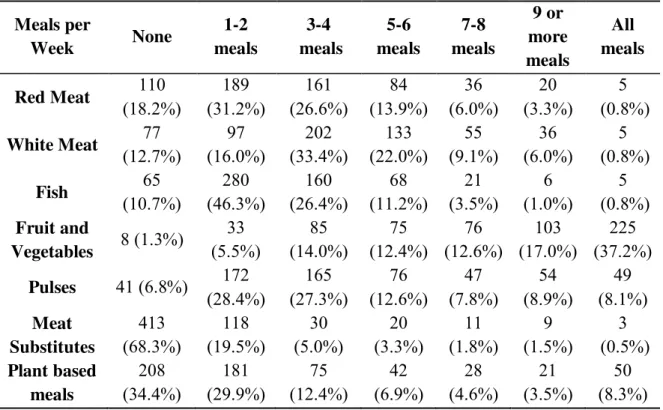
24 Reported frequencies of food consumption per week (red meat, white meat, fish, fruit and vegetables, pulses and meat substitutes were access) are shown in Table 2. The most frequently consumed foods (present in all meals per week) were fruit and vegetables (225, 37.2%). The least frequently consumed foods (not present in any meals per week) were meat substitutes (413, 68.3%). Table 2 also reports the frequencies of plant based meals consumption per week. Of a total of 605 participants, 208 (34.4%) have no plant based meals per week, 181 (29.9%) have 1-2 meals per week, 75 (12.4%) have 3-4 meals per week; 42 (6.9%) have 5-6 meals per week; 28 (4.6%) have 7-8 meals per week; 21 (3.5%) have 9 or more meals; finally, for 50 (8.3%) participants all meals are plant-based.
Table 2. Current Eating Habits per week
Meals per Week None 1-2 meals 3-4 meals 5-6 meals 7-8 meals 9 or more meals All meals Red Meat 110 (18.2%) 189 (31.2%) 161 (26.6%) 84 (13.9%) 36 (6.0%) 20 (3.3%) 5 (0.8%) White Meat 77 (12.7%) 97 (16.0%) 202 (33.4%) 133 (22.0%) 55 (9.1%) 36 (6.0%) 5 (0.8%) Fish 65 (10.7%) 280 (46.3%) 160 (26.4%) 68 (11.2%) 21 (3.5%) 6 (1.0%) 5 (0.8%) Fruit and Vegetables 8 (1.3%) 33 (5.5%) 85 (14.0%) 75 (12.4%) 76 (12.6%) 103 (17.0%) 225 (37.2%) Pulses 41 (6.8%) 172 (28.4%) 165 (27.3%) 76 (12.6%) 47 (7.8%) 54 (8.9%) 49 (8.1%) Meat Substitutes 413 (68.3%) 118 (19.5%) 30 (5.0%) 20 (3.3%) 11 (1.8%) 9 (1.5%) 3 (0.5%) Plant based meals 208 (34.4%) 181 (29.9%) 75 (12.4%) 42 (6.9%) 28 (4.6%) 21 (3.5%) 50 (8.3%) 2.2. Instruments COM-B measures
Capability was measured with 3 items (e.g., “I know how to prepare balanced vegetable-based meals ”; “I can prepare tasty vegetable-based meals”; “I know where to find easy and convenient recipes for preparing vegetable-based meals”). The items were chosen based on a systematic review of COM-B variables to reduce meat consumption and follow more plant-based diets (Graça et al., 2019), using a 7-point Likert-type scale (1 = totally disagree to 7 = totally agree; α = .88).
25 Opportunity was measured with 3 items (e.g., “Increasingly, people are eating plant-based meals”; “The spaces I go to in my daily life have what I need if I want to eat based meals”; “There are more and more options for those who want to make plant-based meals”). The items were also chosen plant-based on a systematic review of COM-B variables to reduce meat consumption and follow more plant-based diets (Graça et al., 2019), using a 7-point Likert-type scale (1 = totally disagree to 7 = totally agree; α = .67).
Motivation was measured with 5 items (e.g., “Meat is irreplaceable in my diet”; “I
would not feel good with a meatless diet”; “If I could not eat meat, I would feel weak; “If I were forced to stop eating meat, I would feel sad”; “I cannot imagine not eating meat regularly”) from the Meat Attachment Questionnaire (Dependence subscale; Graça et al., 2015), which was identified as a relevant variable in terms of Motivation on a systematic review of COM-B variables (Graça et al., 2019). Meat Attachment showed strong negative associations with willingness and intentions to reduce meat consumption and to follow more plant-based diets (Graça et al., 2015). Considering those findings, Meat Attachment was used as a proxy for Motivation in this study. For ease of interpretation, the items were reverse-coded to make them reflect a Likert scale from barrier (low score indicating lower Motivation) to enabler (high score indicating higher Motivation). The measure had a 7-point Likert-type scale (1 = totally disagree to 7 = totally agree; α = .90).
Current Eating Habits was measured with the following items: “On average, how
often do you eat the following meals at lunch / dinner?: Red Meat; White Meat; Fish; Fruit and Vegetables; Pulses; Meat Substitutes” using a 7-point Likert-type scale (1 = none meals per day to 7 = all meals per week) and “On average, in a typical week, how often do you eat plant-based meals at lunch/dinner?”, also using a 7-point Likert-type scale (1 = none meals per day to 7 = all meals per week)
Meal Intentions was measured with the item “Thinking of the upcoming weeks, how often do you plan to consume plant-based meals at lunch / dinner?” using a 7 point Likert-type scale (1 = none; 2 = 1/2 meals per week; 3= 2/3 meal per week; 4= 3/4 meals per week; 5= 4/5 meal per week; 6= 5/6 meals per week; 7 = all the meals) and the item “Please tick below the answer that best characterizes your situation” (option 1 “Thinking on the next two weeks, I don’t intend to increase the consumption of plant-based”; option 2 “Thinking on the next two weeks, I intend to increase the consumption of plant-based meals”; option 3 “All my meals are already plant-based”).
26 2.3. Data collection and analysis
The survey was hosted online by Qualtrics.com as part of a larger project on sustainable food consumption, and participants were recruited via publications shared on social media (e.g., Facebook). Participation was rewarded with the choice of registering in a draw to win a total of 150€ in vouchers (i.e., three vouchers of 50€ each to be used in national retail shops). The online survey was open from March 15th until May 26th, 2019.
Before beginning the survey, participants were informed about the study’s procedures and assured that no individual answers would be analysed or reported. They were also informed that participation was entirely anonymous and voluntary, and provided their consent to participate in the study.
Next, the SPSS database was created, considering the following variables: Place of residence; Education Level; Stage of change (HAPA); Current Eating Habits per week; Capability; Opportunity and Motivation. The categories of some variables were defined in order to facilitate the analysis.
After all these corrections in the database, the statistical analyses were carried out in SPSS (version 24). A Spearman’s correlation test was made to understand the correlation between COM-B variables (Capability; Opportunity and Motivation) and the current eating habits (frequency of consumption per week: red meat; white meat; fish; fruit and vegetables; pulses; meat substitutes). To analyze the predictive ability of demographic variables (Age and Gender), and Capability, Opportunity and Motivation variables in support to the current consumption of plant-base meals, we used a Linear Regression analysis. Finally, to examine the differences in between the different stage of change groups (non-intenders, intenders and actors) according the COM-B variables, a One Way ANOVA was carried.
27 3. RESULTS
3.1. Capability, Opportunity and Motivation to eat plant-based meals and current eating habits of a set of animal-sourced and plant-sourced products: A Correlational Analysis
The consumption of Red Meat was negatively correlated with the three variables of Capability (rsp=-.420, p=.000, N=605), Opportunity (rsp=-.187, p=.000, N=605) and Motivation (rsp=-.525, p=.000, N=597). The consumption of White Meat was also negatively correlated with the three variables of Capability (rsp=-.331, p=.000, N=605), Opportunity (rsp=-.183, p=.000, N=605) and Motivation (rsp=-.389, p=.000, N=597). These results indicate that higher Capability, Opportunity and Motivation are associated with lower consumption of both Red and White Meat per week.
The consumption of Fish was only negatively correlated with the variable Motivation (rsp=-.126, p=.002, N=597), meaning higher Motivation is associated with lower consumption of Fish per week. The consumption of Fruit and Vegetables was positively correlated with the three variables of Capability (rsp=.382, p=.000, N=605), Opportunity (rsp=.179, p=.000, N=605) and Motivation (rsp=.256, p=.000, N=597), as well, the consumption of Pulses with the three variables, Capability (rsp=.349, p=.000, N=604), Opportunity (rsp=.109, p=.008, N=604) and Motivation (rsp=.323, p=.000, N=596) and the consumption of Meat Substitutes with the three variables, Capability (rsp=.409, p=.000, N=604), Opportunity (rsp=.197, p=.000, N=604) and Motivation (rsp=.459, p=.000, N=596). These results indicate that higher Capability, Opportunity and Motivation are associated with higher consumption of Fruit and Vegetables, Pulses, Meat Substitutes per week (See table 3).
28 Table 3 Current Eating Habits and Capability, Opportunity and Motivation: Spearman’s
Correlations
Current Eating Habits Capability Opportunity Motivation
Red Meat -.420*** -.187*** -.525***
White Meat -.331*** -.183*** -.389***
Fish -.043 -.050 -.126**
Fruit and Vegetables .382*** .179*** .256***
Pulses .349*** .109** .323***
Meat Substitutes .409*** .197*** .459***
* p < .05 ** p < .01 *** p < .001
3.2. Capability, Opportunity and Motivation to eat plant-based meals and the current consumption of plant-based meals per week: A Linear Regression Analysis
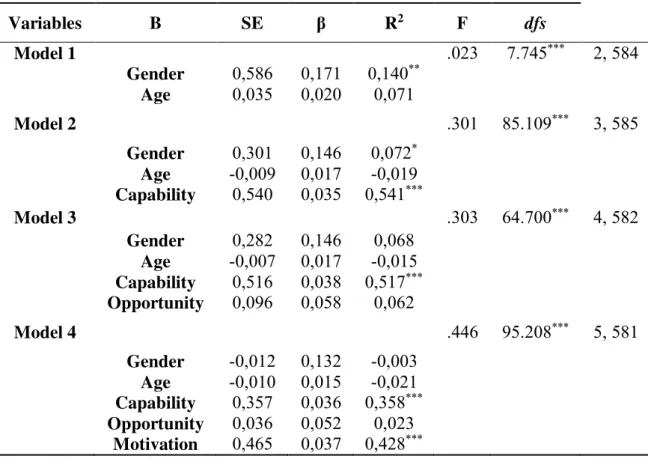
A set of linear regression analysis were performed to compare the predictive ability of demographic variables (age and gender), and Capability, Opportunity and Motivation variables in support to the Current Eating Habits (related to the consumption of plant-based meals per week). Four models were tested (Table 6): (i) model one (gender and age), (ii) model two (gender, age, Capability), (iii) model three (gender, age, Capability, Opportunity) and, (iv) model 4 (gender, age, Capability, Opportunity, Motivation). No problems of multicollinearity were detected in the regression analyses (VIF range: 1.003 to 1.403).
The hierarchical multiple regression analysis revealed that at model one, social demographic variables - gender and age contributed significantly to the regression model, F(2, 584)=7.745, p<.001. In proportion, gender and age explained 2.3% (R2=.023) of the variation in the Current Eating Habits of plant-based Meals per week. Adding the Capability variable to the regression model explained 30,1 % (R2=.301) of the variation in the Current Eating Habits of plant-based Meals per week and this change in R² was significant, F(3, 583)=85.109, p<.001. With the addition of Opportunity, there was a
29 small increase in explained variance of Current Eating Habits of plant-based Meals per week, 30,3 % (R2=.303). R² was also significant, F(4, 582)=64.700, p<.001. Finally, a model that included Motivation explained 44.6% (R2=.446) of variance in Current Eating Habits of plant-based Meals per week, and this change in R² square was also significant, F(5, 581)=95.208, p<.001.
Overall, the findings supported the hypothesis that Capability, Opportunity and Motivation variables predict the Current Eating Habits of plant-based Meals per week (R2 ranging from .023 to .446). Nevertheless, the models that included the COM-B variables (Capability, Opportunity and Motivation) emerged as particularly strong predictors of Current Eating Habits of plant-based Meals per week (See Table 6).
Table 4 Capability, Opportunity and Motivation to eat plant-based meals and the current
consumption of plant-based meals per week: A Regression Analysis
Variables B SE β R2 F dfs Model 1 .023 7.745*** 2, 584 Gender 0,586 0,171 0,140** Age 0,035 0,020 0,071 Model 2 .301 85.109*** 3, 585 Gender 0,301 0,146 0,072* Age -0,009 0,017 -0,019 Capability 0,540 0,035 0,541*** Model 3 .303 64.700*** 4, 582 Gender 0,282 0,146 0,068 Age -0,007 0,017 -0,015 Capability 0,516 0,038 0,517*** Opportunity 0,096 0,058 0,062 Model 4 .446 95.208*** 5, 581 Gender -0,012 0,132 -0,003 Age -0,010 0,015 -0,021 Capability 0,357 0,036 0,358*** Opportunity 0,036 0,052 0,023 Motivation 0,465 0,037 0,428*** * p < .05 ** p < .01 *** p < .001
30 3.3. Different stage of change groups (non-intenders, intenders and actors) and
Capability, Opportunity and Motivation: Differences between groups
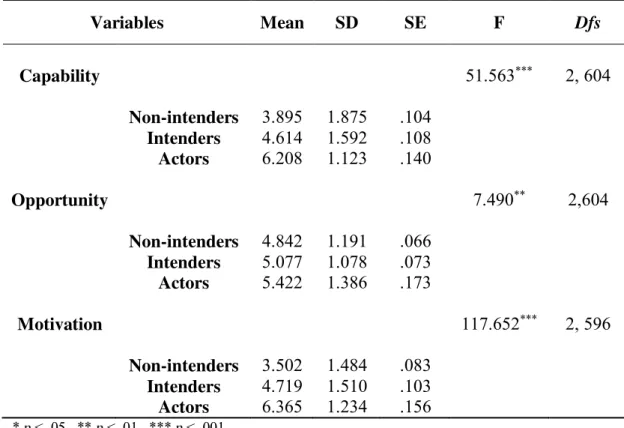
A one-way ANOVA was conducted to compare the Capability, Opportunity and Motivations of the three different Meal Intentions Groups (Non-intenders, Intenders and Actors). There was a statistically significant difference between the different Meal Intentions groups on Capability (F(2, 604)=51.563, p<.001), Opportunity (F(2 ,604)=7.490, p<.01) and Motivation (F(2, 596)=117.652, p<.001). Post hoc comparisons using the Tukey HSD test indicated that all the mean scores for the variables Capability and Motivation were significant between all three Meal Intention groups. However, the Opportunity variable was only significantly different between for the Non-Intenders and Actors group (See table 7).
Table 5 Differences between Meal Intention groups (Stage of change) in the Capability,
Opportunity and Motivation variables
Variables Mean SD SE F Dfs Capability 51.563*** 2, 604 Non-intenders 3.895 1.875 .104 Intenders 4.614 1.592 .108 Actors 6.208 1.123 .140 Opportunity 7.490** 2,604 Non-intenders 4.842 1.191 .066 Intenders 5.077 1.078 .073 Actors 5.422 1.386 .173 Motivation 117.652*** 2, 596 Non-intenders 3.502 1.484 .083 Intenders 4.719 1.510 .103 Actors 6.365 1.234 .156 * p < .05 ** p < .01 *** p < .001
31 4. DISCUSSION
We are facing both hunger/malnutrition and excessive food wastage, over-consumption and obesity (Aiking & de Boer, 2018).A transition from animal-based diets towards more plant-based diets might lower these impacts, and according to Willett et al. (2019), we can achieve global healthy population diets through sustainable food systems. The main goal of this study was to generate knowledge to help understand the transition towards a more plant-based diet, by addressing barriers and facilitators of the transition and how they can relate to our current eating habits.
The present work adds several contributions to this discussion. First, the findings supported the hypothesis that Capability, Opportunity and Motivation to eat plant-based meals are positively correlated with Current Eating Habits. Higher levels of Capability, Opportunity and Motivation were associated with lower consumption of both Red and White Meat per week and in opposition, were associated with higher consumption of Fruit and Vegetables, Pulses and Meat Substitutes. Higher Motivation was associated with lower consumption of Fish per week. According to these results, there is an increased consumption of Fruit and Vegetables, Pulses and Meat Substitutes when there is higher psychological and physical capacity to engage in the consumption of plant based meals (Capability), when the consumption choice is made through brain processes that energize and direct behaviour (Motivation) and also, when all the external factors that prompt the consumption of plant based meals are present (Opportunity) (Michie et al., 2011). These results go along with previous findings of behavioural interventions that aimed to promote fruit and vegetable’s consumption. According to Inauen et al. (2017) setting a goal to eat more fruit and vegetables through self-reporting was more effective with social support of university students and staff (through a WhatsApp group, where they were encouraged to support each other to reach their goal). Niland, Goldman and Edelstein (2011) found that the placement of fruit and vegetable on a table tent on a university campus led to significantly more fruit and vegetables consumed by students. Similarly, LaChat et al. (2009) found that when the university canteen offered students a free portion of vegetables and fruit, there was a significant increase consumption of fruit and vegetables, compared to the control group who did not receive a free portion. Powell, Zhao, and Wang (2009)also found that young American adults’ consumption of fruit and vegetables was significantly associated with fruit and vegetables prices (higher prices were associated with significantly lower consumption) and the intakes of those of lower to middle socioeconomic status (SES) were more price responsive than those of higher SES.
32 Through the literature review we understood that that healthier and sustainable diets are higher in vegetables, fruits and whole grains and low on animals’ and related products. An adequate consumption of fruits and vegetables is an essential element of a healthy diet and is still a challenge. These findings also pave the way for further health promotion intervention studies with the goal of increasing the consumption of fruit and vegetables, pulses and meat substitutes, through the increase of Capability, Opportunity and Motivation variables.
The second main contribution of this study was testing the hypothesis that Capability, Opportunity and Motivation variables predict the Current Eating Habits of plant-based meals per week. The model that included the three COM-B variables (Capability, Opportunity and Motivation) emerged as particularly strong predictor of Current Eating Habits of plant-based meals per week. However, only Capability and Motivation variables showed significant (unique) explanatory capacity of Current Eating Habits of plant-based meals. Opportunity was the only COM-B variable that did not have a significant (unique) explanatory capacity of Current Eating Habits of plant-based meals. These results indicate that having the knowledge of how to prepare plant-based meals, know where to find plant-based diets (Capability) combined with the level of meat attachment (i.e., considering meat replaceable or not – Motivation) seems to shape the current eating habits of young adults. In opposition, external factors like having the knowledge that there’s an increased number of people that consume plant-based diets, that the spaces that they attend have plant-based option and that there’s more options for the one’s that follow plant-based diets (Opportunity) does not seem to uniquely explain their current eating habits.
It seems that the decision to eat more fruits and vegetables is a distinctly different process than making the decision to follow a plant-based diet (Brug, de Vet, de Nooijer, & Verplanken, 2006). Likewise, there are certain external factors associated with this stage of life (i.e., young adults) that might explain why the Opportunity variable did not display a significant explanatory capacity of plant-based meals per week. Young adults are establishing long-term health behavior patterns. They consume higher quantities of fast food, soft drinks and “fourth meal” (the meal between dinner and breakfast) and they are more likely to eat almost the same foods every day (Nelson, Story, Larson, Neumark‐ Sztainer & Lytle, 2008). These findings become even more evident, when they are away from the family, where there is an additional difficulty in following a healthy lifestyle. The change of lifestyle, the comfort and convenience of fast food, the physical and social
33 environment surrounding them, the gender and the attention to the weight are involved in the food choices (Driskell, Kim & Goebel, 2005). Additionally, young consumers are more influenced by the power of the peers and show higher openness to change (Baker & Ozaki, 2008). For example, most young adults reported they enjoy and value eating with others even though that some of them reported lacking time to sit down and eat a meal (Larson, Nelson, Neumark-Sztainer, Story & Hannan, 2009). Furthermore, young adults have been targeted, over the past decade, with food and beverage’s marketing campaigns, mainly from the fast food and soft drink industries to build brand loyalty and a consumer base (Nelson, Story, Larson, Neumark‐Sztainer, & Lytle, 2008). One tentative explanation for Opportunity not having a significant (unique) explanatory capacity of Current Eating Habits of plant-based meals is that perhaps there are certain external factors, as the ones explained above, associated with consumption habits during this stage of life that might display a bigger impact than the ones used to assess Opportunity in this study, using this measure in particular. For example, in this study Opportunity was measured through the perception that people eating increasingly more plant-based meals, that the physical spaces have what is needed to eat plant-based meals, and also that there are increasingly more options for those who want to eat plant-based meals. For some behaviours, the only required change may be to work on the external factors to perform the behaviour (opportunity), while for other behaviours, such as current consumption of plant-based meals per week, perhaps it is necessary to focus firstly on changing the levels of motivation to perform the behaviour, and providing information on how to prepare balanced and tasty plant-based meals and where to find recipes for preparing such meals (capability).
Even though Opportunity variable was not found a significant predictor of plant-based meals per week, Capability and Motivation variables were significantly associated with this target behaviour. This is consistent with findings from previous studies, such that the perception of meat eating as an enjoyable established eating routine represents an important motivational barriers (Pohjolainen, Vinnari & Jokinen, 2015). Insufficient information about vegetarian diets (Ensaff, Coan, Sahota, Braybrook, Akter & McLeod, 2015) and awareness that vegetarians diets tend to be more environmentally friendly than diets that include meat, represent capability barriers (Cordts et al., 2014). Also, social conformity can be seen as representing an opportunity barrier (Lacroix & Gifford, 2019).
The third main contribution of this study is that different stage of change groups (Non-intenders – the ones that did not pretend to increase the plant-based meals in diet in
34 the next two weeks; Intenders – the ones who intended to increase the plant-based meals in diet in the next two weeks; and Actors – the ones that already have all plant-based meal in a week) seem to be associated with the variables of Capability and Motivation. The opportunity variable was only significantly different between the Non-Intenders and Actors groups. When comparing the Intender group with the Actor group there were statistically significant differences in the variables of Capability and Motivation. The Intender group would probably benefit of marketing strategies, communication or interventions focused on these two variables to help overcome the transitional barriers. And for the Non-Intender group, because there is also statistically significant difference in the variables of Capability, Motivation and Opportunity when compared with the Actor group, they would probably benefit, as well, of marketing strategies, communication or interventions focused on these three variables to help overcome the transitional barriers and attain facilitators. The results go along with the findings from Godinho et al. (2013), which indicate that it is important to define different ‘stages’ of change related to the fruit and vegetable intake in order to achieve successful behavioural change messages. It seems that Non-intenders benefit most from messages that targeted Motivation aspects (risk assessment, outcome expectancies, self-efficacy) and, in opposition, Intenders would benefit more from volitional based messages about action planning and overcoming barriers.
These results implicate that different cognitions may be important at different stages in promoting an increased consumption of plant-based diets, and that different interventions may be appropriate for individuals at different stages. Furthermore, the results also suggest that we need to take into consideration the different barriers and facilitators that have influenced behaviour in the past and the current barriers and facilitators, not only of the individual, but also his/her context. For example, according to this study, Non-Intenders and Intenders showed the lowest levels of the three variables (Capability, Opportunity and Motivation). Specifically, to help overcome the barriers in the transitional process towards a plant-based diet, Capability should be increased by increasing the knowledge of how to prepare plant based meals and where to find plant based diets, since the lack of knowledge and cooking skills have been identified as barriers (Lea, Crawford, & Worsley, 2006a, 2006b). To increase the Opportunity variable, it would be necessary to work on external factors, for example, social norms and product prices. A previous study has found that the manipulation of social norms related to meat by, for example, exposing participants to collective reduction of meat eating over
35 time, not only increased consumer interest in eating less meat, but also, increased meatless orders at a cafeteria (Sparkman & Walton, 2017). Higher prices of meat were identified as triggers to reducing or avoiding meat consumption (Charlebois, McCormick, & Juhasz, 2016) and offering fruit and vegetables seems to increase their consumption (LaChat et al., 2009; Niland et al., 2011). In order to increase Motivation (reduce Meat Attachment), there is the need to shape the brain processes that energize and direct behaviour. Graça, Godinho, & Truninger (2019) found that motivational interventions should work on persuasion, through communication techniques that can create a positive affect towards plant-based meals and diets. Additionally, an intervention should be based on incentives that can create feelings of reward and positive outcome expectations about plant-based meals and diets.
In future interventions aiming to increase consumption of eat plant-based meals we need to improve all three Capability, Opportunity and Motivation features. However, orientations toward prosumerism (consumers as producers of their own goods), communication (seeking to convey a message and meaning through the goods and services one uses), as well as with food orientations toward pleasure (pleasing/indulging oneself throughfood) and social image (eating to present one-self positively in social contexts) were not measured. Graça, Truninger, Junqueira and Schmidt (2019) found that for people with high values on the previous orientations the improvement of all three Capability, Opportunity and Motivation will not have the same positive results.
It seems that there are different types of determinants that can be used to develop effective interventions towards more plant-based and less animal-based diets. According to Taufik, Verain, Bouwman and Reinders (2019), interventions that target environmental or individual determinants are the most efficient. The barriers and facilitators identified can inform the design of tailored interventions and marketing campaigns. Tapp and Spotswood (2013) consider that it is important for social marketing frameworks to incorporate theoretical models, like COM-B. It would provide a new way to settling on broad strategies for social marketing solutions to behavioural problems. Social persuasion/behaviour change are complex constructs that benefit of multi-disciplinary solutions. According to the authors, if a capability (skill) deficit would be recognized, a solution would be to work in service delivery. Additionally, promotional activities would be useful when capability and opportunity are already present and all that is needed, for a behaviour change, is to work on motivation, for example through promoting the issue that creates awareness.
36 For health promotion, it is important to consider the special needs of subgroups of participants (Schwarzer, Lippke, & Luszczynska, 2011). With the use of the HAPA model in this study, we understood that different stages of change are connected with different cognitions and that people pass through different mindsets to achieve behavioral change. Even though the Actor group does all plant-based meals, action must be maintained. That involves self-regulatory skills and strategies and they must be ready to face high-risk situations. Non-intenders would need confrontation with outcome expectancies and some level of risk communication. For example, they need to learn that the plant based meals have positive outcomes (e.g., more health and sustainable) as opposed to the negative outcomes. Intenders, on the other way, would need more than health messages, their planning should translate their intentions into action (Schwarzer, Lippke & Luszczynska, 2011).
In conclusion, Non-intenders need risk and resource communication, by addressing the pros and cons of a critical behavior. Intenders group would need support on missing skills to translate their intentions into behavior. Finally, Actors would benefit relapse prevention strategies, to help stabilize the eating behaviours (Schwarzer, Lippke, & Luszczynska, 2011). Combined with the knowledge obtained though the COM-B model, all these strategies would need to be focused on the variables of Capability, Motivation and Opportunity. For future interventions/marketing campaigns it is important to first assess the needs of the recipients, for example, their stage of change (Non-intenters, Intenders and Actors), and subsequently, match the stage of change with specific needs across the three variables Capability, Opportunity and Motivation
Even though this study brought insights to understand the transitional process towards a more plant-based diet, important limitations need to be considered. The results were obtained with a convenience sample which is not indicative of the whole target population of Portuguese young adults. Gender was unevenly distributed in the sample, which could be an indication of selection bias (437, 72.2% Female and 158, 26.1% Male). Additionally, the average age was 23 years old (SD=3.81). The stage of change groups was also poorly distributed, Non Intenders (324; 53.6%), Intenders (217; 35.9%) and Actors (64, 10.6%), and that might have biased some findings.
The development of this study and taking cognizance of the various factors that underlie the transitional process towards plant-based diets, allowed an understanding of how important psychology is and use of theoretical frameworks models (HAPA and COM-B) to tackle important health and sustainable issues. This is important for the field