INTRODUCTION
Review Article/Artigo de Revisão
1. Laboratório Cardiovascular, Área de Clínica Médica (Cardiologia), Faculdade de Medicina, Universidade de Brasilia, Brasilia, DF.
Address to: Dr. Luiz Fernando Junqueira Jr. Laboratório Cardiovascular/FM/UnB. Campus Universitário, 70910-900 Brasília, DF, Brasil.
Phone: 55 61 3107-1936; Fax: 55 61 3273-3907 e-mail: [email protected]
Received in 17/10/2011 Accepted in 10/01/2012
ABSTACT
Introduction: Exclusive or associated lesions in various structures of the autonomic nervous system occur in the chronic forms of Chagas disease. In the indeterminate form, the lesions are absent or mild, whereas in the exclusive or combined heart and digestive disease forms, they are oten more pronounced. Depending on their severity these lesions can result mainly in cardiac parasympathetic dysfunction but also in sympathetic dysfunction of variable degrees. Despite the key autonomic efect on cardiovascular functioning, the pathophysiological and clinical signiicance of the cardiac autonomic dysfunction in Chagas disease remains unknown.
Methods: Review of data on the cardiac autonomic dysfunction in Chagas disease and their potential consequences, and considerations supporting the possible relationship between this disturbance and general or cardiovascular clinical and functional adverse outcomes. Results:
We hypothesise that possible consequences that cardiac dysautonomia might variably occasion or predispose in Chagas disease include: transient or sustained arrhythmias, sudden cardiac death, adverse overall and cardiovascular prognosis with enhanced morbidity and mortality, an inability of the cardiovascular system to adjust to functional demands and/or respond to internal or external stimuli by adjusting heart rate and other hemodynamic variables, and immunomodulatory and cognitive disturbances. Conclusions: Impaired cardiac autonomic modulation in Chagas disease might not be a mere epiphenomenon without signiicance. Indirect evidences point for a likely important role of this alteration as a primary predisposing or triggering cause or mediator favouring the development of subtle or evident secondary cardiovascular functional disturbances and clinical consequences, and inluencing adverse outcomes.
Keywords: Chagas heart disease. Indeterminate form of Chagas disease. Heart autonomic control. Cardiac autonomic dysfunction. Cardiovascular outcomes.
RESUMO
Introdução: Lesões isoladas ou combinadas de várias estruturas do sistema nervoso autônomo ocorrem nas formas crônicas da doença de Chagas. Na forma indeterminada, as lesões são discretas e podem estar até ausentes, enquanto nas formas cardíaca e digestória exclusivas ou combinadas elas são comumente mais pronunciadas. Na dependência da sua maior ou menor severidade, estas lesões podem resultar em variáveis graus de disfunção parassimpática e/ou simpática, principalmente a primeira. Apesar da crítica inluência autonômica sobre o funcionamento cardiovascular, o signiicado isiopatológico e clínico, notadamente em longo prazo, da disfunção autonômica cardíaca permanece desconhecido na doença de Chagas.
Métodos: Revisão sobre a disfunção autonômica cardíaca na doença de Chagas e suas potenciais consequências, como base para considerações acerca da possível relação entre este distúrbio e desfechos clínicos e funcionais globais e cardiovasculares desfavoráveis. Resultados:
Os potenciais desfechos que a disautonomia cardíaca pode variavelmente determinar ou predispor na doença de Chagas incluem: arritmias transitórias ou sustentadas, morte súbita, mal prognóstico global e cardiovascular, morbi-mortalidade aumentada, deiciente adaptação cardiovascular a demandas funcionais e/ou em resposta a estímulos internos e externos por meio de ajustes da frequência cardíaca e outras variáveis hemodinâmicas, e distúrbios imunomoduladores e psico-funcionais. Conclusões: A alteração da modulação autonômica cardíaca na doença de Chagas pode não representar mero epifenômeno sem signiicado. Evidências indiretas sugerem papel importante desta alteração como fator predisponente ou determinante primário para o desenvolvimento secundário de distúrbios funcionais manifestos ou não e consequências clínicas cardiovasculares, e para a ocorrência de desfechos desfavoráveis.
Palavras-chaves: Cardiopatia chagásica crônica. Forma indeterminada da doença de Chagas. Função autonômica cardíaca. Disautonomia cardíaca. Desfechos cardiovasculares.
Insights into the clinical and functional significance of cardiac
autonomic dysfunction in Chagas disease
Considerações sobre o signiicado clínico-funcional da disfunção autonômica cardíaca na
doença de Chagas
Luiz Fernando Junqueira Junior
1The autonomic nervous system coordinates and modulates the harmonious and integrated functioning of the organism and its relations with the surrounding environment with ine precision. In particular, the autonomic inluence on the heart and vascular system is one of the most remarkable and extensive homeostatic processes in the organism. herefore, disturbances to this neural regulatory system, even subtle or not outwardly detectable ones, certainly afect to some extent the homeostasis of the organism with both short- and long-time functional prejudice. In recent years, various direct and indirect lines of evidence have emerged linking lesions and disturbances of this system to various cardiovascular functional alterations and to higher mortality and morbidity in many clinical conditions.
Therefore, it seems reasonable and timely to undertake an insightful consideration of the possible role of the cardiac autonomic dysfunction in chronic Chagas disease as a possible cause or contributing factor of some functional disturbances and clinical manifestations and as a determinant of adverse outcomes.
CHAGAS DISEASE ESSENTIALS
Chagas disease is a very serious chronically debilitating and often fatal human endemic infectious-parasitic affection that is caused by the protozoan Trypanosoma cruzi and transmited by hematophagous triatomid bugs. It usually victimises persons living in underdeveloped social and economic conditions in most South and Central America countries, which are endemic for the disease. A recently estimated cohort of about 8-10 million people living in these countries is chronically infected, thus carrying one of the chronic clinical forms of the disease. Around 50-60% of them lack evident manifestation and about 30-40% have obvious typical clinical and functional disturbances of the heart and/or digestive tract resulting in diferent, mild to severe consequences, with approximately estimated 6-12,000 deaths per year. Nearly 28 million people are at risk of to acquire the disease and the number of annual new cases due to vectorial transmission is close to 41,0001-4. As the result of migrating
low, thousands of infected Latin-American immigrants are also living in the United States, Canada, Australia, Japan and in several European countries. Indigenous cases are also present in many of these countries because of the geographical spreading of infected bugs by ecological and climatic changes. It is estimated in about 400,000 the number of infected subjects in these non-endemic countries5,6.
A myriad of unique and intriguing pathological, patho-physiological and clinical aspects regarding the heart and digestive tract are markers of Chagas disease. his disease manifests under an acute form, which is followed, usually ater some decades, by one of the diferent chronic forms. he acute form oten shows infectious nonspeciic symptoms for a few days, or it may proceed to eventual myocarditis of variable severity. In the chronic form named indeterminate form, the diagnosis is based only on positive, speciic serological tests. Most of the afected subjects remain in this form for their lifetime having excellent long-term prognoses, while showing clinical and functional normality as characterised at the primary diagnostic level by clinical examination, standard electrocardiogram (ECG) and X-rays (Rx) of the heart and digestive tract. However, some chagasics with this form show subtle cardiac functional disturbances detectable by more sophisticated and sensitive exams, such as Doppler echocardiography, 24h ECG, electrophysiological studies and autonomic tests1,4,7-10.
he other chronic forms, which may evolve or not from the indeterminate form, are the cardiac form, the digestive form, and the cardiac plus digestive associated form, expressing the exclusive or associate involvement of the heart and digestive tract. In these forms, the underlying pathological changes determining the clinical and functional manifestations are inlammatory and degenerative lesions and ibrosis of the afected structures, which occur with variable intensity and extension and progress gradually from an acute to a chronic patern. In the heart, the structures exclusively or associatively affected are mainly the atrial and ventricular myocardium, the specialised electrical excitation and conduction tissue, the intrinsic neural network, the postganglionic autonomic
innervation and neurotransmiter cellular receptors, and the coronary microcirculation11-15.
During its course, the disease may show various speciic clinical and/or functional manifestations with or without symptoms of variable severity and occurring exclusively or in association. hese manifestations include systolic and/or diastolic dysfunction, heart enlargement with or without failure, a great variety of hypokinetic and hyperkinetic arrhythmias and other electrophysiological disturbances, cerebral or pulmonary thromboembolism, digestive megasyndromes, cardiac autonomic dysfunction and expected or unexpected sudden cardiac death. he form involving the heart shows high morbidity and mortality with considerable potential for short- and middle-term disability and poor prognosis in about 30-40% of afected subjects. At the primary level, the diagnosis of cardiac and digestive forms depends on inding alterations in a standard electrocardiogram and radiological signs of enlargement of the digestive tract segments, respectively, independently of the presence of clinical symptoms and signs, but in the presence of positive serology for the disease1,2,4,10,11,16,17-19.
CARDIAC AUTONOMIC NERVOUS SYSTEM IN CHAGAS DISEASE
Difuse damage to the autonomic nervous system, principally of the parasympathetic branch afecting the heart and digestive tract, is a remarkable pathological feature commonly present in variable degrees and extents in the acute and all chronic forms of human Chagas disease11,13,15,17-19 and the corresponding forms
of experimental Trypanosoma cruzi infection in diferent animal models20-24. his is a fact recognised soon ater the description of
the disease at the beginning of the past century. Autonomic damage expressed by neuronal and ganglionic inlammation and destruction with variable loss of nerve cells is credited to initiate in the acute phase and continue into the chronic phase, occurring through non-immune or parasitic and non-immune mechanisms acting exclusively or in combination11,15,25.
Many autonomic components, mainly related to functional modulation of the heart and digestive viscera, including central neural structures at diferent levels, peripheral extrinsic and intrinsic autonomic ganglia, aferent neurons from receptors, sympathetic and parasympathetic eferent neurons and the beta-adrenergic and muscarinic cholinergic neurotransmiter cellular receptors, may be injured exclusively or in combination, and this has been demonstrated both in human and experimental Chagas disease11,13,15,18,20-23,26-29.
Several studies have shown less pronounced lesions of the cardiac parasympathetic innervation in the indeterminate form, which are usually represented by discreet to moderate focal or zonal neuroganglionitis. In the isolated or associate cardiac and digestive forms of the disease, the intrinsic innervation of the heart is oten more severely damaged by inlammatory and degenerative alterations. Moreover, a decrease in the number of cardiac ganglion cells and neurons has clearly been shown, and both parasympathetic and sympathetic lesions have been described11,13,15,18,21-24,28,30.
autonomic dysfunction may to afect, exclusively or in combination, the electrical properties of the sinus and atrioventricular node and the intraventricular conducting system, as well as the electrical and mechanical properties of the atrial and ventricular myocardium. Classical autonomic tests and heart rate variability analysis have evaluated impairment of autonomic control exclusively on the sinus node. hey have demonstrated that cardiac parasympathetic and/or sympathetic dysfunctions are present in many affected subject, being both observed not only in chagasics with exclusive or combined evident cardiomyopathy but also in those with the exclusive digestive form or without overt manifestations of heart or digestive damage. Normal autonomic modulation of the heart is also encountered in chagasics with any form of the disease. When present, the disturbance occurs with variable severity according to the chronic form of the disease and even between subjects afected with the same form8,9,17,30-37. Chronically infected children with the indeterminate
form also show cardiac autonomic dysfunction38. Chagasics with
arterial hypertension also present impaired cardiac parasympathetic modulation, apparently to the same extension as chagasics without hypertension39. However, a sample of elderly chagasics with the
indeterminate form of the disease did not showed any alterations in cardiac autonomic function as compared with healthy elderly subjects40. Contrasting with this inding, elderly chagasics below
70 years, but not those older, with an uncharacterised form of the disease, show reduced vagal modulation41.
It seems that the intensity of the cardiac autonomic functional disturbance is strictly correlated with the clinical form of chagasic organic involvement. Usually, mild autonomic dysfunction occurs in the indeterminate form and in chagasics showing a borderline electrocardiogram, the severe disturbances occur in the cardiac-digestive and cardiac-digestive forms, and moderate dysfunction occurs in the exclusive cardiac form8,10,32,33.
In addition to the lesions in diferent structures of the autonomic nervous system, exclusive degenerative and inlammatory damage in efectors of the autonomic inluence on the heart, such as the sinus and atrioventricular nodes and the bundle of His may also occur with resultant secondary cardiac autonomic dysfunction42. Similarly,
lesions in the myocardium may also result in disturbed autonomic modulation of atrial and ventricular electrical and mechanical properties. Cardiac and vascular mechanoreceptors, central and peripheral chemoreceptors and aferent neural ibres in the heart and lungs seem also to be damaged, which may impair cardiopulmonary barorelexes and modify chemorelex responses43,44.
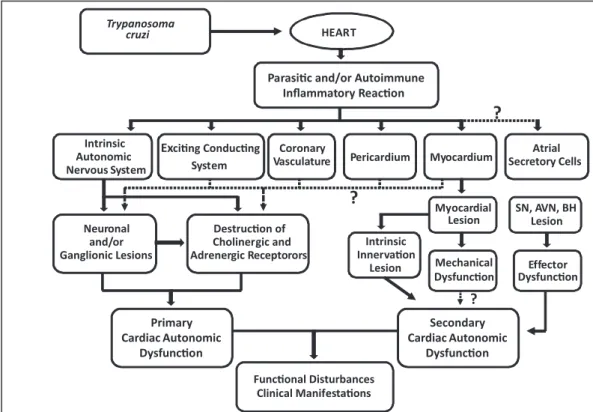
The diagram in Figure 1 shows proven and possible pathophysiological mechanisms of the cardiac autonomic dysfunction triggered by Trypanosoma cruzi infection, which may culminate in diferent clinical and functional manifestations.
Despite the extensively recognised and well-established disturbances of the autonomic nervous system, the pathophysiological
Myocardial Lesion
Primary Cardiac Autonomic
Dysfuncon
Excing Conducng System
Neuronal and/or Ganglionic Lesions
Coronary
Vasculature Myocardium
Atrial Secretor Cellsy
Destrucon of Cholinergic and Adrenergic Receptorors
Mechanical Dysfuncon Parasic and/or Autoimmune
Inflammatory Reacon
Intrinsic Autonomic Nervous System
Funconal Disturbances Clinical Manifestaons
?
Pericardium
?
?
Trypanosoma cruzi
Secondary Cardiac Autonomic
Dysfuncon HEART
?
?
SN, AVN, BH Lesion
Effector Dysfuncon Intrinsic
Innervaon Lesion
FIGURE 1 - Trypanosoma cruzi may afect, in combination or exclusively, all of the structures of the heart by means of toxicity or inlammatory efects, resulting in lesions that afect both the intrinsic autonomic innervation, the exciting-conducting system and the contractile myocardial ibres.
One of the important consequences is cardiac autonomic dysfuncion, which has been repeatedly demonstrated to be a primary disturbance independent of contracile dysfuncion. This impaired autonomic funcion may be the substrate for various secondary funcional and clinical manifestaions. The coninuous lines show proven pathophysiological relaionships, and the doted lines show possible but unproven disturbances.
and clinical significance of the cardiac autonomic dysfunction remains one of the major challenges to overcome in Chagas disease research. No study has yet fully considered the short- and long-term prognostic signiicance, functional cardiovascular limitations and potential risks for adverse outcomes associated with the cardiac autonomic dysfunction, and many questions remain unanswered16.
Is the cardiac autonomic dysfunction in Chagas disease a simple epiphenomenon without any functional, clinical or prognostic signiicance? Does it constitute a key physiopathogenetic link or triggering cause for the development of secondary disturbances and manifestations such as diferent arrhythmias, sudden death, and continuing contractile failure? Could it represent a risk factor for cardiovascular or general morbidity and mortality? Or, alternatively, is it an underlying mechanism for altered homeostasis imposing inappropriate short- and long-term cardiovascular adaptation to multiple internal or external stressful stimuli?
he role of cardiac autonomic dysfunction in determining these outcomes in Chagas disease probably is not a mere guess, but a real possibility, as we irst hypothesised, considering the important inluence of the autonomic nervous system on all the electrical and mechanical properties of the heart and on cardiovascular and general morbidity and mortality16,28,45,46. Also, several recent observations
have emerged linking unfavourable cardiovascular outcomes to cardiac dysautonomia in various pathological conditions that afect the autonomic nervous system47-53.
Func�onal Disturbances Clinical Manifesta�ons
Automa�sm Condu�bility Excitability
Electrical
Dysfunc�on Dysfunc�onMechanical Dysfunc�onCoronary Dysfunc�onEndocrine
Coronary insufficiency
Arrhythmias Sudden
Death
Disturbances of Reflex Responses and Variability
of Heart Rate
?
?
Cardiovascular Reflexes
Disturbances of HR, BP, CO, PR
Dis�nc�ve Pa�erns of Rela�ve and/or Absolute Sympathe�c – Parasympathe�c
Impairment in the Heart
Disturbances of Volemia, Osmolarity,
Arterial Pressure Contrac�le
Relaxa�on Vasomo�onCoronary EndocrineFunc�on
FIGURE 2 - Sympathetic and parasympathetic impairments of variable degree may afect all the properties and functional mechanisms of the heart, resulting in electrical, mechanical, coronary and, possibly, endocrine dysfunctions.
Figure 2 depicts possible clinical and functional disturbances likely to result or be inluenced by impaired autonomic modulation on the diferent structures and functional properties of the heart.
AUTONOMIC AND CONTACTILE DYSFUNCTION
Regarding the possible relationship between ventricular and autonomic dysfunctions, it was originally proposed that cardiac autonomic denervation would be the direct and primary cause of the myocardial contractile deiciency and the advancement of this mechanical disturbance until the phase of congestive heart failure. his is the neurogenic theory of the physiopathogenesis of chronic Chagas heart disease, by which this condition would be a neurocardiopathy consequent to parasympathetic impairment, and therefore unbalanced sympathetic dominance would submit the heart to excessive adrenergic activity with resultant increasing organ deterioration and failure11.
However, a great number of subsequent pathological, functional and clinical studies have formed a widely accepted physiopathogenetic concept according to which cardiac autonomic denervation and the resultant functional disturbances are not the determining mechanism neither of the progressive cardiomegaly of Chagas disease nor the ensuing heart failure in the most cases. he progressive contractile
As a consequence, disincive funcional and clinical disturbances or manifestaions may occur, thereby conferring to the autonomic impairment potenially important pathophysiological and prognosic signiicance in Chagas disease. The solid lines show established mechanisms and the dashed lines show possible mechanisms underlying diferent cardiac pathological condiions.
dysfunction of the heart critically depends on the underlying evolutionary chronic ibrotic inlammation of the myocardium15,17,54.
Therefore, the autonomic denervation and the consequent disturbance of neural heart control do not seem to be a direct cause of the contractile dysfunction19,34,37,55,56.
On the other hand, several lines of evidence have clearly proven that the progressive contractile mechanical disturbance does not result in secondary autonomic dysfunction, except in the phase of heart failure where this functional disturbance is present in variable degree. These evidences include the demonstration that contractile alteration of the right ventricle is independent of autonomic dysfunction34, parasympathetic impairment precedes
the left ventricular systolic dysfunction35, and that chronotropic
incompetence in response to exercise testing is an early warning of cardiac autonomic disturbance that is independent of ventricular function57. In addition, we observed pronounced sympathetic and
parasympathetic depression with preserved sympathovagal balance as evaluated by short-term heart rate variability, which occurred with virtually unaltered morphological and functional ventricular echocardiographic parameters. he unique ventricular alteration was an increased let ventricular end systolic diameter, and this was directly associated with cardiac autonomic impairment. his marked imbalance between autonomic and ventricular dysfunction reinforces that there is no precise causal relationship between the two and that autonomic impairment may precede ventricular alterations in this disease37.
herefore, all of these results suggest that cardiac autonomic impairment is a primary phenomenon, being neither a cause nor the result of the continuing chronic contractile dysfunction in Chagas heart disease. Despite this, it is not possible to eliminate the possibility that autonomic and contractile dysfunction mutually inluence or worsen one another to some extension37,58. However,
an isolated alternative hypothesis considers that cardiac autonomic dysfunction is the result of contractile ventricular dysfunction and other primary pathophysiological mechanisms59.
DYSAUTONOMIC ARRHYTHMOGENESIS - A WORKING HYPOTHESIS
Based on the previous considerations, an expected atractive and logical implication of cardiac autonomic dysfunction as a determining or predisposing pathophysiological risk factor, perhaps one of higher relevance and clinical consequence, concerns the physiopathogenesis of arrhythmias and even sudden cardiac death16, which are so
common in Chagas heart disease1,28,45,60,61.
Indeed, the autonomic nervous system critically modulates all of the electrophysiological properties of the electrical and contractile tissues of heart (automatism, conductibility and excitability) whose alterations are the underlying causes of arrhythmogenesis. The parasympathetic branch exerts depressive or stabilising anti-arrhythmogenic electrophysiological efects and a negative inotropism, while the sympathetic branch has a pro-arrhythmogenic stimulatory efect and exerts a positive inotropism; an adequate balance between these autonomic inluences on the heart is essential for maintaining the electrical stability of the myocardium and the excitation and conducting system. Therefore, parasympathetic depression or sympathetic overactivity could increase the vulnerability to arrhythmogenesis. Consequently, changes of variable
degree afecting the sympathetic-parasympathetic balance on the heart in favour of absolute or relative sympathetic dominance may result in electrophysiological instability and induce arrhythmias of diferent types with a broad severity spectrum.
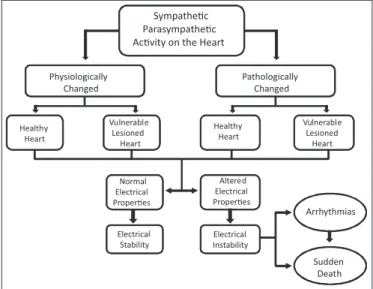
Changes in autonomic modulation can be triggered or exacerbated by diferent intrinsic or extrinsic factors involving the heart-brain relationship, such as primary neural and cardiac factors and a great sort of emotional, psychosocial and stressors factors. he arrhythmias can to generate even sudden death depending on the extent and speed of onset of such neurocardiac alterations and on the pathological and functional substrate of the myocardium and excitation and conducting tissues. It is possible that even physiological changes of the cardiac autonomic system acting on a damaged heart substrate are able to produce arrhythmias. Figure 3 depicts these inal common potential physiopathological mechanisms of arrhythmogenesis that can be provoked by sympathetic and/or parasympathetic changes or dysfunction.
Vulnerable Lesioned
Heart
Altered Electrical Properes
Electrical Stability
Electrical Instability Normal
Electrical Properes
Arrhythmias
Vulnerable Lesioned
Heart
Physiologically Changed
Pathologically Changed
Healthy Heart
Healthy Heart
Sympathec Parasympathec Acvity on the Heart
Sudden Death
FIGURE 3 - Potential pathophysiological pathways of autonomic arrhythmogenesis. Relative or absolute physiological or pathological changes in sympathetic and/or parasympathetic activity of the healthy or vulnerable heart may induce alterations in cardiac electrical properties potentially able to result in arrhythmias of variable severity and even sudden death.
In Chagas heart disease, isolated or combined lesions of variable magnitude and extent afecting the atrial and ventricular myocardium, the specialised excitation and conducting system and the intrinsic autonomic innervation of the heart especially propitiate the development of arrhythmias of diferent types, severity and duration, from which may arise life-threatening events resulting in unexpected or expected sudden death. Distinctive paterns of autonomic disturbances, associated or not with myocardial and specialised tissue lesions, are critically important considering their potential to cause or worsen changes in all the electrophysiological properties of heart, eventually triggering some kind of arrhythmia.
Hypothetically, the more discrete the autonomic dysfunction with subtle sympathetic-parasympathetic imbalances resulting from focal or zonal intrinsic neuroganglionic lesions, the higher is the vulnerability to arrhythmogenesis and the potential for unexpected sudden death, as commonly occurs in chagasic subjects with heart disease of mild to moderate severity and perhaps occasionally in those with the indeterminate form or a borderline electrocardiogram1,16,60,61.
resulting from marked and extensive lesions at diferent levels of the intrinsic nervous system may associate with a reduced chance of arrhythmogenesis and sudden death. herefore, chagasics with relatively severe cardiac intrinsic autonomic denervation may be protected against the phenomenon of arrhythmogenesis, considering that in such cases the heart is practically disconnected from the extrinsic nervous system and is free of unbalanced autonomic influences on its electrophysiological properties resulting from internal or external stimuli16.
Some observations support the proposed hypothesis of dysautonomic arrhythmogenesis in Chagas disease. Studies from hearts with myocardial infarction and other lesions have raised the possibility that heterogeneous axonal regeneration and proliferation of sympathetic nerves following the damage may cause electrical heterogeneity and instability with consequent arrhythmias as a result of regional hyperinnervation or nerve sprouting62,63. he coexistence
of denervated and hyperinnervated area in the damaged myocardium could result in increased electrophysiological heterogeneity during absolute or relative sympathetic overactivity of diverse origin leading to ventricular hyperkinetic arrhythmias63.
In this context, it is reasonable to hypothesise that in Chagas disease, the same pathophysiological mechanism may trigger arrhythmogenesis, considering the regional heterogeneity of the lesions in the intrinsic innervation11,13,22,30 and in ventricular
myocardium64 of the chagasic heart. Indeed, an association
between regional myocardial sympathetic denervation, detected by scintigraphy with123I-metaiodobenzylguanidine, and the
occurrence of sustained ventricular tachycardia was observed in chagasic cardiomyopathy with preserved ventricular function64, and
sympathetic modulation was noted to be afected in the ventricular myocardial also in chagasic subjects with the indeterminate form or borderline electrocardiogram65. In addition, cardiac sympathetic
and cholinergic reinnervation was showed at least in experimental Chagas disease, and is likely that these phenomena occur in a regional heterogeneous manner resulting in unbalanced autonomic efect as a potential arrhythmogenic mechanism66,67. A inding of
myocardial lesions similar to those induced by catecholaminogenic cardiotoxicity, which can represent a substrate for the induction of arrhythmias, in chagasic subjects without clinical manifestations who died suddenly and unexpectedly45, reinforces the hypothesis
of dysautonomic arrhythmogenesis as a possible cause of sudden death in Chagas disease16.
In addition, observations of impaired cardiac autonomic modulation on the sinus node as detected by conventional linear or nonlinear heart rate variability analysis in subjects with Chagas heart disease have also stressed the possibility of a link between autonomic dysfunction and arrhythmias46,68. Moreover, several studies based on
heart rate variability analysis in patients with coronary disease have showed that altered autonomic inluence on the heart has a key role in the vulnerability, development and maintenance of life-threatening arrhythmias, which may result in sudden death49,50,69. A shit of the
sympatho-vagal balance toward sympathetic dominance has been demonstrated before the beginning of arrhythmic events such as ventricular tachycardia and ibrillation50,62. Reduced complexity of
heart rate variability as assessed by nonlinear dynamic analysis has also been noted before the initiation of ventricular tachyarrhythmias in patients with Chagas heart disease, suggesting impaired cardiac autonomic control as the underlying mechanism46. In Brugada
syndrome, subjects with autonomic dysfunction show syncope, aborted sudden death and arrhythmias more oten than those without the disturbance53.
Nevertheless, one study in a cohort of Chagas heart disease subjects observed no prognostic prediction of a time-domain index of heart rate variability (SDNN-standard deviation of normal-to-normal heart intervals)70. However, this was the sole index evaluated
in this study and was derived from series of ECG R-R intervals employing the 24h Holter monitoring, which methodologically show some restrictions limiting the heart rate variability analysis and interpretation. To this regard, it should be reinforced that there are abundant data supporting the prognostic signiicance and the role as risk marker of some classical linear and newer non-linear measures of heart variability in diferent clinical conditions other than Chagas disease48-52,69,71. But, several factors inluence the prognostic value
of heart rate variability measurements when they are used in risk stratiication, which among the more important are: a) the type and combination of indexes, b) the nature of the autonomic modulation that the indexes relect, if overall or parasympathetic or sympathetic exclusive or balanced one, c) the circadian rhythm of heart rate variability, d) the epoch of evaluation during the development of the clinical, functional or pathological condition analysed, e) the severity of let ventricular dysfunction, f) the method employed to achieve, process and editing the ECG R-R intervals series, if derived from 5min short-term recording in controlled experimental seting, or long-term ambulatory 24h Holter recording under uncontrolled interfering factors and non-stationary data series, g) the nature of the selected adverse outcome50,51,69,71.
DISTURBED CARDIOVASCULAR HOMEOSTATIC NEUAL REGULATION
In diseases where the autonomic nervous system is involved, an important expected pathophysiologically and clinically signiicant efect of autonomic impairment may be inadequate short-term or long-term cardiovascular adaptation to diferent stimuli or functional conditions. his functional failure may be the result of compromised electrophysiological and mechanical tonic and relex responses of the heart, which mainly afect heart rate, blood pressure, peripheral resistance, venous return and cardiac output. Underlying this adaptive inability is a relative or absolute impairment of sympathetic and parasympathetic cardiac modulation, which results in reduced homeostatic capacity and vulnerability to functional disturbances or detrimental efects of certain internal and external stimuli.
In Chagas disease subjects without heart failure, poor cardiovascular adjustment has been observed in steady-state and in connection with diferent transient functional conditions as result of altered relex mechanisms. Deicient chronotropic responses have been noted during both dynamic57,72 and isometric73 exercise
in chagasics with heart disease. he inability to achieve adequate tachycardia and blood pressure stabilisation upon standing has also been demonstrated74-76. Depressed sensitivity of the barorelex
mechanism resulting in blunted bradycardia or tachycardia in response to acute elevation or reduction of arterial pressure has been observed32,77, as have altered barorelex responses traduced by
moment-to-moment heart rate variability is variably depressed in chagasic subjects both in supine and standing positions9,10,39,41,46,68,80.
hese autonomic cardiovascular disturbances occur most oten in chagasics with exclusive or combined heart disease. herefore, in people with Chagas disease, deiciencies in short- and long-term autonomic adjustments of hemodynamic variables in response to different functional demands or to stressful physiological or psychological stimuli might afect the eiciency and accuracy of moment-to-moment cardiovascular adaptation. hese individuals may be unable to adequately perform their physical and physiological activities, they may reveal subtle or evident manifestations of poor cardiovascular health, and they may still exhibit the substrate for continuous development of cardiovascular disturbances16. In fact,
several observations suggest that alterations of autonomic regulatory physiological processes or inluences responsible for cardiovascular adaptation dynamics may be a mechanism for the development of functional derangements and disease states81-83.
Finally, recent indings have shown a positive correlation between reduced heart rate variability caused by autonomic impairment and poor prognosis represented by increased morbidity and mortality in coronary disease, diabetes mellitus, heart failure and non-coronary sudden death; that is, the more heart rate variability is depressed, the worse the outcome48-52,69,84. In this context, it is likewise possible
that the loss of homeostatic adaptive capacity dependent on changes in heart rate consequent to permanently impaired cardiac autonomic modulation capacity in Chagas disease may contribute to its progression and to increase of the cardiovascular and overall mortality and morbidity of afected subjects.
OTHER POSSIBLE EFFECTS OF AUTONOMIC DYSFUNCTION
Besides the cardiac involvement, systemic autonomic lesions also occur in Chagas disease11 and may afect metabolic, renal and
endocrine mechanisms and certain homeostatic controls. Moreover, considering the intricate relationship between different organ systems and processes, the proper cardiac autonomic dysfunction is expected to be correlated with metabolic, hormonal and functional renal disturbances. Indeed, cardiac autonomic dysfunction has been observed in chagasic subjects with either indeterminate or cardiac forms of the disease and in experimentally Trypanosoma cruzi-infected animals simultaneously with altered osmoregulation dependent on the antidiuretic hormone response85, altered
hydroelectrolytic balance86 and altered glucose tolerance87.
Another possible pathophysiological role of chagasic autonomic dysfunction, irrespective of the organ involved, concerns the induction of immunomodulatory disturbances and alterations of immunological mechanisms participating in the defence against the parasite responsible for the disease25. Recent evidence shows that
the autonomic nervous system signiicantly modulates processes implicated in cellular and humoral immunity as a consequence of the close anatomical and functional relationship between this system and the immune system88. his inding raises the possibility that the
autonomic dysfunction associated with chagasic infection could be an inluential or determining cause of immunological alterations contributing to the development and maintenance of chronic Chagas chronic infection. In this regard, an association between cardiac autonomic dysfunction and altered levels of cytokines was recently
demonstrated in chagasics with the indeterminate and cardiac forms and with sustained parasitemia; the heart disease patients showed higher concentrations of IL-10 and lower IFN-γ, suggesting some disturbance of the process of immune regulation89.
Diiculty in coping with social stress and in controlling emotions can also occur in subjects with systemic autonomic impairment or even in just cardiac autonomic impairment, because the integrity of parasympathetic homeostatic function is important for the adequate performance of these tasks, and the heart is crucial to providing functional adaptation for them82,83,90. herefore, chagasic subjects
may also be susceptible to psycho-functional derangements atendant on functional demands for higher cerebral processes in association with their autonomic cardiovascular adaptive disability, as suggested by some evidences91,92. In fact, at least in other clinical conditions
as the Alzheimer’s disease, cognitive status and cardiac autonomic modulation evaluated by heart rate variability appear to be correlated in the sense that people with lower cardiac parasympathetic modulation and tendency for higher sympathetic modulation show more severe cognitive deiciencies93.
IMPLICATIONS FOR TREATMENT
If some functional and clinical manifestations of Chagas disease can be shown to be related in some extent to cardiac autonomic impairment, a perspective based on treatment of this disturbance emerges for the control or prevention of these manifestations and expectative of improving outcomes and more favourable long-term prognostic. At present, no efective treatment exists for chagasic cardiac autonomic dysfunction and some kind of therapy has rarely been evaluated.
In one study, re-establishing of altered blood pressure and heart rate responses to various autonomic tests, reduction of arrhythmias and other beneficial effects were observed after administering Cronassial, a mixture of neuroregenerator gangliosides94,95. his
agent, however, showed questionable security and has not been employed. Stem-cell therapy is a potential means of repairing injured cardiac autonomic intrinsic innervation96, but it has not yet proven
to be efective and practical, and their efectiveness and application has actually an uncertain expectative.
Use of beta-blockers and other drugs that directly affect autonomic modulation by increasing parasympathetic activity and/ or reducing sympathetic activity is a logical and reasonable alternative to be investigated. In this context, it is possible that beneicial efects of beta-blockers on the hemodynamic status, outcomes and mortality of chagasic patients with heart failure97 be at least in part to the
improvement of cardiac autonomic modulation. With respect to the alpha-beta-blocker drug carvedilol, one study in our laboratory demonstrated that when this drug was administered to subjects with heart failure due to Chagas disease98 or other aetiologies99,
improvement of depressed cardiac autonomic modulation was observed, as evidenced by enhanced heart rate variability associate with beter hemodynamic and clinical status. In other study in chagasics with cardiomyopathy and heart failure, the same functional cardiac and clinical beneits were observed ater addition of carvedilol to conventional theray100. herefore, knowledge about the cardiac
CONCLUDING REMARKS AND PERSPECTIVES
In spite of the significant advances achieved in more than one century of research since the discovery of the disease, the functional and clinical implications of the cardiac autonomic impairment in Chagas disease are incompletely understood and can only be conjectured. here are few substantial direct pathological, pathophysiological, clinical or epidemiological findings linking variable degrees of cardiac autonomic dysfunction with any other disturbance or clinical manifestation of Chagas disease, although the real likelihood of such a relationship. However, several indirect lines of evidence point to a likely important role of the cardiac autonomic dysfunction as a primary trigger or mediator favouring the development of various cardiovascular functional disturbances and the emergence of certain clinical consequences, thereby inluencing cardiovascular outcomes and mortality.
he possible efects that evident or subtle cardiac autonomic dysfunction might variably provoke in subjects afected by Chagas disease include transient arrhythmic events or sustained arrhythmias, sudden cardiac death, adverse general and cardiovascular prognosis, and incompetence of cardiovascular system to adequately adapt via quick and moment-to-moment heart rate variations and changes in other hemodynamic variables to meet functional demands or to respond to internal or external stimuli. he hypothesis of dysautonomic arrhythmogenesis is proposed on the basis of an unbalanced sympathetic and parasympathetic autonomic activity or heterogeneous inluence of one and other acting on an injured myocardial and/or excitation and conducting tissue. Although these consequences are straightforward and expected for chagasics with heart disease of any severity, for those with the indeterminate form, the validity of these efects is a more diicult question considering the discreteness of the cardiac autonomic impairment when present and the good long-term prognosis of this form of the disease1,7-10.
Impaired autonomic modulation of the heart in Chagas disease might not be a mere epiphenomenon without signiicance, and it is intuitive and reasonable to assume that it can be a somewhat important primary predisposing or triggering cause or marker of diferent, subtle or evident secondary functional disturbances and clinical manifestations. Well-controlled transverse and longitudinal studies are expected to be undertaken focusing on elucidating the pathophysiology, clinical manifestations and signiicance of chagasic cardiac autonomic dysfunction, especially concerning arrhythmogenesis, sudden death and continuing contractile deterioration. Another important line of research is evaluating the extent to which disrupted cardiovascular adaptive homeostasis deriving from autonomic impairment is a risk factor for general morbidity and mortality and adverse clinical outcome in the diferent forms of Chagas disease.
he authors declare that there is no conlict of interest. CONFLICT OF INTEREST
REFERENCES
1. Prata A. Clinical and epidemiological aspects of Chagas’ disease. Lancet Infect Dis 2001; 1:92-100.
2. Rocha MO, Teixeira MM, Ribeiro AL. An update on the management of Chagas cardiomyopathy. Expert Rev Anti Infect her 2007; 5:727-743.
3. World Health Organization on behalf of the Special Programme for Research and Training in Tropical Diseases. Reporte del grupo de trabajo cientíico sobre La enfermedad de Chagas. Geneva: World Health Organization; 2007. 4. Biolo A, Ribeiro AL, Clausella N. Chagas cardiomyopathy - Where do we stand
ater a hundred years? Prog Cardiovasc Dis 2010; 52:300-316.
5. Kirchhof LV. American trypanosomiasis (Chagas’ disease): A tropical disease now in the United States. N Engl J Med 1993; 329:639-644.
6. Guerri-Gutenberg A, Grana DR, Ambrosio G, Milei J. Chagas cardiomyopathy: Europe is not spared! Eur Heart J 2008; 29:2587-2591.
7. Dias JC. he indeterminate form of human chronic Chagas’ disease: a clinical epidemiological review. Rev Soc Bras Med Trop 1989; 22:147-156.
8. Junqueira Jr LF, Soares JD. Impaired autonomic control of heart interval changes to Valsalva manoeuvre in Chagas’ disease without overt manifestation. Auton Neurosci 2002; 97:59-67.
9. Correia D, Junqueira Jr LF, Molina RJ, Prata A. Cardiac autonomic modulation evaluated by heart interval variability is unaltered but subtly widespread in the indeterminate Chagas’ disease. Pacing Clin Electrophysiol 2007; 30:772-780. 10. Vasconcelos DF, Junqueira Jr LF. Distinctive impaired cardiac autonomic
modulation of heart rate variability in chronic Chagas’ indeterminate and heart diseases. J Eletrocardiol 2009; 42:281-289.
11. Köberle F. Chagas’ disease and Chagas’ syndrome: the pathology of American trypanosomiasis. Adv Parasitol 1968; 6:63-116.
12. Andrade ZA, Andrade SG, Oliveira GB. Histopathology of the conducting tissue of the heart in Chagas’ myocarditis. Am Heart J 1978; 95:316-324.
13. Lopes ER, Tafuri WL. Involvement of the autonomic nervous system in Chagas’ heart disease. Rev Soc Bras Med Trop 1983; 16:206-212.
14. Rossi MA. Microvascular changes as a cause of chronic cardiomyopathy in Chagas’ disease. Am Heart J 1990; 120:233-236.
15. Lopes ER. Resposta inlamatória na fase crônica da forma adquirida da doença de Chagas. Rev Pat Trop 2002; 31:23-59.
16. Junqueira Jr LF. Sobre o possível papel da disfunção autonômica cardíaca na morte súbita associada à doença de Chagas. Arq Bras Cardiol 1991; 56:429-434. 17. Marin-Neto JA, Cunha-Neto E, Maciel BC, Simões MV. Pathogenesis of chronic
Chagas’ heart disease. Circulation 2007; 115:1109-1123.
18. Oliveira JSM. A natural human model of intrinsic heart nervous system denervation: Chagas’ cardiopathy. Am Heart J 1985; 110:1092-1098. 19. Rassi Jr A, Rassi A, Marin-Neto JA. Chagas’ heart disease: pathophysiologic
mechanisms, prognostic factors and risk stratiication. Mem Inst Oswaldo Cruz 2009; 104 (supl I):152-158.
20. Andrade Z. he canine model of Chagas’ disease. Mem Inst Oswaldo Cruz 1984; 79 (supl):77-83.
21. Chapadeiro E, Florêncio RFC, Afonso PC, Beraldo PSS, Jesus PC, Junqueira Jr LF. Neuronal counting and parasympathetic dysfunction in the hearts of chronically Trypanosoma cruzi-infected rats. Rev Inst Med Trop São Paulo 1991; 33:337-341. 22. Chapadeiro E, Silva EL, Silva AC, Fernandes P, Ramirez LE. Depopulação
neuronal cardíaca em hamsters (Mesocricetus auratus) cronicamente infectados com o Trypanosoma cruzi. Rev Soc Bras Med Trop 1999; 32:35-39.
23. Junqueira Jr LF, Beraldo PSS, Chapadeiro E, Jesus PC. Cardiac autonomic dysfunction and neuroganglionitis in a rat model of chronic Chagas’ disease. Cardiovasc Res 1992; 26:314-319.
24. Rodrigues E, Liberti EA, Maifrino LB, Souza RR. Cardiac denervation in mice infected with Trypanosoma cruzi. Ann Trop Med Parasitol 2002; 96:125-130. 25. Engman DM, Leon JS. Pathogenesis of Chagas’ heart disease: role of
autoimmunity. Acta Trop 2002; 81:123-132.
26. Brito-Costa R, Gallina A. Hipotálamo anterior na moléstia de Chagas humana. Rev Inst Med Trop São Paulo 1971; 13:92-98.
27. Borda ES, Sterin-Borda L. Antiadrenergic and muscarinic receptor antibodies in Chagas’ cardiomyopathy. Int J Cardiol 1996; 54:149-156.
28. James TN, Rossi MA, Yamamoto S. Postmortem studies of the intertruncal plexus and cardiac conduction system from patients with Chagas’ disease who died suddenly. Prog Cardiovasc Dis 2005; 47:258-275.
30. Simões MV, Pintya AO, Bromberg-Marin G, Sarabanda AV, Antloga CM, Pazin-Filho A, et al. Relation of regional sympathetic denervation and myocardial perfusion disturbance to wall motion impairment in Chagas’ cardiomyopathy. Am J Cardiol 2000; 86:975-981.
31. Amorim DS, Manço JC, Gallo Jr L, Marin-Neto JA. Chagas’ heart disease as an experimental model for studies of cardiac autonomic function in man. Mayo Clin Proc1982; 57 (suppl):48-60.
32. Junqueira Jr LF, Gallo Jr L, Manço JC, Marin-Neto JA, Amorim DS. Subtle cardiac autonomic impairment in Chagas’ disease detected by barorelex sensitivity testing. Braz J Med Biol Res 1985; 18:171-178.
33. Junqueira Jr LF. Ambulatory assessment of cardiac autonomic function in Chagas’ heart disease patients based on indexes of R-R interval variation in the Valsalva maneuver. Braz J Med Biol Res 1990; 23:1091-1102.
34. Marin-Neto JA, Bromberg-Marin G, Pazin-Filho A, Simões MV, Maciel BC. Cardiac autonomic impairment and early myocardial damage involving the right ventricle are independent phenomena in Chagas’ disease. Int J Cardiol 1998; 65:261-269.
35. Ribeiro ALP, Moraes RS, Ribeiro JP, Ferlin E, Torres RM, Oliveira E, et al. Parasympathetic dysautonomia precedes let ventricular systolic dysfunction in Chagas’ disease. Am Heart J 2001; 141:260-265.
36. Ribeiro ALP, Campos MS, Baptista LMG, Sousa MR. he Valsalva maneuver in Chagas disease patients without cardiopathy. Clin Auton Res 2010; 20:79-83. 37. Vasconcelos DF, Junqueira Jr LF. Cardiac autonomic and ventricular mechanical
functions in asymptomatic chronic chagasic cardiomyopathy. Arq Bras Cardiol 2012; 98:111-119.
38. Bowman NM, Kawai V, Gilman RH, Bocangel C, Galdos-Cardenas G, Cabrera L, et al. Autonomic dysfunction and risk factors associated with Trypanosoma cruzi infection among children in Arequipa, Peru. Am J Trop Med Hyg 2011; 84:85-90.
39. Miziara AN, Molina RJ, Ferreira BD, Barbosa CJ, Dias da Silva VJ, Prata A, et al. Cardiac autonomic modulation in hypertensive patients with Chagas’ disease. Acta Trop 2006; 97:188-195.
40. Resende LA, Molina RJ, Ferreira BD, Carneiro AC, Ferreira LA, Silva VJD, et al. Cardiac autonomic function in chagasic elderly patients in an endemic area: a time and frequency domain analysis approach. Auton Neurosci 2007; 131:94-101. 41. Ribeiro ALP, Cassini P, Peixoto SV, Lima-Costa MF. Vagal impairment in
elderly Chagas’ disease patients: a population-based study (he Bambuí Study). Int J Cardiol 2011; 147:359-365.
42. Andrade ZA, Câmara EJN, Sadigursky M, Andrade SG. Envolvimento do nódulo sinusal na doença de Chagas. Arq Bras Cardiol 1988; 50:153-158.
43. Consolim-Colombo FM, Barreto-Filho JA, Lopes HF, Sobrinho CRR, Oto ME, Guerra-Riccio GM, et al. Decreased cardiopulmonary barorelex sensitivity in Chagas’ heart disease. Hypertension 2000; 36:135-139.
44. Barreto-Filho JAS, Consolim-Colombo FM, Lopes HF, Sobrinho CRM, Guerra-Riccio GM, Krieger EM. Dysregulation of peripheral and central chemorelex responses in Chagas’ heart disease patients without heart failure. Circulation 2001; 104:1792-1798.
45. Baroldi G, Oliveira SJ, Silver MD. Sudden and unexpected death in clinically silent Chagas’ disease. A hypothesis. Int J Cardiol 1997; 58:263-268. 46. Díaz JO, Mäkikallio H, Huikuri HV, Lopera G, Mitrani RD, Castellanos A, et al.
Heart rate dynamics before the spontaneous onset of ventricular tachyarrhythmias in Chagas’ heart disease. Am J Cardiol 2001; 87:1123-1125.
47. James T, Zipes D, Finegan R, Eisele J, Carter J. Cardiac ganglionitis associated with sudden unexpected death. Ann Int Med 1979; 91:727-731.
48. Fei L, Anderson MH, Katritsis D, Sneddon J, Staters DJ, Malik M, et al. Decreased heart rate variability in survivors of sudden cardiac death not associated with coronary heart disease. Brit Heart J 1994; 71:16-21.
49. Dekker JM, Crow RS, Folsom AR, Hannan PJ, Liao D, Swenne CA, et al. Low heart rate variability in a 2-minute rhythm strip predicts risk of coronary heart disease and mortality from several causes. he ARIC study. Circulation 2000; 12:1239-1244.
50. Lombardi F, Mäkikallio TH, Myerburg RJ, Huikuri HV. Sudden cardiac death: role of heart rate variability to identify patients at risk. Cardiovasc Res 2001; 5:210-217.
51. Mäkikallio TH, Huikuri HV, Hintze U, Videbaek J, Mitrani RD, Castellanos A, et al.
Fractal analysis and time- and frequency-domain measures of heart rate variability as predictors of mortality in patients with heart failure. Am J Cardiol 2001; 87:78-82. 52. Curtis BM, O’Keefe Jr JH. Autonomic tone as a cardiovascular risk factor:
the dangers of chronic ight or light. Mayo Clin Proc 2002; 77:45-54. 53. Bigi MAB, Aslani A, Aslani A. Signiicance of cardiac autonomic neuropathy in
risk stratiication of Brugada syndrome. Europace 2008; 10:821-824. 54. Bogliolo L. Anatomic causes of cardiac insufficiency in chronic chagasic
cardiopathy (myocarditis) studied in comparison to anatomic causes of cardiac insuiciency in other cardiopathies. Part II. Arq Bras Cardiol 1976; 29:479-483. 55. Oliveira JSM, Marin-Neto JA. Parasympathetic impairment in Chagas’ heart
disease - cause or consequence? Int J Cardiol 1988; 21:153-156.
56. Puigbó JJ, Giordano H, Iosa D. Chagas’ cadioneuropathy: cardiovascular autonomic dysfunction as the irst manifestation of the disease. Int J Angiol 1998; 7:123-129.
57. Rocha AL, Lombardi F, Rocha MOC, Barros MV, Barros VCV, Reis AM. Chronotropic incompetence and abnormal autonomic modulation in ambulatory Chagas disease patients. Ann Non-invasive Electrocardiol2006; 11:3-11. 58. Tundo F, Lombardi F, Rocha MC, Botoni F, Schmidt G, Barros VC, et al. Heart
rate turbulence and let ventricular ejection fraction in Chagas disease. Europace 2005; 7:197-203.
59. Dávila DF, Donis JH, Torres A, Ferrer JA. A modiied and unifying neurogenic hypothesis can explain the natural history of chronic Chagas heart disease. Int J Cardiol 2004; 96:191-195.
60. Lopes ER, Chapadeiro E, Almeida HO, Rocha A. Contribuição ao estudo da anatomia patológica dos corações de chagásicos falecidos subitamente. Rev Soc Bras Med Trop1975; 9:269-282.
61. Rassi Jr A, Rassi SG, Rassi A. Sudden death in Chagas’ disease. Arq Bras Cardiol 2001; 76:75-96.
62. Verrier RL, Antzelevitch CH. Autonomic aspects of arrhythmogenesis: the enduring and the new. Curr Opinion Cardiol 2004; 9:2-11.
63. Chen LS, Zhou S, Fishbein MC, Chen PS. New perspectives on the role of autonomic nervous system in the genesis of arrhythmias. J Cardiovasc Electrophysiol2006; 18:123-127.
64. Miranda CH, Figueiredo AB, Maciel BC, Marin-Neto JA, Simões MV. Sustained ventricular tachycardia is associated with regional myocardial sympathetic denervation assessed with 123I-metaiodobenzylguanidine in chronic Chagas
cardiomyopathy. J Nucl Med 2011; 52:504-510.
65. Landesmann MCP, Fonseca LMB, Pereira BB, Nascimento EM, Rosado-de-Castro PH, Souza SAL, et al. Iodine-123 metaiodobenzylguanidine cardiac imaging as a method to detect early sympathetic neuronal dysfunction in chagasic patients with normal or borderline electrocardiogram and preserved ventricular function. Clin Nucl Med 2011; 36:757-761.
66. Machado CR, Machado AB, Chiari CA. Recovery from heart norepinephrine depletion in experimental Chagas’ disease. Am J Trop Med Hyg 1978; 27:20-24. 67. Pereira Fe, Pires JG. Chronotropic responses to acetylcholine in atria of mice chronically infected with Y and CL strains of Trypanosoma cruzi. Braz J Med Biol Res 1988; 21:1019-1021.
68. Ribeiro ALP, Lombardi F, Sousa MR, Barros MVL, Porta A, Barros VCV, et al. Power-law behavior of heart rate variability in Chagas’ disease. Am J Cardiol 2002; 89:414-418.
69. Malik M, Farrell T, Camm AJ. Circadian rhythm of heart rate variability ater acute myocardial infarction and its inluence on the prognostic value of heart rate variability. Am J Cardiol 1990; 66:1049-1054.
70. Rassi Jr A, Rassi A, Litle WC, Xavier SS, Rassi SG, Rassi AG, et al. Development and validation of a risk score for predicting death in Chagas’ heart disease. New Engl J Med 2006; 355: 799-808.
71. Perkiömäki JS. Heart rate variability and non-linear dynamics in risk stratiication. Front Physio 2011; 2:81.
72. Gallo Jr L, Morelo-Filho J, Maciel BC, Marin-Neto JA, Martins LEB, Lima-Filho EC. Functional evaluation of sympathetic and parasympathetic system in Chagas’ disease using dynamic exercise. Cardiovasc Res 1987; 21:922-927.
74. Marin-Neto JA, Gallo Jr L, Manço JC, Rassi A, Amorim DS. Postural relexes in chronic Chagas’ heart disease: heart rate and arterial pressure responses. Cardiology 1975; 60:343-357.
75. Marin-Neto JA, Gallo Jr L, Manço JC, Rassi A, Amorim DS. Mechanisms of tachycardia on standing: studies in normal individuals and in chronic Chagas’ heart patients. Cardiovasc Res 1980; 14:541-550.
76. Palmero H, Caeiro T, Iosa D. Distinctive abnormal responses to tilting test in chronic Chagas’ disease. Klin Wochenschr 1980; 58:1307-1311.
77. Caeiro TF, Palmero HA, Iosa D. Estudio del reflejo barorreceptor en la enfermedad de Chagas. Medicina (Buenos Aires) 1980; 40 (suppl 1):27-32. 78. Fuenmayor AJ, Rodríguez L, Torres A, Donis J, Navas M, Fuenmayor AM, et al.
Valsalva maneuver: a test of the functional state of cardiac innervations in chagasic myocarditis. Int J Cardiol1988; 18:351-356.
79. Odreman RO, Dávila DF, Donis JH, Torres A, Ferrer J, Inglessis I. Valsalva maneuver in chagasics patients with documented past medical history of acute chagasic myocarditis. Int J Cardiol 2004; 93:163-167.
80. Guzzeti S, Iosa D, Pecis M, Bonura L, Prosdocimi M, Malliani A. Impaired heart rate variability in patients with chronic Chagas’ disease. Am Heart J 1991; 121:1727-1734.
81. Lipsitz LA. Age-related changes in the complexity of cardiovascular dynamics: a potential marker of vulnerability to disease. Chaos 1995; 5:12-19.
82. Porges SW. Cardiac vagal tone: a physiological index of stress. Neurosci Biobehav Rev 1995; 19:225-233.
83. Horsten M, Ericson M, Perski A, Wamala SP, Schenck-Gustafsson K, Orth-Gómer K. Psychosocial factors and heart rate variability in healthy women. Psychosomatic Med 1999; 61:49-57.
84. Jermendy G. Clinical consequences of cardiovascular autonomic neuropathy in diabetic patients. Acta Diabetol 2003; 40 (suppl 2):S370-374.
85. Veiga JPR, Kimachi T, Lima-Filho EC, Junqueira Jr LF. Increased osmotic sensitivity for antidiuretic response in chronic Chagas’ disease. Rev Soc Bras Med Trop 1985; 18:95-99.
86. Rosa TT, Junqueira Jr LF, Mangia FJ, Veiga JP, Pádua FV. Effects of water deprivation on renal hydroelectrolytic excretion in chronically Trypanosoma cruzi-infected rats. Rev Soc Bras Med Trop 1995; 28:7-11.
87. Guariento ME, Olga E, Muscelli A, Gontijo JA. Chronotropic and blood pressure response to oral glucose load in Chagas’ disease. Rev Paulista Med 1994; 112:62-66.
88. Downing JEG, Miyan JA. Neural immunoregulation: emerging roles for nerves in immune homeostasis and disease. Immunol Today 2000; 21:281-289. 89. Llaguno M, Pertili LA, Silva MV, Bunazar P, Reges AM, Faleiros AC, et al. he
relationship between heart rate variability and serum cytokines in chronic chagasic patients with persistent parasitemia. Pacing Clin Electrophysiol 2011; 34:724-735.
90. Souza GG, Mendonça-de-Souza AC, Barros EM, Coutinho EF, Oliveira L, Mendlowicz MV, et al. Resilience and vagal tone predict cardiac recovery from acute social stress. Stress2007; 10:368-374.
91. Mangone CA, Sica RE, Pereyra S, Genovese O, Segura E, Riarte A, et al. Cognitive impairment in human chronic Chagas’ disease. Arq Neuropsiquiatr 1994; 52:200-203.
92. Lima-Costa MF, Castro-Costa E, Uchôa E, Firmino J, Ribeiro AL, Ferri CP, et al. A population-based study of the association between Trypanosoma cruzi infection and cognitive impairment in old age (the Bambuí study). Neuroepidemiology 2009; 32:122-128.
93. Toledo MAV, Junqueira Jr LF. Cardiac autonomic modulation and cognitive status in Alzheimer’s disease. Clin Auton Res 2010; 20:11-17.
94. Iosa D, Massari DC, Dorsey FC. Chagas’ cardioneuropathy: efect of ganglioside treatment in chronic dysautonomic patients - a randomized, double-blind, parallel, placebo-controlled study. Am Heart J 1991; 122:775-785.
95. Mitelman J, Gimenez L, Aparicio NJ, Cortelazzi M. Long-term treatment of chronic chagasic cardioneuropathy with a mixture of gangliosides: efect on evolution of circulating anti-GM1 antibodies. J Cardiol 1999; 34:189-197. 96. Soares MB, Garcia S, Campos de Carvalho AC, Ribeiro dos Santos R. Cellular
therapy in Chagas’ disease: potential application in patients with chronic cardiomyopathy. Regen Med 2007; 2:257-264.
97. Besteti RB, Otaviano AP, Cardinalli-Neto A, Rocha BF, heodoropoulos TA, Cordeiro JA. Effects of B-Blockers on outcome of patients with Chagas’ cardyomiopathy with chronic heart failure. Int J Cardiol 2011; 151:205-208. 98. Silva de Arruda HMB. Efeitos, em curto prazo, do carvedilol combinado com
tratamento convencional sobre a evolução clínica e o controle autonômico do coração em portadores de insuiciência cardíaca. [hesis] [Brasília]: Universidade de Brasília; 2002. 132 p.
99. Bullinga JR, Alharethi R, Schram MS, Bristow MR, Gilbert EM. Changes in heart rate variability are correlated to hemodynamic improvement with chronic carvedilol therapy in heart failure. J Card Fail 2005; 11:693-699.