Nursing diagnoses in hospitalized children
Diagnósticos de enfermagem em crianças hospitalizadas
Thayane Alves Moura César Lopes1, Maria de Fátima Vasques Monteiro¹, Joseph Dimas de Oliveira¹, Dayanne
Rakelly de Oliveira¹, Ana Karina Bezerra Pinheiro2, Simone Soares Damasceno¹
Objective: to describe the frequency of nursing diagnoses in hospitalized children. Methods: this is a cross-sectional study carried out in a hospital for children, from 738 medical records. Data analysis was based on descriptive statistics. Results: a frequency of 2,100 nursing diagnoses was identified, distributed in 15 diagnostic concepts, six domains, and 12 classes, according to NANDA-I Taxonomy II. The most prevalent diagnoses were:
ineffective respiratory pattern (18.7%), hyperthermia (15.2%), impaired sleep pattern (11.1%), unbalanced
nutrition: less than body needs (10.8%), fear (9.3%), acute pain (7.1%) and diarrhea (6.7%). Conclusion: five nursing diagnoses were described in hospitalized children: “ineffective respiratory pattern”, “hyperthermia”,
“diarrhea”, “fear” and “acute pain”. The first three diagnoses are closely related to the conditions that determine
the major causes of hospitalization in childhood: acute respiratory infections and gastroenteritis.
Descriptors: Nursing Process; Child, Hospitalized; Nursing Diagnosis.
Objetivo: descrever a frequência dos diagnósticos de enfermagem em crianças hospitalizadas. Métodos: estudo transversal, realizado em uma unidade hospitalar infantil, a partir de 738 prontuários. A análise dos dados baseou-se na estatística descritiva. Resultados: identificou-se frequência de 2.100 diagnósticos de
enfermagem distribuídos em 15 conceitos de diagnósticos, seis domínios e 12 classes, conforme a Taxonomia II da NANDA-I. Os mais prevalentes foram: padrão respiratório ineficaz (18,7%), hipertermia (15,2%), padrão
de sono prejudicado (11,1%), nutrição desequilibrada: menor do que as necessidades corporais (10,8%), medo (9,3%), dor aguda (7,1%) e diarreia (6,7%). Conclusão: foram descritos cinco diagnósticos de enfermagem
mais incidentes em crianças hospitalizadas “padrão respiratório ineficaz”, “hipertermia”, “diarreia” “medo” e
“dor aguda”. Destes, os três primeiros apresentam estreita relação com as condições que determinam as maiores causas de hospitalização na infância: infecções respiratórias agudas e gastroenterites.
Introduction
The nursing diagnosis consists of the clinical judgment of the nurse on actual or potential human responses to health problems or life processes of an individual, family or community and it composes one of the stages of the nursing process, providing the ba-sis for the systematization of care in nursing, and the
identification of patient problems and selection of in -terventions that the nurse is responsible(1-2).
The nursing process is part of the scientific
paradigm of knowledge production and, therefore, it favors the recognition and consolidation of nursing as a science, since it allows the planning of nursing ac-tions(2). In this context, the nursing diagnosis acts as
a guide for the planning and implementation of care
and as a source of specific knowledge of the profes -sion, favoring the processes of teaching, research, and care in nursing, in different situations of child care(3).
The identification of nursing diagnoses in spe
-cific patients enables to determine the care needs of
the population, sensitive to nursing action, highli-ghting the contribution of the profession to the solu-tion, relief, and prevention of health problems. In this sense, research has been carried out aiming to identi-fy nursing diagnoses among hospitalized children and
with specific health conditions, which contribute to
the consolidation of the body of knowledge related to pediatric nursing and provide evidence for the cons-truction of protocols, registration and planning care tools(4-5).
Regarding the hospitalized child, the identifi -cation of the nursing diagnoses will show the human responses to the disease and hospitalization, pointing out the main needs of care, enabling the planning of nursing actions in response to the most prevalent de-mands, promoting the care of nursing based on
scien-tific evidence. This study aimed to describe the fre -quency of nursing diagnoses in hospitalized children.
Methods
This is a cross-sectional study carried out in a municipal children’s hospital located in the muni-cipality of Juazeiro do Norte, located in the southern region of Ceará. This hospital institution has the capa-city for 28 pediatric beds and an average occupation
of 15 to 20 beds/day.
Data were collected between August and
Octo-ber 2015, obtained from the medical records of hospi -talized children between January and October 2014, based on the following inclusion criteria: records that presented the forms related to the Nursing Care Syste-matization duly completed of children with less than 10 years old, considering the higher prevalence of hospitalizations up to this age group in the institution under study. Unreadable medical records were
exclu-ded, enabling to confirm the eligibility criteria for this
study.
A total of 753 records of hospitalized children were identified in the period described. There were 15 excluded because they did not meet the inclusion
criteria, and at the end, 738 children were included in the study sample.
The instrument used to collect the data was
de-veloped specifically for this purpose, and a pilot test
was performed at the institution, whose medical re-cords used for this purpose were excluded from the study. There was no need for adjustments to the ins-trument tested. Sociodemographic and clinical varia-bles, the age of the child and the main caregiver, edu-cation level, origin, medical diagnosis, organic system affected by the disease and the vaccination status of the child were investigated. The nursing diagnoses by domains and classes of NANDA-I Taxonomy II were considered when the literature points out as being more prevalent in hospitalized children(6-7).
After data collection, a database was prepared
allowed the selection, coding, and tabulation of data related to nursing diagnoses. Data analysis was per-formed through descriptive statistics, with frequency distribution and absolute and relative percentages to designate the occurrence of nursing diagnoses, as well
as to quantify the sociodemographic and clinical profi -le of the children. The chi-square test was used,
assu-ming a significance level of 5% (p<0.05). A margin of error of 5% was adopted, with a confidence interval of 95%.
The study complied with the formal require-ments contained in the national and international regulatory standards for research involving human beings.
Results
There were 407 (55.1%) males, and the age
group between 28 days and 23 months and 29 days
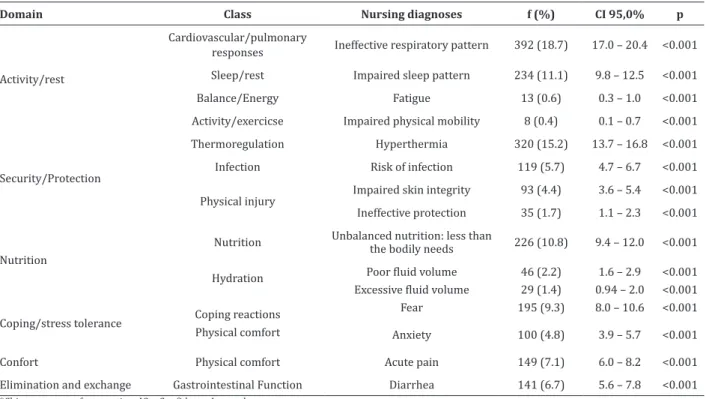
Table 1 - Frequency of nursing diagnoses, according to the domain and class of NANDA-I Taxonomy II in hospi-talized children
Domain Class Nursing diagnoses f (%) CI 95,0% p
Activity/rest
Cardiovascular/pulmonary
responses Ineffective respiratory pattern 392 (18.7) 17.0 – 20.4 <0.001
Sleep/rest Impaired sleep pattern 234 (11.1) 9.8 – 12.5 <0.001
Balance/Energy Fatigue 13 (0.6) 0.3 – 1.0 <0.001
Activity/exercicse Impaired physical mobility 8 (0.4) 0.1 – 0.7 <0.001
Security/Protection
Thermoregulation Hyperthermia 320 (15.2) 13.7 – 16.8 <0.001
Infection Risk of infection 119 (5.7) 4.7 – 6.7 <0.001
Physical injury
Impaired skin integrity 93 (4.4) 3.6 – 5.4 <0.001
Ineffective protection 35 (1.7) 1.1 – 2.3 <0.001
Nutrition
Nutrition Unbalanced nutrition: less than
the bodily needs 226 (10.8) 9.4 – 12.0 <0.001
Hydration Poor fluid volume 46 (2.2) 1.6 – 2.9 <0.001
Excessive fluid volume 29 (1.4) 0.94 – 2.0 <0.001
Coping/stress tolerance Coping reactions
Physical comfort
Fear 195 (9.3) 8.0 – 10.6 <0.001
Anxiety 100 (4.8) 3.9 – 5.7 <0.001
Confort Physical comfort Acute pain 149 (7.1) 6.0 – 8.2 <0.001
Elimination and exchange Gastrointestinal Function Diarrhea 141 (6.7) 5.6 – 7.8 <0.001
had a higher prevalence in the hospitalizations with
a total of 425 (57.6%) children, followed by the age
group of two six years old with 202 (27.4%). The mo ther was referred as the main caregiver of the child, followed by the grandmother in almost all situations with 732 (99.6%) and most of them were between 24
and 60 years old, 353 (47.8%), with only incomplete
elementary school being 192 (26.0%). However, many medical records did not present information on ma-ternal education with 211 (28.6%).
A frequency of 2,100 nursing diagnoses was
identified in 15 diagnostic titles, according to NAN
-DA-I Taxonomy II, classified into six domains and 12
classes. The most prevalent nursing diagnoses were: ineffective respiratory pattern, hyperthermia, impai-red sleep pattern, imbalanced nutrition: less than bo-dily needs, fear, acute pain, and diarrhea. As shown in
Discussion
The limits of this study were the aspects of the design used. Since it is a cross-sectional study, its re-sults cannot be generalized to different contexts. How-ever, information pertinent to the main care needs of children in a hospital environment with high sample coverage was discussed.
The analysis of the clinical profile of hospi -talized children revealed that respiratory diseases (pneumonia, asthma and acute bronchiolitis) and gas-troenteritis corresponded to most of the cases
identi-fied in this study, considered as important causes of
childhood morbidity and mortality in Brazil(8).
There-fore, it was realized that the findings of this research
follow the national trend towards health conditions more prevalent in children, responsible for the greater number of hospital admissions in childhood.
Regarding hospital admissions of children, it is necessary to consider that hospitalizations for cer-tain causes, such as respiratory diseases, become an indirect indicator of the resolution of basic health and outpatient care. It is known that the broad coverage and access of the population to quality Primary Health Care services are able to reduce the rates of children’s hospitalizations(9).
The use of a standardized language system en-ables the production of a focused and evidence-based care plan(10-11), as well as promoting documentation
and information regarding the contribution of nursing to the process of care of hospitalized children(5).
The most prevalent diagnoses per identified
domain will be discussed. In this perspective, the di-agnosis “Ineffective respiratory pattern”, belonging
to the activity/rest domain was the most prevalent in this study, defined as “inspiration and/or expiration
that does not provide adequate ventilation”. In the context of children hospitalization, it is necessary to consider that this human response is frequently relat-ed to diseases of the respiratory system, an important
tigue of respiratory musculature”(12: 234), present
most-ly in children with acute respiratory infections. A similar study also highlighted the high preva-lence of “ineffective respiratory pattern”(13) in children
during hospitalization, pointing out that this diagnosis should be a priority in nursing care planning, since it directly affects tissue oxygenation, being a vital func-tion, requiring rapid and decisive interventions, based on a careful evaluation of the respiratory function and the manifestations presented by the child. The use of accessory musculature, dyspnea and changes in
re-spiratory rate were the main defining characteristics
associated with the diagnosis. Therefore, these condi-tions must be carefully evaluated by the nursing team. The diagnosis of nursing “Hypertheria” in the
safety/protection domain prevailed in 15.4% of the
cases. Being a common condition in children hospital-ized and attended in the pediatric emergency room(14),
their occurrence in this study was higher in the age group of infants and was mainly related to the pres-ence of infectious focus in the respiratory and gastro-intestinal systems. The occurrence of hyperthermia in infants is associated with the greater immaturity of the thermoregulatory system in this age group. It should be noted that the high prevalence of respirato-ry and gastrointestinal infections in hospitalized
chil-dren in Brazil reflects the low integration and resolu -tion of basic care services in the country(8-9).
Hyperthermia corresponds to the increase in body temperature due to an imbalance between pro-duction and heat dissipation(15). In children, it can be characterized by irritability, lethargy, tachypnea,
tachycardia and other defining characteristics. It may
be related to the disease or health condition, as well as trauma, dehydration and an increase in the basal metabolic rate(12).
The “Impaired Sleep Pattern” was present in 11.1% of the sample and there was also a higher prev-alence of this condition in infants. The related factor,
-the sleep pattern is established early in -the child’s life, so habits, routines, and schedules are essential for the formation of normal rhythms. Fragmented sleep, shift shifts, and separation of the family generate stress and
irritability in the child, which justifies the occurrence
of the diagnosis in hospitalized children.
The presence of the diagnosis “Unbalanced
Nu-trition: less than the bodily needs” was justified by the modification of the child’s eating habits during hos -pitalization, which may reduce the stimulus and the desire to eat, besides the pathological condition pre-sented, which can be associated with lack of hungry. In infants, stressors or the pathological condition can result in decreased nursing, chewing or even interest in food and consequent weight loss. The related factor
in this study was insufficient food intake(12).
O “Medo”, como diagnóstico de enfermagem corresponde a “resposta à ameaça percebida que é conscientemente reconhecida como um perigo”(12:343).
Possui entre suas características definidoras, respos -tas comportamentais que costumam ser prevalentes na faixa etária de pré-escolares (dois a seis anos), es-colares (seis a 10 anos), a exemplo do comportamento de ataque, impulsividade e estado de alerta
aumen-tado. Pelo exposto, supõe-se maior dificuldade dos enfermeiros identificarem o referido diagnóstico em
lactentes, fato que pode estar relacionado a não
iden-tificação do diagnóstico medo nessa população. In the stress coping/tolerance domain, the
“Fear” and “Anxiety” nursing diagnoses were
identi-fied, which are often problems faced by the hospitaliza -tion of the child. Fear was the most prevalent problem in the domain under discussion, since it was
identi-fied in the records of 195 children who composed the sample (9.3%), yet this finding represents a relatively
small number when compared to other studies, for ex-ample, which presented “fear” as a human response in 80.0% of hospitalized children(16). However, this
di-vergence may be related to the age range of
hospital-during this phase of child development.
“Fear” as a nursing diagnosis corresponds to “response to the perceived threat that is consciously recognized as a danger”(12:343). It has, among its defin
-ing characteristics, behavioral responses that tend to be prevalent in the pre-school (two to six years), schools (six to 10 years), such as attack behavior, im-pulsiveness, and increased alertness. Therefore, it is
more difficult for nurses to identify this diagnosis in infants, a fact that may be related to the non-identifi -cation of fear diagnosis in this population.
It should be noted that the “Fear” diagnosis corresponds to a very prevalent human response in hospitalized children, and may have negative impacts on child development, with potential for psychological trauma, and the nursing team needs to plan actions that reduce these impacts, such as the therapeutic toy, a playful tool that favors the understanding of the hos-pitalization and the procedures performed, allowing the emotional discharge of the child and providing them emotional support to face hospitalization.
Thus, the Federal Nursing Council recently is-sued a resolution(17), which updates the standard for
the use of the therapeutic toy technique by the nurs-ing team to the hospitalized child, highlightnurs-ing the importance of the nurse’s prescription so the nursing team performs the technique in the care of the hospi-talized child and family. Also, it should be emphasized that this is a technique in pediatric nursing that must contemplate the stages of the nursing process, ratify-ing its importance in the context of the systematiza-tion of nursing care in pediatrics.
“Acute pain” is a diagnosis classified in the
comfort domain and refers to “unpleasant sensory and emotional experience associated with actual or potential tissue injury”(12: 449), being present in 7.1%
of the sample studied. In childhood, its main defining
re-is quite frequent and it can be caused by procedures such as venipuncture, collection of exams, dressings or by the pathological process(18), but different
preva-lence of its occurrence are observed in the studies(6-7),
suggesting that the different contexts of care produc-tion may determine the higher or lower prevalence of this diagnosis in children.
Thus, there is a need to instrumentalize pediat-ric services and to enable health professionals to deal adequately with the child’s pain during hospitaliza-tion. The use of scales for assessing pain in childhood and the use of therapeutic toys should be highlighted among the strategies, with the objective of children experiencing hospitalization and less painful proce-dures(18-19).
In the elimination and exchange domain, the
diagnosis of nursing “Diarrhea” was identified in 141
(6.7%) hospitalized children who composed the sam-ple and it is one of the most important human respons-es to the occurrence of gastroenteritis in childhood. Childhood diarrhea often occurs in children who have already started adding complementary foods to their
diet, besides breast milk, or who are using artificial
milk.
The main implications of the diagnosis of “diarrhea” in hospitalized children in the context of the production of nursing care concern the need to monitor intestinal eliminations, including frequency, consistency, volume and color, as well as the constant evaluation of the skin of the region perianal to detect irritations, besides the stimulus to the ingestion of li-quids. Sometimes the water balance can be a necessa-ry strategy for the risk of dehydration(6).
However, there has been a reduction in the oc-currence of hospitalizations for diarrheal diseases in children in Brazil(20), especially after 2006, when the
rotavirus vaccine was implanted in the National Im-munization Program. However, the scarcity of access to adequate basic sanitation in the study region is one of the factors limiting the decline of childhood
diar-The findings of the study favor the planning of
the care in a reasoned way and directed to the most incident needs in the pediatric population. As for im-plications for clinical practice, the data from this rese-arch provide subsidies for the construction of instru-ments related to the systematization of hospitalized child care, improving the work process and the quality of care of pediatric nursing.
Conclusion
Five more nursing diagnoses were reported in hospitalized children: “ineffective respiratory pat-tern”, “hyperthermia”, “diarrhea”, “fear” and “acute
pain”. Of them, the first three diagnoses are closely re -lated to the conditions that determine the major cau-ses of hospitalization in childhood: acute respiratory infections and gastroenteritis.
Collaborations
Lopes TAMC, Monteiro MFV and Damasceno SS contributed to the design and project, analysis and interpretation of data and article writing. Oliveira JD, Oliveira DR and Pinheiro AKB contributed to the analysis and interpretation of the data, relevant criti-cal review of the intellectual content and approval of the end of the version to be published.
References
1. Conselho Regional de Enfermagem de São Paulo. Processo de enfermagem: guia para a prática. São
Paulo: Conselho Regional de Enfermagem; 2015.
2. Garcia TR. Systematization of nursing care: substantive aspect of the professional practice.
Esc Anna Nery. 2016; 20(1):5-10. doi: http:// dx.doi.org/10.5935/1414-8145.20160
4. Tastan S, Linch GCF, Keenan GM, Stifter J, McKinney D, Fahey L, et al. Evidence for the existing American Nurses Association-recognized standardized nursing: terminologies: A systematic review. Int
J Nurs Stud. 2014; 51(8):1160-70. doi: http:// dx.doi.org/10.1016/j.ijnurstu.2013.12.004 5. Silva VG, Pereira JMV, Figueiredo LS, Guimarães
TCF, Cavalcanti ACD. Nursing diagnoses in children with congenital heart disease: cross mapping. Acta
Paul Enferm. 2015; 28(6):524-30. doi: http:// dx.doi.org/10.1590/1982-0194201500088
6. Leon PAP, Nóbrega MML. Nursing Diagnosis in hospitalized children using NANDA-I: a case study. Online Braz J Nurs Online [Internet]. 2012 [cited
17 June 2017]; 11(1):5-12. Available from: http:// www.objnursing.uff.br/index.php/nursing/ article/view/3553/html_1
7. Souza JP, Silva DAR. Nursing diagnoses in hospitalisation infant: possible relations cartographic-symbolic. Rev Uninga [Internet]. 2014 [cited 17 June 2017]; 17(2):30-8. Available
from:http://www.mastereditora.com.br/
download-398
8. Martins RS, Eduardo MBP, Nascimento AF. Time trends in mortality from intestinal infectious
diseases among children under five years old, in
São Paulo State, Brazil, 2000-2012. Epidemiol
Serv Saúde. 2016; 25(3):419-29. doi: http:// dx.doi.org/10.5123/s1679-49742016000300010
9. Oliveira BRG, Collet N, Mello DF, Lima RAG. The therapeutic journey of families of children with respiratory diseases in the public health service. Rev Latino-Am Enfermagem. 2012;
20(3):1-9. doi:http://dx.doi.org/10.1590/S0104-11692012000300005
10. Carvalho OMC, Silva KR, Andrade LZC, Silva, VM, Lopes MVO. Prevalence of nursing diagnoses of breastfeeding in the mother-infant dyad in
basic health unit. Rev Rene. 2014; 15(1):99-107. doi:
http://dx.doi.org/10.15253/2175-6783.2014000100013
11. Ubaldo I, Matos E, Salum NC, Girondi JBR, Shiroma LB. NANDA International nursing diagnoses in patients admitted to a medical clinic unit. Rev
Rene. 2017; 18(1):68-75. doi: http://dx.doi. org/10.15253/2175-6783.2017000100010
12. North American Nursing Diagnosis Association -NANDA International. Diagnósticos de
enferma-gem da NANDA: definições e classificação 2015-
13. Andrade LZC, Chaves DBR, Silva VM, Beltrão BA, Lopes MVO. Respiratory nursing diagnoses for children with acute respiratory infection. Acta Paul
Enferm. 2012; 25(5):713-20. doi: http://dx.doi. org/10.1590/S0103-21002012000500011
14. Guedes AC, Damas BGB, Santos JO, Naas I. Diagnósticos de enfermagem em uma unidade de pronto-socorro pediátrico. Pediatr Mod [Internet]. 2013 [citado 2017 jun. 17];
49(7):263-68. Disponível em: http://www.moreirajr.com.br/ revistas.asp?fase=r003&id_materia=5420
15. Salgado PO, Silva LCR, Silva PMA, Paiva IRA, Macieira
TGR, Chianca TCM. Nursing care to patients with high body temperature: an integrative review.
Rev Min Enferm. 2015; 19(1):220-6. doi: http:// dx.doi.org/10.5935/1415-2762.20150017
16. Branco CSN, Pamplona YAP. Diagnósticos de
enfer-magem em crianças portadoras de insuficiência
renal crônica em tratamento hemodialítico. Rev
Enferm Contemp. 2013; 2(1):103-11. doi: http:// dx.doi.org/10.17267/2317-3378rec.v2i1.235.
17. Conselho Federal de Enfermagem (COFEN).
Resolução nº 0546 de 9 de maio de 2017: atualiza
a norma para utilização da técnica do brinquedo terapêutico pela equipe de enfermagem na assistência à criança hospitalizada. Brasília: Conselho Federal de Enfermagem; 2017.
18. Santos JP, Maranhão DG. Cuidado de Enfermagem e manejo da dor em crianças hospitalizadas:
pesquisa bibliográfica. Rev Soc Bras Enferm Ped
[Internet]. 2016 [citado 2017 jul. 29];
16(1):44-50. Disponível em: https://sobep.org.br/revista/
images/stories/pdf.../vol_16_n_1-artigo-de-revisao-2.pdf
19. Ferreira NAS, Esmeraldo JD, Blake MT, Antão JYFL, Raimundo-Daminello R, Abreu LC. Social representation of the hospital ludic: look of the child. J Hum Grow Develop [Internet]. 2014 [cited 29 July 2017]; 24(2):188-94. Available from:
http://pepsic.bvsalud.org/scielo.php?script=sci_
arttext&pid=S0104-12822014000200011&lng=p t&nrm=iso&tlng=en
20. Meneguessi GM, Mossri RM, Segatto TCV, Reis PO. Morbimortalidade por doenças diarreicas agudas em crianças menores de 10 anos no Distrito Federal, Brasil, 2003 a 2012. Epidemiol Serv