REFORMING TECHNOLOGY COMPANY INCENTIVE PROGRAMS FOR ACHIEVING KNOWLEDGE-BASED
ECONOMIC DEVELOPMENT: a Brazil-Australia comparative study
Doctoral thesis presented to the Examining Board of the Post-Graduate Program in Engineering and
Knowledge Management,
Universidade Federal de Santa Catarina, as a partial requirement to achieve the title of Ph.D. in Engineering and Knowledge Management.
Supervisor: Prof. Eduardo Moreira da Costa, Dr.
Co-supervisor: Prof. Tan Yigitcanlar, Dr.
Ficha de identificação da obra elaborada pelo autor
REFORMING TECHNOLOGY COMPANY INCENTIVE PROGRAMS FOR ACHIEVING KNOWLEDGE-BASED
ECONOMIC DEVELOPMENT: a Brazil-Australia comparative study
This Doctoral Thesis was considered adequate for granting its author the Title of “Ph.D. in Engineering and Knowledge Management”; its final version was approved by the Post-Graduate Program in Engineering and Knowledge Management at the Universidade Federal de Santa Catarina.
Florianópolis, 18th March 2016.
Prof. Roberto Carlos dos Santos Pacheco, Dr. Program Coordinator
Examining Board:
Prof. Eduardo Moreira da Costa, Dr. Supervisor
Universidade Federal de Santa Catarina
Prof. Ademar Dutra, Dr. Universidade do Sul de Santa Catarina
Profª. Micheline Gaia Hoffmann, Dra. Universidade do Estado de Santa Catarina
Profª. Sandra Rolim Ensslin, Dra. Universidade Federal de Santa Catarina
I dedicate this thesis to
My father, so present in my life, delivering so many important lessons, values and memories (in memoriam).
My mother, a tireless and endless light in my life, a permanent inspiration that guides me through my quest for knowledge.
Dedico esta tese
Ao meu pai, tão presente em minha vida, transmitindo tantos e importantes aprendizados, valores e memórias (in
memoriam).
À minha mãe, luz incansável e infinita da vida, que é a inspiração permanente que me guia na busca pelo conhecimento.
Ao meu marido, pessoa zelosa que tanto amo, parceiro incondicional de todas as horas e que com esmero me acompanha nas mais singelas e ousadas experiências que me proponho a viver.
To God for making me believe and move ahead with health, energy and perseverance.
To my Family (sister and brothers, sisters- and brothers-in-law, nieces and nephews), who are so special in my life and who are always present in the most unique ways possible. They cheer for me and support me in the challenges I dare to face. Each one of them gives their own contribution: a smile, a look, a gesture, a word, a moment of silence… They give me the push I need to move on.
To my friends, who made themselves present in this journey with words of incentive and emotional support. They gave me strength at my every step with words, contacts and teachings.
To my advisor, Professor Eduardo Costa, for his advice and support. The issues and challenges he brought up guided me throughout this study.
To Professor Neri dos Santos, for showing me the path to be followed and for taking me in the program.
To my co-advisor, Professor Tan Yigitcanlar, for sharing incomparable support, attention and teachings, as well as for giving me the chance to study at such a great institution as the Queensland University of Technology – QUT. Moreover, I am flattered by the caring way he welcomed my family in his home and country.
To the faculty of EGC for promoting my learning at each contact and in each course I took during my Ph.D. studies.
To the ÁgoraLab research group and friends – especially, Alexander Prada, Lucas Abdala, Tatiana Schreiner and Thiago Furlani – who instigated me and made me take a different look at the issues we discussed, making me grow at each group work. Many of the moments we were together contributed to the development of this thesis.
To Joice Ramos for being a great friend and partner during the development of this work.
To the friends and partners I made while in Australia: Márcia Reis, Márcio Machado, Surabhi Pancholi, Jorge Schurmann, Jenny Nobel, Valéria Noleto, Emerson Kalaf, Júlio Falcão and Graham Young. They made my experience abroad smoother, more pleasant and constructive.
To the directors of the Associação Brasileira das Empresas de
Software – Abes, for supporting me in this phase of a sandwich
To the members of the examining board for accepting to participate and helping me improve this thesis with their suggestions and experience.
To the interviewees for their participation in the surveys, which was vital for reaching the results of this work.
To the translator of this work, Mr. Caio Martino, who – with much professionalism – was always available to assist me, allowing me to meet deadlines.
To CAPES for the financial and in-kind contributions of the Federal University of Santa Catarina, Queensland University of Technology, and Ministry of Education of Brazil in jointly supporting the research project. (CAPES-PDSE: 99999.004527/2014-03).
A Deus por me fazer acreditar e seguir em frente com saúde, energia e perseverança.
Aos meus familiares (irmãos, irmã, cunhados, cunhadas e sobrinhos), pessoas tão especiais em minha vida, que estão sempre presentes das formas mais singulares possíveis. Torcem por mim e me apoiam nos desafios com os quais me envolvo. Cada um deles emite suas próprias contribuições - um sorriso, um olhar, um gesto, uma palavra, um silêncio… E é nessa riqueza de impulsos que sou lançada a sempre seguir em frente.
Aos meus amigos presentes nessa jornada com palavras de incentivo e apoio emocional. Deram-me suporte a cada etapa com palavras, contatos e ensinamentos.
Ao Professor Eduardo Costa, meu orientador, pelos conselhos e apoio. As provações e desafios por ele apresentados foram elementos balizadores para o desenvolvimento desse trabalho.
Ao Professor Neri dos Santos, por me indicar caminhos a serem seguidos e por me aceitar no programa.
Ao Professor Tan Yigitcanlar, meu coorientador, pelo seu incomparável apoio, atenção e ensinamentos compartilhados, assim como pela oportunidade oferecida para estudar em uma universidade como a Queensland University of Technology – QUT. Além disso, sinto-me lisonjeada pela recepção tão carinhosa da minha família em sua casa e em seu país.
Aos docentes do EGC pelo aprendizado oportunizado, a cada contato e em cada disciplina cursada durante o doutorado.
Ao grupo de pesquisa e amigos do ÁgoraLab – em especial ao Alexander Prada, Lucas Abdala, Tatiana Schreiner e Thiago Furlani -, que me intigaram e me fizeram olhar sob diferentes perspectivas para os assuntos que discutíamos, fazendo com que eu crescesse a cada trabalho coletivo. Muitos dos momentos que estivemos juntos contribuíram para o desenvolvimento dessa tese.
À Joice Ramos pela amizade, parceria e cumplicidade nos encaminhamentos desse trabalho.
À diretoria da Associação Brasileira das Empresas de Software - Abes por me apoiar nesse ciclo de um doutorado sanduíche.
Ao Rui Luiz Gonçalves e ao Moacir Marafon pelo incentivo em um novo começo e etapa da minha vida acadêmica.
Aos membros da banca por aceitarem participar e agregarem com suas sugestões e experiências na melhoria dessa tese.
Aos entrevistados que participaram das pesquisas realizadas, fator esse de caráter indispensável para o encaminhamento do desfecho do trabalho.
Ao tradutor dessa obra, Sr. Caio Martino, que sempre demonstrou profissionalismo e disponibilidade para me dar suporte, possibilitando o cumprimento do cronograma estabelecido.
A CAPES, pelo suporte financeiro e contribuições da Universidade Federal de Santa Catarina, Universidade de Tecnologia de Queensland e Ministério de Educação brasileiro por dar suporte a esta pesquisa. (CAPES-PDSE: 99999.004527/2014-03).
This doctoral thesis aims to demonstrate the importance of incentives to technology-based firms as a strategy to promote knowledge-based economic development (KBED). To remain competitive, technology-based firms must innovate and seek new markets; therefore, this study aims to propose an incentive model to technology-based firms as a strategy to promote knowledge-based urban development, according to framework described by Yigitcanlar (2011). This is an exploratory and descriptive research with a qualitative approach. Surveys were carried out with national trade associations that represented technology-based firms both in Brazil and Australia. After analysing the surveys, structured interviews were conducted with government representatives, trade associations and businessmen who had used financial support by the federal government. When comparing both countries, the study found the importance of direct incentives through tax incentives, for it is a less bureaucratic, quicker and more direct process for firms. We suggest to include the terms incentives in the framework of knowledge-based urban development, as one of the pillars that contribute to knowledge-based economic development.
Esta tese busca demonstrar a importância do fomento para empresas de base tecnológica como estratégia para promover o desenvolvimento econômico baseado no conhecimento (DEBC). As empresas de base tecnológica para que se mantenham competitivas devem inovar e buscar novos mercados, neste sentido a pesquisa tem por objetivo propor um modelo de fomento às empresas de base tecnológica como estratégia para a promoção do desenvolvimento urbano baseado no conhecimento. A pesquisa é de natureza exploratória e descritiva com uma abordagem qualitativa. Foram feitas pesquisas por meio de entidades de classe com representatividade nacional que representem empresas de base tecnológicas no Brasil e na Austrália. Após análise dos questionários foram feitas entrevistas estruturadas com representantes do governo, entidades de classe e empresários que já receberam aporte financeiro por parte do governo federal. Após feito o comparativo entre os dois países percebe-se a importância do fomento de forma direta por meio de incentivos fiscais, como um processo menos burocrático, rápido e direto para as empresas. É sugerida a inclusão do termo fomento no framework de desenvolvimento urbano baseado no conhecimento, como um dos pilares que contribuem para o desenvolvimento econômico baseado no conhecimento.
Frame 1 Analysis category and data gathering tools. ... 72
Frame 2 The results of transversal searches. ... 89
Frame 3 Brazilian Policies. ... 113
Frame 4 Innovation Programmes. ... 115
Frame 5 Department of Industry, Innovation and Science. ... 118
Frame 6 Questions posed to the interviewees. ... 155
Frame 7 Brazil: Government’s Perspective – Interviewees. ... 156
Frame 8 Brazil: Association’s Perspective – Interviewees. ... 167
Frame 9 Australia: Government Perspective – Interviews. ... 185
Table 1 General search data. ...77
Table 2 General data on the research. ...79
Table 3 Brazil: Awarenes of resources for innovation. ... 141
Table 4 Brazil: Resources for innovation and R&D. ... 142
Table 5 Brazil: Have tried but not been successful. ... 142
Table 6 Brazil: Type of resource purpose. ... 143
Table 7 Brazil: Incentive programmes to apply in the future. ... 144
Table 8 Australia: Industry innovation and competitiveness agenda. .. 146
Table 9 Australia: Awarenes of resources for innovation. ... 147
Table 10 Australia: Resources for innovation and R&D. ... 147
Table 11 Australia: Have tried but not been successful. ... 149
Table 12 Australia: Type of resource purpose. ... 151
Figure 1 Thesis structure. ...39 Figure 2 KBUD Framework. ...46 Figure 3 Knowledge-based economic development. ...70 Figure 4 Steps and tasks of the Systematic Review and Data Analysis
ABDI Brazilian Agency for Industrial Development ABES Brazilian Software Companies Association ABVCap Brazilian Private Equity & Venture Capital
Association
AIIA Australian Information Industry Association AIS Australian Innovation System
AmEx American Express
ANPROTEC National Association of Entities Promoting Innovative Enterprises
APEC Asia - Pacific Economic Cooperation
APEX Brazilian Trade and Investment Promotion Agency APS Australian Public Service
ARC Australian Research Council
ATN Australian Technology Network of Universities
ATO Accounting Tools Online
B2C Business to Commerce
BNDES National Bank for Economic and Social Development
BOVESPA BMF &Bovespa Stock Exchange
BRD Regional Development Banks
BRICS Brazil, Russia, India, China and South Africa CA Commercialisation Australia Program CAPES Coordination for the Improvement of Higher
Education Personnel
CEMPES Leopoldo Américo Miguez de Mello Research and Development Centre
CERTICS Software and Services National Technology Certification
CNPq National Council for Scientific and Technological Development
COMET Commercialising Emerging Technologies CPqD Telecommunication Research and Development
Centre
CRCA Cooperative Research Centres Association CSIRO Commonwealth Scientific and Industrial Research
Organisation
DIIS Department of Industry, Innovation and Science DTO Digital Transformation Office
EC European Commission
EGC Graduate Program in Engineering and Knowledge Management
EMBRAER Brazilian Aeronautics Company
EMBRAPA Brazilian Corporation of Agricultural Research EMDG Export Market Development Grants/Austrade ENCTI National Strategy of Science, Technology and
Innovation
ERA Excellence in Research for Australia
ESVCLP Early stage Venture capital limited Partnerships
EU European Union
FAP Research Support Funds
FINEP Financier of Studies and Projects
FORTEC National Forum of Managers of Innovation and Technology Transfer
FUNTTEL Fund for the Technological Development of Telecommunications
G08 Group of Eight
GDP Gross domestic product
HDI Human Development Bank
IASP International Association of Science Parks ICIP Industry Cooperative Innovation Program ICMS Tax on Goods and Services
ICT Information and Communication Technology IIF Innovation investment fund
IIFF Innovation investment follow – on fund INPI National Institute of Industry Property IPEA Institute of Applied Economic Research IPI Manufactured Products Tax
IPR Intellectual Property Rights
ISO – International Organisation for Standardisation KBED Knowledgment Baesd Economic Development KBUD Knowledgment Based Urban Development
KM Knowledge Management
LPS Linkage Projects Scheme
MDIC Ministry of Development, Industry and Foreign Trade
MEC Ministry of Education and Culture MFP Multi-factor Productivity
MPEs Micro and Small Business
MPME ess Inovadora – Micro, Small and Medium Innovative Busin
MRE Ministry of External Relations NCGP National Competitive Grants Program OECD Organisation for Economic Co-operation and
Development
PACTI Action Plan for Science, technology and Innovation PAPPE Company Research Support Program
PBM Bigger Brazil Plan
PBQP Brazilian Quality and Productivity Program
PDF Pooled development funds
PDP Production Development Policy PETROBRAS Brazilian Petroleum Corporation
PhDs Doctor of Philosophy Degree
PINTEC Innovation Research
PITCE Industrial, Technological and Foreign Trade PMSEIC Prime Minister’s Science, Engineering And
Innovation Council
PNI National Program of Support to Company Incubators and Technology Parks
PPB Basic Productive Process
PRIME The First Innovative Business Program
PROSOFT Program for the Development of National Software Industry and Information Technology Services
PSF Pre-seed Fund
QLD Queensland
QUT Queensland University of Technology R&D Research and Development
R&D&I Research and Development and Innovation Redi Renewable Energy Development Initiative REEF Renewable Energy Equity Fund
ROI Investments On Return S&T Science and Technology
SEBRAE Brazil’s Micro and Small Business Support Service SIBRATEC Brazilian Technology System
SME Small and Medium- size Enterprises ST&I Science, Technology and Innovation
STEM Science, Technology, Engineering, and Mathematics STI Science, Technology and Innovation
TELEBRAS Brazilian Telecommunications S.A.
TIC Technology, Information and Communication TPP – Technological Product and Process
TRIPS Trade Related Aspects of Intellectual Property Rights
UA Universities Australia
UFSC Santa Catarina Federal University
UK United Kingdom
USA United States of America
VCLP Venture Capital Limited Partnerships
WB World Bank
WKCI World Knowledge Competitiveness Index
WTO World Trade Organisation
3.1.7 Journal Category ... 81 3.1.8 Quantity of Journals per country ... 81 3.1.9 Keywords of the portfolio of papers ... 82 3.1.10 Number of citations per papers ... 83 3.1.11 h Index of journals ... 85 3.2 RESEARCH METHODOLOGICAL PROCEDURES ... 86 3.2.1 Methodogical Framework ... 86 3.2.2 Framework Construction Procedures ... 88 3.3 THEORETICAL-METHODOLOGICAL RESEARCH ... 88 3.3.1 Evidence on the main gaps found in the literature about the
subject ... 92 3.3.2 Proposal for an incentive framework to technology firms as a
1 INTRODUCTION
The first chapter of this thesis aims to introduce (i) the
contextualisation of the theme of this study, and the importance of incentives for technology-based firms to leverage knowledge-based economic development; (ii) the problem this study aims to address; (iii)
the general objective and specific objectives of this study; (iv) the
justification of this study, considering its relevance, originality and uniqueness of this study; (v) the delimitation of this study; and, (vi) the
thesis structure.
1.1 CONTEXTUALISATION
This thesis aims to propose the inclusion of incentive as a pillar of the economic development domain of the KBUD framework, with a focus on technology-based firms, as a strategy to promote
knowledge-based economic development. Such aim converges with the view that a
technology-based firm is more capable of absorbing knowledge in order to generate innovation and open new markets, then obtaining better financial performance (NONAKA; TAKEUCHI; UEMOTO, 1996). When speaking about incentives for innovation it is important that knowledge be mentioned. The innovative entrepreneur needs to have a detailed and extensive knowledge about certain themes in order to create a new product or service, which includes the desired business market segment. Knowledge is a strategic resource to technologic-based firms, since innovation depends on new knowledge in order to be generated (JOHANNESSEN;OLSEN; OLAISEN, 1999).
Knowledge Management (KM) is characterised by activities and processes for leveraging organisational knowledge to increase competitiveness through better use and creation of individual and collective knowledge resources (SANTOS, 2012).
Knowledge Management has involved the academic and organisational means both in theory and practice. However most organisations still have serious difficulties to understand and manage knowledge as a resource (NONAKA; TOYAMA; HIRATA, 2008).
It is noteworthy that sharing knowledge increases the competitive power of organisations since knowledge is a production factor that expands when shared (NONAKA; TAKEUSHI, 1997).
fundamental level, the knowledge-base of an economy can be defined as the capability to create and develop innovative new ideas, thoughts, processes and products, and to translate these into economic value and wealth (HUGGINS; IZUSHI, 2009).
Schumpeter (1982) treats the economic cycles as periods of prosperity and economic recession; common to the process of capitalist development in the Theory of Economic Development in 1911. The author relates the periods of prosperity to the innovative entrepreneur who, by creating new products, is imitated by non-innovative entrepreneurs who invest resources to produce and copy goods created by their innovative peers. The relationship between innovation and creation of new markets gives rise to an economic change, generating new needs and wish to consume. For innovation, credit is like a wave of capital investment that activates the economy, generates prosperity and raises employment levels.
KBUD is based on the emphasis of the role of knowledge as a driver for the processes of richness generation and sustainable development, proposing processes of transformation of the cities/societies into knowledge cities/societies, whose central element is that of promoting the capacity to attract, generate, retain and foster creativity, knowledge and innovation (KNIGHT, 1995; YIGITCANLAR, 2011).
According to Knight (1995), the rising of a global knowledge society and the growing importance of the so-called knowledge economy requires that urban planning – so far focused on planning physical spaces and attracting tangible assets (land, capital and labour) – incorporate means and create structures capable of better managing (generate/retain/disseminate) intangible assets.
KBUD is the new paradigm of development in the knowledge era that aims to bring economic prosperity, environmental sustainability, a just socio-spatial order and good governance to cities. This new concept is meant to develop a city purposefully designed to encourage the production and circulation of knowledge in an environmentally conserved, economically secure, socially just and well-governed human setting (YIGITCANLAR, 2011).
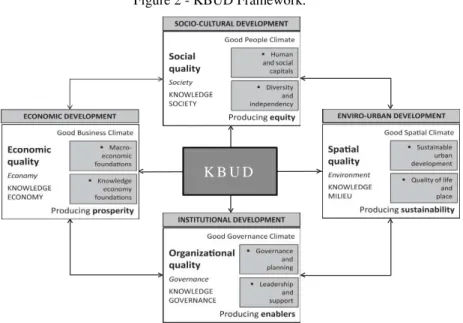
The KBUD framework described by Yigitcanlar (2011), is equally based on four pillars, that is, four major development domains: (i) Economic; (ii) Socio-cultural; (iii) Enviro-urban; and (iv)
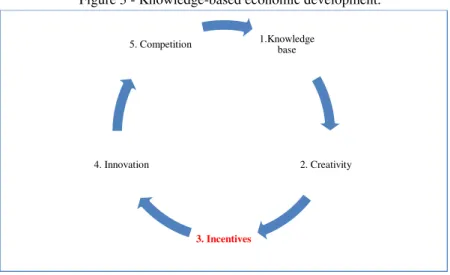
The research focus of this thesis proposal lies in the economic development domain of KBUD, which is referred to as Knowledge-Based Economic Development (KBED). KBED consists of economic terms such as Competitiveness, Creativity, Innovation and Knowledge Basis.
In addition, this study aims to demonstrate the importance of credit to innovative businessmen, including incentive as one of the pillars of economic development.
1.2 RESEARCH QUESTION
Considering the context introduced in section 1.1 above, the following research question arises, which guides the development of this thesis:
How can financial support provided to technology firms contribute to knowledge-based economic development?
1.3 RESEARCH OBJECTIVES
This subsection presents the general objective as well as the specific objectives to be accomplished by this thesis.
1.3.1 General objectives
Proposing the inclusion of incentive as a pillar of the economic development domain of the KBUD framework, with a focus on technology-based firms, as a strategy to promote knowledge-based economic development.
1.3.2 Specific objectives
In order to reach the general objective of this thesis the following specific objectives were defined:
a) To analyse the public policies on incentives to technology-based firms in Brazil and Australia, under the perspective of their contribution to knowledge-based economic development;
c) To compare the Brazilian scenario with the Australian experience in the field of incentives for innovation.
1.4 JUSTIFICATION FOR CONDUCTING THIS STUDY
The justification for conducting this study will be built upon arguments concerning relevance, originality and uniqueness.
1.4.1 Relevance
The relevance of this research lies in theoretical and functional contributions, which is evidenced through the review of literature conducted by searching the following key words: Knowledge-Based Urban Development, Knowledge-Based Economic Development, Australia Incentives, tech*, comp*, and innovation. A second search was done with the term Brazil Incentives in the place of Australia Incentives. The survey was conducted on 12nd January 2015, on Scopus.
Relevance lies in the impact this thesis proposal may have on public policies on incentives and on Brazilian technology-based firms. Eventually, it will contribute to the development and competitiveness of innovative firms in the country and internationally and to scientific research and society at large.
The functional contribution of this work is perceived in the proposal of an incentive framework as a strategy to promote KBED. This work is relevant since the scientific literature seems to lack researches on KBUD and KBED: gaps have been found on the Scopus database, through the use of key words such as Technology Parks, Scientific Parks, Incentives and Competitive.
1.4.2 Originality
The originality of this thesis proposal lies in addressing incentives to technology-based firms in the economic development domain.
The identification of this gap in the literature renders this work as original, since it uses a qualitative approach to propose the inclusion if the incentives in the framework to technology-based firms as a strategy to promote knowledge-based economic development.
part of the economic development domain in the framework proposed by Yigitcanlar (2011).
1.4.3 Uniqueness
This study is unique in that it proposes an incentive framework to technology-based firms as a strategy to promote knowledge-based urban development.
In the international literature, KBUD has been studied since 2008 by several authors, especially Prof. Tan Yigitcanlar, who introduces four pillars for economic development: competitiveness, creativity, innovation and knowledge, which are all associated with technology-based firms. However, during the phase of literature analysis in this study, a fifth pillar was identified as lacking for economic development: the need for incentives.
This research aims to study this gap and to demonstrate the importance of incentives as a fifth domain of economic development in the framework proposed by Yigitcanlar (2011).
1.4.4 Adherence to EGC
In addition to the variables of relevance, originality and uniqueness, the current work is justified by its contribution and adherence to the Graduate Program in Engineering and Knowledge Management at Santa Catarina Federal University (UFSC), which aims to (i) study incentive framework to technology-based firms, in order to
contribute to the knowledge-based economic development; (ii) adhere to
Engineering and Knowledge Management through the research branch of sustainability knowledge management; (iii) be socially relevant, since
knowledge-based urban development congregates aspects of growing importance in the so-called knowledge economy and the generation, retention and dissemination of intangible assets; and (iv) contribute to
the development of public policies that will have an impact on society in the economic, social and scientific aspects.
1.5 DELIMITATION OF THIS STUDY
This study will be limited to the national laws for micro, small and medium-sized technology-based firms. Therefore, since incentive is the theme of this study, one must understand that it is limited to the credit lines with subsidised interest, economic subvention, both with financial incentive and scholarships. Incentive through federal taxes and investment fund resources will also be presented as a way of promoting innovation.
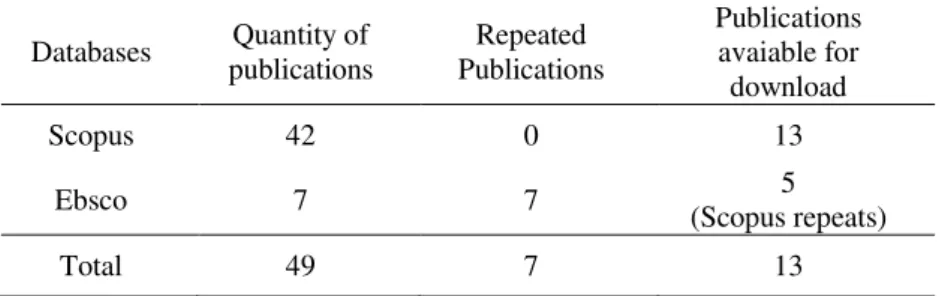
One limitation of this study refers to the systematic literature review that was carried out. The research process described in the Literature Review was limited to the papers published in journals that offer free access to the full texts online, through the CAPES journal database, or by direct searching for papers on the Scopus database. 1.6 THESIS STRUCTURE
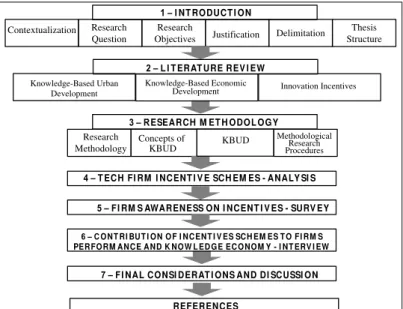
This thesis comprises seven chapters, as follows: (i) Introduction;
(ii) Literature review; (iii) Methodology; (iv) Tech-firm incentive
schemes; (v) Firms awareness on incentives; (vi) Contribution of
incentives to firms performance and knowledge economy, and; (vii)
Final Considerations and discussions. The references used are also presented following these chapters.
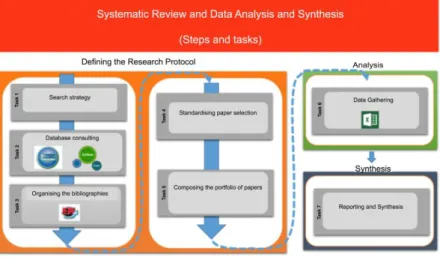
The second chapter introduces the theoretical references that were looked up in order to find this thesis proposal. At first, the chapter presents the procedures used for the systematic review, as well as the procedures for the analysis of the papers found on the Scopus and Ebsco databases associated with the theme of this study.
The third chapter covers the research methodology, which can be subdivided into: (i) Methodological framework, and; (ii) Procedures to
construct this thesis proposal.
The fourth chapter is about Tech-firm incentive schemes, and analyses the Brazilian Incentive Scheme through: (i) Governance of
Innovation in Brazil; (ii) Incentives scheme; and (iii) Summary of
Brazilian Incentives schemes; as well as the Australian Incentive scheme through (i) Governance of Innovation in Australia; (ii)
Incentives scheme and (iii) Summary of Australian Incentives schemes.
It aims to explain how the two countries promote innovation through their respective federal government programmes.
Brazilian Firms – awareness on incentives schemes; (ii) Australian
Firms – awareness on incentives schemes; and (iii) Summary of the
chapter.
Chapter 6 covers structured interviews that were carried out as a way to learn the perspectives of both governments, people from national trade associations in both countries, as well as businessmen, who have borrowed money from the public policies towards incentive for innovation. Chapter 6 is subdivided into: (i) Introduction; (ii) Findings
from Brazil from the Government, Associations and Entrepreneur Perspective; (iii) Summary; (iv) Findings from Australia from the
Government, Associations and Entrepreneur Perspective; and (v)
Summary of the chapter.
Chapter 7 presents the final considerations and discussions on this thesis.
Figure 1 below shows the structure of this thesis Figure 1 - Thesis structure.
Source: The author, 2015. Contextualization Research
Question Objectives Research Justification Delimitation
1
Structure ThesisKnowledge-Based Urban Development
Knowledge-Based Economic
Development Innovation Incentives
4 – T EC H FI R M I N C EN T I V E SC H EM ES - A N A LY SI S
5 – FI R M S AWA R EN ESS O N I N C EN T I V ES - SU RV EY
6 – CO N T R I BU T I O N O F I N C EN T I V ES SC H EM ES T O F I R M S PER FO R M A N C E A N D K N O W L ED G E EC O N O M Y - I N T ERV I EW
1 – IN T R O D U C T I O N
2 – LIT ER AT U R E R EV I EW
3 – RESEA R C H M ET H O D O L O G Y
Methodological Research Procedures Research
Methodology Concepts of KBUD KBUD
5 – 7 – FI N A L C O N SI D ER AT I O N S A N D D I SC U SSI O N
2 LITERATURE REVIEW
This thesis aims to propose the inclusion of incentive as a pillar of the economic development domain of the KBUD framework, with a focus on technology-based firms, as a strategy to promote
knowledge-based economic development (KBED). Incentive here shall be
understood as credit for funding and developing technology-based firms. The justification for conducting this study will be built upon arguments concerning relevance, originality and uniqueness.
The relevance of this research lies in theoretical and functional contributions, which is evidenced through the review of literature conducted by searching the following key words: Knowledge-Based Urban Development, Knowledge-Based Economic Development, Australia Incentives, tech*, comp*, and innovation. A second search was done with the term Brazil Incentives in the place of Australia Incentives. The survey was conducted on 12nd January 2015, on Scopus.
Relevance lies in the impact this thesis proposal may have on public policies on incentives and on Brazilian technology-based firms. Eventually, it will contribute to the development and competitiveness of innovative firms in the country and internationally, to scientific research and society at large.
The functional contribution of this work is perceived in the proposal of an incentive framework as a strategy to promote KBED. This work is relevant since scientific literature is perceived to lack researches on Based Urban Development and Knowledge-Based Economic Development: gaps have been found on the Scopus database, through the use of key words such as Technology Parks, Scientific Parks, Incentives and Competitive.
The originality of this thesis proposal lies in addressing incentives to technology-based firms in the economic development domain.
The identification of this gap in the literature allows for the argument that this work is original, since it uses a qualitative approach to propose a development framework to technology-based firms as a strategy to promote knowledge-based economic development.
2.1 KNOWLEDGE-BASED URBAN DEVELOPMENT
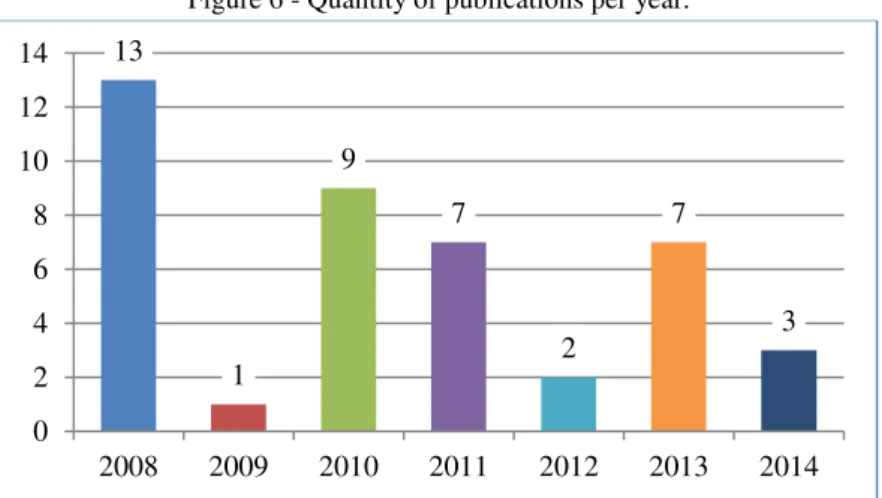
Knowledge-based Urban Development (KBUD) provides a new urban development perspective. This topic is relatively new to the academy: the first articles on this topic found in international databases date back to 2008. However, it has been growing in relevance and contribution to the development of the societies. In the last decades knowledge has become a key element in the production and creation of a vibrant economy, a prosperous society and a city of sustainable knowledge (METAXIOTIS; CARRILLO; YIGITCANLAR, 2010). The knowledge-based economy enabled the birth of the knowledge society concept, which has influenced the shaping of our cities (YIGITCANLAR, 2010).
KBUD is an emerging field of study and practice, especially about processes of knowledge production and their impact on the urban shaping and functions, which provides a new perspective for developing creative urban regions (YIGITCANLAR; VELIBEYOGLU, 2008). KBUD aims to produce a city that is meant to promote continuous production, circulation and trade of knowledge: the “knowledge city” (YIGITCANLAR; VELIBEYOGLU, 2008).
A knowledge-based economy creates, distributes, and uses knowledge to generate value, and gives rise to a network society. Generating opportunities and being capable to access and join knowledge and learning in intense relationships, determines the socio-economic position of individuals and firms (CLARK, 2001). Economic growth and development are highly associated with knowledge economies (METCALFE; RAMLOGAN, 2006). So, in the last decades, knowledge has become a key element in the production and creation of a vibrant economy, a prosperous society and a city of sustainable knowledge (METAXIOTIS; CARRILLO; YIGITCANLAR, 2010).
Knowledge is the basis for KBUD, whose objective is an economic development that is local, competitive and integrated with the global economy (YIGITCANLAR; VELIBEYOGLU; MARTINEZ-FERNANDEZ, 2008). Moreover, KBUD indicates an increase in the skills and knowledge of the people who live and work in any one region as a means for intellectual, human and social development (GONZALEZ; ALVARO; MARTINEZ, 2005).
Commission (EC), the Asia-Pacific Economic Cooperation (APEC), which provide some functional guidelines for building knowledge-based economy by means of KBUD in developed and developing countries. These guidelines were published by the WB in 1999 and by APEC and the EC in 2000.
Many cities around the world are now considered as successful in setting examples for implementing KBUD concepts, but only a few have actually managed to successfully formulate integrated and strategic KBUD approaches (YIGITCANLAR; LONNQVIST, 2014). The initiatives and approaches of most cities are rather ad-hoc and not based on structured and specific methodologies (HEYWOOD, 2008). In this sense, Heywood (2008) states that the measurement methods on KBUD normally vary based on the geographical area being observed (i.e., either at national, regional or municipal level). Therefore, it is a more complex task towards the establishment of a common KBUD framework.
Howells (2002) argues that there are five ways in which geography and knowledge are interrelated in one single geographical area: through i) human development, ii) human interaction, iii) human
information, iv) human learning and v) human interpretation. In this
context, Howells (2002) further argues that both categories of knowledge (codified and tacit) play an equally important role in economic geography.
A study conducted by Ergazakis, Metaxiotis and Psarras (2006) revealed that the present KBUD approaches are too fragmented, and that the need to follow a common approach is apparent. A similar conclusion was mentioned in a study conducted by Martinez (2006). In the framework proposed by the international economic organisations by analysing previous studies, it was verified that there has been no viable, standardised and unified framework to develop comprehensive and integrated KBUD strategies (ERGAZAKIS; METAXIOTIS; PSARRAS, 2006).
Information and Communications Technology (ICT). Delft has chosen a project-based approach and Stockholm followed a process-oriented approach. Meanwhile, Dublin and Montreal were focusing more on physical infrastructure and investment- related ICT.
Yigitcanlar (2009) has also conducted a study on five cities that have adopted the KBUD approach: Austin/Texas/USA, Barcelona/Spain, Helsinki/Finland, Melbourne/Australia and Singapore/city-State. The research has concluded on some common and similar patterns in the KBUD implementations, although each city put emphasise on different strategies. Such strategies include having a political and societal will and good governance, a strategic vision and dynamic long-term development plan: (i) setting up agencies to promote KBUD, (ii) having
a strong financial support, (iii) partnership and strategic investment,
according to the international and multicultural character of the city, (iv)
creating urban innovation engines, (v) having research universities and
excellent R&D institutes, (vi) having a metropolitan web-portal, creating
values to citizens, (vii) having quality of place and life, and finally, (viii)
providing a low-cost access to an advanced communication network. Specifically, KBUD has an integrated focus on four key development aspects of development: (i) Economic, (ii) Socio-cultural,
(iii) Enviro-urban and (iv) Institutional. This contemporary approach
aims to bring economic prosperity, environmental sustainability and institutional competence, with a fair social-spacial order to the cities (YIGITCANLAR; FACHINELLI, 2011).
The development of knowledge economy requires a different city environment and KBUD is tailoring for this. KBUD concerns primarily with upgrading human and organisational capacities and creating environments, which are conductive to innovation, learning, creativity and change (YIGITCANLAR; LÖNNQVIST, 2013).
MARTINEZ, 2005). KBUD aims to increase the quality of life by providing necessary services for societal development (YIGITCANLAR; VELIBEYOGLU, 2008).
KBUD builds a strong spatial relationship among knowledge community precincts for augmenting the knowledge spillover effect that contributes significantly to the establishment and expansion of creative urban regions and supports linkages and knowledge transfer between these precincts (YIGITCANLAR; VELIBEYOGLU, 2008). KBUD also aims to an urban development that is ecologically sensitive, sustainable and safe, a sustainable urban development (YIGITCANLAR; VELIBEYOGLU, 2008).
In the KBUD perspective the orchestration of the knowledge-based development of cities is critical to bring together all of the key actors and sources, organise and facilitate necessary knowledge-intensive activities and plan strategically for knowledge city transformation (YIGITCANLAR, 2011). In essence, the main attributes of KBUD are high levels of economic success, high levels of knowledge intensity, diverse knowledge industries, strong academic institutions, excellent communications and transport infrastructure, unique offering to investors and individuals, strategies to ensure all benefit from knowledge and economic success (YIGITCANLAR; VELIBEYOGLU, 2008).
KBUD has set a new paradigm of urban planning that bridges the tensions via an effective governance mechanism that normally exists among some forms of economic growth, social development and environmental concerns (YIGITCANLAR; VELIBEYOGLU, 2008).
The term domain is used by the KBUD framework for the strategic areas, which are represented in the framework proposed by Yigitcanlar and Lönnqvist (2013). Such areas are described below:
Economic – Strong economic development strategy that codifies knowledge, i.e., based on competitive, creative and innovative knowledge, etc.
Socio-cultural – Effective education strategies and construction skills, quality of life, human and social development, intellectual capital, etc.
Institutional – Management of institutional arrangement to supervise development, strategic and integrated, democratic and transparent, social equality, etc.
Figure 2 - KBUD Framework.
Source: Yigitcanlar and Lönnqvist (2013).
For a better understanding of the subject, the development domains and their respective KBUD pillars are described bellow. Each domain’s pillars serve as a foundation of development.
2.1.1 Economic development domain
The economic development domain, with a KBUD perspective, aims to form a knowledge economy based on creating, evaluating, and trading knowledge; the use of knowledge to produce economic benefits especially in terms of high-technology businesses and services as well as education and R&D (YIGITCANLAR; VELIBEYOGLU, 2008).
In the era of knowledge, success in local economic development is highly correlated with the cities’ ability to adapt itself to the knowledge economy (NGUYEN, 2010). The pillars that compose the economic development domain are: Competitiveness, creativity,
innovation and knowledge, which are described by Yigitcanlar and Velibeyoglu (2008):
Competitiveness Pillar - In order to find out cities' common characteristics to deal with a global competitive environment, the literature (YIGITCANLAR, 2009) was looked up for a successful global knowledge experimental city and for the way governors are planning for the development of their knowledge-based creative urban regions. Cases of different creative urban regions were analysed, which were selected on their accomplishments and innovative approaches towards KBUD (YIGITCANLAR, 2009). Cities that are managing to attract and generate knowledge-based new industries, by offering places to meet their needs and high-quality urban spaces to satisfy their knowledge workers, supply examples to other cities (YIGITCANLAR, 2009). Yigitcanlar (2009) considers that these examples bring richness of information and inspiration to the cities and contribute for them to be able to prepare for the era of knowledge and for a global economy. As previously mentioned, the case studies analysed by Yigitcanlar (2009) include: Austin, Barcelona, Helsinki, Melbourne and Singapore, which illustrate a broad range of knowledge-based urban planning and development, and how creative urban regions can be designed. There regions' economic development also supply quality of life and a place for their residents and workers with various options of lifestyle in one safe and clean environment (YIGITCANLAR; BAUM; HORTON, 2007).
Recent literature indicates a strong correlation between creative places and economic growth (DURMAZ; YIGITCANLAR; VELIBEYOGLU, 2008).
Innovation Pillar - In 1990 the OECD published the first edition of the Oslo Manual: Guidelines for Collecting and Interpreting Innovation Data, which aims to guide and standardise concepts, methodologies and build statistics and R&D research indicators of industrialised countries. The Oslo Manual considers technological innovation the conception of a new product or manufacturing process, as well as adding new functionalities or characteristics to the product or process which lead to incremental improvements and effective quality or productivity gain, thus resulting into more competitiveness in the market. Innovation is essential for economic development. In technology, it is possible to codify technical knowledge for the innovation of products and services, thus providing access to a new market and ways of production and suggesting new ways of consumption (SCHUMPETER, 1982).The growing range of stakeholders in the innovation process and the growing impact of innovation on society increasingly require the involvement of stakeholders in shaping policies for innovation. Social well-being is an explicit goal – and not simply a consequence – of innovation. Government can work to remove barriers to full participation by the public and private sectors and other stakeholders in the development of innovative solutions to social problems and thus help to develop a shared vision and make policies more effective in meeting social goals (ORGANISATION FOR
ECONOMIC CO-OPERATION AND
DEVELOPMENT, 2010, p. 23).
Knowledge cities must possess the people and infrastructure for the production of knowledge so they function as breeding grounds for talent and innovation (WINDEN; BERG, 2004). The economy of a knowledge city creates high value-added products using research, technology, and brainpower. Many city initiatives call themselves knowledge cities. Currently, there are only a few cities around the world – Barcelona, Delft, Dublin, Montreal, Munich, Singapore and Stockholm – that have earned that title. Many other cities aspire to the status of knowledge city through urban development programmes that target KBUD (ERGAZAKIS; METAXIOTIS; PSARRAS, 2004). Examples include Bangalore, Brisbane, Copenhagen, Dubai, Kuala Lumpur and Shanghai (YIGITCANLAR, 2009).
2.1.2 Socio-cultural development domain
Socio-cultural development, with a KBUD perspective, aims to progress towards establishing a society – knowledge society – in which the generation, distribution, diffusion, use, integration and manipulation of knowledge and information is a significant economic, political, and cultural activity. Therefore, for social-cultural development it is essential to work towards increasing the skills and knowledge of residents as a means for individual and community development (GONZALEZ; ALVARO; MARTINEZ, 2005). Social and human capitals of a society are seen highly interrelated with the high level achievements in the domain of socio-cultural development (FRANE et al., 2005):
Quality of LifePillar - Quality of life and place are defined not only by the level of public service (e.g. health, education) but also by the conservation and development of the cultural, aesthetic and ecological values that give cities their character to attract the creative class of knowledge workers (FLORIDA, 2005). According to Yigitcanlar, Velibeyoglu and Martinez-Fernandez (2008) quality of life is influenced through a variety of questions such as environmental quality, safety, quality and availability of services, as well as open and fair government.
Knowledge workers have high degree of proficiency, education or understanding and the fundamental purpose of their job involves the creation, allocation or application of knowledge (DAVENPORT, 2005). According to Yigitcanlar (2007), the knowledge worker is free from machine domination. Florida (2002) refers to these workers as the creative class, including scientists, engineers, architects, educators, writers, artists and entertainers. The author defines this class as that whose economic function is to create new ideas, new technologies and new creative contents. Therefore, keeping a creative mind in an ideal situation will be the driving force for cities' economic prosperity.
Intellectual Capital Pillar - As a result of the expansion ofin their cities. In this context, urban planning would have an important role to help governments adopt adequate strategies to reach this objective through KBUD (SARIMIN; YIGITCANLAR, 2012).
2.1.3 Enviro-urban development domain
Enviro-urban development (development of both natural and built environments), with a KBUD perspective, aims to meet human needs while preserving the environment so that these needs can be met not only in the present, but also for generations to come (YIGITCANLAR; VELIBEYOGLU, 2008).
Enviro-urban development ties together concerns for the natural systems with the social challenges facing humanity and builds a strong spatial network relationship between urban development clusters while driving an urban development that is ecologically friendly. Therefore, enviro-urban development is a sustainable urban development which values quality of life, particularly in the knowledge community precincts and plays a significant role in the spatial formation of sustainable KBUD strategies and achieving sustainable KBUD outcomes (YIGITCANLAR, 2010).
clusters. These spaces promote meetings that generate networking, thus creating new business opportunities. This whole scenario has certainly placed a crucial question on the quality of future cities particularly in answering to the global challenge of the era of knowledge-based economy; and it will create an even bigger challenge for architects, urban designers, planners, developers, and decision-makers alike around the world (YIGITCANLAR; VELIBEYOGLU, 2008).
Sustainability Pillar - Knight (1995, 2008) argued that city development has been viewed primarily from the perspective of city planning with a focus on their physical form and built environment (e.g. on land use zoning, building and infrastructure). Very little consideration has been given to their knowledge resources or to the cultures that produce knowledge. Previous emphasis has been put on attracting tangible forms of wealth (i.e. labour, land and capital) and knowledge as an intangible asset is often ignored. With the advent of the global knowledge society, there is a greater attention that needs to be given to the structure of cities and to make knowledge an input to local development in a sustainable way (CARRILLO, 2006). Uniqueness Pillar - In the last three decades creative urban regions have become icons with an identity of their own. Silicon Valley, DNA Valley and One-North are world-famous locations of community knowledge and knowledge clusters. These places are urban environments with a knowledge community that gathers R&D, manufacturing of high technology and intensive knowledge, including housing, business, education and leisure within a single setting (YIGITCANLAR; VELIBEYOGLU, 2008).
2.1.4 Institutional development domain
institutional leadership, good governance, strategic planning, targeting socio-economic and socio-politic equality, and branding the city as its promise of value in order to make a significant difference for the city in achieving its knowledge city status (BAUM, 2007).
Achieving coherence and co-ordination is difficult. Coherence involves co-ordination of simultaneous policy actions and consideration of possible interaction of policies with other objectives. Supporting the growth of young dynamic firms, for example, requires close co-ordination of innovation and entrepreneurship policies (ORGANISATION FOR ECONOMIC CO-OPERATION AND DEVELOPMENT, 2010).
Likewise, closer integration of policies to foster innovation and a cleaner environment can help guide economies towards greater sustainability.
Policies for innovation often remain compartmentalised in different departments and agencies. This can create obstacles to co-operation and lead to a proliferation of innovation policies that are duplicative and wasteful. The budget process, as one of government’s main decision-making tools, can help lead to effective innovation policies. Multi-year budgeting can help develop a long-term vision for innovation and secure funds on a multi-year basis. Performance budgeting can help position the policy goals and costs of innovation with respect to other policy goals of government (ORGANISATION FOR
ECONOMIC CO-OPERATION AND
DEVELOPMENT, 2010, p. 23).
The growing range of stakeholders in the innovation process and the growing impact of innovation on society increasingly require the involvement of stakeholders in shaping policies for innovation. Social well-being is an explicit goal – and not simply a consequence – of innovation. Government can work to remove barriers to full participation by the public and private sectors and other stakeholders in the development of innovative solutions to social problems and thus help to develop a shared vision and make policies more effective in meeting social goals (ORGANISATION FOR
ECONOMIC CO-OPERATION AND
DEVELOPMENT, 2010, p. 23).
goods and people rather than users and products’ movement from one area to another.
Social Equality Pillar - KBUD proposed social equality with strategic and integrated policies, which must benefit from the contribution of the main actors and entities, in order to have a fairer and more democratic society (YIGITCANLAR; VELIBEYOGLU, 2008). Public policies and entities must be integrated so that society can profit, be fairer and experience less class difference. Knowledge and education provide a more egalitarian society.
The KBUD literature review shows the importance of each domain and their pillars and how they are integrated. Considering the focus of this thesis on Knowledge-Based Economic Development (KBED), the research will explore this important domain in the technological firms’ context.
The choice of the theme with a focus on economy within the KBUD framework comes from the author's practical experience of working with innovative firms that seek incentives as a way to leverage their businesses.
There once were researches on an incentive programme for innovative firms – named Programa Juro Zero (Zero Interest
Programme), which the author coordinated in the Brazilian state of Santa Catarina, and aimed to promote research, development and innovation in the state –, which found that the programme's outcomes have contributed to the relevance of incentives for economic development: companies that were given grants from the Programa Juro Zero in Santa Catarina, Brazil, have grown
above national average and some of them have managed to obtain international funding.
With the aim to contribute to the development of innovative firms through public policies for the generation of economic development in the country, the author aimed to delve into this theme through this thesis.
2.2 KNOWLEDGE-BASED ECONOMIC DEVELOPMENT
information, and highly skilled labour. Fighting social exclusion is also important.
The term “knowledge-based economy” has added the structural aspects of technological trajectories and regimes from a systems perspective (COOKE; LEYDESDORFF, 2006). The transition to a knowledge-based economy, which emphasises knowledge production, certainly affected the process of urban development. A series of great changes has been brought about by knowledge-based economy, which is meant to impact the standards of human activity and urban life (YIGITCANLAR; VELIBEYOGLU, 2008).
Today’s most advanced economies are fundamentally knowledge-based (DUNNING, 20001apud COOKE; LEYDESDORFF, 2006). Burton-Jones (1999)2apud Cooke and Leydesdorff (2006) noted that the gap between rich and poor nations is accelerating under “knowledge capitalism”. Knowledge-intensity can also lead to a growing gap within societies.
The evolution towards a knowledge-based economy not only represents a new competitiveness challenge, but a shift in both the nature of organisations and the way in which they devise and implement their strategies. The growing dependency of wealth creation on intangibles is making the global economy more fluid and volatile, and the capacity to access and combine new and existing knowledge effectively has become more important in the context of the competitiveness of firms, regions and nations (HUGGINS, 2011, p. 1459).
OECD countries supply the needs of their people with education. Developing countries continue in the pursuit of basic education; however, one of the barriers seen by political leaders is the long-term until education is reflected in society, as the major concern is that of votes in the next election; they end up not prioritising education, making social inequality greater and the country less competitive.
1 DUNNING, J. (ed.). Regions, Globalisation & the Knowledge-Based Economy, Oxford: Oxford University, 2000.
Low-income countries face specific challenges for making innovation the source of economic development, such as poor framework conditions, and low human and social capital. They should therefore be supported in strengthening their framework conditions and educational attainment. Improving rural productivity requires significant investments in basic infrastructure, including transport, rural energy and irrigation (ORGANISATION FOR ECONOMIC CO-OPERATION AND DEVELOPMENT, 2010, p. 22).
The pillars of economic development are directly associated with the technology sector in the view of the author of this thesis, who has a strong professional connection with this sector and today represents the area of innovation and development in the Associação Brasileira das
Empresas de Software – ABES (Brazilian Association of Software
Companies). Knowledge base, creativity, innovation and competitiveness are the foundations of technology firms, which need knowledge and creativity to innovate and lead the market, and thus become more and more competitive. These days a firm that does not seek innovation by means of knowledge and creativity is destined to failure since technology becomes obsolete in no time.
The regional innovation systems literature recognises the role of knowledge for growth economies (COOKE, 20043apud HUGGINS; IZUSHI, 2013). It was Schumpeter (1982) who first acknowledged of the importance of knowledge in the economy by his reference to “new combinations of knowledge” at the heart of innovation and entrepreneurship (SCHUMPETER, 1911 4 apud COOKE; LEYDESDORFF, 2006).
To be able to keep up-to-date and innovating in their markets – or many times create new markets –, they can and must seek funding. By developing firms with tax subsidies or grants, the government is a partner in the risk of innovation, since it is understood that this
3 COOKE, P. Regional innovation systems: an evolutionary approach, in: COOKE, P.; HEIDENREICH, M.; BRACZYK, H.-J. (Eds). Regional Innovation Systems, 2nd. ed., pp. 1–18. London: Routledge, 2004.
innovation may contribute to the economic development by means of creating jobs for skilled professionals.
Universities have a major role in forming professionals that R&D firms need. Today the technology sector needs qualified labour in a much larger quantity than universities can prepare. The technology sector has been growing year after year and universities and technical schools have not formed enough professionals to meet this demand. This turns out into a deficit of skilled people and a problem for economic development. The knowledge economy is a set of sectors, which intensely concentrate knowledge and assets in terms of both human and fixed capital (MACHLUP, 19625 apud COOKE; LEYDESDORFF, 2006).
Considering that innovation requires knowledge, the countries that provide knowledge to their people turn out to be more competitive, because they innovate more.
The future regional policy targeted to be more competitiveness, improving innovation, should be focused on three keys areas:
(1) making finance available to firms to expand R&D and other knowledge-based activities; (2) improving the physical infrastructure allowing companies to locate in better equipment premises; and (3) creating better networks with universities and R&D performing organisations (HUGGINS; STRAKOVA, 2012, p. 969).
Huggins and Strakova (2012), also consider that policy-makers may need to support the intermediary organisation to induce more active innovation collaborations between knowledge creators and small and medium-sized enterprises – (SMEs).
Nauwelaers and Wintjes (2003)6 apud Huggins and Strakova (2012, p. 964) classify regional innovation policies according to two core types:
Firm-oriented – principally access to human capital (for example, business support and
5 MACHLUP, F. The Production and Distribution of Knowledge in the United States, Princeton: Princeton University, 1962.
advice), financial capital (for example, risk capital, loans or subsidies), or physical capital (for example, incubators, research and technology centres).
System-oriented (regional) – principally network building and brokering, cluster development, innovation system development, building an innovation culture, cooperation and mobility.
They mentioned the importance of both types of policies where they should operate together, coordinating across the policies so they can tandem each other.
Since hiring the knowledge professionals is rather difficult, firms lose new contracts, or rather, many times they sign up new contracts but eventually experience difficulty to deliver the product or service by the deadline stated in the contract. Another important point that must be highlighted concerning labour for innovation – R&D in technology firms – is professional turnover. Since job supply is much bigger than demand, people can choose which firm they want to work for, which increases the value of such professional. “The firm is a repository of knowledge” (NONAKA; TAKEUCHI, 1995, p. 34)
These professionals can work in a market beyond that of R&D firms, which are not directly connected with the technology sector. Many firms have their own IT centre, such as universities, hospitals, airports, and government in general.
Concerning human resources, to promote economic development, governments in general have been working with public policies that open into two fronts: one is a way of generating new firms, by giving support to start-ups and accelerators, by supporting innovative entrepreneurs; the other is by seeking professionals to take to the market. This search is also done by means of stimuli to the young, those who are to make a decision about their profession.
everything. That is why I am asking you to get involved. Do not just buy a new video game; make one. Do not just download the latest app; help design it. Do not just play on your phone; program it. No one’s born a computer scientist, but with a little hard work and some math and science, just about anyone can become one. The video is available on You Tube; it is called “President Obama asks America to learn computer science” and was posted on 8 December 2013. It kicked off the Hour of Code campaign for Computer Science Education Week 2013 (verbal information)7.
Urban centres with good universities focused on schools of engineering, automation, computing, creative industry, among others, tend to become clusters of innovative firms. Clusters that stand out and are more innovative are located close to universities. Universities develop entrepreneurship and seek to supply the demands of firms. These clusters are organised by non-profit trade associations that orchestrate this movement by means of incubators, technology parks, accelerators, hubs and innovation centres, and that eventually integrate start-ups to investment funds, thus increasing the success rates of firms that are part of this arrangement. The networking connecting the many actors is extremely relevant to generate new businesses.
The rise of business knowledge networks represents a metamorphosis in the contemporary economy. The key to the knowledge-based economy is at least partly revealed as this metamorphosis in the nature of industry organisation that facilitates interaction with valuable knowledge, rather than conceals it, as was common in the previous phase of the global economy (PENROSE, 19958apud COOKE; LEYDESDORFF, 2006).
The university-firm integration is an important factor to generate innovation. Researchers have a lot to add to firms and vice-versa. Many public policies favour this type of knowledge exchange to generate economy-based development. The internationalisation of the university-company relationship has been developing (HUGGINS; STRAKOVA, 2012). There has been a growing evidence base, in both academic literature and policy documents, indicating that economic development
7“President Obama asks America to learn computer science”, Transcription television field announced on national television in the United States of America. Campaign for Computer Science Education Week 2013 on 8th Dec. 2013. Available in: <http://code.org >. Accessed on: 25th Feb. 2015.