Francisco Pio Correia
Project submitted as a partial requirement for the conferral of
Master of Science in Marketing
Prof. Doutora Sandra Maria Correia Loureiro, Assistant professor with
aggregation, ISCTE-IUL Business School
October 2017
AUDIO BRANDING EMPOWERMENT:
A DISSERTATION PROPOSAL ABOUT THE
INTERACTIVE PROCESS BETWEEN BRANDS AND
Abstract
In the XXI century, brands’ transformation happens by the minute and there is no room for failure. Competitiveness is global and it is no longer enough for brands to have well-structured and well-planned strategies year after year because the consumer is now part of the whole process and disbelief in the corporate world keeps rising.
That is why it is urgent for companies and brands to distinguish themselves from competitors, using the tools available today, in order to remain relevant, credible and efficient.
Here is where Marketing, in constant reinvention through new trends, intervenes, helping brands to win consumer’s trust, becoming Love Brands and ultimately, increasing their sales.
The main objective of this paper is to note that it is not only necessary to focus on what the eyes see but also on what we hear. The focus is the sound and it accentuates the fact that our sensory scope affects our brain in a number of ways, without us, consumers, realizing it.
Here, the use of Audio Branding shows, through a less obvious and known reality, that brands need to explore other senses. These senses will arouse unknown areas of the brain, generating needs and decisions, which consumers do not realize are oblivious. This unawareness is where brands need to go before consumers, and this is the special factor that can be determining when reaching a certain goal.
Keywords: Sonic Branding, Sensorial, Consumer, Retail JEL Classification System:
M30 General M31 Marketing
Resumo
Em pleno século XXI, a transformação das marcas acontece ao segundo e não há espaço para falhar. A competitividade passou a ser global e já não bastam estratégias pensadas e estruturadas ano após ano pois o consumidor já é parte integrante de todo o processo e a descrença no meio empresarial ganha proporções cada vez maiores.
É por isso urgente que empresas e marcas se distingam da restante concorrência, utilizando as ferramentas hoje disponíveis, para permanecerem relevantes, credíveis e eficientes.
É aqui que o Marketing, em constante reinvenção através de novas tendências, intervém, auxiliando as marcas a ganharem a confiança do consumidor, a tornarem-se Love Brands e em último caso, aumentarem as suas vendas.
O objectivo principal deste trabalho é alertar para o facto de que não basta focarmo-nos no que os olhos vêm, mas também no que ouvimos. O foco de todo o trabalho passa pelo som, e torna cada vez mais óbvio o facto de a nossa esfera sensorial afectar o nosso cérebro de muitas maneiras possíveis, sem nós, consumidores, nos apercebermos. Neste caso, a utilização do tema Audio Branding demonstra, através de uma realidade menos óbvia, que é necessário para as marcas, explorarem outros sentidos inerentes ao ser humano. Sentidos esses que despertam zonas desconhecidas do cérebro, originando vontades e decisões que muitas vezes os próprios consumidores não se apercebem ser inconscientes.
Este desconhecimento é onde as marcas precisam de chegar primeiro que os consumidores, e é este factor espacial que pode ser diferenciador quando se pretende alcançar determinado objectivo.
Palavras-Chave: Sonic Branding, Sensorial, Consumidor, Retalho Sistema de Classificação JEL:
M30 General M31 Marketing
Acknowledges
First of all I would like to thank my parents for being the best example I could ever had. They have been the ones who always wanted me to keep moving forward, professionally and personally. Since kindergarten they always made an effort on guarantee the best possible education to me, so I want to thank them- much beyond this thesis- but for making me the person I am today.
Not so linked to my all education path but equally decisive, I want to express my sincere gratitude to the love of my life, Teresa, for being the best example of effort, responsibility, determination and good. She taught me how much we should fight for what we believe and how to do it properly and ethically. She is the best example of persistency and love to me.
To my best friends, to the ones who eventually cared and to the ones who until today can´t remember what I have studied. They always helped and taught me all sort of things, they are the ones with whom I have been travelling, playing, studying, working and growing up. Words are not enough to express how thankful I am.
And last but not least, I want to express my gratitude to Professor Sandra Loureiro, for being so passionate about teaching and for her unbelievable support to me and all the other students. She is a priceless asset to this institution, showing us, daily, how research represents the key to move forward and keep up with innovation.
i
Index
1.INTRODUCTION 1
2. THEME (AUDIO BRANDING) 2
3. THE RESEARCH PROBLEM AND THE ANTECEDENTS 3
4.RELATIONSHIP MARKETING 4
4.1 DRIVERS THAT INFLUENCE RELATIONSHIPS 4
4.2 THE IMPORTANCE OF TRUST FOR ESTABLISHING RELATIONSHIPS 6
4.3 RELATIONSHIP LOYALTY 7
4.4 RELATIONSHIP QUALITY: HOW STRONG RELATIONSHIPS CAN BE BUILT AND
MAINTAINED 8
5. SONIC BRANDING 10
5.1 FUNCTIONS FOR COMPANIES, CONSUMERS AND BRANDS 10
5.2 DIRECT IMPACT IN CONSUMERS LIVES 13
6. DEVELOPING SECTORS 15
6.1 RETAIL 15
6.2 ENVIRONMENTAL SOUND DESIGN 15
6.3 IMPLEMENTATION PROCESS, BEST EXAMPLES 17
7. BRAND VALUE AND CO-CREATION 19
8. CONTEXTUALIZATION 21
9. METHODOLOGY 24
9.1 OBJECTIVE 24
9.2 CONCEPTUAL FRAMEWORK 24
9.3 RESULTS AND DISCUSSION 26
9.3.1SAMPLE PROFILE 26
9.3.2SONIC BRANDING IN SPORT 29
9.3.3SONIC BRANDING IN RETAIL 34
10.CONCLUSIONS AND IMPLICATIONS 38
10.1 LIMITATIONS AND FUTURE RESEARCH 38
10.2 MANAGERIAL IMPLICATIONS 40 11. REFERENCES 42 12. APPENDIX 45 12.1 APPENDIX 1 - ONLINE INTERVIEW STRUCTURE 45 12.2 APPENDIX 1 - ONLINE INTERVIEW RESPONSES 49
1
1.Introduction
The main focus of this thesis will be to identity how audio branding can represent a new tool regarding advertising and marketing strategies. At the same time I will also investigate how Audio Branding branches can help to identify customer’s needs and take them to create product and market opportunities. In a more advanced stage, to generate knowledge concerning the degree to which gender functions as an influencing factor will be mandatory. Afterwards it will be also necessary to focus the research on how the strategic use of sound can represent a positive step in order to better differentiate a product or a service, enhancing recall, creating preferences, building loyalty and trust, and eventually helping to increase sales.
To limit the span of the research the focus will be restricted to the most explanatory cases. Examples where the use of audio branding was well applied should remain as illustrative cases. So that, in my point of view a dissertation will be the proper approach. This is firstly a consequence of the subject focus rather than company approach. Secondly, it is due to the theoretical support needed and the empirical methodologies approached to reach a proper conclusion.
A literature review will initially be conducted, in order to better understand the subject in question, together with an indication of which kind of limitations may the research be facing. As I said, in a second stage, a methodology will be approached through an identification of the hypothesis under investigation and the appropriate research methods. To truly comprehend the impacts of these audio branding aspects and assure reliable results, quantitative methods should also be applied in future progress.
2
2. Theme (Audio Branding)
Sound advertising is everywhere in our daily life. Undoubtedly, the sound has played and still plays a significant role in consumer marketing and is a major force in the interactive process between brands and consumer behaviour. It is so important that most retailers agree that sound is one of their most important considerations and expenses when it comes the time to invest (Yalch & Spangenberg, 2000).
“Audio branding is the approach of using unique, proprietary sound and music to convey a brand’s essence and values. Just as visual branding defines a brand using colour and shape, audio branding defines a brand through sound and music.” (Hayzlett, 2014).
According to the Audio Branding Academy, Audio Branding also describes the process of brand development and brand management of a brand by using audible elements within the framework of brand communication and brand recognition. It compromises part of the multi-sensory brand communication and holistic brand design, building a strong brand sound that will be capable of transmitting the brand identity and values in a distinctive manner (ABA, 2005)
The goal/purpose of sound is not only to recall memory or association but may also be perceived as an indication of quality. Some years ago, when the Japanese started seeking to produce a high-quality car, their first experiences led to a model of a “branded car sound”, specially designed to create a low-frequency vibration sound of “quality”. This phenomenon gave rise to the idea that sound can add extra value to a brand and change the way how the customer sees it (Lindstorm, 2005).
3
3. The Research Problem and The Antecedents
Through this paper, I will try to investigate how sounds influence and enhance brand preference. How do they affect consumer perceptions and behaviours by giving actual examples, antecedents, parallel trends and its consequences and implications for Marketing and Management. In fact, even though marketers still have a preference for the visual channel, audio communication is getting more important, and it will have something more to say in the near future.
It will also be necessary to focus the research on how the strategic use of sound can represent a positive step in order to differentiate a product or a service better, enhancing recall, creating preferences, building loyalty and trust, and eventually helping to increase sales.
In the last years, Neuromarketing has shown how environmental factors, non-verbal responses, and shopping behaviours can represent key concepts to companies in order for them to succeed in establishing a basic association (a neural pathway) in the consumer’s mind (Figure 1). That way subsequent additional activations of these associations will strengthen the whole framework, being the sound, in my opinion, the most important and capable one of doing that (Martínez, 2012).
4 Some people say music was established first than speech regarding human history. The human brain always reacts when exposed to any kind of sound, so much that some music effects are well known for being real instruments to” lull the masses”. Aware of that companies have started to use music has vehicle between brand and customers in order to create better experiences (Martínez, 2012).
4.Relationship Marketing
4.1 Drivers that influence relationships
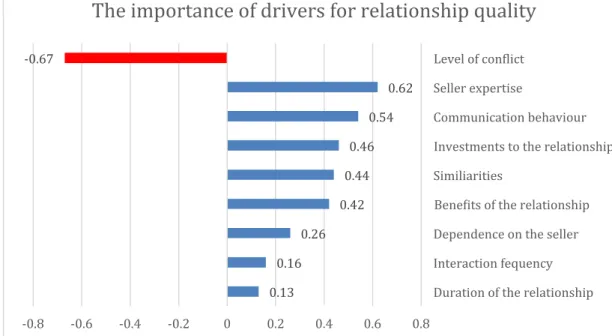
In order to understand how relationships can be built and maintained, it is important to have a deeper insight on how drivers influence customers to get into a relationship with an organization. Figure 2 displays nine drivers sorted by importance. With exception of the first driver, level of conflict, all drivers have a positive impact on the relationship.
0.13 0.16 0.26 0.42 0.44 0.46 0.54 0.62 -0.67 -0.8 -0.6 -0.4 -0.2 0 0.2 0.4 0.6 0.8 Duration of the relationship Interaction fequency Dependence on the seller BeneBits of the relationship Similiarities Investments to the relationship Communication behaviour Seller expertise Level of conBlict
The importance of drivers for relationship quality
5
Level of conflict. According to Palmatier (2008), the level of disagreement between the
partners has an extreme negative influence on the relationship outcome. People weight negative experiences higher than positive experiences and the impact is dependent on the way problems are solved. Disagreement in a relationship in general is not negative but it is important that it is not vital and damaging the relationship. Nevertheless, mutual disagreement can also have positive effects on the relationship outcome.
Seller expertise. This driver deals with how the customer values the knowledge and
credibility of the contact person in the relationship. This attribute is the most important driver for a positive relationship thus; companies should put high value on this dimension and train inexperienced and unskilled contact persons, as this group can fiercely damage a relationship.
Communication behavior. This driver includes the quality of information shared
between the two relationship parties. For instance, communicating goals, expectations of the relationship and discovering new opportunities of a partnership help to build a strong relationship.
Investments on the relationship & benefits of the relationship. Two merged
dimensions state that the more resources (money, time, effort, passion etc.) one organization is investing, the better the relationship can develop. Examples of investments can also include free samples, giveaways or loyalty cards. Such high investments also lead to benefits concerning serving time and having a better base for customers to make decisions. In this dimension, the principle of reciprocity (Cialdini, 2007) is included which states that people who receive something, feel obligated to give something back.
Similarities. If the two partners have things in common, it may also improve the
relationship. Similar culture, values or goals within a company but also on a personal level, such as lifestyle, hobbies or behaviour are parts of similarity and can reduce uncertainty, and the partners can predict certain behaviour easier.
6 However, the following three drivers have only a small impact on the quality of the relationship:
Dependence on the seller. The driver states that customers tend to maintain a
relationship with sellers they are dependent on. However, on the one hand, dependency creates commitment, but on the other hand, it is difficult to establish trust as customers always have on min that the seller might take advantages of the dependency.
Interaction frequency and duration of the relationship. These two drivers do not
support relationship quality. However, it implies that frequent customer contacts and a long duration of the relationship lead to a better information flow and reduced uncertainty.
4.2 The importance of trust for establishing relationships
Creating a trustworthy brand is the most important task for marketers to achieve strong brand loyalty and thus, repeat purchases and establish a premium price (Delgado-Ballester and Munuera- Alemán, 2005). Hur et al. (2014) define trust as the “willingness to act without calculating immediate costs and benefits, always underlies loyalty” (p. 612).
According to Gowthaman (2010), trust is the critical component to achieve relationship commitment, which is vital for the concept of relationship marketing and gaining customer loyalty, satisfaction and a general advantage regarding competitiveness. Dwyer & Tanner (2002) define the notion of trust as “the belief in (…) integrity, honesty and the reliability of another person”, instead of an inclination to rely on an exchange associate in whom one trusts. Both definitions also imply the idea of having confidence in the relationship supported by the words belief and willingness. However, the same scholars also state that there are two components important for the existence of a real trust.
7 Firstly, the belief and willingness that the partnership is trustworthy, but secondly, behavioural intentions which means that the partner also has to show the trust by interacting in a relationship.
Hur et al. (2014) summarize that luxury brands are expected to have a higher value and quality and deliver a subjective sensorial pleasure for customers caused by customers’ perception. In contrast to that, non-luxury brands rely more on functional benefits. The study also found that for luxury brands brand trust is of greater importance for building brand loyalty than for non-luxury brands. Additionally, the research revealed that hedonic values had a bigger effect on brand satisfaction than utilitarian values.
However, the study was limited to male consumers who bought luxury brands rather due to symbolic status reasons than to functional reasons. One main finding was that building a luxury image reduced the perception of brand risk. Never the less, one could consider craft beer as a luxury brand, since, amongst other similarities, it acts the same way on the perception of the consumer.
4.3 Relationship loyalty
According to Harvard Business Review, it costs 5 to 10 times more to acquire new customers than to retain a regular customer (Wreden, 2007), which means that loyal customers are the key to generating profit.
The concept of loyalty is vital to discuss relationships (Egan, 2005). It can be distinguished the following way:
1. Loyalty in behavioural terms, which is defined by the number and frequency of purchases and the willingness to switch a brand, and
2. Loyalty regarding attitude and preference “towards brands to determine levels of loyalty” (p. 165).
Loyalty is often recognized as being a strategic objective for companies. Loureiro, Miranda & Breazeale (2014) showed that for instance in the grocery sector, significantly larger amounts and higher proportions of family budgets are spent by store-loyal. They also provided evidence that customer delight has a strong association with guest loyalty as measured by willingness to recommend the purchase to others and repeat purchase.
8 Additionally, the study showed that positively surprising consumers in unexpected ways could induce delight through arousal and stimulation that induces positive affect. However, delight in the grocery sector does not significantly influence consumers’ intentions to continue to buy with the same frequency from the store or to recommend the store to others.
4.4 Relationship Quality: How strong relationships can be built and maintained
Su-xian et al. (2010) consider relationship quality to be the capabilities of the service sales staff have that decrease perceived uncertainty. Additionally, an elevated quality indicates that customers are confident in their purchase while a low quality in relationship reveals high levels on inconsistencies on the experiences received by purchasing a certain good or service. According to the authors of the same journal, studies of relationship quality link this directly to trust, specifically the trust obtained from satisfactory previous purchases. It is also possible to take the concept of relationship quality further and incorporate some other factors; these are: effectiveness of interaction, reduction of transaction costs, and the satisfaction of society.
In essence, relationship quality is the appropriate amount of relationship needed to meet customer needs, therefore considering a high-quality relationship to be a balanced one. In another perspective, Su-Xian Z. et al. (2010) present the possibility that relationship quality is a part of the total perceived quality meaning that in order to evaluate relationship quality the current state of the parties and the need/desired state are compared taking into account that relationship - basically telling us that relationship quality is composed of a couple of intangible benefits that have the potential to increase a business’ value, enhance trust between the transaction parties and create long-term commitments.
This last point of view considers that trust is a consequence of a good relationship quality, and not the other way around. Nonetheless, a heavy connection between relationship quality and trust is always present which is interesting due to the fact that it has been proven that trust leads to customer loyalty. Therefore it can be said that relationship quality can be a stepping-stone to loyalty intentions.
9 While relationship quality is normally seen in the B2C perspective, for our study, it is relevant to look at it from a B2B perspective. Hankansson, H. & Snehota, I. (1989) divide business relationships into “procedural” and “structural” relationships. A procedural relationship includes characteristics like adaptability, cooperation, conflict, social interaction and routine, while a structural relationship has more profound characteristics like continuity, complexity, symmetry and informality: as relationships develop, both sides will connect with a mutual commitment. This is why in a B2B context, taking into account new dimensions are important to add on to the dimensions of trust, satisfaction and commitment – for example, adding opportunistic act, customer orientation and moral impact in such context. However, Woo & Ennew (2004) think that in a B2B perspective, B2C dimensions are unnecessary, as the relationship between businesses should be seen in a more logical and less emotional perspective.
Another important factor to take into account when talking about relationship quality is the fact that businesses tend to allocate resources towards their most profitable clients or those with greater potential (Palmatier, 2008). Improvements in relationship quality could potentially improve the efficiency of resource allocation through the reduction in uncertainty for these clients.
According to Harvey (2009), once Moulton said, “In the lingo of the industry, you have what is called ‘touch points.” “Ten years ago, audio touch points were very limited; you could only reach people primarily through TV and radio. You couldn’t play full polyphonic sound on a cellphone, for example—just a very simple ringtone.” Nowadays we have all these new audio touch points that can branch out to any- thing on the Internet and a million places in between, and this allows you to extend a brand in unique and interesting ways adapting it to your customers. Part of it is the audio logo, but a large part of it is the brand´s sound (Harvey, 2009).
10
5. Sonic Branding
5.1 Functions for companies, consumers and brands
In the most recent years music has become a valuable tool on developing brands and helping them to define new strategies. Sonic Branding or Branding with sound, defines how music can affect consumers, because of its ability to invoke memories and strong feelings (Fulberg, 2003; Jackson, 2003). It has been developed in the last two decades, but companies and consumers have not yet adapted.
It is important to understand and mapping out the sonic branding area, rather than a "music" focus. We should be able to follow a theoretical driven research, empirically driven articles, as well as strategically focused practioners perspectives on sonic branding and the consumer.
Sonic branding represents a wide range of topics, covering different concepts such as elevator music (Lanza, 2004), consumers behaviour in a wine store depending on the kind of music playing, branding strategy (Fulberg, 2003), sonic warfare and music´s versatility as a tool for identify management in people´s everyday life.
Companies can take advantage of sonic branding strategically when building their own brand (Treasure, 2007). Sonic branding's adapted functions can increase consumer loyalty in brands and businesses (Fulberg, 2003), turning the brand into a retail experience (ibid.) and using the music to tell the story of the brand (Westermann, 2008). Companies can use sonic branding as a social tool steering consumers in a specific direction or inspire a certain rhythm in-store (for example, DeNora, 2000; Bradshaw and Holbrook, 2008).
There is clearly a division in the literature regarding whether sonic branding is to be recommended as a marketing tool or not. Yet another research strand stresses that sonic branding has been a last minute finishing touch in most cases until very recently, meaning that in most cases it has not been used to its full potential yet (Graakjaer and Jantzen, 2009).
11 Jackson (2003) argues that ‘sonic branding' will succeed in involving brand identity and make the brand consistent independently of where the consumer encounters it (through an event, TV, retail environment and so on.). Although music has been part of the retail experience for a long time, it has not played that role to its fullest before sonic branding (Jackson, 2003, p. 7). The strategic part of sonic branding has been neglected, whereas the creative part has taken precedence through the years, he argues. However, there is no reason to reject the jingle – jingles are useful because they work as ‘mnemonics' and do help consumers remember the brand.
Accordingly, in Jackson's (2003, p. 9) definition: ‘A jingle is a short slogan, verse or tune designed to be easily remembered'. Jack- son's sonic branding model emphasizes emotions, ‘trust and belief' in the brand, and the ‘touchpoints' – the various instances where consumers encounter the brand. Jackson's (2003) main argument is that companies need a ‘consistent' connection between brand and sound. However, considering the complexity of, for instance, musical ‘fit' , 2009), the emphasis on consistency of the brand strategy literature seems limiting.
There may be a fine line between consistency between brand and music, and the repetitiveness of cautiously fine-tuned use of music that is believed to suit the brand. In fact, music that appears to contrast the brand may seem just as relevant to consumers (Bode, 2009).
As mentioned earlier, the interplay between music and images is much discussed in the literature (Pinch and Bijsterveld, 2004; Bode, 2009). Further, managers do not know how to measure the effects of the music/sonic branding efforts, but they still want to measure it (Graakjaer and Jantzen, 2009). Music has been marginalized in the process – images and the brand traditionally get more attention (ibid.).
12 Lately, however, companies increasingly turn to sonic branding specialists, and this means that the strategic importance of understanding music in advertising is increasing (Graakjaer and Jantzen, 2009). The sonic branding consultants repeatedly depict sonic branding as an important success factor which has been overlooked by the industry (Kusatz, 2007; Treasure, 2007; Lusensky, 2010) – the latter having neglected music's role in the process of creating advertising and brand image by contacting sound agencies late in the process, and having already spent most of the budget on the visual elements (see, for example, Wand, 2009).
In contrast to this alleged practice of the advertising business as a whole to start with the visual and add the sound in the final stages, sonic branding agencies tend to emphasize that they master the entire process (Kusatz, 2007). Thus, there is a tendency in this literature to elevate sound and music in branding to something that is not only gen- erally misunderstood, but also as something which should be understood as a strategy. For example, Treasure (2007) relates music to silence and noise, saying that silence is not the opposite of sound because silence is a sound in itself and can be experienced as such. In other words, everything is sound (Treasure, 2007). Having a strategy about sound then seems absolutely necessary.
Westermann (2008) points out that people cannot avert their hearing as easily as they can avert their eyes – in this way, a sonic message can be more effective than a visual message, but also more intrusive.
In the article ‘Using music to influence cognitive and affective response in queues of low and high crowd density', Oakes and North (2008) investigated how crowd den- sity affected consumers' response to music. They found that slow-tempo music gave more positive responses over all. Further, in low crowd density, music enhanced the experience of waiting, whereas in high crowd density, it did the opposite. Not sur- prisingly, they also found that liking the music helped people feel more positive about the wait (Oakes and North, 2008). In a recent lab experiment, Vijaykumar et al (2012) found that the number of tones in a sonic logo (they call it ‘sogo') influences willingness to pay. In other words, this kind of research treats sound as providing subconscious information for consumers, believing that this information affects the outcome in terms of the purchase.
13 Other psychology-oriented studies of later years include Crisinel et al (2012), who conducted an experiment manipulating the pitch of the music while serving toffee to respondents and tracking how the perceived taste of the toffee changed with the music. Similarly using an experiment, French social psychologist Guéguen famously found that very loud music in bars make beer drinkers drink more beer, and drink it faster (Guéguen et al, 2008). These two studies also imply that it is a subconscious response to music that the experiments are aimed at mapping out.
Summing up this section, the possibilities of sonic branding to communicate the brand in commercial settings are championed, and considered vastly under-realized, by brand researchers today. Managerial implications based on empirical studies are non-existent in the sonic branding literature today – instead, the man- agerial implications are based on the writers' own experiences of the sonic branding busi- ness as managers in sonic branding agencies (Fulberg, 2003; Jackson, 2003; Treasure, 2007; Graakjaer and Jantzen, 2009; Kilian, 2009; Lusensky, 2010) or on interviews with managers (in Graakjaer and Jantzen, 2009). Thus, a strong academic research area has yet to take form around these strategic issues. A conceptually oriented approach is taken by quantitative studies in consumer research, proposing that sonic branding is mostly operating on a subconscious level that can be tapped into by marketers (for example, Oakes and North, 2008; Crisinel et al, 2012; Vijaykumar et al, 2012).
5.2 Direct impact in consumers lives
We, as consumers, find music attractive because we don´t realise how it works. The brand becomes a retail experience through the use of music, as customers will start doing things they would never do, because of a subconscious reaction to the music, like moving faster or slower in the store area (Fulberg, 2003).
According to DeNora, sonic branding is a massive tool to understand the consumer/user viewpoint. It is essential to investigate music in practice, how people face it in their everyday lives, in order to structure the sociology of music, and to find how people will be affected by it (2000).
14 Music can represent a power tool regarding public space, De Nora argues. Music is a practice - we act with music, in other words, music is not something which is done to us. When music is playing in public spaces, consumers will react or act in some way... maybe they will leave, maybe they will stay, and so on (DeNora, 2000).
Regarding Bradshaw and Holbrook (2008) point of view where they argue that in-store background music is a sort of manipulation and ‘a means of social control' created by marketers alone, rather than a part of consumer culture created with con- sumers' involvement, I will have to disagree as I think that will always exist some kind of interaction where the final customer will have the option to choose, to buy or not. What makes it important to be attentive to the use of sonic branding and in-store background music is not only the way that this music can be unaesthetic – there are also implications because of how we listen to music. DeNora (2000) points out that music works as an efficient trigger for our memories and nostalgia (Tom, 1990; van Dijck, 2006). Because of this, music used in advertising can have a very strong effect (DeNora, 2000; Barnet, 2001).
Some research on sonic branding of specific places and spaces could be of considerable interest because it can provide significant material regarding what a physic place means to consumers. The relation between the brand and the music which identifies it, as well as how branding can be implemented through sound can be very demonstrative (Schroeder and Borgerson, 1999; Hudson, 2006). Further, the way music can evoke a feeling of the ‘past' might enhance the brand experience for cultural reasons (Wu et al., 2013). However, there is much left to explore and discover about the connection between music and the brand, and its sense of the past – a cultural nostalgia.
15
6. Developing Sectors
6.1 Retail
Retail is no longer just the point of purchase; it has become part of a brand´s communication strategy. Sonic branding has yet to make a significant impact on the retail environment and yet represents a powerful tool when it comes to developing brand loyalty. More and more brands are looking for new ways to communicate with their customers both locally and globally, as sonic branding will become an essential tool in the creation of fully immersive brand experiences.
Some time ago it would be perfectly normal to hear our parents when out shopping saying, – “you can look, but you can´t touch”- and how thing have changed right? Nowadays it’s all about interaction, touch, feel…retail has changed. Retail of today is not about put on shelves in order to be admired until they are bought, it is all about seeing, hearing and smelling. It is much more than providing a point of sale, it is now part of a brad´s communication strategy.
The time where the combination of a tight control of information and a limited number of available media meant that consumer only had one option is over.
6.2 Environmental sound design
By creating a brand experience using sound you are also touching an area of sound branding. The opportunities for creating a sound branding experience that conveys a brand essence and soul is possible (The Economist Newspaper, 2007). Bentley Motors, for example, recently looked to create a unique and differentiated brand experience by replacing all interior mechanical sounds with a sound that had been created for their Continental GT car. Roland Garros, home of the French Open also produced an audio identity used in its facilities and other public areas to play during award ceremonies as well as opening and closing ceremonies (Podoshen, 2005).
16 In a retail environment, sound branding extends to the use of sound in order to enhance the consumer experience and influence behaviour. An academic study developed in Scotland found that sales of wines, within a supermarket, displayed side-by-side and similar prices responded to music. On days when French music was playing, French wines outsold German wines, but in the other hand, German wines outsold French ones on days when typical German music was playing (North, 2012; Hui, 2013).
Audio Branding amazing effects, such as sonic beams and sonic logos can provide a better, more controlled, test of atmospheric factors and the moderating role of subsequent emotional states on shopping behaviour. Regarding Sonic Logos and Sonic Beams the British department store chain Selfridges is one of the most notable brands to have enjoyed success with this kind of approach. They have created distinctive consumer ‘zones' by changing their retail stores visually and sonically, so customers know they are moving into a new department, where they can buy a different kind of product. These "areas" are often tailored to suit a specific product, customer profile, season or even times of the day and week (Palghat, 2009; Hein 2006).
Bruner once said (1990), "Music is not a generic sonic mass, but rather a complex chemistry of controllable elements". This means that music can vary along various dimensions including loudness, rhythm and tempo. The effect of music on behaviour has been suggested to operate via its effect on cognitive and emotional processes (Vida, 2008).
17
6.3 Implementation process, best examples
Nowadays, branding represents one of the top CEOs concerns, and that is the reason why a lot of firms are investing so much in branding initiatives – even online. According to eMarketer, in 2014, U.S advertisers spent $17.46 billion on branding, representing 41.6% of digital spend. This year (2017), [the online] branding spend is expected to grow to $30 billion, or 48.5% share (eMarketer, 2013). Therefore, a lot of B2B and B2C organizations start relying on the same branding tools, thereby losing the advantage that initially held, and letting companies to lose that differentiate approach.
So, in order to restore that same advantage on this high competitive field, some organizations started to pay attention to one powerful toll, set-aside until then by most marketers: sound. With an increasingly audio-enable media environment, the strategic use of sound can represent a positive step in order to better differentiate a product or a service, enhancing recall, creating preferences, building loyalty and trust, and eventually helping to increase sales (Santhanam, Mitchell & Rosenstiel, 2012).
Called audio branding, sonic branding, sound branding, or acoustic branding, some studies have shown that relevant sounds and musical beams can easily influence people and educate their brain in ways marketers want. Congruent sounds cues can increase the speed of a visual search for products, as well as perceived taste of food and wine (Palghat, 2009; Hein 2006).
There are some marketers that have been employing sound and music for some time as part of their brand experience, like de Apple Computer launching, the aggressive howl of a Harley or the door closing on a Volkswagen Golf (Podoshen, 2005).
The truth is that audio branding represents much more than just an isolated packaging or product sound, a jingle in the end of a radio spot, or a simple audio logo like the one associated with the Intel opening session (Sweeney, 2001).
18 It comprises the creation of an entire audio language for the brand based on its essence, values, and personality – a language that will be present from the web and apps to TV to the retail environment and even the product itself. Just like visual brand is adjusted and optimized to each medium, audio branding will also do that, through a psychological appropriation (Sweeney, 2001).
SNCF, the French number one railway company, is a perfect example how an audio branding approach can be taken and why do they decided to go for it. First, already in competition with some airlines groups, they started to compete to Italian and German railroads. Second, some people, when asked, were starting to associate the brand with words like strike, delay and inefficiency.
In the beginning, they started to analyse their competitive set, having notice that existed a huge lack of distinctiveness among audio branding competitors initiatives (ABA, 2010).
Towards this fact, and keeping in mind the values that distinguish the brand, they created an audio DNA with the objective of communicating their leadership. In order to bring that to real life the music had to be interpreted in various ways, for example: Taking into account travellers' needs, station messages were played with calm and reassuring music in order to decreased tourist anxiety. On the other hand, TV frames, despite using the same tune, had a more authoritative sound with more emphasis on rhythm (Wright, 2013).
One of SNCF last updates regarding its audio DNA was when the brand needed to transmit its new vision and paradigm of simple, direct and easy mobility to customers, so sounds were simplified and more speed was introduced (Wright, 2013).
Later on, these initiatives have paid off. Most listeners correctly identified the brand, and even more significantly, they now see the brand as being attractive, allowing SNCF to reinforce its leadership (ABA, 2010).
19
7. Brand value and Co-creation
According to Moutinho (2013), marketing and branding exist just to bring benefit to the company. Right now we leave in a much more complex world, based on a speedy economy, where consumers have several "digital speakers" available with which can easily destroy a brand. It's urgent that companies star improve their relations with customers, in order to work better their products and services.
Today's consumers can also be capricious and non-committal. Brands will have to become more liquid to keep up with their constantly moving targets. Basically, the future will consist more in chameleon-like brands that will focus less on communicating a static message and will start investing in segments like audio branding. Brands need to be dynamic, just so, they will be able to guarantee customers commitment. Brand INNO is the best way to maintain the value of a brand and avoid becoming a commodity. Kotler (2006) defines Marketing as "the science and art of exploring, creating, and delivering value to satisfy the needs of a target market at a profit. Marketing identifies unfulfilled needs and desires. It defines, measures and quantifies the size of the identified market and the profit potential. It pinpoints which segments the company is capable of serving best and it designs and promotes the appropriate products and services." Audio branding is an example of a Marketing trend, an example how Innovation can identify customers needs and helping them to create opportunities. Besides that it will also help to sell the product (Kotler & Keller 2010).
The brands of the future will be vehicles and not just destinations. Any company can spend money buying funky media, sponsoring an event on plastering logos on entertainment content, but there is a gulf of difference between that and actually helping people broaden their horizons.
20 The future lies on reducing the complexity, being creative and multifunctional and do innovation with co-creation. What do people need? More than understand the customer or apply audio branding revolutionary measures, is about understanding the person´s concerns, and work with them to create a better product or service.
The world is passing throw everyday changes and it´s becoming more quick, more united but with a crisis of values and relationships. This moral crisis has been fought by some firms, which try to get connect with customers, by growing with them instead to them.
New trends, like people based research – the need that firms have to do more qualitative research, to talk and co-create with their customer – and also the marketing immunization trend, that people bombed with advertising and information every – single – second and are not able to just pay attention to what really matters for them. These two trends help to sustain the pertinence of how important is to innovate in audio branding, and in spite of being a small example in such a wide range of key concepts, is a real prof that marketing can become meaningful and give a real contribution to the world.
The future asks for meaningfulness, person to person that are collaborative, customized, individual knowledge without barriers or borders. The future asks us to talk differently in the business world and our relations. The future is going to be with business colonies, a co-working space where people come together for a simple project, and when finished they go to somewhere else, in a virtual or physical reality. It calls to action; there is the need to reverse the way the world communicates a think strategically.
21
8. Contextualization
To use music to generate an atmosphere, as well as to improve the brand experience of consumers, is a rapidly developing field of study and practice entitled as sonic branding (Jackson, 2003; Lusensky, 2010). Jackson (2003) points sonic branding as the creative and emotional process of brand identity, in which brand characteristics and values are mixed into an audible form both distinct and recognizable to the organization. Mixing sonic branding strategies with other used marketing practices gives companies unrealized potential to transmit subliminal messages at touch points where sound is in the centre of the experience (Treasure, 2011). According to Lusensky (2010), sonic branding can create memorable brand experiences and lasting brand memories that are stronger than its visual concept. It is not surprising then, that an increasing number of organizations are starting to develop innovative, creative and integrative ‘‘sonic languages'' designed and projected to communicate messages across different platforms (Brodsky, 2010; Jackson, 2003).
The most developed forms of sonic branding include audio logos (e.g., Coca-Cola's 5-note melody) and jingles (e.g., McDonald's ‘‘I'm Lovin' It'' theme), whereby marketers attempt to distill a million dollar brand into a few pieces of sound. The truth is that sonic branding as a field of research is still in its relative infancy; researchers agree that sonic branding improves the experiences consumers have with the brand (e.g., Bronner and Hirt, 2009; Jackson, 2003; Jackson, Jankovich, and Shenkop, 2013; Lusensky, 2010; Treasure, 2011).
22 Few years ago, the understanding of how and why marketers make such extensive use of music in their communications with consumers has been supported by classical conditioning theory in the field of environmental psychology and social psychology. Based on theoretical principles of classical conditioning, people respond favourably to music for which they have a particular penchant (see Bruner, 1990). Zander (2006) defined classical conditioning concerning music as pairing a object with a well-liked piece of music to produce an association between the two, and therefore a preference for these same object.
His study participants were told they could take one of the two pens home with them as a reward for their involvement in the study. Results showed that 79 percent chose to keep the pen paired with liked music rather than keep the pen paired with disliked music. These effects are widely replicated (Blair and Shimp, 1992; Gorn, Goldberg, and Basu, 1993; Gorn, Pham, and Sin, 2001; Groenland and Schoormans, 1994; Tom, 1995), suggesting music in consumer settings (e.g., television advertisement, retail store). It was then possible to conclude that Music that was liked or popular had positive effects on consumer attitudes and behaviours. Similarly, music that was disliked or unpopular led to unfavourable consumer behaviour in all of these studies.
While many scholars have replicated conditioning studies in the last few years, some researchers raise concerns about the obstacles of this research. Olsen and Pracejus (2004) say that the majority of these studies do not highlight the level of involvement a person has with a given product. Classic conditioning is a theory that links music with a neutral product, something towards which consumers do not have an existing attitude. As such, music becomes a backdrop element in the consumer profile and is only effective in priming certain mood states so long as it is likable and popular among listeners (Bruner, 1990).
23 Sport marketers play in an environment where the marketed objects (i.e., sport, team, other points of attachment) usually attract strong feelings, attitudes and desires from consumers (Kwon, Trail, and Anderson, 2006). Thus, these same consumers might be more tend to pay conscious attention to and critically rate a sensory experience in the consumer setting (North and Hargreaves, 2008).
To this end, certain kinds of music may be useful for highly involved consumers who are more focused on processing stimulus in consumer settings. MacInnis and Park (1991) confirmed, for such highly involved consumers, that music perceived as a ‘‘fit'' or ‘‘congruent'' with other marketing aspects is always more effective because it corresponded with the consumers' subjective perceptions of the music's relevance or appropriateness to the brand's message. Furthermore, these authors found music that did not fit was equally ineffective and had adverse outcomes. Opposed to the classical conditioning approach, which focuses on the capability of music to create an emotional response to marketing, the concept of ‘‘musical fit'' concerns music's power to convey information regarding brand identity.
24
9. Methodology
9.1 Objective
The main objective of this Master Thesis will be to analyse the influence of audio branding in customers purchase decision process. To better understand this process some online interviews were made regarding specific scenarios.
An emphasis in product and service will be placed, as well as the importance of creating preferences, building loyalty and trust, and eventually helping to increase sales. Consequently, be able to produce a guideline for managers to consider when applying audio branding in ads.
9.2 Conceptual Framework
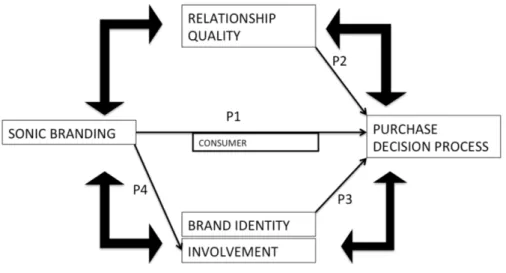
Based on literature review and in the main objective, it is possible to present the conceptual framework shown in figure 3.
From a broader point of view, the model will represent the connection that cuts both ways between sonic branding and the purchase decision process, with the final consumer under the focus. It will also provide the information to attest the propositions (further presented). Figure 3 represents the idea for the model to be developed and explored.
25 The prepositions are as follows:
P1 The influence of sonic branding on purchase decision process.
P2 The importance of relationship quality/loyalty on purchase decision process P3 How can brand identity define the purchase decision process
P4 How does sonic branding brings customer involvement
26
9.3 Results and Discussion
Interviews respondents were asked about their perception on brands creating their identity according some scenarios. This chapter will enclose the data and conclusions drawn from those online interviews, and its relation and discussion with two different examples: sonic branding in sports, which will represent a best practice regarding sonic branding; and sonic branding in retail, which will illustrate what can be improved and how. A copy of the questionnaire is also presented in Appendix 1.
9.3.1 Sample profile
Regarding the sample profile, some introductory notes will contextualise the following statistics, including the questionnaire structure to better understand the analysis. Given the structure and the purpose of the questionnaire, these demographic details are both relative to the participants who know what Sonic Branding is and to those who don´t – in total 64 total participants have respond.
27 The questionnaire was divided into 2 different and sequential parts, unrolling according to the situation between the inquired and their perception regarding brand identity. Closed questions compose the first part. In total, six closed questions can be answered with 2 of those questions being directed at profiling purposes. The estimated time for filling up the whole questionnaire going through the two sequential phases of the survey is 7 minutes.
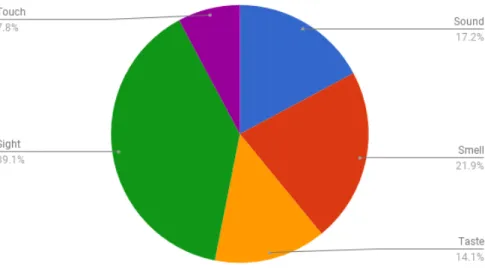
The first question of the survey (Figure 7) is about which is the most sensorial sense to the inquired. There is also, of course, the possibility that the inquired had never heard of Sonic Branding, as we can see from the results in Figure 4- which doesn´t mean the survey is complete, as the inquired can move forward, as their opinion will be equally important. That was the situation for 51 of the 64 (80%) participants in these online interviews.
Fig. 4 Familiarity with the concept of Sonic Branding, Question2 (source: survey data from Google Forms)
28 The gender distribution is relatively balanced, with no significant difference between male and female respondents. Concerning age distribution, respondents of the survey were mainly in the age group of 15-25 and 26-35 with older respondents having progressively less representation in the sample. Figure 5 and 6 shows us the distribution by age and gender of the surveyed that completed the questionnaire.
Fig. 5 Age Distribution, Question 12 (source: survey data from Google Forms)
29 In the second part, some different kinds of interaction are proposed so that different profiles of users can be scrutinised. Are then enlisted six open questions concerning two different scenarios, where the user's perception of the existent relationship will be under investigation. The survey ends with a socio-demographic representation of the respondents, with characteristics such as age and gender.
9.3.2 Sonic Branding in Sport
In the past years, it has become more difficult for brands in the sport and entertainment industry to create and sustain a competitive advantage due to media saturation and marketing clutter surrounding contemporary live events and sponsorship (Burton and Chadwick, 2009). Moreover, the invasiveness of modern advertising in people's everyday lives has resulted in an overall negative perception of marketers among many consumers (Drumwright and Murphy, 2009; Obermiller, Spangenberg, and MacLachlan, 2005).
Such developments have resulted in an increased difficulty for sport teams to craft and foster identification among sports fans (Pyun and James, 2011). Also, the nature of branding has become more sophisticated, shifting focus from various tangible aspects, such as name and logo, to unreachable elements, like personality and image (Aaker, 1996; Keller, 1998).
As such, practitioners are now seeking ways in which to make stronger emotional connections with consumers through highly developed forms of brand communication. Decades of research on visual brand identities demonstrate how sophisticated marketers have become in this area (see Lindstrom, 2005). Yet, the way in which people engage with the world around them involves all five senses (i.e., sight, hearing, touch, smell, and taste), each of which offers an opportunity for organizations to communicate with consumers.
30 From a managerial perspective I believe that marketing through the five senses might be used to create subconscious triggers that affect consumer perceptions. Abstract notions of the brand (e.g., sophistication or quality), just like VW does in their commercials every time they shut the car door continuously, as the sound sounds so good giving customers a perception of high-quality material. (Youtube , 2017).
Researchers in the field of sport consumer behaviour have begun to unravel the importance of the five senses (Figure 7) in the process of building an emotional bond with the brand. According to Lee et al. (2012), there is a hypothesized relationship between sport consumers' sensory experience at sport events and their ‘‘sense of home,'' yet it remains uncertain how sport organizations can go about nurturing such feelings outside of providing a unique experience. Thus, in order for sport marketers to understand this relationship, a deeper focus on each of these senses is warranted.
The many and differentiated ways in which people create, perform, observe, and respond to music depends greatly on the situations in which they do so. There is a plethora of research that explores music produced and consumed in sport by spectators, athletes, and musicians.
31 Much of this research comes from disciplines outside of sport management—primarily in sport science, sport sociology, and cultural studies, where much of the literature settles on the various uses of music to arouse and placate individuals who play organized sport. Karageorghis and Terry (1997) note how unique musical elements and self-orchestration, such as folk singing, chanting, and ritualized clapping, have long been present in European sport culture.
There is an extensive literature in the area of sport sociology devoted to the mutual relationship of ‘‘supporter'' rock music with football clubs in European states (see Crawford, 2004; McLeod, 2006; Redhead, 1991; Rowe, 1995).
These studies shed light on how certain songs and artists, based on a degree of homage, play an important role in constructing a club's supporter culture and in socializing its members. Similarly, Cronin (2007) describes how music attached to local sport culture in Ireland has been used to strengthen a sense of community among Irish citizens for centuries. Furthermore, research shows how music has helped shape cultural understanding of mediated sport with regard to cricket in the West Indies (Midgett, 2003) and rugby in New Zealand (Crawford, 1985).
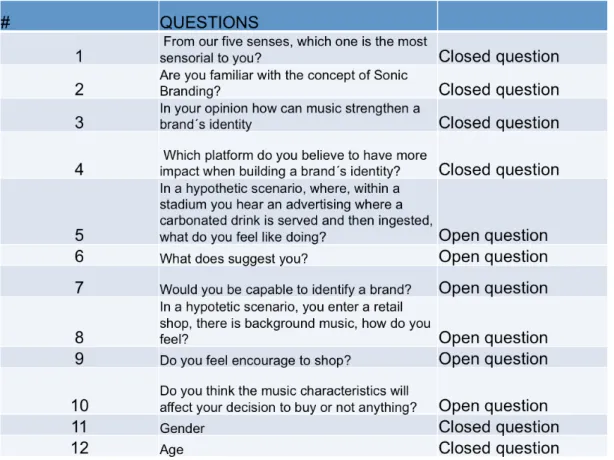
Although the current literature on the relationships between sport and music in the disciplines above provide some diverse perspectives and rich historical accounts, few studies in sport marketing have assessed the role of music in affecting sport consumer behaviour. In fact, much of the theoretical and empirical literature in sport marketing related to music has been confined to variables present in the sport stadium atmosphere (e.g., Lee et al., 2012; Uhrich and Benkenstein, 2010). However, while there are some meaningful insights into the power of music to create a lively stadium atmosphere and condition an emotional response from consumers during a sport event, the possibility that music might also play a key role in helping distinguish brand identities among competing brands has been largely unexplored (Table 1, question 5)(see figure 8).
32 There are many touch points where music may influence sport consumers (e.g., retail stores, commercial advertisements, sponsored entertainment events); yet, the sport stadium seems to be one where music influences spectator behaviour the most. In fact, the sport marketing literature is replete with research that suggests the stadium atmosphere is the main reason why people attend sports events. Stadium atmosphere can be controlled to produce specific emotional and behavioural responses in sport consumers. Apart of that, there is still a considerable influence on relevant marketing variables, such as length of the visit, revisit intention, and perceived pleasure.
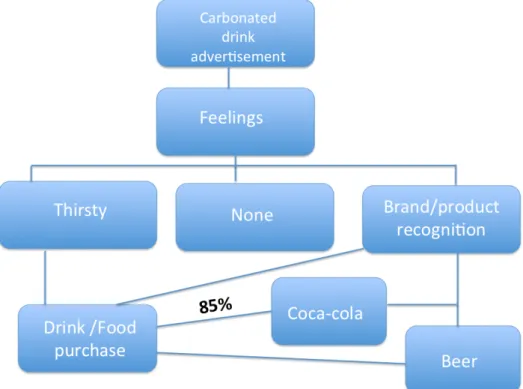
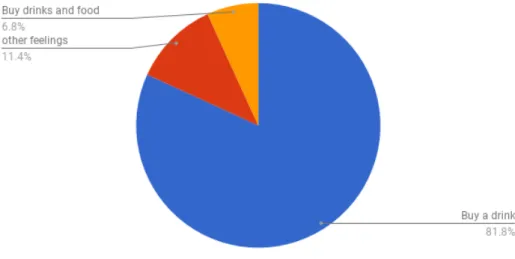
33 According to the online interviews, a hypothetic scenario where, within a stadium, people would listen to an advertising where a carbonated drink is served (see figure 9), 81,8% of the inquired said they would be tempted to buy a drink, and 6,8% said they would be tempted to buy a drink our any kind of food. Even more interesting than this fact was that from that 81,8 %, 85% (see figure 8) were tempted to by a Coca-Cola instead of any other drink, knowing that no brand has been advertised. In this case in particular, we can see how easy consumers within a sport environment can perceive brand identity.
In this case in particular I have transform the results from the first open question into some quantitative results, in order to originate the graphic below and to give the big picture of most inquires responses.
34 Despite our understanding of sport stadium atmosphere can still grow, brands are increasingly investing in atmospheric variables such as music in live sport in order to influence consumer behaviour. Music is such a dominant sport stadium feature during most individual and team sporting events there is a need for empirical studies evaluating the ways in which sport marketers can effectively use music to influence sport consumers behaviour. How do baseball players' ‘‘walk-up'' songs affect baseball fans in attendance? How does the spectacle of a boxer's introduction to the ring affect the experience of boxing fans? What effect does having live entertainment before, during, or after an event enhance sport spectators' experience?
9.3.3 Sonic Branding in Retail
It was quite recently that the world of brands decided to start selling the product to the consumer athwart advertising and then provide a place and point of purchase. This seemed to work for some years. The blend of a tight control of information and a limited number of available media and information meant that consumers (receivers) only knew what they were told. So the belief in advertising messages was always high. Some years later everything then started to change. Increasingly more and more sources of information started to become available to everyone. Television and radio expanded worldwide while new forms of media started to filter through to the masses. The Internet has completely revolutionised the way in which people communicate and gather information. All this forced progress was the beginning to brands start to express themselves more clearly than ever before.
Retail is one of these new forms where companies decided to start investing. Many of the world's biggest brands and their agencies have changed their opinion regarding retail in recent years. Retail is no longer viewed as a simple point of purchase to customers, it is also considered as a medium, with a unique ability to collect information and deliver it. Retail now has a key role in the creation of brand experience.
35 Retail gives customers completely different ways of communication and experience; it allows the brand to engage the audience in an open dialogue. Within the retail environment, it is now possible to surround the customer in a physic space that communicates the very essence and truth of a brand. At the same time brands are able to listen and respond to individual wants and needs. This is a two-way communication channel, it is a perfect place in which to build partnerships.
In my opinion, one of the key strengths of the retail environment is how easily brands can access to every human sense. Consumers are able to see, hear, taste, smell or touch products and brands at their leisure (See figure 7). The ability to touch, hear, or taste products and brands have become a crucial part of developing strong customer loyalty. Over the last few years consumers started to get cautious about the messages they are told by companies through traditional media and right now they want to know as much information as they can before deciding any kind of purchase. An important part of this information is the physicality of a product. The very best way to achieve this purpose is to put customer and product together in the same place and allow the human senses to make their own interpretations.
The role sound plays in the retail environment is a studied area, and yet few brands have taken on board with this findings. Some companies have been exploring the effects of sound, particularly music and the creation of sonic logos, in the retail environment. Their findings and improvements have highlighted the effects music can have on consumers both consciously and subconsciously, being their priority focus the immediate effects that it has on consumer behaviour.
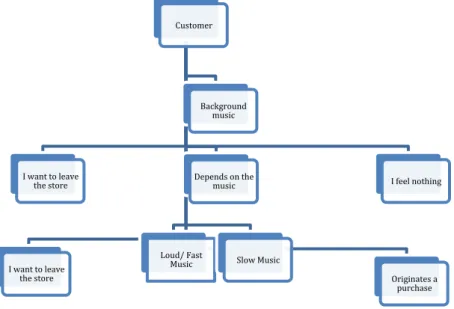
One study, developed in the United States shows how the pace of the music played in an international chain of supermarkets had a high impact on the amount of money spent by customers. Slow and adapted music encouraged customers to stay longer in the store and therefore spend more money. The increase in spending is considerable compared with periods when fast music was played, as we can see in this model inspired by the inquirer's responses.
36 The responses to question 8 have originated the model concept below (see figure 10), and after some research, we can easily perceive how some retails spaces (retail clothes shops seem to be the ones who struggle the most) are still behind in terms of developing the right sonic brand strategy.
Some customers could be encouraged to buy certain products and services simply through the use of the right music at the right moment. Some studies show that sometimes even the customers did not seem to be consciously aware of the music being played. This shows how some retails shops are still not aware how powerful sonic branding can be.
Both these studies demonstrate the immediate impact music can have in the retail environment. They show us how it is possible to create a short-term brand experience, within the store space, very easily. What has never been fully explored, however, is the potential music has to become a trigger for a sensorial and emotion-based reaction, the kind of response that will lead to improving brand loyalty.
Customer
Background music
I want to leave
the store Depends on the music I feel nothing
Loud/ Fast Music I want to leave the store Slow Music Originates a purchase Fig. 10 Respondents behavior according question 8 (source: author´s elaboration)
37 The use of music to generate brand loyalty in the retail environment has been limited recently, mainly due to the lack of understanding, from companies and brands, on how it can affect people. This problematic, combined with poor consumer research regarding long-term emotional effects of music on consumers, has led to a very naive development of retail sonic branding. This is surprising considering that sound, particularly music, is a compelling communicator on both the conscious and subconscious levels.
One of the best examples is the mobile telephone retailer. Nowadays there is an incessant bombardment of information about the latest features available on mobile phones handsets suggesting that is not the actual physicality of the product that counts; yet, mobile telephone retailers keep providing some products out on display and available for touching. Having decided what features were wanted before entering the store the importance of the handset's physical attributes has been discovered. Mobile telephone retailers understand the human desire to touch, hold or even smell products, and that is why retail stores are gaining importance for their business.
This approach to retail is effective and creates a bond with the product and therefore a demand to purchase it, but this does not necessarily encourage loyalty to a brand. In order to do this it is necessary to create an environment that is an extension of the brand and its products. It is necessary to create brand theatres.