outubro de 2013
Rui César Cardoso de Sousa
Synthesis and characterization of electrically
conductive bacterial cellulose-polypyrrole
composites using alternative synthesis methods.
UMinho|20 13 R ui César Car doso de Sousa Synt
hesis and characterization of electricall
y conductive bacterial cellulose-pol
yp
yrrole composites using alternative synt
hesis me
Dissertação de Mestrado em Bioengenharia
Trabalho realizado sob a orientação do
Prof. Doutor Fernando Octávio de Queirós Dourado
outubro de 2013
Rui César Cardoso de Sousa
Synthesis and characterization of electrically
conductive bacterial cellulose-polypyrrole
Nome: Rui César Cardoso de Sousa
Endereço electrónico: [email protected] Número do Bilhete de Identidade: 13664278
Título dissertação: Synthesis and characterisation of electrically conductive bacterial
cellulose-polypyrrole composites using alternative synthesis methods
Orientador: Fernando Octávio de Queirós Dourado Ano de conclusão: 2013
Designação do Mestrado: Mestrado em Bioengenharia
É AUTORIZADA A REPRODUÇÃO INTEGRAL DESTA DISSERTAÇÃO APENAS PARA EFEITOS DE INVESTIGAÇÃO, MEDIANTE DECLARAÇÃO ESCRITA DO INTERESSADO, QUE A TAL SE COMPROMETE.
Universidade do Minho, ___/___/______
iii
Agradecimentos
“Agradeço ao prof. Doutor Fernando Dourado por me ter dado a oportunidade de integrar este projecto e me ter dado um grande grau de liberdade no que toca à escolha do rumo a dar
à investigação.”
“Ao Professor Doutor Miguel Gama agradeço por me ter deixado realizar o meu trabalho experimental no seu laboratório e integrar o seu grupo de investigação e ter colaborado com
materiais para o desenvolvimento desta investigação.”
“Quero agradecer também ao Doutor Vítor Sencadas e ao (brevemente) Doutor Jorge Padrão por todo o apoio, ajuda e conhecimentos que me passaram ao longo desta importante
jornada. O meu muitíssimo obrigado por toda a orientação que me deram.”
“Ao (brevemente) Doutor Alexandre “States” Leitão por ter sido, para além do Vítor e do Jorge, o primeiríssimo a dar-me babysit no arrancar da minha investigação também um grande
e destacado obrigado!”
“A toda a equipa que integra o grupo FUNCARB, os que já lá estavam e os que acabaram por se juntar a nós nesta demanda que é o trabalho laboratorial um grande obrigado por todos
os bons momentos que se desenrolaram dentro e fora do lab!“
“Tenho também a agradecer ao professor Doutor Senentxu Lanceros-Méndez a sua simpatia e disponibilidade que demonstrou para me ajudar.”
“Quero também agradecer à minha família por todo o apoio que me têm dado ao longo da minha vida académica bem como a motivação e o ânimo necessários à realização deste
projecto.”
“Quero agradecer também à Joana com um carinho especial por ter sido a companheira de todas as horas e pelo apoio que também me deu ao longo do desenvolvimento deste trabalho,
v
Abstract
As the era of the nanomaterials draws near, the electrically conductive polymeric materials have been receiving increasing attention towards the development of diverse applications in electronics, sensors and actuators. Among these materials, the intrinsic conductive polymers (ICPs) stand out, namely polypyrrole (PPy), an inexpensive and highly conductive ICP (up to 500 S.m-1) of facile synthesis, environmentally stability and
biocompatibility. By its turn, bacterial cellulose (BC), a biopolymer with highly versatile characteristics, namely chemical purity (0% pectins and hemicelluloses), high crystallinity (95%), low density (1.25 g cm-3), high surface area (37 m2g-1) as well as
excellent mechanical properties (Young’s modulus of approx. 15-35 GPa) and low-cost production, have also been drawing a lot of attention.
With a combination of these material’s promising characteristics in sight, the aim of this work was to obtain electrically conductive BC-PPy composites via in situ polymerization. This was achieved by using wet chemical polymerization method. Never-dried and freeze-dried BC thin films were used as the templates for monomer deposition and polymerization. Additionally, an adaptation of the chemical vapour deposition synthesis method was also implemented and tested. The effect of freeze-drying towards the conductivity of the composites was also assessed as it showed promise attending to some published results where the composites are freeze-dried.
Electrically conductive BC-PPy composites exhibiting tailor-made conductivity, which varied depending on the synthesis method selected, were obtained. These conductivities vary between the ranges of 3x10⁻⁵ and5x10-5 S.m-1 (CVD)and 3-140 S.m-1
(WCP), depending on processing method. Additionally, the composites were characterized, alongside the BC and PPy, using a different set of analytical techniques such as conductivity assays, tensile testing, thermogravimetric analyses (TGA), Fourier transform infrared spectroscopy by attenuated reflectance (FTIR-ATR), X-ray diffraction crystallography (XRD) and scanning electron microscopy (SEM). This characterization lead to the conclusion that the BC fibres not only were completely coated by a PPy layer but that a chemical interaction between them also exist.
vii
Resumo
Dada a crescente popularidade dos nanomateriais, os materiais poliméricos electricamente condutores sido alvo de atenção crescente no contexto do desenvolvimento de diversas aplicações no ramo da electrónica, dos sensores e actuadores. Destes materiais, destacam-se os polímeros intrinsecamente condutores (PIC), nomeadamente o polipirrol (PPy), um PIC low cost, altamente condutor (≤500 Sm- 1), de síntese fácil, e altamente estável no ambiente bem como biocompatível. A celulose
bacteriana (CB), um biopolímero com características altamente versáteis, nomeadamente a sua pureza química (0% pectinas e hemiceluloses), elevada cristalinidade (95%), baixa densidade (1,25 g.cm-3), grande área superficial (37 m2.g -1),
bem como excelentes propriedades mecânicas (módulo de Young de ~15-35 GPa) e produção de baixo custo, também tem demonstrado uma crescente popularidade.
Com a combinação das características promissoras destes materiais em vista, este trabalho visou obter compósitos electricamente conductores de CB-PPy via polimerização in situ. Para este fim, para além do método tradicional de polimerização química em solução (PQS), uma adaptação desta técnica foi testada, tendo-se usado BC liofilizada alternativamente à hidratada. Paralelamente, também foi testada adaptação do método de síntese por deposição química de vapor (DQV). O efeito da liofilização na condutividade dos compósitos também foi avaliado, visto que se revelou promissor dado alguns resultados encontrados na literatura em que há liofilização dos compósitos. Foram obtidos compósitos porosos e não-porosos de BC-PPy com conductividade
tailor-made, i.e., variável (3x10⁻⁵ a5x10-5 S.m-1 (DQV)e 3-140 S.m-1 (PQS)) consoante o
método de síntese utilizado. Finalmente, os compósitos foram caracterizados, conjuntamente com a CB e o PPy, usando um conjunto de diferentes de técnicas analíticas tais como ensaios de condutividade elétrica, ensaios mecânicos, análise termogravimétrica, espectroscopia de infravermelho por reflectância atenuada, cristalografia por diffracção de raios-X e microscopia eletrônica de varrimento. Esta caracterização permitiu concluir que ocorre o revestimento total das fibras de CB pelo PPy, bem como existe uma interacção química entre a CB e o PPy.
ix
Index
Agradecimentos ... iii Abstract ... v Resumo ... vii Index... ix List of Abbreviations ... xiTables Index ... xii
Figures Index ... xiii
Equations Index ... xvi
Work contextualization and motivations ... 17
Chapter 1. Introduction ... 19
Natural polymers ... 21
Bacterial Cellulose ... 23
Biosynthesis of bacterial cellulose ... 24
Culture conditions Gluconacetobacter xylinus ... 25
Factors that influence the production of bacterial cellulose ... 26
Properties ... 27
Bacterial cellulose application potential ... 28
Intrinsically Conducting Polymers (ICP) ... 31
Synthesis ... 32
(Poly)pyrrole ... 34
Application potential of intrinsically conductive polymers ... 38
PPy and BC (BC-PPy) conductive composites ... 39
Potential Applications of BC-PPY composites ... 39
Chapter 2. Materials and Methods ... 43
Theoretical Concepts ... 45
Electrical conductivity measurements ... 45
Mechanical Characterization ... 48
Scanning Electron Microscopy (SEM) ... 50
Fourier Transform Infrared Spectroscopy by Attenuated Total Reflectance (FTIR-ATR) .... 51
X-Ray Diffraction (XRD) ... 52
x
Experimental procedures ... 58
Thin bacterial cellulose films ... 58
Synthesis of BC-PPY membranes ... 58
Characterisation of the BC-PPY membranes ... 61
Statistical analysis... 64
Chapter 3. Results and Discussion ... 65
Morphological and electrical properties of the BC-PPy composites ... 67
Chemical Vapour Deposition (CVD) ... 67
Wet Chemical Polymerisation (WCP) ... 71
Comparison between the three methods ... 78
Structural and mechanical characterization of the composites ... 83
Fourier Transform Infrared Spectroscopy by Attenuated Reflectance (FTIR-ATR) ... 83
X-Ray Diffraction crystallography (XRD) ... 84
Mechanical properties ... 85
Thermogravimetric Analysis (TGA) ... 87
Thermal degradation kinetics... 90
Chapter 4. Conclusions and future work ... 93
xi
List of Abbreviations
ANOVA – Analysis of variance BC – Bacterial Cellulose
CVD – Chemical vapour deposition
FTIR-ATR – Fourier transform infrared spectroscopy by attenuated total reflectance
G. xylinus – Gluconacetobacter xylinus
HS – Hestrin-Schramm
ICP – Intrinsically conductive polymers PPy – Polypyrrole
Py – Pyrrole
ρ – Electrical resistivity (Ω.m)
SEM – Scanning electron microscopy σ – Electrical conductivity (S.m-1) TGA – Thermogravimetric Analysis WCP – Wet chemical polymerization XRD – X-Ray diffraction crystallography
xii
Tables Index
Chapter 1 – IntroductionTable 1.1 – A brief list of the existent natural polymers………22 Table 1.2 – List of bacterial cellulose’s properties………27 Table 1.3 –Solvent’s impact on the PPy electrical and mechanical properties……….37
Chapter 2 – Materials and Methods
Table 2.1 – Characteristic peaks of absorption for BC and PPy IR spectra………63 Table 2.2 – Characteristic XRD diffraction peaks for BC and PPy………64
Chapter 3 – Results and Discussion
Table 3.1 – σ of different BC-PPy and textile-PPy composites in the literature……….82 Table 3.2 – Comparison between the BC and BC-PPy’s mechanical properties……….86 Table 3.3 – Thermal decomposition kinetics of the analyzed materials………..91
xiii
Figures Index
Chapter 1 – IntroductionFigure 1.1 – Number of scientific publications and patents related to bacterial cellulose between 1990 and 2008 (Andrade et al., 2010)………..24 Figure 1.2 – A: Schematic representation of the bacterial cellulose synthetic pathway. The microfibrils are secreted through the outer membrane’s pores assembler in layers thus forming a cellulose film of variable thickness on the extra-cellular space. B: SEM micrograph of G. xylinus………..25 Figure 1.3 – A: Bacterial cellulose film collected after a static culture batch; B: Bacterial cellulose on its flocculated form, obtained after an agitated culture (airlift reactor) batch (Cheng et al., 2002)…………26 Figure 1.4 – “Nata de coco” food product……….………28 Figure 1.5 – Range of conductivity for insulator, semiconductor and conductor materials (Encyclopaedia Britannica, 2004)……….………32 Figure 1.6 – A: Pyrrole monomer; B: Three pyrrole units coupled through their 2- and 5- positions (Saville, 2005)……….………..34 Figure 1.7 – The four forms of polypyrrole. A: Aromatic (neutral); B: Quinoid (neutral); C: Polaron (charged); D: Bipolaron (charged) (Saville, 2005)………..………..34 Figure 1.8 – The polypyrrole polymerization reaction. (Saville, 2005)………36
Chapter 2 – Materials and Methods
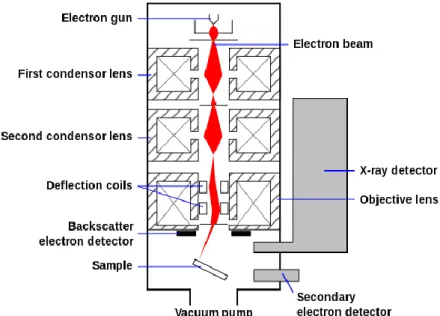
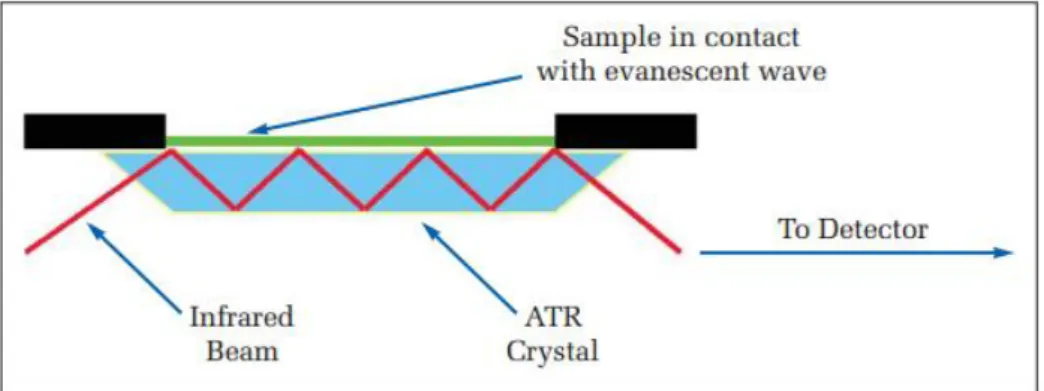
Figure 2.1 – Circuit used in the two-point measurement technique………46 Figure 2.2 – Circuit used in the four-point collinear probe measurement technique………48 Figure 2.3 – Linkam TST350 Universal Test Machine………..………..49 Figure 2.4 – Representation of the SEM microscope and its respective components………….….51 Figure 2.5 – Explanation of the ATR technique………..………52
xiv
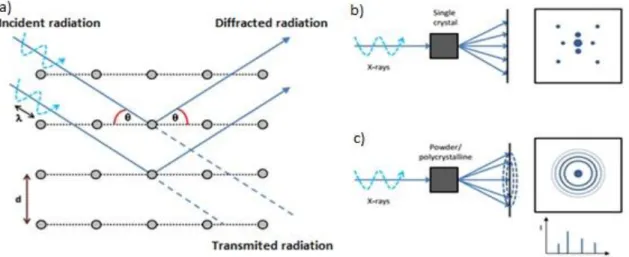
Figure 2.6 – A: Representation of the diffraction of the incident x-rays in the atomic lattice of the sample; B: XRD pattern obtained when analyzing a simple crystal sample; C: XRD pattern
obtained when analyzing a powdery sample……….53
Figure 2.7 – X-Ray diffractometer and its components………54
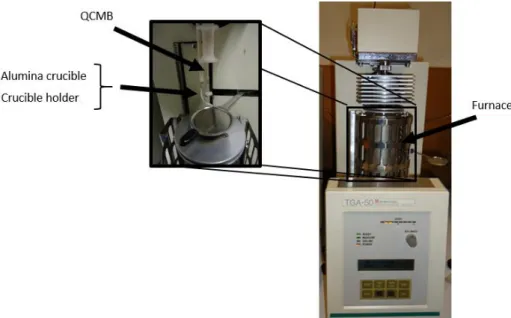
Figure 2.8 – Shimadzu TGA 50 TG Analyzer and its components………55
Figure 2.9 – Bacterial cellulose its different states – A: hydrated; B: freeze-dried…….………58
Figure 2.10 – Aspect of the BC-PPy composites comparatively to pristine BC...59
Figure 2.11 – Vessel used for the chemical vapour deposition (Panreac desiccator)………..……....60
Chapter 3 – Results and Discussion Figure 3.1 – SEM micrographs of pristine BC (A); cBC-PPy (1 hour) (B); cBC-PPy (8 hours) (C) and cBC-PPy cross-section (8 hours) (D)………..………….68
Figure 3.2 – SEM micrograph of the viscose-PPy composites obtained by Dall’Acqua et al. (2006)………69
Figure 3.3 – A: IV curves obtained for the cBC-PPy composites; B: Condutivity of the cBC-PPy composites versus reaction time……….70
Figure 3.4 – SEM micrographs of pristine BC (A); wBC-PPy-α (5 minutes) (B); wBC-PPy-α (6 hours) (C) and wBC-PPy cross-section (D)………..………72
Figure 3.5 – Fibre diameter increase throughout the reaction………73
Figure 3.6 – SEM micrograph of wBC-PPy-α (6 hours) (A) and FESEM micrograph of BC-PPy composites obtained by Wang et al. (2013) (6 hours) (B)……….……….73
Figure 3.7 – A: IV curves obtained for the wBC-PPy-α composites; B: Conductivity of the wBC-PPy I composites vs reaction time………..……….74
Figure 3.8 – SEM micrographs of pristine BC (A); wBC-PPy-β (5 minutes) (B); wBC-PPy-β (6 hours) (C) and wBC-PPy-β cross-section (8 hours) (D)………..75
Figure 3.9 – SEM micrograph of wBC-PPy-β (6 hours) with a 10.000x………..………76
Figure 3.10 – A: IV curves obtained for the PPy-β composites; B: IV curves obtained for the wBC-PPy-β composites (5 minutes excluded)………..………77
xv
Figure 3.11 – Conductivity of the wBC-PPy-β composites versus reaction time..……….77
Figure 3.12 – SEM micrographs of cBC-PPy (8 hours) (A); wBC-PPy-α (6 hours) (B) and wBC-PPy-β (6 hours) (C) and their respective cross-sections (D, E,F)………..78
Figure 3.13 – Comparison between the conductivity of the two different BC-PPy composites……….……79
Figure 3.14 – Demonstration of an electrical circuit where a LED light was turned while integrating the wBC-PPy (B) and cBC-PPy (C) composites in the circuit. A resistance of 100 Ω was also used as reference (A)……….80
Figure 3.15 – Evolution of the BC-PPy composites’ conductivity according to the used processing method and polymerisation time………..……….………82
Figure 3.16 – A: BC, PPy and BC-PPy IR spectra; B: Amplified PPy IR spectrum………..83
Figure 3.17 – BC, PPy and BC-PPy XRD diffraction patterns……….……….……….84
Figure 3.18 – Stress-strain curves of the BC and cBC-PPy composites……….………….85
Figure 3.19 – A: BC TGA curve; B: Derivative of the BC TGA curve………..…………..………….85
Figure 3.20 – A: PPy TGA curve; B: Derivative of the PPy TGA curve……….……….87
Figure 3.21 – A: BC-PPy TGA curve; B: Derivative of the BC-PPy TGA curve………..………88
Figure 3.22 –TG curves for all the analysed materials……….88
Figure 3.23 – Top view photograph of the crucible with the iron residue left after the analysis of the BC-PPy composites………90
Figure 3.24 – Kissinger plot for the BC thermal degradation and respective linear regression for Eact calculus for both first (a) and second (b) thermal decomposition steps………..………..90
xvi
Equations Index
Chapter 2 – Materials and MethodsEquation 2.1 – Formula used to determine the sample electrical resistivity with the two-point
measurement technique………45
Equation 2.2 – Ohm’s law………..46
Equation 2.3 – Formula used to determine the sample electrical resistivity with the four-point collinear probe technique………..47
Equation 2.4 – Young’s modulus’ formula………..49
Equation 2.5 – Bragg’s law………53
Equation 2.6 – Sample weight variation (∆𝐦/%) throughout the TG analysis………56
17
Work contextualization and motivations
Bacterial cellulose (BC), also known as microbial cellulose and bacterial nanocellulose, is a form of cellulose that is chemically similar to the one produced by plants, however, it is secreted by bacteria, namely Gluconacetobacter xylinus (G. xylinus). Microbial cellulose displays very interesting properties namely a high Young’s modulus, high crystallinity, an exceptional degree of purity and is also biocompatible (Andrade et al., 2010; U.S. Congress, 1993).
These characteristics make cellulose an attractive material for the development of a wide variety of innovative applications in the fields of biomedicine, alimentary supplements and additives, paper production and even in the sound device industry (Andrade et al., 2010). In fact, not only does BC has a high application potential but also there are already some BC-base successful products in the market such as, for example: Biofill (Fontana et al., 1990) wound dressings, introduced in 1990 for clinical trials; the Nata de Coco (Andrade et al., 2010), the food product were the BC was primarily discovered, an alimentary good that is quite popular in the oriental countries and the MDR-R10 headphones developed by Sony, the first audio devices to incorporate bacterial cellulose in its speaker membranes.
Recently, it has been discovered that this material is an attractive insulation matrix for intrinsically conductive polymers (ICPs) such as polypyrrole (PPY) (Wang et al., 2013; Dall’Acqua, 2006). With the era of flexible electronics drawing near, evermore becoming a commercial reality and the continuous and intensive research efforts in order to find a viable and environmental-friendly base-materials, bacterial cellulose is starting to be explored towards the development of this type of applications. The main characteristics of BC that are interesting for this type of applications are its mechanical resilience and elasticity. Some works have already been developed towards this area having already some base composites of BC and PPy been synthesised (Muller et al., 2013; Wang et al., 2013).
The main goal behind this MSc thesis was to obtain electrically conductive composites with, ideally, the electrical conductivity of PPy, while having the mechanical
18
resilience and elasticity of BC. These composites could potentially be used for the development of flexible electronic devices, as applicable in the most varied fields: from consumer electronics to biosensors (Vaitkuviene et al., 2013; Jin et al., 2000; Vernitskaya and Efimov, 1997). As such, this MSc thesis revolved around the synthesis of BC-PPy composites through the traditional WCP method while implementing one modification, namely, the usage of freeze-dried BC for composites synthesis instead of hydrated BC. Additionaly, an adaptation of Dall’Acqua’s method of chemical vapour deposition (Dall’Acqua, 2006) was also implemented and tested towards the synthesis of BC-PPy composites as an alternative method of synthesis.
With said goal in sight, this work focused on the synthesis of electrically conductive composites obtained through the oxidation of BC with ferric chloride and doping with hydrochloric acid followed by the deposition and in situ polymerization of PPy on the BC fibrous matrix. As stated above, besides the traditional WCP synthesis method using hydrated BC, two alternative methods were experimented, namely the usage of freeze-dried BC on the WCP method and an adaptation of the CVD. The main reason behind the usage of freeze-dried BC alternatively to hydrated BC was testing the impact of usage of freeze-dried vs hydrated BC as the freeze-drying of the samples potentially leads to a high increase of the obtained composites’ electrical conductivity as Wang et al. (2013) obtained highly conductive BC-PPy composites by freeze-drying them posteriorly to their synthesis
The synthesized samples were characterized in terms of their mechanical, electrical, optical and thermal properties. For this purpose, different techniques such as tensile testing, electrical measurements, SEM, FTIR-ATR, XRD and TGA were used to study the effect of the processing technique towards the electrical performance of the composites.
The thesis work was performed within the FUNCARB (FUNctional CARBohydrates) research group from the IBB (Institute for Biotechnology and Bioengineering) at the Center of Biological Engineering (CEB) of the University of Minho under the supervision of Prof. Doctor Fernando Dourado.
21
In this chapter, an approach to all the different building blocks that made part of the final objective of this work, namely, the bacterial cellulose (BC) and polypyrrole (PPy), will be made. This consists of a detailed explanation of the materials’ properties and the state of the art related to their potential use. An approach to the families of these materials, i.e. the natural and intrinsically conductive polymers’ will also be made in order to introduce both the BC and PPy.
Natural polymers
Polymers are a class of chemical compounds that can either be synthetically produced or found in nature being the latter called biopolymers. The biopolymers are a family of polymers that are produced by living organisms through a variety of synthetic mechanisms present in plants, animals and microorganisms (U.S. Congress, 1993). They can either be extracted directly from their source (e.g. extracting chitin from crustacean shells) or be produced in vitro, by providing to the microorganisms the required nutrients for their biosynthesis (e.g. bacterial cellulose).
One of the main treats displayed by the biopolymers is their biocompatibility, which means that these polymers have a predictable rate of adsorption while triggering reduced to null (e.g. bacterial cellulose (Andrade et al., 2010)) inflammatory response by the host (U.S. Congress, 1993). This makes the biopolymers good candidates towards the development of biomedical applications as they are safe to use on the human organism.
These compounds are also biodegradable thus being beneficial towards the environment (U.S. Congress, 1993) as they can be degraded by decomposing microorganisms and resulting applications (e.g. bacterially derived thermoplastics) are less harmful towards the environment. In short, biopolymers are not only generally regarded as safe but also environmental friendly.
However, these polymers display some disadvantages, for instance, the extraction of chitin from crustacean shells is a relatively work-intensive extraction process which involves different chemical agents (Arbia et al., 2012). Even when these polymers can be obtained by fermentation, there are also a few complications involved, namely low
22
product yields and/or low purity which requires cost and time-intensive purification processes (Vroman and Tighzer, 2009; McChesney et al., 2007).
Nonetheless, regardless of the complications associated to the attainment of some of the polymers stated above, there are some examples of these materials that are economically appealing given the fact that their industrial production is potentially cheaper than the production of their synthetic counter-parts. This is due to the fact that the growth media used to culture the producing organisms are generally composed of relatively cheap compounds and other industries products (e.g. food industry by-products). One example of a biopolymer that is produced under these circumstances and displays high economic potential is bacterial cellulose, as it will be approached later on this chapter.
A snapshot at the extensive biopolymer family obtained from natural compounds can be seen on Table 1.1 below).
Table 1.1 – A brief list of the existent natural polymers (U.S. Congress, 1993). Polyesters Polyhydroxyalkanoates Polylactic acid Proteins Silks Collagen/gelatin Elastin Resilin Adhesives Polyamino acids Soy, zein, wheat gluten, casein, Serum albumin
Lipid/Surfactants
Acetoglycerids, waxes, surfactants Emulsan Polyphenols Lignin Tannin Humic acid Specialty polymers Shellac Poly(γ-glutamic acid) Natural rubber
Polysaccharides (origin: bacteria)
Xanthan Dextran Gellan Levan Curdlan Polygalactosamine Bacterial cellulose
Polysaccharides (origin: fungi)
Pullulan Elsinan Yeast glucans
Polysaccharides (origin: plants/algae)
Starch (amylose/amylopectin) Cellulose Agar Alginate Carrageenan Pectin Konjac
Various gums (e.g. guar, xanthan)
Polysaccharides (origin: animals)
Chitin/chitosan Hyaluronic acid
23
Among the plethora of existing biopolymers, bacterial cellulose displays a promising potential in terms of application given its interesting physical-chemical properties. This research work is dedicated to the study of this biopolymer’s properties and its potential applications as it will be detailed below in the next sub-chapter.
Bacterial Cellulose
Cellulose, primarily known for being a basic structural component in plant cell walls, is the most abundant natural resource on Earth (Encyclopaedia Britannica, 2012). Cellulose displays almost an endless set of applications in wide scope of research fields, such as biomedical applications, electronic components and biofuels. It is also used industrially, as a raw material, in the production of paper, food additives, among other purposes (Andrade et al., 2010). This biopolymer comprises a large number D-glucose monomers, between the hundreds and the tens of thousands, connected together via β(14) bonds thus making it one of the reasons why cellulose is not easily degraded in human organism as it lacks the enzymes of cellulases which hydrolyse this linkage (Miyamoto et al., 1989).
Apart from its presence in the structural composition of plants, cellulose is also biologically synthesized by a restricted group of bacteria of the Acetobacter,
Pseudomonas, Rhizobium and Sarcina genuses, being the Sarcina the genus of
Gram-positive bacteria that biosynthesizes cellulose (Jonas and Farah, 1998). Despite the aforementioned genuses of bacteria that biosynthesize cellulose, Gluconacetobacter
xylinus, described in 1886 by Brown (Brown, 1886), is the most studied being its cellulose
biosynthesis machinery and culture conditions are fully characterized, being the most commonly used bacteria in cellulose production.
This bacterial-synthesized cellulose, globally referred to as bacterial cellulose (BC), microbial cellulose or bacterial nanocellulose, displays very similar physicochemical properties compared to plant cellulose, being its degree of polymerization, which is averagely 3 fold lower than plant cellulose’s, and its fibre diameter, which is comprised in the nanometric scale while plant cellulose fibres are comprised in the micrometric scale (Jonas and Farah, 1998). Another major different between these two forms of cellulose is that BC is chemically pure (Andrade et al., 2010), contrarily to plant cellulose,
24
since it’s secreted by the bacteria to the culture medium free of pectins, hemicelluloses and lignin.
Due to a promising set of properties, namely its biocompatibility and physicochemical properties, being chemically pure and easily produced by bacterial culturing, BC has been the subject of increasing attention from both research groups and industrial companies (Andrade et al., 2010) as it can be seen in Figure 1.1 where this growing interest in bacterial cellulose is demonstrated by reporting the evolution of the number of patents and publications related to this biopolymer and its possible applications between 1990 and 2008.
Biosynthesis of bacterial cellulose
The biosynthesis of cellulose on G. xylinus occurs between the outer and cytoplasmic membranes through the activity of a cellulose-synthesizing enzyme complex whose central enzyme is cellulose synthase. This complex is associated with the bacteria’s outer membrane pores, whereby the bacterial cellulose is secreted (Figure
1.2A).
The enzyme cellulose synthase catalyses the last reaction of the cellulose biosynthetic pathway (Figure 1.2A), including the formation of cellulose from Uridine diphosphate-Glucose (UDP-Glucose). This enzyme has UDP-glucose as sole substrate
Figure 1.1 – Number of scientific publications and patents related to bacterial cellulose between 1990 and 2008 (Andrade et al., 2010).
25
and, after its activation by cyclic diguanylate (c-di-GMP), chains of β(14) linked glucan (cellulose) are obtained as well as UDP as a by-product. (Jonas and Farah, 1998; Mayer
et al., 1991) The newly synthesized β (14) glucan chains abandon the cell membrane
through its pores as microfibrils and are deposited outside the cell, assembling in 40-60 nm wide and 3-4 nm thick membranes by the bacteria (Andrade et al., 2010), as it can be observed in Figure 1.2A, above. After the polymerization process was complete, the crystallization process follows, being this an autonomous process (Jonas and Farah, 1998; Mayer et al., 1991). Figure 1.2B, by its turn, displays a micrograph of G.xylinus and synthesized BC nanofibres.
Culture conditions Gluconacetobacter xylinus
This species can be cultivated either in static or in stirred culture, with several variants for each culture method (Andrade et al., 2010; Hornung et al., 2007; Zuo et al., 2006). The culture medium that is typically used to grow the bacteria was described by Hestrin and Schramm 1954 (Schramm and Hestrin, 1954) and is composed of glucose, yeast extract and bactopeptone and typically has a pH of 6.0. (Schramm and Hestrin, 1954). It can also be enhanced with other additives such as corn steep liqueur, molasses, among others, which grant higher biomass yields. The optimum growth temperature for
G. xylinus is 30 º C, although high bacterial growth also occurs between 25 and 30 º C.
The availability of oxygen is central to the growth of these bacteria as they are obligate aerobes (Andrade et al., 2010; Schramm and Hestrin, 1954).
Figure 1.2 – A: Schematic representation of the bacterial cellulose synthetic pathway. The microfibrils are
secreted through the outer membrane’s pores assembler in layers thus forming a cellulose film of variable thickness on the extra-cellular space. B: SEM micrograph of G. xylinus.
26
Static culture versus Stirred culture
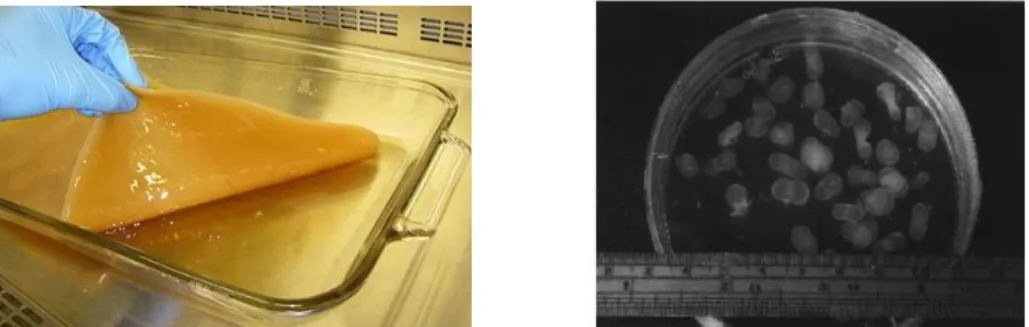
Culturing G. xylinus in static culture is a relatively slower process and the produce BC is obtained in the form of a film with the shape of the fermentation vessel/reactor (Figure 1.3A) on the air-culture medium interface. The extraction process is very simple as it consists on the removal of the BC film directly from the reactor (Figure 1.3A) (Andrade et al., 2010).
Culturing G. xylinus under stirring conditions, by its turn, yields both faster cell growth and cellulose production (Andrade et al., 2010). However, less cellulose is obtained due to the spontaneous formation of cellulose-negative (cel-) mutants which
don’t secrete cellulose under these conditions, thus only biomass being obtained (Valla, 1982). Also, the cellulose is produced in the form of small spheres (flocculated form) (Figure 2.4B), being this one of the main differences between static and stirred cultured (Cheng et al., 2002).
Factors that influence the production of bacterial cellulose
In addition to temperature and pH, the carbon and nitrogen sources as well as the bioreactor area and the used G. xylinus strain are highly impactful towards the BC yield and properties. This is especially important at the industrial level, where the carbon sources need to be more carefully chosen given the necessity of cheaper substrates in order to maximize the profit of the process.
Regarding pH, as mentioned earlier, the optimum value for the production of BC is 6 although a pH in a range between 4 and 7 is still acceptable (Masaoka et al., 1992). Relatively to temperature, the optimal values are considered in between 25 º C and 30 º C (Schramm and Hestrin, 1954).
Figure 1.3 – A: Bacterial cellulose film collected after a static culture batch; B: Bacterial cellulose on its flocculated form, obtained after an agitated culture (airlift reactor) batch (Cheng et al., 2002).
27
Properties
The general properties of bacterial cellulose are presented in Table 1.2. It is noteworthy that a change to the represented mechanical properties is observable after the exposure of the BC to high temperatures and/or pressures, being a change to its tensile strength and elongation registered (Iguchi et al., 1988). The presented break strain values were measured using a 0.12 mm thick film (Sanchavanakit, 2006).
Table 1.2 – List of bacterial cellulose’s properties (Andrade et al., 2010). BC Properties M o rp h o lo gi cal Water composition 99% Deg. of crystallinity 60-90% Deg. of polymerization 2000-3000 Superficial area 12.6 m2/g Pore size 4.5-60 nm M e ch an ic al
Young’s modulus 16.9 GPa Tensile strength 256 MPa
Elongation 1,70%
Break strain Heat dried film 3.75% Wet film 8%
Oth
e
rs
Water holding capacity Hydrated 1000%
Dried (25 ºC) 106-60% Freeze dried 629% Porosity Dried (25 ºC) 0.1 μm
Hydrated 0.2-1.0 μm Permeability Micro-channels of variable size.
Diffusivity The solute diffusivity varies and can be verified
especially on the entropic and hydrodynamic exclusions where only some partition and adsorption cases are verified.
28
Bacterial cellulose application potential
As mentioned early, a very high application potential is recognized for the BC as its properties allow for the development of wide range of applications in the most varied fields such as the food, paper, electronic and even biomedical industries existing, already, some BC-based applications already in the market (Andrade et al., 2010).
Food industry
BC has been used in the food industry for centuries being the Nata de Coco (Figure
1.4), a typical dessert from the Philippines composed solely of bacterial cellulose parting
from the fermentation of coconut water, the most known (Andrade et al., 2010). This was truly the first BC application and, additionally, the reason why BC was discovered.
This large scale product, which reached a high popularity level in Asian countries like Indonesia, Japan and Taiwan. (Andrade et al., 2010), revealed a high economic potential given its popularity and profitability of production due to low-cost substrates usage and possibility of sustained continuous production (Jonas and Farah, 1998; Lapuz
et al., 1967). It was the success of the Nata de Coco that attracted the attention of major
Japanese companies, such as Nakamori Vinegar and Japan Key Technology Center, towards the BC and a mobilized funds towards Biopolymer Research Co., Ltd, a company dedicated to the study and optimization of large scale production of bacterial cellulose in order to expand their success and harness the economic potential of bacterial cellulose (US Congress, 1993).
29
Some research groups also describe BC as an excellent food additive that can be used towards different additives such as thickeners and stabilizers (Okiyama et al., 1993; Okiyama et al., 1992).
In addition to its use as a consumable food product, this biomaterial may also be used as a constituent of the packaging. Its effectiveness towards food preservation has already been demonstrated by Nguyen et al. in 2008, where positive results were obtained in the control of Listeria monocytogenes, a dangerous foodborne pathogen (Nguyen, 2008).
Paper industry
In an era where consequences of global warming are increasingly present, the search for alternative and eco-friendly materials for paper production has been increasing in order to avoid the over-exploitation of forest resources and promote their preservation.
Bacterial cellulose stands out as a very attractive choice as a substitute for vegetable cellulose given its physicochemical similarity to plant cellulose (Surma-Slusarska et al., 2008) as well as being economically more attractive as no expensive and work-intensive pre-treatment and purification is required when compared to lignocellolusic biomass. Several authors have also described the applicability of bacterial cellulose in the process of paper recycling having already some paper recycling systems that use BC in the process are already beeng tested (Mormino and Bungay, 2003; Gostomski et al., 2002).
Audio industry
As mentioned earlier in this chapter, bacterial cellulose can also be used as a constituent of audio systems existing, already, some successful commercial cases of products with cellulose on their assembly. This biopolymer displays both excellent dielectric and acoustic properties and, when conjugated with gold electrodes, exhibits good transduction over a wide range of frequencies (Markiewics et al., 2004). These acoustic properties have a high impact on this sort of equipment, being strongly related to the acoustics, shape, strength and durability of the audio systems’ speaker
30
diaphragms (Iguchi et al., 2000; Indrartil et al., 1998). All these features make this biomaterial a promising candidate in the production of high quality and high fidelity sound systems, being Sony the first company to produce and retail, in 1989, products built with bacterial cellulose membranes on its assembly.
Biomedical applications
The high biocompatibility and durability of BC provided the development of biomedical applications in regenerative medicine, tissue engineering, and wound treatment, among others. The interactions between cells and BC have been studied, being the bacterial cellulose considered a good mammalian cell substrate (Watanabe et
al., 1993). In addition, modifications were made to the BC such as the conjugation with
adhesins in order to further improve its interaction with cells that lack the anchoring support.
Relatively to cytoxicity/biocompatibility, these were assessed by evaluating in vitro the viability and proliferation of skin cells and in vivo by introducing subcutaneously a nanocellulose membrane on mice (Sanchavanakit et al., 2006; Helenius et al., 2006). It was found that bacterial cellulose displayed no cytotoxicity and the growth of skin cells was normal in vitro. As for the in vivo tests, the organism also displayed good acceptance towards the BC since no adverse reaction was verified and the body's cells infiltrated the cellulose’s fibrous network and vascularization of the implant’s area (Andrade et al., 2009; Pértile et al., 2007) was verified.
Regenerative medicine and tissue engineering
At the level of regenerative medicine and tissue engineering first advances have already been made regarding the use of BC and there are already a few commercial applications in the market. Some examples of these applications are Gengiflex (Novaes
et al., 1993), Biofill (Fontana et al., 1990), Bioprocess and BASYC (Bacterial synthesized
cellulose) (Klemm et al., 2001).
When it comes to tissue engineering, BC has also been tested has a base material for the development of artificial blood vessels and dental implants (Backdahl et al., 2006; Anjos et al., 1998). From the previously stated examples, however, the artificial blood
31
vessels display the most importance since cardiovascular diseases are the main cause of disability or death according to World Health Organization (WHO)’s data. The main challenge inherent to the development of artificial blood vessels lie on the necessary modifications in order to promote the adhesion of endothelial cells to the implant as well as possible rejections by the body (Anjos et al., 1998). However, despite these challenges, several authors demonstrated positive results in the application of BC in the construction of artificial blood vessels achieving not only a good acceptance by the organism but also the tissue’s endothelization and survival of the animals on which tests were made (Anjos et al., 1998).
Intrinsically Conducting Polymers (ICP)
During the initial years of their discovery, polymers were regarded as good electricity insulators. However some research groups began to discover and describe the occurrence of polymers endowed with electrical conductivity. The major paradigm-shifting breakthrough happened in 1978 when Shirakawa et al. demonstrated that polyacetylene, an electrically insulating polymer, displayed an abrupt increase on its electrical conductivity when processed with an oxidizing or a reducing agent (Chiang et
al., 1978; Chiang et al., 1977).
This re-discovery of polyacetylene as an intrinsically conductive polymer (ICP) triggered an intensive and multidisciplinary research activity directed towards the discovery and characterization of new ICP systems (Aldissi, 1984). As a result of this research activity throughout the years, many new ICPs have been discovered and described; these include polyfuran, polyaniline, polyisothianaphtene and polypyrrole (PPy), to name a few.
Regarding electrical properties, as already mentioned above, while these polymers display an almost null conductivity in their native state, their electrical conductivity is highly increased through oxidation/reduction, or doping, which occurs during their synthesis. The electrical conductivities of these polymers are in the range of 10-12-106
S.cm-1, taking their uncharged state in account, being these polymers mostly
32
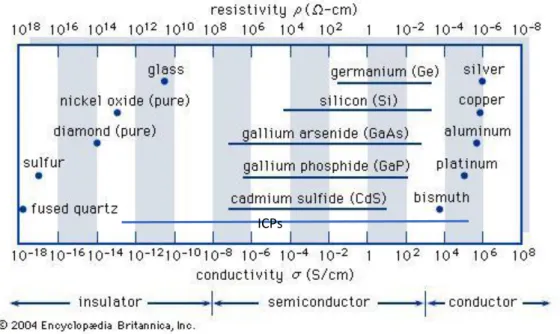
(MacDiarmid, 2001). Figure 1.5 displays the range of electrical conductivity of several materials, so that the classification of the ICPs can be more clearly understood.
Figure 1.5 – Range of conductivity for insulator, semiconductor and conductor materials (Encyclopaedia Britannica, 2004).
One inherent property to some of these polymers is their toxicity, however, there are some cases where this isn’t verified being PPy an example of a conductive polymer that is considered biocompatible, as it displays low cytotoxicity at low concentrations (Vaitkuviene, 2013)). These polymers also have poor processability as they’re usually obtained in mechanically feeble films or intractable powders which may be limiting towards their usage on application development.
Synthesis
The synthesis of ICPs can be made either chemical or electrochemically (Saville, 2005). The electrochemical synthesis consists of the exposure of a monomer solution to an electrode which will promote the polymerization process by either oxidizing or reducing the monomers being the synthesized polymer deposited under the form of a thin layer on the electrode’s surface.
The chemical synthesis method, on the other hand, consists of the previous doping of the monomers by partial oxidation (p-doping) or reduction (n-doping) followed by the polymerization reaction. The doping process consists of the modification of the
33
monomers’ intrinsic nature by inserting a different chemical specie (dopant) onto their structure thus altering its electrical properties. As mentioned above, this process can occur either by oxidizing the monomer with an oxidizing agent or reducing it with a reducing agent.
When the monomer is oxidized, or p-doped, it will lose an electron for the oxidizing agent (e.g. ferric chloride (FeCl3)), hence forming a radical cation (1). Alongside this
reaction, a counter anion, usually prevenient from the oxidizing agent (e.g. Cl- from
FeCl3) is also inserted in the monomer’s electron cloud thus forming an electrically
neutral complex. However, despite the electrical neutrality of the complex, the existence of regions within’ the compounds’ lattice that are positively charged due to oxidation and negatively charged due to the presence of the counter anion promote charge delocalization throughout the entirety of the polymer’s structure due to electron transfers which, in turn, lead to the electrical conductivity of the ICPs (McDiarmid et al., 1985).
The n-doping process, by its turn, is equal to the p-doping process but a reducing agent (e.g. ascorbic acid) is used and the formation of a radical anion (2) occurs instead. Regarding the necessary counter ion, for the n-doping case, a counter cation is necessary in order to create the electrically neutral complex.
𝐏𝐨𝐥𝐲𝐦𝐞𝐫 + 𝐗 ↔ (𝐏𝐨𝐥𝐲𝐦𝐞𝐫)𝐧++ 𝐗𝐧− (1)
𝐏𝐨𝐥𝐲𝐦𝐞𝐫 + 𝐌 ↔ (𝐏𝐨𝐥𝐲𝐦𝐞𝐫)𝐧−+ 𝐌𝐧+ (2)
In short, it is the doping process that leads to the formation of a charged polymer as, otherwise, the polymer would be obtained in its neutral state hence being an electrical insulator.
It is noteworthy that the doping level, concentration of dopant present in the compound’s structure, is highly impactful towards the electrical conductivity (Saville, 2005).
The solvent in which the polymerization reaction occurs is also impactful to the polymer’s final mechanical and electrical properties. For example, in the PPy synthesis, the loss of a proton by the pyrrole (Py) monomers during the polymerization process
34
occurs hence solvents which are good proton acceptors, such as water, will enhance the polymerization process.
(Poly)pyrrole
Polypyrrole was one of the first ICPs to be electrochemically synthesized. This was achieved by Dall’Olio in 1968 who obtained, using a platinum electrode and sulphuric acid (H2SO4), a powdery precipitate that was denominated “pyrrole black” (Linford,
1990).
Polypyrrole Structure
The PPy ([C4H5N]x) structure consists of Py (C4H5N) monomer units (Figure 1.6A)
coupled through their 2- and 5- positions (Figure 1.6B). (Saville, 2005; Linford, 1990)
This ICP displays four distinct forms, two in the neutral state, the aromatic (Figure
1.7A) and quinoid forms (and 1.7B), and two related in the oxidized state, the polaron
and bipolaron, depending on the number of positive charges present in the polymer’s backbone (Figure 1.7C) and/or a bipolaron (Figure 1.7D) (Saville, 2005).
Figure 1.6 – A: Pyrrole monomer; B: Three pyrrole units coupled through their 2- and 5- positions (Saville, 2005).
Figure 1.7 – The four forms of polypyrrole. A: Aromatic (neutral); B: Quinoid (neutral); C: Polaron (charged); D: Bipolaron (charged) (Saville, 2005).
35
Polypyrrole chemical synthesis
Despite the existence of two methods for pyrrole synthesis, electrochemical and chemical polymerization, only the chemical synthesis process will be explained in detail as it was used in this work.
Overall, the PPy synthesis can be summed up to of a 4-step process:
Step 1.
The Py monomers are p-doped by using an oxidizing agent. FeCl3 is
the most commonly used as it yields higher electrical conductivities (Machida and Miyata, 1989);the oxidation is thus mediated by Fe3+,
being Cl- the counter-anion. Step 2.
Two radical cations are combined through the formation of a linkage between the second position of the pyrrole ring (2-2 linkage), forming 2,2’-bipyrrole, which is followed by the loss of two protons (H+).
Step 3.
The previously formed bipyrrole dimers are further oxidized and combined, similarly to what happens in Step 2, thus forming an oligomer.
Step 4.
The final step of the reaction occurs when there are no more pyrrole monomers present for the polymerization reaction. Some side reactions can, however, also terminate the PPY chain thus ending the polymerization process.
36
Figure 1.8 illustrates the first three steps of the PPy polymerization. Step 4 is not
displayed as it corresponds to the polymerization’s terminus which corresponds to a PPy chain and no more monomers are added (Step 2).
AS observed above, the conductivity of the resulting PPy film is strongly influenced by the redox potential of the ferric cation (Fe2+/Fe3+) which, by its turn, is influenced by the acid anions (e.g. Cl-) and solvent used. The redox potential of the ferric cations
may be reduced by adding weaker acids, which coordinate them more strongly.
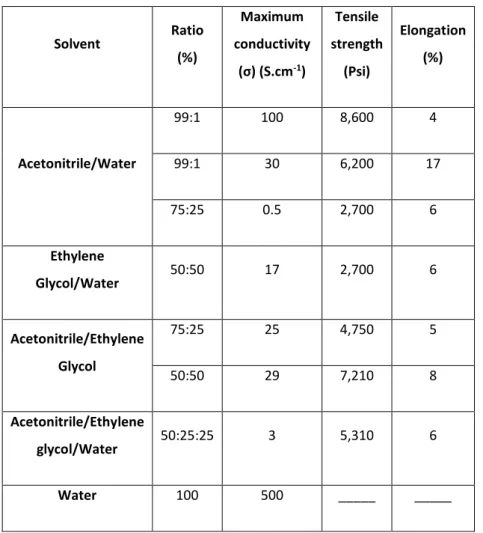
Regarding the solvent, as mentioned above, it also plays an important role toward the regulation of the redox potential of the ferric cations and, consequently, electrical conductivity. Among the solvents used for PPy synthesis, water is the one which yields PPy with the highest electrical conductivity (Saville, 2005). This is due to the fact the redox potential of the ferric cations in water is the lowest compared to other solvents as water is a protic polar solvent with the highest dielectric constant, which means that the ferric cations will be strongly coordinated by the water molecules by solvation. In short, the choice of the solvent is very impactful towards the obtained polymer as it can be the difference between electrical conductivities of 3 S.cm-1 and 500 S.cm-1 as well was
more or less processability as Table 2.3 illustrates.
37
Comparatively to electrochemically synthesised PPy, chemically synthesized PPy is identical to its counterpart in terms of composition and electrical conductivity (Ansari, 2006; Saville, 2005). The major difference is that chemically synthesized PPy’s processability is much lower than electrochemically synthesized PPy as it is obtained as an intractable powder (Saville, 2005). However, the usage of chemically synthesised PPy is attractive towards the synthesis of hybrid conductive composites composed PPy and other materials which can be used as insulation matrices as PPy can be polymerized in
situ on the material’s matrix (Ansari, 2006). A good example of materials that can be
used as insulator matrices are fibrous such as viscose and polyester (Dall’Acqua, 2006; Macasaquit and Binag, 2010) or bacterial cellulose as it was accomplished in this work and will be described below.
Table 1.3 - Solvent’s impact on the PPy electrical and mechanical properties.
Solvent Ratio (%) Maximum conductivity (σ) (S.cm-1) Tensile strength (Psi) Elongation (%) Acetonitrile/Water 99:1 100 8,600 4 99:1 30 6,200 17 75:25 0.5 2,700 6 Ethylene Glycol/Water 50:50 17 2,700 6 Acetonitrile/Ethylene Glycol 75:25 25 4,750 5 50:50 29 7,210 8 Acetonitrile/Ethylene glycol/Water 50:25:25 3 5,310 6 Water 100 500 _____ _____
38
Application potential of intrinsically conductive polymers
The ICP family’s members can be used majorly on the development of capacitors and solid state batteries of high Coulombic efficiency due to their excellent electrical properties and the ability to store high amounts of energy. Additionally, due to their low mass and the possibility of being synthesized under the form of thin films allows the construction of light-weight, thin and highly efficient batteries. Among the vast family of ICPs, PPy is the one that displays the highest potential towards the development of this type of applications due to its facile and cost-effective synthesis, environmental stability and high electrical conductivity (Vernitskaya and Efimov, 1997).
Another potential application of PPy is in sensors and actuators (Vaitkuviene et al., 2013; Jin et al., 2000; Vernitskaya and Efimov, 1997), due to some interactions that different that chemical agents can have on the ICPs’ electrical conductivity (e.g. films of polyaniline have different colors depending on the pH), these polymers can be integrate various types of sensors such as gas and pH sensors (Vernitskaya and Efimov, 1997; Jin
et al., 2000). Moreover, as some of these polymers are biocompatible, they can even be
integrated on biosensors such as catalytic biosensors and imunosensors (Vaitkuviene et
al., 2013).
Some ICPs (e.g. Polyvinylidene fluoride) also display piezoelectric properties, which means that they accumulate electrical charge in response to applied mechanical stress, which opens up the possibility of implementation in the development of mechanical sensors and, to a certain degree, self-recharging batteries (Xue et al., 2013; Wang et al., 2011).
As for PPy, additionally to some of the aforementioned applications, it can also be integrated onto applications in the field tissue engineering, biosensors and drug delivery systems as it is cheap, easy to synthesize, stable and biocompatible (Vaitkuviene et al., 2013). It can also be incorporated onto other material’s matrices, in order to form hybrid electrically conductive composites that display both the host material as well the polymer’s properties. One material that can be used as an insulation matrix for PPy and posteriorly used in the development of these composites is BC, being this specific case detailed in the section below as it is the main focus of this work.
39
PPy and BC (BC-PPy) conductive composites
As already mentioned earlier, it is possible to conjugate ICPs and BC by using it as an insulation matrix for these polymers in order to obtain electrically conductive BC-ICP composites. Among the plethora of the existing ICPs, PPy is one of the most suitable member of this family for this purpose due to not only its good electrical properties but also due to the simplicity of its synthesis process as well as its biocompatibility and stability (Al-Mashat et al., 2008; Babu et al., 2012).
The BC-PPy composites can be obtained by incorporating PPy on the BC matrix through in situ polymerization, being the polymerization often in aqueous solution (wet chemical polymerization (WCP)). This in situ synthesis method is similar to the chemical PPy synthesis, however, it occurs directly on the surface of the BC nanofibers. The synthesis process consists of the oxidation of the BC using an oxidizing agent thus occurring the in situ p-doping of the Py monomers, mediated by the dopant present in the fibres. The BC oxidation step is performed by dipping the material into an aqueous solution of the oxidizing agent. Posteriorly, the oxidized material is immersed on a Py monomer solution of known concentration thus triggering the polymerization reaction being a PPy layer formed around the material’s fibres (Beneventi et al., 2006).
Additionally to the WCP, another method of synthesis has been thought of as viable hence being an adaptation of this method implemented towards the synthesis of BC-PPy. This method, designated as chemical vapour deposition (CVD), was described by Dall’Acqua in 2006 as a simple, inexpensive and free of solvents process. The synthesis of composites using the CVD method consists of the oxidation of the material using an oxidant and its posterior exposure to Py vapours. (Dall’Aqua et al., 2006). The main advantage of this method, aside from its simplicity, resides in the fact that the excess of unpolymerized Py in the end of the process is recyclable (Dall’Acqua et al., 2006).
Potential Applications of BC-PPY composites
The development of these electronically conductive BC-PPy composites opens up a place for BC-based applications on the electronics industry. These composites can be used to develop various types of applications such as displays, OLED's (Organic
Light-40
Emitting Diodes), transistors and conductive membranes (Andrade et al., 2010; Legnani
et al., 2008; Shah et al., 2005). Additionally, the electronics industry, similarly to the
paper industry, is beginning to suffer from the stigma of resource over-exploitation, more specifically the depletion of materials that are incorporated in electronic devices being depletion of Indium, a rare metal with excellent conductive properties that is widely used as the main component of the displays, luminescent panels, photovoltaic cells, among others, one of the main issues. As such, the discovery of new materials that can be used in the production of these electronic devices is increasingly necessary.
Flexible electronic materials
The most interesting application potential that the use of BC may bring to electronics is the development of flexible electronically conductive materials that are also lightweight, biodegradable and highly recyclable (Shah et al., 2005).
Electronic Paper, e-papers, e-books, displays and flexible tablet PCs are idealized concepts being some of them already prototyped undergoing tests (Shah et al., 2005). Some already conceived examples of these innovative applications are PaperTabs, under development by Intel, Plastic Logic and Queen’s University, and the Samsung OLED whose technical concepts revolve around flexible electronic tablet PCs and were presented by their respective developers on the 2013 edition of the International Consumers Electronics Show (International CES) promoted by the Consumers Electronics Association (CEA).
Biomedical electronics
The possibility to use BC as an OLED brings potential utility to the medical field since it could allow its incorporation onto flexible displays for therapeutic purposes such as photodynamic therapy, targeting the treatment of skin cancer and other diseases (Nogi
et al., 2006; Yano et al., 2005).
Some other examples of possible applications of electrically conductive BC-PPy composites in this field are also biosensors such as temperature sensors which may be incorporated in probes or catheters hence providing accurate information about tissue temperature variations (Nambiar and Yeow, 2011; Bagavathiapan et al., 2008).
41
The integration of micro-electromechanical system-based sensors on BC-PPy membranes is also a possibility that could open a window of opportunity towards the design of very sensitive and specific surgical tools which, in conjunction with flexible display systems, would provide significantly easier and least invasive surgical interventions as smaller incisions would be necessary (Nambiar and Yeow, 2011). These improvements are very beneficial for both the surgeons and especially the patients as the reduction of blood loss, risk of infection and a quicker recovery are the main advantages that these changes would bring (Schostek et al., 2009).
Another promising application of BC-PPy membranes is their potential use as a cell growth-stimulating support being already some experiments with similar composites reported in the literature (Bidez III et al., 2006; MaCdiarmid, 2001). It is, however, noteworthy that on the development of this type of applications the oxidizing agent must be carefully chosen as cytotoxic oxidants such as FeCl3 would lead to cell death.
45
In this chapter a description of the various experimental procedures used throughout this work will be made starting by a detailed explanation of the theoretical concepts of each technique followed by a section where the experimental conditions are presented and described.
Theoretical Concepts
Electrical conductivity measurements
In order to determine the electrical conductivity of the BC-PPy membranes their resistivity was firstly determined. The electrical resistivity (ρ) is the measurement of a material’s resistance to an electric current across its volume hence it is expressed in Ohm meter (Ω.m). The ρ was calculated according to Equation 2.1 being the cross section of the samples considered uniform:
ρ = RAl______________________ (2.1)
where R, A and l are the electrical resistance (Ω) of the sample, A is the area of the analysed cross-section and l is the thickness of the sample, respectively.
The electrical conductivity (σ), by its turn, is the inverse of the electrical resistivity, namely, a material’s ability to allow the passage of an electric current (σ = ρ-1), expressed
in Siemens per meter (S = Ω-1).
The electrical resistivity of the BC-PPY membranes was then determined using two different methods: two-point measurement and point measurement using a four-point collinear probe. On both methods an electrical current with variable voltage or intensity, depending on the used method, is applied to the sample. On the two-point measurement technique the applied current has variable voltage within a specified range while on the four-point measurement technique it has variable intensity within a specified range.
46
Two-point measurement technique
For the two-point measurement technique, two probes are used, one for the applied electrical current and another for the measurement of the intensity of the conducted current.
Posteriorly to the measurements of the current’s intensity and an IV (Intensity vs Voltage) curve is obtained by plotting the voltage and intensity values on the abscissas and ordinates axes respectively. The electrical resistance (R), which is necessary to determine the sample’s resistivity through Equation 2.1, is then obtained through the linear regression of the IV curve thus corresponding to the slope of the obtained trend-line accordingly to the Ohm’s law (Equation 2.2):
R =VI______________________(2.2)
Finally, the resistivity of the material is determined through Equation 2.1 by using the sample’s electrical resistance and thickness (l / m) and the conductivity value is then obtained by using σ = 1ρ.
For the two-point measurement technique a Keithley 487 Picoammeter/Voltage Source (circuit shown in Figure 2.1) was used. The measurements were made with the sample within a Faraday cage in order to diminish possible interference of surrounding electrical fields as well as mechanical vibrations on measurements.
47
Four-point collinear probe resistivity measures
Given that BC-PPY membranes synthesized by WCP displayed very high conductivity comparatively to the ones obtained by CVD (semi-conductor class conductivity) it was necessary to use a measurement method with a higher resolution. Indeed the two-point measurement method could only allow a reliable resistivity measurement within a range of values of up to the 10th order of magnitude of the Ω.m
(10 GΩ.m). The selected method for the conductivity assessment of the BC-PPy membranes was, as stated above, the four-point collinear probe which, in turn, has a much higher resolution as it is used for the determination of semi-conductors resistivities in the range of the nΩ.m as well as lower error measurements (i.e. higher sensitivity).
The method for the determination of the electrical resistivity and conductivity was similar to the above: an IV curve was obtained posteriorly to the measurements and the electrical resistance was obtained through a linear regression. The resistivity was then calculated using (Equation 2.3):
ρ =2πSVI ______________________(2.3)
where, S is the probe spacing (mm; constant), I is the supplied current, and V the measured voltage. Conductivity was then calculated using σ = 1/ρ.
The electrical measurements were made using a Time Electronics 9818 DC Current Voltage Calibrator current source and the electrical potential difference was measured using a Keithley 2182 Nanovoltmeter - Figure 2.2 shows the circuit scheme.
48
Mechanical Characterization
For the mechanical characterization of the BC-PPy membranes tensile strength tests were performed.
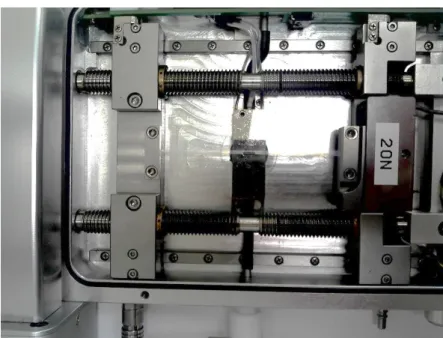
The universal testing machine (Figure 2.3) is generally composed of a load frame which serves as the machine’s support; a load cell for measuring the load; two cross heads, in the case of the performed tests, where the sample is griped, the cross heads move in opposite directions thus applying strain to the samples; an extension/deformation measurer in order to measure the response of the sample to the applied strain; and an output device which records the assay’s data namely the temperature, elapsed time, applied force in Newtons (N), distance between the cross heads in meters (m), the mechanical stress in Pascals (Pa) and the strain/elongation.
Figure 2.2 – Circuit used in the four-point collinear probe measurement technique. The outward probes (1,2) are sourcing the current while the inward
probes (3,4) measure the electrical potential difference across the sample’s surface. All the probes have an equal spacing between them – as shown in the scheme.