i
Dannie O’Brien
Improving Seagrass Production for Transplants
Micropropagation, adventitious root development, and artificial substrates
Master in Marine and Coastal Sciences
Work performed under the supervision of:
Ashwin Engelen
Ester Serrão
UNIVERSIDADE DO ALGARVE
FACULDADE DE CIÊNCIAS E TECNOLOGIA
2019
ii
Improving seagrass production for transplants
Micropropagation, adventitious root development, and artificial substrates
Master in Marine and Coastal Systems (MACS) / Mestrado em Sistemas Marinhos e Costeiros (SiMCo)
Universidade do Algarve Faculdade de Ciências e Tecnologia
2019
Masters Student: Dannie O’Brien
iii Declaração de Autoria de Trabalho
Declaration of authorship of work
Declaro ser a autora deste trabalho, que é original e inédito. Autores e trabalhos consultados estão devidamente citados no texto e constam da listagem de referências incluída.
I declare to be the author of this work, which is original and unpublished. Authors and works consulted are duly cited in the text and are included in the list of references.
iv ©Copyright: Dannie O’Brien
A Universidade do Algarve reserva para si o direito, em conformidade com o disposto no Código do Direito de Autor e dos Direitos Conexos, de arquivar, reproduzir e publicar a obra, independentemente do meio utilizado, bem como de a divulgar através de repositórios científicos e de admitir a sua cópia e distribuição para fins meramente educacionais ou de investigação e não comerciais, conquanto seja dado o devido crédito ao autor e editor respetivos.
The University of Algarve reserves the right, in accordance with the provisions of the Code of the Copyright Law and related rights, to file, reproduce and publish the work, regardless of the used mean, as well as to disseminate it through scientific repositories and to allow its copy and distribution for purely educational or research purposes and non-commercial purposes, although be given due credit to the respective author and publisher.
v Acknowledgements
Immense gratitude and special thanks to Aschwin Engelen for his support right from the initial development of the thesis idea, and for providing materials, space, and ongoing support in technical, philosophical, and statistical matters.
Thanks to Ester Serrão for providing assistance with project direction, corrections, and a forum for me to receive feedback from more senior researchers on the work.
A big thank you to Cristina Paulino for her support in the BEE laboratory. Thank you to Luís Barreto for his assistance and time explaining the use of the dive PAM. Thanks to João Reis and the (human and non-human) team at Centro do Ramalhete for all the on-ground support in conducting the mesocosm experiments. Thanks to Nuno and Carolina from the CCMAR Scientific Dive Centre for their assistance with diving for the collection of material in the field. Thank you to Óscar Ferreira and Alexandra Cravo from the director board of MACS/SiMCo for their early feedback on the plan for this project.
Much appreciation to Luis Almeida for the incalculable assistance during the completion of this work, including translation advice, transport assistance, encouragement, and emotional support.
Thank you to Greg Lowe for continuing to take my calls after all these years and for his expert advice on the micropropagation elements of this work.
Thank you to Nick and to Ricardo for all the coffee and seagrass discussions, and to Lala for the wine and complete absence of seagrass discussions.
Thank you to my family, Dee, Paul, Belle, and Shae, for teaching me that we all walk our own path. It’s not how fast you do something, but that you do it that is important. Their support is the net under every leap taken.
vi Abstract
Degradation of seagrass meadows is countered by restoration to secure the important ecosystem services they provide. Restoration outcomes are highly variable, and there are many failures. Restoration methods frequently require harvesting from remnant meadows, with associated ecological risks. In the temperate North Atlantic, Zostera marina, Cymodocea nodosa, and Zostera noltii are the most important seagrass species, and targets for restoration. I tested different transplant approaches to understand and improve seagrass restoration initiatives for these species.
Zostera shoots were treated with 0.5 % NaOCl and successfully initiated into the in vitro growth environment for micropropagation. Z. noltii was maintained on enriched seawater media for up to 60 days, but Z. marina survived only 22 days. Mortality was likely related to yeast-like contamination. Cytokinin 6-benzylaminopurine (BAP) in five concentrations between 0.001 mg/L and 3 mg/L did not enhance shoot development in either species, but did maintain health.
To assess the impact of transplantation on root development, health, and survival, seagrass shoots were transplanted with roots either removed or intact. This did not affect survival or health. Both Zostera species regrew adventitious root length and mass in only three weeks, but regrowth was almost completely absent in C. nodosa. Auxin Indole-3-butyric (IBA) did not enhance adventitious root development, but rather inhibited root development above 5 mg/L.
Two tested seagrass transplant methods, sod and textile substrate, were equally successful and shoots demonstrated similar survival, height, leaf turnover and relative photosynthetic capacity.
Sod methods, while popular and successful, are not possible without large donor populations, and their harvest threatens remnant meadows. The successful initiation of Zostera spp. provides high potential to micropropagate shoots for future restoration. Non-rooted shoots can survive transplantation and rapidly establish roots, and these can be integrated with textile substrates to create artificial planting units with similar restoration outcomes to sods.
Keywords: Marine coastal systems, Zostera marina, Zostera noltii, Cymodocea nodosa, restoration, transplant, micropropagation, in vitro propagation, root development, artificial substrate.
vii Resumo
A degradação das pradarias de ervas marinhas é contrariada pela restauração de ecossistemas para garantir os importantes serviços ecossistémicos que elas fornecem. Os resultados da restauração são altamente variáveis e existem diversas falhas associadas. Os métodos de restauração requerem frequentemente a colheita de pradarias remanescentes com os derivados riscos ecológicos. No Atlântico Norte temperado, as espécies mais importantes e alvo de restauração são a Zostera marina, a Cymodocea nodosa, e a Zostera noltii. Nesta tese, foram testadas diferentes abordagens de transplantação para entender e melhorar iniciativas de restauração de ervas marinhas.
Rebentos de Zostera spp. foram tratados com 0.5% NaOCI e iniciados com sucesso no ambiente de tratamento in vitro para micropropagação. Z. noltii pôde ser mantido em meios de água salgada enriquecida até 60 dias, enquanto que a Z. marina sobreviveu apenas 22 dias. Está mortalidade poderá estar relacionada com a contaminação por parte de organismos não-alvo de “tipo fermento”. Tentativas para estimular o crescimento de plantas através do teste de 6-benzylaminopurine (BAP) em cinco concentrações entre 0.001 mg/L e 3 mg/L não estimularam o desenvolvimento de rebentos em nenhuma das espécies. Porém, a sua saúde foi mantida.
Para avaliar o impacto da transplantação no desenvolvimento das raízes, saúde da planta e sobrevivência, rebentos das três espécies foram transplantados com raízes removidas ou intactas, o que não afectou a sua sobrevivência ou saúde. Onde espécies de Zostera regeneraram comprimento e massa de raízes adventícias, a regeneração foi completamente ausente em C. nodosa. O factor de crescimento Indole-3-butyric (IBA) não aumentou o desenvolvimento de raízes adventícias, mas antes inibiu o desenvolvimento de raízes acima de 5 mg/L.
Dois métodos de transplante, unidades de tipo “sod” e unidades de substrato têxtil, demonstraram resultados semelhantes de sobrevivência, peso, substituição de folhas e capacidade fotossintética relativa para as espécies testadas. O sucesso de futuros projetos de restauração é determinado, tanto pelo desempenho aquando de trabalho de campo, como também pelo seu custo e mão de obra associada.
viii A bem-sucedida iniciação de Zostera spp. fornece alto potencial para micro-propagar rebentos para futura restauração. Rebentos sem raízes podem sobreviver à transplantação e rapidamente estabelecer raízes, e estes podem ser integrados com substratos têxteis para criar unidades de plantação artificiais com resultados de restauração para sods similares.
Palavras-chave: Sistemas Marinhos e Costeiros, Zostera marina, Zostera noltii, Cymodocea nodosa, trabalho de restauração, transplante, micropropagação, in vitro propagação, desenvolvimento de raízes, substratos artificiais.
ix Sumário
Melhorar a produção de ervas marinhas para transplantes:
Micropropagação, desenvolvimento de raízes adventícias e substratos artificiais.
Introdução
Uma vez danificadas, pradarias de ervas marinhas são lentas a recuperar passivamente (Park et al., 2009). Uma restauração activa pretende substituir valores de ecossistema perdidos (Bayraktarov et al., 2015), aumentar a biodiversidade (Lefcheck et al., 2017), providenciar habitat para espécies ameaçadas (van Katwijk, et al., 2016) e aumentar os stocks comerciais de peixe (Blandon & zu Ermgassen, 2014). Adicionalmente, há um crescente interesse na criação de novas pradarias de ervas marinhas tanto para compensação de habitat (Ganassin & Gibbs, 2008) como para alternativa a soluções tradicionais de engenharia costeira para estabilização de zonas costeiras limítrofes (James et al., 2019), uma vez que as pradarias de ervas marinhas atenuam a altura das ondas, reduzem a velocidade de correntes e aumentam a sedimentação (Koch, et al., 2006; Christianen et al., 2013; Reidenbach & Thomas, 2018). Pradarias de ervas marinhas são cada vez mais vistas como uma valiosa ferramenta para mitigar a mudança
climática devido ao seu alto potencial de sequestro de CO2 (Duarte et al., 2013), actuando como
áreas de sequestros de carbono altamente eficazes, tanto dentro da pradaria como nos sedimentos adjacentes (Duarte & Krause-Jensen, 2017).
Tem havido uma grande variabilidade nas taxas de sucesso de restauração de pradarias marinhas e projectos de criação (Cunha, et al., 2012; van Katwijk et al., 2016), e o sucesso a largo prazo pode ser difícil de medir devido à limitação dos programas de monotorização após a conclusão dos projectos.
As técnicas de restauração são variadas, mas normalmente dependem na transplantação de material doador de pradarias existentes. Uma variedade de métodos de transplante de material doador pode ser utilizado. Métodos de género “plug” ou “sod” têm frequentemente
x atingido melhores resultados a longo prazo do que outros métodos (Paling, et al., 2001;
Christensen et al., 2004; Fishman, et al., 2004; Suykerbuyk et al., 2016) mas dependem de camadas de ervas marinhas naturais abundantes e adequadas para providencial material doador para transplante.
Reduzir a dependência de pradarias naturais como doadoras deveria ser uma alta prioridade, já que a colheita pode expor o local doador a perturbação e degradação de valores existentes (Harris, 2012; Statton et al., 2015). A urgência para restaurar áreas suporta uma abordagem heurística em muitos casos, mas também é importante entender porque há um crescente sucesso com estes métodos e não com outros, pois limitações de tempo e
orçamentos (Bayraktarov et al., 2015) e crescente reconhecimento dos valores de pradarias de ervas marinhas (Nordlund et al., 2016) exigem o melhor resultado possível para qualquer projecto. Este projecto tem como objectivo experimentar uma variedade de métodos de propagação de erva marinha, tanto in vitro com em ambientes protegidos mesocosm de forma a identificar alguns dos factores que podem ser realçadores ou limitativos para a sobrevivência de rebentos de ervas marinhas transplantados durante actividades de restauração.
Objectivos do projecto
Esta tese pretendeu testar uma nova abordagem concebida para aumentar o sucesso de transplantes de ervas marinhas. Os objectivos específicos foram utilizar a espécies modelo Z. noltii, Z. marina e C. nodosa em três investigações alvo:
1. Investigar a adequação de técnicas de micropropagação in vitro simples, rápidas e acessíveis para propagar material de transplante de Zostera marina e Zostera noltii.
2. Avaliar o grau de crescimento de novas raízes adventícias em rebentos de Zostera marina, Zostera noltii e Cymodocca nodosa depois da remoção de raízes e aferir o efeito da hormona de crescimento IBA nos parâmetros de crescimento.
xi 3. Avaliar a sobrevivência e crescimento de Zostera marina, Zostera noltii, e
Cymodocca nodosa transplantada em dois substratos têxteis (malha grossa e malha fina) comparada com rebentos um unidades de transplante “sod”.
Métodos
Foram recolhidos rebentos de erva marinha utilizando mergulho de garrafa de uma pradaria doadora numa lagoa costeira da Ria Formosa perto da ilha da Culatra, de onde material doador para transplante foi previamente recolhido para actividades de restauração (Paulo et al., 2019). O material for recolhido como “sods” (20 cm x 20 cm x 5-8 cm depth) no seu sedimento natural utilizando tubos plásticos e uma pá. Estes foram transferidos por barco em tubos com água para o centro de pesquisa do Ramalhete (demorando cerca de 30 minutos) e
imediatamente colocados em grandes mesocosms exteriores onde foram fornecidos com água marinha corrente filtrada à temperatura ambiente e salinidade.
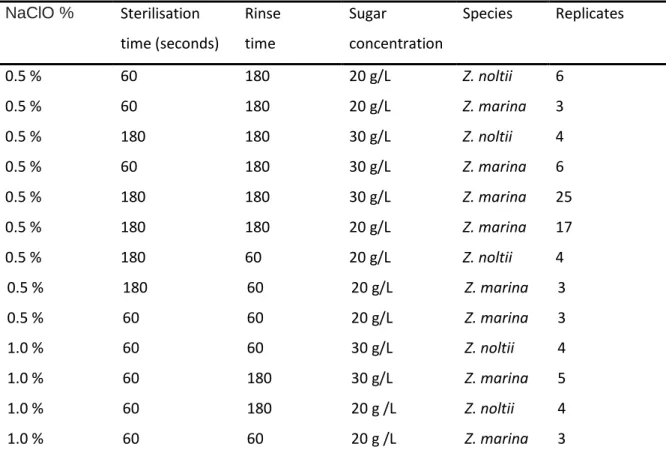
Rebentos saudáveis de Z. marina e Z. nolti foram seleccionados e foram iniciados no ambiente in vitro após esterilização com NaCIO para avaliar a sua resposta à fase-1 do protocolo de micropropagação standar. Foram feitos meios de crescimento utilizando água marinha e Murashige & Skoog Basal Salt Mixture (MS) (1962; Sigma- Aldrich; Appendix 2), açucar e factor de crescimento 6-benzylaminopurine (BAP) em concentrações de 0.001, 0.01, 0.1 e 1 mg/L. Os “iniciados” foram então mantidos numa camara de crescimento de plantas climatizada a 18°C sob luz branca num ciclo luz:escuridão 12:12. O objectivo foi de alcançar culturas axênicas de Z. marina e Z. noltii, estabelecer estas em in vitro por um período de tempo (vários meses) e começar a desenvolver um protocolo para multiplicação de folhas, caule órgãos rizomas por acrescento de BAP ao meio de crescimento.
Para aferir o impacto do dano de raízes e regeneração de raízes adventícias, foram seleccionados rebentos de material recolhido e replantados em mesocosms experimentais. O seu crescimento foi monitorizado para aferir os valores de crescimento sobre e abaixo do solo. Os rebentos de erva marinha tiveram todas as suas raízes removidas com um bisturi o mais
xii próximo do rizoma quanto possível e foram tratados com 0, 3, 5, ou 10 mg/L de Indole-3-butyric acid (IBA). Após 14-60 dias os valores de crescimento dos diferentes tratamentos foram
comparados entre eles e com plantas que não tiveram as suas raízes removidas. Foram
comparadas taxas de mortalidade utilizando Pearson’s Chi-squared tests e as outras medições utilizando PERMANOVA em Primer+ programas
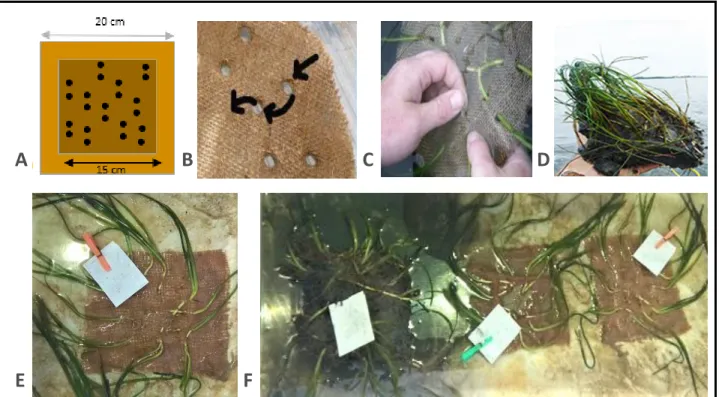
Rebentos de erva marinha foram inseridos numa malha fina de 15 cm x 15 cm e numa malha grossa têxtil tipo serapilheira para criar unidades de plantação para serem comparadas com “sods” de 15 cm x 15 cm. Estas foram crescidas durante 5 - 8 semanas em mesocosms. Medições de crescimento e fotossíntese (Pulse Amplitude Modulated (PAM) fluorometry) foram tiradas a cada 1 semana (Z. noltii) ou 2 semanas (Z. marina e C. nodosa) e comparadas usando PERMANOVA.
Resultados
Z. noltii foi iniciada com sucesso no ambiente de micropropagação in vitro após esterilização com 0.5 % NaCIO por 1 minuto. Pode ser mantida em meios de água marinha enriquecida por um máximo de 60 dias, enquanto que Z. marina sobreviveu apenas 22 dias. Mortes foram provavelmente relacionadas com contaminação por organismos não alvo de tipo fermento. Tentativas de estimular o crescimento de plantas através do teste de
6-benzylaminopurine (BAP) em 5 concentrações entre 0.001 mg/L e 3 mg/L não aumentaram o desenvolvimento de rebentos em nenhuma das espécies mas mantiveram saúde.
Para as experiências de crescimento de raízes adventícias, as espécies Zostera regeneraram comprimento de raízes e massa em apenas 3 semanas, mas a regeneração de raízes foi quase totalmente ausente em C. nodosa. Factor de crescimento Indole-3-butyric (IBA) não aumentou o desenvolvimento de raízes adventícias em nenhuma das espécies, mas antes inibiu o crescimento de raízes acima de 5 mg/L e aparentemente inibiu o crescimento de folhas acima de 10 mg/L.
xiii Para a experiência de transplante de substrato artificial, a sobrevivência de rebentos não foi uniforme ente os tratamentos (χ2 P < 0.03) para todas as espécies. Para Z. marina a taxa total de mortalidade foi de 28% para todos os tratamentos e foi maior do que esperado no substrato fino artificial e mais baixa do que esperado no tratamento de transplante “sod”.
Para C. nodosa a taxa total de mortalidade foi de 7% consistindo na morte de 8 de 11 rebentos num único mesocosm de tratamento “sod”. Para Z. noltii, a taxa de mortalidade entre todos os tratamentos foi de 23% e todos em mesocosms impactados por herbivoria. Uma herbivoria não identificada removeu todas as folhas dos rebentos 4-5cm acima da superfície de sedimento. Observou-se que estes rebentos estavam danificados e observou-se que muitos mais tarde morreram durante o período experimental. Outros parâmetros de crescimento e saúde variaram sobretudo temporalmente e houve pouca diferença entre tratamento de substratos (ver números 3.3.i, ii e iii).
Discussão
Era espectável que todas as espécies respondessem de forma diferente à transplantação uma vez que têm diferentes morfologias, história de vida, estratégia principal reprodutiva, faixa biológica e requisitos de habitat (Borum & Greve, 2004; Ondiviela et al., 2014). Comparando sods a substratos artificiais nas tentativas de transplantação, as taxas de mortalidade de rebentos eram difíceis de relacionar com o tratamento como outros factores como um evento herbívoro para Z. noltii. Diferenças de espécies foram encontradas; Z. noltii era apenas
adequada em têxtil fino e transplantes tipo sod porque cai fora da malha grossa e rebentos de Z. marina danificam-se quando inseridos na malha grande, mas o uso de substratos artificiais, em si mesmo, não deu pior saúde ou resultados de mortalidade do que os sods.
Uma vez que foi agora demonstrado que a danificação de raízes e stress de transplante dos diferentes métodos não cria variações entre estes eles, outras características de técnicas de sod – tamanho do grão de sedimento, nutriente e microbioma associado com estes rebentos de sedimentos com eles transferido - requer investigação adicional. Outros estudos pretenderam
xiv testar a integridade abaixo do solo como um factor plantando raízes simples vs. transplantes de sod no campo (Suykerbuyk et al., 2016), mas ao não considerar que sítios alvo de transplantes têm frequentemente características de sedimento muito diferentes do sítio doador, e como tal dos sods, eles conseguiram apenas demonstrar que ancoragem dos rebentos é fundamental. Agora, a capacidade destas espécies de sobreviver e recuperar de danificação de raízes até completa remoção está confirmada. Este factor pode também ser eliminado como uma possível vantagem de métodos sod. Adicionalmente, demonstrei que o stress de inserir rebentos em têxteis, por sim mesmo, não conduz a taxas de sobrevivência ou de saúde mais baixas do que utilizando métodos sod, desde que o tamanho correcto da malha para a morfologia de espécie tenha sido seleccionado.
Enquanto que o desempenho possa variar em ambiente aberto, esta experiência demonstrou que onde os factores tipo de sedimento, componentes biológicos e orgânicos associados, exposição e população doadora forem controlados, rebentos transplantados dão-se bem e recuperam bem do stress de transplante em unidades de substrato artificial e em
unidades sod. O próximo passo para criar unidades artificiais de plantas bem-sucedidas é compreender a contribuição destes factores para a sobrevivência do transplante. Isto ajudará a estabelecer se unidades de plantas artificiais podem vir a ser uma alternativa adequada a transplantes de sod onde métodos de plantação sod foram bem-sucedidos. Investigação adicional é necessária para aferir a viabilidade de usar unidades de plantas artificiais em vez de métodos sod, que podem não ser alcançáveis onde camas doadoras desadequadas estão disponíveis ou podem ser ameaçadas por colheita.
xv Contents
Improving Seagrass Production for Transplants ... i
Declaração de Autoria de Trabalho ... iii
Acknowledgements ... v Abstract ... vi Resumo ... vii Sumário ... ix 1- Introduction... 2 1.1- Seagrasses ... 3
1.2- Study target species ... 4
1.3- Restoration and creation of seagrass meadows ... 7
1.4- Risks associated with use of donor vegetative material for restoration ... 8
1.5- Where to restore ... 9
1.6- Propagation methods for seagrass donor material ... 11
1.7- In vitro micropropagation for clonal production of seagrass ... 13
1.8- Root development and transplantation of seagrass. ... 18
1.9- Artificial substrates vs sods in restoration ... 20
1.10- Project goals ... 21
xvi
2.1- Material collection ... 23
2.2- In vitro micropropagation of leaf, stem, and rhizome. ... 24
2.3- Adventitious rooting trials ... 29
2.4- Artificial-substrate based planting units. ... 33
3- Results ... 40
3.1- In vitro micropropagation of leaf, stem, and rhizome. ... 40
3.2- Adventitious rooting trials ... 42
3.3- Artificial-substrate based planting units ... 48
4- Discussion and conclusions ... 55
4.1- In vitro micropropagation of leaf, stem, and rhizome. ... 55
4.2- Adventitious rooting trials ... 57
4.3- Artificial-substrate based planting units ... 62
References ... lxvii Appendices ... lxxviii List of Tables Section 1.- Table 1.6.i: Time requirements for the production of submersed aquatic plants used in restoration projects 12
xvii Section 3.- Table 3.2.i Pearson’s Chi-squared analysis of differences in shoot leaf number 48
Table 3.3.i: Results of PERMANOVA analysis for growth and health indicators of Z.
marina shoots 50
Table 3.3.ii: Results of PERMANOVA analysis for growth and health indicators of Z.
noltii shoots 51
Table 3.3.iii: Results of PERMANOVA analysis for growth and health indicators of C.
nodosa shoots 54
Section 4.- Table 4.2.i: Geographical distribution, habitat, tidal conditions, morphological and architectural features and growth rates of native European seagrass species 59
List of Figures
Section 1.- Figure 1.7.1: Simplified standard methods of in vitro plant propagation 14
Section 2.- Figure 2.1.1: Left: Transfer of sods using shovels and trays from donor meadows 23 Figure 2.2.1: Normal 4-phase protocol for micropropagation and the two target
in vitro stages for this study 25
Figure 2.2.2: Prepared and sterilized plant material; ex plant in 4 mL of liquid
media in Eppindorf tube; plant in 35 mL of liquid medium in Falcon tube 27
Figure 2.3.1: Pre experiment preparation of Z. marina shoots 29
Figure 2.3.2: Creation of a pin scar in the leaf sheath 32
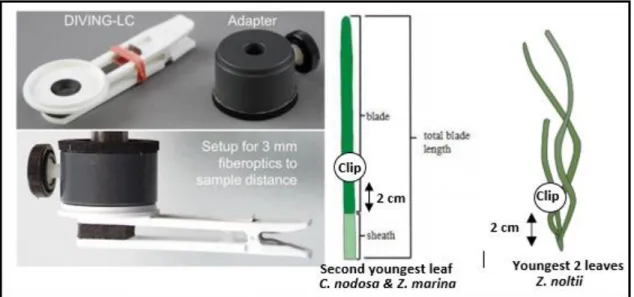
Figure 2.4.1: Methods for the creation of artificial-substrate based planting units 35 Figure 2.4.2: Diving- PAM Leaf clip and adaptor set up and position of leaf clip 38
Figure 2.4.3: Generic Rapid light curve 39
Section 3.- Figure 3.1.1: Percentage of initiated plants alive by time since their initiation
for Z. noltii (n= 22, one initiation) and Z. marina (n= 65, 3 initiation) 41 Figure 3.2.1: Adventitious root growth for specific growth periods 44 Figure 3.2.2: Daily adventitious root growth rate of shoots in both experiment
xviii Figure 3.2.3: Total root elongation (longest root) for shoots with zero new nodes (n=29), and one new node (n=8), across all treatments in C. nodosa shoots 46 Figure 3.2.4: Daily leaf elongation rates of Z. noltii, C. nodosa, and Z. marina over
the growth periods for the four IBA treatments 47
Figure 3.3.1: Effective quantum yield from RLCs measured by PAM fluorescence 49 Figure 3.3.2: ETRmax values for Z. marina shoots on three substrates (coarse, fine
and sod) over the four measurement periods 50
Figure 3.3.3: Leaf length of the longest leaf per shoot for T0 and T1 sample
periods for Z. noltii shoots in three different substrates (coarse, fine and sod) 51 Figure 3.3.4: ETRmax and IK parameters from RLCs measured by PAM fluorescence 52 Figure 3.3.5: Length of the longest leaf of shoots of C. nodosa on three substrates
(coarse, fine and sod) 53
Figure 3.3.6: Maximum ETR values for shoots of C. nodosa on three substrates
(coarse, fine and sod) 53
Figure 3.3.7: Ik parameter values for shoots of C. nodosa on three substrates (coarse,
1
Improving seagrass production for transplants
Micropropagation, adventitious root development, and artificial substrates
2 1- Introduction
Once damaged or destroyed, seagrass meadows are slow to recover passively (Park et al., 2009). Active restoration intends to replace lost ecosystem service values (Bayraktarov et al., 2015), increase biodiversity (Lefcheck et al., 2017), provide habitat for threatened species (van Katwijk et al., 2016), and support commercial fish stocks (Blandon & zu Ermgassen, 2014). Additionally, there is an increasing interest in the creation of new seagrass meadows both for habitat compensation (Ganassin & Gibbs, 2008), or as an alternative to traditional coastal engineering solutions for foreshore stabilisation (James et al., 2019), as seagrass meadows attenuate wave height, reduce current velocity, and increase sedimentation (Koch et al., 2006; Christianen et al., 2013; Reidenbach & Thomas, 2018). Seagrass meadows are increasingly valued as a tool to mitigate climate change due to their highly productive CO2 sequestration potential
(Duarte et al., 2013), acting as highly effective carbon sinks both within meadow and in adjacent sediments (Duarte & Krause-Jensen, 2017).
There has been large variability in the success outcomes of seagrass meadow restoration and creation projects (Cunha et al., 2012; van Katwijk et al., 2016), and success can be difficult to measure in the long term due to limited monitoring programs after projects are completed. Restoration techniques are varied, but usually rely on transplanting donor material from existent meadows. A variety of methods of transplanting donor material can be used. Plug or sod type methods have often achieved better medium to long-term results than other methods (Paling et al., 2001; Christensen et al., 2004; Fishman et al., 2004; Suykerbuyk et al., 2016) but rely on plentiful and suitable natural seagrass beds to provide donor material for transplanting. Reducing reliance on natural meadows as donors should be a high priority, as harvesting can expose the donor site to disturbance and to degradation of existing values (Harris, 2012; Statton et al., 2015). The urgency to restore areas supports a heuristic approach in many cases, but it is also important to understand why there is increased success with these methods than with others, as time and budget limitations (Bayraktarov et al., 2015) and increasing recognition of seagrass meadow values (Nordlund et al., 2016) demand the best possible outcomes for any project. This project aimed to trial a variety of seagrass propagation methods both in vitro and in protected mesocosm
3 environments to identify some of the factors that may be enhancing or limiting the survival of translocated seagrass shoots during restoration activities.
1.1- Seagrasses
Seagrasses are an ecological grouping of 6 families of approximately 72 species of flowering plants (Short et al., 2011) which complete their entire lifecycle in shallow marine environments (Kuo & den Hartog, 2001) to a depth where 10 % of surface light still reaches the bottom. They are found worldwide in coastal areas except for Antarctica, and the greatest diversity of species is generally associated with tropical regions (Short et al., 2011). They form complex and highly productive meadows and interact with and support a broad variety of other organisms, forming the primary carbon source in many food webs, and acting as benthos or protection for a variety of other organisms (Orth et al., 2006). Though they inhabit only 0.1 % to 0.2 % of the global ocean (Duarte, 2002), seagrass meadows are ecologically, economically, and socially important (Cullen-Unsworth et al., 2014). They supply valuable ecosystem services (Nordlund, et al., 2016; 2018), but are still an overlooked and under-researched habitat in many regions (van Katwijk et al., 2016). Provisioning, regulating, and supporting services are both diverse and numerous (Nordlund et al., 2016), and include coastal protection (James et al., 2019), habitat for commercial species (Tuya, Haroun & Espino, 2014), food and habitat for threatened species (Hughes et al., 2009), carbon storage (Duarte et al., 2013), reduction of water pathogen load (Lamb et al., 2017), local buffering of pH (Hendriks et al., 2014), and protecting other important coastal and marine habitat; such as coral reefs through water filtration services, and mangroves through wave attenuation (Reidenbach & Thomas, 2018).
Seagrass have specific depth, light, nutrient, sediment, and water velocity requirements (Greve & Binzer, 2004) that limit their growth to shallow coastal regions and coastal estuaries (Ralph et al., 2006). This habitat requirement also corresponds closely with the aggregation of human activities. Human inputs have increased turbidity; and changed hydrological regimes and this has put increasing pressure on seagrasses, which has been linked with historic and potential future losses (Orth et al., 2006; Short & Wyllie-Echeverria, 1996). Land reclamation or use of
4 coastal areas for aquaculture is a major threat to seagrass habitat, and eutrophication has been linked to significant and large scale losses (Walker & McComb, 1992).
Natural losses of seagrass meadows have been attributed to storms, flooding, and hurricane events (Preen et al., 1995); to plant diseases and pathogens (Ralph & Short, 2002); and to overgrazing by fish, turtles or marine mammals (Rose et al., 1999; Fourqurean et al., 2010). Due to their growth patterns and environmental stressors, decline and recovery of area and density are likely a natural dynamic of seagrass meadows over the scale of years to decades (Hemminga, 1998), but anthropic disturbance increases seagrass meadow vulnerability and has been increasingly linked to long term seagrass meadow losses (Hemminga, 1998). It has been suggested seagrasses should be considered “coastal canaries” or “biological sentinels” due to their sensitivity to anthropic pressures (Orth et al., 2006; Short et al., 2011) in coastal and marine environments. Societies have a significant stake in conserving and protecting seagrass meadows for environmental, ecological, and cultural values; and this is supported by increasing regional and local regulation on water quality and associated ecological values including seagrass protection, such as the Water Framework Directive in Europe (Borja, 2005).
1.2- Study target species
There are four species of seagrass found in Europe, and several species of halotolerant aquatic plants (Borum & Greve, 2004). Three of these species, those found on the south coast of Portugal, will be included in this study. Target species for this study will be collected from existent populations in the Ria Formosa, a shallow mesotidal lagoon on the south coast of Portugal, and from connected artificial ponds, usually remnants from past salt pan or fish farm production. The Ria Formosa is home to three of the four main European seagrass species and an active research community which has studied their distribution, requirements, productivity, and potential threats.
Zostera marina is located subtidally to approximately 15 meters depth in cool to temperate waters globally. In Europe, Z. marina is distributed from Icelandic waters to southern Portugal, with only very sparse distribution in the Mediterranean (Borum & Greve, 2004). Z.
5 marina populations severely declined due to eelgrass wasting disease in the 1930s, with losses of up to 90 % across the Atlantic (Ralph & Short, 2002). The disease was discovered to be caused by a slime mould, Labyrinthula zosterae only in the late 1980s (Muehlstein, Porter & Short, 1991). There are still known occurrences in the present day, but not at the scale of loss as the events of the early decades of the 1900s. Many locations have not had any recordable natural recovery of lost meadow area (e.g. Godet et al., 2008), due to low reproduction, slow growth rates, and increasing anthropic pressures such as reduced water quality. Additionally, meadow populations may have crossed a minimum threshold below which their ability to alter the biological and physical environment to their advantage is compromised (Suykerbuyk et al., 2016), preventing their re-establishment in areas they previously inhabited (Moksnes et al., 2018).
The population of Z. marina in the Ria Formosa is seen as a potential source of donor material for revegetation of Z. marina in other areas both locally (e.g. ‘Biomares’ project (Cunha et al., 2011)) and for other locations in Europe (e.g., ‘CoastBusters’ project, Belgium (Sterckx et al., 2019)). As part of the ‘Biomares’ restoration project, the total estimated Z. marina distribution in the Ria Formosa was calculated at 5.01 ha in 2009 (Cunha, Assis & Serrão, 2009) and its potential suitability as a donor population was assessed. There is a concern that Z. marina may face local extinction in Portugal if measures are not taken to assure the protection of remaining meadows, and there have been attempts to revegetate areas that were previously known to have meadows on the Portuguese coast (Cunha, Assis & Serrão, 2013). Z. marina produces large numbers of seeds, but these have small dispersal ranges and are highly predated in natural conditions (Marbà et al., 2004). Collection of seeds is relatively simple, but experimental propagation of seeds suffered large hurdles due to very low germination rates (Cabaço, Ferreira & Santos, 2010), so it was decided for past restoration activities that shoots from donor sites, rather than seed, would be required for restoration activities.
Zostera noltii is a small fine leaved intertidal species associated with muddy sediments in much of temperate Europe (Kuo & den Hartog, 2001). It is distributed from southern Norway to the European coastline of the Mediterranean (Borum & Greve, 2004). Globally it is not considered
6 to be a threatened species due to its large range, but North Atlantic populations are currently declining (Short et al., 2011). Due to its favored usage of the intertidal zone, it may be locally vulnerable in areas where there are aquaculture and wild harvest activities (Guimarães et al., 2012), or by development and land reclamation activities (Reise, 2005), or in areas where erosion increases bank slope, reducing the area of favorable substrates.
Z. noltii is well established in the Ria Formosa, where it is intertidal. In 2012, it was observed covering 45 % of the intertidal zone, but it is potentially locally threatened by clam farming activities (Guimarães et al., 2012). Z. noltii has also declined in some areas of Portugal, for example, the Mondego estuary experienced massive losses in the 1980s and 1990s related to anthropic eutrophication and bait collection disturbances (Martins et al., 2005). Z. noltii has frequent flowering and large seed production, but low germination rates, germling survival, and seedling survival (Alexandre et al., 2006) suggest this does not equate to high fertility. Clonal growth, via rhizome extension, is known to be an important mechanism within patches of seagrass, and Z. noltii has a rapid rhizome growth rate compared to other European seagrasses (Marbà et al., 2004). There is also evidence that clonal fragments can be transported by currents and survive to establish elsewhere (Berković et al., 2014). It is hoped that this species is also a suitable candidate for vegetative reproduction methods.
Cymodocea nodosa is a warm temperate subtidal species found in the Mediterranean and in the Atlantic but has its northern limit in Southern Portugal (Cunha, Assis & Serrão, 2013) where the population has very low genetic variability (Alberto, Mata, & Santos, 2001). It grows in both monospecific and mixed (with Z. marina) meadows in the Ria Formosa (Billingham et al., 2003). Its global status is considered to be stable (Short et al., 2011), but again local pressures can threaten specific populations, and local losses will impact the provision of valued ecosystem services.
7 1.3- Restoration and creation of seagrass meadows
Complex ecosystems are very difficult to create or restore, and marine ecosystems have the further challenge of being less accessible and more highly dynamic than terrestrial ecosystems, and impacted by unresolved stressors (Moberg & Ronnbacka, 2003). Historic success rates of published seagrass restoration projects worldwide is less than 38 %, actual success is likely much lower as project failures are less likely to be published (Bayraktarov et al., 2016). In many published cases, success was defined simply by the presence of seagrass biomass during the monitoring period, and restoration of complex factors such as biodiversity values, resource provision, or nutrient and gas regulation services were not assessed (Bayraktarov et al., 2016).
Possible methods for seagrass restoration are diverse and include seed, seedling, and vegetative transplants. Planting units range from single seeds up toframes or sod planting units of several meters. Larger unit sizes are currently considered better practice due to historic failures of smaller units (van Katwijk et al., 2016) may help with anchoring against hydrological disturbance (Paling et al., 2001; Paulo et al., 2019). Use of sod units also reduces disturbance of the root mass during transplant, which likely reduces some stress to the plants. The rhizosphere microbiome of seagrass meadows is also very relevant to seagrass health (Ugarelli et al., 2017). Bacteria involved in sulfur cycling and regulation are particularly important (Cúcio et al., 2016), and transfer of this material with the seagrass may assist with adaptation to the new environment, where favorable sediment texture and biological systems may not already be present. Unit size may also be particularly important when planting transplants in to anoxic sediment conditions, as higher photosynthetic biomass may help transplants better adapt to the anoxic conditions (Leschen, Ford & Evans, 2010).
Usually during restoration plant-out, when planting single shoots or sprigs, they are anchored during transplant in some way (e.g. BMT Oceanica Pty. Ltd., 2013), as it is not expected that individual plants in unconsolidated sediment in marine environments will remain undisturbed by even daily hydrology, let alone storm events. Most published methods require some technique to secure the seagrass to the sediment; either metal or bamboo stakes, stones,
8 weighted frames, or burial within in situ sediments; to prevent loss of the plants to currents. Sods and plugs maintain the existing root and rhizome structure (Kuo & den Hartog, 2006)from historic growth which is preserved during relocation. Even if this is not live material associated with the transferred shoots, this organic structure may provide support for the shoots and may assist to prevent disturbance and removal (Paling et al., 2001) before new roots and rhizomes grow. This can eliminate the need to introduce plastic or metal materials to the restoration area and reduce plant out time. Despite many advantages, this method also has associated risks which highlight the importance of continuing to refine techniques, as discussed below.
1.4- Risks associated with use of donor vegetative material for restoration
Where a full or partial seagrass meadow would be destroyed by an allowed development in a coastal area, it is vitally important that the maximal amount of meadow material should be salvaged and re-located as mitigation for this loss (Lewis, 1987). Sod methods may be the most appropriate method in this case, as this will also provide refuge for associated epiphytes and minimize damage to the transferred material. But low success rates in translocation of material globally brings the legitimacy of taking material from healthy and non-threatened meadows completely into doubt (Cunha et al., 2012). Instead, translocation of material should be used very sparingly as a restoration technique to ensure there is no net loss of seagrass area in the frequent case where transplantation fails (Wear, 2006).
Quantity, type, and collection methods of material for these activities should be carefully assessed. As the expansion of seagrass area is known to be very low (Cunha, Duarte & Krause-Jensen, 2004), bare areas created by sod removal are likely to infill very slowly, or not at all. The method should not be considered suitable in cases where we do not understand the long-term impact of this disturbance and in some areas, recovery is not assured. While patchiness of meadows does not imply lower value (Fonseca, Kenworthy & Thayer, 1998), changing structure and disturbance can be a threat to existing values. There is a growing body of knowledge regarding the impacts of bed fragmentation and edge effects on resident fauna of seagrass meadows, including commercially important species (Blandon & zu Ermgassen, 2014), the
9 sediment microbiome (Ettinger et al., 2017), and carbon storage capacity (Ricart et al., 2015), but the importance of spatial parameters to seagrass meadows themselves is less well investigated. Removing material from donor meadows may introduce detrimental edge effects, such as increased herbivory (Statton et al., 2015) and increasing exposure to increased turbidity and water velocity (Harris, 2012). Fragmentation of donor beds may create niches for fast growing species, increasing the competitive advantage of both local algae (Cullen-Unsworth & Unsworth, 2016) or invasive species, for example, Caulerpa taxifolia and Codium fragile ssp. tomentosoides (Williams, 2007), which may then outcompete seagrasses and form algae beds. Transporting of invasive species to new locations could also occur if transplanted units are not carefully checked.
To help seagrass plants withstand hydrodynamic forces, and to stabilize sediments, structural support of below-ground biomass is important for transplant success, even with sub-optimal functional capacity. Where rooting cannot be increased sufficiently to create short-term resilience, particularly over the first winter storm period after transplantation, an artificial substrate that mimics the structural complexity of root-mats may be a useful substitute and may assist to direct root growth to create an integrated root network. There is a risk that insertion into these textiles may damage plants or increase their exposure, leading to photosynthetic stress. As in terrestrial and aquatic restoration, textile products may be used during establishment of replanted meadows while plants have low root length/biomass. This can reduce the need for sod transplants by replicating structural conditions, if the shoots are not adversely impacted by this method of transplantation.
1.5- Where to restore
Seagrass re-vegetation has the further complexity in that larger seagrass species, such as Z. marina, strongly influence the biological and physical environment around them as ecosystem engineers, and thus are particularly vulnerable to ecological tipping points that prevent their survival or re-establishment in areas previously inhabited (Moksnes et al., 2018). It is now considered that seagrass meadows are ecosystems which, due to internal feedbacks, can be quite resilient to changes in the environment, until a critical threshold is reached, after which there is
10 rapid change (Suykerbuyk et al., 2016). Rather than a gradual transitional alteration from healthy meadow to degraded, there may be trigger points which induce a complete system shift (Suding & Hobbs, 2009) to bare sand, or environments dominated by other producers.
This has very important implications for preservation and for restoration or creation of meadows (van Der Heide et al., 2007). Where historic seagrass meadows have been completely removed, sites are often characterized by increased current velocities ad suspended sediment. It has additionally been demonstrated that seagrass meadows modify hydrodynamics structurally, which slows water velocities within them, leading to increased settling out of particles, increasing water clarity, and reducing bed sheer, preventing particle suspension (Reidenbach & Thomas, 2018). It has now been suggested that seagrass meadows may attenuate wave height above the meadow through drag induced friction ( Koch et al., 2006; Ondiviela et al., 2014; Reidenbach & Thomas, 2018) with greater attenuation of wave height related to higher shoot density.
Correct selection of appropriate sites for revegetation are a primary concern for success, with water hydrodynamic velocities and sediment stability identified as the primary feedback characteristics that are both influenced by, and influence the survival of, seagrass meadows (Moksnes et al., 2018). Additionally, individual seagrass plants appear to have low survival, with the requirement that these feedback mechanisms require a minimum number of plants or area of vegetated substrate. So, successful re-vegetation appears to require crossing what could be considered a minimum threshold for reintroduced individual shoots (van Katwijk et al., 2016) , and the minimum unit size of a revegetation attempt should perhaps be considered to be a patch, rather than an individual, though the minimum patch size is not well established.
Assuming a site fits the physiochemical, hydrological, depth, and light availability conditions required, the success or failure of seagrass growth from natural recruitment, seeding, or shoot transplantation, will depend on the ability of these recruits to stabilize at the site and resist other natural and anthropic pressures on their continued survival, growth, and reproduction. Historic sites that had meadows, but are now non-vegetated sites may exist in a
11 new environmental stable state characterised by an absence of seagrass, which needs to be accounted for in re-vegetation attempts (Van Der Heide et al., 2007). Even in cases where the sources of seagrass loss have been removed or ameliorated, regeneration success is low in the medium to long term, and it has been suggested that this is due to plant out quantities being too small to overcome relevant tipping points, to restore positive feedback mechanisms, and to adequately spread risk (Suykerbuyk et al., 2016; Paulo et al., 2019). This highlights the need to ensure there are large quantities of material available for restoration efforts and presents the challenge of increasing the amount of material available without detriment to donor beds.
1.6- Propagation methods for seagrass donor material
Transplant material must come from a reproducible and viable sustainable source, so there is less disturbance of existing meadows. This source, be it seed, or clonal vegetative propagation should produce plants in large numbers, and with reasonable rapidity, good quality, and be cost effective. Even in wealthy regions with environmental rehabilitation budgets, the need to be cost effective is of primary importance when designing restoration/rehabilitation projects (Irving et al., 2010). There is a growing body of literature on the high economic value of seagrass meadows (Cole & Moksnes, 2016), but cost effectiveness of methodologies will always remain an important factor in the scope of a restoration project. There are costs associated with each restoration method, and this is often a factor in whether projects can be begun at the scale required or can be continued, and whether they are widely supported (Floor, van Koppen & van Tatenhove 2018).
Time and labor requirements are a significant portion of the cost of restoration activities, and different methods have different costs. The time required to harvest large vegetative units is very large compared to other methods (Table 1.6.i) and has disadvantages as previously discussed. Seed methods have the lowest time requirement (Table 1.6.i), but low germination rates of seeds can lead to poor restoration outcomes, despite its relatively low cost and ease of methodology, and seedling planting historically perform the worst of any restoration method used (van Katwijk et al., 2016). Seed injection methods (Orth et al., 2009), embedding in bio-textiles, and broadcast
12 distribution using buoy deployed seed head bags (Cullen-Unsworth & Unsworth, 2016) are methods employed try to increase this success. Vegetative propagation has the disadvantage of requiring lots of resources, as large tank areas and large volumes of seawater, as well as pumps and associated equipment, are needed to keep plants.
Source: (Alistock & Shafer, 2006)
Plant tissue culture, specifically micropropagation, could offer an in-between solution, using vegetative production but at a much smaller biomass during multiplication of the new shoots allows a maximal number of plantlets to be created in a much smaller space. Plant tissue culture is a common propagation method in the fields of horticulture, agriculture, and biotechnology (Bhatia & Dahiya, 2015). It is an area of applied science that provides a broad platform for the aseptic culture of cells, tissues, organs, and their components under defined chemical and physical in vitro conditions. This science follows a basic concept in which the plant body or organ or any tissue can be dissected into smaller parts called “explants” and any explants can be further developed into a whole plant (Bhatia & Sharma, 2015). This concept led to the development of an effective technique called in vitro propagation. Costs involved in maintaining a lab and handling material can be reduced by having a simple but effective protocol and reducing the number of in vitro growth stages and can then be similar to vegetative production techniques and training of personnel can be simple and rapid.
Table 1.6.i: Time Requirements for the production of submersed aquatic plants used in restoration projects
13 1.7- In vitro micropropagation for clonal production of seagrass
Considering their serious decline, low recovery rates, and the need to stop “borrowing” from healthy meadows, there is an enormous demand for methods to successfully propagate Zostera spp. Micropropagation techniques, once protocols are established, can allow for rapid production of seagrass. Additional benefits of being able to select and screen donor shoots for their ability to survive in reduced light, have faster root growth, be less vulnerable to herbivory, or have better resistance to pollutants. In vitro propagation of Z. marina and Z. noltii may help to provide a rapid and effective method of cultivating donor shoots of these species from limited donor material (Alistock & Shafer, 2006). This can reduce collection effort required by restoration participants and limit donor bed disturbance. This is a clonal production method which has become increasingly useful in agricultural and ornamental crops due to rapid propagation times, no seasonal constraints, and small area requirements, compared to cutting or seedling planting (Loberant & Altman, 2010). In vitro material is also produced axenically, which allows them to be introduced to new environments free from detrimental organisms, such as Labyrinthula zosterae and Phytophthora gemini (Govers et al., 2016).
Plantlets can be achieved either by micropropagation of differentiated tissue or by callus development and differentiation (Figure. 1.7.1). Either method may be suitable for seagrass production, but tissue production gives more easily predictable results and makes scaling production easier by increasing the number of axillary buds, embryonic buds on the leaf axil which can then develop in to new clonal shoots (Bhatia & Dahiya, 2015).
In vitro micropropagation classically follows a four-stage system:
1. Initiation- establishing a sterilized culture of the selected tissues in a vessel. 2. Multiplication-growth and division of selected clonal tissues.
3. Rooting- Root production and preparation for the ex vitro environment. 4. Acclimation- Transfer and adaptation to the natural environment
14 Plant growth in vitro is generally considered to be heterotrophic, as low concentration of carbon dioxide in the vessels generally limits photosynthetic activity (Kozai, 1991). Instead, sucrose is provided in the medium as an energy source.
Plants which commonly reproduce clonally are good candidates for micropropagation techniques. Many species of seagrass, despite producing seeds, rely on clonal growth both to maintain their population and expand their range (Short, et al., 2007). Z. noltii shoots, for example, naturally reproduce by successive repetition of a growth unit, called a ramet, consisting of leaf, sheath, axillary shoot, node, roots and internode (Brun et al, 2006). These ramets are genetical identical to the parent plant but, importantly, physiologically independent, and able to survive and continue to reproduce once separated from the parent (Short et al., 2007). Natural shoot organization is that the axillary shoot branches in the opposite direction to the previous branch. By increasing the rate of production of axillary shoots, micropropagation may be used to increase the clonal production rate of these plants, following which growth units can be again divided into new vessels and further reproduced. In terrestrial grasses, production can be up to tens of thousands of plantlets per year from very small donor biomass (Bhatia & Dahiya, 2015). The quantity of material required primarily determined by the success of sterilization techniques during initiation, and by the desire of the producer for increased probability of genetic variation, either by taking samples over a large spatial area, or using available past research on genetic variability in the donor site, or by genetic testing of collected material.
Figure 1.7.1: Simplified standard methods of in vitro plant propagation, Kayti Tigani, 2007, Development of a SAV Tissue Culture Protocol for Restoration of Marine Habitats, https://www.inlandbays.org/wp-content/uploads/2010/12/0507STACTigani.pdf
15 Clonal micropropagation techniques are relevant and useful so long as genetic diversity is considered (van Katwijk et al., 2009). Seed germination rates of seagrasses are low in the donor area, the Ria Formosa, and clonal reproduction is likely locally important (Cabaço, Ferreira & Santos, 2010). In the donor area, Ria Formosa, Z. marina, has low genetic diversity and clonal growth is an important natural reproductive strategy in this area (Billingham et al., 2003). Clonal reproduction is also considered important for Z. noltii in the donor area in addition to asexual reproduction, and reproductive strategy is impacted by disturbance (Alexandre, Santos, and Serrão, 2005).
For seagrass restoration purposes, bareroot plantlets, produced from stage-II material, may have advantages over stage-III products. These are easily handled and manipulated into planting units/substrates, leading to much more rapid plant-out, reducing labor requirements, and reducing potential desiccation time during manipulation. This would be a practical solution if root development occurs rapidly after plant-out. This could be in acclimatizing tanks (mesocosms or protected bays) or direct to the field restoration area. If roots can be rapidly established in this way, this would make the research and development process more rapid in vitro, reduce the need for establishing an in vitro stage-III protocol, and make the out-planting process more efficient.
Synthetic cytokinins, such as 6-benzylaminopurine (BAP), is used in plant micropropagation to induce callus development and increase cell replication, induce sprouting, and is added to MS medium to encourage shoot induction, increase shoot and node production, and increase branching (Koch & Durako, 1991). Studies of Ruppia maritima showed that the number of nodes and branches could be increased by up to 3 times with the addition of a variety of cytokinins (including BAP) compared to untreated samples, but increases were not dose-dependent for doses 5, 10 and 20 mg/L (Koch & Durako, 1991). Lower concentrations between 0.001mg/L and 1mg/L may demonstrate dose dependent interactions at these lower concentrations, as well as similar growth outcomes at similarly high concentrations.
16 The main disadvantage of in vitro techniques is the long research and development time required to develop a protocol to allow plants to grow, produce new shoots, and be divided in to explants in a way that promotes the health of the plant and its replication rate. Challenges to be overcome would include developing a decontamination technique which limits competitive organisms while maintaining viability of the target plant material, balancing media compositions to reduce changes in osmotic potential, allowing for gas exchange between vessels and the external environment to prevent imbalances, and choosing suitable growth hormones to promote rapid shoot development in the specific species. There may be a range of stress factors that impact plants both during their introduction to the in vitro environment and during in vitro to ex vitro planting out. Acclimation stress is most likely to be related to higher light availability in the field (Hazarika et al., 2006), though this may be attenuated by the light refraction from the above water column.
During transfer of material to the transplant meadow, desiccation effects should be minimal if planted out quickly and while wet, compared to out-planting of terrestrial plants, as it is to a submerged ex vitro environment. To avoid osmotic stress, both while in vitro and when planted out, solute concentrations of the in vitro growth medium should be matched as well as possible to both the donor environments and to the plant out location (Wilson & Bennett, 2005). For seagrass, being used to submersion, hyperhydricity effects are not expected to be an issue, though the use of an agitator for aeration with liquid media trialed could assist to reduce the risk of hypoxic conditions that can induce it (Visser, de Klerk & Breeding, 2010). If plant exudates impact growth, ascorbic acid can be used 0.01 % to counter this (Ruiz-Carrera & Sánchez, 2008).
The scope of genetic variability and its importance for survivability must be considered, as diversity has been shown to increase resistance to disturbance (Hughes & Stachowicz, 2004) and reduced diversity can affect later population growth (Williams, 2001), leading to low long term success. It is understood that, for example, Z. marina in southern and southwestern Portugal (south of Lisbon) are genetically differentiated from Northern Portugal (Cunha et al., 2014). It follows that southern sources are better donors for southern restoration, but in the absence of
17 large northern donor beds, suitability of southern donors for northern (or international) restoration projects will need to be assessed by their success or failure in these environments. Any clonal propagation method should be aware of the risk of low genetic diversity when only a small number of clones are used to produce large quantities of material (Williams, 2001).
Disadvantages of clonal production methods such as low genetic variability could be overcome through broad collection regimes from varying donor beds (Fonseca, Kenworthy & Thayer, 1998), or can be harnessed if specific clones are assessed to be more suitable at revegetation sites or tolerant to stressors, for example, temperature related stress. Development of ecotypes in isolated populations can also exhibit different responses to salinity stress (e.g. Salo, Pederson & Boström, 2014), and this will also need to be accounted for when considering the applicability of collected material for restoration in systems with different physical constraints. Transplanted meadows with low genetic variability may help to overcome the limits to recruitment in bare sites. Once established, they may assist to create conditions that allow for outside recruitment, to increase genetic variability, and in the meanwhile providing habitat services and stabilization as required.
While this research requires time and many trials to perfect, protocols for micropropagation have been established for Ruppia maritima and used successfully in restoration activities (Bird, Jewett-Smith & Fonseca, 1994). There are also published protocols for Halophila engelmannii (Bird & Jewett-Smith, 1994) cell culture of Halodule pinifolia (Subhashini & Thangaradjou, 2014), tissue culture of Heterzostera tasmanica, and Zostera muelleri (Hamill & Sumby, 2002), Posidonia oceanica (Loquès, Caye & Meinesz, 1990), Halophila ovalis, Ruppia megacarpa, Posidonia coriacea, (Henry, 1998) and Cymodocea nodosa (García-Jiménez et al., 2006). Currently there is no published in vitro micropropagation protocol for Z. marina or for Z. noltii and any work to investigate or overcome these methodological challenges may assist in the development of a viable protocol for future propagation.
18 1.8- Root development and transplantation of seagrass.
Root production is an important component of total seagrass production (Duarte et al., 1998) and helps to provide stability to seagrass beds by decreasing physical removal of shoots, reducing sediment resuspension, and increasing sediment stability (Schwarz et al., 2004; van Katwijk et al., 2016). Restoration techniques are varied, but usually rely on transplanting donor material from existent meadows, either locally, or from other locations, which necessitates a method of removal for this material. Larger plug or sod type methods have often achieved better long term results than others that extract and transplant individual shoots or very small unit sizes to the new location (Paling et al., 2001; Christensen et al., 2004; Fishman et al., 2004; Suykerbuyk et al., 2016; van Katwijk et al., 2016). These methods involve using coring units, shovels or machines to extract complete sections of meadow including shoots, sediment, and all other attached biota as a single unit to a particular depth, usually no more than a few centimetres for practicality. Units may be only several square centimetres in horizontal dimension up to several meters depending on the equipment used. It is yet unclear why sods type transplants are more successful, but one of the reasons suggested is that the root structure and function is maintained better than for separated and bare-rooted shoots. This may prevent rapid erosion by currents and waves due to the intermeshed root rhizome matrix, may maintain root function for gas and nutrient exchange, and also transfers the associated sediment characteristics and microbiome of the donor location. Some or all these factors may assist shoots to establish in the new location.
Adventitious roots are those arising from leaf, stem, rhizome, or old root tissue, rather than embryotic root development or simple branching of the primary root (Haissig, 1974a). Unlike in propagation via seeds, root development in micropropagated, cutting, or division propagated plantlets is adventitious. Roots account for up to 50 % of the total plant production depending on species and location and forming a dense web like structure in the sediments (Duarte et al., 1998). Rapid growth of adventitious roots is important as it serves to stabilize plants within the sediments, reducing potential removal of transplanted shoots. Except for sod transplanting methods, many methods of seagrass restoration use shoots which may have
19 reduced, divided, damaged, removed, or absent roots, so it is important to understand the impact of this.
Increasing the mass and speed of adventitious root growth for transplanted shoots may increase restoration success as this will help to stabilize shoots and allow functional roles such as gas and nutrient uptake to continue as normal in the new location. To investigate adventitious root growth in seagrasses and its possible impact on restoration success outcomes, several trials were conducted to try to assess health and growth parameters for seagrasses transplanted in to mesocosms under different conditions. In plant propagation, inducing growth of adventitious roots may be achieved simply by wounding the tissue in some plant species, as occurs when the cut is made (Steffens & Rasmussen, 2016). In other species, or for faster development, this may be enhanced by the application of synthetic auxins that can assist with stimulating development and differentiation of root cells (Haissig, 1974b). This method imitates natural production of growth hormones by the plant. Indole-3-butyric acid (IBA) is a plant growth modifier used to regulate and accelerate the formation of roots of young plants. Application of IBA is known to assist with adventitious root development in many terrestrial plant species, and is applied either within growth medium in vitro, or as a basal “dip” application to plants propagated by cuttings. It has been applied (in combination with 1-Naphthaleneacetic acid (NAA)) to seed grown plants of seagrass species Posidonia oceanica and produced strong results, with a 2-3 time reduction in time of root emergence and resulted in more than double the length of the roots grown compared to non-treated control plants (Balestri & Bertini, 2003). Other seagrasses, such as Halophila decipiens have been tested with application of IBA, and in many cases this inhibits new leaf growth and stem elongation, but changes to growth of roots was not recorded (Bird, Johnson & Jewett-Smith, 1998). For this species roots grew in vitro regardless of absence of or type of auxin treatment.
For some species of plants, adventitious root growth is already strong and does not require enhancement. Published results of application of auxins for root development in Z. marina and Z. noltii has not yet been assessed. Prior in vitro culture experimentation with C.