Effect of Dietary Dehydrated Pasture and Citrus Pulp on the Performance
and Meat Quality of Broiler Chickens
J. L. Moura˜o,*
1V. M. Pinheiro,* J. A. M. Prates,† R. J. B. Bessa,‡ L. M. A. Ferreira,†
C. M. G. A. Fontes,† and P. I. P. Ponte†
*Centro de Cieˆncia Aninmal e Veterinaria – Universidade de Tra´s-os-Montes e Alto Douro, Apartado 1013, 5000-911 Vila Real, Portugal; †Centro de Investigac¸a˜o Interdisciplinar en Sanidade Animal – Faculdade de Medicina Veterina´ria, Po´lo Universita´rio do Alto da Ajuda, Avenida da Universidade Te´cnica, 1300-477 Lisboa, Portugal; and ‡Estac¸a˜o Zoote´cnica Nacional, Instituto Nacional de Investigac¸a˜o Agra´ria e das Pescas, Fonte Boa, 2005-048 Vale de Santare´m, Portugal
ABSTRACT Some feedstuffs containing significant
lev-els of fiber may be a good source of bioactive compounds that may contribute to improving broiler meat quality. However, high fiber level can have a negative impact on broiler performance. A study was undertaken to investi-gate the impact of incorporating citrus pulp (5 or 10%) or dehydrated pasture (5 or 10%) on the performance, carcass yield, and characteristics of broiler chickens. A diet containing neither citrus pulp nor dehydrated pas-ture was used as control. The results on growth perfor-mances showed that daily weight gain was reduced by 26% in birds of the 10% citrus pulp treatment (P< 0.05). Compared with the control treatment, increases in feed intake occurred in birds consuming diets with 5 or 10% citrus pulp, which resulted in significantly higher feed conversion rates with the 10% level. Under the same in-corporation rate, dehydrated pasture had effects less
evi-Key words: citrus pulp, dehydrated pasture, broiler chicken, fatty acid profile, polyunsaturated fatty acid/saturated fatty acid
2008 Poultry Science 87:733–743 doi:10.3382/ps.2007-00411
INTRODUCTION
Poultry diets are commonly corn/soy-based displaying a high energy concentration and low levels of fiber. How-ever, a variety of feedstuffs with high fiber content have been commonly incorporated in poultry diets, particu-larly in extensive broiler production systems. Neverthe-less, depending on the levels of solubility and concentra-tion, fiber presence in diets affects poultry performance (Mathlouthi et al., 2002). Nonsoluble fiber, which encom-passes insoluble nonstarch polysaccharides (NSP) and lignin, is usually regarded as a nutrient diluent. Therefore,
©2008 Poultry Science Association Inc. Received October 4, 2007.
Accepted December 28, 2007.
1Corresponding author: [email protected]
733
dent on the performances of broiler chicken. In addition, diets containing citrus pulp, displaying higher percent-ages of soluble nonstarch polysaccharides, increased small intestine relative length, and reduced carcass yield. Inclusion of 10% dehydrated pasture in diets resulted in improved breast skin yellowness (P< 0.05). Finally, the results revealed that incorporation of the nonstarch poly-saccharide-rich feedstuffs had a major impact on the fatty acid profile (affected 16 of 21 fatty acids) of broiler meat. Polyunsaturated fatty acids content in meat was higher in birds consuming the highest levels of both citrus pulp and dehydrated pasture, leading to increased ratios of polyunsaturated to saturated fatty acids. Together, the results suggest that incorporation of moderate levels of dehydrated pastures in poultry diets has a minor impact on broiler performance and can contribute significantly to improve breast skin yellowness and fatty acid composi-tion of meat.
insoluble fibers do not affect digestion and absorption of nutrients in the intestine (Carre´, 1990; Edwards, 1995) and are not extensively degraded by bacteria in poultry, which makes their influence on the composition and quantity of the microflora relatively insignificant (Langh-out, 1998). However, it has been suggested that fibers might encapsulate nutrients in the plant cell, becoming, therefore, a physical barrier to digestive enzymes (Petters-son and Aman, 1989). In contrast, soluble fiber contains soluble NSP, gums, and pectins, and the components of this feed fraction usually display antinutritive properties. Soluble NSP such as arabinoxylans and β-glucans are known to increase digesta viscosity, thereby affecting nu-trient digestion and absorption (Smith and Annison, 1996) and reducing feed passage rate (Van der Klis et al., 1993). These effects may cause anaerobic microbial proliferation on the small intestine leading to the production of toxins and deconjugation of bile salts, which are essential for
the digestion of fat (Misir and Marquardt, 1978; Langhout, 1998). Peptic substances are also soluble and have the ability to form gels and increase the digesta water holding capacity (Voragen et al., 1995, 2001). Moreover, decreased efficiency of nutrient utilization through microbial con-version of digestible carbohydrates to volatile fatty acids (Carre´ et al., 1995; Langhout et al., 1999) and deterioration of growth performance (Langhout and Schutte, 1996; Lan-ghout et al., 1999) were observed when broiler chick diets included citrus pectins. Finally, it is widely accepted that dietary fiber can influence the development and the size of digestive organs in broilers chicks, which in turn has a significant influence in carcass yield. Diets with high levels of soluble NSP induced considerable enlargements of some portions of the gastrointestinal tract (Brenes et al., 1993; Petersen et al., 1999; Moura˜o, 2000) and pancreas and stimulated an increase in protein turnover rates (Da¨n-icke et al., 2000). However, the effect of dietary insoluble NSP in the size of digestive organs is less clear (Taylor and Jones, 2001; Wu and Ravindran, 2004).
Low ratios of polyunsaturated fatty acids (PUFA) to saturated fatty acids (SFA) in Western diets have been considered as major risk factors for cardiovascular dis-ease, which are among the most important causes of hu-man mortality in developed countries (Hu et al., 2001; Ganji et al., 2003). In addition, PUFA contents of western diets are deficient in n-3 fatty acids leading to high n-6/ n-3 fatty acid ratios (Simopoulos, 2002), which are respon-sible for the pathogenesis of many diseases, including cardiovascular disease, cancer, and inflammatory and au-toimmune diseases. Moreover, it has been shown that consumption of eicosapentaenoic (EPA; 20:5n-3) and do-cosahexaenoic (DHA; 22:6n-3) n-3 fatty acids may reduce the risk of coronary heart disease, and also are vital com-ponents in retina and membrane phospholipids of the brain (Rymer and Givens, 2005). Thus, it is widely ac-knowledged that there is an urgent need to return to a balanced fatty acid diet by improving the intake of polyunsaturated fats and n-3 fatty acids (Simopoulos, 2002). Poultry meat has been considered as one of the sources of PUFA, in particular n-3 PUFA, for human diets (Howe et al., 2006; Sioen et al., 2006). Some fiber-con-taining feedstuffs, such as dehydrated green pastures, are a good source of α-linolenic acid (ALA; 18:3n-3; Ponte et al., 2007). However, although pasture is a poor source of EPA and DHA, it is presently unknown if birds have the capacity to utilize pasture ALA as a precursor for the synthesis and deposition of these 2 fatty acids in broiler meat.
The increase in the degree of polyunsaturation of meat may promote the development of organoleptic problems due to a higher susceptibility to lipid oxidation (Bou et al., 2001). Antioxidants delay or prevent lipid oxidation by reducing free radical activities in meat. Therefore, anti-oxidant supplementation of feed is an efficient method for increasing meat oxidative stability (Maraschiello et al., 1999). The α-, β-, γ-, and δ-tocopherols, together with the corresponding tocotrienols (AOAC, 2000), are the nat-ural diterpenes with vitamin E activity, which is the
pri-mary lipid-soluble antioxidant in most biological systems (Kerry et al., 2000), whereas tocotrienols are also known to help lower plasma cholesterol levels (Qureshi et al., 1997). Considering that the various vitamin E forms have different antioxidant potencies (Bourgeois, 1992) and bio-logical activities, the quantification of all vitamin E mole-cules in foods is usually required. In addition, broiler carcass pigmentation is an important factor influencing consumer acceptance and perceived quality. Xantho-phylls are lipid-soluble antioxidant pigments that after absorption are deposited in the skin and subcutaneous fat (Pe´rez-Vendrell et al., 2001). The intensity of pigmenta-tion in broiler skin mainly relates to the total amount of xanthophylls ingested and their availability (Lipstein, 1989). Because carotenoids are transported in the intestine with the lipid phase, their solubilization and subsequent absorption is influenced by the nature and levels of di-etary lipids (Furr and Clark, 1997; Garrett et al., 1999). Poultry cannot synthesize xanthophylls and must obtain these bioactive compounds directly from diets (Schiedt, 1998; Blanch, 1999). It is well known that a large range of forages, such as alfalfa, cocksfoot, perennial ryegrass, red clover, and grass meals, although containing consid-erable levels of fiber, are good sources of xanthophylls and could be used in poultry diets as pigmenting agents (Lipstein, 1989; Chauveau-Duriot et al., 2005).
The contribution of dehydrated pasture and citrus pulp to the nutrition of broiler chicks and the quality of the resulting poultry products remains largely unknown. Overall, this study aims to compare the effects of the diet incorporation of dehydrated pasture and citrus pulp, containing significant levels of insoluble and soluble fi-bers, respectively, on the growth performance and the yield, color, and chemical composition of carcass of broiler chicks.
MATERIALS AND METHODS
Diets, Animals, and Husbandry
Five dietary treatments were obtained by adding to a basal diet 50 g/kg or 100 g/kg of citrus pulp (treatments
5CPand 10CP) and 50 g/kg or 100 g/kg of dehydrated pasture (treatments 5DP and 10DP). The basal diet (con-trol treatment) was a typical corn and soybean meal-based diet and was formulated to contain 3,000 kcal/kg of ME and to meet or exceed the NRC (1994) recommendations for all nutrients. Dehydrated pasture was obtained from a pasture based on Italian ryegrass (Lolium multiflorum) and balansa clover (Trifolium michelianum), harvested in the flowering state, and dehydrated. Generally, dehy-drated leguminous-based pastures are moderately rich in protein and fiber but present low levels of energy and constitute a natural source of xanthophylls. Citrus pulp usually displays a high content in NDF (220 g/kg) and pectin (223 g/kg; Bampidis and Robinson, 2006). All the 5 diets were cold-pelleted (65 to 70°C). The ingredient composition of the experimental diets used on the study is presented in Table 1.
Table 1.Composition of dietary treatments on as-fed basis (%) Diet Ingredient Control 5CP 10CP 5DP 10DP Corn 55.8 53.0 50.2 53.0 50.2 Soybean meal 35.3 33.5 31.8 33.5 31.8 Soybean oil 4.9 4.7 4.4 4.7 4.4 Calcium bicarbonate 0.3 0.3 0.3 0.3 0.3 Calcium carbonate 1.5 1.4 1.3 1.4 1.3 Monocalcium phosphate 1.5 1.4 1.3 1.4 1.3 Salt 0.2 0.2 0.2 0.2 0.2 D,L-Methionine 0.2 0.2 0.2 0.2 0.2
Mineral and vitamin premix1 0.3 0.3 0.3 0.3 0.3
Citric pulp (CP) 0 5.0 10.0 0 0
Dehydrated pasture (DP) 0 0 0 5.0 10.0
1Mineral-vitamin premix provided the following per kilogram of feed: 11,000 IU of vitamin A, 2,150 IU of
vitamin D3, 25 mg of vitamin E, 1 mg of vitamin K, 5 mg of riboflavin, 20 mg of niacin, 8 mg of pantothenic
acid, 1 mg of folic acid, 0.1 mg of biotin, 200 mg of choline, 0.012 mg of vitamin B12, 50 mg of Mn, 40 mg of
Zn, 5 mg of Cu, 0.1 mg of Se.
One hundred seventy 5-d-old male feather sexed broiler chicks (Ross 350) were fed a commercial rearing diet for 6 d. On d 6, birds were divided in 35 experimental replicates of 5 birds and allocated randomly into the 35 cages. Therefore, each treatment under analysis used 7 pens, making a total of 35 birds per treatment. The trial was carried out in accordance with the Portuguese law (Portaria n° 1005/92) on animal care in experimental re-search. The pens were located in a temperature-controlled room, which was daily adjusted to the recommended values, according to standard brooding practice. The chicks were given feed and water ad libitum throughout the experimental period (6 to 34 d). Body weight was recorded individually at 6 and 34 d of age. Body weight gain and feed intake were recorded on a pen basis and summarized for period from 6 to 34 d. Feed conversion ratio (FCR) was determined as the feed intake divided by the weight gain during the experimental period. Mortality was observed and recorded daily.
Carcass Characteristics and Digestive
Tract Measurements
At the end of the experimental period, on d 34, 3 birds were selected from each replicate pen (closest to the mean pen weight) and fasted for 8 h. After fasting, body weights
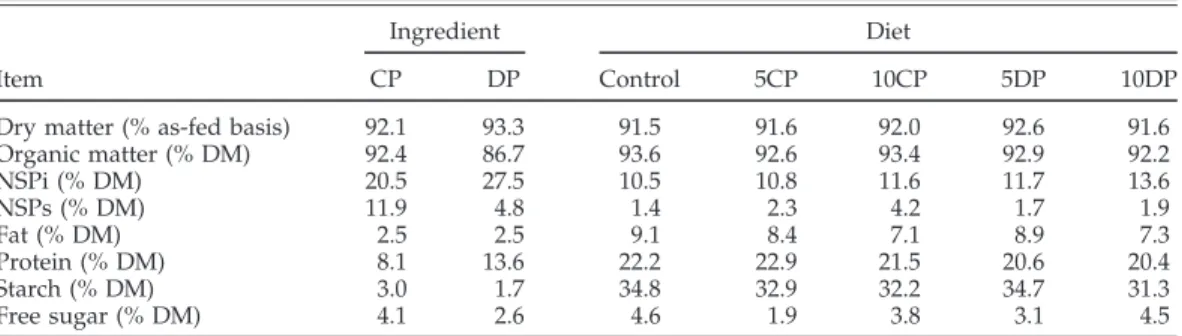
Table 2.Nutritional composition of citrus pulp (CP), dehydrated pasture (DP), and experimental diets displaying different levels of the nonstarch polysaccharide (NSP)-rich feedstuffs1
Ingredient Diet
Item CP DP Control 5CP 10CP 5DP 10DP
Dry matter (% as-fed basis) 92.1 93.3 91.5 91.6 92.0 92.6 91.6
Organic matter (% DM) 92.4 86.7 93.6 92.6 93.4 92.9 92.2 NSPi (% DM) 20.5 27.5 10.5 10.8 11.6 11.7 13.6 NSPs (% DM) 11.9 4.8 1.4 2.3 4.2 1.7 1.9 Fat (% DM) 2.5 2.5 9.1 8.4 7.1 8.9 7.3 Protein (% DM) 8.1 13.6 22.2 22.9 21.5 20.6 20.4 Starch (% DM) 3.0 1.7 34.8 32.9 32.2 34.7 31.3 Free sugar (% DM) 4.1 2.6 4.6 1.9 3.8 3.1 4.5
1NSPi = insoluble nonstarch polysaccharides; NSPs = nonstarch polysaccharides.
were recorded and the birds were killed by cervical dislo-cation followed by exsanguinations, semiscalded at 50°C for 2 min, and defeathered manually. After the removal of feathers, viscera, abdominal fat pad, shanks and neck, the weights of the eviscerated hot carcass and fat pad were measured. The gastrointestinal tract was carefully excised. The length of small intestine (from the pylorus to 1 cm above ileocecal junction) and cecum (left and right) were recorded. The carcasses were refrigerated for 24 h, and color of breast skin was individually measured using a Minolta CR-200 Chroma meter (Minolta Camera Co., Osaka, Japan). For each reading 3 measurements were performed, and the final value for each animal is the average of those readings. Skin color was expressed in the CIELAB dimensions of lightness (L*), redness (a*), and yellowness (b*). Meat pH was measured 24 h after cooling the carcasses. After carcass measurements, a skin-less breast meat sample was collected from 1 carcass per pen, for determining total lipids, fatty acid composition, total cholesterol, and vitamin E compounds. The meat sample was ground using a food processor (3 × 5 s), vacuum packed, and stored at −80°C until required. In addition, 1 carcass per pen was cut into small pieces using an electric band saw and immediately ground in a mincer (Retsch SM 200, Haan, Germany) utilizing a sieve plate having holes of 8 mm in diameter. The mixture was then
ground through another sieve plate with 4-mm holes. Milled carcasses were homogenized in an industrial mixer (Stef, Rimini, Italy). One sample of approximately 100 g was placed in a sealed plastic bag and stored at −20°C for later chemical analysis.
Chemical Analysis
Proximal Analysis, Nonstarch Polysaccharides, and Starch.Ingredients, diets, and carcasses were analyzed for DM, ash, and crude protein made using the proce-dures of the AOAC (2000). Lipid analysis of ingredients and diets was performed by ether-extraction in a Tecator Soxtec HT 1043 (Ho¨gana¨s, Sweden; ASTN, 1988). Insolu-ble nonstarch polysaccharides (NSPi) and soluInsolu-ble non-starch polysaccharides (NSPs) were measured using the Englyst colorimetric method (Englyst and Cummings, 1988). Starch was determined by the enzymatic method described by Salomonsson et al. (1984).
Determination of Total Lipids. Meat samples were lyophilized (−60°C and 2.0 hPa) to constant weight using an Edwards Modulyo lyophilizer (Edwards High Vac-cuum International, Crawley, West Sussex, UK), main-tained exsiccated at room temperature, and analyzed within 2 wk. For total lipid determination, intramuscular fat was extracted as described by Alfaia et al. (2006) from the lyophilized samples (0.25 g). Total lipids were mea-sured gravimetrically, in duplicate, by weighting the fatty residue obtained after solvent evaporation.
Determination of Fatty Acid Composition. Intramus-cular fat of lyophilized samples (0.25 g) was initially dis-solved in 1 mL of dry toluene. Fatty acids were converted to methyl esters (FAME) by base-catalyzed transesterifi-cation with sodium methoxide for 2 h at 30°C. The fatty acid composition was determined by gas chromatogra-phy of FAME with a Varian 3800 GC (Varian Inc., Walnut Creek, CA) equipped with a flame ionization detector and an OmegaWax 250 (Supelco, Bellefont, CA) capillary column (30 m × 0.25 mm i.d., 0.25-m film thickness). The chromatographic conditions were as follows: injector temperature, 250°C; detector temperature, 280°C; helium was used as carrier gas, and the split ratio was 1:20. The gas chromatograph oven temperature was programmed to start at 150°C (maintained for 15 min) followed by a 3°C/min ramp to 220°C (maintained for 20 min). Peak identification was accomplished by comparing the reten-tion times of peaks from samples with those of FAME standard mixtures. Quantification of FAME was based on the internal standard technique, using nonadecanoic acid (19:0) as internal standard, and on the conversion to relative peak areas to weight % using the corrected response factor of each fatty acid (ES ISO 5508, 1990). Fatty acids were expressed as gravimetric contents (mg/ g of muscle) or as a percentage of the sum of identified fatty acids (% wt/wt).
Quantification of Total Cholesterol, Tocopherols, and Tocotrienol.The simultaneous determination of to-tal cholesterol, tocopherols, and tocotrienols was per-formed as described by Prates et al. (2006). The method
involves a direct saponification of meat (0.75 g), a single n-hexane extraction, and the analysis of the extracted compounds by normal-phase HPLC, using fluorescence (tocopherols and tocotrienols) and UV-Vis photodiode array (cholesterol) detections in tandem. The contents of total cholesterol, tocopherols, and tocotrienols were calculated, in duplicate for each sample, based on the external standard technique, from a standard curve of peak area vs. compound concentration.
Statistical Analysis
A completely randomized design was used in a mono-factorial experiment. The statistical model included the effect of treatments (diets). A 1-way ANOVA with the GLM procedure was used to test for the effects of treat-ments on performances, carcass characteristics, digestive tract measurements, and meat composition. Differences among means were tested for significance (P< 0.05) using the Student’s t-test. Statistical differences on mortality were analyzed using the chi-square test. All analyses were performed with SAS software (Version 8.2, SAS Institute Inc., Cary, NC).
RESULTS
The chemical composition of citrus pulp, dehydrated pasture, and experimental diets was determined and is presented in Table 2. Dehydrated pasture contained the highest percentages of total NSP (32% on a DM basis), of which the insoluble fraction is the most represented. As expected, citrus pulp presented lower levels of total NSP, although NSPs are more represented when compared with what was found in dehydrated pasture. Accord-ingly, the incorporation of dehydrated pasture and citrus pulp in the experimental diets mainly increased the con-tents of insoluble (NSPi) and soluble fiber (NSPs), respec-tively.
During the experiment the mortality was low (1.1%) and not related with any of the treatments. Body weight, weight gain, feed intake, and FCR of broiler chicks fed on diets containing various percentages of dehydrated pasture or citrus pulp are presented in Table 3. Inclusion of 5 or 10% of dehydrated pasture in the diets had no significant effects on final body weight and feed intake but reduced weight gain and at 10% level increased feed conversion ratio (FCR) when compared with birds fed the control diet. Incorporation of citrus pulp in the diets reduced birds’ final body weight, and this effect was more pronounced with the diet containing the highest content of this pulp (10CP treatment). In addition, feed intake was higher in animals of the 10CP treatment, resulting in a significantly higher FCR. Overall, the results suggest that dehydrated pasture and citrus pulp in broiler diets affect animal performance in different ways and intensit-ies. Whereas dehydrated pasture increases FCR, reducing growth without influence on feed intake, citrus pulp more intensely impairs FCR, improving feed ingestion and de-creasing growth.
Table 3.Performances of broilers (6 to 34 d) feed on a cereal-based diet not incorporating (control) or containing citrus pulp (5% = 5CP, 10% = 10CP) or dehydrated pasture (5% = 5DP, 10% = 10DP)
Treatment
Item Control 5CP 10CP 5DP 10DP SEM p(F)
Body weight (g)
At 6 d 83.3 82.8 85.0 83.3 83.6 0.3 0.307
At 34 d 1,638a 1,449b 1,241c 1,489ab 1,497ab 33 <0.001
Daily weight gain (g/d) 55.5a 48.8b 41.3c 50.2b 50.5b 1.1 <0.001
Daily feed intake (g/d) 111.8b 120.2b 146.9a 111.3b 128.7ab 3.6 0.003
Feed conversion ratio 2.058c 2.505bc 3.596a 2.211bc 2.554b 0.127 <0.001 a–cMeans within the same row bearing different superscripts are significantly different (P< 0.05).
The effect of including NSP-rich feedstuffs in broiler diets on length of the small intestine and cecum was evaluated, and the collected data are presented in Table 4. As result of a small intestine with equivalent length in smaller birds, the small intestine relative length increased (P< 0.05) with the level of dietary citrus pulp, although it was not affected by the inclusion of dehydrated pasture. In addition, the length of the cecum was not affected by the treatments. The effects of including citrus pulp and dehydrated pasture in broiler diets on carcass traits were determined and are presented in Table 4. Birds from diets containing citrus pulp and dehydrated pasture presented lighter (P< 0.05) carcasses when compared with controls. In accordance with the performance data, 10CP birds pre-sented the lighter carcasses of the treatments containing NSP sources and displayed significantly lower carcass yields. In addition, birds of the 10CP treatment presented lower levels of abdominal fat pad. The carcass composi-tion was not influenced by the treatment. Results of the colorimetric evaluation of breast skin are presented as the CIELAB values of lightness, redness, and yellowness
Table 4.Effects of dietary citrus pulp (5% = 5CP, 10% = 10CP) and dehydrated pasture (5% = 5DP, 10% = 10DP) on carcass traits, skin color, meat pH, and relative length of small intestine and cecum of broiler chicken1
Treatment
Item Control 5CP 10CP 5DP 10DP SEM p(F)
Carcass trait Weight 1,185a 1,055a 851c 1,051b 1,042b 23 <0.001 Yield 712a 701ab 678c 700ab 695bc 3 0.005 Abdominal fat 15.2a 13.2ab 10.9b 14.6a 15.4a 0.6 0.048 Carcass composition Dry matter 359 332 342 347 347 29 0.546 Fat 117 92 95 98 108 3 0.070 Protein 230 229 236 240 229 1 0.160 Skin color2 L 62.8 63.7 64.2 63.3 62.6 0.3 0.370 a 4.0a 2.8bc 2.6c 3.6abc 3.7ab 0.2 0.048 b 10.2b 9.9b 10.6b 11.5ab 12.9a 0.3 0.006 Meat pH 6.08ab 6.10a 5.93c 6.06ab 6.01bc 0.02 0.001 Small intestine Total length 184 188 178 176 183 2 0.260 Relative length 112c 127b 143a 119bc 123bc 2 <0.001 Cecum Total length 35.1 35.4 30.8 31.6 33.6 0.7 0.134 Relative length 21.4 23.8 24.6 21.3 22.4 0.6 0.248
a–cMeans within the same row bearing different superscripts are significantly different (P< 0.05).
1Measuring units: carcass weight (g), carcass yield (g/kg of BW), weight of abdominal fat pad (g/kg of BW),
carcass composition (g/kg) and total (cm), and relative length (cm/kg of BW) of small intestine and cecum.
2L = lightness; a = redness; b = yellowness.
and suggest that although diets have no influence on lightness, there were considerable differences on redness and yellowness in the carcass skin of birds from different treatments. Although dehydrated pasture had no effect in broiler skin redness, it significantly increased skin carcass yellowness when diet contained 10% of dehydrated pas-ture (P< 0.05). Diets containing citrus pulp had no effect on yellowness, although it resulted in skin colors with reduced redness, especially in treatment 10CP. The 10CP and 10DP treatments reduced the intramuscular pH of poultry breast meat. Overall, the data suggest that whereas the 10DP treatment resulted in carcasses pres-enting more intense yellow tones, carcasses of the 10CP treatment displayed less intense red tones. Finally, as displayed in Table 4, inclusion of the NSP feedstuffs at the highest levels of incorporation (treatments 10CP and 10DP) resulted in reduced intramuscular pH of broiler breast meat.
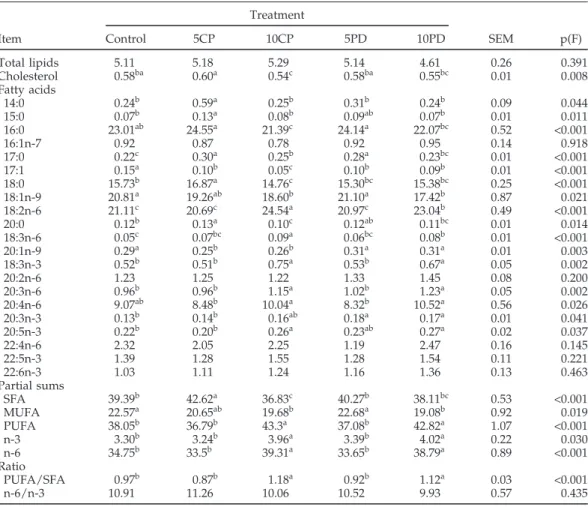
Fatty acid composition of breast meat from broilers fed ad libitum on diets containing various percentages of citrus pulp or dehydrate pasture are presented in Table
Table 5.Total lipids (mg/g of meat), total cholesterol (mg/g of meat), fatty acid composition (%Wt/Wt), partial sums of fatty acids (%Wt/Wt), and nutritional ratios of breast meat from broilers fed on cereal-based diet (control) or diets containing citrus pulp (5% = 5CP, 10% = 10CP) or dehydrated pasture (5% = 5DP, 10% = 10DP)1
Treatment
Item Control 5CP 10CP 5PD 10PD SEM p(F)
Total lipids 5.11 5.18 5.29 5.14 4.61 0.26 0.391 Cholesterol 0.58ba 0.60a 0.54c 0.58ba 0.55bc 0.01 0.008 Fatty acids 14:0 0.24b 0.59a 0.25b 0.31b 0.24b 0.09 0.044 15:0 0.07b 0.13a 0.08b 0.09ab 0.07b 0.01 0.011 16:0 23.01ab 24.55a 21.39c 24.14a 22.07bc 0.52 <0.001 16:1n-7 0.92 0.87 0.78 0.92 0.95 0.14 0.918 17:0 0.22c 0.30a 0.25b 0.28a 0.23bc 0.01 <0.001 17:1 0.15a 0.10b 0.05c 0.10b 0.09b 0.01 <0.001 18:0 15.73b 16.87a 14.76c 15.30bc 15.38bc 0.25 <0.001 18:1n-9 20.81a 19.26ab 18.60b 21.10a 17.42b 0.87 0.021 18:2n-6 21.11c 20.69c 24.54a 20.97c 23.04b 0.49 <0.001 20:0 0.12b 0.13a 0.10c 0.12ab 0.11bc 0.01 0.014 18:3n-6 0.05c 0.07bc 0.09a 0.06bc 0.08b 0.01 <0.001 20:1n-9 0.29a 0.25b 0.26b 0.31a 0.31a 0.01 0.003 18:3n-3 0.52b 0.51b 0.75a 0.53b 0.67a 0.05 0.002 20:2n-6 1.23 1.25 1.22 1.33 1.45 0.08 0.200 20:3n-6 0.96b 0.96b 1.15a 1.02b 1.23a 0.05 0.002 20:4n-6 9.07ab 8.48b 10.04a 8.32b 10.52a 0.56 0.026 20:3n-3 0.13b 0.14b 0.16ab 0.18a 0.17a 0.01 0.041 20:5n-3 0.22b 0.20b 0.26a 0.23ab 0.27a 0.02 0.037 22:4n-6 2.32 2.05 2.25 1.19 2.47 0.16 0.145 22:5n-3 1.39 1.28 1.55 1.28 1.54 0.11 0.221 22:6n-3 1.03 1.11 1.24 1.16 1.36 0.13 0.463 Partial sums SFA 39.39b 42.62a 36.83c 40.27b 38.11bc 0.53 <0.001 MUFA 22.57a 20.65ab 19.68b 22.68a 19.08b 0.92 0.019 PUFA 38.05b 36.79b 43.3a 37.08b 42.82a 1.07 <0.001 n-3 3.30b 3.24b 3.96a 3.39b 4.02a 0.22 0.030 n-6 34.75b 33.5b 39.31a 33.65b 38.79a 0.89 <0.001 Ratio PUFA/SFA 0.97b 0.87b 1.18a 0.92b 1.12a 0.03 <0.001 n-6/n-3 10.91 11.26 10.06 10.52 9.93 0.57 0.435
a–cMeans within the same row bearing different superscripts are significantly different (P< 0.05).
1SFA = saturated fatty acids; MUFA = monounsaturated fatty acids; PUFA = polyunsaturated fatty acids;
n-3 = sum of 18:n-3n-n-3, 20:n-3n-n-3, 20:5n-n-3, 22:5n-n-3, and 22:6n-n-3; n-6 = sum of 18:2n-6, 18:n-3n-6, 20:2n-6, 20:n-3n-6, 20:4n-6; 22:2n-6, and 22:4n-20:4n-6; PUFA/SFA ratio = sum 18:2n-6, 18:3n-6, 18:3n-3, 20:2n-6, 20:3n-6, 20:4n-6, 20:3n-3; 20:5n-3, 22:2n-6, 22:4n-6, 22:5n-20:5n-3, and 22:6n-3/sum of 14:0, 15:0, 16:0, 17:0, 18:0, and 20:0; n-6/n-3 ratio = sum of 18:2n-6, 18:3n-18:2n-6, 20:2n-18:2n-6, 20:3n-18:2n-6, 20:4n-6; 22:2n-18:2n-6, and 22:4n-6/sum of 18:3n-3, 20:3n-3, 20:5n-3, 22:5n-3, and 22:6n-3).
5. The predominant fatty acids in chicken meats of all treatments were palmitic (16:0) and stearic (18:0) acids as SFA, oleic acid (18:1) as monounsaturated fatty acid, and linoleic (18:2n-6) and arachidonic (20:4n-6) acids as PUFA. Nevertheless, palmitic, oleic, and linoleic acids were the most abundant fatty acids in the various meats under analysis. Consumption of the fibrous feedstuffs affected the concentrations of 16 of the 21 fatty acids analyzed, therefore affecting the partial fatty acid sums. These ef-fects are clearly dependent on the level of inclusion of the fibrous feedstuffs. At a 5% incorporation rate of citrus pulp, an increase (P< 0.05) in the sum of SFA in relation to the control was observed, whereas at incorporation levels of 10% the levels of MUFA (mainly 18:1n-9) de-creased (P< 0.05) and PUFA increased (P < 0.05) in rela-tion to the control meat. Similarly, the inclusion of 5% of dehydrated pasture exerted only minimal effects on meat fatty acid composition, but when the inclusion was in-creased to 10%, a decrease (P< 0.05) in the percentage of MUFA (mainly 18:1n-9) and an increase (P < 0.05) in the levels of PUFA was observed. The increase in PUFA
observed for the higher level of fibrous feedstuffs was due to the increase of both n-6 (mainly 18:2n-6 and 20:4n-6) and n-3 (mainly 18:3n-3) PUFA, so the nutritional rele-vant n-6/n-3 ratio was not changed.
Incorporation of citrus pulp or dehydrated pasture in diets for broiler chicks had no impact (P> 0.05) on breast meat total lipid content, as displayed in Table 5. In con-trast, meat cholesterol varied among the treatments dis-playing the lowest and the highest values in birds of the 5CP and 10CP treatments, respectively. Nevertheless, dehydrated pasture had no influence in meat cholesterol contents, when these values were compared with those of meat from control animals. As expected, α-tocopherol, which coeluted in these meats with small amounts of α-tocotrienol, was the major vitamin E homologue detected in breast meats (Table 6). In addition, small contents of γ-tocopherol, which coeluted with a minor proportion of β-tocotrienol, γ-tocotrienol, and δ-tocopherol were also identified in the broiler breast meats. Although the levels of α-tocopherol remain unchanged in meats of the various treatments, inclusion of dehydrated pasture or citrus pulp
Table 6.Diterpenes (tocopherols and tocotrienols) contents (g/g of meat) of breast meat from broilers fed on cereal-based diet (control) or diets containing citrus pulp (5% = 5CP, 10% = 10CP) or dehydrated pasture (5% = 5DP, 10% = 10DP; n = 35)
Treatment
Diterpenes Control 5CP 10CP 5PD 10PD SEM p(F)
α-Tocopherol1 6.33 5.97 5.72 5.77 5.58 0.25 0.252
γ-Tocopherol2 2.088a 1.130cd 0.963d 1.678b 1.308c 0.088 <0.001
γ-Tocotrienol 0.371b 0.230b 0.819a 0.419b 0.465b 0.099 0.002
δ-Tocopherol 0.1172a 0.0639b 0.0491b 0.1103a 0.0932a 0.0103 <0.001 a–d
Means within the same row with different superscripts are significantly different.
1Co-eluted with small amounts of α-tocotrienol. 2Co-eluted with small amounts of β-tocotrienol.
in the broiler diets led to a considerable decrease in the levels of meat γ-tocopherol. In addition, consumption of citrus pulp at low and moderate levels (treatments 5CP and 10CP) resulted in lower levels of δ-tocopherol. In contrast, meat from birds of treatment 10CP presented higher levels of γ-tocotrienol. Taken together, the results suggest that inclusion of citrus pulp and dehydrated pas-ture in broiler diets influenced meat composition in rela-tion to the less represented vitamin E homologues.
DISCUSSION
In this study the effect of incorporating citrus pulp or dehydrated pasture in broiler diets on poultry perfor-mance, carcass yield, and meat quality was evaluated. Citrus pulp and dehydrated pasture presented similar levels of NSP; the sum of NSPi and NSPs amounts to 32.4 and 32.3%, respectively, in the 2 feedstuffs. The dehy-drated pasture presented predominantly water-insoluble polysaccharides (85% of the total), whereas citrus pulp showed a much higher content in water soluble polysac-charides (37% of the total). However, the NSPs content of citric pulp was lower than the 223 g/kg of pectin referred to by Bampidis and Robinson (2006). It is possible that the colorimetric method used to measure NSPs (En-glyst and Cummings, 1988) underestimates the fiber frac-tion when pectin content is high (Englyst et al., 1994). As expected, the incorporation of dehydrated pasture and citrus pulp in diets contributed to increase the levels of NSPi and NSPs, respectively.
Birds fed diets containing citrus pulp, which presented the highest levels of soluble NSPs, displayed impaired growth and high FCR. The negative effects were more evident when citrus pulp was incorporated at the highest level, although at 5% incorporation rate final body weights were significantly lower. In contrast, diet incor-poration of dehydrated pasture did not have such nega-tive effects on bird performance. However, final body weights of birds of the 5DP and 10DP treatments were marginally lower when compared with the controls. The negative effects of dietary fiber on broiler performances are intimately associated with a decrease in the digestion of nutrients and with a decrease of the diet AME (Tabook et al., 2006), which results from the birds’ limited capacity to degrade NSP in the small intestine (Hesselman and
Aman, 1986; Pettersson and Aman, 1989). In dehydrated pasture-containing diets, insoluble fiber acts primarily by diluting the nutrients concentration, increasing digesta passage rate and reducing nutrient digestibility (Hetland et al., 2004). In general, birds counteract these negative effects by increasing feed intake because it was marginally observed in birds of the 10DP treatment. Similarly, Het-land and Svihus (2001) and Tabook et al. (2006) observed high feed intake and no effects on performances when insoluble fiber was included at moderate levels in broiler diets. Therefore, birds are able to compensate for reduced nutrient concentration due to the presence of insoluble fiber by increasing feed consumption (Rogel et al., 1987), attenuating the potentially negative effects of a reduced digestibility on growth rate. In contrast, the addition of citrus pulp to the corn-based diet clearly contributed to depress weight gain and final body weight and to deterio-rate FCR. Langhout and Schutte (1996) and Langhout et al. (1999) have reported similar negative effects of dietary pectins on broiler growth rates. However, here an increase in feed intake in birds receiving 10% of citrus pulp was observed, in contrast with what was previously reported in the above-mentioned studies. It was expected that diets with higher percentages of soluble fiber increased intesti-nal viscosity and, consequently, improved feed retention time in the gastrointestinal tract (Van der Klis et al., 1993). Because there is a negative relationship between feed retention time and feed consumption in young chickens (Almirall and Esteve-Garcia, 1994), diets with soluble fi-bers would contribute to reduced feed intake. Therefore, it is possible that the rise of relative length of small intes-tine in 10CP birds contributed to counteract this effect, allowing the increase of feed intake observed in this work. However, the viscous nature of the digesta may have resulted in a decreased nutrient digestibility (Hesselman and Aman, 1986), particularly that of fat (Langhout et al., 1999), resulting in a low AME (Annison, 1991) and in the poor productive value of the CP diets.
Diets containing citrus pulp, which are rich in soluble pectins, were shown to increase the small intestine rela-tive length in 5CP birds and more significantly in birds of the 10CP treatment. Less evident effects were observed in animals disposing of dehydrated pasture-containing diets. Similar observations were made in previous studies using diets rich in soluble (Brenes et al., 1993; Petersen
et al., 1999; Moura˜o, 2000) or insoluble fibers (Preston et al., 2000; Taylor and Jones, 2001; Wu and Ravindran, 2004). Therefore, the increased feed intake and the negligi-ble digestion of dietary fibers contribute to an increase of the digesta bulk in the digestive tract. As a conse-quence, the organism reacted with an increased capacity of the digestive system (Brenes et al., 1993; Hetland and Svihus, 2001; Tabook et al., 2006) and through the induc-tion of several physiological adaptainduc-tions in an attempt to improve nutrient uptake [e.g., increased pancreatic en-zyme secretion and absorptive area (Brenes et al., 1993; Tabook et al., 2006)]. In summary, because feed passage tends to be slower in diets containing viscous pectins or, more generally, in diets rich in soluble NSP, increased intestine relative length may constitute an adaptation mechanism to allow for an improvement in feed con-sumption and nutrient uptake. Finally, the data suggested that dietary citrus pulp negatively affected carcass weight and yield. Although birds consuming citrus pulp already presented an impaired performance, the more developed gastrointestinal tract clearly contributed to reduced car-cass yield. Birds fed the diet with 10% citrus pulp pre-sented a lower abdominal fat pad and a trend to a de-creased carcass fat content. Therefore, lower growth rates presented by birds of the 10CP treatment were accompa-nied by a reduced fat deposition, confirming the observa-tions of Summers et al. (1992) and Leeson and Zubair (1997). It is likely that birds were unable to obtain the required energy for normal growth and fat deposition. This energetic deficit manifested in broilers consuming citrus pulp was worsened by the increased energy expen-diture as a result of the observed enlargement of the gastrointestinal tract. It has been previously reported that the increase of gastrointestinal tract size is intimately re-lated with an increase of the energetic needs (Jorgensen et al., 1996).
Incorporation of citrus pulp and dehydrated pasture in broiler diets had a significant impact on the color profile of poultry breast skin. Overall, the data showed a reduc-tion of breast skin redness in animals consuming the high-est levels of citrus pulp, showing that the usually undesir-able red tones in the skin were less developed. This obser-vation could be due to low levels of red bioactive molecules in citrus pulp, reduced intestinal absorption of pigments, or both. It has been demonstrated that differen-tial absorption of pigments may lead to differences in skin pigmentation (Castan˜eda et al., 2005). Pigment solu-bilization and subsequent absorption in the intestine oc-curs with the lipid phase (Furr and Clark, 1997; Garrett et al., 1999). Because soluble fibers negatively affect fat digestion and absorption (Silva and Smithard, 1997), one can expect a negative effect of citrus pulp fibers on the absorption of lipid soluble pigments. In contrast, diets with 10% dehydrated pasture significantly increased the yellowness of broiler breast skin (P< 0.05). The yellowness in breast skin is a good indicator of the xanthophylls content of the ingested feed (Pe´rez-Vendrell et al., 2001). Pastures are a well known good source of xanthophylls (Chauveau-Duriot et al., 2005; Nozie`re et al., 2006).
There-fore, the more intense yellow tones of broiler carcasses from the dehydrated pasture treatments suggest a higher intake of yellow pigments, which may result from the intrinsic richness of these bioactive compounds in dehy-drated pasture. The addition of 10% of citrus pectin to the diets reduced intramuscular pH of poultry breast meat. Nevertheless, the intramuscular pH values exhibited did not fall within the pH range typically associated with an unacceptable lean color. It has been suggested that the pale color of broiler skin in chicken can occur at a pH of 5.7 (Van Laack et al., 2000).
The inclusion of 10% of citrus pulp and dehydrated pasture consumption had a marked effect on the fatty acid profile of broiler meats. The modification involves a reduction in palmitic and oleic acids and an increase in n-6 and n-3 PUFA. These changes do not seem to be related with dietary contribution of both fibrous feed-stuffs. Both citrus pulp and dehydrated pasture have low fatty acid content, although the concentration of linolenic acid (in % of total fatty acids) is consistently low in citrus pulp lipids (about 6%) and quite variable in dried forage lipids (30 to 60%). Moreover, most of structural lipids of pasture are probably not available for absorption, requir-ing fibrolytic fermentation not possible in the upper com-partments of the broiler digestive tract. Consistently, the increase in α-linolenic acid proportion in relation to the control meat, although significant, is relatively small and higher for meats of birds of treatments CP10 (+0.21%) than for DP10 (+0.13%). Overall, the changes in fatty acid profile of broiler meats reported here most possibly result from the inhibition of de novo lipid synthesis (lower 16:0 and 18:1n-9) with an increase in proportion of exogenous fatty acids, mainly linoleic acid, abundant in the broiler diets. The inclusion of fibrous feedstuffs reduced the con-centration of starch of the diets and might affect the en-ergy status (supply of glucose), as suggested by the lower final weight and growth rate. It is well known that ener-getic status and the subsequent responses of metabolic hormones (insulin, glucagon, and 3,5,3′-triiodothyronine) are important factors that determine the level of hepatic lipogenesis in birds (Hillgartner et al., 1995; Richards et al., 2003). In chicken, rates of fatty acid synthesis in liver are low during starvation or feeding a low-starch diet (Wakil et al., 1983; Hillgartner et al., 1995), and insulin increases⌬9-desaturase activity in hepatocytes (Lefevre
et al., 1999). Also,⌬9-desaturase expression in mammals
is stimulated by the supply of glucose and insulin concen-tration (Ntambi and Miyazaki, 2004).
Dehydrated pastures are a good source of n-3 fatty acids (Ponte et al., 2007), but the levels of these fatty acids in meat from broiler chicken were unchanged among the treatments. Therefore, the n-6/n-3 ratio of broiler meats was not affected by the intake of citrus pulp or dehydrated pasture. In contrast, meat of birds from treatments 10CP and 10DP presented a higher value of PUFA leading to an higher PUFA/SFA ratio. Interestingly, the levels of ALA in broiler meat were improved as a consequence of dehydrated pasture or citrus pulp incorporation at the highest values. This observation suggests that the
pres-ence of higher values of the n-3 fatty acid precursor in the NSP-rich feedstuffs. In addition, levels of eicosapen-taenoic acid were also increased in the meat of broilers consuming dehydrated pasture and citrus pulp at the highest levels of incorporation, suggesting that ALA is effectively desaturated and elongated in broilers of treat-ment 10CP and 10DP (Leece and Allman, 1996). However, the levels of the other nutritionally important n-3 fatty acids in meat, particularly of DPA and DHA, were not affected by dehydrated pasture of citrus pulp intake. In general the levels of the above-mentioned fatty acids in broiler meat are much lower when compared with the percentages of the long-chain n-3 fatty acids reported in meat originated in birds supplemented with 2 to 4% of fish oil (Lo´pez-Ferrer et al., 2001). Therefore, these results suggest that supplementation of broiler diets with dehy-drated pasture and citrus pulp is unable to substantially improve the n-3 fatty acids of broiler meat. Under these circumstances, direct supplementation with long-chain PUFA may be a more straightforward routine to improve meat nutritive value.
Data presented here revealed that all chicken meats are lean, based on the Food Advisory Committee (1990) criteria (<5% fat), and depict median contents of total cholesterol (0.54 to 0.59 mg/g). However, these variables were not affected by the incorporation of citrus pulp or dehydrated pasture in the diets. As expected, α-tocoph-erol, which coeluted in these meats with small amounts of α-tocotrienol, was the major vitamin E homologue de-tected in breast meats, although the values were not in-fluenced by diet composition. The prevalence of α-to-copherol in meat is well known and is due to the more than 10-fold preference of the tocopherol-binding protein for α-tocopherol, relative to γ-homologes, which are the most common vitamin E molecules in plant foods (Decker et al., 2000). Surprisingly, levels of γ-tocopherol were sig-nificantly reduced in the meat of animals supplemented with citrus pulp and dehydrated pasture. A similar phe-nomenon was observed for the meat contents in δ-tocoph-erol, although this observation was restricted to the citrus pulp for this particular case.
In conclusion, incorporation of low (5%) or moderate (10%) percentages of citrus pulp in diets for broiler chick-ens increased the levels of dietary soluble NSP and led to impaired growth rates and FCR. Diets containing dehy-drated pasture based on Italian ryegrass and balansa clo-ver with high levels of insoluble NSP have effects on broiler performance less significant. High levels of soluble NSP in citrus pulp diets led to an increased relative length of the small intestine, contributing to reduced carcass yield. Even when incorporated at 5% level, dehydrated pasture was a good source of bioactive compounds that were effective in coloring the breast skin with more in-tense yellow tones. Finally, the results suggest that incor-poration of citrus pulp or dehydrated pasture at the 10% levels changed meat fatty acid profiles, depressing MUFA and the palmitic acid and increasing the predominance of n-6 and n-3 PUFA. Our results suggest that dehydrated pasture may be an interesting supplement to include in
broiler diets to improve meat quality with minor impacts in broiler performance at 10% of feed ingested.
ACKNOWLEDGMENTS
This work was supported by Fundac¸a˜o para a Cieˆncia e a Tecnologia, through Grant POCI/CVT/61162/2004 and the individual fellowship SFRH/BD/17969/2004 to Patrı´cia I. P. Ponte, as well as by Instituto Nacional de Investigac¸a˜o Agra´ria, through Grant AGRO/57.
REFERENCES
Alfaia, C. P. M., V. S. Ribeiro, M. A. Lourenc¸o, M. A. Quaresma, S. I. Martins, A. P. Portugal, C. M. G. A. Fontes, R. J. B. Bessa, M. F. Castro, and J. A. M. Prates. 2006. Fatty acid composition, conjugated linoleic acid isomers and cholesterol in beef from crossbred bullocks intensively produced and from Alentej-ana purebred bullocks reared according to CarnalentejAlentej-ana- Carnalentejana-PDO specifications. Meat Sci. 72:425–436.
Almirall, M., and E. Esteve-Garcia. 1994. Rate of passage of barley diets with chromium oxide: Influence of age and poul-try strain and effect of β-glucanase supplementation. Poult. Sci. 73:1433–1440.
Annison, G. 1991. Relationship between the levels of soluble non-starch polysaccharides and the apparent metabolizable energy of wheats assayed in broiler chickens. J. Agric. Food Chem. 39:1252–1256.
AOAC. 2000. Official Methods of Analysis. 17th ed. Assoc. Off. Anal. Chem., Washington, DC.
ASTN. 1988. Total fat extraction in certain food products ac-cording to AOAC. Application Short Note. Tecator, Ho¨-gana¨s, Sweden.
Bampidis, V. A., and P. H. Robinson. 2006. Citrus by-products as ruminant feeds: A review. Anim. Feed Sci. Technol. 128:175–217.
Blanch, A. 1999. Getting the color of yolk and skin right. World’s Poult. Sci. J. 15:32–33.
Bou, R., F. Guardiola, A. Grau, S. Grimpa, A. Manish, A. Bar-roeta, and R. Cordony. 2001. Influence of dietary fat source,
α-tocopherol, and ascorbic acid supplementation on sensory quality of dark chicken meat. Poult. Sci. 80:1–8.
Bourgeois, C. 1992. Determination of vitamin E: Tocopherols and tocotrienols. Elsevier Appl. Sci., New York, NY. Brenes, A. M. S., W. Guener, and R. R. Marquardt. 1993. Effect of
enzyme supplementation on the performance and digestive tract sue of broiler chickens fed wheat- and barley-based diets. Poult. Sci. 72:1731–1739.
Carre´, B. 1990. Predicting the energy value of poultry feeds. Pages 283–300 in Feedstuff Evaluation. J. Wiseman and D. J. A. Cole, ed. Butterworths, London, UK.
Carre´, B., J. Gomez, and A. M. Changeup. 1995. Contribution of oligosaccharide and polysaccharide digestion, and excreta losses of lactic acid and short chain fatty acids, to dietary metabolizable energy values in broiler chickens and adult cockerels. Br. Poult. Sci. 36:611–629.
Castan˜eda, M. P., E. M. Hirschler, and A. R. Sams. 2005. Skin pigmentation evaluation in broilers fed natural and synthetic pigments. Poult. Sci. 84:143–147.
Chauveau-Duriot, B., D. Thomas, J. Portelli, and M. Doreau. 2005. Carotenoids content in forages: Variation during con-servation. Renc. Rech. Rumin. 12:117.
Da¨nicke, S., W. Bo¨ttcher, H. Jeroch, J. Thielebein, and O. Simon. 2000. Replacement of soybean oil with tallow in a rye-based diets without xylanase increases protein synthesis in the small intestine of broilers. J. Nutr. 130:827–834.
Decker, E. A., S. A. Livisay, and S. Zhou. 2000. Mechanisms of endogenous skeletal muscle antioxidants: Chemical and
physical aspects. Pages 25–60 in Antioxidants in Muscle Foods. E. A. Decker, C. Faustman, and C. Lopez-Bote, ed. Wiley-Interscience, New York, NY.
Edwards, C. A. 1995. The physiological effects of dietary fiber. Pages 58–71 in Dietary Fiber in Health and Disease. D. Krit-chevskv and C. Bonfield, ed. Eagan Press, St. Paul, MN. Englyst, H. N., and J. H. Cummings. 1988. Improved method
for measurement of dietary fiber as non-starch polysaccha-rides in plant foods. J. Assoc. Off. Anal. Chem. 71:808–814. Englyst, H. N., M. E. Quigley, and G. J. Hudson. 1994. Determi-nation of dietary fiber non-starch polysaccharides with gas-liquid chromatographic, high-performance gas-liquid chromato-graphic or spectrophotometric measurement of constituent sugars. Analyst 119:1497–1509.
ES ISO 5508. 1990. Animal and vegetable fats and oils—Analysis by gas chromatography of methyl esters of fatty acids. Euro-pean Standard ISO 5508. EuroEuro-pean Committee for Standard-ization, Brussels, Belgium.
Food Advisory Committee. 1990. Report on review of food label-ing and advertislabel-ing. HMSO, London, UK.
Furr, H. C., and R. M. Clark. 1997. Intestinal absorption and tissue distribution of carotenoids. J. Nutr. Biochem. 8:364– 377.
Ganji, S. H., A. M. Kamanna, and M. L. Kashyap. 2003. Niacin and cholesterol: Role in cardiovascular disease (review). J. Nutr. Biochem. 14:298–305.
Garrett, D. A., M. L. Failla, and R. J. Sarama. 1999. Development of an in vitro digestion method to assess carotenoid bioavail-ability from meals. J. Agric. Food Chem. 47:4301–4309. Hesselman, K., and P. Aman. 1986. The effect of β-glucanase
on the utilization of starch and nitrogen by broiler chickens fed on barley of low or high viscosity. Anim. Feed Sci. Tech-nol. 15:83–93.
Hetland, H., M. Choct, and B. Svihus. 2004. Role of insoluble non-starch polysaccharides in poultry nutrition. World’s Poult. Sci. J. 60:415–422.
Hetland, H., and B. Svihus. 2001. Effect of oat hulls on perfor-mance, gut capacity and feed passage time in broiler chick-ens. Br. Poult. Sci. 42:354–361.
Hillgartner, F. B., L. M. Salati, and A. G. Goodridge. 1995. Physi-ological and molecular mechanisms involved in nutritional regulation of fatty acid synthesis. Physiol. Rev. 75:47–76. Howe, P., B. Meyer, S. Record, and K. Baghurst. 2006. Dietary
intake of long-chain ω-3 polyunsaturated fatty acids: Contri-bution of meat sources. Nutrition 22:47–53.
Hu, F. B., J. E. Manson, and W. C. Willett. 2001. Types of dietary fat and risk of coronary heart disease: A critical review. J. Am. Coll. Nutr. 20:5–19.
Jorgensen, H., X. Zhao, and B. Eggum. 1996. The influence of dietary fiber source and level on the development of the gastrointestinal tract, digestibility, degree of fermentation in the hind-gut and energy metabolism in pigs. Br. J. Nutr. 75:365–378.
Kerry, J. P., D. J. Buckley, and P. A. Morrissey. 2000. Improve-ment of oxidative stability of beef and lamb with vitamin E. Pages 229–262 in Antioxidants in Muscle Foods. E. A. Decker, C. Faustman, and C. Lopez-Bote, ed. Wiley-Interscience, New York, NY.
Langhout, D. J. 1998. The role of the intestinal flora as affected by non-starch polysaccharides in broiler chicks. PhD Thesis Agricultural University of Wageningen, Wageningen, the Netherlands.
Langhout, D. J., and J. B. Schutte. 1996. Nutritional implications of pectins in chicks in relation to esterification and origin of pectins. Poult. Sci. 75:1236–1242.
Langhout, D. J., J. B. Schutte, P. Van Leeuwen, J. Wiebenga, and S. Tamminga. 1999. Effect of dietary high- and low-methylated citrus pectin on the activity of the ileal microflora and morphology of the small intestinal wall of broiler chicks Br. Poult. Sci. 40:340–347.
Leece, E. A., and M. A. Allman. 1996. The relationships between dietary alpha-linolenic:linoleic acid and rat platelet eicosa-pentaenoic and arachidonic acids. Br. J. Nutr. 76:447–452. Leeson, S., and A. K. Zubair. 1997. Nutrition of the broiler
chicken around the period of compensatory growth. Poult. Sci. 76:992–999.
Lefevre, P., C. Diot, P. Legrand, and M. Douaire. 1999. Hormonal regulation of stearoyl coenzyme-A desaturase 1 activity and gene expression in primary cultures of chicken hepatocytes Arch. Biochem. Biophys. 368:329–337.
Lipstein, A. 1989. Meat quality in broilers, with reference to pigmentation. Pages 145–169 in Recent Developments in Poultry Nutrition. D. J. A. Cole and W. Haresign, ed. Butter-worths, London, UK.
Lo´pez-Ferrer, S., M. D. Baucells, A. C. Barroeta, and M. A. Grashorn. 2001. n-3 Enrichment of chicken meat. 1. Use of very long-chain fatty acids in chicken diets and their influ-ence on meat quality: Fish oil. Poult. Sci. 80:741–752. Maraschiello, C., C. Sa´rraga, and J. A. Garcia Regueiro. 1999.
Glutathione peroxidase activity, TBARs, and α-tocopherol in meat from chicken fed different diets. J. Agric. Food Chem. 47:867–872.
Mathlouthi, N., M. Serge, L. Saulnier, B. Quemener, and M. Larbier. 2002. Effects of xylanase and β-glucanase addition on performance, nutrient digestibility, and physico-chemical conditions in the small intestine contents and caecal mi-croflora of broiler chickens fed a wheat and barley-based diet. Anim. Res. 51:395–406.
Misir, R., and R. R. Marquardt. 1978. Factors affecting rye (Secale
cereale L.) utilization in growing chicks. I. The influence of
rye level, ergot and penicillin supplementation. Can. J. Anim. Sci. 58:691–701.
Moura˜o, J. L. 2000. Polissaca´ridos da parede celular dos cereais na alimentac¸a˜o do Gallus domesticus. PhD Thesis Univ. Tra´s-os-Montes e Alto Douro, Vila Real, Portugal.
Nozie`re, P., B. Graulet, A. Lucas, B. Martin, P. Grolier, and M. Doreau. 2006. Carotenoids for ruminants: From forages to dairy products. Anim. Feed Sci. Technol. 131:418–450. NRC. 1994. Nutrient Requirements of Poultry. 9th rev. ed. Natl.
Acad. Press, Washington, DC.
Ntambi, J. M., and M. Miyazaki. 2004. Regulation of stearoyl-CoA desaturases and role in metabolism. Prog. Lipid Res. 43:91–104.
Pe´rez-Vendrell, M., J. M. Herna´ndez, L. Llaurado´, J. Schierle, and J. Brufau. 2001. Influence of source and ratio of xantho-phyll pigments on broiler chicken pigmentation and perfor-mance. Poult. Sci. 80:320–326.
Petersen, S. T., J. Wiseman, and M. R. Bedford. 1999. The effect of age and diet on the viscosity of intestinal contents in broiler chicks. Br. Poult. Sci. 40:364–370.
Pettersson, D., and P. Aman. 1989. Enzyme supplementation of a poultry diet containing wheat and rye. Br. J. Nutr. 62:139–149. Ponte, P. I. P., S. P. Alves, L. T. Gama, L. M. A. Ferreira, R. J. B. Bessa, C. M. G. A. Fontes, and J. A. M. Prates. 2007. Influ-ence of pasture intake on the fatty acid composition, choles-terol, tocopherols and tocotrienols in meat from free-range broilers. Poult. Sci.
Prates, J. A. M., M. A. G. Quaresma, R. J. B. Bessa, C. M. G. A. Fontes, and C. M. O. M. Alfaia. 2006. Simultaneous HPLC quantification of total cholesterol, tocopherols and β-carotene in Barrosa˜-PDO veal. Food Chem. 94:469–477.
Preston, G. M., K. J. McCracken, and A. McAllister. 2000. Effect of diet form and enzyme supplementation on growth, effi-ciency and energy utilization of wheat-based diets for broil-ers. Br. Poult. Sci. 41:324–331.
Qureshi, A. A., B. A. Bradlow, W. A. Salser, and L. D. Brace. 1997. Novel tocotrienols of rice bran modulate cardiovascular disease parameters of hypercholesterolemic humans. Nutr. Biochem. 8:290–298.
Richards, M. P., S. M. Poch, C. N. Coon, R. W. Rosebrough, C. M. Ashwellm, and J. P. McMurtry. 2003. Feed restriction
significantly alters lipogenic gene expression in broiler breeder chickens. J. Nutr. 133:707–715.
Rogel, A. M., D. Balnave, W. L. Bryden, and E. F. Annison. 1987. Improvement of raw potato starch digestion in chickens by feeding oat hulls and other fibrous feedstuffs. Aust. J. Agric. Res. 38:629–637.
Rymer, C., and D. I. Givens. 2005. n-3 Fatty acids enrichment of edible tissue of poultry: A review. Lipids 40:121–130. Salomonsson, A., O. Theander, and E. Westerlund. 1984.
Chemi-cal characterization of some Swedish cereal whole meal and bran fractions. Swed. J. Agric. Res. 14:111.
Schiedt, K. 1998. Absorption and metabolism of carotenoids in birds, fish and crustaceans. Pages 285–358 in Biosynthesis and Metabolism. Carotenoids. Vol. 3. G. Britton, S. Liaaen-Jensen, and H. Pfander, ed. Birkha¨user Verlag, Basel, Swit-zerland.
Silva, S. S., and R. R. Smithard. 1997. Digestion of protein, fat and energy in rye-based broiler diets is improved by the addition of exogenous xylanase and protease. Br. Poult. Sci. 38:S38–S39.
Simopoulos, A. P. 2002. The importance of the ratio of omega-6/omega-3 essential fatty acids. Biomed. Pharmacother. 56:365–379.
Sioen, I. A., I. Pynaert, C. Matthys, G. D. Backer, J. V. Camp, and S. D. Henauw. 2006. Dietary intakes and food sources of fatty acids for Belgian women, focused on n-6 and n-3 polyunsaturated fatty acids. Lipids 41:415–422.
Smith, C. H. M., and G. Annison. 1996. Non-starch plant polysac-charides in broiler nutrition—Towards a physiologically valid approach to their determination World’s Poult. Sci. J. 52:203–221.
Summers, J. D., D. Spratt, and J. L. Atkinson. 1992. Broiler weight gain and carcass composition when fed diets varying in amino acid balance, dietary energy, and protein level. Poult. Sci. 71:263–273.
Tabook, N. M., I. T. Kadim, O. Mahgoub, and W. Al-Marzooqi. 2006. The effect of date fiber supplemented with an exoge-nous enzyme on the performance and meat quality of broiler chickens. Br. Poult. Sci. 47:73–82.
Taylor, R. D., and G. P. D. Jones. 2001. The effect of whole wheat, ground wheat and dietary enzymes on performance and gastro-intestinal morphology of broilers. Proc. Aust. Poult. Sci. Symp. 13:187–190.
Van der Klis, J. D., A. Van Voorst, and C. Van Cruyningen. 1993. Effect of a soluble polysaccharide (carboxymethyl cellu-lose) on the physico-chemical conditions in the gastrointesti-nal tract of broilers. Br. Poult. Sci. 34:971–983.
Van Laack, R. L. J. M., C. H. Liu, M. O. Smith, and H. D. Loveday. 2000. Characteristics of pale, soft, exudative broiler breast meat. Poult. Sci. 79:1057–1061.
Voragen, A. G. J., G. Beldman, and H. Schols. 2001. Chemistry and enzymology of pectins. Pages 379–398 in Advanced Di-etary Fiber Technologie. B. V. McCleary and L. Prosky, ed. Blackwell Science, Oxford, UK.
Voragen, A. G. J., W. Pilnik, J. F. Thilbault, M. A. V. Axelos, and C. Renard. 1995. Pectins. Pages 547–576 in Food Polysac-charides and Their Applications. A. M. Stevens, ed. Marcel Dekker, New York, NY.
Wakil, S. J., J. K. Stoops, and V. C. Joshi. 1983. Fatty acid synthesis and its regulation. Annu. Rev. Biochem. 52:537–579. Wu, Y. B., and V. Ravindran. 2004. Influence of whole wheat
inclusion and xylanase supplementation on the performance, digestive tract measurements and carcass characteristics of broiler chickens. Anim. Feed Sci. Technol. 116:129–139.