THE STRUCTURING ROLE OF VALENCE IN THE
RELATIONSHIP BETWEEN AND WITHIN MODELS OF
FACE AND TRAIT IMPRESSIONS
Manuel José Barbosa de Oliveira
Thesis supervised by Teresa Garcia-Marques, Ph.D.
ISPA – Instituto Universitário, William James Center for Research Co-supervised by
Leonel Garcia-Marques, Ph.D.
Faculdade de Psicologia, Universidade de Lisboa Ron Dotsch, Ph.D.
Utrecht University
Tese submetida como requisito parcial para obtenção do grau de
Doutoramento em Psicologia
Área de especialidade... Psicologia Social
Tese apresentada para cumprimento dos requisitos necessários à obtenção do grau de Doutor em Psicologia na área de especialização de Psicologia Social, realizada sob a orientação de Teresa Garcia-Marques e co-orientação de Leonel Garcia-Marques e Ron Dotsch, apresentada no ISPA - Instituto Universitário, no ano de 2019.
O presente trabalho foi financiado pelo Programa Doutoral Lisbon PhD in Social Psychology (LiSP) da Fundação para a Ciência e a Tecnologia (PD/BD/113471/2015).
To my family you belong to the group of giants whose shoulders I am standing on
Acknowledgments
Thank you Teresa and Leonel for all your guidance throughout my academic journey, for continuously inspiring me with your contagious passion for science, and for showing me how to become an independent thinker. I feel lucky and grateful for having been trained by such brilliant minds.
Thank you Ron for accepting to tag along this journey, for all the valuable skills you taught me, and for inspiring me with your insatiable thirst for knowledge and innovation. I was very well-received in Utrecht and provided with a great environment where I matured both as a researcher and as a person.
Thank you to all the founding members of the LiSP doctoral programme for investing in me and making this project a reality.
Thank you to all my colleagues at ISPA, Alexandre, Cris, Filipe, Joana, Nuno, Pedro, Rita, and Samuel, for their comradery and turning the PhD into a more convivial experience. Thank you to all the LiSPers out there for everything I learned from you in our inter-institutional lab meetings, for your good company during the social meetings I was able to attend, and for all your efforts to hold the bridge between institutions.
Thank you to all my colleagues from the RC lab meetings, Loek, Mike, Jelmer, Irene, and Emma, for creating such a stimulating and collaborative learning environment. Thank you to Henk Aarts for approving my extended stay at UU and integrating me in the GOALLAB. Thank you also to all the GOALLAB members for their valuable input and teaching me so much about topics outside my own. Thank you Sammy and Myrthel for receiving me so well in your office, and for all the interesting conversations about stats and programming over coffee. I hope our office plant Pearson remains as gorgeous as ever. I look forward to meeting you again someday. Thank you to all my colleagues and staff at the SHOP department in Utrecht University for making me feel at home and creating such a pleasant and collaborative work environment. Special thanks to Ruud Custers, Hans Marien, all my officemates from G1.11 and G1.15, Anouk van der Weiden, and Catherine Evers for their warm goodbye events during my last week in Utrecht.
Thank you to all my friends in Utrecht and Aveiro for their understanding, support, and reminding me once in a while that there is a life beyond the PhD.
Special thanks to Anneloes for all your love, support, understanding, and positivity throughout the best and hardest moments of this journey. Let’s start the next chapter.
Thank you to my sister, who was always there to encourage me and remind me of my capabilities in moments of self-doubt.
Finally, words are not enough to express how indebted and grateful I am to my mother and to my father, for their unconditional love, support, and teaching me the value of hard-work and kindness.
Palavras-chave:
Formação de Impressões; Perceção de Faces; Perceção de Pessoas; Valência
Key words:
Impression Formation; Face Perception; Person Perception; Valence
Categorias de Classificação da tese
PsycINFO Classification Categories and Codes: 2340 Cognitive Processes
3000 Social Psychology
RESUMO
Na investigação em perceção social de faces, confiabilidade e dominância emergiram como as principais dimensões subjacentes às impressões de personalidade baseadas em aparência facial. Estas dimensões assemelham-se bastante às encontradas no domínio paralelo de perceção interpessoal, como as dimensões de simpatia e competência, ou communion e agência, que subjazem impressões de personalidade baseadas em descrições verbais de pessoas (e.g., baseadas em traços). Dada a coocorrência de ambos os tipos de informação na maioria de interações sociais reais, e o seu impacto na tomada de decisões sociais, torna-se crucial compreender como as impressões derivadas de ambas as fontes de informação se inter-relacionam. Porém, o grau de sobreposição entre as dimensões da perceção social de faces e da perceção interpessoal, assim como a natureza e direção das inter-relações entre essas dimensões, têm sido questões amplamente negligenciadas na literatura. O principal objetivo desta tese foi preencher essa lacuna na literatura e dar os primeiros passos em direção à integração dos modelos de impressões de personalidade associados à perceção social de faces e à perceção interpessoal.
No primeiro artigo, métodos de reverse correlation foram implementados para avaliar em que medida as dimensões da perceção social da face se sobrepõem às dimensões da perceção interpessoal na perspetiva dos próprios percipientes. Os resultados mostraram que as dimensões exibindo relações opostas com valência, como dominância e competência, foram percebidas como menos semelhantes entre si comparativamente às dimensões partilhando a mesma relação (positiva) com a valência, como confiabilidade, simpatia, e competência. Estes achados esclareceram que as dimensões de impressões faciais e da perceção interpessoal nem sempre são percebidas como redundantes, e destacam o papel da valência na estruturação das relações das dimensões entre os dois domínios de investigação.
No segundo artigo, desenvolveu-se um paradigma para avaliar diretamente a natureza da relação que a valência estabelece com as dimensões centrais das impressões faciais e da perceção interpessoal. Os resultados revelaram que as dimensões de traço relacionadas com habilidade, como competência e dominância, exibiram maior variabilidade na natureza e direção da sua relação com valência, comparativamente às dimensões relacionadas com moralidade e simpatia. Estes achados enfatizaram ainda que a sobreposição, ou dissociação, entre as dimensões é amplamente promovida pelas características das relações destas com valência.
O terceiro artigo focou-se exclusivamente na perceção social de faces, e utilizou métodos de reverse correlation para investigar como a confiabilidade e a dominância são naturalmente integradas em impressões unitárias de aparência facial. Os resultados mostraram que a dimensão mais fortemente relacionada com valência—confiabilidade—teve maior peso que dominância nas impressões faciais. Estes achados destacam o papel primário da valência na integração de dimensões em impressões faciais.
No geral, estes achados destacam o papel primário da valência na estruturação das relações entre dimensões de julgamento social, não apenas entre os modelos de impressões faciais e de perceção interpessoal, mas também dentro de cada modelo. Além disso, oferecem uma visão mais clara sobre a relação e integração destes modelos, e traçam direções claras para futuras investigações no domínio geral da perceção social.
ABSTRACT
In social face perception research, trustworthiness and dominance were found as the core dimensions underlying personality impressions based on facial appearance. These dimensions bear a striking resemblance to dimensions found in the parallel domain of person perception research such as the warmth and competence or communion and agency dimensions of personality impressions based on verbal person descriptions (e.g., trait-based descriptions). Given that both types of social information often co-occur in real social interactions and guide social decision making, it becomes crucial to understand how impressions derived from both sources are interrelated. Yet, so far, questions regarding the extent to which the dimensions of social face perception overlap with the dimensions of person perception, and regarding the nature and direction of the interrelationships between these dimensions, have been largely overlooked in the literature. The main goal of this thesis was to fill this gap in the literature and make initial steps towards the integration of social face perception and person perception models of personality impressions.
In the first paper, a reverse correlation methodology was used to assess the extent to which dimensions of social face perception were perceived to overlap with dimensions of person perception by perceivers themselves. The results showed that dimensions establishing opposite relationships with valence, such as dominance and competence, were perceived as less similar than dimensions establishing a common positive relationship with valence, such as trustworthiness, warmth, and competence. These findings clarified that the dimensions of facial impressions and of person perception are not always perceived as redundant, and further highlighted the role of valence in shaping the relationship between dimensions across domains.
The second paper employed a paradigm designed to directly assess the nature of the relationship that valence establishes with the core dimensions of social face perception and person perception. The results revealed that ability-related trait dimensions such as competence and dominance exhibited more variability in the nature and direction of their relationship with valence, comparatively to dimensions related with morality and warmth. These findings further emphasized that the overlap or dissociation between core dimensions of social judgment is largely driven by the features of the relationship they establish with valence.
The third paper focused exclusively on social face perception and used a reverse correlation methodology to investigate how trustworthiness and dominance are naturally integrated into unitary impressions of facial appearance. The results showed that the dimension more strongly related with valence—trustworthiness—outweighed dominance in the resulting impressions of facial appearance. These findings highlight the primary role of valence information in shaping how dimensions are integrated within social face perception.
Overall, these findings highlight the primary role of valence in structuring the relationship between dimensions of social judgment, not only across models of person perception and social face perception, but also within each model. Moreover, they offer a clearer picture on the relationship and integration of models of social face perception and person perception, and lay out clear new directions for future research on social perception in general.
Index Section I :
Face Perception versus Person Perception Models of Social Perception
Introduction... 3
Chapter I. The Fundamental Dimensions of Person Perception... 9
The Social-by-Intellectual Model... 9
The Warmth-by-Competence Model... 12
The Communion-by-Agency Model... 14
Facets of the Big Two... 16
Chapter II. Inferring Personality from Faces... 19
The Role of Facial Appearance in Personality Impressions... 19
The Trustworthiness-by-Dominance Model of Social Face Perception... 21
Resemblance with Person Perception Models... 23
The Trustworthiness-by-Dominance Face Space... 26
Facial Cues of Trustworthiness and Dominance and their Meaning... 28
Link between Facial Appearance and Conceptual Knowledge... 31
Reverse Correlation Methodology... 33
Interim Summary... 36
Chapter III. Relationships between Dimensions... 37
Dominance versus Competence... 37
Trustworthiness versus Warmth... 39
Relationship of Dimensions within Models of Social Perception... 40
Making Sense of the Inconsistent Relationship between Dimensions... 41
Interim Summary... 44
Chapter IV. Integrating Dimensions... 45
The Primacy of Morality in Person Perception…………..…….………... 45
Trait Integration in Person Perception………... 46
Primacy of Morality and Trait Integration in Social Face Perception…………. 48
Chapter V. The Present Thesis... 51
Relating Social Face Perception with Person Perception... 51
The Nature of the Relationship with Valence... 53
Integrating Dimensions in Social Face Perception... 54
Section II: Empirical Section
Chapter VI. Dominance and competence face to face: Dissociations obtained
with a reverse correlation approach ... 59
Abstract... 59
Introduction... 60
Warmth and Trustworthiness versus Competence and Dominance ... 61
Reverse Correlation Methodology... 63
The Present Research... 64
Data Availability and Supporting Information…... 65
Study 1... 65
Participants and Design... 65
Face Stimuli... 66
Target Traits... 66
Procedure... 67
Results and Discussion... 68
Classification Image Generation... 68
Inter-rater Agreement... 69
Objective Similarities... 70
Study 2………... 74
Participants and Design ... 74
Face Stimuli…... 74
Trait Judgments……... 74
Procedure……..……... 75
Results and Discussion... 75
Inter-rater Agreement... 75
CI Ratings…………... 75
CI validation... 76
CI comparisons... 77
Comparing Studies 1 and 2: Objective and Subjective Similarities between CIs 77 Multidimensional Scaling... 77
Property Fitting... 79
General Discussion... 81
Acknowledgments... 85
Chapter VII. Good to bad or bad to bad? What is the relationship between
valence and the trait content of the Big Two?... 91
Abstract... 91
Introduction... 92
Traits and their Relationship with Valence... 92
Nature of the Relationship between Valence and the Dimensions of Personality Impressions... 94
Present Research... 96
Data Availability and Supporting Information... 97
Study 1... 97
Participants and Design... 97
Power considerations... 97
Trait Selection and Trait Continuum Design... 98
Dependent Measures... 99
Procedure... 100
Results and Discussion... 101
Valence-score... 101
Inter-rater Agreement... 101
Linear and Quadratic Fits... 102
Correlation between Traits’ Valence... 106
Study 2... 107
Participants and Design... 107
Power considerations... 107
Continuum Manipulation... 107
Dependent Measures... 108
Procedure... 108
Results and Discussion... 108
Continuum Type and Participant Gender Analyses... 108
Bipolar Continua Analyses... 111
Facet Analyses... 113
Inter-rater Agreement and Valence Peaks... 114
Study 3... 115
Participants... 115
Power considerations... 115
Face Continua... 115
FaceGen continua... 116
Dependent Measures... 118
Procedure... 118
Results and Discussion... 119
Valence Measures... 119
Inter-rater Agreement... 119
Linear and Quadratic Fits... 120
Valence-score………... 120
Desirability for self... 123
General Discussion... 124
Considerations Regarding the Relationship between Dimensions... 127
Limitations... 128
Conclusion... 129
Acknowledgments... 129
References... 129
Chapter VIII. Combining traits into a face: A reverse correlation approach... 137
Abstract... 137
Introduction... 138
Integration of Trustworthiness and Dominance Traits... 140
Reverse Correlating Trait Integration with Faces... 141
The Current Research... 141
Power Considerations of Statistical Analyses... 142
Data Availability... 143
Study 1... 143
Participants and Design... 144
CI generation sample... 144
CI trait ratings sample... 144
Materials and Procedure... 144
Face stimuli... 144
Two-trait combinations... 145
Reverse correlation task... 145
Classification image generation... 145
CI ratings... 145
Results... 146
Main Analysis: Objective Similarity between 2TCIs and 1TCIs... 150
R-squared simulations... 152
Masked versus unmasked CIs... 153
Residual CIs: Visualizing Beyond the Two Traits... 155
CI Trait Ratings... 156
1TCI ratings... 156
2TCI ratings... 157
Study 2... 159
Participants and Design ... 159
Extended Reverse Correlation Task... 159
Task I... 159
Task II... 160
Results... 161
Classification Images... 161
Main Analysis: Objective Similarity between 2TCIs and 1TCIs... 161
Masked versus unmasked CIs... 164
Residual CIs... 164
Task I: Discriminability between 2TCIs and 1TCIs in 2IFC Task... 164
Task II: Response Tendency Analysis... 167
General Discussion... 168
Acknowledgments... 171
References... 171
Section III: General Discussion Summary of Findings... 177
The Structuring Role of Valence... 180
The Role of Valence in the Overlap “between” Face and Person Perception Models... 182
Inconsistency in the Nature of the Relationship with Valence across Domains... 184
The Role of Valence in the Relationship and Integration of the Two Dimensions “within” Face and Person Perception Models... 189
Stability of the Relationship between Dimensions for each Domain... 189
The Integration of the Two Dimensions into One Impression... 191
A New Light on the Interrelationships between Dimensions of Person and Social Face Perception... 192
Face Materials... 197
Social Perspective... 198
The Continuum of a Dimension... 199
Flexibility in the Relationship between Dimensions across Domains... 200
The Use of a Reverse Correlation Methodology... 201
Final remarks... 202
References... 205
Section IV: Appendices Appendix A: Supporting Information for Chapter VI... 221
Appendix B: Supporting Information for Chapter VII... 229 Appendix C: Supporting Information for Chapter VIII...
Figures Index
Section I:
Face Perception versus Person Perception Models of Social Perception Figure 1: Illustration of the two-dimensional space (conceptual trait space)
defined by the social good-bad and intellectual good-bad dimensions (…)... 11 Figure 2: Diagram illustrating the structure of the Big Two facets model (…)... 18 Figure 3: Example of the two-dimensional face space defined by the
orthogonal axes of trustworthiness and dominance (…)... 27 Section II: Empirical Section
CHAPTER VI. Dominance and competence face to face: Dissociations obtained with a reverse correlation approach
Figure 1: Group-level CIs by trait condition, for samples 1a and 1b (…)... 69 Figure 2: Heatmap of effect sizes for Study 2... 76 Figure 3: Two-dimensional Euclidian space yielded by the MDS (…)... 79 CHAPTER VII. Good to bad or bad to bad? What is the relationship between valence and the trait content of the Big Two?
Figure 1: Structure of the trait continua used in Studies 1 and 2 (…)... 99 Figure 2: . Linear and quadratic regression lines fitted to the valence
judgments of (panel A) Communion-related trait dimensions and (panel B)
Agency-related trait dimensions, in Study 1 (…)... 102 Figure 3: Linear and quadratic regression lines for each communion-related
trait dimension for the Bipolar and Composite Bipolar Continuum types (…)... 110 Figure 4: Linear and quadratic regression lines for each agency-related trait
dimension for the Bipolar and Composite Bipolar Continuum types (…)... 111 Figure 5: Face continua used in Study 3 (…)... 117 Figure 6: Linear and quadratic regression lines fitted to the valence-scores of
each face continua (by target gender and trait dimension) for the
valence-score, in Study 3 (…)... 120 Figure 7: Linear and quadratic regression lines for each trait dimension by
participant gender for the ‘desirability for the self’ ratings (ranging from low
(1) to high desirability (7)), in Study 3 (…)... 123 CHAPTER VIII. Combining traits into a face: A reverse correlation
approach
Figure 1: 2TCIs (framed pictures) obtained in Studies 1 and 2 (…)... 147 Figure 2: Classification image linear regressions models for Study 1... 149
Figure 3: Mean trait ratings of dominance and trustworthiness obtained for the 2TCIs generated in Study 1, and for the 1TCIs (…)... 156 Figure 4: Classification image linear regressions models for Study 2... 163 Figure 5: Frequencies (counts) of dominance-related and
trustworthiness-related 1TCI selections in Task II of Study 2……... 167 Section III: General Discussion
Figure 1: Hypothetical relationships between Big Two facets within the context of person perception, predicted on the basis of the relationship that
each of these trait dimensions establish with valence... 193 Figure 2: Hypothetical relationships between trait dimensions within the
context of social face perception, predicted on the basis of the relationship that each of these trait dimensions establish with valence... 194 Figure 3: Hypothetical associations between the dimensions of social face
perception and the facets of the Big Two dimensions of person perception,
Table Index
Section II: Empirical Section
CHAPTER VI. Dominance and competence face to face: Dissociations obtained with a reverse correlation approach
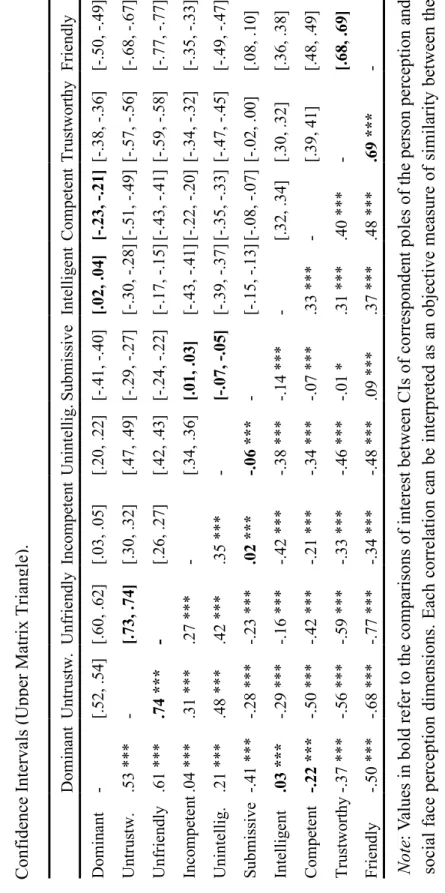
Table 1: Participants’ agreement measures for 2IFC task judgments, and agreement between classification images’ pixel data, in each CI trait condition quantified as intra-class correlation (ICC)... 70 Table 2: Pearson correlations between group-level CIs’ pixel luminance
values (lower matrix triangle) and respective 95% confidence intervals (upper matrix triangle)... 73 CHAPTER VII. Good to bad or bad to bad? What is the relationship between valence and the trait content of the Big Two?
Table 1: Study 1 results including linear and quadratic unstandardized
regression coefficients, mean peak locations, and inter‐rater agreement for the valence‐score by trait dimension... 105 Table 2: Pearson correlations between all trait dimensions’ valence ratings...… 106 Table 3: Study 2 linear and quadratic unstandardized regression coefficients
for the valence‐score by type of bipolar continuum, Big Two facet and trait
dimension... 112 Table 4: Study 2 mean peak locations and inter‐rater agreement results for the
valence‐score by type of bipolar continuum, Big Two facet, and trait
dimension... 114 Table 5: Study 3 results including linear and quadratic unstandardized
regression coefficients, mean peak locations, and inter‐rater agreement for the valence‐score by face continuum... 122 Table 6: Study 3 results including linear and quadratic unstandardized
regression coefficients, mean peak locations, and inter‐rater agreement for the desirability for self‐ratings by face continuum and participant gender... 124 CHAPTER VIII. Combining traits into a face: A reverse correlation
approach
Table 1: Variance of Pure 2TCI accounted for by Artificial 2TCI with Pure 2TCI model values as reference for unmasked and masked 2TCIs, in Studies 1 and 2... 152 Table 2: R2 values observed in Study 1 versus R2 values expected to be
Table 3: R2 values and standardized coefficients (with 95 % confidence intervals) for regression models of masked classification images, and
reference R2 values of models of unmasked classification images, for Studies 1 and 2... 155 Table 4: CI stimuli pairings for the five last trials of the 2IFC task, by 2TCI
Section I
Introduction
We look at a person and immediately a certain impression of his character forms itself in us. A glance, a few spoken words are sufficient to tell us a story about a highly complex matter. (Asch, 1946, p. 48)
Solomon Asch’s words elegantly abridge the vital role that impression formation plays in our social lives. This thesis falls within the broader domain of impression formation, and aims to contribute to the vast literature that was set in motion by Asch’s work.
When we are getting to know someone we are faced with the task of gathering information that is relevant for interacting with the person. Throughout this process, we seem to be primarily inclined to gather information that signals others’ social- and competence-related features such as warmth, trustworthiness, intelligence or dominance (Fiske, Cuddy, & Glick, 2007; Oosterhof & Todorov, 2008; Rosenberg, Nelson, & Vivekananthan, 1968; Wojciszke, 2005b). How benevolent are the intentions of this person? How capable is the person to implement her intentions? How approachable is the person? Can I trust this person, or should I be careful? Or ultimately, how threatening might this person be? These are all questions that we are trying to answer while forming an impression about someone’s personality. As social perceivers, we find our answers in the traits we infer based on all the information we gather about a person, and especially from their behavior and facial appearance (e.g., Bodenhausen & Macrae, 2006; Hassin & Trope, 2000; Todorov, Olivola, Dotsch, & Mende-Siedlecki, 2015). And importantly, those trait inferences reflect the two primary dimensions of psychological content that have been consistently found to underlie how people subjectively perceive each other in terms of personality (i.e., person perception) (Abele & Wojciszke, 2014; Fiske, 2018; Fiske et al., 2007; Rosenberg & Sedlak, 1972).
In this thesis we will focus on two particular domains of social perception wherein two-dimensional models emerged as theoretical frameworks that subsume the core dimensions underlying personality inferences of unfamiliar others. The first domain is person perception, where the focus is placed on how people subjectively perceive each other’s personality based on behavioral or trait information, (e.g., verbal descriptions of a target person) (e.g., Abele, Cuddy, Judd, & Yzerbyt, 2008; Rosenberg & Sedlak, 1972; Uleman & Kressel, 2013). The second domain is social face perception, which in turn is concerned with
how people infer personality traits based on facial appearance alone (e.g., Todorov, Olivola, Dotsch, & Mende-Siedlecki, 2015; Zebrowitz, 2006).
Despite of focusing on different modalities of social stimuli (i.e., visual vs. verbal), these two research domains converge in one aspect: Two primary and relatively independent dimensions were found to underlie personality impressions within each of these domains. In person perception, the two dimensions that subsume the content of personality impressions are warmth (also known as communion, morality, or social good-bad) and competence (also known as agency, or intellectual good-bad) (Abele & Wojciszke, 2014; Fiske et al., 2007; Rosenberg et al., 1968). In social face perception, however, it is the trustworthiness (or valence) and dominance (or power) dimensions that account for most of the variability in personality impressions derived solely from facial appearance (Oosterhof & Todorov, 2008; Todorov et al., 2015). The convergence of outcomes of the research developed in these two separate domains should not be surprising, as they both ultimately tap into the cognitive structure underpinning how the human mind evaluates human agents in a social environment. However, the literature has given little attention to how the two domains converge. In this thesis, we argue that a more thorough examination of how these two domains converge is necessary for a more complete understanding of how we perceive and mentally represent other people based on behavioral and facial information.
The resemblance between the two two-dimensional models becomes apparent from a functional perspective: First, both models include a dimension related with the evaluation of intentions (e.g., is the person a friend or a foe?). Within the domain of social face perception, the evaluation of intentions is reflected in the dimension of trustworthiness, sometimes described as valence (Jones et al., 2018; Oosterhof & Todorov, 2008). Within the domain of person perception, the dimension is known as warmth (Fiske, 2018), communion (Abele & Wojciszke, 2014), morality (Wojciszke, 2005b), or social good-bad (Rosenberg et al., 1968). Second, both models include a dimension related with the evaluation of ability (e.g., how able is the person to implement her intentions?). Within the domain of social face perception, the evaluation of ability reflects an evaluation of dominance, sometimes described as power (Oosterhof & Todorov, 2008). Within the domain of person perception, the ability dimension is known as competence (Fiske, 2018; Wojciszke, 2005b), agency (Abele & Wojciszke, 2014), or intellectual good-bad (Rosenberg et al., 1968). Thus, despite being best represented by different trait adjectives in the two different contexts of research, a parsimonious interpretation would be that only two dimensions underlie impressions of personality
regardless of the type of information about a target person: one encompassing information about intentions (trustworthiness or warmth), and another encompassing information about ability (dominance or competence).
A related aspect that is important to consider when examining the differences between the trustworthiness-by-dominance and warmth-by-competence (or communion-by-agency) models is that the most representative traits within each domain are related with the specific context in which personality inferences are made. Whereas trustworthiness and dominance seem to be the most relevant traits in a context where physical features are evaluated, warmth and competence are the most relevant traits in a context where behavioral and conceptual trait information are evaluated. At this point, it is important to clarify that both the trustworthiness-by-dominance of facial impressions and the seminal social-by-intellectual model of person perception (preceding the warmth-by-competence model) derived their respective dimensions using an inductive approach (i.e., data-driven), and thus, reached different solutions in function of the modality of their target stimulus. The comparison of these models is fruitful in that it generates questions whose answers will increase our understanding of the impression formation process. For instance, some questions we may ask at this point include: How differently perceived are the intention- and ability-related traits across these domains? And, do these trait inferences have a complementary or overlapping (confirmatory) informative role, within and across domains?
In the following chapters we will review and borrow support from previous literature to argue that, although these dimensions may ultimately amount to an appraisal of intentionality and ability, the traits that best represent intention and ability in each of the two contexts of personality perception under focus exhibit noteworthy differences at the conceptual and evaluative levels that call for a more nuanced examination of the apparent overlap of these dimensions across domains. Although both dominance and competence pertain to an ability, the ways in which this ability is expressed in terms of expected facial features or behaviors may be quite different, which in turn may lead the perceiver to expect different outcomes in a social interaction. Similarly, although trustworthiness and warmth may inform the perceiver about someone’s intentions, each of these dimensions may be expressed differently in terms of facial features and behaviors. And, perhaps most importantly, the extent to which the trait concepts representing the dimensions overlap across the two models should be dependent upon how these traits are perceived in terms of valence (i.e., their positivity).
This introductory section (Section I) is composed of five chapters. All chapters, excluding Chapter V, include abridged reviews of the literature that provide the basis for a more complete comprehension of the fields of research, topics, and methodologies underpinning our research questions. In the last chapter (Chapter V, more details below) of this introductory section, we present the main research questions of this thesis, by articulating the literature reviewed in the four previous chapters.
In Chapter I we start with a focus on person perception and review the most influential two-dimensional models of personality impressions based on conceptual knowledge about behavior and trait categories. These models include the social-by-intellectual good-bad model, the warmth-by-competence model, the communion-by-agency (or Big Two) model, and the most recent Big Two facets model. Because some of these models encompass social perception at the interpersonal, intrapersonal, and intergroup levels, we must clarify that our focus will be placed on the interpersonal level. This focus is justified by our aim of comparing the dimensions of these models with the dimensions of facial impressions which occur at the interpersonal level.
In Chapter II we turn our focus to the literature of social face perception and highlight research on the basic dimensions of personality inferences from faces, and on the relationship between personality inferences and facial features resembling the expression of emotions. Within this chapter we will additionally review state-of-the-art methodologies used in social face perception research such as psychophysical reverse correlation, which we employed in some of our studies described in the empirical section of this thesis.
In Chapter III we shift our focus to the relationships between the warmth and competence dimensions of person perception and the trustworthiness and dominance dimensions of social face perception. First, we will focus on literature that sheds light on the extent to which we should expect a conceptual and evaluative overlap between the intention- and ability-related dimensions across domains, by comparing the trustworthiness and warmth dimensions, and the dominance and competence dimensions. We will discuss how previous research has been showing that, although warmth and trustworthiness share a consistent positive correlation with valence (e.g., the more warm or trustworthy a person is, the more positive is our final impression of her), the same does not occur for dominance and competence, which exhibit an opposite and inconsistent relationship with valence across the extant literature. Furthermore, this relationship with valence has been shown to influence the direction of the relationship established between the two dimensions within models of social
perception (e.g., Suitner & Maass, 2008). For this reason, we will conclude the chapter with a focus on how the relationship between dimensions within each model is shaped by the relationship that each of these dimensions establishes with valence.
In Chapter IV we move beyond the topic of the relationships between dimensions and turn our focus to the questions of whether perceivers attribute higher relevance to any of the dimensions within a model, and how these dimensions are integrated into unitary impressions of personality. We will briefly review the literature that provided insight into the interplay between these two aspects of impression formation and the relationship between dimensions (e.g., impact of processing one dimension before the other), while comparing how these questions have been investigated in the domains of person perception and social face perception.
Drawing on the literature reviewed throughout Chapters I to IV, we selected a set of specific questions which we empirically addressed in the three different papers presented in the empirical section (Section II) of this thesis. In sum, the research questions that we raise in this thesis are predominantly focused on clarifying and describing the interrelationships between core dimensions of social face perception and person perception. Importantly, based on previous research showing how valence plays a role in shaping the relationship between the basic dimensions of person perception, we placed a special focus on examining the role played by valence in structuring the relationships between dimensions not only across, but also within, the two domains of social perception under focus.
In Chapter V, we provide an overview of our research aims and methodological approaches used in each of the three papers presented in the empirical section (Section II), while at the same time clarifying how these papers are interrelated and provide clues to answering the questions raised in this thesis.
Chapter I. The Fundamental Dimensions of Person Perception
One of the main goals of this thesis is to examine the relationship between the dimensions of models of person perception and models of social face perception. To better understand how they are related it is important to first clarify their origins, similarities and distinctions. In this chapter we review the most influential two-dimensional models that emerged in the domain of person perception. These include the seminal social-by-intellectual model of person perception (Rosenberg et al., 1968), or the more contemporary warmth-by-competence (Stereotype Content Model; Fiske, Cuddy, Glick, & Xu, 2002) and communion-by-agency (Abele & Wojciszke, 2007, 2014) models. In light of the most recent developments in social perception research, we also review the Big Two facets model (Abele et al., 2016; see also Fiske, 2018), which is able to integrate a considerable body of research supporting a more granular view on the fundamental dimensions of person perception. Our aim is to provide insight into the origins of these models and how their dimensions have been interpreted, before we move on to explicitly comparing the dimensions of person perception with the dimensions of facial impressions in Chapter III. As it will become apparent throughout this chapter, the main distinction between these dimensional models and that of social face perception is that they emerged from paradigms using verbal person descriptors (e.g., behavioral descriptions, trait-based descriptions, or group labels) as the targets of judgments, instead of face stimuli.
The Social-by-Intellectual Model
Ever since Solomon Asch (1946) set out to systematically uncover the underpinnings of how people form impressions of personality about each other, a great number of milestones have been achieved in the topic of person perception. One of them was the finding by Seymour Rosenberg and colleagues (Rosenberg et al., 1968) that two relatively independent dimensions parsimoniously describe the content of subjective personality impressions of single individuals. Rosenberg and colleagues (Rosenberg et al., 1968) were interested in investigating the multidimensional structure underlying people’s lay theories of personality (or implicit theories of personality), which reflect personal beliefs about how personality traits should co-occur in the same individual (Bruner & Tagiuri, 1954; Schneider, 1973). These lay theories are thought to reflect a semantic network of trait interrelationships in memory that
perceivers rely upon when they go beyond the information that is more accessible to them (i.e., “jumping into conclusions”) and infer additional personality attributes about someone in the context of first impressions (Bruner & Tagiuri, 1954; Hays, 1958). By examining the fundamental structure underlying these lay theories, they would be able to identify the most relevant trait dimensions in impression formation.
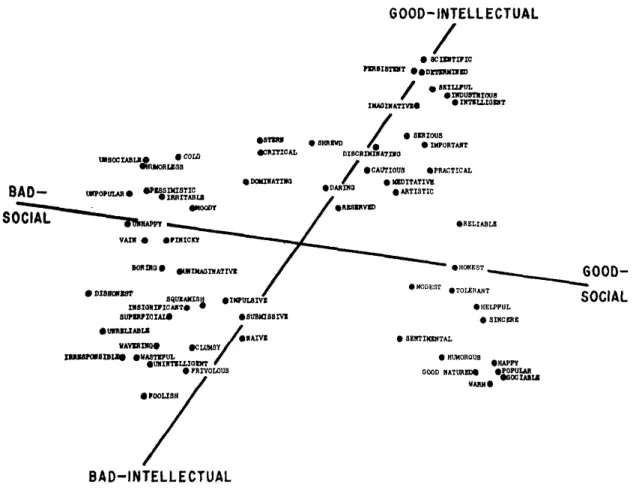
In their seminal work, Rosenberg and colleagues (Rosenberg et al., 1968) asked each participant to sort personality trait cards into 10 piles, each representing a given familiar person (e.g., friends, family members, or public figures that the participant could think of), according to how the participant thought those “traits tend to go together in the same individual” (Rosenberg et al., 1968, p. 285). These data were then submitted to a Multidimensional Scaling analysis (MDS), a dimensionality reduction technique—to a certain extent similar to a PCA, or Exploratory Factor Analysis—that allowed them to identify how many dimensions sufficiently accounted for the variability in the data (for more details on MDS see Chapter VI). Their analyses indicated that two dimensions appropriately described the structure underlying the trait interrelationships in their data. To interpret these dimensions they submitted the traits used in their trait sorting task to ratings on several dimensions, previously suggested to be relevant in person perception (e.g., Hays, 1958; Osgood, Suci, & Tannenbaum, 1957). They found that traits differentiated along the first dimension (e.g., honest, warm, dishonest, cold) were best interpreted as ranging from good to bad for social activities, and traits differentiated along the second dimension (e.g., intelligent, skillful, unintelligent, clumsy) were best interpreted as ranging from good to bad for intellectual activities. As a result, they labelled the two dimensions as social good-bad and intellectual good-bad (see Figure 1, extracted from Rosenberg et al., 1968).
Figure 1. Illustration of the two-dimensional space (conceptual trait space) defined by the social good-bad and intellectual good-bad dimensions found by Rosenberg et al. (1968). Image extracted from Rosenberg et al. (1968, p. 290).
In sum, this model describes the two-dimensional structure underlying the content of our conceptual knowledge about traits and how they are interrelated. This new theoretical framework promoted a deeper understanding of how people form personality impressions about each other by shedding light on the dimensions that future research on impression formation should focus on. Since then, the social-by-intellectual model became a reference in most of the dimensional approaches to social perception that followed, including the more recent and influential warmth-by-competence model of group perception and stereotype content (Cuddy, Fiske, & Glick, 2008; Fiske et al., 2007, 2002), which we describe next.
The Warmth-by-Competence Model
Although the social and intellectual dimensions emerged in the context of abstract person perception—in the sense that participants retrieved the targets of their evaluations from memory—they were also found to parsimoniously describe the content of group stereotypes by Fiske and colleagues (Fiske et al., 2007, 2002; Fiske, Xu, Cuddy, & Glick, 1999), who aimed to empirically test the generalizability of these dimensions across the interpersonal and intergroup levels of social perception (see Fiske et al., 1999). However, these authors labeled these dimensions as warmth (cf. social) and competence (cf. intellectual), and called the resulting two-dimensional model the Stereotype Content Model (Fiske et al., 2002), which we will henceforth refer to as warmth-by-competence model. Thus, and importantly, the warmth and competence dimensions were largely derived, in a theory-driven manner from the social-by-intellectual model of person perception (e.g., see Koch, Imhoff, Dotsch, Unkelbach, & Alves, 2016 who contrasted their data-driven methodology with Fiske’s approach). The labels of these dimensions were largely influenced by the warm-cold and competence-related (i.e., intelligence) traits used in Asch’s (1946) classical studies on impression formation, and selected on the basis of the results of a survey conducted by Fiske et al. (1999). In this survey, participants were asked to rate 17 diverse societal groups on 27 trait adjectives related with communality (warmth) and agency (competence), selected from previous work on gender stereotypes (Conway, Pizzamiglio, & Mount, 1996). These ratings were then analyzed in separate factor analyses, one for each target societal group. The results indicated that the two most stable factors emerging across groups were best represented by the traits competent (competence factor), and likeable or warm (warmth factor). Other traits encapsulated by these factors were “intelligent, confident, competitive, and independent” (Fiske et al., 1999, p. 478) for the competence factor, and sincere, good-natured, and tolerant for the warmth/likeability factor. These findings served as a basis for subsequent measurements of warmth and competence perceptions, ultimately defining the trait content expected to best capture each dimension. Whereas warmth scales included traits such as “good-natured, trustworthy, tolerant, friendly, and sincere” (Cuddy et al., 2008, p. 65), competence scales included traits such as “capable, skillful, intelligent, and confident” (Cuddy et al., 2008, p. 65). Thus, similarly to the social-by-intellectual model, the warmth-by-competence model defines warmth in terms of traits that are relevant for social activities, and competence in terms of traits that are relevant for intellectual activities. For instance, warmth scales usually include traits such as “good-natured, trustworthy, tolerant, friendly, and
sincere” (Cuddy et al., 2008, p. 65), whereas competence scales usually include traits such as “capable, skillful, intelligent, and confident” (Cuddy et al., 2008, p. 65).
From a functional standpoint, Fiske and colleagues interpreted these dimensions as reflecting a primary focus on identifying others’ intentions and capabilities, that ultimately allows perceivers to evaluate the degree to which someone represents a threat to their self-interests (Fiske et al., 2007). According to this view, the degree of threat is contingent on the intentions of the target person. A competent ill-intentioned target represents a higher threat to the perceivers’ goals than an incompetent ill-intentioned target. On the other hand, targets with good intentions are likely to be perceived as less threatening, regardless of their capability to implement intentions. Importantly, these authors added to their interpretation that warmth-related information was given priority over competence-related information in social perception, drawing on previous findings showing that warmth-related information is processed faster (Ybarra, Chan, & Park, 2001) and given more weight in global impressions of others (Wojciszke, Bazinska, & Jaworski, 1998) comparatively to competence information. Put simply, upon meeting a person for the first time, we are first interested in knowing the person’s intentions, before focusing on the person’s capabilities to act upon them.
To conclude, we must at this point emphasize that, despite of emerging in the domain of group stereotypes, the warmth-by-competence model is considered to apply to interpersonal perception (Cuddy et al., 2008), not least because it was largely influenced by classical findings in person perception (see Fiske et al., 2007, 1999). Recognizing the accumulating evidence demonstrating that these two dimensions consistently emerged across different lines of research (e.g., person perception, group perception, self-perception) within the social perception literature (e.g., Abele, 2003; Asch, 1946; Peeters, 2002; Rosenberg et al., 1968; Wojciszke, 1994), Fiske and colleagues (Fiske et al., 2007) proposed referring to warmth and competence as the fundamental dimensions of social perception (Cuddy et al., 2008; Fiske et al., 2007). Moreover, the hypothetical universality of these dimensions received some support in subsequent research showing that warmth and competence reliably account for the variability in stereotypical content across several cultures (Cuddy et al., 2009). Thus far, the warmth-by-competence model has been one of the most influential of its class in the social psychological literature, and its status in the literature is only paralleled by its twin model of communion and agency, reviewed next.
The Communion-by-Agency Model
The communion and agency dimensions, also referred to as the Big Two of social perception, are often considered to be akin to the warmth/social and competence/intellectual dimensions (Abele & Wojciszke, 2007, 2013; Cuddy et al., 2008). There are, however, some distinctions worth mentioning regarding how these dimensions are conceptually defined.
The communion and agency constructs were initially proposed by David Bakan (1966) in a philosophical discussion within the context of personality psychology. Bakan (1966) argued that there were two modalities characterizing human existence: “agency for the existence of an organism as an individual” which manifested “itself in the urge to master” (Bakan, 1966, pp. 14–15), and “communion for the participation of the individual in some larger organism of which the individual is part”, manifesting itself in “non-contractual cooperation” (Bakan, 1966, pp. 14–15). This idea was later adopted by several social psychologists who built upon it to conceptually define the two dimensions of content underlying social judgments that consistently emerged across the social perception literature (for reviews see Abele & Wojciszke, 2014; Cuddy et al., 2008). In more recent literature, the communion dimension has been defined as emerging from “strivings to integrate the self in a larger social unit through caring for others” (Abele & Wojciszke, 2007, p. 751) and is associated with traits promoting cooperation, emotional expression, and well-being (in both others and ourselves). In turn, agency has been defined as arising from “strivings to individuate and expand the self” (Abele & Wojciszke, 2007, p. 751) and encapsulates traits related with “ambition, dominance, competence, and efficiency in goal attainment” (Abele & Wojciszke, 2007, p. 751). The communion-by-agency model itself was empirically supported by the studies conducted by Abele and Wojciszke (2007). These authors asked participants to rate 300 trait words on unidimensional scales of competence, morality, individualism, collectivism, agency, communion, masculinity and femininity. Because some of the traits, such as agency and communion, are scientifically devised constructs that are not spontaneously used by people, the participants were presented with a definition of each construct before they could rate it. The content of their trait set was selected on the basis of previous research and included traits considered to be representative of agency and communion, traits associated with gender categories, traits from the social-by-intellectual model, warmth and competence, morality- and competence-related traits, traits perceived as more profitable for oneself or more profitable for others, traits associated with individualism and collectivism, and traits associated with the Big Five factors of personality (for more
details see Abele & Wojciszke, 2007, p. 754). (In this way, Abele and Wojciszke’s (2007) work also strove to integrate the trait content of multiple previous models of social perception, encompassing person perception, self-perception and group perception, coming from multiple different theoretical frameworks.) The trait ratings were then submitted to a Factor Analysis, which yielded a two-factorial structure (i.e., two dimensions). The first factor, interpreted as communion, accounted for the highest amount of variability in the items (around two thirds), and was mostly associated with (from highest to lowest factor loading) collectivism, communion, morality, and femininity. The second factor, interpreted as agency, accounted for a lower amount of item variability (around one third), and was mostly associated with (from highest to lowest factor loading) agency, individualism, competence, and masculinity. These findings showed that the communion and agency dimensions were able to capture the trait content of the dimensions defining other models (e.g., social-by-intellectual and warmth-by-competence). This is one of the main reasons that led Abele and Wojciszke to later refer to them as the “Big Two” of social perception (Abele & Wojciszke, 2013). In addition, Abele and Wojciszke (2007) asked participants to rate the same traits on the degree to which a trait was beneficial to the self versus to others (i.e., self-interest vs. other-interest), and found that whereas communion was more strongly and positively related with other-interest, agency was more strongly and positively related with self-interest. Put simply, from the perspective of the trait possessor, communion-related traits are perceived as more beneficial to others than to oneself; and agency-related traits are perceived as more beneficial to oneself than to others.
At this point, we should realize that one key difference between communion and agency and the warmth and competence dimensions is that the former are scientifically devised constructs capable of capturing a broader range of trait content comparatively to the trait-based labels that characterize the warmth and competence dimensions (Abele & Wojciszke, 2014). However, some disagreement emerged regarding the competence and agency constructs regarding their conceptual breadth. Although Fiske and colleagues considered their warmth and competence dimensions to overlap with the communion and agency dimensions, they also clarified that they understood the overlap to be greater between warmth and communion, than between competence and agency. In their understanding, the competence construct captures both traits related with potential action (e.g., intelligence, competence) and with taking action (e.g., assertive, efficient, dominant), while the agency construct seems to place a higher focus on traits related with taking action (Cuddy et al., 2008, p. 65), thus only partially capturing the content of this “ability-related” dimension. Adding to
the resulting definitional debate, evidence started to accrue showing the multifaceted nature of the Big Two dimensions, which led to the more recent proposal of the Big two facets model (Abele et al., 2016), and an update of how these dimensions are defined (e.g., Fiske, 2018).
Facets of the Big Two
Over the past two decades, several findings in the social perception literature began to accumulate and suggest that people differentiated between sociability- and morality-related information within the communion/warmth dimension (Brambilla, Rusconi, Sacchi, & Cherubini, 2011; Goodwin, Piazza, & Rozin, 2014; Leach, Ellemers, & Barreto, 2007), and between assertiveness- and competence-related information within the agency/competence dimension (Carrier, Louvet, Chauvin, & Rohmer, 2014).
In the case of communion/warmth, Goodwin and colleagues (Goodwin et al., 2014) argued that traits varied in the extent to which they were morally relevant. For instance, traits such as trustworthy or honest are morally relevant in that they are informative about someone’s intentions. On the other hand, traits such as friendly or sociable are less able to inform about someone’s moral character, and are more related with the perception of someone’s ability to navigate the social world or recruit support for their intentions. With this distinction in mind, Goodwin and colleagues (Goodwin et al., 2014) differentiated between morality-related traits and social warmth-related traits, while at the same time clarifying that some traits could be relevant to both the morality and sociability/social warmth dimensions (e.g., cooperative, humble).
Regarding the agency/competence dimension, Carrier and colleagues (Carrier et al., 2014) made the distinction between agentic traits that implied an underlying motivation to advance the self (e.g., dominance, ambition, competitiveness), and competence-related traits that merely implied the possession of resources to implement intentions (e.g., intelligence, competence), further showing that agentic traits were more predictive of status perceptions than competence-related traits (see also Louvet, Cambon, Milhabet, & Rohmer, 2019; Mollaret & Miraucourt, 2016 for additional support for a distinction between competence and agentic traits).
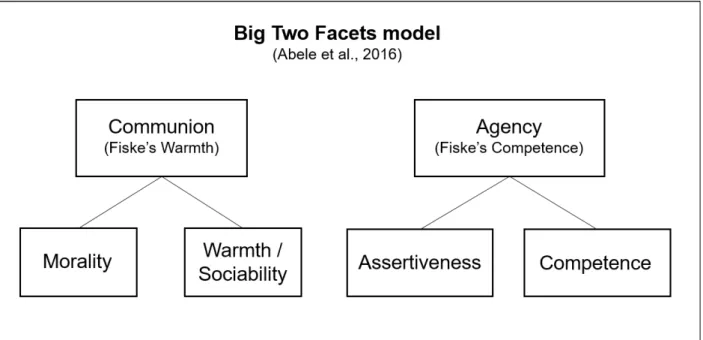
These findings were taken into account in the recently proposed facet model of the Big Two by Abele and colleagues (Abele et al., 2016), which branches the communion dimension into the morality and sociability facets, and the agency dimension into the assertiveness and
competence facets (for an illustration see Figure 2). In a series of studies, Abele and colleagues (Abele et al., 2016) assessed self-perceptions on communion- and agency-related traits across six different countries/cultures (Australia, China, France, Germany, Poland, and USA). Their trait set included the most frequently used trait-adjectives in prior research guided by the communion-by-agency model. At the same time, the trait content was counterbalanced in regard to their hypothesized membership to the facets of the Big Two, based on the previous findings in person and group perception suggesting the branching of the Big Two (see above). Regarding the communion dimension, some of the traits used to represent the morality facet included “trustworthy”, “honest”, or “just”; whereas traits used to represent the warmth facet included “warm”, “caring”, or “friendly” (Abele et al., 2016, p. 5). Regarding the agency dimension, some of the traits used to represent the assertiveness facet included “assertive”, “ambitious”, and “feel superior”; whereas traits used to represent the competence facet included “competent”, “intelligent”, and “capable” (Abele et al., 2016, p. 5). The ratings were then first submitted to Exploratory Factor Analyses (EFAs), separately by country, and solutions for different dimensionalities were inspected. For every country, Abele and colleagues (Abele et al., 2016) found evidence for a two-factor solution, differentiating between the Big Two, and for the four facets of the Big Two in higher dimensionality solutions. Next, they submitted the data to Confirmatory Factor Analyses, and observed that, although both the two-factor and factor models exhibited a good fit to the data, the four-factor facets model showed a better fit comparatively to the two-four-factor communion-by-agency model, in all of the countries. These results suggest cross-cultural stability for both the Big Two model and the Big Two facets model, and supported Abele and colleagues’ (Abele et al., 2016, p. 3) expectation that the different labels used for the dimensions in previous literature (e.g., warmth vs. morality, Fiske et al., 2002; Wojciszke, 1994) were not entirely spurious, but reflected a meaningful distinction hidden within the trait content used to represent each Big Two dimension.
Although Abele and colleagues (Abele et al., 2016) only provided empirical evidence for the Big Two facets model at the self-perception level, new evidence emerged in the meantime supporting the extension of this model to the domain of stereotypes (Hentschel, Heilman, & Peus, 2019). Moreover, there is a substantial body of evidence accruing in the literature lending support to the multi-faceted nature of the Big Two in domains such as person perception, interpersonal status perception, and group perception (see above). Only further research will be able to ascertain the boundaries of the applicability of the Big Two
facets model across multiple sub-domains of social perception. As it stands, however, the evidence favoring the existence of the Big Two facets is sufficiently compelling to draw the attention of contemporary research on social perception. This can be seen, for instance, in a more recent definition of the dimensions of the warmth-by-competence model that takes into account their multifaceted nature (Fiske, 2018). At the expense of simplicity, the facet model constitutes a more accurate description of the trait content of the Big Two, and promises to amend for the definitional confusion regarding these dimensions in previous literature.
Figure 2. Diagram illustrating the structure of the Big Two facets model proposed by Abele et al. (2016).
This section concludes our review of the most influential models describing the fundamental dimensions of psychological content underlying person perception. In the next chapter we shift the focus to the domain of social face perception, and review some of the literature concerned with the question of how personality is inferred from facial appearance alone.
Chapter II. Inferring Personality from Faces
In this chapter, we start with a clarification of the role that facial appearance plays in impression formation. Subsequently, we review the work underlying the two-dimensional model of personality inferences from faces, as well as the work that provided the basis for the interpretation of this model’s dimensions. In the last two sections of the chapter, we additionally provide a short review of one of the methodological approaches (i.e., reverse correlation) we employed to examine our questions throughout the thesis, after a brief clarification of the theoretical assumptions underlying it. These reviews are deemed important for a better understanding of the terminology and concepts associated with our research questions and methodologies.
The Role of Facial Appearance in Personality Impressions
In our social environment, few person features can rival the face as the targets of our attention. Not only the human face is ubiquitous across most social interactions, but it is also a highly efficient medium for social communication in that it rapidly communicates relevant information about a person. A mere glimpse of a face allows us to identify the person, ascribe the person to multiple social categories (e.g., gender, age, ethnicity; Bodenhausen & Macrae, 2006; Mason, Cloutier, & Macrae, 2006; Zebrowitz, 2006), or learn about the person’s emotional state (Darwin, 1872; Ekman & Oster, 1979; Horstmann, 2003). But perhaps the most fascinating aspect of face inferences is how perceivers rely on facial features to infer unobservable dispositional qualities such as personality traits (Secord, 1958; Todorov et al., 2015; Zebrowitz, 2017) in the absence of any other information about the target, and regardless of accuracy in doing so (e.g., Olivola & Todorov, 2010b).
The idea that the face provides clues about someone’s character is an old one. It can be traced back to classical Greek scholars such as Aristotle, who argued in his treatise Physiognomica that any physical resemblance between humans and animals reflected the character associated with those animals (Todorov, 2017; Zebrowitz, 1997). This belief that the face can act as a “window to the soul”—as Leslie Zebrowitz puts it in her influential book on social face perception (Zebrowitz, 1997)—achieved its peak of popularity by the end of the 18th century with the emergence of physiognomy—a pseudoscience that aimed to establish direct relationships between facial appearance and human character and ability, by assuming
that facial appearance is just as diagnostic of personality as behavior is (for a review see Todorov et al., 2015; Todorov, 2017). The most influential proponent of physiognomy was the pastor and physician Johann Kaspar Lavater, who developed a formal set of rules specifying associations between facial features and character traits. Physiognomists claimed that with enough training, people were able to predict real character traits based on facial appearance alone. The widespread acceptance of physiognomy within the intellectual elites of the 19th century led to real-world consequences. Cesare Lombroso, the founder of criminal anthropology, relied on physiognomy’s ideas to testify in court during criminal trials. The impact of these ideas was such that Charles Darwin was almost refused to depart on his highly influential Beagle voyage, merely due to the skepticism that his facial features raised on the Beagle’s captain regarding Darwin’s determination to endure the trip (Todorov, 2017). Fortunately, as we know, Darwin proved the captain wrong.
Although physiognomy is nowadays discredited as a science, its main premise that facial appearance is predictive of underlying personality features reflects, nevertheless, how social perceivers rely on facial appearance to subjectively make sense of each other. In support of this assertion, a brief survey conducted by Hassin and Trope (2000) using a representative sample of Israelis, suggested that approximately 75% of that population believed that it is possible “to know an individual’s true personality traits from looking at his or her face” (Hassin & Trope, 2000, p. 837). Such a reliance on facial cues in inferences of personality occurs regardless of any actual accuracy or reliability (e.g., see Olivola, Eubanks, & Lovelace, 2014; Olivola & Todorov, 2010b). Moreover, the reliance on judgments of facial appearance during social decision making appears to be more strongly driven by the ease of accessibility and processing of facial cues than by beliefs in the validity of such judgments (Jaeger, Evans, Stel, & van Beest, 2019).
At this point, we must clarify that the focus of the present thesis is on subjective perceptions of personality regardless of their accuracy. However accurate people may be, what the evidence in the literature clearly shows is that people regularly engage in personality assessments based on facial appearance alone, and that these judgments dynamically interact with people’s behavior, thereby leading to real-world consequences in a variety of situations (e.g., Ballew & Todorov, 2007; Hassin & Trope, 2000; Jaeger et al., 2019; Livingston & Pearce, 2009; Olivola & Todorov, 2010a; Zebrowitz, Andreoletti, Collins, Lee, & Blumenthal, 1998).
Given the impact that these judgments can have on our lives, it becomes important to understand whether some personality traits are more relevant than others on how we form impressions of personality based on facial appearance. What sort of information are perceivers primarily looking for in a face? Next, we review the research that aimed to identify the traits lying at the core of personality inferences from faces.
The Trustworthiness-by-Dominance Model of Social Face Perception
There are many traits that one can infer from the face alone. Simply due to the large number of possibilities offered by a language’s lexicon, different people may use different trait-adjectives to describe their personality impression based on someone’s face. But, despite of the variability in the communication of one’s own impressions, could there be any more fundamental information underlying our impressions of personality based on facial appearance?
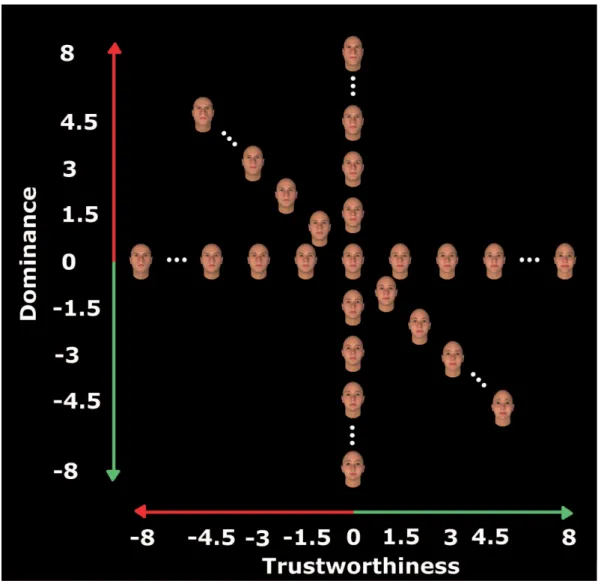
Oosterhof and Todorov (2008) systematically examined this question in their seminal work on the basic dimensions of social face perception. In a number of studies, these authors aimed not only to identify the basic dimensions underlying personality attributions based on facial appearance, but also to identify the facial features that predicted inferences along the continuum of each of those dimensions. Importantly, unlike the theory-driven approach taken by the authors who proposed the warmth-by-competence, communion-by-agency, and Big Two facets models (i.e., who selected traits on the basis of previous models and preferred theoretical framework), Oosterhof and Todorov (2008) opted for an inductive, or data-driven, approach. In their approach, these authors started by collecting a large amount (above 1100) of unconstrained person descriptions of a set of male and female emotionally neutral face photographs with direct eye-gaze—from the Karolisnka face database (Lundqvist, Flykt, & Ohman, 1998). The content of those descriptions was then classified into a smaller number of 14 trait categories by three independent judges. Next, they asked another sample of participants to rate the exact same set of faces on the resulting 14 trait categories and on dominance—a trait added by the authors after they acknowledged its relevance in prior research on interpersonal perception (Oosterhof & Todorov, 2008, p. 11091). These ratings were subsequently submitted to a principal component analysis (PCA): a dimensionality-reduction statistical procedure that allowed the authors to convert a large set of potentially highly correlated (i.e., redundant) trait ratings into a smaller set of orthogonal variables known as principal components that are still able to account for most of the variability in the