i
LINKEDIN AS A MARKETING TOOL FOR LEAD
GENERATION IN B2B ORGANIZATIONS
Beatriz Baptista Reis
Defining a strategy for Pegasus Consultancy
Project work report presented as partial requirement for
obtaining the Master’s degree in Information Management,
Specialization in Marketing Intelligence
i
LINKEDIN AS A MARKETING TOOL FOR LEAD GENERATION IN B2B ORGANIZATIONS - Defining a strategy for Pegasus Consultancy
M2016382
Beatriz Baptista Reis
MGI
ii
NOVA Information Management School
Instituto Superior de Estatística e Gestão de Informação
Universidade Nova de LisboaLINKEDIN AS A MARKETING TOOL FOR LEAD GENERATION IN B2B
ORGANIZATIONS: DEFINING A STRATEGY FOR PEGASUS
CONSULTANCY
by
Beatriz Baptista Reis
Project work report presented as partial requirement for obtaining the Master’s degree in Information Management, with a specialization in Marketing Intelligence
Advisor: Cristina Galamba Marreiros
iii
ACKNOWLEDGEMENTS
First and foremost, my special thanks to my academic advisor and my work supervisor: the first one, Cristina Marreiros, for being so incredibly patient with all my questions, revisions and with the endless emails I sent over the months; the second one, Julie Goussard, for understanding the importance of this thesis and therefore allowing me to dedicate precious time on it.
To Andreas, my closest colleague at Pegasus, the one that told me all I needed to know about the company and its characteristics (after the internship was concluded).
To my fellow interns, Adriana, Inês, Hanna and Jakub. You had the hard task of hearing me say the word “thesis” at least 3 times per day and, instead of telling me to shut up, you took time out of your days to help me finish this in the best possible way. I will miss you all tremendously.
To all of my friends, but particularly Clara, Filipa, Márcia and Ana, the ones that have already reached the status of sisters. You ALWAYS cheered me up and told me I could do it, even when I was almost on the verge of tears – in fact, you have been doing that for every single moment of our friendships since we’ve met, and I hope I’ve been able to do the same. Let us continue to witness each other’s victories. And last but (definitely) not least, to my family. You survived my tears, my anxiety crisis, my furious phone calls saying I wouldn’t make it in time... In the end, you were the reason I managed to do it, because all of my achievements come from my desire in making you proud. No words can describe how grateful I am to have your support in everything I do: you may not always like my choices, but you give me the liberty to choose them anyway, trusting me and my decisions. That’s all I could ask for.
iv
ABSTRACT
In a world where Information Technology keeps evolving and companies need to be continuously learning, new services such as IT Professional Services have begun to flourish. Small and medium-sized firms are starting to win over large corporations in what can be considered a deeply fragmented market. It is as one of these firms that Pegasus Consultancy (hereafter: Pegasus), specialized in training, sales enablement, consultancy and office automation, works to stand out to and gain awareness. However, factors such as the company’s reduced dimension, lack of available budget and a generally perceived discredit on marketing’s efficiency lead to a concerning absence of the necessary marketing expertise to grow as an industry leader.
This project, based on a short-term internship, emerges as a first attempt to tackle this issue, providing Pegasus with a well-defined social media strategy. Taking into consideration how crucial it is for business growth to generate leads and how LinkedIn is seen as the most effective social platform to achieve it, the project focused on these two elements: lead generation and LinkedIn.
Referring to the SOSTAC model built by Smith (2017), and to other works of reference in the marketing field that complemented Smith’s theory, the way Pegasus interacts with LinkedIn as a leads’ provider is analyzed and put into perspective with what authors consider to be its optimized use. The comparison demonstrates that the company is aware of how to benefit from the platform’s search possibilities, using it frequently to find prospects and new partners. Nonetheless, Pegasus does not enjoy LinkedIn’s full functionalities when it comes to directly generating leads, extending awareness, creating engagement with audiences and driving traffic towards its website.
A strategy was consequently outlined to optimize the use of the platform, with objectives that focus on improving the performance of the elements described above, a target that aligns with the company’s business needs and a set of tactics, which, through multiple actions that will be monitored over time, assure that progressive results will be accomplished.
Overall, the project’s intent is to guide Pegasus on its first contact with a structured marketing approach, demonstrating how valuable LinkedIn can be as a direct and indirect source of engaged customers. Hopefully, a new mentality that is more embracing of marketing efforts and assigns greater value to social media will arise, not only with Pegasus but also with companies of similar characteristics, which might refer to this study in the future.
KEYWORDS
v
INDEX
1. Introduction ... 1
1.1. Project Background ... 1
1.2. The Company: Pegasus Consultancy ... 2
1.3. Problem Identification & Study Relevance ... 3
1.4. Study Goals ... 5
1.5. Study Organization ... 5
2. Literature Review ... 6
2.1. B2B Marketing ... 6
2.1.1.B2B vs B2C marketing ... 6
2.1.2.The value of social media marketing ... 7
2.2. Lead Generation ... 9
2.2.1.The process of generating a lead ... 10
2.2.2.Leads role in organizations ... 12
2.3. Why LinkedIn? ... 13
2.3.1.LinkedIn’s value for business ... 13
2.3.2.Lead generation solutions ... 14
3. Methodology ... 19
3.1. The SOSTAC Framework ... 19
3.2. Data Collection Methods ... 23
4. Lead Generation Strategy ... 24
4.1. Situation Analysis... 24 4.2. Objectives ... 42 4.3. Strategy... 43 4.4. Tactics ... 45 4.5. Actions ... 45 4.6. Control ... 58 5. Conclusions ... 61
5.1. Main Results and Discussion ... 61
5.2. Limitations and Recommendations for Future Works ... 64
6. References ... 65
vi
INDEX OF ANNEXES
Annex 1 – Structure of the interview conducted to Pegasus’ CSE ... 72 Annex 2 – CTAs shared on LinkedIn by ‘IT and Services’ companies ... 74 Annex 3 – Evolution of Pegasus’ engagement and awareness metrics on LinkedIn ... 76
vii
LIST OF FIGURES
Figure 1. Situation Analysis components ... 20
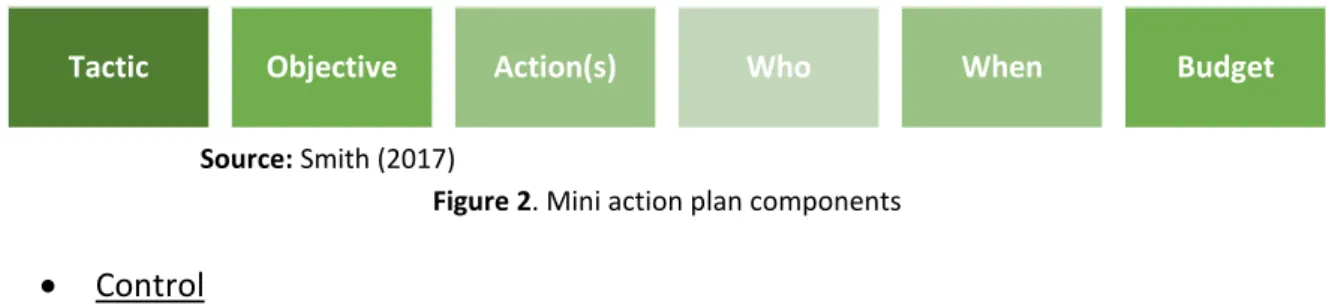
Figure 2. Mini action plan components ... 22
Figure 3. Control monitoring components ... 22
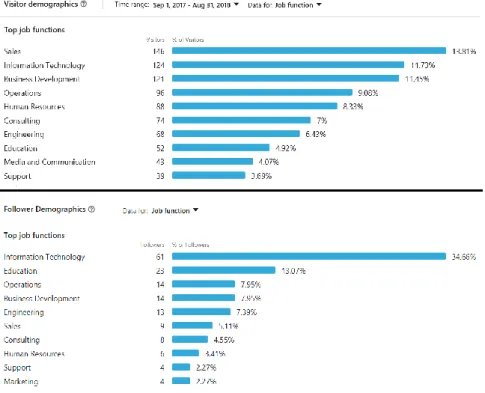
Figure 4. Pegasus’ LinkedIn visitors and followers by job function ... 25
Figure 5. Pegasus’ LinkedIn visitors and followers by location ... 26
Figure 6. Pegasus’ LinkedIn visitors and followers by seniority ... 27
Figure 7. Pegasus’ LinkedIn visitors and followers by industry ... 27
Figure 8. Pegasus’ LinkedIn visitors and followers by company size ... 28
Figure 9. Pegasus’ company page updates with the highest engagement rates ... 30
Figure 10. Pegasus score in the Social Media Excellence template ... 35
Figure 11. Example of a Webinar CTA ... 74
Figure 12. Example of a Webinar CTA ... 74
Figure 13. Example of an eBook CTA and its lead generation process ... 75
Figure 14. Pegasus’ company page engagement metrics - Impressions ... 76
Figure 15. Pegasus’ company page engagement metrics - Likes ... 76
Figure 16. Pegasus’ company page engagement metrics - Comments ... 77
Figure 17. Pegasus’ company page engagement metrics - Shares ... 77
Figure 18. Pegasus’ company page engagement metrics - Clicks ... 78
Figure 19. Pegasus’ company page engagement metrics - Social Engagement % ... 78
Figure 20. Pegasus’ company page awareness metrics - Unique visitors ... 79
viii
LIST OF TABLES
Table 1. Lead generation solutions and available actions on LinkedIn ... 18
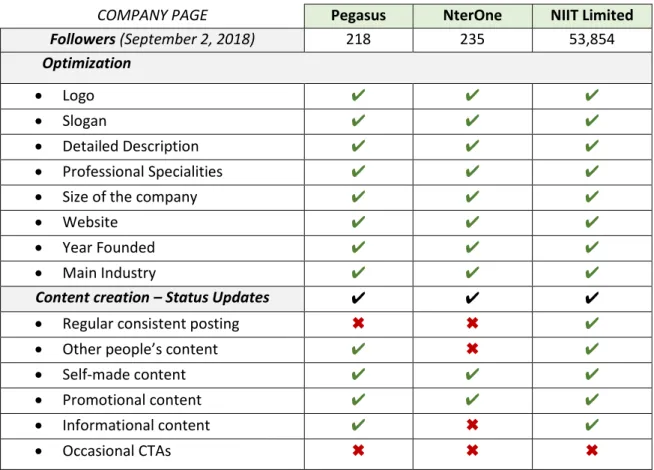
Table 2. Comparative analysis of Pegasus and its main competitors’ company pages on LinkedIn .... 33
Table 3. Pegasus performance in the last year (September 2017 to August 2018) ... 37
Table 4. SWOT analysis ... 41
Table 5. STP characteristics for Pegasus ... 44
Table 6. Summary of tactic 1 – Integrate the company’s website with LinkedIn ... 47
Table 7. Summary of tactic 2 – Offer diverse, relevant content in a consistent way ... 49
Table 8. Summary of tactic 3 – Join and contribute to relevant groups ... 51
Table 9. Summary of tactic 4 – Engage employees as brand ambassadors ... 52
Table 10. Summary of tactic 5 – Implement a workflow process to reach out to prospects ... 54
Table 11. Summary of tactic 6 – Share CTAs for lead-generating offers ... 56
Table 12. Summary of tactic 7 – Develop lead qualification criteria ... 57
ix
LIST OF ABBREVIATIONS AND ACRONYMS
B2B Business-to-Business
B2C Business-to-Consumer
BANT Budget, Authority, Need and Time frame
CSE Customer Success Executive
CTA Call-to-Action
IT Information Technology
KPI Key Performance Indicator
PEST Political, Economic, Social and Technologic
PSB Professional Services Business
ROI Return on Investment
SMART Specific, Measurable, Assignable, Realistic and Time-Related
SME Small-Medium Enterprise
SOSTAC Situation Analysis, Objectives, Strategy, Tactics, Action Plan and Control
STP Segmentation, Targeting and Positioning
SWOT Strengths, Weaknesses, Opportunities and Threats
1
1. INTRODUCTION
“Most innovations fail … And companies that do not innovate die”
Chesbrough (2003, p. 185).
1.1.
P
ROJECT
B
ACKGROUND
David Teece, award-winning organizational theorist, defines ‘innovation’ as “certain technical
knowledge about how to do things better than the existing state of the art” (1986, p. 288). Companies
that innovate are able to reduce process time and to better support low-cost production strategies, which eventually leads to sales increase and to better financial performances (Davenport, 1993). However, Teece (1986) explains that there is a general wrong idea that a disruptive innovation is all it takes to achieve immediate market leadership. The innovator may have been responsible for the fundamental scientific breakthrough, but if competitors/imitators are better positioned in respect to critical complementary assets, particularly the assets that tend to be specialized to the innovation1,
they can achieve higher levels of profitability. Innovative firms may be the best at innovating but, if they do not establish a prior position in its complementary assets, they can fail and be outperformed by a fast second or a slow third that had those related capabilities (Teece, 1986). Ten years later the author reinforces that same idea in a new study, advising companies to properly invest in their own institutional environments and structures as those are main requirements to develop a successful change (Teece, 1996).
In the 21st century, Teece’s ideas share major support among theorists, being the basis of several
organizational and information technology (IT) studies. Lin & Wang (2015) argue that complementary assets strongly shape firms’ strategies and evolution paths, affecting returns on innovations. They believe firms can only reach the capability of commercializing patents if they have invested in the quality of its supporting services, its human resources and its communication channels. For Ceccagnoli and Arora (2006), an innovator with specialized complementary assets should be able to profit more than an innovator lacking such assets. For instance, the existence of complementary assets can make the innovative product to be produced at a lower cost or with higher quality at a lower cost, making its sale more profitable because there will be a greater demand for it.
Despite its positive effects, innovation is uncertain, dependent on multiple processes, mainly irreversible and very complicate to own and to explain to others (Teece, 1996) and is difficult for companies to successfully implement it on their own. This reality is even harder with competence-destroying innovations, the ones that generate disruptive improvements in the industry and which establishment depends on “new skills, abilities and knowledge in both the development and production
of the product” (Rothaermel & Hill, 2005, p. 53), meaning they make the firm’s capabilities obsolete,
increasing the need to restructure and reformulate the specialized complementary assets.
According to Carmel (2002), managers start getting pressured by these fast moving technologies, coupled with associated skill gaps in their company’s internal staff, and they feel the need to constantly
1 Specialized Complementary Assets are defined as assets that share a relation of dependency with the innovation,
apart from General Complementary Assets that have no need to be adjusted since they share no relation. These assets can be competitive manufacturing, distribution channels, after-sales service, marketing and complementary technologies (Teece, 1986)
2 innovate with IT, ending up contracting or outsourcing domestic suppliers or going offshore. If in the 1980s and 1990s the tendency was manufacturing outsource, in the 2000s the attention shifts towards outsourcing services, IT services included, as they are the answer to the constant changes in technology (Ellram, Tate, & Billington, 2008).
Generally speaking, professional services are differentiated from other services for being mainly advisory and operated by skilled professionals (Gummesson, 1979), which facilitates economic and commercial exchanges (Greenwood, Suddaby, & McDougald, 2006). More specifically, IT Services work as providers of digital platform developments, business data storage and processing, system design and consulting services and as promoters of productivity and economic growth within the industry (Zhang, 2016).
Service Performance Insights, a global research organization, reveals in its ‘2017 Professional Services
Maturity Benchmark’ report that the global professional services industry continues to experience a
steady but solid development and, every year, its revenue growth exceeds headcount growth (that has been decreasing significantly year after year). This is a positive aspect as it demonstrates that companies are fighting against the lack of skilled consultants by developing a host of creative recruiting and skill-building strategies that increase the efficiency levels of their workforces and reduce costs (Service Performance Insight [SPI], 2016).
IT Consulting2 in particular has been following a consistent growth, despite being down from 12.3% in
2015 to 10.6% in 2016, a small-amplitude oscillation that does not bring concern (SPI, 2016). In fact, a forecast from Gartner, Inc. (2018) projects that the worldwide IT spending will reach a total $3.7 trillion in 2018, an increase of 6.2% from 2017.
According to Technova’s (2015) research, IT Consulting and Services providers are facing a global increase mainly due to the fast change of company’s core strategies to more technological issues. Clients are readjusting their purchasing habits and are becoming more selective and searching for smaller works - they now care less about the brand’s scale and importance as they are willing to look for small companies if they offer more innovative, fast and flexibility services. This trend shows to be in agreement with Marketline’s last accessible statistics from 2012 where it is noticeable that, despite IBM’s leading position, more than 80% of the market was occupied at the time by a multiplicity of small firms, demonstrating its fragmentation and its tendency to continue (MarketLine, 2012). Start-ups and small-medium enterprises (SMEs) are increasingly in dominance of the IT Professional Services market, leading to lower results of large companies that struggle with this fragmentation (Technova, 2015). In this extremely competitive environment, Pegasus Consultancy (hereafter: Pegasus), a small-sized IT Professional Services’ firm, struggles to position itself internationally. Their work and business strategy will serve as basis for the development of this project, with a particular emphasis on their lead generation approach on LinkedIn.
1.2.
T
HE
C
OMPANY
:
P
EGASUS
C
ONSULTANCY
Born in 2003 in the UK, Pegasus is a firm with less than 50 employees that supports IT companies in all possible dimensions: training, advice, expertise and development opportunities. They perform at a
2 IT Consulting can be, depending on the source, considered a segment of IT Professional Services or a synonym of IT
3 global level, establishing partnerships with local trainers that can deliver specialized market expertise and develop same language relationships with each local company. Their slogan is “Expert Knowledge
simply shared”, a reference to their main goal of allowing companies in need to rapidly scale their
competitive assets, trusting Pegasus to fully adapt them to any technological environmental change while they can focus on their core business activities.
Pegasus acts on different segments within IT Professional Services. 3
Its main activity is ‘Training’, delivered in different contexts: on one hand there is ‘Staff Augmentation’, an on-demand service where local experienced trainers, from all geographies and languages and with an internal or subcontracted relationship with Pegasus, are sent to help IT professionals become experts in a variety of new technological innovations (this training can be requested by firms to be performed at their own premises or to their end-users); on the other hand ‘Sales Acceleration’, a specific type of business related training given to sales teams. These teams, with Pegasus support, receive the necessary product knowledge, approaches and soft skills to grow revenue, share-of-wallet and market position, providing the best customer value possible.
As a provider of human resources expertise, Pegasus also delivers ‘Consulting’, bridging the gap between business needs and software systems through the assistance of processes and services analysis, and accompanying the customer in its project lifecycle.
Moreover, Pegasus is also involved in providing ‘Automation Services’. By listening to the customer’s needs, the company develops, manages and designs office automation software, generating simple solutions to complex challenges and establishing relationships with the client while continuously offering support to all their needs.
They are declared by their partners as trustworthy because of their great levels of training, their instructors’ capabilities, the flexible relations they promote and their helpful contributions to companies’ performances.4
1.3.
P
ROBLEM
I
DENTIFICATION
&
S
TUDY
R
ELEVANCE
An adequate and successful commercialization of innovative services/products requires almost always that the selling company properly develops its own services, such as competitive manufacturing, aftersales support and marketing (Teece, 1986). Being a company that works to reinforce firm’s complementary assets, Pegasus needs to be conscious of those same assets and to revaluate its marketing department.
Pegasus team is made of consultants, trainers, business developers, chief technologists and operations coordinators in what is an environment fully dedicated to IT. The daily concerns revolve around the firm’s analytical, economic and technological aspects and there is no marketer in the current team, a problematic situation since it is indispensable for Pegasus to invest in a well-structured marketing plan,
3All information available on Pegasus website (http://www.pegasus-consultancy.co.uk )
4All testimonials available on Pegasus website, ‘Testimonials’ section
4 especially due to the company’s size. McCartan-Quinn & Carson (2012) explain that smaller-sized5
firms depend deeply on efficacious marketing of its products and services in order to come out of the informal, intuitive and selling marketing focus.
For these companies, marketing implementation problems are more common and come from typical firm characteristics such as their small dimension and lower budgets. These constraints, added to their usually limited customer base and limited marketing activity and expertise, unable them to implement marketing strategies in the formal conventional way and lead to the use of cheaper reactive under planned marketing (McCartan-Quinn & Carson, 2003). That is where social media marketing comes as a solution, allowing SMEs to minimize their web-marketing efforts to the minimum tolerable by their resources (Nakara, Benmoussa, & Jaouen, 2012). Through social networks, these organizations have the possibility to perform marketing activities and to reinforce their visibility (Nakara et al., 2012) despite their financial capabilities, their levels of expertise and their larger competitors (Hassan, Nadzim, & Shiratuddin, 2015).
Therefore, the present project will attempt to provide solutions to some of Pegasus current issues - the lack of a well-though marketing management and the misuse of social media –, creating a social media strategy for LinkedIn that will guide the firm in the future. LinkedIn’s choice among all possible social networks is a result of complementary reasons that come from this project being limited by time, resources and by the company’s desires. Since Pegasus demonstrated to have no interest investing in a new social platform, wanting instead to upgrade one that is already used, the choice immediately eliminated Facebook (where Pegasus has no presence) and focused on the networks with an already established follower base and on-going activity: Twitter, Instagram and LinkedIn. From these three options the choice of LinkedIn was determined by Pegasus characteristics as a company –a business-to-business (B2B) firm established in the professional services market.
According to a study from Investis (2015), almost 50% of all social traffic to corporate websites comes from LinkedIn. For B2B marketers, LinkedIn has a leading position as the most important social network (DemandWave, 2017; Regalix, 2016; TrackMaven, 2016) and around 90% of B2B companies see it as a fundamental part of their digital marketing mix (DemandWave, 2017). When it comes to professional services businesses (PSBs) specifically, Trackmaven’s (2016) report states that they have the largest social media audience size among the B2B industries analysed and LinkedIn is the most commonly used one for checking out prospective professional services providers, increasing the need to have a strong, structured presence on the platform (Hinge, 2017).
After defining LinkedIn as the project’s social media choice, the strategic focus was assigned to leads and their generation process. A report from Crowd Research Partners (2015) states that B2B marketers think highly of the use of social media as an efficient lead generation strategy. Bodnar & Cohen (2012) claim that B2B companies only use social media tools to generate leads, a theory that corroborates with a report from Social Media Examiner where is stated that, by spending as little as 6 hours per week on it, 69% of marketers see lead generation benefits with social platforms (Stelzner, 2017). From the extended diversity of social media platforms online, 80.33% of B2B leads are derived from LinkedIn (Ruffolo, 2018) and, according to Carter (2013), if a company wants new potential customers to go to
5 Small firms are here described as “an independent owner/managed business organisation of limited significance
within the industry, employing less than one hundred employees, where the owner/manager’s omnipresence creates a highly personalised management style” (McCartan-Quinn & Carson, 2003)
5 its website and become leads, LinkedIn is a suitable place to find them. Once again, the industry statistics align with the company’s preferences. Pegasus already follows a business model sustained on a lead generation workflow and is now ready to take it to the next level, investing on all of the organic possibilities given by LinkedIn to increase the quantity and the quality of its leads.
Externally, the lack of useful literature regarding lead generation social strategies in B2B environments will be tackled. Hopefully, even though the strategy revolves around Pegasus, this project can still become a reference for academics and professionals of organizations with similar characteristics. The results achieved will become a source of knowledge that can help decide if is worth investing time and human resources on similar lead generation plans.
1.4.
S
TUDY
G
OALS
In view of the considerations above, this study will have as its main goal defining a lead generation
strategy for Pegasus’ LinkedIn. This will only be achieved with the adequate execution of some specific
goals:
1. Research and analyse LinkedIn’s available solutions to generate leads for B2B organizations; 2. Analyse Pegasus’ current tactics for lead generation on LinkedIn;
3. Understand how these tactics are positioned in relation to the solutions previously defined; 4. Readjust the company’s strategy, building an action plan and identifying appropriate metrics
to monitor results.
1.5.
S
TUDY
O
RGANIZATION
The project is structured in five chapters: Introduction, Literature Review, Methodology, Lead Generation Strategy and Conclusions.
The current chapter (Introduction) is followed by the project’s Literature Review, where the marketing dichotomy between B2B and business-to-consumer (B2C) is analysed, the concept of lead and its generation is explained and the idea of LinkedIn as a valuable tool for organizations is theoretically supported. The chapter also includes a detailed description of the lead generation solutions provided by LinkedIn.
The third chapter is Methodology, where all the steps behind the project and the main goals to be achieved are clarified. The model SOSTAC that serves as a reference for the strategy design is also deconstructed and explained, having its practical application as a marketing plan for Pegasus in the fourth chapter, Lead Generation Strategy.
Lastly, the Conclusions chapter lists the limitations and difficulties encountered, end results and final thoughts on the project.
6
2. LITERATURE REVIEW
The present chapter presents a Literature Review on the concepts that are fundamental for the development of the project, divided in three subchapters: B2B marketing, specifically social media and its value; lead generation, the process behind it and how important it is for business; and LinkedIn, an explanation of its capabilities as a provider of solutions for lead acquisition.
2.1.
B2B
M
ARKETING
Pegasus acts as a professional services B2B firm at a time when the market undergoes an intense and progressive turning to the online world, with 74% of B2B buyers conducting research online before addressing a salesperson (Shea, O’Neill, Milender, & Izzi, 2015) and 75% of executives using social media to research vendors (Schaub, 2014). This subchapter explores the B2B sector, how adapted it is to the new online and social media tendencies and how it contrasts with the B2C market.
2.1.1. B2B vs B2C marketing
Companies that act in B2B or B2C markets are considered to be profoundly distinct in several aspects: the characteristics of what they produce, the buyer’s decision making process, the nature of their marketing activities and their general market structure (Fern & Brown, 1984).
When it comes to buyer-seller relationships, the number of people involved in B2B buying is higher than in B2C (Mora Cortez & Johnston, 2017), a fact that comes from buyers being companies instead of individuals (Kärkkäinen, Jussila, & Väisänen, 2013). Therefore, is rare for these companies to indulge in impulse-buying, as they objectively and meticulously purchase products to satisfy the needs of their final customers (Grewal et al., 2015). Besides, since more than one person is involved in such process and the opinions of each stakeholder are taken into consideration, long and complex purchasing cycles that take substantial amounts of time are created (Grewal et al., 2015), which explains why one-off deals are rare and replaced by long-term deeper and more expensive relationships (Bodnar & Cohen, 2012). Such complexity also occurs in the pre-production phase, generally longer than in B2C (Kärkkäinen et al., 2013), and post-selling phase, that often includes additional services such as training or technical support (Grewal et al., 2015). Pegasus is a great example of these type of relationships, so characteristic of the business market – the company works to satisfy the needs of a niche of loyal customers that continuously request its services.
Being these markets so distinct in the way they function and behave, it would be expected for them to be equally different when it comes to marketing approaches, especially because, in general terms, marketing assumes a more relational dimension in B2B companies and more transactional in B2C (Covello & Brodie, 2001). However, these authors claim that in reality the similarities in marketing practices are evident when it comes to the intent of their marketing decisions, the focus they put on managerial planning, the purpose of their exchanges and also resource investment, customer contact and level of market planning made. (Covello & Brodie, 2001).
Contrarily, Swani, Brown, & Milne (2014) claim the need to invest in distinct marketing approaches for B2B and B2C, a belief that Jussila, Kärkkäinen, & Aramo-Immonen (2014) reinforce for the particular case of social media marketing, because even though social media approaches may be internally similar between B2B and B2C companies, their external use with customers has important differences
7 due to the special characteristics of their markets. If a B2C consumer is usually less involved with content posted on social media, preferring it to have more personal and entertainment purposes, B2B buyers experience higher levels of involvement and favour informative and utilitarian posts, which demonstrates how different are their ways to perceive a page on social media (Swani, Milne, Brown, Assaf, & Donthu, 2017).
In any case, the value attributed by B2B companies to marketing has been evolving and maturing over the years. Fletcher & Hart (1990) (cit. Brennan, Canning, & McDowell, 2004) declare that in the 90’s there was a complete undervaluation of marketing in B2B organizations, without employment of people with marketing responsibilities. If high values of marketing were already present in consumer market organizations, B2B products/services were uncapable of reaching good results with marketing strategies. Fifteen years later, Brennan et al. (2004) reveal that the lack of understanding regarding marketing possibilities in B2B environment is still strong and, contrary to B2C, there is little collaboration among departments and marketing is still not seen as lucrative.
In 2013 Wiersema claims that marketing implementation in B2B companies is growing from a secondary to a central role, with increased pressure and corporative expectations for the achievement of positive results. The author states that there is a concern from the study’s respondents that the latest changes in B2B marketing departments are not big enough to deal with the growing opportunities that come from new technologies. Nevertheless, B2B marketers acknowledge the need for change and declare that the two major opportunities to do it are building strong interfaces with other functions, in particular between marketing and sales, and leveraging customer and market insights (Wiersema, 2013)
2.1.2. The value of social media marketing
The internet has become one of the most revolutionary forces of business, in general, and of B2B markets, in particular (Mantrala & Albers, 2012).
If in the beginning online and electronic tools gave companies a competitive advantage over rivals that took IT as a lesser priority; over time, it evolved to a situation where an absence from the Internet represents a competitive disadvantage (Samiee, 2008). Regardless of the size of the company, the nature of the B2B purchase and acquisition was forced to readapt, leading to a radical change of strategies, structures and marketing techniques, now obligatorily invested in the online world (Grewal et al., 2015; Neti, 2011). Marketing processes became more industrialized, allowing for a rapid, agile provision of costumer’s insights and an increased flow of new information coming from online communities (Grewal et al., 2015), a flow not only bigger in quantity but also in quality, verifiability and speed, and smaller in its costs of collection (Mantrala & Albers, 2012).
In its primary stage, the Internet’s exchange of information was available in a one-way communication process but, with the internet’s evolution, a two-way and eventually a multiway communication process became possible, in what is nowadays considered to be an evolutionary process that transformed the Web 1.0 into the current Web 2.0 (Brennan & Croft, 2012; Lehtimäki, Salo, Hiltula, & Lankinen, 2009; Mantrala & Albers, 2012).
The creation of this Web 2.0 came from the idea of building something that would go beyond the global information space and would incorporate a social angle based on collaboration, contribution
8 and community (Anderson, Hepworth, Kelly, & Metcalfe, 2007). According to Constantinides (2014, p. 42), the concept can be described as a “collection of interactive, open source and user-controlled Internet applications enhancing the experiences, collaboration, knowledge and market power of the users as participants in business and social processes”. Despite not implying any specific technical update of the World Wide Web, the Web 2.0 space includes a set of basic functionalities that are necessary for its proper functioning and an amount of applications that are continuously modified by all users in a collaborative and participatory way (Kaplan & Haenlein, 2010). In this project, the highlight will be given to one of the main applications that emerged from this evolution, social media.
Social media had a strong influence in the way companies do business and communicate with their customers (Swani et al., 2017). Being Web 2.0 applications, they enable the creation, the edition and the dissemination of content created by the user, known as user-generated content (Constantinides, 2014), and are all about networking in a way that encourages communication among parties and communities involved. Mangold & Faulds (2009) explain that social media are subdivided in a wide variety of tools: blogs, company-sponsored discussion boards, chat rooms, email, rating websites, forums, blogs and social networking sites,that will be discussed later in this chapter.
With time, the use of internet and social media in business strategies became almost mandatory and companies started to enjoy web’s unique characteristics and to adapt their market strategies to e-commerce (Öztamur & Karakadılar, 2014). Currently, B2B organizations that have not yet adopted social media for marketing issues are likely to face great pressure from buyers and from competitors (Siamagka, Christodoulides, Michaelidou, & Valvi, 2015). IT developments have such a dramatic impact that Holland & Naudé (2004) state that it is wrong to consider it a separate area from marketing management and marketing that is fully aligned with such developments will most certainly bring some form of success. Social media arise as an opportunity to reach more people and share content more easily (Bodnar & Cohen, 2012), to almost zero-cost when compared to the traditional forms of doing marketing (Neti, 2011). They provide business with product’s exposure in a more relaxed and conversational way, giving an identity and a personality to the brand and making it more real to the consumer (Neti, 2011). These platforms are capable of achieving new markets, out of physical reach, and of segmenting customers to financially and strategically viable groups (Lehtimäki et al., 2009), as they make it easier to find, attract and inform potential buyers (Batum & Ersoy, 2016).
Relationships established between brands and customers become stronger with social media (Constantinides, 2014), but the customer also gains strength, being capable of connecting with other customers, quickly and with little effort (Mangold & Faulds, 2009). Lehtimäki et al., (2009) and Constantinides (2014) speak about a turnaround in power structures, with marketers losing control over the message, now placed in the hands of the customer.
Previously a passive audience, customers are now not only active but sophisticated and creative individuals that can even become potential partners (Constantinides, 2014), which should be interpreted as a positive thing for companies, according to Smith & Zook (2011). The authors explain this should be encouraged to become part of an organization’s product/service production and design system since customers feel closer to their favourite brand and, when direct dialogue is established between them and marketers, the latter can use the opportunity to withdraw information that will help make better marketing decisions, understanding what is that the customer really likes about the
9 product or how can the product fill his requirements, testing new ideas and concepts at the same time a relationship of loyalty is build and brand advocates start being developed (Smith & Zook, 2011). While the consumer market had an efficient adaptation to social media, companies acting in a B2B environment have been continuously struggling to incorporate these platforms (Batum & Ersoy, 2016). Business marketers face difficulties when it comes to understanding the best ways of implementing social media in their business and to perceive the benefits that can arise from such implementation (Brennan & Croft, 2012; Swani et al., 2014), a situation that may be a result of the lack of good case studies providing knowledge about previous experiences (Jussila, 2015; Jussila et al., 2014; Kärkkäinen et al., 2013). They equally complain about how hard it is to measure return on investment (ROI), since measures provided in the form of awareness, reputation or engagement are difficult to translate into profit (Batum & Ersoy, 2016; Jussila et al., 2014; Kärkkäinen et al., 2013); and how they do not feel safe enough in matters of security, fearing to lose important and confidential data online, as they consider this issue to be less important in consumer markets (Järvinen & Taiminen, 2016; Jussila, 2015; Kärkkäinen et al., 2013).
Despite the negative assumptions and the general perspective that social media platforms are more well-adapted to B2C, Bodnar & Cohen (2012) defend the idea that B2B are actually the ones to gain the most: they need more detailed insights about their prospective customers and need to generate higher revenue with lower marketing budgets, something that social media is able to help them with; their work is based on buidling relationships, facilitated by social media networks; they are generally leading experts within a particular industry and can develop valuable content more easily and, even if unconsciously, they already have much more practice in social tasks than B2C professionals (Bodnar & Cohen, 2012).
More than a tool, a proper implementation of a social media strategy requires a new company culture and a company-wide support, systems and incentives (Smith & Zook, 2011). To overcome barriers and implement a new mindset based on social networking in B2B organizations, which will allow them to fully benefit from the capabilities of social networks, marketers need to take into consideration that a social media strategy should never be applied as an isolated act, but as an integral part of a wider strategy that needs to be aligned with traditional marketing and business goals (Bodnar & Cohen, 2012; Constantinides, 2014; Kaplan & Haenlein, 2010; Neti, 2011; Smith & Zook, 2011). This strategy needs to be active, continuous and consistent (Bodnar & Cohen, 2012; Dutta, 2010), capable of offering real value to the customers, sharing with them interesting, efficient and honest content in a more relaxed form, well adapted to the open nature of interaction and sharing that social media offers (Järvinen & Taiminen, 2016; Kaplan & Haenlein, 2010).
2.2.
L
EAD
G
ENERATION
In literature, there’s a strong disagreement when it comes to the definition of the term “lead”. Different companies and cultures have the tendency to create their own definitions, passed down internally from management generation to generation, and externally from industry to industry (Stevens, 2011). This subchapter describes the procedures behind lead generation and explains how quality leads can help Pegasus grow its business and, consequently, its profits.
10
2.2.1. The process of generating a lead
Certain theorists endorse a simplistic and more inclusive definition of lead. Bodnar & Cohen (2012, p. 13) define the term as “someone who provides the requested information for a piece of educational
content, sales consultation, product demonstration or offer closely related to a business product or service”. For Bly (1998), being a lead only implies an expression of interest in a product or service, an
interest that for Kolowich (2017) can be manifested in some way, shape or form.
However, this idea is not universally accepted. For other theorists the above definitions are too generic to be considered leads. More than interest, being a lead implies some potential of becoming a customer; a lead is someone that wants to learn more about what the company has to sell because it has acknowledged a business problem and believes that the company will be capable of solving it (Carroll, 2006). The fact that a person/company demonstrates to have some level of interest in a product/service does not mean that is prepared to buy, there needs to be some potential for turning into a customer (Stevens, 2011). Without qualification or exhibition of buying behaviour it should not be considered a lead (Marketo, 2014).
Regardless of the definition given, to achieve a desired lead a company needs to follow a detailed process of lead generation. Montes de Oca (2012) sees lead generation as a restrict and internet-based process, a form of internet marketing whose goal is to collect email addresses or names for prospecting reasons. On the contrary, the organization Marketo (2014) describes it in generic terms as a process of stimulation and capture of interest in a product. Kolowich (2017) is more detailed in her approach, considering lead generation to be a marketing process that intents to attract potential buyers, warming them up to the business and getting them on the path of eventual purchase. This last definition is more consensual with the idea conveyed by Stevens (2011) that generating leads is about identifying and qualifying prospective6 customers according to their likelihood to buy, anticipating if they are worth
contacting or not.
Lead Generation is a long and complex cycle that arises from the need to label the various levels of interest (from non-existent to sales ready) companies may face when dealing with prospects (TruConversion, n.d.). These levels fall into a wide range of possibilities and it is crucial to define a procedure that segregates and positions each potential customer in them, to later on devise mature lead generation strategies that capture attention and interest towards what’s being offered (TruConversion, n.d.). The conversion of leads in sales is not, however, immediate - it is the culmination of a series of steps and actions (variable from business to business) that need to be followed to steadily evolve (Bly, 1998). Generating leads only triggers the beginning of the buying cycle and B2B marketers should not neglect the hard working procedure of reaching a lead and try to rush it to the sales phase (Ballantyne, 2011). It should not be expected for a lead to be immediately monetizable because, in some cases, it can even take a few months to be fully prepared to convert into a paying customer (Montes de Oca, 2012).
In the typical lead generation process there are 4 components (Kolowich, 2017). Being a form of direct marketing, the process is always performed with the main goal of motivating an action (Stevens, 2011). Therefore, the first component is based on the establishment of a call-to-action (CTA), whose intention
6This study uses the definition conveyed by Stevens (2011, p. 3) that a prospect is “an individual or company that is
11 is to persuade people to act, asking them to subscribe a blog, download an eBook or sign up for a webinar (etc.) with the finality of leading them to a landing page (Marketo, 2014). This is the second component and, according to Bodnar & Cohen (2012), is an element of information transaction where a visitor gets in to provide some of their contact information in return of some type of information delivered by the business. The form and the offer are, in that order, the last components needed in the process of converting a prospect. Typically hosted on these landing pages (even if they can be also embedded in any part of the company’s website), forms are a series of blank fields that collect information in exchange of an offer (Kolowich, 2017). This offer, in its turn, is a critical and extremely important factor for any lead generation campaign, so it needs to be valuable enough and risk-free to motivate prospects to take the action that is requested (Bly, 1998).
However, in the beginning of this subchapter it was stated that there is not an agreement when it comes to the definition of lead. If for certain theorists the conversion process described above is enough to be defined as lead, Carroll (2006) claims that the interest parties that fill a form and request some level of information are inquiries, and inquiries are not yet leads. For an inquiry to evolve into the next step it needs to go through a new process designated lead qualification. In other words, what Stevens (2011) describes as a procedure based on certain criteria that establishes if inquiries can be qualified to leads. If the prospect fulfils all of the pre-established criteria and is totally qualified, it can be delivered to the sales department that will be responsible for the conversion into a paying customer. However, this situation does not always happen and it is frequent for an inquiry to be only partially qualified or to be returned by the sales department to the marketing team, for some specific reason (Stevens, 2011).
Is in this context that Lead Nurturing appears, a process that prevents valuable inquiries that will eventually buy to be wasted for not making an immediate purchase (Carroll, 2006). For the author, to achieve a fully qualified lead in a sales-ready status, the nurturing method focuses on keeping a consistent, active and meaningful dialogue over time, building a solid relationship that will create in the mind of the future lead an interest on the product and/or service until the selling opportunity finally appears. By keeping in touch and continually conveying the message until the prospect is ready to buy, the company positions itself above its competitors in the moment of deciding to purchase (Carroll, 2006).
The final part of the process should be measurement of results, what Stevens (2011) defines as lead
tracking. According to the author, without measuring the results of the lead-generation campaign is
hard to demonstrate how valuable it was, to justify the budgets and to analyse what went wrong and what can improve next time. Is by checking continuously the lead generation tactics used that is possible to find out to what extend they were cost-efficient for the company (Świeczak & Łukowski, 2016).
Carroll (2006) states that a big amount of leads brings no guarantee of success if they do not have quality and there is no point in continuing to add leads and to waste budgets and opportunities in a process that reveals to be non-efficient due to a lack of proper lead management. Reaching an intermediate balance between quality and quantity may be tricky: it is possible to generate great amounts of low quality leads but also to generate low quantities of highly qualified leads (Bly, 1998). Stevens (2011) argues that having better leads is more beneficial than having a bigger quantity with lower quality and that quality is what truly matters. A marketer with fewer leads should invest in new
12 lead generation tactics but, at the same time, should also find ways to maximize engagement with the leads it already has (Gerson, 2018).
2.2.2. Leads role in organizations
Currently, with online tools such as search engines or social media, it is easier to find informational resources. Today’s customer is capable of learning about a product or service without even speaking to a salesperson, making digital presence more important than ever (Marketo, 2014).
This technological process leads to a need to overcome the traditional models of communication, as the consumption democratization has been accelerated and an empowered and informed customer is now interconnected with the firm (Rancati, Codignola, & Capatina, 2015). Most marketers are fully aware that an investment in the press or the purchase of a list of potential buyers is not enough to build a business and it is crucial to make use of different sales channels to reach clients (Świeczak & Łukowski, 2016), with more focus on being found and on building enduring relationships with buyers (Marketo, 2014).
Lead generation became the solution for the establishment of relationships, providing diversity and a multichannel nature to communicate marketing messages (Świeczak & Łukowski, 2016). When the strategy is properly and consistently implemented, the company benefits with an increase of brand awareness, with new relationships and ultimately with a steady flow of closed deals (Marketo, 2014), safeguarding itself against a possible decrease in sales (Świeczak & Łukowski, 2016).
According to Stevens (2011), for B2B companies, generating a steady stream of qualified leads is their biggest priority, above all other objectives such as brand building, public relationships or corporate communications. ForBodnar & Cohen (2012), when it comes to generating leads, companies in the business market have an extra advantage than the ones in a consumer market environment. Being well-known by the complex and long-term relationships established with their customers, B2B companies educate their prospects and act as a resource to them throughout the decision process. By doing this they are way ahead of B2C organizations because they are already generating and nurturing leads (Bodnar & Cohen, 2012).
Leads are not, however, considered to be important among all business owners (Ballantyne, 2011). The organizations that recognize the value of acquiring leads are usually the ones with a well-defined system where they follow up leads, keep them in a database, convert part of them to sales and measure the amount of sales generated (Bly, 1998), a category where Pegasus can be included. For Ballantyne (2011), leads are crucial to the maintenance of the status quo and, regardless of the brilliance of the business, without leads there will always be a loss of customers. If salespeople open themselves to the expansion of their customer base by resourcing to lead generation tools, companies will only have to gain with the creation of databases of classified, high quality targeted entities that also allow for a low cost acquisition of consumer data (Świeczak & Łukowski, 2016).
A successful lead generation strategy relies on the effort and commitment of both sales and marketing departments to plan and execute it in a collaborative and proactive way (Carroll, 2006). Lead generation is the most significant touch point between both departments and is key to develop teamwork: if the marketing department is expected to develop leads while keeping a balance between
13 buyer’s willingness to buy and seller’s expectations to sell (Carroll, 2006), then the sales department is expected to be focused on selling (Stevens, 2011).
Even though sales teams usually want to manage the entire lead generation process (qualification, nurturing, tracking), that responsibility should stay with the marketing department (Stevens, 2011). Marketers are the ones that need to ensure that a lead is properly qualified and sales ready, according to the defined criteria, and that need to measure ROI and revenue contribution (Carroll, 2006). However, there needs to be an involvement from the sales team in the process of defining the qualification criteria, where sales managers and representatives must describe their ideal prospect in terms of job role, type of company and needs (Stevens, 2011). A greater return on marketing investment and stronger ties between sales and marketing will only be possible with the certainty that everyone knows and agrees on what a sales lead truly means (Carroll, 2006).
Unfortunately, Carroll (2006) states, only 1 out of every 10 companies has both sales and marketing agreeing upon the definition of a qualified lead. Without this agreement, leads are usually not sales ready and end up being no more than a waste of time for the sales department, when the main reason for having marketers responsible for the process is to take concerns related to administration and prospecting out of the salespeople’s minds (Marketo, 2014).
2.3.
W
HY
L
INKED
I
N
?
Within the different types of social media previously identified, this subchapter focuses on a social networking website, LinkedIn, considered by Pegasus to be the one that better fulfils the company’s need to search and connect with prospects. The platform’s value is here explained and the lead generation solutions provided are individually exposed.
2.3.1. LinkedIn’s value for business
Boyd & Ellison (2008, p. 211) define social networking sites as “web-based services that allow
individuals to (1) construct a public or semi-public profile within a bounded system, (2) articulate a list of other users with whom they share a connection, and (3) view and traverse their list of connections and those made by others within the system”. In LinkedIn’s particular case, these individuals are
professionals that link with each other for business purposes through networking opportunities, business discussions, information exchanges, industry news, professional groups, among other functionalities (Montes de Oca, 2012).
With 530 million users (DMR Business Statistics, 2018), LinkedIn is not the only business networking site on the web, but it is the most popular one due to its simplicity to use and the services provided by the free option (Butow & Taylor, 2009). If initially it was a hiring network, based on job seeking and online resumés (Nemo, 2014), with time it evolved into a resource for networking, influencer relationship building and lead generation opportunities, purely associated with business and work-related subjects (Marketo, 2014).
LinkedIn’s popularity rises at a time where B2B sales processes suffer considerable alterations, as the current buying-journey became more self-navigated and, before any type of engagement with a sales professional, a careful research is made on the different companies available to address challenges (LinkedIn Corporation, 2014). Buyers became indifferent to the old cold calling and emailing and prefer
14 now to be “warmed up” by sales professionals that educate and explore their unique characteristics instead of pushing a particular product or service to them with no context (LinkedIn Corporation, 2014).
Companies all over the world, influenced by this easiness in communicating with prospects, have begun to use the platform to create awareness of their brands and their products earlier in the purchasing process (Linkedin Corporation, 2017), exposing clearly who they are, what they do and the unique value and benefit they can deliver to a specific audience (Nemo, 2014). Since it is filled with decision makers and high level executives more than any other news or business website (Turner, 2015), LinkedIn can easily be considered the best professional platform for growing personal influence, building a loyal referral networking and attracting ideal clients (Sammons, 2015). All relationships can be established in real-time with proactive (finding, engaging and generating leads) and reactive (immediate responses to prospects viewing the profile and engaging with content) techniques (Nemo, 2014).
Over time, and if they are able to engage audiences with quality content, brands can become thought leaders (recognized authorities in their specific field), which grants them recognition and trust among their desired audience and builds them “a name” in a field that can be highly competitive, such as the professional services’ one where Pegasus is inserted (Ruffolo, 2018). Such a prestigious position facilitates deep engagement with audiences, formatting their perceptions and their ability to take actions, culminating in the generation of quality leads and new business (Linkedin Corporation, 2017). For Carter (2013), LinkedIn, just like other social networks, removes the physical barriers of face-to-face meetings and accelerates the networking process. Turner (2015) shares a different view, defending that the platform should not be seen as a replacement for in-person meetings, it is just an easier way for sales professionals to identify possible leads based on the prospects they have already established trust with. For the author, online vs offline is not a choice but a complement.
Ultimately, reports demonstrate that LinkedIn’s popularity is not unfounded – 79% of B2B Marketers rate it as the most effective social networking site (Crowd Research Partners, 2015), 89% consider it the best platform to achieve marketing objectives (Regalix, 2016) and B2B organizations declare it the most popular social media platform for their type of business (Siamagka et al., 2015).
2.3.2. Lead generation solutions
When writing about LinkedIn’s possibilities, Turner (2015) states that even though recruiting and job-seeking are the most common tools of the platform the practice that really leverages its full potential is the business one, that includes a number of focused, targeted and systematic ways to connect with prospects and later convert them into sales leads.
LinkedIn’s capability of generating leads comes from its central focus on allowing users to give value to one another. Nemo (2014) remarks that there should be no such thing as asking for someone’s attention or time, these should be earned. If value is provided first you can, proportionately to what you delivered, “ask” the prospect for an action that will trigger the CTA explained in the previous section. For Turner (2015), it is highly important to nurture the relationship before the sale, taking time to develop the prospect so he can begin to know, like and trust the company.
15 LinkedIn’s capability of building relationships based on added value is materialized in the form of content marketing.
Content Marketing Institute (n.d.) describes this concept as a “strategic marketing approach focused
on creating and distributing valuable, relevant, and consistent content to attract and retain a clearly defined audience — and, ultimately, to drive profitable customer action.” In other words, content
marketing is focused on delivering value and knowledge with the intent of demonstrating expertise, getting website traffic or gaining relevant email addresses to ultimately convert a lead into a client and complete a sale (Carter, 2013; Houlahan, 2016).
LinkedIn gives its users two possible ways to develop content marketing: directly from their personal profiles or from a company page - both already used by Pegasus - which need to be complete and perfectly optimized in case a prospective customer searches for companies, products and services in that specific industry or receives the content from a company or another member and decides to click through the profile/page to learn more about the sender (Linkedin Corporation, 2017).
• Company pages
Even if creating a personal profile is the only requisite to have a LinkedIn account, building a company page should be a first step to prepare the platform for lead generation (Marketo, 2014).
Company pages are essential to build a brand presence on LinkedIn, acting as a source of information for candidates and clients to learn more about a firm’s unique characteristics (Linkedin Corporation, 2014). According to Carter (2013), they can be considered companies equivalent to a LinkedIn profile, providing an opportunity to do it all, from selling products and services to attracting employees, gather followers, do public relations and even improve the firm’s ranking at search engines. Therefore, they will need to be fully optimized as that will be decisive for the amount of followers7 gathered.
These followers are open to hear from a company so is important to use the opportunity to share interesting and engaging content in the form of status updates, a functionality allowed both in personal profiles and in company pages that Sammons (2015) considers to be a big generator of visibility and engagement. The author defines them as short posts that can include all types of content (text, images, links, videos, slide presentations) and that need to be published with consistency, since followers will not be thinking about the company if they do not see updates appearing frequently (Sammons, 2015). According to the LinkedIn Corporation (2014), these status updates are a highly effective way to nurture relationships with prospects. When posted, they appear on their LinkedIn feed and if they feel encouraged to like, comment and share them, the content will be amplified in LinkedIn’s ecosystem. For Bodnar & Cohen (2012) they are an effective technique to drive quality and target leads to blog posts and landing pages.
• Personal profiles
LinkedIn’s centre of gravity relies on person-to-person interaction since you do not business network with companies, you do it with individuals (McDonald, 2016). If an employee is active on LinkedIn, his/her profile needs to be optimized and to reflect the company he/she works with, since that will
7Followers are LinkedIn members that opt to receive updates from the firm in their feed and are therefore a prime
16 affect client’s perception of how professional, effective and interesting the company is (Carter, 2013). According to the author, if the employee is helpful, kind, courteous and shares useful information it will have a positive impact on the customer that, by extension, will be more likely to open himself. When it comes to content marketing functionalities, in personal profiles they go beyond shared updates – there is the possibility to post updates in groups (something that will be discussed in a following section) and to publish longer-form text-based articles in LinkedIn’s internal publishing platform, Pulse, used like a traditional blog: the writer identifies a topic that interests prospects and customers, brainstorms possible ideas and keywords and writes a strong long post with an appealing headline and relevant tags (McDonald, 2016). Instead of replacing an external website or blog, where Sammons (2015) advices users to continue to post original content first, Pulse offers extra opportunities to position the user (and consequently the company) as an expert and a thought leader, because each article is attached and becomes part of the profile that published it (Linkedin Corporation, 2017). If there is a good coverage of valuable, interesting, highly relevant topics in a professional and easy to follow way, relationships with possible customers will be easily developed and strengthen and the article will expand its reach, not only inside but also outside of LinkedIn (Sammons, 2015).
• Reach out to prospects
Sammons (2015) reminds that personal profiles are tied to everything that its done on LinkedIn, something that comes from the platform’s start as a job search site, where personal profiles and networks built were the core of everything (Bodnar & Cohen, 2012). While LinkedIn focuses on building profiles and developing content to attract prospects, it also offers professionals the opportunity to look for those prospects themselves, researching and locating them.
The process of reaching out to possible customers inside LinkedIn follows four gradual steps: (1) identifying the ideal prospect (Sammons, 2015; Turner, 2015); (2) searching for him/her on the platform (Dodaro, 2014; Sammons, 2015, Stearn, 2016); (3) sending him/her a personalized invitation to connect (Bodnar & Cohen, 2012; Houlahan, 2016; Sammons, 2015; Turner, 2015) and (4) developing a continuous relationship until it converts to a lead (Houlahan, 2016; Nemo, 2014, Dodaro, 2014). According to LinkedIn’s own definition, each user builds its own network whose members are made of 1st degree, 2nd degree, 3rd degree connections and participants of the user’s groups (LinkedIn Help,
2017). When a 1st degree connection engages with a status update, for example, their own connections (2nd degree network) have the potential to see that update and conversation and the same
cycle applies with the 3rd degree, developing a smart network where the user stays consistently visible
and easily attracts the right opportunities to his business (Sammons, 2015).
• Join/create groups
Being a platform that strongly relies on the value of content marketing and networking, LinkedIn provides internal forums named groups, places where professionals with the same particular interests can come together to “share content, find answers, make business contacts, and establish themselves as industry experts” (Linkedin Help, 2018). With a maximum limit of fifty, users can (with their personal profiles) request to join the groups that align more closely to the specific market opportunities they are aiming for (Sammons, 2015). As soon as they become members they are able to share informative,