Simplificação Terapêutica em Idosos Internados numa Enfermaria de
Medicina Interna: Aplicação dos Critérios STOPP/START
Improving Elderly Patients’ Medication Appropriateness in an Internal
Medicine Ward: Application of the STOPP/START Criteria
Miguel Oliva Teles1 (https://orcid.org/0000-0002-0862-6345), Margarida R. Fonseca1
(https://orcid.org/0000-0001-9066-2830), Ana Gomes Parola2 (https://orcid.org/0000-0002-8588-820X)
Resumo:
Introdução: A polifarmácia e a medicação inadequada são prevalentes e contribuem para eventos adversos na população idosa. Os critérios STOPP/START são uma fer-ramenta que tem como objetivo contribuir para a maior ad-equação medicamentosa neste grupo da população.
O objetivo foi avaliar o impacto da aplicação dos critéri-os STOPP/START versão 2 à medicação de uma população idosa hospitalizada.
Métodos: Estudo prospetivo realizado numa enfermaria de medicina interna de um hospital terciário. Doentes inter-nados com mais de 65 anos e medicados habitualmente com 5 ou mais medicamentos foram aleatorizados para receber cuidados médicos e farmacêuticos habituais (con-trolo) ou para o envio de uma recomendação à sua equipa clínica assistente, nas primeiras 72 horas de internamento, indicando medicações potencialmente inapropriadas (MPI) e medicações potencialmente omissas (MPO), como resul-tado da aplicação dos critérios STOPP/START versão 2 (in-tervenção). Análise estatística realizada com o SPSS versão 23, considerando um p < 0,05.
Resultados: Incluídos 156 pacientes e analisados 64 na intervenção e 62 no controlo. Redução média de MPI e MPO de 49% e 31% no braço da intervenção versus 13% e 0% no controlo (p = 0,01). Aceitação média de 63% das recomendações pelos critérios STOPP e de 40% pelos START. Prevalência de polifarmácia na população total de 21% e de prescrição inadequada (pelo menos um MPI) de 75%. Identificados, no total, 230 MPI e 152 MPO.
Conclusão: Reportada uma alta prevalência de poli-farmácia e prescrição inadequada numa população idosa internada num serviço de medicina interna, tendo esta últi-ma sido significativamente diminuída pela aplicação dos critérios STOPP/START versão 2 durante as primeiras 72 horas de admissão.
Palavras-chave: Efeitos Colaterais e Reações Adversas Relacionados a Medicamentos; Idoso; Hospitalização; Poli-farmácia; Prescrição Inadequada.
Abstract:
Introduction: In elderly people, polypharmacy and in-appropriate prescribing are prevalent and associated with adverse events. STOPP/START criteria are a tool aiming to improve elderly medication appropriateness that has shown good validity, inter-rater reliability and applicability.
Our aim was to evaluate the impact of the application of STOPP/START criteria version 2 to the prescription of hos-pitalized elderly patients.
Methods: A prospective, single-centre study carried out in a tertiary internal medicine ward. Patients admitted with 65 years or more and with 5 or more medications were ran-domized to receive either usual physician and pharmacist care (control) or providing the patient´s attending medical team, within the first 72 hours, a pop-up recommendation indicating potentially inappropriate medications (PIM) and potentially prescribing omissions (PPO) as a result of the application of the STOPP/START version 2 criteria (interven-tion). Statistical analysis done with SPSS version 23 consid-ered a p < 0.05.
Results: 156 patients were included and random-ized, and 64 on the intervention group and 62 on the con-trol group were analysed. The team observed an average PIM and PPO reduction of 49% and 31% in the interven-tion group versus 13% and 0% in the control group (p = 0.01). There was an average acceptance of 63% for STOPP and 40% for START criteria recommendations. In the overall population the team found a prevalence of polypharmacy of 21% and of inappropriate prescription (at least one PIM) of 75.4% and identified a total of 230 PIM and 153 PPO.
Conclusion: The team reports a high prevalence of poly-pharmacy and inappropriate prescription among Portuguese elderly patients admitted to an internal medicine ward. The latter was significantly reduced using pop-up recommenda-tions reporting the application of STOPP/START version 2 criteria within 72 hours of admission.
Keywords: Aged; Drug-Related Side Effects and Adverse
1Serviço de Medicina I, Centro Hospitalar de Lisboa Ocidental,
Hospital Egas Moniz, Lisboa, Portugal
2Serviços Farmacêuticos, Centro Hospitalar de Lisboa Ocidental,
Hospital Egas Moniz, Lisboa, Portugal
Reactions; Hospitalization; Inappropriate Prescribing; Poly-pharmacy.
Introduction
In elderly people, polypharmacy and potentially inad-equate prescriptions are prevalent and associated with a higher risk of falls, adverse reactions, hospital admissions and death.1,2 With this considered, minimizing these risks
becomes an urgent imperative when caring for these pa-tients.3 Appropriate prescribing might be considered the use
of drugs with strong evidence of benefit together with the avoidance of medications with questionable or no evidence of efficacy, unfavourable risk-benefit ratio or usage, despite the patient’s life expectancy, level of functioning, goals, and personal values or preferences.3,4 Many strategies and tools
have been developed to assess this appropriateness1 and,
despite being limited, the scientific evidence available so far suggests them to be safe and to produce more benefits than harms.1,5-7 STOPP/START criteria version 2 is one of these
tools aiming to improve elderly medication appropriateness. It combines a deprescribing method, by identifying potential inappropriate medications (PIM), with the identification of po-tential prescribing omissions (PPO). It consists of 80 STOPP and 34 START criteria, grouped according to physiological systems (e.g. cardiovascular, musculoskeletal, respiratory, etc.) to allow for easy and rapid medication reviews. STOPP consists of 80 indicators for potentially inappropriate medi-cations, meaning medications commonly causing drug-drug and drug-disease interactions, unnecessary therapeutic du-plication, and increased risks of cognitive decline and falls in older people. START is comprised of 34 criteria identify-ing under-prescribed medications that should be considered. The tool has been validated and demonstrated good inter-rater-reliability and applicability in the United Kingdom and Europe.8
Aim of the Study: This study’s aim was to evaluate the impact of the application of STOPP/START version 2 criteria to the prescription of elderly patients admitted to a Tertiary Hospital’s Internal Medicine Ward.
Methods
Study design and population: The study was a pro-spective, single-centre study conducted in an internal medi-cine ward of Hospital Egas Moniz (Centro Hospitalar Lisboa Ocidental), a state-funded, tertiary hospital in Lisbon, Portu-gal. During an 8-month period, all patients aged 65 or older and with 5 or more prescribed medications were included. The following drop-out criteria were admitted: admissions shorter than 72 hours and death during admission. The study’s protocol was approved by the local Ethics Commit-tee and was conducted in accordance with the Declaration of Helsinki.
Baseline data collection: All included patient’s information was obtained from the hospital’s and primary care electronic medical records and from interviews with the patient and/or relatives. On admission, baseline data regarding demographic details, functional status (Katz Index of Independence in Activi-ties of Daily Living) and previous medications (number of drugs, dose, frequency and duration) were collected.
Randomization: All included patients were randomly as-signed at a 1:1 ratio to the intervention and control group through simple randomization.
Intervention: Within the first 72 houres of admission the team of investigators (5 physicians and 1 hospital pharmacist) applied the STOPP/START version 2 criteria to the baseline data of patients in the intervention group, identifying poten-tially inappropriate medications (PIM) and potential prescribing omissions (PPO). Interventional recommendations were sent within the same day of the application of the criteria to the patient’s attending team through a pop-up message on the in-hospital prescription software and consisted of simple state-ments informing the team about the patient’s specific PIM and PPO. The attending team judged these and decided whether to or not to follow and implement the recommended changes.
Participants in the control group received usual hospital physician and pharmacist care.
Outcome measures: The primary outcomes were the rate of difference in the number of PIM and PPO between admis-sion and discharge and the rate of recommendations’ accep-tance (calculated as the ratio between the number of changed PIM and PPO according to the recommendations and the total identified at admission).
Collection of outcome data: At discharge, the research team collected data on all patient’s medication and applied the STOPP/START version 2 criteria to both group’s discharge medication list.
Data analysis: All statistical analysis was performed using the SPSS Statistics version 23. Patient characteristics were described as number, percentage and mean, as appropriate. Independent t-test was used to examine the continuous vari-ables while contingency tvari-ables and chi-square tests were used to evaluate the categorical variables (assumptions of their ap-plicability were tested and confirmed). Analyses were two-sid-ed and the statistical significance level was set at α 0.05 with a 95% confidence interval; a p-value of 0.05 was considered as statistically significant.
Results
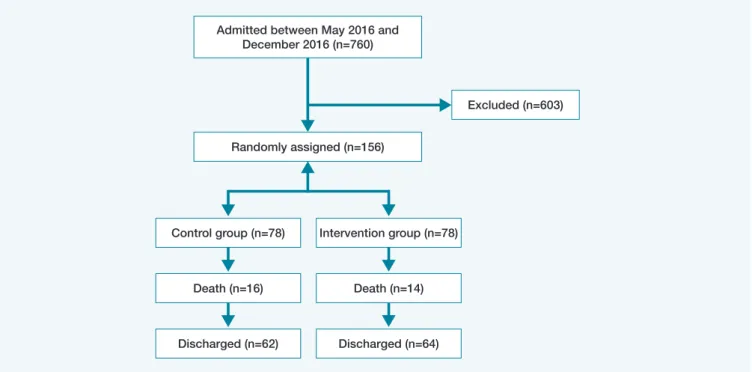
Baseline characteristics: The research team randomized 156 eligible patients and thirty patients were lost to follow-up due to death during admission, resulting in 126 included in the final statistical analysis (Fig. 1). The baseline characteristics (Table 1) did not differ between the control and intervention groups nor between the analysed patients and those who died (p > 0.05).
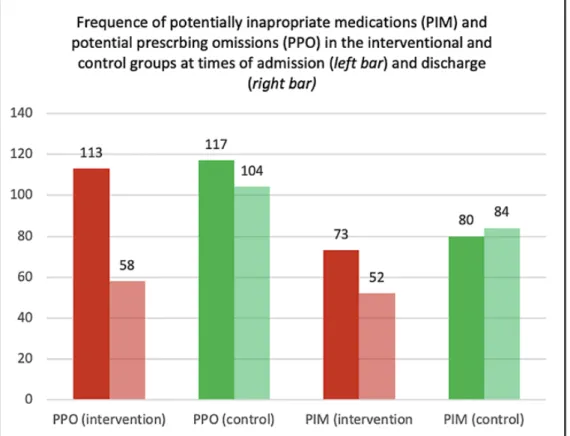
Primary Outcomes: At the time of discharge, comparing the differences from admission to discharge between the in-tervention and control groups, the team observed an average PIM reduction of 49% [0.30, 0.69] on the intervention group and 13% [0.03, 0.24] on the control group (p < 0.01). Regard-ing PPO they observed a 31% [0.16, 0.46] reduction in the intervention group, whereas in the control group there was no reduction (p = 0.01).The frequency of PIM and PPO on each group at times of admission and discharge is represented in Fig. 2.
Individually, the team saw an average reduction of 1 PIM [0.45, 1.14] per patient on the intervention group, which was not observed in the control group (p = 0.06). The average re-duction of PPO was lower than 1 in both groups.
There was an average STOPP criteria acceptance of 63% [0.50, 0.75] (meaning that among the total of PIM criteria iden-tified 63% were changed according to the recommendations)
and an average START criteria acceptance of 40% [0.27, 0.59]. As depicted in Fig. 3 the most accepted STOPP criteria groups were those from the renal system (E), musculoskeletal system (H), and cardiovascular system (B). Among the renal system criteria, the drugs withdrawn were drugs not recommended in the presence of a lower glomerular filtration rate, as was the case of digoxin, metformin or nonsteroidal anti-inflammatory drugs (NSAIDs). Regarding the musculoskeletal system crite-ria, it corresponded to the withdrawing of NSAIDs in the pres-ence of arterial hypertension. Within the cardiovascular system criteria, the drugs discontinued were related either to the ab-sence of evidence-based recommendation (as the use of di-goxin in heart failure with preserved left ventricular function, amiodarone as first-line anti-arrhythmic for supraventricular arrhythmia and loop diuretics for ankle oedema without heart failure) or to the risk of adverse effects (as the concomitant use of beta-blockers and verapamil or diltiazem, aldosterone and other potassium-conserving drugs without proper monitoring and the use of thiazides with known risk of hydroelectrolytic disturbances).
Regarding the START criteria, as represented in Fig. 4, the most accepted groups were the analgesics (H), respiratory
system (C) and urogenital system (G). Among the first group
it concerned the initiation of opioids for moderate-to-severe pain as well as the initiation of laxatives for those already using them; among the respiratory system criteria the initiation of home continuous oxygen and regular bronchodilator for mild to moderate asthma or COPD were the recommendations ac-cepted and applied; and regarding the urogenital system it was concerned with the initiation of 5-alpha reductase inhibitor for prostatism.
Table 1: Baseline characteristics of the sample population.
Intervention Control
N 64 (51%) 62 (49%)
Male (n, %) 32 (50%) 28 (50%)
Female (n, %) 32 (50%) 34 (55%)
Age (av.) 83 81
Katz index (av.) 4 3
No. of medication (av.) 9 9
No. of pills (av.) 11 10
Figure 1: Methods Fluxogram.
Admitted between May 2016 and December 2016 (n=760)
Excluded (n=603) Randomly assigned (n=156)
Control group (n=78) Intervention group (n=78)
Death (n=16) Death (n=14)
Figure 2: Acceptance rates of STOPP recommendations (by groups).
Secondary Outcomes: The prevalence of polypharmacy on our total population was 21% (out of 760 patients over 65 years old, 156 had 5 or more medications).
The prevalence of inappropriate prescription (the presence of at least one PIM) at the time of admission was 75.4% in the overall population, 38.1% in the intervention group and 37.3% in the control group. At the time of discharge, in the interven-tion group there was a reducinterven-tion of this prevalence in 13.5% (from), compared with 2% in the control group (p < 0.01).
There was no reduction of the number of medications (and subsequently no changes in the prevalence of polypharma-cy) between admission and discharge on neither of the study groups.
The research team identified 230 potentially inappropri-ate medications (PIM) and 153 potential prescribing omissions (PPO) after applying the STOPP/START version 2 criteria to the time of admission’s medication list from both study groups (Table 2). Each patient had on average two PIM and two PPO. More than half of the patients (53%) had two or more PIM and 36% of them had 2 or more PPO. The minimum was no PIM or PPO found and the maximum was 6 PIM or PPO per patient. Less than 10% of the population (10 patients) had both no STOPP nor START criteria identified.
The most common PIM criteria groups identified were “any drug prescribed without an evidence-based clinical indication”
(30%), “central nervous system and psychotropic drugs” (20%) and “drugs that predictably increase the risk of falls in older people” (20%). The most common PPO criteria groups were “vaccines” (41%), “endocrine system” (24%) and “cardiovas-cular system” (21%).
Discussion: We found a high prevalence of polypharmacy in our randomized sample (21%), which is consistent with the international data concerning the problem of polypharmacy among elderly patients. Despite differences in the methodolo-gy and distinct definitions of polypharmacy and old age, this is reported as a global issue - 16.3% in a Scottish study, 11% in a Swedish primary care population, 15% in a nation-wide USA database, 6% in a rural Chinese population, 33% in elderly Brazilians and 86.4% of Korean elders.9-14 As noted by a recent
report from SYMPATHY - an EU-funded consortium dedicated to innovating the management of polypharmacy among Euro-pean elders - studies in the Portuguese population are scarce and limited to a few hospital services and nursing homes.15
Considering the direct association between polypharmacy and medication appropriateness, in ours and others’ opinion, the best way to tackle the problem of overmedication in the elderly is to unite simplification or deprescribing methods with ones that aim to improve medication appropriateness.16-18
Hence, the aim of this study was to evaluate the results of applying the STOPP/START version 2 criteria in a systematic Figure 4: Acceptance rates of START recommendations (by groups).
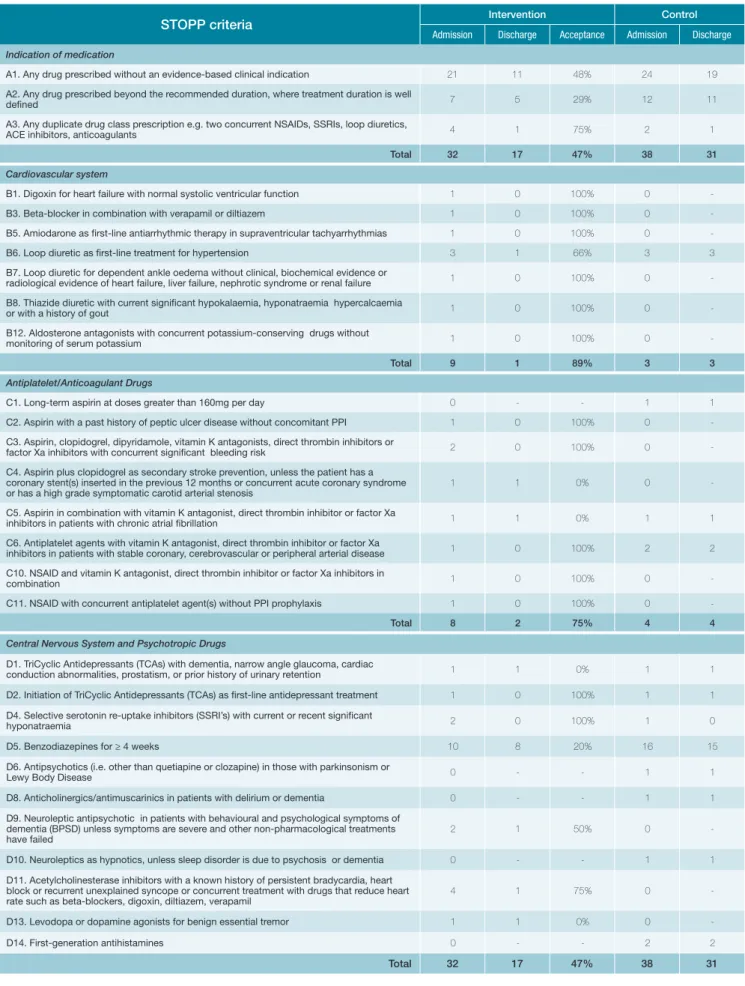
Table 2: Frequency of PIM and PPO in the intervention and control groups (at time of admission and discharge) and rate of acceptance (%) (when applied) of the recommendations given in the intervention group.
STOPP criteria Intervention Control
Admission Discharge Acceptance Admission Discharge
Indication of medication
A1. Any drug prescribed without an evidence-based clinical indication 21 11 48% 24 19 A2. Any drug prescribed beyond the recommended duration, where treatment duration is well
defined 7 5 29% 12 11
A3. Any duplicate drug class prescription e.g. two concurrent NSAIDs, SSRIs, loop diuretics,
ACE inhibitors, anticoagulants 4 1 75% 2 1
Total 32 17 47% 38 31
Cardiovascular system
B1. Digoxin for heart failure with normal systolic ventricular function 1 0 100% 0 -B3. Beta-blocker in combination with verapamil or diltiazem 1 0 100% 0 -B5. Amiodarone as first-line antiarrhythmic therapy in supraventricular tachyarrhythmias 1 0 100% 0 -B6. Loop diuretic as first-line treatment for hypertension 3 1 66% 3 3 B7. Loop diuretic for dependent ankle oedema without clinical, biochemical evidence or
radiological evidence of heart failure, liver failure, nephrotic syndrome or renal failure 1 0 100% 0 -B8. Thiazide diuretic with current significant hypokalaemia, hyponatraemia hypercalcaemia
or with a history of gout 1 0 100% 0
-B12. Aldosterone antagonists with concurrent potassium-conserving drugs without
monitoring of serum potassium 1 0 100% 0
-Total 9 1 89% 3 3
Antiplatelet/Anticoagulant Drugs
C1. Long-term aspirin at doses greater than 160mg per day 0 - - 1 1 C2. Aspirin with a past history of peptic ulcer disease without concomitant PPI 1 0 100% 0 -C3. Aspirin, clopidogrel, dipyridamole, vitamin K antagonists, direct thrombin inhibitors or
factor Xa inhibitors with concurrent significant bleeding risk 2 0 100% 0 -C4. Aspirin plus clopidogrel as secondary stroke prevention, unless the patient has a
coronary stent(s) inserted in the previous 12 months or concurrent acute coronary syndrome
or has a high grade symptomatic carotid arterial stenosis 1 1 0% 0 -C5. Aspirin in combination with vitamin K antagonist, direct thrombin inhibitor or factor Xa
inhibitors in patients with chronic atrial fibrillation 1 1 0% 1 1 C6. Antiplatelet agents with vitamin K antagonist, direct thrombin inhibitor or factor Xa
inhibitors in patients with stable coronary, cerebrovascular or peripheral arterial disease 1 0 100% 2 2 C10. NSAID and vitamin K antagonist, direct thrombin inhibitor or factor Xa inhibitors in
combination 1 0 100% 0
-C11. NSAID with concurrent antiplatelet agent(s) without PPI prophylaxis 1 0 100% 0
-Total 8 2 75% 4 4
Central Nervous System and Psychotropic Drugs
D1. TriCyclic Antidepressants (TCAs) with dementia, narrow angle glaucoma, cardiac
conduction abnormalities, prostatism, or prior history of urinary retention 1 1 0% 1 1 D2. Initiation of TriCyclic Antidepressants (TCAs) as first-line antidepressant treatment 1 0 100% 1 1 D4. Selective serotonin re-uptake inhibitors (SSRI’s) with current or recent significant
hyponatraemia 2 0 100% 1 0
D5. Benzodiazepines for ≥ 4 weeks 10 8 20% 16 15 D6. Antipsychotics (i.e. other than quetiapine or clozapine) in those with parkinsonism or
Lewy Body Disease 0 - - 1 1
D8. Anticholinergics/antimuscarinics in patients with delirium or dementia 0 - - 1 1 D9. Neuroleptic antipsychotic in patients with behavioural and psychological symptoms of
dementia (BPSD) unless symptoms are severe and other non-pharmacological treatments
have failed 2 1 50% 0
-D10. Neuroleptics as hypnotics, unless sleep disorder is due to psychosis or dementia 0 - - 1 1 D11. Acetylcholinesterase inhibitors with a known history of persistent bradycardia, heart
block or recurrent unexplained syncope or concurrent treatment with drugs that reduce heart
rate such as beta-blockers, digoxin, diltiazem, verapamil 4 1 75% 0 -D13. Levodopa or dopamine agonists for benign essential tremor 1 1 0% 0
-D14. First-generation antihistamines 0 - - 2 2
Admission Discharge Acceptance Admission Discharge
Renal System
E1. Digoxin at a long-term dose greater than 125µg/day if eGFR < 30 ml/min/1.73m2 1 0 100% 0 -E4. NSAID’s if eGFR < 50 mL/min/1.73m2 1 0 100% 0 -E6. Metformin if eGFR < 30 mL/min/1.73m2 1 0 100% 0
-Total 3 0 100% 0
-Gastrointestinal System
F2. PPI for uncomplicated peptic ulcer disease or erosive peptic oesophagitis at full
therapeutic dosage for > 8 weeks 5 3 40% 12 12 F3. Drugs likely to cause constipation (e.g. antimuscarinic/anticholinergic drugs, oral iron,
opioids, verapamil, aluminium antacids) in patients with chronic constipation where
non-constipating alternatives are available 0 - - 1 1
Total 5 3 40% -
-Respiratory System
G3. Anti-muscarinic bronchodilators with a history of narrow angle glaucoma or bladder
outflow obstruction 1 1 0% 0
-G4. Non-selective beta-blocker (whether oral or topical for glaucoma) with a history of
asthma requiring treatment 1 1 0% 0
-G5. Benzodiazepines with acute or chronic respiratory failure 1 1 0% 0
-Total 3 3 0% 0
-Musculoskeletal System
H2. NSAID with severe hypertension or severe heart failure 1 0 100% 0
-Urogenital System
I1. Antimuscarinic drugs with dementia, or chronic cognitive impairment or narrow-angle, or
chronic prostatism 1 1 0% 1 1
I2. Selective alpha-1 selective alpha blockers in those with symptomatic orthostatic
hypotension or micturition syncope 1 1 0% 0
-Total 2 2 0% 1
-Endocrine System
J1. Sulphonylureas with a long duration of action with type 2 diabetes mellitus 6 4 33% 0 -J2. Thiazolidenediones in patients with heart failure 1 0 100% 0
-Total 7 4 43% 0
-Drugs that predictably increase the risk of falls in older people
K1. Benzodiazepines 13 10 23% 19 19
K2. Neuroleptic drugs 4 3 25% 8 6
K4. Hypnotic Z-drugs e.g. zopiclone, zolpidem, zaleplon 1 0 100% 1 1
Total 18 13 28% 28 26
Analgesic Drugs
L1. Use of oral or transdermal strong opioids as first line therapy for mild pain 1 0 100% 0 -L2. Use of regular (as distinct from PRN) opioids without concomitant laxative 2 1 50% 3 2 L3. Long-acting opioids without short-acting opioids for break-through pain 1 0 100% 3 2
Total 4 1 75% 6 4
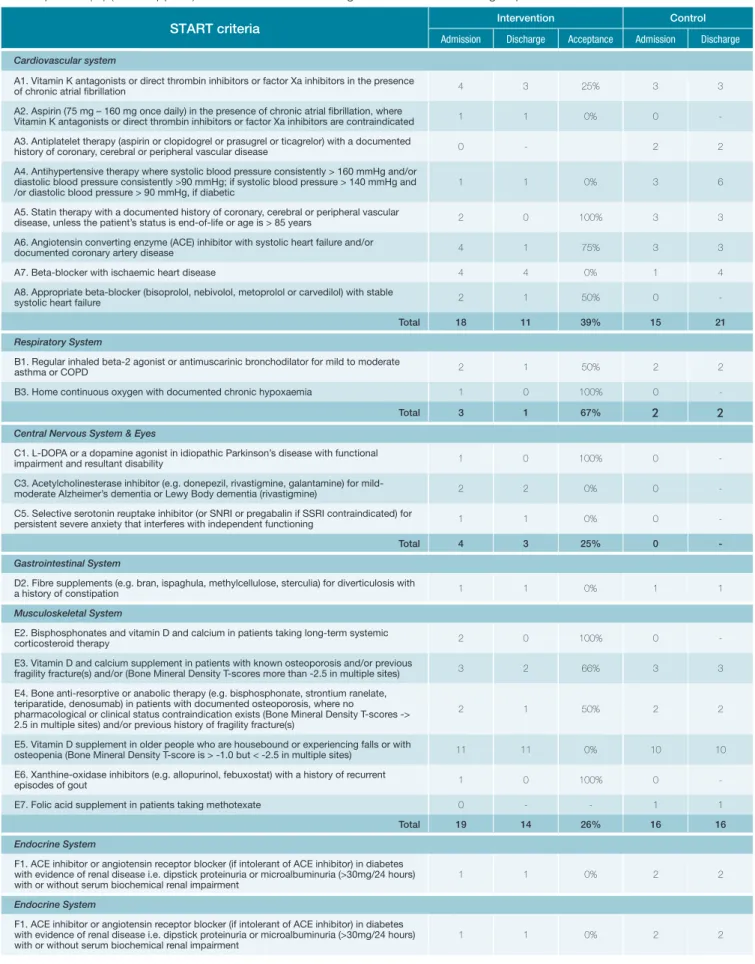
Table 2 (Cont.): Frequency of PIM and PPO in the intervention and control groups (at time of admission and discharge) and rate of acceptance (%) (when applied) of the recommendations given in the intervention group.
START criteria Intervention Control
Admission Discharge Acceptance Admission Discharge
Cardiovascular system
A1. Vitamin K antagonists or direct thrombin inhibitors or factor Xa inhibitors in the presence
of chronic atrial fibrillation 4 3 25% 3 3
A2. Aspirin (75 mg – 160 mg once daily) in the presence of chronic atrial fibrillation, where
Vitamin K antagonists or direct thrombin inhibitors or factor Xa inhibitors are contraindicated 1 1 0% 0 -A3. Antiplatelet therapy (aspirin or clopidogrel or prasugrel or ticagrelor) with a documented
history of coronary, cerebral or peripheral vascular disease 0 - 2 2 A4. Antihypertensive therapy where systolic blood pressure consistently > 160 mmHg and/or
diastolic blood pressure consistently >90 mmHg; if systolic blood pressure > 140 mmHg and
/or diastolic blood pressure > 90 mmHg, if diabetic 1 1 0% 3 6 A5. Statin therapy with a documented history of coronary, cerebral or peripheral vascular
disease, unless the patient’s status is end-of-life or age is > 85 years 2 0 100% 3 3 A6. Angiotensin converting enzyme (ACE) inhibitor with systolic heart failure and/or
documented coronary artery disease 4 1 75% 3 3
A7. Beta-blocker with ischaemic heart disease 4 4 0% 1 4 A8. Appropriate beta-blocker (bisoprolol, nebivolol, metoprolol or carvedilol) with stable
systolic heart failure 2 1 50% 0
-Total 18 11 39% 15 21
Respiratory System
B1. Regular inhaled beta-2 agonist or antimuscarinic bronchodilator for mild to moderate
asthma or COPD 2 1 50% 2 2
B3. Home continuous oxygen with documented chronic hypoxaemia 1 0 100% 0
-Total 3 1 67% 2 2
Central Nervous System & Eyes
C1. L-DOPA or a dopamine agonist in idiopathic Parkinson’s disease with functional
impairment and resultant disability 1 0 100% 0 -C3. Acetylcholinesterase inhibitor (e.g. donepezil, rivastigmine, galantamine) for
mild-moderate Alzheimer’s dementia or Lewy Body dementia (rivastigmine) 2 2 0% 0 -C5. Selective serotonin reuptake inhibitor (or SNRI or pregabalin if SSRI contraindicated) for
persistent severe anxiety that interferes with independent functioning 1 1 0% 0
-Total 4 3 25% 0
-Gastrointestinal System
D2. Fibre supplements (e.g. bran, ispaghula, methylcellulose, sterculia) for diverticulosis with
a history of constipation 1 1 0% 1 1
Musculoskeletal System
E2. Bisphosphonates and vitamin D and calcium in patients taking long-term systemic
corticosteroid therapy 2 0 100% 0
-E3. Vitamin D and calcium supplement in patients with known osteoporosis and/or previous
fragility fracture(s) and/or (Bone Mineral Density T-scores more than -2.5 in multiple sites) 3 2 66% 3 3 E4. Bone anti-resorptive or anabolic therapy (e.g. bisphosphonate, strontium ranelate,
teriparatide, denosumab) in patients with documented osteoporosis, where no
pharmacological or clinical status contraindication exists (Bone Mineral Density T-scores -> 2.5 in multiple sites) and/or previous history of fragility fracture(s)
2 1 50% 2 2
E5. Vitamin D supplement in older people who are housebound or experiencing falls or with
osteopenia (Bone Mineral Density T-score is > -1.0 but < -2.5 in multiple sites) 11 11 0% 10 10 E6. Xanthine-oxidase inhibitors (e.g. allopurinol, febuxostat) with a history of recurrent
episodes of gout 1 0 100% 0
-E7. Folic acid supplement in patients taking methotexate 0 - - 1 1
Total 19 14 26% 16 16
Endocrine System
F1. ACE inhibitor or angiotensin receptor blocker (if intolerant of ACE inhibitor) in diabetes with evidence of renal disease i.e. dipstick proteinuria or microalbuminuria (>30mg/24 hours)
with or without serum biochemical renal impairment 1 1 0% 2 2
Endocrine System
F1. ACE inhibitor or angiotensin receptor blocker (if intolerant of ACE inhibitor) in diabetes with evidence of renal disease i.e. dipstick proteinuria or microalbuminuria (>30mg/24 hours)
way to patients admitted to an internal medicine ward. As with polypharmacy, we also report a high prevalence of potential-ly inappropriate medication (75.4%), which has been defined by the existence of at least one PIM and is in accordance to those reported by recent systematic reviews.6,7,19 We also
ob-served that the use of pop-up recommendations reporting the application of these criteria within 72 houres of admission re-sulted in a significant reduction of the prevalence of potentially inappropriate medications and potential prescribing omissions, when compared with usual physician and pharmacist care. De-spite the need for more robust studies, the systematic reviews mentioned previously suggest that these interventions might result in an improvement of medication appropriateness and clinical outcomes, such as the use of primary care services and the rate of hospital admissions, medication-related outcomes and quality of life.6,7
Regarding the acceptance rates of the recommendations for prescription changes they were lower than previously re-ported ones.20 This could be interpreted as a result of potential
methodological limitations – associated learning curve to the application of the criteria and understanding of the recommen-dations7, ineffective communication interface and/or inherent
inertia from the home teams. On the other hand, we could also hypothesize that the reported results could be amplified after the improvement of these weaknesses and the criteria’s appli-cation to a bigger sample.
The team did not observe a reduction in the number of medications or pills in neither of the groups. This could be a reflection of the complexity of polypharmacy, particularly the difficulty between achieving a balance between its harms and the increasing need of medications recommended by a grow-ing body of guidelines, in an effort to better manage the multiple comorbidities prevalent among the elderly.2
The pharmacotherapeutic group most implicated in PIM was the class of benzodiazepines (both D5, G5 and K1, Table 2). Benzodiazepines have been broadly reported as an impor-tant public health issue in elderly care, due to its association
with serious adverse drug events as impaired cognitive func-tion, delirium, respiratory insufficiency, falls and fall-related in-juries, such as hip fractures.1 The presence of these PIM were
reduced more in the intervention group than in the control, which seems to us to reinforce the need of a cared and system-atized medication review, such as that aimed by the use of the STOPP/START version 2 criteria or other similar tools. Follow-ing benzodiazepines, the most frequent PIM was A1, regard-ing drugs prescribed without evidence-based indication, hence comprising a varied list of drugs that were either used with-out an objective presence of its proper indication (as happened mainly with anti-platelet therapy like aspirin or clopidogrel, an-tidementia agents, bronchodilators, betahistine, pentoxyfilline, benzodiazepines and anti-psychotics) or other drugs without supporting evidence as trimetazidine dihydrochloride, citicoline, and multiple vitamin supplements. Despite not having the high-est acceptation rate this was the recommendation that result in the higher absolute number of drug discontinuation.
The most common PPO found were vaccines (influenza and pneumococcal) and vitamin D supplementation, for both of which we found no considerable difference in both groups between admission and discharge. While the former is prob-ably explained by the fact that vaccination is usually a measure concerning primary care, the latter is based on the differences between the criteria and the national recommendations regard-ing the use of vitamin D supplements in the elderly.21
As mains limitations the team would point the small popula-tion, probably underpowering its results, and the methodologi-cal weaknesses already discussed above.
Conclusion
Polypharmacy is an important issue regarding the health-care of the elderly, and efforts to tackle this problem are be-coming part of national and international recommendations and task forces. This was the first study evaluating the applica-tion of a deprescribing process in a Portuguese internal medi-cine ward. It found a high prevalence of polypharmacy and
Admission Discharge Acceptance Admission Discharge
Urogenital System
G2. 5-alpha reductase inhibitor with symptomatic prostatism, where prostatectomy is not
considered necessary 2 1 50% 0
-Analgesics
H1. High-potency opioids in moderate-severe pain, where paracetamol, NSAIDs or
low-potency opioids are not appropriate to the pain severity or have been ineffective 2 0 100% 1 0 H2. Laxatives in patients receiving opioids regularly 2 1 50% 2 1
Total 4 1 75% 3 1
Vaccines
I1. Seasonal trivalent influenza vaccine annually 7 6 14% 17 17 I2. Pneumococcal vaccine at least once after age 65 according to national guidelines 14 13 7% 24 24
Total 21 19 9.5% 41 41
inappropriate prescription among Portuguese elderly patients admitted to an internal medicine ward that was significantly reduced by the use of pop-up recommendations reporting the application of STOPP/START version 2 criteria within 72 houres of admission, when compared with usual physician and phar-macist care. Considering its limitations and the need for more research, it will contribute to raise awareness for the problem of polypharmacy and be a starting point for further studies or clinical experiences on systematic deprescribing programs for the multi-faceted care of our elderly population.
Responsabilidades Éticas
Conflitos de Interesse: Os autores declaram a inexistência de conflitos de interesse na realização do presente trabalho.
Fontes de Financiamento: Não existiram fontes externas de financiamento para a realização deste artigo.
Confidencialidade dos Dados: Os autores declaram ter seguido os pro-tocolos da sua instituição acerca da publicação dos dados de doentes. Proteção de Pessoas e Animais: Os autores declaram que os procedi-mentos seguidos estavam de acordo com os regulaprocedi-mentos estabeleci-dos pelos responsáveis da Comissão de Investigação Clínica e Ética e de acordo com a Declaração de Helsínquia da Associação Médica Mundial. Proveniência e Revisão por Pares: Não comissionado; revisão externa por pares.
Ethical Disclosures
Conflicts of interest: The authors have no conflicts of interest to declare. Financing Support: This work has not received any contribution, grant or scholarship
Confidentiality of Data: The authors declare that they have followed the pro-tocols of their work center on the publication of data from patients. Protection of Human and Animal Subjects: The authors declare that the procedures followed were in accordance with the regulations of the rel-evant clinical research ethics committee and with those of the Code of Ethics of the World Medical Association (Declaration of Helsinki).
Provenance and Peer Review: Not commissioned; externally peer re-viewed.
© Autor (es) (ou seu (s) empregador (es)) 2019. Reutilização permitida de acordo com CC BY-NC. Nenhuma reutilização comercial.
© Author(s) (or their employer(s)) 2019. Re-use permitted under CC BY-NC. No commercial re-use.
Correspondence / Correspondência:
Miguel Oliva Teles – [email protected]
Serviço de Medicina I, Centro Hospitalar de Lisboa Ocidental, Hospital Egas Moniz, Lisboa, Portugal
Rua da Junqueira, 126, 1349-019 Lisboa Received / Recebido: 15/01/2020 Accepted / Aceite: 28/02/2020
Publicado / Published: 27 de Junho de 2020
REFERENCES
1. Motter FR, Fritzen JS, Hilmer SN, Paniz ÉV, Maria V, Paniz V. Potentially inappropriate medication in the elderly : a systematic review of validated explicit criteria. Eur J Clin Pharmacol. 2018;74:679-700. doi: 10.1007/ s00228-018-2446-0.
2. Payne RA. The epidemiology of polypharmacy. Clin Med. 2016;16:465-9. doi: 10.7861/clinmedicine.16-5-465.
3. Scott I a, Gray LC, Martin JH, Pillans PI, Mitchell C. Deciding when to stop: towards evidence-based deprescribing of drugs in older popula-tions. Evid Based Med. 2013;18:121–4.
4. Scott IA, Hilmer SN, Reeve E, Potter K, Le Couteur D, Rigby D, et al. Re-ducing inappropriate polypharmacy. JAMA Intern Med. 2015;175:827-34. doi: 10.1001/jamainternmed.2015.0324.
5. Reeve E, Shakib S, Hendrix I, Roberts MS, Wiese MD. The benefits and harms of deprescribing. Med J Aust. 2014;201:386–9.
6. Rankin A, Ca C, Sm P, Kerse N, Cr C, Mc B, et al. Interventions to im-prove the appropriate use of polypharmacy for older people. Cochra-ne Database Syst Rev. 2018;9:CD008165. doi: 10.1002/14651858. CD008165.pub4.
7. Hill-Taylor B, Sketris I, Hayden J, Byrne S, O’Sullivan D, Christie R. Application of the STOPP/START criteria: A systematic review of the prevalence of potentially inappropriate prescribing in older adults, and evidence of clinical, humanistic and economic impact. J Clin Pharm Ther. 2013;38:360–72.
8. O’Mahony D, O’Sullivan D, Byrne S, O’Connor MN, Ryan C, Gallagher P. STOPP/START criteria for potentially inappropriate prescribing in older people: version 2. Age Ageing. 2014;44:1–6.
9. Guthrie B, Makubate B, Hernandez-santiago V, Dreischulte T. The rising tide of polypharmacy and drug-drug interactions : population database analysis 1995 – 2010. BMC Med. 2015;1–10.
10. Kantor ED, Rehm CD, Haas JS, Chan AT, Giovannucci EL, Sloan M, et al. Trends in Prescription Drug Use among Adults in the United States from 1999-2012. JAMA. 2016 ;314:1818-31. doi: 10.1001/jama.2015.13766. 11. Kim H, Shin J, Kim M, Park B. Prevalence and Predictors of Polyphar-macy among Korean Elderly. PLoS One. 2014;9:e98043. doi: 10.1371/ journal.pone.0098043.
12. Dong L, Yan H, Wang D. Polypharmacy and its correlates in village health clinics across 10 provinces of Western China. J Epidemiol Community Health. 2010;549–53.
13. Passos LC. Factors associated with potentially inappropriate medication use by the elderly in the Brazilian primary care setting. Int J Clin Pharm. 2012;626–32.
14. Hovstadius B, Hovstadius K, Åstrand B, Petersson G. Increasing polypharmacy - an individual-based study of the Swedish population 2005-2008. BMC Clin Pharmacol. 2010; 10:16. doi: 10.1186/1472-6904-10-16.
15. Malva J, Llimos-Fernandez F. Case Study Summary Portugal. SIMPATHY 2019 [accessed Dec 2019]. Disponível em http://www.simpathy.eu/re-sources/case-studies/case-study-portugal
16. Stewart D, Mair A, Wilson M, Kardas P, Alonso A, Mcintosh J, et al. Guidance to manage inappropriate polypharmacy in older people : systematic review and future developments. Expert Opin Drug Saf. 2017;16:203-13. doi: 10.1080/14740338.2017.1265503.
17. Scott IA, Hilmer SN, Reeve E, Potter K, Le Couteur D, Rigby D, et al. Re-ducing inappropriate polypharmacy: the process of deprescribing. JAMA Intern Med. 2015;175:827-34. doi: 10.1001/jamainternmed.2015.0324. 18. Wilson M, Mair A, Dreischulte T, Witham M. Prescribing to fit the needs of older people - the NHS Scotland Polypharmacy Guidance, 2nd edition. J R Coll Physicians Edinb. 2015;108–13.
19. Thomas RE, Thomas BC. A Systematic Review of Studies of the STOPP / START 2015 and American Geriatric Society Beers 2015 Criteria in Pa-tients ≥ 65 Years. Curr Aging Sci. 2019;12:121-54. doi: 10.2174/18746 09812666190516093742.
20. Gallagher PF, O’Connor MN, O’Mahony D. Prevention of potentially ina-ppropriate prescribing for elderly patients: a randomized controlled trial using STOPP/START criteria. Clin Pharmacol Ther. 2011;89:845–54. doi: 10.1038/clpt.2011.44.
21. Direção-Geral da Saúde. Norma de Orientação Clínica No 004/2019. Prevenção e Tratamento da Deficiência de Vitamina D. Lisboa: DGS; 2019.