UNIVERSITY OF ALGARVE
FACULTY OF ENGINEERING OF NATURAL RESOURCES
I
DENTIFICATION OF
P
OLYMORPHISMS AND
C
HARACTERIZATION
OF
N
EW
O
VINE
G
ROWTH
H
ORMONE
V
ARIANTS
A
SSOCIATED
WITH
M
ILK
T
RAITS IN
“S
ERRA DA
E
STRELA
”
O
VINE
B
REED
.
(Thesis dissertation presented to obtain the PhD degree in Biology,
speciality of Population Biology)
Maria do Rosário Fernandes Marques
FARO
UNIVERSITY OF ALGARVE
FACULTY OF ENGINEERING OF NATURAL RESOURCES
I
DENTIFICATION OF
P
OLYMORPHISMS AND
C
HARACTERIZATION
OF
N
EW
O
VINE
G
ROWTH
H
ORMONE
V
ARIANTS
A
SSOCIATED
WITH
M
ILK
T
RAITS IN
“S
ERRA DA
E
STRELA
”
O
VINE
B
REED
.
(Thesis dissertation presented to obtain the PhD degree in Biology,
speciality of Population Biology)
Maria do Rosário Fernandes Marques
Supervisor: Doutor Alfredo Jaime Morais Cravador Committee:
Chairman: Reitor da Universidade do Algarve
Members: Doutor Alfredo Jaime Morais Cravador, Professor Catedrático da Faculdade de Engenharia de Recursos Naturais da Universidade do Algarve;
Doutor Carlos Alberto Gonçalves Carmona Belo, Investigador Coordenador da Estação Zootécnica Nacional;
Doutor Gustavo Nuno Barbosa Nolasco, Professor Associado com agregação da Faculdade de Engenharia de Recursos Naturais da Universidade do Algarve;
Doutor Nuno Miguel dos Santos Ferrand de Almeida, Professor Associado da Faculdade de Ciências da Universidade do Porto;
Doutor Luís Lavadinho Telo da Gama, Professor Associado convidado do Instituto Superior de Agronomia da Universidade Técnica de Lisboa;
Doutor Maria Leonor dos Santos Orge, Técnica Superior do Laboratório Nacional de Investigação Veterinária, na qualidade de especialista.
FARO
(2006)Marques MR, Santos IC, Carolino N, Belo CC, Renaville R and Cravador A 2006 Effects of genetic polymorphisms at the growth hormone gene on milk yield in Serra da Estrela sheep. Journal of Dairy Research 73 394–405.
I would like to express my gratitude to so many people involved in this thesis. Without their help and encouragement, I would not have been able to accomplish this project.
I sincerely thank to my advisor, Professor Alfredo Cravador for accepting me to develop my doctoral research on his group at the University of Algarve. With his strong support and scientific guidance he helped me through all of the difficulties during my research. I will always be grateful to him for giving me this opportunity.
I express my gratitude to Professor Vaz Portugal, Doctor Rui Leitão and Doctor Ramalho Ribeiro, Directors of “Estação Zootécnica Nacional” (EZN), and to Doctor Luís Telo da Gama, head of the department of “Genética e Melhoramento Animal” of the EZN for allowing me to perform part of the experimental work in the laboratories of their institution.
I would like to express my deep gratitude to my “co-adviser”, Doctor Carlos Carmona Belo, head of the department of “Sistemas e Técnicas de Produção Animal” of the EZN, an outstanding person who always had his door open for me. He taught me a lot and helped to build up my academic background with his scientific capabilities, enthusiasm and generosity. His constant constructive comments, support, encouragement and friendship gave me the strength and ability to believe in myself and believe that anything is possible.
I am very grateful to Dr. Vaz Patto for giving me the opportunity to work with “Serra da Estrela” ovine breed. I thank also Engº Rui Dinis, Dr. Fernando Esteves, Engº Pedro Campos and other ANCOSE staff who helped me with the questionnaire to the breeders and with blood collection and finally providing me with the milk data records.
Deep thanks are due to the “Serra da Estrela” ovine breeders who kindly answered the questionnaires and especially to the ones who allowed blood collection in their animals. Without their collaboration this work could not have been performed.
I thank Ingrid Santos, a dear colleague and great friend, for the fruitful brainstorms that we had during this study and also for the philosophical talks about science and life. I thank her also for all the laboratory support she gave me and for the patient reviews and suggestions to this manuscript.
Special thanks are due to Deolinda Carvalho, a dear friend whose wide technical support made my live much easier in the laboratory. I thank also Esperança Maurício for lab support.
I am also grateful to Lénia Ferrão, Cristina Couto, Elisabete Malveiro, Patrícia Marques, Luís Queirós, Nuno Felício and Rodrigo Agrícola, colleagues and friends from EZN, for their support during DNA extraction and SSCP analysis.
I thank Marta Silva Pereira and Nuno Carolino for statistical assistance and amity. I thank Ana Cristina Coelho for tips in the lab work, and Dina Neves, Marília Horta, Nelson Sousa and Paula Caetano, colleagues from the University of Algarve for logistic support and hospitality.
I also would like to thank all my friends, in particular Doctor Ana Teresa Carmona Belo. She is a wonderful friend, always willing to listen and help. Her constant support and advises during the manuscript reviewing were precious and helped me a lot.
Quero também, e em especial, endereçar à minha Mãe o meu profundo agradecimento por todo o apoio demonstrado ao longo deste trabalho. Obrigada por estares sempre comigo em todas as ocasiões. Sem o teu suporte e incentivo não teria sido possível chegar até aqui.
This work was financed by the European Community - III Framework Programme for Research and Technological Development, co-financed by the European Social Fund (ESF) and by national funding from Ministry of Science, Technology and Higher Education (PhD grant SFRH/BD/1140/2000).
My grateful thanks are due to all
NOME: Maria do Rosário Fernandes Marques
FACULDADE: Faculdade de Engenharia de Recursos Naturais
ORIENTADOR: Professor Doutor Alfredo Jaime Morais Cravador
CO-ORIENTADOR:
DATA: 2006/06/12
TÍTULO DA TESE:
Identificação de polimorfismos e caracterização de novas variantes proteicas da
hormona de crescimento associadas com a produção de leite na raça ovina Serra da
Estrela.
O presente trabalho teve como objectivos identificar e caracterizar polimorfismos genéticos no gene da hormona de crescimento (oGH) em ovinos Serra da Estrela e estabelecer possíveis associações entre eles e a produção e composição do leite, de modo a avaliar a aplicabilidade do gene da GH em selecção assistida por marcadores genéticos.
O gene da GH apresentou elevado polimorfismo, tendo sido preditas oito e dez variantes proteicas codificadas pelas cópias GH2-N e GH2-Z, respectivamente.
Verificou-se a ocorrência de associações significativas entre os polimorfismos encontrados e a produção e composição do leite (teores e produção de gordura e proteína). O genótipo N2+Z7 (GH2-N+GH2-Z) produziu mais 39,6 ± 7,5 litros de leite/150 dias, com maior teor em gordura e igual teor em proteína que o N5+Z2 (mais 25% da produção média das ovelhas). Resultados semelhantes foram observados nas ovelhas com o fenótipo proteico AAN+BBZ.
Os resultados indicam que os polimorfismos do gene da GH poderão vir a ser utilizados na selecção assistida por marcadores genéticos. Estes poderão permitir o melhoramento da produção de leite sem afectar a sua qualidade. Contudo, a resposta à selecção dependerá das condições de exploração intrínsecas a cada rebanho e nomeadamente do maneio alimentar dos animais.
Palavras-chave:
Ovinos; gene da hormona de crescimento; polimorfismos; PCR-SSCP; marcadores genéticos; produção de leite.TITLE:
Identification of polymorphisms and characterization of new ovine growth hormone
variants associated with milk traits in “Serra da Estrela” ovine breed.
The objectives of the present work were the identification and characterisation of nucleotidic polymorphisms naturally occurring at the growth hormone gene (oGH) in "Serra da Estrela" sheep, and the establishment of associations with milk traits in order to evaluate GH as a useful candidate gene for marker assisted selection.
The oGH gene was found to be highly polymorphic. Polymorphisms found in coding regions allowed the prediction of eight protein variants coded by the GH2-N copy and ten by the GH2-Z copy.
Milk yield and milk composition (fat and protein contents and yields) were associated with GH polymorphisms by restricted maximum likelihood (REML) through a univariate best linear unbiased prediction (BLUP) animal model with repeated measures.
The N2+Z7 (GH2-N+GH2-Z) genotype produced 39.6 ± 7.5 litres of milk/150 days more than N5+Z2 (more 25 % than the mean milk yield of the studied population), with higher milk fat content and similar protein content. Moreover, a similar result was obtained for the protein phenotype AAN+BBZ ewes.
The results indicate that using GH polymorphisms as genetic markers could improve milk yield potential in “Serra da Estrela” ewes without detrimental impact on milk quality. The extent of the response, however, might depend on the environmental conditions within the flock, namely on an appropriate feeding management of the animals.
Key words: Ovis aries; growth hormone gene; polymorphism; PCR-SSCP; genetic markers; milk yield.
THESIS PUBLICATIONS ... ii
ACKNOWLEDGMENTS... iii
RESUMO... v
ABSTRACT ... vi
TABLE OF CONTENTS... vii
LIST OF TABLES... x
LIST OF FIGURES... xii
LIST OF ABBREVIATIONS... xiii
LIST OF AMINO ACIDS... xvii
I. INTRODUCTION AND OBJECTIVES... 1
I.1 Introduction... 3
I.2 Objectives... 4
II. LITERATURE REVIEW... 5
II.1 Serra da Estrela ovine breed... 7
II.2 The growth hormone gene... 9
II.2.1 oGH gene duplication... 10
II.3 Transcription regulation of the GH gene ... 11
II.3.1 Pituitary-specific transcription factor (POU1F1)... 12
II.3.2 Thyroid hormone and retinoic acid receptors response elements ... 13
II.3.3 Glucocorticoid receptor (GR) ... 13
II.3.4 Ubiquitous transcription factors... 14
II.3.4.1 Stimulating protein 1 (Sp1)... 14
II.3.4.2 Zinc finger protein (Zn15/Zn16)... 14
II.3.5 Silencer element ... 14
II.4 Neuroendocrine regulation of GH secretion... 15
II.4.1 Growth hormone-releasing hormone (GHRH)... 15
II.4.2 Somatostatin (SRIF) ... 16
II.4.3 Pituitary adenylate cyclase-activating polypeptide (PACAP)... 16
II.4.4 Ghrelin... 17
II.4.5 Leptin ... 17
II.4.6 Other GH-Regulating Neuropeptides... 18
II.4.6.1 Catecholamines ... 18
II.4.6.2 Neuropeptide Y (NPY) ... 19
II.4.6.3 Galanin... 19
II.5 GH signal transduction regulation ... 20
II.5.1 GH binding to cellular GH receptors...21
II.5.2 GH-dependent activation of JAK2 ...22
II.5.3 Activation of MAPK signalling pathway ...23
II.5.4 GH signalling through PKC...24
II.5.5 GH-dependent activation of the STAT proteins family ...24
II.5.6 GH signalling inhibition ...25
II.6 GH and milk production ... 26
II.6.1 Mammary gland development ...27
II.6.1.1 From birth to partum ...28
II.6.1.2 Throughout lactation ...29
II.6.2 Mechanisms of GH action during lactation...31
II.6.2.1 Lipid metabolism...31
II.6.2.2 Carbohydrate metabolism...33
II.6.2.3 Protein metabolism...34
II.6.3 Recombinant somatotropin and milk production in ewes ...34
II.7 Transgenic animals expressing an additional GH copy... 36
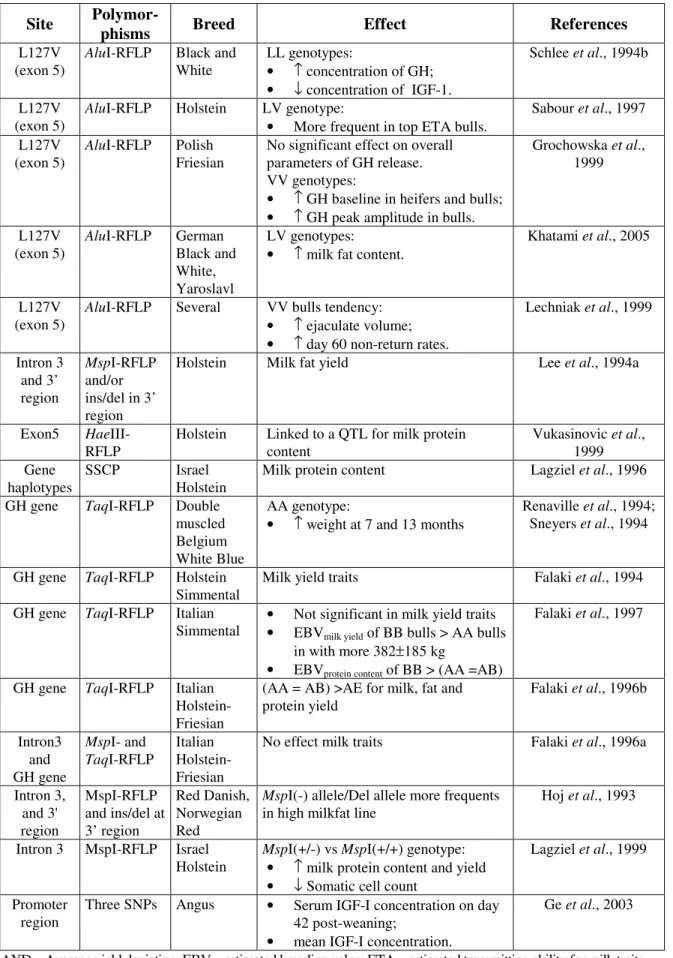
II.8 Impact of GH polymorphisms on productive traits... 36
III. MATERIALS AND METHODS ... 41
III.1 Serra da Estrela sheep production system... 43
III.1.1 Geographical area ...43
III.1.2 Topography and soil types...43
III.1.3 Climate...44
III.1.4 Sheep production system ...44
III.1.4.1 Land utilization...44
III.1.4.2 Feeding system ...44
III.1.4.3 Flocks management ...45
III.1.4.4 Milk production and utilization...45
III.2 Animals and milk records... 46
III.3 oGH gene copy number genotypes ... 47
III.4 oGH gene analysis by PCR-SSCP... 48
III.5 Cloning and sequencing of the oGH gene copies and of the inter copy-region .. 50
III.6 Statistical analysis ... 52
III.6.1 oGH copy number genotypes ...52
III.6.1.1 Data set 1 – Milk yield in the genotyped ewes...52
III.6.1.2 Data set 2 – Milk yield in the genotyped animals’ progeny...53
III.6.2 Polymorphism at the oGH copies ...54
III.7 Bioinformatics... 55
III.7.1 Gene finding ...55
III.7.2 Transcription factors binding sites ...55
IV. RESULTS ... 57
IV.1 oGH copy number genotypes... 59
IV.1.1 Probe preparation ... 59
IV.1.2 oGH copy number genotyping ... 59
IV.1.3 Statistical analysis ... 60
IV.1.3.1 Milk yield in the genotyped ewes ... 60
IV.1.3.2 Milk yield in the genotyped ewes animals’ progeny ... 61
IV.2 oGH gene SSCPs’ detection, charaterization and influence on milk traits ... 61
IV.2.1 PCR-SSCP analysis... 61
IV.2.2 Hardy-Weinberg equilibrium test... 65
IV.2.3 Sequencing of the inter-copy region and separate PCR-SSCP fragment analysis of each oGH gene copy ... 66
IV.2.4 Molecular characterization of the SSCP patterns ... 68
IV.2.4.1 oGH haplotypes... 71
IV.2.4.2 oGH protein variants... 71
IV.2.5 Statistical analysis ... 72
IV.2.5.1 Milk yield... 72
IV.2.5.2 Milk composition ... 82
IV.3 Single nucleotide polymorphisms (SNPs) ... 87
IV.4 Transcription factors binding sites ... 91
IV.5 Protein structure prediction... 92
V. DISCUSSION... 93
V.1 Animals and milk records ... 95
V.2 oGH copy number genotypes... 95
V.2.1 Implications in milk yield... 96
V.2.2 Transcription factors binding sites and oGH copies regulation... 97
V.3 PCR-SSCP polymorphisms at the oGH gene ... 97
V.3.1 Molecular characterization of the SSCP patterns ... 99
V.3.1.1 oGH gene polymorphisms... 99
V.3.1.2 Predicted protein variants ... 100
V.4 Milk yield and composition... 102
V.5 Single nucleotide polymorphisms (SNPs) ... 104
V.6 Future perspectives:... 105
VI. CONCLUSIONS ... 107
VII. REFERENCES ... 111
APPENDICES... 139
Appendix 1 Questionnaire for dairy sheep farmers ... 141
Appendix 2 Flocks’ average milk data records in the lactations of the years 95/96 and 96/97 (36 flocks and 2520 ewes)... 144
Table II.1. Evolution of “Serra da Estrela” total milk yields (TMY; l) and milk yields in 150 days (MY; l/150 d) between 1944 and 2004. ...7 Table II.2. Biological effects of GH in farm animals during lactation. ...30 Table II.3. Polymorphisms at the GH gene significantly associated with production traits and
metabolic parameters in bovines. ...37 Table III 1. Flocks’ mean milk yield (l/150 days) in the period 1995-2000...46 Table III 2. Flocks’ mean milk yield (l/150 d), fat content (g/kg), protein content (g/kg), fat yield
(kg/150 d, protein yield (kg/150 d) and fat plus protein yield (kg/150 d) in 1998. ...47 Table III 3. Length and localisation of PCR-SSCP fragments of the oGH gene and primers used
for the PCR analysis...49 Table IV 1. SSCP patterns found at the oGH fragments I, II, III and IV, the corresponding
genotypes (in italic figures) and frequencies (%) in “Serra da Estrela” sheep population (SE) and in each of the seven flocks (FL1 to FL7). ...63 Table IV 2. SSCP patterns found at the oGH fragments V, VI and VII, the corresponding
genotypes (in italic figures) and frequencies (%) in “Serra da Estrela” sheep population (SE) and in each of the seven flocks (FL1 to FL7). ...64 Table IV 3. Hardy-Weinberg equilibrium, heterozygote deficit and excess tests’ significance
levels for the oGH copy gene fragments IN to IVN, VIN, VIIN, IIIZ, IVZ, VIZ and VIIZ. ...66
Table IV 4. Nucleotide sequence characterisation of SSCP alleles of each amplified fragment at the GH2-N (or GH1) and GH2-Z copies. ...69 Table IV 5. Polymorphisms found in the coding regions of the oGH gene copies, predicted
amino acid changes and protein variants...70 Table IV 6. Predicted protein variants’ frequencies (%) at the GH2-N and GH2-Z copies...72 Table IV 7. GH2-N genotypes, their respective frequencies (%) and milk yield deviation (l/150
d) ± standard error from the most frequent homozygous GH2-N genotype in all flocks but FL1+FL4 (deviation from the most frequent genotype within the flock). ...74 Table IV 8. GH2-Z genotypes, their respective frequencies (%) and milk yield deviation (l/150
d) ± standard error from the most frequent homozygous GH2-Z genotype. ...75 Table IV 9. Associated GH2-N+GH2-Z genotypes, their respective frequencies (%) and milk
yield deviation (l/150 d) ± standard error from the most frequent GH2-N+GH2-Z genotype. ...77 Table IV 10. GH2-N phenotypes, their respective frequencies (%) and milk yield deviation
(L/150 d) ± standard error from the most frequent homozygous GH2-N phenotype...79 Table IV 11. GH2-Z phenotypes, their respective frequencies (%) and milk yield deviation
(L/150 d) ± standard error from the most frequent homozygous GH2-Z phenotype...80 Table IV 12. Associated GH2-N+GH2-Z phenotypes, their respective frequencies (%) and milk
yield deviation (L/150 d) ± standard error from the most frequent homozygous GH2-N+GH2-Z phenotype...81 Table IV 13. GH2-N and GH2-Z genotypes, their respective frequencies and deviation of milk
yield, fat and protein contents, and fat, protein and fat+protein yields at 150 days of lactation ± standard error for the most frequent homozygous GH2-N and GH2-Z genotype. ...83
Table IV 14. Associated GH2-N+GH2-Z genotypes, their respective frequencies (%) and deviation of milk yield, fat and protein contents (g/kg), and fat, protein and fat+protein yields (kg/150 d) at 150 days of lactation ± standard error for the most frequent homozygous associated GH2 N+GH2 Z genotype. ...84 Table IV 15. GH2-N, GH2-Z and associated GH2-N+GH2-Z phenotypes, their respective
frequencies (%) and deviation of milk yield (l/150 d), fat and protein contents (g/kg), and fat, protein and fat+protein yields (kg/150 d) at 150 days of lactation ± standard error for the most frequent homozygous phenotype...85 Table IV 16. GH1 or GH2-N SNPs and their respective genotype and allele frequencies (%)... 88 Table IV 17. GH2-Z SNPs and their respective genotype and allele frequencies (%). ... 89 Table IV 18. Endonucleases that discriminate SNPs found by SSCP analysis or DNA sequencing
along the oGH gene copies. ...90 Table IV 19. Protein motif comparison between several oGH protein variants. ... 92
Figure II.1. Evolution of the number of “Serra da Estrela” ewes inscribed in the breed Herd
Book (FAO, 2004)... 8
Figure II.2. Schematic representation of oGH gene structure (2162 bp; Orian et al., 1988)...9
Figure II.3. oGH gene alleles Gh1 and Gh2 in sheep (based on Valinsky et al., 1990)...10
Figure II.4. Regulatory sequences at the promoter of the oGH gene...11
Figure II.5. Rainbow-colored ribbon diagram of the hGH from the 3HHR crystallographic structure...20
Figure II.6. The structure of the 1:2 complex of the hGH with the hGHR extracelular domain (hGH/hGHBP2 complex)...21
Figure II.7. Binding sites at the GHR responsive for GH binding and GH-GHR signal transduction and their putative biological functions. ...23
Figure II.8. Diagram of the GH-dependent transcription of the insulin-like growth factor I (IGF-I) gene pathway. ...25
Figure II.9. GHR-expressing cells’ in response to GH or GH plus GH-antagonist treatment...26
Figure II.10. Hormonal regulation of the mammary gland development. ...27
Figure II.11. Changes in blood serum concentrations of putative homeorhetic hormones in cows...32
Figure II.12. Milk production in lactating ewes submitted to recombinant bovine ST (rbsT) treatment...35
Figure III.1. Municipalities of the geographical area of the Demarcated Region of the “Serra da Estrela” Cheese (DRSEG)...43
Figure III.2. Gh2 allele in sheep (following Valinsky et al., 1990) containing the GH2-N and GH2-Z copies in tandem...51
Figure IV.1. Evaluation of PCR-DIG labelling efficiency of the 2055 bp probe in agarose gel electrophoresis...59
Figure IV.2. EcoRI-restriction fragment length polymorphism at the growth hormone locus in “Serra da Estrela” sheep...60
Figure IV.3. oGH copy number genotypic and allelic frequencies in the “Serra da Estrela” sheep. ...60
Figure IV.4. Effect of the probability of a ewe to receive alleles Gh1, Gh2 or either from their progenitor on milk yield adjust to 150 lactation days. ...61
Figure IV.5. PCR-SSCP patterns for fragments I (5’-UTR, exon 1), II (5’-UTR, exon 1, intron 1), III (intron 1, exon 2, intron 2), IV (intron 2, exon 3, intron 3), V (intron 3, exon 4, intron 4), VI (intron 4, exon 5, 3’-UTR) and VII (exon 5, 3’-UTR) of “Serra da Estrela”...62
Figure IV.6. Alignment of the sequence of a fragment of the inter-copy region DQ238053 (our results) containing the 5’-UTR of the GH2-Z copy with previously published sequences of fragments containing the 5’-UTR of the GH2-N copy (M37310; Byrne et al., 1987) and GH1 copy (X12546; Orian et al., 1988) and with primer GHT-Fwd specific for GH1 copy (or GH2-N) amplification. ...67
Figure IV.7. PCR-SSCP analysis of the fragment IV of the oGH gene...67
Figure IV.8. Partial electropherogram of the PCR product of the GH2-Z copy presenting SNPs I4Z1551 (C/T) and I4Z1558 (T/G)...87
Figure IV.9. Putative transcription factors binding sites at the 5’-region at GH1, GH2-N and GH2-Z copies. ...91
∞ ∞ ∞ ∞ infinite χχχχ2 chi-square µµµµl micro litre(s) µµµµM micro molar A adenine residue aa amino acid(s)
AFLP amplified fragment length polymorphism ALS acid-labile subunit
ANCOSE National Association of the Breeders of the “Serra da Estrela” Sheep
Ap-1 activator protein 1
bGH bovine growth hormone BLUP Best Linear Unbiased Predictor bp base pair(s)
BSA bovine serum albumin bST bovine somatotropin C cytosine residue Ca2+ calcium ion
CAAT box consensus sequence GGCCAATCT cAMP cyclic adenosine 3’,5’-monophosphate
c-fos cellular fos oncogene cm centimetre(s)
CREB cAMP-responsive element binding protein CSPD chemiluminescent alkaline phosphatase substrate
d day(s)
D1 D1-like dopamine receptor
D2 D2- like dopamine receptor
DAG 1,2-diacylglycerol DIG digoxigenin
DNA deoxyribonucleic acid DNase I deoxyribonuclease I
dNTP 2’-deoxynucleoside triphosphate
DRSEG Demarcated Region of “Serra da Estrela” Cheese EC European Community
EDTA potassium-ethylenediaminetetracetic acid EGF epidermal growth factor
ERK extracellular-signal-regulated kinase
FAO Food and Agriculture Organization of the United Nations FBAT Family-Based Association Tests
FL(s) flock(s)
Fwd forward
g gram (s)
G guanine residue
GABA -aminobutyric acid
GalR galanin receptor GC glucocorticoid(s) gGH goat growth hormone
GH growth hormone
GH1 growth hormone codified by the ovine GH1 gene copy
GH1 growth hormone gene copy of the ovine Gh1 allele
Gh1 non-duplicated ovine growth hormone gene allele
Gh2 duplicated ovine growth hormone gene allele
GH2-N 5’ growth hormone gene copy of the ovine Gh2 allele GH2-N growth hormone codified by the ovine GH2-N gene copy
GH2-Z 3’ growth hormone gene copy of the ovine Gh2 allele GH2-Z growth hormone codified by the ovine GH2-Z gene copy GHBP growth hormone binding protein
GHMM generalized hidden Markov models GHR growth hormone receptor
GHRH growth hormone-releasing hormone
GHRHR growth hormone-releasing hormone receptor GHRP growth hormone-releasing peptide
GI inhibitory guanyl nucleotide-binding protein
GIP glucose-dependent insulin-inducing peptide GLUT1 erythrocyte-type glucose transporter GLUT2 liver-type glucose transporter
GLUT4 insulin-responsive glucose transporter GLUT5 intestinal-type glucose transporter GR glucocorticoid receptor
Grb10 growth-factor-bound protein 10 Grb2 growth-factor-bound protein 2
GS stimulatory guanyl nucleotide-binding protein
ha hectare
hGH human growth hormone
hGHBP human growth hormone binding protein hGH-N human growth hormone gene copy N hGHRH human growth hormone-releasing hormone HMM hidden Markov models
HWE Hardy-Weinberg equilibrium IGF insulin-like growth factor
IGFBP insulin-like growth factor binding proteins INE National Institute of Statistics of Portugal JAK Janus tyrosine kinase
kb kilo base pair(s) KCl potassium chloride
kg kilogram(s)
l litre(s)
LCR locus control region LPA lysophosphatidic acid
M molar
MAP mitogen-activated protein MAPK mitogen-activated protein kinase MAS marker assisted selection
MEK MAP/ERK kinase
mg milligram
MgCl2 magnesium chloride
min minute(s)
MKP1 MAPK phosphatase 1
mm millimetre(s)
MME mixed model equations mRNA messenger ribonucleic acid
MspI restriction endonuclease MspI
MTDFREML multiple-trait derivative free restricted maximum likelihood
MY milk yield
My Million years
N North
NaOH sodium hydroxide nd no date; not determined NEFA non-esterified fatty acids NPY neuropeptide Y
NPY-Y neuropeptide Y receptor NRE negative regulatory element nt nucleotide(s)
OB leptin
ob leptin gene ºC degrees Celsius oGH ovine growth hormone
PACAP pituitary adenylate cyclase-activating polypeptide PCR polymerase chain reaction
PDGF platelet-derived growth factor PDO protected denomination of origin PDO Protected Denomination of Origin PEPCK phosphoenolpyruvate carboxykinase pGH pig growth hormone
PKA protein kinase A PKC protein kinase C PL placental lactogen polyA polyadenylation POU Pit-1/Oct-1/Unc-86
POU1F1 pituitary-specific transcription factor 1
PRL prolactin
PRLR prolactin receptor PROP1 prophet of Pou1F1 QTL quantitative trait loci
raf ras oncogene
RAPD random amplified polymorphic DNA RAR retinoic acid receptor
ras ras oncogene
REML Restricted Maximum Likelihood
Rev reverse
RFLP restriction fragment length polymorphism rGH rat growth hormone
RNA ribonucleic acid
s second(s)
SE Standard error SH2 Src homology 2
Shc SH2-containing protein
SHP SH2 domain-containing protein tyrosine phosphatases SIRP 1 signal regulatory protein- 1
SNP single nucleotide polymorphism SOCS suppressors of cytokine signalling Sos son-of-sevenless
Sp1 stimulating protein 1
Spi2.1 serine protease inhibitor 2.1 gene
SRIF somatotropin release-inhibiting factor; somatostatin SSCP single-strand conformation polymorphism
sst SRIF receptor
ST somatotropin; used as synonymous of exogenously administrated GH STAT signal transducers and activators of transcription
T thymine residue
T3 3,5,3’-triiodothyronine; thyroid hormone T3R thyroid hormone receptor
TATA box consensus sequence TATAAAT
TBE Tris/borate/EDTA
TMY total milk yield
TRE thyroid hormone response element UTR untranslated region
V Volt(s)
vs. versus
W Watt(s); West
WAP whey acidic protein YY1 yin and yang factor 1 Zn-15 zinc finger protein
One- and three- letter symbols for amino acids:
A Ala Alanine
C Cys Cysteine
D Asp Aspartic acid
E Glu Glutamic acid
F Phe Phenylalanine G Gly Glycine H His Histidine I Ile Isoleucine K Lys Lysine L Leu Leucine M Met Methionine N Asn Asparagine P Pro Proline Q Gln Glutamine R Arg Arginine S Ser Serine T Thr Threonine V Val Valine W Trp Tryptophan Y Tyr Tyrosine X Xxx undetermined or non-standard aa Notations:
P-7L amino acid residue P (proline) at position -7 of a given protein sequence changed to amino acid residue L (leucine)
G9R amino acid residue G (glycine) at position 9 of a given protein sequence changed to amino acid residue R (arginine)
“The beginning of knowledge is the discovery of something we do not understand.”
... 1
I.1 Introduction... 3 I.2 Objectives ... 4
I.1 Introduction
Powerful molecular biology tools are nowadays available that significantly help in fundamental research and much contribute to technical developments in many scientific domains. In particular, their impact in animal science has been considerable (Vignal et al., 2002). These techniques have applications so diverse as fraud control and animal products traceability (Botter et al., 2003; Brodman and Moor, 2003), genetic diversity characterization (Rendo et al., 2004) or parentage testing (Werner et al., 2004). It is also possible, through molecular techniques, to select animals having lower susceptibility to a disease (Brandsma et al., 2005), or favourable genotype for productive traits such as growth performance in cattle, sheep and pigs (Johnson et al., 2005; Maj et al., 2006; McRae et al., 2005; Taylor et al., 1998; Wimmers et al., 2002) or milk production and composition in dairy cattle (Blott et al., 2003; Kaminski et al., 2005; Shariflou et al., 2000) and sheep (Barillet et al., 2005; De Vries et al., 2005; Diez-Tascón et al., 2001).
The search for polymorphism in candidate genes thought to affect production traits has contributed to a better understanding of the basic biology of milk production and composition, and to intensify selection for these traits, namely in dairy cattle. Hence, effort has been made to identify candidate gene markers for milk selection within the somatotropic axis (Di Stasio et al., 2005; Parmentier et al., 1999; Renaville and Portetelle, 1998) with particular emphasis on growth hormone gene (GH) (Malveiro et al., 2001; Marques et al., 2003; Lagziel et al., 1999). Various studies have shown that administration of GH to lactating animal increases milk production and feed conversion efficiency without detrimental effects on milk composition.
The choice of new selection processes linked to the polymorphism at the GH, a hormone that plays an essential role in milk production, is a possibility for a faster genetic progress and thus flocks improvement since females can be tested at birth.
Some initial studies on molecular diversity of somatotropic axis’ genes have been performed in the “Serra da Estrela” ovine breed (Barracosa, 1996; Ramos et al., 2002). The use of molecular markers to improve milk production could considerably contribute to speed up genetic progress in this autochthonous breed. Thus, it could have a major impact on the preservation of the breed as it should help in implementing more efficient breeding programs leading to increased productivity while maintaining flock size. Breeders would be stimulated to maintain autochthonous breeds instead of introducing foreign breeds characterised by higher milk productions but non-adapted to traditional Portuguese grazing conditions. The
preservation of native breed would thus be promoted and the biodiversity assured while providing financial conditions for maintaining farmers in the rural areas.
I.2 Objectives
Throughout the literature review of this work, the principal regulatory mechanisms of GH gene expression and their effects on milk production in lactating ruminants will be looked into. Special emphasis will be given to the important roles that GH, or other genes under its control, plays in the animal body growth until puberty, in mammary gland development during puberty, gestation and possibly in the early lactation period, and in the homeorhetic control of female metabolism during gestation and lactation. Some considerations will be made about the ethical questions linked to the use of exogenous GH or transgenic animals for milk production.
The main objectives of the present work were to identify and characterise nucleotidic polymorphisms naturally occurring at the oGH gene in "Serra da Estrela" sheep, and associate them with milk traits in order to evaluate GH as a useful candidate gene for marker assisted selection. To attain those objectives, both copies of the oGH gene were genotyped, putative transcription factors binding sites at each copy’s promoter were screened and GH genotypes and phenotypes were established. Once the putative GH variants were identified, their associations with milk yield and composition were also evaluated.
“Science is the knowledge of consequences and dependence of one fact upon another.”
... 1
... 5
II.1 Serra da Estrela ovine breed... 7 II.2 The growth hormone gene ... 9 II.3 Transcription regulation of the GH gene ... 11 II.4 Neuroendocrine regulation of GH secretion ... 15 II.5 GH signal transduction regulation... 20 II.6 GH and milk production ... 26 II.7 Transgenic animals expressing an additional GH copy ... 36 II.8 Impact of GH polymorphisms on productive traits ... 36
II.1 Serra da Estrela ovine breed
The “Serra da Estrela” ovine breed was considered one of the best Portuguese dairy breeds in the 40s and one of the best in the world (Alberty cit. by Borrego, 1982). The official milk records were initiated in the years 1944/45. The Herd Book of the breed started in 1984 and is presently at ANCOSE (National Association of the Breeders of the “Serra da Estrela” Sheep). The totality of the milk yielded by “Serra da Estrela” ewes is transformed into “Serra da Estrela” cheese which has a Protected Denomination of Origin (PDO). This cheese is manufactured exclusively with milk from this ovine breed and is the main agricultural product of this region, and has a high socio-economical importance for rural populations.
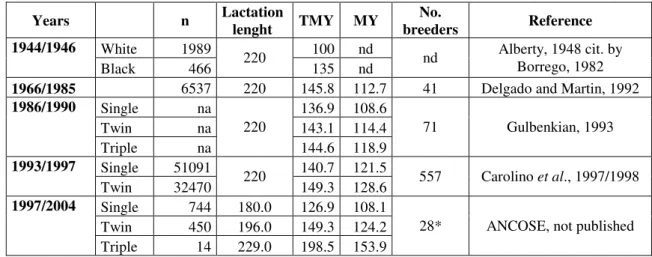
Despite all the efforts towards genetic improvement of the “Serra da Estrela” breed, the milk yield levels have not increased (Table II-1) as in foreign breeds and the breed is nowadays considered a low milk yield breed in the Mediterranean context (Boyazoglu, 1991a cit by Georgoudis, 1998). Presently, the milk yield potential of the “Serra da Estrela” breed (148 l/150 d; Carolino et al., 2003b) is much lower than that of Awassi (506 l/214 d; Pollott and Gootwine, 2001, 2004), Assaf (334 l/173 d; Pollot and Gootwine, 2004) or Lacaune (270 l/165 d, Barillet et al., 2001; 230 l/145d at the 1st lactation, Rupp et al., 2003) breeds.
Table II-1. Evolution of “Serra da Estrela” total milk yields (TMY; l) and milk yields in 150 days (MY; l/150 d) between 1944 and 2004.
Years n Lactation lenght TMY MY breeders No. Reference White 1989 100 nd
1944/1946
Black 466 220 135 nd nd
Alberty, 1948 cit. by Borrego, 1982 1966/1985 6537 220 145.8 112.7 41 Delgado and Martin, 1992
Single na 136.9 108.6 Twin na 143.1 114.4 1986/1990 Triple na 220 144.6 118.9 71 Gulbenkian, 1993 Single 51091 140.7 121.5 1993/1997
Twin 32470 220 149.3 128.6 557 Carolino et al., 1997/1998 Single 744 180.0 126.9 108.1
Twin 450 196.0 149.3 124.2 1997/2004
Triple 14 229.0 198.5 153.9
28* ANCOSE, not published
n – number of lactations; na – non-available; nd – non-determined.
* 398 Artificial insemination born ewes (paternal grandmother with milk yield higher than 240 l/150 d in at least two lactations; Esteves, 1997/1998)
The factors pointed by Borrego (1982), i.e., the production system and the socio-economic-cultural structure of the shepherds, were responsible for the subsistence of traditional flock management practices, which in the end impaired the genetic improvement results of the
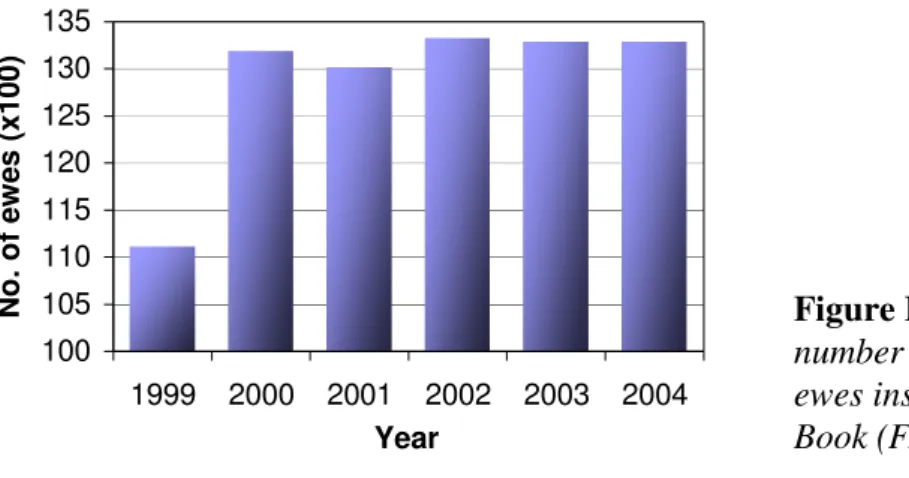
breed. Indeed, “Serra da Estrela” ovine breeders have seen no substantial improvement on flocks´ milk yields via the classical genetic selection programme. Simultaneously, ewes’ milk prices have decreased in the Portuguese market (from € 1.00/l in 1995 to € 0.87/l in 2004; INE, 2006). The joint effect of these two factors could be the loss of economic sustainability of the traditional ovine production system based on “Serra da Estrela” ewes and the abandonment of this autochthonous breed in favour of higher yielding foreign breeds such as Lacaune, Assaf and Manchega. The number of “Serra da Estrela” ewes increased from 1999 to 2000 and has remained constant afterwards (Figure II-1). A possible way for the valorisation and genetic improvement of the breed is the inclusion of genetic markers in a breeding programme.
100 105 110 115 120 125 130 135 1999 2000 2001 2002 2003 2004 Year N o. o f e w es (x 10 0)
Figure II-1. Evolution of the number of “Serra da Estrela” ewes inscribed in the breed Herd Book (FAO, 2004).
The introduction of genetic markers in animal breeding programmes will allow a more rigorous selection, giving an increase of information about the genetic value of an animal. Animal identification early in life (in the embryo phase or immediately after parturition) will allow reducing the time interval between generations and will be useful for the selection of young females before the onset of their productive life, leading to the development of more efficient breeding programs. Several candidate genes can be proposed to be introduced into marker assisted selection (MAS), depending on the breeding programme objective. In “Serra da Estrela”, the objectives are to improve milk yield and to minimize any negative effect on milk quality.
In ewes, results from Kann et al. (1999) suggest that mammogenesis and/or lactogenesis are partially controlled by somatotrophic hormones such as ovine growth hormone (oGH) and ovine placental lactogen (PL), and that insulin-like growth factor I (IGF-I) could be one of the mediators of these hormones. Therefore, the detection of genetic markers at the oGH gene associated with milk production and quality might contribute to the establishment of early selection criteria.
II.2 The growth hormone gene
The GH is a member of a multigene family which includes chorionic somatomammotropin, prolactin (PRL) and PL genes as well as several other genes, all of which evolved through series of gene duplications. Extensive reviews concerning the evolution, structure, function and molecular biology of the growth hormone gene family have been published (Bluet-Pajot et al, 1998; Cooke and Liebhaber, 1995; Chappel and Murphy, 2000; Forsyth and Wallis, 2002; Miller and Eberhardt, 1983). Thus, the present review will briefly focus on domestic animals’ GH, with special emphasis on ovine (whenever information exists), its structure, regulation, metabolic effects and impact on animals’ productive traits.
GH genes have been isolated and characterized in detail in different domestic animals species such as ovine (Byrne et al., 1987; Guron et al., 1992; Orian et al., 1988), caprine (Kioka et al., 1989; Yamano et al., 1988; Yato et al., 1988), bovine (Miller et al., 1980; Woychik et al., 1982), bubaline (Maithal et al., 2001; Verma et al., 1999), porcine (Chen et al., 1970; Vize and Wells, 1987), equine (Conde et al., 1973), dromedary (Martinat et al., 1990) and chicken (Zhvirblis et al., 1987).
CDS1 CDS3
intron1 intron2 intron3 intron4
polyA signal1 polyA site1 TATA signal1
exon1 exon2 exon3 exon4 exon5
Figure II-2. Schematic representation of oGH gene structure (2162 bp; Orian et al., 1988). The oGH gene has been mapped to 11q25 (Hediger et al., 1990) being entirely located within a 3.9 kb BamHI/HindIII fragment (Byrne et al., 1987). The oGH coding sequence contains five exons with 71, 161, 117, 162 and 198 bp in length (according to Orian et al., 1988; see Figure II-2) interrupted by four introns (with sizes between 227 and 275 bp). Several highly conserved regions were described at the 5’ end of the gene: a TATAAA sequence (TATA signal 1) is located at position -30 from the transcription starting point, and a CATAAAT sequence at position -84. The AATAAA polyadenylation signal (polyA signal 1 at position 2032) and polyA site1 (at position 2055) are present at the 3’-untranslated region (3’-UTR) of the gene.
The oGH predicted amino acid sequence, established by Orian et al. (1988) from an ovine pituitary genomic library, consists of a signal peptide composed of 26 amino acids in length and a mature peptide of 191 amino acids (Swiss-Prot accession no. P01247). The GH amino acid sequence is 99 % identical between ovine, caprine, bovine and bubaline, but differs markedly from non ruminant sequences [about 88% identical to pig GH (pGH) and 65% to human GH (hGH)].
In ovine, the GH family genes are expressed in the anterior pituitary somatotrophs (Sartin et al., 1996) and in the trophectoderm and syncytial placenta cells in a temporal-specific way (Lacroix et al., 1996; 1999).
II.2.1 oGH gene duplication
Two alleles of the GH gene have been described in ovine. The Gh1 allele contains a single gene copy (GH1), whereas in the Gh2 allele the gene is duplicated (GH2-N and GH2-Z copies) with the two copies being located 3.5 kb apart (Valinsky et al., 1990; Figure II-3). Individual animals homozygous for Gh1 or Gh2 alleles have two or four GH-like genes, respectively, while heterozygous animals with one allele of Gh1 and one of Gh2 (Gh1/Gh2), have three GH-like genes (Wallis et al., 1998). Sequence differences between the GH2-N and GH2-Z genes have been demonstrated and polymorphisms have been found in oGH coding and noncoding regions (Ofir and Gootwine, 1997).
Figure II-3. oGH gene alleles Gh1 and Gh2 in sheep (based on Valinsky et al., 1990).
Exons are presented as black boxes. GH1, GH2-N and GH2-Z are the three copies of the oGH gene. Dashed arrows indicate the duplicated sequence (Adapted from Wallis et al., 1998).
A similar GH gene duplication has also been described in caprine (Yamano et al., 1991) but not in bovine, porcine or rats. In humans, the GH cluster comprises five GH-like genes in tandem sharing more than 95% sequence identity (Seeburg et al., 1982 cit. by Bennani-Bäiti et al., 1998). GH gene is also duplicated in some species of fish (Yang et al., 1997; Clements et al., 2004).
Sequence differences at the expressed protein level have been demonstrated. Lacroix et al. (1996) detected two GH-like proteins in the ovine placenta: one identical to the amino acid sequence deduced from the nucleotide sequence published by Orian et al. (1988) which is the pituitary product of the oGH gene (copy GH1 or GH2-N); the other, is the product of the oGH2-Z copy gene, differs from the first in three amino acids: one at the signal peptide (P-7L), a second at the border of helix1 (G9R) of the GH molecule and a third one (G63S) at a loop structure of the binding site 1 (described in hGH; de Vos et al., 1992; see II.4).
II.3 Transcription regulation of the GH gene
Within the numerous transcription factors acting upon the anterior pituitary gland (Savage et al., 2003), several play a determinant role in somatotroph development and in the GH gene regulation. Binding sites to several of those transcription factors were disclosed by DNase I footprinting experiments, methylation-interference assays and band-shift analysis mainly at hGH, rat GH (rGH) and bovine GH (bGH). Putative binding sites could also be found at the oGH gene promoter (Figure II-4).
-200 AGTGGAGAGG GGATGATGAC GAGCCTGGGG GACATGACCC CAGAGAAGGA
TRE
-150 ACGGGAACAG GATGAGTGAG AGGAGGTTCT AAATTATCCA TTAGCACAGG
Sp1 POU1F1(d)
NRE(YY1)
Zn-15...
-100 CTGCCAGTGG TCCTTGCATA AATGTATAGA GCACACAGGT GGGGGGAAAG
...Zn-15 POU1F1(p) CAT box
-50 GGAGAGAGAA GAAGCCAGGG TATAAAAAGG GCCCAGCAGA GACCAATTCC
TATA box
1 AGGATCCCAG GACCCAGTTC ACCAGACGAC TCAGGGTCCT GCTGACAGCT
M M A A
51 CACCAGCTAT GATGGCTGCA GGTAAGCTCA CGAAAATCCC CTCCATTAGC
101 GTGTCCTAAG GGGGTGATGC GGGGGGCCCT GCCGATGGAT GTGTCCACAG
151 CTTTGGGTTT TAGGGCTTCT GAATGTGAAC ATAGGTATCT GCACCCGACA
201 TTTGGCCAAG TTTGAAATGT TCTCAGTCCC TGGAGGGAAG GGCAGGCGGG
GR
Figure II-4. Regulatory sequences at the promoter of the oGH gene.
The sequence of the sense strand of the oGH promotor region (from Orian et al., 1988) is shown together with the putative locations of the following transcription factors’ binding sites (boxed bold sequences): TRE (T3 response
element), Sp1 (stimulating protein 1), POU1F1(d) and POU1F1(p) (distal and proximal pituitary-specific transcription factor 1), NRE (negative regulatory element), YY1 (yin and yang factor 1), Zn-15 (zinc finger protein) and GR (glucocorticoid receptor). CAT and TATA boxes are also shown. The exon 1 sequence is underlined, and the first four NH2-terminal amino acids of the signal peptide are shown in blue.
Despite GH promoters’ species-specific organization (Chuzhanova et al., 2000) throughout vertebrate evolution, some common features subsist. The following sub-sections will briefly focus on the general action of individual transcription factors (with special emphasis on POU1F1) and on the synergic action between them that lead to the transcriptional control of GH gene expression.
II.3.1 Pituitary-specific transcription factor (POU1F1)
Two pituitary-specific transcription factor (POU1F1, also called Pit-1, GHF-1, PUF-1 or GC-1) binding sites are present in the oGH promoter at position -118 (ATTATCCAT in agreement with the consensus sequences; Ingraham et al., 1988; Rhodes and Rosenfeld, 1996) and at position -87 [TTGCATAA; differs at 1 nt from hGH (Lemaigre et al., 1990) and at 2 nt from rGH (Kim et al., 1996)]. In addition to GH promoter POU1F1 binding sites, the presence of at least two POU1F1 binding sites within the chromatin Dnase I hypersensitive sites (HS I, II – F14 segment) of the locus control region (LCR; Jones et al., 1995) located -14.5 kb upstream of the hGH-N gene seem to be fundamental for the appropriate pituitary hGH-N gene expression in transgenic mouse (Shewchuk et al., 1999). Whether this LCR is also important for GH expression in transgenic sheep with additional GH copies was not discussed (Adams et al., 2002, 2005).
POU1F1 is a pituitary-specific POU-homeodomain protein (Ingraham et al., 1988) essential for thyrotrophs, somatotrophs and lactotrophs differentiation and survival (Li et al., 1990). It regulates the GH gene expression activation at the somatotrophs and its repression at the lactotrophs (Scully et al., 2000).
In the early embryonic life following the formation of Rathke’s pouch, the primordium of the pituitary gland, POU1F1 expression is activated by the Prophet of POU1F1 (PROP1) binding to POU1F1 early enhancer (Sornson et al., 1996), possibly not alone but with the synergic action of vitamin D receptor and retinoic acid receptor (RAR) binding (Cohen et al., 1999; DiMattia et al., 1997). As soon as levels of PROP1 decay, POU1F1 expression changes to an auto-regulatory pathway (Rhodes et al., 1993 cit by Sornson et al., 1996).
POU1F1 expression is dependent on its auto-regulation as POU1F1 promoter contains several binding sites to POU1F1 at its proximal and distal regions (Rhodes et al., 1993 cit by DiMattia et al., 1997) and is age (DiMattia et al., 1997) and gender (Gonzalez-Parra et al., 1996) dependent. Distinct signal-transduction pathways could thus regulate POU1F1 activity. These pathways are mediated by intracellular levels of cyclic adenosine 3’,5’-monophosphate
(cAMP) or by mitogen-activated protein kinases (MAPK) and/or protein kinase A (PKA) activities in response to the epidermal growth factor (EGF) or insulin and involve a co-repressor complex containing the nuclear receptor co-co-repressor N-CoR/SMRT, mSin3A/B and histone deacetylases, and a co-activator complex containing cAMP-response element binding protein (CREB) and p/CAF (Xu et al., 1998).
POU1F1 activity depends also on other peptides, e.g. activin inhibits POU1F1 binding to GH promoter and consequently GH expression (Struthers et al., 1992). This effect is mediated by an increase in POU1F1 phosphorylation which also decreases POU1F1 stability (Gaddy-Kurten and Vale, 1995).
Mutations at the POU1F1 gene interrupt the normal development of the anterior pituitary gland (dwarf genotype; Li et al., 1990; Pfäffle et al., 1992; 1993; Aarskog et al., 1997) and may lead to combined pituitary hormone deficiency (Cohen et al., 1995; Vallette-Kasic et al., 2001). POU1F1 genotypes affect milk yield in humans (Pfäffle et al., 1996), milk yield and conformational traits in bovine (Renaville et al., 1997), and plasma GH and PRL levels (Sun et al., 2002) and growth and carcass traits in porcine (Stancekova et al., 1999; Yu et al., 1995). However, in other studies no associations were found between productive traits and POU1F1 genotypes, e.g., with meat production traits in Piemontese bovine breed (Di Stasio et al., 2002).
II.3.2 Thyroid hormone and retinoic acid receptors response elements
One 3,5,3’-triiodothyronine receptor (T3R) response element (TRE)/ retinoic acid receptor (RAR) element is present in the oGH promoter at position -172 (GGGACATGACCC identical to bGH; Brent et al., 1988 cit. by Williams et al., 1992). The presence of such an element near the POU1F1 binding site is concomitant with the finding in rat, that GH transcription is enhanced by straight cooperation between T3R and RAR and POU1F1 via direct protein-protein interaction (Palomino et al., 1998).
II.3.3 Glucocorticoid receptor (GR)
A glucocorticoid receptor (GR) site is present in the oGH promoter at position +218 (TGTTCT) within the intron 1 as in the hGH (Moore et al., 1985) and in the goat GH (gGH; Kioka et al., 1989) promoters. Several works conducted in rat (reviewed by Theill and Karin, 1993) and in humans (Isaacs et al., 1987 cit. by Theill and Karin, 1993) reported that the GH gene expression was stimulated by glucocorticoids (GCs) and that GCs promote hGH mRNA stability (Paek and Axel, 1987 cit. by Theill and Karin, 1993). However, familial GC
deficiency has been associated with tall stature in human (Elias et al., 2000 cit. by van der Eerden et al., 2003), which is in accordance with findings that GC inhibits GH release in pituitary (Allen, 1996 and Luo and Murphy, 1989 cited by van der Eerden et al., 2003). Thus, considering the conflicting results obtained in the referred two species and that regulation of GH transcription by GR was not investigated in ovine, the real impact of GCs on oGH gene remains to be clarified.
II.3.4 Ubiquitous transcription factors
II.3.4.1 Stimulating protein 1 (Sp1)One stimulating protein 1 (Sp1) binding site is present in the oGH promoter at position -134 [TGAGAGG; different in 1 nt from rGH (Kim et al., 1996)]. This site is near to the POU1F1 distal binding site and some authors suggested that Sp1 and POU1F1 binding could be mutually exclusive (Lemaigre et al., 1990). Nevertheless, Sp1 is thought to positively influence GH expression.
II.3.4.2 Zinc finger protein (Zn15/Zn16)
A zinc finger protein (Zn15/Zn16) binding site is present in the oGH promoter at position -108 (AGCACAGGCTGCCAGTGG; Lipkin et al., 1993 cit by Das et al., 1996). Zn15/Zn16 is a member of the Cys/His zinc finger transcription factor superfamily which can act synergistically with POU1F1 to enhance GH expression (VanderHeyden et al., 2000).
II.3.5 Silencer element
A negative regulatory element (NRE; sequence TCCATTAGC at position -114) with sequence similar to the yin and yang factor 1 (YY1) binding site, described in bovine (Park and Roe, 1996a, 1996b) and red deer (Lioupis et al., 1997), is present in the oGH promoter. Park and Roe’s results (1996b) suggest that bGH expression is negatively regulated by YY1 or by a very similar YY1 homolog via NRE binding.
The joint action of the tissue-specific POU1F1 trans-acting factor and the ubiquitous factors referred before (and possibly others) should contribute to the tissue specific transcription of oGH gene, as it has been observed in other species.
II.4 Neuroendocrine regulation of GH secretion
Regulatory pathways of GH expression are not straightforward. They involve chain reactions whereby a peptide could simultaneously regulate expression of several genes. Transcription regulation of GH gene was addressed in the previous section, but many of those transcription factors are actively involved in the regulation of other peptides which in turn regulate GH expression. An example is POU1F1: it regulates GH-releasing hormone receptor (GHRHR) gene expression, and thus indirectly GH secretion by GH-releasing hormone (GHRH) signalling (Godfrey et al., 1993 cit by DiMattia et al., 1997).
Pituitary somatotroph cells possess receptors to GHRH, somatostatin (somatotropin release-inhibiting factor, SRIF), pituitary adenylate cyclase-activating polypeptide (PACAP) and GH secretagogue (ghrelin) peptides that control the GH expression at those cells.
Hypothalamic neurons secreting GHRH are located in the arcuate nucleus and those secreting SRIF are in the periventricular nucleus and arcuate nucleus (Leshin et al., 1994 cit by McMahon et al., 2000). GHRH and SRIF could mutually inhibit each other’s synthesis in the arcuate nucleus neurons, but GHRH and SRIF syntheses and consequently GH regulation could be modulated also by neuropeptides such as leptin, insulin and IGF-1, dopamine, norepinephrine, serotonin, thyrotropin-releasing hormone, acetylcholine, neuropeptide Y (NPY) and galanin (see McMahon et al., 2001). Their influence upon GH synthesis and secretion of some of those peptides will be briefly discussed.
II.4.1 Growth hormone-releasing hormone (GHRH)
GHRH is structurally related to the glucagon superfamily, which include also PACAP, glucagons and glucose-dependent insulin-inducing peptide (GIP) (Cummings et al., 2002; for review see Mayo et al., 2003).
GHRH stimulates equally the synthesis and the GH pulse secretion in sheep. Indeed, it was observed a significant association between GHRH and GH peaks, but not between SRIF and GH peaks in unanesthetized ovariectomized ewes (Frohman et al., 1990). Moreover, other studies reported an increase in plasma GH levels when lambs were injected with a GHRH analogue with increased feed conversion and leaner carcasses (Godfredson et al., 1990), and recently the injection of a myogenic expression GHRH plasmid DNA into Inner Mongolia fuzz lambs resulted in higher GH levels and in organomegaly (Meng et al., 2004).
The GHRH-stimulated GH release in the somatotrophs is presumably cAMP- and Ca2+-dependent in sheep (Sartin et al., 1996). In vitro results suggest that Ca2+ pathway presumably acts via calmodulin activation and concomitant/subsequent activation of PKA which promotes GH release induced by cAMP (Sartin et al., 1996; for a review see Bluet-Pajot et al., 1998).
II.4.2 Somatostatin (SRIF)
SRIF is a hypothalamic cyclic polypeptide with two bioactive isoforms (SRIF-14 and SRIF-28; Møller et al., 2003) that negatively regulate GH release (Davis, 1975; Kazmer et al., 2000) by SRIF receptors (sst-1 and sst-2) activation. Besides GH, an extensive list of hormones is inhibited by SRIF; among them are PRL, insulin, thyroid-stimulating hormone and almost all hormones from the gastrointestinal tract, inhibiting also the nutrient absorption at intestinal level (reviewed by Møller et al., 2003).
SRIF binds to its receptor activating the cAMP and phosphoinositide signal transduction pathways (Møller et al., 2003). Specifically and in opposition to what happens when GHRH binds to its receptor, when SRIF binds to guanyl nucleotide-binding proteins (GI-proteins) linked cell surface receptor, the activity of the adenylate cyclase is reduced
resulting in lower levels of cAMP and in PKA inhibition. PKA inhibition reduces CREB phosphorylation, a key step in POU1F1 transcription regulation. SRIH and GHRH signal transduction pathways converge at Ca2+ ion channels with presumably metabolic antagonist effect.
Under insulin hypoglycaemia conditions, SRIF secretion increases and in response, GH levels decrease in ewes (Frohaman et al., 1990). However, when lactating ewes were immunized against SRIF (Sun et al., 1990), no GH level change was observed yet milk yield increased. It was suggested that more nutrients reach the mammary gland in response to the blocking of the inhibitory action of SRIF upon the gastrointestinal tract and consequent increase in nutrient absorption. In growing cattle also immunized against SRIF, Ingvartsen and Sejrsen (1995 cit. by Ingvartsen and Andersen, 2000) observed a somehow similar effect as the animals grew faster and, despite a higher feed intake, the feed conversion ratio improved.
II.4.3 Pituitary adenylate cyclase-activating polypeptide (PACAP)
PACAP is a neuropeptide expressed in the central nervous system acting simultaneously as a neurohormone and a neurotransmitter (Montero et al., 2000). It is also
expressed within the gonads (reviewed by Moretti et al., 2002) and the adrenal gland (Ghatei et al., 1993 cit by Cummings et al., 2002). In ovine, PACAP was found to stimulate the accumulation of cAMP in the pituitary cells (Miyata et al., 1989 and 1990 cit. by Cummings et al., 2002) similarly to what occurs after GHRH stimulation. Moreover, in meal-fed Holstein steers injected with PACAP before feeding, the GH peak levels increased in serum. It was thus postulated that PACAP induces GH secretion maybe in association with GHRH (Radcliff et al., 2001).
II.4.4 Ghrelin
Ghrelin (also known as GH secretagogue) is a growth hormone-releasing acylated peptide synthesised in the oxyntic glands of the stomach and intestine (Date et al., 2000). It stimulates GH secretion in small ruminants (Hayashida et al., 2001; Sugino et al., 2004) by activating ghrelin receptor (reviewed by Davenport et al., 2005) in the pituitary. It is thought that ghrelin may have a role in feeding regulation in domestic animals and thus in energy homeostasis, as it was suggested by the results of studies in ghrelin knockout mice (Wortley et al., 2005) and in fat and lean lines of sheep (French et al., 2006).
Ghrelin and GHRH act synergistically to promote GH release. Moreover, GHRH and GH-releasing peptide 2 (GHRP-2; a synthetic secretagogue) were shown to regulate their receptor synthesis in a time-dependent way in ovine pituitary cell cultures, playing also an important role in GH, GHRHR, POU1F1, sst-1 and sst-2 expression and GH synthesis (Yan et al., 2004). Ghrelin regulation of GH secretion could also be mediated by the activation of the NPY-Y1 receptor pathway (Shintani et al., 2001).
The first studies with synthetic secretagogues (GHRP-6 and more recently GHRP-2) showed that secretagogues enhance GH secretion by a different via than that used by GHRH. GH-release via ghrelin involves inhibition of K+ channels and somatotroph depolarization with consequent Ca2+ channel rearrangement. However, GHRH and ghrelin pathways communicate trough signalling pathways involving intricate ionic exchanges (Chen et al., 1996 cit. by Casanueva et al., 1999).
II.4.5 Leptin
Leptin (or OB protein) is the product of the ob gene expression in the adipose tissue (Zhang et al., 1994 cit. by Schwartz et al., 1996) and placenta (Anthony et al., 2001). The leptin levels are positively correlated with body fat mass (Delavaud et al., 2002), energy intake
level (Marie et al., 2001; Reist et al., 2003), β-adrenergic stimulation (Chilliard et al., 2000) and negatively correlated with photoperiod in sheep (Marie et al., 2001; Clarke et al., 2003). Leptin receptors are expressed in ewe hypothalamus, anterior pituitary and adipose tissues (Dyer et al., 1997c), and mammary gland (Laud et al., 1999), and in bovine adrenal medullary cells (Yanagihara et al., 2000). Main effects of leptin were reviewed by Chilliard et al. (2001), Ingvartsen and Boisclair (2001) and Faggioni et al. (2001).
A high level of leptin, which could be observed after a meal or in obese animals, was shown to physiologically regulate food intake by decreasing appetite (Barb et al., 1998). At the same time, high levels of leptin increase energy demands and, to meet those demands, there is an increased fatty acid oxidation, i.e., lipolysis at the adipose tissue, or alternatively a decrease in insulin-stimulated lipogenesis (Ramsay, 2001). However, in other studies this effect was not observed (Newby et al., 2001). Those metabolic events are mediated by modification at hormonal levels, namely GH, catecholamines and T3 augment, and insulin and GCs decline
(see review by Chilliard et al., 2001).
Leptin acts upon the expression of hypothalamic neuropeptides involved in energy homeostasis. It was observed that after leptin injection NPY expression decreased in the arcuate nucleus and corticotrophin releasing hormone increased in the paraventricular nucleus in normal Long-Evans rats (Schwartz et al., 1996). This could cause GH levels to decrease which mimic the observed decrease of the GH levels after meals in sheep (Matsunaga et al., 1999) or, following another via, could decrease GHRH-stimulated GH expression and at the same time increase basal GH as it was observed in vitro in ovine pituitary cells (Roh et al., 1998) and plasmatic GH in vivo without altered GH pulse frequency (Nagatani et al., 2000).
Leptin regulates short- and long-term homeostasis, thus some of the opposite effects observed concerning GH expression regulation could reflect complex feedback mechanisms that support the return to a steady levels of body fat after episodes of mobilization/deposition of fat tissue.
II.4.6 Other GH-Regulating Neuropeptides
II.4.6.1 CatecholaminesTwo catecholamines are particularly important in GH regulation in domestic animals: dopamine and norepinephrine.
Dopamine has been found to inhibit GH secretion via D1- and D2-like dopamine