i
A
ddressing urban outdoor thermal comfort
thresholds through public space design
A bottom-up interdisciplinary research approach for thermal sensitive
urban design in an era of climate change: The case of Lisbon
Andre Naghi Lopes dos Santos Nouri
Orientadores: Doutor João Pedro Costa e Doutor Andreas Matzarakis
Ramo de Urbanismo
Tese especialmente elaborada para a obtenção do grau de doutor
ii (Page intentionally left blank)
iii
Addressing urban outdoor thermal comfort
thresholds through public space design
A bottom-up interdisciplinary research approach for thermal sensitive
urban design in an era of climate change: The case of Lisbon
Orientando: Andre Naghi Lopes dos Santos Nouri
Orientadores: Doutor João Pedro Costa e Doutor Andreas Matzarakis
Tese especialmente elaborada para a obtenção do grau de doutor 2018
Esta tese for apoiada pelas bolsas individuais de doutoramento fornecidas pelo Ausmip + PhD Mobility Program (X50-0-25-0012-Y80) e pela Fundação para a Ciência e a Tecnologia
(SFRH/BD/94521/2013)
Júri:
Presidente:
Doutor Carlos Francisco Lucas Dias Coelho,
Professor Catedrático da Faculdade de Arquitetura da Universidade de Lisboa.
Vogais:
Doutor Fernando Manuel Brandão Alves,
Professor Associado com Agregação da Faculdade de Engenharia da Universidade do Porto; Doutor João Pedro Teixeira de Abreu Costa,
Professor Associado com Agregação da Faculdade de Arquitetura da Universidade de Lisboa, Orientador;
Doctora Maria José Andrade Marqués, Profesor Contratado Doctor interino da Universidad de Málaga; Doutor David de Sousa Vale,
Professor Auxiliar da Faculdade de Arquitetura da Universidade de Lisboa; Doutor João Viljoen Vasconcelos,
iv (Page intentionally left blank)
v To my rocks.
vi (Page intentionally left blank)
vii ithin the existing city, factors such as elevated urban temperatures and intensities of urban heat island effects are already revealing prominent thermal discomfort and health concerns during annual periods of more accentuated climatic stimuli. In addition to these exiting risks upon the urban microclimate, climate change projections indicate further exacerbations of such risks factors throughout the course of the twenty-first century.
Although top-down assessments and disseminations have revealed imperative information with regards to such phenomena, the emergence of the climate change adaptation agenda has also arguably propelled the scientific international community to further mature bottom-up approaches to address local risk factors. As such, the perspective of ‗locality‘ has been one which has gained new meaning for disciplines such as urban planning and design when considering the climatic safety, human thermal comfort, and prosperity of the contemporary public realm. Nevertheless, and resultant of its emerging nature, bottom-up approaches are still somewhat limited in terms of its existing breadth between theory and application and practice.
As a response, this thesis undertakes a bottom-up approach and discusses how the union between the individual fields of urban climatology and public space design can be fortified. Such a fortification is directly aimed at investigating how local outdoor human thermal comfort can be improved through an interdisciplinary practice which is backed by scientific know-how and practice. Considering the case of Lisbon, this research deliberates upon how such an approach can overcome issues of climatic and applicative uncertainty, and can: (i) be translated into local design and planning guidelines which can be applied within numerous different urban circumstances; and (ii) aid non-climatological experts to undertake bioclimatic surveys (based both upon site and/or meteorological station data) to determine, and attenuate, local heat and cold stress risk factors within a particular outdoor context. Accordingly, and centred upon a bottom-up approach, which moreover considers important disseminations from top-down assessments, public space design is portrayed as an imperative tool to locally ensure an active, comfortable and safe public realm, both presently, and in an uncertain future.
Key Words:
Public Space Design; Human Thermal Comfort; Microclimates; Climate Change Adaptation; Lisbon, Bottom-up Approaches
viii a cidade contemporânea, factores como as elevadas temperaturas e a intensidade dos efeitos da ilha de calor em meio urbano, têm vindo a revelar proeminente desconforto térmico e importantes preocupações com a saúde durante os períodos anuais de maior estímulo térmico. Para além destes riscos já existentes e inerentes ao clima urbano, as projecções das alterações climáticas apontam para uma exacerbação destes factores de risco ao longo do Séc. XXI.
Muito embora as avaliações e outputs top-down tenham revelado informação de carácter imperativo relativamente a tais fenómenos, a emergência da agenda de adaptação às alterações climáticas veio também incentivar a comunidade científica internacional a maturar e a desenvolver abordagens bottom-up mais incisivas, com vista a fazer frente aos factores de risco locais. Assim sendo, a perspectiva de "localidade" tem vindo a ganhar um novo significado para disciplinas como o urbanismo e o design urbano, quando confrontados com aspectos como a segurança, o conforto térmico humano e a prosperidade do meio urbano contemporâneo. Todavia e, atendendo ao seu carácter emergente, as abordagens bottom-up ainda se encontram numa fase inicial e, consequentemente, relativamente limitadas, tendo em conta a distância existente entre a teoria e a aplicação prática.
Como resposta, esta tese efectua uma abordagem bottom-up e uma reflexão acerca do modo como a união entre a climatologia urbana e o design do espaço público urbano, enquanto campos distintos, pode ser fortalecida. Tal fortalecimento visa investigar de forma directa sobre a possibilidade de "localmente", o conforto térmico humano em meio urbano exterior, ser melhorado através de práticas interdisciplinares apoiadas no conhecimento científico. Tendo em consideração o caso de Lisboa, esta investigação analisa a forma como esta abordagem pode suplantar questões como a incerteza climática/aplicacional e, consequentemente: (i) traduzir-se em linhas de orientação para o urbanismo e para o design urbano local, que poderão ser aplicadas/implementadas em múltiplas circunstâncias e contextos urbanos; visando ainda, (ii) auxiliar especialistas "não-climatólogos" a realizar levantamentos bioclimáticos (baseados em dados locais e/ou na informação obtida a partir da estação meteorológica) com o intuito de determinar/atenuar os factores de risco de stress associados ao calor e ao frio num determinado contexto exterior. Consequentemente e, focado numa abordagem bottom-up que para além disso considera outputs relevantes a partir de avaliações top-down, o design do espaço público é retratado como sendo uma ferramenta indispensável, com vista a assegurar "localmente" um meio urbano activo, confortável e seguro, tanto no presente, quanto num futuro que se afigura incerto.
Palavras-chave:
Design do Espaço Público; Conforto Térmico Humano; Microclimas; Adaptação as Alterações Climáticas; Lisboa, Abordagens Bottom-up
ix In my experience, the undertaking of a doctoral thesis is undoubtedly synonymous with years of solitary academic endeavour and exploration. This being said, during such an introverted period, it became evident that I had numerous shadows behind me. Within this page, I would like to take the opportunity to express my everlasting gratitude to numerous shadows which accompanied me in many ways. Firstly, I would like to thank my supervisors: (i) João Pedro Costa who from the get-go, encouraged me to pursue my research interests, and extended the esteemed invitation to join his research project and group at the faculty. From that point onwards he made feel like a valued member of his team, and instigated my development both as a researcher, and as a doctoral candidate; and, (ii) Andreas Matzarakis who also provided me with all of the tools necessary to develop my thesis, and skills as a researcher, and as a scientist. Although I am now unaware of the precise moment when it was decided to approach the thesis through publication, the know-how, contributions, and motivation provided by each of my supervisors was inarguably clear – and very much esteemed.
Secondly, I would like to thank my co-authors of the publications enclosed within this thesis. Again such shadows were a welcomed force throughout my strides during the various stages of this thesis – where the production and acceptance of scientific material was as rewarding as the very collaborations themselves. More specifically, I would like to also express my gratitude to António Lopes, Mattheos Santamouris, Dominik Fröhlich, Maria Matos Silva, Ioannis Charalampopoulos, and Andre Fernandes. To every one of these authors, may there be many more to come.
Thirdly, and throughout various institutions, I cannot dispense from extending my gratitude to numerous people that made my research all the more productive, and enjoyable:
Within Lisbon: (i) to António Lopes, a friend and co-author (ii) to Maria João Alcoforado for her sheer experience, and yet also absolute modesty and helpful nature; and, (iii) to Pedro Brandão for our various inspiring conversations.
Within Auckland: (i) to both Andrew Barrie and Elizabeth Rose from the University of Auckland (NICAI); (ii) to the associated ‗Transforming Cities: Innovations for Sustainable Futures‘ research group with a special thank you to Penny Lynsar, Harvey Perkins, and even to Charlotte Sunde; (iii) to Emilio Garcia, who is one of the most inspiring professionals I have ever had the pleasure of working with; last but not least: (iv) to the many architecture and urban design students which I had the pleasure of teaching, who in many ways, taught me as well.
Within the Faculty of Architecture: (i) to Carlos Dias Coelho for his helpful nature over all these years; (ii) to Clara Mendes also for her support and encouragement since the start; and, (iii) to David Vale for his welcomed suggestions, and pragmatic nature.
Fourthly, I would like to express a big thank you to the collaborative revered invitations from numerous esteemed international scientists, including Robert Brown, Marialena Nikolopoulou, George Baird, Mattheos Santamouris, Ioannis Charalampopoulos, António Lopes, and Maria João Alcoforado. In addition, a particular appreciation must be extended to all of the anonymous reviewers of each of the respective publications for the opportunity to further enhance, and progress, the quality of my work over the years.
Fifthly, I would like to thank all of my fellow colleagues which, in some way or another, accompanied me during the years. From these people, a distinctive thank you must be extended to my office teammate, Maria Matos Silva, an exemplary professional and scientist, who I had the pleasure of working alongside from the get-go. In addition, I would also like to make a special mention to Carla Patricio, Sara Garcia, Joana Lima, and Sérgio Fernandes – to whom I express my gratitude for the small things which made my journey all the more pleasant.
Last, but not least, I want to extend my eternal thank you to my family and friends – shadows who were always by my side during this expedition – shadows who provided me with everlasting ‗moments‘ of strength during periods of wearisomeness – shadows who put up with me randomly babbling about tree species, or randomly touching pavement surfaces to check their temperature at the oddest of times.
x
1 – Journal Review Article » Publication reviews existing approaches that have addressed local
outdoor human thermal comfort levels through public space design. The assessment is divided into two sequential stages, whereby: (1) overall existing approaches to thresholds are reviewed within both quantitative/qualitative spectrums; and, (2) different techniques and measures are reviewed and framed into four Measure Review Frameworks. The results of the publication lead to an encompassing assessment throughout the thesis of the current practices of public space design within three specific subcategories of the Köppen Geiger ‗Temperate‘ classification.
2 – Book Chapter » Publication examines the obstacles and developments within the political and
scientific arenas with regards to the emergence of the climate change adaptation agenda. Based more predominantly upon an initial top-down approach, the growing recognition for the necessity for action is discussed. Through a structured evaluation, the important contributions from global scientific entities are discussed, and the need for further bottom-up and localised action for urban planning and design is identified.
3 – Book Chapter » Publication launches the discussion of how bottom-up orientated planning
assessments can approach climatic issues within local scales. In addition, it also synoptically examines how they can moreover contour obstacles such as climatic uncertainty by methodologically approaching local risk factors through numerous identified means and approaches.
4 – Journal Article » With the aim of approaching the often lack of bottom-up climatic indicators,
tools and practical benchmarks, the publication launches a framework of international built and conceptual projects which address thermal comfort levels within specific climates. Based upon Auckland, such an organisation is cross-referenced with theory supporting its structure and respective division. Such frameworks were subsequently considered in terms of how they could launch new considerations within local policy and design guidelines.
5 – Journal Article » Focuses on improving urban design guidelines by reviewing existing theoretical
/empirical research of how pedestrian comfort levels can be addressed by public space design. New qualitative and quantitative interrogations were examined against a generic tool which resulted in the introduction of six intangible criteria, and subsequently, six measurable attributes. New generic design tool considerations were established for existing and future public spaces in light of climate change.
6 – Journal Article » Orientated at a specific case study, this publication presents results of an
empirical analysis undertaken within Rossio. Such an analysis is constructed upon the identification of: (i) ascertaining the principal local risk factors within the square which could influence pedestrian thermal comfort thresholds; and (ii) assessing how the identified risk factors could be translated into creative solutions and opportunities for local public space design.
7 – Journal Article » Based upon previously obtained results in Rossio, they are taken a step further in
order to consider how a climatic worse-case-scenario by the end of the century could influence the existing conditions within Rossio given incorporation/lack of the proposed public space measures. As a result, a synoptic evaluation of how climate change conditions can aggravate existing thermal comfort conditions around the entire square through different analysed datasets is presented.
8 – Journal Article » Lisbon‘s bioclimatic risk factors are evaluated and then translated into thermal
attenuation priorities for public space design during periods of accentuated stimuli. The examination is structured into sequential stages in order to present how lack of meteorological information can be overcome to assess pedestrian comfort thresholds when pondering the application of local measures within different locations of various stipulated default urban canyons.
9 – Journal Article » Study examines the ‗in-situ‘ effects of vegetation upon pedestrian thermal
comfort levels. Being one of Lisbon‘s most common shading tree species, the influences of the Tipuana tipu is selected in order to evaluate its influences upon thermal stress within different locations within various canyons with dissimilar morphological compositions. Such an examination is conducted both during the winter and summer to present such ‗in-situ‘ influences resultant of the presence/absence of the Tipuana tipu tree.
xi
Introduction
001State of the art
(Publication 1) 023Approaches to outdoor thermal comfort thresholds through public space design: A Review
Section 1
075The emergence of the climate change adaptation agenda and the growing role of bottom-up approaches to local scales
Publication 2 077
Climate change adaptation in urbanised estuaries contributes to the Lisbon case
Publication 3 103
A bottom-up perspective upon climate change – approaches towards the local scale and microclimatic scale
Section 2
111Examining existing measures and approaches to thermal sensitive public space design
Publication 4 113
A framework of thermal sensitive urban design benchmarks: Potentiating the longevity of Auckland‘s Public Realm
Publication 5 145
Placemaking and climate change adaptation: new qualitative and quantitative considerations for the ―Place Diagram‖
Section 3
175Addressing existing and future thermal comfort thresholds within the square of Lisbon
Publication 6 177
Addressing thermophysiological thresholds and psychological aspects during hot and dry Mediterranean summers through public space design: The case of Rossio
Publication 7 203
Confronting potential future augmentations of the physiologically equivalent temperature through public space design: The case of Rossio, Lisbon
xii
Section 4
225Projecting thermal attenuation priorities and ‗in-situ‘ impacts within idealised/default urban canyons
Publication 8 227
Examining default urban-aspect-ratios and sky-view-factors to identify priorities for thermal-sensitive public space design in hot-summer Mediterranean climates
Publication 9 245
The impact of Tipuana tipu species on local human thermal comfort thresholds in different canyon cases in Mediterranean climates: Lisbon Portugal
Conclusions
275Bibliography
297Appendix
321Publication # 323
Beyond singular climatic variables – Identifying the dynamics of wholesome thermo-physiological factors for existing/future human thermal comfort during hot dry Mediterranean Summers
xiii
Publication
1
Figure 1 - Identification of Measure Review Frameworks within bottom-up approaches to local thermal sensitive PSD within selected ‗Temperate‘ climates
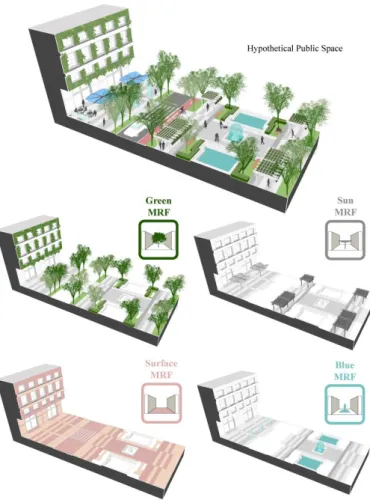
Figure 2 - Representational division of thermal attenuation measures from a hypothetical public space Figure 3 - Vegetation crown dimension at surface and human exposure characteristics
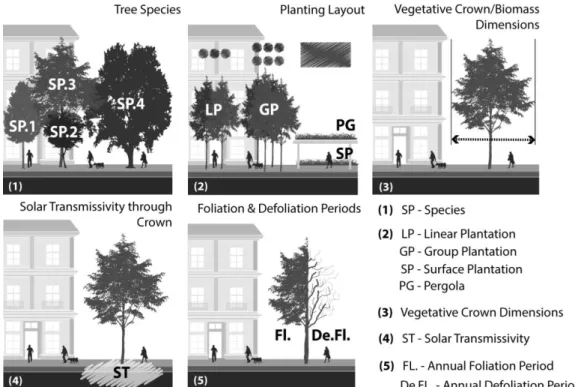
Figure 4 - Variables that influence the performance of shade canopies
Table 1 - Description and criteria for the three subgroups within the Köppen Geiger ‗Temperate‘ (C) classification | Source: (Adapted from Peel, Finlayson et al. 2007)
Table 2 - Ranges of the thermal indices of Predicted Mean Vote (PMV) and Physiologically Equivalent Temperature (PET) for different grades of Thermal Perception (TP) and Physiological Stress (PS) on human beings; internal heat production: 80 W, heat transfer resistance of the clothing: 0.9 clo (according to Matzarakis 1997) | Source: (Adapted from, Matzarakis, Mayer et al. 1999)
Table 3 - Selected studies which assessed the relationship between thermal indices and qualitative attributes
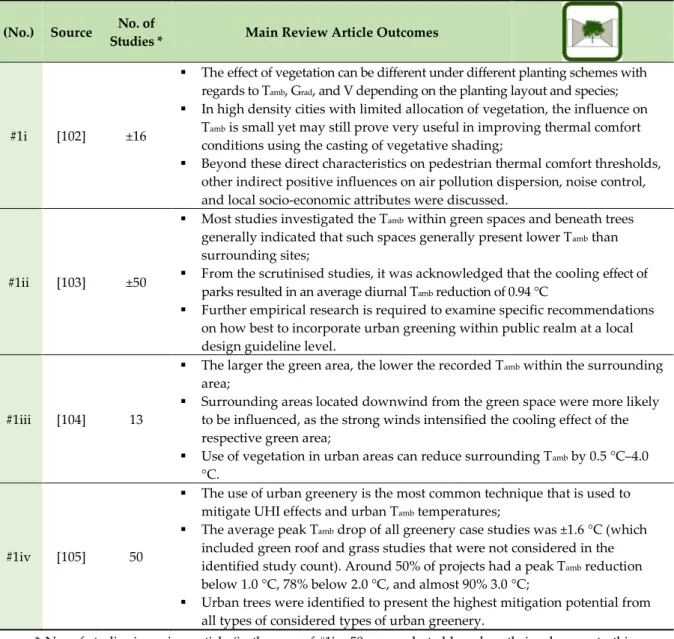
Table 4 - Existing review studies of urban vegetation benefits and their general conclusions Table # - Green MRF
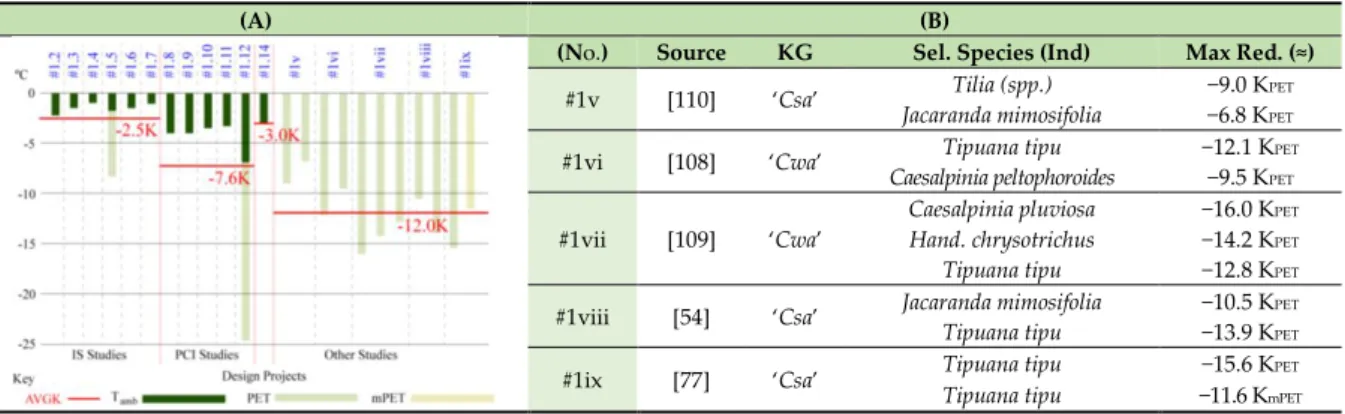
Table 5 - (A) – Supplementary study results which identified vegetation effects upon PET | (B) – Overview of maximum and average reductions of Tamb and PET
Table 6 - Review of studies which identified thermal results from H/W and canyon analysis Table # - Sun MRF
Table 7 - Result review of two bioclimatic studies which identified concrete thermo-physiological attenuation as a result of ephemeral shade canopies
Table # - Surface MRF Table # - Blue MRF
Publication
2
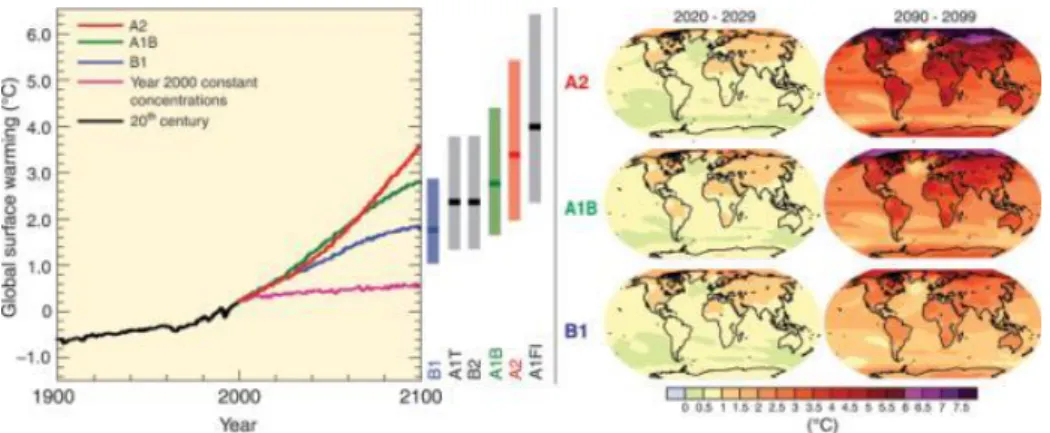
Figure 1 - IPCC‘s different climate scenarios and respective implications on global temperatures. Source: (IPCC, 2007)
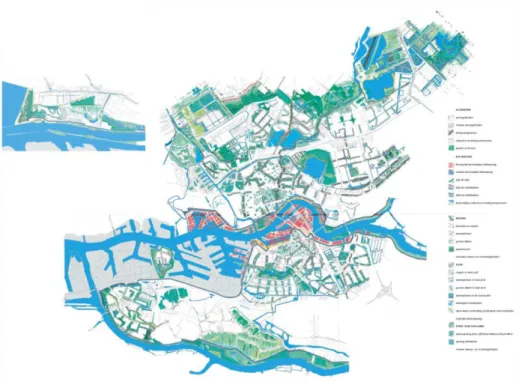
Figure 2 - Strategy Synthesis Plan of the Rotterdam Water City 2030. Source: (Rotterdam.Climate.Initiative, 2010)
Figure 3 - Concept of Water Plaza in challenging flooding scenarios. Source: (Boer, Jorritsma and Peijpe, 2010)
Figure 4 - Amphibious housing built upon resilient dikes in Holland. Source: (Dura Vermeer case study in, Robinson and Hamer, 2009)
Figure 5 - Floating Pavilion of the Delta Sync and Dura Vermeer, one of the seven projects of the Rotterdam‘s climate change adaptation strategy. Source: Author‘s photograph
Figure 6 - Winning Proposal for the New York Competition ‗What if NYC?‘, by David Hill with Laura Garofalo, Nelson Tang, Henry Newell, Megan Casanega. Source: (NYC, 2008)
Figure 7 - Water level control in London by the Thames Barrier. Source: Andy Roberts 2004
Chart 1 - Table of global impacts projected for changes in climate associated with different global average surface temperature increase in the 21st century. Source: (IPCC, 2007)
Table 1 - Examples of the climate system research programmes in Europe from 1998 onwards. Source: Adapted from (Swart, Biesbroek, Binnerup et al., 2009)
Table 2 - Examples of the Impacts Research Programmes in Europe. Source: Adapted from (Swart, Biesbroek, Binnerup et al., 2009)
Table 3 - Examples of Vulnerability and Adaptation Research in Europe. Source: Adapted from (Swart, Biesbroek, Binnerup et al., 2009)
Table 4 - Australian Local Government Association Adaptation Projects. Source: Adapted from (LGAT, 2010)
xiv Figure 1 - Olgyay‘s interpretation of moderate European cli-mates – microclimatic requirements through
PET values to determine thermal comfort in outdoor environments. (Olgyay, 1963)
Figure 2 - Relation between air temperature and thermal comfort index PET in sun and shadow (Katzschner, 2006)
Figure 3 - William Whyte‘s time-lapse photography of sunlight patterns in New York (Whyte, 1980) Figure 4 - (a) Input window of urban structures and environmental morphology (b) Input window of fish
eye lens photo-graphs/drawings Source: (RayMan Software by Matzarakis, 2000)
Table 1 - PET Ranges within different grades of thermal perception and resulting physiological/thermal stress on human beings (Matzarakis and Mayer, 1996)
Publication
4
Figure 1 - Conceptual intervention in Queen Elizabeth Square (a) existing square; (b) square post bioclimatic intervention
Figure 2 - Conceptual intervention of cool pavements in Queen Street (a) before the installation of cool pavements; (b) post intervention
Figure 3 - Axonometric of the (a) reflecting pool; (b) statue basin. Adapted with permission from Trévelo & Viger-Kohler [19]
Figure 4 - Results from thermal comfort questionnaire. Adapted with permission from CiNii [38] Figure 5 - Proposing adaptation measures which focus upon Auckland‗s public realm and local risk
factors. Adapted with permission from Taylor & Francis [44] Figure 6 - Extending the ADM through the incorporation of the framework
Table 1 - Summary of climate information for the six main City Centres in New Zealand (* Average Relative Humidity (RH) levels were taken at 9 am, hence these figures vary approximately if combined with afternoon RH levels—For the case of Auckland, this would decrease annual RH approximately to 76%. ** Annual count of ―hot days‖ where temperatures exceeded 25 °C—values presented are annual averages since mid-twentieth century. Wet-days, sunshine, temperature, wind speed, and average relative humidity data are mean values from the 1981– 2010 period). Adapted with permission from NIWA [4–6]
Table 2 - Direct application of reflective pavements in existing bioclimatic projects. Adapted with permission from Elsevier [25]
Table 3 - Bioclimatic projects and studies that use evaporative cooling
Table 4 - Framework of relevant bioclimatic case studies within the international arena
Publication
5
Figure 1 - The existing ―Place Diagram‖ by the PPS. Source: (PPS 2003b)
Figure 2 - Public space design in the scope of urban design, climate change and that of user-based adaptation
Figure 3 - Extending the ―Place Diagram‖ to consider new implications on pedestrian comfort in the light of climate change
Figure 4 - Representation of different environmental layers
Figure 5 - Cross-referencing the theory of psychological adaptation and thermal preference Figure 6 - Specific characteristics of the quantitative criteria for pedestrian comfort
Figure 7 - Comparison of existing PET and a modest projection of PET for the Mediterranean area by 2100. Source: Author‘s figure + content adapted from (Höppe 1999; Matzarakis and Amelung 2008)
Figure 8 - Three tiers of the quantitative criteria
Figure 9 - Restructured Place Diagram. Source: Author‘s figure + content adapted from (PPS 2003b)
Table 1 - Applying the three step process in existing studies of pedestrian comfort thresholds and thermal adaptation
xv Figure 1 - (A) Site location and surroundings | (B) City context map | (C) Wind Rose with predominant
wind direction | (D) H/W of surrounding canyons | (E) H/W of Rossio (perspective)
Figure 2 - (A) Wind Pattern simulation through Computational Fluid Dynamic (CFD) studies | (B) Shading time simulation through Shadow Behaviour Simulation (SBS) | (C) Maximum morning shadow extents through SBS | (D) Maximum afternoon shadow extents SBS Figure 3 - Establishing specific Points of Interest (POI) based on initial simulations around the square Figure 4 - Mean results obtained from meteorological instruments between 10:00-13:00 and 14:00-17:00
with a break during 13:00-14:00 (UTC +0) for pedestrian footfall count (displayed by red line) | (A) – Ambient Temperature | (B) – Relative Humidity | (C) – Wind Speed | (D) – Global Radiation
Figure 5 - Mean results obtained from meteorological instruments between 10:00-13:00 and 14:00-17:00 with a break during 13:00-14:00 (UTC +0) for pedestrian footfall count (displayed by red line) | (A) – Average POI Surface Temperatures | (B) e Average Surface Temperatures for POI 6 | (C) – POI surface composition | (D) – Surface appearance (coin in bottom-right corner used for visual scale comparison)
Figure 6 - PBR results which compares identified ‗thermal classifications‘ of different variables against pedestrians who had been indoors at least 30 min before the interview with those who remained outdoors
Figure 7 - Pedestrian Based Response (PBR) drawings of perceived cool and hot areas in the square | (A) – Cool areas | (B) – Hot areas | (C) – Percentage of pedestrians located in cool/hot areas, and seating percentage
Figure 8 - Pedestrian Foot-count results and POI 6 bench use Figure 9 - Conceptual intervention in POI 2 and ΔTPET(2) variation
Figure 10 - Conceptual intervention in POI 3 and ΔTPET(3) variation
Figure 11 - Conceptual intervention in POI 4 and ΔTPET(4) variation
Figure 12 - Conceptual intervention in POI 5 and ΔTPET(5) variation
Table 1 - Ranges of the thermal index Physiologically Equivalent Temperature (TPET) for different
grades of Physiological Stress (PS) on human beings; internal heat production: 80 W, heat transfer resistance of the clothing: 0.9 clo (according to [40])
Table 2 - Identification of mean PET from all site visits and resulting correlations with physiological stress grades
Publication
7
Figure 1 - (a) Southern perspective view of Rossio and location of each Point of Interest (POI) around the square | (b) Height-to-Width Ratios of Rossio, and surrounding canyons | (c) Polar diagrams for each POI, which were obtained through the use of a fish-eye lens camera and posteriorly simplified into vectorised before being processed by the Rayman
Figure 2 - General descriptions of the conceptual public space design measures recommended for the hottest Points of Interest (POI)
Figure 3 - Comparison of existing PET averages during Day 3 with future A1FI/RCP8.5 and B1/RCP4.5 scenarios until the end the century
Figure 4 - Comparison of existing PET averages during Day 3 (before and after interventions) with future projections until the end the century, C5 emphasised by red line which identifies period where majority of POI‘s witnessed highest stress levels
Figure 5 - Gridded layout of Rossio with proposed public space design interventions with extensions on western and eastern sidewalks
Figure 6 - Distribution of Physiological Stress around Rossio for existing and projected climate Figure 7 - Radar Chart of Distribution of Physiologically Equivalent Temperature Load (PETL) at C5
within the different assessed scenarios
Table 1 - Ranges of the thermal index Physiologically Equivalent Temperature (PET) for different grades of Thermal Perception and Physiological Stress on human beings; internal heat production: 80 W, heat transfer resistance of the clothing: 0.9 clo (according to Matzarakis, 1997). Source: (Adapted from, Matzarakis et al., 1999)
Table 2 - Existing mean PET values during day 3 and projected PET values after public space design interventions in each of the four POI
Table 3 - Grade Extension of Physiological Stress on human beings to accompany increased values beyond the Physiologically Equivalent Temperature (PET) value of 41 °C in light of projected estimates (see Table 1). Source: (Adapted from, Matzarakis et al., 1999)
xvi B1/RCP4.5 scenarios
Table 5 - Physiologically Equivalent Temperature Load (PETL) for each assessed scenario
Publication
8
Figure 1 - Specific locations within Lisbon's historical quarter, surrounding context, and proximity to the Tagus
Figure 2 - Layout of the determined Sky-View-Factors (SVF) within the four stipulated Aspect Ratios (AR)
Figure 3 - Variations of diurnal Physiological Stress (PS) at 09:00, 12:00 and 15:00 for 2016
Figure 4 - Variations of diurnal Physiological Stress (PS) based upon Physiologically Equivalent Temperature (PET) at an hourly interval between 09:00 and 18:00 for 2012–2016 with identification of Heat Wave Event (HWE)
Figure 5 - Variations of diurnal Physiological Stress (PS) based upon modified Physiologically Equivalent Temperature (mPET) at an hourly interval between 09:00 and 18:00 for 2012–2016 with identification of Heat Wave Event (HWE)
Figure 6 - Identification of Sky-View-Factor (SVF) and Minutes Cast in Sun (MSun) between 09:00– 18:00 for each specific location with a solar path calibrated to the 15th of July
Figure 7 - Canyon variations of diurnal Physiological Stress (PS) resultant of hourly Physiologically Equivalent Temperature (PET) and modified PET (mPET) between 09:00 and 18:00 based upon climatic averages obtained for July 2016
Figure 8 - Canyon variations of diurnal Physiological Stress (PS) resultant of hourly Physiologically Equivalent Temperature (PET) and modified PET (mPET) between 09:00 and 18:00 based upon climatic averages obtained for the 3rd of July 2016
Figure 9 - Thermal Attenuation Priority (TAP) for the different canyons through the identification of modified Physiologically Equivalent Temperature Load (mPETL) between 09:00 and 18:00 based upon climatic averages obtained for July 2016
Figure 10 - Cumulative modified Physiologically Equivalent Temperature Load (cmPETL) for the Morning (M), Afternoon (A), and Diurnal (D) period for the different canyons between 09:00 and 18:00 based upon climatic averages obtained for July 2016
Table 1 - Ranges of the thermal index Physiologically Equivalent Temperature (PET) for different grades of Physiological Stress (PS) on human beings; internal heat production: 80 W, heat transfer resistance of the clothing: 0.9 clo (according to Ref. [42]). Source: (Adapted from, Ref. [41])
Table 2 - Description and categorisation of utilised Aspect Ratios (AR) and their respective Height, Width, and Ratio
Table 3 - Average monthly Mean Radiant Temperature (MRT) at each measurement time and variation for 2016
Publication
9
Figure 1 - Comparison of monthly averages of Tamb and RH field recordings obtained without the
presence of a shading tree against those obtained directly beneath a vegetative crown in the central area of a low UCC in Lisbon‘s historical district | Source: Adapted from [54]
Figure 2 - Representation of the Tipuana tipu species | (A) Example of Linear Planation of species within the eastern lateral sidewalk in Rossio during the afternoon | (B) Dimensions of tree of which were later used in simulations | (C) Annual foliation and coloration of vegetative crown - adapted from Viñas, Solanich [72]
Figure 3 - North-to-South Orientation (NSO) layout of the determined Urban-Canyon-Cases (UCCs) and the central/lateral Reference Points (RPs) with specified Crown Spreads and Vegetative Coverage Ratios (VCR)
Figure 4 - Variations of diurnal Physiological Stress (PS) based upon Physiologically Equivalent Temperature (PET) and modified PET (mPET) at an hourly interval between 09:00 and 18:00 for July and December 2016 with identification of Urban Heat Waves (UHW) and Very Hot Days (VHD)
Figure 5 - Identification of Sky-View-Factor (SVF) and Minutes cast in the sun during the Summer/Winter (MSum/MWin) between 09:00-18:00 for each Reference Points (RPs) for HW2.00 and HW1.00
Figure 6 - Identification of Sky-View-Factor (SVF) and Minutes cast in the sun during the Summer/Winter (MSum/MWin) between 09:00-18:00 for each Reference Points (RPs) for HW0.50 and HW0.17
Figure 7 - Canyon variations of diurnal Physiological Stress (PS) resultant of hourly modified Physiologically Equivalent Temperature (mPET) between canyon simulations with No
xvii
2.00 1.00
Figure 8 - Canyon variations of diurnal Physiological Stress (PS) resultant of hourly modified Physiologically Equivalent Temperature (mPET) between canyon simulations with No Vegetation (NV) vs. with the Tipuana tipu (TT) and those originally presented by the meteorological station for HW0.50 and HW0.17
Figure 9 - Diurnal wind speed (V1.1) variations between the RPs within all NSO canyons for the 16th of
December
Figure 10 - Mean Radiant Temperature (Tmrt) differences during the summer at selected Reference Points
(RPs) between simulations with No Vegetation (NVSim) vs. with the Tipuana tipu (TTSim) during the 3rd of July
Figure 11 - Mean Radiant Temperature (Tmrt) differences during the summer at selected Reference Points
(RPs) between simulations with No Vegetation (NVSim) vs. with the Tipuana tipu (TTSim) during the 16th of December
Table 1 - Average and diurnal (3rd of July and 16th of December) climatic data obtained from weather station (Index Nº08535)
Table 2 - Ranges of the thermal index Physiologically Equivalent Temperature (PET) for different grades of Physiological Stress (PS) on human beings; internal heat production: 80 W, heat transfer resistance of the clothing: 0.9 clo [according to 66] | Source: [Adapted from, 42] Table 3 - Description and categorisation of utilised Urban-Canyon-Cases (UCCs) and their respective
Height, Width, and HW Ratio
Table 4 - Stipulation of Reference Points (RPs) within each of the assessed Urban-Canyon-Cases (UCCs) based upon single-point Sky-View-Factors (SVFs)
Table 5 - Input Coordinates and description of Reference Points (RPs) within each assessed Canyon, each with a total length of 200m
Table 6 - Specific Configurations of SkyHelios Wind Diagnostic Tool
Table 7 - Maximum reductions (K) in thermo-physiological indices between simulations with No Vegetation (NVSim) vs. with the Tipuana tipu (TTSim) at each specific location within HW0.17
xviii (Page intentionally left blank)
I
ntroduction
Many inhabitants of cities throughout the world suffer from health problems and discomfort that are caused by overheating of urban areas, and there is compelling evidence that these problems will be exacerbated by global climate change. Most cities are not designed to ameliorate these effects although it is well-known that this is possible, especially through evidence-based climate-responsive design of urban open spaces.” (I)
ithin the last few decades, several agendas are continually gaining more significance for the interdisciplinary practices of urban planning and design. Interlaced within such agendas, lies the comprehension of how climate change adaptation can address issues of uncertainty and ambiguity when facing possible obstacles and impacts until the end of the century. Nevertheless, and thus far, a considerable amount of research regarding local scales has been carried out through a top-down approach (Wilbanks and Kates 1999). Generally, such methods concentrate upon impact prediction through the utilisation of Global Circulation Models (GCMs) and to some extent, Regional Climate Models (RCMs) as „starting points‟ to both quantify and estimate climate change scenarios.
For more than a quarter of a century, the need for changing consumption patterns and addressing the risks related to the climate system has expanded exponentially. In 1992, approaches to climate change underwent a significant step forward when the international community established the United Nations Framework Convention on Climate Change (UNFCCC). The catalyst that propagated such an emergence has been a subject of dispute amongst various authors and agencies. Some early theorists have suggested that such multilateral environmental regimes resulted from nations wanting to control resources due to environmental degradation (Homer-Dixon 1994, Gould, Weinberg et al. 1995). On the other hand, alternative approaches indicate that these environmental regimes originated from the changing attitude in global politics/institutions in light of global warming (Giddens 1990, Meyer, Frank et al. 1997, Siebenhüner 2003). Although the former perspective may be valid, it is also important to note that “the worldwide expansion of scientific discourse and association over [the twentieth century] facilitated the rise of world environmental organisation” (Meyer, Frank et al. 1997, p.631). Such a perspective can be associated to the early disseminations of the Intergovernmental Panel on Climate Change (IPCC) before the turn of the century. With the progression of such scientific collaborations and maturity, it was recognised that the global politics applicable to climate adaptation was inherently different to that of mitigation. Serving as a catalyst to such recognition, was the parallel identification at the time that mitigation efforts alone were no longer sufficient to address the potential changes within the global climate system. Hence, and given „risk factors‟ associated to such potential aggravations, adaptation became a topic that became more intrinsically allied to the „interests‟ of individual countries during the enveloping of the 21st century (Costa, Nouri et al. 2013).
“
urban climatology studies dating well before the turn of the century (e.g., Büttner 1938, Olgyay 1963, Höppe 1984, Mayer and Höppe 1987, Oke 1988, Matzarakis and Mayer 1997, Höppe 1999), adjacent research interests and concerns were also raised. Just before the end of the 20th century, it was already recognised that “[up until then], the bulk of the research relating to local places to global climate change [had] been top-down, from global toward local, concentrating on methods of impact analysis that use as a starting point climate change scenarios derived from global model, even though these have little regional or local specificity. There [was] a growing interest, however, in considering a bottom-up approach, asking such questions as (…) how efforts at mitigation and adaptation [could] be locally initiated and adopted.” (Wilbanks and Kates 1999, p.1). As a response on behalf of the international scientific community, bottom-up approaches and studies that have focused upon the importance of local scales have dramatically increased since the turn of the century.
Accordingly, both the limitations and means to improve local scale analysis tools have been a topic of interest both in the fields of urban climatology and planning/design. Thus far, and in accordance with GCM outputs, it has been suggested that global temperature shall continue to increase throughout the 21st century. Nevertheless, it has been identified that such top-down climatic assessments are often less useful for local scale analysis tools and adaptation. As an example, the within the assessment reports of the IPCC, the effects of weather are often described with a simple index based on amalgamations of air temperature (Tamb) and Relative Humidity (RH). Although it is vital to recognise the value of such
descriptions within the maturing climate change agenda, when considering bottom-up approaches to climatic vulnerability, the exclusion of vital meteorological factors (i.e., radiation fluxes, wind speed and human thermo-physiological factors) have arguably decreased their significance and utility for local decision making and design (Matzarakis and Amelung 2008, Matzarakis and Endler 2010).
As a result, and arguably catalysed further by the climate change adaptation agenda, local decision makers and designers are continually focussing more upon the implementation of measures to address local „risk factors‟. Such a maturing bottom-up perspective is one that is presented within this thesis as a means to explore how urban planning and design can improve the bioclimatic conditions within local scales. Thus, it discusses how a developing bottom-up perspective can synergise the individual spheres of urban planning and design with that of urban climatology to address meteorological implications through modifications of the urban public realm (Mayer and Höppe 1987, Katzschner 2006, Ali-Toudert and Mayer 2007, Nikolopoulou 2007, Shashua-Bar, Tsiros et al. 2012). Beyond the disseminations derivative of this thesis, utilised as a means to evaluate such modifications, numerous recent studies have incorporated the use of biometeorological studies to examine thermal comfort conditions as part of the public space design process (e.g., Lin, Matzarakis et al. 2010, Vanos, Warland et al. 2010, Krüger, Drach et al. 2013, Abreu-Harbich, Labaki et al. 2015, Algeciras, Consuegra et al. 2016, Charalampopoulos, Tsiros et al. 2016, Matzarakis, Fröhlich et al. 2016, Roshan, Yousefi et al. 2016).
When considering the specific case of Lisbon, it has already been recognised that additional action is required to adapt to future climatic conditions that are already being witnessed/recorded within its urban environment (Alcoforado and Matzarakis 2010, Costa 2013, Alcoforado, Lopes et al. 2014, Matos Silva and Costa 2017). In addition, and as identified by numerous studies (Alcoforado and Vieira 2004, Alcoforado, Andrade et al. 2009), the scientific community has recognised a weakness in studies which focus upon Mediterranean climates with hot-dry summers with regards to local approaches to thermal comfort thresholds. Such an insufficiency frequently relays to a lack of local scale design guidelines and precedents which could otherwise inform practices such as public space design in addressing thermal comfort during the summer period. In accumulation, and commonly within regions such as southern Europe, many cities often present a lapse of climatological data that would otherwise prove useful informing local decision making and design within the public realm. Within this region, such gaps were particularly evident within municipal Masterplans (Alcoforado, Andrade et al. 2009), including with regards to potential climate change impacts (Costa 2013).
As a reaction from the scientific community, there has thus far been an encouraging dissemination of studies that have made very important contributions to comprehending the general bioclimatic conditions within Lisbon‟s public realm (Andrade 2003, Oliveira and Andrade 2007), causalities of and intensities of Urban Heat Islands (UHI) (Alcoforado and Andrade 2006, Lopes, Alves et al. 2013, Alcoforado, Lopes et al. 2014), wind current studies (Lopes 2003, Alcoforado, Lopes et al. 2006), and, the combination with planning policy (Alcoforado, Lopes et al. 2005, Alcoforado and Matzarakis 2010). In addition, and with regards to the climate change adaptation agenda, studies pertaining to potential impacts upon Lisbon‟s climate have also been published (Alcoforado, Andrade et al. 2009, Costa 2013, Costa, Sousa et al. 2013, Matos Silva 2016, Matos Silva and Costa 2017). In addition, in recent years, national research groups such as Climate Change Impacts Adaptation and Modelling (CCIAM), and „ClimAdaPT‟ have also built upon the incorporation of climate adaptations strategies within municipal documents.
Outlining the Lisbon Case
According to Miranda (2006) and Calheiros (2006) within the „Climate Change in Portugal, Scenarios, Impacts and Adaptation Measures‟ (SIAM) project (Santos and Miranda 2006), the city of Lisbon currently observes: (i) between 10 and 20 „very hot days‟, which are those that experience Tamb
above 35 ºC; (ii) a range between 100-120 „summer days‟ where maximum Tamb surpass that of 25 ºC;
and lastly, (iii) frequent occurrences of heat wave events, where Tamb sequentially surpass that of 32 ºC
during various days. Moreover, and when considering extreme events such as the heatwave of 2003 within Western European countries such as Portugal, required additional measures to warn, cope, and prevent the recurrence of such events were identified (Kovats and Ebi 2006, Matzarakis 2016). More concretely, and within the district of Lisbon, between the 29th of July and the 13th of August, it was identified by Nogueira, Falcão et al. (2005) that: (i) 15 days had a maximum Tamb above 32 ºC; (ii) there
was a noteworthy consecutive relay of 10 days with maximum Tamb surpassing 32 ºC; and finally, (iii)
there was a 5 day period which consecutively experienced Tamb above 35 ºC. Furthermore, when
considering such impacts upon public health, an estimated mortality rate increase of 37.7% (i.e., corresponding to 1316 excess deaths) in comparison to what would be expected under standard conditions. It was noted that such events are representative of current conditions, which have, adjacently, been argued to be already presenting current thermal aggravations associated to climate change (Alcoforado and Matzarakis 2010, Alcoforado, Lopes et al. 2014).
As identified by Peel, Finlayson et al. (2007), Lisbon witnesses a Köppen Geiger (KG) climate classification of „Csa‟ which equates to a Mediterranean climate with hot and dry summers. According to Rubel and Kottek (2010), based upon GCM outputs, it was projected that the entirety of continental Portugal shall witness the same KG classification to what is currently witnessed in Lisbon by 2100. Such a phenomenon implies that northern cities such as Porto shall go from a KG classification of „Csc‟ to „Csa‟, suggesting a considerable change in summer conditions. This being said, such a projection undertaken by Rubel and Kottek (2010), implies that by the end of the century, Lisbon‟s general climate shall not alter from its present classification.
Nevertheless, the projection that Lisbon shall not change KG classification does not, by any means, imply that climatic conditions shall not potentially modify by the end of the century. To start off with, and as identified by the study undertaken by Matzarakis and Amelung (2008), Western European cities within the Iberian Peninsula could witness changes in thermo-physiological indices by up to 15 ºC based upon worst case emission scenarios, values which sharply differ from the IPCC projections established upon singular climatic variables such as Tamb (IPCC 2000).
All the same, before the introduction of Representative Concentration Pathways (RCP) (IPCC 2013) and based upon the Special Report on Emission Scenarios (SRES)A2 scenario equating to “A very
heterogeneous world with an emphasis on family values and local traditions” (IPCC 2000); Miranda (2006) identified, through the use of RCMs, that Lisbon could potentially further witness a: (i) total of 50 days a year with diurnal Tamb surpassing that of 35 ºC (i.e. constituting a „very hot day‟); (ii)
doubling in duration of days that consecutively surpass 35 ºC (i.e. implying a potential span of 20 uninterrupted days); (iii) radical upsurge of „Tropical Nights‟, increasing from 20 up to a potential 80 annual nights where the minimum Tamb surpass 20 ºC; and lastly, (iv) potential escalation of „summer
days‟ (where Tamb surpass that 25 ºC) up to 180 days, representing half a calendar year.
Notwithstanding, it is important to note that such projections are not based upon the worse-case-scenario of SRESA1FI (corresponding to a RCP8.5 according to Rogelj, Meinshausen et al. (2012)), and
more accentuated impacts can take place if such a scenario that originates from “A world of rapid economic growth and rapid introductions of new and more efficient technologies” (IPCC 2000). In addition to these factors, and within Lisbon, numerous studies have furthermore identified areas which present further susceptibility to local microclimatic risk factors. Due to its morphological composition, areas such as the downtown quarter around „Baixa Chiado‟ often witness the highest intensities of UHI (Andrade 2003), and habitually, the highest Tamb values during the summer (Alcoforado, Lopes et al.
2005).
Opportunities for Public Space Design
Today, and within what is considered a „third modernity‟ where “the contemporary society witnesses rapid transformations and, resultant of this evolution, the degree and velocity of this transformation is often underestimated (…) in the domain of urban planning, such comprehension is even more challenging to appreciate due to the slow evolution of the edified fabric, and because of the comparatively small amount of new annual contributions to the existing fabric…” (Ascher 2010, p.19, author's translation), the role of public spaces needs to adjust in order to further consider issues related to urban climatology. Referring back to the perspective presented by (Brown, Vanos et al. 2015, p.1) (I)
a setting: (1) where urban climatology can lead to thermal discomfort and distress upon pedestrians within the urban fabric; and, (2) where such local risk factors can be improved through evidence based „climate-responsive design‟.
As a result, and considered as an imperative opportunity for public space design in an era of potential climatic aggravations; although their physical attributes may actually not have changed significantly, public spaces must however continue to reflect the values and needs of an ever evolving society. Concerning this evolution, although cities have progressed for centuries around the intuitive feeling for human sense and scale, “ this knowledge was lost somewhere in the process of industrialisation and modernization, which led to dysfunctional city environments for the important and yet ignored segment of city life on foot.” (Gehl and Svarre 2013, p.3). Extrapolating this perspective a little more in terms identifying tangible (and also intangible) qualities of the „city life on foot‟, outdoor spaces can likewise be considered a “founder of urban form, the space between buildings, that configures the domain of socialisation and „common‟ experiences, and likewise of a collective community” (Brandão 2011, p.34, author's translation). In order to maintain such qualities that have also been identified by many other prominent studies which continue to be cornerstones within contemporary urban planning and design (Lynch 1960, Cullen 1961, Jacobs 1961, Whyte 1980, Gehl 1987, Borja and Muxí 2003, Carmona, Tiesdell et al. 2003, Day and Parnell 2003), there is now the need to further “recognise the important role that public spaces play in extreme temperatures/combating climate change” (CABE and Practitioners 2011). It is here where public spaces, a stage of human activity and prosperity within outdoor contexts, can be utilised to improve the safety and comfort of the urban public realm.
Within the early approach conducted by Olgyay (1963), the examination of climatic implications upon the built environment was identified as an imperative starting point for architecture, urban design, and urban planning. More concretely, the sequential interplay of „climate-comfort‟ design was based upon: Climate data, biological evaluation, technological solutions, and local application. Founded upon such a rational, one can extract the potentiality of bottom-up perspectives, and that of local urban outdoor spaces. Specifically, the first two steps imply, initially, a careful and wholesome consideration of climatic elements at a given location, and secondly, the impacts of such elements upon human implications. Accordingly, this not only acknowledges the need for microclimatic evaluation, but likewise, the importance of considering thermal comfort implications within the design/maintenance of an urban outdoor space. Taking this line of reasoning a little further for local decision making and design, this raises two predominant considerations: (i) the requirement to improve and/or facilitate the design guidelines within such environmental perspectives for action and adaptation; and, (ii) the growing cogency/necessity for local thermal climate sensitive action. For such motives, the breadth between theory and application/practice needs to continue to be further addressed to inform the better design, and maintenance, of public space design in an era susceptible to potential climatic aggravations.
Hypothesis & Objectives
Hypothesis
The interdisciplinary union between the distinct fields of urban climatology and public space design can be strengthened to improve local pedestrian thermal comfort levels while confronting existing and projected microclimatic aggravations associated to climate change
General Objective
To examine how public space design can improve urban outdoor thermo-physiological factors through a bottom-up approach
Specific Objectives
(1) Inspect implications of the emerging climate change agenda upon the importance of bottom-up approaches to local scale adaptation (2) Identify existing measures and both quantitative/qualitative
approaches to thermal sensitive public space design
(3) Examine how public space design can identify/improve existing/future human thermal comfort risk factors within a specific site
(4) Consider how thermal attenuation priorities can be identified and met through public space design in various urban morphological settings
The approach conducted within this thesis was divided into four sequential sections based upon the stipulated specific objectives. Each section was constructed upon two publications which sought to present scientific outlooks, approaches, and conclusions that ultimately aimed at addressing and testing the original research hypothesis launched by this doctoral thesis by publication.
State-of-the-art:
Publication 1: Approaches to outdoor thermal comfort thresholds through public space design: A
Review
Authors: A. Santos Nouri, João Pedro Costa, M. Santamouris, A. Matzarakis The state-of-the-art of this thesis was structured into a „Review Article‟ which was progressively constructed/refined throughout the elaboration of the thesis. As the thesis developed throughout the various sections of the research, the identified existing knowledge was formulated into a structured document which provided a critical outlook upon how outdoor thermal comfort thresholds have thus far been addressed through public space design.
More precisely, and with the aim of discussing and organising the application of scientific knowhow with regards to thermal comfort thresholds through public space design, Publication 1 undertook two sequential approaches to the state-of-the-art. These being upon: (i) ascertaining general approaches to pedestrian thermal comfort thresholds through quantitative perspectives (i.e. considering thermo-physiological indices), and through qualitative perspectives (i.e. considering psychological thermal adaptation dynamics); and subsequently, (ii) the elaboration/organisation of four Measure Review Frameworks (MRFs) which describe the actual application of different typologies of public space design measures within three KG subtypes of the „Temperate‟ classification.
Based upon similar distinctions undertaken by (Ahmed 1996, Nikolopoulou 2004, Erell, Pearlmutter et al. 2011), the MRFs were based upon four principal elements, these being: (1) urban vegetation – constituting the Green MRF; (2) shelter canopies – constituting the Sun MRF; (3) urban materials – constituting the Surface MRF; and, (4) water/misting systems – constituting the Blue MRF. Within each measure framework, and identified by the respective studies, the procedures in which microclimatic conditions were assessed and/or modified were reviewed. In addition, and by also referring to thermo-physiological and psychological approaches, it was possible to evaluate how existing measures influenced „in-situ‟ conditions, for example: (i) Tamb, which generally revealed low
reductions, due to encircling atmosphere quickly dissolving such deviations; (ii) Global radiation (Grad),
which revealed crucial influences upon thermal comfort levels within studies that considered thermo-physiological indices; and, (iii) Wind speed (V), which could be manipulated (e.g., decelerated and/or deflected) through elements such as urban vegetation.
Given the very „review‟ nature of Publication 1, and as identified by the constant dissemination of new scientific studies and results, it was considered essential that the state-of-the-art would accompany the progression of this research document until its very final stages. Within such stages of the research, where appropriate, the outcomes of the publications conducted in this thesis were also introduced to consider: (i) how such outcomes built upon various aspects within existing approaches and attitudes; (ii) the comparative opportunities for further work and development with regards to the outcomes presented by the thesis; and, (iii) the future prospectus for thermal comfort factors and public space design, and which areas have still to be explored to their full potential in an era that shall likely witness the continuous maturing and dissemination of new approaches/methods in an era of potential climate change.
Section 1:
The emergence of the climate change adaptation agenda and the growing
role of bottom-up approaches to local scales
Section 1 had the objective of approaching two predominant components: (1) the emergence of the climate adaptation agenda, its intrinsic constitution within international scientific arena, and resulting implications for urban planning and design; and, (2) how methods of impact prediction could correspondingly be undertaken through bottom-up urban planning and design approaches at local scales. Such an attitude enabled an initial appraisal into the climate adaptation agenda, both through a top-down perspective and a bottom-up perspective, each with their own strengths and shortcomings.
identify the vital role of local scales in addressing how existing/future climatic aggravations can be approached through the interdisciplinary practice of public space design.
Publication 2: Climate change adaptation in urbanised estuaries contributes to the Lisbon case
Author/s: João Pedro Costa, A. Santos Nouri, A. Fernandes Publication 2 launched an encompassing global view of the emergence of what was previously a commonly overlooked and disregarded issue, especially for urban planning and design. Such a chapter was launched as part of the integration within the research project “Urbanised Estuaries and Deltas. In search for a comprehensive planning and governance. The Lisbon case” (PTDC/AUR/2008/100309). Within this chapter, and based more upon an initial top-down approach to climate change, the growing recognition for the importance and necessity for action was discussed. Such an importance was also enforced by identifying „frontrunners‟ (both in terms of countries and organisations) that were presenting significant scientific breakthroughs with regards to approaching national adaptation strategies; and in some cases, in measure application. These disseminations were approached as scientific insights to an emerging problem/urgency which could serve as information for other national adaptation efforts around the world. As a result this permitted the perspective that the comprehension of local and dynamic risk factors was indirectly or directly (based upon a case-by-case perspective), backed by scientific knowhow. In this way, such a two-way-synergy permitted „frontrunners‟ to rely on scientific knowledge, yet moreover address their own national processes of adaptation. In both perspectives, one of the most significant breakthroughs was application and teaching of approaches of „down-scaling‟ climatic adaptation. For this reason and through a structured evaluation, both the invaluable contributions from global scientific entities (such as the UNFCCC, and the IPCC) were established, but moreover, the need, and scientific thirst, for bottom-up and localised action for urban planning and design was also indubitably identified.
Publication 3: A bottom-up perspective upon climate change – approaches towards the local scale and
microclimatic assessment
Author/s: A. Santos Nouri Instigated by the work undertaken within the “Urbanised Estuaries and Deltas” project, which although focused more upon risks/opportunities presented by urban flooding, especially in terms of local adaptation measures as identified within Publication 2; the project also identified the importance of addressing other climatic aggravations such as increases in Tamb and occurrences of heat waves in
Lisbon. Similarly and as already described, there was also the essential opportunity to consider such issues at a local scale through a bottom-up approach. Within Publication 3, such a perspective was framed into establishing an early overview of how local scales could present a means to both recognise, and evaluate, such local microclimatic „risk factors‟.
More concretely, and with regards to recognition, still acknowledging the paramount contributions of top-down approaches, particularly regarding extreme climate events with an estimated „return period‟; the significant responsibility for local scales to also address “the high-frequency and microscale climatic phenomena created within the anthropogenic environment of the city” (Hebbert and Webb 2007, p.126) was presented. In addition, the attributes of the urban environment such as street orientations and Aspect Ratios (AR) were approached as means to bridge how practices of urban climatology with urban planning and design could tackle microclimatic risk factors. Subsequently, numerous existing approaches that already presented valuable means to evaluate microclimatic „risk factors‟ were overviewed, namely: (i) the an interpretation of Olgyay (1963) regarding moderate European climates with regards to determining „thermal comfort zones‟ within outdoor environments; (ii) the use of the Physiologically Equivalent Temperature (PET) index (Mayer and Höppe 1987), based upon the Munich Energy-balance Model for Individuals (MEMI) (Höppe 1984, Höppe 1993) - that is defined as the Tamb at which, in a typical indoor setting, the human energy budget is maintained by the
skin temperature, core temperature, and perspiration rate are equivalent to those under the conditions to be assessed (Höppe 1999); (iii) the ranges of PET for different grades of Thermal Perception (TP) and Physiological Stress (PS) upon the human body as discussed in (Matzarakis 1997, Matzarakis, Mayer et al. 1999); and, (iv) the human-biometeorological RayMan model (Matzarakis and Rutz 2006, Matzarakis, Rutz et al. 2007, Matzarakis, Rutz et al. 2010) which incorporates calculations of non-temperature microclimatic variables such as radiation fluxes upon the human body within complex urban environments.
Finally, within Publication 3, the strategic approach of „What if?‟ discussed by (Costa 2011, Coelho, Costa et al. 2012) was also discussed as a means to confronting climatic uncertainty through a flexible exploratory approach by estimating/projecting certain scenarios within a given specific urban outdoor location/setting. Such a method was based upon the tentative approach of “…by asking the right questions in sun and wind studies, by experimentation, [one] can find better ways to board the sun, to
![Table 1. Description and criteria for the three subgroups within the Köppen Geiger ‘Temperate’ (C) group| Source: (Adapted from [27])](https://thumb-eu.123doks.com/thumbv2/123dok_br/18513769.903006/45.892.116.779.950.1100/description-criteria-subgroups-köppen-geiger-temperate-source-adapted.webp)