Department of Information Science and Technology
Two-dimensional placement compaction using an
evolutionary approach: a study
Rafael Luís Ferreira Valente
Dissertation submitted as partial fulfilment of the requirements for the degree of Master in Telecommunications and Computer Engineering
Supervisor:
Ana Maria de Almeida, Assistant Professor, ISCTE-IUL
3
Acknowledgment
To my family, who stood by my side throughout this study and supported me in every situation.
To my beloved girlfriend, who had the patience and the kindness to understand that maybe we could not go out to dinner because I had set my priorities.
To my supervisor, my sincere appreciation for having the time and availability to answer to my annoying questions and always answer with a smile.
To my friends, that did not have a clue of what I was doing in my master thesis but still listened to me.
To my dogs, that heard me sigh in some occasions and came to me to comfort. To all that I listed and others that I may have not mentioned, my sincere Thank You.
4
Abstract
The placement problem of two-dimensional objects over planar surfaces optimizing given utility functions is a combinatorial optimization problem. Our main drive is that of surveying genetic algorithms and hybrid metaheuristics in terms of final positioning area compaction of the solution. Furthermore, a new hybrid evolutionary approach, combining a genetic algorithm merged with a non-linear compaction method is introduced and compared with referenced literature heuristics using both randomly generated instances and benchmark problems. A wide variety of experiments is made, and the respective results and discussions are presented. Finally, conclusions are drawn, and future research is defined.
Keywords: two-dimensional rectangular placement; compaction; evolutionary strategy; genetic algorithm.
5
Index
Acknowledgment ... 3 Abstract ... 4 Index ... 5 Table Index ... 7 Figure Index ... 8Abbreviations and Acronyms List ... 9
Chapter 1 – Introduction ... 11
1.1. Problem ... 11
1.2. Motivation and relevance ... 12
1.3. Research questions and objectives ... 13
1.4. Methodological Approach ... 13
1.5. Dissertation structure and organization ... 13
Chapter 2 –Literature review ... 15
2.1. 2BP problems ... 15
2.2. 2SP problems ... 17
2.3. 2K problems ... 19
2.4. Other 2-D packing problems ... 21
Chapter 3 – Methodology ... 33
3.1. Heuristic Method for Placement Compaction - HECA ... 33
3.1.1. Placement Encoding ... 33 3.1.2. Fitness Function ... 35 3.1.3. Initialization. ... 35 3.1.4. Genetic Operators. ... 36 3.1.4.1. Crossover ... 36 3.1.4.2. Mutation ... 38
6
3.1.4.3. Selection ... 38
3.2. Compaction Method ... 38
Chapter 4 – Results analysis and discussion ... 43
4.1. C&P experiment ... 43
4.1.1. Compaction methods description ... 43
4.1.2. C&P test results ... 45
4.2. VLSI experiment ... 47
4.2.1. MCNC benchmarks ... 47
4.2.2. GSRC benchmarks ... 50
4.2.3. Crossover operators and evolutionary population size influence ... 52
Chapter 5 – Conclusions and recommendations ... 63
5.1. Main conclusions ... 63
5.2. Contributions to the scientific community ... 64
5.2.1. Scientific level implications ... 64
5.3. Study limitations ... 64
5.4. Proposals for future research ... 64
Bibliography ... 67
Attachments and Appendices ... 75
Appendice A ... 76
Appendice B ... 77
7
Table Index
Table 1 - Results for the area as fitness function ... 46
Table 2 - Results for the semi-perimeter as fitness function ... 46
Table 3 - MCNC benchmark instances attributes ... 48
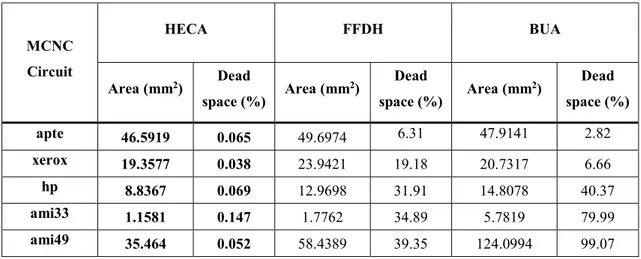
Table 4 - HECA and other implemented methods for comparison results ... 49
Table 5 - HECA and related literature area (mm2) results ... 49
Table 6 - GSRC benchmark optimal placement area values ... 50
Table 7 - HECA and related literature area (mm2) results ... 51
Table 8 - One-Point crossover fitness (mm2) experiment for n100 instance... 77
Table 9 - One-Point crossover fitness (mm2) experiment for n200 instance... 77
Table 10 - One-Point crossover fitness (mm2) experiment for n300 instance... 77
Table 11 - Random Respectful crossover fitness (mm2) experiment for n100 instance 78 Table 12 - Random Respectful crossover fitness (mm2) experiment for n200 instance 78 Table 13 - Random Respectful crossover fitness (mm2) experiment for n300 instance 78 Table 14 - One-Point crossover elapsed time (s) experiment for n100 instance ... 78
Table 15 - One-Point crossover elapsed time (s) experiment for n200 instance ... 79
Table 16 - One-Point crossover elapsed time (s) experiment for n300 instance ... 79
Table 17 - RRC elapsed time (s) experiment for n100 instance ... 79
Table 18 - RRC elapsed time (s) experiment for n200 instance ... 79
Table 19 - RRC elapsed time (s) experiment for n300 instance ... 80
Table 20 – Fitness, elapsed time and # generations executed in n100 instance ... 81
8
Figure Index
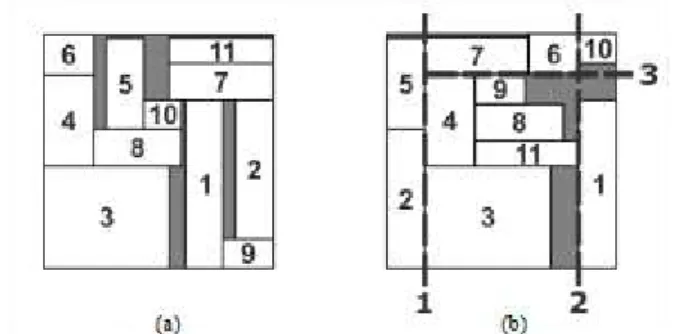
Figure 1 – Non-guillotine cuttable pattern (a) and guillotine cuttable pattern (b). [Source:
(Gomes & Mourão, 2012)] ... 12
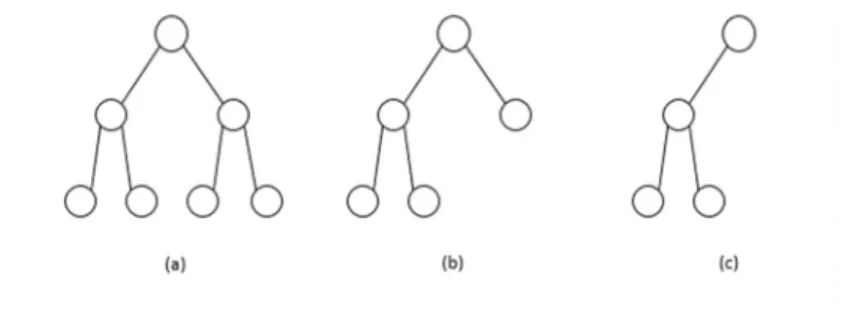
Figure 2 - (a) and (b) Complete binary trees; (c) Incomplete binary tree. ... 34
Figure 3 - Placement representation: (a) complete binary tree; (b) vector encoding; (c) associated layout. ... 34
Figure 4 - One-point crossover example ... 37
Figure 5 - Two mutation processes examples ... 38
Figure 6 - Genetic algorithm merged with the compaction method ... 40
Figure 7 - Enclosing rectangle creation ... 40
Figure 8 - Bottom-Left Fill algorithm approach to small rectangle placement [Source: (Oliveira, Neuenfeldt Júnior, Silva, & Carravilla, 2016)] ... 44
Figure 9 - First-Fit Decreasing Height approach to small rectangle placement [Source: (Oliveira et al., 2016)] ... 44
Figure 10 - Fitness comparison for n100 instance ... 53
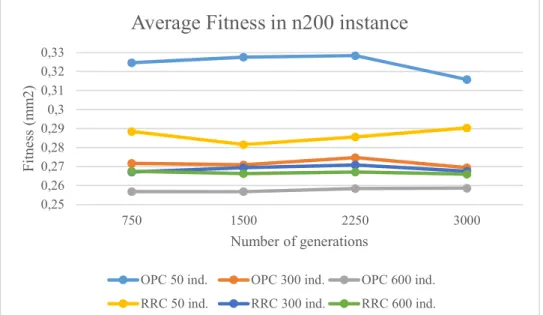
Figure 11 - Fitness comparison for n200 instance ... 53
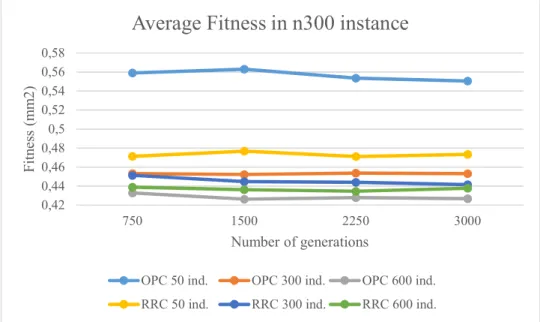
Figure 12 - Fitness comparison for n300 instance ... 54
Figure 13 - Elapsed time comparison for n100 instance ... 55
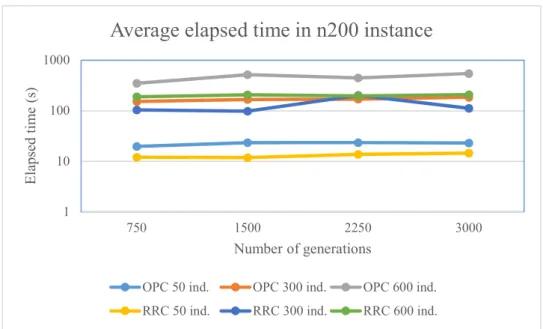
Figure 14 - Elapsed time comparison for n200 instance ... 56
Figure 15 - Elapsed time comparison for n300 instance ... 56
Figure 16 - Fitness by number of individuals in n100 instance ... 58
Figure 17 - Fitness by number of individuals in n200 instance ... 58
Figure 18 - Elapsed time by number of individuals in n100 instance ... 59
Figure 19 - Elapsed time by number of individuals in n200 instance ... 59
Figure 20 - Placement creation for the n100 (left) and n200 (right) instances ... 61
9
Abbreviations and Acronyms List
2-D – Two-Dimensional
2BP – Two-Dimensional Bin Packing
2D-SLOPP – Two-Dimensional Single Large Object Placement Problem 2K – Two-Dimensional Knapsack
2SP – Two-Dimensional Strip Packing BF – Best-Fit
BFDH – Best-Fit Decreasing Height BL – Bottom-Left
BLF – Bottom-Left Fill C&P – Cutting and Packing
EA – Evolutionary Algorithm (or Approach) FFDH – First-Fit Decreasing Height
FPGA - Field Programmable Gate Array GA – Genetic Algorithm
GA-BLF – Genetic Algorithm with the Bottom-Left Fill heuristic GCD - Guillotine Cutting Problem with Demand
GCV - Guillotine Cutting Problem with Value
GRASP – Greedy Randomized Adaptive Search Procedure GSRC - Gigascale Silicon Research Center
HECA – Hybrid Evolutionary Compaction Approach IFF – Improved First-Fit
LGFi – Improved Lowest Gap Fill
LGFiOF – Improved Lowest Gap Fill non-oriented
LMAO - Left-Most Active Only
MCNC - Microelectronic Center of North Carolina
MERAM - Minimization of Enclosing Rectangle under Magnetic Attraction OPC – One-Point Crossover
OPP - Orthogonal Packing Problem RRC – Random Respectful Crossover SA - Simulated Annealing
10 SPGAL – Strip Packing Genetic Algorithm with Layer approach
SPP – Strip Packing Problem
TSBP - Two Step Branching Procedure VLSI - Very Large-Scale Integration
11
Chapter 1 – Introduction
1.1. Problem
Two-dimensional (2-D) placement problems are a specific class of Cutting and Packing (C&P) problems and are acknowledged as being NP-hard in general. Informally, a 2-D placement problem consists in allocating 2-D items within a placement area without overlapping. Further placement restrictions might have to be imposed. When the item’s shapes are rectangular, orthogonal and guillotine cut constraints are commonly used for the most various reasons, namely for cutting, packing or routing. Additionally, the placement is intended to optimize given cost or utility functions. For the sake of simplification, hereinafter it is assumed that both items and the final placement are rectangular shaped.
The complexity associated with 2-D placement problems can vary from relatively simple problems, like disposing written articles in a magazine page, to much more complex challenges like placing components in a chip. In the latter, the complexity is derived from the sheer number of components to be allocated, since the typical dimension of a component has an order of magnitude of nanometres. 2-D placement problems can be differed as being offline or online. In the offline category, the input rectangles to be placed are known before building the packing. In the other hand, in online problems, rectangles are coming one at a time and a placement decision for the current rectangle must be done before the next rectangle is processed. Once a rectangle is packed, it is generally assumed that it will never move again.
Apart from the overlapping and orthogonal constraints, this study addresses two more restrictions, item orientation and guillotine cutting. The first limitation refers to the possibility of rotating by 90 degrees the items to be placed. Consequently, two concepts need to be clarified. When the width of a specific rectangle is superior to its height, the rectangle is said to be horizontally placed. Analogously, when the height is larger than the width, the rectangle is addressed as vertically placed. If both dimensions hold equal values, then the rectangle is a square and its orientation is ignored. The rotation of items implies that the number of potential solutions grows in a combinatorial way. Regarding the guillotine cutting constraint, items need to be allocated in such a way that allows an edge-to-edge guillotine cut or slice cut in the containing rectangular object, thus transforming it into two (sub)rectangles with smaller dimensions and without damaging
12 allocated items. Slicing placement area division and individual items orientation are both inherently hard problems.
In the present study, a hybrid approach for the generation of an optimal (minimal) placement with orientation and guillotine cutting constraints is proposed. This method consists in the integration of a Genetic Algorithm (GA) with a non-linear compaction algorithm (Almeida, Martins, & Rodrigues, 1998). Formally, the algorithm proposed is called Hybrid Evolutionary Compaction Approach and it will be further on addressed as HECA.
1.2. Motivation and relevance
Typically, C&P problems are NP-hard considering that they are unsolvable in a life time range using traditional algorithms. Therefore, the usual approaches are heuristics with a given percentage of deviation to optimality. Obviously, in some cases, optimal solutions can be known at hand and heuristics have proven to reach them in a relatively short computational time. Generally, these heuristics include a Bottom-Left (BL) algorithm (Baker, Coffman, Jr., & Rivest, 1980) to create an initial solution and then, an evolutionary approach (or genetic search) is applied to find the optimal placement solution.
A GA is a search method based in the Darwinian theory of natural selection and it was first introduced in (Holland, 1975). There are a great number of variations, but all of them respect three stages: reproduction, crossover and mutation, and selection. These are commonly called genetic operators. Initially, a population is randomly created and as the algorithm evolves, by means of crossover and mutation, only the fittest individuals progress to new generations.
Figure 1 – Non-guillotine cuttable pattern (a) and guillotine cuttable pattern (b). [Source: (Gomes & Mourão, 2012)]
13 1.3. Research questions and objectives
In the presented work, HECA will be tested for the 2-D placement problem with two associated constraints, possibility of component rotation and placement location limitation (to find a guillotine cutting pattern). This approach merges a GA and the Non-Dominance theory for multicriteria problems, studying its performance while comparing with usual approaches from related literature and benchmark instances.
Therefore, there is a main research question and other more specific research questions that, in the end of the research, must be answered.
Main research question:
- In what measure does the proposed hybrid approach compares with the current state of the art methods?
More specific research questions:
- Implementing different genetic operators leads to less wastage area or semi-perimeter?
1.4. Methodological Approach
The research methodology to be followed is based on the Agile methodology (Jonathan Rasmusson, 2014). The great focus of this software methodology is to deliver pieces of software incrementally (sprints), from the beginning of the project until its end, and not deliver the whole software by the end of the project, as it happens in classic software methodologies like Waterfall (Andrew Powell-Morse, 2016). The Agile methodology implementation in the present project can be visualized in the next section, as a work plan divided into sprints. However, having the work plan divided in iterations, there is always the need to adjust literature review and the algorithm development.
1.5. Dissertation structure and organization
The present study is organized in five chapters intended to reflect the different stages of this dissertation throughout its conclusion.
The first chapter introduces the research theme and objectives as well as a brief description of the study structure.
14 The second chapter states the theoretical framing translated by the referred relevant literature.
The third chapter is dedicated to the methodology followed in the process of gathering and treating data as well as data analysing methods.
The fourth chapter presents the experimental results and respective discussions that respect the appropriate methodology.
In the fifth and final chapter, study conclusions are introduced as well as recommendations, contributions for the scientific community, limitations and, finally, directions for future research are defined.
15
Chapter 2 –Literature review
The current chapter summarizes the relevant literature and illustrates some techniques for solving 2-D placement problems. Due to the NP-hard classification, instances for these types of problems are mainly solved using heuristic algorithms.
C&P problems are a broader class of 2-D placement problems. These types of problems can be found in industry (for the cutting and packing of materials like wood, glass and metal), transportation, logistics and warehousing. 2-D placement problems can be subdivided into other more specific classes. The 2-D bin-packing (2BP) problem, 2-D strip-packing (2SP) problem and 2-D knapsack (2K) problem are examples of 2-D placement problems that will be described further on. The 2BP problem can be formally described as: having a set of small rectangles and an infinite number of bins (larger rectangles), pack all the small rectangles, without overlapping and its edges must be parallel to the bin’s edges, using the minimum number of bins. The description for 2SP problems is not much different. A given set of small rectangles must be packed in a single strip with limited width and infinite height. The main goal is to find a pattern for the rectangles placement that minimizes the strip’s height. As for the 2K problem, a list of rectangles, with defined width, height and a value, is packed in a larger rectangular surface. The main drive is to maximize the total value of placed items.
2.1. 2BP problems
The 2BP problem with guillotine cutting constraint is addressed (Bansal, Lodi, & Sviridenko, 2005) where rectangles must be allocated in such a way that allows a recursively sequence of edge-to-edge cuts, parallel to the edges of the bin. The guillotine cutting constraint arises from the design of cutting machines and the programming complexity associated with it. With that in mind, guillotine cutting process is considered where the raw material value is relatively low when compared to the cutting process cost itself. A theorem is presented that admits an Asymptotic Polynomial Time Approximation Scheme (APTAS), i.e. an approximation algorithm, to solve a specific 2BP problem in polynomial time, since the 2BP problem is usually NP-hard. Moreover, a tree representation is used where a k-stage packing corresponds to a tree of depth k. The method contains a rounding technique that groups rectangles according to its dimensions
16 to maintain a constant number of rectangle types without changing the resulting pattern. This allows the reduction of the tree's depth because a lot of edges on the tree are similar and can be merged. This routine starts by ordering the rectangle set by non-increasing height. Then, rectangles are divided into groups: big, horizontal, vertical and small (B, H, V and S, respectively). In the H group, rectangle's height is rounded to the highest value in that group. Analogously, in the V group, the same is done regarding the width dimension. Experimental results compare the best-known approximation algorithm at the time with the proposed method in the paper. The best-known approximation algorithm used for comparison guaranteed a deviation of 1.691 from the generated solution to the optimum one. The algorithm developed in the referred paper guarantees a deviation of 4/3 between the generated pattern and the optimum solution, in the worst-case scenario, thus proving the superiority of the developed algorithm.
A 2BP problem is addressed in (Pintea, Pascan, & Măcelaru, 2012) where several heuristics are compared, namely First-Fit Decreasing Height (FFDH), Best-Fit Decreasing Height (BFDH) and Bottom-Left Fill (BLF). A GA merged with the BLF heuristic is introduced. The comparison made in the referred paper confronts a greedy algorithm with the hybrid GA with the BLF heuristic (GA-BLF) developed. The results gathered show that GA-BLF has the best results and, therefore, is the best approach amongst the heuristics used (BLF with greedy and greedy standalone). The differences become more visible when the datasets used for testing increase in size.
2BP problem approaches can vary depending on certain constraints. In (Blum & Schmid, 2013), the authors propose an evolutionary algorithm (EA) merged with the Improved Lowest Gap Fill (LGFi) heuristic to solve a 2BP problem with a free guillotine cutting restriction. LGFi is a randomized two-stage one-pass heuristic for encountering solutions. To confront the EA-LGFi utility, a comparison, gathering two other heuristics (Set Covering Heuristic - SCH and Hybrid greedy randomized adaptive search procedure - GRASP) is made. The EA-LGFi method presented good results and it is able to solve to optimality four past unsolved problem instances. Furthermore, it is shown that the method obtained the best (minimum) value for the numbered of bins used in a specific instance.
17 2.2. 2SP problems
The wardrobe application problem (Gomes & Mourão, 2012) is one example of a C&P problem found in industry where a portuguese company is confronted with the challenge of managing efficiently the cuts of raw material in a wardrobe factory. The authors developed two new level-oriented heuristics: Bottom-Left First-Fit Decreasing Height (BLFFDH) and Guillotinable Bottom-Left First-Fit Decreasing Height (BLFFDHg) based in the FFDH and Bottom-Up Left-justified methods. The problem presented is classified as Two-Dimensional Rectangular Single Bin Size Bin Packing Problem (2DRSBSBPP) according to (Wäscher, Haußner, & Schumann, 2007)’s typology. The differences between both heuristics is that, in the last case, the resulting pattern ensures the guillotine cutting constraint. Several methods were used for comparison with the proposed ones. Apart from the new algorithms developed techniques like FFDH, Modified First-Fit Decreasing Height (MFFDH), Adaptative First-Fit Decreasing Height (AFFDH), Improved Lowest Gap Fill non-oriented (LGFiOF), Bottom-Left Descend
Width (BL-DW) and Bottom-Left Descend Height (BL-DH) were employed. All the heuristics present similar performances regarding wardrobe instances. Nevertheless, the LGFiOF method presents the best solution in half of the instances (12 of 24 instances) that
were tested. The methods introduced in this paper outperform the two heuristics that they are based on, FFDH and BL, for every instance.
Usually, 2SP problem solving techniques need to address two constraints, item orientation and guillotine cutting, that help partition 2SP problems into four 2SP-subproblems: RF (with item orientation and without free guillotine cutting), RG (with item orientation and with free guillotine cutting), OF (without item orientation and without considering guillotine cutting), OG (without item orientation and with free guillotine cutting).
A 2SP problem is addressed as a container loading problem in (Bortfeldt, 2006). In the referred literature, a container must be loaded with predefined objects in such a way that the container layout is minimized. The authors introduce a strip packing GA with layer approach (SPGAL) that does not use encoded solutions. This method can also be interpreted as a Container Loading Problem with GA (CLP-GA) approach. The algorithm uses the BFDH heuristic to determine the initial solution. It is then used a search method diversification technique for items to be placed. After each object’s placement, a routine is executed with the purpose of repositioning the already placed items. Consequently, the
18 use of this process can lead to solutions that do not meet the guillotine cutting constraint. Therefore, this routine can only be used in 2SP instances that do not have this limitation. The testing results clarify SPGAL’s potential for approaching strip-packing problems. Regardless of each 2SP problem subtype (RF, RG, OF, OG), the SPGAL outperformed every other method (BL, BLF, BFDH, parallel GA) in terms of occupied space in the container, i.e., the percentage of empty space is smaller when comparing to other methods. Nevertheless, it’s true viability concerns 2SP very complex instances.
The 2SP problem with no wastage area is addressed (Lesh, Marks, McMahon, & Mitzenmacher, 2004). It is introduced a simple pruning approach that helps a branch-and-bound exhaustive search algorithm being truly efficient for instances with less than 30 rectangles, as experiments support. However, the perfect packing routine can be used in instances with more than 30 rectangles while using a divide-and-conquer strategy in order to relax the original problem into several sub-problems. The Smallest-Gap and BL heuristics are compared to decide which heuristic places rectangles with less dead space. Regarding the testing phase, in all instances tested, in only one was not found a perfect packing. Relatively to running times, facing the worst-case scenario where 29 rectangles need to be packed, the algorithm found a perfect packing in under 10 minutes. In average, the new approach found a feasible solution after scanning only 1% of the search space. Regarding the pruning strategy, it was shows that when used it can speed up the creation of a solution in an order of magnitude less, at least. Overall, the Smallest-Gap heuristic outperforms the BL one when it comes to placing rectangles with less wastage area.
A new best-fit approach is introduced (Burke, Kendall, & Whitwell, 2004) to solve two-dimensional rectangular stock cutting problem instances. Since the main objective is to place rectangles in a larger rectangle surface to minimize the height of the resulting placement pattern, the problem is categorized as a 2SP problem. Usually, literature approaches sort a list of items by an attribute (e.g., decreasing area) before allocating them. In this paper, the developed method dynamically searches the best pattern given an input list without being limited by the first placed item. Three niche placement policies are tested: leftmost (or rightmost, if mirrored), tallest neighbour or shortest neighbour. Experiments were made confronting the three niche placement policies where the leftmost approach presented the best solutions. The new heuristic outperformed BL and BLF heuristics as well as other literature metaheuristics (BLF + GA and BLF+ Simulated
19 Annealing) both in quality of the solutions created as well as in the execution time, that was faster than the other comparison algorithms.
2.3. 2K problems
A 2K problem is the 2-D Single Large Object Placement Problem (2D-SLOPP). One such example is addressed in (Pál, 2006). The problem concerns the creation of a cutting pattern of a set of small rectangular items on a larger rectangular plate, with the main objective of maximizing the sum of the profit (or, alternatively, minimizing the waste) of items to be cut. Constraints like guillotine cutting and item rotation are addressed. Three heuristics are developed and applied to SLOPP instances. One of the heuristics is an improvement of the First-Fit heuristic (IFF). The difference is when a row cannot hold more rectangles in its width, the rectangles to be placed are iterated to find those which can be allocated in the same column of already placed items. There are constraints associated to this process. Items to be placed cannot have superior width than the placed item and its height, added to the height of the already placed item, cannot be larger than the row's height. The other two heuristics developed (WDH1 and WDH2) are a variation of the WDH method (Wang, 1983). In the first one, items are sorted before being placed. In the latter, items are simply allocated without being sorted. The three heuristics (WDH1, WDH2 and IFF) were compared. In every instance, each of the methods showed reasonable results achieving a wastage rate between 0% and 5%. WDH1 (sorted rectangles) have the best results (less wastage area) when compared to WDH2 and IFF methods.
Addressing another heuristic procedure for solving 2D-SLOPP instances, a population heuristic based on a non-linear formulation is proposed in (Beasley, 2000). The author introduces a formulation in which a binary variable is used to know if an item is cut from the master surface or not. Two other integer variables are used to locate the centre of the item as its x and y coordinates. This formulation leads to the encoding of a solution used to generate the individuals of the population. Then, crossover and mutation operators are applied to evolve the population. The fitness function has a negative term that penalizes infeasible solutions. Computational results show that the developed heuristic is able to solve standard problems effectively and is even able to solve four instances to optimality in a matter of seconds.
20 Another 2D-SLOPP is referred in (Hadjiconstantinou & Iori, 2007). There are introduced greedy algorithms and a hybrid GA. The authors consider no item rotation, no guillotine cutting pattern and the value assigned to each small item to be packed is proportional to its area. There were implemented five heuristics (HCKP, HCHV, HCGAP,
HCORD and HCORD2) from literature based on a greedy procedure. Four of them (HCKP,
HCGAP, HCORD and HCORD2) can lead to solutions that respect the guillotine cutting
constraint and, therefore, cannot find the optimal solution for all instances. The approach to solve 2D-SLOPP instances has two phases: at first, simple upper bounds are defined, and an initial solution is created by the greedy algorithm. Then, in the second phase, the genetic search (that comprehends parent selection, elitism, immigration and a few crossover operators) is performed hybridized with an on-line heuristic. Regarding the developed evolutionary approach (GA2SLOPP), the data representation is given by a
permutation of the items. The resulting sequence is addressed as a Genotype and the leading placement solution produced is called Phenotype. The initial population is randomly generated, but it is implemented a mechanism that guarantees that no duplicated individuals are created, i.e., having the same height, width and, consequently, the same value. Individuals are sorted by non-increasing value. Only the best individual (highest value/fitness) from the current generation passed to the next generation. Genetic recombination is performed by choosing two parents from the current generation. The selection is done by based on a probability that is directly proportional to its fitness. Typically, two individuals are created from the parent genetic recombination. Then, the new offspring fitness is computed and only the best individual (highest value/fitness) progresses to the next generation. Finally, the new generation is completed through the random creation of the remaining individuals. This process id called Immigration and its main objectives are to diversify the search and prevent local minima problem. The evolutionary algorithm terminates if a computed solution is equal to the upper bound defined, or when the maximum computational time is attained or if the maximum number of generation is achieved. In the testing phase, using the GA2SLOPP algorithm, all instances
were solved to optimality but one. Computational times do not exceed the one-minute mark, except in two instances that reached four minutes of execution. The tests were intensely performed with different size and complexity and show that the new heuristic outperforms referred literature methods. In a matter of fact, the hybrid algorithm performs better with the increase of problem size (number of item types grows).
21 2.4. Other 2-D packing problems
Mrad et al. propose a branch-and-price algorithm (Mrad, Meftahi, & Haouari, 2013) based in Gilmore and Gomory model (classic travelling salesman problem) by considering solutions that are obtained by slitting stock sheets down its widths and, afterwards, across its heights. This is known as the two-stage guillotine cut constraint and it belongs in the 2SP problem category. This approach is used for obtaining integer optimal solutions for Gilmore and Gomory model. The branch-and-price method is compared with an arc-flow model-based solution in instances with up to 809 items. Tests were executed considering three cutting strategies: W - where patterns with only width cuts are considered in first cutting stage; H - where patterns with only height cuts are acknowledged in initial cutting stage; W&H - where both cutting directions are considered. The branch-and-price algorithm presented optimal solutions for W, H and W&H cutting strategies for some instances. The W&H cutting strategy outperformed W and H in six instances. The arc-flow model computing times are significantly larger than B&P method.
The revision of literature indicates that, for solving 2-D placement problems, when evolutionary methods are employed important results are achieved when using an informed initialization, i.e., with the help of another heuristic procedure that generates an initial solution that serves as an input for the GA to be executed and already incorporates important information.
Stockmeyer addresses a methodology to define Very Large Scale Integration (VLSI) layouts and proposes an approximation algorithm (Stockmeyer, 1983), to solve an optimization problem that considers cells that are to be allocated in a chip to be of rectangular shape with given dimensions in order to generate a slicing type chip layout. If the above conditions are met and an initial placement, represented by a hierarchical binary tree with locality/proximity relations, is given, the compaction of placement area can be solved in polynomial time.
Modern VLSI floorplanning considers the packing of blocks within a fixed die (outline) and then, additional constraints (interconnectivity and block positioning) are considered. Typical approaches to the Layout Design problem involves usage of Metaheuristics. This design problem involves conflicting problems: proximity definition, routing connectivity and compaction. Unfortunately, the general efficiency is highly constrained by the efficiency of the placement algorithms used.
22 A new placement heuristic is proposed (Ahmad, 2015) for the two-dimensional, orthogonal, and rectangular layout design involving non-identical hard modules. The objective function considers the distance between the centres of modules A and B as well as a multiplier X that can be manipulated by the user knowing that modules A and B are to be closer (X >0) or apart (X < 0). Moreover, a "weight" is assigned to each module. Three fitness function were used: the maximization of the Contiguous Remainder, the minimization of the total inter-modules distance, and the subjective Quality Rating. The author underlines that the proposed method Minimization of Enclosing Rectangle under Magnetic Attraction (MERAM) has a quadratic (O(n2)) computational cost. The proposed
algorithm considers a small integer for the number of modules available for a given placement. In each placement decision, a reduction of the enclosing rectangle area of the pattern as well as the sum of inter-modules distance is sought. After the placement stage, a GA is used for optimization of the resulting packing pattern. Selection is done through a biased Roulette scheme based on the raw fitness of layouts. Mutation rate is 80% and it interchanges modules of different patterns, deletes or inserts modules in a given pattern. Crossover rate is 20% and is the one-point technique. A Replacement Strategy is used where a new offspring layout replaces the worst layout of the current population. However, since such strategy is used, and in order to promote diversity and avoid genetic drift, the mutation rate must be high. The BL, Improved BL and BLF algorithms were compared to the MERAM method in a set of benchmark problem instances. All but one problem, have randomly generated instances. Results show that the MERAM algorithm outperforms the other methods in all instances regarding space utilization, therefore presenting less dead space layouts. Descending order of length of the longer side proved to be the best sort method when creating better solutions. In terms of computational time, the MERAM algorithm was the slowest one given its increased complexity facing the other approaches.
In (T.-C. Chen & Chang, 2005), a three-stage fast algorithm based in Simulated Annealing (SA) is introduced which uses a B-tree* (Chang, Chang, Wu, & Wu, 2000) floorplan representation. Two types of modern floorplanning are studied: fixed-outline floorplanning and bus-driven floorplanning. In the first type, the Fast-SA dynamically changes the weights of its cost function to optimize wirelength for the outline constraint. The bus-driven floorplanning is especially difficult as it meets interconnect and block positioning constraints simultaneously. Therefore, the feasibility conditions of the
B-23 tree* representation are explored, and the Fast-SA is used to find solutions. A B-tree* is an ordered binary tree that is used for modelling the block placement in linear time. Usually, for B-tree* generation, top-down approaches are used, i.e., the root represents the bottom-left block (first one) of the placement. Regarding child nodes, the one that is to the left of its parent node have its x-coordinate set as xchild = xparent + widthparent. The child nodes located to the right of its parent, share the same x coordinate. Regarding the three stages of the Fast-SA method introduced are: (1) the high-temperature random search stage, (2) the pseudo-greedy local search stage, and (3) the hill-climbing search stage. In the Simulated Annealing algorithm, when temperature T infinity, inferior solutions are acceptable. When T 0, the SA works as a greedy procedure and only very few inferior solutions are accepted. Regarding experimental tests, for fixed-outline floorplanning, results indicate that in average it is achieved a 100% success rate by the algorithm developed when compared to literature methods that only achieve rates ranging 10-90%. Regarding the bus-driven floorplanning, results show that the new algorithm reduces by 20% or 55% of dead space for the floorplanning with hard or soft macro blocks, respectively, when compare with literature procedures. Also, running times of the new approaches are much smaller than classical SA methods.
Two-dimensional placement of modules in VLSI circuits is addressed (Emmert & Bhatia, 2001). A new approach based in Tabu Search is introduced with the main purpose of speeding up the process of obtaining a high-quality solution. The method makes use of a two-step strategy where initially, circuit routability is improved and finally, the circuit performance is enhanced. The Tabu Search metaheuristic uses a list of moves and restrictions are added to certain moves that converge to local optima. The main objective function of the presented work is to minimize the total wire length. Therefore, the multi-terminal net is converted to a set of edges where each edge consists of a driving multi-terminal and one driven terminal. Then, the Manhattan length of each edge is used to estimate the total wire length. To augment the circuit performance, the placement strategy minimizes the critical circuit edges. In the end, tests are performed against comparison methods based in Simulated Annealing and commercial tools and results show that the proposed algorithm outperforms the other approaches in achieving good solutions in much less time. Actually, the proposed approach reaches high quality solutions 20 times quicker than the SA methods, that suffer from a slow-start problem. The total wire length of
24 circuits generated by the compared methods is similar to the total wire length produced by the introduced method.
The floorplanning of VLSI circuits is of utter importance since the physical layout of a chip determines its performance and reliability. A hybrid simulated annealing (HSA) algorithm is presented (J. Chen, Zhu, & Ali, 2011) for non-slicing VLSI floorplanning. The HSA uses a greedy algorithm to create an initial B*-tree, a new operation to explore the search space, and an innovative search strategy to balance global exploration and local exploitation. The cost function used is measured by both area and wirelength used in the chip. Regarding the layout representation by the B*-tree, the root represents the module on the bottom left-most corner of the floorplan. The right child of a given node is adjacent to its parent to its right side. The left child is located above and adjacent relative to its parent node. Modules to be placed are sorted decreasingly by an evaluation function that compares the height and width of each module with the same dimensions of the floorplanning region multiplied by a couple of weights. Two experiments were carried out in which area optimization and simultaneous area and wirelength optimization were used as objective functions. Since only the new approach and another comparison method were implemented on the same programming language on the same platform, the other comparison methods running times were not listed. Benchmark tests from MCNC were used to gather results and draw conclusions. The HSA algorithm showed the best improvement in the area only objective function tests. Regarding simultaneous area and wirelength optimization objective functions, tests made show that the new approach presents better average area results but slightly worse average wirelength usage, when comparing with other testing methods.
Dhiraj et al. introduce a bottom up approach for floor planning that makes use of a method of composite block formation (composite blocks are a group of placed modules) using macro modules (Dhiraj, Verma, & Kumar, 2013). After searching for a placement solution, the process involving a recursive method of bounding rectangle formation is executed. The main objective is to minimize the cost metric function that, since only bounding rectangles are considered, only the total area produced by placed modules is taken into account. As the developed algorithm uses a bottom-up approach, the representation of a solution is given by a binary tree. The testing phase was executed on standard MCNC benchmark circuits. Only hard modules were used for placement consideration. Results show that the new approach presents solutions with 85-99% area
25 utilization in less time when compared to other methods. The major drawback of the introduced approach is that when building composite blocks recursively, the dead space inside becomes unreachable and keeps increasing in future searches.
The two-dimensional transistor placement for standard cell layout synthesis problem is addressed (Saika, Fukuui, Shinomiya, Akino, & Kuninobu, 1997). This problem is typified as a Large-Scale Integration (LSI) problem. A four-phase algorithm is introduced, with a cost function of optimizing the net extent (or wire length) of the placed transistors, that is able to optimize wiring directly and diffusion sharing indirectly. VLSI layout problems can generally be sub-divided into 3 groups: (1) transistor/module placement, (2) routing of internal nets (set of transistors) and (3) compaction. The introduced algorithm tackles the first sub-problem. The first phase of the algorithm is to generate transistor series by grouping them together. In the second phase, these groups are placed in a one-dimensional style. Here, a random layout is chosen and improved iteratively using a simulated annealing algorithm. The third task concerns about folding transistors that are relatively large, because layout optimization is considered. Finally, the last stage of the new approach is about placing all transistors in a two-dimensional style utilizing the placement generated in one-dimensional style. Results show that optimizing in two-dimensional style is better than just executing a one-dimensional style optimization as it reduces, in average, cell width in 33%. In the other hand, it also increases cell height in 14%, in average.
In online Field Programmable Gate Array (FPGA) two-dimensional placement, a fast and efficient algorithm for finding empty spaces is of utterly importance. FPGA is an integrated circuit which is programmable and, therefore, reconfigurable by the user.
Hand et al. introduce a new method that predicts empty spaces in form of overlapping maximal rectangles (Handa & Vemuri, 2004). In a worst-case scenario, time complexity is O(xy), where x is the number of columns, y is the number of rows and xy is the number of cells of the FPGA. Using the overlapping maximal empty rectangle strategy has proven to lead to less wastage area than only keeping non-overlapping empty rectangles. As FPGA is represented by a matrix, a new matrix representation is introduced to save time while scanning for empty spaces. It is referred a staircase technique for finding maximal empty rectangles. A staircase is called maximal when it encloses a maximal empty rectangle. A maximal staircase is created when it cannot be extended either to its right or to its bottom. Exhaustive tests were performed, and it is shown that the new approach
26 only needs to scan less than 15% of the FPGA cells in order to find empty spaces. This also means that this approach needs 85% less time to find empty spaces. Moreover, since a new matrix representation of the FPGA is used, it is shown that the algorithm needs half of the memory when comparing to literature methods.
In (Almeida et al., 1998), a compaction heuristic based in (Stockmeyer, 1983) is presented within the context of Floorplan Design. Given the relative positioning of the components, the objective is to minimize the placement area to construct a circuit board. Typically, these relations tend to minimize the cost measurement of a placement that could be weighted by its area or semi-perimeter, for instance. In this paper, the main concern is to present an algorithm that addresses an optimal cell orientation and defines a satisfactory placement with guillotine cutting constraints. The algorithm developed provides the best solution in terms of minimizing the occupied area of placement in the circuit board, regardless of the components number, when comparing to the benchmarking Stockmeyer’s algorithm.
A compaction algorithm is introduced in (Chekanin & Chekanin, 2017) where the method improves already built solutions following a six rule process to select already placed items, remove and reallocate them in a free space inside a container. The algorithm was created for solving container loading problems, i.e., a less general problem of orthogonal packing problems. The main goal is to find the densest placement of all objects inside the container respecting the following constraints: (i) item overlapping is not accepted; (ii) all object's edges are parallel to the container's edges; (iii) items are fully contained in the larger object. Also, item rotation is not allowed. Tests show that, in average, the compaction algorithm developed improves solutions, i.e., reduces the wastage space, by 2%.
Two exact algorithms are introduced (Clautiaux, Carlier, & Moukrim, 2007) to solve two-dimensional orthogonal packing problems (2OPP). This type of problems is transversal to 2BP, 2SP and 2K problems as items are constrained to be placed with its edges parallel to the containing surface edges. The first exact algorithm proposed (Left-Most Active Only - LMAO) is an improvement on a classical branch-and-bound algorithm, while the second one (Two Step Branching Procedure - TSBP) is a based on a two-stage enumerative algorithm. Also, space reduction procedures and lower bounds that can be used in LMAO are described. The two-step method is composed by two branch-and-bound algorithms. The first one (LMAO) computes the x-coordinates of the
27 items. Then, for each feasible solution created, the second branch-and-bound algorithm is launched to determinate the y-coordinate of items included in the solution created by the first algorithm A reduction procedure is also introduced where the set of items to be placed are grouped by size. Firstly, "tall" items are allocated in the bin by decreasing height and the, "shallow" pieces are put above the "tall" objects using a bottom-left rule. Also, a technique is used to remove redundant solutions. A pseudo-symmetry procedure checks for solutions that can be symmetrical with respect to the y-axis. The solution that does not respect the leftmost-downward rule, it is not enumerated. Actually, both solutions can be discarded if not following the rule. The presented work focusses on reducing computational times. The branching scheme (TSBP) algorithm dramatically reduces execution times when compared to LMAO or MV - Martello and Vigo algorithm (Martello & Vigo, 1998). Moreover, TSBP can solve instances that the above referred methods are not capable of solving. TSBP is also compared to Fekete and Schepers method and it is able to solve instances which the latter cannot solve.
Grandcolas et al. present a new exact algorithm (Search and Memorize for Packing - SMP) for the 2-D orthogonal packing problem (Grandcolas & Pinto, 2015). Firstly, a relaxation of the problem is addressed and after the items placement, the horizontal axis of the bin is analysed, and items positions are defined to conclude if the sum of the object's heights does not exceed the height of the bin. If a valid placement is found, another procedure is executed to check if it can be extended to the original packing problem. seeking the items and positioning through the bin's vertical axis. Therefore, placements can be separated in Px and Py, position of items in the x and y axis, respectively. Then, a canonical placement can be constructed from Px if a reordering of the items can occur, allocating the items as much as possible to the left without violating the height constraint. Analogously, canonical placements can also be generated from Py. These canonical placements help realize a problem's feasibility, because they are derived from placements Px and Py. Restricted placements are defined in order to reduce the search space and unsuccessful placements are memorized to prevent dead ends. Moreover, the paper refers that ordering the items by some criteria before placing them helps reducing the search space. Orthogonal packing problems (OPP) and strip packing problems (SPP) were solved using the exact approach (SMP) and literature methods. Regarding OPP instances, items are ordered by decreasing height. The SMP method outperformed other approaches in every feasible instance. On unfeasible instances, the SMP algorithm is outperformed
28 by Clautiaux methods (Clautiaux, Jouglet, Carlier, & Moukrim, 2008). The SMP method performs better with highly constrained problems, i.e., if the total area of the placed items is much smaller than the area of the bin, then the SMP method does not perform so well because the items share many intersections and the definition of their vertical positions is very hard. Relatively to SPP instances, ordering the items by increasing height provides better solutions than ordering by decreasing height.
An exact algorithm for the orthogonal packing problem is proposed (Joncour, Pêcher, & Valicov, 2012). The algorithm uses interval graphs for the characterization of solutions and MPQ-trees (Korte & Möhring, 1989) for recognition of the interval graphs. Interval graphs are used for describing each dimension of a given placement to define which rectangle is on top of one another. The algorithm presented is based in the one introduced by Fekete and Schepers. One of the improvements is to discard unnecessary couples of interval graphs that are generated by symmetrical solutions. The algorithm developed was tested in orthogonal packing problems and orthogonal knapsack problems. The exact method was able to solve all but one instance in the limit time of 1800 seconds. Analysing literature methods, only one algorithm had similar results as the one developed in the paper. Running times are also smaller for the exact algorithm when comparing with literature procedures. The algorithm presented is less efficient when dealing with instances of small size (small number of items to pack). Consequently, this approach should be only considered with larger instances.
Still in the OPP, a hybrid genetic algorithm based in random keys with a placement procedure is introduced (Gonçalves, 2007). The problem addressed in the paper falls in the category of 2K problem and its assignment kind is output maximization. Regarding the GA, three phases are executed: (1) decoding of the rectangle packing sequence that is coded in each chromosome, (2) placement strategy that takes advantage of the decoding done in the first phase to perform a packing of all rectangles, and (3) fitness function which uses a new procedure - Modified %Trim Loss - to evaluate the quality of generated solutions and gives feedback to the GA. A list of empty rectangular spaces (ERS) is kept updated to decide the placement that best-fits each rectangle. As stated in phase (3), the fitness function used is a Modified % Trim Loss where packings containing larger ERS's have more potential to have its trim loss reduced and, consequently, produce solutions closer to the optimal. Evidencing the crossover genetic operator, it is called the Parameterized Uniform Crossover where two chromosomes are randomly chosen, one
29 from the best (fittest) group (TOP) and other from the rest of the population. Then, a crossover probability (cprob) is defined and for each random key (gene) of the chromosome, a random number ℮ [0,1] is generated. If it is inferior than the cprob, the gene chosen belongs to the fittest chromosome and it passes to the new offspring. Otherwise, the gene selected belongs to the least fit chromosome. The testing phase opposed the proposed hybrid meta-heuristic with three literature algorithms and results show that the new approach presents excellent quality of the solutions created in every instance in terms of trim loss percentage. Running times were not compared since the algorithms were developed in distinct programming languages and were tested in different machines. Future work is defined the extension of the new approach to the strip cutting problem and the weighted version of the orthogonal packing problem.
Aryanezhad et al. propose a new heuristic for the two-dimensional guillotine cutting stock problem (Aryanezhad, F. Hashemi, Makui, & Javanshir, 2012). The developed method is based in the First-Fit Decrease and Ranked Positional Weight heuristics. In this paper, the matter of selecting the appropriate sheet size is discussed as it is utterly essential for reducing the stock wastage. The developed method was compared against the BLF, Best-Fit + BLF and Interactive Approach (IA). Results show that the running times of the new approach are smaller than the other methods and, in some cases, are much smaller. Moreover, it is shown that increasing the problem size did not cause a major increase in computational times.
Two cutting problems and their variants that consider item rotation are investigated (Cintra & Wakabayashi, 2004). Moreover, a dynamic programming-based algorithm for the Two-Dimensional Guillotine Cutting Problem with Value (GCV), which is similar to the 2K problem, is introduced. It is also shown that if the items size is not so small when compared to the bin's size, the new algorithm reaches polynomial running times. The Two-Dimensional Guillotine Cutting Problem with Demand (GCD), that belongs to the 2BP problem category, is also addressed and a Column Generation method-based algorithm is presented to solve the previously stated problem. For the GCV problem, it is used the Discretization by Explicit Enumeration (DEE) algorithm that computes discretization points of the width or height of small rectangles. Alternatively, the Discretization using Dynamic Programming (DDP) method can also be used to find discretization points. Finally, the algorithms developed in this paper were tested in GCV and GCD instances, respectively. In almost every instance, optimal or quasi-optimal
30 solutions were found. Moreover, the algorithms achieved polynomial time when the items size is not so small when compared with the bin's size.
The Two-Dimensional Cutting Stock Problem is addressed (Alvarez-Valdes, Parajon, & Tamarit, 2002) with two constraints: fixed item orientation and guillotine cutting patterns. The column generation approach introduced by Gilmore and Gomory (Gilmore & Gomory, 1961) is studied and a related subproblem is solved with the help of several algorithms. The main drive is to combine the column generation approach with a given algorithm that solves the column generation subproblem and executes a rounding procedure to obtain integer solutions for the stated problem in all types of demands in acceptable running times. Three algorithms for solving the column generation subproblem are developed: a constructive algorithm, a GRASP approach and a more time-consuming Tabu Search heuristic. The constructive algorithm keeps a list of rectangles to be cut and a list of pieces already cut. For each step, the smallest rectangle is chosen to be cut from the bottom-left corner of a piece. The GRASP procedure uses the previous algorithm for its constructive phase. In its improvement phase, waste rectangles are merged, if possible, and new rectangles are cut from it using, again, the constructive algorithm. The Tabu Search algorithm runs in three steps: (1) a rectangle from the solution (piece or waste) is chosen randomly; (2) all its neighbours are considered, one at a time; (3) for each pair of neighbours, a specific procedure using the GRASP algorithm is executed. Three strategies for the rounding procedures are compared: a simple rounding-up of the solution, a branch-and-bound method and, finally, a more complex method that rounds down the solution and then uses the GRASP algorithm to solve the residual problem. Tests were made to compare the constructive approach, the constructive approach + GRASP, the constructive approach + GRASP + Tabu Search and a literature method. The rounding procedure chosen was the most complex one. All the approaches presented good results having a wastage percentage of under 5%. The literature method outperformed the others but requires a significant amount of time. The constructive algorithm provided solutions with more wastage but also, the smallest running times.
A new heuristic dynamic decomposition algorithm for the two-dimensional rectangular packing problem is introduced (S. Wang, 2017). The work presented was motivated by the survey performed in (Lodi, Martello, & Monaci, 2002). The dynamic decomposition technique divides the container in two parts using a binary tree structure.
31 After each rectangle placement, the virtual container collection is updated, and two new virtual sub-containers are added which result from the vertical and horizontal split of the original container having the placed rectangle as reference. For each rectangle to be placed, the container collection is iterated to check which sub-container best-fits the current rectangle. The highest placing priority if assigned to larger rectangles. Finally, results show that the proposed algorithm has smaller running times than the comparison methods as it is able to improve, in average, by 10% of space usage regarding literature methods solutions. Additionally, it is shown that the new algorithm can be extended to the global layout of multi-vessel and three-dimensional layout optimization.
He et al. introduces a two-stage deterministic heuristic for solving two-dimensional rectangular packing problems (He, Huang, & Jin, 2012). The algorithm follows a best-fit strategy and it comprehends a constructive phase, for finding quickly an initial solution, and an improvement phase, for reducing the space utilization with the help of a tree search procedure. Moreover, the Best-Fit algorithm (BF) was also adapted to solve the constrained two-dimensional cutting problem. Two important concepts are introduced and explained that help to better understand the improvement phase: Action Space and Fit Degree. The definition of Action Space is given by having a maximum rectangular empty space where items can be placed. These Action Spaces can be overlapping amongst each other. The Fit Degree translates the compactness between an item being placed and the current Action Space. Furthermore, in the improvement phase, a tree search procedure is used, and, for each iteration, the algorithm selects the top X Action Spaces with larger Fit Degrees and applies them in the constructive phase until all items are placed or no more items can be held inside the selected Action Spaces. The proposed BF algorithm was tested against other literature methods. Two groups of instances were tested where, in the first group, all instances were solved to optimality by the BF algorithm and another literature method, but the BF algorithm presented much less computational time than the previous literature method that had to perform 100 iterations before finding an optimal solution. The second group of instances proved to be more challenging given that "only" 7 of the 13 instances were solved to optimality by the proposed approach. Regarding the two-dimensional cutting problem instances, the BF algorithm was compared to another literature method (SPA). Though the SPA outperformed the BFA in terms of more optimal solutions found, the latter was executed in only 1% of the SPA running time.
32 A new algorithm for the two-dimensional placement problem is proposed (Healy, 1999). It is claimed that it can reach a time complexity of O(n log n) given it relaxes the two-dimensionality into one-dimensionality using rectangle profiles as line-segments. Moreover, the algorithm searches for an empty space to place a given rectangle by considering that there is, in the worst-case scenario, O(n) bottom-left feasible locations. To keep track of these locations, a Composition of subsequent line-segments is generated by insertion, deletion and/or updating of profiles (line-segments) of the rectangles to be placed. Each Composition has a height-balanced binary search tree ordered by increasing abcissa. Furthermore, it is acknowledged that a feasible placement is one where there are no overlapping pieces. Unfortunately, no tests or results are presented to confirm the introduced algorithm viability.
From the literature referred in this section, (Almeida et al., 1998) is the only approach that presents the best sequence and orientation of guillotine cuts for the optimization problem. Additionally, none of the revisited literature mentions the use of a GA for the placement compaction problem.
33
Chapter 3 – Methodology
This chapter defines methods and techniques used to develop HECA for solving 2-D floorplanning problems for slicing arrangements. As stated in the introduction, for the sake of simplification, items (or basic rectangles) are to be placed in a rectangular area and grouped on what is called enclosing or enveloping rectangles, whose side dimensions are height and width. Enclosing rectangles implicitly hold the sequence of guillotine cuts needed to place the enclosed basic rectangles. Note that a guillotine cut has an associated direction that can either be vertical (V) or horizontal (H).
After generating a possible placement (an enclosing rectangle with all enveloping rectangles at any point of the evolution), the new algorithm progresses to the Compaction phase, where all the associated possible non-dominated solutions for this placement are sought by means of rotating, swapping or taking the mirror image of enveloping rectangles.
3.1. Heuristic Method for Placement Compaction - HECA
A genetic algorithm will be merged with the compaction method proposed by Almeida et al. (Almeida et al., 1998) to produce a heuristic that follows a classic genetic algorithm structure. A genetic algorithm is a search method based in the theory of natural selection. There are a great number of variations, but all of them respect common attributes: reproduction, crossover and mutation, and selection. Initially, a population is created and, as the algorithm evolves, by means of crossover and mutation, only the fittest individuals progress to new generations (Pál, 2006).
3.1.1. Placement Encoding
The representation chosen for the encoding of a placement solution is a complete binary tree. There are a few rules that imply the balance and construction of this type of tree. The tree must be full until, at least, the last but one level. Additionally, if the last level is not full, all leaf nodes (nodes without descendants) must be aligned to the left.
34
Figure 2 - (a) and (b) Complete binary trees; (c) Incomplete binary tree.
The leaves of the binary tree represent the basic rectangles to be placed. Internal nodes, nodes with descendant(s), represent enclosing rectangles. The binary tree root represents the final rectangular placement area and, ergo, all information regarding basic rectangles placement position, enclosing rectangles, and the sequence of positioning guillotine cuts required to effectuate this placement.
Figure 3 - Placement representation: (a) complete binary tree; (b) vector encoding; (c) associated layout.
The complete tree is encoded by a unidimensional vector (Figure 3b)). Typically, in evolutionary approaches, a solution is viewed as a chromosome. Therefore, chromosomes are vectors whose indexes (genes) either contain a basic rectangle’s identification or the direction for a guillotine cut (v or h) standing for enclosing rectangles that simulate a potential placement.
The complete binary tree has advantages and disadvantages like all data representation models. Firstly, searching is possible in O(logn), instead of O(n) the latter being the time complexity associated with a linked list, for instance. Moreover, it is easier to sort a complete binary tree than to sort a linked list. Furthermore, insertion and deletion are also
35 faster in a complete binary tree representation. Finally, a complete binary tree is easily represented as an array as seen in Figure 3b.
Comparing with B*-trees (Chang et al., 2000), where searching or inserting takes only O(1), which is faster than doing the same primitive tree operations when using the complete binary tree. However, the deletion takes O(n) in a B*-tree which is slower to perform than in a complete binary tree (O(logn)). It should be noticed that these operations are not to be performed by our approach, which uses a bottom up construction, without node insertions or deletions.
Another comparison can be made with the most classical representation via permutation of items (Hadjiconstantinou & Iori, 2007). When searching through a space of N items, a complete iteration can take up to O(n!). Comparing with complete binary trees, seeking an item, takes O(logn) in the worst-case scenario. Therefore, complete binary trees
3.1.2. Fitness Function
The fitness function must measure the quality of the chromosome adaptation, which for now will simply be the minimization of the space occupied by the positioning of the placement. This measure can then be defined in terms of the solution’s overall area or the semi-perimeter. The area or the semi-perimeter of a solution is calculated using the tree root enclosing rectangle dimensions, that is, the vector’s first index associated dimensions.
3.1.3. Initialization.
The initialization of the evolutionary population is achieved through one of two possibilities: controlled or random generation. In the former, basic rectangle’s dimensions are pre-determined. In the latter, the dimensions of basic rectangles are randomly computed within a maximum rectangular dimension threshold.
Initially, a number N of basic rectangles are randomly generated. Thus, every chromosome, that is, each binary tree, defines a topological placement (layout) for all the N rectangles in a rectangular placement area via its slicing cuts and basic rectangle disposition (Figure 3). The initial guillotine cutting sequence, for each chromosome, is also randomly selected. Therefore, the initial population is composed by a parameterized
36 number of chromosomes, whose cuts sequence and basic rectangles have a strong random component. All the created chromosomes are used in the first evolutionary cycle.
3.1.4. Genetic Operators.
The genetic algorithm developed follows the typical stages of an evolutionary approach: crossover that combines genes belonging to both progenitors thus creating a new individual, mutation, and selection of individuals for the next generation. In the forthcoming subsections, the genetic operators used are described.
3.1.4.1. Crossover
In the recombination phase, chromosomes are randomly chosen to act as parents and this process always occurs for each generation. In more detail, half of a new population of chromosomes is created in this phase, where two distinct parents are chosen to generate one offspring. Even though parent chromosomes are always distinct, there is a possibility that the newly created chromosome can be equal to one of the parents. In this case, the new offspring is accepted and incorporated in the new population. No special selection operator is used, i.e., the probability of recombination between parents is uniformly distributed. There were used two techniques for this first exploratory phase. The first one is the One-point crossover (OPC). Firstly, a vector index (cross-point) is randomly generated. Then, genes from one parent starting in the initial index to the cross-point are copied into the offspring and from there on, the genes of the other parent are copied, and a new individual is created. Note that each pair of parents generates only one child.
If the cross-point index falls between basic rectangles, there is a mechanism that keeps in a list, basic rectangles that have not been inserted in the offspring. In other words, if the gene to be copied is already in the chromosome it is discarded and a basic rectangle from the list is added instead, removing it from that list. This technique prevents that the same basic rectangle is copied twice to the new individual. Figure provides an illustration of the crossover process.
37
The second crossover employed is the Random Respectful crossover (RRC) (Radcliffe, 1991). In this case, genes are added to the offspring only if the same gene is encountered in both parents in the same vector index, i.e., having two parents A[0..n] and B[0..n] and an iterator i = 0 n, the gene presented in the i index is copied to the offspring only if A[i] and B[i] are the same. Otherwise, a random gene is introduced in the offspring using the technique described in the One-point crossover to prevent repeated genes. The pseudo-code for the Random Respectful crossover is the following:
Algorithm 1 – Random Respectful Crossover (RCC):
Input: chromosome A (vector) and chromosome B (vector); k, integer (vector length) Output: chromosome C
Begin
i ← 0; list_of_basics_in ← 𝑛𝑢𝑙𝑙; While 𝑖 < 𝑘:
If(A[i] is the same as B[i]) Then Begin
C[i] = A[i];
If C[i] is a basic rectangle Then add to list_of_basics_in;
Else C[i] = ChooseNewGene(list_of_basics_in); Increment i;
EndWhile End
Figure 3 -

![Figure 8 - Bottom-Left Fill algorithm approach to small rectangle placement [Source: (Oliveira, Neuenfeldt Júnior, Silva, & Carravilla, 2016)]](https://thumb-eu.123doks.com/thumbv2/123dok_br/19252247.976335/44.892.340.591.108.346/algorithm-approach-rectangle-placement-oliveira-neuenfeldt-júnior-carravilla.webp)