Targeting stroke risk and improving outcomes in patients
with atrial ibrillation in Latin America
Identiicando o risco de acidente vascular cerebral e melhorando desfechos em
pacientes com ibrilação atrial na América Latina
Bruce Stambler
I, Fernando Scazzuso
IICardiac Arrhythmia Research and Education, Piedmont Heart Institute, Atlanta, United States
ABSTRACT
CONTEXT AND OBJECTIVE: To examine stroke risk factors, including atrial ibrillation, management and prevention, and stroke outcomes across Latin America.
DESIGN AND SETTING: Narrative review conducted at Piedmont Heart Institute, United States.
METHODS: The PubMed, Embase and Cochrane databases were searched for stroke AND “Latin America” AND epidemiology (between January 2009 and March 2015). Further studies in the SciELO, World Health Organization and Pan-American Health Organization databases were used to address speciic points.
RESULTS: Countries categorized as low or middle-income nations by the World Bank, which includes most of Latin America, account for two-thirds of all strokes. Globally, fewer than half of patients (median treat-ment level: 43.9%) with atrial ibrillation receive adequate anticoagulation to reduce stroke risk, which correlates with data from Latin America, where 46% of outpatients did not receive guideline-compliant anticoagulation, ranging from 41.8% in Brazil to 54.8% in Colombia.
CONCLUSIONS: Atrial ibrillation-related stroke carries a heavy burden. Non-vitamin K antagonist oral anti-coagulants provide options for reducing the risk of atrial ibrillation-related stroke. However, cost- efectiveness comparisons with warfarin are warranted before observational health-economics study re-sults can be applied clinically. Initiatives to remedy inequalities and improve access to care across Latin America should accompany risk factor modiication and guideline-based prevention.
RESUMO
CONTEXTO E OBJETIVO: Examinar os fatores de risco para acidente vascular cerebral (derrame), incluindo ibrilação atrial, manejo e prevenção, e desfechos do derrame na América Latina.
TIPO DE ESTUDO E LOCAL: Revisão narrativa da literatura, realizada no Instituto do Coração Piedmont, Estados Unidos.
MÉTODOS: Os termos “derrame” E “América Latina” E epidemiologia (entre janeiro de 2009 e março de 2015) foram buscados nas bases de dados PubMed, Embase e Cochrane. Estudos adicionais nas bases de SciELO, Organização Mundial da Saúde e Organização Pan-Americana de Saúde foram utilizados para discutir pontos especíicos.
RESULTADOS: Os países classiicados como de baixa ou média renda pelo Banco Mundial, que incluem a maior parte da América Latina, representam dois terços de todos os derrames. Mundialmente, menos da metade dos pacientes (nível de tratamento mediano: 43,9%) com ibrilação atrial recebe anticoagulação adequada para reduzir o risco de derrame, o que correlaciona com os dados da América Latina, onde 46% dos pacientes ambulatoriais não receberam anticoagulação conforme as diretrizes, variando de 41,8% no Brasil a 54,8% na Colômbia.
CONCLUSÕES: Derrames associados à ibrilação atrial impõem um ônus signiicativo. Anticoagulantes orais antagônicos sem vitamina K oferecem opções de redução do risco de derrames associados a ibrila-ção atrial. No entanto, comparações do custo-benefício com varfarina são justiicáveis antes da aplicaibrila-ção clínica de resultados dos estudos observacionais relativos à economia da saúde. Iniciativas para solucionar diferenças e melhorar o acesso aos cuidados médicos na América Latina devem acompanhar a modiica-ção dos fatores de risco e a prevenmodiica-ção baseada em orientações.
IMD. Director, Cardiac Arrhythmia Research and
Education, Piedmont Heart Institute, Atlanta, United States.
IIMD. Chief, Department of Electrophysiology,
Instituto Cardiovascular de Buenos Aires (ICBA), Buenos Aires, Argentina.
KEY WORDS: Stroke. Atrial ibrillation. Anticoagulants. Warfarin. Risk factors.
PALAVRAS-CHAVE: Acidente vascular cerebral. Fibrilação atrial.
INTRODUCTION
Stroke is a serious challenge in Latin America and throughout the world. he Global Burden of Disease (GBD) study estimated that in 2013 there were approximately 26 million stroke survivors world-wide, 71% of whom had experienced ischemic strokes.1 In the same year, 10.3 million people experienced new strokes (67% consisting of ischemic stroke) and 6.5 million people died from stroke (51% con-sisting of ischemic stroke).1 Two-thirds of all strokes occur in low and middle-income countries,2,3 as categorized by the World Bank, which include most of Latin America.3-5 Continuing studies will help to clarify the complexities of stroke epidemiology.6-9
According to the most recent igures available from the Pan-American Health Organization (PAHO) for the Americas region, cardiovascular diseases accounted for 1.6 million deaths in 2012, of which 22% were due to cerebrovascular diseases (ahead of heart failure and hypertension, each with 9% of the total).10 A similar pat-tern was observed throughout the region, with some variations. For example, 31% of cardiovascular deaths in Brazil were attributed to cerebrovascular diseases.10 he GBD investigators noted that age-standardized stroke incidence, mortality, prevalence and stroke-related disability declined from 1990 to 2013.1 However, over the same
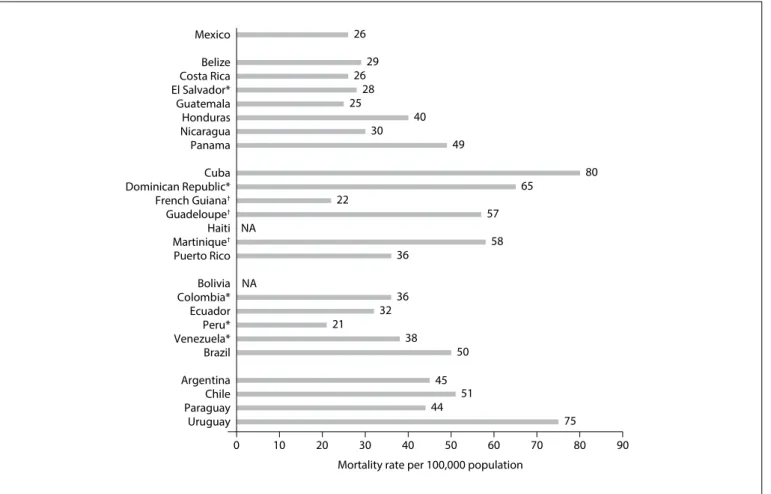
period, the absolute number of people afected by stroke increased considerably across the globe, suggesting that the worldwide stroke burden continues to increase due to population growth and aging.1 Although most of the burden of stroke is borne by low- and middle-income countries, stroke incidence rates have fallen con-comitantly with reductions in risk factors associated with stroke therapies in high-income countries.11 For instance, people in the United States had fewer strokes, and were less likely to die ater strokes, in 2011 than in 1987.12 PAHO/World Health Organization (WHO) age-adjusted estimates for cerebrovascular mortality by country in 2013 (except years as indicated) are shown in Figure 1.10 he GBD 2013 survey demonstrated that stroke was among the ten leading causes of disability-adjusted life-years (DALYs) in the majority of countries in Latin America and the Latin Caribbean, and was one of the ive leading causes in most of them.11
Stroke prevalence in Latin America per 1,000 population based on door-to-door surveys ranges from 1.7 among rural Bolivians to 7.7 among urban Mexicans.12-14 In the PISCIS (Proyecto Investigación de Stroke en Chile: Iquique Stroke) study among a predominantly Hispano-Mestizo population, the age-adjusted incidence of irst-ever stroke was 1.40 per 1,000 (95% conidence interval, 1.24, 1.56).15 Among individuals aged
Panama Nicaragua Honduras Guatemala El Salvador* Costa RicaBelize Mexico
Uruguay Paraguay Chile Argentina Brazil Venezuela* Peru* Ecuador Colombia* Bolivia Puerto Rico Guadeloupe†
French Guiana†
Dominican Republic* Cuba
Haiti Martinique†
0 10 20 30 40 50 60 70 80 90
Mortality rate per 100,000 population 58 57
65
80 49
40 30 25
28 26
29 26
75 44 51
45 50 38
21 32
36 36 22
NA
NA
Figure 1. Stroke mortality (per 100,000 population per year) in Latin America by country, 2013.10
Electronic search Database Search terms* Filters Results
PubMed MEDLINE
Stroke AND “Latin America” AND Epidemiology
Published: January 1, 2009, to
March 31, 2015
Articles retrieved: 53†
Identiied for full text review: 5 Articles included: 4 ProQuest dialog Embase (Excerpta
Medica Database) Cochrane systematic reviews/
clinical trials database Cochrane Library
Table 1. Database search strategy and results
*Search terms were included as MeSH terms when searching MEDLINE and as Emtree terms when searching Embase. In querying the Cochrane library, the search was performed against the title, abstract and key words in the clinical trials and systematic reviews databases; †Excluding cross-database duplicates.
> 60 years, the crude prevalence of stroke ranges from 18.2 per 1,000 in Mexico to 46.7 per 1,000 in Colombia,13 in line with the observed worldwide trend for increased stroke risk with increasing age.
he leading risk factors for ischemic stroke worldwide are hypertension, smoking, sedentary lifestyle, diabetes and atrial ibrillation.13,16 Although detected less easily than the other risk factors, atrial ibrillation is responsible for 20% of ischemic strokes,16 and the one-year mortality risk for Latin American patients with atrial ibrillation is almost twice that found in high-income countries.17 Although data on the prevalence of atrial ibrillation in Latin America are limited, a substantial number of people are believed to have arrhythmia. A recent study of atrial ibrillation-related disease and mortality in adults aged > 40 years estimated atrial ibrillation prevalence in the seven countries sur-veyed as follows: Argentina, 1.95%; Brazil, 1.44%; Chile, 1.68%; Colombia, 1.59%; Mexico, 1.58%; Peru, 1.55%; and Venezuela, 1.47%.18 Atrial ibrillation is more common with increasing age: 75% of individuals with atrial ibrillation are aged ≥ 60 years.18 Further, many cases of atrial ibrillation are not detected, and there is a clear need to improve the diagnosing of atrial ibril-lation so as to reduce stroke risk in Latin American countries.
OBJECTIVES
Stroke is common but has been incompletely characterized across Latin America. An English-language literature review was conducted to identify the incidence and prevalence of stroke, the approaches to its management and prevention and patient outcomes across a range of countries in Latin America and the Caribbean, with particular attention to the association between stroke and nonvalvular atrial ibrillation, which is an important and underdiagnosed risk factor.
METHODS
Information for this narrative review was obtained through a system-atic search of the literature to identify published English language sci-entiic papers relating to the search terms. he search terms used were stroke AND “Latin America” AND epidemiology, covering the period from January 2009 to March 2015. he primary search was performed using MEDLINE (via PubMed), Embase (via ProQuest Dialog) and the Cochrane Library. he database search strategy and results are shown in Table 1. Additional searches were conducted in SciELO and
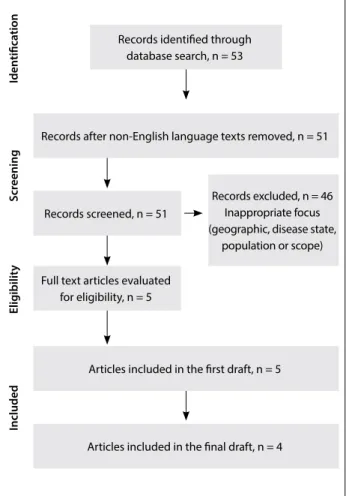
in the WHO and PAHO databases to address speciic points regarding epidemiology, risk factors and disease management. Reference lists from studies identiied through the electronic search were searched manually for further sources. Because the overall yield from PubMed searches was sparse, the authors expanded on the search results, by making further individual searches of relevant publications from January 2000 to March 2015. A low diagram of the literature search and disposition of the initial structured search is shown in Figure 2. he results from the pivotal trials that demonstrated the eicacy and safety of four non-vitamin K antagonist oral anticoagulants that have been indicated for reducing the risk of stroke in patients with atrial ibrillation are summarized in Table 2.19-23
Records identiied through database search, n = 53
Records screened, n = 51
Records excluded, n = 46 Inappropriate focus (geographic, disease state,
population or scope)
Articles included in the irst draft, n = 5 Records after non-English language texts removed, n = 51
Full text articles evaluated for eligibility, n = 5
Articles included in the inal draft, n = 4
Iden
tiica
tion
S
cr
eening
Elig
ibilit
y
Included
RCT
Anticoagulant Patients (N)
Treatments Study
design Follow-up
SSE %/year (HR [95% CI except as noted]); P versus comparator
Major bleeding %/year (HR [95% CI]); P versus
comparator
ARISTOTLE19
Apixaban (18,201)
5 mg BID (2.5 mg BID for selected patients)
versus warfarin*
DB, DD, NI 1.8 year median
5 mg: 1.27 versus 1.60
(0.79 [0.66, 0.95]); P< 0.001 for NI; P = 0.01 for superiority
5 mg: 2.13 versus 3.09
(0.69 [0.60, 0.80]); P< 0.001
AVERROES20
Apixaban (5,599)
5 mg BID (2.5 mg BID for selected patients) versus aspirin 81-324 mg/day
DB, superiority
1.1 year mean (terminated
early)
5 mg: 1.6 versus 3.7 (0.45 [0.32,
0.62]); P< 0.001
5 mg: 1.4 versus 1.2
(1.13 [0.74, 1.75]); P= 0.57
ENGAGE-AF TIMI 4821
Edoxaban (21,105)
High-dose60 mg/day
(or reduction to 30 mg/day)
or low-dose
30 mg/day (or reduction to
15 mg/day) versus warfarin
DB, DD, NI 2.8 year median
60 mg: 1.18 versus 1.50 (0.79 [97.5% CI,
0.63, 0.99]); P< 0.001 for NI
30 mg: 1.61 versus 1.50 (1.07 [97.5%
CI, 0.87, 1.31]); P= 0.005 for NI
60 mg: 2.75 versus 3.43
(0.80 [0.71, 0.91]); P< 0.001
30 mg: 1.61 versus 3.43
(0.47 [0.41, 0.55]); P< 0.001
RE-LY22
Dabigatran (18,113)
110 mg BID or
150 mg BID versus warfarin
SB, OL warfarin, NI
2.0 year median
110 mg: 1.53 versus 1.69
(RR, 0.91 [0.74, 1.11]); P< 0.001 for NI
150 mg: 1.11 versus 1.69
(RR, 0.66 [0.53, 0.82]); P< 0.001 for NI; P< 0.001 for superiority
110 mg: 2.71 versus 3.36
(RR, 1.16 [1.00, 1.34]); P= 0.052
150 mg: 3.11 versus 3.36
(RR, 0.93 [0.81, 1.07]); P= 0.31 ROCKET-AF23
Rivaroxaban (14,264)
20 mg/day (or reduction to
15 mg/day) versus warfarin DB, DD, NI
1.9 year median
20 mg: 1.7 versus 2.2
(0.79 [0.66, 0.96]); P< 0.001 for NI
20 mg:14.9 versus 14.5
(1.03 [0.96, 1.11]); P< 0.44
Table 2. Non-vitamin K antagonist oral anticoagulants: key indings of pivotal randomized controlled trials
Warfarin dose adjusted to target INR 2.0-3.0.
BID = twice daily; CI = conidence interval; DB = double-blind; DD = double-dummy; HR = hazard ratio; INR = international normalized ratio; NI = non-inferiority; OL = open-label; RCT = randomized controlled trial; RR = relative risk; SB = single-blind; SSE = stroke or systemic embolism.
per-patient cost of hospitalization for ischemic stroke was $1,902 in Brazil versus $3,888 in Argentina for a similar mean duration of hospital stay: 13.3 and 13.0 days, respectively.26,27 he personal inancial burden can be heavy for Latin Americans, many of whom incur high out-of-pocket healthcare costs.28
Health transitions
As the global threat of communicable diseases recedes, chronic and non-communicable conditions are taking their place.13,29 For Brazil overall, this shit occurred in the 1960s, but analysis conined to the major cities shows that cerebrovascular mortality rates began to exceed mortality from other cardiovascular condi-tions, such as rheumatic heart disease and syphilitic aortic dis-ease, as early as the mid-1940s.30 he GBD study in 2013 found that the leading risk factors threatening global health were those underlying non-communicable diseases, including stroke: high blood pressure, smoking, diet, obesity, elevated blood glucose, dyslipidemia, air pollution, and alcohol over-consumption.13 Furthermore, Latin America is undergoing a transition in which, although deaths from chronic diseases now exceed deaths from infections and malnutrition for most of the region, residents of underserved regions still remain at risk of infections and malnu-trition, which are associated with an elevated risk of stroke.3,6,13 Hypertension is acknowledged to be the leading risk factor for stroke in Latin America,2,11 but because hypertension and other preventable risk factors are amply covered in the literature, the
RESULTS
Stroke in Latin America
The populations of Latin America encompass wide ethnic, socioeconomic and geographic variations, and direct com-parisons may be misleading. Many factors confound assess-ments of epidemiology, prevention and treatment. In 1990, the authors of the first global and regional comparative assess-ment of mortality and DALYs attributable to 10 major risk factors cautioned that different methods of epidemiologi-cal assessment for various risks limited the comparability of results.24 However, with the development of a common frame-work and methods, subsequent surveys have afforded oppor-tunities to reassess the evidence for exposure and effect sizes for a much broader set of risk factors.11
According to WHO, the estimated stroke mortality per 100,000 population in 2008 was 11.3 for Latin Americans aged ≤ 60 years, compared with 301.3 for those aged 61-79 years.25 International diferences in case-fatality rates and the proportions of patients who have died or remain dependent six months ater a stroke have been attributed to diferences in acute care, including access to stroke units and computed tomography scans, and in aspirin use on discharge.6
present review focused on atrial ibrillation, a less easily diag-nosed but signiicant and treatable cause of ischemic stroke.
Poverty: a global risk factor for stroke
he Latin American/Caribbean region, like many others, has considerable economic inequality and a widening income gap.6,29 Stroke prevalence rates are higher in poorer areas than in more aluent areas. In a 2010 survey of low-income residents in São Paulo aged > 35 years, 5.4% self-reported prior stroke. he age-adjusted prevalence rates for men and women were 4.6% and 6.5%, respectively, i.e. higher than those reported in many other countries.31 Another study on low-income residents aged > 65 years in São Paulo found higher prevalence of coronary heart disease, let bundle-branch block and atrial ibrillation, consis-tent with the burden of stroke mortality in Brazil.32 However, this disparity is not limited to urban areas, given that a 2011 survey of residents aged > 35 years in ribeirinha communities compared
with urban residents of the same municipality found higher crude prevalence of stroke in rural areas (6.3 versus 3.7%, respec-tively) ater adjustment for sex and age.33 Despite trends showing declining stroke mortality rates across Brazil consistent with the worldwide trend, stroke mortality rates remain high among low-income Brazilians and have not dramatically decreased over the last three decades. Reductions in stroke mortality over the last 20 years were greatest in the two wealthiest regions and least in the poorest regions.34
he burden of stroke risk factors, and in particular, hyper-tension, has been characterized as a partial consequence of social determinants, including socioeconomic inequality and perceived discrimination. hese are structural factors underlying global health inequalities that exceed the expected inluence of access to health services.30,35,36 Eforts to modify risk factors and alleviate the burden of stroke could be aided by economic and social improvements, including implementation of cost-efective public health policies. Enhanced surveillance eforts in outlier regions where there is a high stroke burden, particularly at low- and middle-income lev-els, could help to clarify factors implicated in the disproportion-ate stroke burden and guide interventions with speciic goals.6
Atrial ibrillation
he principal mechanism for stroke in patients with atrial ibril-lation is embolization of stasis-induced thrombi in the let atrial appendage. he risk of stroke in patients with atrial ibrillation increases with age and other risk factors, including hypertension, diabetes, heart failure and previous stroke.16,37 Strokes associated with atrial ibrillation are generally more severe, cause greater dis-ability and are associated with worse outcomes than are strokes in patients without atrial ibrillation.37 In a survey of seven coun-tries in Latin America, more than half of the patients with atrial
ibrillation were receiving medical treatment, but a signiicant proportion of the 60% treated as outpatients were not receiving appropriate anticoagulant therapy, despite having a high stroke risk.18 Moreover, the proportion of patients with atrial ibrilla-tion receiving treatment within the naibrilla-tional healthcare system decreased with increasing age across all countries. Cost and lack of health infrastructure are major barriers to care, and subop-timal care is associated with poor outcomes.1,3,6 he Mexican PREMIER registry investigators urged secondary prevention to modify stroke risk factors, including atrial ibrillation.38
Guidelines and management initiatives
Patients with atrial ibrillation are an important target for eforts to reduce the risk of stroke through anticoagulant ther-apy. Vitamin K antagonists, such as warfarin, phenprocoumon and acenocoumarol, are widely prescribed in Latin America. Compared with no therapy, vitamin K antagonists reduce the risk of stroke by 62-68% and the rate of death by 26-33%.37 For every 1,000 patients adequately treated with warfarin, 31 ischemic strokes are prevented each year.39
Globally, fewer than half of patients with atrial ibrillation receive adequate anticoagulation to reduce the risk of embolic stroke.40 he Acute Decompensated Heart Failure National Registry (ADHERE), which enrolled patients with decompensated heart failure and either new-onset or a history of atrial ibrillation in 10 countries across Latin America/Asia-Paciic, found that prophy-lactic anticoagulation was underused, with signiicant diferences in use among the participating countries.41 Many physicians may overestimate bleeding risk and underestimate the beneits of stroke prevention measures.40,41 he investigators noted misuse of anti-coagulant therapy, with greater warfarin use among patients with low stroke risk, according to a validated screening tool, and little warfarin use among high-risk patients in greatest need of anticoag-ulation.40 he Latin American Society of Cerebrovascular Diseases advises warfarin for patients with a moderate-to-high risk of stroke, as recommended by the European Society of Cardiology 2010 guidelines.42,43 However, the well-known complexities of warfarin therapy may hinder its use. Warfarin requires frequent monitor-ing of anticoagulant efect, dose adjustments and close attention to diet. Diiculties of access to monitoring, including distance and cost, may help explain why physicians hesitate to prescribe warfa-rin for patients with limited resources.
resources necessary for preventing stroke and measure the efects of public health eforts.6,45
Since 2006, the Chilean Ministry of Health national guidelines have guaranteed a minimum level of care for every patient with ischemic stroke, with assurance of rapid neurological assessment, computed tomography scans, hospitalization, neurorehabilitation and secondary prevention.6 At a Cuban stroke center, a 10-com-ponent fast-track approach doubled hospital admission rates and halved case-fatality rates in the region from 1990 to 2003.46 Many hospitals have established stroke units, which increase the likelihood of good outcomes, although stroke units are yet to be adopted as national health care policy by any regional government.6 Practices at a comprehensive care center in Brazil changed following a ret-rospective study showing that adequate oral anticoagulation for patients with atrial ibrillation could have prevented half of all strokes.47 However, another survey at a tertiary care clinic in São Paulo showed that only 55% of patients with atrial ibrillation and high stroke risk received dose-adjusted warfarin.48 In a Mexican cohort, fewer than half of patients with nonvalvular atrial ibrilla-tion and cerebral infarcibrilla-tion were discharged with an oral antico-agulant; patients who lived in rural areas or had functional impair-ment on discharge were least likely to be prescribed warfarin.49
In October 2015, in support of the WHO 25/25 goal of achieving a 25% decrease in premature mortality due to non-communicable diseases by 2025, representatives of government institutions, sci-entiic and professional societies, academic institutions and health policy bodies across Latin America issued a uniied call for action regarding prevention and treatment of stroke in the Americas.50 he Declaration of Santiago de Chile (Scaling up Stroke Prevention and Treatment in the Americas) urged regional authorities to allo-cate inancial and human resources commensurate with local and regional stroke burdens.50 It stressed the need to prioritize strate-gies within national and regional institutions to achieve organized systems of stroke care and emphasized the importance of primary and secondary prevention, including pharmacological management of treatable risk factors by means of antihypertensives, traditional and newer anticoagulants in patients with atrial ibrillation, lipid control therapies and antiplatelet therapy.50
Non-vitamin K antagonists for stroke prevention in nonvalvular atrial ibrillation
Treatment with newer oral anticoagulants, which are given as ixed doses, do not require monitoring, have predictable clinical efects and have better safety proiles than vitamin K antagonists. hey may improve preventive care for patients with nonvalvular atrial ibrillation who are at risk of stroke, in regions with limited access to medical resources. Non-vitamin K antagonist oral antico-agulants were approved for reducing the risk of stroke in patients with nonvalvular atrial ibrillation ater large international trials
demonstrated their eicacy and safety versus warfarin (Table 2).19-23 he agents that have been approved are dabigatran, rivaroxaban and apixaban. Edoxaban, recently approved in the United States, may soon be approved in Latin America. Latin American tertiary centers contributed approximately 20% of the participants in the clinical trials.19-23
he Randomized Evaluation of Long-Term Anticoagulation herapy (RE-LY) study compared dabigatran (150 mg or 110 mg twice daily) with adjusted-dose warfarin in more than 18,000 patients with nonvalvular atrial ibrillation who were at moder-ate-to-high risk of stroke or systemic embolism, including 1,134 patients from Latin American tertiary centers.22 he ROCKET-AF (Rivaroxaban Once Daily Oral Direct Factor Xa Inhibition Compared with Vitamin K Antagonism for Prevention of Stroke and Embolism Trial in Atrial Fibrillation) study on more than 14,000 patients with nonvalvular atrial ibrillation included 1,878 patients from Latin America in the intention-to-treat pop-ulation.23 he ARISTOTLE (Apixaban for Reduction in Stroke and Other hromboembolic Events in Atrial Fibrillation) trial assessed the eicacy and safety of apixaban (5 mg twice daily; 2.5 mg for selected patients) in more than 18,000 patients with non-valvular atrial ibrillation and ≥ 1 additional risk factor for stroke, including 3,468 patients from Latin America.19 he AVERROES (Apixaban Versus Acetylsalicylic Acid to Prevent Stroke in Atrial Fibrillation Patients Who Have Failed or Are Unsuitable for Vitamin K Antagonist Treatment) study, a comparison of apixaban with aspirin (81-324 mg daily), included 5,599 patients, of whom 1,185 were from Latin America.20 In the ENGAGE AF-TIMI 48 (Efective Anticoagulation with Factor Xa Next Generation in Atrial Fibrillation-hrombolysis in Myocardial Infarction 48) trial, there were more than 21,000 patients with nonvalvular atrial ibrillation, including 2,661 from Latin America.23 In the pivotal trials, primary eicacy and safety indings were consistent across subgroups, including those in Latin America and other geographic regions worldwide.19-23
Non-vitamin K antagonist oral anticoagulants are easier to use than warfarin, are at least as efective and are associated with lower rates of intracranial hemorrhage.19-23 Acquisition costs for these drugs are higher than for warfarin, but a cost-beneit review of treatment for atrial ibrillation, based on observational studies, suggested that the overall cost of therapy may be lower because, in contrast to warfarin, dose adjustment and routine monitoring of the anticoagulant efect are not required, and the risk of compli-cations from therapy over the long term may be lower.51 However, cost-efectiveness comparisons of non-vitamin K antagonist agents versus warfarin are warranted before the results can be directly applied to the real-world setting.51
anticoagulants for reducing stroke risk in cases of nonvalvular atrial ibrillation in routine clinical practice around the world. GLORIA-AF (Global Registry on Long-Term Oral Antithrombotic Treatment in Patients with Atrial Fibrillation, NCT01428765) is a multinational, prospective registry designed to character-ize the treatment of patients newly diagnosed with nonvalvu-lar atrial ibrillation who are at risk of stroke and are receiving treatment with warfarin, aspirin or non-vitamin K antagonist oral anticoagulants. XANTUS-EL (Xarelto for Prevention of Stroke in Patients with Nonvalvular Atrial Fibrillation, Eastern Europe, Middle East, Africa and Latin America, NCT01800006) is evaluating the real-world use of rivaroxaban. he PINNACLE (Practice Innovation and Clinical Excellence) registry and research alliance (an outpatient cardiology registry) is calculating per-formance measurements for outpatient management of several cardiovascular conditions, including atrial ibrillation, in the United States and other countries. hese registries will provide important real-world information on anticoagulant prescribing patterns and outcomes.
DISCUSSION
Shits in risk factors, economic and social inluences and health efects in Latin America have exposed stroke and its consequences as a serious public health problem, which was described as catastrophic a decade ago. Studies currently in progress will build a base of evidence for management and pre-vention of stroke across Latin America. Today, stroke mortality in the region remains higher than in the developed world, but stroke mortality rates in Latin America have declined, especially in wealthier regions, and this trend could continue if countries were to gain control over a number of modiiable cardiovascu-lar risk factors while implementing public health measures to continue with improvement to social and economic conditions. Patients with nonvalvular atrial ibrillation are an important population to target in eforts to reduce the burden of stroke across the region. Anticoagulant therapy, appropriately used and monitored, lowers stroke risk among patients with non-valvular atrial ibrillation by at least two-thirds and mortality by around one-third.37 However, anticoagulation is underused owing at least in part to the well-known limitations of vitamin K antagonists. Non-vitamin K antagonist oral anticoagulants may have advantages over vitamin K antagonists, and could play an important role in reducing the risk of stroke among Latin American patients with nonvalvular atrial ibrillation.
CONCLUSIONS
his narrative review draws on the current literature, including systematic reviews by several investigators, and thus does not report original indings or any results from systematic analysis.
Nonetheless, the consensus from this review of the literature indicates that greater awareness and further studies, resources and actions are needed to reduce the heavy and growing burden of stroke in Latin America.
REFERENCES
1. Feigin VL, Krishnamurthi RV, Parmar P, et al. Update on the Global Burden of Ischemic and Hemorrhagic Stroke in 1990-2013: The GBD 2013 Study. Neuroepidemiology. 2015;45(3):161-76.
2. Krishnamurthi RV, Feigin VL, Forouzanfar MH, et al. Global and regional burden of irst-ever ischaemic and haemorrhagic stroke during 1990-2010: indings from the Global Burden of Disease Study 2010. Lancet Glob Health. 2013;1(5):e259-81.
3. Durai Pandian J, Padma V, Vijaya P, Sylaja PN, Murthy JM. Stroke and thrombolysis in developing countries. Int J Stroke. 2007;2(1):17-26. 4. Feigin VL, Mensah GA, Norrving B, et al. Atlas of the Global Burden
of Stroke (1990-2013): The GBD 2013 Study. Neuroepidemiology. 2015;45(3):230-6.
5. Institute for Health Metrics and Evaluation, Human Development Network, The World Bank. The Global Burden of Disease: Generating Evidence, Guiding Policy. Latin America and Caribbean Regional Edition. Seattle: IHME; 2013. Available from: http://www.healthdata. org/policy-report/global-burden-disease-generating-evidence-guiding-policy-%E2%80%93-latin-america-and-caribbean. Accessed in 2016 (Oct 4).
6. Lavados PM, Hennis AJ, Fernandes JG, et al. Stroke epidemiology, prevention, and management strategies at a regional level: Latin America and the Caribbean. Lancet Neurol. 2007;6(4):362-72. 7. Del Brutto OH, Santamaría M, Zambrano M, et al. Stroke in rural coastal
Ecuador: a community-based survey. Int J Stroke. 2014;9(3):365-6. 8. Sposato LA, Coppola ML, Altamirano J, et al. Program for the
epidemiological evaluation of stroke in Tandil, Argentina (PREVISTA) study; rationale and design. Int J Stroke. 2013;8(7):591-7.
9. Goulart AC, Bustos IR, Abe IM, et al. A stepwise approach to stroke surveillance in Brazil: the EMMA (Estudo de Mortalidade e Morbidade do Acidente Vascular Cerebral) study. Int J Stroke. 2010;5(4):284-9. 10. Pan American Health Organization/World Health Organization.
Cardiovascular diseases in countries of the Americas. Available from: http://www.paho.org/hq/index.php?option=com_ content&view=ar ticle&id=10213%3A2014-cardiovascular- diseases-in-countries-of-the-americas&catid=7237%3Adata-portal-contents&Itemid=41160&lang=en. Accessed in 2016 (Oct 4). 11. GBD 2013 DALYs and HALE Collaborators, Murray CJ, Barber RM, et
al. Global, regional, and national disability-adjusted life years (DALYs) for 306 diseases and injuries and healthy life expectancy (HALE) for 188 countries, 1990-2013: quantifying the epidemiological transition. Lancet. 2015;386(10009):2145-91.
13. GBD 2013 Risk Factors Collaborators, Forouzanfar MH, Alexander L. Global, regional, and national comparative risk assessment of 79 behavioural, environmental and occupational, and metabolic risks or clusters of risks in 188 countries, 1990-2013: a systematic analysis for the Global Burden of Disease Study 2013. Lancet. 2015;386(10010):2287-323.
14. Cantu-Brito C, Majersik JJ, Sánchez BN, et al. Door-to-door capture of incident and prevalent stroke cases in Durango, Mexico: the Brain Attack Surveillance in Durango Study. Stroke. 2011;42(3):601-6. 15. Lavados PM, Sacks C, Prina L, et al. Incidence, 30-day case-fatality rate,
and prognosis of stroke in Iquique, Chile: a 2-year community-based prospective study (PISCIS project). Lancet. 2005;365(9478):2206-15. 16. Wolf PA, Abbott RD, Kannel WB. Atrial ibrillation as an independent
risk factor for stroke: the Framingham Study. Stroke. 1991;22(8):983-8. 17. Healey JS, Oldgren J, Parekh A, et al. RE-LY AF: Global variations in the 1-year rates of death and stroke in 15,432 patients presenting to the emergency department with atrial ibrillation in 47 countries: The RE-LY AF Registry. In: ESC Congress 365, 2012;[abstract 711005-6]. Available from: http://www.escardio.org/Congresses-%26-Events/ ESC-Congress/Congress-resources/Session-Reports/Reports-2012/ RE-LY-AF-Global-variations-in-the-1-year-rates-of-death-and-stroke-in-15-432-pa#. Accessed in 2016 (Oct 4).
18. Cubillos L, Haddad A, Kuznik A, Mould-Quevedo J. Burden of disease from atrial ibrillation in adults from seven countries in Latin America. Int J Gen Med. 2014;7:441-8.
19. Granger CB, Alexander JH, McMurray JJ, et al. Apixaban versus warfarin in patients with atrial ibrillation. N Engl J Med. 2011;365(11):981-92. 20. Connolly SJ, Eikelboom J, Joyner C, et al. Apixaban in patients with
atrial ibrillation. N Engl J Med. 2011;364(9):806-17.
21. Giugliano RP, Ruf CT, Braunwald E, et al. Edoxaban versus warfarin in patients with atrial ibrillation. N Engl J Med. 2013;369(22):2093-104. 22. Connolly SJ, Ezekowitz MD, Yusuf S, et al. Dabigatran versus warfarin
in patients with atrial ibrillation. N Engl J Med. 2009;361(12):1139-51. 23. Patel MR, Mahafey KW, Garg J, et al. Rivaroxaban versus warfarin in
nonvalvular atrial ibrillation. N Engl J Med. 2011;365(10):883-91. 24. Murray CJ, Lopez AD, Jamison DT. The global burden of disease in 1990:
summary results, sensitivity analysis and future directions. Bull World Health Organ. 1994;72(3):495-509.
25. World Health Organization. The Global Burden of Disease: 2004 Update. Geneva: World Health Organization; 2008. Available from: http://www. who.int/healthinfo/global_burden_disease/GBD_report_2004update_ full.pdf. Accessed in 2016 (Oct 4).
26. Christensen MC, Previgliano I, Capparelli FJ, et al. Acute treatment costs of intracerebral hemorrhage and ischemic stroke in Argentina. Acta Neurol Scand. 2009;119(4):246-53.
27. Christensen MC, Valiente R, Sampaio Silva G, et al. Acute treatment costs of stroke in Brazil. Neuroepidemiology. 2009;32(2):142-9. 28. Pan American Health Organization (PAHO). Pan American Sanitary
Bureau, Regional Oice of the World Health Organization. Health in
the Americas. PAHO Scientiic and Technical Publication No. 622, 2007. Available from: http://www1.paho.org/hia/index.html. Accessed in 2016 (Jun 23).
29. Kim AS, Johnston SC. Global variation in the relative burden of stroke and ischemic heart disease. Circulation. 2011;124(3):314-23. 30. Lotufo PA. Stroke in Brazil: a neglected disease. Sao Paulo Med J.
2005;123(1):3-4.
31. Abe IM, Lotufo PA, Goulart AC, Benseñor IM. Stroke prevalence in a poor neighbourhood of São Paulo, Brazil: applying a stroke symptom questionnaire. Int J Stroke. 2011;6(1):33-9.
32. Kawabata-Yoshihara LA, Benseñor IM, Kawabata VS, et al. Prevalência de Achados eletrocardiográicos no paciente idoso: estudo envelhecimento e saúde de São Paulo [Prevalence of electrocardiographic indings in elderly individuals: the Sao Paulo aging & health study]. Arq Bras Cardiol. 2009;93(6):651-6.
33. Fernandes TG, Benseñor IM, Goulart AC, et al. Stroke in the rain forest: prevalence in a ribeirinha community and an urban population in the Brazilian Amazon. Neuroepidemiology. 2014;42(4):235-42.
34. Lotufo PA, Goulart AC, Fernandes TG, Benseñor IM. A reappraisal of stroke mortality trends in Brazil (1979-2009). Int J Stroke. 2013;8(3):155-63. 35. Chor D, Pinho Ribeiro AL, Sá Carvalho M, et al. Prevalence, Awareness,
Treatment and Inluence of Socioeconomic Variables on Control of High Blood Pressure: Results of the ELSA-Brasil Study. PLoS One. 2015;10(6):e0127382.
36. Faerstein E, Chor D, Werneck GL, Lopes CS, Kaplan G. Raça e racismo percebido, escolaridade e hipertensão em funcionários públicos brasileiros: estudo Pró-Saúde [Race and perceived racism, education, and hypertension among Brazilian civil servants: the Pró-Saúde study]. Rev Bras Epidemiol. 2014;17(suppl 2):81-7.
37. Lin HJ, Wolf PA, Kelly-Hayes M, et al. Stroke severity in atrial ibrillation. The Framingham Study. Stroke. 1996;27(10):1760-4.
38. Cantú-Brito C, Ruiz-Sandoval JL, Murillo-Bonilla LM, et al. The irst Mexican multicenter register on ischaemic stroke (the PREMIER study): demographics, risk factors and outcome. Int J Stroke. 2011;6(1):93-4. 39. Singer DE, Albers GW, Dalen JE, et al. Antithrombotic therapy in atrial
ibrillation: the Seventh ACCP Conference on Antithrombotic and Thrombolytic Therapy. Chest. 2004;126(3 suppl):429S-56S.
40. Ogilvie IM, Newton N, Weiner SA, Cowell W, Lip GY. Underuse of oral anticoagulants in atrial ibrillation: a systematic review. Am J Med. 2010;123(7):638-45.e4.
41. Suarez J, Piccini JP, Liang L, et al. International variation in use of oral anticoagulation among heart failure patients with atrial ibrillation. Am Heart J. 2012;163(5):804-11.
43. European Heart Rhythm Association; European Association for Cardio-Thoracic Surgery, Camm AJ, et al. Guidelines for the management of atrial ibrillation: the Task Force for the Management of Atrial Fibrillation of the European Society of Cardiology (ESC). Europace. 2010;12(10):1360-420. 44. Culebras A. Stroke is a catastrophic disease in Latin America. Neurology (International Newsletter). 2005;64(8):25A-26A. Available from: http:// www.neurology.org/content/64/8/25A.short?sid=6345aa61-38b3-486d-8e9d-89e4ef6cc939. Accessed in 2016 (Oct 24).
45. World Health Organization. STEPwise approach to stroke surveillance. Available from: http://www.who.int/chp/steps/stroke/en/. Accessed in 2016 (Oct 4).
46. Orduñez-García PO, Iraola-Ferrer MD, Taboada RB. Cuba: better care for stroke. BMJ. 2006;332(7540):551.
47. Cabral NL, Volpato D, Ogata TR, et al. Fibrilação atrial crônica, AVC e anticoagulação: sub-uso de warfarina? [Atrial ibrillation, stroke and anticoagulation: under-use of warfarin?] Arq Neuropsiquiatr. 2004;62(4):1016-21.
48. Mesas CE, Veloso HH, De Paola AA. Anticoagulation for atrial ibrillation: underutilization in a Brazilian tertiary outpatient clinic. Clin Cardiol. 2004;27(11):592-3.
49. Aburto-Murrieta Y, Arauz-Góngora AA, Murillo-Bonilla LM, López-Gómez M. [Non-valvular atrial ibrillation and completed stroke: factors determining mortality, recurrence and prognosis after a irst event in the Mexican population]. Rev Neurol. 2005;40(5):269-73.
50. American Heart Association. American Stroke Association. Scaling up stroke prevention and treatment in the Americas: Declaration of Santiago de Chile. October 31, 2015. Available from: http://www. strokeassociation.org/idc/groups/stroke-public/@wcm/@private/@ hcm/@sta/documents/downloadable/ucm_479447.pdf. Accessed in 2016 (Oct 4).
51. Biskupiak J, Ghate SR, Jiao T, Brixner D. Cost implications of formulary decisions on oral anticoagulants in nonvalvular atrial ibrillation. J Manag Care Pharm. 2013;19(9):789-98.
Acknowledgements: Professional medical writing was provided by Rosemary Perkins and Nicole Draghi, PhD, and editorial assistance was provided by Sandi Lusk, at Caudex
Sources of funding: Bristol-Myers Squibb Company and Pizer Inc. funded editorial services
Conlicts of interest: Dr. Scazzuso declares that there were no conlicts of interest. Dr. Stambler has served on speakers’ bureaus for Pizer, Bristol-Myers Squibb, Boehringer Ingelheim, and Janssen Pharmaceuticals; has consulted for Janssen; and has received support for publications from Pizer and Bristol-Myers Squibb
Date of irst submission: November 2, 2015
Last received: July 8, 2016
Accepted: July 11, 2016
Address for correspondence:
Bruce Stambler Piedmont Heart Institute 275 Collier Road
Atlanta — GA 30309 — USA Tel. (+1 404) 605-5536 Fax. (+1 404) 367-2962