Energetic flux and performance index in copaiba
(
Copaifera multijuga
Hayne) and mahogany (
Swietenia
macrophylla
King) seedlings grown under two irradiance
environments
José F.C. Gonçalves*, Ulysses M. Santos Jr., Adamir R. Nina Jr. and Larissa R. Chevreuil
Instituto Nacional de Pesquisas da Amazônia, Laboratório de Fisiologia e Bioquímica Vegetal, Caixa Postal 478, 69011-970 Manaus, AM, Brasil. *Corresponding author: [email protected]. Phone: +55 92 3643-1938, Fax: +55 92 3643 1838
Received: 06 July 2007; Returned for revision: 05 September 2007; Accepted: 27 October 2007
Plant adaptation under conditions of limited irradiance can be investigated by their efficiency while using the available energy with a minimal thermodynamic energy loss. For this reason, we compared the energetic fluxes and the performance index (PIABS) in copaiba (Copaifera multijuga) and mahogany (Swietenia macrophyla) seedlings under
both sunlight and shade. The experiment was carried out in Manaus (3º8’S, 59º52’W), Amazonas State, Brazil. The fluorescence transients were obtained in intact and healthy leaves using a Plant Efficiency Analyser (PEA) between 1200 h and 1300 h. Using the O-J-I-P test, the following parameters were calculated: 1) density of reaction centers per cross section (RC/CS), 2) maximum quantum yield for primary photochemistry of photosystem II (ϕPo), and 3) probability of energy excitation (ψo) or that of an absorbed photon (ϕEo) to move an electron further than quinoneA, and4) the performance index (PIABS). The highest PIABS was found in seedlings under shade for both species. Mahogany seedlings exhibited values of PIABS about three-fold and 14-fold higher than copaiba seedlings under shade and sunlight, respectively. For RC/CS, reaction centers were inactive under sunlight, 58% for mahogany and 78% for copaiba. The high irradiance induced a decrease of ϕPo in mahogany (36%) and in copaiba (69%) when compared to shaded seedlings. This likely was a result of need for excess energy dissipation under sunlight. In addition, it was verified that seedlings under sunlight presented a severe decrease in ϕEo, particularly in copaiba (23-fold), when compared to mahogany (9-fold). Therefore, mahogany seedlings showed the highest performance in energy use under low and high irradiance, thus it may be proposed that mahogany presented lower entropy than copaiba seedlings, as demonstrated by the higher plasticity in the use of energy.
Key words: chlorophyll a fluorescence, energy fluxes in photosystem II, light acclimation, O-J-I-P transients, tropical
tree species
Fluxo energético e índice de desempenho em plantas jovens de copaíba (Copaifera multijuga) e de mogno (Swietenia macrophyla) sob dois ambientes de irradiância: Adaptação de plantas sob condições limitantes de irradiância pode ser
investigada pela eficiência do uso da energia disponível, com uma perda mínima da energia termodinâmica. Por essa razão, foram comparados o fluxo energético e o índice de desempenho (PIABS) em plantas jovens de copaíba (Copaifera multijuga) e de mogno (Swietenia macrophyla) sob condições de sol e sombra. O experimento foi conduzido em
e 4) índice de desempenho (PIABS). Os maiores valores de PIABS foram encontrados em plantas jovens sob sombra, para ambas as espécies. Plantas de mogno exibiram valores de PIABS cerca de três vezes e 14 vezes maiores que os de plantas de copaíba sob condições de sombra e sol, respectivamente. Para RC/CS foi observado que 58% e 78% dos centros de reação em mogno e em copaíba, respectivamente, foram inativados sob condições de sol. Alta irradiância induziu decréscimos em ϕPo em mogno (36%) e em copaiba (69%) quando comparado com as plantas à sombra, resultado da necessidade de dissipação do excesso de energia sob plena exposição solar. Verificou-se também que plantas sob sol apresentaram decréscimo severo em ϕEo, particularmente em copaíba (23 vezes) quando comparado com mogno (nove vezes). Portanto, plantas jovens de mogno exibiram os mais altos índices de desempenho sob baixas e altas irradiâncias, o quê sugere menor entropia do que em plantas jovens de copaíba, além de demonstrar maior plasticidade para o uso da energia.
Palavras-chave: aclimatação à irradiância; espécies arbóreas tropicais, fluorescência da clorofila a, fluxos de energia no
fotossistema II, transients O-J-I-P
INTRODUCTION
Forest environment presents high heterogeneity in terms of light availability, both spatially (forest layers, forest understorey, sub-canopy environments and high gaps) and temporally (seasonal periods). Besides such heterogeneity, human activities (extensive deforestation) and/or natural events can promote frequent and significant changes in balanced environments, thus the establishment of a species and/or its continuity in the system are functions of its capacity to adapt its metabolism to the new environmental conditions (Kruger et al., 1997; Gonçalves and Santos Jr., 2005a). Irradiance availability is the basic factor for the energy flux in biological systems, largely determining the physiological processes of plants. Depending on the capture and use capacity of irradiance, plants present different and decisive responses for their survival, growth and adaptation under different light conditions. For this reason, shaded or full sunlight environments can inhibit the photosynthetic processes either because of shortage or of excess energy input (Zhang et al., 2003). In this way, the capacity of plants in adjusting their metabolism to optimize the use of primary resources such as light will determine the success or failure of their adaptation and establishment under given conditions of irradiance.
The chlorophyll a fluorescence technique is of
particular significance in natural environments to study how the irradiance availability affects the tree photosynthetic apparatus and its efficiency under different light conditions (Gonçalves et al., 2001, 2005; Gonçalves and Santos Jr., 2005b; Santos Jr. et al., 2006). The analysis of chlorophyll a fluorescence emitted by
PSII isa fast, easy, and non-invasive tool to evaluate the plant’s photosynthetic performance, providing precise and objective data with regard to photochemical efficiency and the processes of non-photochemical de-excitation involved in the conversion of light energy under different conditions (Clark et al., 2000; Misra et al., 2001; Baker and Rosenqvist, 2004; De Ronde et al., 2004; Gonçalves and Santos Jr., 2005b; Panda et al., 2006). The PSII unit catalyses the light-induced electron transport from water to the plastoquinone (PQ) pool molecule and consists of up to 25 different types of protein subunits, which are organized into two structurally and func-tionally different parts (Hankamer et al., 1997; Stirbet et al., 1998). The first part is the core complex, a well-defined structure responsible for all electron transfer reactions in PSII and organized as a dimer in the stacked, appressed regions of the thylakoid membrane. The second part is the peripheral antenna; in plants it consists of a collection of light-harvesting complex II (LHCII) proteins which absorb most of the light for PSII (Dekker and Grondelle, 2000). Under conditions of high irradiance, PSII is recognizably the first protein complex to exhibit damage. For this reason, a study of the structural and functional behavior of PSII can allow the examination of the primary effects of stress caused by excess irradiance on plants.
In this study, two species found in the primary Amazonian forest, mahogany (Meliaceae) and copaiba (Leguminosae: Caesalpinioideae), were compared to investigate interspecific variations in chlorophyll a
al., 1997) whereas copaiba has been traditionally and widely used as oil or capsules that have been exported from Brazil to other countries such as France, Germany and United States (Veiga and Pinto, 2001; Veiga et al., 2001). The main goal of this study was to evaluate the efficiency in capture and use of light energy and the performance index in environments of low and high irradiance through the analysis of changes in the shape of O-J-I-P transients, the parameters of chlorophyll a
fluorescence and the performance index (PIABS) in those species.
MATERIAL AND METHODS
Study area and species investigated: This study was
conducted in the experimental area of the V-8 Campus at the Instituto Nacional de Pesquisas da Amazônia, Manaus (3º8’S, 59º58’W), Amazonas State, Brazil. The experiment was carried out using eight-month-old mahogany (Swietenia macrophyla King) and copaiba
(Copaifera multijuga Hayne) seedlings. Seedlings were
obtained from seeds collected in the Adolfo Ducke Forest Reservation, located 10 km from the city of Manaus. Seeds were selected according to their uniformity, size and healthy state. After disinfections in sodium hypochlorite solution 1% chlorine (v/v) for 10 min, seeds were washed in running tap water and then in distilled water. Afterwards, they were placed to germinate in plastic boxes filled with washed sand as substrate. After reaching a height of 10 cm, the seedlings were transferred to black polyethylene bags containing 5 kg of an organic soil and sand mixture (2:1, w/w), where they remained for 30 d for acclimatization. The seedlings were grown under mid-intensity irradiance (maximum irradiance = 250-500 µmol m-2 s-1) until reaching eight months old. Afterwards they were assigned to two light treatments: shade, maximum irradiance = 10-30 µmol m-2 s-1, and sunlight, maximum irradiance = 1800-2300 µmol m-2 s-1, under natural day/night cycles of about 12-13/12-11 h. During the experiment, plants were watered daily. The data were collected after 120 d of the experiment when the young leaves growing in the new environment were fully expanded.
Measurements of Chlorophyll a fluorescence: The
chlorophyll a fluorescence was measured in healthy and
completely expanded leaves using a hand fluorometer
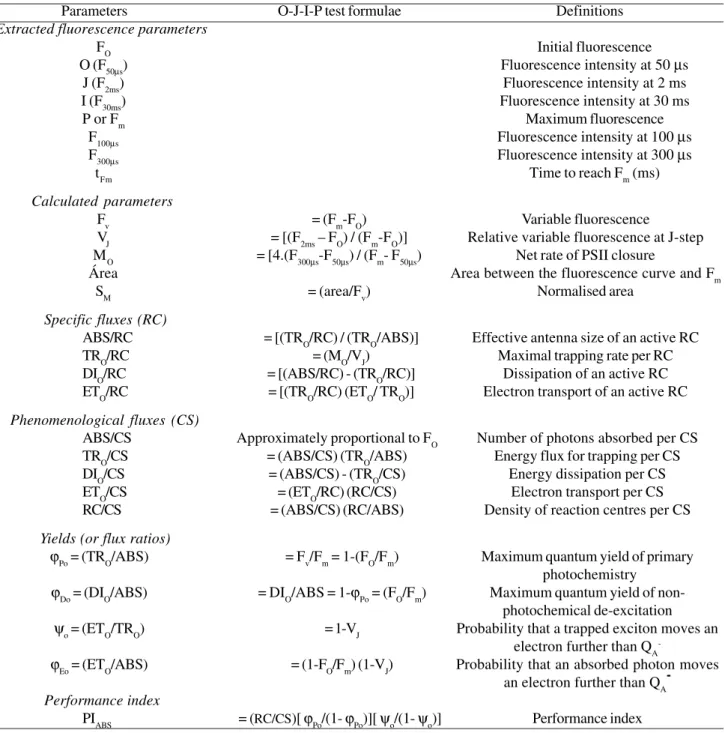
Table 1. The O-J-I-P-test parameters formulae and definitions. See Strasser et al. (2004) for further details.
Parameters O-J-I-P test formulae Definitions
Extracted fluorescence parameters
FO Initial fluorescence
O (F50µs) Fluorescence intensity at 50 µs
J (F2ms) Fluorescence intensity at 2 ms I (F30ms) Fluorescence intensity at 30 ms P or Fm Maximum fluorescence
F100µs Fluorescence intensity at 100 µs
F300µs Fluorescence intensity at 300 µs
tFm Time to reach Fm (ms)
Calculated parameters
Fv = (Fm-FO) Variable fluorescence
VJ = [(F2ms – FO) / (Fm-FO)] Relative variable fluorescence at J-step MO = [4.(F300µs-F50µs) / (Fm- F50µs) Net rate of PSII closure
Área Area between the fluorescence curve and Fm SM = (area/Fv) Normalised area
Specific fluxes (RC)
ABS/RC = [(TRO/RC) / (TRO/ABS)] Effective antenna size of an active RC TRO/RC = (MO/VJ) Maximal trapping rate per RC DIO/RC = [(ABS/RC) - (TRO/RC)] Dissipation of an active RC ETO/RC = [(TRO/RC) (ETO/ TRO)] Electron transport of an active RC
Phenomenological fluxes (CS)
ABS/CS Approximately proportional to FO Number of photons absorbed per CS TRO/CS = (ABS/CS) (TRO/ABS) Energy flux for trapping per CS DIO/CS = (ABS/CS) - (TRO/CS) Energy dissipation per CS ETO/CS = (ETO/RC) (RC/CS) Electron transport per CS RC/CS = (ABS/CS) (RC/ABS) Density of reaction centres per CS
Yields (or flux ratios)
ϕPo = (TRO/ABS) = Fv/Fm = 1-(FO/Fm) Maximum quantum yield of primary
photochemistry
ϕDo = (DIO/ABS) = DIO/ABS = 1-ϕPo = (FO/Fm) Maximum quantum yield of
non-photochemical de-excitation
ψo = (ETO/TRO) = 1-VJ Probability that a trapped exciton moves an
electron further than QA
-ϕEo = (ETO/ABS) = (1-FO/Fm) (1-VJ) Probability that an absorbed photon moves
an electron further than QA
-Performance index
PIABS = (RC/CS)[ ϕPo/(1- ϕPo)][ ψo/(1- ψo)] Performance index
transport, in which Chltot is the total Chl a concentration,
and Chltot = Chlantenna + ChlRC. (Strasser et al., 1999). The combination of both structure-function indexes leads to the expression performance index (PI) and when based on absorption of antenna Chls of PSII (PIABS) can be represented as:
PIABS = SFIpo(ABS)/SFINo(ABS) = {(ChlRC/Chltot)/[1-(ChlRC/ Chltot)]} x [ϕPo/(1- ϕPo)] x [ψo/(1- ψo)] = (ChlRC/Chlantenna) x
[ϕPo/(1- ϕPo)] x [ψo/(1 -ψo)],
or, in terms of the expression used in the O-J-I-P-test (Srivastava et al., 1999):
PIABS =(RC/ABS) x [ϕPo/(1- ϕPo)] x [ψo/(1- ψo)].
Experimental design and statistical analysis: The
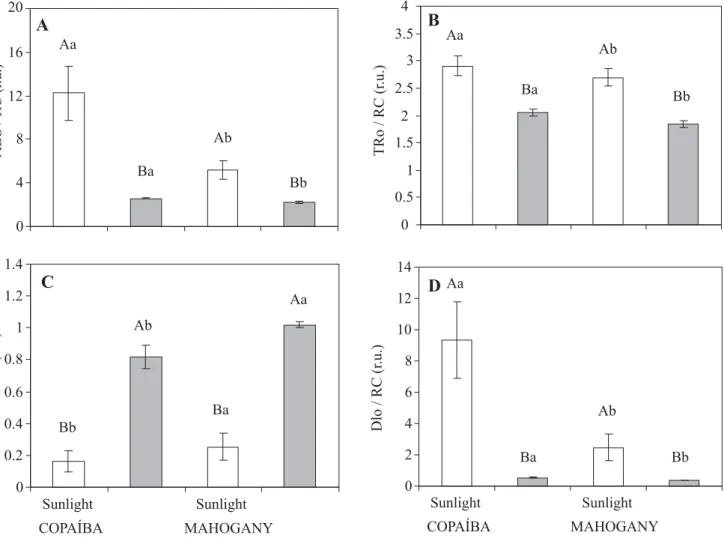
(co-mahogany under full sunlight compared to shade, respectively (Figure 2A). This increase in ABS/RC was due to an inactivation of active RC units per cross section (RC/CS) under high irradiance (Table 3). The trapping rate of PSII (TRO/RC) was 42% and 47% higher in copaiba and mahogany, respectively, under full sunlight compared to shade (Figure 2B). In addition, due to the excess of energy and the decrease of RC/CS under high irradiance, an increase of 17.6-fold and 6.4-fold was observed in the effective dissipation per active RC (DIO/RC) in copaiba and mahogany, respectively (Figure 2C). As a result of high DIO/RC, the values of ETO/RC were 75% and 80% in mahogany and copaiba seedlings, respectively, under full sunlight compared to shade (Figure 2D).
Between the studied species it was observed that in both irradiance environments copaiba seedlings presented the highest values of ABS/RC (135% in sunlight against 16% in shade), TRO/RC (8% in sunlight and 12% in shade) and DIO/RC (239% in sunlight and 38% in shade) than mahogany (Figure 2A-C). However, due to the high values of DIO/RC in copaiba, the electron transport rates in active RC were 24% and 56% higher in mahogany than in copaiba under shade and sunlight, respectively (Figure 2D).
Considering the phenomenological fluxes, it was found that copaiba and mahogany presented higher values of TRO/CS and ETO/CS under shade than sunlight (Figure 3B, 3D). In addition, the values of DIO/CS were 155% and 253% higher in mahogany and copaiba, respectively, under full sun than under shade (Figure 3C). Copaiba seedlings showed higher values of ABS/CS (15%), TRO/CS (10%) and DIO/CS (37%) than mahogany under shade (Figure 3A-C). Under high irradiance, copaiba presented the lowest value of TRO/CS and the highest value of DIO/CS (Figure 3B-C). For ETO/CS, in both irradiance environments, mahogany exhibited the highest values (Figure 3D).
Yields and performance index:The results of flux ratio
(yields) demonstrated that both copaiba and mahogany presented a decrease in TRO/ABS (ϕPo), ETO/TRO (ψO) and, consequently, in ETO/ABS (ϕEo) under high irradiance (Table 3). The decrease of ϕPo in mahogany (36%) and copaíba (69%) under high irradiance indicates a loss of maximum quantum efficiency of primary paiba and mahogany) and two irradiance
environ-ments (shade and full sunlight). For each treatment 10 replicates (seedlings) were used. The results were submitted to variance analysis and the means were compared by the Tukey test at 5% probability. The statistical analyses were conducted using the software SYSTAT (version 8.0).
RESULTS
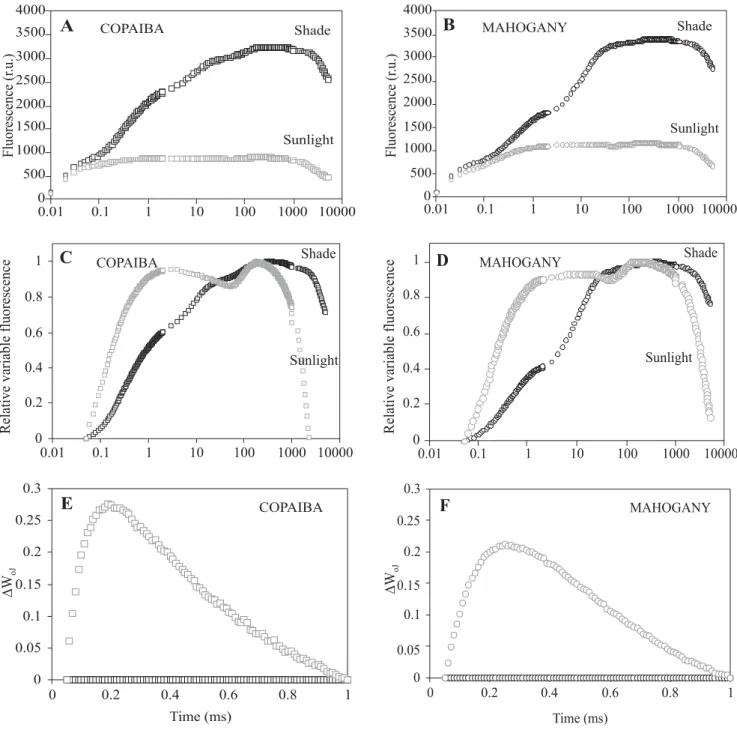
Analysis of Chl a fluorescence transients: The leaves of
the copaiba and mahogany plants under shade exhibited typical polyphasic Chl a fluorescence O-J-I-P transients,
rising from an initial fluorescence level (FO) to the maximum fluorescence level (Fm) (Figure 1A-B). Thus, Chl
a fluorescence transients rose sharply from O to P steps
under shade compared to sunlight. Furthermore, leaves under full sunlight failed to show typical Chl a
fluorescence O-J-I-P transients. The times (tFm) to reach maximum fluorescence in both species under shade were higher than under sunlight (Table 2). The area beneath the fluorescence curve between Fo and Fm were lower in sunlight than in shade, suggesting a decrease in the electron pool size of PSII, including QA, QB and PQ (Figure 1A-B, Table 2) (Joliot and Joliot, 2002).
Under shade, copaiba presented a higher increase in fluorescence intensity at 2 ms (J phase) than mahogany, suggesting an accumulation of the fraction of reduced QA- pool (Figure 1C-D). In addition, mahogany under shade presented higher values than copaiba for the area beneath the fluorescence curve between Fo and Fm, suggesting that mahogany exhibited the highest electron pool size of PSII (Table 2). The resulting difference of normalized transients ∆WOJ between sunlight and shade allowed the visualization of the K-band in copaiba (Figure 1E) and mahogany (Figure 1F). This indicates that the k-band was more pronounced after high irradiance compared to shade.
Chl a fluorescence parameters (specific and phenome-nological fluxes):Examination of the specific flux (per
Figure 1: (A, B) – Polyphasic Chl a fluorescence transients recorded in copaiba and mahogany under shade and
sunlight. Each transient represents the mean of 10 transients. (C, D) – Transients normalized between O and P. (E, F) –
Change in the shape of the Chl a fluorescence transient curves normalized between O and J (WOJ) showing k-band. ∆WOJ = (WOJ(sunlight) – WOJ(shade)).
photochemistry due to photoinhibition promoted by excess energy. In addition, such excess induced an inactivation of 58 and 78% of active RC per cross section in mahogany and copaiba under sunlight, respectively, inducing an increased energy dissipation as well as lower
values of ϕPo (Table 3). Further, it was verified that seedlings under sunlight presented a decrease in ϕEo, especially for copaiba (23-fold) when compared to mahogany (nine-fold).
The performance index (PIABS) combines three 0
0.2 0.4 0.6 0.8 1
0.01 0.1 1 10 100 1000 10000
Sunlight Shade MAHOGANY
D
0 500 1000 1500 2000 2500 3000 3500 4000
0.01 0.1 1 10 100 1000 10000 Shade
Sunlight COPAIBA
A
0 500 1000 1500 2000 2500 3000 3500 4000
0.01 0.1 1 10 100 1000 10000 Sunlight
Shade MAHOGANY
B
0 0.05 0.1 0.15 0.2 0.25 0.3
0 0.2 0.4 0.6 0.8 1
Time (ms)
COPAIBA
E
0 0.05 0.1 0.15 0.2 0.25 0.3
0 0.2 0.4 0.6 0.8 1
Time (ms)
MAHOGANY
F
0 0.2 0.4 0.6 0.8 1
0.01 0.1 1 10 100 1000 10000
COPAIBA Shade
Sunlight
C
Fluorescence
(r
.u.)
Fluorescence
(r
.u.)
Relative
variable
fluorescence
Relative
variable
fluorescence
D
WoJ DW
DISCUSSION
The shape of the O-J-I-P transients is very sensitive to different light conditions. Under high irradiance the shape of the O-J-I-P transient changed in copaiba and mahogany with a severe decrease in Fm, resulting in lowered Fv (Figure 1.A-B, Table 2). The fast rise from O to J is the photochemical phase and J to P is the thermal phase (Strasser et al., 1995; Lazar, 2003). The rise in transients from O to J and from J to P are due to the reduction of QA to QA- and the reduction of the PQ pool (Strasser and Govindjee, 1992). Thus the high irradiance severely affected both donor and acceptor sides of PSII due the disconnected oxygen-evolution complex with impairment of the electron transport chain (Figure 1.E-F). Comparing both species, stronger photoinhibition induced by excess of light energy, promoting more damage at both sides of PSII, is to be expected for copaiba than in mahogany.
The time to reach the complete reduction of PSII acceptor QA was higher in shade than in sunlight. The shorter time under high irradiance is caused by the faster rate of QA reduction due to high light availability in the environment. Since FO remained unchanged regardless of species and treatments (Table 2), a regulatory or protective mechanism under high irradiance is to be expected (Björkman and Demmig Adams, 1987; Osmond et al., 1993). In addition, the decline in both Fm and Fv/Fm
Table 2. Initial fluorescence (FO), fluorescence intensity at 50 µs (O = F50µs), 100 µs (F100µs), 300 µs (F300µs), 2 ms (“I” = F2ms) and 30ms (“J” = F30ms), variable fluorescence (Fv), maximum fluorescence (Fm = P), time to reach Fm (tFm) and area beneath the fluorescence curve in copaiba and mahogany under two irradiance environments. Mean values (n = 10) ± SD are
shown. Mean values followed by the same capital letters for irradiance environments, and means followed by the same small letters for species are not significantly different (P > 0.05; Tukey test).
COPAÍBA MAHOGANY
Variables Sunlight Shade Sunlight Shade FO 662 ± 144 Aa 681 ± 59 Aa 566 ± 102 Aa 593 ± 25 Ab F50µs (O) 666 ± 147 Ba 823 ± 66 Aa 622 ± 120 Aa 691 ± 35 Ab F100µs 730 ± 178 Ba 971 ± 81 Aa 734 ± 160 Aa 798 ± 48 Ab F300µs 822 ± 223 Ba 1494 ± 132 Aa 994 ± 257 Ba 1175 ± 89 Ab F2ms (I) 880 ± 247 Bb 2265 ± 193 Aa 1194 ± 315 Ba 1857 ± 124 Ab F30ms (J) 861 ± 237 Bb 3058 ± 200 Aa 1211 ± 312 Ba 3214 ± 171 Aa Fv 230 ± 110 Bb 2635 ± 171 Ab 697 ± 259 Ba 2845 ± 131 Aa Fm (P) 893 ± 251 Bb 3317 ± 219 Aa 1263 ± 342 Ba 3438 ± 153 Aa tFm 212 ± 26 Ba 304 ± 18 Ab 181 ± 85 Ba 339 ± 27 Aa Area 3438 ± 1575 Ba 32856 ± 3505 Ab 5000 ± 2506 Ba 36489 ± 2231 Aa
independent functional steps of photosynthesis, such as the density of RCs in the chlorophyll bed, excitation energy trapping and conversion of excitation energy to electron transport, into a single multi-parametric expression (Strasser et al., 1999; Tsimilli-Michael et al., 2000). It is a function of ψ0, ϕPo, and RC/ABS (Srivastava et al., 1999). The seedlings of both species under shade exhibited much higher values of PIABS than seedlings under full sunlight, possibly due to photoinhibition promoted by excess of light energy (Table 3). Furthermore, mahogany presented higher performance than copaiba in both irradiance environments (Table 3). The higher PIABS in mahogany than in copaiba seedlings under shade and sunlight, (about three-fold and 14-fold higher, respectively), suggests a greater extent of photoinhibition in copaiba than in mahogany regardless of light environments.
The relationship between log (PIABS)rel [=Log
(PIABS(Copaíba or Mahogany) / PIABS(Copaíba or Mahogany average) and the
relative yield of electron transport (ETo/ABS)rel [=(ETo/
ABS(Copaíba or Mahogany) / ETo/ABS (Copaíba or Mahogany average)] in
Figure 2. Specific fluxes expressed per reaction center (RC) in copaiba and mahogany under sunlight and shade
environments. (A) – Flux of photons absorbed by chlorophyll molecules per active RC (ABS/RC); (B) – Energy flux for
trapping that is conserved in chemical components per active RC (TRO/RC); (C) – Flux of energy that enters into the
electron transport chain further than QA per active RC (ETO/RC); (D) – Flux of energy that is dissipated in the form of heat
and fluorescence, or transferred to other systems per active RC (DIO/RC). Statistics as in Table 2.
Table 3. Density of active reaction centers per cross section (RC/CS), maximum efficiency of PSII (ϕPo = TRO/ABS), maximum efficiency of non-photochemical de-excitation (ϕDo = DIO/ABS), probability that a trapped exciton (ψo = ETO/ TRO) or that an absorbed photon (ϕEo = ETO/ABS) can move an electron further from QA, and performance index (PIABS) in copaiba and mahogany under two irradiance environments. Statistics as in Table 2.
COPAÍBA MAHOGANY
Variables Sunlight Shade Sunlight Shade RC/CS 58 ± 23 Bb 264 ± 21 Aa 113 ± 29 Ba 265 ± 4 Aa TRO/ABS (ϕPo) 0.25 ± 0.05 Bb 0.80 ± 0.01 Ab 0.53 ± 0.08 Ba 0.83 ± 0.003 Aa
DIO/ABS (ϕDo) 0.75 ± 0.05 Aa 0.20 ± 0.01 Ba 0.47 ± 0.08 Ab 0.17 ± 0.003 Bb
ETO/TRO (ψ0) 0.057 ± 0.024 Bb 0.399 ± 0.041 Ab 0.095 ± 0.033 Ba 0.556 ± 0.018 Aa
ETO/ABS (ϕEo) 0.014 ± 0.006 Bb 0.317 ± 0.030 Ab 0.052 ± 0.022 Ba 0.460 ± 0.015 Aa
PIABS 0.002 ± 0.001 Bb 1.013 ± 0.186 Ab 0.028 ± 0.019 Ba 2.725 ± 0.286 Aa
0 4 8 12 16 20
Ba Aa
Ab
Bb
A
0 0.5
1 1.5 2 2.5
3 3.5 4
Aa
Ba
Ab
Bb
B
0 2 4 6 8 10 12 14
Sunlight COPAÍBA
Sunlight MAHOGANY Aa
Ba
Ab
Bb
D
0 0.2 0.4 0.6 0.8 1 1.2 1.4
Sunlight COPAÍBA
Sunlight MAHOGANY Bb
Ab
Ba
Aa
C
A
B
S/R
C(
r.u.)
E
To/R
C(
r.u.)
T
R
o/R
C(
r.u.)
D
lo/R
C(
indicates an adaptation to a physiological state which requires, under high-irradiance conditions, a much lower quantum yield of PSII to sufficiently reduce the primary acceptor Qa-.
The high irradiance induced a severe decrease in the area above the fluorescence between FO and Fm in seedlings under sunlight, indicating a reduction in the pool size of PSII (Strasser et al., 1995; Joliot and Joliot, 2002).
The ϕPo (Fv/Fm = TRO/ABS) is a parameter that expresses the maximum efficiency of PSII which is controlled by the primary photochemistry of PSII (charge separation, recombination and stabilization),
non-radiative loss of excited states in light-harvesting antennae and by excited states quenched by oxidized PQ molecules from the PQ pool (Lazar, 2003). The low values of ϕPo in seedlings under high irradiance could have resulted from the inactivity of RC, which might favor higher energy dissipation as heat and fluorescence, as deduced from the high values for ϕDo. This might be associated with increased heat sinks (heat-sink centers or silent centers). These heat sinks may absorb light in a similar manner to active RC, but are unable to store the excitation energy as redox energy, dissipating their total energy as heat (Hermans et al., 2003). In addition, due to excess of irradiance, transfer of energy to other systems
Figure 3. Phenomenological fluxes expressed per cross section of leaf tissue (CS) in copaiba and mahogany under
sunlight and shade environments. (A) – Flux of photons absorbed by chlorophyll molecules per CS (ABS/CS); (B) – Energy flux for trapping that is conserved in chemical components per CS (TRO/CS); (C) – Flux of energy that enters into
the electron transport chain further than QA per CS (ETO/CS); (D) – Flux of energy that is dissipated in the form of heat
and fluorescence, or transferred to other systems per CS (DIO/CS). Statistics as in Table 2.
A
B
S/C
S(
r.u.)
E
To/C
S(
r.u.)
T
R
o/C
S(
r.u.)
D
lo/C
S(
r.u.)
0 100 200 300 400 500 600 700
Aa
Bb
Ba
Ab
B
0 100 200 300 400 500 600 700
Sunlight COPAÍBA
Sunlight MAHOGANY Aa
Ba
Ab
Bb
D
0 50 100 150 200 250 300 350
Sunlight COPAÍBA
Sunlight MAHOGANY
Aa
Bb
Ab
Ba
C
0 100 200 300 400 500 600 700 800 900 1000
Aa
Aa Aa
Ab
such as energy-dependent formation of reactive oxygen species could also took place (Strasser et al., 2000).
Analyzing ψ0, the lowest values of ϕPo were found in seedlings under high irradiance. The values of ψ0 decreased to a remarkably greater extent in both mahogany and copaiba under sunlight than in shade. This result reflects a reduction in the pool of plastoquinone in an oxidized state (PQ) and reoxidation inhibition of QA-, and demonstrates that besides the loss of energy to QA, the loss of excitation energy further from QA was significant (Force et al., 2003). Results of ϕPo, ψ0 and ϕEo allow us to deduce that mahogany may use light
Figure 4. (A) – Relationship between the log function of the relative Performance Index (Log (PIABS)rel) [=Log (PIABS(copaiba
or Mahogany)/ PIABS(copaiba or mahogany average)] and the relative yield of electron transport (ETo/ABS)rel [=(ETo/ABS(copaiba or mahogany)
/ ETo/ABS (copaiba or mahogany average)]. (B) – Details of second quadrant; (C) – Details of third quadrant. The filled and empty squares represent copaiba under shade and sunlight, respectively. The empty triangles and empty circles represent mahogany under sunlight and shade, respectively.
energy more efficiently than copaiba under both shade and full sunlight conditions (Table 3).
The performance index (PIABS) is a consistent parameter to evaluate the plant performance in light energy absorption, excitation energy trapping and conversion of excitation energy to electron transport by photosynthesis under stress conditions of irradiance, drought, heat, dark chilling, ozone and salt (Clark et al., 2000; Misra et al., 2001; De Ronde et al., 2004; Gonçalves and Santos Junior, 2005b; Strauss et al., 2006). As observed in this study, PIABS was much lower in full-sun-grown seedlings. Among the factors that have likely -3.5
-3 -2.5 -2 -1.5 -1 -0.5 0 0.5
0 0.5 1 1.5 2 2.5
A
-3.5 -3 -2.5 -2 -1.5 -1
0 0.1 0.2 0.3 0.4
C
0 0.1 0.2 0.3 0.4 0.5
1.5 1.75 2 2.25 2.5
B
Log
(PI
)
ABS
Log
(PI
)
ABS
Log
(PI
)
ABS
contributed to such low values are: inactivation of a high number of active RC per leaf area, excess of light energy, low maximum quantum efficiency of PSII, and low electron transport rate beyond QA- . In addition, low values of RC/CS and ϕPo suggest that a high proportion of the energy absorbed was dissipated as heat and fluorescence.
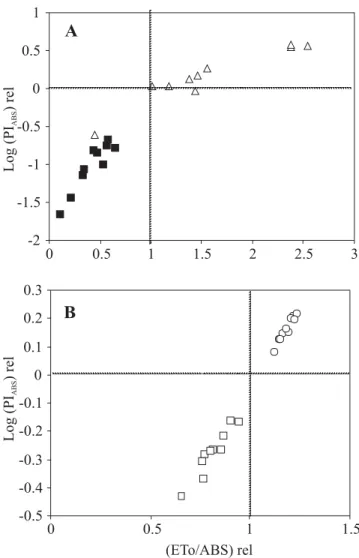
Figure 5. (A) – Relationship between the log function of
the relative Performance Index (Log (PIABS)rel) [=Log
(PIABS(sunlight) / PIABS(sunlight average) and the relative yield of
electron transport (ETo/ABS)rel [=(ETo/ABS(sunlight)/ ETo/
ABS (sunlight average)]. (B) – Relationship between the log
function of the relative Performance Index (Log (PIABS)rel)
[=Log (PIABS(shade)/ PIABS(shade average) and the relative yield
of electron transport (ETo/ABS)rel [=(ETo/ABS(shade)/ ETo/
ABS (shade average)]. The filled and empty squares represent copaiba under shade and sunlight, respectively. The empty triangles and empty circles represent mahogany under sunlight and shade, respectively.
The PIABS expresses both a function of the fluores-cence extreme Fo and Fm, as well as the intermediate J-step and the slope at the origin of the fluorescence rise, whereas ϕPo expresses a function of only FO and Fm independently of how the trajectory of the fluorescence intensity reaches its maximal value (Strauss et al., 2006). Furthermore, PIABS allows broader analysis of photosynthetic performance such as the relationship between photon absorption efficiency and capture of excited energy in PSII, as well as analysis of density of active RC and the probability that excited energy moves an electron further than QA- (Gonçalves and Santos Junior, 2005a). Therefore, PIABS is a better parameter to evaluate responses of PSII to stressful conditions than ϕPo alone.
The correlation between log (PIABS)rel and (ETO/
ABS)rel can be considered a typical property of a plant’s
capacity to transform light energy into chemical energy, which is directed into metabolic reactions in the biochemical process of photosynthesis (Hermans et al., 2003). The low values of (ETO/ABS)rel and log (PIABS)rel
in copaiba and mahogany under the stress condition, caused by high free energy availability in the system, suggest that adaptation to full sunlight of these species at the seedling stage is thermodynamically unfavorable due to the difficulty of using the excess energy in the photosynthetic process. On the other hand, under low irradiance, the thermodynamically optimal state is more easily achieved due to minimal entropy production, as a result of low free energy in the system.
The similar performance of mahogany seedlings under both sun and shade when compared to the contrasting performance of copaiba seedlings also under both sun and shade conditions (Figure 4A; see details in Figure 4B-C), and the superior performance of mahogany in both light environments (Figure 5A-B), suggest that this species is more plastic than copaiba for using the available energy at seedling stages.
CONCLUSIONS
We conclude that the investigation of the shape of O-J-I-P transients and the parameters obtained using Chl a
fluorescence such as the performance index were effective to evaluate the efficiency in capture and use of low and high light under shade and sunlight, respectively, in copaiba and mahogany seedlings. -2
-1.5 -1 -0.5 0 0.5 1
0 0.5 1 1.5 2 2.5 3
A
-0.5 -0.4 -0.3 -0.2 -0.1 0 0.1 0.2 0.3
0 0.5 1 1.5
B
Log
(PI
)
rel
ABS
Log
(PI
)
rel
ABS
Copaiba and mahogany were not very efficient in their use of excess energy under high irradiance, suffering from photoinhibition. In contrast, seedlings use light energy more efficiently under low irradiance due to minimal entropy production. Mahogany presented higher plasticity for using the available energy than copaiba in both irradiance treatments. This suggests that mahogany has a greater capacity to become established under contrasting light environments than does copaiba in the juvenile phase. Finally, these indexes could also possibly be of great value as screening tools for high-irradiance tolerance of tree species in highly degraded areas.
Acknowledgements: The authors are thankful to the
National Institute of Amazonian Research and members of Laboratory of Plant Physiology and Biochemistry (MCT-INPA) for their technical assistance during the analyses. JFC Gonçalves acknowledges a fellowship granted by the National Council for Scientific and Technological Development (CNPq, Brazil).
REFERENCES
Baker NR, Rosenqvist E (2004) Application of chlorophyll fluorescence can improve crop production strategies: an examination of future possibilities. J. Exp. Bot. 55:1607-162121.
Bjorkman O, Demmig-Adams B (1987) Photon yield of O2 evolution and chlorophyll fluorescence characteris-tics at 77 k among vascular plants of diverse origins. Planta 170:489-504.
Clark AJ, Landolt W, Bucher JB, Strasser RJ (2000) Beech (Fagus sylvatica) response to ozone exposure
as-sessed with a chlorophyll a fluorescence performance
index. Environ. Pollut. 109:501-507.
De Ronde JA, Cress WA, Kruger GHJ, Strasser RJ, Van Staden J (2004) Photosynthetic response of transgenic soybean plants, containing an Arabidopsis P5CR
gene, during heat and drought stress. J. Plant Physiol. 161:1211-1224.
Dekker JP, Van Grondelle R (2000) Primary charge separation in photosystem II. Photosynth. Res. 63:195-208.
Force L, Critchley C, Rensen JJS (2003) New fluorescence parameters for monitoring photosynthesis in plants. Photosynth. Res. 78:17-33.
Gonçalves JFC, Marenco RA, Vieira G (2001) Concentration of photosynthetic pigments and chlorophyll fluorescence of mahogany and tonka bean under two light environments. Braz. J. Plant Physiol. 13:149-157.
Gonçalves JFC, Barreto DCS, Santos Junior UM, Fernandes AV, Sampaio PTB, Buckeridge MS (2005) Growth, photosynthesis and stress indicators in young rosewood plants (Aniba rosaeodora Ducke)
under different light intensities. Braz. J. Plant Physiol. 17:325-334.
Gonçalves JFC, Santos Junior UM (2005a) Assimilação de carbono e indicadores de estresse da Amazônia. In: Nogueira RJMC, Araújo EL, Willadino LG, Cavalcante UMT (eds), Estresses Ambientais: Danos e Benefícios em Plantas, pp.165-181. UFRPE, Imprensa Universi-tária, Recife.
Gonçalves JFC, Santos Junior UM (2005b) Utilization of the chlorophyll a fluorescence technique as a tool for
selecting tolerant species to environments of high irradiance. Braz. J. Plant Physiol. 17:307-313.
Hankamer B, Barber J, Boekema EJ (1997) Structure and membrane organization of photosystem II from green plants. Annu. Rev. Plant Physiol. Plant Mol. Biol. 48:641-672.
Hermans C, Smeyers M, Rodriguez RM, Eyletters M, Strasser RJ, Delhaye JP (2003) Quality assessment of urban trees: A comparative study of physiological characterization, airborne imaging and on site fluorescence monitoring by the O-J-I-P-test. J. Plant Physiol. 160:81-90.
Joliot P, Joliot A (2002). Cyclic electron transport in plant leaf. Proc. Natl. Acad. Sci. USA 99:10209-10214. Kruger GHJ, Tsimilli-Michael M, Strasser RJ (1997) Light
stress provokes plastic and elastic modifications in structure and function of photosystem II in camellia leaves. Physiol. Plant. 101:265-277.
Lazar D (2003) Chlorophyll a fluorescence rise induced by
high light illumination of dark-adapted plant tissue studied by means of photosystem II and considering photosystem II heterogeneity. J. Theor. Biol. 220:469-503.
Mishra AN, Srivastava A, Strasser RJ (2001) Utilization of fast chlorophyll a technique in assessing the salt/ion
sensitivity of mung bean and brassica seedlings. J. Plant Physiol. 158:1173-1181.
Osmond CB, Ramus J, Levavasseur G, Franklin LA, Henley WJ (1993) Fluorescence quenching during photosynthesis and photoinhibition of Ulva rotundata Blid. Planta 190:97-106.
Panda D, Rao DN, Sharma SG, Strasser RJ, Sarkar RK (2006) Submergence effects on rice genotypes during seedlings stage: Probing of submergence driven changes of photosystem II by chlorophyll a
fluores-cence induction O-J-I-P transients. Photosynthetica 44:69-75.
Rhee KH, Morris EP, Barber J, Kuhlbrandt W (1998) Three-dimensional structure photosystem II reaction centre at 8 A resolution. Nature 396:283-86.
Santos Jr. UM, Gonçalves JFC, Feldpausch TR (2006) Growth, leaf nutrient concentration and photosyn-thetic nutrient use efficiency in tropical tree species planted in degraded areas in central Amazonia. For. Ecol. Manage. 226:299-309.
Sironval C, Strasser RJ, Brouers M (1981) Equivalence entre la theorie des flux et la theorie des relations entre proportions de pigments pour la description de la repartition de l’energie lumineuse absorbée par les membranes photoactives. Bull. Acad. R. Belg. 67:248-259. Srivastava A, Strasser RJ, Govindjee (1999) Greening of peas: parallel measurements of 77 K emission spectra, O-J-I-P chlorophyll a fluorescence transient, period
four oscillation of the initial fluorescence level, delayed light emission, and P700. Photosynthetica 37:365-392.
Stirbet A, Govindjee, Strasser BJ, Strasser RJ (1998) Chlorophyll a fluorescence induction in higher plants:
modeling and numerical simulation. J. Theor. Biol. 193:131-151.
Strasser RJ, Govindjee (1992) The Fo and O-J-I-P fluorescence rise in higher plants and algae. In: Argyroudi-Akoyunoglou JH (ed), Regulation of Chloroplast Biogenesis, pp.423-426. Plenum Press, New York.
Strasser RJ, Srivastava A, Govindjee (1995) Polyphasic chlorophyll a fluorescence transient in plants and
cyanobacteria. Photochem. Photobiol. 61:32-42. Strasser RJ, Srivastava A, Tsimilli-Michael M (1999)
Screening the vitality and photosynthetic activity of plants by fluorescence transient. In: Behl RK, Punia MS, Lather BPS (eds), Crop Improvement for Food Security, pp.79-126. SSARM, Hisar.
Strasser RJ, Srivastava A, Tsimilli-Michael M (2000) The fluorescence transient as a tool to characterize and screen photosynthetic samples. In: Yunus M, Pathre U, Mohanty P (eds), Probing Photosynthesis: Mechanisms, Regulation and Adaptation, pp.445-483. Taylor & Francis, London.
Strasser RJ, Srivastava A, Tsimilli-Michael M (2004) Analysis of chlorophyll a fluorescence transient. In:
Papageorgiou G, Govindjee (eds), Advances in Photosynthesis and Respiration: Chlorophyll Fluorescence a Signature of Photosynthesis, pp.321-362. Kluwer Academic Publishers, Netherlands. Strasser RJ, Tsimili-Michael M (2001) Stress in plants
from daily rhythm to global changes, detected and quantified by the JIP test. Chim. Nouvelle (SRC) 75:3321-6.
Strauss AJ, Kruger GHJ, Strasser RJ, Van Heerden PDR (2006) Ranking of dark chilling tolerance in soybean genotypes probed by chlorophyll a fluorescence
transient O-J-I-P. Environ. Exp. Bot. 56:147-157. Tsimilli-Michael M, Pêcheux M, Strasser RJ (1998) Vitality
and stress adaptation of the symbionts of coral reef and temperate foraminifers probed in hospite by the fluorescence kinetics O-J-I-P. Arch. Sci. Genéve 51:205-240.
Tsimilli-Michael M, Eggenberg P, Biro B, Koves-Péchy K, Voros I, Strasser RJ (2000) Synergistic and antagonistic effects of arbuscular mycorrhizal fungi and Azospirillum and Rhizobium nitrogen-fixers on
the photosynthetic activity of alfalfa, probed by polyphasic chlorophyll a fluorescence transient
O-J-I-P. Appl. Soil Ecol. 15:169-182.
Veiga Jr. VF, Pinto AC (2001) The Copaifera L. genus.
Quimica Nova 25:273-286.
Veiga Jr. VF, Zunino L, Calixto JB, Patitucci ML, Pinto AC (2001) Phytochemical and antioedematogenic studies of commercial Copaiba oils available in Brazil. Phytother. Res. 15:476-480.
Whitman AA, Brokaw NVL, Hagan JM (1997) Forest damage caused by selective logging of mahogany (Swietenia macrophyla) in northern Belize. For. Ecol.
Zhang S, Ma K, Chen L (2003) Response of photo-synthetic plasticity of Paeonia suffruticosa to
changed light environments. Environ. Exp. Bot. 49:121-133.
Zouni A, Witt HT, Kern J, Fromme P, Kraub N, Saenger W, Orth P (2001) Crystal structure of photosystem II from
Synecococcus elongates at 3.8 A resolution. Nature