To be or not to be: firm decision making regarding social
media presence
Catarina Roleta
Dissertation written under the supervision of Ana Isabel de Almeida Costa
Dissertation submitted in partial fulfilment of requirements for the degree of MSc in Strategic Management, at the Universidade Católica Portuguesa, January 2017
2
ABSTRACT
Title of the dissertation: “To be or not to be: firm decision making regarding social media presence.”
Author: Catarina da Costa Roleta
While Social Media (SM) is becoming even more relevant for consumers, managers are seeking to understand how they can improve brand’s SM performance while dealing with different external and internal constraints.
This dissertation describes the Decision-Making Processes (DMP) of Portuguese firms when managing their brand’s presence in different SM platforms, resulting in developing a normative, theory-driven framework that supports SM management. To this end, primary data resulting from eight interviews with key informants from seven different firms and two natural observations of DMP from two different companies were analysed. Then, data was interpreted under the light of existing theories about DMP in marketing management. Subsequently, secondary data depicting the cases of four firms deciding about their SM presence was analysed in line with the final framework, resulting on different possible firms’ behaviours characterization when developing their SM strategy.
It was concluded that although SM platforms business model suit current firms and marketing needs, managers have difficulties to integrated SM on marketing strategies. Plus, managers should be aware about firm’s external and internal constraints that are influencing firm’s SM performance. Moreover, it was found that firms still rely a lot in organic SM possibilities and their Investment capacity definition is strategically poor, which leads to a weak SM performance.
In brief, SM positive contribution to firm’s performance requires strong analytical skills, development of Marketing, Branding and Communication strategies, a solid SM budget definition and SM platforms’ business model, audiences and advertising offers appropriate to firm’s goals.
Keywords: Social Media, Facebook, Instagram, LinkedIn, YouTube, Strategic Marketing, Firm Decision Making, Management Constraints.
3
SUMÁRIO
As Redes Sociais (RS) são cada vez mais relevantes para os consumidores, enquanto isso, gestores procuram perceber como podem melhorar a performance das marcas nas RS, enquanto lidam com constrangimentos externos e internos.
Esta dissertação descreve o Processo de Tomada de Decisão (PTD) das empresas portuguesas, aquando à gestão da presença das marcas; resultando na criação de um esquema teórico que apoia o PTD no âmbito das RS.
Para este fim, foram recolhidos dados primários de oito entrevistas a key informants de sete empresas e de duas observações naturais de duas empresas. Os dados foram analisados e interpretados em linha com as teorias existentes sobre o tema principal. Posteriormente, dados secundários de quatro empresas foram analisados com base no esquema teórico final; o que resultou na caracterização de diferentes comportamentos que as empresas podem ter quando gerem as suas RS.
Assim, conclui-se que embora os modelos de negócio das RS se adequam às necessidades das empresas, ainda há dificuldade em integra-las nas estratégias de marketing. É necessário ter consciência de quais são os possíveis constrangimentos que podem influenciar a performance nas RS. Também foi descoberto que as empresas se baseiam nos resultados orgânicos, ignorando que uma fraca capacidade de investimento resulta numa má performance.
Resumindo, para que a atividade nas RS contribua positivamente para a empresa são necessárias fortes capacidades analíticas, desenvolvimento das estratégias de marketing, branding e de comunicação, definição de orçamento e, com base nos modelos de negócio, audiências e publicidade, escolher as RS mais adequadas.
Palavras-chave: Redes Sociais, Facebook, Instagram, LinkedIn, YouTube, Marketing Estratégico, Processo de Tomada de Decisão, Fatores de Constrangimento em Gestão
4
ACKNOLEDGEMENTS
Firstly, I want to thank to my thesis advisor, Ana Isabel Costa, for pushing me further and for giving such great guidelines to accomplish this very important step in my life. Without her support, it would be almost impossible to finalize this dissertation with the aimed content. Secondly, a special thanks to my mum and dad, Eunice Roleta and José Roleta, who were the first ones to believe that I could handle this master and its sparkles. Indeed, you got it right! Moreover, I want to thank to Pedro Rosa for his patience and pertinent advices and to Miguel Moreira for all his great suggestions and companionship during the our long-hours sessions. A special thanks to all my master colleagues who embrace this academic journey with me, particularly to Patricia Pimenta and Ana Teresa Lopes, for all the hours studying and dreaming! I also thank to my family and all my friends who handle me in the most stressful moments and who understood my (so many) frustrations! From now on, I can you give much more attention and pay back your unconditionally support.
Finally, I really thank to all the people that were open to answer to my many questions about the topic that we all love: Social Media. Without your help and empathy, this dissertation would had follow a completely different path.
5
TABLE OF CONTENTS
CHAPTER 1: INTRODUCTION ... 11
1.1 Background and Problem Statement ... 11
1.2 Aim and Scope... 12
1.3 Research Methods... 13
1.4 Academic and managerial relevance ... 14
1.5 Dissertation outline ... 14
CHAPTER 2: LITERATURE REVIEW AND CONCEPTUAL FRAMEWORK ... 15
2.1 Social media marketing ... 15
2.1.1 Social media platforms ... 15
2.1.2 Social media audiences ... 16
2.1.3 Social media marketing management ... 18
2.1.3.1. Social media investment ... 20
2.1.4 Firm decision making and marketing management ... 21
2.2. DMP constraints ... 23
2.2.1. External Constraints ... 23
Sector or Industry Competition ... 23
Development and diffusion of new technologies ... 23
2.2.2. Internal Constraints ... 24
Internal organization and transference of knowledge ... 24
Internalizing vs outsourcing SM management ... 24
2.3. Social media advertisement ... 25
2.4. Conclusions ... 27 CHAPTER 3: METHODOLOGY ... 29 3.1 Research Approach ... 29 3.2 Research Methods... 29 3.2.1 Research Design ... 29 3.2.2 Sources of data ... 30
3.2.3 Primary data collection ... 32
6
CHAPTER 4: RESULTS AND DISCUSSION ... 34
4.1 How well do the technological capabilities, business models and audiences of different SM platforms fit firms’ marketing objectives? ... 34
4.2 Which internal and external factors affect firms’ DMP regarding the management of their SM presence the most? How should they address them when developing their SM strategy? ... 38
4.3 How well do the advertising offers of SM platforms fit firms’ strategic and tactical Marketing Communications (MC) objectives? In particular, do the ad performance metrics made available enable the proper monitoring and re-assessment of campaigns by advertisers? ... 41
4.4 Discussion ... 42
Best Practices ... 44
4.5 Proposition and test of a theory-driven framework to guide DMP in the context of SMM ... 46
CHAPTER 5: CONCLUSIONS AND LIMITATIONS ... 50
5.1 Conclusions ... 50
7
TABLE OF FIGURES
Figure 1 - Consumer needs fulfilled by SM platforms (Zolkepli and Kamarulzaman, 2015). 17
Figure 2 - Managerial implications for firms’ SM performance. ... 19
Figure 3 - Determinants of the ROI of SM. ... 20
Figure 4 - Determinants of DMP and relevant marketing strategies. ... 22
Figure 5 - External and Internal DMP constraints. ... 25
Figure 6 - Timeline for the generation and collection of the data analysed. ... 30
Figure 7 - Outcomes of the external and internal constraints of DMP about SM. ... 40
Figure 8 - Actions that lead to poor SM presence. ... 44
Figure 9 - Guidelines for assessing the suitability of different SM platforms. ... 45
Figure 10 - Theory-driven strategic framework supporting support the DMP of firms regarding their SM presence. ... 46
8
TABLE OF TABLES
Table 1 - Types of SM according to Kaplan and Heilen (2010). ... 15
Table 2 - Main metrics employed by SM platforms. ... 26
Table 3 - Examples of key informant quotes on SMM. ... 34
Table 4 - Examples of key informant quotes about SM audiences. ... 36
Table 5 - Examples of key informant quotes on external and internal constraints of DMP about SM. ... 39
Table 6 - Examples of key informant quotes on SM advertising: offers and metrics. ... 41
Table 7 - Examples of key informant quotes on best SMM practices. ... 43
Table 8 - Description of the strategies, platform use and performance results related to the SM presence of four firms in the period between January and November 2016 ... 48
9
TABLE OF ANNEXES
ANNEX 1 In-depth interviews guidelines………58 ANNEX 2 Interviewees ‘details……….………..…………59
10
GLOSSARY
DMP – Decision Making Process FGC – Firm Generated Content KPI – Key Performance Indicator
ICT – Information and Communications Technology SM - Social Media
SMM - Social Media Marketing SNM – Social Networked Media SNS - Social Network Site
SMCM – Social Media Content Marketing UGC - User-Generated Content
11
CHAPTER 1: INTRODUCTION
This chapter presents the main subject and purpose of this dissertation. It begins with an analysis of the main Social Media matters, followed by the aim of this dissertation, which is accompanied by the three research questions. Then, the research methods applied in this dissertation and the relevance of the topic are described, finalizing with the outline of the dissertation.
1.1 Background and Problem Statement
While in 1995 only 1% of the world population had access to Internet, this figure has grown to about 40% today (Internet Live Stats, 2016). Meanwhile, spending on digital advertising is set to reach 197.48 billion U.S. dollars this year (The Statistics Portal, 2016). With the advance of the internet, people started demanding more content and connectivity than ever. An example is the fact that there are currently 1.3 billion active monthly users on Facebook (Facebook, 2016) and 1000 million on YouTube (socialbakers, 2016). In line with this, it is believed that by 2017 social media advertising will represent nearly 16% of all digital marketing spending (eMarketer, 2015). Although still growing, investment in Social Media (SM) already takes a large share of attention and resources in any marketing mix plan. With such developments, brands can no longer ignore such digital channels to communicate with their customers, or afford to strategically approach them by a mere copy-the-leader or trial-and-error approach.
Interactions between brands and customers used to be fairly inexistent, as traditional marketing communications used to be essentially a one-way street (Truten, 2008). Brand managers and advertising agencies devised and carried out promotional campaigns on TV, radio and e-mail marketing to showcase offers to target audiences. With the advent of online advertising, they began to combine these media with website banners, pop-up windows and search results, but this did not fundamentally improve the level of interactivity and dialogue between brands and customers (Truten, 2008). It was not until the development of SM that companies saw a real opportunity to engage in actual and spontaneous dialogue with their customers (Newman, 2014). Importantly, they also began to learn how to leverage investments on these platforms for branding and marketing research activities, given their relatively low cost and high flexibility (Zaglia, 2013). Traditional advertising media have nevertheless been able to retain part of their relevance. Danaher and Dagger (2013), for instance, showed that catalogues, TV and direct mail still have greater influence on consumers’ buying decisions than digital media. On the other hand, positive effects of firm-initiated SM communications, i.e. Firm-Generated Content
12
(FGC), on consumer behaviour have been observed, alone or in combination with TV ads and e-mail marketing (Kumar, Bezawada, Rishika, Janakiraman, & Kannan, 2016).
Meanwhile, some brands have managed to get a good grasp of the advantages of SM and their marketing features. A reference case is OREO, the famous US chocolate cookie brand (Jacques, 2012), who successfully used SM to engage customers by empowering them to share the moments in which they ate their OREOs. Others, however, have struggled to manage their SM presence appropriately, let alone take advantage of it. DELL, the US computer manufacturer, for instance, initially lost a significant amount of sales to competitors because it ignored the activity around its brand, particularly negative Word-of-Mouth (WOM). Nevertheless, after recognising its mistakes and embracing SM opportunities, this company ended up selling SM Marketing (SMM) support services to other companies in need of strategic advice in this area (Agarwal, 2013).
Among other things, DELL realized the importance of SM in establishing dialogue and engaging customers. For instance, asides using SM to fulfil immediate customer support activities, DELL’s blog team developed a program of “listening and responding” to answer customers and prospects doubts. In time, this grew to become an active, brand-centred community of computer experts (Agarwal, 2013).
OREO and DELL are good reminders of the importance of having a strategic approach to SM presence, as these brands made a careful selection of the SM platforms in which to invest. Common sense dictates that it is better to have a strong presence in one or two SM platforms than a non-impactful one in many (Levy, 2013). But other than this, there is a considerable lack of research and/or practical guidance on how to optimally allocate marketing resources to different SM. Similarly, very few have studied the processes by which strategic SMM decisions are being made by companies, and to what extent these are aligned with other marketing goals and activities (Mangold & Faulds, 2009).
1.2 Aim and Scope
This dissertation aims to (1) describe the DMP of firms when it comes to managing the presence of their brands in different SM platforms, particularly at the stage of entry or adoption; (2) develop a normative, theory-driven framework presenting the crucial factors for firms’ DMP within SM context, and thereby help brand/marketing managers make better decisions in this area. In view of this, the following research questions are addressed:
13
RQ1: How well do the technological capabilities, business models and audiences of different SM platforms fit firms’ marketing objectives?
RQ2: Which internal and external factors affect firms’ DMP regarding the management of their SM presence the most? How should they address them when developing their SM strategy?
RQ3: How well do the advertising offers of SM platforms fit firms’ strategic and tactical Marketing Communications (MC) objectives? In particular, do the ad performance metrics made available enable the proper monitoring and re-assessment of campaigns by advertisers?
To answer to these questions and achieve the overall aim of this dissertation, preliminary research boundaries were defined. Firstly, since the penetration of different SM platforms varies substantially across countries (Weller, 2013), and for practical reasons, this dissertation analyses the SM-related, DMP of Portuguese companies only. Therefore, only the SM platforms more relevant in the Portuguese market were analysed: Facebook, Instagram, LinkedIn and YouTube (Grupo Marktest, 2015a). Metrics and intrinsic characteristics from other SM/digital marketing platforms were not considered either.
To this end, eight key informants within companies and associated marketing agencies were selected based on their experience on the field of SMM in Portugal. Plus, two firm-related strategic meetings were also selected and observed, however, only SM-related topics were considered. Thus, no other digital marketing experiences and topics were considered.
Finally, an analysis of four companies from services sector (two perform Financial Services, one Retail and one Tourism) was conducted and aligned with the final theory-driven framework. Companies’ dataset is limited to strategic information provided by their agency or communications manager. Consequently, no other sectors, sources of metrics and companies’ decisions were considered either.
1.3 Research Methods
Since the phenomenon investigated is recent, there is yet little academic or practical knowledge about it. Moreover, this dissertation seeks to build theory that both helps explain the phenomenon and offer advice on how to best deal with it. Therefore, an exploratory approach was considered the best option to undertake.
Firstly, secondary data was gathered and analysed to comprehend the current theories about the studied topic and to support interviews guidelines. After that, eight in-depth interviews (from
14
October to November of 2016) and two-natural observations (from August to November of 2016) were conducted. To achieve a higher level of accuracy in this stage, the analysis of the primary collected data was done through the NVivo tool. Based on the analysis of the secondary data and on the coding process results of the primary data, a theory-driven framework about the SM DMP was developed. Finally, primary quantitative and qualitative data from four real companies (from January to November of 2016) was gathered and analysed to test the final framework.
1.4 Academic and managerial relevance
This dissertation contributes with the first elements of a new theory about DMP within SM context, since there is still lack of formed theory about how companies manage (or should manage) their SM performance. In an academic perspective, it brought structured theory about how firms take decisions about their entrance and activity on SM. Furthermore, it also contextualized SM role in Marketing and Communications strategies.
From a managerial perspective, this dissertation supports managers in their DMP by giving the main factors to have in consideration to develop sustainable SM results. Furthermore, it also provides guidelines while developing firms’ SM strategies. Besides, managers can still understand the main constraints (as external as internal) which influence firms’ SM performance. Of further value, this dissertation also gathered advertising SM offers from the main platforms in Portugal and it numerated their most important metrics, which are key for the SM performance analysis.
1.5 Dissertation outline
The next chapter presents a review of relevant literature on SM, Firm Decision-Making and (Digital) Marketing Advertising. After that, the third chapter describes meticulously the research methods, collection and analysis of the gathered data. While, the fourth chapter presents the main results obtained from data analysis and the final theory-driven framework with its explanation and assay.
Lastly, the fifth chapter presents the main conclusions and dissertation’s contribution, ending with its limitations and recommendations for future research.
15
CHAPTER 2: LITERATURE REVIEW AND CONCEPTUAL FRAMEWORK
The following chapter presents the studied literature. Firstly, the results of the SMM literature review, followed by external and internal constraints and ending with SM Advertising. To sum up, final conclusions are presented.
2.1 Social media marketing 2.1.1 Social media platforms
There have been many attempts to define exactly what SM are, and what this implies for management and marketing practice. It is not the objective of this dissertation to dwell on the first, but it is important to analyse the different schools of thought that may contribute to clarify the latter. SM have been defined in the ICT area as “a group of Internet-based applications built on the ideological and technological foundations of Web 2.0, which allow the creation and exchange of User-Generated Content (UGC)” (Zolkepli & Kamarulzaman, 2015). As such, companies may also use SM to showcase content (FGC) and in this way, improve the interaction with customers and prospects, to the extent that customer engagement with the firm and the platform may even become intertwined (Ahmad, Musa, & Harun, 2016).
Furthermore, the set of SM platforms available also varies considerably across countries (He & Pedraza-Jiménez, 2015), leading to the need of somehow categorise the offers existing in different markets (Chanthinok, Ussahawanitichakit, & Jhundra-indra, 2014).
The usage and communities of the different SM platforms aren’t look-a-like, thus, there is also the interest about dividing the existent platforms based on certain standards. One of the possible criteria are the social presence and self-presentation, which were used by Kaplan and Haelein (2010) to divide SM into six main different groups (Table 1).
16
From the different groups of SM, there are four platforms pertinent for this dissertation. Firstly, founded in 2004 and the biggest Social Network Site (SNS) in the world, Facebook has 1.13 billion active users (Facebook, 2016a) worldwide. Those users may have a personal profile (common user) or a page (business page or celebrity page) (Facebook, 2016c). Plus, Facebook connection between users is by “friendship” and the platform also allows users to follow profiles and like pages. However, they only can like/ follow a page and pages can only like other pages (Facebook, 2016c). Facebook users interact mainly by sharing different formats of content, while others can react by “liking” (or expressing different emotions) (Facebook, 2016d), comment it or share it too. As a result of Facebook being so well-established in society, it’s already seen as the most credible and informative SM platform by Portuguese population (Grupo Marktest, 2015b).
In 2012, Facebook bought Instagram, a very competitive entrant (Facebook Newsroom, 2016) only created in 2010. This friendly-user app is mainly exploited to capture and share on-going moments in videos and images (Instagram, 2016). When a user shares content, it appears on his or her followers’ feed, whose can like or comment it. Recently, Instagram created the “Instastories” feature, which only saves by 24h the shared content (Instagram, 2016c).
Another currently acquired platform was YouTube, a video-sharing platform founded in 2005, owned by Google (YouTube, 2016a) and considered the disruptive SM in the music industry (Forde, 2016). In YouTube, users can like or dislike a video, comment it, subscribe channels, to create playlists and share originally-created videos (Google, 2016).
Finally, since 2003 that LinkedIn is on the mission of connecting all the professionals around the world (LinkedIn, 2016). Recently bought by Microsoft (Microsoft, 2016), LinkedIn allows users to know more and connect (based on different degrees) with others professionals, vacancies, news and corporate insights. In LinkedIn, profiles are filled with users’ personal and professional information, experience and skills. Furthermore, its users can also follow people and brands/ companies, apply to job positions, emailing each other and participate into groups (LinkedIn, 2016). Thus, while SM platforms are constantly evolving and re-inventing themselves to sustain their competitive position and audiences, they turn SM characterization highly complex.
2.1.2 Social media audiences
Successful companies understand that consumer needs are a moving target (Solomon, 2015) and that this also increasingly applies to SM consumption habits. Indeed, managers must learn which consumer needs SM platforms fulfil in the first place, and then decide whether or not to
17
develop appropriate content to fulfil them. Furthermore, on their research Zolkepli and Kamarulzaman (2015) recognised that there are more important needs in social media than others (Figure 1).
By providing timely, useful, meaningful and consistent FGC in a set of platforms, companies may further humanize theirs brands and empathise more with consumers, without creating a sense of corporate intrusion in their lives (Ahmad, Musa, & Harun, 2016). In fact, consumers may come to feel that a company or brand belongs to their world, or at least their digital world (Zolkepli & Kamarulzaman, 2015). Furthermore, marketing managers may strategically approach SM audiences more actively (by establishment of close relationships with consumers, though PR and direct marketing tools) or passively (usage of SM as a source of information about customer, market needs and trends, through tools as blogs and forums) (Constantinides, 2014).
Figure 1 - Consumer needs fulfilled by SM platforms (Zolkepli and Kamarulzaman, 2015).
Since consumers prefer to network with people that have the same interests and desires as their own, companies may further leverage this by enabling the creation of communities of like-minded people sustained by SM platforms and FGC (Mangold & Faulds, 2009). Starbucks, for instance, was able to create a community that interacts online (blogs, Instagram and forums) and offline (to feel integrated in that community, people take picture with Starbucks products or to stores’ environment) (Starbucks, 2016).
Hence, it is important to understand SM functionalities and what are the market’s needs and trends. Nevertheless, to fulfil consumers’ needs, managers must learn which SM platforms their consumers visit and their behaviour there.
Enjoyment, Fruition Entertainment Social Influence Social Interaction Companionship Belongingness Playfulness Escapism
18
With at least 4.7 million Portuguese people active (Corporate, 2014), it’s on Facebook where companies can reach many different people at the same time. While Instagram Portuguese audiences are not clearly known, it is believed that it should be around 30% of the Portuguese population (Grupo Marktest, 2015a), number that it is supposed to continue to grow (Grupo Marktest, 2015b).
On YouTube, it is believed that the heavy users are mainly Millennials and men (Blattberg, 2016). However, its audiences are usually segmented based on video preferences, in which more popular categories are gaming and beauty and style (Blattberg, 2016).
Regarding the LinkedIn’s audience, it’s divided into main profiles: companies and people. What is most known about LinkedIn audiences is a stronger presence of graduated people (at least a bachelor’s degree) with medium-high income and living in big city centres (Kimberlee Morrison, 2016).
Since it is important to know SM consumers’ behaviours, the Marktest Consulting Group carried out a large market study in 2015 to learn about Portuguese consumers’ behaviour in SM. Like other cultures, Portuguese interact in SM more during the weekend and at the end of the day. Therefore, these are also the periods in which companies post most of their content. Furthermore, Portuguese alleged were on SM usually between 30 min to 1 hour per day and they use SM mainly to send and receive messages (general trend), to watch videos (particularly younger generations), interact with friends’ posts (especially females) and read the latest news (females showed more preference comparing to males) (Marktest Consulting, 2015).
2.1.3 Social media marketing management
SM can and should be seen mainly as a mean (alone or in combination with other communication channels) to achieve marketing goals and create value for consumers and stakeholders. Consequently, any marketing activities undertaken should be as suitably managed as other corporate activities. SM management has been defined as an essentially interdisciplinary and cross-functional marketing activity that leverages customer action to a profitable level (Felix et al., 2016).
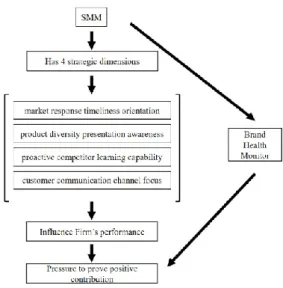
According to Chanthinok (2014), there are four strategic management dimensions of SMM that may positively impact firm performance (Figure 2). Firstly, the capability of a firm to communicate with its customers and prospects through SM tools, by keeping a positive image of the company (customer communication channel focus). Then, the capability to meet the market demand and distribution through SM (product diversity presentation awareness) and the ability to evaluate and comprehend the competitive environment where the firm is inserted
19
(proactive competitor learning capability) are also important. Last but not least important, firm should be able to answer to current market needs and predict future ones by the usage of SM (market response timeliness orientation).
Furthermore, branding also plays a crucial role in Marketing (Kotler & Armstrong, 2004) and in SM too, so marketers monitor brand health to guarantee a positive ROI. This pressure to guarantee a positive contribution drives managers to implement aggressive strategies when promoting their brands (Ahmad, Musa, & Harun, 2016). In the case of SM, several tactics may positively affect brand loyalty of customers, like advantageous campaigns, relevant and popular FCG, brand in different platforms and offered applications (Erdoğmuş & Çiçek, 2012). Hence, SMM should be embraced by managers to communicate and nurture relationships with customers (Kumar, Bezawada, Rishika, Janakiraman, & Kannan, 2016).
An important element in the SMM is the development of strategies aligned with the functionalities of SM platforms and the companies’ own strategic goals (Zhu & Chen, 2015). SM platforms offer different possibilities to target audiences and means of interaction, so their functionalities have not only tactical but also strategic implications. Indeed, different SM functionalities fulfil different targets’ needs (Zhu & Chen, 2015) and managers must understand that they don’t control timing, frequency and content of consumers’ conversations about their brands in SM as they did in the traditional media (Mangold & Faulds, 2009). Moreover, SM have also changed consumers. In fact, the consumer of today is more sophisticated, difficult to influence, persuade and retain (Constantinides, 2014). Thus, SMM efforts must be congruent and aligned with the needs of this new consumer and SM user (Zhu & Chen, 2015).
20
2.1.3.1. Social media investment
Not least important, is the clarification of SM investment relevance in SM management. SM nature should be clarified for managers (especially non-marketers), by connecting SM to the Digital Consumer Journey. In consequence, it is possible to better understand where SM have the power to influence customers and how much should be invested (Divol, Edelman, & Sarrazin, 2012).
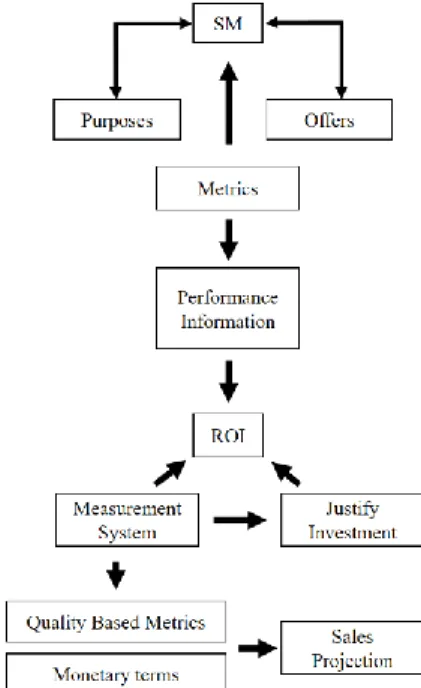
When evaluating SM performance, Marketing managers must analyse the offered metrics by platforms and to present results and justifications for the investment in this new media (Figure 3). It is not a linear process and not clear as the financial ROI, however, several metrics may be suitably to use depending on the campaigns’ objectives (Zahay, Barker, Barker, Bormann, & Roberts, 2017). That is why Marketing managers decide to (or must to) invest on developing a measurement system with the adequate metrics and based on an honest evaluation (Peters, Chen, Kaplan, Ognibeni, & Pauwels,
2013).
Plus, quality-based metrics should be preferred instead of the perspective of seeking high values (Peters et al., 2013), for instance, to have 1 million followers on Facebook loses its importance, when there is a low level of interaction with them. Furthermore, as the Kumar, Bhaskaran, Mirchandani and Shah (2013) showed in their research based on Hokey Pokey company, managers must arrange a way to measure their SM investment in monetary terms. Thus, it will be possible to present to a boardroom projections of sales instead of abstract metrics, as the Figure 3 depicts.
21
2.1.4 Firm decision making and marketing management
Every day, managers have to live with the pressure to take the optimal decision for each problem that a firm faces (Rode, 1997). The complexity of the management decision comes from the fact that it is not a purely internal process, independent of context or environment. Managers must deal with internal and external constraints and take into consideration everything which may affect profitability and market share. Furthermore, the company’s key strategic strengths and weaknesses also depend on the way it addresses both internal and external forces (Porter, 1979).
Firm DMP can be influenced by three main factors - decision-specific features, environment characteristics and firm characteristics (Elbanna & Child, 2007). Decision-specific features relate to the importance, underlying motivation and uncertainty of the decision, while environment characteristics vary accordingly with the levels of uncertainty and hostility felt by the firm. Finally, firm characterization is based on its size and performance (Elbanna & Child, 2007).
On the overall, those factors will influence market competition (Figure 4), which Managers typically recognize and so competitive dynamics have a strong effect on firm strategy and outcomes (Ketchen, Snow, Street, & Hoover, 2004). Consequently, managers ability to make good strategic decisions will increase if they are provided with a more complete understanding of firms’ competitive environment (Ketchen et al., 2004). The three basic elements of marketing strategy – segmentation, targeting and positioning (Figure 4) – combine the processing and analysis of both internal and external (market and competitive environment) information. While, segmentation entails dividing current or prospect markets into distinctive groups of customers per their natural heterogeneity in preferences and purchase power, targeting refers the selection of the segments that will be served by the brand or firm, which requires a match between segments’ characteristics identified and offers that the firm has, or could develop, to commercialise at a profit. Finally, positioning is the establishment of the appropriate tactics that will bring customers in targeted segments to acquire matching offers, aka, the marketing mix (Kotler & Armstrong, 2004). A concept developed by Jerome McCarthy in the US in 1960, entails defining the product, price, place (distribution) and promotion channels for every target-offer dyad target-offered by the firm, or more concretely, by its brands. Given the characteristics of services vis-à-vis physical products (i.e., their intangibility, heterogeneity, perishability and simultaneous production and consumption), an expansion of the marketing mix concept was later envisaged – the Service Marketing Mix (Zeithmal, Bitner, & Gremler, 2009) – which includes product (service), price, promotion, place, people, processes and physical evidences.
22
Of particular relevance to this dissertation are the strategic and tactic decisions commonly involved in the management of the marketing communications of firms and/or their brands. These decisions may be framed within the Integrated Marketing Communications (IMC) concept, which entails developing and implementing different forms of persuasive communication programs with customers and prospects over time, in an integrated way, with the aim to influence or affect the behaviour of the selected communication audience (Percy, 1997). Moreover, IMC implies planning stages (Figure 4), starting by applying a Brand Positioning model, which requires the presence of the brand positioning statement in the entire product or in the service portfolio (Rossiter & Bellman, 2005). Then, managers should reflect about the two main communication objectives: brand awareness and brand attitude. (Percy, 1997). Afterwards, managers start preparing the creative brief document, but since a campaign may focus on other type of promotions than advertising, the promotion strategy should be considered (Rossiter & Bellman, 2005). In the media strategy, advertisers employ two or three primary media and one or two secondary media to lift particular communication and to reach the total target audience (Rossiter & Bellman, 2005). Finally, a budget definition is necessary and to prevent campaign’s “wear out” a diagnose is required (Rossiter & Bellman, 2005).
Figure 4 - Determinants of DMP and relevant marketing strategies.
Past research has demonstrated the importance of prioritising investment in marketing activities to the financial performance of companies, through its impact on market performance (Martensen and Mouritsen, 2014). Other studies referred that, although marketing investments show less rationality compared to capital equipment investments, they require more financial reporting than other investments (Papadakis, Lioukas, & Chambers, 1998). This highlights the
23
complexity of strategic and tactic decisions which managers face every day, as well as the reach of the impact of such decisions for firms.
2.2. DMP constraints 2.2.1. External Constraints Sector or Industry Competition
The industry where the firm is inserted influences the DMP and its outcomes. Therefore, managers must focus on finding a position where the company can defend itself in the best way possible against competitive forces or even take advantage of them (Porter, 1979).
Since competitors will always be there, managers try to create a strong position to sustain a competitive advantage in the market (Kotler & Armstrong, 2004; Porter, 1979). It’s important to assess the forces that are affecting competitors and its origins. It’s possible to identify companies’ weakness and strengths and to incorporate this knowledge in production and commercialization decisions (Porter, 1979). Since SM offers new opportunities for firms improving their competitive position (Constantinides, 2014), managers will have another tool to sustain and develop firm’s competitive advantage in the market.
Development and diffusion of new technologies
When SM was massively adopted, it started to have a strong impact on society. In fact, the speed of SM adoption is so fast comparing to other ICT (e.g. TV) that the degree of the Replacement Discontinuance Process1(Rogers, 2010) is already possible to observe. As the case of Hi5, which was incapable to renovate its offers comparing to new entrants as Facebook and Twitter (Digital Trends, 2016; CBS, 2016).
Since firms follow consumers’ needs and trends, technologies that influence society and its adoption behaviours affect firms too. Moreover, a look to the next generations is needed, since they will become part of the organizations in a near future, firms must be prepared to receive them (Venters, Green, & Lopez, 2012) as employees and understand them as consumers to be able to meet their needs.
24
2.2.2. Internal Constraints
Internal organization and transference of knowledge
An important concept is the “absorptive capacity”, that is, the level of prior related knowledge that confers a company the ability to recognize the value of new information, assimilate it and apply it to commercial ends (Cohen & Levinthal, 2016). Since absorptive capacity depends on the transferences of knowledge between teams within organizations, managers must be aware of how well they communicate among and between themselves.
The prior knowledge is another concept to be considered, which “permits individuals to acquire related problem-solving capabilities” and it’s constitute by problem-solving methods and heuristics (Cohen & Levinthal, 2016). As earlier referred, DELL prior knowledge in solving problems allowed them to realize their bad performance situation and knowing how to take advantage of it (Road & Pradesh, 2013). DELL is also an example of dynamics capabilities’ theory application, since it had the ability to integrate, build, and reconfigure internal and external aptitudes in order to address a change on the environment (Teece, Pisano, & Shuen, 1997). Thus, in the middle of the SM fast and very competitive environment, firms that focus on achieving and sustaining a competitive advantage tend to succeed (Teece et al., 1997).
Internalizing vs outsourcing SM management
Since SMM is very recent, companies still have lack of experience with it and managerial doubts about how to exploit SM opportunities with the available resources appear. Therefore, outsourcing Marketing or Digital Marketing or SM agency’s services is considered as the less risky decision to deal with this matter.
Raiborn, Butler and Massoud (2009) discussed in their article that the outsourcing support services, as the outsourcing production services, present high organizational damage risk – as losing control, innovation and organizational trust and higher-than-expected transaction costs.
Thus, managers should understand clearly how organizational competencies and competitive advantage are affected by their outsourcing decisions.
Furthermore, Aubert, Rivard and Patry (2004) surveyed 335 firms with the aim of developing and testing an explanatory model of ICT outsourcing behaviour. The study scrutinised the influence of IT operations activities characteristics (as asset specificity and business skills) on their level of outsourcing. They found that the level of uncertainty and problems assessment play a crucial role in the decision to outsource. The complexity of this decision also remains in the fact that it may impact organizational competencies and firms’ competitive advantage, so
25
managers must carefully analyse it (Raiborn, Butler, & Massoud, 2009). Mostly, this is not a linear decision between “outsourcing or not”, but rather whether it should be outsourced and how (Aubert, Rivard, & Patry, 1996). Although there are cases as Dell, where all the SM activity is internally managed, it does not mean that this is the immediate and best option for all companies. Hence, outsourcing SM management to marketing agencies, must not be excluded as long as it contributes to the company’s goals, objectives and competitive advantage (Raiborn et al., 2009).
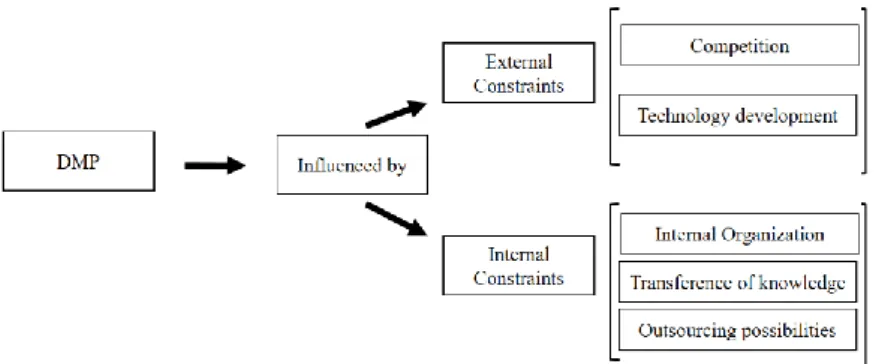
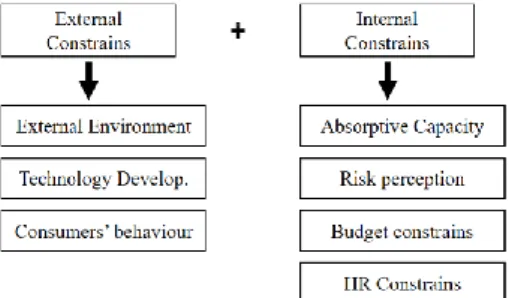
Lastly, as is possible to observe in Figure 5, SM DMP constraints can be divided into external and internal. The external constraints are mainly related to market characteristics, competition and to development of technology. On the other hand, managers also deal with internal constraints as knowledge transference and outsourcings risks.
Figure 5 - External and Internal DMP constraints.
2.3. Social media advertisement
SM platforms offer different advertisement possibilities; however, Facebook may be considered the one with the biggest and most complete advertising offers. Firstly, it asks about intended business goals with that action, to better adapt their offer to each case. While developing a campaign, the firm must also indicate its target(s) (by location, demographics, interests, purchase preferences, etc.), so Facebook can predict the possible reached people. Afterwards, is creation of the ad itself, on which the design and copywriting are crucial to campaigns’ success. Although Facebook offers innovative forms to do it and requires defined image sizes and amount of words, content and adequacy are totally firm’s responsibility. Furthermore, while the campaign is running, firms can monitor it and input tactical changes to maximize its investment and guarantee goals’ achievement. Finally, when campaign ends, it is possible to evaluate results and performance by analysing the available metrics (Facebook, 2016b).
26
Instagram follows Facebook advertising logic. Plus, advertising is done through Facebook Ads accounts or Business ones, since a campaign can be run in the both platforms ate the same time. Instagram also supports different objectives such as “app downloads”, reach, frequency and from Mass to Local awareness (Instagram, 2016b).
While other SM platforms support different formats, YouTube only supports video format and its cost is based on its engagement, helping firms to understand the most and the less interesting parts for consumers. In this platform is possible to target people by different filters as age, gender, interests and location (YouTube, 2016). Lastly, as other SM platforms, YouTube allows firms to adjust campaigns while they are running to maximize the investment.
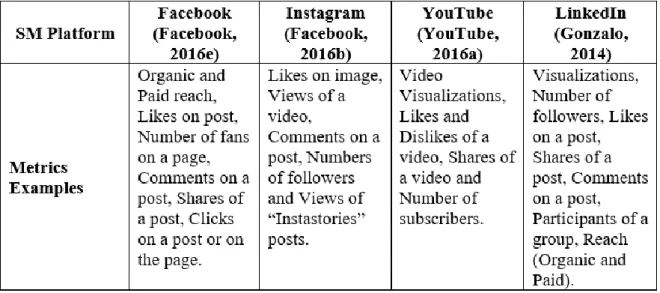
Although mainly seen as a B2B platform, LinkedIn presents success cases with B2C targeting, as the Holiday Inn Express case (LinkedIn, 2016). It offers mainly Sponsor Content (with possible different formats) to raise awareness, to build relationships with consumers or drive leads to firms’ websites. Allowing B2B firms to target as they never did before (LinkedIn, 2016). The other two possibilities are the Sponsored InMail and the simple Text Ads (usually at the right corner of the desktop screen). The Sponsored InMail allows companies to send personalized messages to prospects, to drive conversations and to reach members when they are more active on LinkedIn (LinkedIn, 2016). While the Text ads is more oriented to drive traffic, generate leads and clicks and impressions measurement (LinkedIn, 2016). LinkedIn also provides diverse tips and documents to support firms’ activity while using their ads offers. All the studied SM platforms offer different metrics (Table 2), which allow managers to analyse campaigns’ results as they never did before, however, its relevance depends on firm’s analysis intentions.
27
To conclude, SM platforms present more complete advertising offers and show more concern about firms’ needs than traditional media. Besides, SM platforms are aware of the lack of knowledge about its operations, so they offer constant support to firms.
2.4. Conclusions
A deeper understanding of SM platforms’ characteristics, namely in what respects their different purposes for users and advertising/communication offers for firms is needed while developing the Marketing Promotion Mix and the Media Strategy (Chanthinok et al., 2014). Information on how such platforms work is available, but there is a great lack of knowledge about platforms’ main audiences and their features.
Furthermore, fierce competition between SM platforms for audiences and advertising fees results in a highly technologically turbulent market, which is always pushing new features in order to retain their active users and attract more. Managers must be aware of these SM challenges and their influence on consumer behaviour and marketing communication alternatives. When considering the strategic and tactical implications of SM use, a firm can reach its strategic goals by applying the different SM functionalities to the adequate needs and targets. Furthermore, a good integration of SM in a Media Strategy will help company to generate a competitive advantage and improve its Market Performance. Nevertheless, managers still have doubts about dealing with SM nature (Divol et al., 2012), its high level of competition and their main targets. Which affects how SM is faced by managers and how it’s inserted in firm’s Marketing Strategy. Hence, a deeply research about how managers may combined SM platforms with their strategy is needed.
When making decisions about SM, managers may find two main external constraints: level of technological development and level of competitiveness in the market. The SM adoption process appears to be quite fast and its Replacement Discontinuance Process too. Thus, firms may feel difficulty to keep up SM trends. Technology has been showing a strong impact on society, especially on the new generations and SM platforms are no exception. Such societal processes will also influence firms’ activities, so cost and differentiation will be affected too. These are correlated with the level of competitiveness of a sector or industry. Thus, DMP about SM management must contribute positively to the process of finding and developing a strong position in the industry, which will reflect itself on the attainment of a positive ROI.
On the other hand, firms’ internal constraints such as internal structure and knowledge transference also affect DMP. Firstly, knowledge about SM and its transference will depend
28
on company’s Absorptive Capacity, previous experience on Digital field and on its Dynamics capabilities. When companies can gather these three main assets, they will be truly prepared for a Competitive Changing Environment as SM. Nevertheless, in moments of new topics and Fast Technologic Development, companies present doubts and prefer to control the associated risk. Therefore, the hypothesis to outsource this new activity should be analysed, but it is important to guarantee that these contracts are aligned with goals, objectives and competitive advantage of the company.
To conclude, brands are in SM mainly to contact with its consumers and prospects through advertising, branding, customer support and PR activities. However, there is still a great lack of research about how companies should deal with the external and internal constraints when integrating SM in their Marketing Strategy.
Finally, a lot of pressure is put onto marketing managers to justify SM investments and their contribution to firm performance. In view of this, SM platforms increasingly offer metrics that allow companies to recognise their performance on them as no other media out there allows. Consequently, it is important to implement a measurement system that can help to justify the investment and to use quality based metrics with monetary visions to project sales. The SM platforms studied in this thesis offer plenty of data and support managers’ doubts about the advertisement strategic and tactical possibilities. The remaining question is if managers do understand how these offers work and how they can plan and justify their advertising investment accordingly.
29
CHAPTER 3: METHODOLOGY
This chapter describes the research approach undertaken to answer to the Research Questions. It also covers the methods employed to collect and analyse primary and secondary data.
3.1 Research Approach
There are three types of research approaches, according to the research purpose, the research questions, the precision of the formed hypotheses and the data collection methods used (Aaker, Kumar, George, & Leone, 2011). Causal research assesses a cause-and-effect relationship between two variables, while descriptive research aims to describe an environment by identifying the characteristics of things or phenomena that are associated with one another (Hyman & Sierra, 2010). Instead, this dissertation undertook an exploratory approach, which intends to seek insights about the nature of a phenomenon and clarify its context (Aaker et al., 2011; Hyman & Sierra, 2010).
Due to the lack of studies about Social Media DMP, this type of approach was considered the most adequate. Additionally, it was also deemed the most suitable to explore and gain understanding about the meanings (Creswell, 2013) that marketing managers and marketing agencies’ account managers confer to DMP in a SMM context.
3.2 Research Methods 3.2.1 Research Design
This dissertation followed a process of inducting theory by conducting case study research. This methodology is especially appropriate when dealing with the study of new phenomena. Its main goal is to build theory that is empirically grounded and testable, so it strongly grounded in data collection, namely through observation and inquiry (Eisenhardt, 1989). Such qualitative methods of data collection and analysis are helpful in uncovering new issues and perspectives, diagnosing situations and screening for possible explanations (Hyman & Sierra, 2010). Their outputs help better understand the contextual patterns and dynamics of a phenomenon, which are necessary to be able to claim a theory about it (Eisenhardt, 1989).
All the services sector in Portugal was considered as unit of analysis, mainly financial, retail and tourism industries. The areas were selected based on my previous working experience, on key informants’ accessibility and on the amount of available information in VAN’s campaigns archive. The key informants from firms were selected based on their experience in SM, Marketing and Communication fields, inside of firms’ context. Another factor of selection was
30
the level of their position in the firm, since by being in medium-high management positions they have more experience in managing resources and constraints. In case of key informants from agencies, they were selected based on their experience in the Digital and SM field. The success of managing accounts and pages was one of the most important factors of selection. Another relevant factor was the experience in dealing with different types of firms, teams and industries – leading to a deeper understanding about the FDMP.
The main inquiry areas of this dissertation were about SM platforms’ purposes, usage and audiences (specially Facebook, Instagram, YouTube and LinkedIn) and how the Portuguese population relates with SM. Another topic was about the DMP of SM: constraints, important steps and required knowledge. The main activities of firms on SM and how they can be managed were also selected as inquiry areas.
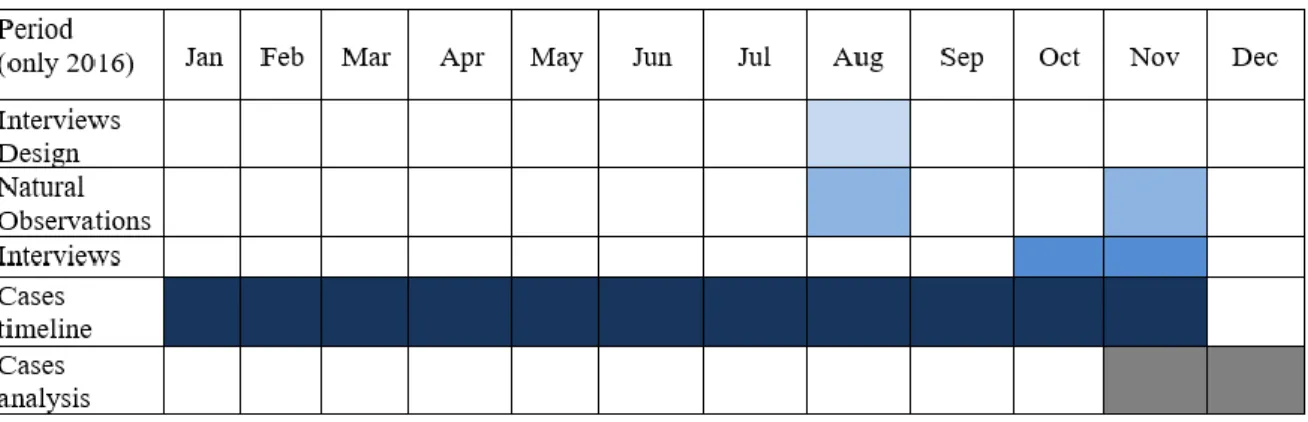
As it can be seen on Figure 6, the timeline for the generation and collection of the data analysed in this dissertation extends from January to December 2016.
Figure 6 - Timeline for the generation and collection of the data analysed.
3.2.2 Sources of data
The bulk of the data collected and interpreted in this dissertation was obtained through the performance of in-depth interviews (Legard, Keegan, & Ward, 2003) with key informants about DMP in a SMM context. Since it was impossible to reach all the Marketing managers and Digital Marketing agencies population, the sample was chosen by non-probability and through convenience and self-selection techniques (Saunders, Lewis, & Thornhill, 2009). Key informants were selected among marketing/marketing communication managers and account managers in (digital) marketing agencies working in Lisbon, Portugal, as these often collaborate closely in SMM, advertising and branding activities. Individuals were chosen based on their knowledge and experience with DMP about SM, as well as their level of involvement with and actual power in DMP, particularly at the strategic level (Coombes, Debby, Humphrey, & Neale,
31
2009). Eighteen individuals fitting this profile, from twelve different firms and six agencies, were approached to participate in the interviews. Of these, eight key informants were recruited, one is working in the Public Sector, three in the Services Sector and one in Retail, with functions as Communications Directors and Digital Strategists; and three in marketing agencies, with functions as Communication Director and Content and SM responsible (Annex 2). Specifically, they were four men and four women aged between 25 and 45 years old, from two to more than 10 years of work experience in Management, Marketing or Marketing Communication functions.
To be able to triangulate the information provided by key informants (Angrosino, 2012) with that revealed during actual DMP, in-depth interviews were complemented by two Non-Reactive Naturalistic Observations conducted by the author. One (N1) took place in person during an internal communication department meeting of a firm (identity cannot be disclosed) involving the team members (the director of the department and assistants), where the agenda was to review the general progress of the organization’s SMM marketing activities and delineate future strategy. The other (N2), took place via Skype, during a meeting between a digital analyst and the head of marketing communications, where the agenda referred to digital marketing strategies and channels management for next year.
One of the observations was related to two interviewed key informants (N2) and the other one (N1) had no relationship to interviews results. Furthermore, it was important that the natural observations would be from different companies, thus, one was a marketing agency (related to two key informants) and other one perform financial activities. Both selection was based mainly on two factors: internal departments meetings with SM strategy as main topic and where internal relationships between different team members could be observed.
To be able to externally validate the information gathered from key informants and observations about DMP in a SMM context with that resulting from actual, contemporary, comparable DMP (namely their antecedents and outcomes) conducted by other organisations, secondary data were accessed about the SMM activities of four companies: two from financial industry (A and B), one from the Retail industry (C) and one from the Tourism Industry (D). In particular, the strategic and tactic goals, target audiences, platform choice, decision process/criteria, performance results and monitoring/evaluation of a set of SM advertising activities conducted in a well-defined time period (named “a campaign”) by each company were compiled and analysed. Advertising campaigns were selected because of practical reasons; thus, it was possible to gather clear objectives (or cases of clear absence of them) and it was conceivable to do a better comparison between costs and benefits. Finally, since all the cases were advertising
32
campaigns, all of them can be equally compared. Furthermore, the selection of the four companies’ performance data within SM context was also based on interviews and natural observations’ analysis results. Plus, three of them are related to SM outsourcing performed by VAN and other one was related to N1 results, which do not outsource its SM activity. The four cases were valuable as a source of a new ideas which were explored in the interviews phase and as a reference base to compare with primary data results (Aaker et al., 2011).
Lastly, compiled data were complemented with information from trade reports (e.g. Marktest’ 2015 report on Social Media use in Portugal) and SM platforms’ business webpages (e.g., features, corporate history, user base, advertising offers for corporate customers).
3.2.3 Primary data collection
Although essentially unstructured, all eight in-depth interviews conducted covered the same three central issues, as identified by the initial research questions and subsequently refined with the help of the results of the literature review. The first was related to the available SM platforms, their main technological features, the characteristics of user audiences and how companies leveraged all of this to manage their SM presence. The second was more related to the external and internal environmental constraints felt by interviewees, or which could influence the DMP the most. Finally, the third inquired about the advertising possibilities and key performance metrics offered by different SM. The interviews were conducted from October 4th to November 16th 2016, mostly face-to-face (one was performed via Skype and another via e-mail), and their duration varied between 18 and 45 minutes. The interviewees’ answers were registered in the Qualtrics platform, in which the main guidelines were inserted. At the same time, interviews were recorded for a later analysis of the gathered data.
N1 occurred in Lisbon, in the firm’s main office building, on the 10th of August 2016 and lasted 2 hours. This meeting was dedicated to brands’ SM presence, presentation of possible future SM agencies to outsource and to plan future steps of firm’s SM strategy. Relationship and behaviours between the members of the meeting were note, nevertheless, other topics outside this dissertation’s scope were not recorded and either considered.
N2 was carried out in Lisbon too, on the 21st of November 2016, at the agency’s office and lasted 1 hour. N2 was a meeting aimed to do a final balance about the current year (2016) and future strategy for the next one (2017). Conversations about SM strategy dedicated to each SM platform and relationship between members were also recorded. Other topics related to other digital platforms were not included for the analysis of N2.
33
During both natural observations writing notes were done about meeting structure, behaviours, opinions and relationships between actors.
3.2.4 Data analysis
Full transcripts of interviews and observations were made, which were subsequently content-analysed with the help of the NVIVO software (NVivo, 2016). Transcript content was first coded according to “(…) major themes, ideas, concepts, interpretations and propositions” (Taylor, Bogdan, & DeVault, 2015) of the interviews guidelines and then comparatively interpreted to generate theory categories (Holton, 2007). There were questions that were separately analysed, since that the different interviewees answers could be gathered into main topics. For example, in the question “In your opinion, what are the most common mistakes done by firms on SM?” (Annex 1), all interviews’ answers were coded by main area of mistake as “Ads and Spam” and “Ignore consumers’ feedback”.
There were also questions in which answers by interviewees from agencies were separated the ones from firms, thus, it was possible to understand both points of view. As an example, answers from the question “Does your agency define objectives to your clients?” OR “Does your firm define SM objectives?” were divided into two groups (agencies and firms’ answers) and both opinions were compared. Then, they were crossed with the question “What is most challenging while working with companies?” to discover if the first question was considered one of the biggest challenges between both parties.
Then, the observations were also analysed and coded into main interpretation categories, as “relationship (between actors)” notes, related “Skills” to SM and “SM (strategy) discussion”. The final categories were then matched to the initial research questions, under the light of the main conclusions of the literature review earlier performed and finally organized into a set of interrelated theoretical propositions about DMP in a SMM context.
The external validity and applicability of the propositions were finally examined with the help of the accessed SM ad campaign of the four selected companies. Each company-campaign dyad was contextualized in the theory developed, their DMP evaluated and guidelines for the optimization of future processes developed, under a more general, normative approach.
34
CHAPTER 4: RESULTS AND DISCUSSION
4.1 How well do the technological capabilities, business models and audiences of different SM platforms fit firms’ marketing objectives?
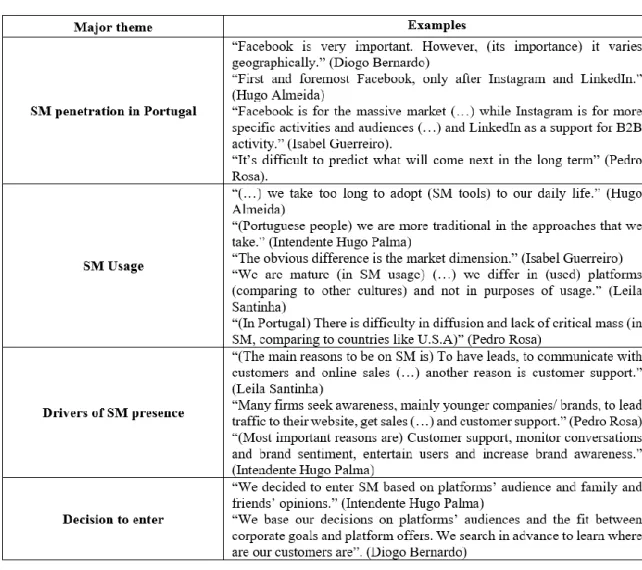
Key informants perceived SMM as a highly complex, multidisciplinary and dynamic field, one that requires a solid knowledge of consumer behaviour, ICT and marketing management before full business potential can be taken (Table 3). As noted by a participant in N1, “it is essential to decide strategy and tactics as soon as possible for each SM platform, but this requires we learn about each and every of them intimately”.
Table 3 - Examples of key informant quotes on SMM.
It was possible to identify common drivers of SM presence, although some variation could be observed according to product or service dimension. The main driver seems to be to increase brand awareness, particularly among recent brands, to generate website traffic and increase
35
online sales. Nevertheless, there seems to be a predominance of customer support activities. People “come to Facebook asking doubts about things available online” (Pedro Rosa), since they are already on Facebook they take advantage of it (Hugo Almeida). SM-based customer support services have come to be in high demand by consumers, as they seem to increasingly prefer to communicate with brands and obtain information by this means rather than by visiting a website (Hugo Almeida, Intendente Hugo Palma), mainly for convenience. This trend is likely to grow in the future, as will “anything that facilitates daily life” (Diogo Bernardo).
The way that companies decide to enter different SM seems to support the view of marketing investment being relatively less rational (Papadakis et al., 1998) – a case in point was asking friends and family members for suggestions and opinions (Intendente Hugo Palma). Yet, some companies do consult digital marketing agencies and ask for support, as they feel unprepared to make such decisions about investments on their own. The fact that companies “thought they had one problem, and after contacting us realized that they had different ones” (Leila Santinha), indicates that DMP about SM within companies may often be poorly informed, resulting in suboptimal decisions and consequently poor results.
Differences between audiences across SM platforms are deemed to be related to generations (Pedro Rosa), to “a certain type of content” (Intendente Hugo Palma) and “geographic factors”. Portugal is considered a relatively small market, being thus much more difficult for platforms to reach a sufficiently large size. Besides its small dimension, it is also considered a mature market that follows the main global trends, but never reaching extreme situations (Intendente Hugo Palma) as U.S.A and U.K markets.
36
Table 4 - Examples of key informant quotes about SM audiences.
Facebook is considered the massive and generalist one and “it represents an almost 1:1 relationship with Internet penetration” (Isabel Guerreiro). It is believed that there are around “6 million active users” (Pedro Rosa), however, there is lack of study and free available information around Portuguese audiences. “I assume that since in Facebook ads tool indicates
37
that the maximum possible reach is about 6 million people (Pedro Rosa)”. Facebook’s audience is getting broader” (Diogo Bernardo). It is considered the generalist Social Networked Media, which can reach many different people at the same time (Table 4). It is the massive one in Portugal and “everyone already knows what it is” (Leila Santinha).
Instagram is already in a “growing process, by becoming massive, however, it is also elitist” (Isabel Guerreiro). Instagram’s audience is younger than the one from Facebook (Pedro Rosa, Leila Santinha), though, not so young as the typical audience of the Snapchat platform, hence, “maybe with an age range of “20-40 years-old” (Pedro Rosa).
The audience of YouTube is distinguished by the usage patterns (Pedro Rosa, Leila Santinha). It is believed that the heavy users are mainly Millennials (Blattberg, 2016), since they grew with this trend of watching videos on YouTube (Pedro Rosa). Thereupon, it is expected that most of the audiences is between “10 and 30 years-old” (Hugo Almeida, Pedro Rosa). Nevertheless, it is important to distinguish the heavy users from the consumers. “Everyone goes to YouTube watching videos” (Pedro Rosa), those are the regular consumers of YouTube, while the users subscribe channels and follows its newest topics – as the strong trend of Vloggers (video bloggers).
In LinkedIn, a certain degree of sophistication and education is almost required (Table 4). As Isabel Guerreiro reports, it is where “there are SMBs with a certain sophistication level” and where it is seen mainly “Class A and A+”. Plus, not all the sectors are represented here (Marta Matos), it is a “corporate mainly” (Hugo Almeida) environment. Where university students look for opportunities in the market (Pedro Rosa) and companies open vacancies and try to do B2B trades.
Hence, SM offers differentiate from each other and all the platforms are aware of consumers and firms’ needs, explaining the constant improvements of their tools to sustain audiences. However, firms are still figuring out what is the place of SM in their Marketing strategy and how this media channel can contribute to their relationship with consumers.
P1 – When integrated in firms’ Media Strategy, Social Media platforms allow Brand(s) to interact with consumers and reach marketing communication objectives. In those platforms, firms can be closer to their target(s), when their tactical movements fit in in platforms’ usage patterns.