ONE-SESSION MINDFULNESS MEDITATION INTERVENTIONS
Dissertação apresentada à Universidade Católica Portuguesa
para obtenção do grau de mestre em Master in Psychology in
Business and Economics
Por
Vasco de Almeida Esteves Cavaleiro Brazão
Faculdade de Ciências Humanas and Católica Lisbon School of
Business and Economics
ONE-SESSION MINDFULNESS MEDITATION INTERVENTIONS
Dissertação apresentada à Universidade Católica Portuguesa para
obtenção do grau de mestre em Master in Psychology in Business and
Economics
Por
Vasco de Almeida Esteves Cavaleiro Brazão
Faculdade de Ciências Humanas and Católica Lisbon School of
Business and Economics
Sob orientação do Professor Andrew C. Hafenbrack e coorientação do
Professor João P. Braga
ii Acknowledgements
The winding road that led to this dissertation was made easier, more joyful, and more meaningful by everyone who accompanied this process. You have given me focus when my mind wandered, optimism when my faith waivered, ideas when my own well was dry.
I thank my family, on all sides, for providing me with the financial and emotional support I needed, and all those moments in living rooms, on terraces, on the phone, or by the ocean when I was not thinking about my thesis.
I thank my advisors, Andrew Hafenbrack and João Braga, for their mentorship and patience. Your ideas guided and enriched this thesis, and your respect for my ideas allowed me to really make this thesis my own. I also thank everyone UCP that was involved in this process, from Joana Carneiro Pinto and Helena Rebelo Pinto who supervised the
dissertation seminar and pushed me to deliver everything on time, to Daniel Fernandes and Ana Paula Giordano, who first encouraged me to get in contact with professor Hafenbrack when I showed an interest in mindfulness. And thank you, Vanessa Sá, for your crucial help in the empirical study and systematic review and for the good and bad times we went through together.
I thank everyone at CLOO – Behavioral Insights Unit. You are wonderful and have been nothing but kind to me. May we keep building a better world long after my defense.
I thank everyone at the SIPS 2019 conference for great conversations and making me feel included, with a special thanks to Chris Noone for giving me the idea of
concluding my work with a list of recommendations for future one-session mindfulness meditation studies.
Joseph, you really should have read my thesis. But I suppose you are excused because of how much you heard about my thesis. Thanks for everything bud.
And Sasha, where do I even begin? Thank you for being there through and through, thank you for your love, thank you for getting me to have fun anyway. And thank you— and I’m sorry!—for the past two months. I would have been starving and full of fleas if not for you. May I keep having the chance to return the favor.
To everyone who contributed to this thesis without knowing or whom I couldn’t mention here: thank you!
iii Abstract
Mindfulness has enjoyed increasing popularity among Western scholars and
practitioners, leading to a surge of scientific publications. Within this field, more and more studies employ an experimental approach and focus on the immediate effects of one session of mindfulness meditation. This dissertation sought to contribute to this subfield in three ways. To make a general survey of the field, a preliminary systematic scoping of one-session mindfulness meditation studies was conducted. The results of this review,
presented in Chapter 2, allowed us to characterize and critically evaluate the typical study in this field. One important contribution of this thesis is the raw data (a table of coded studies) for the scoping review, accessible online at https://osf.io/h7k9g/. Chapter 3 presents a preregistered (https://aspredicted.org/blind.php?x=dn7uz3) experimental study comparing the effects of mindfulness meditation to a mindwandering control induction on aggression. Several important limitations constrained our ability to draw inferences from this study, and they are examined in the detail in the chapter. Chapter 4 consolidates the main contribution of this thesis by reflecting on the previous work and detailing a list of recommendations for future researchers in this subfield. This is done with particular attention to methodological and theoretical issues raised as a result of psychology’s “replication crisis”.
iv Resumo
O mindfulness (ou “atenção plena) tem sido cada vez mais popular entre investigadores e praticantes no Ocidente, resultando numa avalanche de publicações científicas. Dentro deste campo de estudo, cada vez mais estudos usam uma abordagem experimental para estudar os efeitos de uma única sessão de meditação mindfulness. Esta dissertação pretendeu contribuir para este campo de três maneiras. Para fazer um apanhado geral do campo de investigação, foi executada uma scoping review sistemática de estudos de uma sessão de meditação de mindfulness. Os resultados desta revisão, apresentados no Capítulo 2, permitiram-nos caracterizar e avaliar criticamente o típico estudo neste campo. Uma contribuição importante desta dissertação é a tabela de dados da revisão (uma tabela com todos os estudos incluídos e codificados), disponível em https://osf.io/h7k9g/. O Capítulo 3 apresenta um estudo experimental pré-registado
(https://aspredicted.org/blind.php?x=dn7uz3) que comparou os efeitos sobre a agressão de meditação mindfulness versus uma indução de controlo (mindwandering). Várias
limitações reduzem a nossa capacidade de fazer inferências a partir dos resultados, e as mesmas são examinadas em detalhe no capítulo. O Capítulo 4 consolida a maior contribuição desta dissertação refletindo no restante trabalho e detalhando uma lista de recomendações para investigações futuras neste campo. Estas recomendações foram criadas com especial atenção a questões metodológicas e teóricas levantadas como resultado da “crise de replicação” na psicologia.
v Table of Contents Acknowledgements ... ii Abstract ... iii Resumo ... iv Table of Contents... v Table of Figures ... vi
Table of Tables ... vii
CHAPTER 1: General Introduction ... 1
Metascientific Background ... 2
Aims and Objectives of this Dissertation ... 8
CHAPTER 2: Systematic Scoping Review ... 9
Method ... 10
Results ... 14
Discussion ... 17
CHAPTER 3: Empirical Study ... 20
Original Study... 21
The Present Study ... 22
Method ... 22
Results ... 26
Discussion ... 28
CHAPTER 4: General Discussion ... 32
Recommendations for Future Research ... 32
Conclusion ... 34
References ... 35
APPENDIX A 51
APPENDIX B 53
vi Table of Figures
Figure A.1. Interest in Mindfulness Research as Proportion of Total Output (1998-2018).51
Figure B.1. Histogram of Duration of Mindfulness Inductions. ... 67
Figure B.2. Histogram of Proportion of Females. ... 67
Figure B.3. Histogram of Mean Age ... 68
Figure B.4. Histogram of N per Cell. ... 68
Figure B.5. Bar Chart of Studies per Year. ... 71
Figure B.6. Histogram of N per Cell for Between Subjects Studies. ... 76
Figure B.7. Boxplots of Study Power for Different True Effects for Between Subjects Studies. ... 76
Figure C.1. Assumed Causal Model for Experiment... 77
Figure C.2. Power Curve for an Independent t-test with n1 = n2 = 146. ... 77
Figure C.3. Power Curve for an Independent t-test with n1 = n2 = 100. ... 78
Figure C.4. Parallel Mediation Model. ... 78
vii Table of Tables
Table A.1. Aims, Objectives, and Dedicated Chapters of this Dissertation. ... 51
Table B.1. List of all Included Studies. ... 53
Table B.2. Number of Studies per Journal. ... 68
Table B.3. Final Sources of Inductions with Counts. ... 71
1 CHAPTER 1: General Introduction
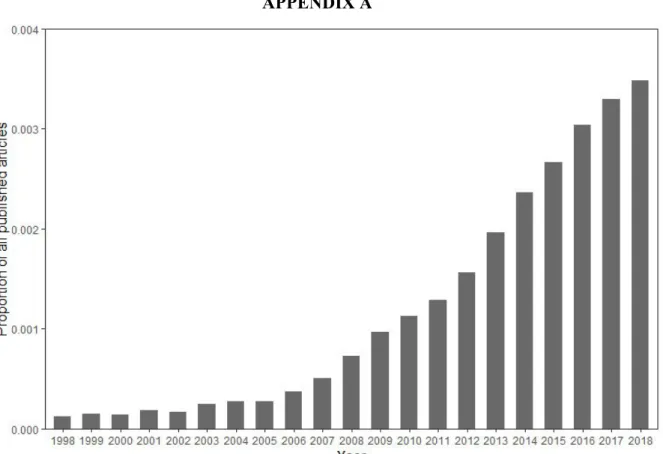
Over the past few decades, scholars have devoted increasing resources to the study of mindfulness (Brown, Ryan, & Creswell, 2007; Hart, Ivtzan, & Hart, 2013; Van Dam et al., 2018 see also Figure A.1, showing a rising proportion of articles with the keyword “mindfulness”, relative to total output, in the Europe PMC database). A term of Buddhist origin, mindfulness was brought to the attention of medical researchers and social scientists in the late 1970s with the introduction of 8-week mindfulness-based stress reduction
(MBSR) programs to the United States (Goleman & Davidson, 2018; Kabat-Zinn, 1990). Since, the term “mindfulness” has been used to refer to specific programs or practices, to a relatively stable trait varying between individuals that can be cultivated (Brown & Ryan, 2003), or to a state, varying within individuals, and has been associated with myriad health and psychological benefits. A commonly used definition of mindfulness describes it as a “receptive attention to and awareness of present events and experience.” (Brown et al., 2007, p. 212)
Following Brazão and colleagues (Brazão, Hafenbrack, Braga, & Sá, 2019), we broadly divide mindfulness research into three categories: research clarifying the definition of mindfulness (e.g., Baer, Smith, Hopkins, Krietemeyer, & Toney, 2006); research on antecedents, consequents, and correlates of trait mindfulness (e.g., Brown & Ryan, 2003); and research on the effects of mindfulness training and state mindfulness and associated mechanisms (e.g., Arch & Craske, 2006).
In this thesis, we focus on research falling under the third category, more
specifically dealing with brief mindfulness interventions, which we broadly define as one-session mindfulness meditation interventions lasting up to 30 minutes, on meditation novices. While the large majority of mindfulness training research has focused on longer training programs where patients or participants meditate several times per week over several weeks (Hülsheger, Alberts, Feinholdt, & Lang, 2013; Kabat-Zinn, 1990; Segal, Williams, & Teasdale, 2002; see also Creswell, 2017 for a review), a smaller body of work has explored the potential outcomes and psychological mechanisms of much shorter mindfulness meditation interventions (see Heppner & Shirk, 2018 for a review) and theorized on how these interventions may be used in the workplace (Hafenbrack, 2017).
Thus, this thesis reviews research on brief mindfulness interventions, presents a study of a brief mindfulness intervention conducted in a university context, and attempts to
2 provide preliminary recommendations for more rigorous research on this topic, based on insights gained from the empirical research conducted (Chapters 2 and 3) as well as on concerns raised by scholars engaging with the recent replication/credibility crisis in psychology (see “Metascientific Background”; for a more detailed overview of the goals and aims of this thesis, see “Aims and Objectives of This Dissertation”) and concerns raised in the literature about the mindfulness literature itself (Van Dam et al., 2018).
Metascientific Background
It is not the case that false studies are being rejected, as is proper: more that the ground beneath psychology’s feet is giving way. [...] The repudiation of studies here and there is falsification; when entire fields and bedrock studies are thrown into doubt, this is a crisis. (“Beneath the replication crisis,” 2019)
This dissertation has been written within the context of recent developments in contemporary psychological science which are shaping the way science is produced and evaluated. To help contextualize design decisions presented in the two empirical chapters, as well as criticisms and limitations of the present research raised in the final chapter, this section briefly highlights four interconnected concerns that have been discussed in the context of what may be called psychology’s replicability crisis1: questionable research practices, questionable measurement practices, replication, and a reliance on weak, verbal theories.
Questionable research practices.
Examine [the data] from every angle. Analyze the sexes separately. Make up new composite indices. If a datum suggests a new hypothesis, try to find further evidence for it elsewhere in the data. If you see dim traces of interesting patterns, try to reorganize the data to bring them into bolder relief. [...] Go on a fishing expedition for something—anything—interesting.
No, this is not immoral. [...]
1 This section does not attempt to sketch a comprehensive description and analysis of the replication crisis, which can be found elsewhere (e.g., Earp & Trafimow, 2015; Flis, 2019; Hughes, 2018; Świątkowski & Dompnier, 2017; see also the Special Issue of Perspectives on Psychological Science introduced in Pashler & Wagenmakers, 2012). Issues of statistical practices (e.g., Benjamin et al., 2018; Lakens et al., 2018; Mayo, 2018; see also the Special Issue of The American Statistician introduced in Wasserstein, Schirm, & Lazar, 2019), such as the use of null-hypothesis significance testing in general, problems with p-values, and the alpha level, among others, are also largely ignored here.
3
Think of your data as a jewel. Your task is to cut and polish it, select the facets to highlight, and to craft the best setting for it. Many experienced authors write the results section first. (Bem, 1987, pp. 172–173)
Scientific inquiries are more exposed than most others to the inroads of pretenders [...]
There are several species of impositions that have been practised in science, which are but little known, except to the initiated, and which it may perhaps be possible to render quite intelligible to ordinary understandings. These may be classed under the heads of hoaxing, forging, trimming, and cooking. (Babbage, 1830, pp. 174–175)
Questionable research practices, from outright fraud to previously accepted practices, such as those recommended in the quote above by Bem (1987), and their consequences have been denounced in the scientific literature for long decades (e.g., Babbage, 1830; Cumming et al., 2007; Kerr, 1998; Martinson, Anderson, & de Vries, 2005; Rosenthal, 1979; Simmons, Nelson, & Simonsohn, 2011; Sterling, 1959; Sterling, Rosenbaum, & Weinkam, 1995; Swazey, Anderson, Lewis, & Louis, 1993). However, there is reason to believe that, this time, change is happening on a deeper, more systemic level: psychologists have been confronted with the publication, in a well-respected journal, of a string of impossible results (Bem, 2011) produced with practices deemed acceptable, and many more researchers have since become aware of these practices (especially since John, Loewenstein, & Prelec, 2012) and their undesirable effects; further, the scientific community has been reflecting on the crisis and creating procedures to improve practices (Jonas & Cesario, 2016; Munafò et al., 2017; “Promoting reproducibility with registered reports,” 2017; Simons, Holcombe, & Spellman, 2014; Spellman, 2015), and many early-career researchers have been engaging with and contributing to the movement (for just one example, see Crüwell et al., 2018).
Questionable research practices which inflate Type I error2 include, but are not limited to: hypothesizing after results are known (commonly, HARKing), which allows the presentation of exploratory results as confirmatory (Kerr, 1998); p-hacking, any number of methods (from optional stopping, to running unplanned analyses, to analysing many
2 Defined as rejecting a true null hypothesis, and supposedly constrained by the chosen significance level.
4 measures and reporting only the ones that “work”) that facilitate finding a predicted
significant relationship in the data; and running underpowered research, deliberately or because no effort was made to determine an adequate level of power (for more fine-grained definitions and estimates of prevalence see Banks, Rogelberg, Woznyj, Landis, & Rupp, 2016; Fiedler & Schwarz, 2016; John et al., 2012).
Some proposed reforms include improving statistical training (for some evidence that statistical training in psychology is often inadequate, see Cassidy, Dimova, Giguère, Spence, & Stanley, 2019; Morris, 2019; Tversky & Kahneman, 1971), adopting
preregistration of hypotheses and analyses plans and reporting other analyses as
exploratory (Wagenmakers, Wetzels, Borsboom, van der Maas, & Kievit, 2012), and the Registered Report format—arguably a better form of preregistration since it helps to prevent preregistering after results are known (PARKing, see Ikeda, Xu, Fuji, Zhu, & Yamada, 2019; Yamada, 2018).
All in all, this new “open science movement” that emerged out of the crisis of confidence has aimed to propose mechanisms to improve the trustworthiness of science (and psychology in particular) by adding transparency to the whole process of science production and dissemination (Crüwell et al., 2018; Munafò et al., 2017; Srivastava, 2018) and restricting the ways in which honest researchers might “fool” themselves and their colleagues anyway (Gelman & Loken, 2013; Nuzzo, 2015). These developments have been explicitly welcomed in an influential critical review of mindfulness research. The authors write that, “future studies of mindfulness should conform to lessons being learned from the ongoing ‘replication crisis’ in psychological science and other related scientific
disciplines,” and specify that, “for example, preregistered experiments and open-science replications of mindfulness are desirable.” (Van Dam et al., 2018, p. 51)
Questionable measurement practices. Some scholars have recently turned their attention to problems in measurement knowledge and practice in psychology which also increase the unreliability of published findings (Flake & Fried, 2019; Flake, Pek, & Hehman, 2017; Fried & Flake, 2018; Hussey & Hughes, under review; Williams, 2019). Questionable measurement practices are “decisions researchers make that leave questions about the measures in a study unanswered; and therefore make it impossible to identify potential threats to the validity of a study’s conclusions,” (Flake & Fried, 2019, p. 17) and the authors provide a list of six questions that should be answered in papers purporting to
5 measure constructs to promote transparency and rigor of measurement practices: (1) What is your construct? (2) How do you operationalize your construct? (3) Why do you select your measure? (4) How do you quantify your measure? (5) Do you modify the scale? If so, how and why? (6) Do you create the scale on the fly? These considerations magnify more foundational concerns raised about the difficulty of properly defining, operationalizing, and measuring mindfulness. Critical reviewers have urged scientists and others who engage with mindfulness to “move away from relying on the broad, umbrella rubric of ‘mindfulness’ and toward more explicit, differentiated denotations of exactly what mental states, processes, and functions are being taught, practices, and investigated.” (Van Dam et al., 2018, p. 41) Relating to measurement directly, the authors suggest that research on mindfulness “would benefit from redirecting attempts to directly measure mindfulness toward measuring supporting mental faculties.” (p. 44)
Replication. Spurred by the looming crisis of confidence, many researchers turned towards replication as a tool for separating “true effects” from false positives and assessing the replicability of psychological science as a whole (Klein et al., 2014, 2018; Open
Science Collaboration, 2015). These and other projects resulted in many “failed”
replications, further spurring doubts about the replicability of psychology as a whole and substantiating calls for making replication a normal part of the scientific process in
psychology (Koole & Lakens, 2012; Zwaan, Etz, Lucas, & Donnellan, 2018). Furthermore, tools and collaborations have been set up to facilitate the replication of results and to enable large scale projects that involve the same effect being tested in many labs around the world (such as the Psychological Science Accelerator, Moshontz et al., 2018).
Reliance on weak, verbal theories.
The brickmakers became obsessed with the making of bricks. When reminded that the ultimate goal was edifices, not bricks, they replied that, if enough bricks were available, the builders would be able to select what was necessary and still continue to construct edifices. [...]
And so it happened that the land became flooded with bricks. [...]
And, saddest of all, sometimes no effort was made even to maintain the distinction between a pile of bricks and a true edifice. (Forscher, 1963, p. 339)
In parallel to statistical, methodological, and procedural concerns, scholars engaged with the replicability crisis have pointed to the weakness of most psychological theories as another problem deserving of attention. This issue has been brought to the forefront of
6 discussion with Muthukrishna and Henrich’s (2019) article in Nature Human Behaviour, but numerous scholars have pointed out mainstream psychology’s lack of theoretical rigor over the years and made efforts to link recent proposed reforms with theory-building.
Navarro (2019), for example, argued that preregistration, as it is currently conceived, does not adequately address concerns with transparency inherent to
computational model-building. Van Rooij (2019) directly challenged the premise of a push towards preregistration, arguing that improving our methods to discover more (and more reliable) effects can obscure the true goal of psychological science3 that can only be achieved through sound theoretical reasoning: the explanation of psychological capacities, answering the question “How does it work?” (see also Cummins, 2000) And Meehl (1967, 1990) drew attention to the issue of weak theories in psychology at least 50 years ago.
What is a weak theory? In the sense described by Meehl (1967), developments in experimental methods and power (reducing measurement and sampling error) make it easier to corroborate a weak theory; in contrast, strong theories such as those found in physics make such precise predictions that methodological improvements make it harder for a theory to be corroborated, since almost any result, bar a very specific one, would provide evidence against the theory. Because psychology so often relies on the testing of simple, directional hypotheses, even the smallest deviation from a null effect (provided it is in the right direction) can become statistically significant and be reported as supporting the theory.
But a theory can be weak in a different way: its dependence on the theorist for interpretation. Psychologists often explain their theories verbally, defining and making connections between concepts in a narrative format. This introduces ambiguity for the reader, as predictions and novel hypotheses can almost never be derived directly from the theory. As Smaldino (2017) wrote, “The danger with most verbal models is that there are many ways to specify the parts and relationships of a system that are consistent with such a model.” (p. 315) Formalizing a model can thus mitigate or eliminate this risk (see also Epstein, 2008 for more reasons in support of modeling). As an example, Robinaugh and colleagues (Robinaugh et al., 2019) recently proposed a computational model of panic disorder with this goal in mind. They write:
3 But see Yarkoni and Westfall (2017) for a discussion of prediction, rather than explanation, as another worthwhile goal of psychological science.
7
We aimed to make the model sufficiently explicit that it can be divorced from any specific theorist. In other words, the model makes predictions, not the current authors, thereby allowing other researchers to independently evaluate, refute, revise, and extend the model. (Robinaugh et al., 2019, p. 38)
Finally, Szollosi and Donkin (2019) explain that a good theory is hard-to-vary. Discouraging the focus on prediction versus postdiction emphasized by the confirmatory-exploratory distinction, the authors argue that we should evaluate theories based on how easy they are to change, not on whether they had to be changed for a particular experiment. Summarizing the implications of this perspective for dealing with the replication crisis, the authors caution:
Preregistration enforces inflexibility where it does not matter, but not where it does: scientists can get a badge as long as the predictions of their theory were temporarily fixed, but hardly anyone cares if the theory could have easily accommodated the opposite predictions. (Szollosi & Donkin, 2019, p. 11)
Thus, preregistration and other practices can improve inferences on the empirical level (from data to empirical generalizations), but will not in itself improve inferences on the theoretical level (from empirical generalizations to theory proper, see also Oberauer & Lewandowsky, 2019).
Of course, several areas of psychology (e.g., mathematical psychology, and, more generally, cognitive science) have a long tradition of creating, testing, and revising formal (computational) models of their studied phenomena (see, e.g., Busemeyer & Diederich, 2014 for an introduction). Economics, another example, has for decades been grounded in the development of formal models, using them (with varying success) to predict policy outcomes (see Rodrik, 2015 for a discussion of how modeling makes economics so useful, when done right). And behavioral economics seeks to marry insights from psychology to the modelling methods typically found in economics, the prototypical example being prospect theory (Kahneman & Tversky, 1979).
Recent work suggests that mindfulness and meditation research, too, can benefit from formal modeling approaches (Moye & van Vugt, 2017; Van Dam et al., 2018; van Vugt, Moye, & Sivakumar, 2019), and the other sources reviewed in this section give more credence to such an assertion.
8 Aims and Objectives of this Dissertation
The primary aim of this dissertation is broad: to contribute to the literature on experimental one-session mindfulness meditation studies, both in theory and in practice. This aim is reflected throughout the dissertation, and can be broken down into three further aims and corresponding objectives.
First, this thesis specifically aims to shed light on the state-of-the-art of
experimental one-session mindfulness meditation research. Two objectives correspond to this aim: to identify as many studies as feasible testing the effects of one session of
mindfulness meditation experimentally and list them; and to summarize the main methods used in these studies, including mindfulness inductions, control conditions, manipulation checks, and other study characteristics. These objectives and the corresponding aim are the focus of the second chapter of this thesis, which reports a preliminary systematic scoping review on the topic.
Second, this thesis aims to contribute towards empirical and theoretical inquiry of the effects of one session of mindfulness meditation, with the corresponding objective of conducting and reporting an empirical study testing the effects of mindfulness meditation on a meaningful outcome variable previously identified in the literature. This objective and corresponding aim are the focus of the third chapter of this thesis.
Third, this thesis aims to critically evaluate current practices in experimental one-session mindfulness meditation research and make tentative recommendations for improving the quality of future research. The corresponding objective to this aim is to provide a list of recommendations for future research on one-session mindfulness
meditation. This objective and corresponding aim will be supported by all chapters of the thesis, coming into explicit focus in the discussion sections of the second and third chapters, and culminating in the Recommendations for Future Research section of the General Discussion. Table A.1 provides a summary of these aims and objectives and assigns them numbers for ease of reference.
9 CHAPTER 2: Systematic Scoping Review
Despite the growing influence of mindfulness interventions in general, and one-session mindfulness meditation studies in particular, no effort has been made to
systematically review this kind of mindfulness interventions. Indeed, most comprehensive reviews of mindfulness research or interventions mention one-session interventions only briefly or not at all (Creswell, 2017; Good et al., 2016; Van Dam et al., 2018), and the author was only able to find one article explicitly aiming to review mostly one-session mindfulness meditation interventions (Heppner & Shirk, 2018; see also Brazão et al., 2019 for the results of a systematic search of systematic reviews of one-session mindfulness meditation).
Thus, while not enough results may have accumulated so far on the effects of brief meditation on any one specific outcome to warrant a systematic review and meta-analysis, the time is right to ask: how have researchers been studying one-session mindfulness interventions, and how could they be studying them better? To answer the first part of the question, an ideal method is that of the systematic scoping review. Unlike a traditional systematic review, a scoping review is “useful for answering much broader questions (such as ‘What is the nature of the evidence for this intervention?’ or ‘What is known about this concept?’).” (Tricco et al., 2018, p. 467) By asking such broad questions, we can better understand how a topic has been studied, how variable the employed methodology is, and even whether a traditional systematic review might be warranted. To answer the second part of the question, we can compare the methods used in the studies included in this review and with recommendations for better research practices in general, and for mindfulness research in particular, set out in the General Introduction of this thesis.
This chapter presents an effort to conduct a preliminary scoping review of one-session mindfulness meditation studies, the results of which can be used to better understand the topic in question, as well as to help guide the development of a more comprehensive review by a team of researchers in the future. The methodology for this review is based on the methodology for a more comprehensive review set out by Brazão and colleagues (2019), scaled down to accord with time and space limits of this
dissertation. Thus, for example, we don’t report all possible outcomes but focus on only a few, and both the search strategy and the study screening were simplified (more on this in the next section).
10 Method
The objectives, review question, inclusion and exclusion criteria, and methods for a large systematic scoping review were specified in advance and documented in a protocol (Brazão et al., 2019), available online (https://osf.io/ep54t/). There were several deviations from the original protocol, and all are mentioned in this report; besides changes to the scope of the review detailed in the introduction to this chapter, changes to the screening strategy are detailed in the “Search strategy” and “Study screening” sections.
Supplementary materials for the protocol and the final review are also available online (https://osf.io/h7k9g/). Supplementary materials for the final review are stored as a component of the OSF project containing all supplementary materials, which can be accessed directly (https://osf.io/5tx9h/).
Review question. This scoping review aims to answer the following broad question: “What methods have been used to study the effect of one-session mindfulness meditation interventions in adult meditation novices?” (Brazão et al., 2019, p. 5)
Inclusion criteria. As specified in the protocol, the following inclusion criteria guided study screening and selection:
Participants. Adults (18+), not meditation experts.
Concept. One session mindfulness meditation interventions lasting no more than 30 minutes. Interventions should be explicitly labeled “mindfulness meditation” or
“induction” (can include breath focus, breath counting, object focus, ...). No restriction on outcomes.
Context. Any (lab, field study, company setting).
Types of sources. Quantitative empirical studies published in English in peer-reviewed journals including a mindfulness meditation condition and measuring at least one outcome.
Exclusion criteria. As specified in the protocol, the following exclusion criteria guided study screening and selection: (1) Mindfulness is not manipulated. (2) Mindfulness is manipulated more than once before the outcome is measured. (3) The mindfulness induction is longer than 30 minutes. (4) Over 20% of the sample consists of mindfulness experts (defined within the study). (5) The sample includes participants younger than 18 years old. (6) Study is not reported in English. (7) Study is not reported in a peer-reviewed journal.
11 Search strategy.
Systematic search. Two databases were used for the systematic search: EBSCO Discovery Service and Web of Science. Both searches were conducted on March 25, 2019 by VB. All files mentioned below can be retrieved from the OSF Scoping Review project page (https://osf.io/5tx9h/), stored in separate subfolders within the “Records” folder. Names of each subfolder containing the (groups of) files mentioned in the text are given in parentheses immediately after the files are mentioned.
EBSCO Discovery Service was accessed through UCP’s Library. A search was conducted using the following boolean phrase:
AB ( mindfulness OR meditation OR mindful OR “state mindfulness” ) AND AB ( intervention OR induction OR training ) AND AB ( brief OR short OR one-session OR single-session OR low-dose )
No expanders were used, and two limiters were used: Language: English, and Published Date: -20190331.4 Initially, this search yielded 1,254 results; ultimately, 1,049 records were downloaded in 6 .ris files (“Records downloaded from EBSCO Discovery Search”), because EBSCO removes exact duplicates in the process of downloading the records. Of these, 875 were successfully imported into Mendeley, and this list was stored as a .bib file (“Records imported from EBSCO Discovery Service”).
Web of Science was accessed through UCP’s proxy. A search was conducted using the following boolean phrase:
AB=( mindfulness OR meditation OR mindful OR “state mindfulness” ) AND AB=( intervention OR induction OR training ) AND AB=( brief OR short OR one-session OR single-session OR low-dose )
Results were restricted to English, all document types, and all years. The search resulted in 664 hits. 664 records were downloaded in 2 .bib files (“Records downloaded
4 A link provided by EBSCO
(http://search.ebscohost.com/login.aspx?direct=true&AuthType=ip,uid&bquery=AB+(+mindfulness+OR+m editation+OR+mindful+OR+%e2%80%9cstate+mindfulness%e2%80%9d+)+AND+AB+(+intervention+OR +induction+OR+training+)+AND+AB+(+brief+OR+short+OR+one-session+OR+single-session+OR+low-
dose+)&cli0=FT&clv0=Y&cli1=FT1&clv1=Y&cli2=DT1&clv2=000001-
201903&cli3=LA99&clv3=eng&type=1&searchMode=Standard&site=eds-live&scope=site&authtype=ip,cookie,uid) allows anyone with access to reproduce the search. However, expanders and limiters must be removed manually on the left panel, keeping only the two limiters mentioned previously.
12 from Web of Science”). All records were successfully imported to Mendeley, and this list was stored as a .bib file (“Records imported from Web of Science”).
When all EBSCO and Web of Science records were added to the same folder, 1076 records remained because Mendeley removes some duplicates automatically when
importing. After sets of duplicates were merged, a final set of 994 records was retained, which was stored as a .bib file (“Records retained after duplicates removed”).
Manual search. A manual search was not conducted. Study screening.
Based on title and abstract. VB and VS5 screened the 994 records based on title and abstract within Mendeley. To do this, each reviewer added the records to their own Mendeley library in a dedicated folder, and starred each item that would be included in the next stage of screening based on compatibility with the inclusion and exclusion criteria. When compatibility was unclear from the title and abstract, or the abstract was unavailable, records were retained for the next stage. VB and VS then compared their starred items, discussing any disagreements until consensus was reached, and resulting in 152 records to be included in the next stage of screening. VB then downloaded the full text of all records, when available, and listed each individual study in an Excel file with 183 studies. A coding error was discovered later, reducing the list to 182 studies.
Based on full text. VB screened each study according to the exclusion criteria. This full-text screening resulted in 96 included studies.
Data extraction. Given the reduced exhaustiveness of this review compared to the larger review detailed in the protocol, VB adapted the coding table by removing some less essential columns. The final coding table included, alongside fields for tracking and distinguishing between studies, the following categories: The definition of “mindfulness” in the paper (usually a quote); Which scales were used to measure mindfulness, if any; Characteristics of the induction (whether open monitoring or focused attention; whether intrapsychic or body awareness; whether body focus, breath focus, or both; a description of the induction and/or a source; a description of the mode of delivery; and the duration in minutes of the induction); Characteristics of the manipulation check (whether there is one; the timing of the manipulation check; and a description of the measure used);
Characteristics of the control groups (whether there were any or not; how many there were; 5 Vanessa Sá (VS) was Dr. Hafenbrack’s Research Assistant at the time.
13 whether it was an active or a passive control; and a description); Characteristics of the design (the number of cells; whether the manipulation of mindfulness was between or within participants); Characteristics of the participants (a description of the population sampled; whether it was a clinical or general sample; whether and how participants were screened; what the sampling strategy was; whether any data on meditation experience was collected; the percentage of female participants; the mean age of the participants; the standard deviation of the participants’ age; the total number of participants; and a
calculated n per cell); Characteristics related to desirable scientific practices (whether the study was preregistered; a link to the preregistration; whether the study was open access, or, accessible from Portugal without using an institutional affiliation; whether there is a justification for the sample size used; a quote of this sample size justification; the
justification of the effect size used for power analysis; whether an effect size was reported for the main hypothesis test(s); and whether a confidence interval was reported for the main hypothesis test(s)).
VB conducted the extraction and is responsible for any inaccuracies. Some issues encountered during coding of the studies are described in the limitations section.
Presentation of results. In line with aim 1.1.1, an electronic version of the full coding table is provided6, as well as a table listing all the studies included in the final review (Table B.1). The inclusion of the full coding table permits other researchers to confirm the validity of the results presented here, as well as carry out other analyses. All other results and analyses relate to aim 1.1.2 and consist of summarizing or otherwise highlighting the data available in the coding table.
First, a general overview of the studies is given in narrative form. The following characteristics are summarized: number of studies using a focused attention induction versus an open monitoring induction; the distribution of the length of the inductions; number of studies using manipulation check of the mindfulness manipulation; number of studies using any control group; number of studies investigating a clinical versus general population; the distribution of the proportion of females in the studies; the distribution of the mean age in the studies; the distribution of the n per cell in the studies; the journals the studies were published in; and how many studies were included per year.
14 Then, a more concrete mapping of the methods in the studies is provided. We present a list of all mindfulness scales used in the studies, as well as how many studies used each scale; we present a list of sources for mindfulness inductions, both as reported in the studies and after tracking the real origin of the induction, where possible. We do not present a summary of all the manipulation checks or control groups used, but the motivated reader is referred to the coding table provided in the supplementary materials.
Finally, a third section is dedicated to summarizing and analyzing the use of certain practices generally considered desirable nowadays (see Metascientific Background). We present, in narrative fashion, how many studies reported a preregistration, how many were open access, how many included a sample size justification, how many justified the effect size chosen in the power analysis, how many reported effect sizes in the main hypothesis tests, and how many reported a confidence interval around those effect sizes. Turning towards statistical power, we present the distribution of n per cell for between-subjects studies and make inferences about the effect sizes researchers seem to expect to find in these studies.
Results
A list of all the studies included in this review can be found is in Table B.1, and the raw study coding data can be obtained from the OSF project (https://osf.io/5tx9h/) in the “Study Coding” folder.
General overview. Out of the 96 included studies, an overwhelming majority (85 studies out of 96) employed a focused attention mindfulness intervention, six studies did not report enough information to decide on this variable, three studies used an intervention employing both open awareness and focused attention, and only two studies used only an open monitoring meditation. On average, meditation lasted 10.45 minutes (SD = 6.07 minutes; median = 10 minutes). Even though we restricted the review to studies
manipulation mindfulness for up to 30 minutes, most studies used interventions lasting fewer than 15 minutes (see Figure B.1). Most studies (58) did not use any manipulation check for the mindfulness intervention, while a sizeable minority (38) did use at least one manipulation check for the mindfulness intervention. Almost all studies (91) used at least one control group, while a small minority (5) did not.
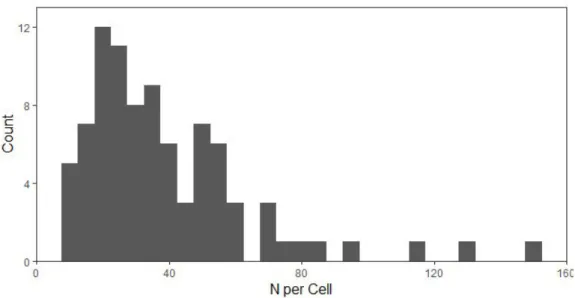
15 Most studies (81) employed a general population, some studies (4) had a clinical population, one study had both, and some studies had a population that was difficult to categorize into clinical or general (10). The average proportion of females among studies reporting this variable was 64% (SD = 15%, median = 64.5%). As can be seen from the histogram in Figure B.2, most studies had included more than 50% females. Mean age for the average study was 23.54 years7 (SD = 7.95, median = 20.8). As can be seen from the histogram in Figure B.3, an overwhelming majority of studies had participants with a mean age well below 30 years. The average study had 38.2 participants per cell (SD = 28.14, median = 31.5). As can be seen from the histogram in Figure B.4, most studies had an n per cell relatively close to the median. However, this information should not be used to estimate power, since, for some studies, analyses involved a within-participants factor. Power is discussed in more detail later in this section.
As can be seen from Table B.2, the overwhelming majority of studies were published in the journal Mindfulness. As can be seen in Figure B.5, most studies included in this review were published in the last five years.
Methods. Inductions were classified by whether the authors claimed to have developed or used a novel induction or claimed to have used or adapted a previously published induction. Next, all articles cited for the inductions were searched to identify whether they were the final source or had used or adapted an induction from a different source. This led to Table B.3, which shows the final sources and how many studies used inductions that could be traced to these sources, as well as how many studies used their own inductions or used inductions of an unclear origin. The majority (about 60%) of studies referred to an induction that had been previously published or was publically available, while a large proportion of studies (about 40%) used their own induction or used an induction of unclear origin. All in all, 67 ‘unique’ inductions can be counted, although it is possible that some of the instances counted as ‘unique’ have a shared origin, since some origins were unclear and some sources were inaccessible. The single origin of the most inductions (17%) was Kabat-Zinn (1990), but no other origin accounted for more than 4% of the inductions used in these 96 studies: we can say that most studies used different inductions or did not specify their inductions well enough for this “origin” categorization.
16 About 42% of studies used at least one mindfulness scale. Nine different
mindfulness scales were used (in their original version, adapted, or as a translation; five trait scales and four state scales), and the distribution of how many times each was used, split by whether the scale measures trait or state mindfulness, is shown in Table B.4. Of all trait scales used in the studies, the FFMQ (Baer et al., 2006) was the most popular,
accounting for 20% of instances of scale use; of all state scales used, the TMS (Lau et al., 2006) was the most popular, accounting for 32% of instances of scale use.
Desirable practices. No study was preregistered8; about 29% of studies were open access. Only about 16% of studies (15 studies) provided any sample size justification, and only 6% of studies (6 studies) provided a justification for an effect size used in power analysis. About 80% of studies (76) provided an effect size for their main analyses, but only about 5% of studies (5) reported confidence intervals (CIs) around those effect sizes. Anecdotally, we report that several of those studies reported CIs for analyses that typically provide those values (such as some moderation software), but did not report CIs when they are not typically provided by statistical software, such as for ANOVAs or t-tests.
After splitting the data to include only studies that were classified as employing a between-subjects manipulation, the average n-per-cell was 39.37 (SD = 25.67, median = 33). As can be seen from the histogram in Figure B.6, most studies had an n per cell relatively close to the median. Regarding power, four values were calculated for each study: power to detect an effect size of d = 0.3, 0.5, and 0.8, respectively, and the minimal detectable effect size (MDES), i.e. the effect size that the study would have 80% power to detect, all assuming a two-sample t-test, alpha = 0.05, and a two-sided test. Figure B.7 compares the studies’ power to detect the three effect sizes. As can be seen from the graph, no study reached 80% power to detect an effect size of 0.3, very few reached 80% power to detect an effect size of 0.5, and more than half the studies reached 80% power to detect an effect size of 0.8. The average study had sufficient power to detect an effect size of 0.73 (SD = 0.22, median = 0.70). Thus, it is plausible to infer that researchers expect to find (or consider important) effect sizes greater than 0.5, or else do not have the resources to investigate smaller effect sizes (but see “Limitations” for caveats).
8 However, VB realized after conducting the review that some studies were registered as clinical trials, which had not been obvious when the categorization was first made. Thus, the true number of preregistered studies is unknown, but likely to be very low.
17 Discussion
Despite several limitations, discussed below, this review fulfilled its objective, providing a first image of the methods used in one-session mindfulness meditation research. We summarize and briefly comment on the results below.
According to the results, the typical study uses a focused attention meditation lasting around 10 minutes, does not use a manipulation check, and uses a control group. Most research in this area seems to be conducted on a general population of mostly female university students, using fewer than 40 participants per cell. Most studies do not clearly indicate an external source for the inductions used, opting instead to use their own induction or referring only to the type of induction used without a specific source (e.g., a “raisin eating task”); of those studies that indicate a source, several ultimately lead to Kabat-Zinn (1990), but most lead to one of dozens of other published inductions. The typical study does not use a scale to measure trait or state mindfulness. In general, we observed low to very low compliance with the practices of preregistration, open access, sample size justification, and reporting of confidence intervals for effect sizes. However, most studies did report effect sizes for their main outcomes. Finally, a crude analysis of power showed that most studies were not adequately powered for effects smaller than d = 0.5.
While not in themselves diagnostic, these results raise concerns about the state of the literature on one-session mindfulness meditation interventions. Echoing previous admonishments of the variety of definitions of the construct of mindfulness (Van Dam et al., 2018), we found a large variety of mindfulness inductions, even within the category of “focused attention”. This variety is likely to cause confusion to researchers attempting to evaluate this literature and to decide which effect to test or which induction is most appropriate.
Our results also suggest very low uptake of scientific practices recommended in discussions of the replication crisis. Researchers tend to not preregister their hypotheses, which may blur the distinction between confirmatory and exploratory analyses, and few researchers showed little effort in planning and justifying the sample sizes in their
experimental studies. Further, while many researchers did report effect sizes, this practice was not universal, and the lack of confidence intervals makes it difficult to quantify and interpret the uncertainty around provided estimates.
18 Recommendations derived from the concerns raised in this section can be found in Chapter 4 of this dissertation.
Limitations. One of the graver limitations of this review are the relatively imprecise inclusion and exclusion criteria. While the criteria seemed more than adequate before the studies were screened, contact with the studies themselves proved otherwise. Two examples stand out: age and manipulation of mindfulness. Start with age. In line with the inclusion criteria, only studies performed on adults (those with more than 18 years of age) would be included in the review. However, two problems arose throughout the screening process. First, several studies had to be excluded because the stated age range of participants had a lower bound of 17. Arguably, 17-year-olds could be considered adults, but, given the exclusion criteria, those studies were not considered further. Second, an overwhelming number of studies did not report an age range at all, choosing instead to only report the mean and standard deviation for age, two numbers that are uninformative if we can’t assume that the distribution is approximately normal. Thus, studies allegedly performed on adults with mean age = 19.01 and standard deviation of age = 1.23 should, in principle, include more than a few under-18-year-olds (assuming an approximately normal distribution) but probably did not. In these cases, VB disregarded the statistics reported and assumed that the cutoff for adulthood was 18 years of age, an assumption that was
probably mistaken in at least some cases.
Second, this review intended to scope studies of experimentally induced state mindfulness via one session of mindfulness meditation. However, the first exclusion criterion was not as explicit, allowing some confusion to seep in. If mindfulness was manipulated, but by some task other than meditation, should the study be included? VB tried not to do so, in keeping with the goal of the review, but this is clearly a weakness— the inclusion and exclusion criteria should be stated so that, should anyone else perform the review, the resulting list of included studies would be (almost) exactly the same. Certainly there will always be some room for subjectivity, but it should be reduced as much as possible.
A different class of limitations has to do with the coding of the studies. We focus here on issues with coding the sample and design. Coding the sample size should have been straightforward. However, several articles (especially “randomized controlled trials”) reported the initial number of participants recruited as well as the number of participants
19 whose data was ultimately analyzed (because some dropped out, for example). Whenever the distinction was clear, the final sample size was coded; however, it is possible that some authors did not report dropped participants clearly enough, leading to coding mistakes.
Design was to be categorized as between- or within-participants. Originally, this categorization was made based on whether mindfulness was manipulated between or within participants, but the author realized too late that some designs might manipulate mindfulness between participants, but measure their outcomes multiple times, within participants. Since these differences have repercussions for study power, our conclusions about power should be taken with caution. A more rigorous review should decide a priori how to deal with the issue of estimating average power for the studies, if this should be a goal of the review. Besides considering different designs, future reviewers may also consider other techniques for estimating average power, such as z-curve (Brunner & Schimmack, in press), which also provides an estimate of the replicability of significant results.
Finally, the limited search strategy (e.g., no search within references of included articles, no search within references of relevant systematic reviews, and no manual Google Scholar search) clearly did not identify all possible articles that might warrant inclusion in the review. As two striking examples, neither Arch and Craske (2006) nor Hafenbrack and colleagues (2014) were included in the review. Clearly, a more comprehensive review would have an expanded, perhaps even iterative search strategy, in order to capture more of the relevant literature. It is also generally recommended that systematic reviewers collaborate with research librarians to develop their search strategy and choose appropriate keywords, which we did not do.
20 CHAPTER 3: Empirical Study
As stated in the General Introduction, this chapter seeks to achieve the specific aim of contributing to empirical and theoretical inquiry into one session mindfulness meditation interventions through the objective of conducting and reporting an empirical study testing the effect of mindfulness meditation on an outcome variable. The study was planned in such a way that it could fit the inclusion criteria of the scoping review reported above, conforming with the general themes of the thesis.
One way that mindfulness has been studied in the workplace is through its effects on aggression (Liang, Brown, Ferris, et al., 2018; Long & Christian, 2015). Reducing workplace aggressive behavior is in itself a worthwhile goal, which can imbue theoretical investigations into state mindfulness with immediate practical relevance.
Several mechanisms have been proposed to explain why mindfulness might impact aggression (Borders, Earleywine, & Jajodia, 2010; Heppner et al., 2008; Long & Christian, 2015; Peters et al., 2015). However, these accounts largely ignored the theoretical
distinction between two components of mindfulness: awareness and acceptance (Bishop, 2004; Lindsay & Creswell, 2017). Liang and colleagues (Liang, Brown, Ferris, et al., 2018) set out to fill this gap, publishing several studies that support the view that the mindful awareness facet plays a more crucial role in curbing aggression than the mindful acceptance facet.
Of particular interest to us, their first study was a laboratory study that manipulated each of the two facets independently and tested the effects of this manipulation on a proxy of behavioral aggression. This study did not fit all criteria for inclusion in the scoping review reported in the previous chapter, because mindfulness was not manipulated through meditation. It thus raises the interesting question of whether, using the same paradigm, mindfulness meditation can reduce aggression as well. Such a study would constitute a conceptual replication of Liang and colleagues’ finding and lend further credence to their chosen paradigm as a way to study the effects of short laboratory interventions on
behavioral aggression. To this author’s knowledge, no such replication study has been conducted yet. The approach taken in the present study was to take the original finding as a given, and attempt to extend it while staying as true to the paradigm as possible.
In the original study, mindfulness was manipulated after hostility had been induced, showing that short mindfulness interventions may be effective “cooling off” interventions,
21 reducing the extent to which workers who are already angry act on that anger by becoming aggressive. The present study reverses the order of these manipulations, and investigates instead whether meditation can be used to “protect” workers from becoming aggressive, should they encounter a situation that would normally increase their anger. To make differences and similarities more clear, the next sections first describe the original study in more detail, before describing the present study.
Original Study
In the original study, the authors gathered their sample on Amazon’s Mechanical Turk (MTurk), screening for participants who were full-time employees and had had a negative interaction with a supervisor at work. Participants next underwent a hostility induction, followed by one of three conditions: mindful acceptance, mindful awareness, or mind wandering, the control condition. These manipulations consisted of participants viewing six statements in a row and being asked to read each statement and focus on the thought it represents. Next, they performed the voodoo doll task, a proxy for behavioral aggression, and finally answered the Anger subscale of the Buss-Perry Aggression Scale (Buss & Perry, 1992), to be used as a covariate in the analyses. We next describe two important features of this study, the hostility induction and the voodoo doll task.
Hostility induction. To induce hostility towards a supervisor, the authors used a “critical incident paradigm”(Liang, Brown, Ferris, et al., 2018, p. 285), which consists of asking participants to recall and visualize an interaction with their supervisor “in which they felt angry, hostile, irritable, scornful, disgusted, or loathing toward [the supervisor].” (Liang, Brown, Ferris, et al., 2018, p. 285) Next, they were asked to elaborate on the situation and their feelings towards the supervisor in writing.
Voodoo doll task. To measure behavioral aggression, the authors employed the voodoo doll task, first introduced and validated in 2013 (DeWall et al., 2013) and used in further studies since (Bushman, DeWall, Pond, & Hanus, 2014; Liang, Brown, Lian, et al., 2018; McCarthy, Crouch, Basham, Milner, & Skowronski, 2016). Typically employed after participants have completed aggression measures or have gone through an
anger/hostility-inducing paradigm, the task consists of handing participants a voodoo doll that is supposed to represent a close relationship or otherwise the target of anger and allowing participants to stick pins in the doll. The number of pins stuck in the doll
22 functions as the operationalization of aggression. The task has several benefits, since it is a measure of behavioral aggression where no real aggression is perpetrated towards another person, and it can be used both in laboratory settings (with a real doll and pins) and in virtual settings (with a picture of a voodoo doll presented on the computer).
The Present Study
In the present study, we attempted to stay close to the original study while targeting a new theoretical question and under certain resource constraints. Specifically, the sample available to us consisted of CLSBE MSc students, for which reason we could not guarantee that our participants were currently or had already been employed. We attempted to
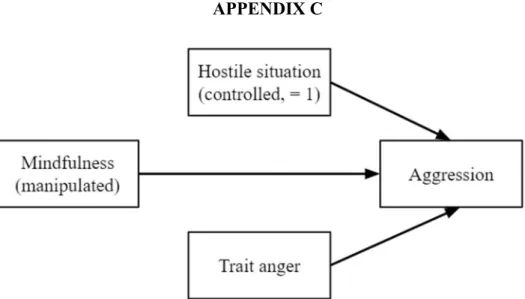
remedy this by telling participants that they could think of a situation with a supervisor at work, at an internship, or at a traineeship, assuming that they would have had enough professional experience of some kind to be able to think of a suitable situation.9 To maintain our focus on experimental one-session mindfulness meditation studies, we used mindfulness or mind-wandering recordings to induce mindfulness or a typical control state (mind-wandering) instead of the six statements used by the original authors. Further, to investigate the protective effects of induced state mindfulness, we switched the order of the inductions: participants first underwent the mindfulness or control induction, and only then the hostility induction and voodoo doll task. We also added manipulation checks, since we had not been able to explicitly test our mindfulness manipulations on the subject pool used for the study. Finally, we added measures of putative mediators to allow for exploratory analyses that might spur further research. The assumed causal model in this study can be seen in Figure C.1.
Method
As recommended by Simmons, Nelson, and Simonsohn (2012), we declare that we report how we determined our sample size, all data exclusions (if any), all manipulations, and all measures in the study.
9 While most participants in fact indicated that they had never had a job, internship, or traineeship (see Method section), an examination of their responses to the hostility induction shows that most were indeed able to come up with a suitable incident.
23 Preregistration. The study (including hypotheses, the key dependent variable, the conditions, the main analysis, the exclusion of observations, and the sample size) was preregistered using the AsPredicted.com template.10 Any deviations from the
preregistration are flagged as such in this and the following sections.
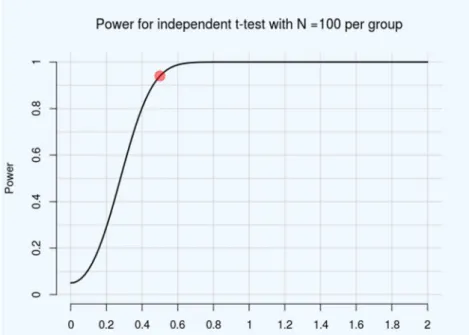
Sample size and statistical power. Sample size was determined based on the number of participants (293) registered for the lab sessions during which the study would be conducted. To estimate statistical power, we assume an even number of participants (292) evenly distributed across two conditions. A Shiny app available here creates power curves for two-tailed, independent-samples t-tests. The results thus provide a lower-bound estimate of power, since the analysis used in this experiment (ANCOVA with one
covariate) is generally more powerful than a t-test. Figures C.2, and C.3 depict power curves for N = 292 and N = 200 (assuming n1 = n2). The power curves generally show that this design has high power (≧ 80%) to detect δ ≧ 0.4, even if 92 participants did not complete the tasks or were excluded for other reasons.
Hypothesis. This study attempted to test one main hypothesis:
H1. When controlling for trait anger as a covariate in a one-way ANCOVA,
participants exposed to the mindfulness manipulation will choose a smaller number of pins in the voodoo doll task than participants exposed to the mind-wandering manipulation.
Participants. Participants were recruited through CLSBE’s LERNE lab and participated in the study as part of their course requirements.11 We had been informed that 293 students were registered for the lab sessions, and data were ultimately collected from 296 participants. As part of data-cleaning, all observations with “999” or an empty field as the participant code were excluded, since this indicates a test-run of the experiment by an administrator of the lab, and not a real participant. As preregistered, participants’ responses to the hostility induction were reviewed by the author and VS, and observations were excluded for those participants who had not written at least one full sentence, leaving 246 responses for analysis. While this possibility had not been contemplated in the
preregistration, legal concerns forced us to exclude an additional participant for reporting to be 14 years old (and thus under the legal age), directly contradicting the consent-form.
10 The preregistration can be read in this link: https://aspredicted.org/blind.php?x=dn7uz3
11 According to information provided by a staff member of LERNE, MSc students must participate in four research sessions at the lab as a part of their mandatory Research Methodologies workshop (S. Murtinheira, personal communication, August 7, 2019).
24 The final sample thus consisted of 245 participants (MAge= 23.25, SDAge = 1.737, rangeAge = 20-30; genders: 135 males, 103 females, 1 transgender female, 1 other, 1 prefer not to say).12
Design. This study employed a 2-group experimental between-subjects design. All participants followed the same procedures and responded to the same measures, with the exception of the manipulation. Trait anger served as a covariate in the analyses, the mindfulness or mind-wandering control manipulation served as the independent variable, and the number of pins served as the dependent variable.
Procedure. Participants responded to a Qualtrics survey using a computer and headphones at the university’s research lab. Participants first saw a consent form indicating that the survey’s topic was “social situations, time, and feelings,” and contained three unrelated short tasks; they agreed to participate by inserting their participant number (provided by the lab) in a text box and proceeding with the survey. Participants then responded to the trait anger questionnaire, followed by either the mindfulness or mind-wandering induction, then the hostility induction, and finally the remaining measures.
Materials. The materials for the hostility induction and the voodoo doll task were adapted from a Word document sent to VB and AH by L. Liang (personal communication, February 12, 2019), which included the materials used in the original study (Liang, Brown, Ferris, et al., 2018, Study 1).
Inductions. The mindfulness and mind-wandering inductions were 8-minute recordings used in previous state mindfulness research (Hafenbrack & Vohs, 2018) which are available on the video sharing website YouTube.com. Both inductions consist of a female voice instructing the listeners through a guided meditation. Participants were forced to stay on the page of the recording for at least 8 minutes.
Mindfulness induction. In the mindfulness induction13 the voice describes that they will do a “focused breathing exercise” and instructs participants to settle into a comfortable sitting position and to pay attention to their breath, not judge themselves, and return to the breath if they notice themselves becoming distracted. Throughout the recording,
12 Participants were not excluded based on their responses to the final employment question (see “Demographic measures”), since this would have resulted in fewer than 50 participants per condition (only 44 participants reported either having or having had a job/internship/traineeship).
25 participants are encouraged to become aware of their bodily sensations while paying
attention to their breath.
Mind-wandering induction. In the mind-wandering induction14 the voice describes that they will do “an exercise” and instructs participants to settle into a comfortable sitting position and to “think about whatever comes to mind”, letting the mind roam without trying to focus on anything in particular. Throughout the recording, participants are encouraged to let their mind wander and think about whatever they want.
Hostility induction. After listening to either the mindfulness or the mind-wandering induction, participants were asked to “please recall a time when [they] felt the following emotions towards a supervisor at a previous or current job/internship/traineeship,” followed by a list of the following words: angry, hostile, irritable, scornful, disgusted, loathing. Participants were asked to spend one minute on the task and informed that they would be able to continue with the survey after one minute had elapsed. On the next page, participants were asked to write down the initials of the supervisor they had thought about into a text box. These initials were used on the following page, when participants were instructed to “please elaborate in the space below on what you feld towards the supervisor, [INITIALS].”
Measures.
Trait anger. As in the original study (Liang, Brown, Ferris, et al., 2018, Study 1), trait anger was measured using the 7-item Anger subscale of the Buss-Perry Aggression Questionnaire (Buss & Perry, 1992, α = .787 in this sample), and responses were averaged. Participants reported their agreement with each statement on a scale from 1 (anchored as “Extremely uncharacteristic of me”) to 7 (anchored as “Extremely characteristic of me”), such that higher scores reflected higher trait anger. Example items are, “I am an even-tempered person,” (reverse scored) and, “I have trouble controlling my temper.”
Behavioral aggression. Behavioral aggression was operationalized as the number of pins participants reported they would like to stick in a virtual voodoo doll representing a supervisor. Participants read, “we would like for you now to imagine that the voodoo doll here represents your supervisor, [INITIALS].” Underneath, they saw an image of a voodoo doll with the text, “YOUR BOSS”, on its torso and were asked to indicate in a text box how many pins they would like to stick into their supervisor. The permitted range was 1–
26 51, as in the study materials we had received for the original study (Liang, Brown, Ferris, et al., 2018, Study 1).
Manipulation checks. Participants were asked to recall how they felt at the end of the audio recording administered earlier in the survey and to mark their agreement on a five-point scale (anchored with “Very slightly or not at all,” “A little,” “Moderately,” “Quite a bit,” and “Extremely”) with three items, presented separately as questions with radio buttons, assessing how focused the participants were (1) on their breathing, (2) on the present moment, and (3) on the physical sensations of their breath. As in earlier studies of mindfulness inductions (e.g., Hafenbrack, Kinias, & Barsade, 2014), responses to the three items were averaged (α = .688).
Putative mediators. Participants were asked to think back to when they were visualizing and writing about a situation with their supervisor and to indicate to what extent they had felt different emotions in that moment. Participants responded to the 6 items from the Hostility subscale (α = .897) and the 3 items from the Serenity (α = .937) subscale of the Positive and Negative Affect Schedule - Expanded Form (PANAS-X; Watson & Clark, 1999) in order in a matrix table with five response options: “very slightly or not at all,” “a little,” “moderately,” “quite a bit,” and “extremely.” Answers were coded from 1 (very slightly or not at all) to 5 (extremely), and averaged for each scale.
Demographic measures. Participants were asked to indicate their age, gender (choosing from “Male,” “Female,” “Transgender Male,” “Transgender Female,” “Not listed,” (with an open text box) and “Prefer not to say”), and student and working status (by checking boxes corresponding to being a Bachelor student, a Master student, currently an employee / intern / trainee, or formerly an employee / intern / trainee.
Results
Analyses were conducted using SPSS Statistics 25. Preregistered analyses.
Manipulation check. A Welch’s t-test revealed participants in the mindfulness condition (M = 2.65, SD = 1.04) had a higher score on our present focus composite